Showing posts with label industrial metal. Show all posts

Tuesday, 20 June 2023

Godflesh - Purge (2023)

Country: UK
Style: Industrial Metal
Rating: 7/10
Release Date: 9 Jun 2023
Sites: Bandcamp | Facebook | Metal Archives | Official Website | Wikipedia

It's pretty much a given to point out that Godflesh are an acquired taste, but their extreme sound is a fascinating one. I'm no expert, but I'm told that this ninth album by them hearkens back to an earlier release, 1992's Pure, which has been retroactively regarded as one of the first releases in a genre that's become known as post-metal. What it boils down to is a combination of wall of sound guitars right out of extreme metal, shouted vocals that doesn't always remind of hardcore shouts and programmed drums that often drift into hip hop beats.

It's a unique and fascinating approach and it trawls a lot of different influences together that we'd rarely hear in the same sentence. Land Lord, for instance, sounds like a merger of the Prodigy with Monotheist-era Celtic Frost. Justin Broadrick certainly channels some Tom G. Warrior in his vocals on this one. However, his guitar often shifts into a sort of Rage Against the Machine feedback vibe for emphasis. There's also a serious reliance on repetition, which works for heavy industrial metal, of course, but also reminds of early avant garde pioneers like Coil or Einstürzende Neubauten and the experimental rock band Swans.

With such a focus on repetition, it's often easier to listen to these pieces of music as a form of dark meditation or a mood setter rather than as songs per se. Industrial was named because of how its sound resembled the sound of an industrial society and this album is often like hanging out in a big and noisy factory and filtering out the people to soak in the ambience of pounding machinery and, in the spirit of John Cage, hearing its rhythms and pitches become music. As such, it's not perhaps too surprising to hear Kraftwerk here on pieces like Lazarus Leper, even Philip Glass in the opener and initial single, Nero.

Another way to look at it is the way that Broadrick himself looks at it. Purge isn't just the title of a Godflesh album, it's the word he uses to describe the way he uses the music he creates with bassist and fellow programmer Ben Green as a "temporary relief" from autism and PTSD. It seems like it's a dark refuge but then Broadrick was a member of Napalm Death for a while; he's on the first side of their debut album, Scum, but left before the second was recorded. This slower, but just as heavy music, with its rigid repetition, could easily be seen as a hypnotic dirge for fans of extreme sounds. I salute it even more if it has therapeutic qualities.

Which tracks leap out to grab people may depend on taste but I'm not finding any real logic to it. It doesn't surprise me that I dig Land Lord, with its up tempo beats and echoes of Celtic Frost, but I'd suggest that Mythology of Self trawls in the Frosties too and I'm not as fond of that one. Why? I'm not entirely sure. It's slower and even more bludgeoning and the vocals are harsher. I ought to dig it more than I do, but it just didn't connect. On the other hand, I'd easily list The Father as another favourite and that's far more subtle, with the guitars lower in the mix and a very different texture.

At the end of the day, of course, this isn't going to convert anyone. If you're into Godflesh's brutal and uniquely uncompromising sonic assaults, then this is another must purchase for you. If you're not, then this isn't going to be a Road to Damascus moment for you. You're not going to discover a sudden appreciation. The only new fans it's going to find are those who hear Godflesh for the first time here, which is not particularly likely in an algorithm-driven era of tailored recommendations. And, right now, you know which of those three categories you are. If you're not the first two, what does this review prompt you to do? If it's to run screaming into the night, it's not for you, but, if it's piquing your interest, let me be the one to introduce you to something new.

Tuesday, 17 January 2023

Turmion Kätilöt - Omen X (2023)

Country: Finland
Style: Industrial Metal
Rating: 7/10
Release Date: 13 Jan 2023
Sites: Facebook | Instagram | Official Website | Wikipedia | YouTube

Latest in the list of established bands I haven't heard of are Turmion Kätilöt, understandably so as I've never delved that far into industrial metal. I know what it is and I've heard plenty of the major bands but unlike a couple of friends, I haven't dived in much further. Hey, Jim! Hey, David! I'm sure that both of you have been listening to Turmion Kätilöt for ever. As the title suggests, this is their tenth album, so it's about time I paid attention. They've been around since 2003 and their output's been pretty consistent, always between one and three years between albums.

For all that this is industrial metal, it starts out with a beat more dance oriented than anything on the Shape of Water album I just reviewed, even though that's an electronic alternative band. This sounds like the Prodigy until it ramps up and suddenly we're almost in NDH territory. The Prodigy vs. Rammstein? Why not? However, I'm not sure if you can call it NDH when the band in question is from Finland. USK for Uusi saksalainen kovuus? Answers on the back of a postcard to...

The line-up is telling, not least because everyone has dance music-style pseudonyms. The surviving founder of the band, Petja Turunen, goes by MC Raaka Pee, though his voice is almost harsh, using metal terminology. He provides the lead vocals and Shag-U sings too. Behind them is a traditional metal band, with Bobby Undertaker on crunchy guitar, Master Bates (a Captain Pugwash nod from Finland?) on deep bass and DQ on often fast drums. That leaves Janne Tolsa, who as RunQ, handles the electronic side of the house: keyboards, synths and programming, which are all integral.

I liked this a lot more than I expected to. There's almost a folk metal vibe to songs like Gabriel and Vie Se Pois, but with traditional folk instrumentation replaced with electronics. It's heavy but it's vibrant, designed to make us move, and folk metal is fundamentally just a different form of dance music. I like those and others that incorporate unusual musical elements over the straightforward industrial dance songs that would work wonderfully in a club but don't stand out as much to me at home listening in my office.

With a quick nod to the downright 8 bit chiptune sound in Pyhä Kolminaisuus, the interesting ones come during the second half. Isä Meidän has a fascinating intro, shifting from a furious Slayer vibe into polite folk music. It ramps up into the band's core industrial metal sound, of course, but it ends with a clarinet solo, of all things, which I wasn't remotely expecting. Käy Tanssiin is fascinating too, with one section that shifts into Caribbean chill but with no change to MC Raaka Pee's harsh vocal. It's as if the singer from Trollfest broke some cartoon fourth wall and ended up scatting all over a CD labelled Caribbean Moods.

Not knowing any Finnish, I have no idea what these songs are about, but I did throw their titles at Google Translate and I'm surprised to see an apparent religious theme. Gabriel doesn't need to be translated, but Pyhä Kolminaisuus means Holy Trinity and Isä Meidän means Our Father, and a few others include references to blood and kingdom and truth, so maybe there's something else going on here and maybe there isn't. It doesn't remotely sound like Christian music but unblack metal is just as unlikely. Maybe it's anti-Christian music and that isn't a Crux Decussata in the cover art. It certainly seems like it would play better at wasteland events than churches.

Whatever it is and wherever it'll be played, I like this. It's infectious stuff. I guess that means that I've been infected. That works for me. Now, Jim and/or David, what have I been missing?

Wednesday, 21 September 2022

Rammstein - Zeit (2022)

Country: Germany
Style: Industrial Metal
Rating: 7/10
Release Date: 29 Apr 2022
Sites: Facebook | Instagram | Official Website | Twitter | Wikipedia | YouTube

I've been a fan of Rammstein ever since I first saw the video for Sonne a couple of decades ago, but I wasn't particularly enthused by their most recent album in 2019. They took a ten year break after its predecessor and it felt like an unsure return to action for me, with songs that tried new things and a surprising structure that left me wondering where they were planning to go in the future. In reality, of course, they went where we all went, which was lockdown during COVID, and that might explain why they've knocked out another one only three years later.

It's a better album to my thinking, on every front. There are still departures from the typical NDH sound but they're both more successful and more appropriate in the order they're presented. It's perhaps notable that they mostly constitute the beginning of the album, with Armee des Tristen a new wave song done NDH and Zeit and Schwarz mirror images of each other. Zeit is subdued, even when the heavy chords show up halfway or when it seriously swells late on, while Schwarz is just as slow but is immediately emphatic and remains so even when it slows down for a softer section.

It's Giftig where we get the Rammstein we know and love most. Nobody does crunch like this band and it's right there on Giftig and OK and onwards. Nobody does the prowl the way they do on Zick Zack either, that's at once ominous and playful. And they do these things almost instinctively, as if it's as natural to them as breathing. Whenever it comes time for them to turn up the power, it's an as one response, as if being this tight doesn't even take any effort. Then again, they still have the same line-up they had when they formed in 1994 and that's a rarity indeed nowadays. They have to know each other backwards.

In fact, the guitars are so effortless that they're almost not worthy of mention. We have to take it for granted that Richard Kruspe and Paul Landers are going to do their thing on guitar seamlessly and the rhythm section of Oliver Riedel and Christoph Schneider, on bass and drums respectively, is right there with them. As usual, we tend to focus on Till Lindemann's ever-confident vocals and a variety of musical decoration from Christian Lorenz. Take Giftig for example. Kruspe may be lead on paper and Landers rhythm, but they're really twin rhythm with Lorenz providing the melodies on his keyboards.

And Lorenz does a lot here. The more often the guitars take a back step, the more he comes to the forefront. He provides the majority of the intros and most of the melodies on top of the ambience that might be needed too. I find this fascinating because Lindemann is the iconic face of the band, especially given their penchant for memorable videos, and the guitar crunch is what springs most speedily to mind when people talk about Rammstein. Yet Lorenz is kept so busy on this album that it's arguably his above everyone else's.

Talking of videos, I've seen a couple of them this time out, for Zick Zack, with its almost fetishistic look at plastic surgery, and Dicke Titten, which isn't entirely as rude as it might seem from its title but only just. Yes, it's about Lindemann wanting women with big breasts, whatever other qualities they may or may not have. Only Rammstein can get away with that nowadays, beyond parodies like Steel Panther, where it's almost compulsory. I'm finding nowadays that the videos distract me too much from the music. I like Zick Zack on this album far more than in the video, for instance, even if it's the same song.

As always, it's the crunchier songs that work best for me here. I do like the title track, surprisingly so given where it goes, but it's Giftig and OK and, to a lesser degree, Angst that I'd call out as the standouts. I'd add Lugen to that, because it's another driving song that nails its groove, but it has a weird descent into the world of autotune during its second half that turns me away. Of the more unusual songs, I'd call out Dicke Titten, with its prominent use of a Bavarian oompah band while it kicks off. With these strong songs and the fact that the lesser material isn't at all filler, I'd have to give this a 7/10. It's far from Rammstein's best but it's a solid step up from its predecessor.

Oh, and the cover photo was taken by Bryan Adams. Yes, that one.

Wednesday, 1 June 2022

Crematory - Inglorious Darkness (2022)

Country: Germany
Style: Gothic Industrial Metal
Rating: 7/10
Release Date: 27 May 2022
Sites: Bandcamp | Facebook | Metal Archives | Official Website | Twitter | Wikipedia | YouTube

I reviewed Crematory's fifteenth album, Unbroken, in 2020 and found myself only half convinced by their particular brand of gothic industrial. I liked the songs with their NDH hooks and grand gothic sweeps. What I wasn't so fond of was the death growl of Gerhard Stass and, as that album ran on, I found that I preferred the clean voice of Connie Andreszka, officially a backing vocal but which did take over at points. It didn't bode well to find that Andreszka left the band last year, as did bassist Jason Matthias. He was quickly replaced by Patrick Schmid but it doesn't look like Andreszka was. His role is just gone.

Stass is my biggest problem with this sixteenth album too but he didn't annoy me as much. I ought to go back to Unbroken because it feels like he's toned down his growl a little bit. Having plenty of grit on the more driving songs like Break Down the Walls works well enough, even if his accent is a little obvious when he's singing in English. He feels more natural when singing in German, which is a language that always benefits from a little grit. I do miss the dual vocal styles, Felix Orschel not being particularly obvious in a guest role.

Musically, the songs do much of what they did last time out. Sure, there's an overt evolution in the band's sound over their three decades, but it's not so fast paced as to be particularly noticeable in the couple of years between albums. This is still gothic industrial, with the latter aspect shifting to NDH more and more as time goes by. Rest in Peace has perhaps the most incessant drive of any of the songs here, though it hints back to the death metal origins of the band at points too, but it's a common approach here, evident on almost everything. It's very obvious in Das Ende too.

The gothic is aspect harder to define, as it shows up mostly in the sweep nowadays, some melodies and some keyboards. Even there, Crematory sound more like a goth rock band who heavied up in a NDH fashion rather than a band who started heavy and shifted into gothic metal, which is exactly what they did. They're on Napalm Records now but they're approaching gothic metal from a very different point to many other Napalm acts I fell in love with a couple of decades ago, like Tristania or Sirenia. Even thinking about that, I wonder what a female vocal would do to the band's sound. I can't see it working at all. This is gothic in tone, not in elegance.

Even with Andreszka gone and nobody taking his place, I think this is a step up on Unbroken. It's a shorter album but not so much to be a problem; that last one was highly generous and this is more reasonable at forty-eight minutes. It doesn't outlast its intentions and the eleven songs vary their approaches enough for it to remain fresh throughout. In fact, I wonder if it gets better as it goes. I liked early songs like Break Down the Walls and Rest in Peace, but it seems to pick up with Tränen der Zeit halfway through, a bouncy number with a reliable riff, strong keyboard melodies and a more understated vocal from Stass.

From that point on, everything feels like it's a little more emphatic, a little more focused, a little tighter in intention. I don't think a song like Until We Meet Again is really any better than a Break Down the Walls, but it seems to settle into its groove easier and more naturally. Zur Hölle, with its staccato riff and capable backing vocal, is even quicker to the mark. Again, it's no better or worse than any song from the first half but it thinks it is and sometimes that matters. Maybe Forsaken is a better song, because it's one of my highlights, especially because of Katrin Jüllich's keyboards, a touch that's almost Abba-esque.

All I know is that, each time I listen through, I kind of like the album early on but find myself liking it more and more as it moves forward. Tränen der Zeit perks it up and, by Forsaken, I'm totally on board. However, when I eagerly replay again after Das Ende, well, der Anfang is back to the kinda sorta again and I run through the cycle once more. So this is a 7/10, one up on the previous album, but I'm still interested in figuring out the direction Crematory is taking and whether it's going to impress me more or less.

Tuesday, 16 March 2021

Eisbrecher - Liebe Macht Monster (2021)

Country: Germany
Style: NDH
Rating: 7/10
Release Date: 12 Mar 2021
Sites: Facebook | Instagram | Official Website | Twitter | Wikipedia | YouTube

It's been a while since I've reviewed any NDH here at Apocalypse Later but Eisbrecher are back with an eighth studio album and it's quintessential stuff for the genre. There's not a heck of a lot of variety in here, though the songs do start to delineate themselves on a second listen, but it hits every checkbox that an NDH fan will be looking for and it does that within every one of the fourteen songs that stack up to comprise this generous almost hour long album. There's even one song with a guest appearance from Dero Goi of Oomph! and Die Kreatur to tie to the wider NDH scene.

The vocals of Alexx Wesselsky are clean, deep and in your face. The guitarwork of Noel Pix and Jürgen Plangger follows suit, adding an industrial rhythm through their riffing, while the rhythm section is tasked with underlining all that, Achim Färber's beats often sounding as much like a rivet machine as a drumkit. Absolutely everything is told with emphasis but it's also melodic and with a strong EBM angle through the keyboards and programming of Maximilian Schauer.

It's the latter that provides the greatest variety here because that angle waxes and wanes through the album. Schauer is all over songs like Nein Danke, which is as obvious an NDH single as I've heard in a long time, and Systemsprenger, but steps back a little on the opening single, FAKK, which sounds just like what you think it does—"Fakk, ich fakk dein ding"—but also introduced me to some imaginative German words. If I'm understanding the translation properly, because everything here is naturally in German, even on High Society, their word for a Twitter troll is "hobbyhitler", which is just perfect.

I guess different people will have different opinions about how that balance should work in any NDH song, but I think my own taste has the title track as the perfect balance. Not only can we follow either the dancing electronic side or the crunching metal side throughout the song, but the two combine in ways that go beyond both happening at the same time. Oddly, it's a little slower than the average for this album and I'm usually all about the speed. Then again, Systemsprenger follows it at a slower and less emphatic pace, so everything's relative.

The slowest song here is the one that stands out the most from its peers for being different and that's Himmel, which turns the guitars down massively and so makes this sound a lot more poppy, even with such a powerful beat. I get the feeling that the second half of the album is a little lighter than the first, but not so much that it's obvious and not to the album's detriment. I think, after the title track, I'd call out late songs like Leiserdrehen and Es lebe der Tod as highlights along with early ones like Nein Danke and FAKK.

All in all, this is a strong release from a band who are a little behind their typical schedule. Eisbrecher formed in 2003, released their first album the following year and added another every two years after that. The only exception was 2015's Schock, which took three, and this one, which didn't show up until four years after 2017's Sturmfahrt. I don't believe I've heard any of those, but I'd be more than happy to check them out on the basis of this one. Liebe Macht Monster is long and it's consistent, but it never gets old.

Friday, 12 March 2021

Rob Zombie - The Lunar Injection Kool Aid Eclipse Conspiracy (2021)

Country: USA
Style: Industrial/Hard Rock
Rating: 6/10
Release Date: 12 Mar 2021
Sites: Facebook | Instagram | Official Website | Twitter | Wikipedia | YouTube

I was surprised last year to see that Powerman 5000 are still knocking out albums and, in fact, haven't stopped doing so since what I think of as their era. I'm even more surprised to see that Rob Zombie is doing the same thing because, unlike his brother, Spider One, who's primarily a musician, Zombie has become in my mind a filmmaker who used to put out music. Apparently, he's actually alternated these worlds pretty well over time and I completely missed albums like Venomous Rat Regeneration Vendor and The Electric Warlock Acid Witch Satanic Orgy Celebration Dispenser.

So, here's another word salad of a title that you'd know had to come from Rob Zombie's brain, even if he'd left his name and image off the front cover. And, of course, the sound is just as recognisable, as it really is just a brain dump of all the things that make him tick, hot rods and hillbillies and burlesque dancers and carnivals and exploitation movies and all that jazz, flavoured up with samples and a host of tracks that are just distractions from the music like we're in the middle of 42nd Street with theatre signs and posters everywhere and we can't decide what to see first.

Now, if you're in the mood for an ADHD trip through Rob Zombie's brain, this will do the job, perhaps more so than earlier albums from his heyday. There are songs with that sort of heavy urgency that we remember from back in the day, The Triumph of King Freak (A Crypt of Preservation and Superstition) kicking us off in that vein, but there are oodles of tiny samples and other details, like bongos, sirens and tearing metal to continually distract us. It veers away into funk and disco and who knows however many other genres at points, just to keep us even more on the hop.

The Ballad of Sleazy Rider is a little more focused and, whenever Zombie focuses in, we always realise just how overtly Alice Cooper influenced him. It's got to the point where I actually wonder if it's Rob Zombie sounding like Alice Cooper or whether he got Alice to guest on the album. I'm thinking that's Rob singing most of the song and also Shadow of the Cemetery Man or Get Loose, but I'm not convinced that isn't actually Alice in the quieter points of Sleazy Rider.

There's some interesting music here, but it's hard to listen to this album as a set of songs. It feels as if this is a forty-two minute ride instead and the songs are just background music to the visuals that we have to imagine on our own. Some of the songs even play into that, 18th Century Cannibals, Excitable Morlocks and a One-Way Ticket on the Ghost Train (that's only one song) being a hillbilly carnival of a song that's a country hoedown and barker monologue except for a few brief bursts of energy.

It doesn't help that some of the intermediary pieces are as long as some of the songs. I really like The Satanic Rites of Blacula for instance, which is a rough edged garage rock romp, but it arrives after The Much Talked of Metamorphosis which is a soft guitar interlude only twelve seconds shorter than this full song. By this point, I'd kind of given up listening to songs and just let the album flow over me as a sort of enjoyable tie die ambient nightmare trip. Which, I guess, is probably the point.

I'd say the band are really tight, not least because I keep watching John 5 videos on YouTube so I know how amazingly versatile this guitarist is but, even in the really tight sections, it never feels like these musicians are in the same place. Everything is so produced that I could believe that this is the sort of album becoming prevalent in the COVID era where each musician is in a different country recording a different track in a different Zoom window for Zombie to piece together in the studio afterwards and immerse in samples. Frankly, I could believe that the rest of the band isn't even real and Zombie just reanimated collected dead tissue into different forms and gave it drumsticks and a bass guitar.

Wednesday, 27 January 2021

Tristwood - Blackcrowned Majesty (2020)

Country: Austria
Style: Industrial Black Metal
Rating: 7/10
Release Date: 29 May 2020
Sites: Bandcamp | Facebook | Metal Archives | YouTube

Here's another submission, one for which I should apologise to Jegger from Tristwood about, because he sent this to me in May 2020, when this was new. I downloaded it but failed to get round to actually listening to it until now. Double shame on me because this is a fascinating feast of uncompromising underground extremity. It's absolutely not going to be for everyone but, if it speaks to you, it may be one of your favourite albums from last year.

Tristwood hail from Innsbruck, which is in Austria but has been historically part of Germany, Italy and France, making it a suitable location for a band who play an unholy mixture of black and death metal, industrial and grindcore. Whatever they are right now on this song, they'll be something else in five minutes on the next one. There's even a neat melodic part in one song but I'd better not mention that or it might get cut back out again, given the neat background to the album's musical direction that's detailed on its Bandcamp page.

Most of my favourite songs arrive late on, whether that's the proto-death of Acherontic Deathcult or the death-infused black metal onslaught of Bone Cathedral, but the title track may well be the key to what they do. It doesn't show up until three songs in, but before it pulls back the curtain and shows us the layers to Tristwood's sound, we're treated to the assault of a couple of others.

Re-Enthronement of the Damned is blisteringly fast, so much so that it's hard to actually listen to the guitars behind a wall of sound. What our ears catch instead are electronic noises that I imagined were aliens trying to communicate with me through the same equipment I'm using to listen to this album. It's black metal mixed with grindcore and it's uncompromising.

The vocals stood out too. I'm used to death growls, black shrieks and hardcore shouts, among others, but these are what I'll now think of as Tristwood barks. Luckily I'm not listening to this on my laptop, because those doglike vocals would send my cats to the high country. The ferret in my office is down, of course, as he'll say hi to anything, even if it'll eat him.

As we roll into He Who Traversed a Greater Oblivion, the wall of sound remains but with many bricks removed. I can hear the guitarwork now behind slower drums. Notably the vocals turn into grindcore gutturals, deep and desolate. It's different but still extreme, death rather than black, a new facet to a band about to kick A Blackcrowned Majesty off with techno beats and atmosphere, like we're in one of those European clubs we see in the movies that only cater to vampires about to be slain.

What this one does is echo both the earlier songs at once but in a mix that highlights the industrial aspects that we were merely glimpsing before. I can almost figure out what those aliens are trying to tell me, enough that I think they may be chatting with the barking dogs. It's well named, because it's a majestic song indeed, successful at combining at least four genres into one. Oh, and there's a flute, just in case we thought the surprises were over. They're not, though perhaps we're now expecting the unexpected and that's why we're not surprised by the further surprises.

Tristwood were formed as long ago as 2001 and they've put out four studio albums before this, plus a couple of EPs and singles. I haven't heard any of those, but the line-up seems to have remained pretty stable so this, as ruthlessly uncompromising as it is—their 2019 single, Crypt of Perennial Whispers, featured a single 22 minute song—is clearly working for them in the Tyrol, even if they're never going to be providing the new theme for Ski Sunday. Their Bandcamp page lists influences from black metal era Bathory and Hellhammer to Skinny Puppy and Killing Joke. They all make sense, even Oxiplegatz, a name I haven't seen in twenty years.

I like this. It's not something I'm going to virtually spin every week but it works well both as music on its own merits and as a reminder that the genre-hopping, avant-garde, uncompromising underground doesn't have to be unlistenable. Hyperspeed blastbeats, industrial drone riffs, electronic noises and a barrage of Tristwood barks remind me of that magic moment in 1987 when Sid put Napalm Death's Scum onto the Groové Records deck in Halifax and I realised I wasn't buying the Faster Pussycat debut that day after all. It's a good reminder that a lot of extreme music just isn't that extreme any more, but the edges still exist and they seem to be in Innsbruck.

Tuesday, 5 January 2021

Anna Pest - Dark Arms Reach Skyward with Bone White Fingers (2021)

Country: Canada
Style: Progressive Death Metal
Rating: 7/10
Release Date: 1 Jan 2021
Sites: Bandcamp | Facebook | Instagram | Metal Archives

Here's something wild and wonderful. Anna Pest is one woman whose name is not Anna Pest but April Hutchins and she hails from Montreal. She plays all the instruments here and provides the vocals too, with the exception of a few guest appearances. Jason Evans of British death metallers Ingested, sings on one song; Duncan Bentley of the similar South African band Vulvodynia sings on another; and the mysterious d.are sings on a third. A couple of others also provide spoken word.

Initially, I thought it was completely out of control but I didn't want to stop listening. Gradually, the songs started to coalesce into something fascinating and I can't help but wonder about the influences that Hutchins brought to bear. Certainly, they're not all what we might expect because this is appears to be a concept album, based for the most part on the anime Neon Genesis Evangelion. And if that has you picturing kawaii pop music, you couldn't be more wrong. This is... well, I'm really not sure what to call it.

There's certainly death metal on the opener, Nadira, though the bass is low in the mix and the drums are high. There's a dissonance that suggests a lot of industrial too, though you're not going to hear this on a dancefloor any time soon. The rhythms are not all straightforward, so I'd throw progressive metal in there too, a mid-period Voivod feel coming out of slower sections. The vocals are interesting too, because I caught three different voices but it seems that they all belong to Hutchins.

I should also mention that Nadira runs four and a half minutes, a standard sort of length for the Anna Pest album that came out five years ago. That was entitled Forlorn and its eight similarly one worded songs ran pretty consistently from four to six minutes. Not so this time around! This second album is only a little longer overall but it boasts fifteen tracks, seven of which are under two minutes and one that wraps in only forty-one seconds, lengths that suggest grindcore and deliver it too. After Nadira, only Of the Black Moon and the Red Earth exceeds four minutes and that runs over eleven.

I wish I had a clue how the concept plays out, because Thundering Angel won't leave me alone. It's an overt industrial death metal song that seems to fall apart completely about half a minute in but still makes it through another fifty seconds, even with a dramatic shift in tempo from near grindcore to almost funeral doom. It makes no sense at all, but it seems to bring its title to life magnificently. It's one of those songs that might be garbage but also might be genius. I loved it.

Skyward follows it with another dramatic shift, moving from the routine industrial death metal to a sweet pop melody. Twice. This time it only threatens to fall apart completely but never does. This is a dangerous form of extreme metal, in the sense that it feels like it was performed in a junkyard amidst piles of metal so tall that the machine gun drums will surely prompt the whole thing to collapse. It's appropriate because, even though the style here seems futuristic, because I can easily believe that the drummer is a killer robot who's beating the shit out of lesser killer robots instead of drums, it's just as out there on the edge as Hellhammer or Bathory were forty years ago.

In lesser hands, this could have been a truly awful album. The core sound that combines death growls, a schizophrenic bass and that insane killer robot drum machine would outstay its welcome in no time flat if the songwriting wasn't versatile enough to keep things interesting. And I think it does. There's a consistency here at the heart of it all, but also a mad genius flicking a radio dial to see what else can be added into the mix. What are those first two seconds of Pathetic Consummation?

At points, this almost becomes a traditional brutal death metal album but, every time it does, there's something new to wake us up from that dream. It might be a military call to arms or a catchy alt rock bridge or a bit of electronic manipulation, maybe even the band who booked the studio space before Hutchins being fed through a woodchipper as she records her next song. Whatever you can say about this, and surely a lot of people will absolutely hate it, not one of you can call it boring.

I should talk about that long song. It's surely the most calculated piece of music here, emphatically a prog metal epic. There are fast sections, slow sections and slower sections, getting downright doomy on occasion. There are clean vocals as well as harsh ones, and there's a gloriously prowling bass that's often a replacement for guitars that are so downtuned they sometimes vanish entirely, only to show back up with emphasis. Yet this song never feels long, even after so many short numbers before it; it lasts a couple minutes longer than the previous five songs put together and arguably does a lot more.

This certainly isn't going to be for everyone, but it's a fantastic reminder that extreme metal can play just as progressively as folk, rock or regular heavy metal.

Tuesday, 17 November 2020

Powerman 5000 - The Noble Rot (2020)

Country: USA
Style: Alternative/Industrial Metal
Rating: 7/10
Release Date:
Sites: Bandcamp | Facebook | Instagram | Official Website | Twitter | Wikipedia | YouTube

It's been fantastic to see a host of new releases over the last couple of years from bands that I thought were long gone, whether because they split up years ago or because they epitomise an era that's long gone. Powerman 5000 firmly sit in the latter category, as they've never split up since their founding in 1991, but they're so close to what I think of as the sound of the US in 1999 that I'm surprised to find a constant stream of albums to their name. This is their tenth album and they've never had more than a three year gap between any of them.

This starts well, with a song called Cannibal Killers That Kill Everyone. It's precisely is what I expect of Powerman 5000: a Sisters of Mercy groove dirtied up with industrial texture but never losing its sheer catchiness. Even lyrically, it does just what I expect, with a chorus that runs "Cannibal rising, cannibal roar, cannibal pimps and cannibal whores, cannibal daughters, cannibal sons, cannibal killers that kill everyone." It's short and simple but it does its job well and suddenly I remember that MTV used to play music videos. Could this be the December level of our 2020 Jumanji game?

Then they shift into a trendier, more industrial sound. Brave New World features a stop/start beat, an array of electronic sounds in lieu of standard riffs and almost rapped vocals. Play God or Play Dead is similar sans the rap. Special Effects restores an incessant beat and plays with samples to end up oddly like Max Headroom covering Billy Idol. We Got the Beat is a Go-Go's cover, of all things, but it works in this much darker industrial metal context, if not as well as it could.

The other common sound here is old school goth/new wave. Black Lipstick is an overt homage to that era of the early eighties, namechecking Bauhaus. Let the Insects Rule plays with darkwave in the way that Adam Ant might have done, had his later solo career found an influence from Nine Inch Nails rather than Prince. Strange People Doing Strange Things reminds of Adam Ant too, but much earlier when he was coming out of the punk era and creating something new in that vibrant British indie scene of 1979 and 1980. Another name obvious from Strange People and Movie Blood is Gary Numan, a primary influence on Trent Reznor and clearly Spider One of Powerman 5000.

This is surprisingly strong and consistent and it ably explains to me why this band still exists. It may not be my genre of choice, but this is dark and energetic material that's impossible to ignore. It's well within the bounds of possibility that I'll wake up tomorrow morning with one of a half dozen of these songs playing in my head. They're about as infectious as the COVID-19 virus and I know which of those choices I'd prefer to take over society.

I've reviewed a lot of albums lately that look back at the eighties and that's not too surprising, given the current nostalgia point, but it does seem weird to find a band so identified with the late nineties to do the same thing. Play these songs to someone in isolation and they'd never guess that they were released in 2020; only strong modern production tells us that they belong in the 21st century. But it's a great reminder that, however often musicians look backward, music moves on when they do that and combine sounds and this album connected quite a few dots for me. Surprisingly recommended!

Friday, 22 May 2020

Die Kreatur - Panoptikum (2020)

Country: Germany
Style: NDH
Rating: 6/10
Release Date: 22 May 2020
Sites: Facebook | Instagram | Official Website

While I've enjoyed Rammstein since the late nineties, I wasn't aware of the wider world of NDH until very recently. Last year, I discovered Oomph!, who technically created that genre back in 1994 with their second album, Sperm, so I was only a quarter of a century late to the party. Die Kreatur are new, so I'm in at the beginning this time, but the two key players, Dero Goi and Chris Harms, have been around the scene for a very long time.

Dero Goi is also the lead vocalist and drummer for Oomph! and, as with every other member of that band, he's been there since their founding in 1989. His musical partner here is Chris Harms, the lead vocalist and cellist in gothic metal band Lord of the Lost, a band that he founded in 2007 and has fronted every since. Both these bands are currently signed to Napalm Records, so it can't be too surprising to find this side project there too.

Now, I'm only one album into Oomph!'s back catalogue and I don't believe I'd heard any Lord of the Lost until I went wandering around YouTube today, so I can't remotely be sure here, but it seems to me that this album starts out a lot like Oomph! and gradually moves towards a Lord of the Lost sound. Maybe, when I come back to this review in ten years with better knowledge, I might have to Gibbs slap my younger self, but that's what I'm hearing now.

Early tracks, for instance, are often punchy and crushing, clearly NDM songs but with gothic piano and dark electronica, all driven by fast drum machine beats and eerie keyboard work. The best is surely Die Kreatur, appropriately for a song named for its band. I love the quiet parts as much as the heavy ones and there's a lot of variety within them that I like. Unzertrennlich is another stormer that erupts out of darkwave keyboards and beats, but it's a notch down on the crunchy metal guitar. Zwei 100% does much the same, which makes three out of the first five.

However, as the album runs on, the songs become a little less in your face, while retaining a similar mindset. Some, such as Mensch/Maschine, are highly regimented with slower, fixed tempos and fewer quirky moments. Others, like Was Mir am Wichtigsten Ist, which maybe tellingly translates to What is Most Important to Me, has quirky rhythms but still features much less in the way of crunchy metal. Untergang and Benutz Mich kind of fit here too, as they're mostly songs playing in this middle ground but which also amp up at points to pump metal.

In and amongst are songs that do something different and these grow towards the end of the album. Some lean more towards straight darkwave, eschewing a heavy approach for a keyboard-driven pop mentality with a strong beat. The first is early, Durch die Nacht, but Gott Verdammt and Goldener Reiter come at the end to wrap up the album. The other odd pair are Schlafes Braut and Glück Auf!, which are almost folk ditties played darkwave. The former is a deliciously dark waltz with glorious bass notes and deep vocals, while the latter is more laid back and friendly.

However it's structured, it's a generous album, running almost an hour and, with a pair of bonus pop-oriented remixes, over an hour. I'm not quite sure if this mixture of sounds works as a coherent long term project, but it does sound good and the highlights are excellent. For now, I'm thinking that Die Kreatur are at once a combination of its leaders' main bands and a hesitant departure from them. Let's see if a second album takes a wilder leap.

Thursday, 23 April 2020

The Project Hate MCMXCIX - Purgatory (2020)


Country: Sweden
Style: Industrial Death Metal
Rating: 8/10
Release Date: 17 Apr 2020
Sites: Bandcamp | Facebook | Instagram | Metal Archives | Official Website | Twitter | Wikipedia | YouTube

I may or may not have heard the Project Hate MCMXCIX (that's 1999 in Roman numerals, the year the band was founded) before but I'm happy I've finally found them now on what I believe is their lucky thirteenth studio album. The band seem to be labelled as industrial metal, with most sources mentioning a strong use of EDM. What I'm hearing here, though, is death metal with a firm industrial edge. Has the band changed over time? I have no idea but I plan to find out by delving into their back catalogue.

The guitars are heavy, the bass prominent, the drums fast. The female vocals of Ellinor Asp are clean but in traditional heavy metal style, which aims at power or symphonic metal at points. The male vocals of Jörgen Sandström, one of two founder members still with the project, are emphatically death growls and the band follow him into clear death metal territory often. Just check out the start of Atonement; a couple of minutes of that did a lot to cleanse my palate from reviewing the new Black Dahlia Murder album yesterday.

The other real surprise here for me is that the songs here are all epics in length. There are a mere half a dozen on offer but every one of them exceeds twelve minutes. Looking back at their last four albums, all released on the band's own imprint, Mouth of Belial, because they wanted nothing more to do with the record industry at all, we'd have to go back to the very earliest, The Cadaverous Retaliation Agenda in 2012, to find one that clocks in under the ten minute mark, though it also sports a bunch of minute long tracks I expect are interludes.

All of these long songs are theatrical in feel, as if this is death metal or industrial metal or whatever metal as performance art like opera. Throughout most of this, I felt like I was listening to a video, which sounded engaging but but which was missing all the visuals. That goes double for the quieter sections midway through the songs, when the intensity ratchets way down for a while but that EDM sound joins the fray in a limited fashion. With heavy, usually death metal most prominent, that's where we find a majority of the industrial sound.

It looks like Project Hate is primarily the vision of Lord K. Philipson, the other founder member, who contributes bass, keyboards and backing vocals and the majority of the guitarwork. Key collaborators include Asp and Sandström on vocals, with Dirk Verbeuren on drums and Lasse Johansson, credited as the guitar soloist. A host of others apparently guest in various ways at various points but I'm not sure who they are and what they do. There's a clean male vocal on Diatribe Cult, and I presume that's Johan Längqvist, current singer for Candlemass, but that's about it.

This grabbed me on a first listen. I hadn't even got far into Kill Everyone, the opening track, before I knew that I was a a Project Hate fan. The added intensity on Atonement didn't hurt either, but the biggest factor was surely the fact that this never got old or boring for me, even as I got lost within twelve or thirteen minute epics. I enjoyed them all even without an overview of any of the songs. They're too big to be grasped on a first listen. I need to listen through a few more times to fully visualise what they're doing.

Certainly, much of this success has to come from the mix of styles in these songs. They're all rooted in death metal with a rhythmic industrial bass as a driving force, but there's heavy metal here, power metal, symphonic metal, doom metal, you name it. This variety keeps everything fresh. I appreciated the quiet bits as much as the heavy ones as well, with one section late in Diatribe Cult wildly inventive.

My biggest problem here is in picking standouts. Every song here features at least a couple of sections that each contribute to the whole but is somehow also just a section of the whole that is the Purgatory album. That means I'm thinking of the album as one coherent eighty minute epic but also focusing a little on parts of individual songs, like the first halves of Diatribe Cult and Greatness. Somehow, I think the album actually keeps on getting better, so my favourite may be the last track, Birth, with its vocal effects. Let's see if it stays that way after a few more listens.

Thursday, 9 April 2020

In This Moment - Mother (2020)


Country: USA
Style: Industrial Metal
Rating: 7/10
Release Date: 27 Mar 2020
Sites: Facebook | Instagram | Official Website | Twitter | Wikipedia | YouTube

Yeah, I have trouble with nu metal, but In This Moment have impressed me on a number of occasions, including on stage, and this album is as imaginative as nu metal tends to never be. It's a heck of a lot of different things at once, which combine to make it an impossible album to ignore. It features all the many things I hate about nu metal, but it does so within a heavily varied framework that constantly engages and has a real identity to it. If it's nu metal, it's not just nu metal and that makes a big difference.

That said, it's full of moments that make me say, "Hmm." For a start, it all begins with an interlude. Now, how can you begin anything with an interlude? Isn't the point of an interlude to be between other things? Here, the first song is between two interludes, which just seems bizarre. What's more, that first song is a cover version, of something as deeply uncool as Fly Like an Eagle, the old Steve Miller Band song, done as industrial rock. I shouldn't like this, but I do. It's very catchy.

It's the first of three covers on offer here, the other two being Queen's We Will Rock You, the original of which is so iconic that any attempt to cover it should be seen with suspicion, and Into Dust, originally by the decidedly not metal Mazzy Star, but which is a real highlight here. Those are all really odd choices, though I should add that there is forty further minutes of original material here, so this band isn't skimping on content.

These choices ask many questions, not least "Why?" We Will Rock You features Lzzy Hale and Taylor Momsen as guests and it's actually not bad at all, but it's as pointless as Britney Spears redoing I Love Rock 'n' Roll. It's been done. Move on. The question that wouldn't leave me alone, though, has to do with what genre In This Moment are nowadays. A lot of this is loud pop music but there's a frequent industrial focus too and there's far more of both of those than there is of heavy metal, even in the modern American sense.

The In-Between certainly plays up the industrial angle, as a heavy effect-laden single. It also features a lot of shouty vocals, so melodic metalcore with industrial pop sensibilities? It's actually quite catchy, for something so inherently artificial because of all the layers and effects. Legacy is a really catchy song too, an industrial pop song with dancing keyboards that sound like they were lifted from Dark Side of the Moon. There's much dynamic work in the later songs, like God is She, Holy Man and Into Dust.

This is the seventh album for In This Moment and they feel very comfortable here in a skin they've created for themselves. It's oddly balanced and I'm not sure how this works, because there are two contradictory approaches in play at once. Brink has a real power to her voice and her contribution is a raucous emotional outburst, which ought to be spontaneous and unadorned but is precisely controlled and heavily adjusted in the studio. Her voice is as rough as polished gets.

The band follow suit, with vicious industrial riffs that are intensely edgy and dangerous but are really produced with intense care. It feels like they want to be the dirty and rough machines that create in our factories but, at the same time, the carefully packaged product that's the end result of that industrial process. And, as much as it shouldn't work, it mostly does, even for someone like me who is far from the logical audience.

Wednesday, 18 March 2020

Crematory - Unbroken (2020)


Country: Germany
Style: Industrial Metal
Rating: 6/10
Release Date: 6 Mar 2020
Sites: Bandcamp | Facebook | Metal Archives | Official Website | Twitter | Wikipedia | YouTube

I haven't listened to enough industrial metal but it's a subgenre that needs to grab me to work and I struggled with this one a lot. Crematory have been around since 1991 and this is their fifteenth studio album so they certainly don't sit around getting bored. "Music is an addiction, my first love and my religion," they sing on the title track, which opens the album. It's clearly autobiographical, as the "29 years and still alive" line vouches.

However, their sound has evolved a great deal since they began. Rather than simply changing, like so many bands do, they've added new genres into their core sound and never really got rid of the old ones. That's both successful and, well, not so successful for me, because there are bits that I like here and bits that ended up just annoying me.

They started out as a death metal band, a genre that's most obvious nowadays in the lead vocals of Gerhard Stass. He's oddly high in the mix, the backing music feeling a little subdued behind him, which is odd for industrial. The reason for that is probably because they've ended up close to the NDH sound of bands like Oomph! and Rammstein, who thrive on their vocal hooks.

From death metal, they grew into gothic metal and that's very obvious in the first few tracks. The title track has very little goth to it, but Awaits Me adds a lot, not least an accompanying clean vocal from Connie Andreszka, and Rise and Fall brings even more of that into play. There's also a melancholy piano that sits behind songs like Rise and Fall and leads its melody. I like these songs the most here and wonder about how the band sounded during their gothic metal years.

The biggest problem for me is that I started to enjoy the accompanying vocal a lot more than the lead. Stass sounds best for me when the music behind him is most aggressive and when he doesn't try to underline his growling. Behind the Wall is surely the best example of both, a hard driving industrial track with a good hook, a memorable chorus and a lot of electronica backing both, even a guitar solo that sounds like Rolf Munkes is standing on a gantry with sparks launching off his guitar in all directions. The Downfall fits that as well, with a Sisters of Mercy type drive to it.

However, when the music gets less emphatic, Stass seems to want to push his growling style further and it doesn't work for me the way he clearly wants it to. My Dreams Have Died is a great example, because it almost seems like Stass is a death metal fan doing karaoke to a generic industrial song. when Andreszka chimes in, I realised how much I missed him. He didn't need to add his voice to Behind the Wall at all but I was happy when he returned on The Kingdom and especially here.

I wondered about whether he could lead an industrial band on his own because his voice is much more subtle than Stass's: warm and rich but not remotely as dominant as we might expect with industrial; he felt more suited to prog goth. By the time we get to songs like Inside My Heart and Voices, though, I became sold on him as the lead with Stass serving as texture. Like the Tides wraps things up with only his voice and it worked for me.

While Stass's vocals were the biggest problem for me, the album also runs a lot longer than it should. It's a very generous release, with fifteen songs totalling over an hour, and that's before we factor in the bonus disc. It's a lot of music, and all credit to the band for being that generous, but the uninitiated like me are likely to find it too much. There's not really much here that isn't covered definitively in the first eight or nine tracks. The album could have jumped from The Downfall almost to the end and miss out six or seven tracks without losing any of its impact.

I often end my reviews by saying that I want to dive into a band's previous albums. Usually that's because I enjoyed myself enough to just want more. On this occasion, it's to find out how Crematory's sound evolved because I have a feeling I'm going to like them more a few albums ago.

Thursday, 5 December 2019

Misery Loves Co. - Zero (2019)


Country: Sweden
Style: Industrial Metal
Rating: 7/10
Release Date: 29 Nov 2019
Sites: Bandcamp | Facebook | Metal Archives | Wikipedia

Latest in a growing list of bands coming out with a new studio album after a long time away is Uppsala's Misery Loves Co., who released three albums back in the nineties to much acclaim, Not Like Them beating out Entombed, Tiamat and Hammerfall to land them a Swedish Grammi. They called it a day in 2000 but the original duo of Patrik Wirén and Örjan Örnkloo got back together in 2016. This is their first studio album in nineteen years.

It's interesting stuff, Misery Loves Co. being grounded in industrial music but with a heavy edge. The opening track, Suburban Breakdown, has a notably heavy guitar, as if the band want to make it clear from the outset that they haven't softened up over time. After all, they have toured with Slayer, Fear Factory and Machine Head. They ought to have some sort of crunch to them and that's notable here and on Dead Streets.

A Little Something adds wilder rhythms and a post-punk influence that's also notable on The Waiting Room and the title track, but it's still heavy, not least through the guitar at the end and a dark bass line from Örjan Örnkloo. Örnkloo is perhaps more notable for providing the industrial edge, including the drum programming. That shines on Only Happy When It Rains, which reminds of both Joy Division and Nine Inch Nails, even though it's a Garbage cover.

And that's where a slightly lighter sound comes in that continues throughout the album. It's not soft, but it lets up on the heavier guitar and shifts to a more new wave approach to heavy industrial. It's another band that they've toured with that leaps out for comparison and that's Paradise Lost. Most of the album features gothic tinges and experimental edges along with its solid industrial base, as if they're combining different eras of Paradise Lost.

Fell in Love sounds like a One Second-era song but with some of the earlier doom overlaid as a filter. Would You?, the single, is even more reminiscent with some Nick Holmes vocal lines. Later tracks move away from Paradise Lost and then come back to them again, but they're never far from the sound, just without any of the death from their doom/death days. Misery Loves Co. don't have any wish to go there, it seems.

This band showed up in 1993, an odd time for me. Tommy Vance was leaving the Friday Rock Show for Virgin Radio, Kerrang! had gone all alternative and I'd drifted into other interests. As such, I don't believe I ever heard them in their heyday, unless it was on an Earache promo or a cover disc somewhere. I like what I hear here though and ought to check out that earlier material, a skimpy back catalogue but a well regarded one.

I've only dipped my toes in the industrial genre now and then over decades, enough to find a few favourite bands (hey, Velvet Acid Christ and Hanzel und Gretyl) but not enough to gain any real expertise. Misery Loves Co. arriving hot on the heels of the new Die Krupps album makes me want to delve deeper. Learning more about NDH this year just adds to that.

Wednesday, 27 November 2019

Die Krupps - Vision 2020 Vision (2019)


Country: Germany
Style: Industrial Metal
Rating: 7/10
Release Date: 15 Nov 2019
Sites: Bandcamp | Facebook | Instagram | Metal Archives | Official Website | Tumblr | Twitter | Wikipedia | YouTube

I'm pretty sure I heard Die Krupps back in the day when they didn't sound at all like they do now, but I can't remember quite what. Going back to listen to their early music, I find that they've always been changing. Their first album, Stahlwerksynfonie, is avant garde industrial noise like Einstürzende Neubauten. Volle Kraft Voraus! sounds like post punk chiptune, while Entering the Arena is electronic pop music with alternative flavours.

It was in the early nineties when they began to merge synths with metal and they've continued to grow ever since. 1995's III: Odyssey of the Mind is an album that sounds like what I think of as industrial. By Paradise Now, they were as clearly industrial Metallica as it gets. Only here do they suddenly sound more like NDH. I'd say that this is a better Rammstein album than the one Rammstein put out back in May.

Just check out the title track that opens the album. It has all the driving guitars and dark electronic melodies that we expect from Rammstein, with an impressive hook for the chorus. The odd title is because it's a pun. It's a look at what's coming in 2020 with a pessimism drawn from looking backwards with 20/20 vision. That pessimism continues throughout, with revolution and apocalypse a common factor in the lyrics. Welcome to the Blackout, indeed.

What surprised me most was how simple everything seemed. The guitar tone is the same throughout, as is the primary keyboard tone, and there's only one vocalist, Jürgen Engler, who never varies his delivery much, so it's not an outrageous assumption that the songs are all similar. Sure, there's flavour infused through different riffs, different hooks and different samples, but the overall impression is similar.

Over time, with repeat listens, that impression starts to fall apart. There are different grooves here. Extinction Time works a Sisters of Mercy vibe. F.U., which stands for exactly what you think it does, is the most overtly political song, snarling at an unnamed but very clear Donald Trump with the backing of White Zombie-esque electronica. Welcome to the Blackout kicks off with cheeky electronic interplay before crushing riffs join in, and there's other synth work to throw melodies over everything. Destination Doomsday is faster stuff, almost groove metal.

Perhaps most memorable is Trigger Warning, which has a particularly playful riff, making for what's almost a Yello song but done as industrial metal. I liked that a lot, just as I enjoyed the contrast between the catchy riff and the abrasive siren over the top of the intro and chorus. This isn't an album that fades into background ambience, but Trigger Warning continued to grab me on every relisten.

Most uncharacteristic is The Carpet Crawlers, which is very much electronic pop with milder vocals over oddly hypnotising keyboard runs. It's the only track that doesn't have the guitar crunch and emphatic drive that makes this a metal album. It's more like David Bowie in a post-disco world showing the way forward. It's a good song that gets under the skin, but it's like a Die Krupps song from a couple of decades ago that doesn't fit any more.

As I mentioned, this is a better Rammstein album than the most recent album from Rammstein and it stands up to repeat listens, but it's not as catchy or as inventive as the best of Rammstein, say their Mutter album. The question, of course, is whether Die Krupps will sound like this on their next album or if they've moved on again to something new.

Monday, 20 May 2019

Rammstein - Rammstein (2019)

Country: Germany
Style: Industrial Metal
Rating: 6/10
Release Date: 17 May 2019
Sites: Facebook | Instagram | Official Website | Twitter | Wikipedia | YouTube

I made the mistake of first listening to this album with the volume turned down a little. It wasn't quiet, merely not as loud as usual, and it taught me that Rammstein's power is more closely tied to volume than most bands. I know, of course, that they're an in your face kind of band, but the degree to which their power dissipated with just a little volume loss shocked me. Anyway, I fixed that for a second time through and immediately this seventh Rammstein album sounds like it should, even a decade after its predecessor, 2009's Liebe ist für alle da.

What it isn't is a reset, as might be suggested by the fact that this is a self-titled album, something Rammstein have never done before. Well, really it's an album without a title and, according to the fans, the match on the minimalist cover represents simplicity (and fire). The songs are no simpler than previous Rammstein songs, just as they're no more representative of a Rammstein sound than anything earlier. This doesn't replace Mutter as the best starting place to learn about the band.

As tends to be the case with Rammstein, the best tracks are the ones that are most in your face. Deutschland kicks the album off as it means to go on, with an incessant beat, strong vocals and interesting layers to bolster the focal points. This one has a slow electronic chords, a frantic guitar and an effectively varied approach to backing vocals. It's no Rammstein classic but it's a good song and a better way to start an album.

Other tracks stand out well too, especially early on. Radio features a great riff and some fun electronic noodling. Zeig Dich adds a Therion-esque choral section which works really well in this style. Ausländer features a callback in its chorus from a cute voice that sounds like it could have come from an anime. It's a lighter, more commercial Rammstein song but it's not that far away from the norm so it really doesn't matter.

The tracks that do diverge from what we might expect are a little less easy to take. Diamant is a ballad and I'm really not sold on it fitting into the Rammstein sound. Maybe it would work better if I spoke German, but I doubt it. Puppe starts oddly quiet too but it gets really raucous and I can't say that I'm fond of the overdone rough vocals once it gets going, which sound like vocalist Till Lindemann is either trying to go hardcore or just aiming to infuse his narrative style of singing with far more emotion. Either way, I don't think it works.

While the first half of the album is generally much better than the second, there's good stuff to be found towards the end. Weit Weg may just be the one classic on the album. It's in your face stuff but a well constructed backing endows it with a great deal of depth. While I found myself wanting to skip many of the later songs on a second time through, I kept replaying this one. Tattoo is another good belter in the traditional Rammstein style too.

But we leave with Hallomann, another departure that is, at least, successful in ways that Diamant and Puppe aren't. It's an odd way to end, though, and I wonder if the album would feel more coherent as a whole if it had wrapped up with Tattoo, Hallomann perhaps shifted to a separate release. It's certainly not a bad track, but it's not what we expect. That's fine, except when it's what stays in our mind when the silence hits at the end of the album.

I feel that Rammstein are experimenting a little here. They're successful in varying the backdrops for their core sound, because each of these layers is utterly different from the rest and, together, they make this album seem to be fresh and worthy. They're less successful on songs where they ditch the core sound entirely and try something new. That's where the album loses its coherence. What that means is that this is a mixed bag and I'm interested to see how it stands in a couple of years time.

Thursday, 28 March 2019

Mind Driller - Involution (2019)


Country: Spain
Style: Industrial Metal
Rating: 7/10
Release Date: 22 Mar 2019
Sites: Facebook | Instagram | Official Website | Twitter | YouTube

As I traipse virtually around Europe, enjoying the wild diversity that's on offer in the worlds of rock and metal in 2019, I realise that I haven't had as many stops in Spain as I perhaps should have, so let's remedy that today with a couple of very different bands.

First up are Mind Driller, from Alicante, who play industrial metal with an overt NDH flavour, not least because some of the vocals are sung in German. I'm a big fan of the versatility of the English language but there are some things that can only be done in German and NDH is one. This album underlines that because the rest of the album is sung in English, as well as in different styles, and it definitely pulls that abrasive NDH punch.

Now, that's not necessarily a bad thing. Just listen to a song like The Last Drop to see how that style can blend and battle with other styles, weaving in and out of them in a fascinating way. Half of it is hard punching NDH, sung in German, but the other half veers into groove, gothic, nu, even prog. It's a heady mix but I have to say that I really dig it. It's like a stage duel between Rammstein and a wild variety of competitors, each darting in when they see an opportunity.

These different styles often come from the fact that Mind Driller have three dedicated vocalists in a band that only numbers six. That's an odd band line up. I believe that Dani N.Q. is responsible for the harsh vocals, including those in German, while V handles the clean male vocals. Certainly Estefania Aledo produces the female vocals, which are also clean but often powerful as she isn't there just to provide a sweet contrast to harsh.

With Pharaoh on bass and Reimon on drums, that leaves Javix to control a lot of the band's sound, not just through his guitar work but all the electronic components too, because he handles the programming, which is deceptive as to its importance. Songs like Zero impressed me with how much electronica there was but how little there seemed to be. In other words, he's able to do a lot without it seeming like he's taking over everything.

This is Mind Driller's third album and it feels accomplished, aided by some very crisp production. However, I have a feeling that this band's element is the stage, not least because they have a very distinctive image. To be part of the album's concepts about duality, as emphasised by the utopia/dystopia album cover and the intriguing video for Rotten, they've adopted a sort of post-apocalyptic new wave look with make-up that cuts each of them in twain.

Industrial is often seen in love it or hate it terms, but I sometimes think that's less to do with its pounding approach to music and more to do with a lack of variety in each band's sound. If you like one song, you're going to like the rest. If you don't, you're gone and you won't be back. Here, I was impressed by just how much Mind Driller manage to put into their industrial core sound. Kianda may be the best example of that, not merely contrasting hard and soft or English and German but also pop, rap and alternative with that industrial punch.

Listen to this once and you'll hear a lot. Listen to it again and more will emerge. Did I really blink and miss the carnival barker in Ritual the first time through or did it just not stand out for notice until I'd listened to everything else first? It really doesn't matter, but it helps to highlight just how much there is worthy of note here.

Wednesday, 20 February 2019

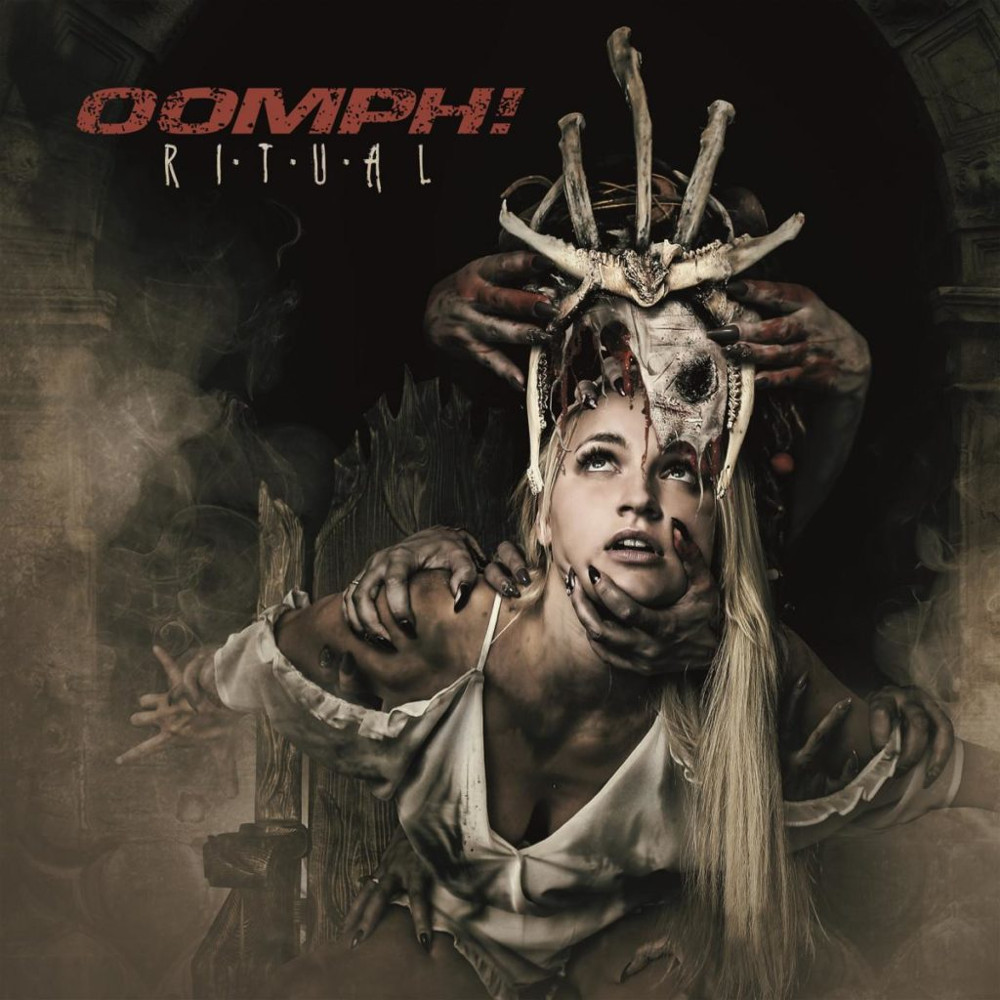
Oomph! - Ritual (2019)


Country: Germany
Style: Industrial Metal
Rating: 7/10
Release Date: 18 Jan 2019
Sites: Bandcamp | Facebook | Instagram | Official Website | Twitter | Wikipedia | YouTube

Rammstein are certainly more famous and more successful, but their fellow countrymen known as Oomph! established the Neue Deutsche Härte style back in 1994 with their second album, Sperm, a year before Rammstein released their debut, Herzeleid. What's more, Oomph! are still recording together and this, perhaps their lucky thirteenth studio album, is out on Napalm Records.

I'm sure they're getting fed up of Rammstein comparisons, but it's hard not to go there and not just because they play the same sort of driving militaristic dance metal with crunch. Like Rammstein, they sing primarily in German, the English album title not being extended to the tracks on it. Like Rammstein, they have never changed their line-up, with the core trio of Dero Goi, Andreas Crap and Robert Flux remaining in place since 1989, though they do add extra personnel when playing live.

Like many, I'm relatively new to Oomph! and I found this a solid effort. I found it little less immediate than what I'm used to from NDH music, which frankly has been pretty much restricted to the first half dozen Rammstein albums. I wasn't sold on a first listen and felt that it ran long, though my copy has a couple of bonus tracks and a remix. I appreciated it much more on a second listen.

That lack of immediacy may tie to the fact that, while tracks do try to distinguish themselves from each other in little ways, from the airplane noises on opener and second single Tausend Mann und ein Befehl, the cow at the beginning of Lass' die Beute frei or the sharpening knives on Seine Seele, all the songs tend to end up in similar places. It takes effort on the part of the listener to find their different grooves.

Only if we persevere can we really start to find the different tones. The album kicks off with a powerful militaristic song in Tausend Mann und ein Befehl (or A Thousand Men and One Order) but ends with a softer lament in Seine Seele (or His Soul). In between it sometimes leans towards a radio-friendly commercial edge, on Europa or the first single Kein Liebesleid (No Love Song), but sometimes to a harder and more brutal sound, like on Das Schweigen der Lämmer, which has a lead vocal in the Nick Holmes style, clean but with a steady and sustained rasp.

Oddly, one of the catchiest songs on the album is the least likely to be heard on the radio because it's entitled TRRR - FCKN - HTLR and, as it's the closest to the English language you'll find on this album, it's about precisely what you think it is. And there's a big difference between the band and Rammstein; I believe that Oomph! have managed to avoid a whole slew of controversies, political and otherwise. Writing a song as blatant as this can't hurt that track record.

There are a lot of NDH bands out there nowadays and Oomph! are about to tour with a couple of them, Nervenbeisser and Heldmaschine. I can't see Ritual becoming a favourite like Rammstein's Mutter but it's a good album and it may finally prompt me to look backwards into Oomph!'s considerable back catalogue and sideways to some of the other NDH bands. Hopefully it will do same for you.

Tuesday, 12 February 2019

Ædelric - Liquidmorphium (2019)


Country: Bulgaria
Style: Gothic/Industrial Metal
Rating: 6/10
Release Date: 31 Jan 2019
Sites: Facebook

This one leapt out at me for a reasons. For one, the band's name contains a diphthong, which automatically makes them cool. Hey, metal umlauts are so last millennium! For two, they seemed to be a gothic metal band from Bulgaria, but a little research tells me that they're not really a band. So, for three, this is a one man gothic metal band from Bulgaria. That's even better!

That man is named Alex and he had previously co-founded and played guitar in Renomane, about whom I know even less. I believe that he's responsible for everything here, except for the vocals on Deka Si, presumably, because Martin Lutzkanov has a guest credit there.

Oddly, Deka Si is the standout track, because it isn't the lead vocal that makes it special. It just contains far more imagination than anything else here, from its very beginning with a tribal drumming sound that evolves into a handclapping routine reminiscent of Nina Simone's Sinnerman. Then, a solo choral voice echoes the pounding bassline and escalates into full choir (and I have a special fondness for Bulgarian female choirs). If it really is Martin Lutzkanov's lead vocal, he provides a relatively subdued folk song underneath the incandescent choir. There's also a flute section and a spoken word section. There's a lot here and it's good stuff.

And that's not to suggest that it's the only imaginative track. However, the other ten put together might not quite match Deka Si alone on that front. Echoes of the Force has flute too, as well as piano. The title track showcases an odd contrast in vicious guitars and frantic cymbals but an almost ambient keyboard backing. Ædelric fleshes out an organic electronica landscape under a driving industrial guitar. Falling Skies does much the same and Sanity does too. Struggle for Life isn't that far away either, with its synthesised strings and choral soundscape.

That's probably the worst aspect of this album. While Alex does vary up what's in his tracks, he doesn't vary much further from one track to the next and many of these start to blur together when the playlist isn't in front of us keeping us aware of where we are in the album. Perhaps those vicious guitars become a little more black metal wall of sound on Ballad of the Death but that's hardly a debate into which anyone's likely to care to leap.

Like morphium itself, this is easy stuff to like but it's also easy stuff to drift away from our attention until it lurks in the background doing whatever it does away from our focus. It's more interesting and certainly more varied than the similarly instrumental Ancient Hawks album I covered recently, but there's little depth here to explore. It feels less like a coherent album and more like a scrapbook of ideas to aid Alex's future work.

Monday, 11 February 2019

Vapor Hiemis - Чараўнiца cмерцi (2019)


Country: Belarus
Style: Black Industrial Metal
Rating: 6/10
Release Date: 17 Jan 2019
Sites: Bandcamp | Facebook | YouTube

Here's an odd sound that grabbed my ear. Vapor Hiemis play pagan black metal but they're also either industrial or EDM, depending on the source, which translates to the fact that they have a programmed drum machine rather than a live drummer. They also have a band member who plays 'folk instruments', which is why this is often a folk metal album too. How it veers from EDM to folk metal is a wild trip and I'm still not sure how well it works.

It works well on the opener, Ад сонца прэч, with a driving beat, a crunchy bass and a lead bagpipe. The vocals vary from clean to harsh and it's only the slight distortion on the drums that lessens this a little. The title translates to Away from the Sun, which kind of works for an anti-folk song. The death folk approach hits its peak on the final track, Поўнач or North which adds a female folk vocal and I don't know how many folk instruments.

I dig the idea of death folk and Google Translate suggests that Чараўнiца cмерцi means either "death sorceress" or "fairy of the cemetery", depending on how I search. Either way, that's an enticing image to accompany the music and I soon found myself visualising the club scene in Blade with blood pouring from the sprinkler system as everyone feeds on the one unwitting victim.

I think I'd dig death folk more if there was a consistent sound here. The title track ditches the folk sound until late on and frankly ditches the industrial side too. The first half is classic black metal with appropriate shrieks and a sort of happy drinking song in the middle. The drum speed varies but hits some serious bpms at points. Only in the mid section does the wall of sound descend while the pipes of death wail. Then it's back to hyperspeed until a flute joins those pipes for the finalé.

The third track marks the wildest change to the sound, because it's when the EDM is ramped up, with Euro-disco hissing cymbals and a whoop of an electronic motif above and behind the crunch of the band. Maybe if the Prodigy had been born into the Norwegian black metal elite, they'd sound like this. Then again, maybe not. I was mostly intrigued by the idea of who might dance along to this.

Certainly I'm able to see the pit churning happily away but this is a lot more extreme stuff than anything Rammstein came up with. And always those flutes and/or pipes come back to provide the melody, like in the truest dance song, Памірае восень. That translates to Dying Fall so maybe it really is a moshing song.

By five songs in, I started to really wonder about Vapor Hiemis. Are they really a single band or is Vapor Hiemis Russian for "remix album"? While there are some commonalities throughout, these three tracks could easily have been the product of different remix artists messing with the black industrial base of a band who provide everything here but don't actually sound like this.

Maybe they're just that schizophrenic but the end result here feels like a band who play in different styles to different audiences but lumped all of that onto one disc and that decision will affect their potential audience. I dug some of their more folk metal oriented material, especially Поўнач, and didn't dislike their black metal onslaught tracks. I found myself surprisingly intrigued by the EDM stuff too but can't really say that it's my scene.

The point is that I don't know a lot of people who are into folk metal and black metal and EDM all at the same time. But hey, Vapor Hiemis have been releasing material since 2013 and this is their fourth album, so it's clear that there's an audience in Belarus for this. I applaud them for being their own band.