Showing posts with label darkwave. Show all posts

Monday, 8 January 2024

L'Âme Immortelle - Ungelebte Leben (2024)

Country: Austria
Style: Darkwave/NDH
Rating: 7/10
Release Date: 5 Jan 2024
Sites: Facebook | Instagram | Wikipedia | YouTube

Here's another band new to me who may not be to you, given that they've been around since 1996 and this is their fifteenth studio album. L'Âme Immortelle, which translates to Immortal Soul, are an electro-rock band from Vienna whose sound has apparently changed over time and back again. Initially, it seems, they played darkwave, but gradually got heavier and moved into NDH, a genre I still know far too little about, even though I do know Rammstein and have now heard Oomph! and an array of others. However, later on in their career, they apparently started moving back again.

All I know is what I hear on this album, which feels less like what I know as darkwave and more like NDH lite. All the elements I expect from NDH are here, except the crunch doesn't have the impact that I'm used to. They have all the setup that Rammstein have, and some of it has edges, but every time Rammstein would kick in hard with a huge back end, L'Âme Immortelle don't. Part of that has to do with them fundamentally being only two people, Thomas Rainer and Sonja Kraushofer, both of them vocalists with the latter the lead singer and the former also playing keyboards, which I'm presuming are the only backdrop to the voices. The beats are presumably programmed on a drum machine.

Its absence of that crunch means that this often reminds me more of eighties new wave, especially as Kraushofer sings with a pop voice. Rainer provides some darkness when he opens his mouth on the opener, Was Wäre, Wenn, because he has a harsh edge to it. However, he shifts to new wave as well on War of Silence, which is lighter again. It might be NDH without the oomph, if you'll excuse that pun, but it's also darkwave without the dark. It wouldn't have surprised me to discover that I heard this track a few decades ago and simply forgot. The heavier songs here are the ones where Rainer sings more, such as the title track, which he kicks off and which plays out as a duet.

The only song where both Kraushofer and Rainer sound dark is Nie genug, even though it picks up quite a jaunty pop beat. He's certainly darker than she is on this one but she plays along more and the result is irresistible. The fact that it also features plenty of dynamic play too is just a bonus. It probably helps as well that it's bookended by two of the poppier songs in Push and Nur für euch. I should add that I like both of them, even though it's mostly the heavier songs that stood out to me on a first listen and even more so on repeats, with one notable exception in the closer that I'll talk about next.

Kraushofer moves into more of a musical theatre style for Regret, initially a ballad but one that's built a lot further than ballads tend to go. There's musical theatre throughout the album, but it's most overt in the final track, Widerhall, which means Echo and is as creepily atmospheric as what we heard from Till Lindemann in the piano version of Mein Herz Brennt and for many of the same reasons. She simply commands our attention, even though the musical backdrop unfolding behind her is notably subdued except for one brief section two thirds of the way in. It's easily my favourite piece here, all the way to its delightfully underplayed finalé.

If that suggests that there's a heck of a range here, then I'm doing my job right. Initially, I wanted to figure out if this was rock or pop, which seemed like it would depend on which mode the band is going here, heavier NDH or lighter darkwave. What I found was that there are songs that have to be called pop, whether War of Silence, which is old school new wave, or Own Ways, which feels like something off a David Lynch album. However, there are songs that are clearly rock and they're not just the heavier ones. And, of course, there's the musical theatre aspect, which isn't usually what I tend to appreciate but which is right up my alley here. This is dark and expressive musical theatre.

That genre-spanning depth kept me listening to this for a few days to try to figure out its secrets. I know I like it but I think I have to be German or Austrian to grok how appropriate this combination of genres feels and I'm not. However, I'm finding it fascinating so I'll continue to dive into NDH and electro-rock when I can.

Wednesday, 27 October 2021

Plastique Noir - Iskuros (2021)

Country: Brazil
Style: Gothic Rock
Rating: 7/10
Release Date: 18 Oct 2021
Sites: Bandcamp | Facebook | Instagram

Beyond enjoying so much of what's coming out of South America, I'm always surprised at what genres they're tackling. Sure, they're shining in prog and thrash, but they're not location-specific. It's when a band records Celtic rock or Viking metal that I really start to wonder, but the results have been stellar and I eagerly seek the next surprise. And here it is, because the beach city of Fortaleza, on the north-eastern shores of Brazil, isn't where I'd generally expect a darkwave band to do their thing.

However, Plastique Noir have been strutting their stuff in the Brazilian underground for fifteen years now and this is their fourth album, six years after 24 Hours Awake. As such, I shouldn't be too shocked to discover that they could play the Whitby Goth Festival without anyone noticing that they're from a little further afield. The singing voice of Airton S. suggests that they may not even be able to tell from inter-song banter. He's very much in the Peter Murphy vein.

While I'm far from the world's greatest expert on this genre, the sound is very old school English goth, grounded in new wave pop but draped in darkness and with an electronic edge that's not only there in the beats from the inevitable drum machine but in the atmospheric overlay. Songs like Times feel like they're draped in fog as much as darkness. This is upbeat darkwave dance music rather than a descent into doom and it's hard not to move to it, especially when the driving grooves get under your skin, like on Asleep in the Night Train. Sometimes it's downright perky, if mostly because of the jangly guitar of Danyel Fernandes. Again, Bauhaus spring quickly to mind rather than, say, U2.

The point at which the album lightens up a bit is Scrying Your Soul at the beginning of the second half. It's the poppiest song up to this point, the closest thing to pure new wave (and stays as such until All Cats Shall Celebrate), but it's slower than everything else too, with a clear sense of melancholy in its introspective piano. It has a drive to it, but it aims for atmosphere more than the emphatic Sisters of Mercy groove that drove some of the earlier songs. It also has plenty of time to breathe, because it's easily the longest song here. Everything else sits in the traditional three to five minute range, but this one's a comfortable seven and a half.

It still resembles Bauhaus, but there are points where the vocal approach seems almost like Billy Idol was stepping in and trying to be Peter Murphy, and the very prominent bass is right out of the Peter Hook songbook. And, as the album ran on from there, I started to hear those influences even more. It could be said that Upper Waves is Scrying Your Soul condensed into under four minutes. It's perkier in that Billy Idol sort of way and that Joy Division lead bass of Deivyson Teixeira is suddenly unmissable, the guitar shifted to atmosphere generation.

Another oddity to note that's surely more of a reflection on me rather than the band is that there are a couple of songs late on, Kafé and Catedrais em Chamas, which are sung in Portuguese instead of English, but that shifted the songs in my mind firmly onto the continent, so bizarrely making them sound as if they had harder edges like the Germans tend to go with. I think that's unfair and it's just in my brain because Portuguese isn't remotely similar to German, but I couldn't unhear it.

It still seems strange and unusual for a darkwave band clearly primarily influenced by old school Brits like Bauhaus and Joy Division to be from an equatorial beach town in Brazil, but they sound very good to me. Whether they're upbeat and driving, like on Asleep in the Night Train or Manifesto, or slow and atmospheric like on Scrying Your Soul, they'd fit perfectly in and among all the usual suspects at any goth night anywhere and surely prompt some audience members to ask the DJ who they are. I certainly would.

Friday, 22 May 2020

Die Kreatur - Panoptikum (2020)

Country: Germany
Style: NDH
Rating: 6/10
Release Date: 22 May 2020
Sites: Facebook | Instagram | Official Website

While I've enjoyed Rammstein since the late nineties, I wasn't aware of the wider world of NDH until very recently. Last year, I discovered Oomph!, who technically created that genre back in 1994 with their second album, Sperm, so I was only a quarter of a century late to the party. Die Kreatur are new, so I'm in at the beginning this time, but the two key players, Dero Goi and Chris Harms, have been around the scene for a very long time.

Dero Goi is also the lead vocalist and drummer for Oomph! and, as with every other member of that band, he's been there since their founding in 1989. His musical partner here is Chris Harms, the lead vocalist and cellist in gothic metal band Lord of the Lost, a band that he founded in 2007 and has fronted every since. Both these bands are currently signed to Napalm Records, so it can't be too surprising to find this side project there too.

Now, I'm only one album into Oomph!'s back catalogue and I don't believe I'd heard any Lord of the Lost until I went wandering around YouTube today, so I can't remotely be sure here, but it seems to me that this album starts out a lot like Oomph! and gradually moves towards a Lord of the Lost sound. Maybe, when I come back to this review in ten years with better knowledge, I might have to Gibbs slap my younger self, but that's what I'm hearing now.

Early tracks, for instance, are often punchy and crushing, clearly NDM songs but with gothic piano and dark electronica, all driven by fast drum machine beats and eerie keyboard work. The best is surely Die Kreatur, appropriately for a song named for its band. I love the quiet parts as much as the heavy ones and there's a lot of variety within them that I like. Unzertrennlich is another stormer that erupts out of darkwave keyboards and beats, but it's a notch down on the crunchy metal guitar. Zwei 100% does much the same, which makes three out of the first five.

However, as the album runs on, the songs become a little less in your face, while retaining a similar mindset. Some, such as Mensch/Maschine, are highly regimented with slower, fixed tempos and fewer quirky moments. Others, like Was Mir am Wichtigsten Ist, which maybe tellingly translates to What is Most Important to Me, has quirky rhythms but still features much less in the way of crunchy metal. Untergang and Benutz Mich kind of fit here too, as they're mostly songs playing in this middle ground but which also amp up at points to pump metal.

In and amongst are songs that do something different and these grow towards the end of the album. Some lean more towards straight darkwave, eschewing a heavy approach for a keyboard-driven pop mentality with a strong beat. The first is early, Durch die Nacht, but Gott Verdammt and Goldener Reiter come at the end to wrap up the album. The other odd pair are Schlafes Braut and Glück Auf!, which are almost folk ditties played darkwave. The former is a deliciously dark waltz with glorious bass notes and deep vocals, while the latter is more laid back and friendly.

However it's structured, it's a generous album, running almost an hour and, with a pair of bonus pop-oriented remixes, over an hour. I'm not quite sure if this mixture of sounds works as a coherent long term project, but it does sound good and the highlights are excellent. For now, I'm thinking that Die Kreatur are at once a combination of its leaders' main bands and a hesitant departure from them. Let's see if a second album takes a wilder leap.

Monday, 29 April 2019

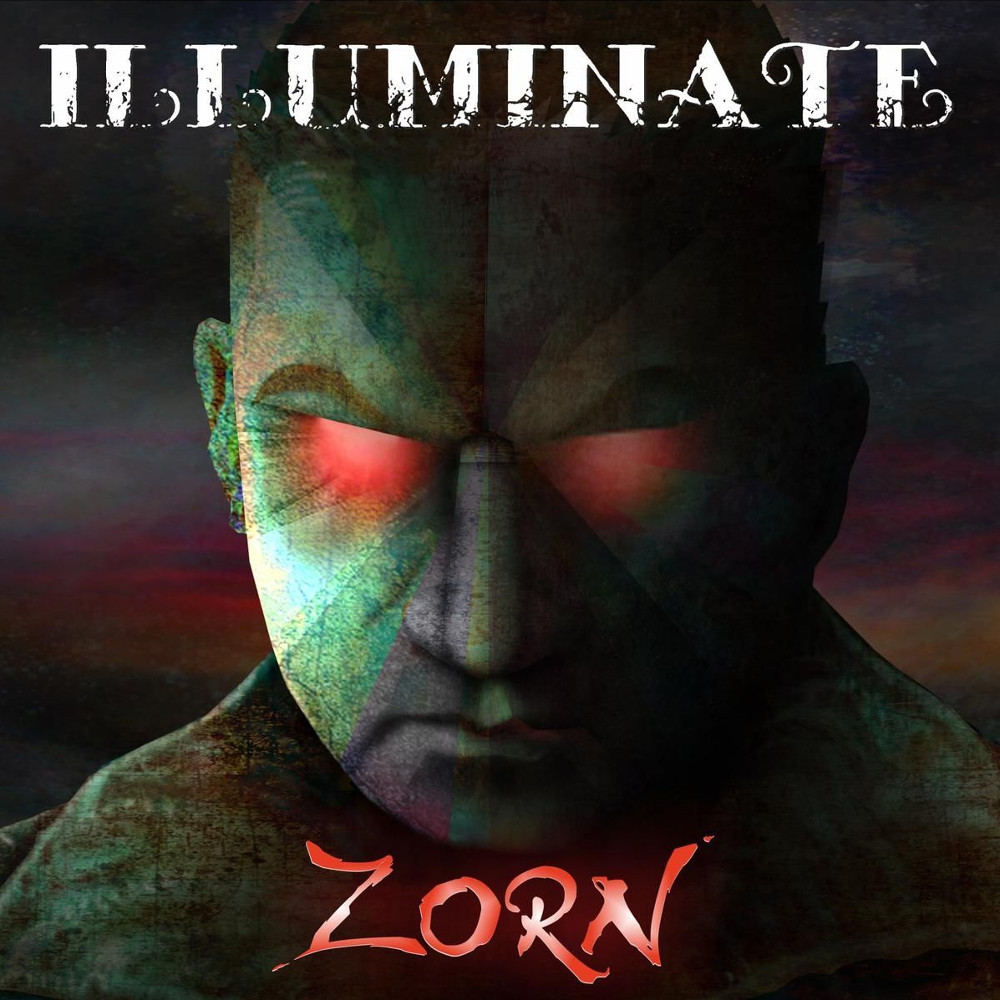
Illuminate - Zorn (2019)


Country: Germany
Style: Darkwave
Rating: 6/10
Release Date: 26 Apr 2019
Sites: Facebook | Official Website | Wikipedia

Here's something a little different. Illuminate are a German band who tend to be categorised as gothic rock, darkwave or even electropop, but they're clearly somewhere on the rock spectrum to my ears, even if they're in that spacious middle ground between, say, Enya and Rammstein.

For much of the album, they're closer to the Rammstein end of that scale, if not particularly close. They do sing in German, often with the abrasive but enticing combination of voices belonging to Johannes Berthold and at least one of his female counterparts. There's also an epic feel to their sound, a sound that swells magnificently and really ought to echo gloriously through the largest of arenas. However, they're a good deal calmer than their more celebrated countrymen who, having formed in 1994, are surprisingly a year younger than Illuminate, for whom this is studio album #14.

At points, though, "a good deal calmer" means really frickin' calm, not only during the atmospheric intro and outro or during the electronic stringsled build of Nach dem Zorn but especially on the tellingly titled Ein Moment der Stille, or A Moment of Calm. As with rather a lot of Zorn, it's driven by piano rather than guitar, but this one never kicks into high gear, content with a new agey style of romantic goth that's reminiscent of Enya, hardly the usual comparison I conjure up here at Apocalypse Later.

The rest falls somewhere in between.

The title track, for instance, starts out almost in gothic doom territory but builds for six minutes, mostly through Berthold's programmed drums, so it's pretty powerful by the time it wraps. Papierflieger aus Stahl pulses a lot over piano before Jörn Langenfeld's guitar kicks in and Berthold snarls at us. It's the duelling female vocals that make it special though and the most overtly gothic the album ever gets.

If the vocals define what genre the song falls into, it's the guitar that defines its tone. On Unser Abschiedslied, the guitar feels like it wants to do that again, more and more as the song runs on, but it never does, even though there's time for a solo in the middle, so the tone is very different, so much that it almost feels like a pop song rather than a rock song. With Ein Moment der Stille up next, things do quieten down a lot.

Perhaps that's why my favourite song, Vanitas, feels so powerful. Sure, the guitar returns to the fore and there's a strong build from the electronica, but, after Ein Moment der Stille, most songs would sound powerful. That this one actually is merely adds extra oomph and it stands out as an example of Illuminate getting heavy right after they emphatically don't.

This isn't going to be for everyone, but I enjoyed my first experience of a band who have been doing this for two and a half decades without me having any idea. Then again, even their website welcomes us with news of their new album, Ein ganzes Leben, released last February. Maybe publicity isn't their thing. Hey, they still have a MySpace link too. Bizarrely, it even actually works.