Showing posts with label Australia. Show all posts

Tuesday, 7 January 2025

Nick Cave and the Bad Seeds - Wild God (2024)

Country: Australia
Style: Alternative Rock
Rating: 7/10
Release Date: 30 Aug 2024
Sites: Facebook | Instagram | Official Website | Wikipedia | YouTube

My first experience of Nick Cave was oddly not musical, because I first encountered him as an actor giving an uncompromising performance in Ghosts... of the Civil Dead, an obscure Australian prison feature that he also co-wrote. Once I realised he was a musician, I had to check out his music and I was quickly hooked. Murder Ballads is probably my favourite album of his with the Bad Seeds, but on another day I might plump for Let Love In or Your Funeral... My Trial instead. I was firmly paying attention when he put out the very different The Boatman's Call, but I seem to have drifted away since then. I've heard some of his later albums but nothing's grabbed me the way his old stuff did.

So let's check out his new one, Wild God, which is his first album since 2019's Ghosteen, and which apparently features much more input from the Bad Seeds. Cave has continually reinvented what he does throughout his career, so I'm not shocked to find this different to anything that I've heard from him before. However, it's easy to see the evolution. There are plenty of moments here that owe a debt to The Boatman's Call, but the sparseness is gone, if not all the personal ache. What replaces it is a buoyancy that's always there but sometimes makes itself incredibly obvious.

It's there from the outset on Song of the Lake, the busiest song I've heard from Cave in decades. While Wild God is a more personal song, it erupts halfway through and suddenly it's every bit as buoyant as Song of the Lake. Frogs builds into buoyancy. Joy builds into buoyancy. Conversion may build into buoyancy more than anything else here, touching early but exploding into something of such import that it's impossible to not be affected by it. Eventually we realise that the swell is on every song, even when we think it's all calmed down to something more personal. It's like there's an angelic throng hovering above the album accompanying everything with joy.

The key line may be one from Joy, when Cave sings, "We've had too much sorrow. Now is the time for joy." He's always been a tortured poet, tearing apart his soul for the right word on album after album, and this album is no exception. However, every moment of pain is tempered by the vibrant joy in the chorus around him. This is gospel music really, even if it's not worshipping any particular god. It's finding revelation in the act of worship through music. It's weird to realise that this isn't an album of words, not really, even if a few stand out here and there. Cave may be a poet with his own singular voice, but this album is all about mood.

Above everything else, it lives or dies on mood. How did you feel coming into this album? How did you feel leaving it? Crucially, what's the difference between those two states and why? Are there any particular moments that prompted that or was it just the combined effect of three quarters of an hour of grand affirmation? There are moments here of traditional Bad Seeds groove, like in the second half of Cinnamon Horses, but mostly it's just pure emotion transformed into a musical form.

I'm not sure I can even call out highlights because I think I'll need to get to know this album over a much longer period than a day to decide on that. Wild God certainly grabbed me, and Conversion and Joy too, but I wonder if Final Rescue Attempt will end up being the song that actually speaks to me the way Cave songs traditionally tend to do. I have a feeling it might be but I don't know yet. I do know that the song that most people have raved about, O Wow O Wow (How Wonderful She Is) didn't wow me. Maybe it'll manifest its power to me after more listens, but I don't think so. It's an interesting song musically with unusual percussive effects, whistles and a tasty backing vocal, but it's not one that has connected with me yet, especially with the narrative section.

It isn't alone. I like every song here but I don't love every song the way that many people seem to do. I've seen it in a lot of top ten lists for 2024 and it's topped at least one. Even as a Cave fan, I'm just not hearing that level of accomplishment here. It's a good album, certainly, and maybe it's a great one. It does things that I'm not used to hearing from Cave, like focusing on mood over lyrics, and that's interesting. I felt the buoyancy too, which I think is the point, but I'm not going to find a struggle to move on to another album, which is something I've done before with Cave albums. Let me see how it settles.

Tuesday, 24 September 2024

Teen Jesus and the Jean Teasers - I Love You Too (2024)

Country: Australia
Style: Alternative
Rating: 7/10
Release Date: 20 Sep 2024
Sites: Facebook | Instagram | Official Website | Wikipedia | YouTube

I'm always on the lookout for what's coming out from down under and here's a gloriously named band who I'm listing as alternative but play a cross of pop and rock with a garage rock mindset and sometimes a punk urgency too. Their first album, released last year, was called I Love You, so this is naturally I Love You Too. I don't think I'm quite ready to declare unconditional love for them yet but this is bright and engaging and agreeably varied. It's very easy to listen to and its energy has an agreeably positive effect on the day.

That begins with I Used to Be Fun, which opens up the album with a perky form of energy, but it's Treat Me Better which really elevates the album. In fact, while I could (and will) pick out a host of favourite tracks, this one sits above them all. It starts out calmer but builds with serious effect in immaculate fashion. I love how this one bulks up and shrinks down again. It's a more imaginative song than the opener and it plays with some neat contrasts. The guitar tone as it bulks up is very tasty too, courtesy of Scarlett McKahey.

The bad news is that nothing else here matches Treat Me Better. The good news is that nothing is particularly interested in trying because the other songs have other things to do. The heaviest is a forty second track called Cayenne Pepper which rather hilariously, is artificially bulked up. Twenty seconds of it constitutes a slice of studio reality. The second half is a blitzkrieg of a punk song. The lightest is Your House My House, which is entirely unplugged, mixing vocals and acoustic guitar. If that gives a particular impression, I should add that the vocals sound like everybody in the band is harmonising together and the guitar is almost hiding in the background.

As you might imagine, songs like that rely on their melodies and hooks and, quite frankly, so does everything here. That holds for a pop rock song like I Love You, which is infuriatingly catchy with a kick to it. It holds for the songs that find and milk their grooves, like Backseat Driver, I Don't Want It and Kissy Kissy. The latter especially reaches a big singalong at the end, which somehow works even though some of those singing appear to be cracking up at the same time. And it holds for the odd tracks, like Never Saw It Coming, which is soft enough to feature strings, acoustic guitar and yet more harmonising. The lyrics are more visceral and the contrast is impressive.

The lead vocalist is Anna Ryan, whose Aussie accent shines through even when she's singing. It's a flavour for these songs that's unmistakable on a bunch of them, especially Backseat Driver and I Don't Want It. She also handles rhythm guitar, but McKahey handles lead. She's the primary way that these songs get different tones, hulking up for the powerful songs, coating everything in grit and grunge or finding a melodious chiming tone that almost reminds of surf music on mid-power songs and either dropping into acoustic mode or vanishing entirely on the softer poppier tracks.

That leaves Jaida Stephenson on bass and Neve van Boxsel on drums. As the rhythm section, they aren't there to do anything flash but the former manages it anyway on a few tracks. There's some wonderful prominent basswork on Backseat Driver and I Don't Want It. Everyone joins in on songs that need communal vocals and I believe van Boxsel occasionally sings lead as well. It always feels redundant to call out how a band works together because, of course, everyone in the line-up plays a part. However, there are bands dominated by vocals and others dominated by guitars. Here, it's very much a team effort; nobody dominates because everybody shares the spotlight throughout.

With acknowledgement to a couple of guest groups, Softcult and the Linda Lindas, who guest on a track each, I'll cheesily riff on the title of the final song, We Thought It Would Be a Good Time But It Was a Bad Time. It might have been for the singer or the character she's portraying in that song but it isn't for us. This is a good time album. Even at its grungiest, it's a happy album and would be even if there weren't so many glimpses of how much fun the band were having when they recorded it. It's not just the first half of Cayenne Pepper or the laughter in Kissy Kissy, it's all over the place, starting with the end of the opener. These are riot grrls with more than one meaning to riot. And this is a good time.

Wednesday, 8 May 2024

Thoraway - Navigating Nightfall (2024)

Country: Australia
Style: Heavy/Viking Metal
Rating: 7/10
Release Date: 10 May 2024
Sites: Facebook | Instagram | Metal Archives | Tiktok | YouTube

Thoraway hail from Brisbane in Queensland, which seems odd given that they play Viking metal. If you dug a hole through the centre of the world from there and survived a trip through it, you'd be in the Canary Islands and Scandinavia is quite a way north from there. However, given that three of the band members have names that sound like they might be Vikings themselves, it isn't a huge stretch. This album doesn't sound like it was written in Norway, mostly because Joseph Wiley sings entirely in English, but it does feel far more authentic than I expected it to be.

It's big and bombastic, often easily categorised as epic metal, but it's also both angry and melodic with a real sense of motion to it, as if the band are playing on a swaying ship that's sailing right at us at a fair clip. Wiley's vocals, occasionally deepened by backing vocals, hold a promise. Thoraway are, well, on their way. This holds for a couple of songs, Pianara and Greetings, which means thirteen minutes because the album isn't short but it only boasts five tracks. Wiley sings primarily clean but there are echoes of harsh for effect. It's all epic and powerful, as Viking metal ought to be.

And then comes Wild Child of the Night, at the heart of the album, to shake this up. Now, it's still epic and powerful, but it sounds very different to the two openers, mostly because the guitars are completely absent for almost a minute. This one has a strong slow groove built out of bass, drums and a commanding vocal and that groove continues even when the guitars show up in surprisingly dissonant fashion. In a way, the effect is very much the same, just more ominous because this ship is bearing down on us in slow motion. In a way, though, it's very different, because it's a story song and so it never gets closer to us than the page in front of us.

The bottom line is that these songs can't be ignored. Whether we feel threatened by this rushing ship or we feel welcomed in kinship by it, it's big and brash and utterly in our face, even when it's taking time for Jan Gustav Engmark's enjoyable bass solo during the second half of Wild Child of the Night and overtly during that song's woah woah sections and the repeated harsh "We salute you!" at the end. This holds as Bedtime Story takes over, because the theatrics that open it up are rather like a pirate, with all the traditional trappings, stuck his head through our window and stole us away into what we're going to hear. It's blatant stuff, but it works perfectly with the big and bold sound.

With the exception of Bedtime Story, the songs get progressively longer, almost as if the band are teasing us into what they do and getting deeper each time. Pianara kicks off over six minutes and Greetings is a little longer again, Wild Child of the Night is eight and a half and Einherjar (Army of One) is almost eleven. At a breath over six, Bedtime Story breaks that trend, but its intro helps it to feel longer than it actually is. It's long enough to feature a strong guitar solo from either Truls Nilssen or Martin Alexander Einarsen. On most of these songs, the riffs are more important than the solos, because of how they bludgeon, but the latter are still excellent.

Wild Child of the Night has to be my favourite song here, but Einherjar (Army of One) won't leave me alone, perhaps because Thoraway benefit from the added song length. It feels more versatile too, the general approach being the same but the harsh vocals emphasised more and a few more fast and extreme sections that go along with that. As if to counter it, there's a looser exploratory section midway that feels like the ship that is Thoraway isn't barrelling down on us but journeying nonetheless and finding itself in new waters. It's wonderful texture, all the more because of how heavy the sections either side of it happen to be.

I like this album, all the way to the comradely vocals that wrap up Einherjar (Army of One), almost like a drunken choir. Nothing about it is small. Nothing about it is subtle, except maybe that single stretch midway through the closer. It wants our attention and it's happy to grab it. It's also happy to sound very heavy, the bass end pumped up high and the solos always partly buried in the mix. It works because of the sonic assault but it wouldn't for another band, where we want the guitars to be as clear and free as the lead vocals.

I believe this is a debut album, following five singles, only one of which, Greetings, made it to the album, so I presume Thoraway are relatively new. Two members, bassist Jan Gustav Engmark and guitarist Truls Nilssen, were born in Norway, both in Bodø, so I'm guessing that their moving down under prompted this antipodean Viking metal band's formation. The rest of the band are Aussies, it seems, even guitarist Martin Alexander Einarsen, whose name doesn't suggest that, but they're on target with this sound. I look forward to hearing it develop.

Monday, 18 March 2024

Emergency Rule - The King of Ithaca (2024)

Country: Australia
Style: Stoner Rock/Metal
Rating: 8/10
Release Date: 9 Feb 2024
Sites: Bandcamp | Facebook | Instagram | Metal Archives | Official Website | YouTube

Metal Archives lists Emergency Rule as a southern metal band and I guess we can't go much more southern than Adelaide, South Australia. However I found this, their debut album, listed as stoner rock and that rings truer to me. There's definitely a southern flavour on The Hook, which kicks off the album, and there's as much metal here as rock, the majestic Something to Say as close to the old school Black Sabbath sound instrumentally as I've heard recently. However, I'd see Clutch as a powerful comparison, both in tone and approach, so hard/stoner rock seems to fit best. Of course, the band's own description of "Sabbath with attitude, Skynyrd with power" is pretty accurate too.

The other reason I'd call out stoner rock here is because there's also a powerful psychedelic sound here, starting in Garden and reaching its peak on the intro to Ulysses. The guitars—plural, even if many stoner rock bands are trios—get all mellow during verses on the former, which allows singer Doug Clark to endow his voice with some notable attitude. That only grows further on Bartender, which is a performance for him more than it's merely a song. Everything on this one is nuance for him, which is admirable because he's also the band's bassist, so is always doing far more than sing.

I can see Bartender being a lot of listeners' favourite song, but mine is Something to Say, because it's so impeccably old school that even the opening silence sounds like it was recorded in a studio in 1972. It starts out stoner rock but finds quintessential Sabbath riffs. Clark growls this one, so is nowhere near any of the various vocalists Sabbath had over the years, but I love that guitar tone and there's a glorious instrumental section, as indeed there is on a number of these songs, which benefits from there being two guitarists, Chris G and Callum Wegener. It reminds me that, even if a band has an obvious and strong lead singer, they can still absolutely deliver instrumentally.

It's why I always think of how tight Clutch are instrumentally, even though Ned Fallon often leads songs with his vocal phrasing. The same holds here and Emergency Rule are imaginative on that front. The mellow Sabbath guitars in Garden are part of that and they return on From the Grave, though that song also features perhaps the most overt southern riffs, along with what may be a banjo at points. So is that glorious psychedelic opening to Ulysses. Another is the inclusion of an unlikely instrument for stoner rock on Abuse, namely a string section. That's a cello, I believe, to provide the intro and there's a frequent underpinning of violins throughout the song. The cello especially works with this sort of heavy material.

The album starts strongly with The Hook and continues to be strong through the eight tracks most of which run in the five or six minute range. Something to Say was my favourite from my very first listen and that hasn't changed maybe seven or eight times through. However, which I'd pick as my next choice has changed often, because this benefits from each song being subtly different but of a pretty consistent quality. For a while, I'd have gone with The Hook or Ulysses, but gradually the second track has enforced itself. It's called Garden and it's a real grower, that does all the things I love about The Hook and Something to Say in one four minute song, with a neat psychedelic edge.

Emergency Rule have been around for a while now, having formed way back in 2011 with their line-up still intact from that time, but this is their debut album. It's obviously not their oldest material because their first two singles, Flag and a Medal and The Zealot, aren't included, so I'd dearly like to know why it took them this long to get this far, only to suddenly nail everything right out of the gate. And I'd also dearly like to know that we'll see another album in a couple of years, instead of waiting another decade and change.

Friday, 10 November 2023

King Gizzard & The Lizard Wizard - The Silver Cord (2023)

Country: Australia
Style: Psychedelic Rock
Rating: 7/10
Release Date: 27 Oct 2023
Sites: Bandcamp | Facebook | Instagram | Official Website | Twitter | Wikipedia | YouTube

I blinked again. I believe I've reviewed more albums by King Gizzard & The Lizard Wizard than any other artist, this being my fifth, but, every time I find a new one, I realise too that I missed a host more. My previous review was of Omnium Gatherum, which came out last April but they released Made in Timeland earlier in 2022 and Ice, Death, Planets, Lungs, Mushrooms and Lava, Laminated Denim and Changes after it, plus PetroDragonic Apocalypse earlier this year, whose seven tracks apparently serve as the yin to the yang of the seven others here. I can't keep up.

What's more, this album boasts two CDs, each featuring the same songs but with greatly different lengths. The regular album runs a mere twenty-eight minutes, making it rather short for anything by this band, but the other runs close to ninety, every one of these three to four minute songs over ten in their extended versions and the opener, Theia, over twenty. As you might expect, the short versions are snappier and more commercial and the extended mixes are more immersive. Oddly, the tracks on that earlier 2023 album add up to forty-eight minutes so it's an off balance yin/yang whichever way we look at it.

I haven't heard PetroDragonic Apocalypse, but it appears to be another metal album, following in the footsteps of Infest the Rats' Nest in 2019. This absolutely isn't, because it's electronica, though none of the components we think of as being associated with pop music make it so. This is still rock music, even if it's full of pop elements and comparisons will highlight that. For instance, Set is such electronica beats that it feels like house music when it starts out, with a tone right out of the new wave era and a lively attitude that's all seventies funk. Somehow, though, it ends up more like the Prodigy than any of the names you might expect, except perhaps Steven Wilson. He shouldn't be a particular surprise. The Prodigy only become more overt on Gilgamesh.

Notably, there are no actual guitars on this album, if I'm reading the credits right. However, there are plenty of guitar synthesisers. Similarly, I don't believe there are any actual drums, at least in the traditional sense, but there are electronic drums and drum machines. In fact, the core sound for the album stems from drummer Michael Cavanagh's impulse buy of a Simmons electronic drum kit. Fellow band member Joey Walker has said that "as soon as he plugged it in, I thought, 'That's the sound of the album right there."

What all that means is that hard beats are replaced by pulses and riffs are played on synthesisers rather than guitars, five of the six regular band members credited on synths of varied description, only Michael Cavanagh excluded because he's dedicated to electronic drums. Even then, two of his bandmates also have credits for drum machine. However, there are still beats and riffs and this is generally structured like rock music, most obviously a combination of prog and psychedelic, with a lot of Hawkwind in the effects but John Kongos in the drive of Chang'e and Yes in the vocal melody in Extinction.

I've been a fan of electronic rock music for decades, but this doesn't sound like any of the artists I listened to back in the eighties, like Tomita, Vangelis and Tangerine Dream. The latter are likely to be the closest comparison in that world, because they evolved substantially over the decades and became just as important to clubgoers dancing to the beats as those of us who sat in big venues to listen carefully to the depth of the music. However, I'm far less familiar with that era of their sound so I can't offer any comparisons. What I can say is that the Tangerine Dream influence is far more clear on the extended mixes with their long instrumental sections.

This is a fascinating album for me, because it's not remotely like anything I usually listen to, most obviously in the heavily manipulated vocals on the title track, but it is a King Gizzard album, so it's hardly unusual for it to be something completely different. That's kind of what they do. This is just new territory again for them and me. I'm not particularly sold on the short version of the album, not because it's all poppy electronica but because everything about it is so short. Every time they get a groove going, it's over to make way for the next track.

Personally, I'm far more into the longer version with the extended mixes, because the band are able to truly get their teeth into these vibes. I found more influences leaping out on these mixes too. I didn't hear Pink Floyd on the short version of the title track, for instance, but they're there on the twelve minute extended mix. And so, for rock and metal fans, especially those who perhaps found King Gizzard through PetroDragonic Apocalypse, this is definitely one for the open minded, but then that's kind of required for King Gizzard fans.

Monday, 7 November 2022

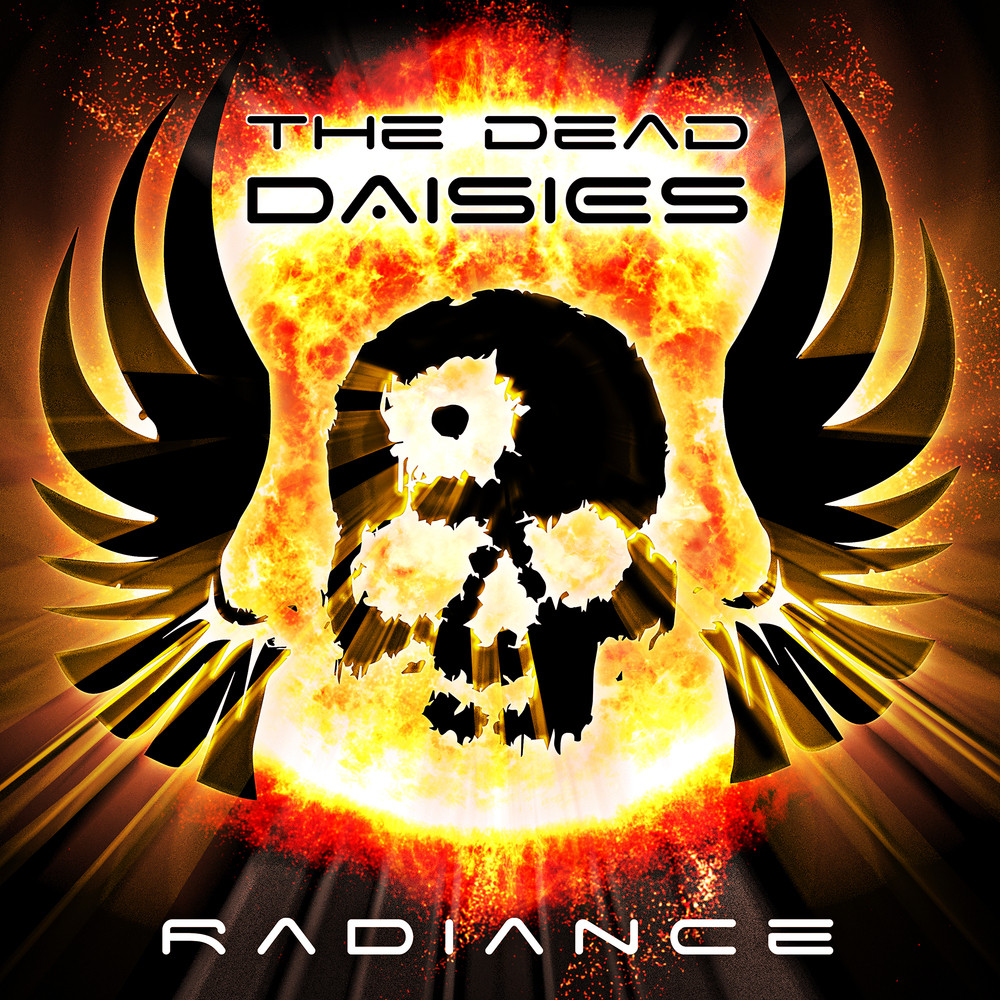
The Dead Daisies - Radiance (2022)

Country: Australia
Style: Hard Rock
Rating: 7/10
Release Date: 30 Sep 2022
Sites: Facebook | Instagram | Official Website | Twitter | Wikipedia | YouTube

It's only been a year since the previous Dead Daisies album, Holy Ground, but they're back already with a new one, which is their sixth. I had an odd reaction to that one, because nothing popped on the first listen but everything popped on the second. That's not a typical reaction for me, where it plays that black and white, but this album wasn't far different. Once again, most of these songs, as capable as they obviously were, left me dry on a first listen, only to pop nicely on a second. If there was a difference, it was that a couple of songs grabbed me a little quicker.

They waited a while though. It was Kiss the Sun, which kicks off the second half, that made me pay attention first. I think that's because it has a real mood to it. It looks and swirls and feels like it's a lot bigger than it is, as if there are a dozen musicians behind Glenn Hughes, who gets plenty to do and clearly has a blast doing it. He's a highlight throughout the album, as we all expect him to be, but he doesn't showboat to steal the spotlight. In particularly, the guitar of Doug Aldrich is strong throughout too and both of them seem to enjoy pushing each other just a little bit further.

Courageous followed it up well, achieving much the same effect, albeit not to the same degree. An impressively simple Sabbath-esque riff impressed on Cascade too, so that was three in a row on a first listen. The rest waited for the second and, once again, they all play in a way that remind of an array of influences without any song actually sounding like it could be by anyone else. That begins with the opener, Face Your Fear, which is half AC/DC and half Bad Company, the first half being the music for the most part and the second half being the vocals.

There's more AC/DC in Hypnotize Yourself, but not as much and not for as long. Hughes channels a soulful David Coverdale style for the verses before going back to AC/DC for the chorus, but there's a nineties feel to it too, as if some famous band from that decade were covering the Aussies, even if I couldn't tell you which one. Shine On has a heavier take on the same vibe. The fundamental riff shifts from AC/DC to Metallica, commercial era, though Hughes remains himself and doesn't take on either of those styles. That slightly grungy back end remains throughout as a backdrop.

If Hughes is channelling an influence, maybe there's some Chris Cornell there, but I'm stretching a little now. Hughes seems to have been around forever, even if he didn't join the Dead Daisies until 2019, replacing John Corabi—not a line-up change I ever expected to acknowledge—and he has an enviable back catalogue to trawl through. After all, he'd knocked out a couple of Trapeze albums a few years before joining Deep Purple in 1974, the first of them a year before I was even born and I can't be described as a spring chicken in my second half century.

What's telling here is that he still feels fresh. He's a little further down in the mix than I'd expect, which means that it can feel like he's surrounded by four walls of sound. He often seems happy for that during the verses of a song, only to elevate himself into a more overt chorus with emphasis. I love that he still has such passion for music that he's still evolving his sound. I wonder if he sees his efforts with the Dead Daisies as a way to look forward musically as a counter to the way he's able to look backward with Black Country Communion. I realise that's an overly simplified take but it's not an unfair one.

And all this talk of Hughes means that I'm not talking about Doug Aldrich, which is unfair because he's actually the highlight for me across a swathe of this album. It's Aldrich who sets the tone on a song and he delivers some serious solos. The best one early is on Hypnotize Yourself but he's even better on Kiss the Sun and Courageous, the latter of which sneaks past the former to be my choice for the highlight of the album, perhaps with Cascade behind it and maybe Shine On or Not Human after that. He's hardly a new fish either, with decades of work with bands like Dio and Whitesnake going back to Bad Moon Rising and Lion. He's stronger here than I remember him last time out, but I've been a fan for a long time.

I should mention the other members of the band, given that David Lowy is the Dead Daisies' only founder member and the driving force behind them. He's on rhythm guitar as always, while Brian Tichy is back on drums, oddly on his third stint in a band that's only been around for a decade. This is his first album back and only his second with the band after Make Some Noise in 2016. They seem very tight but then this band has maintained a revolving door of a line-up throughout their time. I wonder if that's partly why they can keep knocking out albums and for them to keep sounding this good.

Wednesday, 2 November 2022

Toehider - I Have Little to No Memory of These Memories (2022)

Country: Australia
Style: Progressive Rock
Rating: 7/10
Release Date: 9 Sep 2022
Sites: Bandcamp | Facebook | Official Website | Prog Archives | Twitter

I hate using the word curiosity, because it conjures up ideas of novelty Christmas singles and that is absolutely not what this is. However, it's a curiosity to me because it does everything and that's kind of the point. That does not mean that it's not immersive and fascinating and worthy of many returns, because it is. Even Mike Mills, the one man behind all Toehider music, acknowledges that "it sounds like a sonic journey through the last 50 or so years of prog rock and metal." While I should clarify that this is far more prog rock than it is metal, he's not wrong.

This is a fifth studio album for Toehider in just over a decade, but that doesn't explain how prolific Mills really is. There are also a whole slew of singles and EPs, which include the twelve he released in 2004 alone, a gimmicky approach that makes him a little less prolific than Buckethead but more than most bands. And he's one guy.

To make this album as accessible as possible, he opens with the single version of The Hoarder, one lively three minute chunk of a larger piece. It's busy and upbeat and rather schizophrenic, because Mills covers a heck of a lot of ground in such a brief span. There's Queen here for sure, but there's plenty that's more modern too, including some post-production glitching for effect. Some of it's as light as a single release might suggest but some of it's pretty heavy too and there's an alternative vibe to what we could call the chorus. It takes a little adjusting to but it's a lot of fun.

And then we get the larger piece that it's excised from, which is the title track that runs for a full forty-seven minutes and forty-seven seconds, as if there's some sort of numerological meaning to it. It's a vocal piece, with the drive of the lyrics having to do with the modern take on memory, an abiding need to experience everything through recordings, even if we're there live. Some sections are clearer to catch than others, but I never managed to follow this lyrically. I was too absorbed in the music. And there's plenty of that.

Initially, though, it's only a vocal piece, because it features half a dozen parallel universe versions of Mike Mills harmonising together, sounding like a bizarre hybrid of Yes and Queen. There are an array of high and low pitches, words and vocalisations, eventually operatic grandeur. Then it shifts quickly into music, as immediately frantic as Liquid Tension Experiment would make it. And we will either find ourselves lost in a bad way, like "What the hell is going on here?" or lost in a good way, because we dig that we have no idea what's happening and let it wash over us until we figure out some of it.

And I recognised a lot of styles. There are ELP keyboards early on. There's some Ian Anderson type vocals a little later. There's some Genesis. There's definitely more Yes in the layering a quarter of the way into the song. That's a great period because it shifts into something sassy and funky, only to shift back to Yes again. The sheer variety on offer brings Mr. Bungle to mind, but this rarely has anything else to compare directly with that famously schizophrenic band. There's definitely genre-hopping here, but within the rock and metal spectrums rather than beyond it.

The first and only logical stop is at the sixteen and a half minute mark, where everything ends for a moment and the tone changes completely. My second favourite section is here, because the new sound grows as a swirling synthesiser from which a slow riff gradually materialises. There's Black Sabbath here, of course, and early Sabbath even if Mills's darker voice is closer to Dio than Ozzy, but there are hints of doom metal from much later too.

My favourite section comes later still, around the twenty-six minute mark. It's all bouncy seventies keyboards at this point, with obvious drum programming, but it grows into a sort of maelstrom of heaviness that bursts wide open into riffs. Somehow it finds a way back to keyboards, but they're 8-bit keyboards from the eighties. It's gloriously inventive and it ably highlights how magically Mills can segue from one style into another and back again before going somewhere completely wild in what seems like a completely effortless manner.

Who else is here? There's some Blue Öyster Cult, for sure, in the most commercial section, which is oddly sped up until it finally decides to slow down. However, I feel like I've only scratched a surface of the surface, because there's an astounding amount of depth here. I dig prog rock and I've heard a lot of it, not only from the seventies British standards but from much further afield. However, I'd love to watch a YouTube reaction video to this made by someone who dived into prog in 1970 and is rarely found listening to anything else. I want to know what else is here.

And that's either sold you on this album or driven you completely away from it, depending on your particular tastes. Which is fine. I should add that there are two different endings to this song, one on the CD and the other on the vinyl release. So if you find yourself in the former category, maybe you need to buy this twice.

Wednesday, 19 October 2022

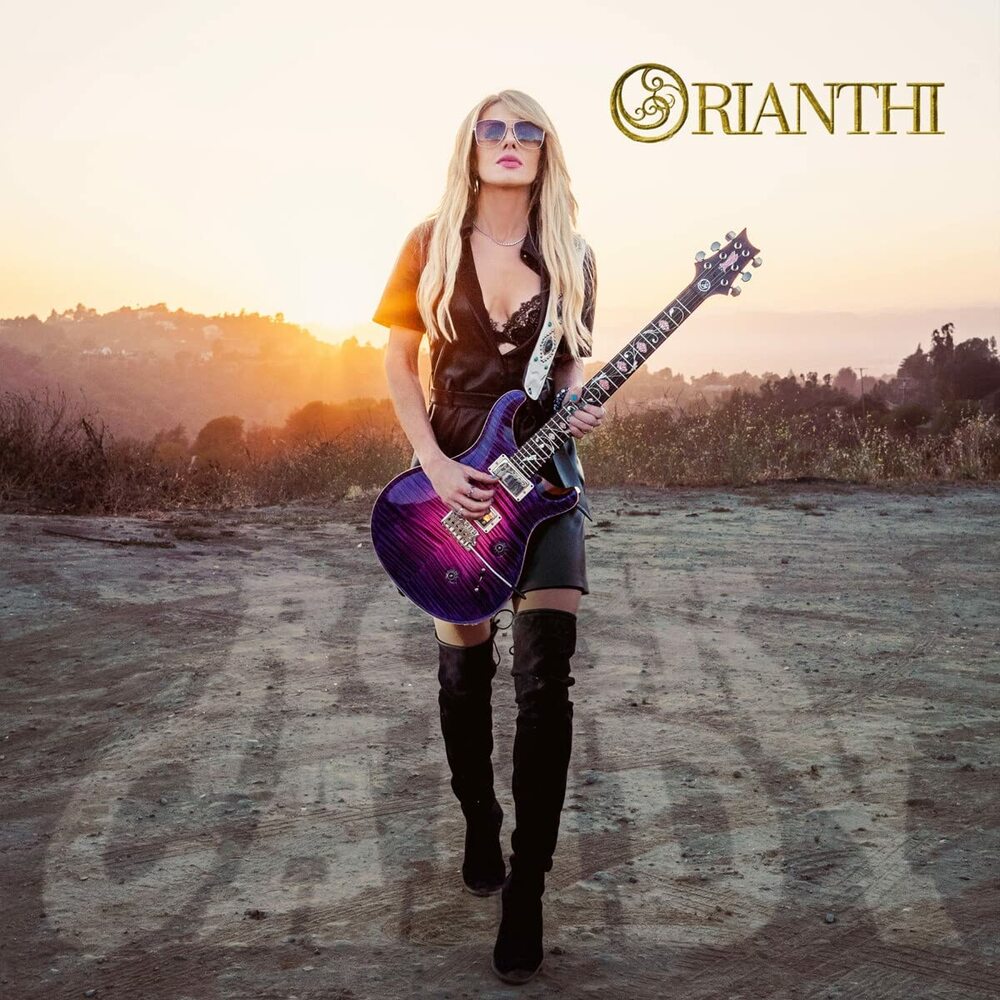
Orianthi - Rock Candy (2022)

Country: Australia
Style: Hard Rock
Rating: 7/10
Release Date: 14 Oct 2022
Sites: Facebook | Instagram | Official Website | Twitter | Wikipedia | YouTube

I liked Orianthi's previous album, O, released a couple of years ago, and I like this one too, for a lot of the same reasons. She has an unusual sound, because it's rooted in pop music but she's clearly a hard rock guitarist with fast fingers. That approach gives a lot of range to explore on an album like this and she obviously has fun doing that, including the two instrumental bookends, Illuminate Pt. I and Pt. II, which feel like they could have been on a Steve Vai solo album. In between are nine real songs that cover plenty of ground.

The first, Light It Up, is hard rock through and through, with a grungy guitar tone. Fire Together is softer, with a dance vibe to it as if it's a rocked up cover of a pop song. However, there's still a nod to Led Zeppelin's Misty Mountain Hop to underline its rock credentials. Where Did Your Heart Go is both pop and country, sassy from the outset with its fingersnap beats. And yet, whatever genre these songs start out as or hint towards, the guitar solos are always somewhere on the spectrum of rock music, from acoustic to hard towards metal.

And, of course, the guitar is why we're here because, while Orianthi's voice is good enough, not to mention versatile enough, to give her a day job using only that instrument, she's known primarily as a guitarist and she blisters on this album when she wants to. Conversely, what makes it work as a collection of songs is that she doesn't show off, letting her songs grow and do their thing before adding something special for the solo. And then, for the most part, she calms that down again so the song can wrap up the way it should.

While Light It Up and Witches & The Devil are the heaviest and most intense songs that the album has to offer, I'd have to call out Where Did Your Heart Go for its guitarwork. It's minimally acoustic to begin with, then adds a gorgeous fluidity in the Mark Knopfler style partway and ends up with searing purity. It's a good song, entirely apart from what the guitar does, but it's the one where I can't stop listening to that guitar, whatever else the song does.

And so it goes. There's a pop mentality to the melodies, presumably representing the candy in the album title, but the solos are all hard rock and they're joyous. I have to admit that I'd love to hear what Orianthi can do over forty minutes on an instrumental album, the way that legends like Joe Satriani or Steve Vai do. She has so much nuance that she doesn't just need to shred like those old Metal Blade albums; she can take that time to explore just how much she can do with her guitar. But that would be a very different album.

And, to be honest, I dug this from a guitar aspect but I dug it as a collection of songs too, whether they have a heavier feel like Light It Up and Void, a lighter one like Living is Like Dying, an acoustic country song, or somewhere in between. Whatever the tone, the song ends up perky, ever upbeat even when the guitar sounds grungy or sleazy. It's telling that they're all short, nothing here over four minutes and only four songs over three. Witches & The Devil doesn't even make it to two and all that means that the album feels like it's a lot shorter than the thirty-one minutes that it runs.

Because it's so perky, being that short means that it's almost instinctual to just play it again and that only serves to let the songs get their hooks a little deeper into us. After three or four times through, it felt like I'd been hearing these on the radio for weeks. And I think that's a good thing. It means that this is a better album than its title and deceptive accessibility suggests that it is.

Monday, 15 August 2022

King Gizzard and the Lizard Wizard - Omnium Gatherum (2022)

Country: Australia
Style: Psychedelic Rock
Rating: 7/10
Release Date: 22 Apr 2022
Sites: Bandcamp | Facebook | Instagram | Official Website | Twitter | Wikipedia | YouTube

Every time I blink, it seems like King Gizzard and the Lizard Wizard have knocked out a new album. I reviewed both their 2019 albums, Fishing for Fishies and Infest the Rats' Nest, missed K.G. in 2020 but caught L.W. in 2021. I completely failed to notice Butterfly 3000, also a 2021 release, and Made in Timeland, which came out in March of this year. Only a month later, they knocked out this one, a wildly varied eighty minute trip through pretty much every style they've ever played in, plus a few more for good measure.

Just to highlight how long that is, The Dripping Tap is an opener that runs a frantic eighteen minutes but the album would still exceed an hour even had the band left this one off entirely. Fortunately, they kept it in because it's a pristine example of the core King Gizzard sound, a dense psych jam of epic proportions with relatively simple, repeated vocals that became almost hallucinatory, and an interesting spiritual pop theme that opens the song and returns every once in a while. It's exactly what someone new to the band and bewildered by their diverse output should start with, though I would still suggest their Polygondwanaland album first.

The problem here, should we see it as a problem and I think I'm leaning towards doing that, is that The Dripping Tap doesn't sound like anything else here and that's a solid trend. While, in the past, the band has tended to do their genre shifting from album to album, so that Infest the Rats' Nest was internally consistent but very different from Fishing for Fishies, for example, there's a heck of a lot of genre shifting going on within this one. That makes the album's title appropriate, because Omnium Gatherum translates from the Latin as a miscellany, the collection of different things into a single new package.

The psychedelia of The Dripping Tap does give way to more psychedelia in Magenta Mountain and that's followed by still more psychedelia in Kepler-22b, but the former is a rock jam and the latter pair are dream pop songs. They actually work well together as a reminder that psych is a versatile genre, but don't expect the album to stay even that consistent.

For instance, having gone through two different styles in three songs, Gaia shifts clearly from rock to metal. It has a completely different tone throughout, it's built on riffs rather than grooves and jams, and the vocals flirt with harshness. It's a decent song and there's some of that psychedelia in its midsection, but it mostly feels like someone switched the radio station on me and I couldn't find where to switch it back. Predator X is another song that leaps towards metal but doesn't quite get there, remaining in a trendier, more modern American territory, like Static-X than the Voivod meets Pantera style of Gaia, so explaining the song title, I presume.

And yet Gaia rolls into Ambergris, a funky lounge song that feels like it ought to have seen release on some obscure album on a laid back jazz label in the late seventies. What's important is that it's the fourth King Gizzard on this album in only five songs and that shapeshifting is only beginning.

Sadie Sorceress incorporates rap, which I haven't heard in the King Gizzard sound before, though I have to say that it's a fascinating piece of music that I'd actually call out as a highlight. They return to this on The Grim Reaper and that's a thoroughly enjoyable song too. I appreciate the skill that's needed to rap properly than I enjoy most of the results, but these are fun and vibrant songs.

Wherever King Gizzard goes musically, though, psychedelia is never too far away, something that's isolating to a song like Gaia that just doesn't want to do that. The Garden Goblin keeps a rap beat but adds a quirky scenario-based lyric approach that reminds of Madness of all people. It's almost like the Cardigans took acid to cover House of Fun, but wrapping up with a squealy jazz saxophone. Blame It on the Weather sometimes sounds like a mashup of John Kongos and the Bee Gees. Both have psychedelia in there too and Red Smoke returns to the dream pop psych from earlier, almost like a twee cover of the Doors, especially once it gets to the keyboard solo. Candles is even softer and The Funeral finishes up in that vein as a short coda with an ethnic flavour.

The big question that hangs over this album like the Sword of Damacles is whether it manages to find a way to make all this admirable diversity feel consistent enough to make sense. And that's a tough call. Much of it, sure. It's just psychedelic pop/rock exploring its boundaries. But some of it's harder to reconcile. Gaia is a jarring change, as good as it is, and so's Presumptuous in a different way because it's lounge and funk, a chillout with its psychedelia explored with a flute. Where I see the album coalescing best is Evilest Man, a blurring of much of what's going on with these varied songs. It has its psych jams and its dream pop but it's ramped up towards acid-drenched disco and, on occasion, even space rock.

I'm going with a 7/10 here because everything's done really well, even if it doesn't fit, but I realise that I'm stretching. It would be just as valid to give it a 6/10 for including material that would have played better on a different King Gizzard album or as a separate EP. After all, there's maybe forty minutes of consistent material here that would seem both diverse and consistent if the other half was shifted out and the band chose not to do that. I'm seeing it as a mistake. Maybe you won't.

Tuesday, 14 June 2022

Reaper - Viridian Inferno (2022)

Country: Australia
Style: Black/Speed Metal
Rating: 6/10
Release Date: 22 Apr 2022
Sites: Bandcamp | Facebook | Instagram | Metal Archives

Melbourne-based Reaper tend to be listed as black/speed metal and there's truth to that, but the sound they conjure up goes back to the proto-extreme era. I'm not hearing black metal bands here but I am hearing all the pioneers here. The album begins with an early Bathory groove in Shadow of the Crucifix and stays there for a while, adding a Venom sense of urgency in faster sections and telegraphing of when those will show up, like on the intro to Drop of the Blade. This isn't as fast as you'd expect from a band labelled speed metal but it is always urgent, even in slower sections. By the end of the album, they've also trawled in Celtic Frost, especially on Internal Torment, which is the closer.

The other influences I heard are out of punk rather than metal. Taste the Blood speeds up a little more than the opening couple of tracks before it, but it feels very much like the songwriters were listening to bands like Discharge and GBH as well as those proto-extreme metal bands. As the song gets bouncy in its second half, the metal side reenforces itself, but it never loses the punk attitude and rawness, which, of course, Bathory took and ran with. Given all this, I frankly expected to catch a lot of Motörhead but that influence kept itself hidden, most obvious in the bass on like Nothing Left to Waste, and that surprised me. Lemmy's here more than Motörhead.

Given the band's choice to go with this sort of sound, I also expected them to be older musicians, a group of like minded fans who remember these particular good old days and got together to make new music that could have come out back then, but that doesn't seem to be the case. They clearly aren't teenagers but they're also clearly at least a generation younger than I am, so they weren't around listening to those pioneering albums when they came out. I wonder where the impetus for this sound came from, because I'm sure there are stories there.

Initially the most obvious component in this sound is the utterly raw and raucous voice of Shannon Styles, who bears as much comparison to people like Blaine from the Accüsed and George Anthony of Battalion of Saints as to Quorthon of Bathory. However, as the album runs on and especially on repeat listens, it's the bass of Rebecca Tovey that becomes most notable. Partly because that bass is so high in the mix and partly because the guitar is downtuned close enough to it, it tends to take over songs. Sure, that's guitar feedback kicking off Nothing Left to Waste but the bass takes over so much that we almost forget that the guitar's there. It's Tovey who drives this band.

I liked the dirtiness of the sound from the outset, but it took a little longer for the songs to take a hold of me and, after a few listens, they started to drift away again. That left me in an odd place of liking the album more than the tracks on it, if that makes sense. I don't feel much need to play any of these songs over others, even the best of them, like The Reaper or Taste the Blood, but I do feel like I could pull the album out now and again to immerse myself in its sound. There's a griminess to it that really takes me back.

It reminds me of underground gigs in the late eighties in tiny, sweaty venues in Bradford or Leeds featuring bands who weren't particularly notable but blistered for half an hour nonetheless, then wandered off to the bar. I almost wandered off to flick through the stack of albums someone must have been selling at the back, by an array of bands I've never heard of but had "pay no more than" on the cover and inserts in them exploring the evils of eating meat or experimenting on animals. I bought a bunch of them, even if I stopped for a burger on the way home. This could have been one.

Thursday, 3 March 2022

The Neptune Power Federation - Le Demon de l'Amour (2022)

Country: Australia
Style: Psychedelic/Hard Rock
Rating: 7/10
Release Date: 14 Feb 2022
Sites: Bandcamp | Facebook | Instagram | Official Website

I encountered the Neptune Power Federation on their previous album, Memoirs of a Rat Queen in 2019, which I believe was their fourth. I labelled it psychedelic rock, but there was a great range in their sound, trawling in AC/DC, Jefferson Airplane and Motörhead, to name but three. I liked that album a lot and I like this one too, because, even though it sometimes sounds derivative, it never ceases to surprise by taking a left turn into something else.

Case in point, Weeping on the Morn, the eight minute opener. It shifts from an AC/DC swagger to a heavy take on the Heartless Bastards, the voice of the Imperial Priestess Screaming Loz Sutch a massive asset to the band. She's not tall, at least she puts on one of her massive headdresses, but her vocal stature is gigantic. And, just as we've nailed the sound of this opener, it changes utterly, giving way to liquid psychedelic guitar and hints at folk and glam and all sorts of other genres, as it builds back to the emphatic belt it began with, with a blistering guitar solo at the end.

I couldn't tell it from the songs, but all eight songs here are love songs, as befits the release date of Valentine's Day. The band apparently aren't happy that heavier rock bands aren't taking love songs seriously, so attempted to redress the balance. I can't say that they did that, but they're on top form generally, with every song (except the last one) simply dripping with that no nonsense, in your face attitude that's so common to Aussie rock music, from AC/DC to Airbourne, via anyone on a stage anywhere in the country. A lot of it's driven by the drums, but everyone happily plays ball to make everyone in any audience pay attention.

As with the previous album, the influences vary across the album. Loving You is Killing Me is built out of AC/DC power chords and that huge voice. Emmaline starts out with Black Sabbath riffs but softens up in a hippie way, the backing vocals suggesting that the ceiling on the recording studio is fading away and bathing each musician in light. Madly in Love is a catchy pop punk number. The intro to We Beasts of the Night riffs on Meat Loaf's You Took the Words Right Out of My Mouth, a knowing hint at what's to come, because it's a power ballad very much in the Jim Steinman style, as a clear tribute to both of them.

The biggest shift in style from one song to another has to be from My Precious One to Baby You're Mine though. The former kicks in like Motörhead with fuzz, though the Screaming Lord takes it to a very different place than Lemmy would have done. It's a heavy but accessible song, While Baby You're Mine is sassiness on legs, still psychedelic rock but phrased like a girl band taking on disco. It's endlessly fascinating, somehow incorporating Chic, Atomic Kitten and Jet, even adding a folky guitar section midway, but never leaving a recognisable Neptune Power Federation sound. That's quite the statement right there on their impressive versatility.

If there's a surprise here, it's that the voice definitely sits behind the guitars in the mix, which are definitely the foreground instruments, there being two of them, but Loz knows full well that she's more than able to outstrip them whenever she takes a fancy. She does so on more than one track. I'd name the guitarists but I'm not sure who they are right now. They were Inverted CruciFox and Search & DesTroy on the last album and may well still be, but I'm not finding a band roster to firm that up. Screaming Loz Sutch is unmistakable, but the only other name I can confirm is the guest on We Beasts of the Night, which is Chris Penney of Private Function.

Whoever's playing on this album frickin' rocks. That is all.

Tuesday, 18 January 2022

Frozen Planet... 1969 - Not from 1969 (2022)

Country: Australia
Style: Psychedelic Rock
Rating: 7/10
Release Date: 11 Jan 2022
Sites: Facebook | Instagram | Twitter

I hadn't heard of Frozen Planet... 1969 until recently, but they're a psychedelic rock jam band from Sydney, Australia and they've knocked out a bunch of albums in the past decade, each of them an entirely improvisational effort. I don't know how much preparation they put in before visiting the studio, but the songs are improvised jams. In fact, even on Bandcamp, this tenth album is credited as "Improvisation by Paul Attard (guitar), Lachlan Paine (bass), Frank Attard (drums)". I believe a few of their albums are improvisations on previous songs, so it may be that they have a base idea ready in place to build on in the studio.

As you might expect, these are extended jams, so the three quarters of an hour (exactly) comprise of only three pieces of music, all instrumental because, understandably, nobody in the band aims to conjure up a set of lyrics on the fly. Dissolver is the epic at an impressive twenty-seven minutes, but Strangelands, which is my highlight, runs seven, and that comes after opener Diamond Dust, a ten minute plus jam that was easily the weakest link for me on a first listen but continues to get a little more under my skin each further time through.

It's still the least of the three tracks, but the back end is getting to me. Lachlan Paine's bass amps up the fuzz and Paul Attard's guitar weaves its way through some middle Eastern melodies but it's the drums of Frank Attard that elevate it for me. They're relentless, not planning domination but ruthlessly keeping time, like Stefan Kaufmann did on Accept's Princess of the Dawn, albeit with a few more fills here and there. It's his fills that play with the tempo, which could so easily have got increased at a hundred moments but he stubbornly refuses to do that.

Strangelands starts off well with a good first half, but it's the second half that utterly sold me on Frozen Planet... 1969 and this album. Paine finds a fantastic groove, that's a little reminiscent of the bass line in On and On, from one of my favourite albums of all time, Saigon Kick's Water. That works perfectly under Attard's guitar, which wails and oozes rather like the talk box guitar Dean Parks played on Steely Dan's Haitian Divorce. It feels like a conversation and it's wild, mixing the funky bass with the psychedelic talk box and creating something sublime. It gets more fun every time I listen to it, though that does highlight how much it comes alive halfway. The first half isn't bad and it isn't that different, but the musicians don't nail it until almost four minutes in.

I'm not going to talk much about Dissolver, because it's such an epic jam that it's best to just lose yourself in it. It's bubbly from the outset and it builds well, but there's so much going on that it's always going to mean a lot of different things to different people. What I will say is that it speaks volumes about the confidence of this band that they can come into the studio to knock out a tenth album, maybe with some basic ideas of what to improvise around, but just jam for almost half an hour and make the entire thirty minutes worth listening to. You might imagine highlights, but it's strong throughout.

The other thing I should highlight is that it was Paul Attard's guitar that grabbed me first and it's Lachlan Paine's bass in Strangelands that sold me on the album, but, every time I listen through, I leave it more impressed with Frank Attard. Sure, he's notable on Diamond Dust as much for what he doesn't do as what he does, but he's utterly magnetic on Strangelands and he does a heck of a lot on Dissolver. I need to listen to this another dozen times just to figure out everything that he's doing.

Wednesday, 15 December 2021

Obnubilo - Nascentes Morimur (2021)

Country: Chile/Australia
Style: Avant-Garde Black Metal
Rating: 7/10
Release Date: 5 Nov 2021
Sites: Bandcamp | Facebook | Metal Archives

It's been noticeable for a while that the metal subgenre that's being stretched most beyond what boundaries we used to believe it has is black metal. Sure, there are bands still playing the sort of raw black metal with deliberately crappy production values that we heard on the Bathory debut in 1984, but there are also bands merging the style with others as seemingly far flung as bluegrass, ambient and jazz. I don't envy the musicologists who have to track this evolution, but I can enjoy a lot of it, especially given that black metal also seems to house more dedicated musicians than any other metal subgenre. Half the black metal out there are made by one man bands and those men tend to be involved with half a dozen projects at once, with another dozen behind them.

Obnubilo is an international collaboration between musicians from Chile and Australia and this is its first release, featuring a suitably bleak title for the genre: Nascentes Morimur is the Latin for "When we are born, we are dying". All the instruments are played by Niklas K, who also wrote the music, while the vocals, both clean and harsh, are contributed by AP and Ben T. Sheehan, with the latter also responsible for the lyrics, whatever they are.

Niklas K is one Chilean part of this equation and it doesn't surprise that this is one of eight active projects for him, though he's credited under many names on the others: Ulf Kveldulfsson, NK, Kve, Niklas and Niklas Kveldulfsson for a start, with product on the shelves as Forestfather, Er Murazor, Æra, Deveneror and Swarm of Hatred. Also Chilean is AP, or Sulphur, S, Gorrge or Alfredo Pérez on releases by five other bands: Siaskel, Concatenatus, Lacrymae Rerum, Sol Sistere and The Ancient Doom. He's mostly a vocalist, though he drums for Concatenatus. Ben Sheehan is also a drummer, for Slaughter Thou in Australia, and a guitarist for Abstract the Light. He goes by multiple names too, but not so many: just Ben Sheehan and Baraath, and he only has five active projects. Whew!

So, what does this sound like? It comes described as avant-garde black metal and that seems fair, but it could be called progressive metal even more often. This opens up with strange rhythms and a bizarre urgency, as if the band was leading a psychotic waltz. Most of the vocals are clean but a harsh voice takes over at points for extra emphasis. It's jazzy, unusual and delightfully offbeat, a song that confuses on first listen but grows substantially with repeat runthroughs. And that's just track one.

With Reflections leaps more into black metal territory, with rapid blastbeats, shrieky vocals and a distant harsh call that resonates throughout. However, it has an oddly perky feel to it, with a neat melodic line and a delightfully hyperactive bass that combine to make us smile rather than escape to the forest to curse the bleakness of existence. Obnubilation continues in this vein and it's clear from later songs that aim for a similar approach that this is the core sound of the band. It spreads outwards from here, as they challenge the boundaries they set themselves, just like adventurous black metal bands are apparently supposed to do nowadays.

Unusually, my favourite songs come late in the album. Just as the first track challenged me on its first listen, the whole album followed suit and I wondered if I'd get into it at all. Repeat listens did help and this grew on me, but it never truly connects until deep into the second half.

Lost Horizons is the song that does it for me every time through. It's the longest one on offer, at a blink under seven minutes, and it does acquire an epic feel as it goes. Initially, it's nothing special, just a jagged feel that doesn't seem to have anywhere to go but that groove grows and grows and I found myself in an odd place where I was hearing all sorts of different bands at once. There's Joy Division here and Voivod and King Crimson and often at the same time, as the song hints at The Court of the Crimson King and Nothingface and Transmission, songs I've never previously thought of in a single breath. I can't fully explain it but it got well under my skin and I love it.

It's followed by These Solemn Words, which is even better in ways that are easier to explain. It may be the most prog metal song here, starting mild but interesting and growing as it goes. It also has a groove to it that continues to build, but it's not as overt as on Lost Horizons. This one grows with dynamics as much as simple progression. Icy Barren Steps wraps things up with panache, for three out of three memorable songs at the end of the album, this one featuring some intricate changes that I adored.

It's rare for me to find the strongest material late but this is hardly a traditional album. Even with these songs, it's the feel as much as anything that makes them work for me, something that's not easy to pin down and is always inherently subjective. The reasons why I dig these particular songs so much may well be the exact reasons why you don't. I know that a lot of people don't like Voivod because of their feel and, if you're one of those, you probably won't like this either. I can't call out songwriting, because it's obscured. It's hard to recommend it on a traditional line. It's not riffs or hooks or melodies or structure.

Everything comes down to feel so, if this review has piqued your interest, I'd recommend checking it out on YouTube, especially these later songs, and find out if it does the job for you. It may well. It may well not. It's certainly not going to be for everyone. It's not entirely for me, but I can tell it won't leave me alone and I like that.

Friday, 3 December 2021

Forgonia - The Mountain (2021)

Country: Australia
Style: Post-Rock
Rating: 7/10
Release Date: 22 Oct 2021
Sites: Bandcamp | Facebook | Instagram | YouTube

I'm having a blast with a host of post-rock albums because they're just good post-rock albums, but I'm also having a blast with them because they're all completely different. This one is different from the outset for its line-up of instruments, which is not just the usual guitars, bass and drums. There is also a cello, viola and violin in play, not just as texture but often playing lead, plus a horn section that does likewise. It makes for an intriguing mix.

That song is appropriately named Lights Out (And Away We Go) and it does lots of different things almost as a teaser for what the rest of the album will sound like. There are bits that mix riffs and beats, like we'd expect, with bits that shift the focus to the strings or horns. In the midsection, the piece turns into an overt Led Zeppelin homage. There's a part where a relatively traditional jazzy beat combines with a guitar that's laden with effects so that it sounds like electronica. And, later on, the horns introduce a sort of TV theme fanfare.

The most accurate foreshadowing to the rest of the album is the section that's all about emphasis as that comes back quickly in Brickyard 33. In these sections, everything's very rhythmic, as if this band isn't writing music at all but patterned prose that they're then translating into music and it uses a lot of punctuation. It's one reason why Philip Glass comes often to mind as a comparison. It would be interesting to map out what they're doing, if only I had the theory to be able to do that. I see it as turning it back into prose and wonder what it would say.

The other notable factor in Brickyard 33 is that it's an odd combo of free and not. The strings take the lead here for a while but they're not allowed to just run like lead instruments might. It's as if they're dancing in a cage, expressing themselves with passion but ultimately with constraints that restrict their motion. It might sound odd but that sort of controlled experimentation does foster imagination. If you're dancing but there are ropes tied to your limbs to prevent you getting wild, you have to get really imaginative to get your point across.

The best track sits at the heart of the album and it's the twelve minute title track, though it's also the middle of a three part suite called Bathurst, which I presume was named for the town in which Forgonia recorded this album, a few hours inland from their home in Sydney, New South Wales. It begins with a two minute interlude that evolves from what could be ominously crinkling paper to a bright and cheerful string arrangement. It feels like birds saluting the dawn, but something dark has shown up along with the light.

Well, that's The Mountain and the song is less about it and more about the observation of it. This mountain just sits there, like mountains do, like the forces of nature that they are, but the music looks at how it changes during the day, because our view of it does. Initially it's patient and built out of layered loops, as if by one musician on a street corner with an array of instruments. It gets to that punctuation phase but then calms massively for a couple of minutes. Has the fog rolled in? Is the light going? The mountain is still there but we don't see it the same way.

Eventually, it comes back into focus to end almost triumphantly, but with surprising feedback. It's a fascinating piece and, after it, the third part was only ever going to be a four minute coda, done in synth textures after the sun goes down again and the mountain becomes only notable because of how it affects the storm raging about it.

I should give a shoutout for the other long piece, here the fourteen and a half minute closer called The Green Hell, because it's a surprisingly calm one for this album until it ramps up eight minutes in, the beat increasing like a pulse rate. It's one of those post-rock instrumentals that feels like it ought to be nothing but pleasant background music but somehow maintains our attention all the way through, ever interesting even if we don't really know why. Is active ambience a thing?

My other favourite here, though, is Night on the Mulsanne, the most regimented piece anywhere to be found on the album. It's another Philip Glass-style piece that's built out of rhythms that are not played on the drumkit. Given that half the tags on Forgonia's Bandcamp page relate to motor racing instead of music, I'd guess that the Mulsanne here is the Mulsanne Straight at the Le Mans 24 hour race, but it felt to me like a river. It's a pastoral scene and I took the strings for ripples and the horns for geese. Maybe they're really cars. Either way, this is my other highlight.

And so this is another already good post-rock album that's likely to grow on me even more. It may be Forgonia's second, a full eight years after a self-titled debut, but it's well worth checking out if you're a post-rock fan or, indeed, if you're into mid seventies Tangerine Dream and Glassworks.

Tuesday, 23 November 2021

Wolfmother - Rock Out (2021)

Country: Australia
Style: Hard Rock
Rating: 4/10
Release Date: 12 Nov 2021
Sites: Facebook | Instagram | Official Website | Tumblr | Wikipedia | YouTube

I had a blast with Wolfmother's prior album, Rock 'n' Roll Baby, released right at the end of 2019, even though it was so short that I struggled to call it a full album; a mini-album maybe. This shock release, dropped on the streaming services without any notice, isn't much longer, only squeaking past a half hour by a nose, but it's fundamentally disappointing. It's enjoyable enough to listen to, with all the component parts you might expect from a Wolfmother album but, even on a first time through, it feels off and, rather like the Star Wars movie The Force Awakens, which was enjoyable to watch, it continues to get worse the more we think about it.

Part of that is the production, because this feels more like an unpolished demo recorded on cheap equipment than it does a proper studio release. Now, it was recorded during COVID and the lo-fi aspect is surely deliberate, but it's offputting to me, especially with regards to the vocals, which I could believe were recorded on a broken mike. Part of it is that Wolfmother songs continue to get shorter; half of the ten on offer here fail to reach three minutes and one doesn't even last to two. Like Rock 'n' Roll Baby, the album's over before it's really begun.

And a large part of it is that the whole thing just feels derivative, as if Wolfmother have done this before or that other people did and really didn't care too much. The most overt lack of originality comes on Upload, which I could swear blind is a studio demo of Kiss in 1978 covering the new single by Foreigner called Hot Blooded just because they could, with absolutely no intention of releasing it to the public. It has to be on some collector's edition box set of outtakes somewhere. But all the songs here feel derivative.

Fellin Love (whatever that means) feels like Wolfmother's own Woman, but with a thinner sound than I'm getting listening to that right now on YouTube. Rock Out is back to seventies Kiss again, as are so many of these songs. Humble is almost an Ozzy Osbourne solo song but with guitars edited out and the bass pumped up to a blur in some vain attempt to counter that. Metal & Fire feels like a Joan Jett riff, as do so many others, especially the closer, Walking.

The worst songs wait for the second half. Metal & Fire is so derivative it sounds like every eighties band all at once, but with thinner production than they had back then and with the cheese amped up for no good reason. This one's almost a parody. That it's catchy doesn't help its case. The vocals on Ego are cheap and conversational and that just doesn't work over a fluid guitar that I'm sure I heard on a song on Motörhead's Another Perfect Day album. It's good guitar. It's awful vocals. The result is embarrassing. "Who am I?" is the final line and I wondered that too.

I know some people didn't like Rock 'n' Roll Baby but it did the job for me. It was catchy stuff that felt like Andrew Stockdale cared. Sure, it's ridiculously short but it worked. This one doesn't and I can't imagine fans being too happy with him after this. Maybe dropping it without any fanfare at all was the best approach. It's the easiest way that fans are going to ignore it or treat it more like a bonus than a real album. It wouldn't surprised me if it got yanked back off streaming again and its existence denied.

I try not to post bad reviews, but I like Wolfmother and Rock 'n' Roll Baby made it onto my highly recommended list for 2019. Maybe this will serve as a warning to fans not to bother with it. I'm in public service mode. Unlike that one, this is not highly recommended and it's not recommended in any fashion. Steer clear.

Wednesday, 17 March 2021

King Gizzard & The Lizard Wizard - L.W. (2021)

Country: Australia
Style: Psychedelic Rock
Rating: 7/10
Release Date: 26 Feb 2021
Sites: Bandcamp | Facebook | Official Website | Twitter | Wikipedia

Probably Australia's most famous psychedelic rock band and certainly the most prolific, King Gizzard & The Lizard Wizard are back with another album, which is their seventeenth. This one is said to be a sequel to K.G., which came out last year, and it's the third in their thematic series, Explorations into Microtonal Tuning, which began with Flying Microtonal Banana in 2017. As they release albums every time I blink, I missed K.G., though I did review the two before that. The initials, of course, refer to the band. They've done a lot more clever things in their time than that, which may mean that I'm missing something more subtle here.

I can't speak to the technical aspects of these microtonal shenanigans but the result does sound perky to me, whether it's the upbeat and funky opener, If Not Now, Then When?, the genre-hopping vibes of O.N.E. or the psychedelic folk music of Pleura. And that's just the first three songs of nine. I'm sure an array of musicologists will dissect what King Gizzard are doing here but, from the point of view of the listener, these songs don't sound remotely like each other, but they nonetheless play well together, so I assume there are plenty more connections that I'm hearing.

I appreciate the variety and how deep some of these songs go. Pleura, for instance, begins and ends as a stoner rock song, but that riff turns into intricate psychedelic folk that reminds a little of the first side of Pink Floyd's Ummagumma translated into the modern era. Next up is Supreme Ascendancy and that starts out sounding Japanese, moves to the subcontinent and ends up wound around what seems to be a crazy complex breakbeat.

In a way, Static Electricity continues that, but with a middle eastern sound rather than anything from further east. And, as if to underline how deliberate that all is, it's followed by East West Link, which is what a western band playing with microtones is, I guess. However, it does feel odd to call King Gizzard a western band, given that Australia is due south of Japan, the Koreas and eastern China, even if they happen to be part of the Commonwealth. This could be called North South Link with as much validity.

I've found that King Gizzard are so inventive and, of course, so prolific, that the quality of the music they release varies and some of it might speak more to some people than others. I loved their endless loop of an album, Nonagon Infinity, and I liked a lot of Fishing for Fishies but was left dry by a lot of Infest the Rats' Nest. I like this one enough that I'd put it above the two I've reviewed but a notch or three behind Nonagon Infinity because it's not as consistent.

While the earlier tracks are strong when heard in isolation, I think L.W. manages to find its vibe with Supreme Ascendancy and keeps that going for for the rest of the album. Well, I'd say at least as far as See Me, five songs in, because K.G.L.W. wraps things up with a much doomier and metallic tone, but it's a lot closer to the vibe of the middle of the album than the earlier songs had. This whole section mixes various ethnic sounds of the east (or north) with a flavour of hypnotic psychedelic rock that's familiar to us here in the west (or south).

I don't know what the instrumentation is, because I can't find it listed anywhere but I'm assuming it's both traditional rock instruments and traditional instruments from world music, like sitars, bells and hand drums. I don't think that's a koto on Supreme Ascendancy, unless it's sampled and manipulated, which is very possible. Are those steel drums on See Me? K.G. also featured a bağlama, a Turkish lute rather like a bouzouki, and it wouldn't surprise me if there was one in here too. There are surely a few different ethnic wind instruments as well and every one of these instruments adds another flavour to this multi-cultural soup.

And, at the end of the day, it all sounds excellent to me. Psychedelic rock is a surprisingly broad genre and it's bands like King Gizzard & The Lizard Wizard who are continually expanding those boundaries. They just did that again on this album. Check out Static Electricity, which sits at the heart of it, for its standout track and, if you like that, just let the album play on. I may up my rating to an 8/10 yet.

Wednesday, 27 January 2021

The Dead Daisies - Holy Ground (2021)

Country: Australia
Style: Hard Rock
Rating: 7/10
Release Date: 22 Jan 2021
Sites: Facebook | Instagram | Official Website | Twitter | Wikipedia | YouTube

David Lowy isn't the most likely candidate to create a supergroup, given that, until 2012, he was more known for being a businessman—with over a decade as the managing director of the Westfield Group, which operates shopping centres in nine different countries—and an aviator—he's an Australian Aerobatic Champion and the founder of the Temora Aviation Museum. But hey, he's no slouch on the guitar and a string of names have been more than happy to join a revolving line-up in his band, the Dead Daisies, which he put together and is the only remaining founder member in.

In addition to Lowy, the line-up on this album includes two current members of Revolution Saints and an old favourite as a new fish. The pair are guitarist Doug Aldrich, who's played with Dio, Whitesnake and House of Lords, among others, and drummer Deen Castronovo, formerly of Bad English, Journey and Wild Dogs, among others. The old favourite is Glenn Hughes, who has an almost unparallelled CV with names such as Deep Purple, Black Sabbath and Trapeze, not to forget Black Country Communion, his other current supergroup. He's here not only on the expected vocals but on bass too.

As you might imagine from names like them, the performances are seamless and comfortable. This is a patient hard rock album with its roots in the seventies and eighties but sounding very contemporary, as a New Wave of Classic Rock band should. The production is crunchy, so the guitars and drums seem heavy and the bass is easily found, not just on the excellent Like No Other (Bassline), in which it plays the lead role that title suggests. Hughes, possessed of an old school soulful rock voice, also chants his lyrics frequently here, helping it to sound modern.

None of these songs stood out for me on a first listen. The album sounded good but it also sounded a bit generic. This doesn't sound like any band so much as it sounds like all of them distilled together. I would catch some Bad Company here, some Led Zeppelin there and some Deep Purple after that, but without any song actually sounding like any of those bands. It's just in the style of a riff or shake of a tambourine, like all the influences are inherently always there in the band's DNA but don't separate easily. Perhaps Bustle and Flow is a little more AC/DC, My Fate a little more Whitesnake and 30 Days in the Hole a little more like the Faces, but you would never mistake those songs for those bands.

All of these songs stood out for me on a second listen, which is unusual. I'm used to albums that take a little time to sink in and songs that need a second time through to pop. I'm not used to ones where every song pops on the second shot and it makes me wonder if the problem was me last night. Maybe I just wasn't in the mindset for this at the time but I am today, because it didn't work for me then and it does now. What sounded generic then sounds like a consistent Dead Daisies sound now that takes a lot from other bands but distils it all into a sound that's just them. It's all perspective.

My favourite songs are the ones that are a little looser and haven't had the edges polished off them. Like No Other (Bassline) feels like the whole band is having a lot of fun. Bustle and Flow plays each of them off each other very well. Unspoken gifts Hughes with lots of opportunity and he takes it, as the band nails emphasis shifts around him gloriously. The midsection is a fantastic breakdown too, going down to almost nothing before kicking back in. This band is tight and recommended.

Monday, 23 November 2020

Orianthi - O (2020)

Country: Australia
Style: Hard Rock
Rating: 7/10
Release Date: 6 Nov 2020
Sites: Facebook | Instagram | Official Website | Twitter | Wikipedia | YouTube

Australian guitarist Orianthi is back with a new album, this one a solo effort to follow a collaboration with Richie Sambora known as RSO, and I was eager to see how diverse it got. After all, she jammed on stage with Carlos Santana at eighteen and moved on to work in multiple genres, playing the Grammy Awards with Carrie Underwood, performing in Michael Jackson's This is It show and touring with Alice Cooper for a few years. This ought to be interesting!

And that it is. While it's often heavy, with searing solos over solid riffs, and it features soul, funk, pop and other genres on top of a hard rock base, the overriding feeling I got was alternative rock. In fact, I often got a Sheryl Crow vibe, that stripped down melodic rock mindset from her Tuesday Night Music Club days, but often half buried under a few layers of amped up power and digital programming, like Crow jamming with Lenny Kravitz.

If I'm reading this properly, there are only three musicians involved: Orianthi herself, on both guitar and vocals, plus some of the programming, and a couple of brothers called Evan & Marti Frederiksen. The former handles bass and drums, while the latter plays percussion and handles the programming that Orianthi doesn't do herself. You might imagine quite the electronic album from that, but this is definitely rooted in rock, however jazzed up it might get with decoration.

That decoration may make or break this for a lot of people, of course, but the more open minded will get a blast out of this. Contagious is emphatic, with an incessant rhythm assault, Orianthi in a full on Steve Vai mode and even some Dio-era Rainbow vocal changes. It knows how exactly how to groove.

And this album carries on in reasonably similar vein for a while from there, those effects and rhythms changing, the funk or soul creeping in and out and the odd influences shifting up constantly. Sinners Hymn starts to hint at Hendrix before suddenly taking a left turn into pop territory instead, ahead of the crunch kicking back in. Impulsive is a glam rock anthem. Rescue Me is the most overt Sheryl Crow number, but there's R&B in that voice too, powerfully so. It's clear from the far quieter, Adele-esque song, Crawling Out of the Dark, that Orianthi's mad guitar skills apart, her voice could have made her a name in this industry on its own.

It's weird to listen to a song like Rescue Me, realising that, with a wildly different approach, it could have become a dancefloor hit but instead went for a song that mixes up Adele with Eddie Van Halen. It really is a good weird though, even if I could see someone covering this on a talent show because it allows them to showcase their voice but also go wild with emphasis to win over the audience. Sorry is the same sort of song without quite as much oomph. Moonwalker is clearly a homage to Jackson and it has a quirky beat that it's easy to see him dancing to.

I was looking for diversity in genre and I found that, albeit not to the degree that I expected. What I ended up being surprised by was the way in which Orianthi's guitar is used to such broad effect. Even on the poppier songs, she rocks out at some point with a solo because, as confident she is as a singer, she's a guitarist first and foremost. But it gradually became clear to me that many of the effects that I initially thought were programming tricks are her doing interesting things with her guitar. Steve Vai casts a long shadow over this album and I'm almost more impressed by her textures and effects than I am her excellent solos.

And that makes this a deep album that rewards further listens. Frankly, the people who pick this up in expectation of an Alice Cooper album or a Richie Sambora album are likely to put it back down again pretty quickly. It's the people open to something rooted in decades of genres but very contemporary in its approach who will listen again and again and find new things in the music as they do so. This is going to seriously grow.

Friday, 20 November 2020

AC/DC - Power Up (2020)

Country: Australia
Style: Hard Rock
Rating: 7/10
Release Date: 13 Nov 2020
Sites: Facebook | Instagram | Official Website | Twitter | Wikipedia | YouTube

We can't just listen to a new AC/DC album and know how good it is. We have to invite it into our lives and spend time with it to determine if we want it to move in and stay or shift on down the block a way in favour of one its many excellent predecessors. That's partly because their sound is so recognisably theirs and partly because they do what they do so well that even their low bar is still easily listenable. Everything's good, so it comes down to just how good. How are these songs going to fit into a live set and to posterity?

And, on my first listen, this sounded really good. I didn't hear any songs that wowed me from moment one the way that Back in Black, Thunderstruck or pretty much any late Bon Scott song the first time I heard them, but quite a few songs thought about approaching that, clearly elevating this album over the last few. And I'm not just talking about the initial single, Shot in the Dark, which is supposed to be immediate, but Through the Mists of Time and Witch's Spell and others. After a few listens, the big one is Through the Mists of Time. It feels timeless and would have played well even on the biggest of AC/DC's albums.

What's most obvious is that there's a real energy here, as if the band are just aching to make the best tribute to the late Malcolm Young, who's posthumously credited as co-writing every one of the dozen songs on offer with brother Angus, as they can. Brian Johnson swaggers and snarls with more vigour than I remember him having in years, Angus has all the urgency I remember from the early days and I still swear blind that AC/DC has the tightest rhythm section in all of rock 'n' roll.

How tight is Demon Fire, for instance? That one is so thoroughly alive that it feels like it tried to leap out of my speakers to dance and strut on my desk. I found myself grinning at just how on the button this band remains. I have to note here, without attempting to be ageist, that the youngest member of the band, Stevie Young, who's Malcolm's nephew and replacement, is 63 years young, but they seem to have the energy of most twenty year olds. It's obvious that Power Up is a pivotal release to them and, looking at the recent histories of each member of the band, it's easy to see why.

The downside is that the second half, as listenable as it is, feels weaker than the first, though it does grow with each time through. Demon Fire is a great way to start side two but Wild Reputation seems like it's so simple and straightforward that it must be filler. After a few repeats, it starts to become an archetypal AC/DC song, one that many bands would give their second guitarists to have written. That feeling continues until Code Red wraps things up, decent songs that feel worse than they are because they're so quintessentially AC/DC and we've heard so many others like them.

That's made all the more obvious by letting the album repeat on a loop. If Code Red is a step up on a four song set, then Realize, starting the album over, is a step up from Code Red and the album is at its peak a few songs later, with a five song streak from Shot in the Dark back to Demon Fire. Even with the second half getting better, the first half remains better still.

In summary, there's absolutely nothing new here but you fully expected that when you saw the AC/DC logo ahead of this review. However, it's clearly a good album, with the band feeling really good again and infusing that into a new set of songs. The first half is easily up there past anything that they've released since The Razor's Edge thirty years ago. When things open up after COVID, this band will be slaying it live. They're as urgent as they've been in forty years.