Showing posts with label Canada. Show all posts

Wednesday, 19 February 2025

10 Slip - Tense Lip (2025)

Country: Canada
Style: Blues/Stoner Rock
Rating: 7/10
Release Date: 7 Feb 2025
Sites: Bandcamp | Facebook | Instagram | YouTube

This came to me as blues rock and that's not entirely unfair, being built on blues guitar, but it's not the primary genre I heard. What is depends on which track I'm listening to, because it spans quite a range, not all of it sitting on a straight musical line.

When it starts out with Dead Ain't Gonna Cry, it's heavy blues rock with a fuzzy guitar right out of stoner rock. It's heavy and raucous and surprisingly patient. The vocals in the second half build the live feel that we notice immediately in how hard the drums are being hit. That goes double for the end of the song, which is almost bludgeoning stoner rock. This continues into Cult but with far less intensity. The musicians are playing just as hard and the song is just as patient but it's slower and sparser stoner rock that's stripped down to almost garage rock levels. This counts as the bluesiest rock song on that album but it never cuts loose to jam.

If that gives you a pretty good idea of what 10 Slip sound like, the next few will surely shake that up considerably. 10 Split starts out like Nick Cave singing for a doom pop outfit, but it grows into a Red Hot Chili Peppers direction with plenty of punk attitude in the combatitive vocals during the second half. It's a greased up and dirty song that doesn't want to be clean and, while 10 Slip are a Canadian band, hailing from Sydney, Nova Scotia, there's an Australian feel here that extends far beyond Cave. There's some of Angry Anderson's confrontational attitude here, though the style doesn't come close to Rose Tattoo.

The most fascinating songs on the album come next. The Wall, all nine minutes of it, is rooted in a prog metal feel but filtered firmly away from metal, as if 10 Slip are Tool moonlighting as a stoner rock band covering new wave songs in weird time signatures. There's King Gizzard and the Lizard Wizard here too, to keep that Aussie feel alive. I've never felt that Canadian and Australian music had much in common until now, but 10 Slip seem happy to be the causeway between them.

Then there's Shallow Waters, which is a story song, a deep vocal accompanied by a batch of power beats, maybe explaining that's why there's more Nick Cave here and even alt country. This one is happy to flaunt an outlaw flavour, refusing to kowtow to any genre's expectations, even alt rock, a sprawling genre that ultimately fits this best, whatever rich resonance the vocals find. The second half ramps up in intensity so that voice can leap into street preacher mode, underlining that Cave influence even more. And given all of that, it still has a real garage rock simplicity to it. It's quite the song.

I despise talking through albums in order, but this one seems to naturally fall that way: the pair of openers to set a particular expectation, 10 Split to shatter it, then The Wall and Shallow Waters to showcase just how diverse 10 Slip are with arguably the best and most memorable couple of songs on the album.

The remaining three don't need to be talked about in order, because they're simply another three songs to deepen that versatility, but I guess I might as well finish how I started, after pointing out that the vocals and guitars come courtesy of Brandon Hoban, while the other couple of musicians are Cameron Walker and Gregor MacDougall, even if I can't tell you who plays the heavy bass and who hits those drums like his life depends on it. Just check out his playing on Spore.

The final three are less notable tracks but they're still enjoyable. Mirrors goes back to stoner rock, but ups the ante into some agreable fast doom. Hallowed Ground, which is the single, is somehow the one song I never seem to write a note about. It's too deep to be truly mellow, but it works that way anyway and plays out slower and more melodically than anything else here, though it doesn't stay mellow all the way, that commanding Cave-esque shout of Hoban returning to lead into a sort of stoner rock knees up to finish. And then Spore, somehow the longest track here, even with The Wall lasting nine minutes, closes out like a stoner rock jam.

I believe this is a debut album, though 10 Slip did put out a five track EP in 2023 called Blackbeer'd that looks like something Alestorm might knock out, all pirates and booze. It's a strong album and I look forward to the next one.

Monday, 17 February 2025

Terry Draper - Infinity (2025)

Country: Canada
Style: Psychedelic Pop
Rating: 7/10
Release Date: 17 Jan 2025
Sites: Facebook | Official Website | Wikipedia

If you don't know the name, Terry Draper was the drummer in the Canadian psychedelic pop band Klaatu, who released five studio albums in the late seventies and early eighties but are probably best remembered today for Calling Occupants of Interplanetary Craft, famously covered by, of all people, the Carpenters. Since they split up, he's put out a lot of solo albums, at least one per year since 2016 until now. I gather that they tend to come out right before Christmas but this one that was aimed for last Christmas is a little late because of illness.

I also gather that while it isn't entirely new material, it isn't a typical set of re-recordings of hits from yesteryear. Some of it is indeed brand new, written and recorded for this album, but some of it's Draper revisiting old demos that have sat around for a while and then updating some of them with a new spark of creativity. Mostly, I don't know which is which, which says something about the consistency of his material, but The Best Blues, my highlight from a first listen, was written in 1976 and the closer, The Sea, goes back to 1973. In other words, not all this is new to Draper but it's new to us.

Klaatu were a psychedelic pop band who crossed the boundary into progressive rock and it's clear from moment one that Draper has continued in the same vein. There's a psychedelic pop flavour to the opening title track, almost a Strawberry Alarm Clock vibe once it gets past its atmospheric prog intro, but with a side of Sgt. Pepper-era Beatles that was also so prevalent with Klaatu. The rest of the album, which fills a generous hour with fifteen tracks, never drifts too far away from it. It Must Be the Weather is right there.

The heaviest song is probably Leavin Day, which starts out with gritty guitar like it always wanted to be a rock song and that's the tone they use. Of course, it's entirely appropriate, because it's no bubblegum pop song about a happy faily move to a dream house; it's a breakup song and that's a gimme topic for rock music. There's rock guitar on Teacher Teacher, which is clearly rock over pop, even though it's light and even trawls in Beethoven's Ode to Joy. It's Your Love is old time rock 'n' roll with adornments. Draper tries a little for an Elvis approach but not too much.

Most of the rest of the album sits in between those two not particularly distant extremes. There are singer songwriter songs here, not least the ballad Brother of Mine, which leads in with piano and voice and is anchored so firmly in the seventies that this is surely another old demo revisited. There's plenty of that on I Close My Eyes too, but with added orchestration. It's halfway between Cat Stevens and the Alan Parsons Project. Talking of influences and the Beatles always being high on that list, Last Chance to Disagree is a story song that sounds like Ringo Starr, unusually because Draper tends to be closer to Paul McCartney's vibe.

Even within a relatively narrow framework, Draper brings in some diverse elements. (How Do You) Make Love Stay almost has an artificial hip hop beat to it, unusual for a drummer. The Best Blues is psychedelic blues pop but it has lovely touches all over it, saxophone here, organ there and plenty of fuzz on the guitar to trawl in some very light stoner rock. The most unusual song here, though, is Ubuntu, which has an interesting ethnic opening. I know this African word because I'm writing this on a computer running Ubuntu Maté rather than Windows. As you might imagine, there are ethnic African moments all over this one, not least in the African chorus, but some of it sounds Jamaican too, which is less expected.

The other song I'll happily call out as a highlight is one that's dug its way into my head, much to my surprise. I fell for the groove in The Best Blues immediately and then appreciated its extra depths, but Dance the Dance got me before I realised it. I liked it, but this is an easy album to like. I didn't initially like it in the way I'd expect for a highlight, but I found myself singing it while I was writing film reviews, which surprised me until I realised that the more I play it, the better it gets. It has an old time feel to it, its lyrics cleverly talking about not just one dance but many of them, the music hinting at them as it goes until it ends up with carnival music. It's a deceptively simple song with a lot of depth.

So that's my first Terry Draper album. I've heard his work before in Klaatu, but never solo before. He's not a one man band, as there are apparently seventeen guest musicians here, many of them fellow alumni of Klaatu, but I have no idea who does what. I figure Draper does the majority of it, writing the songs and bringing different people in where he feels like they'd fit. There are lots of textures here that are easy to gloss over on a first listen but which gradually emerge on repeats, making it a rich album to get to know over time. And hey, if this is your thing, Draper has a notably deep back catalogue to explore.

Friday, 10 May 2024

Lee Aaron - Tattoo Me (2024)

Country: Canada
Style: Pop/Rock
Rating: 6/10
Release Date: 26 Apr 2024
Sites: Facebook | Instagram | Official Website | Twitter | Wikipedia | YouTube

I'm always fascinated by the latest Lee Aaron release, because she has no intention of staying in a single musical genre. Back in the mid eighties when I first heard her, she was singing heavy metal, but softened up into hard rock later in the decade. She's moved through pop, blues, jazz and even swing, shifting back to rock with 2016's Fire and Gasoline. I noticed in 2021, giving Radio On! a 7/10 and its follow up, Elevate, a highly recommended 8/10. I believe this is her sixteenth album and it's happy to do something very different again, comprising a set of eleven highly varied covers.

Covers albums are often inconsistent and highly varied ones all the more so and I have to say right out of the gate that this is definitely one of those. However, the best material is excellent and the opening track plays much better to me than the original. Now, it's one of two tracks I didn't know coming in and the one where I didn't even know the band who recorded it, so Aaron's version was the first one I heard, but I did follow up with the original on YouTube. It's the title track, Tattoo, a song originally recorded by the 77s much later than their name suggests. It's a solid opener that I could happily have believed was an original.

It's not the best song here, that being her take on The Pusher, but it's not far behind it and much of the reason is that it feels like she's taken a song she loves and she's rocking it up with her band who clearly appreciate it too. Another that fits the same bill is Even It Up, the song by Heart, from their Bebe le Strange album in 1980. It's an obvious pick for Aaron and she does it justice, with the help of a band who clearly mean it too. The best and worst thing about this album is that she isn't interested in just recording these obvious picks.

It's the best thing because there are songs here that I wouldn't have imagined would fit Aaron but she tackles them anyway and makes them work. Many of these show up at the end of the album in a quartet by Hole, Elton John, Elastica and the Undertones, but I'd throw in the Alice Cooper cover too. The best of them is Connection, the only Elastica song I know, which is a fundamentally bouncy alt pop song. Especially given all the negative notes I'd jotted down on the way to that one, I would have thought it would be a notable failure, but it isn't. In fact, it's one of the biggest successes of the album, even if it doesn't try to add anything to the original.

It's the worst thing because the less obvious choices don't always work, in part because Aaron has little wish, it seems, to stamp her own authority on them. The best covers in my mind are the ones that grow into something new in a fresh version. Johnny Cash's famous take on Hurt is surely the best example nowadays. It's not that he does it better than Nine Inch Nails, it's that he does it in a very different way and sells it so well that even Trent Reznor says that it's Cash's song now. Aaron has so much variety in her musical background that she could have reinvented these songs in wild ways, if she only chose to do so. For the most part, she chose not to.

The first example is Are You Gonna Be My Girl, the famous Jet single, and Aaron doesn't do a bad job by any metric I can conjure up but it somehow feels wrong anyway. It feels like a karaoke song, as if she's singing live to a recorded backdrop that doesn't seem any different from the original. I would be blown away if she did this at my local karaoke spot, but I'm disappointed by its inclusion here. The same goes for Go Your Own Way, the Fleetwood Mac classic, and Teenage Kicks, the old Undertones gem, famously John Peel's favourite song. She does her job, but there's no reason for these covers to exist. She doesn't add anything.

The songs in between the best and worst are ones like What Is and What Should Never Be, Is It My Body and Malibu. The latter was a real surprise, because it's a Hole song and I'd have thought that Aaron's approach to music was inherently differently to theirs. I'm not a particular fan of the song but this is a strong version of it. The other two have moments, especially early on, where they fall into that karaoke mindset, Aaron's delivery just not right. She brings a sultry approach to Robert Plant and attempts Alice Cooper's sneer, but both fail. However, when those songs ramp up, she's able to gel with the band and suddenly it all works. The longer these run, the better they get.

With a quick mention of Elton John's Someone Saved My Life Tonight as the worst track here, not because Aaron does anything wrong but because I can't stand the original to begin with and she doesn't change my mind on that with her version, I'll get to The Pusher, which is wonderful. What has to be said first is that she seems to be covering the Nina Simone version, even though it was a Hoyt Axton song made famous by Steppenwolf, and that's a good thing because this approach is a real gift for Aaron's vocal talents and she feels more natural tackling this than anything else.

So it's a mixed bag, almost inevitably so. I appreciate Aaron stepping out of her comfort zone with a few of these choices, not that she has a particularly restrictive comfort zome. She surprised me with the Hole and especially the Elastica songs. However, the best songs are primarily the easier choices, Tattoo and Even It Up and especially The Pusher. I just wish she'd have tried to make these songs her own, rather than merely demonstrating that she can sing them. Of course she can! She's Lee Aaron. But I'm going to leave these wondering how What Is and What Should Never Be would sound like as a swing song, even though that's not what she and her band deliver here.

Thursday, 11 April 2024

Thor - Ride of the Iron Horse (2024)

Country: Canada
Style: Hard and Heavy
Rating: 5/10
Release Date: 15 Mar 2024
Sites: Bandcamp | Facebook | Instagram | Metal Archives | Official Website | Twitter | Wikipedia

Apparently I'm late to the game again. I do know who Jon-Mikl Thor is and what he's done, so I'm not that far behind the curve, but his particular brand of way over the top hard rock/heavy metal antics were so quintessentially eighties in nature that I thought he'd hung up his metal hammer a long time ago. Instead, I keep bumping into his name in periphery. Last time he came up was when I read an excellent interview at the Rialto Report with his ex-wife, who was part of his band under the name of Queen Pantera. Before that, I rewatched Rock 'n' Roll Nightmare, a cheesy '80s movie that starred him and his band. It's pretty awful but not without its merits.

And, realistically, that tends to describe what Thor does. While other bands only lean into clichés while they're in vogue and then shun then afterwards, attempting to distance themselves from a very deliberate set of choices they made at particular times, Thor always leans into them. He does what he does and it's always utterly unashamed. That tends to make his music often cringeworthy but sometimes he hits the motherlode and suddenly there are songs that frickin' rock. You might not feel entirely comfortable saying so, but you'll know it and you'll keep spinning those records.

Why I'm late to the game is that he hasn't remotely hung up his hammer and he's celebrating fifty years in the music business. I'm not sure which band he first recorded with, but he played glam in the early seventies in a number of bands like the Ticks, Centaur and Iron Falcon. His first album as Thor was the Keep the Dogs Away in 1977 and, while he's certainly taken breaks over the decades, he's apparently been going strong in the new millennium, with twenty albums out since 1998, in a few instances two or even three in a single year.

So, how does his fiftieth anniversary album sound? Well, as you might expect from everything I've said thus far, it's a mixed bag. There are fifteen tracks here but they're all done before it reaches the fifty minute mark. While eight seem to be new, the rest are either demos or outtakes, likely a set of songs that either didn't make albums or would have been albums that didn't happen. While some absolutely rock out in the hard and heavy mode we expect, others take a different approach and it's hard to see how Thor expected them all to work together here. Patchwork doesn't cut it.

For a start, there are songs here that take it slow and provide a backdrop for almost spoken word vocal delivery. The opening title track is one and it made me wonder if Thor had lost the ability to sing. Peace by Piece takes this approach too, perhaps more appropriately a story song given that it's all about a book that publishers don't want, only for it to be buried in a time capsule and dug up a thousand years later when it ends war and brings the nations together. It's the destiny of Bill & Ted in literature form explained in a song that's brimming with pride. Never mind the critics, it's saying, do your thing and it might make a difference down the road when the world catches up.

I can't help but like these, but they're cheesy as all get out in a way that the Canadians seem to be so good at, having produced not only Thor but Anvil and Helix. Lightning Rod seems to be a full on embrace of cheese, sounding like a Rocky Horror song with a rap section, set against the backdrop of gothic rock. It's like a Sisters of Mercy cover band tackling Rocky Horror but needing to tap into some sort of trendy mindset to get hip with the cool kids. It works as well or as poorly as you might expect, depending on your point of view.

It's 5-0 Let's Go where Thor finally settles down to the hard rock that we know he can do so well. It isn't Thunder on the Tundra and it isn't Let the Blood Run Red but that's the guitar tone I want to hear on a Thor song and that's the pace too. There's a cheesy chant-along section that's catchy as hell and it all ends up being a hard rock cover of an imaginary Suzi Quatro song that celebrates an incredibly long career with vim and vigour. Thor clearly means this and it's hard not to get behind him. I was celebrating along with him and generating and whatever else the lyrics want me to do.

The biggest problem the album has is that there aren't enough songs like 5-0 Let's Go. Bring It On is an eighties-style stomper with more excellent soloing from Matt McNallie, John Liebel or both, to match what they contributed to 5-0 Let's Go. The best song here is either Flight of the Striker or Thunder on the Mountain, both of which are older songs. The former dates back to 1987 so is likely to have been from a projected fourth album that never happened because the band split up, while the latter is from 1979, so stuck in the eight years between the debut and its follow up. It features an absolutely killer seventies organ solo.

So that's four strong songs and there are other worthies to back them up. However, there are odd decisions here and there that take the album in different directions. Thor channels his inner Elvis on Unlock the Power and shifts alternative on No Time for Games with post production effects to emphasise that. 100% is an acoustic demo that we'd know dates to 1979 even if it wasn't labelled, right down to its handclaps. To the Extreme is a rap metal song from 1999 that's about Thor but I doubt actually includes him performing. I've mentioned Lightning Rod already. These all feel like B-sides for singles rather than coherent album material.

Thus this is a mixed bag. There are multiple songs here that I'd happily return to. However, there are also multiple songs that I don't need to hear again. Some of the cheese works well but some of it really doesn't. Clearly Thor can still sing, in his unmistakably overt fashion, but sometimes he's just not interested in doing that and so tells stories instead. Take from all that what you will. What I think it boils down to is that I'm happy Thor is still with us and making music fifty years on from a debut I can't identify, but he's never made a lot of the right decisions and gets lucky enough with songs here and there to make his mark. Here, he's somewhat lucky but just as often not.

Monday, 11 March 2024

Nick Johnston - Child of Bliss (2024)

Country: Canada
Style: Instrumental Rock
Rating: 7/10
Release Date: 8 Mar 2024
Sites: Bandcamp | Facebook | Instagram | Official Website | Wikipedia | YouTube

I hadn't heard of Nick Johnston before, but I wasn't going to pass up this gorgeous cover art. He's a Canadian guitarist on his seventh album and, for once, I can buy into everything on his Wikipedia page. He claims strong influences from a string of the usual names, like Stevie Ray Vaughan, Eddie van Halen, Yngwie J. Malmsteen and Jeff Beck, but he also states that "I sound nothing like those guys" and he doesn't with the sole exception of Beck, whose touches I did catch once in a while. The influence that leapt out here for me was Joe Satriani, who's all over this material like a rash.

This album isn't as adventurous as Satriani's most recent effort, The Elephants of Mars, which has a lot more versatility to it, playing in all sorts of unusual genres. This, on the other hand, is clearly instrumental rock music and it's happy to be instrumental rock music, with maybe a dip into folk in the title track and a hint towards metal on Momento Vivere. However, as content as Johnston is to remain within a relatively limited scope, this is absolutely going to play best to Satch fans, who I'd think would eat this up and ask for seconds.

Now Satriani is well known for being a technical virtuoso and it's clear to me that Johnston is too, but he doesn't flaunt it as much. When he talks about this particular influence, he talks about his sense of melody as an underpinning for everything else that he does and, from this album alone, I can see that that's what drives him. I haven't gone to YouTube to see what he looks like when he's up there on stage, but I firmly imagine him standing in a spotlight he likely doesn't realise is even there because his eyes are closed as he channels the music through his body. I don't picture him at the front of the stage winking at the audience as he nails something outrageously technical that lesser mortals just couldn't do in a month of Sundays.

However, it seems likely that he could do that should he ever choose to do so. To non-musicians like me, he sounds impressive, clearly talented but no showoff, so we focus on those melodies and how he builds them into something more. Put simply, we listen to his music. Most of it seems laid back, albeit not so far as someone like Eric Clapton who gradually gets more entrenched in soft rock as the years pass, outside his occasional ventures into pure roots. However, there are still moments in tracks like Moonflower and late in Voice on the Wind that I seriously doubt are easy to play, but which he makes seem exactly that.

My least favourite track is easily the first one, Black Widow Silk, not because it doesn't sound great but because it's over almost as it's begun and he oddly doesn't play through most of it. He's clearly not a guitarist who counts his worth by the number of notes that he plays, but I don't believe he reaches twenty by the halfway mark of a piece that only just nudges past two minutes. It's an odd choice to start out the album, because it's less an intro to the entire thing as an intro into a song we never hear, because the title track works off a completely different groove.

That title track may be my favourite, even though he once more waits a long while to join the fray. While the obvious draw here is his guitarwork, with Momento Vivere and Through the Golden Forest perhaps the highlights there, I got a real kick out of the backdrops that are conjured up for him to do his thing against and this may be the best. Moonflower comes close and Black Widow Silk too, but Child of Bliss is a piece to stand out both for the backdrop that's built for almost a minute before Johnston joins in and for his guitarwork once he does. Technically speaking, he was there before the guitars, because he's also responsible for the keyboards, which includes the tasty piano here that plays with an unusual drum sound.

While I'm a little late to the table after six albums I completely failed to notice, Nick Johnston is a clear talent who doesn't just know how to play the guitar, he also knows how to create interesting pieces of music. Of course, there's plenty of back catalogue for me to seek out should I wish, but I wonder what he sounds like in a band setting. That's possible too, because he's made two albums with Archival, for which he sings as well as plays guitar and piano. He's definitely a name I'll keep an eye out for in the future.

Tuesday, 16 January 2024

Voivod - Morgöth Tales (2023)

Country: Canada
Style: Progressive Thrash Metal
Rating: 7/10
Release Date: 21 Jul 2023
Sites: Facebook | Instagram | Metal Archives | Official Website | Twitter | Wikipedia

Voivod have been around for four decades now, though my maths suggests that Synchro Anarchy was their fortieth anniversary album last year. However, it's here where they're celebrating, with an unusual project that works rather well. Only two of the eleven songs on offer are new, the title track and a cover version of Public Image Limited's Home, which sounds like a weird choice until it plays and suddenly it seems entirely natural. The rest are re-recordings of old songs, mostly with the current band but twice featuring a guest former member.

Re-recordings are always a dubious concept, but I like the results here because the track selection follows some interesting rules. For a start, there's nothing here newer than 2014, because the two albums in that timeframe featured the current line-up anyway, so there's no point to redux. There is also nothing newer than 2008, when Chewy joined on guitar to replace the late Piggy. There's no more than one track from any prior album, so this is a carefully curated sampler of older material, and it delves as far back as the band's contribution to the Metal Massacre V compilation.

That's Condemned to the Gallows and it's first, because these tracks are presented in chronological order, so allowing us to join them on a journey through their history as it happened, with consistent 21st century production values. It's also a real highlight that I'm not sure I've ever heard before. Metal Massacre V came out the same year as the band's debut, War and Pain, but this wasn't on it. I remember that album being a muddy mess of fascinatingly raw tracks, so I'm sure this is much cleaner than the original, but it still has a real bite to it. It chugs along quickly too, highlighting that punk attitude that they wore overtly during the early days. I like it a lot, but it doesn't sound a lot like what we tend to think of as Voivod.

There's nothing here from War and Pain but Thrashing Rage was on their follow-up, Rrröööaaarrr. It feels like a progression from Condemned to the Gallows, but it's still only partway to what they would become. It's another up tempo song, in your face but a little more controlled. However, it's only starting to adopt that unusual Voivod tone. It's Killing Technology, the title track of the third Voivod album, where that fully arrives, complete with robot voice and patented jagged guitar, all done in a neatly perky fashion. Snake's voice loses some rawness and melody is bulked up, even if it contrasts with that jagged guitar. It's much more science fiction.

For a while it continues in much the same vein. Macrosolutions to Megaproblems, from Dimension Hatröss, is Killing Technology but more so, with weird rhythms. Pre-Ignition is the closest song on this album to its predecessor, which is interesting to me, because I've always felt that Nothingface was a real shift for Voivod. That doesn't show here, at least on this one. It clearly shows on Nuage Fractal, from Angel Rat. Snake's voice gets cleaner than ever and the jagged guitar is polished in an odd way that makes this sound like Voivod are covering U2 and making the song their own.

Fix My Heart is where these songs become new to me. This one's from The Outer Limits in 1993 and it's a bouncy one with an interesting mix of sounds. There's certainly some Voivod in there, but it's not in the pure form. There's some grunge, some alt rock and some stoner rock in there too. It's an understandable shift for the time but I wasn't expecting it and I wasn't expecting it to go away on the very next song, Rise, which is much more old school, even if it's from 1997's Phobos. After that, I wasn't expecting it to come back for the one after, Rebel Robot, but there's definitely grunge in Snake's vocal here.

I should mention that he doesn't sing Rise, because this is where the guests come in. The vocalist on Rise is Eric Forrest, who sang it originally, because bassist Blacky had left in 1991 and original vocalist Snake followed suit in 1994, leaving E-Force to replace them both. He's older school, much rawer even than Snake revisiting the really early material. By 2003's self-titled album, Snake had returned and Jason Newsted had joined on bass, taking the nom de plume of Jasonic. He returns for this version of Rebel Robot too.

And then there are the new songs. Morgöth Tales is clearly a song about the band and its history and raison d être, dropping quite a few nods to earlier track titles. I like this one a lot because it covers a vast amount of territory. I like the serious ramp up in tempo, with a fast buzzsaw guitar. I like the drift into spacy prog rock. I like the back and forth between those two styles. And I like its prominent guitar solo. It looks back a lot but neatly patches everything Voivod into one new track.

Finally, there's Home, that PiL song, which I hadn't heard before but should, given the line-up the original boasted: John Lydon on vocals, the always interesting Steve Vai on guitar and Bill Laswell on bass, plus jazz musician Tony Williams on drums. I can hear some Lydon in the vocals, especially late on, but the song is an unusual trip and it's a stellar choice for a Voivod cover.

And that's it, unfolding in ruthless chronological order. The die hard Voivod fan will know all these songs, but they sound good with a 21st century production job. I must go back to that debut again to see how awful the production really was on it. I'm a Voivod fan but not that hardcore, so I knew half of this, meaning that the other half is new to me. Both halves are fascinating and it's great to hear this journey through their back catalogue in such consistent fashion. I learned a lot. What I'd have to end up with is that my favourite songs here are a couple of the earliest, Condemned to the Gallows and Killing Technology, and the newest pair. That bodes well for the next studio album.

Monday, 31 July 2023

Thantifaxath - Hive Mind Narcosis (2023)

Country: Canada
Style: Avant-Garde Black Metal
Rating: 7/10
Release Date: 2 Jun 2023
Sites: Facebook | Instagram | Metal Archives

Here's a fascinating album from Toronto that's led off by a fascinating track, Solar Witch. The band describe what they do as avant-garde black metal, but this one starts out firmly in doom territory. Those are Candlemass chords, even if the guitars are doing weird scales around them. What black metal we hear at this point is in the vocals of, well, someone. This is a band of mystery and they're not interested in letting us know any of their names or responsibilities, though photos highlight a trio. That vocal is a raucous cry, somewhere in between a black shriek and a death growl but much closer to the former. The tempo does speed up and also gets increasingly jagged, but it shifts back and forth like a stuttering vehicle, an incredibly tricky slow fast slow fast slow that oddly works.

Solar Witch won't leave me alone, but other tracks joined it and I'm still not sure which I might call highlights. Die hard black metal fans, and I know how fanatical you get, are going to be happiest in Surgical Utopian Love, because it starts out as pure black metal as this album ever gets. For three minutes, it's fast and sheer and built out of jagged edges tortured into compliance. However, it's a long track, running eleven minutes and it has movements to explore. Three minutes in, it goes back to doomy and theatrical. Eventually it transforms into a sort of atmospheric krautrock.

What I found over repeat listens is that the album gradually shifts too, from the jagged rhythms of Solar Witch through the black metal wall of sound of Surgical Utopian Love slowly downward to Sub Lilith Tunnels, which starts out like krautrock and moves into avant garde classical. What triggered me to what was happening was an interruption. I came back to Hungry Ghosts, which I was enjoying as a smooth piece and suddenly found it jagged and deliberately awkward. That's because I'd gone back to it afresh and focused on what the guitars are doing behind the keyboards. Listening within the flow of the album, its jaggedness has much smoother tones than what went before.

It's almost like these songs are rocks that are laid out in a particular order. When we press play on the album, a waterfall starts to flow over them, smoothing them out. While we're listening to the first track, it's only just started that process. By the time we get to Hungry Ghosts, it's worn away many of the edges. By Sub Lilith Tunnels, everything's smooth. The only exception to that is Mind of the Sun, which closes out the album, because it speeds back up and returns to black metal. It's a good one too with a very neat cutoff to plunge us into sudden silence.

The best songs to me come early and late. I like Solar Witch more than Surgical Utopian Love, but I would guess that the die hards would reverse that. There's Mekong Delta in these songs, twisted a little more into an even more extreme direction. Hungry Ghosts is a delightful challenge and I dig Sub Lilith Tunnels a lot, as it shifts almost into a György Ligeti style dense choral vein, initially with Tangerine Dream overlaid but eventually pure. Mind of the Sun is a great and far more traditional closer.

In between, I have more trouble. The Lost Wisdom of Wolves is imparted through subdued whisper and distortion. It builds into that core black metal sound but spends a lot of time outside it. As on Surgical Utopian Love, the riffs are often constructed of mathematical patterns, as is Thantifaxath take as much influence from Philip Glass as from Emperor. As they get more fluid, the positive side is that these rhythms become hypnotic and draw us almost into a trance state. The downside is the way they can also lose us. Burning Kingdom of Now doesn't really do anything different from those songs around it but it never quite registers on me, more a point on the way somewhere.

What all this boils down to is that the "avant-garde" label that Thantifaxath stuck onto their genre is appropriate and challenging but not outrageously so. This remains accessible music, even as it's doing all sorts of things that we don't expect. It also becomes more accessible as the album moves along, from the weird tempo shifts of Solar Witch and the blastbeats of Surgical Utopian Love to a piece of atmospheric weirdness in Sub Lilith Tunnels that's almost entirely without drums. They do show up but only for a minute or so out of six and that late on.

I like a lot of this a lot but it's experimental enough that not all of it lands and the old chestnut of your mileage will vary firmly applies. If you're a black metal fan who's open to experimentation, as an increasing number of fascinating bands are doing, you should dig this. If not, then probably not.

Tuesday, 18 July 2023

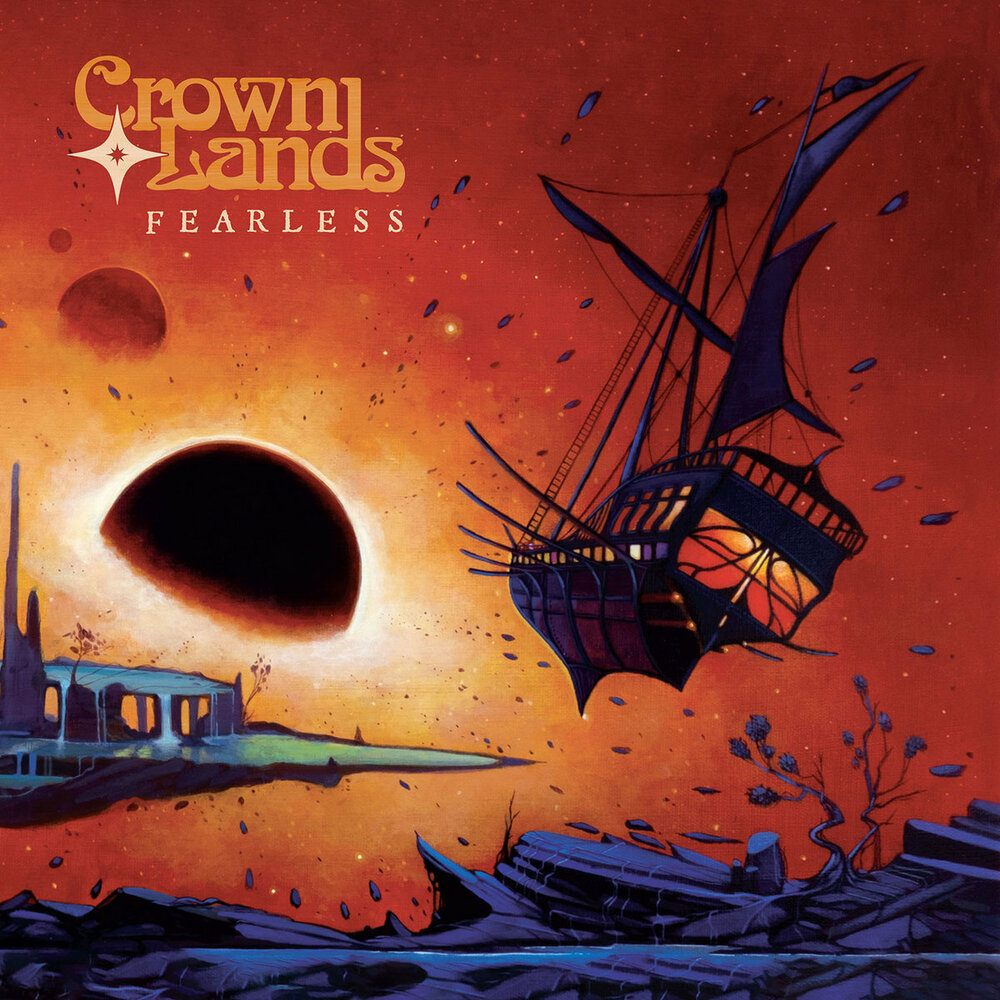
Crown Lands - Fearless (2023)

Country: Canada
Style: Hard/Progressive Rock
Rating: 8/10
Release Date: 31 Mar 2023
Sites: Bandcamp | Facebook | Instagram | Tiktok | Twitter | YouTube

Here's a tasty album from a band I've only just heard about. They're Crown Lands, from Oshawa in Ontario, Canada, and there are only two of them. As I understand it, Cody Bowles is both the lead vocalist and the drummer, while Kevin Comeau handles everything else. I hate highlighting gender and ethnicity because the music should always matter most, but they highlight it themselves and I guess their non-traditional background for rock music fits my goal of deliberately aiming to review bands who aren't the usual four white dudes from London or New York, so I'll point out that Bowles is Two-Spirited Mi'kmaq and Comeau is Jewish.

However, I'm not hearing either of those backgrounds in the music, except for a few moments here and there that seem Native American influenced, like the flute section on the opening track, so I'll move on. What I heard immediately and emphatically is seventies Rush, back when they wrote epic science fiction-inspired tracks with vast power chords and highly progressive sections that became rock opera anthems. I also heard Bowles's high pitched vocals, which aren't quite as clean as Geddy Lee's but do much the same job.

In short, I heard 2112 and that impression was promptly doubled because the album opens with an eighteen minute epic, Starlifter: Fearless Pt. II, a strange choice not only because of its length but because Context: Fearless Pt. I arrives four tracks later, suggesting that I'm listening out of order. Like 2112, it's broken into easily delineated movements, potentially nine of them, two of which are instrumental, so it feels like different songs combining to tell a story.

It's also an obvious highlight, as indeed is the closer, Citadel, which may well be the most effortless classic here. That feels like an old faithful even on the first listen, as if we'd grown up listening to it but a few decades have passed since our last time through and hauling it out again reminds us how good it was. There's some of that feeling on the opener too, but less so; it's mostly in the rhythmic power chords that build sections. It's such a rich track, though, that it's easy to fall into it. I wonder if it'll be remembered in future years for a couple of passages more than the entire thing but I'm thinking not.

In between those two killer bookends are a half dozen other tracks that do sit in their shadow, but are still good nonetheless. Dreamer of the Dawn has the tough task of following Starlifter and it's fair to say that it suffers from that position but also manages to distinguish itself with a different flow. Similarly, Reflections gets lost in between Context: Fearless Pt. I, which is decent but not up to the high standards of its second part, and Penny, which is impossible to miss. Everything else on offer is some sort of hard/progressive rock hybrid, but this is a solo acoustic guitar interlude, with more time and complexity than we might expect. It's more like something off a John Fahey album than a Rush one, but it's gorgeous, lush and evocative.

Of these other songs, I'd call out The Shadow and Lady of the Lake, along with Penny, as highlights. The former is an awkward fit because Bowles doesn't aim quite as hard for a high pitch, so ends up changing the feel of the song. He reaches Geddy Lee's heights at moments, so Rush are never far away, but the register he uses for much of the song brings him down to a sort of Fastway vibe, very different indeed. The phrasing on Lady of the Lake, on the other hand, makes him often sound like Ozzy attempting to sing Geddy, albeit without a Birmingham accent. Bowles remains clear too.

All in all, this is a good album, maybe a great album, but there's a better one in them, I think. This is their second, after a self-titled debut in 2020, which I completely failed to notice, and I'm looking forward to their third and, if Rush are going to be the abiding template, their fourth, because that was when 2112 showed up. If we're comparing, then this would be their Fly by Night and, that's not the worst place to be. This band deserve to be huge. Let's see if they make it.

Monday, 12 June 2023

Blood Ceremony - The Old Ways Remain (2023)

Country: Canada
Style: Occult Rock
Rating: 8/10
Release Date: 5 May 2023
Sites: Facebook | Instagram | Metal Archives | Twitter | Wikipedia

I dug into Blood Ceremony a little bit a few years back when I realised that occult rock was not only alive but very well indeed. They were formed in Toronto as far back as 2006 and they released their self-titled debut only two years later, but this is only their fifth album and their first in seven years after 2016's Lord of Misrule. The core of the band is the two remaining founder members, guitarist Sean Kennedy, who's also the songwriter, and lead vocalist Alia O'Brien, who started out as flautist but quickly moved into microphone duties and organ as well.

This fits with what I've heard from them before, albeit a tad lighter, and it's clearly good stuff, but it's also better than it initially seems, something I only gradually realised in a few ways. Part of it's that a majority of the songs build massively from their subdued openings to blistering conclusions, beginning with the opening couple of tracks, The Hellfire Club and Ipsissimus. The former is a little seductive and a little teasing as it builds but it holds back a little too, until it truly comes alive with a ripping guitar solo from Kennedy. The latter was always catchier, the sibilant title rolling well off O'Brien's tongue during the chorus, but again it comes alive with Kennedy's guitar solo, which this time is reminiscent of Blue Öyster Cult.

Part of it is that the album as a whole builds too. I don't dislike these early songs at all, but I found myself paying more and more attention as it ran on. It starts to get away from me too, in the sense that I forget to take notes and become lost in the music. Powers of Darkness is a tasty song as I'm listening to it, very much a vocal piece with some catchy themes, but I didn't realise how tasty until I wandered off to grab some lunch and realised that it was still playing in my head from memory, a mere couple of times through. It's an earworm of a track and a real highlight here.

So are the next couple of songs, as we roll into the stronger second half. There's a far folkier Black Sabbath in The Bonfires of Belloc Coombe, probably the best song from the standpoint of building as it goes. Widdershins is the heaviest song on the album, more akin to the weight of prior albums, and it remains heavy even when O'Brien's playful flute joins in during the finalé. Surprisingly, this heaviest song is followed by surely the lightest in Hecate, which is folky in comparison, revelling in its happiness in a sixties psychedelic pop style.

This album covers a heck of a lot of ground, from the delightful saxophone solo in Eugenie to more traditional fiddle work on Mossy Wood. The more I listen, the more the flute stands out, though it frequently takes a back seat when compared to this year's Jethro Tull album, RökFlöte. Lolly Williams finds a lively vibe that's all about making us move, whether we get up and dance or just bounce within our office chairs. Song of the Morrow, on the other hand, is progressive and epic, almost Led Zeppelin-esque in its structure, if not any particular component. There's even a dash of psychedelic Beatles in there too.

Given that I've already mentioned Jethro Tull, I should mention how similar they aren't, because a rock band with a clear folk influence that features a lead singer who also plays the flute suggests a close comparison and it's just not there. Sure, they were apparently Alia O'Brien's initial favourite band and their most obvious influence is in her flute, but that's about it. The folk here is different in origin, much more reminiscent of Pentangle or Fairport Convention when it isn't Black Sabbath or the various other pioneering occult rock bands. Check out Mossy Wood for that folk side, with a delightful fiddle and a catchy na na na vocal conclusion. It's Pentangle but heavier with a darkness hovering over it.

And so, while I liked this immediately, I like it a lot more after a few repeat listens and some time away from it to discover how much it had stuck in my brain. It's been a while since I dug into Blood Ceremony's previous albums but this feels a little lighter and a little more varied, especially with the psychedelic pop influence in Powers of Darkness and Hecate and the classic rock angle in some of Kennedy's solos and Song of the Morrow. The more I think about it, the more I like it. I think I've started off June with an 8/10.

Monday, 27 March 2023

Burden of Ymir - Heorot (2023)

Country: Canada
Style: Black/Folk Metal
Rating: 7/10
Release Date: 10 Mar 2023
Sites: Bandcamp | Facebook | Instagram | Metal Archives | YouTube

Here's a great example of just how much good music is out there and how hard it is to keep track. I liked Burden of Ymir's debut album, Jötnar, in 2020, and I was happy to tackle this follow-up three years on. However, it turns out that debut actually came out in 2019 and Joe Caswell, the one man who plays everything here, knocked out another three albums in between these two, which I failed completely to notice. I need more eyes.

So this is his fifth album as Burden of Ymir, which is a blackened folk metal project, and I like it just as much as I expected to. It's built around synths, not just because Caswell plays them but because he has them pretend to be a lot of other instruments as well and we can tell. The sophistication of his equipment is not enough to make us believe that the accordion is an accordion and, if you care about that sort of thing, which I don't particularly, you'll notice it here. The synths don't mimic all the instruments though and I presume he plays the guitar and bass, very probably the drums too because they don't sound electronic to me.

There's an intro and an outro, as there was on Jötnar, so the folky vibe is established when we get to the first track proper, which is Recounting on the Seas. It kicks off with bass and, with prominent bass on The Great Mead Hall after it, I had to wonder if Caswell composes his songs from the bass. If so, it's working, because it's a good opener, shanty-esque with harsh black shrieks for vocals for the verses and clean folky cameraderie for the chorus. Behind all of it, though, is an epic feel that I don't remember from the debut. This is a seven minute song, longer than anything on Jötnar, and it works well, with excellent chord progressions playing up its stature.

It's chord progressions that elevate Revenge Found in the Night too, very probably my favourite of the six full tracks on offer. Here, they're bouncy chord progressions and they add some strut to the song. It's one to get people moving and not just in the usual circle of the pit. This is a song to stomp to like a troll. There's also a furious keyboard solo to raise it further, with a coda to bring it back to earth that echoes the bounce almost in a quack. It's a lively song but it has character too.

I love that bounce and it works well on speedier songs. There's more sway here, though, with both the opener and Monsters of the Lake dipping into shanties, but that's a sort of bounce too and it's played up in much of the material here.

The obvious track that doesn't do that is the album's true epic, The Ninth Hour Approaches, whose patient intro helps to nudge it past nine minutes. I like this one and it does what it does well, but it replaces the engaging bounce with a slower, majestic sweep. It takes its time building because it's aristocratic in outlook and knows full well that it's important enough for us to wait for it to get to us whenever it deems fit, and it almost becomes a sort of processional at points. While the album is folk metal with blackened edges, this reminds me of early doom/death.

I know it does its job well because it overwhelms the track that follows it, Threat of Fire. After I'd listened through a couple of times, the songs had started to distinguish themselves from each other and I was able to appreciate them on their own merits, except for this one because it exists in the shadow of the epic before it. I had to skip directly to it in order to get my head around it. It brings back a bounce and plays up a new choral side to the vocals. I think it's still just Caswell, but he's singing clean and I believe layering himself to sound like more than one person. It's a neat approach and his harsher voice emerges from it wonderfully.

And so this is a good fifth album, even if I initially thought it was a good second. Let's see if I can be aware enough to notice the sixth rather than the ninth.

Friday, 3 February 2023

Atsuko Chiba - Water, It Feels Like It's Growing (2023)

Country: Canada
Style: Psychedelic Rock
Rating: 8/10
Release Date: 13 Jan 2023
Sites: Facebook | Instagram | YouTube

Hailing from Montréal, Québec, are a neatly uncategorisable band who veer between psychedelic rock, post-rock and progressive rock, with occasional incorporation of other sounds. There's plenty of old school epic psychedelic Pink Floyd on the opening Sunbath, but it ends up reminding of King Gizzard and the Lizard Wizard, with repetitive, almost ritual vocals, a comparison that carries into the next song, So Much For, which takes one of those side trips into another genre, namely funk. It must be said that King Gizzard are notorious genre-hoppers too, so it's no real shock to hear them so much here.

I like those openers, but Atsuko Chiba grabbed me on Shook (I'm Often) and underlined how damn good they are on Seeds. The former arrives in glorious fashion and I wish I could explain what they might be doing. I think the sound is generated by keyboards, but it could be in collaboration with a guitar. It arrives more reminiscent of Vangelis than the Floyd but it wavers as if it's alive, a swarm of sentient buzzing jellyfish floating through space, with the voice of Karim Lakhdar (I presume) a fascinated passer by, courtesy of an effect on his vocal that's a nod towards space rock.

There are precious few vocals on Shook (I'm Often) but they're repeated and help to lull us into the song's groove. Seeds has more in the way of lyrics, but it's also a longer song, heading towards the eight mark. That disembodied echo is still there as it begins, over a pulsing synth backdrop, and it all builds wonderfully. There isn't actually a heck of a lot happening during the long instrumental section in the second half, but I haven't been so rivetted by a piece of music in a long while. It's an enticing, hypnotic, psychedelic dream and it wraps up with some wild strings, just like the Kronos Quartet were recording next door and they stepped in to provide the finalé.

As if they couldn't figure out how to follow Seeds, but didn't want to end the album on that note, it would be fair to call Link almost conventional in response, its title probably representative of what it does here. It's much more of a song than the prior pair and it's angry, the persistent bass of David Palumbo leading us ever forward but the vocals of Lakhdar (again, I presume) raging at us in a post-punk fashion. This is heavy Talking Heads, a more antagonistic Cake. And it's done in two and a half minutes, because the rant is over.

It's the title track that wraps up the album, the longest song by a whole second. It's certainly not a return to Seeds, turning up the psychedelia and adding a trippy narrative section in the middle. It plays well and it's a decent closer for the album, but it feels like it's trying a bit hard, while Shook and Seeds seem to have grown more organically into their eventual shape. I found that, even while I was enjoying the title track, I was throwing my mind out and back to revisit those earlier pieces.

I should probably mention that Atsuko Chiba is the protagonist of a science fiction anime feature called Paprika, which I haven't seen but clearly should, because it's a Satashi Kon and I've enjoyed Perfect Blue for decades. She's a psychologist who enters people's dreams through use of a device called the DC Mini, as the alter ego of the title. And that rather sounds like the closing track. This is a chaotic song and it might help to imagine Paprika helping us to make sense of it.

This is my first Atsuko Chiba album and I fully intend to track down the prior two, Jinn in 2013 and Trace in 2019, to see where this sound came from. All I know at this point is what I heard here, plus the fact that they're a five band with two guitarists who play synths and a third doing the same in reverse. Their sonic backdrop is also aided by a string quartet and a brass section, though they're rarely obvious, weaving their contributions into the existing sound seamlessly.

Tuesday, 27 December 2022

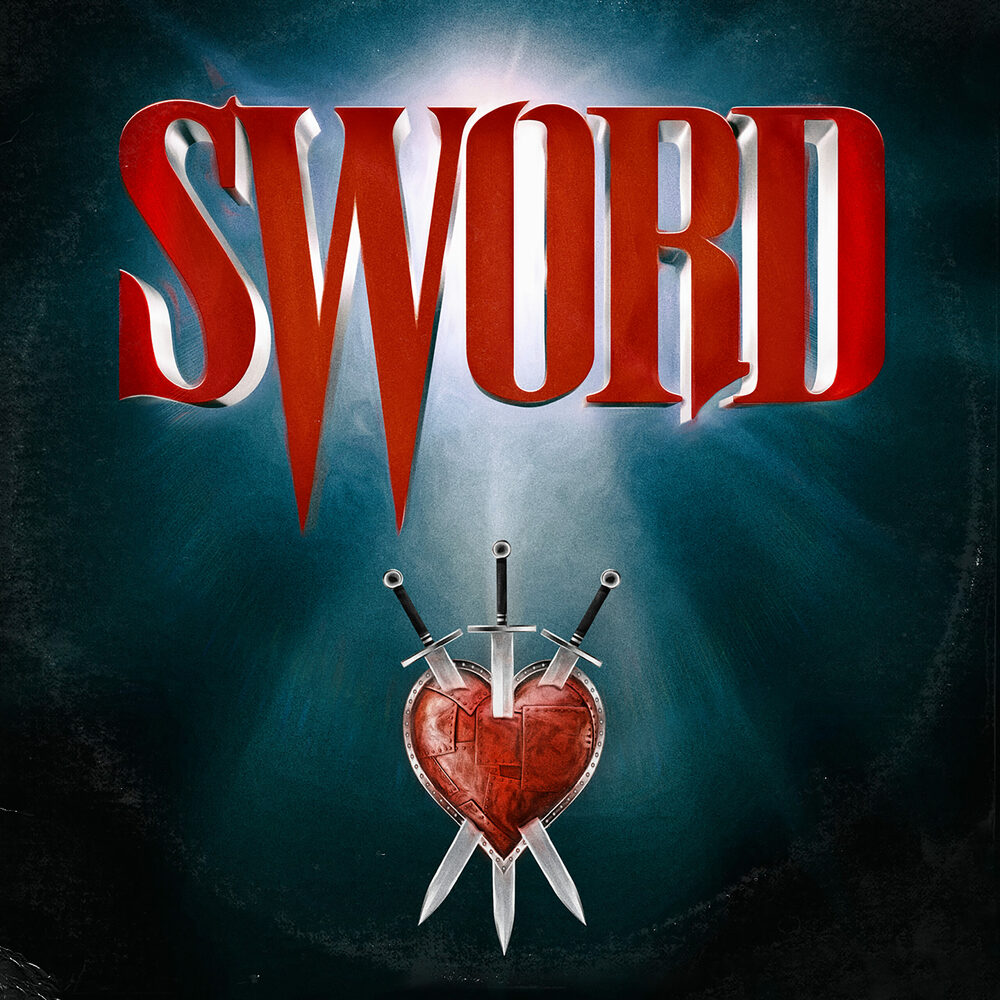
Sword - III (2022)

Country: Canada
Style: Heavy Metal
Rating: 7/10
Release Date: 25 Nov 2022
Sites: Facebook | Instagram | Metal Archives | Official Website | Twitter | Wikipedia | YouTube

I remember Sword well. They arrived on the world's radar in 1986 with a killer debut album called Metalized that seemed to go against the trends of the time and that helped them stand out from the crowd. Glam metal ruled the roost then and the musicians who saw glam as a realm of posers were fusing NWOBHM with speed metal during the heyday of thrash.

Enter Sword, who played heavy metal unapologetically with a nod to both those sides. They began as a Kiss tribute band, though their glam roots weren't particularly obvious on Metalized, only in odd phrasing here and there. And they played slower and heavier than thrash bands, except when they turned it up on songs like Outta Control. Sweet Dreams was a solid follow up but times were changing and, like so many eighties bands, they didn't survive the nineties.

Well, they've apparently been back since 2011 and they've finally got round to knocking out a third album, which hits as hard as Metalized and feels as elegant as Sweet Dreams. What's more, their line-up is exactly the same as it's always been. Nobody's ever left, which is rare. Usually, someone decides they want to jump on a musical bandwagon and takes their bat home when the rest of the band vote them down. Or, if they go along with it, people gradually tire of being hypocritical in the holy name of success and start to desert the sinking ship. None of that ever happened with Sword. They did their thing. Then they didn't do it any more. Now they're back doing it again.

This is a decent return, no fewer than thirty-four years after Sweet Dreams, but it's no Metalized. It gets close at points, (I am) In Kommand the early standpoint and Spread the Pain joining it late on the album. These songs are on point immediately and they stay there throughout, reminding a fan from the old days exactly why they were so good. Their best songs always feel complete, every member of the band doing exactly what they need to do and not a single beat or chord more. That doesn't happen often but Sword at their best are kind of like Bad Company at their best, stripped down to the purest essence of a song.

Metalized was so good because that description can be applied to pretty much every song on it. I'd say that this album is more like Sweet Dreams, where that description is appropriate at points but not throughout.

For instance, Bad Blood is too emphatic vocally, like a slower Exciter. If you want a song where Rick Hughes demonstrates that he still has incredible pipes, then check out Unleashing Hell, which is a statement of past and future by the band. He shows us what can be done if you can combine sheer power with excellent breath control. Mike Plant's guitar rocks on this one too and the back end of Mike Larock's bass and Dan Hughes's drums are just as beefy as I remember, aided by 21st century production.

Talking of beefy, Dirty Pig boasts some powerful riffs and Larock finds a neat groove with his bass. The chorus is bouncy too, but somehow it can't follow (I am) In Kommand, which has that je ne sais pas that's there on Sword's best songs. Took My Chances is another song too that promises much but falls just a little short, possibly because it feels more derivative than Sword tend to be. It's an interesting cross between Rainbow and Judas Priest with an Iron Maiden style midsection, but it's not the purest Sword.

And so this is a solid album, as we might expect from Sword, if we remember them—and I've found that those who heard them back in the day remember them, unlike so many other bands—but not the killer return we might have hoped for when we noticed their name listed with new releases. Is that the Sword? Holy crap, they're back? Gimme, gimme! At its best, it's up there with the best of Sweet Dreams, maybe with some of Metalized. As its worst... well, there isn't really a worst, if we ignore the pointless interlude called Surfacing because it's only ninety seconds long. Everything is good and some of it's great. Welcome back, folks. I look forward to more and I'll be keeping an eye on your tour dates.

Wednesday, 7 December 2022

Lee Aaron - Elevate (2022)

Country: Canada
Style: Pop/Rock
Rating: 8/10
Release Date: 25 Nov 2022
Sites: Facebook | Instagram | Official Website | Twitter | Wikipedia | YouTube

Every time I review a few albums in a row that take me a while to fully appreciate, I end up with an abiding wonder as to whether I'm being deluged by too much new material and I need to step back for a while and level set myself again. Inevitably, though, before I do, something like this shows up that's as immediate as anything I've ever heard and bam, I'm level set again.

This is the second Lee Aaron album I've reviewed this year, but the other one, Radio On!, came out last July and I was catching up with it in January before drawing a line on the past year. This one is brand new, less than two weeks old as I write, so there are sixteen months between them, but it's rare for musicians to knock out two albums that quickly nowadays. Maybe the former was delayed due to COVID or maybe Aaron's on a creative kick right now. Whatever the reason, the last album was strong and this one's even better.

I mentioned a couple of things last time that are all the more obvious here. One is the intonation that Aaron brings to these songs, which could be used as a textbook. It isn't fair to say that she just sings these songs, because she does a lot more than that, she brings them to life so well that I felt that she was almost ready to climb through my computer monitor and continue singing to me from the edge of my desk. Whether she's adding vocal fry to snarl and croon out a rocker like The Devil U Know or delicately unfolding the story in a ballad like Red Dress, she endows her delivery with a character that will have other singers ringing their vocal coaches to let them in on the secret.

The other is that there are a lot of textures combining here and many of them feel like they're the work of a blues singer singing rock. For the most part, this is a pop/rock album, the music firmly on the rock side of that ever polarising boundary with quite a few toes immersed in the blues, but the sound is full of pop sensibility, infuriatingly catchy, with Freak Show top on that front. It often reminds of commercial Pat Benatar but the other influence ends up overwhelming that even on the lightest and poppiest numbers. That's the Rolling Stones, whose stamp is on this album from the very beginning.

Rock Bottom Revolution is an excellent opener that kicks in with a simple but highly effective riff from Sean Kelly, an even simpler and even more effective bass line from Dave Reimer and a sassy blues rock vocal from Aaron. There's blues here and rock and funk and pop and gospel behind the eventual build and it all ends up very much in Rolling Stones territory, commercial Stones sure and without the same tones but the Stones nonetheless. The blues rock number Trouble Maker is even more obvious and other songs play in this ballpark too, like the funky Still Alive and the title track that closes out the album.

What I took away from this one that's new is just how much fun Lee Aaron is obviously having. She has spent quite a while away from rock music, singing pop, blues and especially jazz, and it's clear that she likes her songs on the looser side nowadays where she and the musicians behind her can just enjoy the heck out of playing them. I'm sure that whenever they play these songs live, they're able to bring something just a little different to them that wasn't there the night before. I could even believe that with Red Dress, which is a story ballad. I tend to dread orchestrated ballads and often skip them on repeat listens, but I was hanging on every word this time.

There's a line in The Devil U Know when Aaron snarls, "I'm gonna rule this whole damn town", and I had no doubt that she meant it in that moment, but for the rest of that song and the rest of this album, I took back that belief because she's having so much obvious fun not running anything that she'd turn down a crown just to be able to move into the next song. And, while the songwriting and the simplicity and the looseness all play their part, it's that fun that makes this album so amazing. It's contagious. I may miss the Metal Queen I remember from my youth, but this album makes me want to play it over and over rather than pull earlier releases off the shelf. It's a peach.

Wednesday, 9 November 2022

Corky Laing - Finnish Sessions (2022)

Country: Canada
Style: Blues Rock
Rating: 7/10
Release Date: 14 Oct 2022
Sites: Facebook | Instagram | Official Website | Wikipedia | YouTube

Older rock fans will recognise Corky Laing as the drummer with Mountain, a heavy blues rock band who helped to influence the rise of heavy metal in the seventies. They were an American band, but Laing was Canadian and, as the title suggests, almost everyone involved in this album is Finnish. It seems that, since COVID-19, Laing has spent half his time in Finland and working with musicians of that nationality isn't anything new for him. In fact Harri Väyrynen, the multi-instrumentalist who plays guitar on this album, along with bass on one song and drums on another, is also the engineer at Laing's Finnish studio.

Oddly, Väyrynen isn't primarily known for heavy blues, being most famous for his work in Accu, who Discogs tell me are an "electronic disco funk rock band", and he underlines how varied this line-up truly is. Conny Bloom had a stint in Hanoi Rocks, one of Finland's most famous exports, even if he's also a Swede best known for funk metal band Electric Boys. Talking of Hanoi Rocks, the harmonica on Totally Wrong is played by Michael Monroe. Bassist John Vihervä is a bluesman, best known for his work with the Ben Granfelt Band, and Maria Hänninen is a natural born blues singer who takes the mike for two songs here, including the first single, Whatcha Doin'?

It's a good single, a sassy number enhanced by the trumpet of Antero Priha and some tick-tocking backing vocals, but I prefer Backbone, the other song featuring Hänninen on lead vocals. This is a lot closer to what she does with Mount Mary and, while they may not be as famous as other bands who lent their talents to this project (yet), anyone who's heard their 2021 debut album should be salivating at the idea of Maria singing in front of people like Laing and Bloom. Now, let's see who guests on their much anticipated follow-up, given that Michael Monroe contributed harmonica to the first one and this collection of musicians clearly work well together.

And talking of Monroe, it's the song on this album that features his harmonica that I'd call out as the other highlight. That's Totally Wrong and it's the most urgent track here, a killer heavy blues number that blisters out of the gate with Monroe's harmonica leading the way like the whistle on a steam train. Laing had varied his vocal approach a song earlier with The Ball, narrating most of that one rather than singing it, and he practically chants this one, shouting out the lyrics as if the band had turned it up to eleven in the studio and he didn't think he'd be heard over them.

Like Backbone, Totally Wrong is immediate because it nails its groove from the outset but it only gets better with repeat listens because we start to hear everything else that's going on in them. I adore the second half of Totally Wrong, when the guitars take a back seat so we can hear just how damn good Laing is behind the kit. The same goes for Backbone in a different way, because it's the guitar and lead vocal that grab us from the outset but we gradually realise just how much Laing is doing on drums in the background, especially during the second half.

While I'm concentrating on those two tracks, because I keep on replaying both of them and finding new reasons to adore them, the rest of the album is pretty solid too. It starts out traditionally but well with Everyone's Dream, gets more contemporary with The Ball, which stands out because of a very atypical vocal from Laing, and calms down for a trio of ballads in the middle of the album. It's Laing's voice that becomes most notable on these, because he has a rough, lived in voice that has an emotional resonance on these ballads. He's good on Even More but better yet on Pledge, with a folky edge that's only added to by Hänninen's violin on My World.

It's perhaps telling that those ballads don't lower my rating because three of them at once seems like a lot, especially given that I tend to dread ballads on urgent blues rock albums anyway. These certainly aren't my favourites and I'm not going to be replaying them anywhere near as often as I have already replayed Totally Wrong and Backbone—and I'm not done with those yet—but they do the job well and somehow don't drag the pace of the album down. In fact, maybe they help a little to emphasise Backbone before we ever get to it, given that that's what comes after the ballads.

It's also telling that I want more from this. These nine songs don't amount to much more than half an hour but it feels like everyone was having an absolute blast in the studio making them. I would very much like to hear Finnish Sessions II next year and, even more so, a live recording from a tiny Finnish club where Laing can show off a little more and the core band, plus whoever else happens to show up to guest, can jam on new songs and old standards and the audience can have stories to tell to the friends who missed the experience.

Thanks, Maria, for sending me a copy of this one for review!

Friday, 7 October 2022

Razor - Cycle of Contempt (2022)

Country: Canada
Style: Speed/Thrash Metal
Rating: 6/10
Release Date: 23 Sep 2022
Sites: Bandcamp | Facebook | Instagram | Metal Archives | Official Website | Wikipedia

Here's another blast from the past, this time from Canada, from the Ontario city of Guelph where I have some good old friends. Razor are kind of like good old friends too, given that my first Razor album was Evil Invaders back in 1985. I enjoyed them for a few years, nothing later matching that album but still enjoyable, but I lost track of them after Violent Restitution in 1988, as real life had sudden demands on my time. It was good to see their name crop up again as I thought they'd been gone for years. And they kind of had been, given that this is their first album since 1997, which is a quarter of a century. Welcome back, folks!

Nowadays, the line-up features two founder members. One is Dave Carlo on guitar, whose riffs are less biting than they used to be because he's warmed up his sound, but he's as good as ever and his solos still rip. The other is Mike Campagnalo, whose rumbling bass underpins the Razor sound and gives the rest of the band something solid to build on. He gets a few spotlight moments, whether that's during a pause for effect, where he rumbles along on his own, or in an intro like Punch Your Face In.

The new fish is Rider Johnson, who's on his second stint with the band, even though he didn't join until 2014. He's solid, whether playing slowly during the first half of Darkness Falls or at the more usual frantic pace of a speed metal band. In between is Bob Reid, who joined in 1989, so has been a mainstay in the band ever since I stopped listening. That's coincidence, of course, but it's telling, as he seems to be the biggest reason why this album is happening, being the driving force behind the Razor reunion in 1997, and my least favourite aspect to it.

He does what he does well, but it's not what I expect from a speed metal band. The lead vocalist in my day was Stace "Sheepdog" McLaren, who left because he'd lost his passion for being in a band, leading Reid to take over not only behind the mike but as the impetus behind the band continuing to function. McLaren had a wild voice that I'd say is more suited to the genre, rough and raw and as willing to scream as squeal or whatever other vocalisation is needed at any particular moment. To me, Reid has a more focused approach that's primarily aggressive, perhaps appropriate for a post-Pantera world.

That's backed up by the lyrics, which are primarily in your face aggressive and delivered with an in your face aggressive attitude. Remember the insane scream at the beginning of The Marshall Arts that was a statement of intent on the Violent Restitution album? That sort of thing isn't here because Reid isn't into that. He's into threatening to punch you in the face, whether that's conversationally in the closer, King Shit, or through the strictly regimented cadence of most of these songs. He fits with the lyrics, but the lyrics aren't exactly subtle, as you'll find in Jabroni, Punch Your Face In, All Fist Fighting, Off Your Meds, Crossed... well, pretty much all of them. This is fight music.

If what Reid does is your sort of thing, then you're going to be happy with this album, because he does what he does consistently throughout. If you came to thrash from punk, you may love this. If you came to thrash from NWOBHM, maybe not so much. I found that his approach led to an album that's one note and I wanted a lot more variety. It was at its best for me when it was instrumental, so my favourite song is easily the title track, being a couple of minutes longer than the norm, thus allowing for a couple of minutes of glorious riffing to kick it off and a strong instrumental section for solos in the second half.

After that, I'd probably go for All Fist Fighting, because Reid speeds up his delivery and makes it a lot more urgent and passionate. He still uses his rough but powerful punk voice but it feels real to me, instead of a rehearsed threat intended to prod someone into throwing the first punch. It's the difference between Anthrax with Joey Belladonna (or even Neil Turbin) and Anthrax behind Billy Milano. As much as I enjoyed Speak English or Die, I'm always going to go for the former and this is an album for those who want the latter.

So it's a 6/10 from me, I think. The band are solid and tight and still agreeably fast and I'm gleeful that they're back, but I think they've moved a little away from me.

Tuesday, 20 September 2022

Anvil - Impact is Imminent (2022)

Country: Canada
Style: Heavy Metal
Rating: 7/10
Release Date: 20 May 2022
Sites: Facebook | Instagram | Metal Archives | Twitter | YouTube

Nobody is going to pick up an Anvil album expecting something unusual and innovative. They play pure and simple heavy metal and they play it loud in the traditional fashion. The guitars are front and centre, building songs out of buzzsaw riffs and barrelling beats. The usual question is whether they're on form this time out. Some of their albums are blistering, but some are just meh. I took a listen to their previous album, Legal at Last, and found myself a little closer to the latter than the former. I wasn't convinced by the opener here either, Take a Lesson, but it perks up from there to stand higher than its predecessor.

I think much of it is that, once we get past the plodding opener, this album is bouncier than usual. Ghost Shadow and Another Gun Fight are both bouncy and catchy, without losing any of the heavy sound we expect or the more urgent tempo that's welcome after Take a Lesson, especially on the former. After them, Fire Rain, with its gorgeous guitar sound, ratchets the energy up yet another notch before a short but excellent instrumental called Teabag, which is immensely playful.

Now, this is an instrumental in the same way that Tequila is an instrumental, namely that the only word delivered is the title, but it does the job and highlights in no uncertain fashion that Anvil are still eager to rock and, for that matter, rock hard. If this energy translates onto the stage, and I'm in no doubt that it will, the next tour ought to be a lot of fun. I should add here that there's also a second instrumental here, called Gomez, that's even more fun and does exactly the same job, all the way down to the same riffs because it's basically the same piece of music, merely with a highly prominent brass section. That makes it even more fun.

In between the two instrumentals are the usual mix of strong rockers and more filler material but the ratio is pretty much in favour of the former this time out. Once it all got moving, I was always going to give this a point more than the last one. And I firmly believe that this album is at its best when it's really moving, on songs like Fire Rain, Someone to Hate and Bad Side of Town. Lyrically, it doesn't do anything you don't expect, but it's easy to get caught up by the sheer motion of it all. I found myself singing along with Bad Side of Town and Wizard's Wand on a first time through.

Talking of Wizard's Wand, it remains perky and bouncy even with a slower riff that's straight out of the old Black Sabbath playbook, chugging along with ominous intent. Shockwave is even more a nod to Sabbath, with Steve Kudlow taking on that simple but utterly memorable Tony Iommi style with panache. Then he'll shift to a lighter, more elegant sound on songs like Lockdown or a lively and urgent one on Fire Rain and the appropriately titled Explosive Energy, on which he reminds of a UFO-era Michael Schenker.

I have trouble not liking Anvil. They're like an enthusiastic puppy that always shows up and makes us all fuss it because it's so effortlessly endearing. Translating that into heavy metal, they're the sort of reliable band who sit in the middle of a show, after the local wannabe talent but before an established headliner. They're the perfect band for midway through a long festival day, because a happy attendee will have a blast and a jaded listener will still engage. They're utterly reliable and this is a solid nineteenth album for them.

Friday, 26 August 2022

Panzerfaust - The Suns of Perdition - Chapter III: The Astral Drain (2022)

Country: Canada
Style: Black Metal
Rating: 7/10
Release Date: 22 Jul 2022
Sites: Bandcamp | Facebook | Instagram | Metal Archives | YouTube

I'm not convinced I've ever heard Panzerfaust before, though I have heard the Darkthrone album of that name, which I presume was the source of the band's name rather than the Nazi anti-tank weapon. After all, they're Canadian and not associated with the NSBM movement, though they do write lyrics about war. This is their sixth album in total and the third in the series that's occupied them over the past few years, The Suns of Perdition. Chapter I was War, Horrid War in 2019 and it was followed by Chapter II: Render unto Eden a year later. I believe there are to be four albums in this series, so this is the awkward third before it wraps up.

That said, it doesn't feel particularly awkward. I haven't heard either of the first two chapters, so I can't speak to how it compares, but this is an impressive album that makes me wander to find that pair and experience the whole thing (thus far) in entirety. If there's anything awkward to mention, it would be the presence of experimental interludes in between the five songs proper that I don't see have a real purpose except to separate the tracks. Maybe that's all they intend to do, but they have an industrial tinged sound effect vibe to them that suggests they ought to achieve more than they do.

I knew Panzerfaust played black metal but that didn't prepare me for their sound here. There's as much doom metal here as black and much of the point seems to be texture, atmosphere if you will but I'd say that's a misleading word in this context, as this isn't really atmospheric black metal as a genre. Sure, there's atmosphere in the sound effect laden backdrops; every song starts and ends with one of those, as if we're listening to a Krautrock album. But then the guitars show up and the drums and we're into black metal territory.

If anything, the textures have a gothic flavour to them, due to lush feel and firm confidence, but I wouldn't remotely call this gothic metal. It's always surprisingly slow black metal, deliberate and dark and with rare enough ramps up in tempo that they're always noteworthy when they appear. I would say only one song, The Far Back at the River Styx, spends most of its time at the traditional black metal sort of speed, because it ramps up quickly and never slows back down again.

The songs aren't short, as we might expect from such a slow take on black metal, but only the first of them, Death-Drive Projections, could really be called long, clocking in at over ten minutes, with the others lasting a comfortable six or seven minutes each and change. They're patient creatures, the doom element dictating the tempo and the texture often suggesting ritual. There's a hypnotic quality to the music that I appreciate and I'd like to see how that manifests in the earlier chapters.

I have no idea what the overarching story is here, though I presume there is one, given that this is surely a single concept album spun over four full length releases. I'm enjoying this for the feel, an approach that's probably still in mind from yesterday's Nik Turner album, and every component is on board with the feel. Even the vocals play ball, because there are two singers here, Goliath, who only wears the one hat in the band, and Brock Van Dijk, who also plays guitar, and they hand off to each other as if it's important somehow for the lyrical delivery to continue without any pauses for breath.

Death-Drive Projections is just patient, steadfastly refusing to speed up, though it somehow gets a little more intense as it goes. Bonfire of the Insanities, on the other hand, rumbles along like it's an unstoppable creature, utterly confident in its eventual victory that it doesn't have to exert any more effort than it feels like at any point in time. It's a surprise when it ramps up to more typical black metal speed with less than a minute to go, but maybe that unstoppable creature is pouncing. Tabula Rasa is bludgeoning, not insanely fast but ultra-powerful and with a seriously hard hitting beat from a very impressive drummer, Alexander Kartashov.

After a few listens, I'm still not sold on the interludes, which range from only thirty-eight seconds of The Pain to almost six minutes with Enantiodromia. Almost ten minutes of interludes seems just a little excessive on a forty-seven minute album and this would be a safe 8/10 without them. Were they just not happy with thirty-eight minutes?

I think the songs get better too as they progress, the first two solid but the last two even more so and maybe Bonfire of the Insanitise right at the heart of the album above them all in my thinking. But this is all new to me. Clearly, I need to check out the first two chapters in The Suns of Perdition tetralogy. Maybe I've found another favourite black metal band from North America, after Wolves in the Throne Room.

Friday, 3 June 2022

Aldo Nova - The Life and Times of Eddie Gage (2022)

Country: Canada
Style: Hard Rock
Rating: 7/10
Release Date: 1 Apr 2022
Sites: Facebook | Instagram | Twitter | Wikipedia | YouTube

Here's an unusual release in a lot of ways. The most obvious is that I don't believe it's actually the album it looks like, with its ten tracks that take up over fifty minutes between them. It's labelled a "10-song EP" and "a little preview", presumably because this isn't the entire rock opera that Aldo Nova has been working on for a decade and a half. It looks like the entire thing may span 25 tracks and the rest will see release in the future, but some of it is so clearly musical theatre that it feels like it ought to be staged. Songs like King of Deceit and On the Way to the Psycho Ward seem to be missing something when we only hear them. Maybe music videos will fill that gap. There's one for King of Deceit already.

The King of Deceit, by the way, is a character in this rock opera. He's M. F. Stophalis, the CEO of an international conglomerate called the Daedalus Organization. Our hero, Eddie Gage, signs with them and, of course, later realises that he's signed away more than he thinks he has. As the title suggests, the entire release is a concept album that presumably covers his battles to reclaim his own talent, music and self. It's a timeless story, one told many times but one that's always worth telling again.

Another reason is that Nova hasn't really been putting out other material while he's written this project, perhaps because the core idea of a talented musician disillusioned by the music industry he works in is acutely autobiographical. If you don't know the name, Nova made the big time with his self-titled debut in 1982, which went double platinum and spawned a top thirty single, Fantasy. A couple of further albums did well but not as well and he's hardly been prolific as a solo artist in the years since, with his most recent album of original music being Nova's Dream from 1997. That makes this a comeback release, I guess.

Instead he shifted into writing for other people, his clients including Blue Öyster Cult and Jon Bon Jovi but also a whole bunch who record in non-rock genres, such as Celine Dion, Faith Hill and Clay Aiken. Maybe that's why this album, which is primarily a hard rock album, shifts into other genres at points, most obviously on Say a Little Prayer, the epic of the album, which is a power ballad with its verses rapped. I'm really interested in what the forthcoming second half of this album is going to sound like and especially the various songs that didn't make it. Apparently those 25 tracks are what was left after Nova whittled down the 142 that he wrote over a nine year period.

Don't let me lead you astray. This is fundamentally hard rock, told with the usual instrumentation that you'll expect, fairly comparable to his eighties style but a little more mature and benefitting from 21st century production values. It's just not all it is. Hey Ladi Dadi kicks off the album as if its electronica, all characterful keyboards and what sound like electronic beats, but then it kicks into hard rock gear with the King of Deceit persuading Eddie Gage to sign his soul away. It gets jazzy in the middle and hints at that future rap, but then it's guitar solo time and Nova can still sear.

At the other end of the album, Les Anges is almost a new age instrumental until Nova hauls out a guitar two thirds of the way through. In between there's quite the variety spun out of a hard rock base. Free Your Mind is funky. Follow the Road is singer/songwriter for quite a while. On the Way to the Psycho Ward is often peaceful and even calming, but it also features the heaviest and most blistering guitarwork. Burn Like the Sun is another power ballad that finds a glam metal vibe at a few points. The Bitch in Black struts in the Stones tradition but a little heavier. When All is Said Done nods towards AC/DC but with modern manipulation done analogue, I think. There's a lot here.

And, of course, there's a lot more to come, which is a point that never quite goes away. This sounds good, but I think I avoided paying too much attention to the lyrics because the whole story isn't on this album. If you're one of those people happy to watch each episode of a TV show when it drops, you're probably OK with this, but I'm not. I wait until it's all available until I binge it. Sometimes I even wait until a trilogy of movies is out before starting in on it, especially when it's told linearly. So this is half of an album to me, with the other half due sometime down the road. It's good stuff on its own, as individual songs, but I can't really judge the rock opera until I've heard the rest of it.