Showing posts with label epic metal. Show all posts

Monday, 14 October 2024

Andy Gillion - Exilium (2024)

Country: UK
Style: Symphonic Melodic Death Metal
Rating: 8/10
Release Date: 11 Oct 2024
Sites: Facebook | Instagram | Metal Archives | Official Website | YouTube

Andy Gillion is a former lead guitarist for Finnish melodic death metal band Mors Principium Est, with whom he spent a decade, so it shouldn't surprise that this third solo album from him sounds rather like them. Given that he was also their principal songwriter during that time and handled orchestrations on top of his guitar duties, even playing bass on their 2020 album Seven, a record released three months after he was fired, it would be more surprising to find that it didn't sound like them. The more telling question is whether the next original Mors Principium Est album will sound like Mors Principium Est, with only vocalist Ville Viljanen remaining.

To be fair, after checking out Seven, I'd say that this sounds like that but more so. Sure, it remains melodic death metal with a symphonic edge to the songwriting, but it's more epic, more lively and wildly more energetic. Part of that is the furious pace set by Dave Haley, an Australian drummer known for a whole slew of bands, including Psycroptic, but a lot of that is in the guitars too and the urgency of the vocals. Prophecy, the opening track, barrels along nicely, but so does The Haunting and the second half of As the Kingdom Burns absolutely blisters.

I have to call out As the Kingdom Burns as the highlight of the album, partly because of how that second half blisters but also partly because guest vocalist Brittney Slayes of Unleash the Archers is a welcome addition. I don't dislike Gillion's vocals at all, whether he's singing harsh, as he does on most of the songs, or clean, as he does in duet on this track, but Slayes adds an extra power metal level to this music and it works very nicely, especially when she launches that glorious second half with an escalating scream. The album could have done with more of the pitches she hits here.

However, other than a single moment on A New Path where I could swear I heard her again, she's only on that one track and the album shifts firmly back to Gillion's harsh male vocals. Fortunately, he finds an agreeable balance between intelligibility and growl that's also raucous enough to kick the metalcore crowd into action. I like it, even if that moment of Slayes (if indeed that's who that was almost three and a half minutes in) reminds that it could have been more. There's enough of the epic here to suggest that any female vocalist like Slayes or a male vocalist who sings clean and soars in the range of a Bruce Dickinson would emphasise that element better than anyone singing harsh.

But enough of me reviewing what isn't here. Let's get back to what is. Gillion's vocals are good but his guitarwork is excellent. There's an especially strong solo in The Haunting and another on the closer, Acceptance, and there are furious barrages of melody all over the album, including A New Path, Avenging the Fallen and Call to Arms. Sometimes, like on Avenging the Fallen, they're given a repetitious approach that makes our conditioned ears think of them like riffs. It's fair to say that they are, but they're there to be melodies and they work well in that vein, providing the element that a higher pitched clean vocalist would bring to the band.

Matching the epic nature of the music is the symphonic nature of the music. There are no soaring sopranos here, but the songwriting is clearly done with that sort of structure firmly in mind. Most obvious on Avenging the Fallen, which starts out with a keyboard duelling a guitar, drops entirely into a keyboard swell midway and ends with a surprising prog rock-esque drop, the symphonic side is there throughout the album. Sure, we hear it most in the intros, especially when Gillion delivers them on piano like Acceptance, but that keyboard layer is rarely there just to deepen the sound; it tends to adding another layer that wouldn't be there otherwise. If we could listen to Call to Arms without the keyboards, it would be a very different song indeed.

At the end of the day, I like this album a lot. Whatever Mors Principium Est get up to in the future, it's clear that the songwriting approach that defined their sound over the last decade will be live and well in the hands of their principal songwriter, Andy Gillion. That songwriting may be the best aspect of this album, but his guitarwork, especially in conjunction with Dave Haley's drums, is very happy to fight it for that title. His vocals aren't in the same class, but they're still good and, when this reaches its most symphonic, like in the chorus on Call to Arms, they sound even better. Thanks for sending this one over, Andy, and all the best for the future.

Friday, 13 September 2024

Wintersun - Time II (2024)

Country: Finland
Style: Epic Symphonic Folk Metal
Rating: 8/10
Release Date: 30 Aug 2024
Sites: Bandcamp | Facebook | Instagram | Metal Archives | Twitter | Wikipedia | YouTube

This album is called Time II and time turns out, rather ironically, to be clearly the most important word to apply to it. That's partly to do with the music on it. The intro, Fields of Snow, is very much an intro but it's a substantial one, reaching the four minute mark, even though it's synth-driven Asian folk music. At the other end of the album, the metal on the closing song, Silver Leaves, ends ten minutes in, drifting into the same sort of folky music for a minute or so before becoming just ambience, chimes blowing gently in the wind and snow for another two minutes and change. It's a zenlike approach to wrapping up an album, letting us feel its theme without music getting in the way. We sit back and just exist for that time.

Some listeners will no doubt see all that as too much, Jari Mäenpää getting indulgent like this is his Tales from the Topographic Oceans, where time doesn't matter any more, just his artistry. He plays into the other reason that time is important here too, namely that he used unfathomable amounts of it to get this album to the point of release. This actually outdoes Chinese Democracy on that front, which is patently ridiculous, given that Time II serves as the second half of Time an insane distance from the first half. So, let's dive into that, even though I wasn't aware of any of it during that, well, time.

As far as I can tell, Wintersun recorded the bulk of Time in 2006 as a double album, having already written the songs for both halves, and the rest was in the can within twelve months. However, the release continued to be delayed, with some of Mäenpää's explanations making sense but others not so much. Eventually, the first half of the album saw release in 2012 as Time I, six years on, and mixing of the second half began shortly afterwards. However, after raising half a million euros in crowdfunding, it still took him a dozen more years to actually release the second half as Time II, a third and later album, The Forest Seasons, being released in between in 2017.

There are fans who are leaving 0% ratings for Time II, not on the basis of the music, however they choose to justify it, but because of how they felt Mäenpää treated them. I'm not going to do that and wouldn't even had I been along for that ride, but, even coming in fresh here, I have to ask one important question. However good or bad this album is, does it justify eighteen years of work and I have to say that it doesn't, even though I enjoyed it immensely. This is a really good album and I will happily seek out the first half to see how it plays alongside it. However, is it eighteen years in the making good? No, it isn't.

But back to the music. The first obvious note to make is that it's not a concept album, as far as I'm aware, but it clearly follows a classical Asian theme. The intro plays into the beautiful imagery on the cover, of a cherry tree in such a Japanese pose that I ought to call it sakura. It sounds just like a piece of classical folk music, played on traditional instruments like kotos, pipas and shamisens, but not so much that I would believe that's the case. It all sounds like synths to me, as pleasant as they are and as majestically as they build.

That Japanese theme continues thorughout the four songs proper, all of them highly substantial and three of them over ten minutes in length. All of them feature Japanese melodies at points in and amongst the metal, playing into their epic nature. Sometimes, those melodies even reach the vocals and the guitarwork, rather than being reserved for drops out of the intensity of the metal into calmer folk sections. The Way of the Fire drops twice for contrast, once during the midsection for some tasty guitarwork, and again later in the song, with those faux Japanese instruments set against a choral backdrop. The interlude between One with the Shadows and Storm features the guitar ably impersonating a pipa, or maybe a biwa if it's meant to be exclusively Japanese.

I liked The Way of the Fire immediately. Not unusually for Wintersun, it sets up quietly and folkily, then launches into high gear just like that. Frantic drums build a wall of sound with orchestration over the top, though the guitar struggling to emerge but not quite making it. Harsh vocals turn into clean vocals, with the latter used more across the album as a whole, and the chorus is tasty. I always see Wintersun listed as symphonic death metal and that's never rang true to me. This isn't death metal to me at all, more like epic metal. It sprawls majestically with that symphonic flavour.

The guitar solos on One with the Shadows are even more neoclassical than on its predecessor and that remains a common element throughout too. As much as I like those two songs, though, what leapt out to me was the craftsmanship on Storm. As I understand it, this is the only piece here that doesn't have an equivalent on Time I but it's my favourite piece. The ambience of storm samples in earlier songs is more overt still here, as if that storm is building. There's a very cool moment soon into the second half when everything drops away, as if we've entered the eye, and, of course, it all ends with storm samples and that elegant Japanese folk flavour, moving into Silver Leaves, which is the album's closer.

I enjoyed this a huge amount. I relish in the instrumental parts here, the calmer ones as much as the frantic ones, especially how the Asian, very possibly purely Japanese, flavour is woven closely into the metal. If I had to describe it, it's symphonic epic folk metal, which is unwieldy but fairer in my eyes than death metal ever was. I like that two songs get frantic, moving capably into extreme metal, but two remain more sedate, still metal but without that extreme prefix. I even like how it plays with time, down to that zenlike ending, though I can certainly see why many wouldn't.

And so this is an easy 8/10 for me. I've listened through a few times and it feels as strong as ever it was on the first time through. I'll happily seek out Time I to compare. I see that fans seem split on which half is the better, but only those enraged by Mäenpää's antics over the past eighteen years are avoiding the suggestion that they go well together. Maybe time—there it is again—will blend the two closer together, rather than seem, as they do today, to be anchored in different eras.

Saturday, 16 March 2024

Vespertine - Desolate Soil (2024)

Country: Israel
Style: Symphonic Metal
Rating: 7/10
Release Date: 1 Mar 2024
Sites: Bandcamp | Facebook | Instagram | Metal Archives | Tiktok | Twitter | YouTube

Now that Sonata Arctica have finally returned to playing power metal, there's a lot of symphonic metal in their sound, but here's an actual symphonic metal band. I mention that because I found them listed as pure symphonic metal but it's pretty clear from the outset that we can add folk to that as well. The intro, Genesis, which builds dynamically from piano to flutes to orchestral swell and eventually pipes, grows into that and the instrumental first half of the opening song proper, To All the Wilds, plays likewise. And then it gets really interesting.

There are two people in Vespertine, as far as I can tell, and, while they work together effectively, they appear to bring two completely different approaches to the band. Dawn Kadmiel is all about that symphonic folk. She provides all the orchestration, which shapes how this sounds; she plays a tasty violin; and she delivers her vocals clean with an eye on the folk tradition. Her colleague Ran Hameiri, who plays guitar and bass, is therefore tasked with heavying it up to add the metal side of things. He does that, but he does it through a mostly harsh voice and metal here is dependent on the song. Often it's heavy or power metal. Sometimes it's full on melodic death.

As you might imagine, everything hinges on how well those two approaches play together, with a take on beauty and the beast that goes far beyond the traditional one of contrasting vocalists. It works really well for me, if you want a quick answer. However, there's also a much longer one that depends on how you look at this music. I listen to albums in entirety and more than once, so that I can see how they flow, how they grow on repeat listens and also where to focus in on something if it stands out or warrants special attention. For a while, this works differently for me in that way than if I focus in on individual tracks.

That's because the first two tracks proper play rather oddly and I got it into my head that the way they do that continued on throughout the album. It doesn't, which makes it even odder that they be the first two tracks.

Take To All the Wilds as an example. Within the grand flow of the album, it works very well indeed. I love the instrumental opening that combines the flutes and piano of the intro with metal guitars and a fast metal beat. When it shifts into a song after a couple of minutes, it stays symphonic folk, with Kadmiel the only vocalist, her voice giving way to violin and an elegant guitar solo, but close to four minutes in, Hameiri kind of takes over, his harsh vocal stealing the spotlight and his guitar heavying up, in preparation for the melodic death metal of the second half of Omens (The Trial of Doom).

Every moment in the song works as a transition from Genesis to Omens except the unusual funky section late on. However, if you listen to it in isolation, as you might on a radio broadcast, it feels disconcerting. Without any context from the tracks around it, it sounds like it doesn't know what it wants to be. Is it a instrumental piece or a vocal song? Is it rock or metal? Is it soothing folk or hard death? It's pretty much symphonic all the way through, so that's a fallback, but it can't establish a particular mood or style within its boundaries. I still like it, because all those moments are great, but it doesn't feel at all complete, needing those surrounding songs to give it context.

That lack of self-identity applies to Omens (The Trial of Doom) too, then Rain into the Hollow kicks off with an electronic pulse behind the soft piano that sounds good but fails to indicate where the song is going, so I started to see this as far better as one forty minute slab of music than as seven individual songs plus an intro. I started to think about the album as an exercise in where we could move the breaks between the songs to give them more coherence. Maybe To All the Wilds should be two separate songs or one suite with two or three movements, and Omens likewise. I can't see this sort of feeling as a good thing.

However, the more the album runs on, the more coherent the individual songs become and, as I'd pointed out, all the moments sound wonderful anyway, even early on. It means that this may play better to listeners who devour entire albums—and versatile ones at that—than those who tend to prefer individual songs. The more coherent songs come later, like Twilight State (The Vespertine) and Rain into the Hollow, so stick with it. The album's worth it.

Fortunately I fall into the former camp anyway so I ended up good with most of this. I'm good with the contrasting vocal styles in a late duet against escalating orchestration in Omens (The Trial of Doom) and a weirder balance early in Twilight State (The Vespertine). I'm even good with Hameiri suddenly shifting to clean vocals during Skeleton of a Tree, because it's more rock than it is metal, especially after the far heavier Rain into the Hollow, and into spoken word on Twilight State too. It's a versatile album and it takes some getting used to, but I like how it all ends up.

Monday, 13 March 2023

Megaton Sword - Might & Power (2023)

Country: Switzerland
Style: Epic Heavy Metal
Rating: 9/10
Release Date: 24 Feb 2023
Sites: Bandcamp | Facebook | Instagram | Metal Archives

I've been listening to this album for a week on and off, with a convention in the middle, and it just keeps getting better and better. It's epic heavy metal from Switzerland, which means that it's slow but heavy with clean vocals and it remains inventive throughout. The most obvious influences are traditional American heavy metal bands like Manilla Road and Cirith Ungol, though they're slower than the former and less raucous than the latter. Instead, there's a pivotal emphasis that suggests that the entire album is underlined.

The Raving Light of Day kicks off with an old school Manowar flavour that's happily free of cheese. That's a very recognisable canter, a ride full of so much confidence that it's unnecessary to take it faster into an Iron Maiden gallop. It's an excellent opener, patiently heavy without the need to dip into doom and with a strong hook in the chorus from Uzzy Unchained that elevates everything. It's a statement and the only reason it doesn't stay high in my estimation is because it's followed by a still better song, Iron Plains.

This one has seeped into my soul. It's faster and denser and I love everything about it, from its riff to its power chords via a wonderfully clipped cymbal during a glorious instrumental stretch, but I'd have to say that it's the vocal structure that captured me most. I never can seem to get my brains around how the verses and chorus works. Either the chorus takes up most of the song, wandering in some complex geometric pattern that I can't see, or it's there in absentia, a sort of hollow echo that follows every mention of the title. Whatever it is, it works wonderfully.

Cowards Remain has the best riff on the album and it ups the tempo a little too, though it's Might that takes that the furthest, launching in hard and fast and with both feet firmly in power metal. All Wicked Schemes Unite opens in glorious fashion, with such a rich drum sound that I have to call out the producer, Yvo Petrzilek, for special merit. This is a superb production job. Just listen to the bass running through Power. Why aren't all heavy metal albums produced like this? I remember a time when Joey de Maio kept talking up Manowar's new drum kit in interviews as if it would make the difference between them and every other band. This one kind of does.

Really I need to call everyone out for special merit. Uzzy Unchained is a magnificent vocalist who's powerful throughout, delivering with relish that never becomes over-theatrical, but with another gear available when he wants to really turn it up, like on the epic closer, Babe Eternal. What's odd here is that every song sounds epic but not one makes it to even six minutes. This one's the slowest and most emphatic, in large part because of that searing vocal from Uzzy. However, this is a guitar album and Chris the Axe and new fish Seth Angel, who wasn't on their debut album, are a force of nature. They go to delicate and intricate and characterful, all of it well, but they utterly nail power chords. Every chord sounds like a new pillar in a temple and the album ends up like a city.

I've already praised the production on the bass and drums but the musicians actually playing them deserve credit too and they are Simon the Sorcerer and Dan Thundersteel respectively. Both shine the brightest, perhaps, on All Wicked Schemes Unite, the latter especially early and the latter late but both throughout. It's appropriate that both end the song together, just a hint of bass creeping past the final beat but it's another highlight song for everyone in the band.

And most of them are. There are eight songs here. I'd probably call five of them highlights and the other three aren't far behind. It would be a fool's game to try to rank them, but right now it's Iron Plains and All Wicked Schemes Unite for me, with Cowards Remain and Babe Eternal behind them, then The Raving Light of Day, and finally the title tracks, Might and Power, which are two separate songs here, and, somehow, Raikaszi at the bottom of the pile.

If Raikaszi is the worst song here, with its atmospheric intro, beautifully toned guitar, characterful bass, killer power chords and effortless hook, then it serves well to underline how impressive this album is. Everything I review at Apocalypse Later is recommended to some degree, but it ought to be safe to say that many of the bands I've reviewed this year would love to create even one song as good as Raikaszi. For that to seem like the also ran here is what guarantees a rare 9/10 for me.

Wednesday, 23 November 2022

Candlemass - Sweet Evil Sun (2022)

Country: Sweden
Style: Epic Doom Metal
Rating: 7/10
Release Date: 18 Nov 2022
Sites: Bandcamp | Facebook | Instagram | Metal Archives | Official Website | Twitter | YouTube

Here's what I hope will be a lucky thirteenth studio album for Swedish doom legends Candlemass, which is also a third for Johan Längquist, the lead singer on their pioneering debut album, Epicus Doomicus Metallicus, when he was only a guest. He didn't actually join the band until 2018 and he impressed on 2019's The Door to Doom with a more lived in voice than three decades earlier. This makes three and only Messiah Marcolin has sung lead on more.

There are no surprises here, of course, because Candlemass are a genre-definer, the band behind the epic doom metal sound, so this sounds like them. There are no unexpected departures, and I'd say that the most surprising it gets is when Jennie-Ann Smith shows up to add some aching texture to When Death Sighs. Given that she's the lead vocalist of fellow Swedish doomsters Avatarium, a band that also featured Candlemass founder Leif Edling on bass for five years, it would be fair to say that the most surprising isn't particularly surprising at all, merely neat. By the way, I see that they have a new album out, which I should tackle here soon.

Doom lives and dies on its riffs and, while Längquist is relatively new (even if he was there at the beginning), everyone else is a time-honoured member of the band. They're all on their third stint with the band, the only difference between them being how early in the eighties they joined and when they came back for the band's first reunion. All showed up immediately for the second and I don't see a single change since, except for the lead vocalist, with Längquist the fourth in this era, also hopefully the last. As much as I love Marcolin's voice, Längquist is sounding better than ever and I'm enjoying this current moment of stability.

Everything here seems strong to me, with the minor exception of a brief outro darkly titled A Cup of Coffin. Wizard of the Vortex does the job right out of the gate and Sweet Evil Sun ups it with an impressive opening riff that adds urgency. The guitar tone here is as solid as ever and the riffs on a few of these songs bite nicely, especially Angel Battle and Black Butterfly, which may well be my favourite songs here. They come after the two openers and ramp up everything the album's done right thus far. I'm not sure about the narration, likely a sample, that closes Angel Battle, but that song itself is a gem and the riffs just keep on coming.

Black Butterfly also gives Längquist a couple of solo moments of emphasis, which work gloriously. I mentioned in my review of The Door to Doom that his voice has matured magnificently, though I'd be surprised if some of that isn't due to 21st century production values. It's even more obvious on this follow-up that his voice is stronger than ever and it just fits with the tone and mood. I see lots of people talking down Nightfall because they wanted Längquist to continue what he did on Epicus Doomicus Metallicus rather than seeing Marcolin join and take the spotlight. I'm not one of those people, but I'm still happy that Längquist is back and I'm happier that he's on top of his game.

There's not much more to mention really, beyond underlining that this is a better album than The Door to Doom, if not by enough to warrant a higher rating. Nothing much here stands out for that extra note. It's all reliably solid and I've happily listened through the whole thing five or six times today, enjoying it just as much and just as consistently every time, but it's not that extra notch up to make it onto my highly recommended list for this year.

I could add that Scandinavian Gods is heavy in a slightly different way, replacing the heavy riffage with held power chords and feedback, but that's not a huge departure. I could mention a teasing theatricality to parts of When Death Sighs. I could highlight the tolling bell that emphasises how heavy Crucified is, even in the company of another eight heavy tracks. I could suggest a Cathedral edge to parts of Devil Voodoo. But none of that will make a difference. If you're into doom, this is another solid release from Candlemass and that's all you need to know.

Thursday, 20 October 2022

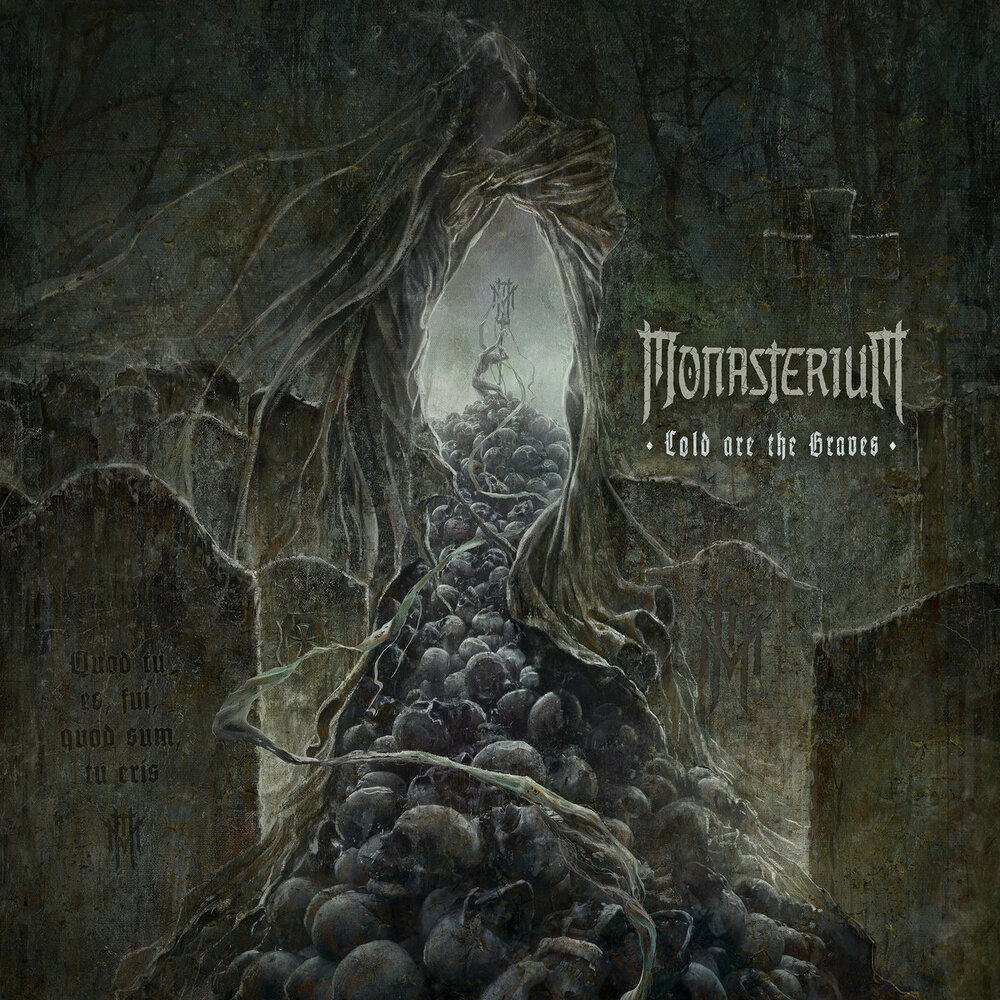
Monasterium - Cold are the Graves (2022)

Country: Poland
Style: Epic Doom Metal
Rating: 8/10
Release Date: 10 Jun 2022
Sites: Bandcamp | Facebook | Metal Archives | YouTube

Back in 2019, I reviewed Church of Bones, the second album from Polish epic doom metal band Monasterium, and the experience blew me away. I loved that album immediately and abidingly and it's right there on my 9/10 list for that year in company with only fifteen others. I completely failed to notice the release of their third album in June, so this review is a little later than it should be. Thanks to Rafał Borsuk from Nine Records for sending me a copy.

The bad news is that it took longer to grow on me than its predecessor, though perhaps I needed a little time to adjust. Most of the great albums I've been listening to lately are fast ones or at least perky ones. This is not remotely fast and it's only occasionally perky, even then in a dissimilar way to, say, Orianthi or Clutch. Then again, this is epic doom metal so fast is not in its repertoire. It has moments at a slightly faster tempo but, as enjoyable as those are, they mostly serve to underline the inevitable slowdowns that come next, which are exquisite. I grinned in admiration every time that happened on The Stigmatic.

The good news is that I adjusted. I started in on it last night after Orianthi and Blind Guardian but I've been listening it to it all day today. Coming to it first thing saw it improve, a couple more times through elevated it further in my estimation and, a few more listens later, it's almost become an old friend. I don't think that it's as good as its predecessor, but it comes pretty close, easily enough to make my Highly Recommended List for this year with an 8/10.

Once again, it's doom metal firmly in the Candlemass style, maybe not quite as obviously this time because they're finding their own sound, but it's simply impossible to miss that comparison. It's a given that, if Nightfall and Ancient Dreams are your idea of heaven, then Monasterium ought to be in your ears right now. Never mind reading this, just go out and buy their albums and thank me later.

The first element you'll love is the guitarwork. These riffs are immense and they sometimes come in hard, as on The Siege, or patiently, like with Necronomicon. Often they manage both, such as on Cimmeria or The Great Plague, because they absolutely nail power chords as crescendos and their production only emphasises those moments more. Sometimes Tomasz Gurgul and Maciej Berniak feel less like a guitarist and a drummer and more like human versions of the Clashing Rocks in the old Jason and the Argonauts movie. Gurgul solos well too, with my favourites on Necronomicon.

Before long, Michał Strzelecki's vocals will show up and you'll be whisked away into another world. He's Polish, of course, but he sings in English with a strong accent and a grandiose delivery that is one part Bela Lugosi, one part Ozzy Osbourne and a whole heck of a lot of parts Messiah Marcolin, operatic and theatrical. The result takes a little getting used to but I adore his diction and ability to effectively preach at us about ancient books of horror, mythological swords and the like.

He's a born performer who always conjures our attention, even on Remembered, whose acoustic intro keeps on going throughout the song. It feels like a tale that might be sung in an inn, but not as a song of cameraderie—as a sad plea for remembrance. If his accent and theatricality feel like they might not be your thing, do persevere because he will probably grow on you when you realise how cool it is to imagine a five hundred year old eastern European vampire fronting a doom band. Sure, that's partly the accent and little the theatricality, but much of it is the feel of age that he's able to convey. His vocals are as epochal as Gurgul's riffs.

Eventually, you'll remember that these magical vocals and immense riffs are part of actual songs. Given the epic nature of their sound, it's almost a shock to realise that nothing here is of a length we might associate with epics. The closer, Cold are the Graves, comes closest because the intro in a quintessentially old school Jimmy Page style, which later reprises under narration, extends it close to eight minutes. Most of the rest sit between five and six with that acoustic piece under four, and they use that time well but I stil wonder how they'd sound in ten minute epics.

I have a feeling that, even though some songs are elevated above others right now in my mind, I'm going to shuffle my rankings with each listen. Necronomicon caught me first, followed by the pair of openers, The Stigmatic and Cimmeria. The Siege wouldn't let me be, though it doesn't live up to its early urgency. Later, Cold are the Graves elevated itself and Seven Swords of Wayland too. That leaves The Great Plague, which has come from behind to enforce its presence on any favourite list, and the acoustic piece, which I have to say is my least favourite for now. Let's see if that changes a few more listens from now, because I'm not turning this off repeat any time soon.

Wednesday, 8 June 2022

Battlelore - The Return of the Shadow (2022)

Country: Finland
Style: Epic Symphonic Metal
Rating: 7/10
Release Date: 3 Jun 2022
Sites: Bandcamp | Facebook | Instagram | Metal Archives | Official Website | YouTube

I remember Battlelore from what I think of as the golden age of Napalm Records, when I stumbled onto the genre of gothic metal and started picking up everything they released. I don't remember liking their black, death or symphonic bands as much as I did gothic ones like Tristania and Sirenia, but I equated Napalm with quality in my mind. I don't remember how many albums by Battlelore I got through, but it was probably the first three and I enjoyed them. I enjoyed this one too, but it's stubbornly not fully engaging with me. When it's playing, I mostly like it. When it finishes, I mostly don't miss it, though repeat listens do help draw out its merits.

And that's a problem, because this is a comeback album for them. They knocked out half a dozen in twice as many years in between their founding in 1999 and splitting up in 2011, never short on new material. However, since they got back together in 2016 in entirety—while only Jyri Vahvanan is a founder member, five out of the seven joined before the first album and everyone was on the last four—they've only put out one album and that a compilation of unreleased older songs. Until now, that is, so this one has been anticipated for a decade and change by fans. Are they going to be sold on it? Maybe, but will it convert the rest of the world? Doubtful.

What Battlelore do here is a light but pretty straightforward take on symphonic metal with beauty and the beast vocals, without really surprising at any point except through their subject matter, which generally boils down to a single word: Tolkien. The base of their sound is chunky riffs backed by the keyboard layer that emphasises them and this combo is reliably successful but perhaps doesn't do as much as it should to vary the sound. Tomi Mykkänen's harsh vocals work well with the riffs and I especially like it in duet with Kaisa Jouhki, who contributes a clean female voice in counter, though they tend to alternate the lead far more often than they duet.

I'm probably going to regret saying that they don't vary their sound much, but it's fair. There's one tone in play throughout this album, for the most part, and they milk it continually, as if it's all they need. However, there are some interesting moments and I'd be remiss if I didn't call them out. The unexpected narration partway through Orcrist works surprisingly well. Elvenking and Firekeeper slow things down, with the latter doing it rather effectively. Mirrormere gets really interesting in its midsection, and starts out delicately in a way that Shadow of the East echoes and never loses, a song that maintains its sense of gothic doom as it builds, Mykkänen whispering his vocals.

So there's more here than we might initially assume from a first listen and the album does reward repeat listeners, even if that first time through might only throw out Shadow of the East as a sole exception to Battlelore in default mode. It remained my personal favourite but, playing as it does in gothic and doom metal, it was always going to be. However, I think it's fair to say that it nails the epic side of Battlelore's sound better than anything else here, its last minute or so as cinematic as this album gets.

And, I should add, it's not just an album, it's a kinda sorta double album. The album proper on one disc runs a decent forty-seven minutes, but there's a second disc too, a much shorter one that we'd best call an EP. It contains three songs written around the time the band ceased to be a decade or so ago. They're separated here, because they don't sound particularly like the album proper, with less chunky riffs and a folkier, more epic feel, even Isenmouthe, which is definitely heavier than its peers. It probably isn't a good thing that I like all three more than I do the main album.

Monday, 13 December 2021

Fading Aeon - The Voices Within (2021)

Country: Germany
Style: Epic Melodic Death Metal
Rating: 8/10
Release Date: 10 Dec 2021
Sites: Bandcamp | Facebook | Instagram | Metal Archives | Official Website | YouTube

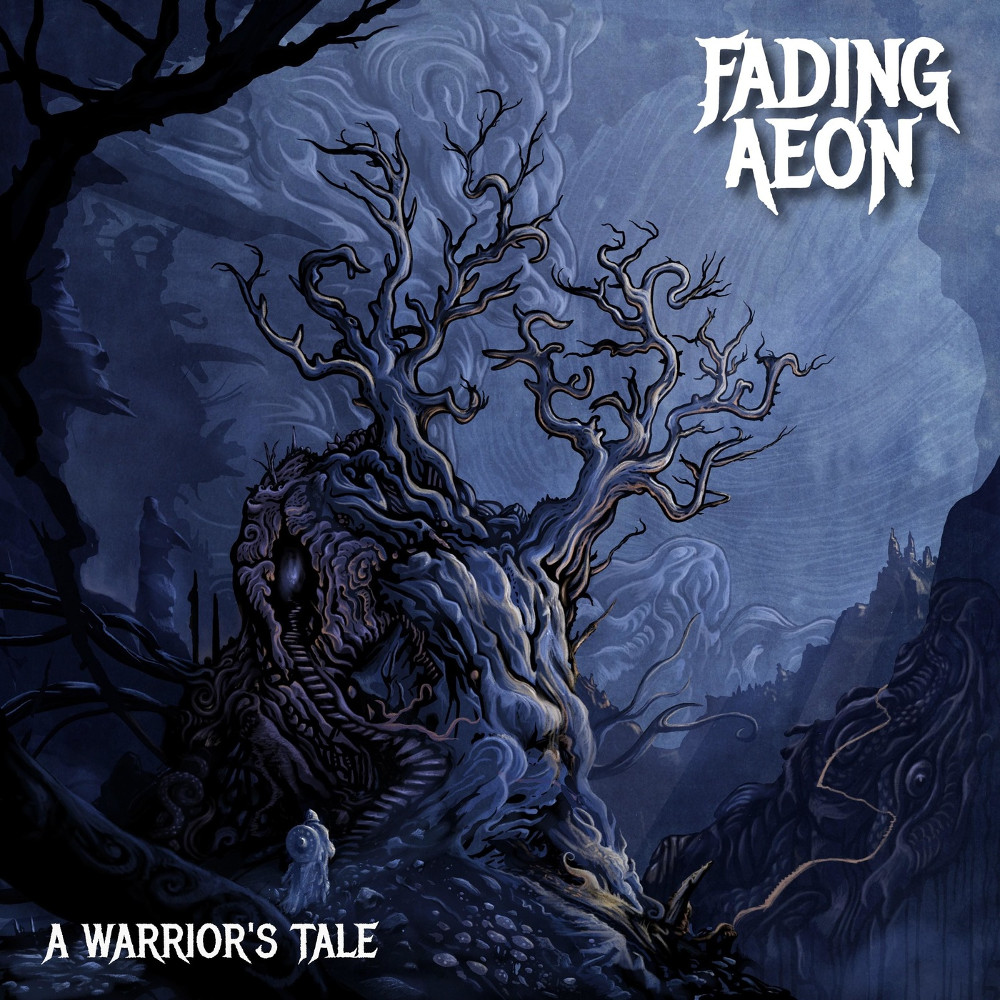
Almost three years ago, at the very beginning of 2019, Germany's Fading Aeon introduced me to a new combination of metal subgenres—epic melodic death metal—and I thoroughly enjoyed their debut album, A Warrior's Tale. Now they're back with the follow-up, which continues very much in the same vein: five long songs that combine the riffage of heavy metal and the melodies of power metal with a harsh voice and the crunch of death metal. There's nothing new added this time out, but everything is a little more: the songs are longer still and the riffs are more urgent, but there is also even more of the delicate instrumental work in between the heavier sections.

As with the debut, the first two songs are the shorter ones but, for this band, that means a seven minute song and an eight minute song. They ramp up from there, with the other three all passing the ten minute mark and two heading towards fourteen. None of these feel too long though, even if it's not always easy to grasp the full sweep of any of them in one go. We just dive into them and let their flow take us where they will. These are rivers of songs, sometimes calm and intricate and sometimes whitewater rapids, but they always carry us and we end up happy wherever we end up.

The most immediate song is the first one, Beginning of the End, which means that it's the first of them to become an old friend. One time through and this is just good stuff; a second and we start to identify favourite riffs and favourite sections; a third and we're feeling some of it in our bones. In very different hands, Beginning of the End could be an Iron Maiden song, because of how it's all structured, with solid riffs, memorable melodies and galloping sections where both the voice and instruments gallop together.

The tone is completely different, of course, and the vocals are a light year away from the Air Raid Siren, but this track makes me wonder how Fading Aeon would sound cover something off Piece of Mind. If Maiden are fair to highlight as an influence but completely meaningless as a comparison, I'll go back to the band I compared them to on their debut, because I hear it here as well and that is the French band Winds of Sirius, who were much slower than this but much closer in tone, with a similar vocal style.

Christian Stauch has a warm deep rasp that doesn't allow him much flexibility to intonate but he's very good at stretching his notes for effect. He's a texture here more than he is a delivery method for lyrics, even if his diction is often completely intelligible, and that texture owns the deep end so that David Gareis's far higher guitar can have fun playing counter to it. In many ways, it provides a drone for a higher voice to soar over, just like throat singers, who admittedly do both themselves. Here he's the drone and Gareis's guitar is the higher voice.

Tempting Voices coalesces next before then the longer songs, but my favourite soon became track three, Defying the Path Foregone, which is the shorter of the thirteen minute songs. It kicks off in almost alternative rock fashion, with chords that could start a Red Hot Chili Peppers number, but it unexpectedly adds strings—and was that a flute?—before chunking up and firmly staking out in metal territory. It's the stripped down section early on, where they actually sound like a trio for a change, that grabbed me first, but I enjoyed the build too. It gets faster and heavier with a lot of the melodic line handled by whatever the extra layer is behind the band, and the last third is joyous.

Mostly, I'm just as surprised as last time to realise that Fading Aeon are a trio. Stauch takes care of vocals and bass, David Gareis all the guitarwork and Patrick Gareis the drums. However, there's often another layer in addition to these traditional instruments, including right at the beginning of Beginning of the End, which is the beginning of the album. Sometimes it sounds like it's all the work of keyboards, but sometimes it takes more of a choral form, a merging of voices. Someone's doing something extra and it's obvious when they stop doing it, such as the first minute of ...Dust to Dust, the closer, which opens slow and stark and bluesy.

I like this a lot and I like it more each time I listen through it. It starts out an easy 6/10 but with an expectation that it'll grow on further listens. It becomes a 7/10 the second time through and then keeps getting better, as the songs become old friends. I'm very tempted to go with an 8/10 at this point, especially as I gave the debut a 7/10 and think this is better. Another time through ought to firm up that decision. Now, who else is making epic melodic death metal because I want more and I don't want to wait another three years...

Tuesday, 26 October 2021

Cradle of Filth - Existence is Futile (2021)

Country: UK
Style: Symphonic Gothic Black Metal
Rating: 8/10
Release Date: 22 Oct 2021
Sites: Facebook | Instagram | Metal Archives | Official Website | Twitter | Wikipedia | YouTube

This ought to be a lucky thirteenth studio album for professional British thorns in the side of society Cradle of Filth. The concept this time is a surprisingly grounded one for them, being, in Dani Filth's words, about "existential terror. The threat of everything. The end of the world, the end of one's life, existential dread." In other words, it speaks to now, the only counter to the negative given being "A little hope, I guess, in there" as well.

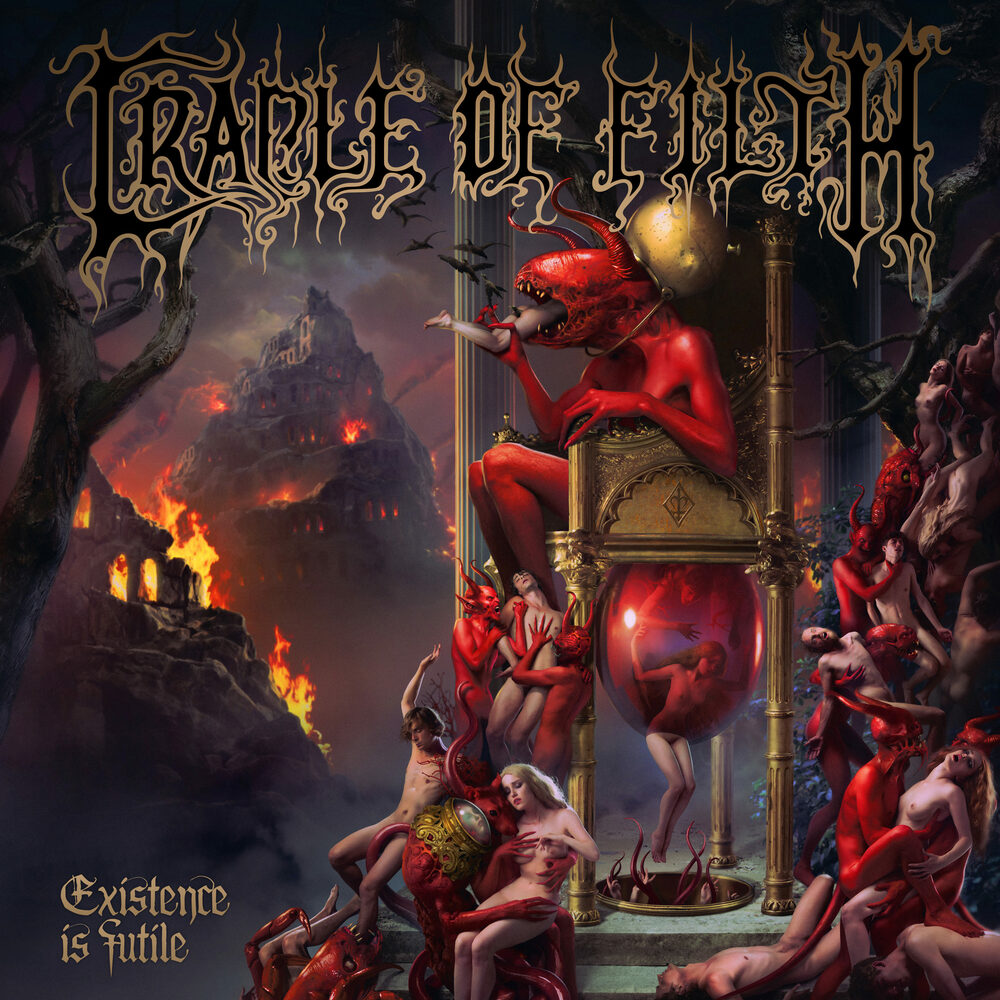
And, in keeping with the apocalyptic Hieronymous Bosch-inspired cover art by Arthur Berzinsh, it's an appropriately busy sonic interpretation of our collective demise as a species, trawling in a whole slew of musical influences from across the extreme genre map in characteristic Cradle of Filth style. This is a vibrant apocalypse, one that's impossible to ignore, which is surely much of the point. How come we seem to be so good at ignoring ours?

The Fate of the World on Our Shoulders kicks off the album like the symphonic intro to a horror movie, which is a pretty appropriate way to start. It's a little Hans Zimmer and a little Danny Elfman, epic but playful. Then we move into classic Carl Orff territory. There are Dani Filth's unmistakable vocals. And a bouncy extreme metal hybrid sound that's such a fascinating creature to dissect. It's fast and frenetic but it's built on powerful riffs and fascinating songwriting.

I absolutely adore bands like Cradle of Filth who are simply impossible to stuff into a simple subgenre labelled box. This one comes across a lot like Therion in their heyday combined with a commercial era Satyricon, like an unholy union of Enter Vril Ya and K.I.N.G. But then there's the Zimmer feel to render it epic and a layer of othic texture that's not only overt in the soaring and clean female voice of new fish Anabelle Iratni, who also contributes keyboards and lyre. This apocalypse is draped in velvet just as much as it is blood and fire. It's heavy, of course, and it gets fast at points and faster at others, but it's enticing as well, especially during Discourse Between a Man and His Soul.

So, if you just have to label everything, this could be called epic gothic black heavy symphonic extreme metal. Or something like that. The symphonic is obvious from the very beginning of Existential Terror, the epic gradually takes over as we go and the black manifests itself most obviously during a frenetic chase to the finalé. But even that description isn't enough, because there's almost some exotica early in Necromantic Fantasies. Crawling King Chaos adds church organ and chanting narrative, guitars like buzzsaws in harmony, epochal drumming and vocals like a swarm of murder hornets. There's a heck of a lot to discover here on what has to be the most emphatic Cradle of Filth album in forever.

It's hard to even pick a favourite track. Existential Terror was clearly going to be mine from the outset, but I hadn't heard anything else at that point. As it went, Necromantic Fantasies made me wonder if I was being premature. Crawling King Chaos underlined that I was and The Dying of the Embers was the one that emphatically took over from it as my favourite, a delicious spoken word intro escalating even more deliciously into an old school heavy metal song that becomes extreme and playful and blistering in turn. It even ends as deliciously as it began. It's an absolute peach of a song.

If there's a flaw here, it's that the album runs long, over seventy minutes, and it doesn't sustain that level of imagination throughout. That's not to say that the second half is bad or poor or even just OK, especially with my favourite song to kick it off and a neat if brief instrumental interlude to follow. I'm rather partial to Suffer Our Dominion and Us, Dark, Invincible is growing on me, but, both on my first and subsequent listens, I find myself tuning out during some of the later tracks, something I never do during the first half.

This is still a major Cradle of Filth album though. It's the best I've heard from them in a long time and I can't remember when they were this vibrant and urgent and relishing in both of those things. I think I have to go with the first half as a 9/10 and the second as a still decent 7/10, so averaging out the album as a still highly recommended 8/10. If you're into extreme metal and don't care about staying within a particular subgenre boundary, this ought to be essential.

Wednesday, 3 March 2021

Epica - Omega (2021)

Country: The Netherlands
Style: Symphonic Metal
Rating: 8/10
Release Date: 26 Feb 2021
Sites: Facebook | Flickr | Instagram | Metal Archives | Official Website | Twitter | Wikipedia | YouTube

It's been five years since The Holographic Principle, but Dutch symphonic metal legends Epica return with their eighth studio album and it's a generous one indeed, running seventy minutes even before we add in the bonus disc on the deluxe edition, Omegacoustic, though that's not particularly long on its own. Then again, this is the first time they've gone beyond a three year gap and COVID has proved to be an accidental boon to many bands by focusing the mind wonderfully, so it isn't surprising that they have such a wealth of new material.

The sound is as you would expect. This is still symphonic metal in an epic style, elegant from moment one but soaring far higher than it dives, though the grounding often shifts into melodic death metal. The vocals still utilise a beauty and the beast approach, with Simone Simons as pure and clean as ever and the growls of Mark Jansen harsh but far from evil. There are also choral backing vocals here, some of which show up on the intro before Simons and Jansen get to open their mouths, but perhaps most notably on Seal of Solomon.

And, as always, Simons is the dominant voice. Abyss of Time, the first song proper, may start out with the two of them going back and forth, but Simons is the louder voice when they sing together and she doesn't take long to strike out on her own. Jansen sings throughout but, the longer the album lasts, the more Simons takes over, to the degree that a song like Rivers, the third single, is almost entirely her and the softer side of the band's sound.

There's a lot going on in this album but it's engaging on a first listen and only deepens when we take another ride through. The majority of songs are in the five to six minute range and they're generally a strong bunch with neat dynamic play. I like The Skeleton Key, with its pure and crystalline melodies that approach saccharine but never get there and a heavy side that sometimes stands off at a greater distance than usual to add edge without changing the tone. Seal of Solomon and Code of Life bring in the middle eastern flavour Epica often explore and they reminded me of classic Therion, especially through the heavy use of choirs in the former and the build of the latter.

You won't be surprised to find that there are longer songs too or that there's one that's getting hard to explain as time goes by. It's the longest by far, at thirteen minutes, and it's called Kingdom of Heaven, Part III: The Antediluvian Universe. As you can imagine, that means that it continues a song that Epica last visited on their 2014 album, The Quantum Enigma. The first part saw release on Design Your Universe in 2009 but it was also the fifth of the six instalments of A New Age Dawns, the second half of which unfolded on that album but the first half on 2005's Consign to Oblivion. Whew.

This one starts out like soundtrack material, with abundant keyboards and plenty of choral sections, as if Epica were pitching to score whatever the next Middle Earth film trilogy will be. As befitting its length, there's a lot more to absorb, but there's a strong piano solo six minutes in and I'd argue that some of the best Simone Simons parts anywhere on this album can be found late in this epic.

I've reviewed a lot of generous albums this year and many of them have simply been too long. What I think might work fine for forty minutes become stretched at sixty and some of those albums would be better for shedding some of their songs for use as single B-sides, if anyone's even using those in 2021. This one is different. Even with The Antediluvian Universe unfolding in six parts; a seven minute mini-epic, Omega - Sovereign of the Sun Spheres, in three; and four or five songs really being two in one, it somehow remains engaging throughout, even on a second or third listen. In fact, it feels like the band could have just kept on going, if CDs could store eighty or ninety minutes of music.

I thought about going with a 7/10 here, because I realised that almost all my favourite songs show up in the first half and I struggled to remember the final three that wrap up the album. However, Rivers is in the second half, as are the closing sections of The Antediluvian Universe, and repeat listens do help the later tracks to grow. As I mentioned, there's a lot going on in this album, enough that we have to step back and catch sight of the whole thing in addition to what portions have stood out to us while we've wandered through at ground level. So an 8/10 it is.

This is an strong, epic and vibrant release to take Epica into what will be their twentieth anniversary in 2023 (or 2022 if you count the year they spent as Sahara Dust).

Tuesday, 12 January 2021

Eternal Champion - Ravening Iron (2020)

Country: USA
Style: Epic Heavy Metal
Rating: 7/10
Release Date: 6 Nov 2020
Sites: Bandcamp | Facebook | Instagram | Metal Archives | YouTube

One of the most surprising entries on year end lists, not to me but the people who chose it, was Texan traditionalists Eternal Champion. "I’ll be honest, wrote Aaron Lariviere, "I wouldn’t have guessed my favorite album of 2020 would come with not one but two topless ladies on the cover." He's talking of a painting by Ken Kelly, famed for his epic cover art for Kiss and Manowar, among others. In addition to those two ladies, whose bust sizes are above impressive, there's a mountain of skulls and a dragon and a giant snake. It's the sort of thing we expected in the mid eighties and what makes this album work is that the music, which is rooted in that era, does not sound like it was written then.

This is the second studio album for Eternal Champion and word is that it's deeper but not as catchy as the first, 2016's The Armor of Ire. I haven't heard that album, but that word rings true anyway. This is a fundamentally melodic album, but it's short on anthemic choruses. It feels like Jason Tarpey is always as interested in telling a story as singing a song, which inevitably lends every word equal importance and choruses distract from that. His voice, which is clean and effective, but not the emphatic operatic one we might expect, also plays up the guitars, which rule this album.

There are two guitarists here, John Powers and Arthur Rizk, the latter of whom is primarily the band's drummer, and they are constantly enjoyable. They're not just about conjuring up a riff and milking it for a while to give Tarpey the spotlight until it's time for a solo, though there are examples of that in songs like Skullseeker. Each of these riffs tends to lead to another one, then another, with a swathe of fills and solos dotted throughout, even if they're notably brief. As much as Tarpey's vocals fit well on top of this music, it feels like it was written instrumentally and would work that way too.

I enjoyed this from the outset, but not to the degree that I expected from an album that made six end of year lists, including a #1 at Stereogum and a #2 at Decibel. While songs like Ravening Iron and War at the Edge of the End were impressive, the album didn't grab me by the throat until it made it to the halfway mark. Coward's Keep is the highlight for me, a full step up on every level from anything that's ahead of it, and Worms of the Earth isn't far behind.

Coward's Keep kicks off with a vaguely exotic intro that leads into the best riffs of the album and the most overtly catchy vocals. If I wake up in the morning with Eternal Champion playing in my head, it's probably going to be this song, albeit more likely its riffs and the deliciously staccato drums from its midsection than its echoed chorus. That's also seeping into my soul though.

It feels just as epic as the album is supposed to, not least because of the those staccato drums return to pummel us all the way to the mediaeval acoustic outro, but, while it's the longest song here, it's a short longest song at under six minutes. To feel epic at under six minutes is impressive, but Worms of the Earth does the same thing at four and a half. The riffs here are faster and more vicious and Rizk is more than up to the task of driving them. His drum sound on this one is glorious.

The least worthy track here is The Godblade, which is just a two minute synth interlude before the final track, but it does remind us that there's a sword and sorcery novel accompanying the album. It's also titled The Godblade and it's by J. Christopher Tarpey, who's better known here as lead vocalist Jason Tarpey. It looks to be as influenced by the fantasy novels of Michael Moorcock as a band named for one of his primary characters, the Eternal Champion.

I certainly liked this album, which bodes well for the vibrant New Wave of Traditional Heavy Metal or whatever we're calling it this week. It's solid throughout, deep and intricate without advertising it, a reliable set of songs. However, Coward's Keep and Worms of the Earth demonstrate just what the band can do and they couldn't match those songs on the other three quarters of the album. So, I'll happily recommend this but I won't rave about it. I might just rave about their next one though.

Friday, 20 November 2020

Gwydion - Gwydion (2020)

Country: Portugal
Style: Epic Black/Folk Metal
Rating: 7/10
Release Date: 13 Nov 2020
Sites: Facebook | Instagram | Metal Archives | Official Website | Twitter | YouTube

Now, here's an interesting mix of genres! The band's Facebook page suggests that they play epic/folk metal. Metal Archives calls them a symphonic folk/Viking metal band. In truth, I can hear all of those things and more. Pedro Dias's vocals take a lot of forms here, but one of them is clearly a black metal goblin approach and it's surely the most prominent. Unless there's a string of guests to back him up, I also heard him tackle melodic folk lines, death growls, even a traditional operatic heavy/power metal style, often at the same time. How many singers are on this album?

Certainly everything's epic. The opening track, Stand Alone, begins like the calm before a battle, with martial drums and swirling textured keyboards. It's a very visual intro and the mists are swirling too, perhaps somewhere in the Scottish highlands or the island that is Ireland, back a number of centuries. I see that the band's previous album was all about Vikings, but this is Celtic all the way through, from the band's name on down. After that intro, everything kicks off and we get bloody. Epic metal indeed.

Certainly, symphonic metal makes sense too. The keyboards of Daniel César, the sole band member to have been there at the beginning when Gwydion were founded, are omnipresent and they often take the role of strings. The band are more epic than symphonic and there are no female sopranos joining the fray, except on the final song, A Roda, but the two genres live in the same bucket and, beyond its being acoustic, that song plays well with everything else here.

At their core, though, they're a folk metal band and that's never more overt than in Battle of Alclud Ford. It's fast and frenetic, but it's led by folk melodies and sing-a-long lyrics. At points, it sounds like an Alestorm song but with a variety of different voices. I have no idea if they're all Dias or if the rest of the band are joining in on what is often a sing-along song. Was that Michael Kiske? Was that Bruce Dickinson? I doubt it but someone's trying to be both of them and not doing a bad job of it either. If the goal was to sound like everyone in a pub joining in over their pints, they nailed it. Unsurprisingly enough, Ale Mead and Wine is another drinking song but it features fewer voices and reminds more of Korpiklaani than Alestorm.

I like this music and it's easy to see that Gwydion kind of dig it too. This is their fifth studio album in a quarter of a century, though their debut, Ŷnys Mön, didn't come until a dozen years ago, but it's the first to be self-titled, which is usually a statement. Are they affirming that this is the true identity of the band at last, even though guitarist João Paulo left after recording it? Is it a new beginning or the summing up of their history thus far? It's certainly a generous album, with fourteen songs taking it a way past an hour in length. I never got bored, even across a few listens, but it could have been shorter without losing anything of substance.

Whatever Gwydion feel that it is, it's good stuff, notably varied because of all those voices, and neatly produced by Fernando Matias. I can easily hear Bruno Ezz's bass not because that end of the spectrum is pumped up but because the production is just so clear. I love production when I can listen multiple times and follow different instruments instead of just the vocals and the lead guitar.

I'm enjoying what I'm hearing coming out of Portugal, especially now I'm finding bands other than an excellent array of psychedelic rock outfits. Gwydion are very well established and yet they still have a sound that's not commonplace. I'm thinking of it as a mixture of Cradle of Filth and Korpiklaani, with whatever else they believe ought to add to a particular song, and even a few listens in, that still feels fascinating to me.

Monday, 16 March 2020

Smoulder - Dream Quest Ends (2020)


Country: Canada
Style: Epic Doom Metal
Rating: 7/10
Release Date: 13 Mar 2020
Sites: Bandcamp | Facebook | Instagram | Metal Archives | YouTube

Having thoroughly enjoyed Smoulder's debut album, Times of Obscene Evil and Wild Daring, I've been eagerly awaiting their new EP, which is finally with us. While they're calling it an EP, it's a mere 21 seconds shorter than the full length album, so it's serious value for money. However, only half of it is new, the second half being their three track demo from early 2019, two of which tracks ended up on the album.

Before those are three new songs: the title track, Warrior Witch of Hel and a lusty cover of Manilla Road's Cage of Mirrors, which originally appeared on that band's Metal album back in 1982. This release is dedicated to Mark 'The Shark' Shelton, vocalist and guitarist with Manilla Road, who died in 2018. As usual for Smoulder, their original songs are sourced from fantasy literature, Dream Quest Ends presumably from Lovecraft and Warrior Witch of Hel from the Bloodsong novels that C. Dean Andersson wrote as Asa Drake.

Listening to the three new songs and the three demos offers very little in difference in sound, whether in song construction or production. That makes this flow much more than I thought it would, which is a major positive. The production is by Arthur Rizk and it's spot on. The guitars crunch, the drums pound, the bass prowls and the voice of Sarah Kitteringham constantly fights for supremacy.

And those new songs aren't just pretty damn good, they build as the EP runs. I like Dream Quest Ends, but I like Warrior Witch of Hel more and the cover of Cage of Mirrors reminds me just how great Manilla Road used to be and how I really ought to listen to their early albums more. These songs are so big that I feel like I'm experiencing them from the inside, power chords echoing around me.

While there isn't a song here under five minutes, the only epic on offer in running time is the cover at almost nine. The rest just feel epic because of the way they're built and the way they sound. Dream Quest Ends is elevated by some duetting between Kitteringham and whoever's stepping up to provide the clean male voice. Warrior Witch of Hel thrives on epochal riffing and a chorus that's just as heavy. Like the full album last year, this is far too alive to be regular doom. Epic doom works as a description but it's so alive that simply heavy metal would work too, with heavy underlined in blood.

I went back to the Manilla Road original of Cage of Mirrors to seek context and a few points made themselves immediately obvious. Manilla Road clearly spent a heck of a lot of time listening to Rush from the mid-seventies. The technology in studios in 1982 totally sucked compared to what bands can use today. And the Smoulder take on this song is pretty close to the original, the less theatrical but just as heartfelt approach to the vocals being the most obvious difference. It feels more complete too, the original being five parts that add up to a piece of music but this version a song in five parts that flow together better.

I'll skip over Sword Woman and Voyage of the Sunchaser, as they appear in a slightly more developed form on last year's album. The one that didn't make it onto that is The Queen is Gone, perhaps because the opening riff is a slow doom version of the Inspector Gadget theme tune. It's another chugger of a song and I have a feeling that, if the band re-recorded it now, it would be a little faster and a little more overt. It's still a good song though and wouldn't have been out of place on the band's excellent album last year.

Now, when will this coronavirus pandemic be done so Canadian bands can tour down here again? I'd pay good money to see Smoulder live with Shadow Weaver.

Wednesday, 22 January 2020

Smoulder - Times of Obscene Evil and Wild Daring (2019)


Country: Canada
Style: Epic Doom Metal
Rating: 8/10
Release Date: 26 Apr 2019
Sites: Bandcamp | Facebook | Instagram | Metal Archives

The problem with looking at published best of 2019 lists to see what I might have missed from last year is that almost everyone concentrates on American bands and ignores anything from outside those borders. That doesn't mean the albums they include aren't worthy: looking at them has highlighted bands to me like Blood Incantation, Baroness and Lingua Ignota, but it does mean that they're missing a whole heck of a lot of fantastic stuff from other places.

Fortunately, there are other lists. The guys over at MetalSucks seem to love Smoulder, who come from Toronto on the other side of one of those borders. I looked them up and found that lead vocalist Sarah Kitteringham also reviews metal, at Banger TV, and they have a special focus on international music as I do here. So hey, all credit to her and them for that and on to her band!

Smoulder play epic doom metal and this is their debut album, after a demo in 2018. Since this, they've also put out an EP which I ought to take a look at too, that features two new songs, a cover of Manilla Road's Cage of Mirrors and the three tracks from that demo. They aren't the most original band I've ever heard and they're more focused on passion than finesse, but wow, they frickin' rock! In a perfect world, they'd have been founded a decade earlier so that they could have supported Dio on tour.

The Michael Whelan cover and overblown title are more than a hint at what a wary traveller might find inside. This is unashamed fantasy, with songs set in the worlds of Michael Moorcock, George R. R. Martin and, best of all, the wonderful C. L. Moore. Yes indeed, there's a Jirel of Joiry song here! This is all conjured up in a style that will work very nicely for fans of Manilla Road, Cirith Ungol and Brocas Helm, not to forget Manowar, though this is a lot less cheesy and a lot more chunky, in large part because of an excellent mix job by Arthur Rizk.

Make no mistake, Smoulder have a huge sound anyway, with pounding drums and earthshattering riffs and real dedication in the vocals. This is old school metal to play as loud as it gets. I'd love to see this band live, partly to bury myself in their sound but also partly to if anyone has the balls to sit at the bar and shrug them off. I hope not. What Rizk does is make absolutely sure that they still sound huge on record and that's a whole other thing.

They simply storm into action here, with that Moorcock song, which is power incarnate. It's Ilian of Garathorm and it tells of the Eternal Champion in an appropriately mythic fashion. There's a universe where villagers recount stories, over flagons of ale, of an epic band who rode into town, destroyed with this one single song and promptly vanished into the mist, never to be seen again.

The Sword Woman slows things down a little, focusing a little more on doom while never losing the epic. Then Bastard Steel ramps it up faster, with a galloping drumbeat from Kevin Hester that makes us believe we're inside the world's largest mosh pit, which shimmers and becomes a battlefield. This is more epic and less doom, meaning that we've had all the combinations needed in the first three songs, with three more to come.

What follows doesn't vary that much, but it continues to rock, hard and in highly consistent fashion. There's a storm that heralds the Voyage of the Sunchaser, with a bass run from Adam Blake to set it on its way. And, after Shadowy Sisterhood, which is decent but unremarkable in this company, the album wraps up with a nine minute epic, Black God's Kiss, which tries hard but doesn't quite gel for me. It sounds good but it also feels long and it doesn't grab me the way that the earlier songs did, at least until it ramps up its tempo seven minutes in.

Given that I loved everything about the first half and at least enjoyed the second half, even if it felt a little lesser, this would be an easy 7/10 for me. However, rather ironically for something focused so strongly on fantasy, I'm going to give it another point for feeling so damn real. It's partly the production and partly the fact that this band obviously adores what they do and everyone involved pours themselves into this material. Horns ablaze!

Thursday, 9 May 2019

Monasterium - Church of Bones (2019)


Country: Poland
Style: Epic Doom Metal
Rating: 9/10
Release Date: 6 May 2019
Sites: Bandcamp | Facebook | Metal Archives | YouTube

I came into this album not knowing anything about Monasterium except that they play epic doom metal in Poland. I left it knowing a lot more, because this is really good stuff and they clearly enjoy what they do, describing themselves on Facebook as 'humble knights of doom on their second crusade'. Their first was a 2016 self-titled album which I'll immediately seek out [edit: it sounds good but not as good as this].

The one downside to this band is that they're clearly huge fans of Messiah Marcolin era Candlemass, so much so that this almost sounds like a tribute album. That's it. If you see that lack of originality as a problem, this is perhaps not the doom metal album for you and best of luck finding something that truly stands apart from what's gone before. If you really don't care and, frankly, perk up at the idea of something comparable to Nightfall and Ancient Dreams, then this is emphatically for you.

So, if you're still here, let me tell you how great this is. Of course, you already know what it sounds like because you've played those two Candlemass albums to death. It sounds like that. The vocalist attempting the tough feat of surviving a comparison to Messiah Marcolin is Michał Strzelecki who, get this, used to play guitar in a power metal band called Sorcerer. That seems really weird to me because it's really rare for a musician to transition to vocals with such emphasis but hey, I ain't knockin' it.

Strzelecki isn't Marcolin, though, of course, nobody else is either. He is, however, very good indeed. He sings entirely in English and does well, even if he can't quite hide his Polish accent. Frankly, it adds a little exotic texture. To highlight how good he is, he shares the mike on The Last Templar with Leo Stivala, who's sung for the Maltese doom band Forsaken for almost three decades, and, as good as Stivala is, he's clearly not as good.

If Monasterium were nothing but a great singer, I wouldn't be raving like I am here. Fortunately, the rest of the band are all strong. Filip Malinowski drives a lot of this on a highly resonant bass. Tomasz Gurgul is a walking riff machine on guitar. Maciej Berniak, manning the "drums of doom" keeps it all very much under control and even adds a little perkiness at points. The three of them all used to play in a prog metal band called Sadman Institute, who put out an album in 2015 that now intrigues me. It sounds like they live and breathe doom but apparently they didn't used to.

And, to put the icing on the cake, Monasterium aren't just a bunch of solid musicians. They have actual songs to play here and that's surprisingly often a missing component for otherwise highly talented bands. I don't know which band members to praise for the songwriting, but it's as strong as anything else here. I knew I was going to like this just from the title track, which opens the album, but it just gets better from there.

La Danse Macabre varies as to why it's better. It starts out very much as a guitar song with Gurgul churning out a glorious riff and Berniak setting an agreeable pace, but his work in the midsection brings a huge grin before Strzelecki lays claim to the song with a dramatic section and a couple of moments of sheer power. Liber Loagaeth betrays a surprising influence, in early Manowar, but still with a very doom vocal. It's too polished to have fit on something as raw as Hail to England, but it would have been worthy.

And then they get heavy! Ferrier of the Underworld and Embrace the Void are both crushing doom tracks led by more glorious riffs and some soaring vocals from Strzelecki. The former is as Nightfall era Candlemass as it gets and I have to praise Malinowski and Berniak for keeping the song as heavy as they do while Gurgul is soloing. The latter starts tantalisingly quiet and likes to stay there for the verses, but it builds with some serious power, Berniak and Malinowski once again crushing it behind the vocals.

Every song thus far has been great and we're coming up on my favourites. The Order of the Dragon and Sleeping with the Dead are both songs that do little more than previous songs did but somehow grew more on me. The latter is long too and I think Monasterium do well with longer songs. Of course, the longest is the last one, The Last Templar, with that guest vocal, and it builds like an epic should. There's a little of that old school Manowar here again but it's a killer doom track to wrap up a killer doom album.

I don't give out high ratings easily because I feel that classics can only be truly quantified in hindsight, but this is easily as worthy as anything I've heard this year. Thus far I've only given two 9/10s and this makes it three, with the added note that I expect to be going back to this far more often than Aephenamer and maybe more than Uluru.

Thursday, 7 February 2019

Fading Aeon - A Warrior's Tale (2019)


Country: Germany
Style: Epic Melodic Death Metal
Rating: 7/10
Release Date: 6 Jan 2019
Sites: Facebook | Metal Archives | Official Website | YouTube

Time was that death metal was just death metal. When I was paying most attention, it had splintered into two: the melodic style favoured in Sweden and the brutal style favoured in Florida. Well, that's not enough any more. It seems that the latter has splintered again, because slamming brutal death metal isn't remotely technical brutal death metal, and that's before you add in black influences and whatever else innovative bands are adding nowadays.

And melodic death metal is doing the same thing, because bands nowadays aren't always content with sticking to the established Gothenburg sound. Case in point: Germany's Fading Aeon, who call themselves epic melodic death metal and, frankly, I can't argue with that in the slightest. It's an enticing marriage of styles, a gift for anyone who loves the overt keyboard overlays that we tend to hear more on heavy or power metal albums, but also the growling vocal style of death metal.

I didn't know I counted myself amongst that number until I heard this, the debut release from Fading Aeon, who were formed in Kronach in Bavaria back in 2014. It leans heavily towards long songs, only one of the five on offer lasting less than eight minutes and that one almost seven, but they're all immersive and rewarding, nothing like I've heard before in the death metal vein.

In fact, with the music high in the mix and the vocals low, some of the textures reminded me of Winds of Sirius, a personal favourite of mine, who said that they played gothic metal. That goes double for the last couple of minutes of One Last Farewell, when everything slows down and moves into an echo chamber. Christian Stauch's voice had already gone there earlier in the track.

What surprises me most is that, according to their website, Fading Aeon are a trio, which seems really odd, not least because nobody's listed on keyboards at all. Something's providing that atmospheric overlay and it's definitely not the ambience in my office. Also, David Gareis is listed as the only guitarist and, there are points where it sounds to me like he's duelling with himself. Surely there are other instruments in the mix too, like the piano in One Last Farewell and the variety of horns and pipes halfway through The Journey Ends. Maybe that unknown keyboardist is responsible for all of this.

Like a lot of albums I'm enjoying lately, this one rewards a listener who comes back for a second or third run through because it's a consistent album in style and quality that has no standout tracks. Each needs the opportunity to take root in our skull and state its own case for special notice. The highlights here are not the tracks themselves but parts of them, like the guitar in Beyond the Veil, the slower sections of One Last Farewell or the liveliness of The Journey Ends.

Frankly, the album plays best as a single entity, one forty-five minute slab of epic death presented in five movements, and that's fine. After all, I doubt that anyone's looking for chart hits or radio friendly sounds on a death metal album whose average song length is nearly nine minutes. This is Fading Aeon's Opus No. 1 in E for Epic and I'm already looking forward to Nos. 2, 3, 4 and 5.