Showing posts with label post-black metal. Show all posts

Wednesday, 26 February 2025

Harakiri for the Sky - Scorched Earth (2025)

Country: Austria
Style: Post-Black Metal
Rating: 6/10
Release Date: 24 Jan 2025
Sites: Bandcamp | Facebook | Instagram | Metal Archives | Twitter | Wikipedia

There are two distinct sides to Harakiri for the Sky, appropriately enough given that there are a couple of very different musicians in the band.

Matthias Sollak plays most of the instruments, the one exception being the drums, which fall to Kerim Lechner, Krimh of Act of Denial, Dååth and Septicflesh. I don't know how many there are, beyond the traditional, but there's plenty of keyboard work and not all of it sounds like a piano. Without You I'm Just a Sad Song, for example, starts and ends with a memorable melody played on some sort of chime. Melody is everywhere, because Sollak combines a black metal resilience with the delicate melodic ear of a pop artist.

I use the term resilience there, because the traditional black metal wall of sound doesn't appear particularly often, perhaps coming closest on Keep Me Longing and Without You I'm Just a Sad Song. It's less of a barrier than a sort of last effort countercharge, the cover art seeming highly appropriate. It's as if the melodic side is the dominant norm but, when threatened, it turns dark and attacks as a form of defence.

Michael Kogler provides the vocals, which are certainly memorable but seem limited. He doesn't shriek in black metal style but doesn't really shift to any of the other standards. He's a lot closer to a hardcore shout than a death metal growl but he isn't really there either. It's a hoarse shout that carries a little of the bleakness we expect from black metal. That places it a long way from the stereotypical orc sound into a more traditional metal vein that's been dipped into extreme. However, just as hardcore shouts are inherently limited to the one emotion of anger, these are limited to the one of righteous despair.

As a result, this took me way back to when Sid at Groové Records in Halifax gave me a promo CD of Dark Tranquillity's debut album, 'Skydancer'. He described it as wonderful music spoiled by a rough vocal and, while I'll cut him some slack there because it was the beginning of a genre and that vocal style was relatively new, it's exactly what I felt here. There's nothing wrong with what Kogler does, but it's so limited in emotional palette that it's holding back the music.

In fact, my favourite two songs are the last two, which I believe may be considered bonus tracks, both of which feature clean guest vocalists. There's a little of that on the last track proper, Too Late for Goodbyes, courtesy of Serena Cherry, a British singer who may have her own one woman black metal outfit in Noctule but otherwise sings post-rock for Svalbard. Her contribution, which is for part of that song only, is the signpost to what will come for all of Street Spirit and Elysian Fields, to wrap everything up. Starting the album over from there only highlights the difference between how those clean voices reach so much more range than Kogler's hoarse shout.

Street Spirit is a Radiohead cover and the guest is Patrick Ginglseder, P.G. in German black metal band Groza. However, he sings entirely clean on this one and with a glorious sustain that makes him soar very nicely indeed. Tellingly, the guest on Elysian Fields is a dream pop musician, Daniel Lang of Austrian band Backwards Charm. While dream pop may well be the exact opposite genre to full on raw black metal, that vocal style fits the post-black style that Sollak has moved into. While Ginglseder's delivery on Street Spirit is majestic, I suddenly wanted to hear Lang sing for the rest of the album.

After all, it's all about melody. As I listen through again and again, I find myself surprised at how much of it is heavy, given that the melody remains dominant. It's faster early, dropping down to midpace for much of the second half hour, but delicate instrumental stretches and the broader melodic sweep are what stick in my brain the most. That's all Sollak.

Now, Harakiri for the Sky have been around for quite a while, this being their sixth album since they formed in 2011, and they certainly seem to have reached an impressive audience. This is my first experience of their work, so I don't know if I'm an outlier who simply doesn't appreciate this vocal style, something I'm used to with metalcore, or whether Sollak is gradually moving further from Kogler's range. If you're a long term fan, you're on board with that style and can probably safely add a point to my rating. It's a 7/10 for the music and a 6/10 overall.

Thursday, 27 July 2023

Аркона - Kob' (2023)

Country: Russia
Style: Pagan Black/Folk Metal
Rating: 9/10
Release Date: 16 Jun 2023
Sites: Bandcamp | Facebook | Instagram | Metal Archives | Official Website | Twitter | VK | YouTube

I'm no expert, but my understanding is that Arkona, or Аркона in their native Cyrillic, started out as a folk metal band with black metal elements but gradually swapped those elements around to turn into a black metal band with folk metal elements. That start was a couple of decades ago, in 2002 and, by this point, ten albums in, they've moved a little beyond both, to become something a little less classifiable. This could be easily called post-black metal or simply progressive metal with extreme elements.

As their albums tend to be, it's an hour long, so there's a lot of material to explore, but it's focused into a small number of long tracks. Kob', which I'm unable to translate, lasts for seven minutes and Razryvaya plot' ot bezyskhodnosti bytiya matches it, a name that translates into the almost Celtic Frostian Tearing the Flesh from the Hopelessness of Being. That's pretty black metal right there, I might suggest. Ugasaya, Mor and Na zakate bagrovogo solntsa surpass nine. I'm unsure what Mor means, but the others mean Fading Away, apparently common enough that it only needs one word in Cyrillic, and At the Setting of the Crimson Sun. Ydi, or Go, almost reaches twelve.

The bookends are neither folk nor black metal. They're dark ambient, brimming with atmosphere but half of it's whispered horror and the other half a visitation from Russian cyberpunk gods. It's a long intro, as well, over four minutes of it, to get us into a certain mood. The whispering continues throughout the album as a segue between each track. There's dark ambience within the tracks as well, often as what could e called interludes between parts but shouldn't be because they count as parts all on their own.

Part of this is because the keyboards that drive the more ambient sections are provided by Masha or Scream, the only founder member in the band, though both guitarist Sergei (Lazar) and bassist Ruslan (Kniaz) have played on all ten albums. She's the driving force in the band, because she's the songwriter and lyricist and she handles the lead vocals too, though it's hard to tell which they are, because she does so in a host of different styles, both clean and harsh, soft and strident, chanting and brutal. I'm guessing all the voices are hers except the most obvious male voice, which may be either Sergei or Vlad, who's provided many folk instruments since 2011.

I like the title track, which works through quite the dynamic range, but Ydi surpasses it effortlessly and only gets better with repeat listens. It begins with a soft guitar that's almost a brook babbling over the whispers. It escalates soon enough, with a strident vocal from Masha that's underpinned by neat melodies. It builds into a more epic black metal style, almost martial in its assault, like the band are playing this as they hurtle over a hill towards us, the drums galloping horses. Sergei adds a screaming guitar solo around the three minute mark and then it all turns into a threatening folk chant, like something from the Hu. There's so much here and we're still only four minutes or so in.

Much of what follows is made of black metal components, but it's misleading to suggest that it's a black metal song or indeed a black metal album. The drums are often very fast, but the guitars are rarely interested in simply generating a wall of sound. They're often sharp. Some of the voices are bleak, though others are far cleaner and folkier. It's often black metal, but it's approachable for it without becoming soft and it's approachable because of those folkier elements. I should note that Arkona don't toggle between the two approaches, rather combining them with fascinating effect, which often takes the form of chanting vocals floating over the hurtling drums.

The folk elements show up in other ways too, often without us expecting them. Late in Ugasaya, for example, there's a strong black metal section but it suddenly gets bouncy and, however versatile a subgenre it's proving to be, bouncy is not a typical black metal attribute. Then again, Ugasaya was almost synthwave as it opened. One of my favourite Russian musicians is a pop singer called Linda, who trawls folk elements into a more electronic style that's moved through a lot of genres. Masha isn't unlike Linda as this one starts out, though she moves a long way beyond her as it runs on. She gets there in Razryvaya plot' ot bezyskhodnosti bytiya too.

The dynamic play here is fascinating and the changes and shifts in emphasis are just as fascinating. That's why it's easy to think of this as progressive metal or at least post-black metal rather than a purer form, not that "pure" doesn't come with its own problematic impressions in this genre. The whole thing becomes problematic. Just don't think of this as black metal, even when it is. Think of it as prog metal because then, when it shifts off into synthwave or folk or whatever else, it's going to make a lot more sense. Sometimes, as with bands like Opeth, labels become unhelpful except as indicators of how varied an album truly is.

I like this a lot. It wasn't what I expected but it impressed me on a first listen and, as I delve deeper into these songs on repeat listens, it impresses me even more. For highlights, Ydi stands above all this but Ugasaya is stunning, Mor continues to grow on me, especially from its midsection onward, including some fascinating flutes, and, frankly, everything here is worthy. I feel like I should listen another half a dozen times before posting this, but I have other music to move onto. The curse of being a critic is that I can't spend long enough on any particular release. Here, I really want to. It's not a pool to dip into. It's an ocean to explore.

Wednesday, 13 July 2022

White Ward - False Light (2022)

Country: Ukraine
Style: Post-Black Metal
Rating: 8/10
Release Date: 17 Jun 2022
Sites: Bandcamp | Facebook | Instagram | Metal Archives | VK | YouTube

I'm fast coming to the conclusion that the saxophone is a highly versatile metal instrument. It was not all that long ago that that I thought that, to bring it into metal, you had to go batshit insane, like John Zorn on his Painkiller releases, but that's not true. White Ward, a post-black metal band from Ukraine, prove that yet again here because, as with dark jazz outfits like Katharos XIII, their saxophone works as a contrast and as a driving instrument of mood and menace. And, as much as I enjoy the work of the musicians playing more traditional metal instruments here, it's the sax that haunts me. Dima Dudko does a magnificent job but, crucially, the songwriting allows it too.

The sax often conjures up visuals for me, even if they're often the same ones, and that starts early on this album. Leviathan is a ballsy song to open with, given that it's thirteen minutes long, but it isn't even the longest track here and there are eight on offer. It starts out like a film score, water sound effects setting a scene as the keyboards grow a mood. It feels eighties, something that you might hear on a Michael Mann soundtrack. Then it gets heavy. And then the sax shows up, patient but dark. Whatever this story is, it's not going to end well. When the vocals arrive, they're raw and angry, but more like hardcore screams than black metal shrieks. Things develop and grow and the sax plays its part, until soon after six minutes in when everything fades away and we're back in the quiet rain with the sax stepping up in its more traditional film noir role.

Now, that's only half of track one, so you can imagine the dynamics in play throughout this album. It's not fair to suggest that White Ward alternate between black metal and soft jazz, but it's quite the idea and there's some truth in it, so it's a useful place to start. After all, if you haven't heard a group play in this sort of style, that's going to make absolutely no sense to you and you're going to try to conjure it up in your head and probably fail. Hopefully it intrigues you, though, and that will prompt you to check them out. Leviathan is far from a bad place to start.

Probably the worst place to start is the next song here, Salt Paradise, because of the approach the vocals take, which presumably have meaning within the wider story. They come across to me like a monotone Nick Cave, which is awkward because so much of what magic Cave generates comes from his magnificent intonation. There's no intonation here, deliberately so, and I wonder if this is as an effort to draw a character as sociopathic. I have no idea what this story is, but the moods suggest it revolves around violence and maybe redemption and a sociopathic character would be at home in a violent story.

Given the presence of lengthy samples, taken from speeches, TED talks or maybe documentaries, in Phoenix and the closer, Downfall, which suggests their importance, I wonder if there's a deeper level in play too. Maybe it's telling a story about individuals, the ones we hear arguing bitterly in a couple of these songs, like Silence Circles, but it's simultaneously telling a story about something far larger, like the fate of the planet. Maybe I should go read the lyrics, but I'm not sure I care that much. I adore the instrumentation on White Ward albums. This band are incredibly tight and they have a natural sense for dynamic play that very few bands can boast.

And that's my primary focus, especially as I'm not a huge fan of the vocal approach. There are two vocalists here, Yurii Kazarian and Andrii Pechatkin, who also play guitar and bass respectively. The lead—and I don't know which is which—has a shouty voice for black metal, one that wouldn't work too well singing about demons but does in a more visceral story that's grounded in dark reality, as this album surely is. The other, usually in the background, varies. As a clean voice, it's rich and cool and engaging. As a harsh voice, it's less so, because it's a shouty growl that seems half-hearted, as if it used to sing hardcore and wants to move into death but can't quite commit to that premise.

I found myself in an odd place with this album. I gave White Ward's previous relese, Love Exchange Failure an 8/10 and my instinct told me to do the same here. It's an ambitious album, one that runs for sixty-six minutes and never outstays its welcome, and it flows in a fascinating cinematic way. If I hesitate, it's because of odd clashes that most people aren't going to care about, but I find them a fascinating set of clashes because they're counterintuitive. The band seem to moving in a modern direction in some senses, with the hardcore-influenced vocals and some edgy chords at points. Yet they also seem to refuse to follow trends, many of these songs uncompromisingly non-commercial, with wild shifts from black metal to jazz and with such a prominent and varied use of saxophone.

At the end of the day, I find these clashes fascinating and part of the joy of this band. After all, this is a band doing their own thing in their own way and blazing a trail because of it. And that I dig.

Wednesday, 17 March 2021

Five the Hierophant - Through Aureate Void (2021)

Country: UK
Style: Post-Black Metal
Rating: 8/10
Release Date: 26 Feb 2021
Sites: Bandcamp | Facebook | Metal Archives

While it's not as broadly despised as nu metal, I see a lot of hate hurled at the black metal genre, as if even the guys listening to slamming brutal death metal see it as just noise. And, sure, black metal in its rawest form can often be an underproduced bleak and uncompromising wall of sound, but I believe that it has to be the most versatile extreme subgenre nowadays, as those intense aspects can merge so well with a variety of other genres, not all of which are metal. That black metal can tie so integrally to ambient and jazz and psychedelic rock fascinates me.

Case in point: Five the Hierophant, who play what is often described as post-black metal but could be dark jazz or even progressive rock. They hail from London, though not all their names are rendered in the Latin alphabet—महाकाली translates from the Nepali into Mahakali—and they conjure up what is an enticingly accessible avant-garde sound. It's utterly original even if it reminds of a slew of utterly original bands who play with black metal in unusual ways, like Katharos XIII, White Ward and Oranssi Pazuzu. The other point of comparison I found is to seventies prog bands like Van der Graaf Generator and King Crimson.

It's entirely instrumental in the sense that there's no vocalist, though there are narrative moments to be found, and it incorporates a lot of jazz and ethnic music, saxophone arguably the lead instrument and hand drums occasionally as obvious as any other instrument, such as on Pale Flare Over Marshes. The instrumentation gets strange from the sliding bells that kick off Leaf in the Current; while I knew what djembes are from listening to west African music, I hadn't the faintest idea what a rag-dung was, but it's apparently a long Tibetan trumpet, not something you'd usually hear in a derivative of black metal.

There are five pieces of music on offer here, all over eight minutes and averaging over ten, with Pale Flare Over Marshes only a second shy of fifteen, and I adored the first four.

Leaf in the Current is the majestic opener, Mitch's bass stirring up a dark atmosphere underlined by a deep groove and some urgent beats, then decorated in fascinating fashion by whoever's handling the saxophone. This is prowling dark jazz and it utterly stole my attention for twelve minutes. Fire from Frozen Cloud and Berceuse (for Magnetic Sleep) play in the same ballpark but mix things up a little. They're still dark jazz that nail their groove and overlaid with sax, not just soloing but with timeless drawn out long notes.

All these pieces are magnetic because their grooves are so immersive but they also feature subtleties deep in their backgrounds that are well worth exploring. Even while the sax is at its most prominent and especially when it isn't, I often found myself focused on the bass. I did that a lot on Berceuse, an old name for a particular type of lullaby and it does take the hypnotic nature of these pieces and turn it in that lulling direction, though I was engrossed throughout.

Pale Flare Over Marshes feels a lot looser to me, perhaps because it's longer. It does some of the same things but it feels jazzier and more experimental, breathing a lot more, even with the most overt riff to be found anywhere on the album. I didn't like it as much as the previous three pieces of music, but I still liked it a great deal. It was The Hierophant (II) that left me dry and that's a shame because I had this down as a solid 9/10, challenging Omination for Album of the Month, until that point.

This is a really strange piece to end the album. It reminded me a lot of King Crimson, but it's like the most out there improvisational section of Moonchild got moved to the end of the record instead of serving as an unusual introduction to the killer last track. Like Moonchild, this one does odd things with drums too, starting out with a very progressive slow drum solo, while the atmosphere builds so the saxophone can eventually join in. I didn't hate it but it felt like quite the letdown after the prior four pieces.

And so I guess this has to drop from that 9/10, but not far. This still gets a solid 8/10 from me and it's one more fascinating album in a month when I've aleady reviewed Nepal Death and Omination. Now I'm eager to check out the prior Five the Hierophant album, Over Phlegethon, which was their debut in 2017, and a couple of EPs that are longer than most albums, Magnetic Sleep Tapes Vols. I and II, especially if they sound like Berceuse.

Thursday, 3 December 2020

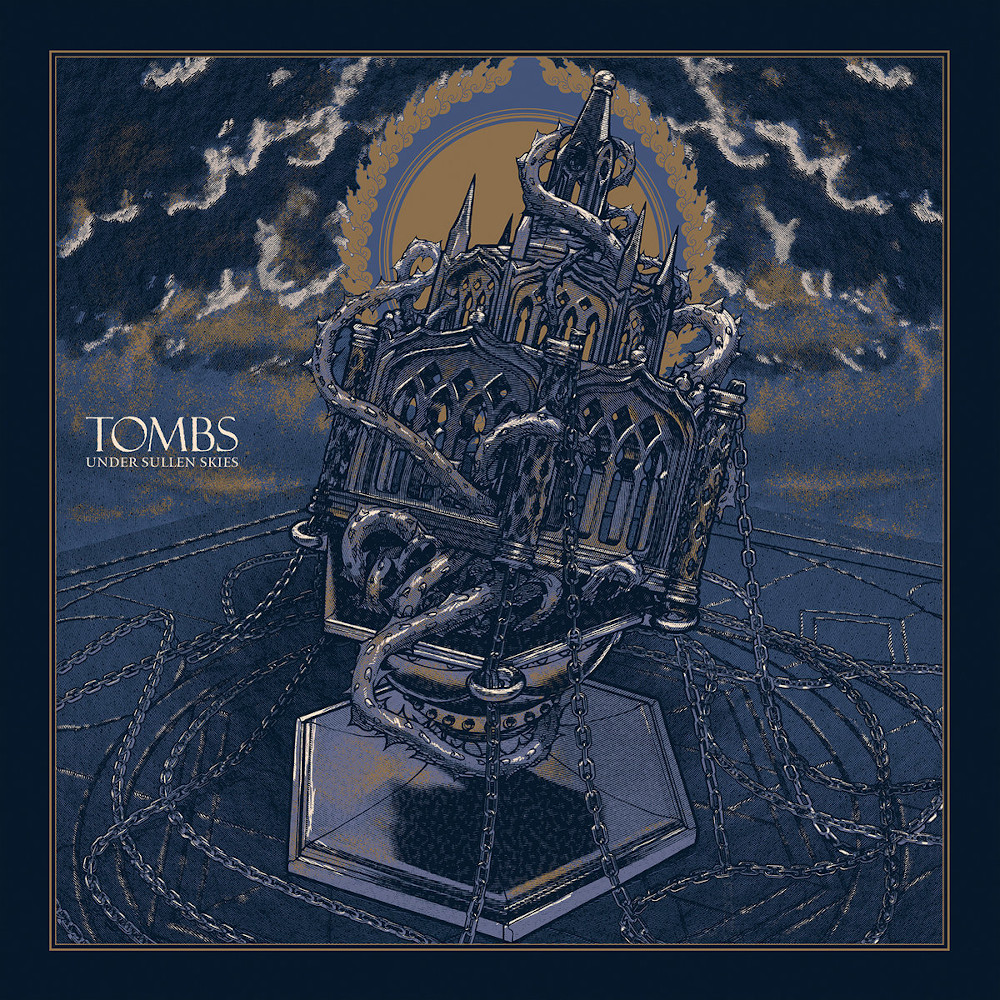
Tombs - Under Sullen Skies (2020)

Country: USA
Style: Post-Black Metal
Rating: 7/10
Release Date: 20 Nov 2020
Sites: Bandcamp | Facebook | Instagram | Metal Archives | Official Website | Twitter

I was planning to kick off today with with a review of the new Six Feet Under, their seventeenth studio album, but then I pressed play and couldn't even make it through one song. Chris Barnes, formerly of Cannibal Corpse, now sounds so weak that I can't help but wonder if three decades and more of death growls have literally destroyed his voice. It sounds like he needs medical assistance. I hope he gets it.

So here's the new Tombs instead. They've been playing post-black metal out of Brooklyn, NY since 2007 and this is their fifth studio album, though the majority of the band has changed since their previous album, The Grand Annihilation, in 2017. Only Mike Hill on lead vocals, guitar and keyboards predates that and he was a founding member. I don't know if he just hired everyone from New Jersey's Kalopsia except the guitarist or they're lending a hand until he can put a new line-up together. Either way, this new Tombs works very well.

At least, it did once I got into it. I don't know if it was the aftertaste from that Six Feet Under album, but it took a little while for this to really grab me. It was the third track, Barren, that did it, with wild soloing and a thoughtful midsection. As that one ended and the keyboard intro to The Hunger began, I decided to start the album over again but didn't manage to actually do until quite a few songs had gone by. They just kept grabbing me.

The Hunger grabbed me, partly with distorted vocals that sound bizarrely like Lemmy and partly with sheer heaviness. Then Secrets of the Black Sun showed up, highlighting just how far from black metal the band have come. This is death/doom and it's as slow as molasses with a haunting female voice that floats up and away from its plodding drums. That grabbed me as well. Eventually, I managed to break the cycle by starting the album again before whichever next song started. And this second time, I was on board from the outset. Frickin' Six Feet Under.

Tombs are getting really interesting. Bone Furnace barrels along like black metal and Mike Hill has a shrieky harsh voice but there's a warmth to the tone that goes against the black metal mindset. Black metal bands wouldn't generally go for production clear enough to catch all sorts of cool basswork at the beginning of Void Constellation. Those vocals find a death growl here as effortless as the shrieks on the opener and, however much double bass there is, this is death/doom that enjoys going slow as much as the black metal of the opener enjoyed going fast.

I presume that the folks from Kalopsia brought the death, but what about the doom? How about some of the more experimental material like Sombre Ruin? There's almost an industrial vibe to that, plus a layer of howling wolves, even though it plays as doom too. I wonder how much Celtic Frost factor into this. I'd bet money everyone involved has been listening to plenty of them, because I can hear it over varied material here: in the black-infused blitzkrieg of Descensum, the blackened death of Lex Talionis and the mid paced grind of Plague Years. Above all, it's in Mordum, which could be a tribute song. It's there in Sombre Ruin too, if not as overtly.

All that said, however much influence is here, this new Tombs are certainly not a Celtic Frost clone and I'm just appreciative of the variety they threw into this album. It's a generous one, running exactly an hour, but I never got bored, even though some of these songs feel longer than they are. Plague Years and Angel of Darkness are whiskers under seven minutes and Secrets of the Black Sun is a whisker over that. Maybe they'll start to tire after a few more listens.

As it stands, after a couple of times through, I'm rather thankful that the Six Feet Under sucked.

Wednesday, 25 November 2020

Voyage in Solitude - Through the Mist with Courage and Sorrow (2020)

Country: Hong Kong
Style: Post-Black Metal
Rating: 7/10
Release Date: 18 Sep 2020
Sites: Bandcamp | Facebook | Instagram | Metal Archives | Official Website | Twitter | YouTube

Voyage in Solitude is a post-black metal project from Hong Kong created by one man, Derrick Lin. He's not just responsible for playing every instrument here, but also for the songwriting, the production, everything it seems except the evocative photo on the cover. I'd joke that he probably kept the kettle boiling, made lunch and switched the lights off at night, but then he did record this album at home.

It's Lin's first studio album under the Voyage in Solitude name, though I see a slew of EPs and singles prior to it. There's such a consistency to the material here that I could easily see this becoming quite a prolific project.

As you might expect for anything featuring post- in front of its genre, it's all about soundscapes and these are dark and lonely ones, windswept and barren and bleak. The project's page on Bandcamp says that Lin aims "to express the loneliness, helplessness, frustration of people in the city I am living in". It depicts those emotions effectively and, while I'm imagining rural weather-beaten soundscapes like the cover art, I rather like the idea of using the blastbeats of black metal as a metaphor for the sheer overwhelming feeling of living in one of the densest populated cities on the planet. This isn't merely about being alone, it's about being alone in a crowd.

The more I thought about that concept, the more I started to see how well this might play when laid over the expressionistic chase scenes in Chungking Express with Christopher Doyle's camera blurring magnificently through the busy marketplace. Presumably that's what Lin wants us to imagine: a zoom in from the city level through the chaos and the bustle all the way to a close up of one single person, at which point the world shuts out and we see how alone they truly are, however many thousands are jostling around them like a giant sized demonstration of Brownian motion.

There are seven tracks on offer here, all of them new, I believe, except for Incoming Transition, which was Lin's contribution to a split release called Sounds of Melancholy last year. Each plays in a similar fashion, with one exception that I'll get to, and that's to conjure up a soundscape from slow, majestic keyboards and rapid-fire blastbeats, with calmer sections to serve as contrasts. Incoming Transition is the longest, at almost ten minutes, but I wouldn't say that it does a particularly different job to Veil of Mist, at under four, other than with its application of depth.

When vocals show up, they're appropriately buried in the mix, as if serving as unheard cries for help. They're mostly black metal shrieks, of course, but there are sections that are spoken and at least one that's an ephemeral, almost disembodied voice. That's in Despair, where the effects on it surely tell a story. I'd be interested in knowing what that story is.

And to that exception, which is the album's closer. In Between does many of the same things as earlier songs, but the tone is completely different. It feels hopeful to me, at least, if not outright happy, with bells to underline that. The keyboards aren't concealing here, hiding someone from the world; they're highlighting like a ray of sunshine beaming down into a crowd to pick out a single person. The vocals here are clean, for the most part, and I couldn't help but hear new wave in this song. It sounds like a Joy Division song to me.

Now, that's a statement in itself! When your song that sounds like Joy Division is the happy one, you know that you have a dark tone indeed to your album. Placing that at the end is telling too. It means that, as deep as this gets into isolation, there's hope and this becomes somehow an uplifting album. I didn't expect that going in, especially given the rumbling bass and patient beat that start out Veil of Mist, but I appreciate it. This is good stuff.

Wednesday, 8 January 2020

White Ward - Love Exchange Failure (2019)


Country: Ukraine
Style: Post-Black Metal
Rating: 8/10
Release Date: 20 Sep 2019
Sites: Bandcamp | Facebook | Instagram | Metal Archives | VK | YouTube

I'm always interested in seeing how far genres can stretch and no genre has stretched as far lately as black metal, which has gradually embraced sounds that not one person listening to the first Bathory album back in 1984 would have believed possible. Part of that is because of the advent of post-black metal, which is what Ukrainian band White Ward play.

For three minutes, this is soft piano and teasing saxophone, not the sort of thing you might expect from a traditionally confrontational genre like black metal. Perhaps the cover art influenced me subconsciously, but I felt like I was walking through someone else city where I was at once out of place but somehow still safe and comfortable. Then it veers wonderfully into a vicious section because that's what black metal does best.

As this title track runs on, it continues to alternate between soothing and vicious and the result is something that's very difficult to ignore. As it ends, twelve minutes in, amidst warm and organic pulsing, we know that we've heard something of note and want to go back to the start so as to experience it afresh immediately. I resisted the urge for a change and continued on.

Very few bands have the sheer command of dynamics that White Ward have and I wonder if that's because they came to this style from the opposite direction to usual. Often black metal bands start out raucous and raw and grow into a more diverse, more nuanced, more elegant sound over time. I may be wrong and what I can see on their Facebook page suggests that I am but it sounds to me like White Ward started out as elegant and nuanced and added the black metal vehemence onto that.

Either that or they fit a couple of session musicians into their line-up far more completely than usual. It would beggar belief if Dima Dudko on sax and Stanislav Bobritskiy on keyboards just wandered into the studio one day and laid down the tracks that they were given. They're inherent to this music, a crucial and key part of it, yet I'm not seeing them listed as actual members of the band. Whole sections of these songs simply wouldn't be there without them.

Even for someone like me, who's got used to saxophones in places I wouldn't have expected them, there's a lot here. This is a long album, featuring four songs over ten minutes, interspersed by three shorter ones that still aren't necessarily short. The shortest track here is only just shy of six minutes, meaning a running time of over an hour. It's easy to get caught up with the flow of this album and lose track of time entirely. When it eventually wraps up, it's almost a shock because we're living in the world of White Ward.

I should add here that the world of White Ward isn't quite as soothing as it initially seems. The title track, which opens things up, is warm, welcoming stuff to begin with but it ends on a darker note. Later songs emphasise that even in the quieter sections. Dead Heart Confession opens in a room where a radio is broadcasting about the crimes of Jeffrey Dahmer.

I'm not sure what goes down at the end of Uncanny Delusions and so also the album, but someone is clearly really unhappy about something, screaming her discontent. The band describe their music as "intensely deviant music of a noir share" and that's a neatly poetic way to put it. As welcoming as they often sound, there's a darkness below the surface if we pay attention.

I'm still in love with the Katharsis XIII album of dark jazz that I reviewed in October and this sits well alongside it. It's less jazzy but it's just as full of immersive depth and dynamic range. I'll throw this one onto the same device to listen to in the dark and see if it will stay with me as much.

Thursday, 8 August 2019

Calvaire - Nodus Tollens (2019)


Country: Singapore
Style: Post-Black Metal
Rating: 6/10
Release Date: 21 Jul 2019
Sites: Bandcamp | Facebook | Metal Archives | Twitter | YouTube

I've reviewed a couple of post-rock albums here at Apocalypse Later in 2019. Sparkle and especially Ogmasun explore the post-rock mindset of not writing songs in a traditional form but creating soundscapes by playing traditional rock instruments. I've also reviewed some post-hardcore, which sadly doesn't share that mindset. Fortunately, post-black metal does and here's a quality example from Singapore's Calvaire, presumably named for the Belgian horror film with Vincent Cassel but maybe for the novel by Octave Mirbeau.

Now, black metal has often leaned towards the verbose, so songs of eight or nine minutes in length is nothing new. It's often mixed with ambient music, so the quieter side of this album isn't surprising either. Even when it's at its loudest and most raucous, black metal enjoys a wall of sound approach, a further step into soundscape territory. And, of course, black metal shrieks have always been an instrument in themselves.

In other words, it's not much of a step to go from black metal to post-black metal. In fact, it wouldn't surprise me to find that a good deal of what I'm used to calling black metal genre was really post-black metal, merely before the term was ever coined. This album knows that it's post-black metal but it isn't too far adrift from its parent genre with five full tracks that total just shy of forty minutes, a further two minute collection of sounds called Liberosis nudging it over that mark.

To my thinking, the best tracks are the opener and the closer, but what's in between doesn't slack any. Aokigahara is the opener, named for the so-called Suicide Forest on the lava slopes of Mount Fuji. This seems appropriate, as Calvaire are often listed as playing depressive black metal too, and suicide is about as depressive as depressive gets. The album title might prompt that because it refers to the realisation that you don't understand the story of your own life, as if you're a character in the wrong book. Flowers of Fixed Ideas is the closer and I have no idea to what that refers.

I should add here, however, that I didn't find either of these tracks to be depressing (and I've listened to plenty of depressive black metal that is). I found them to have a melancholy to them but the bell-like guitar work has both a ritual aspect and an uplifting nature. Aokigahara is more deliberate, so I wonder if it's about someone (usually a young lady) visiting the forest to take her own life but Flowers of Fixed Ideas is about her returning home having not done so.

By comparison, Lacrimae Rerum is harsher, more brutal and more incessant, a sort of assault that presumably brings on the tears mentioned in its title. It does quieten down at points but it's always more black than post-black. Liberosis, the experimental two minutes that follows it, is more post-black than black, so the album does swing back and forth. The Celestial Dog has a lot of each side, as does Open Grave Dialogue, which combines blastbeats and shrieks with a slow melodic guitar line floating over everything, as if it's a spirit leaving a body.

This is interesting stuff. It's not for those who want their black metal to sound like the product of a cluster of demons celebrating their evil works. It's for those who appreciate the idea of post-rock but also believe in the idea that evocative soundscapes can be harsh and brutal.