Showing posts with label France. Show all posts

Tuesday, 13 June 2023

Dirty Deep - Trompe l'œil (2023)

Country: France
Style: Blues Rock
Rating: 7/10
Release Date: 7 Apr 2023
Sites: Bandcamp | Facebook | Instagram | Twitter | YouTube

It would be easy to call Dirty Deep a blues rock band, as indeed I did above, but this fifth album by them is a magnificently versatile affair and, while it's all built on the blues, it also ventures into a lot of other realms. The other common threads are a simplicity of approach, which sometimes has them sound like a garage rock band recording in one blissful take, and a rough attitude, which has the effect of lending them an edge of punk and outlaw country.

Given that, I'm not sure if Broken Bones is a good opener or not. It's a good song, but it's a teaser of some of what's to come rather than a stormer to grab us in. It stubbornly refuses to speed up to the tempo it could easily be played at, but it sets a tasty tone and there's an emotional harmonica pleading with us to stay the course. It begins beautifully, a solo voice over chords so quiet we have to stretch to hear them but which build until the song explodes into action.

There are up tempo songs here, most obviously Shoot First, which absolutely blisters along, as if a band happy to shuffle along in third gear suddenly find top gear and, liking the sensation, floor it. It's garage rock with a serious punk attitude, though it never quite loses the blues, especially with another tasty harmonica solo from guitarist and lead vocalist Victor Sbrovazzo. It's a song to take your breath away and it stands out all the more at the heart of the album, a seventh out of fifteen tracks, because of the two around it.

Before it is From Tears, an acoustic ballad that's sweet and open and embracing. This is Dirty Deep playing the blues with a folky country vibe. It's a beautiful song and a subtle one, moving as much through swells of what I presume are keyboards doing the job of strings as anything else. There is a drummer in the band, Geoffroy Sourp, but he doesn't do anything on this one, unless he also has a responsibility behind the keyboards. What rhythm the song has comes from its guitar.

After it is Donoma, easily the tastiest piece on the album but another subtle one. It takes over a minute to conjure up an atmosphere with what sounds like a cello, then effortlessly turns into the sort of progressive roots song that we might not expect on an album so buried in the simplicity of garage rock and especially after the blitzkrieg that is Shoot First. However, it's here and it shines a bright light with plenty of gospel in it. These are three thoroughly different songs but each is well worth your attention because they're all highlights.

While I'm all about the middle of this album, the half before it is a notch above the one after, but I wouldn't divide them quite like that. The first has Juke Joint Preaching, a laid back number in the style of the Black Crowes with all sorts of little touches that sell it more than the big sweep. It has Don't Be Cruel, which follows suit but also finds a mellow vibe midway with a saxophone. It has the wonderful instrumental harmonica interlude called Hipbreak III, a tease of a shift into a stalker of a song in What Really Matters with Sbrovazzo roaring out his lyrics.

So the first side is strong, but the second has Your Name with an almost reggae beat, a light touch compared to so many songs that have a semblance of darkness to them. It has Hold On Me, a truly back to basics garage rock stomp to stir the blood. It sounds like Sourp only has one drum on this one but he's especially happy to beat the crap out of it just for us. It also has Waiting for a Train, a brief country song that even finds room for a yodel, and a slow, extra laid back closer in Medicine Man, driven by a sparing slide guitar, which combines impeccably with a sparing harmonica. However, it also has a song called Never Too Late that's just there, a routine blues rocker with alternative touches.

The result is an excellent and sublimely surprising album. I haven't heard Dirty Deep before, but I have every intention of hearing them again. It's been a while since they released an album, though they did get through the COVID years with an album of raw unplugged sessions and a mini-album of odd covers, each featuring a different guest. It's been five years since Tillandsia in 2018, but the first four arrived in only seven. Here's to hoping they're back on a regular sort of schedule with an admirable versatility ready to roll into future material.

Thursday, 27 April 2023

Matt Elliott - The End of Days (2023)

Country: France
Style: Dark Folk/Jazz
Rating: 8/10
Release Date: 7 Apr 2023
Sites: Bandcamp | Facebook | Instagram | Official Website | Wikipedia

Here's something fascinating. Matt Elliott is British but he lives in France where he's a noted folk musician in the neo-folk movement. His music is dark and melancholy and the one immediate and abiding comparison is to Leonard Cohen, but it doesn't take long to realise that this is something different. His voice, as we hear quickly on the opener, The End of Days, is whispery and beautifully broken just like latter day Cohen, but his hypnotic Spanish guitar rhythms is more reminiscent of Cohen's first two albums. That's an interesting pairing and it works very well indeed.

The biggest difference between Elliott and Cohen is that Cohen's songs were fundamentally about delivering lyrics, with the music, as glorious as it often was, serving to support that task. Elliott is a musician perhaps before he's a singer and poet, and he's keen on taking these folk songs into jazz territory, not just playing guitar but also saxophone, in a way that mimics a clarinet. One of the six songs on offer is an eight minute instrumental and the others feature long instrumental passages that work wonderfully on their own and somehow bring a strange focus onto the words.

Elliott is not the poet that Cohen was, though there are some wonderful phrases to suggest that he could be—"Sweep away the broken glass; some things were never made to last" begins Song of Consolation—and he has the brevity that the best poets find, discarding a thousand words to keep the one that matters. He's been a solo artist since 2003, previously known for indie electronica and remixes, usually credited as the Third Eye Foundation. I believe he's still active under that name, a primary band that's become over time a side project to his solo work in neofolk and dark jazz.

These two elements mix gloriously and the title track is a fantastic example. It starts out folk, just like a Cohen song, but the words don't stand out, maybe being an angry response to COVID, the guitar standing out far more and growing into jazz, as a sort of mad funeral dirge which is utterly gorgeous, not unlike the funeral procession for the elephant in Santa Sangre. It unfolds over ten minutes and they're ten unfathomably short minutes, even though it feels when they're over that we've just listened to an entire album, not just a single song.

January's Song takes us back to the folk. When the vocals arrive, they appear to be in choral form but it may well just be Elliott accompanying himself through echo and overlay. This is even more of a melancholy piece than the opener, but it's that rich sort of melancholy that Cohen mastered and which always lifts me rather than depresses me. It always tells me that times are dark but there's still beauty to be found and both are inherent in this music. There are precious few lyrics here, an isolated verse, but they seem to respond to COVID in succinct fashion. It's all about mood, the jazz swirling around the guitar like a tiny storm.

The most beautiful piece is the instrumental, Healing a Wound Will Often Begin with a Bruise. It's almost a vocal piece with the guitar providing the voice, because it's that sort of lead instrument, but it feels like an instrumental immediately. I was almost wary of Elliott's voice showing up but it never does, until the next song, Flowers for Bea, the twelve and a half minute epic of the album. It also has few lyrics, so after a a slow verse, it shifts into instrumental mode, driven this time by the cello of Gaspar Claus. Eventually there's a second verse that fades out in an echo, as if we're in an empty hall that still contains the ghosts of its years. It's all grief, but the emotions behind that do change over the dozen minutes.

There's a lot of emotion here, even when Elliott isn't singing, though his voice adds fresh levels to that emotion. Unresolved, for instance, is just a short piece to wrap up, but it's a sort of refusal to acknowledge that a loved one is gone. Never mind Flowers for Bea, which are exactly what you're thinking because she's gone, this one asks when she's coming back, even though she never will. I'm sure there's a word in another language to describe that feeling.

I like this a lot and need to dig back to see how Elliott got to this point. Not everything solo seems to be in this vein, but it may have moved more and more towards this dark folk/jazz hybrid. It may be that it's primarily for the Ici, d'ailleurs label in France. At this point in time, it's special. I feel a need to know when he got there.

Thursday, 16 March 2023

Sortilège - Apocalypso (2023)

Country: France
Style: Heavy Metal
Rating: 7/10
Release Date: 3 Mar 2023
Sites: Facebook | Instagram | Metal Archives | Official Website | Twitter | YouTube

I've reviewed a lot of comeback albums here at Apocalypse Later, from bands who were important a long time ago, i.e. way back in my day. I discovered rock and metal through the Friday Rock Show in mid-1984 and I dived in deep. For a few years, I felt I knew about everything, until other passions arose and real life as an adult got in a way. Sortilège are very much of my era. They formed before I knew about rock music, back in 1981, but their debut album didn't come along until 1984, when I'd just stumbled onto the genre. They released a follow-up album in 1986, like the first in both English and French editions, and that was all she wrote.

And now they're back. Well, they're kinda sorta back, because their history of reformations seems to be rather complex. They got back together a bunch of times without ever finding their way back into a studio. One of those was in 2018, which lasted a couple of years before the band fragmented into two separate incarnations. This is the one based around vocalist Christian "Zouille" Augustin, who co-founded the band and has been with them all along.

The other, based around Didier "Dem" Demajean, who also co-founded the band and who played rhythm guitar throughout, is also called Sortilège but with an awkward subtitle—Sortilège (Dem, L'Anguille, Snake)—to reflect that it features two other founder members, Stéphane "L'Anguille" Dumont and Bob Snake, their lead guitarist and drummer respectively. What a tangled web they weave. I hope whatever differences they have can be resolved and that this first new studio album in thirty-seven years can mark the beginning of a new era for the band.

The good news is that the opening track, Poseidon, is a stormer. It's a straight forward heavy metal song with a fast pace and plenty of power that just scoots along like nothing could stop it. Zouille's voice sounds as good as ever and Bruno Ramos delivers an excellent guitar solo. I'd call few songs here as inexorable as Poseidon, only Le sacre du sorcier really challenging it, not so fast but just as firm in its drive forward. I do like these straightforward songs. Because they're not doing anything fancy, they have to absolutely nail the basics—the riffs, the hooks, the solo—and Sortilège do that with aplomb.

Attila is a more applicable template, in that it slows things down acutely without ever making it to doom levels, but keeps every ounce of heaviness. Most of what follows starts out in this vein, even if a song might choose to add another element to the mix: the middle-eastern flavour on Derrière les portes de Babylon, the folky chorus of Le sacre du sorcier, the atmosphere of Vampire. Some of the riffs are exquisitely simple, like the core one on La parade des centaures. it really doesn't have much to it but it does exactly what's needed.

Even when Sortilège decide to soften up, on Encore un jour, they don't leave the heaviness behind and they allow the song to build considerably. It never speeds up, but it keeps its power and a less dense sound gives Ramos's guitar all the more opportunity to shine. And, when they decide to go for a majestic sound, as on the closing title track, it sounds like they should never do anything else. It's a real stalker of a song, slow and powerful, but lively and huge. I'd call Apocalypso a highlight, even if it's very different from my other two, Poseidon and Derrière les portes de Babylon.

Talking of the latter, it's still a highlight even though the opening riff seems rather familiar. For a song exploring the exotic east, with an agreeable amount of folk instrumentation and backing, it feels a little cheap to borrow from a pioneer in that vein as acutely recognisable as Led Zeppelin's Kashmir. That said, it moves on and finds its own grooves, which are worthy. If I were to choose just one song from this album for radio play, I might plump for that long one over the three and a half minute Poseidon that ought to be the logical pick.

This album is old school enough that I'm surely more inclined to like it and I do. If you're younger than me to the tune of a generation, you might find this a little old fashioned. Then again, it may shine as another example of the burgeoning new wave of classic heavy metal and thrill you with a blissful lack of nostalgia flavouring your opinion. It's good stuff, whether it was made in 2013 or in 1988, either of which would be believable, if we discount the modern production values. Welcome back, folks!

Friday, 3 March 2023

Moonlight Benjamin - Wayo (2023)

Country: Haiti/France
Style: Blues Rock
Rating: 7/10
Release Date: 24 Feb 2023
Sites: Bandcamp | Facebook | Instagram | Official Website | Twitter | YouTube

Here's something wonderfully primal from France via Haïti, where Moonlight Benjamin was born to a voodoo priestess. She grew up singing hymns in an orphanage, moved on to western rock and then studied jazz after moving to France. She'd already released world music albums by the time she had her own initiation into voodoo back in Haïti, but shifted to her very own voodoo rock style in 2018 with an album called Siltane. She followed that up with Simido in 2020 and now Wayo. It's a strong style, emphatic and commanding but full of excellent grooves.

Initially, I was reminded of Yma Sumac, of all people, even though the style is very different. Sure, both moved from poorer countries in the Americas to rich first world nations and incorporated an array of western styles of music into their sounds, but I'm thinking more of the way that they both create songs through vocalisations as much as by delivering lyrics. There's a lot going on vocally in the opening title track, but there aren't a lot of sung words. Of course, beyond some vocalisations that sound like birds chirping, the two sound very different indeed, because Sumac was thrown at exotica and Benjamin at garage rock. That shifts as the album moves on but it never quite leaves entirely.

There are other formative rock sounds here too. The guitars on Haut là haut remind of songs like Spirit in the Sky, but Benjamin dips the song firmly into Dr. John territory for a cajun swamp blues approach with plenty of handclaps. Sing along, cher! There's gospel here too and spirituals, some straight ahead blues and a smattering of shock rock. Moving her music in this direction was always going to trawl in Screamin' Jay Hawkins as well as more sedate personae as Dr. John.

The album moves along quickly. None of these songs are long, most of them in a range from under three minutes to three and a half. Only three of eleven exceed that and only comes close to five minutes, not remotely outstaying its welcome. It's probably my favourite song here, because it's a pristine combination of world music and rock 'n' roll, Benjamin's low croon a sultry delight while a tribal beat and a rhythmic rock guitar fashion a groove behind her. It adds further world elements as it goes, the punctuating guitars and the vocal chants reminding of African music. It's simple for us to think of this as a voodoo ritual.

I say probably my favourite, because Freedom Fire right after it gives it a firm challenge, with a deliciously dark invitation of an opening that's utterly evocative. I saw this song as much as heard it and those are dangerous visions. I wonder what Benjamin does on stage, because this ought to have some sort of visual element to illustrate the danger. I checked out some of Benjamin's early world music and she didn't sing remotely this low on them. This is clearly for effect and it's a very good choice because the effect is powerful. I'd love to hear Benjamin tackle Earth Kitt's I Want to Be Evil, translated, of course, into French and shifted into this voodoo rock style.

There are other strong tracks too. Taye banda just won't leave me alone. Bafon has a real swagger to it that rolls along inexorably like a tank. Lilè does something similar but with more of a focus on those deliciously round sounds that Benjamin pours out. Sometimes it feels like she's only singing vowels and it sounds amazing. The core melody in Alé sounds very familiar, enough that I was with it singing along on my first listen, even though I don't know the words. It's a jaunty song with some of the most memorable guitars on the album, which combine with the tribal beat to nail another groove.

I like exploring world music and it's rare that I hear someone so clearly world music manage to find a strong synthesis with rock music. It happens but not so often as you'd think. What's more, for an artist to do that and end up in an original place is precious. It's not unprecedented, of course, with the names I've mentioned thus far clear influences and probably more too, but it's not something I've heard in a new album in a long while. I like.

Tuesday, 21 February 2023

Grandma's Ashes - This Too Shall Pass (2023)

Country: France
Style: Stoner/Progressive Rock
Rating: 8/10
Release Date: 17 Feb 2023
Sites: Bandcamp | Facebook | Instagram

Here's something interesting from France that taught me a new acronym. The genre here is up for grabs but I've seen FFOBR applied to it and I had no idea what that meant. It appears that Female Fronted Occult Blues Rock is a thing now and has been since at least 2015, when Doomed & Stoned journalist "Papa" Paul Rote put together a triple compilation of doom-stoner bands led by female voices, The Enchanter's Ball. I guess Coven have finally become leaders as well as pioneers, with a crop of bands in Rote's summation of the genre ones who have blown me away more recently, like Jess and the Ancient Ones, Wucan and Avatarium.

I'm not going to add Grandma's Ashes to that hallowed list quite yet, but I enjoyed this greatly and I can see it growing on me even more. They're folkier than any of the other bands I just mentioned but they range a long way, from the intro, À mon Seul Désir, which is mediaeval vocal harmonies, to something close to doom metal. Mostly, they sit in a middle ground that's sometimes psychedelic rock and sometimes prog rock but more often stoner rock. The shifts from calm folky harmonies to a raw stoner punk sound in a song like Aside, or, in the other direction, from heavy doom chords to a calm and even sassy pop sound on Caffeine are fascinating.

Frankly, everything here is fascinating. This is a debut album, though they released an EP a couple of years ago, and it's a startlingly mature mixture of different approaches. The vocals are mostly somewhere between folk and alternative pop/rock, whether they're aiming for traditional, jaunty or introspective. The guitars are the heaviest angle, with riffs right out of stoner rock and heavier bands. Borderlands ends by slowing down until it's almost recognisably Black Sabbath. The drums and, to a lesser degree, the bass represent prog or math rock, sometimes all the way into jazz, like on the saxophone assisted Interlude - Melt.

Reading interviews with the band, mostly for that EP, The Fates, highlights their influences, which are not remotely surprising. Guitarist Myriam El Moumni grew up in Morocco and so was exposed to copious amounts of African music but also grew up on classic rock before stumbling upon desert rock in Paris. Bassist Eva Hagen came up from British punk through stoner rock into a wider range of genres, like metal and prog. Drummer Edith Seguier favours math rock and prog metal. Myriam and Edith both studied jazz. All three sing here, but Eva is the lead, so I'm assuming the folky bits of the band's sound come from the dreamier aspects of desert rock.

I can't say that everything here worked for me, but that's almost inevitable with a release that's as broad in its reach. After all, this ranges from almost glitch electronica in Cruel Nature and that jazz saxophone on Interlude - Melt all the way up to doom metal in Caffeine. That's a serious range for a band on their debut album, but somehow they're able to collect all of those sounds into a single defining sound. If you played me carefully selected sections of half a dozen songs here, I'd say that they were by half a dozen different bands, but if you played me the entire songs, I'd see them as a single coherent band. That's impressive.

The catch is that it makes it tough to call out anything for special mention. What are my favourite tracks here? My cop out answer would be that you should ask me again after another few listens. I would, however, be surprised if Borderlands and Cruel Nature weren't in the shortlist, maybe with the closer, Lost at Sea, ahead of them. This adds experimental sounds into the mix and Eva's vocal is particularly emotional. Even though she sings mostly in English, I found it hard to focus on lyrics because I was too caught up in the emotional weight of the vocals which, like everything else here, have a considerable range, from fluffy soft to heartrendingly personal.

I know I like this a lot but I don't know how much yet. I need to come back to it a few more times as I get ahead of myself and free up enough moments to let it soak back in. So it's an 8/10 for now but it's not outside possibility that I'll shift that upwards at a later date.

Monday, 9 January 2023

Blut aus Nord - Lovecraftian Echoes (2022)

Country: France
Style: Atmospheric Black Metal/Dark Ambient
Rating: 8/10
Release Date: 20 May 2022
Sites: Bandcamp | Facebook | Instagram | Metal Archives | Wikipedia | YouTube

I don't believe I've heard Blut aus Nord before, but I'm fascinated now, because this is unlike what I expected to hear from something labeled atmospheric black metal. Stereogum ranked this as the Best Metal Album of 2022, while Pop Matters and Invisible Oranges included the same band's new album for 2022, Disharmonium: Undreamable Abysses, in their end of year lists too. I checked that out and it's quite the sonic experience, but decided to review this one because of that number one status and because it's not the typical album in almost any regard.

For a start, it's not their new album because it's a compilation, but not of tracks previously issued on a variety of back catalogue items, as you might expect. The six tracks on offer are all relatively new, the oldest dating back to April 2021 and the newest from February 2022, so it's definitely last year's scope, and they were previously released to a subscriber-only forum called Order of Outer Sounds, so haven't been widely heard. Not that an album this unusual is going to be widely heard anyway, but you get the point. So, disclaimers aside, it's a new album in almost every sense, even if it isn't "the new Blut aus Nord" album, which is worth me diving into it.

This is definitely sourced in black metal, that recognisable wall of sound pivotal to the black metal experience, and it's dripping with atmosphere, but this is a long way from the typical atmospheric black metal bands out there, like Saor or Wolves in the Throne Room. It's dark and haunting and I find it easy to imagine as ambient but not of our dimension. To play into the Lovecraftian themes I see riddled throughout their work, this is the music of the spheres when they're occupied by elder gods. It's vast but it's claustrophobic and it pulls at our sanity. It's dangerously beautiful stuff, an enticing nightmare conjured out of sound.

As you might imagine, it's highly unorthodox and worthy of comparison to dark ambient designers of sound like Coil, Lustmord and Current 93 just as to anything in the black metal genre, even if we shimmy way over to the edge to avant-garde outfits like Oranssi Pazuzu or Neptunian Maximalism. As these are clearly soundscapes more than they are songs, with any vocals submerged so deeply that they might be something else entirely, it wouldn't be unfair to throw out comparisons to such powerelectronics legends as Merzbow either. It's clearly music to read about in both Kerrang! and Wire and that's always the most interesting music.

Nyarlathotep opens things up in uncompromising fashion and it's a complex and fascinating track that washes over us like a waterfall of tentacles with razorblade suckers, but Hypnos, which keeps on in the same vein, adds another level. Suddenly, we've become the waterfall and the six minute descent is not simply through air. There are undefinable creatures sharing this space with us and they're shrugging o our presence because we aren't worthy of their notice. This is a majestic piece of music and an evocative one, but it's also one I'm wary of visualising because I think it would give me motion sickness, especially late on when things get more frantic and jazzy.

These six tracks progress in such a consistent fashion, one flowing into the next, so it's difficult to see this in any way other than a single thirty-five minute composition, Maybe there's more in the way of guttural churning in The Tomb or The Abyss Between the Stars, but I lost track. I threw this on headphones because my speakers simply weren't doing it justice and let the album flood over me. After a couple of times through and a revisit to a couple of tracks to try to discern what they'd provide in isolation, I actually took a break to come to terms with the enormity of this music.

It's absolutely not going to be for everyone. This would sound awful on FM radio. It requires a slice of dedicated time, a good pair of headphones and an open mind. Switching the lights off ought to help too. If you have all of that ready, give this a go and see if it'll blow your mind too.

And, if it does, like me, you can dive into what else the band has been up to over the years, as they aren't remotely new. Blut aus Nord was formed back in 1994 in Normandy, France, initially as a one man project for Vindsval, still their vocalist and guitarist. W. D. Feld joined on drums and a variety of electronic contributions, not just keyboards, a year later and Ghöst added bass in 2003. Unless I miscounted, this comes after their fourteenth studio album as a kinda sorta fifteenth, and I see an array of EPs in there too. The've been busy and, based on these two 2022 albums, I'm eager to see where this easy listening for elder gods sound came from.

Thursday, 8 December 2022

Raeziel - Resilience (2022)

Country: France
Style: Post-Rock
Rating: 7/10
Release Date: 29 Oct 2022
Sites: Facebook | Instagram | YouTube

On a first listen, it didn't sound like Raeziel are bringing anything new to post-rock with what looks like their debut album, but they perform it very capably indeed. On a second listen, I didn't change that opinion, but doubled down on it. I wasn't surprised by what they do here, except to say that it sometimes seems a little heavier than equivalent bands, crossing the line into post-metal, just not exploring particularly far beyond it. However, it feels effortlessly good, staying evocative, perhaps even deepening our experience as we journey through these soundscapes.

I don't know who's in the band, so I can't call anyone out for a special mention, but I don't think it's needed anyway. This is very much a team performance, however many musicians happen to belong to Raeziel. Bandcamp tells me that it's a home recording, so that number may even be one, with a multi-instrumentalist taking his time in his studio to get every instrument right before layering it all together. Certainly, I don't see more than one musician in any of the images on their Instagram account.

That means that what I like here is what I like about post-rock in general. I like the way that pieces of music—and, just in case you're wondering, everything is instrumental—play as journeys and it's up to us to figure out where we're going and what we're seeing on the way. They're all mid-length, the shortest track just under four minutes and the longest almost six and a half, and they all move between quiet, gentle sections and louder, more urgent sections, just in different ways, different orders and to different degrees. Everything feels consistent but every piece is different, just like every train ride through random countryside is consistent but different.

It's so consistent that I would have been hard pressed on a first listen to call out a favourite track. This is one of those albums where your favourite track is always going to be the one that you're on at any particular moment; they all do the job but one is happening right now and that's what you care about the most at that point in time. With repeat listens, I'd call out the opener, Vesper, that six minute track; Vendabrume, kicking off side two; and Renaissance, at the tail end of the album, right before the closer. Why? No better reason than me connecting to them a little stronger than anything else.

Maybe Vendabrume stands out for me because it discovers some sounds unlike any other piece on the album. In particular, there are two percussion based sounds—the drummer hitting something different—and they grab my attention every time, however often I listen to them. The first is early on and subtle, so it's making sure we're aware. The other comes later and is much more overt, the drums taking the lead for a glorious section. Renaissance is a smoother piece but it benefits from an excellent escalation out of a quiet rain adorned midsection that ramps up to the end. Vesper? I have no idea. It's not just because, as the opening track, it was my first impression of Raeziel. There's a deeper connection, but I couldn't really call out why.

And that's about all I can say here. If you like your post-rock on the heavier side, this is good stuff, however many musicians there are making it. Maybe we'll find out when the second album comes out. Maybe not. I'll be checking Bandcamp anyway.

Thursday, 13 October 2022

Trust - Propaganda (2022)

Country: France
Style: Hard Rock
Rating: 9/10
Release Date: 30 Sep 2022
Sites: Facebook | Metal Archives | Wikipedia | YouTube

Bernie Bonvoisin is back with another Trust album, this time with an incendiary cover that I can't say isn't timely. As always, everything here is in French and I'm not seeking out translations of the lyrics, so I can only assume that there's plenty of sociopolitical commentary in play. That wouldn't be surprising for Trust. Certainly the verbose title of the opening track, Cette prière sur tes lèvres et ce sang sur tes mains translates to This Prayer on Your Lips and This Blood on Your Hands. It's no stretch to imagine what that's about.

I did go as far as throwing the band's French Wikipedia page into Google Translate, as the English language version hasn't noticed this album yet, even though it came out on a major label, Season of Mist last month. As with their previous album Fils de lutte and, I believe, the one before that, it was recorded pretty much live, with minimal overdubs, the entire recording process taking only a week, and that live urgency is there in the sound. It's easy to carried away by songs like Le jour se lèvera and Salaud d'pauvre. There are also lots of moods here, as if this grew in the playing.

I found that initially I started out listening to individual songs. The opener is a strong one, Bernie explaining things to us. There's a voice box here and some soulful backing vocals, that are one of my favourite aspects to this album—I wish I knew who to credit for them—and the result feels like a seventies song that we don't remember. That's certainly the goal of the next track, which is faux early AC/DC. It's Tout ce qui nous sépare, or All That Separates Us, and it's as tight as it needs to be.

La première pierre, or The First Stone, brings those female backing vocals back and they're joyous. They're just as great on Dimanche soir au bord du gouffre (Sunday Night on the Brink) and Petite elle (Little She) and especially on Les vagins impatients, where they don't sound remotely like the Impatient Vaginas of the title, even though they really cease to be backing vocals here to take on the most prominent role, if not the lead. What's more, it's not an impatient song, not mellow but certainly a lot closer to it than impatient. It's one of many highlights for me, as indeed it was last time out too.

Talking of Petite elle, it's a bluesy ballad with an tinge of country and it highlights how the moods shift here. This is a rollercoaster of an album, a relatively calm one because they don't rock out to the max as often as we might expect, but it takes us up and down and we get caught up in the ride until we lose track of the fact that there are individual songs and start to just imagine the album as the soundtrack of our lives. I guess that's what closer Ma vie is all about, simply My Life. To the French hard rock audience, I guess Trust are a serious part of their lives, having been around for a long time, formed in 1977.

Bonvoisin is one of two founder members who have been with the band throughout, even though they've split up at least four times. The other is guitarist Norbert Krief, who's as rock solid as ever here. I'd suggest that, even with some of the harder rocking numbers located at the beginning of the album, this feels like Bonvoisin's show early but gradually shifts to Krief and Ismalia Diop, the other guitarist nowadays.

They nail that Angus Young guitar sound in Tout ce qui nous sépare and render it even more old school rock 'n' roll on Dimanche soir au bord du gouffre, which is arguably the point where this becomes a guitar album. Le jour se lèvera opens with vicious slices of riffage while Petite elle chills out with glorious swells. Both feature astounding solos, as does Le conteur, The Storyteller. They even leap into a punk blitzkrieg on L'Europe des 27, Bonvoisin reasserting his prominence behind the mike.

From there, I gave up taking notes because this feels like Trust just having a blast in the studio and it's blissful, as if they'd stopped writing songs and just let the music flow through them. Instead I'd acknowledged how much better this is than the last album. That's not to suggest that Fils de lutte wasn't a good one because it was, but it wasn't a great one and this is. I was lost halfway through and it was even better on the second time through. This is top notch Trust and I'm going to need to spend the next couple of days with it feeding my body. Does this come in IV form?

Thursday, 17 March 2022

Black Rooster - Red House (2022)

Country: France
Style: Hard Rock
Rating: 6/10
Release Date: 11 Mar 2022
Sites: Bandcamp | Facebook | Official Website | YouTube

Here's an album that I liked without really understanding why. Maybe it's just a little different to anything I tend to listen to and the novelty is appealing. Certainly, it's rooted in hard rock and an array of recognisable American genres, from alternative pop/rock to southern rock, but there's something else that I don't think just stems from an unusually deep lead vocal. I'd call out the singer as a key component of the band's sound but I'm not finding a line-up anywhere online so I guess he'll have to remain mysterious for now. Let's just say that his voice is deep and warm and with just a hint of gravel, but can escalate on the turn of a dime. It's glorious in the second half of Burning Me and it has a fantastic ZZ Top rasp on Speed of Light.

My favourite song may be the opener, Once Upon a Dog, which is an intriguing mix of those genres. The edges are all southern rock, with hints of a western sound too, but it's a hard rock song that somehow manages to swing, even though the riffing is relentlessly tight, reminiscent of a less heavy version of Clutch. This is very much a rock band not a metal band. The catchiest is the next one, I Met the Sun, with a telltale nod to No One Knows by Queens of the Stone Age that clearly must be deliberate, given an inclusion of that band in the tags on their Bandcamp page. Clutch are there too, along with other diverse but telling names like Johnny Cash and the White Stripes. This song's a cross between the relentlessness of Clutch with the jauntiness of Queens of the Stone Age and that's an interesting battle.

The remaining five songs continue to play with how the various sounds the band like to work with doing their own battles and that generally works out. I'm a Bomb has a really neat groove, almost a Sonics-like garage rock one. Speed of Light trawls in that southern rock vibe again as if it should always be there. These are each good songs. However, there are a couple of other habits the band regularly falls into that I don't like as much and they bring the album down a little for me.

Mostly that manifests as sections, usually at the start of songs, in which the band decide to go low profile. I think they're playing with contrasts, especially in songs like Burning Me, which start out a lot less emphatic than they end up after a build. The approach works well there. It eventually works in Slove too, though it takes its sweet time in building. That one stretches out for a couple of minutes longer than anything else here and we feel it while it's playing. It even slows down for a section of noodling with a delightfully tantalising hint of keyboards floating in the distance, but doesn't get moving until five and a half minutes in. It's a very patient song and listeners may not be as patient.

If the build works in Burning Me and kinda sorta works in Slove, it doesn't work in Useless Times, a telling title given that it feels like the band just noodle around until they're ready to get started. I guess it's an intro, but it's an underwhelming one. It would be a better song if it simply ditched the first minute and change, especially given that the kick to actually start is a good one. That isn't an obvious solution for Slove, which is what it is. Some people may really dig the patience. Maybe I'll grow into that too because it certainly ends wonderfully.

So this is a mixed bag to my ears but an intriguing one. Black Rooster are French, but the sounds I hear are all American and they're put together in a different way to how an alternative American band might do it. I like that and I'd like to hear what they come up with next. There are only seven songs here, because most of them are patient enough to nudge over five minutes, the much more urgent I'm a Bomb the only short song on offer. I wonder how that'll change on their next album.

Wednesday, 9 March 2022

Deathbell - A Nocturnal Crossing (2022)

Country: France
Style: Doom Metal
Rating: 8/10
Release Date: 25 Feb 2022
Sites: Bandcamp | Facebook | Instagram | Metal Archives | Official Website | YouTube

There are a lot of reasons why I end up listening to this new album by someone I've never heard of over that new album by someone I've never heard of, but this reason's a new one on me. I couldn't not review an album by a band called Deathbell, though I now have to wonder where they sourced that name. It's also the name of one of my favourite books by one of my favourite authors and it's entirely coincidental that I reviewed it in March as part of my Guy N. Smith runthrough. That book wasn't published in Deathbell's native France, though other Smith books were, but then the band does sing entirely in English. Who knows? Maybe they're fans of the Korean horror movie instead.

The styles in which they play are entirely appropriate, because the Deathbell in the book brought doom to the people of Turbury when it was rung. This Deathbell have a fascinating take on doom, which starts out psychedelic on The Stronghold and the Archer and gets all bluesy in Devoured on the Peak, but always remains firmly grounded in doom. The songs are mostly long, four of six here over seven minutes, and they have a hallucinatory quality to them, one ably assisted by the occult feel to Lauren Gaynor's vocal, which is a little lower in the mix than we might expect and is largely built without hooks but with lots of sustained notes, almost like ritual.

What's perhaps most notable is the lack of Black Sabbath in the sound. It is there, because it kind of has to be with a doom metal band, but it shows itself much more sparingly than would normally be the case. It's there in some of the riffs, but the progressions and tones are very different. That isn't a Tony Iommi tone on the guitars of Bastien Commelongue and Frederic Bolzan, even though that's exactly what the majority of doom metal guitarists want to mimic. There's Hawkwind in The Stronghold and the Archer and a lot of early Pink Floyd in Devoured on the Peak, in the keyboards and the guitar builds. There's My Dying Bride all over a bunch of these songs too.

So Deathbell aren't interested in doing the expected, which I always appreciate. It doesn't matter how good you are, you're not going to out-Sabbath Sabbath, so try another approach that's yours and only yours. Precious few doom metal bands do that, but Deathbell too, not just by adding the psychedelia but by often upping the tempo beyond the usual for the genre and doing interesting things like dropping away entirely midway through The Ladder to a surprising pastoral scene. That shows off Gaynor's voice in ways that just aren't possible when the band is in full flight. She feels limited by the mix and the style until we reach moments like this one.

They also keep it varied, each song consistent with but different from the last. The Ladder is most introspective and also probably my favourite song here. Silent She Comes feels like a classic rock song doomed up, like Vanilla Fudge did to You Keep Me Hanging On. Shifting Sands adds an ethnic lilt to the vocals which I really like, along with some glorious heavy organ and a psychedelic guitar over the riff. There's an absolutely gorgeous slowdown in this one a couple of minutes and change in too. And that leaves A Nocturnal Crossing to wrap everything up.

All in all, this is an album for the discerning doom fan who isn't looking for purity of the genre but interesting things done with it. It's rather like its cover art, in that there's some traditional doom in there, like the gothic castle to the right, and hints of space rock, like the stars behind it, but it's colourful and full of change and emotion. That imminent dawn at the top left is about to take over from the ominous clouds underneath it but it hasn't done it yet and that's a tough combination to mimic musically. Deathbell are up to the task. And whatever the upside down archer hanging from a ladder to the heavens is doing is probably in here too. I presume he's the opening track.

This is a second album for Deathbell, following 2018's With the Beyond, and I'm intrigued to check that one out too now. I like this a lot for its unusual and immersive take on a genre I'm especially fond of, especially given that it was apparently recorded live, albeit not, I presume, in front of an audience. And hey, the band's name doesn't hurt either.

Wednesday, 26 January 2022

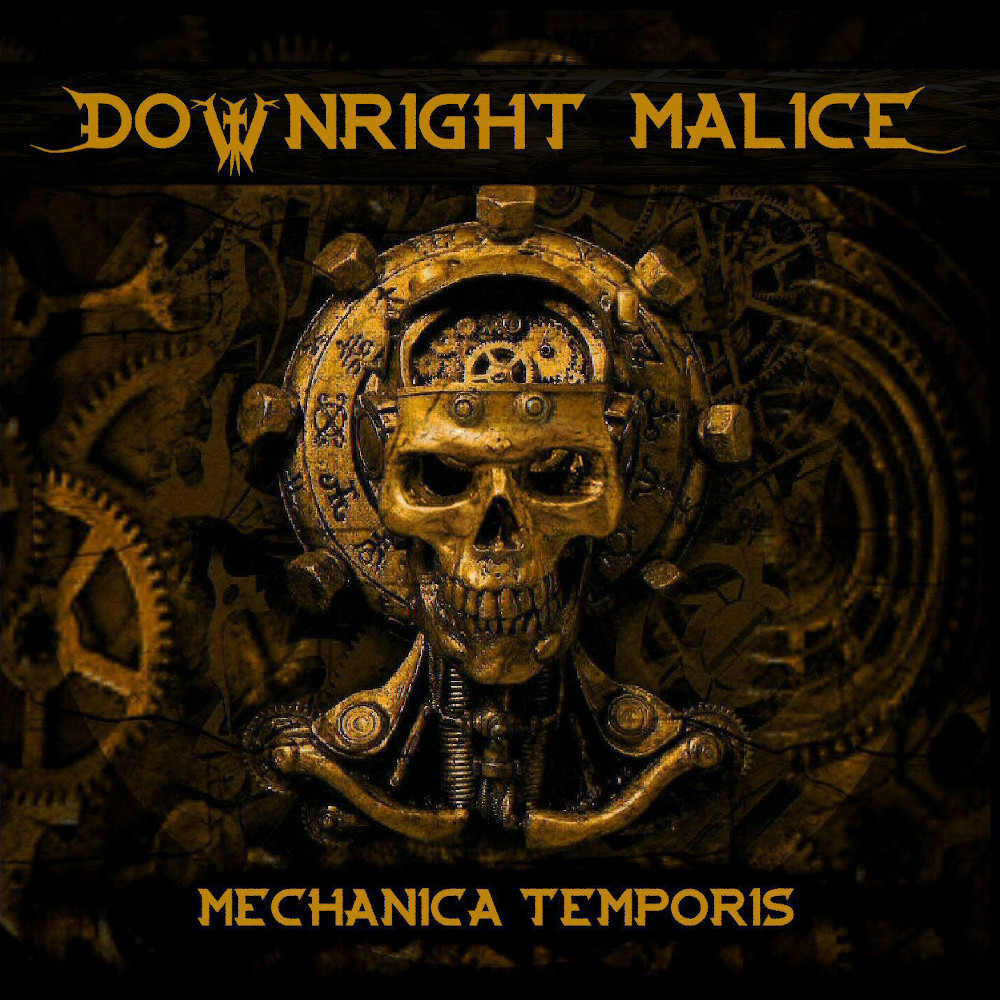
Downright Malice - Mechanica Temporis (2021)

Country: France
Style: Heavy/Thrash/Death Metal
Rating: 7/10
Release Date: 3 Jun 2021
Sites: Facebook | Instagram | Metal Archives

Yes, I'm following a heavy metal album with another heavy metal album, which is unusual for me, but this is a late submission for 2021 and I only have three days left to slot it in. Also, while Thorns was a traditional doomladen heavy metal album for Tony Martin, this is a heavy metal album that looks both backwards and forwards in an intriguing way, so I'm sticking with it. They're Downright Malice from Saint-Louis, which makes them French, but right on the border with both Germany and Switzerland. Maybe the diversity in language and culture that they must see on a daily basis, with Basel only a couple of miles away, is reflected in the diversity in genre in their sound.

Initially, they sound just like an old school metal band from the eighties, merely given production values from the 21st century to make everything bigger, not far adrift from Tony Martin's album. As the opener, also named Downright Malice, runs on, though, we hear what distinguishes them from a traditional sound. It's a lot easier to gallop if you factor in double bass drumming and it's easier to add an edge in 2022 when there's a second vocalist who delivers in harsh style. I've seen Downright Malice listed as heavy/thrash metal and the tempo does enforce that, but that harsh voice is from death not thrash and the resulting sound draws from all three of those genres.

I like that sound and I liked this album from the outset, but it took a while to grow on me. It's fair to say that the opener was decent but I liked this more with each subsequent song. You Can Pray is faster and features more engaging guitar and vocal hooks, not to mention a surprising use of piano late in the song. Malleus Malificarum, the celebrated old Hammer of Witches, adds a choral element to generate atmosphere early on and easily the best riffs thus far. This is a Maiden song with added harsh voice, their famous gallop in full effect here, up to speed metal tempo. It's a peach. And so we go.

While Virtual Reality is arguably a downstep in that escalation, given that it's a good song that's merely the first to not be better than its predecessor, the strong songs continue unabated. I love the crunch this band has, reminding of Metal Church, but Iron Maiden are never far from my ears and there are plenty of other names that crop up as comparisons here and there. This vocal hook is right out of Blind Guardian and that guitar shift is Seasons of the Abyss Slayer. The addition of a piano element to A Time to All brings a gothic vibe into proceedings, even as it stays heavy and fast. In short, there's a lot going on here. Just wait for the keyboard intro to Sin of Pride.

What surprises me most is how long Downright Malice have been around. Usually, bands who drop me a line to tell me about their album are new bands trying to get their name out there, on their first or second albums, often in response to me reviewing something else from their country. This band may well have noticed me for that reason too, but they've been around since 1987 and this is their fifth album. If I'm reading correctly, they've never split up but they're not exactly prolific, an initial album arriving in 1995, a decade passing before their second (with an EP in between) and a trio more since 2005.

The inevitable founder member keeping the band going is Didier Bauer on guitar, but bassist Aris and vocalist Cliff have been alongside him since 1991, over three decades now, long enough to be on every one of their albums. Olivier Riedel joined on drums in 2000 and second vocalist Cyrille at a point in time I'm blissfully unaware of. That does suggest, of course, that Cliff is the clean voice and Cyrille is the harsh one, but I'm happy to be corrected if need be. It's an interesting line-up, a pair of dedicated vocalists over a trio of musicians, but it works for them. They're both old school and new school, with the two mindsets conversing well and never clashing.

Clearly I have some catching up to do. I did hear some French metal bands back in the eighties, in large part because of Tommy Vance and the Friday Rock Show, mostly Trust, of course, but Shakin' Street, Sortilège and Vulcain as well, even Treponem Pal. I don't recall coming across Downright Malice before but I wish I had. Now I have some catching up to do!

Monday, 24 January 2022

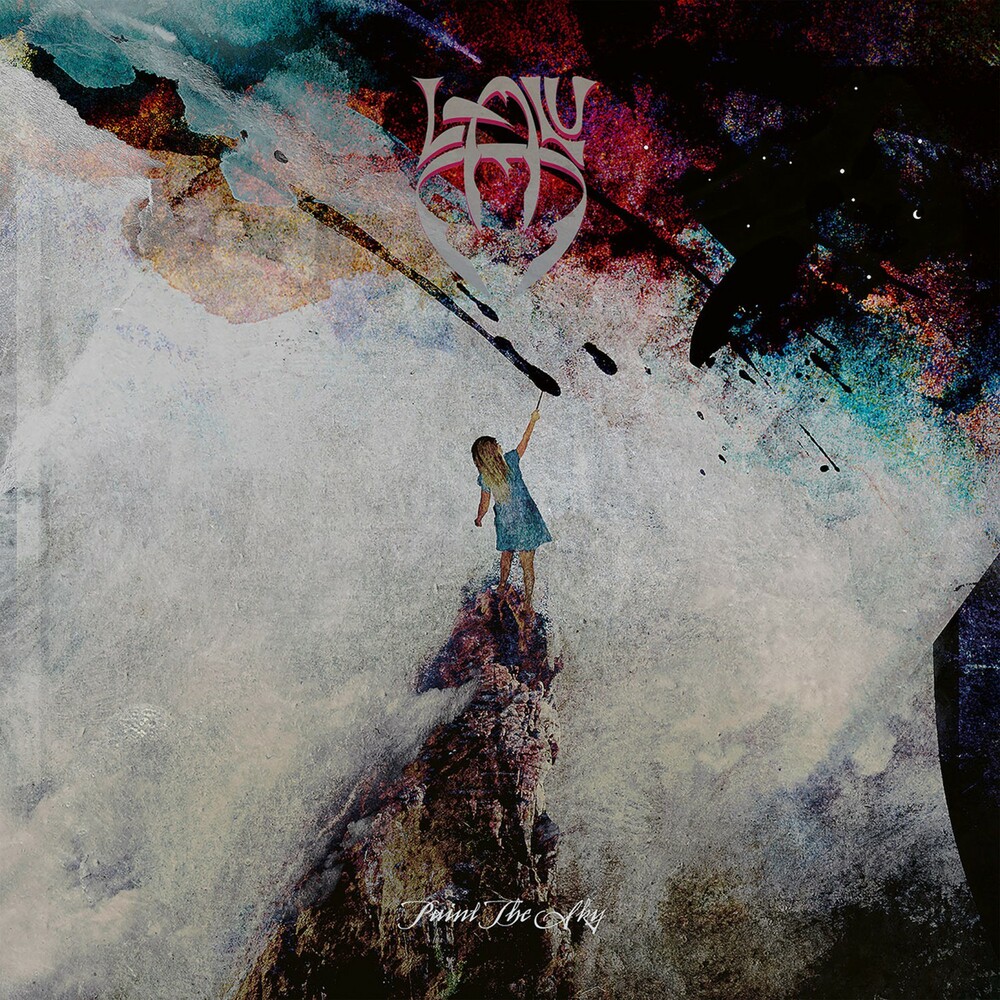
Lalu - Paint the Sky (2022)

Country: France
Style: Progressive Rock/Metal
Rating: 7/10
Release Date: 21 Jan 2022
Sites: Bandcamp | Facebook | Instagram | Metal Archives | Official Website | Prog Archives | Twitter | YouTube

Here's an interesting band from Paris—the one in France—one of those rare bands to fairly have a page of their own on both Metal Archives and Prog Archives. That's because they play progressive music that draws strongly from both rock and metal and often seems to sit in between the two. My initial impressions of Reset to Preset, the opening track, were that it was prog rock, and it is, but I realised that it ventured into prog metal then had to adjust again because the production wants it to be prog rock. This is Lalu's third album and I have to wonder what the prior two were like, partly because the band is hardly prolific, those earlier albums being released in 2005 and 2013.

The most overt influence I could find was Yes and that holds true on the predominantly prog rock of Reset to Preset or the more obviously prog metal song that follows it, ambitiously titled Won't Rest Until the Heat of the Earth Burns the Soles of Our Feet Down to the Bone, and on through a majority of the album. It's most overt in the vocals of Damian Wilson, best known for his work for Threshold and Headspace, but it's in the music too, with an intricate instrumental journey in each song for each instrument.

The band is named for keyboardist Vivien Lalu, who doesn't betray as clear a Yes influence. Sure, there's some Rick Wakeman in what he does—most obvious in the intro to Witness to the World— but I hear others too, including Jordan Rudess of Dream Theater and Liquid Tension Experiment, who is even present as a guest on The Chosen Ones. Oddly, most of the guests are keyboardists, a surprise perhaps best explained by allowing Lalu to play alongside a host of friends and mentors. Hey, is there a better reason to create a band?

Rudess is the biggest keyboard name, though I see legendary bassist Tony Franklin on a couple of tracks and drummer Simon Phillips on one and, in both instances, it would be far easier to list who they haven't played for than who they have. Jens Johansson, of Stratovarius, is the most prolific guest contributor, appearing on three songs, including the keyboard heavy Lost in Conversation. I have to say that, with all these keyboards, it's almost surprising to notice other instruments, but there's a good balance between musicians, even if the guitar is lower in the mix.

I liked this album from the outset, but I didn't feel that it was anything particularly special until I got to Standing at the Gates of Hell, easily the standout track for me. It's track seven, but the first one that found a powerful groove and stayed in it. It's majestic more than it's intricate and, when it gets intricate, it does so in a very different way, leaping headlong into jazz territory. Excepting guest contributions, of which there are none on this track, all the guitarwork here is provided by Joop Wolters, both bass and regular electric guitar, and he's clearly having an absolute blast on a song like this. He's released at live five albums under his own name, which unsurprisingly mix jazz fusion with progressive metal. I should check them out.

I don't want to suggest that the album picks up at this late point, because earlier songs are good ones, but this is where my favourites come in. The Chosen Ones pitches Yes at Dream Theater, not only because of Jordan Rudess's inclusion but also Simone Mularoni's, he being the guitarist for a few different bands, including DGM and Sunstorm. I last heard his guitar on the Queen of Broken Hearts album by Issa earlier in 2021 and, the more I hear, the more I want to hear. It's Wolters on Sweet Asylum, a pristine guitar interlude before the epic We are Strong, one of three tracks here to pass seven minutes and aim at eight. It's a generous release, even without the bonus track.

Everything I do at Apocalypse Later ties to discovery and this allowed me to discover not only Lalu the band, but Vivian Lalu the keyboardist and his guitarist Joop Wolters, who has a whole career of his own to explore. It also reminded me, not that I needed the nudge, of the talents of vocalist Damian Wilson and guitarist Simone Mularoni. And, what's more, it ably highlights how much the Frontiers label is expanding their already wildly impressive roster in new directions. This isn't the melodic rock that they're justifiably known for; it's prog rock that dabbles in prog metal, but it's a good fit for them. I look forward to more unusual Frontiers releases.

Tuesday, 11 January 2022

The Losts - Mystery of Depths (2021)

Country: France
Style: Dark Heavy Metal
Rating: 7/10
Release Date: 7 May 2021
Sites: Bandcamp | Facebook | Metal Archives | YouTube

Thanks to Yann from the Losts for sending me a copy of their second album for review. I like this a lot, partly because everything in it takes me back, some of it a long way, but it seems like it can't have seen release longer than about five minutes ago (it came out last May). They call what they do "dark heavy metal" and it's a union of a lot of older styles into a powerful new mix. For a while, I found myself instinctively pulling out all the influences but eventually they just bludgeoned me into just listening without thinking. I'd love to hear the Losts on stage, because there ought to be some serious energy coming out of this band.

The first influence I heard was Iron Maiden, which is present in everything from the operatic vocal style of YGC through the guitars of DGC to the galloping back end of JCR and PPG. However, there is a density of sound here and that carried more of an early Metal Church vibe to it, with perhaps some Manowar in there too and a whole lot of Sword, if you remember them; the Losts could take on Sword's Outta Control and nobody would believe it wasn't an original song. Sword are riddled throughout Tattoo the Child, which is the lively opener the album needed.

If that suggests that they sound like a North American heavy/power metal band, that's not unfair but The Priests Control expands that list of influences back to the old world. There's one dissonant guitar chord that's American and contemporary, but everything else screams European and proto-extreme. It's Judas Priest and Mercyful Fate and Motörhead with Bruce Dickinson joining King Diamond and Rob Halford at the busy microphone. I really dig the bouncy riff this one has and it only gets bouncier as it goes, because the vocals update to a more extreme, almost black metal sound. The extreme metal cover art is misleading but not entirely.

In other words, there's a lot here to explore and that's before A Path to Arabia opens up an ethnic side to the band, In the Steam of Opium bears the clear marks of doom and Write My Name in the Light escalates the Judas Priest sound up to Blind Guardian epic stature. That sort of diversity is a constant, it seems. Revelation of the Losts is a singalong Teutonic power metal anthem, designed for big European outdoor festivals with large willing crowds. Inner Wounds, with its choral chorus and ethnic riffs, feels more like Therion. Pharaoh's Curse has an Accept-style riff to build it.

So, if the Losts aren't one band, are they all bands wrapped up together in an energetic tribute to what these guys were listening to back in their misspent youths? Maybe a little, I guess, but there is common ground here. The guitars are heavy but always traditional, the back end energetic and a little more willing to step into extreme. The vocals are, well, quite a lot of things, depending on the current need, but, at heart, they're almost always powerful and melodic.

Whenever the band aren't adding another new influence, they go back to a Priest/Maiden sort of hybrid, galloping along in time honoured Maiden fashion with vocals that often remind of Bruce, but with riffs and changes more reminiscent of Priest. This default mode is there in Until the End and The Drug I Miss and others. And it's never far away, even when something else is layered over it, always ready to serve as the bedrock for another exploration into influence.

I guess this all means that the Losts aren't the most original band to emerge from France lately—they're certainly not rewriting genre boundaries like Aephanemer or Gojira, but they are very good indeed at what they do and there can't be many other bands that are this much sheer fun. I'll certainly seek out their debut, ...of Shades & Deadlands, released in 2016 with a different bass player, but I'm also aching to see them live. Now, given COVID and the existence of the Atlantic Ocean, that may be tricky, but hey. One day.

Tuesday, 4 January 2022

Aephanemer - A Dream of Wilderness (2021)

Country: France
Style: Symphonic Melodic Death Metal
Rating: 8/10
Release Date: 19 Nov 2021
Sites: Bandcamp | Facebook | Instagram | Metal Archives | Official Website | Twitter | YouTube

This is their third studio album, but Aephanemer crossed my path with their second, Prokopticon, which was an easy winner of my Album of the Month in March 2019. I've been eagerly awaiting the next album from them and somehow completely missed it, given that it saw release in November. Fortunately, I have January to catch up on this sort of inadvertent omission! The good news is that it's another really good album and, now I'm past the COVID I had when I was first tackling this, it's easy to see that. COVID clearly messes with the appreciation centres of the brain and it frustrated my appreciation of this one for a while.

Listening now, it's hard to imagine how I didn't fall for Antigone immediately. It's a lively piece for the first track proper, almost a classical dance translated into melodic death metal. There are old rhythms to it, both in the bouncy keyboards and the lyrical delivery in the verses, but the style is a new one, mostly melodeath but with a firm black metal influence in Marion Bascoul's vocals and a few wall of sound sections. This leads to a song that sometimes sounds like Mozart and sometimes Cradle of Filth, which is an unusual but welcome mix.

Of Volition is a lot more traditional, if traditional is a word we can use with Aephanemer. After an Enya-esque opening, it chugs along like melodeath is supposed to, finds a neat melody to layer on the top of it and ends up as much like Iron Maiden as anything more extreme, albeit with a French accent that's there not in the vocals but in the textures of the guitar. Anyone listening to this just has to assume that the band are from somewhere on the continent.

Most of this album is closer to Antigone than Of Volition, but there's another element that spices it up considerably, that's there throughout but obvious on Roots and Leaves and that's prog. This was always my favourite piece from my very first time through, even when COVID wasn't letting a tired brain comprehend what was going on, but it keeps on getting better. There's dynamic play in everything that Aephanemer do but it's at its best on Roots and Leaves, which is a gift that keeps on giving. It's not shocking to find a guitar interlude following it, before the band leap into Strider.

It's easy to call out the songwriting as the best aspect of Aephanemer. Sure, we critics can conjure up comparisons here and there—they've clearly been listening to a lot of Dark Tranquillity—but it wouldn't be fair to suggest that they sound like anyone except themselves. That's an achievement in melodic death metal, where so many bands sound just like *insert favourite Gothenburg sound band here*, and it's sourced as much from of their unique songwriting as Bascoul's dark vocals or the clean symphonic tone of Martin Hamiche's lead guitar. Both those things are in evidence on songs like Panta Rhei or Le Radeau de la Méduse, but they're not the only reasons why they're so obviously Aephanemer.

I don't think this album holds together quite as well as its predecessor, though I really ought to go back to that to listen afresh. It's still a really good album, though, cementing Aephanemer for me as a rare melodeath band with a unique sound of their own, a highly symphonic take that trawls in prog and black and even a little folk, given the presence of Old French Song here, which is a cover of a piece by Tchaikovsky. It can't be coincidence that I prefer my classical music Russian and vibrant, something that I fully expect Hamiche to find too, given that he rarely misses an opportunity to do something in that vein with his guitar.

Now, to not miss the next Aephanemer album in a couple of years time...

Monday, 6 December 2021

ADX - Étranges visions (2021)

Country: France
Style: Heavy/Speed Metal
Rating: 7/10
Release Date: 19 Nov 2021
Sites: Bandcamp | Facebook | Metal Archives | Official Website | Twitter | YouTube

It seems like about ten minutes since I reviewed the last ADX album, Bestial, but COVID is messing with my internal clock because that was actually last January, almost two years ago now. This one was made by the same line-up, with the pair of founder members who have always stayed with the band throughout its history still there: vocalist Phil Grélaud and drummer Didier Bouchard. This is similar but arguably a little better.

I liked the opening song proper, Le sang de l'ennemi, which kicks off in lively heavy metal style and then ratchets up the gears to something closer to speed metal. There are some tight changes and the twin guitars of Nicklaus Bergen and a gentleman who only goes by Neo are woven together in stylish fashion. I find that I like my ADX when they're playing at speed and this one delivers in just the way I like it: clean, speedy and technical. Génération perdue lowers the speed a little but adds more changes. The buzzsaw guitarwork that kicks off Sacrificé pour la cause took me right back.

They slow down a little after that and I have to admit that I got distracted and didn't get hijacked back in again until the closer, another fast song called Invasion. Listening through a second time, I realised that there's good stuff here in between but we have to pay a little more attention. After another time, I found that Guerre mystique, a lively instrumental in the vein of Iron Maiden that oddly turns out to be the longest piece of music on offer here at almost six minutes, may actually be my favourite track.

Now, that shouldn't surprise me much, as I'm not the world's biggest fan of Grélaud's vocals, but I don't have anything against them. He does what he does well. I just think that his particular style of punk-infused metal vocals, which, to be fair, he's been delivering to ADX since 1982, has become a little generic in the decades since. He accompanies really well, but he doesn't stand out notably above his peers, in a genre where many iconic vocalists do exactly that. Now, is that a good thing or a bad thing? That depends on your tastes. To mine, he could be a little higher in the mix too.

I should also add that one of the reasons that I realised that I prefer ADX in instrumental mode to the ADX with vocals is because they go instrumental rather often. These songs aren't particularly long, the longest at the five minute and change level and many a minute shorter, but most have a solid instrumental midsection and some of those are a lot more than solid. I'd call out Le reflet du Mal and especially the characterful Terre de colère here, along with those faster earlier songs.

It's probably fair to mention that these French titles are more traditional metal fare than Bestial and its horror themed material. The best songs translate to Blood of the Enemy, Mystical War, The Reflection of Evil and Land of Wrath. The English titled Trouble is excellent too, if an instrumental intro to Invasion, which, of course, is the same in French and English. The album title (and name of the neat intro) means Strange Visions, so maybe there's a little more fantasy going on here.

I only gave Bestial a 6/10, which is still a recommended rating, as I rarely review any albums that I don't recommend, but this one's a safe 7/10. It's good to see ADX getting busier in their third stint as a band and still turning out solid and reliable albums. And, that said, now I need to check out their 1990 album, Weird Visions, because it looks rather similar to this. Is this really new material or a re-recorded version in their native French? I'm leaning towards the latter.

Friday, 16 July 2021

Sorcières - Empoisonné (2021)

Country: France
Style: Black/Folk Metal
Rating: 7/10
Release Date: 21 Jun 2021
Sites: Bandcamp | Facebook | Instagram | Metal Archives | YouTube

It took me a few songs to get into this album, which is the debut full length from the French black/folk metallers Sorcières after a 2019 EP, but I got there eventually and it continues to grow on me. I've had it on repeat for a few days now to try to figure out what my problems with it were.

One is that they launch into action with Anciennes lueurs as if they're a full on black metal band but it isn't true. They're billed as black/folk metal and the folk metal aspect gets more important as it runs on, starting close to the end of this opener. Oddly, it became a folk metal album for me but eventually came back to being more of a black metal album. That makes it more and more interesting over time.

A side point here is that Anciennes lueurs slows down considerably over its running time until there's almost as much doom as black and it feels jarring. Once we get used to it, it sounds great but it took a while and the doom constantly shapes everything, becoming the most important factor to me in the Sorcières sound.

Certainly it's there on the second song too, L'auberge des corps perdus, and it's even more awkward a presence there because this is a folk metal song that plays with black rather than a black metal song that plays with folk. Folk metal, whatever country it's from and whatever cultural heritage it trawls in, is at heart a lively genre, rooted in dances and drinking songs. Adding a doomy sense of darkness to it deepens the sound but it also has the side effect of depressing that lively feel.

During my first few listens, I thought those two songs played out too mechanically, all the cool things that are going on in them outweighed by a lack of energy that suggested that the band were playing rather than performing, but gradually I realised that isn't fair at all. It's that odd layer of doom that's tamping down the energy and the life shows back up whenever the doom is turned down, like on the title track which feels far more alive. The drums get there first and the rest of the band join in, right down to a violin that's much more lively than it was one the previous track.

Les yeux verts keeps that up, getting downright sassy at points, even if they never truly cut loose and fly free. What could have been a gypsy punk sort of feel, playful and wild, becomes more classical, the composition fascinating but carefully orchestrated. And it's all because of that doom layer that never quite goes away, which is why this sometimes seems better to listen to as impressive music than to get up and dance with stein a-sloshin' as a spiritual force that moves my bones. Les yeux verts is still one of my favourite songs here, but I'm listening to it rather than moving to it.

Technically, Sorcières have everything they need and they feel bigger than the five piece they seem to be. I could have sworn there were two guitars here but there's apparently just one, that of Thibaut Marlard. The bass and drums show up courtesy of David Hubert and Antoine Ricci. Marie Derancourt provides the violin, as often plucked, I believe, as bowed, which is unusual and fascinating. And Pierre Alain Devaux adds a harsh voice to the mix, which isn't as bleak as you might expect for a band with at least one foot in black metal. It's often rather warm, more of a death growl to my thinking but with a black edge.

I've reviewed black/folk metal at Apocalypse Later before, but this feels different. It's nothing at all like Saor, because this doesn't go for atmosphere; like Burden of Ymir, because it blends the genres a lot more than highlighting each separately; or like Vengeful Spectre, who are far more extreme with both their black and folk elements. Again, it's that extra doom layer which ends up shaping it; even if it's a smaller part of the Sorcières sound, it turns out to be the pivotal one, whether the song is more black, such as Ordalie, or more folk, like Dans ces eaux.

So, after three days of listening to this album, I've got used to its intriguing mix and I like it a lot, but I took a while to come around to it. What's perhaps most important is that I wanted to understand this. Usually, if I don't get an album after a couple of listens, I know that it's not for me. This one always felt like it was my sort of album and it is, but I had to work with it. Now I need to figure out how unique the plucking approach Derancourt has to her violin really is. It really works here but I can't think of other examples where violinists do that in metal, at least to this degree.

Friday, 9 July 2021

Helium Station - Sanctuary (2021)

Country: France
Style: Progressive Rock
Rating: 7/10
Release Date: 21 May 2021
Sites: Bandcamp | Facebook | YouTube

Here's an interesting album from Toulouse, not least because it's oddly schizophrenic. Helium Station is the one man project of multi-instrumentalist Fabrice Lacourt, who wrote everything on this and an earlier album, Flesh and Bone, and played all the instruments except the drums, those being the work of Benjamin Marmier. He then brought in a variety of guest vocalists to sing on songs I assume he felt fit their particular styles.

I haven't heard Flesh and Bone, but it seems notable that the songs were sung by two ladies, Marjorie Alias or Natacha Kanga, with a male vocal showing up only on the closer. This time out, there are five voices divvying up eleven songs and three of them are male, though that's not why it's schizophrenic. It's schizophrenic because Lacourt shifts into a completely different mindset when Kanga is singing to when anyone else is, enough that Helium Station becomes a different "band" entirely.

For the most part, he's a prog rocker. Sometimes, as on the opening pair of songs, he's inventive and lively, both in the way he structured his songs and in how he performed on them, especially on guitar. Sometimes he's notably intricate, clearly relishing the technical difficulty of a piece, and sometimes he's more sedate. Sometimes he heavies up a bit, crossing a boundary into metal, and sometimes he softens up a little, shifting towards melodic rock. However, he's most often playing some form of prog, whether it's a pure Yes or Mike Oldfield style or a more commercial Styx or Alan Parsons Project one.

Which form mostly depends on who's singing. Alias prompts him to get playful and intricate, which he does all the more on songs with Alexis Dimitriou up front. When Yann Rousseau or Yann Fabié step up to the mike, he lets the warmth of their voices drive the songs, whether he's playing heavier or softer behind them. My favourites are all more playful songs, as epitomised by the first two.

Simple Life is a tease of a piece, with Lacourt's fingers as fast here as anything on the album. Praying for Me grows on me every time I hear it but I believe Alias's voice is perfect for Simple Life and I enjoyed her ethnic section at the heart of the song greatly. In many ways, One Night Pain follows in this one's footsteps, even though it switches to male vocals, courtesy of Dimitriou. He's the most frequent voice here, singing four songs, and I would call this one out as the best, not least because, halfway through the piece, he shifts register, from his regular voice to something more akin to Jon Anderson, and it's like we're listening to someone else.

There's a lot to say about the prog album that Lacourt shares amongst four vocalists, but I'll point out that Cursed Writer is up there for me with the first two songs as its highlights and be done, because I want to talk about the completely separate EP that is bizarrely spread out betwixt the album.

This features the four songs led by Natacha Kanga, which aren't prog or even rock in the slightest and so feel rather out of place alongside the other songs, but which are also the other three highlights for me. Heaven's in Your Eyes shifts the album from intricate prog to patient blues. It's a really good song but it's an anomaly until we get to Be Yourself seven songs in and another wild shift to old school funk, even disco, and, while there's a proggy riff and some proggy soloing, this feels just as out of place on a prog album as a blues number.

If she's bluesy on her first song and funky on her second, Kanga digs deep into world music for a third, the album's closer, Piece of Mind, which is up there with Simple Life for me, even though it's different in almost every way. This one feels west African through and through, not just in Kanga's effortlessly powerful voice but the warm, cheerful guitar and the ethnic rhythms too. It's really hard not to get up and dance to this one but I mostly bounced in my chair a lot. Not moving didn't seem to be an option.

I'm a big fan of versatility and I applaud how varied this album gets, but it really does seem like there are two completely different things going on and I wonder how audiences will receive it. I enjoyed the two styles but felt like I ought to be listening to them separately. Give me a prog album with Alias and Dimitriou and whoever else. And definitely give me that roots album with Natacha Kanga. But maybe don't give them to me at the same time.

Tuesday, 4 May 2021

Gojira - Fortitude (2021)

Country: France
Style: Post-Metal
Rating: 8/10
Release Date: 30 Apr 2021
Sites: Facebook | Instagram | Metal Archives | Official Website | Twitter | YouTube

Look up French band Gojira at Metal Archives and you'll see that they play progressive/groove/death metal. Now, each of those genres conjures up a particular sound in my brain and this album isn't close to any of them. To me, their seventh studio album sounds more like post-rock with a strong influence from what I often see listed as "modern metal", which mostly translates to the rhythm guitar being a truly rhythm instrument, more like the drums than the lead guitar, and the vocals having something of a hardcore shout in them.

Born for One Thing defines all this as it opens up the album. It feels as much post-rock as post-metal, mixing influences as diverse as Metallica and Radiohead. The songwriting is deep, best experienced once and then explored on further listens. Joe Duplantier's vocals are fascinating, as they come from a host of different styles, from pop chants to death growls. The bass is an audible, prowling creature. There are overtones here too, somewhat like the high melody in Tuvan throat singing but done with guitars. It's a really interesting sound.

And it only gets more interesting as the album runs on. Amazonia is particularly fascinating. Much of it is played in a monotone, as if the strings on the guitars were all tuned to the same note, but melody creeps in through what sounds like world music. It's bookended by Jew's harp but there's often a sort of group chant going on that veers into full drone at points. This is ritual music, sometimes hypnotic, but that's only one approach that Gojira take here.

Hold On starts like a mediaeval folk song in choral polyphony, perhaps translated into dance music and then into whatever Gojira play. The vocals are usually my least favourite aspect in any genre touching on groove metal, but Duplantier's here are as constantly inventive as anything else that the band is doing, this song featuring perhaps the wildest departure from the expected. Well, it's either that or the title track, which finds an Enigma vibe with bass, an antiqued voice and the sort of instruments I remember from music class in school: tambourine and woodblocks. I was almost surprised to not hear a recorder. It's an intro, really, to The Chant, which continues, well, the chant, with rock instruments.

As if we wondered if we'd drifted a long way away from metal, Sphinx brings us right back in with what is easily the heaviest song on the album, above raucous early tracks like Another World. It has overtly harsh vocals, though they're still easily intelligible and they don't remain harsh throughout. It's also the most obviously riff driven track on the album. My favourite riff may be on Amazonia, but it's only one riff. This one moves constantly from one simple but effective riff to another.

In short, there's a lot here. I can't say I was knocked out by my first listen, though I did like the album immediately. However, with each further run through it, I find myself more and more impressed and I have to go with an 8/10. I tend to dread the words "modern metal" because the shifts taken by albums with that label tend to be ones I don't particularly like, finding them unimaginative and limiting. This, on the other hand, is certainly modern metal but it's thoroughly imaginative and free of limits.

The diversity is joyous, Amazonia being very different from The Chant and both being very different from Into the Storm, but all three being obvious highlights. And the same goes for Hold On. And The Trails. And... This really is a fantastic example of what the modern metal genre can be and so rarely is, unafraid to trawl in its sounds from gothic metal, post-punk, electronica, mediaeval chant, krautrock, whatever seems appropriate at the time. That's a sign of adventurous songwriting and, when paired with the talent these musicians obviously have, it makes for a great album.

Tuesday, 9 February 2021

Appalooza - The Holy of Holies (2021)

Country: France
Style: Stoner Rock
Rating: 8/10
Release Date: 5 Feb 2021
Sites: Bandcamp | Facebook | Twitter

Formed in 2012 in Nantes and on their second studio album, Appalooza are kind of a combination of everything I missed out on when I drifted away from music in the early nineties after most of a decade of deep diving into rock and metal. They claim to be half Alice in Chains and half Queens of the Stone Age and Them Crooked Vultures, meaning grungy alternative rock and stoner rock, but with a sense of creativity that adds to that particular very nineties mixture.

What I found is something a lot more creative than I expected from that description. For most of two songs, they are indeed the mix they suggest, maybe with a higher proportion of Alice in Chains than merely half but then, three and a half minutes in to Snake Charmer, with the song proper ended, they roll into something wild and completely different. It's a little bit surf, a little bit rockabilly, a little bit spaghetti western, and something I'd expect to be on the soundtrack of an outlandish cult movie like, maybe, Six-String Samurai.

As I worked through the album, I kept finding sections like that that blew my mind, often to wrap up individual songs and they're wildly varied. Reincarnation has a space rock coda. Conquest drops into a echoey guitar piece that starts very bare but gets increasingly complex. Azazael drops even further, to fade out entirely a capella. Nazareth and Thousand Years After are variants on this theme. The former doesn't switch but extends instrumentally until we're almost in a trance, one that extends thirty seconds into Conquest, as if Appalooza have zero regard for their advertised song lengths. The latter switches into an oompah section—I was waiting for Tom Waits's voice to show up—but eventually returns to the actual song.

These wild endings really shook up my opinion of The Holy of Holies. Usually, I judge albums on their songs: how good they are, how varied they are, how consistent they are. Here, the songs are good, all of them playing in the same alternative/stoner rock ballpark but without any of them sounding quite like any other, which is a much appreciated trick. How I wish so many other bands could master that! But the endings elevate everything, like they're a colourbox of interludes to keep us on the hop and visit each new song without still being tied to its predecessor.

Reincarnation pulls back from the thick sound of the openers so the guitar can become a psychedelic factor, teasing us more than bludgeoning us. Nazareth keeps that vibe and renders it more exotic, but adds progressive drumming in a Tool vein, which dominates. That rolls into Conquest too and returns in Azazael. Distress has a prowling feel to it, led by a glorious bass and enhanced by effective backing vocals and vocal play; it's like Saigon Kick heavied up the Peter Gunn Theme. Canis Majoris is a ballad really but, for this band, that means something unlike what you're expecting from a ballad.

I liked this from the outset, but not as much as I ended up liking it. It felt like a solid 7/10 until Snake Charmer shifted into its coda and, from that point on, it kept reinventing itself so effectively that my rating simply had to go up, even without anything particularly standing out above its peers. Maybe I dig Reincarnation and Distress more than anything else, but they're not objectively better; they just speak to me while others may speak to you. The sheer variety is a huge selling point and it tells me that, if the band's sound comes from Alice in Chains and Queens of the Stone Age, it's really the creativity of Them Crooked Vultures that shapes them most.

Tuesday, 12 January 2021

Karma Sutra - Karmasutrized (2021)

Country: France
Style: Stoner Rock
Rating: 7/10
Release Date: 11 Jan 2021
Sites: Bandcamp | Facebook | Instagram

Only just released yesterday, I see that this debut album by French trio Karma Sutra was recorded four years ago in January 2017. Why it took so long for something of this quality to reach the light of day, I really can't say, but I'm happy that it's finally out there.

It hooked me from its very outset, through a song appropriately named Shiva's Chant, given that it's driven initially by a memorable chant, even if it ramps up halfway and lets loose a blistering solo for a very tight and very memorable second half. Its sound can be pinpointed somewhere around the line where heavy blues and stoner rock meet and that's echoed across the rest of this album.

The four tracks of the first half all feature vocals but, with the exception of that chant, they're never a primary concern. All these songs live or die on their riffs and the other things the guitars are doing, a job we can credit to Edouard Reynaert. I didn't really notice until my second time through the album that the vocals vanish after Bastard Children, as they hardly matter, except for that memorable chant, of course, which is as much voice as instrument as an actual vocal, finding a throat singing drone at points. The final five pieces of music are all instrumental.

While Shiva's Chant may be the best of those early songs, I can't skip past the fantastic riff on Mind's Eye, which is quintessential heavy psych. It's relatively simple, but it's instantly catchy and I love how it's explored by the guitar but handed over to the bass to mimic it during the verses. While this band can get balls to the wall heavy, there's a lot of softer material here too and it's just as capable, so the big heavy riffs like this one are moments to cherish.

What's odd thus far is how lo-fi this seems. The band are tight, even when pretending to be loose like on Bastard Children, another heavy psych standout. The recordings haven't been tidied up though, as if they were all recorded live in succession and piped straight onto Bandcamp with the only post work done being to put a gap between each song. Even there, that's rough; it takes a full sixteen seconds to start Karmasutrized #2 to start and there are rough edges before and after a number of tracks. It (and I mean the production here, not the performance) feels honest but very unpolished.

The instrumental pieces are interesting because they feature more dynamic play than the vocal songs. Oddly, though, three of the five are called the same thing. Karmasutrized initially comes in two parts, both really exploring mood, getting particularly mellow towards the end of part. 1 and for a majority of part. 2. I like these slower and softer pieces, which still ramp up at points, but my favourite of these instrumentals is Karmasutrized #2, which is unrelated to Karmasutrized part. 1 and part. 2, in all but a name.

What I realised during Karmasutrized #2 and the second half of Shiva's Chant is that this band remind me just as much of a classic heavy blues outfit like Aeroblus as the usual proto-stoner rock bands like Black Sabbath or Blue Cheer. Karma Sutra could cover Vamos a buscar la luz and it wouldn't feel at all out of place next following Shiva's Chant in a live set. Now, let's hope that whatever back end issues the band had with getting this album out won't affect the next one.