Showing posts with label Brazil. Show all posts

Tuesday, 28 January 2025

Innocence Lost - Oblivion (2024)

Country: Brazil
Style: Progressive Metal
Rating: 7/10
Release Date: 22 Mar 2024
Sites: Bandcamp | Facebook | Instagram | Metal Archives | Official Website | Twitter | YouTube

I couldn't find a Best of 2024 list for South American metal, but what I did find tended to include a lot of mentions of a band from Rio de Janeiro called Innocence Lost, who play a mixture of power, prog and symphonic metal, so I thought I'd take a listen. They're hardly newcomers, dating back to 2007, but this is their debut album. I guess that means they've been working on material for a long time and probably playing live shows. They did release an EP in 2012, but that was it for recorded output until a string of singles in the 2020s. Three out of five of them made it onto this album.

What's immediately obvious, once Of Man's Fall, the movie trailer of an intro, is done, is that this is emphatically metal, in red ink with two underlines, without ever becoming extreme. The closest they get to extreme are the drums of Thiago Alves, because he has a lot of gears and he gives the impression that he could shift up another couple at any moment without any worries at all. When he's playing slow, which is often, it feels like he's playing in slow motion. However, even though he does find higher gears at points, he never goes full on extreme.

Nobody else comes close, but the mindset is always metal, with the bass prominent in the mix and often at the expense of the keyboards. That feels unusual for a few reasons. For one, I frequently have to point out in metal reviews how the bass is lost in the mix, but far fewer where it buries the keyboards. I can't remember the last time I pointed that out when the keyboard player happens to be a founder member. That's Aloysio Ventura, who provides keyboards and occasional vocals. The other founder member is Mari Torres, the lead vocalist. Everyone else, including the bassist, was brought on board more recently, around the time that they started putting out singles.

What they provide is interesting music, definitely progressive but rooted deeper in power metal. The symphonic element is there from the outset too, in the choral swells on Dark Forest, and it's never far away, but it always plays second fiddle, as it were, to the power and the prog. The female vocals are clean but very powerful. Torres has a strong set of lungs on her and, while there's a lot of nuance in what she does, she doesn't hold back much. When the Light Fades Away opens up like a ballad, so I wondered how she would sound with some restraints on. She sounds great, though her accent does show here—she sings in English throughout—but she doesn't keep the restraints on for long.

The thing is that everyone else follows suit. The guitar of Gui DeLucchi doesn't solo as often as we might expect but, when it does, it sears, not least in a prominent section on When the Light Fades Away. This sound feels like there's two guitarists, not in the sense that they're duelling but in the sense that there's so much bite. However, there's just DeLucci, which means that he's really giving it some. The same applies to Ventura's keyboards, so often a tease in the background but once in a while a tasty solo instrument, like during the second halves of City of Woe and Downfall.

And then there's the bass of Ricardo Haquim, so prominent that it would dominate this sound if it wasn't for Torres. In many ways, it serves double duty, both in the traditional role of the bass and as a substitute for a rhythm guitar. Check out the beginning of Downfall to hear it shift between those two modes. It's usually up front and powerful, but there's a completely different texture to it at the beginning of When the Light Fades Away, where it turns liquid and subtle and very tasty indeed. It's liquid during the intro to Fallen too, but not remotely subtle. Overall, it helps to bring a more modern touch to the sound.

It's hard to pick out favourite tracks on this album, though When the Light Fades Away has to be in and amongst them. Regular readers know that I rarely pick ballads as standout tracks and, in fact, I'm far more likely to call them the least worthy on any album, but this one has class and variety without any hint of cheese. Dark Forest is up there too, because it's a real statement of intent, in many ways the album in microcosm. Downfall is a strong contender too, because it has everything this album does best in there somewhere. Then there's The Trial, with a bunch of male narrative sections that come close to duetting with the female lead vocal. It's a very interesting song.

And it's a consistently strong album throughout. The intro did nothing for me at all and I'd like to have heard more extended solos, both on guitar and keyboards, with the bass down a little so we can hear more of both, but what's here is all good stuff. It's all heavy power metal that's happy to get right into our face, but with the added depth that comes from the prog angle and, to a lesser degree, the symphonic one. It's a very good debut. I'd love to hear what they come up with next.

Friday, 6 September 2024

Spell Garden - Witches Coven Vol. 2 (2024)

Country: Brazil/Argentina
Style: Doom Metal
Rating: 7/10
Release Date: 30 Aug 2024
Sites: Instagram | Metal Archives

It's only been twenty months since I reviewed Spell Garden's self-titled second album, but here's a fourth, neatly highlighting in the process how I missed the third, The Sage, which was released last June. This is presumably a sequel to the first, Witches Coven, from as long ago as October 2022, so meaning that this a fourth album in only two years. Spell Garden have been busy! Actually, they've been really busy because they've been finessing their line-up too.

Nicolás Díaz still provides clean vocals, but Juan Topini has taken over from drummer Allan Caique on harsh, often guttural vocals. Raphael Santos is still there on guitar, but Hugo Villela has joined him to bulk up that sound. Ivan Clemente has come in on bass, which Santos provided on previous recordings, as double duty on top of his guitar. And Caique is gone, replaced by George Gomes. So now the trio that recorded the first two albums (and very likely the third as well, but I can't track down credits) has doubled in size.

The resulting sound is seriously beefy, now that I'm listening to a download (YouTube simply fails to do this justice). The bass is very low and the rhythm guitar right down there with it. While the intro, Children of the Earth, opens up with instrumental psychedelic doom, Demiurgo shows us a go forward direction, starting out with that downtuned doom but drifting into death, like playful drums on the intro had hinted. Topini's vocals are the most overt death element but the tempo is often much faster than we usually expect for doom.

Betrayal highlights how Spell Garden aren't just going to play fast all the time. There are plenty of slower sections here, even if it isn't all that way, and this one adds a churning section with a tolling bell and a choral backdrop just to emphasise how this won't ever leave Black Sabbath behind, even at pace. I tend to like the slower sections more than the faster ones, but I especially like how they shift from one to the other. It's also worth mentioning that the fast paced sections still sound very much like doom rather than death, even when Topini gets extra guttural. He turns that approach up on Salem and goes all the way on Leviathan, which makes the song much sludgier than it would be otherwise. Make Me Burn is sludgy too, without needing the vocals to take it there.

My favourite song this time is easily Carrying Hate, mostly because of a glorious riff that could be transplanted into a prog metal song or even a thrash metal track, all laid over a flurrying base of death metal. The harsh vocals are there, leading the way, but there are plenty of clean vocals on this one too, almost adding a punky aspect. That ought to clash with the guitar theme, with what isn't far away from a middle eastern melody, but it works wonderfully for me. The only negative I have with this song is the way it ends, as if it wasn't quite meant to.

In fact, that's the most obvious negative for me across the album, because it's not uncommon. I'd suggest it starts with Demiurgo, the first song proper, and never quite goes away, Make Me Burn another obvious example. They aren't the most imaginative band in the world at the other end of songs, but the intros work when they show up, like on Betrayal, and the songs that go straight into riffage, like Leviathan, work even better.

That's because the most obvious positive for me is the same as on their self-titled album, namely how effortless some of these riffs seem. Leviathan is easily the slowest song on offer and it has a relatively simple riff, but it's a very effective one that's impeccably heavy. That Spell Garden can shift from the achingly slow riff and overdone guttural vocals on Leviathan to the vibrant pace of Relentless with more traditional clean vocals highlights admirable versatility. Of course, both of these tracks are appropriately named.

And that's before I mention that the vocals on The Fall start out female and clean, surely courtesy of a guest I'm not aware of, who then contrasts neatly with the harsh male vocals of Topini. Or the final track, Sol de Agartha, which is notably more psychedelic than anything else here. I called out how their self-titled album shifted from doom metal into stoner rock on occasion and that doesn't happen anywhere as much here, other than on this closer, which is very tasty, even adding a violin and a flute for good measure. There's a lot here over almost fifty minutes, even before the bonus live tracks.

For my part, I prefer the slower doom to the pacier death, but I like both approaches. Relentless is my favourite track here after Carrying Hate and that's one of the liveliest songs here. I'm also very fond of the psychedelic rock approach of Sol de Agartha, so that's three styles right there. I'm also more fond of clean vocals on tracks like Relentless and Witches Coven than harsh vocals on earlier songs, but I don't dislike Topini's death growl at all. The more guttural he gets, the less I like it, even if the extreme version of that on Leviathan fits the heaviest riffing here.

But hey, that's what this album is likely to be for listeners. There's so much here that there's likely to be songs that any extreme metal fan likes a lot but others that they don't so much. I've pointed out mine. Yours might be different and that's fine. I wonder how that will help bulk up the fanbase for a clearly prolific and hardworking band still searching for the boundaries of their sound.

Thanks to Raphael Santos for sending this album over to me. Tudo de bom!

Tuesday, 7 May 2024

Elemento 26 - Labirintos de Zan (2024)

Country: Brazil
Style: Psychedelic Pop/Rock
Rating: 7/10
Release Date: 26 Apr 2024
Sites: Instagram | YouTube

Here's another unusual album from Brazil, which seems to be bursting at the seams with unusual albums lately. Elemento 26 play a brand of psychedelic rock that's rooted in classic pop music. The guitars on the opener, Fotossíntese, are occasionally powerful, in a seventies rock sense, but the overall feel is lighter and the backing vocal is very light indeed, taking us back to the late sixties. It's also patient, reminding of Pink Floyd on the boundary between their psychedelic pop era with Syd Barrett and their seventies prog rock era with deeper and more expansive musical journeys.

Nothing here gets particularly expansive in that sense, only two tracks exceeding four and a half minutes and the longest of them wrapping up well before eight. However, Clorofila, the shorter of those two at under six, firmly moves into jam band territory. That's hardly surprising for psych but it's far more applicable to rock than pop, its gentle verses and folky backing vocals giving way in a loose second half to instrumentation exploration, two guitars and the bass all soloing together.

The other angle that's unmistakable is the ethnic angle, because Elemento 26 are Brazilian and a folky edge means something very different to the folk music that fed psychedelic bands in the UK or US. There's some of this from the very outset here, but it becomes obvious on Paranoia, which has a Latin sway to the verses that could well be samba to my uneducated ears. It starts slow and gradually speeds up, but it's clearly Brazilian. There's also a lot going on in the background, but I can't swear to what. Are those backing vocals, jungle ambience or a distant calliope. It's almost a carnival song. Casulo dips deeply into this ethnic history too, even if a prominent guitar presides over all of it.

Just in case that all solidifies an idea of what Elemento 26 sound like, there's more here that will deepen that considerably. There's a garage band simplicity to Planador. There's rich orchestration in Farol. There's a funky bass to kick off Borboleta and then jangly guitars which are just the start to a highly versatile song that goes all over the musical map. There's space rock to kick off Verde-do-Mar. It's almost like Elemento 26 don't want to be tied down to any particular genre, beyond a general one of psychedelia. It's hard to even situate them on one side of the dividing line between pop and rock, because they happily work on both, even if they stay on the rock side far longer.

I like this but I'm not sure, even after half a dozen listens, that I've truly figured out who Elemento 26 are. This may well be their debut album and it makes sense to be agreeably versatile, but I'd be struggling if I suggested what their follow-up might sound like. There are so many directions that this band could take with equal validity that I'd be very wary about suggesting one. And that does bring me back to Pink Floyd again, because who, after listening to The Piper at the Gates of Dawn could have predicted Ummagumma, let alone The Dark Side of the Moon or The Wall?

If you twisted my arm, I might suggest that they're at their best when evolving from quirky poppy melodies into longer instrumental sections. I don't know who's in the band, so I can't call anyone out for specific praise, but it's the guitars that do the most for me here. They're relatively simple during verses, for the most part, but they're highly varied in instrumental sections. There are an array of guitar solos that stand out to me, enough that it's hard to pick which work the best, but I might have to call out parts of Casulo as the best, starting with its very beginning and continuing in the second half, but also parts of Casulo as the worst, namely the plodding during verses.

And I have a similar problem trying to figure out my favourite tracks. I feel like the highlight ought to be Borboleta, because it certainly does the most in its seven and a half minutes, but I'm unsold on all its changes. It doesn't feel like it's quite figured out what it wants to be yet, rather like the band who recorded it. Every time through, I find that I prefer Verde-do-Mar, wrapping things up in its wake, because it nails its grooves, but it's a far less substantial piece and it has to end in a spot that links right back to Fotossíntese to loop the album.

The problem is, if the highlight isn't Borboleta, what is it? I might have to plump for Clorofila, the other slightly long song, because it's far more coherent, even as a jam song. Certainly it features the most guitarwork and thus plenty of the best guitarwork. However, Paranoia is truly infectious and I keep coming back to Casulo and Farol too, which feature plenty of elegance. It'll all depend on where they go from here, as the next album could make these songs outliers in their catalogue or the beginning of what they do. I for one am eager to find out.

Tuesday, 2 April 2024

Toxic Carnage - Praying for Demise (2024)

Country: Brazil
Style: Thrash Metal
Rating: 7/10
Release Date: 20 Mar 2024
Sites: Bandcamp | Facebook | Instagram | Metal Archives | Twitter | YouTube

I do like my thrash metal and I especially like finding new bands from pivotal nations to the genre who play it and play it well. Toxic Carnage hail from the Mairinque and São Roque on the outskirts of São Paolo in the southeast of the country and, while they've been around since 2008, have only recently got round to actually releasing full length albums. Their debut was the ironically named Doomed from the Beginning in 2019 and this is their follow-up on the other side of COVID. Before these and between them, they put out a lot of singles, EPs and split releases, so it's not that they just sat around doing nothing.

The play a vicious brand of thrash metal that's right out of the old school Slayer playbook, obvious both in the vocals of Robson Dionisio and the lead guitar of Roberlei Cristiano and a few guests providing a lead guitar on individual tracks, the most known of whom is Jhon França of Cerberus Attack, who guests on guitar on Trapped in a Vortex, on vocals on Nuclear Addiction and also found the time to both produce and mix the album.

The band's general approach is to remain speedy, but songs like The Unholy Book and Trapped in a Vortex slow down a little and chug as much as they blister. However, slower is a relative term, with these slower songs still pretty fast compared to other thrash bands. It just means that they tend to reach three and a half minutes or so. The epic of the album is Pyramid of Death that's a breath under four, partly because of a longer guitar solo from guest Diogo Felix.

The faster songs rarely pass three minutes because they simply don't have any interest in hanging around in any sense. They blister through what they do and then they're done, ready to give way for the next song and the one after that. Nuclear Addiction gets right down to business and wraps up in under two minutes, a space that somehow even provides space for both a guitar solo and a bass solo. That's pretty impressive. It doesn't cut anything out that's inherently needed. It simply gets down to business immediately and gets out of the way when it's done.

The shortest song is accordingly the one that goes the fastest, because CxAxTx is a thrash number that flirts pretty outrageously with grindcore. It works nicely as a blitzkrieg of a song that's done in forty seconds or so, with a few more dedicated to purring, a sheer burst of energy in between a couple of those three and a half minute songs that chug along nicely. There's a guest here too but on vocals; he goes by Clark and he does a pretty solid grindcore job given that he's known instead for a melodic death metal band a gothic doom/death metal band. That's versatility for you.

As always with new discoveries in thrash metal, I'll pass a copy of this over to my youngest son who has become quite the connoisseur of the genre and has the good taste to take me to see Flotsam and Jetsam this week for my birthday. He doesn't always agree with me and he sometimes finds things that I don't notice too, but it's rare when either of us recommend a thrash album that the other doesn't appreciate. I'm pretty sure he'll enjoy the walk home from work with this blaring in his ears.

For my part, I prefer the fast songs like Thrashing Over Thirty and Obedience, which doesn't shock me at all. However, I really like Toxic Carnage chugging too, which is less expected. Often, if a band shift a lot between fast thrash and mid pace chug, I'm far more polarised about which songs I like the most. Here, there's not much of a gap in my estimation between those fast songs and slower ones like Pyramid of Death and Trapped in a Vortex. While Toxic Carnage don't do much that's new here, that glimpse of grindcore aside, they play at both tempos very well indeed.

Sure, they would benefit from some more originality, but they generate some serious energy, an essential for thrash, and I dig the guitar solos, especially the one by Paulo Almeida on Echoes of the Future, as well as the prominent bass, which is placed with perfection in the mix by França. I don't know who's responsible for that, because I'm seeing Dionisio variously listed as responsible for bass, rhythm guitar and vocals on this album or vocals and lead guitar, because he was only a bass player in the band in its earliest years from 2008 to 2010. I'm not sure which to trust. I like it, whoever's responsible.

Perhaps my highest recommendation is the suggestion that I left this album thinking that it's an obvious choice to pull out every now and again as a palate cleanser after listening to other albums by other bands that didn't do the business for me. I'll always know that this one does.

Monday, 18 December 2023

Tuatha de Danann - The Nameless Cry (2023)

Country: Brazil
Style: Folk Metal
Rating: 7/10
Release Date: 1 Dec 2023
Sites: Bandcamp | Facebook | Instagram | Metal Archives | Prog Archives | Official Website | YouTube

My favourite Celtic folk metal band from Brazil is back and that phrase seems less surprising each time that I write it. They're also back playing folk metal again after In Nomine Éireann in 2020, an album that dipped just as often into rock. This is their sixth studio album but I've only been aware of them since The Tribes of Witching Souls EP in 2019 and haven't caught up with their earlier work yet. I should, not because it sounds like this but because it probably doesn't, given that they're on Prog Archives listed as prog folk, as their previous name of Pendragon might suggest.

Maybe there's a remnant of that prog mindset here, especially in the keyboards of Edgard Britto, but it's far from dominant. This is folk metal, firmly Celtic with prominent flutes and whistles and mostly Celtic melodies. I say mostly because I heard Magnum-esque melodies in Untitled, and that shifts its sound over the Irish Sea to be a more English influenced song, as well as one with more of a commercial rock tinge. That song is heavied up but A Fragile Whisper to a Raging Roar after it, a song which often feels as English as it is Irish, also stays firmly rock in its verses, before the crunch kicks back in.

My favourite track here is far more Celtic, even though it pumps up the power metal aspect that's never too far away to the max. It's The Rabble's Cry, oddly for me the shortest full song here, and it stirs the blood nicely. The one English moment comes during a wonderful instrumental run during the midsection, because it's a spotlight-passing part that shifts from fiddle to guitar to Hammond organ, back to fiddle and then to vocals again. For that moment of Hammond organ, we're firmly in Uriah Heep territory, which surprised me but works well in this Celtic context.

It's the flutes of Bruno Maia, also the band's guitarist, that always nudge it back to Éire. Most of these songs start out with him on flute, not least The Nameless to open up the album, but also an impressive pair of tracks much later on, The Virgin's Tower and Clown. I should mention here that the former kicks off with a deep harsh vocal from bassist Giovani Gomes before giving way to the guest female vocals of Daísa Munhoz, a Brazilian power metal singer best known for a band called Vandroya, though I know her from her prior guest contributions to Tuatha de Danann releases.

That shift works really well as a transition, something that they do a few times on this album. The opener features another moment like that that's also brief but also wonderful. Bruna Maia is also the lead vocalist in Tuatha de Danann and he's singing clean on The Nameless when Gomes comes in with his harsh voice as a neat underline to him right before the song drops away from vocals to a dancing flute section. I listened to that transition a bunch of times and it's unusual but masterful. I'm less sold on the electronically manipulated vocal that wraps up that instrumental passage and returns at the end of the song, as well as in the brief interlude called Spark.

There is another guest here, but I'm only aware of two this time out, compared to a whole slew of them on In Nomine Éireann. He's Hugo Mariutti, also Brazilian and, while he seems to have begun in thrash metal, he moved quickly into heavy/power metal where he's stayed for thirty years. He's a guitarist and so presumably contributes to the guitars on A Fragile Whisper to a Raging Roar in some fashion, though it's the vocal melody and the proggy keyboards that stand out most on this one. The vocals feel softer than elsewhere, though, so maybe Mariutti stepped in as a singer.

This is another strong album from Tuatha de Danann. While I'm not as surprised as I was in 2019 to hear Celtic folk metal from a Brazilian band, I'm just as eager to hear more. They're not the most prolific band out there but even COVID hasn't pushed them back to gaps like the eleven year one between Trova di Danú in 2004 and Dawn of a New Sun in 2015. I still don't know how big the Celtic folk metal scene is in southern Brazil but it's presumably large enough to sustain them right now, so I look forward to album number seven in a few years time.

Thursday, 19 October 2023

Nervosa - Jailbreak (2023)

Country: Brazil
Style: Thrash Metal
Rating: 8/10
Release Date: 29 Sep 2023
Sites: Bandcamp | Facebook | Instagram | Metal Archives | Official Website | Twitter | Wikipedia | YouTube

It's only been two and a half years since I reviewed Nervosa's fourth album, Perpetual Chaos, but a lot has changed with the band since then. Traditionally a trio, they were a four piece at that point, with Prika Amaral the sole remaining founder member. She's the band's guitarist and has been for its entire run but, soon after Perpetual Chaos, Helena Kotina joined as a second guitarist. Amaral was also the lead vocalist for year when the band was formed in 2010 and now she is again, as Diva Satánica left in 2022. The rest of the line-up shifted too, as bassist Mia Wallace has been replaced by Hel Pyre and Michaela Naydenova is the latest in a line seven drummers, Nanu Villalba showing up after Perpetual Chaos and gone already.

Given such continual flux—perpetual chaos, we might say—we might expect this to be transitional material as the new line-up, half of which wasn't even in place at the beginning of the year, figures out what they want to do and how they'll do it. Well, that's emphatically not the case. They kick in hard with Endless Ambition, sounding not unlike Kreator, and they demonstrate just what they can do with two guitarists in a couple of instrumental sections that I only wish were longer. The tempo shifts a lot with some neat escalations and that continues into Suffocare too.

Both these are excellent songs but Ungrateful ups the ante and absolutely blisters. It's fast out of the gate but it gets faster and then it gets playful. There's a lot here to enjoy, with buzzsaw guitar, frantic drumming and some neat tempo changes. It may well be the best track on the album, which is why it isn't too surprising that it slows down afterwards so Seed of Death can have an intro. The best Nervosa songs are the fast ones and Ungrateful has a real competitor in Kill or Die, which is a particularly vicious old school thrash song. And then Gary Holt shows up for When the Truth is a Lie to add extra depth to the guitar sound.

It's definitely the guitars that I followed most here. I love them when they're buzzing riffs through my skill. I love them when they get elegant, as they do on Seed of Death. I love them when they do something more unexpected, the solo on the title track sounding rather like what Brian Robertson was doing for Motörhead on the Another Perfect Day album. However, I also have to call out both Naydenova's drumming, which is appropriately varied but always top notch, whether she's raging on the fast songs or adding layers to slower ones, and the solid production. This album is far more in your face than its predecessor and the drums are perfectly placed in the mix.

Pyre does exactly what she needs to do on bass without ever stealing the spotlight, so that leaves Amaral's vocals, which are also more vicious than her predecessor's. Diva Satánica wasn't without death metal in her voice, but Amaral's is harsher but still enunciated. It never quite reaches death growl territory but it comes close at points, like on Gates to the Fall. Check out her introduction to Behind the Wall to see how vicious she gets, spitting out her lyrics with fury. It all works nicely with the vicious guitars for a real in your face sound. I like this new Nervosa.

Now, I've always liked Nervosa because they tend to play their thrash fast and furious, which is how I like it best. However, they don't stay in full gear throughout, mixing up the tempos to keep these songs interesting, and rarely dropping into chug sections. I'm starting to dread them on albums of late, because so many new thrash bands seem to be happy at a mid-pace, but there's a stellar chug on Sacrifice, aided by Amaral's rough vocals that keep it from feeling too soft. There's always some abrasion in her voice and that maintains an edge on these songs even on those rare occasions that they might lose it otherwise.

Given that there were a couple of guests on the previous album and I've already mentioned one in this review, I should add that there's a second guest on Superstition Failed in Lena Scissorhands, a Moldovan vocalist who sings metalcore/nu metal for Infected Rain and more traditional hard and heavy for American band Death Dealer Union. She brings a new angle to this album, without going too far beyond Nervosa's style. Holt, of course, plays into it perfectly, so Where the Truth is a Lie is just a Nervosa song with three guitars instead of two.

This is their fifth album and I'm already looking forward to their sixth. I just wonder who might be in the line-up at that point, in addition to Prika Amaral. Keeping this line-up would not be a bad thing.

Wednesday, 18 October 2023

White Canyon & The 5th Dimension - Gardeners of the Earth (2023)

Country: Brazil
Style: Psychedelic Rock
Rating: 9/10
Release Date: 4 Aug 2023
Sites: Bandcamp | Facebook | Instagram | YouTube

I hear a lot of intros on albums nowadays and very few of them have any reason to be there. There are some that serve to grab our attention and some that tease us into what's to come, but it's not particularly often that I hear an intro truly nail both those things but Caminho das Pedras is a fair example of an intro that does both. It sets the mood with a hypnotic swirling sitar that takes us all the way back to the late sixties but adds contemporary touches too, before rolling on into the first track proper, which is the title track. We know what we're getting into, we're placed into the right mood to receive it and we flow on into the rest of the album. It's a great start.

Gardeners of the Earth lives up to the intro too. There's that prominent old school Pink Floyd bass that I remember so well from White Canyon's prior album, Spectral Illusion, and it continues that hypnotic groove. Quite frankly, the more hypnotic this band gets, the better they sound to me. My favourite track here may be Black Holes, which is stripped down to its essence, almost like a garage rock song played at half speed. The guitar is prominent and then the voices, but I end up falling for the drums every time. It's so hypnotic that we could believe the band performed it in a trance. Its closest competitor is Harsh Down, which has been playing in my head when I wake up, and Chapter V - Mental Universe isn't far behind that one.

I mentioned voices plural and should explain that there are two vocalists here, whose names are a mystery to me, but one is male and the other female and both get the opportunity to lead songs. I remember a gothic vibe from the prior album that's here too but to a lesser degree. It's there on the title track for sure, with the male voice taking the lead and the female voice bolstering it like an echo, and it's there in Ancient Secrets of Green Leaf, with the roles reversed. As they move into Howling Pines, though, with the female voice leading the way, and Fireflies Dance, which returns to both singing together, the vibe is firmly folky rather than gothic. Others drift between the two.

Now, whether they're folky or gothic, they're always psychedelic rock with an occasional dip into a more poppy sound. Fireflies Dance maintains the American hippie psychedelia that pervades the album, but it starts out like the Beatles at their most psychedelic and never truly loses that. I love the organ in Howling Pines too, which has that perky sound that tends to belong to the earlier pop songs recorded by bands that evolved into rock music in the seventies. There's more of that within Ancient Secrets of Green Leaf, along with more hypnotic drumming, and this one feels like it could be a fascinating reinterpretation of a Nick Cave song.

In other words, there's a lot here and the songs are neatly immersive. It was clearly going to be an album to recommend from the very beginning but it gets better as it runs on. Those favourites of mine start at the end of side one and roll through side two, all the way to InnerOutside, a fantastic closer that reminds of John Kongos writing and singing for Hawkwind. Then again, I expected a lot from this band because they got a rare 9/10 from me last time out for Spectral Illusion, back in May 2021, even though they lost out for my Album of the Month to a killer Flotsam and Jetsam release.

The challenge for them was always going to be to reach and maybe even exceed the standard that Spectral Illusion set. I wasn't initially sure that it matched it, as the album wasn't as immediate for me, but it was clearly excellent and it grew and continued to grow. It reached the point where it's perhaps only falling behind it because it's not my introduction to the band. Had I heard this first, I might have been blown away just as much as I was when I heard Spectral Illusion. As it is, I'm loving it almost as much. Now I just need to stop listening to it so I can move onto another review. That is not going to be easy.

Tuesday, 10 October 2023

Eigenflame - Pathway to a New World (2023)

Country: Brazil
Style: Symphonic Power Metal
Rating: 7/10
Release Date: 27 Sep 2023
Sites: Facebook | Instagram | Metal Archives | YouTube

I wasn't sold on this album immediately, though Eigenflame certainly demonstrate serious musical chops on the opener, Created by Chaos (Ad Astra). It sounds good, symphonic power metal firmly in the European style, sung in English with high pitched vocals, choral backing, ambitious guitarwork and fast-paced drums, but it doesn't sound particularly new. My immediate takeaway, beyond clear talent, was to assume that the capital F in their logo is an homage to DragonForce, even if they're not using it otherwise. In fact, maybe the entire name is an homage as it sounds highly similar and they're an obvious influence.

I started to really pay attention with the next track, The Mighty Gaia, partly because it felt a little more inventive from the outset in a Gamma Ray style but mostly because they promptly drop into something wildly different a couple of minutes in. And I do mean drop. It's like they fade the song out to make way for flutes and tribal drums and suddenly we're in the middle of the rainforest. It's a major shift but vocalist Roberto Índio Santos is there too to deliver a folky melody that the choir pick up and suddenly we're back in the song at full tilt. There's another drop at the end, into some sort of organic texture and the second half feels elevated within these bookends.

While they never lose the Gamma Ray meets DragonForce comparison when playing in symphonic metal territory, they find their own identity in these folkier sections. Stardust kicks off with pipes and choirs, literally drumming up our attention. Way Back Home is even more pastoral, with flutes and tramping feet and a delightful acoustic guitar building to a soft folky vocal introduction. That also transitions beautifully into the song proper, showing some real imagination. Early on, it's the choirs that provide the imagination but the folkier side increasingly takes that on.

Frankly, this is at its best when one or both of those angles is being explored. I love the folky intros and midsections and wanted more of them. I love the choral punctuation too, especially as it's not only punctuation but often the means to change a song's direction. I wanted more of that too and I wouldn't mind more of the operatic style vocals that show up in softer sections of Stardust. What's unfortunate is that the album lets those angles drift after four tracks, so my favourite songs are a trio early on: The Mighty Gaia, Stardust and Way Back Home. Eclipse of the Fifth Sun has another folky midsection but without dropping out of the symphonic metal. That becomes the norm.

What saves the rest of the album is the fact that it's such uplifting material. Whatever mood you'd fostered as you pressed play on track one, I can guarantee that you'll be in a brighter one once you had let these songs wash over you. I wasn't in a bad mood but I could have been in a better one and I soon was, songs like Cosmic Symphony absolute delights, for their mood-improving effects, on top of whatever else they happen to do. The more I let the album run on repeat, the happier I felt.

i'd be remiss if I didn't call out the members, because they all shine from a technical standpoint. At the front of the sound is Santos's vocals and he seems effortless at a high pitch and also when he's sustaining notes. There are a few moments, one on Way Back Home, where he holds a belt without seeming to struggle for an impressive length of time. Behind him, I'd call out Jean Gardinalli, as he is fast and intricate behind the drumkit without ever seeming to move beyond slow motion. I swear he could do this at double the speed and that's a scary thought indeed. The other two credits I see are Fernandes Bonifácio on guitar, who is highly versatile, and Fabio Tapani on bass, who gets less opportunity to show off but shines whenever he does.

This is Eigenflame's debut album and it's accomplished stuff. I look forward to them developing an entirely Eigenflame sound though. It's certainly here at the beginning of their recorded output, a teaser of what could come in the future, but it's not fleshed out yet and I hope they feed it. If they do, then the cover ought to seem highly appropriate, with a Brazilian band opening a portal to the established European sound but bringing something new to the mix.

Monday, 8 May 2023

Lumnia - Humanity Despair (2023)

Country: Brazil
Style: Symphonic Metal
Rating: 7/10
Release Date: 3 Mar 2023
Sites: Facebook | Instagram | Metal Archives | Official Website | YouTube

I've been fascinated by what's coming out of South America lately and symphonic metal seems to be one of their genres of choice, with this debut album from Rio de Janeiro-based Lumnia another good example of how they're merging and shifting genres down there to create new hybrids.

Fundamentally, this is symphonic metal, but the metal behind it is a fascinating mix of old school, like the doom riffs on Breathing Space, and new school, like the more modern flavour evident on Embrace Darkness. There's a clear gothic metal influence too, right from the outset on Breathing Space, but it's in the general approach rather than any specific element, even if there's violin and piano here and there and the band employ the use of beauty and the beast vocal contrasts.

The lead vocalist here is Odete Salgado, who mostly sings clean soprano, though she does dip down to a much deeper voice on Madness Interude and, if my ears aren't misleading me, even tackles a harsh style very briefly. Someone provides what sounds to me like a male harsh voice, but nobody is credited in that backing singer role. As male as it sounds, there are points where I wondered if it could also be Salgado, who demonstrates quite the range here, from soaring soprano to whispered texture and many points in between, including a much more nasal witchy tone that she puts on at points for a very specific effect.

Now, I don't believe she is doing the harsh voice, and it's clear in the video for Queen of Night that it's not her, but the thought persists. I think it's because she has an occasional habit of mirroring the male vocal but behind, so that she shows from the sides like a halo of light around an eclipse. It's not every time, but it's there on more than one song and it provides a little touch of class that resonates with further listens. I was a little jarred on my first listen by elements I didn't expect, so it took a few songs for me to get what Lumnia were doing. Once on board, this is worthy and varied.

Breathing Space is a good opener because it sets the stage for what's to come. Hugo Carvalho and Marcel Gil generate a very tasty churning riff to open up and then Salgado soars in. As soon as she arrives though, the male voice shows up behind her, as a dark echo. She's left alone to sing solo on most of the album, but the backing vocal is prominent on Breathing Space and it's interesting for being almost negative space, like a black hole swallowing the fabric of reality. It isn't quite trying to be a portfolio song, a band sampler in five minutes, but it almost works that way.

Humanity Despair is a more focused song and it's a good one. There's a nice use of bells during one transition and Salgado's nasal approach shows up here. Broken Glass adds some pace and I do like this band a little faster than their typical tempo. It does slow down again, later on, of course, and churns gloriously while Salgado returns to her nasal witch voice. These are all good songs and they help flesh out what Breathing Space suggested might be coming. With Madness Interlude adding different vocal textures, it's clear that the band thought carefully about how to order the songs.

As the album runs on, those songs only get more interesting though and I started to take the high level sweep of the band as a given while focusing on little details. There's a violin on Bitter Earth, adding texture behind an acoustic guitar. Pedro Mello gets a spotlight moment as Queen of Night kicks off to showcase his bass. There are unusual rhythms on Embrace Darkness, so giving Matheus Moura plenty of attention. Many of these are at the beginning and/or end of songs, but some are midway, like the neat guitarwork in the midsection of Bitter Earth, extending into the second half.

My favourite song for both intro and outro has to be Violet. The former is elegant, with piano and acoustic guitar setting the scene and Salgado's clear voice joining them. The crunch arrives soon enough, after only thirty seconds or so, and we're into the song proper. The ending is even quicker, with Salgado reaching a crescendo above the general build of the song and the male harsh voice showing up for a moment of neat contrast, only for both to drop away entirely to a minimal piano that sounds like drops of water. It's very tasty. The song in between isn't bad either.

The song I'd have expected to be my least favourite is Constellations, because it's clearly a ballad, but I had no problems with it. It starts off like, with angels singing far above Salgado, and it keeps on like a ballad too, with the male backing voice going clean for a change, almost a folk grounding behind Salgado's vocalisations. The melodies are strong and it moves along pleasantly enough. It does heavy up a little, a couple of minutes in, but it drops back down out of that soon enough, with little interest in doing anything that's been done elsewhere.

I haven't heard a killer symphonic metal album from South America yet, but I'm increasingly sure that there's one out there that I haven't found yet. In the meantime, this is another worthy entry to the genre from Brazil.

Monday, 6 February 2023

Spell Garden - Spell Garden (2023)

Country: Brazil/Argentina
Style: Doom Metal
Rating: 7/10
Release Date: 22 Jan 2023
Sites: Instagram | Metal Archives

Well, this found me at just the right moment. Last week ended with albums that are clearly slick and capable and professional, attributes that bands strive towards, but they just left me dry. I'm talking especially about Ten and Xandria and I'm very happy to say that this second album by Spell Garden is the precise opposite and felt like a breath of fresh air. They're an international team up between one musician from Argentina and two from Brazil who play a form of doom metal that's not averse to dropping down into stoner rock and this is their second album.

Most crucially, even for a second album, it's not remotely slick. There are rough edges to be found all over this release, details that other bands would have polished smooth and gleaming, but they make this sound real. I felt this music and, at the end of the day, it doesn't matter how technically brilliant you are, your job is to make people feel what you do. Spell Garden succeed magnificently at that. Ten and Xandria might impress stadiums with shows. I'd much prefer be at a club the size of my front room being deafened by Spell Garden with a stout in my hand.

Now, rough edges don't mean that Spell Garden are free of subtleties. While much of this appears to be a power trio plugging in and recording live in the studio, there are layers behind these three musicians. I don't just mean the swirling atmospheric keyboards on Mars Crimson Mountain which aren't surprising at all; I'm thinking of the violins on Lilith and the way that song drops into piano to finish up. The acoustic Spanish guitar during the intro, Daughter of the Storm, points the way to that sort of thing and it's over far too soon. It's important to note that the band don't overdo the textures. They're there when they're needed and then they get back to the crunch.

The biggest success here are the riffs, which come courtesy of Raphael Santos. These go way back to the early days of Black Sabbath in style but remind of latter days because they're so simple but effective. Back in the late eighties, I remember wondering how Tony Iommi could keep generating such effortlessly simple riffs over and over again. He'd already invented the genre and bands had been mining it for a couple of decades, but they'd all missed this simple riff and that one and the next one too. Somehow only Iommi and precious few others had access to more. Well, Santos can be added to that list. It's 2023, people. How has nobody conjured up riffs like those on Lilith, Spell Garden and Black Chapter before?

A less obvious success but a clear success nonetheless are the drums of Allan Caique. For much of the album, he's not doing anything flash, but I love the cymbal sound and he does delightful work with those cymbals on Dogma and Ritual of High Magic and especially during the breakdown late in Mars Crimson Mountain. I adore how the latter works its way to a logical conclusion, only for the cymbals to keep going until the band ramps back up and Santos launches into a brief guitar solo. It reminded me of some of what Michael Giles did on the first King Crimson album.

Less successful are the vocals, but I need to explain. Two musicians share vocal duties here and I'm not sure which is which, but there's a clean voice and a harsh voice. The clean voice shows up first, on Goddess Roots, the first track proper, and it's capable if hardly spectacular. It shows a lot more character on Spell Garden, because it's emphasised, rather like a heavily accented South American Iggy Pop recorded guerrilla style. The harsh voice is great when it's an accent, as on Spell Garden, but less effective when it's the lead, as on Black Chapter, because too much of it at any one time is a clear indicator of how limited it actually is.

And here's where rating systems prove frustrating. I gave Ten and Xandria 7/10s because both are highly capable releases that ought to please their respective fanbases. This is rougher around the edges with less clear mature songwriting and flaws that are easy to highlight, but I enjoyed it far more than either of those slicker albums. So, while I felt bad at giving those a high rating of 7/10, I feel bad at giving this a low rating of 7/10. So it goes. I guess this is where words come into play...

Monday, 19 September 2022

Vulcano - Stone Orange (2022)

Country: Brazil
Style: Black/Death/Thrash Metal
Rating: 7/10
Release Date: 29 Apr 2022
Sites: Bandcamp | Facebook | Instagram | Metal Archives | Official Website | Twitter | Wikipedia | YouTube

It's good to see Vulcano knocking out releases nowadays. They're one of a handful of bands who we can thank for introduce Brazil to extreme metal and, while they've never been as interesting or as diverse as fellow pioneers Sepultura, they've stuck to the sound they found in 1984 and continue to be entertaining. That means that pretty much everything I said about their previous album, 2020's Eye in Hell, is just as applicable here, whether it was positive or negative.

The positive is that this is another large set of short songs that unfold in the proto-extreme thrash style that pointed the way towards where black and death metal would go. In fact, this particular set is a larger one, with sixteen songs on offer this time out instead of the thirteen from last time, though one is a very short entirely instrumental piece. However, those sixteen songs still come in under fifty minutes. Not one reaches four minutes, five don't make three and that instrumental, 418, doesn't even manage two. As you might imagine, they all get down to business quickly and are just as quick to wrap things up and hand over to the next track, like a relay race.

The core of the sound is thrash metal, with most tracks finding a decent speedy pace and infusing us with energy in the way that only thrash metal seems to do. The black and death angles to their sound mostly manifest in the guttural vocals of Luiz Carlos Louzada, who has clearly listened to an impressive amount of Destruction. They're clearly an influence on the band in general, but on the vocals most of all, right down to the inflections on The Altar of Defiance. Louzada takes that style from 1983 or 1984 and moves it forward in a slightly different fashion. Remember when we didn't talk about death growls and black shrieks, just demonic vocals? That's kind of where Louzada's at. Backing vocals don't show up too often, but when they do, they're more overtly death growls.

The negative is that most of the songs also unfold in pretty much the same way, meaning that it's tough to call out highlights because there's little to delineate one from another. That's not to say that there's no originality or quirkiness here because the bluesy intro to Rebels from 1980s states otherwise. That's what's going to stand out on a first listen but further listens highlight more that deserves praise, from the slower title track with its interesting cymbal sound to the two note bass intro on Witches Don't Lie, which is ambitious but works really well. However many listens you give this, though, a lot of songs just sound like other songs.

And that means that the value of the album isn't so much in the songs themselves as the album's overarching impact. I enjoy this style immensely and it's never a hardship to listen to fifty minutes of new proto-extreme thrash metal, especially when it comes with 21st century production values that may seem counter to the rough and ready style but work well nonetheless. I didn't quite get the opener, Metal Seeds, which is half album intro and half song proper, but everything kicks in as Putrid Angels Ritual gets frantically underway and stays there throughout.

Not everything is fast, not everything is heavy and not everything is intense, but nothing here fails to be at least two of those things. This general approach means that the album remains fresh but never really does much different. The title track slows things down and Trigger of Violence kicks in with a neatly slow riff too, albeit one that carries an inherent urgency that we know means that it will speed up soon enough, but these aren't huge variations and one bluesy intro to take us aback doesn't take them too much further. It's all about the way they energize us with combinations of a trio of things we like, in the way that cocktails can do different things with similar ingredients.

I should add that the final song is a cover, but an unusual and perhaps unexpected one, because it carries the name of Vulcano Will Live Forever. It's actually a song by Cadaverise, who wrote it for a demo that served as a sort of tribute to the bands they presumably loved most, the omnipresent Venom and a couple of fellow Brazilian acts, Armagedom and Vulcano. It's telling that this one is a natural fit for the Vulcano sound, suggesting that Cadaverise really know their stuff.

And so, if you're into this proto-extreme sound, I'm happy with another 7/10 here. It's not original but it's done very well. If you need progression in your music, you won't find it here. Like a host of bands I've reviewed lately, including Municipal Waste and Midnight, you know exactly what you're going to get from a Vulcano album and they're happy to oblige you.

Thursday, 18 August 2022

Krisiun - Mortem Solis (2022)

Country: Brazil
Style: Death Metal
Rating: 7/10
Release Date: 29 Jul 2022
Sites: Facebook | Instagram | Metal Archives | Official Website | Twitter | Wikipedia | YouTube

Brazilian death metal band Krisiun have been around since 1990 with a consistent line-up across all twelve of their albums, perhaps because it comprises three brothers: Alex Camargo on vocals and bass, Moyses Kolesne on guitar and Max Kolesne on drums. They used to have a second guitarist in their demo days and they've included one on stage, but in the studio they're a power trio. I'm not familiar with their work, unless I heard some of their early material in the mid nineties when I was drifting away from death metal.

Krisiun do this well in an old school manner, as much as the opening notes of Sworn Enemies sound modern and I'd bet that the drums weren't this fast back on their debut album in 1995. The tone is pretty consistent throughout and the vocals, delivered in a deep rich growl, usually follow the riff in play at any particular moment. Camargo is clear enough that I could tell that he sings in English but not so much that I could follow the lyrics. The song titles are typical enough that I feel like I've heard this sort of material many times before.

And I could say the same for the music, as there isn't anything new to the genre on offer here, but, while that's true, it would be a little misleading, because it suggests that they're a one trick pony and they're not. There's a lot of variety on this album; it merely all happens to unfold within those long established boundaries that the more progressive bands routinely cross. That Krisiun clearly feel comfortable within those boundaries isn't inherently a negative because they're doing quite a lot within them.

For a start, while the tone is consistent, the pace isn't. They don't just blister along at a set speed for forty minutes, as many old school bands do (hi, Cannibal Corpse), because the songwriting has more in mind to allow these songs to distinguish themselves from each other. Every song here has a consistent tone with every other song, but it doesn't take a hundred listens to tell the difference between this one and that. There's no doubt that Serpent Messiah and Temple of the Abattoir are by the same band, for instance, but they're not easily confused. They're both highlights here.

Krisiun are clearly masters of the intro too, because pretty much every song here benefits from an easily distinguished and very capable intro. some are slow and effective, like Necronomical. Some start slow but ramp up quickly like Temple of the Abattoir (which also has a separate track labelled as an intro—and the middle eastern-infused Dawn Sun Carnage is easily the most original piece of music on this album). Some are faster, like Tomb of the Nameless. All of them work.

Even the less ambitious songs, like Swords into Flesh and War Blood Hammer, that do cruise along at the same speed for entire sections, alternate tempos between them to keep them interesting. The fast sections work, the slow sections work and there are bridges between them that highlight just how good a drummer Max Kolesne is. So even the lesser material on offer is solid and the best songs are excellent.

Because the mid-twenties version of me was bored with death metal back in the nineties, I tend to expect little from bands who play death metal without any of its subgenre prefixes. I might like an immersion for a while, because I do like the sound, but they often lose me pretty quickly because I want more than they're willing to give. What's surprised me most over the last couple of years is a discovery that there are death metal bands in the 2020s that are working exclusively within an old template but conjuring something interesting out of it. Krisiun are definitely one of those. I might even up this rating yet.

Wednesday, 13 July 2022

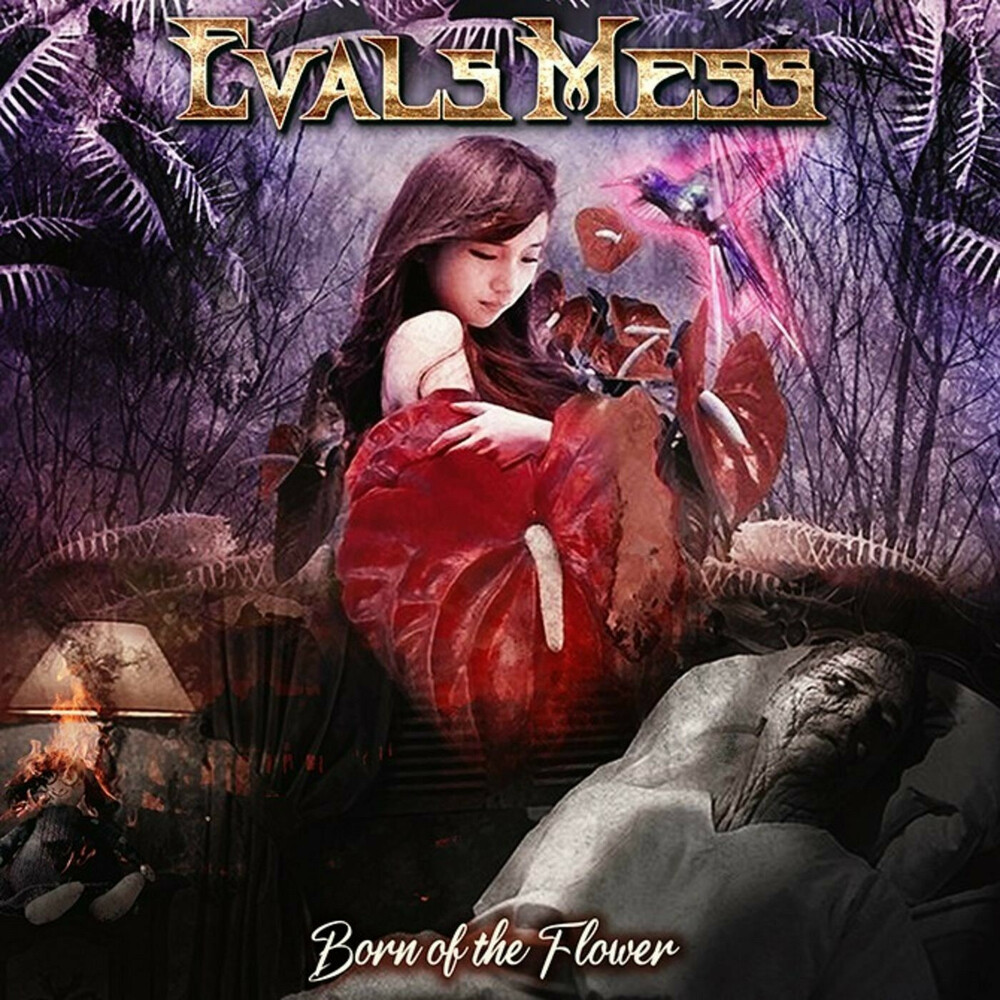
Evals Mess - Born of the Flower (2022)

Country: Brazil
Style: Progressive Rock
Rating: 7/10
Release Date: 21 May 2022
Sites: Facebook | Instagram | Official Website

Here's an unusual setup from Brazil. Evals Mess isn't one band but three, who share a name and a logo. The line-up is mostly the same across all three, but they play different genres. Evals Mess, in this form, which is also known as Evals Mess Project, play prog rock. However, they heavy up into a thrash/death metal band, Evals Mess Insane, and also lighten up into Evals Mess Acoustic. Two of the three members of Evals Mess Insane play in Evals Mess Project but, while Andrey Cardoso has the same bass guitar slung around his neck, Sandro Maués shifts from drums to handle vocals and acoustic guitar. Samuel Wesley takes over on drums and Guilherme Andrili adds a second guitar.

This is my introduction to Evals Mess, so I haven't hear Evals Mess Insane yet, though I'm intrigued after hearing this. It's their third album and it's a generous one, almost making the eighty minute mark, though it's broken up over tracks of very different lengths, two under four minutes and two over ten. It's a rare album indeed where not more than two songs of the eleven on offer share the same minute length, but this is one. I like that the band are confident in letting them simply be as long as they should be, rather than cropping them down for better chances at airplay or extending them out with unnecessary sections.

It's a neatly varied album too, ranging from the poppy commercial prog of Cloistered through to a heavy midsection on Martyrdom that's arguably metal, albeit one nowhere near thrash/death in approach. Most of it sits in between, of course, rock rather than pop or metal, and thoughtful in a lot of its dynamic play. Witch's Fury was my early standout because of that. It grows magnificently during its eight and a half minutes, thoughtful and careful becoming intense and vehement. It's a given that I'm not going be to doing anything to invoke this witch's fury any time soon, if I can help it.

Of course, I'm sure she's fictional because this appears to be a concept album based on a novel by Sandro Maués, though I may not be translating the Portuguese properly there. It doesn't surprise me to find that this is a concept album, because it evolves like one, a shifting in tone and style as a change in the story requires it. It also explains how Maués can get so much emotion into songs like Witch's Fury, because he's not merely invested in these songs as a songwriter or performer, he was the creator of the characters whose stories they tell. He's this witch's mother and father and god.

While Maués sings at least primarily in English, I couldn't follow the story from his voice so got as much of its progression from the song titles, the sound effects and the general flow. It sounds to me like it's a period tale of hardship and restraint that eventually finds rebirth and freedom. The anger is met with boundaries, so the lead character dreams of peace and freedom. A melancholy tone that pervades many of the earlier songs gradually shifts into a darker tone and eventually a happier one.

I think those tonal shifts affect what the music appears to be inspired by. Cloistered is prog infused by sixties pop, a dream of something else. Many of the slower sections or indeed entire songs, like Redemption, remind of Queensrÿche's slower moments, though ramping up is done in a different direction. The opener starts out with a western pirate vibe that segues into a very Mark Knopfler guitar, which returns on Martyrdom before it heavies up, when Queensrÿche come back to mind. I caught odd moments here and there of Styx, Iron Maiden and Pink Floyd, though only moments. I can't imagine that there aren't Brazilian bands in here that I wouldn't recognise either; there's a rich South American scene that I've only dipped my toes into thus far.

What impressed me most here was how lush it felt without also feeling dense. There aren't thirty layers going on at once, even when there's orchestration, but it always feels like we're surrounded by interesting things happening, with the core thrust of the album moving through them. I think that's the main reason why this never feels too long, even at eighty minutes, a length at which I'd feel safe in saying most albums would struggle. This always has something to say. Twice through is almost three hours and it didn't lose my attention once. In fact, some of the most magnetic songs arrive late, like Death in Doubt, with its menacing post-punk overtones and strange rhythms, not to forget its perhaps subconscious nod to Knockin' on Heaven's Door.

It has to be said also that everything leads up to the thirteen minute epic kinda sorta title track, a gem of a piece called Anturiah, Born of the Flower. At this point, you probably know whether you'll be checking this out or not, so I'll just say that, if you do, it's the centerpiece of the album. I think I prefer Witch's Fury, just on a personal level, but everything this album does, it does it most on the final track. And I guess that means that it's the one you should check out on YouTube if you're still undecided. Enjoy.

Wednesday, 1 June 2022

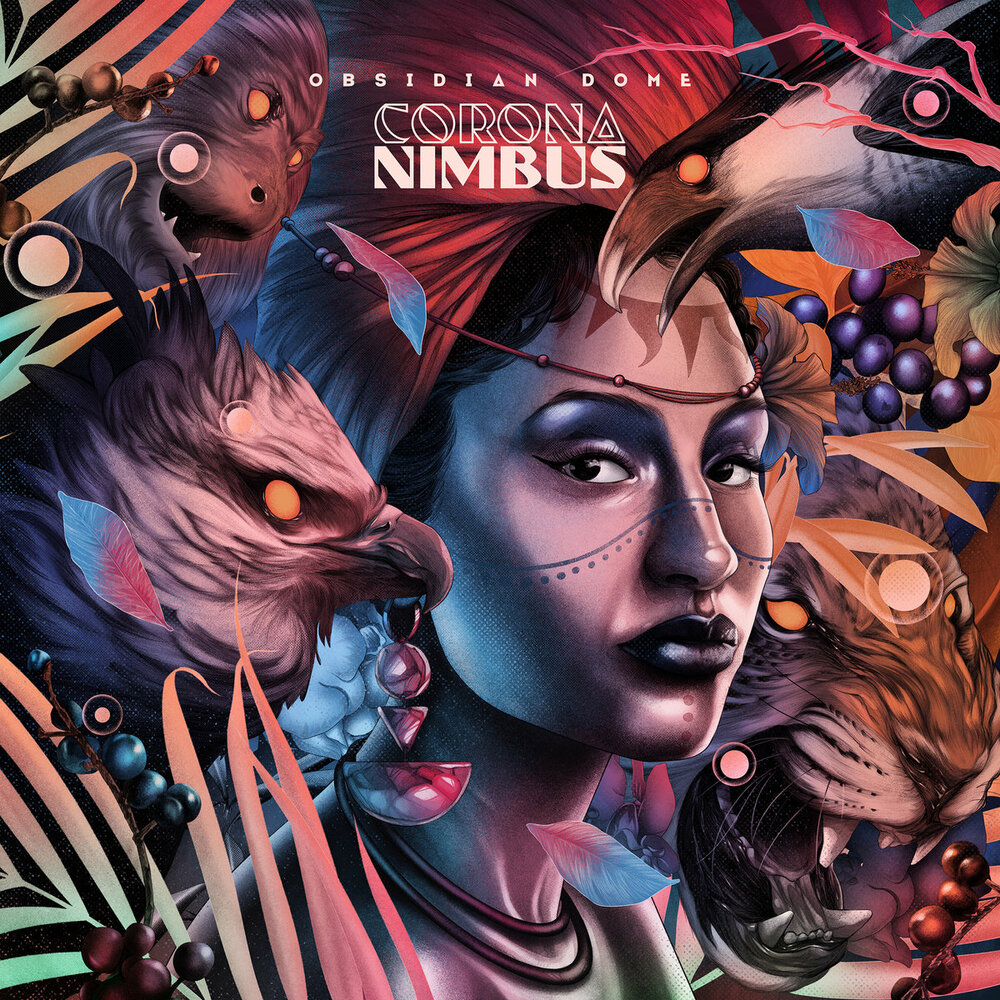
Corona Nimbus - Obsidian Dome (2022)

Country: Brazil
Style: Alternative
Rating: 7/10
Release Date: 10 May 2022
Sites: Bandcamp | Facebook | Instagram | YouTube

Corona Nimbus fall into three categories of music that I'm thoroughly enjoying nowadays here at Apocalypse Later. For one, they're a band that I discovered through this project, when I reviewed their self-titled debut album in 2020. For another, they're from South America, specifically Brazil, and I was already appreciating the diversity and quality that I was hearing from that continent in 2020. That goes double now that I've reviewed a dozen more albums from Brazilian bands. Third, I have trouble lumping them into a single genre, because they shift often in fascinating ways.

Their Bandcamp page suggests that they're a stoner/sludge metal band, but that's just one aspect of their sound and arguably not the obvious starting point. Sure, it wasn't hard to find stoner rock on their debut, but it's clean stoner rock, with a vocalist who feels like a vocalist (he isn't, because Júlio Baros also plays guitar, but he feels like he might be a vocalist first, which isn't typical for the genre) and guitars that aren't a fuzzed up assault.

I heard prog rock on that album as well, on top of NDH, alternative rock, space rock, post-rock and even hints of nu metal. That holds here too, because this is an entirely logical follow-up, doing the same things maybe a little better. Once again, it's not hard to find stoner rock, once again in clean form sans fuzz. The band still heavy up from rock to metal at points, but there's not a lot here that I associate with sludge, except on Seeds of the Universe, with guest vocals from Fbcy.

Like the debut, this kicks off with an intriguing opener, introducing Iron Maiden guitar melodies into alt rock, follows up with a prog interlude and then launches into a heavier third song. Also like the debut, it's not quite that simple. Pollar, that intriguing opener, drops into a proggy and almost ambient midsection before getting more urgent in its second half. It hints at Voivod done alt rock, an approach that's all the more obvious later on Animals, which is exactly that. The heavier third song, A Place for This Golden Sunrise, is proggy technical stoner rock, with a closing section that is reminiscent of Mountain's Nantucket Sleighride as much as anything from the nineties.

Doomsday was my first standout track, its alternative stoner rock made exotic by hand percussion by someone called Fagão behind the drums and edgy in the chorus. Then it drops on a dime into a fascinating midsection, somehow without jarring us, even though it leaves ussuddenly in an exotic and lush land of jazzy promise. It kicks back in gear just as cleverly and heavier than it was to begin with too. Those shifts, both from heavy to light and back again, grab me every time I listen through this album. Corona Nimbus have always been great at contrasts but this one's an absolute peach.

The absolute peach of a track this time out, though, is Abyssal Expedition, a glorious instrumental that's also longer than anything else here. It's much looser and sparser when it starts out, proggy and with more unusual percussion from Fagão, but after a brief but excellent bass run, it's heavied up to churn nicely. The title suggests a journey into the depths of the ocean, which means pressure in crazy amounts and the increasing heaviness here mimics that wonderfully.

If that's the journey we're on, the peaceful sections we find ourselves in are hardly to be expected but they're wonderful anyway. Nobody expects to find an accordion in the depths but it shows up in this song, courtesy of Inácio Botelho, along with delicate guitar and hand blocks. Maybe the band's showing us what wild wonders suddenly appear down there in realms that few have ever ventured into. It's certainly how I took it. We're in another world entirely, one occupied by bizarre creatures indeed and the music is accordingly vibrant and unexpected. It's a magnificent piece.

The other piece I'd call out for special mention, even though it's a short interlude before the final track and it only lasts a minute, is Gaia. That's partly because it reminds of Ummagumma-era Pink Floyd and partly because it does an insane amount in just a minute. The way I read it is as how the world has changed because of us in only a few millennia. Shifting from that into Exausted (sic) and Exposed makes a lot of sense and adds power to it and, by extension, the rest of the album.

And so to rating it. I liked Obsidian Dome a lot and more than the debut which I also liked. Abyssal Expedition is easily a 9/10 for me and Doomsday isn't far behind it. I found over repeat listens that those two songs stand out more and more from the rest, though, so even though nothing lets the side down, I think I need to stay with a 7/10, just one that's closer to an 8/10 than the debut. Now I really want to hear a third album, which I guess will show up in another couple of years. There's a confidence in this band to walk their own path and I thoroughly appreciate that.

And how gorgeous is that cover art, once again by the amazing Wildner Lima!

Monday, 1 November 2021

Le Chant Noir - La Société Satanique des Poètes Morts (2021)

Country: Brazil
Style: Avant-Garde Black Metal
Rating: 7/10
Release Date: 22 Oct 2021
Sites: Bandcamp | Facebook | Metal Archives | YouTube

Let's kick off a new month with something unusual. Even though everything here seems to be French, from the very name of the band to the lyrics to all of the songs, Le Chant Noir are actually a Brazilian outfit hailing from Rio de Janeiro. They're fairly listed as avant-garde black metal, making the intro a notably appropriate affair, with its backward masking over a flavourful carnival organ and accordion. The outro and the final track proper, Eloa, le bel ange, play overtly in this vein too, and it's never quite absent at any point. However, the first song, Le vampire, kicks off with power chords so reminiscent of the Who that I found myself imagining the opening credits to another CSI spin-off show.

This is a really interesting song. Sure, those are are black metal vocals that entice and beckon like an orc carnival barker and we respond. There are some wall of sound moments but mostly the drums are the other black metal component, if we skip past the Satanic lyrical content for a moment, but they're typical black metal drums. When they're fast, they're very fast, but the production has the odd effect of making them sound like the drummer is galloping far beyond his capabilities but very consistently. It's an odd feeling! And they're rarely echoed by any other instrument so, when the drums slow down, we're back with heavy metal power chords, speed drifting slowly away in the rear view mirror. That's what happens at the end of Le vampire, which is effectively just drums and voice, one that seems very female to me.

I'm hearing two voices here, though I'm only seeing a gentleman named Lord Kaiaphas credited. One feels male and very influenced by Dani Filth in its theatrical approach, so that's likely His Lordship. It becomes very deep on Nuit de l'enfer, though it mostly sits in the standard black metal shriek range. However, the other voice seems female to me and it shows up a lot, often taking the lead. Is this some sort of admirable versatility or is there a guest here that I don't know about, perhaps even a second lead singer, one just as influenced by Edith Piaf as Dani Filth?

Sadly I'm not seeing a lot of information about the band. It was founded in 2016 by Lord Kaiaphas and a couple of others Malphas and Mantus. The suggestion is that Kaiaphas provides the vocals, Mantus handles lead guitar and bass, while Malphas does everything else: rhythm guitar, keyboards, drums and a varied set of percussion instruments including vibraphone and marimba.

All of them have other bands too. As DJ Zhyin, Kaiphas mostly performs psygressive trance as Minimal Criminal, though he's also in a black metal outfit called Thokkian Vortex that evolved from just him to a full band. Mantus belongs to what looks like every other black metal band in Brazil, playing an array of instruments under an array of names; the most prolific bands are Mysteriis and Patria. Malphas is also in Mysteriis, as their drummer, and he's in a few others too, drifting into death and power metal. So they're all experienced and ready to create something new and different within their collective genre of choice.

There are heavier songs here that come closer to traditional fast black metal, like Nuit de l'enfer and Le baron sanglant, but they're more interesting when they're mixing it up, as they do often. There's a gothic edge here that comes into play in slower sections and in the interlude called Marche infernale. Often there's an echoey piano or distant guitar that combines with the theatrical approach to create a lush environment that far outstrips the actual depth of instrumentation. This isn't layered densely but it achieves some of what Cradle of Filth do anyway, just in a more stripped down form.

I really like Les métamorphoses du vampire, because it starts out gothic, goes full blown black metal and never quite loses that gothic edge, the piano maintaining its stubbornly slow presence, even with the song shifting into hyperspeed. We lose it on occasion but it's always there. That female voice has a spoken return here, almost as an interlude within the song itself, and the drums are fascinating on this one, again sounding very different to what we expect, but in a really good way. La danse macabre does many of the same things, without spending as much time at full speed.

I listened to this more than I should have done today, but I keep finding more in it each time I listen to either a particular song or the complete album. I liked it from the outset, but I like it more now than I did that first time through. Now, to a rabbit hole that these musicians suggest I should dive into, with Mysteriis surely the first band on that list after the debut Le Chant Noir album, Ars Arcanvm Vodvm. I like when black metal bands do something different and this band definitely do that, though perhaps not as much as I'd have liked, given how delightful the accordion is when they haul it out. How about a dedicated orcish carnival metal album built around the sound in Eloa, le bel ange?

Wednesday, 27 October 2021

Plastique Noir - Iskuros (2021)

Country: Brazil
Style: Gothic Rock
Rating: 7/10
Release Date: 18 Oct 2021
Sites: Bandcamp | Facebook | Instagram

Beyond enjoying so much of what's coming out of South America, I'm always surprised at what genres they're tackling. Sure, they're shining in prog and thrash, but they're not location-specific. It's when a band records Celtic rock or Viking metal that I really start to wonder, but the results have been stellar and I eagerly seek the next surprise. And here it is, because the beach city of Fortaleza, on the north-eastern shores of Brazil, isn't where I'd generally expect a darkwave band to do their thing.

However, Plastique Noir have been strutting their stuff in the Brazilian underground for fifteen years now and this is their fourth album, six years after 24 Hours Awake. As such, I shouldn't be too shocked to discover that they could play the Whitby Goth Festival without anyone noticing that they're from a little further afield. The singing voice of Airton S. suggests that they may not even be able to tell from inter-song banter. He's very much in the Peter Murphy vein.

While I'm far from the world's greatest expert on this genre, the sound is very old school English goth, grounded in new wave pop but draped in darkness and with an electronic edge that's not only there in the beats from the inevitable drum machine but in the atmospheric overlay. Songs like Times feel like they're draped in fog as much as darkness. This is upbeat darkwave dance music rather than a descent into doom and it's hard not to move to it, especially when the driving grooves get under your skin, like on Asleep in the Night Train. Sometimes it's downright perky, if mostly because of the jangly guitar of Danyel Fernandes. Again, Bauhaus spring quickly to mind rather than, say, U2.

The point at which the album lightens up a bit is Scrying Your Soul at the beginning of the second half. It's the poppiest song up to this point, the closest thing to pure new wave (and stays as such until All Cats Shall Celebrate), but it's slower than everything else too, with a clear sense of melancholy in its introspective piano. It has a drive to it, but it aims for atmosphere more than the emphatic Sisters of Mercy groove that drove some of the earlier songs. It also has plenty of time to breathe, because it's easily the longest song here. Everything else sits in the traditional three to five minute range, but this one's a comfortable seven and a half.

It still resembles Bauhaus, but there are points where the vocal approach seems almost like Billy Idol was stepping in and trying to be Peter Murphy, and the very prominent bass is right out of the Peter Hook songbook. And, as the album ran on from there, I started to hear those influences even more. It could be said that Upper Waves is Scrying Your Soul condensed into under four minutes. It's perkier in that Billy Idol sort of way and that Joy Division lead bass of Deivyson Teixeira is suddenly unmissable, the guitar shifted to atmosphere generation.

Another oddity to note that's surely more of a reflection on me rather than the band is that there are a couple of songs late on, Kafé and Catedrais em Chamas, which are sung in Portuguese instead of English, but that shifted the songs in my mind firmly onto the continent, so bizarrely making them sound as if they had harder edges like the Germans tend to go with. I think that's unfair and it's just in my brain because Portuguese isn't remotely similar to German, but I couldn't unhear it.

It still seems strange and unusual for a darkwave band clearly primarily influenced by old school Brits like Bauhaus and Joy Division to be from an equatorial beach town in Brazil, but they sound very good to me. Whether they're upbeat and driving, like on Asleep in the Night Train or Manifesto, or slow and atmospheric like on Scrying Your Soul, they'd fit perfectly in and among all the usual suspects at any goth night anywhere and surely prompt some audience members to ask the DJ who they are. I certainly would.

Tuesday, 13 July 2021

White Canyon & The 5th Dimension - Spectral Illusion (2021)

Country: Brazil
Style: Psychedelic Rock
Rating: 9/10
Release Date: 7 May 2021
Sites: Bandcamp | Facebook | Instagram | YouTube

Of all the subgenres that I cover regularly at Apocalypse Later, psychedelic rock surely has to have the broadest sweep. It ranges from extended instrumental stoner metal jams to perky sixties pop ditties or wild pagan ritual. Nepal Death and Mooner are as different from King Gizzard & The Lizard Wizard as they are from each other, but they're all psychedelic rock. Here's a fantastic album from Brazil that feels endearingly unique even though I can put my finger on a bunch of the influences that prompted it.

The title track, for instance, that opens up the album in style, kicks off with Sabbath bells and Spanish chords, then sensuously waltzes into a sixties psych prog song that reminded me of early Pink Floyd. It thinks about Set the Controls for the Heart of the Sun early on and Astronomy Domine late. It's dark, but also melodic and unstoppable. It's also submerged in atmosphere, not quite obscured by clouds—ha!—but everything's partially buried in the mix, as if we're somehow watching a TV show in a witch's cauldron and the swirling mist constantly threatens to hide our view.

That's quite the heady mix to kick us off, but Seven Kingdoms is heavier and more urgent. The sound is consistent with what's gone before, but there's a new gothic layer reminiscent of the Sisters of Mercy, albeit just as partially buried as before, except for a riff that almost manages to escape the cauldron at a couple of points. There's some Hawkwind here too, but it's never space rock. What this band take from Hawkwind is their uncanny ability to conjure up a unique sound and let it roll on effortlessly.

Electric Ghost adds an eighties electronic beat and guitars that think about that U2 jangle. There are more Andrew Eldritch style vocals, but they're still subdued. Sensitive Fate makes the female voice I'd caught earlier a lot more prominent. She's singing simultaneously with the male voice but leads it on this one. There's also a solo that reminds of Fleetwood Mac's The Chain in that it emerges out of a big sound but dominates it, searing but patient.

And then there's Endless Sea, which is a gem of a song that crests the nine minute mark. It's glorious from the outset, with more Floydian grandeur, as if they're not playing this in some Minas Gerais back street studio but to a vast audience from a stage that was built a couple of millennia ago. It's music that reaches us the way a haboob reaches us: we can see it coming, but it seems smaller than it is until it suddenly washes over us and we realise the true scale of what's going on. The goth angle is gone here, replaced with an atmospheric post-punk one, a Dead Can Dance sort of vibe.

There are two more songs to come, both of them worthy and Oroboros may be my favourite song here after Endless Sea, but if my raving about the album thus far is leaving you dry, then nothing I can say about those will make any difference at all. This may just not be for you and that's fine. It's definitely for me and I know I'm going to struggle to move on to review another album today. It's not going to be easy letting this run all day on repeat. I'll be listening to this one a lot and not just here in the office but in bed in the dark through headphones.

I have no idea who's in this band or how they divvy up instrumentation, but it seems to be a duo from the town of São Tomé das Letras, which is nestled in the middle of nowhere, seven hours from three of the biggest cities in Brazil. Given that most of the sounds I'm hearing here are British and they sing in English, I have to wonder what's going on in this part of Minas Gerais, given that Varginha isn't too far away and that's home to the excellent Brazilian Celtic rockers Tuatha de Danann. I'd like to know more about White Canyon & The 5th Dimension and if there's some local DJ who's triggering the wild bursts of unusual musical imagination coming out of their state. Answers on the back of a postcard please.

Thursday, 1 July 2021

Psychotic Apes - Psychotic Apes (2021)

Country: Brazil
Style: Hard Rock
Rating: 6/10
Release Date: 28 May 2021
Sites: Facebook

Here's a really interesting album, because it was made from a new band from Brazil who don't have a particularly wide presence on the web—I had to dig in Portuguese to find out who the members were—but it covers an wide sonic landscape. Initially, it seems like a heavy metal album, but it's a lot easier to classify it as hard rock, but even there it's rarely static, a band like Faith No More clearly being a major influence.

The heavy metal comes from the opening instrumental, Cosmic Silence, which kicks off the album with serious intent. That buzzsaw guitar reminds of Iron Maiden's Back in the Village and that's before the drumming goes all double bass and the guitar sears through a solo. Even the quieter and slower coda says metal and it seems obvious to me that one of the two guitarists is a metalhead because most of the metal here comes from one guitar, while the other one is far grungier.

As the album settles down and we find some consistency, we find a lot of grunge. The Storm kicks off in grungy style with a neat riff and what sounds like Jew's harp. The vocals are harsh and raspy but soft too, while the bass rumbles, as if these Brazilians are really a Seattle band in the early nineties trying something unusual to delineate themselves from all the other Seattle bands in the early nineties.

Much of the unusual comes in the form of intros and outros, which usually match because most of the songs here have bookends. Inside the Shadow starts bluesy with acoustic guitar and sassy maracas as if these are street musicians. The Shadow Inside starts with vocal harmonies and psychedelic guitar. Wheel of Fortune starts with a vinyl recording of Carl Orff's O Fortuna. In all instances, those sounds return much later in the song, usually to wrap them up, so, while they're notably different, they serve a similar purpose.

Just as we start to get used to thinking of the Psychotic Apes as a grunge band who like to experiment outside their genre, the songs start to diverge again. It's All About Puppets alternates between two voices, one floaty and clean but the other harsher and almost a rap, but it reminds more of a Suicidal Tendencies approach than anything from a chart rapper. This one speeds up too and that metal guitar comes back for another solo.

However, it's followed by Lovely Dirty Words, which sounds more like an acoustic Guns n' Roses ballad, like Patience. And then the album wraps with a song sharing its name with the band and the album, so I presume it's their anthem. It kicks off with ethnic rhythms and a playful bass that sets up the riff the guitars promptly take on but just as promptly avoid so that the focus can shift to the vocals that work some interesting harmonies.

Apparently, the Psychotic Apes were formed in 2019 by Ramiro Barros, one of the two guitarists, and Alax Bezerra, who's the band's vocalist. Later came Tadeu Marinho on second guitar, Miguel Dorcino on bass and Rafael Franzon on drums. Their goal is to merge grunge, metal, punk and regional music, which is exactly what they do, especially on the closer.

I'd love to hear this sound develop as they find a balance between those different styles. As it stands, grunge is easily the most obvious ingredient, with metal next and the other genres heard clearest in the bookends, but they do mix effectively in songs like Psychotic Apes and It's All About Puppets. This band just needs time (and maybe some better production) to truly find themselves because they're already interesting.