Showing posts with label post-rock. Show all posts

Friday, 6 September 2024

God is an Astronaut - Embers (2024)

Country: Ireland
Style: Post-Rock
Rating: 7/10
Release Date: 6 Sep 2024
Sites: Bandcamp | Facebook | Instagram | Official Website | Tumblr | Twitter | Wikipedia | YouTube

This is the third God is an Astronaut album I've reviewed over the past four years and I don't have much of an idea of what they're supposed to sound like. Maybe that's the point. They've said that each album is who they are at any particular point in time and that seems fair. Ghost Tapes #10 is an angry and pessimistic album, textured but grey, as if the band had no idea what was what after COVID-19. A year later, Somnia took a very different attitude, reimagining older material in calm manner, driven by keyboards rather than guitars. This one does both but more besides.

Apparition starts out softly and trawls in Indian sounds, as if it's going to be krautrock with sitars, but ends up in sections far heavier than I expected. They never quite reach doom metal but they're a lot closer than I ever expected an Irish post-rock band to get, especially after Somnia. There are other heavy sections on this album, most obviously the title track, which has a couple of sections with frantic drumming that are reminiscent of black metal underneath floating melodies. It's an avid stalker at points.

However, there's also much that's soft, starting with Falling Leaves. Moments of the sitar sound echo on from the opener, but they're more fleeting. Everything's all less urgent, much more laid back. It's telling us that it has no idea what's going on in the world that might make Apparition so angry, but it's good over here doing its thing. Here, have a beer. Or maybe a gin and tonic. There's a sense of elegance to it, after all. Realms is slow but dense, with layers of sound shifting over each other, somewhat like a Vangelis piece played at half speed on a church organ.

I should add that there's a prominent guest on Realms, prominent enough to warrant a featuring credit, but not on church organ. She's Jo Quail and she's a cellist, but we have to pay attention to realise that on Realms. It's far more overt on Prism, which opens like a horror movie theme, quiet and sinister. This one could easily have been on Coil's Unreleased Themes for Hellraiser. Quail's an excellent addition to the roster for this album, because it shifts primarily between keyboard parts and guitar parts, which works but gets a little familiar. Adding her cello is a whole new texture.

I like Realms a lot, enough to count it as one of my highlights, but it's very different from the rest of them. Hearts of Roots feels warm and welcoming to me, mostly because of Niels Kinsella's bass, which gradually became a real focus for me over repeat listens, but also because of the keyboards, here in piano mode. The title track, at ten minutes easily the longest piece here, contrasts dreamy noodling with an urgent overlay. It seriously grows in stature, its second half glorious and intense.

Then there's Oscillation, featuring another lovely bass line with patient drums under a shrieking guitar that's right out of an industrial complex. Is that an anglegrinder? After a couple of minutes, that fades out and it's even more peaceful than it would have been without that introduction. The bassline only gets better when it gets more complex. This one ought to have got at least a little bit annoying after a few listens, given that anglegrinder sound, but it doesn't and it gets better each time through.

Those are my four highlights, but there are nine pieces of music here and I haven't mentioned two of them. Odyssey comes early and isn't the journey that its name might suggest, but it does play a lot with contrasts. One moment, it's all silky smooth with soothing vocalisations—of course there are no words here—, the next the guitars leap back into the fray with their fists up and ready. The Indian sound returns at points too and it's odd how often that shows up without ever particularly flavouring the album. That leaves Hourglass to close out, which is a pest of a piece, relatively less than what came before until it's kept at us enough to pay attention to what it's actually doing.

And so this is a much more versatile album than its two predecessors, unwilling to commit to only one mood. Sometimes it's angry, sometimes calm, sometimes both at the same time. At its best, it's an immersive treat; at its worst, it's still very listenable. It's easy to get lost in it and that's no bad thing. It's probably my favourite of the three that I've reviewed, but not by so much as to land a higher rating, I think.

Wednesday, 10 May 2023

Tryo - Iodine Clock Reaction (2023)

Country: Czechia
Style: Alternative
Rating: 8/10
Release Date: 30 Mar 2023
Sites: Facebook | Instagram | Official Website

I haven't heard Sustainable Gardening, the 2021 debut from Czech band Tryo, but their Bandcamp page suggests that it was an indie/art rock album. Two years later, they've moved to what they're calling "darker and rawer music" on their follow-up and it's certainly an interesting sound because it's a hybrid of completely different eras of music.

The earliest is a pastoral folk sound that's very sixties. It's there mostly on the second side, in the quiet parts of Haze, early in Unity and especially on Home. At the opposite end of the spectrum, a couple of sections on Haze are pure krautrock, right out of the early seventies. The core sound is a clear derivative of the mid eighties, when post-punk and new wave were at their most interesting, and the early vocals of Šimon Podrazil are right out of eighties alternate rock, because they're so clean in delivery. However, everything's phrased as soundscapes, owing much to the post-rock and shoegaze genres of the nineties and noughties, but with vocals delivered over the top.

Given how confusing that sounds, I should emphasise that it all merges together rather well and it opens up with the most conventional of the six songs on offer, Droplets. This one was writen in 2015 when Tryo seem to have been a more conventional band, but it's been massively changed, mostly a new song built on the bones of the old one. Karabach is edgier, but more commercial too somehow and it reminded me of the way that Paradise Lost got retro-new wave, merely slower and subdued, so that it's clear to us that, unlike them, Tryo were never a metal band who calmed down.

Tree is a decent song but it's a little lost in between the commercial edge of Karabach and the wild experiments of Haze. It works well as a transition between the two but it works in isolation as well, finding a delightful groove early and milking it for over seven minutes. That doesn't stop it being a little overshadowed though, because Haze quickly takes over, not just grabbing our attention but chaining it to a bed and having its wicked way with it.

Haze is where the "darker and rawer music" really comes into play, because it's a tasty exercise in contrasts. It's softer initially with some of that sixties folky psychedelia but, when it ramps up, it's not holding back. It does that twice, the first time feeling rather like a nightmare descending upon a soft, dreamy soundscape, not unlike a late escalation in Tree but more. That nightmare passes, but it returns and the wheels come off, with Hynek Čejka soloing on drums and Podrazil's guitar a seriously abrasive weapon. Only Čejková's bass keeps us grounded as we move through it to come out the other side intact but changed.

What's telling is that it's hard to pick highlights here. Droplets is the most conventional. Karabach is the most commercial. Haze is the most experimental. Home is the most pastoral. Those are easy adjectives to assign, but it's not so easy to pick the best or even my favourite. I like Karabach a lot, but I recognise some of those chord changes so it has an unfair advantage. Haze is the most overt song here, enough so that it climbs out of the middle of the album to slap us across the cheeks and cry, "Me! Me! Me!"

At the end of the day, I might have to consciously ignore its attentions and call out the subtle songs with their impeccable grooves, wich to me means Tree and Home. It's not an easy call, but that's a good thing. It felt like the album had depths from the very beginning, on those more immediately accessible tracks, but it takes a few listens to truly grasp how much it's doing and to appreciate its subtleties. I'd never have called out Tree and Home on my first listen, but they grew on every fresh listen until they staked a serious claim to being what the album's about.

Here's where I'd normally say that Tryo are a fascinating band who are new to me, so I should look back at their earlier material. The first half of that holds true, but I don't think I do want to check out Sustainable Gardening at this point, because I don't want to suddenly find them conventional. They're not here and that's why I like this so much. I think I'll sit back and wait for the next one.

Thursday, 30 March 2023

Coridian - Hava (2023)

Country: New Zealand
Style: Progressive Metal
Rating: 8/10
Release Date: 10 Mar 2023
Sites: Bandcamp | Facebook | Instagram | Official Website | Twitter | YouTube

I haven't heard Coridian before, even though this is the last in a set of four themed releases about the elements: two EPs, Oceanic and Caldera, to cover earth and water, then two full length albums, Eldu and Hava, to cover fire and air, specifically wind. However, they've sold me on their sound here even though I wasn't convinced on a first listen. It's very clean and modern and doesn't easily fit in only one bucket. I'm not even sure whether it's rock or metal, because it straddles the boundary so well. I'm calling it prog metal for the sake of a label, but there's more here from alt rock and post-rock than any of the usual suspects from prog metal. Dream Theater this isn't.

There's also a very American flavour here, but not so far that it turns me off, probably because it's so good at layering textures and because it's never exclusive. State of Mind, for instance, feels like post-everything. It's American post-grunge but also British post-punk and some post-rock textures fleshing it out. It's built on a System of a Down kind of riff but some commercial era Paradise Lost in breakdowns and with everything smoothed and polished to the exact shade of brushed steel on the cover art. The vocals are in between, full of melodies I'd expect from the Foo Fighters but with a grungier edge and even a drop into softer Coldplay territory at points.

That's an interesting mix and the rest of the album continues to play in that sort of area, but with odd departures here and there. It was initially awkward for me because I have a feeling the major influences are often going to be ones I don't know. Rakshasa adds a screamed backing vocal right out of emo, for a start, and that's not a genre I know, mostly because I'm not a fan of that style of vocals, but it works here because it's just another texture rather than a deliverer of fake emotion.

The contrast between the clean vocals of Dity Maharaj, which remain in front, and that scream by Michael Murphy of Written by Wolves, makes for a neat texture. The same goes in a very different way for the other guest vocal, by Jessie Booth of Ekko Park on Redefine, a tasty duet between two different but compatible vocal tones. I ought to check their bands out too, given that both of them are prominent and successful and I haven't heard anything by them before. It seems notable that Booth isn't the vocalist in Ekko Park though she guests here in that role. She's their guitarist.

I mention fake emotion not as a dig towards emo music, but because there's a further paradox for me here. Everything feels carefully constructed, as tends to be the case with prog, but it's battling hard to feel organic, the way that the best alt rock does. However smooth this felt, there's always a hint of grunge in the sound and I think that's what keeps it music to make us feel something, not just admire. Emo is all about making us feel something and it never works for me, because it feels manipulative. This doesn't. I feel that Coridian feel their own music. It's honest and I can easily see them on stage totally lost in the flow of these songs, even on their hundredth time through them.

The first half is solid, but I like the second half even more. It kicks off with Wicked Game, a song we all know that comes out of the blue. Maharaj's voice gets smoother here and Nick Raven's bass is a lot more obvious. It's not Diana Ankudinova but it's a tasty cover. I adore the opening to Coexist, a hint at Tool, I think, but I also adore the fact that the song proper maintains its high standards to become easily my favourite here. It's one of those songs that would sound great in a tiny club in a rundown corner of Auckland but just as great echoing over sixty thousand people at Eden Park.

I should mention The Unkindness too, because, as an atmospheric instrumental, it isn't the sort of song that I'd expect to mention but it's absolutely worthy of it. It isn't the only such piece here, as Algorithm is a capable intro and Exist is an interlude late on the first side, but this one is the best, because it serves both as a perfect buffer zone serving to help us down from Coexist's grandeur to become ready for the rest of the album and as a a worthy instrumental on its own merits. The last three songs are strong too, including the album's epic closer, Naya Din.

I've been listening to this album for far too long, because I have others to move on to, but it caught my attention. It sounded decent but not my sort of thing. The more I listened to it, the more it got its hooks into me and, after a month of mostly 7/10s, I have to bounce this one up to an 8/10.

Friday, 3 February 2023

Atsuko Chiba - Water, It Feels Like It's Growing (2023)

Country: Canada
Style: Psychedelic Rock
Rating: 8/10
Release Date: 13 Jan 2023
Sites: Facebook | Instagram | YouTube

Hailing from Montréal, Québec, are a neatly uncategorisable band who veer between psychedelic rock, post-rock and progressive rock, with occasional incorporation of other sounds. There's plenty of old school epic psychedelic Pink Floyd on the opening Sunbath, but it ends up reminding of King Gizzard and the Lizard Wizard, with repetitive, almost ritual vocals, a comparison that carries into the next song, So Much For, which takes one of those side trips into another genre, namely funk. It must be said that King Gizzard are notorious genre-hoppers too, so it's no real shock to hear them so much here.

I like those openers, but Atsuko Chiba grabbed me on Shook (I'm Often) and underlined how damn good they are on Seeds. The former arrives in glorious fashion and I wish I could explain what they might be doing. I think the sound is generated by keyboards, but it could be in collaboration with a guitar. It arrives more reminiscent of Vangelis than the Floyd but it wavers as if it's alive, a swarm of sentient buzzing jellyfish floating through space, with the voice of Karim Lakhdar (I presume) a fascinated passer by, courtesy of an effect on his vocal that's a nod towards space rock.

There are precious few vocals on Shook (I'm Often) but they're repeated and help to lull us into the song's groove. Seeds has more in the way of lyrics, but it's also a longer song, heading towards the eight mark. That disembodied echo is still there as it begins, over a pulsing synth backdrop, and it all builds wonderfully. There isn't actually a heck of a lot happening during the long instrumental section in the second half, but I haven't been so rivetted by a piece of music in a long while. It's an enticing, hypnotic, psychedelic dream and it wraps up with some wild strings, just like the Kronos Quartet were recording next door and they stepped in to provide the finalé.

As if they couldn't figure out how to follow Seeds, but didn't want to end the album on that note, it would be fair to call Link almost conventional in response, its title probably representative of what it does here. It's much more of a song than the prior pair and it's angry, the persistent bass of David Palumbo leading us ever forward but the vocals of Lakhdar (again, I presume) raging at us in a post-punk fashion. This is heavy Talking Heads, a more antagonistic Cake. And it's done in two and a half minutes, because the rant is over.

It's the title track that wraps up the album, the longest song by a whole second. It's certainly not a return to Seeds, turning up the psychedelia and adding a trippy narrative section in the middle. It plays well and it's a decent closer for the album, but it feels like it's trying a bit hard, while Shook and Seeds seem to have grown more organically into their eventual shape. I found that, even while I was enjoying the title track, I was throwing my mind out and back to revisit those earlier pieces.

I should probably mention that Atsuko Chiba is the protagonist of a science fiction anime feature called Paprika, which I haven't seen but clearly should, because it's a Satashi Kon and I've enjoyed Perfect Blue for decades. She's a psychologist who enters people's dreams through use of a device called the DC Mini, as the alter ego of the title. And that rather sounds like the closing track. This is a chaotic song and it might help to imagine Paprika helping us to make sense of it.

This is my first Atsuko Chiba album and I fully intend to track down the prior two, Jinn in 2013 and Trace in 2019, to see where this sound came from. All I know at this point is what I heard here, plus the fact that they're a five band with two guitarists who play synths and a third doing the same in reverse. Their sonic backdrop is also aided by a string quartet and a brass section, though they're rarely obvious, weaving their contributions into the existing sound seamlessly.

Thursday, 8 December 2022

Raeziel - Resilience (2022)

Country: France
Style: Post-Rock
Rating: 7/10
Release Date: 29 Oct 2022
Sites: Facebook | Instagram | YouTube

On a first listen, it didn't sound like Raeziel are bringing anything new to post-rock with what looks like their debut album, but they perform it very capably indeed. On a second listen, I didn't change that opinion, but doubled down on it. I wasn't surprised by what they do here, except to say that it sometimes seems a little heavier than equivalent bands, crossing the line into post-metal, just not exploring particularly far beyond it. However, it feels effortlessly good, staying evocative, perhaps even deepening our experience as we journey through these soundscapes.

I don't know who's in the band, so I can't call anyone out for a special mention, but I don't think it's needed anyway. This is very much a team performance, however many musicians happen to belong to Raeziel. Bandcamp tells me that it's a home recording, so that number may even be one, with a multi-instrumentalist taking his time in his studio to get every instrument right before layering it all together. Certainly, I don't see more than one musician in any of the images on their Instagram account.

That means that what I like here is what I like about post-rock in general. I like the way that pieces of music—and, just in case you're wondering, everything is instrumental—play as journeys and it's up to us to figure out where we're going and what we're seeing on the way. They're all mid-length, the shortest track just under four minutes and the longest almost six and a half, and they all move between quiet, gentle sections and louder, more urgent sections, just in different ways, different orders and to different degrees. Everything feels consistent but every piece is different, just like every train ride through random countryside is consistent but different.

It's so consistent that I would have been hard pressed on a first listen to call out a favourite track. This is one of those albums where your favourite track is always going to be the one that you're on at any particular moment; they all do the job but one is happening right now and that's what you care about the most at that point in time. With repeat listens, I'd call out the opener, Vesper, that six minute track; Vendabrume, kicking off side two; and Renaissance, at the tail end of the album, right before the closer. Why? No better reason than me connecting to them a little stronger than anything else.

Maybe Vendabrume stands out for me because it discovers some sounds unlike any other piece on the album. In particular, there are two percussion based sounds—the drummer hitting something different—and they grab my attention every time, however often I listen to them. The first is early on and subtle, so it's making sure we're aware. The other comes later and is much more overt, the drums taking the lead for a glorious section. Renaissance is a smoother piece but it benefits from an excellent escalation out of a quiet rain adorned midsection that ramps up to the end. Vesper? I have no idea. It's not just because, as the opening track, it was my first impression of Raeziel. There's a deeper connection, but I couldn't really call out why.

And that's about all I can say here. If you like your post-rock on the heavier side, this is good stuff, however many musicians there are making it. Maybe we'll find out when the second album comes out. Maybe not. I'll be checking Bandcamp anyway.

Thursday, 24 November 2022

God is an Astronaut - Somnia (2022)

Country: Ireland
Style: Post-Rock
Rating: 7/10
Release Date: 4 Nov 2022
Sites: Bandcamp | Facebook | Instagram | Official Website | Tumblr | Twitter | Wikipedia | YouTube

I'm not sure if I've picked a really bad time to discover God is an Astronaut or a really good one. It certainly seems to be an unusual time. My first experience of them was Ghost Tapes #10 last year, which may be an anomalous release, abrasive and angry and driven by guitars not keyboards. My introduction was a suggestion that they were reminiscent of Tangerine Dream, which wasn't much in evidence on that album. It's much more evident on this, their eleventh album, but it's equally as anomalous, merely in the opposite direction, because it's a soft and dreamy album driven entirely by keyboards.

What I didn't realise going in is that it's not a new album in every sense. Sure, nobody's heard the pieces of music here in this form before, but none of them are new compositions. While I may not have heard any of them before—until I searched them all out on YouTube—fans have heard all of them before, because all eleven tracks are new versions of existing ones sourced from six of their previous ten albums.

The earliest is 2006's A Moment of Stillness, where you can hear the original versions of Empyrean Glow and Crystal Canyon, which are combined here into a single track. The most recent is Epitaph, from 2018, where the original version of Komorebi can be found. The majority come from between those two, especially a three album run from Age of the Fifth Sun in 2010 through Origins in 2013 to Helios/Erebus in 2015, these three supplying seven of the eleven tracks.

I don't know why the band chose to look at these particular pieces of music afresh, but it feels like a deliberate counter to Ghost Tapes #10. Maybe that was born out of the frustrations of COVID-19 and this one is born out of a comparative calm that we've moved into or maybe a perceived need to retreat into dreams. What confuses me is that this isn't a compilation, even though quite a few of these pieces seem pretty close to their originals, especially during the first half. The Bandcamp page for the album calls them "ambient re-works/remasters", so they're fresh takes.

The biggest difference is that they're all softer, in tone and in impact, so that they don't tell us the story they told us before; they float above it and have us look down at it. Where there was obvious instrumentation, like the drums on Reverse World or the guitars late in Autumn Song, that's gone or at least suppressed further into the mix. Ramped up in counter is a backdrop of synths, which is easy to imagine as mist or clouds or something overt but intangible. Pieces like Paradise Remains and Finem Solis feel notably softer, though it's telling that the former feels darker and the latter lighter. Applying the same filter, in a sense, doesn't always have the same results.

The heaviest pieces are the last couple, Lateral Noise and Weightless, which are more overt, even though they're both incredibly ambient and even more devoid of structure than their peers. What struck me immediately with all these songs, beyond the dreamy sound, was that a slow pace and deliberate avoidance of structure makes these pieces feel longer than they are. We get lost in them, as if they're a sort of refuge where time has no meaning. I was shocked to realise, maybe twelve minutes into Finem Solis that it's only a five and a half minute track. They're not boring, just immersive.

The other feeling that I couldn't lose was that they all continue on after we stop being able to hear them, as if they just drift away past our hearing like a song played on a car radio that passes us on the road, just incredibly slowly so that we get a four minute glimpse. More than once, I wondered what it was sounding like further down the road where I could no longer hear it. Perhaps it's more akin to a long Tangerine Dream composition in which we become so lost that we can't initially deal with the fact that it's over and our brain continues to absorb it, even in silence.

What this all means that I'm still as in the dark about God is an Astronaut as I was. I've now heard and reviewed two albums, neither of which would appear to be typical. Maybe in 2023, they'll issue something entirely new that plays in their usual ballpark. Maybe not. Maybe I just need to take a few days and explore their back catalogue so I can see where they came from and how far they've travelled. In the meantime, I guess I need to rate this and I'll go with a 7/10 because it's all new to me and I liked it a lot. Fans may shift that wildly up or down depending on whether they see this as an essential new take on old material or a pointless near-compilation.

Tuesday, 1 November 2022

Exxasens - Le-Voyage (2022)

Country: Spain
Style: Post-Rock
Rating: 7/10
Release Date: 9 Sep 2022
Sites: Bandcamp | Facebook | Instagram | Official Website | Twitter | YouTube

I'm still learning about post-rock and what Exxasens do doesn't meet the strictest definition I've found for that genre, given that they employ not only synthesisers but other non-traditional rock instruments like trumpets. However, the end result sounds exactly like I'm starting to expect from the genre, this set of eight pieces of music not so much instrumental songs as evocative journeys. Their Bandcamp page states that the goal of this particular album "is to make the listener travel to hitherto unexplored places within the EXXASENS universe" and I certainly felt like my passport had been stamped at a lot of places by the time it ended.

Le-Voyage opens ambitiously with a three part title track that accounts for about half of the total running time of the album. The individual titles suggest a cosmic journey—Departure, One Step to the Moon and Back to Space—and it's not too hard to imagine Departure in terms of a launch. The initial passages are rhythmic, as if a ground crew is going about its business. Then it gets dense as the ship launches in a burst of frantic activity. And then it gets quiet, because we're up there now. Sure, the drums tell us that there's a lot still going on but we can also see out of the window and it looks beautiful and calm.

Departure amounts to a nine minute journey all on its own, but there are five more in One Step to the Moon, with a patient beat perhaps echoing the climb down the ladder from the module and a growing sense of imagination perhaps representing discovery, and a further four in Back to Space, which is where it gets really interesting. This third part kicks off with bubbling liquid and a strange background drone. What have Exxasens found on the Moon? I guess that depends on how we feel about what else goes on within this title track and the beauty of instrumental music is that what I hear may not be what you hear and neither of us may match what the band hear. Welcome to the joys of post-rock!

The rest of the album isn't as deep and exploratory, because each piece has to do its thing in a far briefer amount of time, Alpha the most at five and a half minutes and Orbiting Mars shortest at a skimpy two and a half. When you're in the conjuring up environments business, more time is more space for imagination and two and a half minutes is just a glimpse. As such, they work the way that Tangerine Dream pieces work at glimpse length, which is to say that Le Parc is a fun album but it's not as immersive as Phaedra or Stratosfear, let alone Ricochet or Rubycon.

And that's not to say that they aren't successful. I particularly liked Black Hole, with its gloriously building darkness. Was that a cello during the initial build? It certainly sounded like one, even if it turns out to be the guitar of guest Magnus Lervik, who provides a searing solo that's the heart of the track, emphasised wonderfully by the rest of the band. That's certainly a trumpet in L'Etoiles, courtesy of another guest, Jordi Sacristan, and it lends it an utterly different tone, an exquisitely personal moment in a soundscape that's otherwise highly impressionistic.

He's there on Departure too, unless I was dreaming, which I might have been given how elegantly this one slows down after that point and how easy it is to get lost in the opener. When I went back to check, I kept intending to only listen to part one, only to become absorbed by it and realise that I was halfway through part two already or the liquid that kicks off part three told me clearly what point I'd got to. I enjoyed the second half, but the first half is where what Exxasens do can be best experienced. So this is half an 8/10 and half a 7/10 and I now have six prior albums to track down...

Tuesday, 18 October 2022

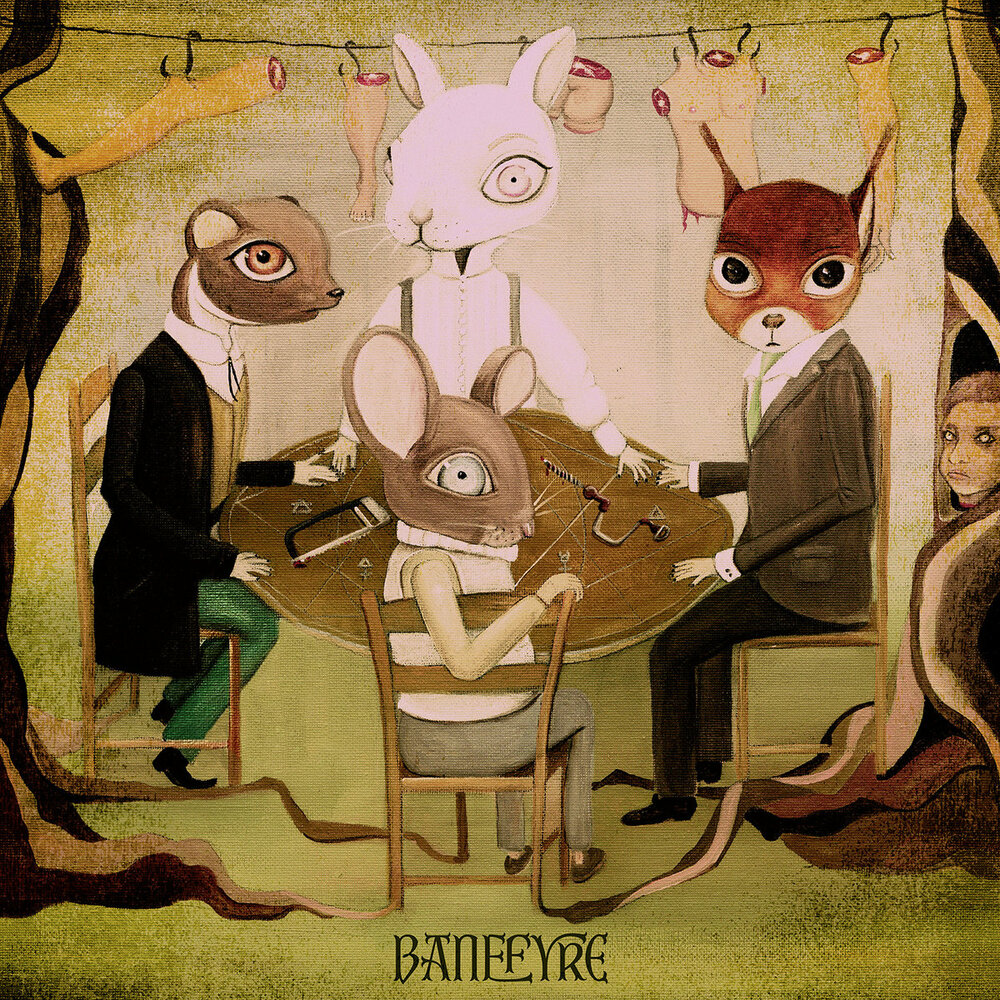
Crippled Black Phoenix - Banefyre (2022)

Country: UK
Style: Post-Rock
Rating: 7/10
Release Date: 9 Sep 2022
Sites: Bandcamp | Facebook | Instagram | Official Website | Wikipedia | YouTube

Crippled Black Phoenix blew me away a couple of years ago with their Ellengæst album, an album of the month for me. This one doesn't do the same job but it's still an excellent release, a notably generous one that I presume is technically a double album, given that it's over an hour and a half long. It never feels too long, even on a second listen and even though many of these songs are slow indeed. Some are also very long, four of them making it past the ten minute mark and two of them by a long way. The Scene is a False Prophet wraps up the album with over fifteen minutes to call its very own.

As last time out, the genre is hard to define because Crippled Black Phoenix have no intention of being confined to just one and move effortlessly between quite a few. Post-rock seems to be safe, because much of what's here obviously owes a debt to the fertile post-punk era in the UK with its spawning ground of new genres that made the indie charts so fascinating in the early eighties. It isn't all post-punk though, because there are nods to punk itself and goth and what experimental bands remained relatively accessible, so maybe more Coil than Nurse with Wound.

My favourite tracks are highly varied. Ghostland is definitely the first of them, both in the order it shows up and in ranking. I adore this one, which has a vague industrial feel because the guitar is a relentlessly grinding machine. Beneath it, though, is a dark chant, with the vocals further down in the mix than the more traditional song before it. Wyches and Basterdz may eventually get under our skin, with its haunting lead vocal from Belinda Kordic, but Ghostland does that from the start hooking us immediately and irrevocably.

After that is probably Everything is Beautiful But Us, with a relatively straightforward post-punk groove but with Kordic an enticingly subtle siren floating around it. It may be the most accessible song here, but I know it's impactful because it keeps overwhelming The Pilgrim after it, which isn't a bad song at all. I'd probably go for that epic closer next, which deliberately references The Sound of Silence lyrically and, perhaps more accidentally, Celine Dion's My Heart Will Go On in its choice of phrasing. It's a simple but highly effective brooder, eventually flowing like a darker Pink Floyd, quite a journey from its opening that's reminiscent of Nick Cave's piano work.

While those were the standouts from my first time through, with a firm understanding that they only deepen with further listens, I should add The Reckoning to their company, because it's easily the album's grower for me and it was strong already. It has an alternative rumble to it and a vibe that's very English, heartfelt and working class, but also dark and elegant, like the Clash shifting into goth. Its build is magnificent, as is the norm for this band, and it benefits from a powerful hook. Nothing else lets the side down, even over an hour and a half, but the album certainly travels long musical distances and not all of them with equal success.

I was surprised to find that my standouts were as often shorter songs as epics. What surprised me most was the first of those epics because Rose of Jericho is atypical for this band. It's not that it's built out of a patient beat and laid back guitar. It's that it sounds acutely uplifting, even more so when Helen Stanley's trumpet kicks in. It isn't at all what I expected from Crippled Black Phoenix, who walk on the dark side for a living. It takes a while to shed that positive attitude, especially in sections with backing vocals that sound like a stadium of football fans cheering on their team, but it eventually gets there, maybe six minutes in.

I should listen to this more. Ellengæst floored me immediately and only got better. I dug this a lot and it's growing on me too, but not from as a high a level. Maybe that's partly because they're no longer new to me but I don't buy into that because, while there's some consistency to their sound, they don't ever rest on their laurels, always wanting to go somewhere new musically. While I feel pretty safe in awarding this one a lower rating than its predecessor, it's still recommended and I have a feeling it's going to get more so as I befriend it.

Wednesday, 5 January 2022

Halocraft - A Mother to Scare Away the Darkness (2021)

Country: Greece
Style: Post-Rock
Rating: 8/10
Release Date: 5 Nov 2021
Sites: Bandcamp | Facebook | Instagram | YouTube

One of the genres that's fascinated me the most since diving back deep into rock and metal here at Apocalypse Later is post-rock. I don't have a major background in the genre, so I'm learning and one of the places teaching me about it is a Facebook group called WherePostRockDwells, through which I've discovered a host of excellent albums. They recently published their top ten of 2021 and, above major names like Mono, Mogwai and God is an Astronaut, at the top of that list was this, an album from a post-rock outfit I hadn't heard of, who hail from northern Greece. They're Halocraft and this is their second full length album.

I enjoyed it immensely but, unlike many post-rock albums, it didn't take me anywhere. The babies gurgling at the start of the title track to kick off the album helped to infuse it with warmth but I'm pretty sure that would be the overriding feeling regardless. It's there in the guitarwork, which is welcoming; it's there in the bass, which is enveloping; and it's there in the grand sweep, which is a lively but comforting journey inwards. This isn't taking me anywhere, but it's making me feel very comfortable indeed where I'm already at.

And the album continues the way the title track started out, the variety primarily in pacing rather than stylistic exploration. It's always warm, whatever the pace, but Halocraft bring in sadness with sections that slow and feel more pensive. That's there as Small Victories begins and it's especially there on For the Son You Could Not Save, which plucks at the heartstrings even if we don't read its title first. Small Victories plays with its pace a lot, though, ramping up to energetic speeds often, the mood changing each time.

That's not to say that they don't bring in other sounds here and there, just that their core palette is happy to focus on a specific feel that underpins everything on offer. There's some reggae late in New Beginnings. There's some neat electronica early in The Machine that's quickly reminiscent of Tangerine Dream. There are echoey power chords on Through the Caverns that heavy the piece up a little and darker guitars that do likewise, without it ever becoming post-metal. Small Victories is a little Celtic with its melodies. But they're all variations on a theme really.

And so there's not a heck of a lot to say about this one, beyond it being excellent. You could pick a track at random, any track, and, if you like that one, you can be pretty sure you're going to like all the others. In fact, I'm pretty sure you're going to like everything anyway, unless you just hate all instrumental music or you despise post-rock in all its incarnations. This isn't ever going to convert a naysayer, but it's hard to imagine anyone not liking it. It's inherently likeable stuff, effortlessly melodious and ever-welcoming. It's a warm blanket of an album on a cold winter day.

Wednesday, 22 December 2021

Martians - You are Here (2021)

Country: Czechia
Style: Alternative
Rating: 7/10
Release Date: 27 Nov 2021
Sites: Bandcamp | Facebook | Instagram | YouTube

I'm reviewing an increasing number of submissions from Czechia, but that's mostly due to a couple of musicians being both versatile and prolific. This band, which could be called Martins as much as Martians, given that both its members are named Martin, is a project set up by a pair of musicians who were major players in other bands I've reviewed. Martin Schuster, who sings and plays guitars and bass, along with undetermined virtual instruments, is a key player in Mindwork, whose Cortex EP got an 8/10 from me in January; and Martin Spacosh Peřina, on guitars and more of those virtual instruments, is the man behind Beween the Planets, whose third album, Parallel World, also featured a guest appearance by Schuster.

What's telling is that neither of those bands sound much like Martians. Mindwork play prog metal and Between the Planets is a post-rock project with some djent and post-metal. This, on the other hand, isn't metal at all. The closest genre to lump it into is alternative rock, with Radiohead much closer to mind than, say, Nirvana or Nine Inch Nails. There are pop melodies here, but it's always rock music at heart; it's very accessible, sometimes soothing and never abrasive; and accessibility makes it seem a lot simpler than it is. There's a lot going on here.

"We're here to tear down some musical barriers", they say on their Bandcamp page and I can see that from the very opener. A Soul of New Days is a soft song, very melodic, with one guitar taking a folky line and another (if it isn't a keyboard) adopting more of a percussion role. There's gentle, dreampop progression to it but it drops away two thirds of the way through into an instrumental post-rock piece that makes us ponder on what the song is telling us. It's much deeper than it may initially seem.

Many of these songs do the same thing. They're constructed very carefully so as to seem like they haven't been constructed very carefully. They set a mood that's dreamy or haunting or playful or whatever and they immerse us in that, so that whenever the traditional song, with riffs and hooks and verses and the like, gives way to something else entirely, we can't help but assume that it's a very deliberate act to tell us something and we sit back and examine what it's doing to figure that out. Radiohead do this a lot too, especially on their more experimental albums, and their ability to work on two layers—accessible music that just sounds good and thoughtful music that rewards an inquisitive listener—always impressed me. Martians have that down too.

It's not all Radiohead or other prog-infused alternative rock bands. Much of this, like Abusing the Muse, took me further back to the eighties, mostly to British indie bands like the Cocteau Twins or Shriekback, but Worm Nest shakes up that completely because it feels German. It kicks off as new wave with whispered vocals and an electronic beat, and moves firmly into post-punk and rock, with a neatly jagged riff. I'm no expert on that era, especially when we hop over to the continent, but I love how this one shifts so emphatically from electronica to guitar and back again, ending with piano. It's quite the journey and it's all seamlessly done.

While Worm Nest is my favourite song here, with Abusing the Muse up there too, I also dig Deceiver a lot, because its infectious melodies got under my skin, and Story of the End, with its glitchy beats and minimalist instrumentation. Most of the latter is vocals, clean and manipulated in duet, and it has a timeless feel to it. Not everything stands out like these songs so I'm going to give You are Here a 7/10 for now, but this is an album I can imagine coming back to over and over, so I may well find myself upping that to an 8/10 later.

Friday, 3 December 2021

Forgonia - The Mountain (2021)

Country: Australia
Style: Post-Rock
Rating: 7/10
Release Date: 22 Oct 2021
Sites: Bandcamp | Facebook | Instagram | YouTube

I'm having a blast with a host of post-rock albums because they're just good post-rock albums, but I'm also having a blast with them because they're all completely different. This one is different from the outset for its line-up of instruments, which is not just the usual guitars, bass and drums. There is also a cello, viola and violin in play, not just as texture but often playing lead, plus a horn section that does likewise. It makes for an intriguing mix.

That song is appropriately named Lights Out (And Away We Go) and it does lots of different things almost as a teaser for what the rest of the album will sound like. There are bits that mix riffs and beats, like we'd expect, with bits that shift the focus to the strings or horns. In the midsection, the piece turns into an overt Led Zeppelin homage. There's a part where a relatively traditional jazzy beat combines with a guitar that's laden with effects so that it sounds like electronica. And, later on, the horns introduce a sort of TV theme fanfare.

The most accurate foreshadowing to the rest of the album is the section that's all about emphasis as that comes back quickly in Brickyard 33. In these sections, everything's very rhythmic, as if this band isn't writing music at all but patterned prose that they're then translating into music and it uses a lot of punctuation. It's one reason why Philip Glass comes often to mind as a comparison. It would be interesting to map out what they're doing, if only I had the theory to be able to do that. I see it as turning it back into prose and wonder what it would say.

The other notable factor in Brickyard 33 is that it's an odd combo of free and not. The strings take the lead here for a while but they're not allowed to just run like lead instruments might. It's as if they're dancing in a cage, expressing themselves with passion but ultimately with constraints that restrict their motion. It might sound odd but that sort of controlled experimentation does foster imagination. If you're dancing but there are ropes tied to your limbs to prevent you getting wild, you have to get really imaginative to get your point across.

The best track sits at the heart of the album and it's the twelve minute title track, though it's also the middle of a three part suite called Bathurst, which I presume was named for the town in which Forgonia recorded this album, a few hours inland from their home in Sydney, New South Wales. It begins with a two minute interlude that evolves from what could be ominously crinkling paper to a bright and cheerful string arrangement. It feels like birds saluting the dawn, but something dark has shown up along with the light.

Well, that's The Mountain and the song is less about it and more about the observation of it. This mountain just sits there, like mountains do, like the forces of nature that they are, but the music looks at how it changes during the day, because our view of it does. Initially it's patient and built out of layered loops, as if by one musician on a street corner with an array of instruments. It gets to that punctuation phase but then calms massively for a couple of minutes. Has the fog rolled in? Is the light going? The mountain is still there but we don't see it the same way.

Eventually, it comes back into focus to end almost triumphantly, but with surprising feedback. It's a fascinating piece and, after it, the third part was only ever going to be a four minute coda, done in synth textures after the sun goes down again and the mountain becomes only notable because of how it affects the storm raging about it.

I should give a shoutout for the other long piece, here the fourteen and a half minute closer called The Green Hell, because it's a surprisingly calm one for this album until it ramps up eight minutes in, the beat increasing like a pulse rate. It's one of those post-rock instrumentals that feels like it ought to be nothing but pleasant background music but somehow maintains our attention all the way through, ever interesting even if we don't really know why. Is active ambience a thing?

My other favourite here, though, is Night on the Mulsanne, the most regimented piece anywhere to be found on the album. It's another Philip Glass-style piece that's built out of rhythms that are not played on the drumkit. Given that half the tags on Forgonia's Bandcamp page relate to motor racing instead of music, I'd guess that the Mulsanne here is the Mulsanne Straight at the Le Mans 24 hour race, but it felt to me like a river. It's a pastoral scene and I took the strings for ripples and the horns for geese. Maybe they're really cars. Either way, this is my other highlight.

And so this is another already good post-rock album that's likely to grow on me even more. It may be Forgonia's second, a full eight years after a self-titled debut, but it's well worth checking out if you're a post-rock fan or, indeed, if you're into mid seventies Tangerine Dream and Glassworks.

Thursday, 25 November 2021

There Was a Yeti - Gravitational Waves (2021)

Country: Canada
Style: Post-Rock
Rating: 6/10
Release Date: 19 Nov 2021
Sites: Bandcamp | YouTube

I can't find much online about There Was a Yeti, but I'd certainly like to know more. The band may not even be a band, just one guy from Alberta, Canada; the location is a given, but that's about it. The only other absolute is that this is instrumental music. I'd call most of it post-rock, because it's aiming at creating soundscapes with what appears to be traditional rock instrumentation: guitar, bass and drums, though I'm pretty sure there are keyboards here too, even if they're not obvious all the time. Occasionally, it ventures into post-metal too, but that's far from consistent across an array of nine tracks that amount to a generous seventy minutes of music.

On the opener, Massif, that's done by heavying up the piece considerably, literally moving from its initial post-rock approach into a post-metal one. Sometimes, though, such as on the title track, it's a texture. This one's a post-rock song, but the post-metal crunch is added somewhat for effect into the background, as if whoever's playing the heavy stuff is in the next studio over with all the doors left open so that the sound clearly bleeds through. I like the contrast, with a softer echoey guitar noodling away as our foreground and the slightly subdued crunch behind it. I'm not convinced that I like it more than the softer songs on their own though.

Gravitational Waves is a long piece, exceeding ten minutes, but it still fades out if it still had more to tell if only there wasn't a time limit pressing. There's some intricate drumming right at the end of the song that particularly caught my attention and I wanted a lot more of that, but I wanted in vain. I should add that this isn't the only piece in double digits, Leviathan an epic closer indeed at fourteen minutes. The shortest piece here is Simulation, at four and a half, but it feels more like a calm interlude before things liven up considerably on Caligula's Favourite Pastime.

This is one of the heaviest songs on the album and it features a lot of intricate changes, so it could be categorised as instrumental progressive metal as much as post-metal. Boundaries do blur, but this one crosses it pretty emphatically. And that just makes me wonder who's actually playing the instruments because they deserve praise. Sure, the guitar is always at the forefront of everything that There Was a Yeti does, but there are some great moments not on the guitar, like the drums late in Gravitational Waves or the keyboard bookends to Simulation.

Talking of Simulation, it may be the shortest track here but it's easily my favourite. That keyboard intro is neat but, when the guitar takes over, it does so with the west African highlife tone that's a constant source of happiness to me. It's impossible for anybody's spirits not to be bucked up when listening to highlife and that works just as here too. This one's a jazzy piece as well, especially as it gets going, so it keeps us on the hop even as it's cheering us up.

And, even though I have a metal heart, I much prefer the softer pieces here mixing highlife guitar improvisations with jazzy beats. They're not particularly challenging, but Simulation and Renjo La and The Lion's Daughter are delightful. Sure, Renjo La does build for a while in its second half with power chords and drum fills, but it still does what it did, merely with an added layer of emphasis. I don't dislike the heavier pieces, but they don't feel anywhere near as free or natural. After only a single time through the album, I noticed that I was thinking about skipping forward through most of the heavier songs to get to the more introspective pieces. That's telling.

And so I think this is a 6/10. I enjoyed it and the talent on display by whoever's in this band is clear, but I can't past the feeling that I should have enjoyed some of it more than I did.

Tuesday, 9 November 2021

Between the Planets - Parallel World (2021)

Country: Czechia
Style: Post-Rock/Metal
Rating: 7/10
Release Date: 18 Sep 2021
Sites: Bandcamp | Facebook | Instagram

Here's another submission from Czechia and it's an easy one to fall into because it's an immersive listen. Between the Planets is a solo project for multi-instrumentalist Martin Spacosh Perina, with a few studio guests here and there and an expanded line-up when playing live. This is Perina's third album under the name and, even though it features guest vocals on three tracks, I keep thinking of it as an instrumental album. Part of that is that only one of those three features lyrics; the others use the voice of Bara Liskova entirely as an instrument.

The majority of it is Perina doing interesting things with his guitar against a variety of backdrops also conjured up by Perina. None of the instruments in play sound unusual to me, though I should emphasise that keyboards are definitely one of them, sometimes the most prominent one, so this isn't a post-rock album in the strictest sense. The Twin Paradox is a fantastic soundscape, one that conjures up comparisons to seventies Krautrock, but I don't think there are any instruments on it except synths, so this is definitely not a band emulating that sound with guitar, bass and drums.

The most obvious way that Krautrock doesn't fit the whole album is that one of the guitar sounds that Perina is fond of is a modern djenty palm muting sound. I've never been much of a djent fan, but that's mostly because I think it's a limited style that works as a form of rhythm but not as the default sound for riffs. It works here, because Perina acknowledges its limitations and uses it as a rhythmic element for the drums to improvise around and a soloing guitar to soar over.

I bring this up specifically because Perina's influences include a lot of djent bands, including the genre's progenitor, Meshuggah. However, while I can hear bands like Meshuggah, Tesseract and Animals as Leaders in Perina's broader palette, this album doesn't really sound like any of them, making any comparison to them a little misleading. It's more post-rock than it is post-metal, I think.

For instance, the djent sound comes into play on the first track, Metamorphosis, but it's not there all the time and there's a lot more going on even when it shows up. It's used on Time Dilation as a sort of punctuation to the flow of musical language. By the time we get to the title track and hear the violoncello of Karel Zdarsky, we've almost forgotten that there was djent here. It's just one of a number of ingredients in this musical stew and it's noticeable in some bites but not in others.

I like the title track a lot, partly because it's so introspective but still enticing and partly because of the sounds that it conjures up. That violoncello is one, plaintive and haunting, but there's what sounds like a muted electronic xylophone too and some interesting drum beats as well. I'd call The Twin Paradox my favourite piece of music here, but it's very short at only a couple of minutes and this is a lot more substantial and has more of a growth arc.

The song with lyrics is Hungry Eyes, at the very heart of the album, and it stands out because we'd got used to instrumental exploration and words just weren't part of that picture. The guest singer here is Martin Schuster from the prog metal band Mindwork, who are also in Prague and who also sent me their new release for review, an EP called Cortex back in January. He's versatile here, in a couple of different clean voices and a harsh one, each matched by Perina's music. He also provides a guitar solo and his bandmate Filip Kittnar contributed to the drums throughout and is also one member of Perina's live version of Between the Planets.

The most obvious other guest is Sam Vallen of the Australian alt prog band Caligula's Horse, who lends his considerable guitar talents to Sleepwalking and Waves of Consciousness, shining on the latter with a searing solo. There's a distant voice behind the music on this one that I presume is a sample, but it's deep enough that I can't understand it; it just adds to the progressive nature of the material. The one downside to the album is the use of static early in this song and also on the closer, Distortion of Reality. I presume this is there to add texture, but I wasn't fond of it at all. Fortunately, it's a rare and minor intrusion.

It's good to hear more music from Prague, especially music that connects to music I've reviewed at Apocalypse Later before but sounds very different. Thanks, Martin!

Thursday, 15 July 2021

Ison - Aurora (2021)

Country: Sweden
Style: Post-Rock
Rating: 8/10
Release Date: 25 Jun 2021
Sites: Bandcamp | Facebook | Instagram | YouTube

Continuing my exploration of post-rock, here's a whole bunch more people I haven't come across until now. Well mostly. Ison used to be a duo, combining the multi-instrumental talents of Daniel Änghede and the vocal talents of Heike Langhans on three prior albums. Änghede used to be in Crippled Black Phoenix, but wasn't last year when I chose their new album Ellengæst as my November 2020 Album of the Month. Langhans still sings for Draconian and was on their 2020 album, Under a Godless Veil, but she's no longer part of Ison, thus turning it into a solo project with guest vocalists. There are eight of them, each of them a female vocalist who's entirely new to me, even the one who's based right here in Tempe, Arizona.

What fascinates me is how so many of these musicians work in metal subgenres, given that this isn't a metal album. Crippled Black Phoenix are inveterate genre hoppers whose sound includes metal, while Draconian play gothic doom. Cammie Gilbert, from Texas, fronts prog metal band Oceans of Slumber. Gogo Melone, from Greece, sings for Aeonian Sorrow, who play a brand of funeral doom. Carline van Roos is the Belgian vocalist for French atmospheric doom band Lethian Dreams. Each of these three bands had releases out last year that I didn't know to check out. I won't make that mistake again.

This album is going to serve as a real rabbit hole for me, because all these singers are fascinating and prompt me to check out their other work, not just those above who usually sing metal. Lisa Cuthbert, who's Irish but based in Berlin, has been a backing vocalist for the Sisters of Mercy and has supported Marillion on tour. Sylvaine, who's Norwegian, has supported Alcest in South America. Tara VanFlower performs with Lycia, a darkwave outfit right here in Arizona. Vila is Finnish and has a bunch of albums out solo. That leaves circle&wind, which is the stage name of German artist Viola Petsch. I have a heck of a lot of material to explore.

But let's start with this. Vila is up first on a song called Jupiter and it sets the stage wonderfully. It's a chill piece from the outset, gentle synths and ambience suggesting that not only isn't this metal, it's a long way from rock too. However, it builds over its nine and a half minutes, a guitar showing up after a couple of them and a real escalation kicking in around halfway. Vila may be from Finland but she has a Celtic sound here, not singing so much as soaring majestically above the instrumentation. She does sing words but I'm not sure how often, because it really doesn't matter. We're not listening to a story, she's lending another instrument to those Änghede plays and that trend holds throughout the album.

Waves follows Jupiter a little too closely, right down to the five minute escalation and the nine minute build. Cammie Gilbert has a serious voice that's about three times bigger than she is, but she keeps it notably restrained during the first half, gradually building it during the second. Everything here feels like it ties to intensity play, but it's all done on both a grand scale and with incredible patience. This is not an album that's willing to indulge immediate need but it delivers inexorably in its own time, like it provides us with the connection to the universe that the sample in Retrograde promises to each of us.

The shortest piece here is just under seven minutes and the longest almost reaches twelve. The latter is Meridian, with an excellent vocal from Sylvaine, and it may be the most patient of them all. It's not flash at any point but it's delightful throughout. It's one of my favourites, that's for sure, though it's pipped by Celestial, which adds back intensity play, along with a subtly more overt delivery from Gogo Malone. In a similar way, circle&wind pierces through the music a little more with her soaring parts.

All these singers are lending their vocal instruments, even those far enough above the music that we can catch lyrics. I've listened through in entirety a few times now and I haven't once been able to focus on any of the words; the most obvious come from what I presume is are a variety of samples from an entirely science fictional self improvement guide but they're bland in their generic message. It's easy to tell Cammie Gilbert from Sylvaine and both from Vila, for instance, if we pay attention, but all their approaches are similar and, over the generous seventy minutes this album runs, they merge into one voice providing variations on an ethereal theme.

And that's where I keep ending up, a consistent album created by one man who sets the tone and lets eight intriguingly talented women interpret it without too much divergence. It's elegant and epochal and timeless and beautiful and it improves the quality of the day. Can that be a bad thing?

Tuesday, 4 May 2021

Gojira - Fortitude (2021)

Country: France
Style: Post-Metal
Rating: 8/10
Release Date: 30 Apr 2021
Sites: Facebook | Instagram | Metal Archives | Official Website | Twitter | YouTube

Look up French band Gojira at Metal Archives and you'll see that they play progressive/groove/death metal. Now, each of those genres conjures up a particular sound in my brain and this album isn't close to any of them. To me, their seventh studio album sounds more like post-rock with a strong influence from what I often see listed as "modern metal", which mostly translates to the rhythm guitar being a truly rhythm instrument, more like the drums than the lead guitar, and the vocals having something of a hardcore shout in them.

Born for One Thing defines all this as it opens up the album. It feels as much post-rock as post-metal, mixing influences as diverse as Metallica and Radiohead. The songwriting is deep, best experienced once and then explored on further listens. Joe Duplantier's vocals are fascinating, as they come from a host of different styles, from pop chants to death growls. The bass is an audible, prowling creature. There are overtones here too, somewhat like the high melody in Tuvan throat singing but done with guitars. It's a really interesting sound.

And it only gets more interesting as the album runs on. Amazonia is particularly fascinating. Much of it is played in a monotone, as if the strings on the guitars were all tuned to the same note, but melody creeps in through what sounds like world music. It's bookended by Jew's harp but there's often a sort of group chant going on that veers into full drone at points. This is ritual music, sometimes hypnotic, but that's only one approach that Gojira take here.

Hold On starts like a mediaeval folk song in choral polyphony, perhaps translated into dance music and then into whatever Gojira play. The vocals are usually my least favourite aspect in any genre touching on groove metal, but Duplantier's here are as constantly inventive as anything else that the band is doing, this song featuring perhaps the wildest departure from the expected. Well, it's either that or the title track, which finds an Enigma vibe with bass, an antiqued voice and the sort of instruments I remember from music class in school: tambourine and woodblocks. I was almost surprised to not hear a recorder. It's an intro, really, to The Chant, which continues, well, the chant, with rock instruments.

As if we wondered if we'd drifted a long way away from metal, Sphinx brings us right back in with what is easily the heaviest song on the album, above raucous early tracks like Another World. It has overtly harsh vocals, though they're still easily intelligible and they don't remain harsh throughout. It's also the most obviously riff driven track on the album. My favourite riff may be on Amazonia, but it's only one riff. This one moves constantly from one simple but effective riff to another.

In short, there's a lot here. I can't say I was knocked out by my first listen, though I did like the album immediately. However, with each further run through it, I find myself more and more impressed and I have to go with an 8/10. I tend to dread the words "modern metal" because the shifts taken by albums with that label tend to be ones I don't particularly like, finding them unimaginative and limiting. This, on the other hand, is certainly modern metal but it's thoroughly imaginative and free of limits.

The diversity is joyous, Amazonia being very different from The Chant and both being very different from Into the Storm, but all three being obvious highlights. And the same goes for Hold On. And The Trails. And... This really is a fantastic example of what the modern metal genre can be and so rarely is, unafraid to trawl in its sounds from gothic metal, post-punk, electronica, mediaeval chant, krautrock, whatever seems appropriate at the time. That's a sign of adventurous songwriting and, when paired with the talent these musicians obviously have, it makes for a great album.

Saturday, 17 April 2021

Godspeed You! Black Emperor - G_d's Pee AT STATE'S END! (2021)

Country: Canada
Style: Post-Rock
Rating: 7/10
Release Date: 2 Apr 2021
Sites: Bandcamp | Official Website | Wikipedia

Canadian post-rock band Godspeed You! Black Emperor were a key name in the indie scene when I was hanging out at EMusic around the turn of the millennium, even before they split up in 2003. However, they were always unlike everyone else, even in a genre where the point is often for everyone to be as individual as possible. Certainly, this seemed obvious with this band even before we listened to them, given their name and the title of their debut album, F♯ A♯ ∞, which is a lot easier to quote now than it was in 1997.

This seventh album is just as non-comformist, from the title with its unconventional stylings to a four track line-up that merges pieces together into suites with astoundingly clumsy titles. The opener, for instance, is A Military Alphabet (five eyes all blind) (4521.0kHz 6730.0kHz 4109.09kHz) / Job's Lament / First of the Last Glaciers / where we break how we shine (Rockets for Mary). Is that really four tracks? Sure, why not. It's broken up that way on some streaming services, but perhaps because they can get away with charging more for each part separately than all together.

The band wouldn't be OK with that, given that they released this album alongside another list of the sort of political demands they tried on their previous album, Luciferian Towers. This time out, they're asking for the prisons to be emptied, power to be transferred from the police to the neighbourhoods they terrorise, the forever wars to be ended and the rich to be taxed until they're impoverished.

Now, the likelihood of all that happening because of fifty-two minutes of Canadian experimental rock is about as close to zero as can be comfortably imagined, but it's a nice thought and it underlines how music is not merely music to this band. Ahead of the album's release, they livestreamed it in entirety alongside a 16mm projection show, an aspect of their experience that's usually reserved for concerts. They aren't on anything as conventional as social media, so the links section above is pretty minimal, and I don't think they've updated their website since they reformed in 2012.

Much of what they do is minimal and often extended and downbeat. They don't have a particularly fun view of the world and that translates into their music. This album is often like that, but it's sometimes surprisingly upbeat. The second part of the first track, the Job's Lament, bit is quirkily playful. I'm not sure I've heard anything from them that's as perky as Government Came, from about four and a half minutes into its initial eleven. It's loose and jazzy and later parts of the full piece approach a jig feel. Perhaps that's the cliffs' gaze at empty waters' rise part of this conglomeration of a track, whose full title is this: "Government Came" (9980.0kHz 3617.1kHz 4521.0 kHz) / Cliffs Gaze / cliffs' gaze at empty waters' rise / Ashes to Sea or Nearer to Thee.

Experimental music often grabs me in part but rarely in full and this fits that description well. There's a long intro to the opening track that I really don't need to hear again, but there are some wonderful pieces of innovation in and amongst the, shall we say, not so accessible parts. Most of it is wildly more accessible to a mainstream public than its stylised title and avant-garde beginning might suggest.

I particularly liked both of the shorter pieces, Fire at Static Valley and Our Side Has to Win (For D.H.), each of which runs about six minutes. These remind me a lot of what Tangerine Dream were doing in the mid to late seventies, but far more organic, especially the latter because of the violins of Sophie Trudeau and what sounds like a cello to me but is probably the upright bass of Thierry Amar. As an old school Tangerine Dream fan, Fire at Static Valley is my favourite here by far.

It's a good world that has a band like Godspeed You! Black Emperor in it, even if there's a lot that we collectively still need to fix that this album sadly won't. Sometimes reality sucks and music is what we use to fill the holes.

Wednesday, 24 February 2021

Mogwai - As the Love Continues (2021)

Country: UK
Style: Post-Rock
Rating: 7/10
Release Date: 19 Feb 2021
Sites: Facebook | Instagram | Official Website | Twitter | Wikipedia | YouTube

It seems that I was just reviewing a Mogwai album last week, ZeroZeroZero, but it turns out to be last April. Time is a speedy critter nowadays. That wasn't a regular studio release, though; it was the soundtrack to a show on Amazon Prime. This is a regular studio release, their first since Every Country's Sun in 2017, and it may well be the first that I've heard. I'm learning a lot about post-rock but haven't had a lot of chance to go back and discover the founders and the classics and how the genre developed.

My favourite post-rock is very visual, in that the soundscapes conjure up images for me. This isn't one of those albums but I like it anyway. These pieces of music play more like moods to me, maybe because I'm hearing influences and they're flavouring the experience for me. For instance, the opener, which is imaginatively titled To the Bin My Friend, Tonight We Vacate Earth, feels like Joy Division to me and that's enough to generate a mood. It's not entirely depressing, because the brightness is turned up a little, so more Love Will Tear You Apart than the second half of Closer.

Often the mood includes perkiness, either through the beat or through the electronic blips that coast over some of the songs. Here We, Here We, Here We Go Forever is just insufferably upbeat, but others have more depth. Dry Fantasy is like the start to a beautiful day, if you're a morning person, the fresh discovery after a long night of sunlight, birds and flowers and an abiding feeling that all is right with the world, but there's a little darkness underneath it like the moving shade.

To my mind, the best pieces here are the ones that mix those moods without anything feeling wrong. I particularly like Midnight Flit, which counters all the perky blips with dark undertones, brooding and menacing. That contrast is magnetic. The final track, It's What I Want to Do, Mum, fosters a real cloud of sadness out of clean notes and soft swirling keyboards, but there's hope littered through it and it's always building. The title suggests that the hope won out in the end but perhaps never entirely. There are interesting edges in Drive the Nail and Ceiling Granny too.

I have to mention the odd song out because it's a really odd song out, though it wouldn't be on a lot of albums because it's the most normal song here, not least for having vocals. It's Ritchie Sacramento and it's very good, a mid eighties British indie pop song but with what would no doubt have been an overly primitive artificial backbeat replaced by a submerging in texture. Maybe some of the bands of the day would have written Ritchie Sacramento had they had 2021 equipment, but maybe this is more than just a progression of technology; it's a progression in songwriting too.

I liked this album, which played well while I was running reports at work. It's good background music but it kept grabbing my attention at odd points to highlight something new and interesting that I'd missed earlier. What it didn't do was blow me away, as the tenth album by a band who helped bring a focus to the nascent post-rock genre. I think I'd like to hear Mogwai write longer songs with more and broader dynamic play. And, the thing is, I think that's what they used to do. I should find out.

Tuesday, 16 February 2021

God is an Astronaut - Ghost Tapes #10 (2021)

Country: Ireland
Style: Post-Rock
Rating: 7/10
Release Date: 12 Feb 2021
Sites: Bandcamp | Facebook | Instagram | Tumblr | Twitter | Wikipedia | YouTube

I came to God is an Astronaut, a name taken from a quote in Nightbreed, from a suggestion that their particular brand of Irish post-rock is reminiscent of Tangerine Dream. Well, maybe on earlier albums, as this is their ninth, but not here, because this is driven by guitars not keyboards and it often has an abrasive texture to it. I haven't heard the band before, but I did check out some of what they've done in the past on YouTube and this is angrier stuff. Given that they've said that each of their albums is a "photograph or snapshot of who we are in that moment of time", maybe 2020 was a tough year. It was for the rest of us.

Texture seems to be the goal here, rather than soundscape. I don't see much when I listen to this, just a predominant colour of grey. Maybe there are colours way over there somewhere in the dim distance but they're certainly not particularly close. I don't see places or people or even much of anything that might give an indication of what's happening, just swirling. Maybe I'm in a thick bank of clouds and I can't see the world at all except in momentary glimpses.

This certainly fits with some of the song titles. Adrift feels exactly that, especially in the midsection. I don't know where we are but we're not supposed to be here and we'd like to find our way back, if that's OK with everyone. There can be peace here but it doesn't last and that's telling. The guitars are chaos, but the bass has a dark deliberation to it, as if chaos was the goal all along. Other titles here speak to being lost as well, like In Flux, Fade and even Burial, if we assume we aren't dead.

There's certainly some peace in Burial before that angry guitar kicks in and spoils our escape. I do feel that these swirling guitars represent the absence of something rather than a presence of one. They're not telling us what's going on; they're hiding what's going on from us. If anything, the drums serve as a guide, their tempo our sense of urgency and their complexity a reflection of how much we ought to pay attention.

Somehow, like life, we have to pay attention and we're rewarded for that. As chaotic as this feels, it's a rich sound and one that never got boring for me. It's also a very current sound, as if this is all of us at this moment in time rather than just the band. We're struggling, but we're still going and we'll see it through, whatever "it" is for each of us, whether COVID-19, politics, debt or whatever. Gradually, over repeat listens, I came to think of the bass as us, a vibrant life force that's carrying on whatever else is happening. It perseveres and we will too. This is chaotic but it's not pessimistic in the end. We emerge from that in Luminous Waves.

I'm still learning about what post rock is, but each time I think I have a grasp on it, the next post-rock album tells me that I haven't got it yet. I'd come to the thinking that post-rock has musicians playing traditional rock instruments in a way that takes us to new places in the way that Tangerine Dream and others did entirely with synthesisers and electronic gadgetry. God is an Astronaut mostly do that but I hear synths and some of the more peaceful moments benefit from piano. Doesn't that disqualify this from post-rock?

Who sets the rules? Well, maybe God is an Astronaut do. They've been doing this for two decades now, nearly, and they've remained prominent throughout. Who better to listen to on this?

Thursday, 4 February 2021

April Rain - Mirror of Ether (2021)

Country: Russia
Style: Post-Rock
Rating: 8/10
Release Date: 21 Jan 2021
Sites: Bandcamp | Facebook | Instagram | Prog Archives

I liked this from the very beginning, Prince Rupert's Drop being a capable owner, but it grew on me as the next few songs underlined just how much mastery April Rain have over their tone. Post-rock needs tone as much as nuance to be able to conjure up the soundscapes it exists to do and this has both. The chime sound midway through Tin Woodsman is evocative and the tone as Chiral Allergy begins is just as exquisite as the echo at the start of Tsuru.

April Rain, presumably named for the song by Delain, began life as a one man band in the Ukraine but the civil war prompted Valera Bykov to move to Russia, where they expanded to a four piece and have released a number of albums. If I'm counting properly, this is their sixth studio album. Certainly, they have a maturity to them that's most overt on songs with major builds like Sleeping Beauty Syndrome. This one starts out with beautiful but exquisitely sharp guitar notes that sound like icicles falling. As it grows, we can imagine the seasons turning, increasingly quickly until they start to blur.

That maturity is obvious on a first listen, but repeat runs through make it all the more impossible to miss. This may be deceptively easy music to listen to, but it's hard to avoid the emotional arc running through Prince Rupert's Drop, achieved by contrasting such delicacy with such intensity. Many of the nine songs still to come do that too and I think the transitions are my favourite part of the album.

If there's anything better here, it would have to be the way April Rain handle echo. It might seem like there's little happening in Remission, for instance, which is just a brief interlude between halves, but if we open our ears, we'll hear that everything's happening. It's so deep that we fall into it, which is a great way to start Sleeping Beauty Syndrome. The echo on the percussion in Tsuru is impeccable, and it makes me wonder which of various meanings of that Japanese word they're aiming at. It may be the noun for crane, but I'm going more for the verb meaning to lure in, tempt or entice.

Information about April Rain seems to be thin on the ground, at least in the English language. What I can find all seems to come from the same source, which may or may not be out of date. I'm presuming that Valera Bykov is still the main guy in the band and that he's playing guitar. If the line-up I found is still accurate, there's also Pasha Kuznecov on guitar, Vasya Juravlev on bass and Denis Arynovich on drums. They're all patient and precise, doing exactly as much or as little as they need to conjure up an atmosphere and let it flow. I'm impressed with all of them, separately and together.

This is a generous album, lasting only seconds shy of an hour, but there are no epics here. With just a single exception in that interlude, that means nine pieces of music of between five and eight minutes each. That seems to be a sweet spot for April Rain, because it allows them to build songs naturally and let them breathe in the process. The moments of silence hovering between notes are just as important as the notes themselves.

I haven't heard the five April Rain albums before this one, but I'm eager to check them out because of the strength of this one. It's so quintessentially what the genre is all about that maybe the definition of post-rock at Wikipedia should be a link to this album's Bandcamp page.

Friday, 22 January 2021

La Fin - The Endless Inertia (2020)

Country: Italy
Style: Post-Metal
Rating: 8/10
Release Date: 9 Oct 2020
Sites: Bandcamp | Facebook | Instagram

I was very happy when Federico La Torre, bass player in La Fin, sent me a copy of their debut album for review, because the PR material doesn't seem to be able to define what they do. In an era of subgenres and sub-subgenres, it's great to see a band who don't fit into any of the buckets already out there. It's going to be fun trying to define what they do, with that in mind.

The first genre that came to mind, as Inertia kicked off the album, was post-rock. It's melodious guitar, set against a background texture, with other instruments gradually joining the fray. Even as it gets a lot more vehement, it still feels like a soundscape, just an angrier one, with the music a conversation with the shouted vocals of Marco Balzano. He sings cleanly too, at multiple points in this song, but in the angry moments these are hardcore shouts.

Once Inertia really got moving (ha!), it was clear that this is post-metal rather than post-rock and it's possible that it's the fairest place to end up. Wherever this album takes us, it always has hard edges, even when the band have moved into softer sections. I'm no expert on post-metal but I caught a little Isis or Cult of Luna here, but without as much sludge. The pace is often similar but feels more active. Perhaps that's because there are three guitarists in play, plus an audible bass, and they don't so much weave together as join a conversation separately, alternately agreeing with and then wildly disagreeing with the vocals.

Then there are points flavoured by extreme subgenres, most obviously black metal and avant jazz, but they're only points. There are no black metal songs here, but there are entire sections featuring a wall of sound approach and much faster drumming. There are no avant jazz songs here, but there are parts that feel acutely experimental. La Fin clearly have broad tastes in music and they're happy to borrow ideas from diverse sources to filter into the nine jagged soundscapes to which we're treated.

And jagged is a good word to use here. It's clear that, while the band is conjuring up soundscapes, it's doing so in unusual fashion. Riccardo Marino rarely just keeps the beat here and, even when he does, it isn't always in a traditional time signature. I certainly won't be tapping out Repetita's drum intro with my fingers any time soon. This takes us firmly into progressive metal, but not remotely like Queensrÿche or Dream Theater and their ilk. Maybe there's a little Tool but this is more like King Crimson as a post-metal band.

I think it's fair to say that this is not an easy to grasp album. It's as full of melody and elegance as it is anger and dissonance, but it's hardly going to make for easy radioplay, even on a station that leans to the alternative and happily embraces metalcore. I've listened through a few times now and I can't say that I've figured out the structure of any of these songs yet. I appreciate this part and that one and of course that one over there, but there's so much going on that I know I still have a heck of a lot of dots to connect. I'll take time.

For now, even though I'm rarely a fan of shouted vocals, I like this a lot. It feels vibrant and fresh and fascinating. There's anger but it's textured anger and, unlike every metalcore band on the planet, the voice isn't the only storyteller. The instruments aren't just providing a mood, they're each telling the story from another angle. The PR tells me that this is a concept album, with each of these nine tracks exploring a shared concept from a different perspective. I'll have to take that as read, but I could buy into those different perspectives not being limited to their own track but arguing for it throughout.

Even if I'm not following the concept, this is clearly intricate, dynamic and accomplished music and it counts as La Fin's debut album, following an EP in 2016. It was never going to get less than a 7/10 but I'm already comfortable going with a 8/10 for now. As I listen to it more, it's not outside the bounds of possibility that I up that to a 9/10. Fascinating stuff. Thanks, Federico.