Showing posts with label stoner metal. Show all posts

Monday, 8 April 2024

Qilin - Parasomnia (2024)

Country: France
Style: Psychedelic Rock/Doom Metal
Rating: 7/10
Release Date: 12 Jan 2024
Sites: Bandcamp | Facebook | Instagram | Metal Archives | YouTube

This album is a few months old now, so counts as less recent than I tend to prefer to review here at Apocalypse Later, but I enjoyed Qilin's debut album, Petrichor, so much in 2020, that I didn't want to miss out on its follow-up when it crossed my path recently. I also didn't want to wait until next January when I do catch up on what I missed from 2024, because I'd probably forget and then feel bad when I stumble onto it again, having missed my window.

Qilin are French and they play heavy instrumental rock that straddles the border with metal. You could fairly describe what they do as psychedelic rock but it's just as often doom metal and all the best pieces move between the two. That's one way in which this album echoes the debut. Most of the tracks are long and the band, which I believe remains unchanged from last time, allow them to breathe, which leaves room for a couple of modes. There's the heavy mode, with the bass turned up high and the guitars switching between cavernous riffs and wailing solos. And then there's the mellow mode, which is much softer and drenched in atmosphere.

The result is as immersive as last time out but oddly still mostly fails to work as a travel agent for me. What I mean there is that instrumental psychedelic rock often takes me places. Sure, I listen to it as music but it also sends me on a journey too. I have aphantasia so can't frame images in my head, but I still get impressions in the form of feelings. These albums often make me feel like I'm on another planet or drifting between the stars, to cite just two common examples. This doesn't, though it hints at it in those mellow sections.

Instead, it remains stubbornly music, but it's music that I really enjoy. It's heavy but melodic and it's immersive, as if it's so big that it surrounds me. It starts out achingly slow with three minutes of funeral doom called Ouro, that's emphatically an intro to set up the sound palette and lead us into the best track, Lethean Dreams. This isn't three minutes long, needless to say—it runs eight and half—and it builds carefully.

It begins mellow in the closest section anywhere on the album to take me somewhere. It feels like I'm in a huge echoing cavern, perhaps like the cover art, but I'm not the character walking towards it. I'm inside waiting. There's a real sense of patience to it, as if there's no reason to move at all, a feeling of centering where I settle down and wait for everything to come to me. And it does, but I sit, safe and still, in the middle of that cavern while the music changes around me. Even when the song ramps up into heavy mode, playing out like a force of nature, I'm not part of it. I'm calm and unaffected, but not unappreciative, as it rages around me. I listen and enjoy.

And I remain there for forty calm minutes, listening and enjoying, while the remaining four pieces of music play out, along with an interlude in the middle of them. It's odd to see an interlude, as it's not uncommon for the shift between heavy and mellow to effectively incorporate interludes as an inherent songwriting component, but Innervision is very mellow and introduces the heaviest piece on offer, which is the bludgeoning Hundred-Handed Wards.

I like Qilin when they're being mellow, though Innervision may be the weakest such section on the album. However, I like them most when they're raging and the swirl of tasty feedback that wraps up Hundred-Handed Wards is raging indeed. It's probably beaten only by the finale to On Migoi's Trail and the core of Lethean Dreams. I love how they generate maelstroums of energy and whip them around like ancient wizards, destroying everything in their wake yet never losing control of their tools of destruction.

These two aspects constitute the majority of the album, but there's one further touch I should let you know about, because it surprises me every time those waves of feedback in Hundred-Handed Wards feedback subside and Qilin launch into the final track. This is Boros and it opens up entirely like AC/DC. Sure, the bass is drenched in fuzz, but that's an AC/DC build if I've ever heard one. It's happy to not continue down that path as the piece grows and no vocalist shows up, whether Brian Johnson or anyone else, but it does still stay perkier than anything else on the album, even as the longest track here. It doesn't really slow down until about halfway through its nine minutes and it doesn't calm until six and a half minutes in.

And so that's Parasomnia, which refers to sleep disorders that crop in when you're not asleep but not truly awake either. Your brain is still only partially awake and that does seem to be the perfect time to let an album like this wash over you. That would be a way to start the day!

Monday, 1 April 2024

The Quill - Wheel of Illusion (2024)

Country: Sweden
Style: Heavy/Stoner Metal
Rating: 8/10
Release Date: 20 Mar 2024
Sites: Bandcamp | Facebook | Instagram | Metal Archives | Official Website | Twitter | Wikipedia | YouTube

I've never even heard of the Quill before but I'm happy to have finally remediated that, even if I'm very late to this party indeed. They were formed as far back as 1986, they put out a debut album in 1989 and another ten since then, making this their eleventh. I saw them listed as stoner/hard rock, but they're heavier than that, at least on this album, making them heavy/stoner metal to me. I'm not sure if they've got heavier over time to become this or if they were there all along. I ought to check out their back catalogue to find out.

As you might imagine from heavy/stoner metal, there's a huge amount of Black Sabbath here and it's firmly from the seventies era with Ozzy Osbourne. Magnus Ekwall, who is prominent enough in the European scene to have been invited to sing on an Ayreon album, The Human Equation, has an Ozzy vibe on a lot of these songs, starting with the opener, Wheel of Illusion, which could easily be an outtake from an actual seventies Sabbath album. That holds true even when the band dip into stoner rock on Elephant Head. It's still Sabbath with Ozzy, but Christian Carlsson's riffs move away from Tony Iommi in the bridge to be more Josh Homme.

While Sabbath are never far away on any song, the Quill are far from just clones and the variety is manifested as early as the second song, We Burn, where Ekwall sounds more like Bruce Dickinson than Ozzy. That's enough to take that song in a very different direction, but the riffing isn't as old school either. L.I.B.E.R. is perhaps the wildest track here, starting out with the repeated bass note intro from Runnin' with the Devil and then Jolle Atlagic kicks in with a drum rhythm worthy of an Adam and the Ants number. Atlagic has played for bands as varied as Hanoi Rocks and the Electric Boys, so it's not surprising to hear him bring something different here.

Are those southern rock stylings in Sweet Mass Confusion (All Rise Now)? I do believe they are and the slide guitar sounds great against the heavy riffing. There's also some southern rock within the closer, Wild Mustang, though less overtly. That one features a wonderful mellow section too with a glockenspiel, if my ears aren't deceiving me, in the final stretch. There's some space rock to start out The Last Thing You Remember and my favourite song trawls in some Hawkwind too.

That's Hawks & Hounds, in which Ekwall sounds as close to classic Ozzy as you can get without ever adding an "All right now!" However, the instrumentation behind him is very different. There's the Hawkwind sound, but also an ethnic middle eastern flavour that reminds less of Hassan i Sabah, a song I've mentioned recently in my Karkara review too, and more of Led Zeppelin, something that is only hammered home by the delightful drop in the vocal melody. It just keeps on going further than we ever expect and it sounds glorious. It's almost a hypnotic song and I adore it.

There's not a lot here at that level, perhaps only the pristine sudden pause that ends the intro to L.I.B.E.R. joining Hawks & Hounds, but there's a lot that I really like, from the core sound to little touches like those drums in L.I.B.E.R., the slide guitar in Sweet Mass Confusion and the sustained epic nature of Wild Mustang. It's not just that mellow section and Carlsson's wonderfully patient guitar solo; it's the entire progression that keeps on giving. It never feels long at just under eight minutes, but it also feels as if it has a ten minute instrumental stretch in the second half that we want to immerse ourselves in.

I'm happy to have finally clued myself in to who the Quill are and I'll absolutely be keeping an eye out for their next album. Had I found them sooner, I could have reviewed Earthrise back in 2021, a typical gap between albums for them, but that should be the last new one that I'll miss. They also seem to be highly stable, Atlagic and Carlsson founder members and Ekwall and Roger Nilsson on bass having around a quarter of a century in the band each, even if they've both taken breaks. It all bodes well for a twelfth album in three or four years time. Maybe I'll have caught up with their back catalogue by then. I hope so.

Monday, 18 March 2024

Emergency Rule - The King of Ithaca (2024)

Country: Australia
Style: Stoner Rock/Metal
Rating: 8/10
Release Date: 9 Feb 2024
Sites: Bandcamp | Facebook | Instagram | Metal Archives | Official Website | YouTube

Metal Archives lists Emergency Rule as a southern metal band and I guess we can't go much more southern than Adelaide, South Australia. However I found this, their debut album, listed as stoner rock and that rings truer to me. There's definitely a southern flavour on The Hook, which kicks off the album, and there's as much metal here as rock, the majestic Something to Say as close to the old school Black Sabbath sound instrumentally as I've heard recently. However, I'd see Clutch as a powerful comparison, both in tone and approach, so hard/stoner rock seems to fit best. Of course, the band's own description of "Sabbath with attitude, Skynyrd with power" is pretty accurate too.

The other reason I'd call out stoner rock here is because there's also a powerful psychedelic sound here, starting in Garden and reaching its peak on the intro to Ulysses. The guitars—plural, even if many stoner rock bands are trios—get all mellow during verses on the former, which allows singer Doug Clark to endow his voice with some notable attitude. That only grows further on Bartender, which is a performance for him more than it's merely a song. Everything on this one is nuance for him, which is admirable because he's also the band's bassist, so is always doing far more than sing.

I can see Bartender being a lot of listeners' favourite song, but mine is Something to Say, because it's so impeccably old school that even the opening silence sounds like it was recorded in a studio in 1972. It starts out stoner rock but finds quintessential Sabbath riffs. Clark growls this one, so is nowhere near any of the various vocalists Sabbath had over the years, but I love that guitar tone and there's a glorious instrumental section, as indeed there is on a number of these songs, which benefits from there being two guitarists, Chris G and Callum Wegener. It reminds me that, even if a band has an obvious and strong lead singer, they can still absolutely deliver instrumentally.

It's why I always think of how tight Clutch are instrumentally, even though Ned Fallon often leads songs with his vocal phrasing. The same holds here and Emergency Rule are imaginative on that front. The mellow Sabbath guitars in Garden are part of that and they return on From the Grave, though that song also features perhaps the most overt southern riffs, along with what may be a banjo at points. So is that glorious psychedelic opening to Ulysses. Another is the inclusion of an unlikely instrument for stoner rock on Abuse, namely a string section. That's a cello, I believe, to provide the intro and there's a frequent underpinning of violins throughout the song. The cello especially works with this sort of heavy material.

The album starts strongly with The Hook and continues to be strong through the eight tracks most of which run in the five or six minute range. Something to Say was my favourite from my very first listen and that hasn't changed maybe seven or eight times through. However, which I'd pick as my next choice has changed often, because this benefits from each song being subtly different but of a pretty consistent quality. For a while, I'd have gone with The Hook or Ulysses, but gradually the second track has enforced itself. It's called Garden and it's a real grower, that does all the things I love about The Hook and Something to Say in one four minute song, with a neat psychedelic edge.

Emergency Rule have been around for a while now, having formed way back in 2011 with their line-up still intact from that time, but this is their debut album. It's obviously not their oldest material because their first two singles, Flag and a Medal and The Zealot, aren't included, so I'd dearly like to know why it took them this long to get this far, only to suddenly nail everything right out of the gate. And I'd also dearly like to know that we'll see another album in a couple of years, instead of waiting another decade and change.

Wednesday, 3 November 2021

Monolord - Your Time to Shine (2021)

Country: Sweden
Style: Stoner/Doom Metal
Rating: 6/10
Release Date: 29 Oct 2021
Sites: Bandcamp | Facebook | Instagram | Metal Archives | Official Website | Twitter

Those Swedish purveyors of ultra-heavy doom metal are back with another new album, their fifth in only seven years and it doesn't really surprise if you've heard them before. This one starts out bludgeoning in near monotone for a minute or so before shifting into such a quintessential Black Sabbath riff that I was humming it on my first time through, even if I was going with the original of A National Acrobat rather than this take on it called The Weary.

I should add here that, while Sabbath are never far away from any reviewer's lips when taking on a modern stoner/doom album, it's often a cheap reference that can usually be better served with another band Not here. Monolord are trying to channel early Sabbath in so many ways that it's impossible not to bring them up first and foremost. A cynic would suggest that there are only two bands in their sound: Black Sabbath and Monolord.

On The Weary, their nod to Sabbath is mostly in the riffs and an occasional Ozzy shout. On To Each Their Own, it's in the mellow sections, because this band is not only a brutally heavy riff machine. However, I couldn't find my way into either of these songs, which mostly do what they do and move on, and that's not a great thing when they constitute about a third of the album.

I do find that my take on Monolord tends to be pretty negative on a first listen only to shift slowly into positive with each further listen. I have to say that To Each Their Own has grown on me a little but I'm still not a big fan and The Weary just seems derivative to me. It was on I'll Be Damned that the album started to grab me. It has a bit more oomph from the outset and it feels more like they mean it, whatever it is that they mean beyond simply heaviness. I really like the riff halfway which is acutely simple but very effective.

Surely the best song on offer here is the title track, which begins beautifully. Of course, it's heavy and it's slow but it's dripping with melancholy and the minimalism is glorious. I can't remember a bass fill that simple but effective since Joy Division. It's a ten minute piece, the longest here, but it grows well. Its extended finalé is the mellowness that played a part in To Each Their Own and I'll Be Damned at its most effective.

In fact, it's so effectively mellow that the arrival of The Siren of Yersinia is something of a shock. It kicks off as fast and urgent as this album gets, though it doesn't stay there. For a song that starts so emphatically, I found myself drifting away from it a lot and that pushes the downside to well over half the album. There's good stuff here, on this track once it gets into its second half, and notably on the title track, but the album as a whole isn't grabbing me with time the way that I've come to expect from Monolord. I definitely liked No Comfort more.

Wednesday, 14 July 2021

Dakat Doomia - A Hail from the End (2021)

Country: Israel
Style: Doom Metal
Rating: 7/10
Release Date: 30 Jun 2021
Sites: Bandcamp | Facebook | Instagram | Metal Archives | YouTube

One of the genre boundaries that I have the most trouble with is the one that lies between doom and sludge metal. It's a thin boundary but it often seems like the two genres approach it from completely different directions. Doom is traditional metal that's been slowed down, often considerably. Sludge is hardcore punk that's been rocked up but ends up in a similar place. It's dirtier, more dissonant and, in many instances, less elegant. Stoner metal also comes into play on the boundary between them, often by adding a psychedelic element, though that's more common with doom than sludge.

I mention all this because Dakat Doomia, who hail from Israel, have pitched their tent exactly on that boundary and it makes their sound fascinating. I get the impression, which may be completely wrong, that the band are more comfortable with doom and their go to texture is atmospheric and doomy, but they have wider tastes and they often trawl in sludge and psych for effect. The sludge mostly shows up in Yahav Zukin's guitarwork when there's a need for emphasis. Maor Movsovich's harsher vocals add a further level of darkness and dirt, but he's closer to a death growl than a hardcore shout.

I believe this is technically listed as an EP but, at half an hour, it's longer than some entire albums that I've reviewed lately and it kicks off with its longest song, a complex piece called Paranoia. At different points, it calms down and heavies up on a sort of wave, but it also shifts from an elegant doom sound, à la Candlemass, to a faster, more edgy one with more of a Trouble feel to it. The harsher vocals make it darker, though I should add that Movsovich doesn't stay harsh throughout. It's an interesting song.

And the album only gets more interesting from there. The approach taken in Paranoia of doom with a little sludge only builds with Meteor, but this one adds in a psychedelic edge too through clean vocals and more mellow guitar. And then, two and a half minutes in, it really starts rocking with a raw riff to grab our attention and a gorgeous pause to cement it in place. Then it finds an example of what is my favourite mode for Dakat Doomia, which is a bouncy riff combined with a wailing solo and that growl over it. It's gorgeous and the similar example halfway through Eternal March is even better.

Eternal March layers on the psych and, almost a minute in, throws in a very sludge guitar just oozing with distortion. This song really grows and may be the best one here. I may well always prefer doom to sludge, but to me this is what sludge was created for. It's elegant and smooth and organic until it has a yen to dirty everything up and wail out the blues. The Voids Call does some of the same thing, a lush psychedelic heavy blues song that's as often dark Hawkwind as it is Black Sabbath.

And that leaves Sight of Death, a seven and a half minute epic with a gloriously creeping atmosphere to kick things off. I wonder if the cover art is meant to illustrate this scene, because it feels cavernous, echoing and dark. It also feels different, because the voice, which I presume is Movsovich's, isn't using English at this point, though he does sing in English throughout. This is more of a spoken word section with a reprise later in the piece and I presume he's conjuring in Hebrew [Note: Maor Movsovich kindly let me know that it's actually in Russian]. Regardless of whoever does it and what language it's in, it's effective.

I like this album and I found that I liked it more the longer it ran. It's good when it's pure doom, or as close as it gets, but the sludge adds to it and the psychedelic stoner edge adds even more. Apart from Eternal March being released as a single, this is their first work since forming in 2018 and I'm keen to hear more.

Thursday, 20 May 2021

Monster Magnet - A Better Dystopia (2021)

Country: USA
Style: Stoner Rock
Rating: 8/10
Release Date: 21 May 2021
Sites: Facebook | Official Website | Twitter | Wikipedia

I try to review two albums each weekday at Apocalypse Later, one of them rock and one metal. With so many bands playing on both sides of that boundary, it can be a little tough on occasion to achieve that goal. I reviewed the new Liv Kristine EP this morning and, while she's best known for gothic metal and symphonic metal, it's really a gothic rock EP. Monster Magnet, on the other hand, are fundamentally a stoner rock band but they certainly veer into metal on occasion, because they're just so energetic that it seems inevitable.

I'm relatively new to stoner rock, because it didn't really come along until around the point when my life was taking different directions and I wasn't diving as deeply into the scene. As I explore the newer stoner rock bands and read about their influences, the name Monster Magnet comes up a lot, and it's not difficult to see why from this album, but it also seems to sit a little apart from the genre that this band helped to create.

Musically, it doesn't seem too complicated for a while. There's a lot of Black Sabbath here, those riffs sped up rather a lot more than I expected and fuzzed up too. There's plenty of Hawkwind here too, in a generally spaced out sound and also in how well integrated the bass is into the energy of the band. It's not hard to see both those bands on the first track proper, Born to Go, because it sounds emphatically like Hawkwind playing Sabbath, while on speed, even if that wasn't their drug of choice.

It's really not that simple though, because there's a lot more here. A track like Death underlines that, being drenched in sitar and tambourine and acid. It's an acutely late sixties, early seventies sound in a contemporary form, through a reinvention of rock 'n' roll basics. Really, there's as much of the Cramps here as there is Black Sabbath, It's Trash is fuzzed up garage rock and I heard psychobilly in songs like Motorcycle (Straight to Hell). What Lemmy always said about Motörhead, Dave Wyndorf could easily say about Monster Magnet: "We just play rock 'n' roll."

Talking about Wyndorf, he may play rhythm guitar here, behind Garrett Sweeny and Phil Caiviano on lead, but he's really a frontman. And I don't mean singer, because he's not really that, even though it is his voice coming through the microphone. He doesn't sing these songs so much as he commands and conjures and preaches and creates a particular experience. There are plenty of vocalisations that are not tied to words and there are many points here where he reminded me of Screaming Jay Hawkins, and not just on a voodoo-infused song like Mr. Destroyer. He holds court with his voice.

The other name that I'd bring up here is Rob Zombie, because, like his work, this often feels theatrical and visual. It's not difficult to imagine the visuals behind the double-entendre laden performance art poetry that consistutes the introduction, The Diamond Mine, and what I saw in my imagination was a Rob Zombie directed animation. A song like Epitaph for a Head may bring Captain Beefheart quickly to mind but there's a modern edge to it that's all Rob Zombie imagery. The same goes for the garage rock blitzkrieg that is It's Trash. It sounds very different to Rob Zombie's music, not least because it's not industrial in the slightest, but it shares a similar vibrancy and attitude, all fuzzed up and finished with in two minutes and change. Of course, I gave the latest Zombie a 6/10 and this one's getting an 8.

I like this album a lot. It sounds like walking into a club in a strange foreign city and finding out that a mysterious stranger in a mascot suit has injected you with a hallucinogenic drug. What follow is wild and dangerous and somehow invigorating. It's real, not driven by cool image, and it's felt as much as heard. It's good stuff and it is indeed a better dystopia.

One last point, because I didn't recognise any of these songs, though I should have known a couple of them. This is a covers album. Born to Go sounds like Hawkwind because it's a Hawkwind cover, a deep cut from In Search of Space. The other song that I've heard in its original form is Be Forewarned, which is the title track from that Pentagram album. Other songs are covers of obscure psych, punk and rock bands like the Scientists, Dust and J. D. Blackfoot. I haven't even heard of bands like Josephus, Table Scraps or Poo-Bah, but I'm eager to collate the originals for these songs, all the way back to Death by the Pretty Things, and hear what inspired Wyndorf. Thanks for the education!

Thursday, 6 May 2021

Black Juju - Purple Flower, Garden Black (2021)

Country: Greece
Style: Doom/Stoner Metal
Rating: 7/10
Release Date: 12 Mar 2021
Sites: Facebook | Metal Archives

Sometimes it seems that the boundary between doom metal and stoner metal is so narrow that it can be difficult to put a band on one side or the other. Black Juju, who hail from Larissa, the capital of the region of Greece known as Thessaly, veer back and forth over that boundary so much that I guess that I have to call them both. Jaguar Paw opens up the album in classic Candlemass style but Hiawatha has a laid back vibe that feels more stoner metal and, when vocals kick in properly on V.F.T., they're on the stoner metal side too, even if they sometimes veer back towards classic Ozzy.

And yes, this is a vocal album. While Jaguar Paw is an entirely instrumental opener and the vocals on Hiawatha are restricted to the song's title repeated through Native American chanting, even though this is a five minute song, more traditional vocals do kick in eventually and I believe that singer Panos Dimitriou doesn't play an instrument as well. He sings in English, with a deliberately unpolished rasp that reminded me of Zodiac Mindwarp, sans all his Cult-like choruses. It gives this a rough edge but is still clearly understandable and without much of an accent either.

V.F.T. reminds me of Zodiac Mindwarp in other ways too, namely that the music is down and dirty and has tinges of punk and industrial, without ever moving into either genre. Starting a song by gargling in front of the microphone, as someone does on Soulstealer, is absolutely the sort of thing he'd have done too, as is the closing boast of a line proclaiming that, "I'm the coolest one in east and west, oh yeah." Thinking of this album as a doom metal take on Zodiac Mindwarp and the Love Reaction felt a little weird but I just can't unhear it.

Now, I doubt that these boys from Thessaly have even heard of the High Priest of Love, but they have been around for quite a while. If I'm understanding correctly, they were formed in 2000 as In Vain and became Black Juju in 2011. Also, three of the band were also in heavy metal band Denial Price, which was formed way back in 1986 and was briefly known as Shadow Axis. However, that longevity has little translation into relesaes. Denial Price only managed an EP and a few demos, In Vain never passed the demo stage and this is only the second Black Juju album, after Letters from My Brother Cain in 2012, even if there was an EP in between them. Clearly these folk aren't prolific.

Fortunately, they sound good. This may not be kept us waiting for nine years good, but I like it. It has plenty of lively attitude for a genre that's traditionally introspective and depressed, and it's clearly not afraid to play with tempos. Sometimes they get really slow, elongating their notes with powerful effect, but they just can't resist perking back up again afterwards. In this, they reminded me more of American doom bands like Pentagram and Trouble than anything European. Vagios Alexopoulos has a surprising sprightly touch and it rubs off on everyone else.

It's fair to say that my expectations were totally off here. Most obviously, I expected something much slower and doomier, and didn't get it. It's not even particularly introspective, though there's some of that on (A Song for) Sorrow, which is calmer, more intricate and much more melancholy than anything else here. However, I also expected something with more of a psychedelic edge, given the band's logo, cover art and album title. Again they surprised me. There's only a little of that to be found here, most obviously in the wailing guitar early in Acid King. This is also the most Ozzy that Dimitriou gets, but it has to be said that I caught some Dio in there too. He's clearly not a one era Sabbath fan.

However much this wasn't what I was expecting, I enjoyed it a great deal. I found the American doom influences fascinating, though Hiawatha may be seen as a little problematic there nowadays. This is a homage in many ways to the more upbeat American doom style and it's a good one. I haven't listened to Pentagram in forever and this prompted me to take a nostalgic side trip. Oddly, the European nods are found in the bookends, opener Jaguar Paw and closer Gloomy Sunday reminding much more of the Swedish style and early Candlemass.

Greece rarely disappoints me nowadays and Purple Flower, Garden Black is another winner. Check out Black Hearted River to see if this is up your alley or not. It's definitely up mine and that's my standout track, I think, with Gloomy Sunday and Soulstealer up there too.

Thursday, 18 February 2021

Zebu - Reek of the Parvenu (2021)

Country: Greece
Style: Southern Metal
Rating: 7/10
Release Date: 8 Feb 2021
Sites: Bandcamp | Facebook | Metal Archives

Given how much quality music I've been finding coming out of Greece lately, I keep my eyes open for more and this one looked interesting. Metal Archives call what Zebu do southern metal, which is fair but not entirely true. Sure, there's plenty of sludge metal here—just check out Our Shame for sludge riffing—and stoner metal too, so southern metal works. However, there are points where they shift a little into neighbouring genres and, in at least one instance, a genre over from that, which is more of a stretch but still a welcome one.

For a start, there's some more traditional Black Sabbath type doom at points, not only in the riffing, which is especially obvious on Shattered Mentality and The Hunger, but deeper on songs like Burden, where it's obvious in soloing and breakdown sections too. There are points where the band speed up with more of a Pantera effect, especially on Hollow, so there's groove metal to be found here. And, almost at the end of The Skin I Wear, there's a section that speeds up so far we can only call it thrash.

I liked that thrashy section a lot but this band exist more naturally at a much slower pace and they're tight enough to make that work really well. If you look up Zebu's own description of their sound, they simply say that they play "heavy shit" and that's even more accurate than southern metal. It works to my thinking because they're naturally heavy without trying to overdo it. There's a lot of bass here, for instance, which doesn't mean that they downtuned everything and pumped up the spectrum's low end but simply that the bass is audible and given plenty of opportunity to be heard.

I like how they don't have to try. This could easily have been heavier but it wouldn't have had close to the same impact. Zebu can play a song like Nature of Failure with riffs they know are heavy and vocals that are rough without quite becoming harsh, but they can drop into a mellow section without fear it will make people think they're going soft. That one's the most obvious, with clean spoken word vocals, but there are a few others dotted around, often in folksy intros like on Shattered Mentality or Keys to the Gutter, where it's not just an intro but bookends. They don't make this sound soft, they just make it sound deeper and more mature and it's a better and more varied album for it.

I'd throw the vocals of Kostas Synatsakis in here too. He finds an odd balance between clean and harsh that's rather palatable. There's definitely an influence from hardcore, but he sings rather than shouts and it works. The balance isn't entirely consistent and he certainly gets rougher on The Skin I Wear to balance with the guest vocal he's duetting with, that of Katerina Kostarelou, who appears to sing with a stoner doom band called Bacchus Priest. I didn't catch all the lyrics because I was often absorbed by the music but, however rough he gets and however close to harsh, he's always intelligible.

I like Zebu even though they don't play my subgenre of choice. I like sludge metal instrumentally but often, as with Thou, hate the vocals. That applies to a lot of hardcore too: I love the urgency of it and really dig the cover art that -core bands are finding, but the vocals usually leave me dry. I like stoner metal but I'm kind of digging stoner rock more nowadays, because it can play in psychedelia far more. I like groove metal but much prefer the thrash that it grew out of. As southern metal is all the above thrown into a blender, it can be hit or miss for me.

And this one's a hit. I wouldn't call Synatsakis a new favourite singer, but I certainly didn't dislike his style, even though I was ready to, and it works well with what the band behind him are doing. I'd call out the bass work of Alexis Korbis for praise, but guitarist John Roupaliotis is no slouch, handling all the guitars here on his own, and neither is drummer Nicholas Rossis. They're heavy, they're tight and they're reliable. Job well done. If this is your genre, you ought to really dig this.

Wednesday, 13 January 2021

Neptunian Maximalism - Éons (2020)

Country: Belgium
Style: Jazz Metal
Rating: 8/10
Release Date: 26 Jun 2020
Sites: Bandcamp | Facebook

Neptunian Maximalism only made two end of year lists that I'm looking at, at Pop Matters and Treble Zine, but they were high in both of them and they sounded so wild that I had to check them out (and a record label that they record for too—I, Voidhanger, named for a Darkthrone track—who release what they describe as "obscure, unique, and uncompromising visions from the metal underground.") That does fit this release, which is metal, I think, though it's jazz first and foremost.

It's a rather daunting release, a triple album of experimental music from Belgium running two hours and ten minutes and covers Bandcamp tags as wildly diverse as "dark ambient", "drone metal", "free jazz", "heavy psych", "stoner metal" and "tribal", among others. The band include two drummers and one saxophonist, with Guillaume Cazalet covering everything else: bass, guitar, sitar, flute, trumpet... whatever he can find, it seems. Its press claims that it's the "quintessential mystical and psychedelic journey of 2020." Even having already reviewed the Oranssi Pazuzu album, I'm not going to argue.

What I will say is that, as wild as this is, and it does indeed dip deep into free jazz, it felt surprisingly accessible to me. Tribal drumming and pixie-like saxophone render the first two pieces of music lively, engaging and shockingly organic. Sure, Lamasthu slows things down to paint a sonic picture of a trip through Hell itself, dark and eerie from the outset but all the more eerie as the layers peel away with us left in near silence, punctuated only by demonic voices. At least that's what I heard. Its full title is translated from the French to Lamasthu: Seeder of the Primordial Fungal Kingdom and Infanticide of Neogene Monkeys. And yes, there's definitely some Ummagumma weirdness here, but this is heavier and freer and jazzier.

These titles do offer clues as to what's going on, or at least to what we ought to be thinking about as they play. These opening songs comprise a six track cycle called To the Earth. The full title of part one is To the Earth: Daiitoku-Myōō no ōdaiko 大威徳明王 鼓童—L'Impact de Théia durant l’Éon Hadéen, which includes three languages and two scripts: English, Japanese and French. So let's figure out what all that means.

The "odaiko" is the largest drum in a taiko performance of Japanese drumming; this one belongs to Daiitoku Myōō, one of the five Great Light Kings of Esoteric Buddhism. Google Translate tells me the kanji translate from the Japanese to Yamantaka Kodo, but Yamantaka happens to be a Sanskrit name for Daiitoku Myōō. Kodo has a double meaning: both "children of the drum" and "heartbeat", which is the primal source of all rhythm. The French means "The Impact of Théia during the Hadean Aeon", referring to an ancient planet that may have collided with the Earth 4.5 billion years ago, so creating our moon.

So we're delving into Japanese mythology and archeoastronomy. Nganga brings in African culture in primal times, the title belonging to a spiritual healer, and Lamasthu Mesopotamian, as she's the most terrible of all female demons. Ptah Sokar Osiris is an Egyptian composite funerary deity, while Enūma Eliš is the Babylonian creation myth. Clearly, there's a lot of birth and death here. We're also running through billions of years: two supereons, at least five eons and mere periods like the Carboniferous. What are Neptunian Maximalism telling us in this grand sweep of history and mythology?

Well, I'm glad you asked! "By exploring the evolution of the human species," the band "question the future of the living on Earth, propitiating a feeling of acceptance for the conclusion of the so called 'anthropocene' era and preparing us for the incoming 'probocene' era, imagining our planet ruled by superior intelligent elephants after the end of humanity." So there you have it. I think I need notes. It's all ritual, but it's heavily researched, multi-cultural, multi-mythological ritual that's explored in fascinating style.

To the Moon encompasses the next six pieces of music, with three of those being about Vajrabhairava, a third name for Daiitoku Myōō/Yamantaka, this time the name used in Tibetan Buddism. The reason why Yamantaka is important is because he destroyed Yama, the God of Death, thus stopping samsara, the cycle of birth, death and rebirth, which is the goal of the journey towards enlightenment. I guess if you're going to go with a concept, it's worth making it a deep one. I couldn't name one deeper than this.

Oddly for such a desirable goal, Zâr is doomier in nature with a lot more cymbals in play, aspects that continue throughout this suite. While much of this feels theatrical, the initial part of Vajrabhairava, The Summoning, is especially evocative. It seems like it should be performed live while demons roam the stage, speaking to us in dark voices. The final part, Oi Sonuf Vaoresaji!, is thoroughly theatrical as well, initially an assault of percussion, mostly sticks banging against each other rather than drums. It feels like there's an associated dance that I'm missing. Even when it calms down, it still feels like it's a soundtrack to something visual.

The third part of Vajrabhairava is the one that spoke to me, The Great Wars of Quaternary Era Against Ego. It's chaotic free jazz for a while, until the emergency of a driving trance-inducing riff that sounds like it's played on bass and emphasised by percussion. It persists but so does the chaos, like we're here to witness the age-old battle between chaos and order in microcosm.

That leaves four pieces of music to constitute To the Sun and they're generally longer and much more patient. With the sole exception of the previous track, Oi Sonuf Vaoresaji!, Eôs, the first part of To the Sun, is twice as long as anything thus far, at eighteen and a half minutes. It takes its time, pitting that exploratory saxophone of Jean Jacques Duerinckx against a set of dark textures, sans any percussion, and, when it evolves, it does so into a commanding presence, as if this were an avant-garde opera. The latter part of the song gets all trippy and psychedelic.

I'm not as fond of To the Sun generally. It doesn't seem to have as much purpose to it, Heliozoapolis a fifteen minute jumble of hesitant jazz drumming, sitar noodling and ambient spirituality. It does end well for me, but it's easily my least favourite piece of music here and the rest of To the Sun pales when compared to To the Moon and especially To the Earth.

But hey, given how generous this release is, it's still at least a full album more originality than most albums can boast and I'm comfortable giving it a solid 8/10. The best music here is easily worthy of the highest ratings I give out. Now, I need to come back down to Earth for whatever I can follow this with.

Monday, 11 January 2021

Boris - NO (2020)

Country: Japan
Style: Stoner Metal/Punk
Rating: 6/10
Release Date: 3 Jul 2020
Sites: Bandcamp | Facebook | Instagram | Metal Archives | Official Website | Tumblr | Twitter | Wikipedia

Boris have been around for a long while and they've released a lot of music across a much wider set of genres than most bands even listen to, but this one garnered more praise in 2020 than anything they have released since Pink in 2005. While much of their work is experimental, including collaborations with Merzbow and Sunn O))), this is much more accessible, though still notably varied. The final track feels like it's on a completely different album to everything else but this is a band who veer between dream pop and drone metal, via pretty much everything in between.

My favourite track may be the first one, Genesis, which is a slow and heavy sludge metal instrumental, as controlled as most of the rest of the album isn't. It could easily have been intensely boring but it's full of feedback that's ridden like a bucking bronco and refuses to let my attention wander. Anti-Gone starts out that way but soon ramps up into a punk onslaught and is over in three minutes. I've seen a lot of descriptions of this album as hardcore and I'm not seeing it, because the vocals aren't shouts. A punk sound doesn't have to mean hardcore.

In fact, with all three members of the band now contributing their voices as well as their instruments, the vocals encompass a number of styles, as is very obvious on Non Blood Lore. Mostly the vocals are clean on this one with a neat echo that I presume is a second simultaneous voice, but there are angry vocals too and some wilder stuff during a slower but impatient section. I like this one too, because of how the guitars threaten to be wall of sound but the bass can still almost solo over them. Everything here works, from the energy to the tone, via the solos.

So far, so good but I don't like everything here. My least favourite song is Zerkalo, which slows down a vast amount from the Misfits-esque blitzkrieg of Temple of Hatred to find sludge metal territory with the drums stubbornly slow and the vocals as raw as anything else here. I'm not very fond of HxCxHxC Parforation Line, which eventually feels like the band are performing on a runway as a convoy of jets land behind them.

It really is an odd combination of songs, but then this is a Boris album and we shouldn't expect them to care about consistency, especially on an album written relatively quickly and recorded in isolation during lockdown for COVID-19. One minute there's a frantic cover of nineties Japanese band Gudon's Fundamental Error, which is a blast, especially when it drops into punk pop melodies but without any pandering to commerciality at all. The next there's Interlude, a strange title for the final song on any album but appropriate here given that it's a shoegazy post-rock song with clean and whispery female vocals.

It's almost a love letter to American punk, ripping its way through the various genres, some extreme but others conventional. For every Temple of Hatred, easily the loosest song here and one that wraps a while before its two minutes are up, there's a Kiki no Ue, a fascinating piece that starts drum heavy but eventually lets the bass take over and define it. I like a lot of this, but I don't like all of it and, as energetic and fun as it gets, it just feels like a good and varied album, and one that's more accessible than the double album they released with Merzbow in December.

However, it doesn't feel like best of year list material, even though it made five of those I'm tracking thus far, including two top tens and a top five, which was a third place in Treble Zine's list right after the Oranssi Pazuzu album that blew me away. I'd just call it a generally enjoyable release that's more appropriate as an entry point to Boris's discography than pretty much anything they've released in a decade and a half. If you want to find out what all the fuss is about, this is as good a choice as any.

Monday, 3 February 2020

Loserfur - Born Pissed (2020)


Country: USA
Style: Stoner Metal
Rating: 6/10
Release Date: 6 Jan 2020
Sites: Bandcamp | Facebook | Instagram | Metal Archives

Here's another local band here in Phoenix, though this one isn't as famous as Spirit Adrift, let alone Sacred Reich or Flotsam and Jetsam. However, I did catch Loserfur live last year in a, shall we say, intimate venue called the Lunchbox and, while it was Smokey Mirror who blew me away that night, I enjoyed the other bands too, including the headliners, Loserfur, who played so loud for that size a place that it was almost uncomfortable. Apparently, that isn't uncommon for them.

They play instrumental stoner metal with particular fondness for huge riffs and feedback and both are well exhibited here on what I'm seeing described as an EP but which runs almost half an hour, longer than some of the actual full length albums I've reviewed. Check out The Shit That Killed Elvis as a great example of both. The use of feedback is obvious from the start and it gives the song a real urgency. The riff is, well the whole thing is more of a riff than it is a song, really, with a solo in the middle, but it really hits high gear and is one of my favourite pieces on the album.

Unfortunately, it starts with White Horse instead. I'm not sure what's going on at the beginning of this one with what sounds like a voice sample playing behind it that's only partially intelligible and really doesn't help anyone. It and its partner, Black Horse, which ends the album, are the weakest songs on offer and it seems strange to bookend a release with lesser material.

Fortunately, the five songs in between are much better. To Be Gutted starts out almost mellow with a lovely bass riff that's soon echoed by guitar. It's another song that's more of a riff than a song but it's a great riff and the dynamics of how it's handled make it another highlight. There's a nice riff in Fugal Worship too and an even more brutal one on Fuck Y'all that feels so live in the studio that I imagined the band practically playing on my desk.

The heart of the album, though, is Satan's Throne Room, a slow Black Sabbath homage with extra feedback. It plays out with a similar tempo profile to To Be Gutted but there's a lot more going on here. Loserfur do like the simpler songs in their repertoire but it's the more complex ones that tend to end up more memorable. The Shit That Killed Elvis might initially grab us with its riff but its the transitions and psychedelic midsection that cement it as a favourite.

Satan's Throne Room feels loose, as always defined by its riffs but with so much use of feedback that it never seems repetitive. By the end of the song, that feedback is swirling from right speaker to left and back like it's some sort of avant-garde soundscape. It makes for a raw and visceral sound that's not going to be for everyone, but it's a good demonstration of what Loserfur stand for musically and it's impossible to ignore.

To me it identifies them as the ugly younger brother to *insert any random stoner band here*, a snot-nosed little bastard who churns out riffs with a middle finger firmly extended to the industry. Loserfur are as subtle as a brick to the face and they like it that way. They're all about generating a killer riff, turning it up so loud that your ears will bleed and hammering it into our skulls until we submit. The sound is as rough and ready as the cover and I don't think Loserfur would have it any other way.

Wednesday, 15 January 2020

Tortuga - Deities (2020)


Country: Poland
Style: Psychedelic Stoner/Doom Metal
Rating: 7/10
Release Date: 1 Jan 2020
Sites: Bandcamp | Facebook | Instagram | Metal Archives | YouTube

One of the countries that surprised me in 2019 by the quality and diversity of its music was Poland with bands as varied and impressive as Monasterium, Velesar and The Matter of A, so I'm eager to keep on exploring Polish music in the new year. Here's the second album from Poznań's Tortuga, who describe their sound as "psychedelic stoned doom". It's certainly a lot more rooted in psychedelic rock and stoner metal than Monasterium, but it's still doom metal at heart.

Deities isn't a concept album per se but it's themed around the elder gods of cosmic horror legend H. P. Lovecraft and, as the Archpriest of Chaos in the First United Church of Cthulhu, I salute that and I salute the glorious cover art by Too Many Skulls which is absolutely gorgeous.

A few other aspects became quickly obvious as common factors.

One is that a majority of the album is instrumental. Technically, only two of seven songs on offer are instrumentals (Shining Sphere and Defective Mind Transfer), but there really isn't much singing going on. Esoteric Order is seven and a half minutes long but it only contains four lines of lyrics. The others have more, Galeón de Manila even unfolding in Spanish, but not one of them has much. The two vocalists are also the two guitarists and it's clear that they think of themselves as guitarists first. It's actually possible that there's a higher word count in the samples and narrated intros than in the lyrics.

Another is the prominence of the bass guitar. This first manifests during a glorious intro to the first track proper, Esoteric Order, which is as jaunty as stoner doom gets. It's guitar free for a whole minute and really makes a strong impression. The bass thankfully never goes away but it returns with a vengeance on Black Pharaoh II, surely the standout track here. Most of the time when I mention the bass in album reviews it's to complain that it isn't audible or to be happy that it is. This is my second review this week alone to compliment the fantastic bass work, here delivered by someone by the name of Heszu.

The third is less surprising and that's that this is a heavy album. Tortuga play monolithic doom in that it's very heavy but also uncomplicated with an avoidance of flourishes. The guitars are particularly economical, playing as few notes as needed to generate the necessary doom and despair. While there are nods to psychedelic rock and stoner metal, not least in the fuzziness of the guitars, the result is doom, slow and heavy with wailing solos.

For Elizard is particularly stupid but it's a lot of fun too, given that it introductes us to Yig, a snake god, who Tortuga define as completely hating Godzilla, "this other fucking lizard". Vocals are delivered in gaps between minimalistic riffs or over another gorgeous bass run. The song is solid, as dumb as it is, and I can't resist a chorus that reads, "Yig hates Godzilla. Fuck you, Godzilla!"

Doom metal just can't succeed without riffs and the riffs here get more and more crushingly heavy as the album runs on. For Elizard has a very nice one, but there's a heavier one in Defective Mind Transfer and then Black Pharaoh II ups the ante yet again. Three times. Midway through, the band add a solo onto the riff and it seems as delicate as the foam on top of a tsunami wave that's already above us and ready to crash down. However, Black Pharaoh II also features an amazing section where the drums get all jaunty midway and rework the perspective of the riffage magnificently.

The first time the riffs really calm down is for Trip, which is the odd man out on this album for a few reasons, not least that it's a lot quieter and subdued in the mix. It's also the one track that's more psychedelic than it is doomy, perhaps appropriately given its title.

And then there's Galeón de Manila, the inexplicable final track, which takes longer to end than the third Lord of the Rings movie. Fundamentally, it's a five minute song with a two minute intro and, without any attempt to kid, a nine minute outro. There are bands who spend their careers building up their skillset until they can finally write a nine minute epic and Tortuga throw a nine minute outro onto this song like it's nothing, which it mostly is.

It made me wonder if the album was written live and recorded chronologically because this outro is the sort of thing that probably felt like a great idea during the trip of the previous track. If the band had cut ten whole minutes of soft but escalating pulses out of this one, they'd still have racked up a respectable three quarters of an hour, all of which would have had purpose. I have no idea why they went nuts at the end here.

Ignoring that, this is a solid album. It's as simple and straight forward as psychedelic music ever gets, anchored by cavernous riffs and hindered by few words. I like it, though I like its bass guitar even more.

Wednesday, 13 November 2019

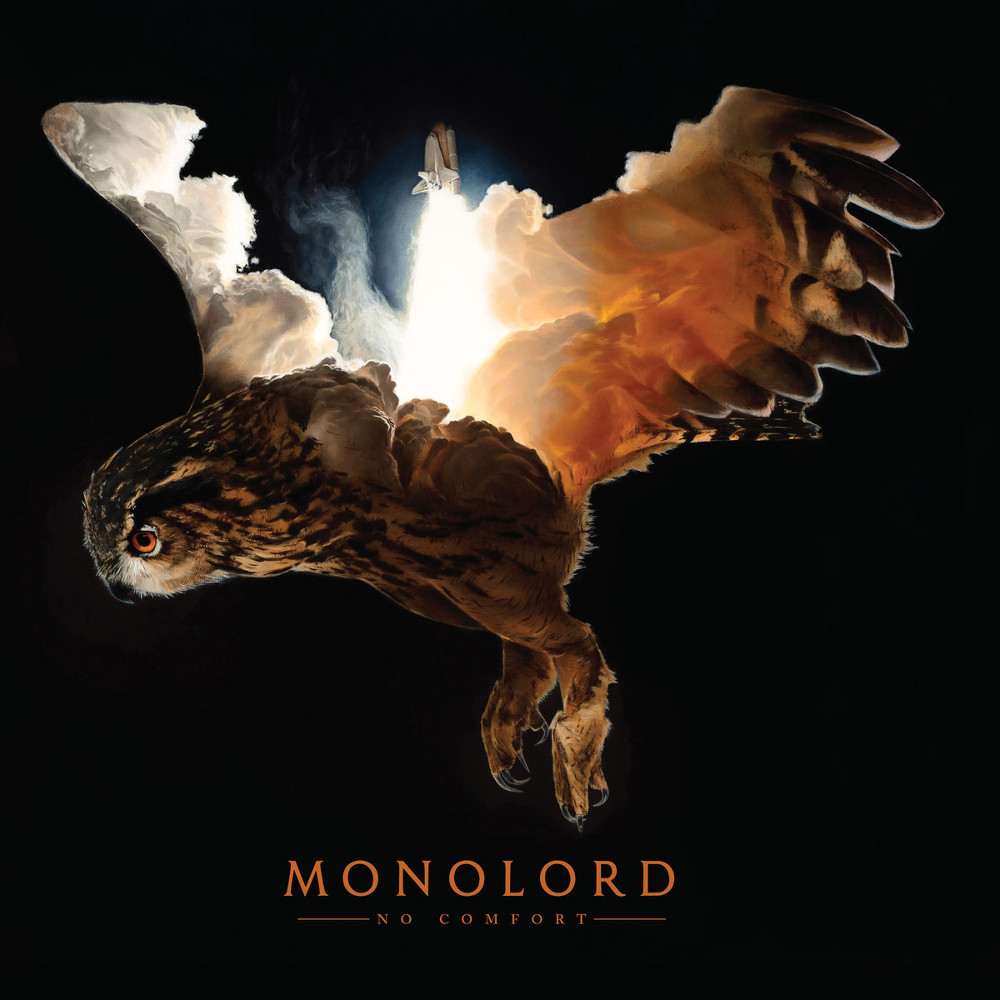
Monolord - No Comfort (2019)


Country: Sweden
Style: Stoner Metal
Rating: 7/10
Release Date: 20 Sep 2019
Sites: Bandcamp | Facebook | Instagram | Official Website | Twitter

I've heard a lot about Monolord, some of it high praise and some of it jokey dismissal, but this, their fourth studio album in six years, is my first and I'm only now hearing what they do.

What they do is big fat frickin' huge riffs. Sure, they describe their sound as "enveloping, syrupy sludge" but it's hard to imagine the scale of riffage going on. Critics like me often get overly enthusiastic about our favourite bands and wax lyrical in ways that frankly overhype their effect. This band are insanely heavy with the guitar much higher in the mix than the vocalist so that things feel even heavier. Monolord state that ultra-low frequencies serve as their fourth member.

From the very outset on The Bastard Son, Thomas Jäger builds ocean waves out of his riffs that thunder onto our unwary shoreline with his voice a distant surfer hidden somewhere behind the spray. Mika Häkki's bass plays along and underlines and emphasises that heaviness to massive degrees. Is this a band or a tsunami? Esben Willems is the drummer behind this duo and he does his job well, playing as few beats as possible but enough to keep this behemoth in motion.

Beyond being agreeably shocked at just how heavy The Bastard Son got, I was a little disappointed with the song itself. Monolord were crushing me with a ridiculous amount of weight in their sound but I wasn't sure where they were going with it. They nail the melodic aspect of this sort of doom later but I didn't hear it for a while. However, the simplicity of the riffs and, frankly their monotony, is shaken halfway through when the band start to mix it up. They get slow (well, slower), a lot quieter and much more intricate, without losing that weight.

Suddenly I was on board and I repeated that experience with The Last Leaf, a song that disappointed me until it got really interesting. It took a while, even on a shorter five minute song. I should point out that this album runs a smidgeon over three quarters of an hour, but that only means six tracks. The shortest is a heartbeat away from five minutes while two songs run over nine minutes and one almost eleven.

What really sold me on the band was Larvae, the third track. Like everything here, it's Black Sabbath influenced but this time it really acknowledges the sheer breadth of what they did back in the early days. It's Ozzy-era Sabbath at its folkiest but with the riffs still fuzzed up to eleven, if not twelve. It's never just sheer bludgeoning, it runs the gamut of dynamics in a real song structure. I loved it and I enjoyed Skywards a lot for similar reasons.

By this point I'd become a confirmed fan and I stayed that way through Alone Together, a kind of heavy ballad with Jäger's vocals appearing to float into the studio from another room. And that leaves the eleven minute title track, which is a delightfully heavy romp that feels achingly unrushed. There's a point just over the halfway mark where it drops into delicate noodling only for Häkki's bass to show up with an insane power chord and crush the world for effect. I absolutely adored that contrast.

I liked this, especially once it added melody to the crushing doom, and I'm now certainly going to be checking out Monolord's prior three albums. I hear a lot of good things about 2017's Rust and that's next on my agenda.

Thursday, 22 August 2019

King Gizzard & The Lizard Wizard - Infest the Rats' Nest (2019)


Country: Australia
Style: Stoner Metal
Rating: 6/10
Release Date: 16 Aug 2019
Sites: Bandcamp | Facebook | Official Website | Twitter | Wikipedia

I've heard a few albums from King Gizzard & The Lizard Wizard, having found them during the publicity boom for Nonagon Infinity's ever-looping nature, and I've enjoyed them. I know they're no one trick pony but what I've found thus far has been pretty consistently psychedelic rock and this is clearly not that. There's psych here but this is a metal album.

Buzz suggested that it was going to be a thrash album, which made it a must for me, but it really isn't, even if there are some overt thrash touches. I heard a lot of Motörhead here, especially in the double bass drumming and in the guitar approach on songs like Mars for the Rich that emulates No Class. Even on faster numbers such as Planet B, they're as unlike a thrash band as they are the King Gizzard we know from earlier albums.

This is much heavier stuff than usual but the psych is still there and it's done in an notably alternative way. I heard plenty of Voivod too (not only in the use of science fiction) and heavier British punk like Discharge. I'm sure there are comparisons to make to nineties American metal as well that I'm unable to provide, as I didn't pay that much attention back then. A few tracks, especially Venusian 2, sound rather more like a Hawkwind album meant for 33rpm but played at 45rpm.

Stu Mackenzie, vocalist and guitarist, has said that his influences for the album came from the usual suspects of American and German thrash: Metallica, Slayer, Exodus and Overkill for the American side and Sodom and Kreator for the German. He also added Rammstein in there for good measure too. I have to say that I'm hearing very little of this, except in some odd phrasing here and there, the one exception being Self-Immolate, which has a slower Slayer vibe, including some frantic drumming from Michael Cavanagh to kick it off.

Maybe there's a little Sodom, as there's an overt punky edge to this metal. The guitars are fuzzy and often laden with feedback. The vocals are raw. I'd lean more towards Motörhead, the Plasmatics and some of the heavier stoner metal bands. In fact, some of it, such as Superbug, plays far too slow and monotonous for my tastes, taking the hypnotic tone of some psychedelic rock and applying it to a sort of Swans-esque drone mentality. I'm certainly not used to thrash albums being played too slowly, just as I'm not used to any thrash bands using feedback as a weapon like this.

The album's a creature of two sides, the first dealing with topical concerns about the environment and the second exploring Venus with rebels forced into leaving the Earth. Both angles seem angry and reactionary, which works for a angry and reactionary style like this. While there's plenty of punk in the sound here, it's punk in attitude and delivery too.

And that makes all for a surprisingly interesting approach for a band most of us know for psychedelic rock workouts. All power to King Gizzard for an interesting diversion into a new sound, but I have no doubt that, when I'm in the mood for them, I'll be pulling Polygondwanaland back out instead.

Monday, 11 March 2019

Black Vulpine - Veil Nebula (2019)


Country: Germany
Style: Stoner Metal
Rating: 8/10
Release Date: 1 Mar 2019
Sites: Facebook | Official Website | YouTube

Oh, I like this! It's very heavy stuff, somehow seeming slow even when it isn't, like on the opening track, Limbus, which retains a plodding style even at speed. The music is a wall of sound and it really doesn't want to quieten down so we can hear the vocals, which are clean and impressive but don't always feel the need to fight for dominance. When they do, they win, and it's glorious.

And it's that contrast that works so well. This is heavy stoner metal that isn't really interested in being doom, even when it kinda is. The beginning of Hollow is doomy enough for Candlemass and there are inevitable nods to Black Sabbath all over the place. It's much more interested in simply being heavy, which isn't quite the same thing, and it succeeds on that front with aplomb. It's bludgeoning stuff and I've never wanted to be bludgeoned quite so happily before.

The vocals, however, have a sweetness to them that floats airily around the music. They're the Beauty to the music's Beast, reminding that however dark things get, there's always light up there somewhere. What's so impressive is that while they spend quite a lot of time underneath the music, they find power whenever they want to and, when they do, often during the more overt choruses, they have it to spare. They soar as often as they float, even if its with a similar sense of melancholy underpinning it.

I was only able to find the first names of the band members, so I presume that those delightful vocals belong to Sarah, with Daria backing her up at points. Daria also plays lead guitar, with Sarah backing her up in turn, while that powerful rhythm section is Stefan on bass and a rather patient Rudiger on drums.

I've let this play on repeat for a few days and it's become something of an old friend. Just like I think of any particular friend as a person rather than a combination of different attributes, I think of this as an hour long slab of heaviness called Veil Nebula rather than eleven individual tracks. If I force myself to focus in for the sake of this review, it's still more to elements than songs. I'm not sure I could even pick a favourite. Minotaur maybe.

To be fair, some of them could be seen as positive by some listeners but as negative by others. Most obviously, the Jaws theme shows up at the start of The Panting for no reason I could fathom, played on what sounds like a very resonant cello. It sounds good but its familiarity is offputting. Later in the same song, there's a bizarre backing vocal that sounds like crowd noise. Initially I thought it was a cacophony of cymbals, or maybe a demonic choir, but it's just vocals. It adds a wild texture and it's neatly enigmatic but it's abrasive.

I could call out the enticing woodblock in A Lucid Dream or the calamitous feedback ending to Haunted House or the evocative duet between guitar and voice on Minotaur. I could call out an epochal riff but there are epochal riffs almost everywhere here. There's so much to be found if you're willing to explore. I wonder what you'll find and whether it's what I found.

The only traditional song on offer here is Liar, which is bouncy and catchy and its own master. It's still agreeably heavy but the music holds back for Sarah's voice can stand out above a complementary riff. Then again, there's little in the way of lyrics and Sarah alternates with some sort of whisper, so the catchiness may be partly due to the majority of the singing being a chorus.

If you like your stoner metal so heavy that it's carved in granite and raw enough to be right off the bone, but with vocals that are sweetly powerful, then Vein Nebula ought to be right up your alley. It's certainly right up mine.

Friday, 22 February 2019

The Ghost Next Door - A Feast for the Sixth Sense (2019)


Country: USA
Style: Doom/Stoner Metal
Rating: 6/10
Release Date: 8 Feb 2019
Sites: Facebook | Instagram | Official Website | Twitter | YouTube

I listen to a lot of music that doesn't make it to a review and this one came close to being passed over but there's something here that kept me listening. This is The Ghost Next Door's second album and it's primarily stoner metal with a heavy dose of doom but there are points when it veers off into completely different styles and somehow it all works.

For instance, it begins exactly as you might expect a stoner/doom album to begin, with Sabbath-inspired riffs and Ozzy-esque vocals, but the guitar is more melodic in nature, the sort of thing that brings Gregor Mackintosh from Paradise Lost to mind.

One track later, Fodder for the Meat Grinder, a title which ought to mean goregrind but completely doesn't, finds a couple of completely different sounds to mix on top of that doom/stoner base. It gets a lot quicker for a while and, at times, it's frantic stuff with some powerful vocal sustain from singer and The Ghost Next Door's main man, Gary Wendt. Then it shifts gears into a sort of modern alternative rock sound.

Doubt demonstrates how Wendt's vocals aren't always remotely as strong as his guitarwork. This is a weaker song because it aims for sheer power but fails to reach it, mostly because of those vocals. However, there's some real experimentation going on in the music that backs them because that's hardly a standard doom metal drum pattern. There are hints of Voivod here and Tool too, which is an enticing combination for something progressive and new.

I should add here that Doubt also shifts into an oddly soft interlude of noodling guitar. While most of this album is slow, it's not soft. There's a heaviness throughout that only dissipates on very deliberate occasions so that we can feel the contrast, kind of like feeling a deeper affinity for rain after the sun finally comes out.

The rest of the first half of the album continues on in this sort of vein, in the sense that it mixes the band's core stoner/doom sound with whatever seems to come to mind. Is that a slide guitar as American Nightmare kicks in? I do believe it is, and there are some recognisable Motörhead riffs in there later to keep things interesting.

Event Horizon shows how a Black Sabbath feel doesn't have to be there for a song to be heavy. This is oddly like a Pearl Jam 45 played at 33rpm. I get the downtuned rhythm sections in metal bands but this sounds like it features downtuned vocals. "We make the rules," sings Wendt. "We pull the strings." There are more traditional doom sections later in this song but the rhythms go back to Tool again and I guess Wendt is making up his own rules, which I think is the main reason this is staying in my head.

The vocals are a problem, because they're neither consistent enough nor original enough to work with a band that's agreeably all over the musical map. He has two go to voices, that Ozzy impression that slips on occasion to become a lot more nineties alternative and a shoutier style that never quite makes hardcore but certainly feels like trying.

The biggest problem, though, is the second half of the album. It would be easier if it just sucked, but it doesn't; it's just underwhelming after the diversity of the first half. None of the songs are bad, per se; they're merely not particularly good either, once American Nightmare gives way to Behind the Mask. The only aspect of note in the entire second half is the odd chantalong that The Sacrifice Person goes for and I'm hardly keen on that approach.

Gary Wendt is clearly an interesting character. I remember him from the thrash band Sacrilege B.C., a gig of whose I reviewed on a handwritten note and mailed off to Kerrang! magazine. I was only seventeen or so at the time and still wasn't shocked that they didn't print it. He was also part of Skinlab, who went from groove metal to nu metal, and Release, an alternative thrash band. Apparently he also studied with Joe Satriani, so it isn't surprising that his tastes are highly varied.

I like The Ghost Next Door and I love that frickin' cover, but Wendt has to either figure out a vocal style of his own or hire a singer if they're going to move on up. Also, diversity is great except when it's applied to quality. A Feast for the Sixth Sense is half of a feast and it's a tasty feast at that but, sadly, the other half is takeout.

Friday, 4 January 2019

Buso von Kobra - Chinese Tales from Outer Space Vol. 1 (2018)


Country: Hungary
Style: Stoner Metal
Rating: 7/10
Release Date: 5 Nov 2018
Sites: Bandcamp | Facebook | Reverb Nation | SoundCloud

This is an interesting, if short, album that this intriguingly named Hungarian stoner band just released on Bandcamp with truly glorious cover art. It's good stuff but I'm trying to figure out what audience they're aiming for.

For instance, the opener, My Dear is a Whore, is heavy but still commercial. It ought to be a gimme for alternative radio play, except that the lyrics wouldn't allow that without heavy use of beeps during the chorus.

Chinese Tales doesn't let up either, even when it slows down a little, and whoever that is on guitar knocks out some tasty riffs on tracks like Backbones, while the various vocalists change up their styles on a regular basis. If I'm counting right, there are three tracks with Attila Voros singing, three with Gergely Kovacs, three with Jozzy and one with Jappan & Barnsz. Given that there are only seven tracks, they have to team up and that adds to their interesting sound.

In fact, in many ways, Backbones is about three different songs in one. It kicks off like an evil Zeppelin, leaps into Rage Against the Machine territory and end in a quietening groove. It's a song that catches you immediately but wants you to come back to dig deeper and I love that sort of thing.

The Wait does something similar. Out of the gate, it's alt country with cheeky cymbals. Then the chunky riffs hit and the vocals intensify, only to relax back down again like Nick Cave at points. Before long, soulful backing vocals join in to make sure we know it's commercially viable. And yet none of this feels out of place.

The psychedelic angle isn't that obvious early on but it kicks in hard towards the end of Ghost Train and especially at the beginning of Ivory Lies.

If this is what Budapest sounds like nowadays, I might have moved out of England in the wrong direction. This sounds great and 2,000 Hungarian forints is not as crazy as it sounds. That's about $7, making this about a buck a track, worth it given that there isn't a bad one on the album.

It aches to be played live though and if Buso von Kobra can recreate this in a club environment, they're going to truly blister. Sadly, I'm about six thousand miles away from being able to check that out. Someone get these guys onto the radio so they can start touring somewhere a little closer to me than Budapest!