Showing posts with label 2023. Show all posts

Friday, 19 January 2024

Omnium Gatherum - Slasher (2023)

Country: Finland
Style: Melodic Death Metal
Rating: 7/10
Release Date: 2 Jun 2023
Sites: Bandcamp | Facebook | Instagram | Metal Archives | Official Website | Twitter | Wikipedia | YouTube

Slasher is only a four track EP that runs just shy of twenty minutes, but I was intrigued by Omnium Gatherum's 2021 album, Origin, and wanted to see where they took that sound. I liked that album but I didn't love it and a good part of that was that it felt rather transitional. They'd lost a second guitarist and their melodic death metal sound had upped the melodic but lessened the death, a shift that left Jukka Pelkonen's harsh vocals a little adrift. It felt to me that there was a need for clean vocals, either to replace or enhance the harsh, but nobody was delivering them. So I wanted the next album to see where they went. Maybe this EP would suffice.

What it tells me is that I was partially right but partially wrong. Pelkonen continues to sing harsh here but he—I believe, but possibly someone else—also varies his delivery considerably. There are clean vocals here too, most obviously and tellingly in the opener, Slasher, and the harsh vocals are more varied, shifting into a crackling fireplace mindset on Lovelorn that takes the song into goth territory. So far so good for me as some sort of sonic soothsayer, but I hadn't realised quite where the resulting sound was going, a realisation that came when I realised how well the unlikely cover works here.

There are four songs on offer, three of which are originals. All of them betray Omnium Gatherum's roots but fit firmly into their go forward direction, which I'd compared on Origin to Opeth's shift to prog rock. While the shift might be fair, the direction isn't because this isn't remotely prog rock in the slightest, that cover not of a Yes or Genesis track, let alone a deep cut from one of the obscure seventies crate diver discoveries that Mikael Åkerfeldt loves so much. It's of Maniac, the Michael Sembello song from the movie Flashdance. Oh yeah. And it sounds great!

And suddenly I see Omnium Gatherum in a new light. They're still a melodic death metal band but the three songs that aren't covers of disco/synthpop hits could believably be too. They all have an exquisitely perky feel, either entirely or for the most part, built from poppy melodies and hooks, merely heavied up into harsh vocals and crunchy metal guitars. There are bands whose gimmick is to turn pop music into punk or metal as routine, applying heavy filters onto TV theme tunes or pop hits from decades past. Suddenly I'm imagining a disco group whose sole purpose in life is to turn Omnium Gatherum songs into synthpop. I think they'd sound pretty good.

While the cover of Maniac works shockingly well, I'd suggest that Slasher, which isn't a far cry from it lyrically, is the standout track. I wonder if writing that prompted them to cover Maniac or if the act of covering Maniac flavoured everything else, especially Slasher. Sure, it kind of just ends with the mindset that it has nothing left to say, but it rolls and builds well and it has an excellent guitar solo from either band mainstay Markus Vanhala or new fish Nick Cordle, who's been touring with them for a while but officially joined the line-up in 2022.

Maniac follows, with Sacred after that, another song very much in the same vein, with keyboards delivering the melodies so that Aapo Koivisto leads the way just as much as the guitarists or Jukka Pelkonen's voice, perhaps even more. He's the main reason that these songs sound so poppy and perky. And that leaves Lovelorn, which follows in the same sort of vein again but not quite so much. It's the heaviest song here and the most gothic, not only because of how Pelkonen shifts into dark and rumbling mode.

And that's it, because there are only four tracks on offer. I'm still fascinated by the direction that Omnium Gatherum are taking and I'm still eager to check out their next album, but this suggests that we know roughly what it's going to sound like. It sounds good too, even though reading back everything I've written about this EP suggests that it really shouldn't.

Tuesday, 16 January 2024

Voivod - Morgöth Tales (2023)

Country: Canada
Style: Progressive Thrash Metal
Rating: 7/10
Release Date: 21 Jul 2023
Sites: Facebook | Instagram | Metal Archives | Official Website | Twitter | Wikipedia

Voivod have been around for four decades now, though my maths suggests that Synchro Anarchy was their fortieth anniversary album last year. However, it's here where they're celebrating, with an unusual project that works rather well. Only two of the eleven songs on offer are new, the title track and a cover version of Public Image Limited's Home, which sounds like a weird choice until it plays and suddenly it seems entirely natural. The rest are re-recordings of old songs, mostly with the current band but twice featuring a guest former member.

Re-recordings are always a dubious concept, but I like the results here because the track selection follows some interesting rules. For a start, there's nothing here newer than 2014, because the two albums in that timeframe featured the current line-up anyway, so there's no point to redux. There is also nothing newer than 2008, when Chewy joined on guitar to replace the late Piggy. There's no more than one track from any prior album, so this is a carefully curated sampler of older material, and it delves as far back as the band's contribution to the Metal Massacre V compilation.

That's Condemned to the Gallows and it's first, because these tracks are presented in chronological order, so allowing us to join them on a journey through their history as it happened, with consistent 21st century production values. It's also a real highlight that I'm not sure I've ever heard before. Metal Massacre V came out the same year as the band's debut, War and Pain, but this wasn't on it. I remember that album being a muddy mess of fascinatingly raw tracks, so I'm sure this is much cleaner than the original, but it still has a real bite to it. It chugs along quickly too, highlighting that punk attitude that they wore overtly during the early days. I like it a lot, but it doesn't sound a lot like what we tend to think of as Voivod.

There's nothing here from War and Pain but Thrashing Rage was on their follow-up, Rrröööaaarrr. It feels like a progression from Condemned to the Gallows, but it's still only partway to what they would become. It's another up tempo song, in your face but a little more controlled. However, it's only starting to adopt that unusual Voivod tone. It's Killing Technology, the title track of the third Voivod album, where that fully arrives, complete with robot voice and patented jagged guitar, all done in a neatly perky fashion. Snake's voice loses some rawness and melody is bulked up, even if it contrasts with that jagged guitar. It's much more science fiction.

For a while it continues in much the same vein. Macrosolutions to Megaproblems, from Dimension Hatröss, is Killing Technology but more so, with weird rhythms. Pre-Ignition is the closest song on this album to its predecessor, which is interesting to me, because I've always felt that Nothingface was a real shift for Voivod. That doesn't show here, at least on this one. It clearly shows on Nuage Fractal, from Angel Rat. Snake's voice gets cleaner than ever and the jagged guitar is polished in an odd way that makes this sound like Voivod are covering U2 and making the song their own.

Fix My Heart is where these songs become new to me. This one's from The Outer Limits in 1993 and it's a bouncy one with an interesting mix of sounds. There's certainly some Voivod in there, but it's not in the pure form. There's some grunge, some alt rock and some stoner rock in there too. It's an understandable shift for the time but I wasn't expecting it and I wasn't expecting it to go away on the very next song, Rise, which is much more old school, even if it's from 1997's Phobos. After that, I wasn't expecting it to come back for the one after, Rebel Robot, but there's definitely grunge in Snake's vocal here.

I should mention that he doesn't sing Rise, because this is where the guests come in. The vocalist on Rise is Eric Forrest, who sang it originally, because bassist Blacky had left in 1991 and original vocalist Snake followed suit in 1994, leaving E-Force to replace them both. He's older school, much rawer even than Snake revisiting the really early material. By 2003's self-titled album, Snake had returned and Jason Newsted had joined on bass, taking the nom de plume of Jasonic. He returns for this version of Rebel Robot too.

And then there are the new songs. Morgöth Tales is clearly a song about the band and its history and raison d être, dropping quite a few nods to earlier track titles. I like this one a lot because it covers a vast amount of territory. I like the serious ramp up in tempo, with a fast buzzsaw guitar. I like the drift into spacy prog rock. I like the back and forth between those two styles. And I like its prominent guitar solo. It looks back a lot but neatly patches everything Voivod into one new track.

Finally, there's Home, that PiL song, which I hadn't heard before but should, given the line-up the original boasted: John Lydon on vocals, the always interesting Steve Vai on guitar and Bill Laswell on bass, plus jazz musician Tony Williams on drums. I can hear some Lydon in the vocals, especially late on, but the song is an unusual trip and it's a stellar choice for a Voivod cover.

And that's it, unfolding in ruthless chronological order. The die hard Voivod fan will know all these songs, but they sound good with a 21st century production job. I must go back to that debut again to see how awful the production really was on it. I'm a Voivod fan but not that hardcore, so I knew half of this, meaning that the other half is new to me. Both halves are fascinating and it's great to hear this journey through their back catalogue in such consistent fashion. I learned a lot. What I'd have to end up with is that my favourite songs here are a couple of the earliest, Condemned to the Gallows and Killing Technology, and the newest pair. That bodes well for the next studio album.

Monday, 15 January 2024

Greta van Fleet - Starcatcher (2023)

Country: USA
Style: Hard Rock
Rating: 8/10
Release Date: 21 Jul 2023
Sites: Facebook | Instagram | Official Website | Twitter | Wikipedia | YouTube

Two thoughts struck me quickly the first time I heard this, the third album from the Frankenmuth, Michigan rockers. One is that it's good and consistently so. The other is that it isn't a patch on its predecessor, The Battle of Garden's Gate. Those two thoughts stayed with me through a second, a third and a fourth listen. Everything sounds good, from the opener, Fate of the Faithful, which is a strong way to start, to Farewell for Now, which is just another song rather than a memorable epic that closes everything out. However, not once did this awe me in the way that the previous album often did.

Fate of the Faithful plays up the Led Zeppelin comparison that has hung over the band's shoulders like an albatross, as if they're leaning into it now instead of trying to fight it. Last time out, I heard a lot of Geddy Lee in the vocals of Josh Kiszka and other influences as unusual as world music from Africa. Here, it's mostly Zep, Kiszka reminding of Robert Plant in more ways than just flow. Sacred the Thread opens up how John Bonham would. Meeting the Master opens up how Page would. It's all there in the details of the songs, not just their sweeps.

On The Battle of Garden's Gate, the most overt influence from Zeppelin was in the maturity of the songwriting, something that still leaps out whenever my local classic rock station plays them and I realise all over again how mature they were, trawling in wildly different sounds to use as they put together a serious body of work in a such a short time. Here, most of this has roots in that body of work, building new songs from its sounds.

What that means is that, while every one of these ten songs does sound like Zep, it doesn't follow that Starcatcher sounds like a Zep album. It doesn't, because it's not remotely as diverse. There's a little folk here in some of Josh or Jake's quiet moments and no discernible world music at all. It seems fair to say that every one of these ten songs works with the same sonic template instead of searching for a new one each time and finding it.

That lack of diversity this time may be why all these songs sound good but none of them stand out in the way that Broken Bells, Tears of Rain or The Weight of Dreams did on the previous album, to name just three. I'd call out Sacred the Thread as my favourite track, as the vocal melodies are so effortless and so effective that the entire band falls into a wonderful groove. Fate of the Faithful is up there too but that's probably my entire favourites list right there in two songs.

That doesn't mean that anything sucks. Drop the needle anywhere on this album, whether at the start of a track or just throw me in halfway and I'm going to be listening through the whole thing again a couple of times, enjoying every single track. In other words, this isn't a bad album; it's just not its predecessor and that's a bigger problem than it perhaps should be. It meant that, while I enjoyed another impressive ten tracks from Greta van Fleet, I couldn't quite lose an abiding sense of disappointment.

Is that fair? I don't have a problem with bands effectively borrowing another band's sound if they create good music out of it. I've reviewed a couple of bands here at Apocalypse Later who started out as tribute bands, but evolved to the point where they released new music that naturally took on the flavour of the covers they'd been playing. Of course, Blind Golem's A Dream of Fantasy has Uriah Heep at its heart. Of course, Fragile sound like Yes. I don't believe that Greta van Fleet were ever a Led Zeppelin tribute band, but it's easy to imagine that they were and they evolved to write their own music in that style. That seems fair to me.

But is it fair to be disappointed by an otherwise excellent album just because it doesn't reach the scarily high bar set by its predecessor? I'm in two minds about that. Had I not heard The Battle of Garden's Gate, I'd surely think more of this one. However, it doesn't do a lot of what made the last album so outstanding and that would hold true even if this was the first thing I'd ever heard from Greta van Fleet. So I'll leave it with that thought. It's good stuff. I enjoyed all ten songs and did so just as much on my fourth time through as my first. I'm giving it a highly recommended 8/10. That said, it's also a step backward for this band, a reminder that not everyone can hit the peaks every time out and that maybe they've lost track of why they're such a great band.

Thursday, 11 January 2024

Hexvessel - Polar Veil (2023)

Country: Finland
Style: Psychedelic Folk Rock/Black Metal
Rating: 6/10
Release Date: 22 Sep 2023
Sites: Bandcamp | Facebook | Instagram | Metal Archives | Official Website | Tumblr | Twitter | YouTube

Well, here's something that I totally didn't expect. My last experience with Hexvessel was with an album called Kindred in 2020, which became my Album of the Year, just nudging out Solstice. Both of those albums were folk music, though former took that into psychedelic rock but the latter into progressive rock. It's a haunting album and I've gone back to it often since, as well as checking out a few odd earlier tracks on YouTube. I haven't listened to earlier albums yet, perhaps with a little fear that they might not be up to Kindred's incredibly high standard.

Well, this follow-up, their sixth studio album, is hard to compare because it adopts their style into a completely different genre, namely black metal, and it's a fascinating shift that I'm still coming to terms with. The black metal is in guitars, now exclusively Mathew McNerney's domain because I don't see Jesse Heikkinen in the line-up, which are no longer acoustic psychedelic folk but a full on wall of sound bleakness. The change is from pastoral meadow or maybe sparse desert to nighttime blizzard, literally day to night. However, neither the vocals nor the drums follow suit, except for an anomalous couple of moments.

That means no blastbeats, except for Eternal Meadow and Homeward Polar Spirit, which are both as frantic as we expect from black metal drumming. Otherwise, Jukka Rämänen keeps a slow beat, which fits the bleakness but carries a little more inherent warmth. It fits reasonably well, because it means we pay attention to mood more than we might usually for black metal and there is some variation there. It also forces us to slow down while we listen, which helps us pay closer attention to the voice, which delivers lyrics rather than serving as another musical instrument.

And yes, that means no harsh vocals, except for the very end of Older Than the Gods, where there are hints at something harsh. This is less successful to my thinking, because these approaches are almost mutually exclusive. What made McNerney's vocals special on Kindred was how much sheer nuance he was able to infuse into songs. Even when other instruments did something interesting, I was always listening to the words he was singing and feeling them in the way he felt them. It was a highly immersive storytelling technique and individual words carried powerful meaning. Here, he seems to do the same thing, but I just couldn't hear that nuance. I mostly couldn't hear words. The lyrics may be as meaningful but I couldn't back that up or give examples.

So the overall effect is very different. What preserves from the psychedelic folk sound is a strong sense of ritual. It was easy to fall into rhythms and flows and those remain powerful, if not of the same level of impact. McNerney's voice stands out best on Crepuscular Creatures, where all that nuance is still evident, but A Cabin in Montana is the track that easily carries the most impactful groove because the beat works perfectly with the voice. It's mostly on these two songs that I was able to catch lyrics. "Who speaks to the world?" "Freedom!"

Elsewhere, I like that overall effect as a sound but not how it plays out over the whole album. It's fascinating to hear what I still think of as psychedelic folk music drenched in feedback and with an entirely clean voice almost battling it out for dominance with an abrasive guitar. However, over a full album, this is generally too opaque, too distant and too dense, except in rare moments, like a snatch of something special at the very end of Listen to the River, as the wall of sound fades away and we hear what was behind that curtain.

Of course, I have to wonder if this is a one-off experiment or an indication of where Hexvessel are going. As the former, it's certainly interesting and, on occasion, it works rather well. Some tracks continue to grow on me, even if I have to pay serious attention to figure out why. Ring is one, with some excellent guitarwork underneath the wall of sound. As the latter, though, it seems unlikely to me that this approach will work long term. It's inherently limited and, as such it's missing a lot of what I find special in this band. By a lot, I mean far too much. I guess only time will tell.

Wednesday, 10 January 2024

Roz Vitalis - Quia Nesciunt Quid Faciunt (2023)

Country: Russia
Style: Progressive Rock
Rating: 7/10
Release Date: 26 Oct 2023
Sites: Bandcamp | Facebook | Prog Archives | VK

I like the title of this album, which is Latin for Because They Don't Know What They're Doing. Of course, they do, because Roz Vitalis have been around since 2001 and this is their eleventh studio album. I've seen the name often, because they were founded by my favourite Russian harpsichord player, Ivan Rozmainsky, who was a one man band until expanding in 2005 to a group setting. This is much more modern than his chamber prog band Compassionizer, who were named for an album by Roz Vitalis, not least through the use of a lot of electric instrumentation. However, there are a couple of songs here feturing his Compassionizer bandmates.

Like Compassionizer, this is entirely instrumental progressive rock, but it's guitar led just as much as it's keyboard led, courtesy of guitarist Vladimir Semenov. This is highly varied, from the opener, Bait of Success, which is fundamentally riff-based and the guitar is only one of many instruments working that riff, to Premonition, which rocks out with full on guitar solos. One in particular soars in patient fashion, reminding a little of the Alan Parsons Project. Walking starts out in the Mark Knopfler style, another song that often reaches for a heavier guitar. However, the need isn't just heavy here and often calls for a quieter acoustic guitar instead of an electric one.

While Rozmainsky does play harpischord here, his keyboard work is also varied, from a quiet piano interlude called Fountain (and a quiet piano outro called Nocturne) to wilder space rock sections on Premonition and more traditional electronica on Wides. He plays a metallophone on Walking, which is a xylophone with metal bars, just like a glockenspiel, in a section that comes right out of a harpsichord solo and segues straight into rock guitar. He's a sort of glue here: even when he's not performing on a lead instrument, he still controls where the song is going as a composer and links sections with his keyboards.

Where clarinet is also a lead instrument in Compassionizer, Roz Vitalis is happy to stick to guitars and keyboards. However, there are other instruments here, many of which get moments to shine on Bait of Success, which often feels like a round robin giving each of them a chance to play with the core riff. It's played on guitar and it's played on keyboards, of course, in a variety of different ways. However, it's also played by flute and also on trumpet, which adds something new to the sound. Flute and trumpet lead the way on Daybreaking for quite a while and it's delightful.

I've liked each of the Compassionizer releases I've tackled thus far, but it was clear from the very first track of the very first album that they have no interest in being like anyone else. That was an entirely new experience for me, introducing me to chamber prog, and it's fair to say that they're a prog fan's prog band. I don't want to call Roz Vitalis commercial, because they're still doing their own thing, but they are far more accessible. Most of this music flows, sometimes very organically in a Philip Glass-esque way on Bait of Success. Much of it is up tempo and highly engaging. Sure, a part of the musical audience isn't going to go for instrumental music or for prog in particular, but it's easy to imagine a random fan coming into this blind and skeptical and leaving a clear fan, especially with songs like Daybreaking and Wides.

It gets more challenging eight songs in with The Man Whose Wings Were Cut Off, which is many of the things the album was up until that point but also a lot more. It's happier to be jagged at points, playing with less obvious rhythms and flows. It features heavier drums and some heavier guitar, but also drops into very delicate ethnic instrumentation, like rubab and doira with a harpsichord backdrop, because this is one of those songs with the whole of Compassionizer on it, even though most members of Roz Vitalis are still here too, bass player Ruslan Kirillov excepted.

Premonition is the epic of the album at just over nine minutes and it's a good track, but The Man Whose Wings Were Cut Off does more in under eight. It's far less accessible but it's also teasingly complex after listening to so many smoother, less challenging songs, and we almost pay attention all the more because of that. Beautifulness is a midway point, half challenging and half accessible, with obvious moments for Leonid Perevalov's bass clarinet, but it doesn't seem to have as much of a coherent identity. Moments strike me but I keep returning to The Man Whose Wings Were Cut Off instead.

While I've heard a lot of Rozmainsky's work in Compassionizer, this is my first experience of what I guess is his primary band, Roz Vitalis. I like this a lot, but it's easy music to like. It's a different side to Rozmainsky and he's often dominant, but Semenov is just as often dominant on guitar and I'm drawn to that. I believe Alexey Gorshkov is a guest here, but his trumpet stood out for me too, as a wonderful additional voice in this instrumental mix. It's been five years since the previous album from Roz Vitalis, presumably to give Rozmainsky time to build Compassionizer and they've never gone that long between albums before, so I'd guess we'll see another one sooner than 2029.

Tuesday, 9 January 2024

Spidergawd - Spidergawd VII (2023)

Country: Norway
Style: Hard Rock
Rating: 9/10
Release Date: 10 Nov 2023
Sites: Bandcamp | Facebook | Instagram | Official Website | Twitter

While they may have the least inventive album titles since Chicago, Spidergawd instead choose to pour invention into their music and this is another immense album from them. I gave Spidergawd VI a 9/10, so they were up against it to match that this time out. I've been away from writing music reviews for a couple of weeks as I nailed down a film zine with a particularly urgent deadline but I listened to this a lot over that time and it keeps getting better. It was always going to be at least an 8/10 but I'm enthused by it enough to warrant another 9/10.

I think it was the instrumental section late in the second track, The Tower, that's what started me onto the path to a 9/10. The opener, Sands of Time, is a strong song to kick things off, but it's not a particularly unusual one, with a sort of Magnum-esque effortlessness. It's very commercial with a clear arena rock influence, often with a Sammy Hagar era Van Halen vibe to it as well, but it's very tasty too. It's impeccably written and impeccably performed. It just doesn't carry much in the way of invention.

The invention I expect from Spidergawd arrives with a delightful carnival-style intro to The Tower, almost in a way that Dire Straits might do, though their opportunity for this one would have been Tunnel of Love and they went a different way. A minute in, it finds a proggier vibe but with riffing like Tank. This is an impeccable groove and it only gets better when it shifts into that instrumental section late in the song, which is gorgeous, starting a trend that continues unabated over the next few songs.

Dinosaur is better again and it's a great example of a song that grows on repeat listens. It may be my favourite of the first seven tracks, though Bored to Death comes close. That has another neat galloping groove and another great instrumental section, this one longer too, though there are backing vocals floating over the top at points. These are sublime songs and the saxophone I tend to expect from Spidergawd nowadays shows up early on too. I had missed that, because it's not as prominent on this album until we reach the closer. I kept catching glimpses of it but it vanished in most instances as if it was never there to begin with and I was merely dreaming.

As we shift into the second half, Your Heritage and Afterburner continue in much the same vein, especially the latter. Every one of these is a good song while it's being sung, Per Borten I believe handling that perhaps exclusively here, as I only see Hallvard Gaardløs credited on bass. He does an excellent job and I don't want to cast any shade on his mike work, but every one of these songs also elevates when it evolves into an instrumental section. This band, with Borten again leading the way on lead guitar, find magnificent grooves as easily as falling off a log and grow them well enough that I found myself wondering what an instrumental Spidergawd album might sound like.

I believe Your Heritage is the first single this time out and that may make sense. It's close to being the shortest song here at just over four minutes—only Afterburner is shorter—and it's the one I'd call closest to their Thin Lizzy style, in the riffs and also in the solo. It's another good one, because there are no songs here that aren't good ones, at the very least, but it's a long way from the ones I'd call out as favourites.

Before I get to the closer, because that's absolutely my favourite, above the various gems I called out on the first half, I should mention Anchor Song, because it's the only other song here. There's a real weight to its intro, which is the heaviest moment on the album. The song proper calms and emulates the tone of much of the rest of the album, but there's also a slight alternative vibe to it as well. It also features another fantastic riff. But to that closer.

It's called ...And Nothing But the Truth and it's the epic of the album, even though it's only a little longer than five minutes and not close to the six minutes of The Tower, itself hardly long when we start talking prog. This one ratchets everything up to eleven and unfolds as an absolute peach of a closer. It starts out with the saxophone of Rolf Martin Snustad and builds through acoustic chords reminiscent of Pink Floyd to a more emphatic version of everything we've heard thus far. Borten's more emphatic with his vocals and even more emphatic with his guitar, delivering my favourite of many favourite guitar solos. There are maybe six songs here, out of eight, that absolutely blister through their last minute or two, but this one has to end an album rather than just a song and it's easily up to the task.

So, yeah, this is a second 9/10 in a row from me for a Spidergawd album. They're less proggy than even I'm used to and I only came in with Spidergawd V. However, they're still absolutely on top of their game and this is highly recommended Norwegian hard rock indeed.

Monday, 8 January 2024

Girlschool - WTFortyFive? (2023)

Country: UK
Style: Hard and Heavy
Rating: 7/10
Release Date: 28 Jul 2023
Sites: Facebook | Instagram | Metal Archives | Official Website | Twitter | YouTube

I was diving into CoKoCon prep when this album came out late last July and lost the opportunity to listen and review, but I wasn't going to lose out on doing that in my catch-up January. I remember Girlschool well from the eighties, though I wasn't around early enough to see them start. I was on board by Running Wild and had caught up with their earlier records by then too, courtesy of them being played on the Friday Rock Show. They were never the most innovative or virtuosic band out there but they never tried to be. Like their frequent tourmates and collaborators, Motörhead, the point was to just play rock and roll.

They do precisely that here on what appears to be only their thirteenth studio album, seven years after Guilty as Sin in 2015, and some of these songs sound just like classic Girlschool, merely with a 21st century production job that's agreeably heavy and clear without being entirely clean. There's always a level of grit in a Girlschool song, even one with the catchiest hook. There's a lot of grit on this album and there are plenty of great hooks, from the very outset on It Is What It Is, which is a strong opener.

The best aspect is exquisitely simple: Girlschool stick to the tried and true approach and turn out a bunch of songs that rock. That's it! You don't need a critic like me waxing lyrical about this aspect or that when that's all they care about doing. It's enough to point out that they do it very well and that, while this is decent on a first listen, it gets better with each repeat. There's nothing fancy in the songs that gradually leaps out for us to notice. It's just down and dirty rock 'n' roll played with a metal edge and an eye to oomph and melody.

However, the worst aspect is pretty much the same thing, not because taking this straightforward approach is a bad idea—it isn't—but because there is one song that feels a little different and it's so impressive that it ends up reminding us that there could have been more songs like this one but there aren't. That song is Cold Dark Heart, which has a real character to it. That's a wonderful riff to underpin everything, even though it's not particularly complex, but the melody, which is hardly complex either, got totally under my skin. It's easily the highlight of the album, but ironically, the rest wouldn't seem like they were missing something if it hadn't been included.

Cold Dark Heart isn't a particularly deep song lyrically but it also sets a mood with its story, which few of the other songs do. Most of them are lyrically unadventurous, settling for routine concepts, like It Is What It Is, It's a Mess and Up to No Good. They're all about exactly what you think they're about and nothing more. I started to look ahead and think what Into the Night, Are You Ready and Party might be about. And yeah, they were.

The only song that might need a little introduction is a classic call out to their fans, Barmy Army, which was the name of the Girlschool fan club way back in the day and still describes the diehards. The only song that tries to dig a little deeper into a substantial subject is Invisible Killer, but it's a song about COVID that would have been spot on three years ago but now feels a little past its due date. It certainly doesn't add anything to the conversation in 2024 when there are probably plenty of important things still to be said.

And suddenly I'm feeling negative, which wasn't my intent. I seriously doubt that you're reading a review of a Girlschool album for innovative music or incisive lyrics. You want songs with huge riffs, catchy hooks and an overriding sense of fun and that's exactly what this album delivers. This is an impressive album indeed from that standpoint and while I can happily say that Cold Dark Heart is a little more metallic, It's a Mess is poppier and Believing in You goes for more of an AC/DC hard rock vibe, there isn't a duff track anywhere to be found.

It also ends well and in particularly touching fashion. Sure, the final track, a cover of Motörhead's Born to Raise Hell, featuring guest appearances from Biff Byford of Saxon, Duff McKagan of Guns n' Roses and Phil Campbell of, well, Motörhead, does nothing new with the song, but it has no need to. What's important is that the previous Girlschool album came out on 13th November 2015, which was a day after we lost Philthy Animal Taylor, a month before we lost Lemmy and a couple of years before we lost Fast Eddie Clarke. That's the entire classic line-up of Motörhead, who were closely connected to Girlschool for decades. I won't pretend I didn't shed a tear listening to this cover.

It's also a firm reminder that, while we all miss Motörhead, we've also missed Girlschool but they are still with us. That's still Kim McAuliffe on vocals and guitars and Denise Dufort on drums, the roles they've played since moment one in 1978. On bass is Tracey Lamb, on her third stint with the band, her first coming back in my day in 1987. The new fish is guitarist Jackie Chambers, who has almost a quarter of a century with the band under her belt, more if you count the years when she was writing with them. This is the old Girlschool, WTFortyFive years in, and they sound as good as ever. Cheers, you lot!

Friday, 5 January 2024

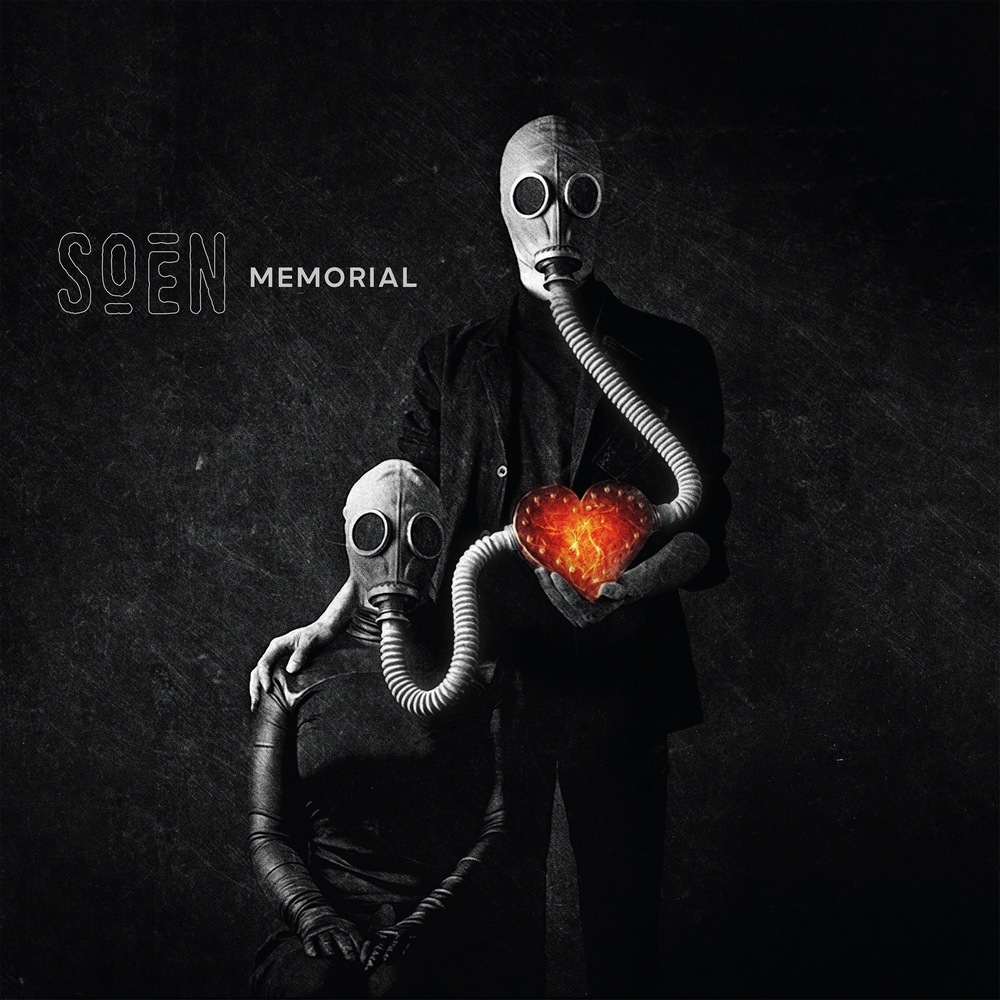
Soen - Memorial (2023)

Country: Sweden
Style: Progressive Metal
Rating: 8/10
Release Date: 1 Sep 2023
Sites: Facebook | Instagram | Official Website | Twitter | Wikipedia | YouTube

I found Soen on their fourth album, Lotus, and I liked them a lot. They've changed since then, with a steady move away from the Tool influence that was overt on that album to something much less progressive and much more mainstream, but still unmistakably Soen. These ten songs are simpler, especially in the bass and drums, but they're still powerful and the hooks are just as strong as ever, which is what this band does better than so many other bands: to maintain a serious level of power whatever they're doing, even at their most melodic. They don't just write hooks for their choruses, they put them in verses too and the riffs support that wonderfully throughout.

The increasing simplicity of the music, which suggests that progressive metal isn't going to cut it as a label for long, if this far, was one of the first things I noticed with this album. Another was its impressive production, which is crisp and clear and makes it feel like metal even when it's shifted down into mere rock music, which it does often, in the way that Metallica really played rock music for a while but it felt like metal anyway because of the tone and production. On occasion, the tone even seems similar. There's a ballad to wrap things up too, Vitals, and that maintains its power as well, even in its quietest moments.

I liked this immediately but not emphatically. It took a while to grow on me, partly because of the general approach that was obvious from the first track, Sincere, but also partly because the song after it, Unbreakable, was so obviously the standout. Everything else seemed to sit in its shadow for a few listens through. However, I gradually realised that, even if those songs aren't as obvious or as immediate as Unbreakable, they're all still damn good songs. And so, from liking it from the outset, this turned into a grower. I was going with a 7/10 until my fourth or fifth time through but it became clear that it's an 8/10. Maybe I'll keep going up if I listen long enough.

It's also a very accessible album. Soen fans are likely to dig it, even though they're clearly getting more commercial. It's telling that the most progressive sections are probably the guitar solos, as they sometimes remind of Dave Gilmour, especially on Hollowed, Sincere and Icon. However, Pink Floyd did the same thing that Soen are doing, gradually moving away from progressive to mainstream, so "most progressive" here isn't really particularly progressive. However, it's wide open as to the rest of the potential audience. I can see alt rock fans and nu metal fans liking this, for a start. The path to this sound seems obvious from Floyd, Opeth or Metallica, but also from Disturbed or Pearl Jam, perhaps even Creed.

Much of that is because they calm down a lot for verses. Songs will kick in hard with big metal riffs from Cody Lee Ford and often surprisingly slow drumming from Martín López, but whenever Joel Ekelöf is ready to sing, those riffs strip away or calm down so the vocal melodies stay paramount. Violence is a great example but it's far from the only one here. It makes it easy for us to dig light moments as well as heavy ones, especially as the power is always there regardless.

I say Ekelöf because he's the lead vocalist here, as he's been since the band was founded in 2010, and he's becoming the strongest aspect, if mostly because the complicated passages of songs on previous albums that kept us paying attention to bass, drums and even keyboards generally aren't here this time out. That gives Ekelöf even more focus than he already had as a stellar singer, but he shares that spotlight on Hollowed with a female voice, delivered by Elisa Toffoli, who's Italian but carries a subtle Celtic lilt at the end of phrases. It's not really a duet, because they alternate their vocals for the most part, but both shine on this one, surely the most emotional song here.

It's Hollowed that has the most overtly Pink Floyd inspired guitar solo and it's Memorial after it that has the most overtly Metallica inspired riffing, but it's not a heck of a lot of songs that send me leaping at comparisons. Does Incendiary shift into Alan Parsons Project territory? Sure, I could throw that out, but there's not a lot here that sounds like other people.

Put simply, this sounds like Soen to me, even if they're still evolving their sound with each album, and that's an especially refreshing thought because, while I thoroughly enjoyed Lotus, I heard it as a Swedish take on Tool. I heard that obvious early influence much less on 2021's Imperial, as it sounded like Soen but with Tool often coming to mind. Here I had to stretch to find Tool moments. This is the first Soen album I've heard that sounds almost entirely like themselves.

And now I need to stop listening to Memorial, because I must be on my tenth time through now. It keeps getting better and it's only the fact that Unbreakable remains unchallenged in my mind by anything else here that I'm not thinking about a 9/10. All these songs are excellent, so an 8/10 has to be fair. The question is whether that's enough or not. At this rate, the next album, perhaps due in 2025, may well be right from the outset.

Thursday, 4 January 2024

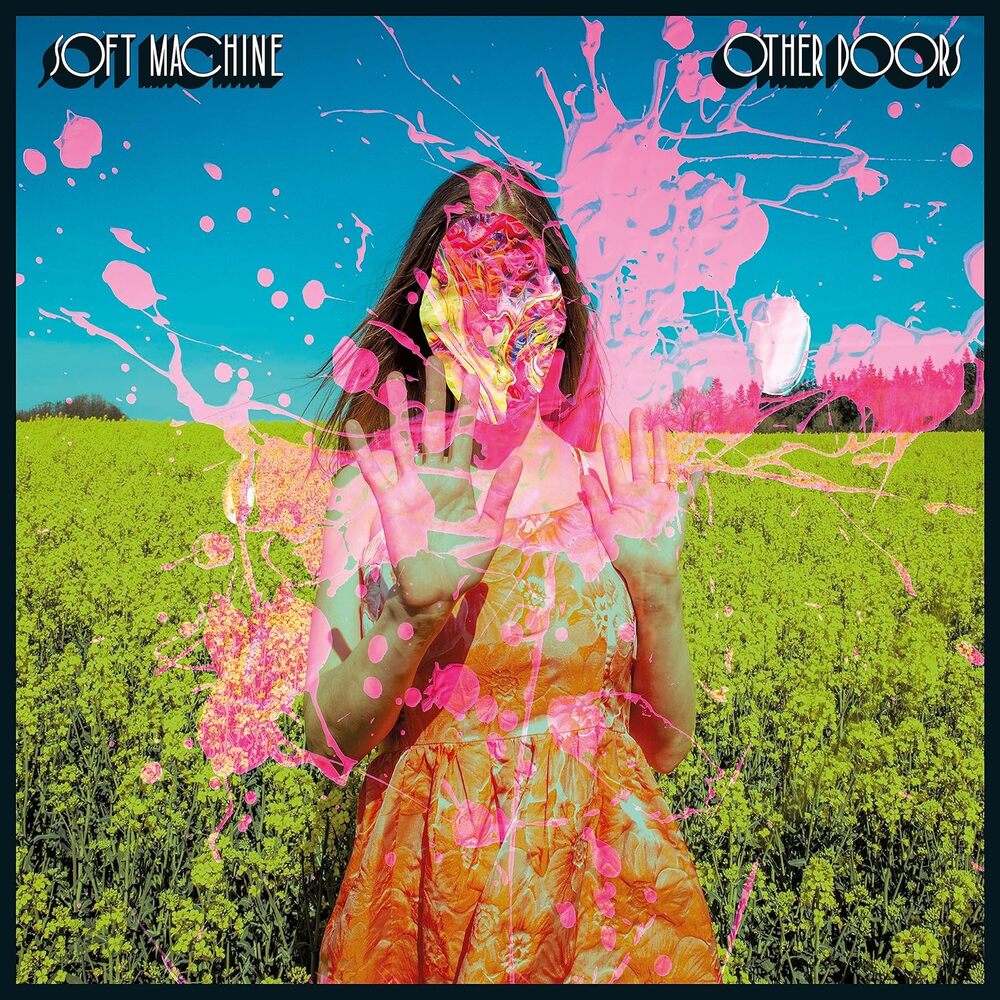
Soft Machine - Other Doors (2023)

Country: UK
Style: Progressive Rock
Rating: 7/10
Release Date: 30 Jun 2023
Sites: Facebook | Instagram | Official Website | Prog Archives | Wikipedia

It's been said that Soft Machine were the most important of the various bands who emerged from the Canterbury scene, but I've not heard enough by them to judge. I know that I've struggled with Gong, whose driving force, Daevid Allen, was a founder member of Soft Machine, but nothing I've heard thus far was quite so experimental. However, they've not done a heck of a lot lately, a string of eleven albums between 1968 and 1981 followed by only one until now, 2018's Hidden Details.

Therefore I was keen to take a listen to this, featuring a few long term members, one for the final time. Drummer John Marshall, who had four separate stints with the band, including the majority of the seventies and the entire period since their reformation in 2015, passed away in 2023, so this is his last contribution to their discography. John Etheridge is still with us but, even though he was in the band in the late seventies and in the eighties, his current run is his longest. Roy Babbington retired in 2020 but returns here to play bass on a couple of tracks, including a memorable showing on Penny Hitch.

That's the second track here and it's more substantial than Careless Eyes before it, that being an agreeable interplay of flutes and electric guitars. This one mixes bass, drums and keyboards, then adds a memorable saxophone that makes it feel complete. An electric guitar solo from Etheridge in the second half is too much for a while, noodling over a textured backdrop rather than merging with it, like Theo Travis's sax does. It works better at the end of the track, but it takes time to get there, as indeed it does on the following track, Other Doors.

As a result, this may play a lot better to jazz fans than rock fans, though the album as a whole fits well between the two. I was expecting prog rock but this is closer to jazz fusion. Whichever it may count as, it's also relatively accessible. Careless Eyes starts out highly accessible, as an incredibly easy song to listen to, and then it gets progressively jazzier as if it's moving up a scale. We might not realise we're listening to jazz until we get to Crooked Usage, when the drums ditch a pretense of playing rhythm and start to jam as a lead instrument and the bass goes off on runs everywhere. However, it's still not wildly out there, the album waiting until Fell to Earth to really challenge.

That's ten tracks into thirteen and it's a prowler from the outset, with rumbling guitar and bass, a teasing set of cymbals and a dangerous saxophone. That saxophone has been our friend for many tracks thus far, always courteous and helpful enough to walk old ladies across the road. It shows up late in Crooked Usage and is almost a voice of reason there, bringing the other instruments back into line. Here, it's a different beast entirely, threatening anyone within range. The piece almost ends a minute in, as if the band are ready to wrap things up with a flourish, but it continues on and only gets more frantic as it does so.

I can easily see unwary listeners liking this album immediately because it's just so nice but getting to Crooked Usage and wondering what they signed up for. More experienced prog fans would be a lot more knowledgeable but still run through the same scenario with Fell to Earth being the point at which they question. Either way, they'll probably skip back to track one and listen through again with very different ears. I take that as a good thing because it doesn't throw us in at the deep end and hope we can swim. It gives us lessons for a while and then reveals that we're over the Mariana Trench. Well, maybe not quite that deep but notably deeper than we were.

There are interesting touches outside those two tracks. Joy of a Toy is one for two reasons. One is that it starts out as if it's going to be a jazz improvisation on Heartbreak Hotel. Those are easy to recognise chords! It doesn't go there, but where it goes instead includes what seems to be a weird effect for Etheridge's guitar that sounds rather like it's being used to tune a radio. I'm not sure it works but it's certainly worth the attempt. Maybe Never features plenty of chirpy keyboards, as if this piece was travelling to the same deep space places that the android in Glass Hammer's Arise did last year.

The other note that I'd throw out is that I really enjoyed the bass on this album. Jazz is a genre in which every instrument can play lead and, well, is rather expected to. What's interesting is that I'd call out both bassists: long term member Babbington as a guest on Penny Hitch and especially on Now! is the Time, where the interaction between guitar and bass the entire purpose for this piece, but also Freddy Baker, his replacement, especially on The Stars Apart.

And so this doesn't start out like it's going to be an interesting album, with the easy listening that comprises Careless Eyes, but it does get there and it stays there, all the way to the final track that may well be the best on the album. That's Back in Season and it's also the longest of them at seven minutes, except for Crooked Usage at eight and a half. I think it's because because once we realise that we've moved from chilling to asking questions, we're engaged enough to want to figure out a firm answer or three. Where this fits within Soft Machine's back catalogue, I couldn't tell you, but it's much more accessible and much more interesting to me than Gong.

Wednesday, 3 January 2024

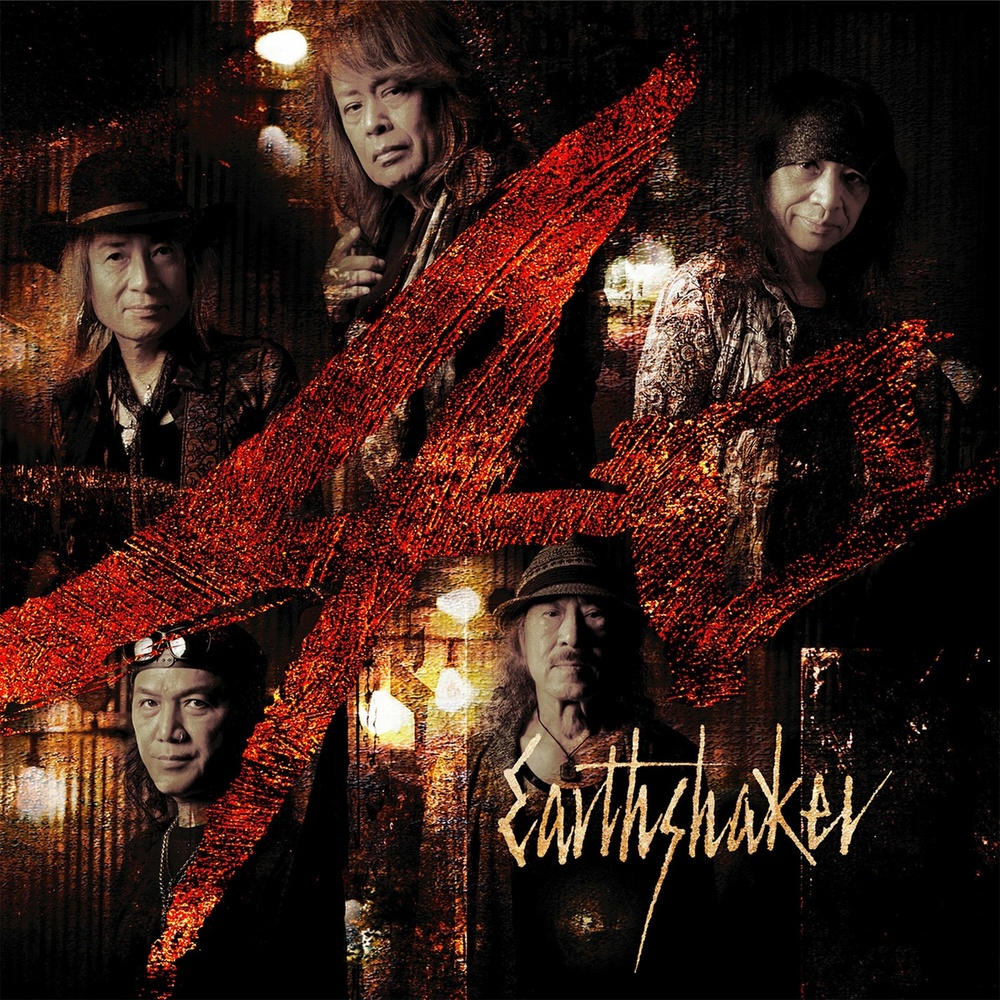
Earthshaker - 40 (2023)

Country: Japan
Style: Hard Rock
Rating: 7/10
Release Date: 6 Sep 2023
Sites: Metal Archives | Official Website | Twitter | Wikipedia | YouTube

Here's a name I was very happy to see put out new material in 2023 but I got caught up in events so I never listened to it then. Well, that's partly what January catch-up is for! Now, if the name has no meaning for you, let me explain that back in the eighties, Japanese metal was becoming known to the west. The biggest band in Japan at the time were Loudness and we heard their albums in the UK, but the one we heard most was Vow Wow, previously and subsequently Bow Wow, who briefly relocated to the UK and hired Neil Murray of Whitesnake fame as their bassist. A little behind but still third on the list were Earthshaker, who were released on the ever-reliable Music for Nations.

I liked Earthshaker a lot and I remember Radio Magic getting stuck in my head for a long while. It seems that they stuck it out until 1994, Japan perhaps remaining more accepting of a traditional rock and metal sound in the face of grunge than the US and UK, but split anyway. I didn't notice at the time but probably assumed that they'd already gone. What I see now is that they reformed in 2000 and have stayed together ever since. This is their twenty-fourth album and the twelfth since their reformation, so matching the tally from their original run. As its title suggests, it also shows up forty years after their self-titled debut in 1983.

And it's good stuff. It seems that they've moved a little more towards a hard rock sound than pure heavy metal, but this is hard and heavy to me, with feet firmly in both camps. Certainly, the guitar of Shara Ishihara is still front and center, with blistering solos on a whole bunch of tracks, starting with the opener, 儚き夢よ, or A Fleeting Dream, but with the peach oddly being the final minute of 点と線, or Points and Lines, which is otherwise a ballad, so a lot softer than the norm.

I should add that Earthshaker always did like their ballads, but I always enjoyed them for feeling substantial, never soporific in the way that so many ballads by so many other bands were. I'd love to know what the lyrics say to build this one up to such a finalé, but it's sung in Japanese, as indeed most of the album is, even if five of the ten titles are listed in English. I don't know close to enough Japanese to be able to catch more than a word here and there.

Ballads aside, the most obvious rock song here is It's Showtime, because there's a serious Jon Lord style drive to the organ and a perky beat. Marcy Nishida doesn't remotely sound like Ian Gillan but it's not tough to see Deep Purple covering this. It's a great song already because of those aspects, but there's an impressive flow to the vocals, a wonderful bass solo and a neat shift to keyboards as it ends. This is such a natural approach for Earthshaker that I'm surprised that there aren't more Purple-influenced songs here.

My other highlight is 永遠に消えぬ約束, or An Everlasting Promise, because it's a rocker that finds an interesting groove from the outset and builds wonderfully. I also like Our Glory Days and 傷跡, or Scar, more and more with each listen, because they feel so uplifting, even given the title of the latter. In fact, the former is so uplifting that it suggests that, however many glory days this band has had in its past, its members feel like their true glory days are right now as they recorded this song. That's a good feeling.

That was quite the realisation, but I'd already noted down how the guitar solos play that way too. They're not merely joyous from the standpoint of being technically accomplished, which they are, they're also joyous because they feel actively uplifting. I certainly felt better about my day after listening to Ishihara's guitar, especially when he's soloing on songs like Points and Lines or Scar.

I can't call out more songs as particular highlights, which suggests that this isn't quite as strong as the Loudness album I reviewed almost a year ago, but it's highly consistent and feels comfortable quickly. That, along with how uplifting it often feels, helps it to become an old friend in relatively few listens. I may have given Loudness's Sunburst album a slightly higher rating a year ago, but I'm more likely to be coming back to this one to visit.

Tuesday, 2 January 2024

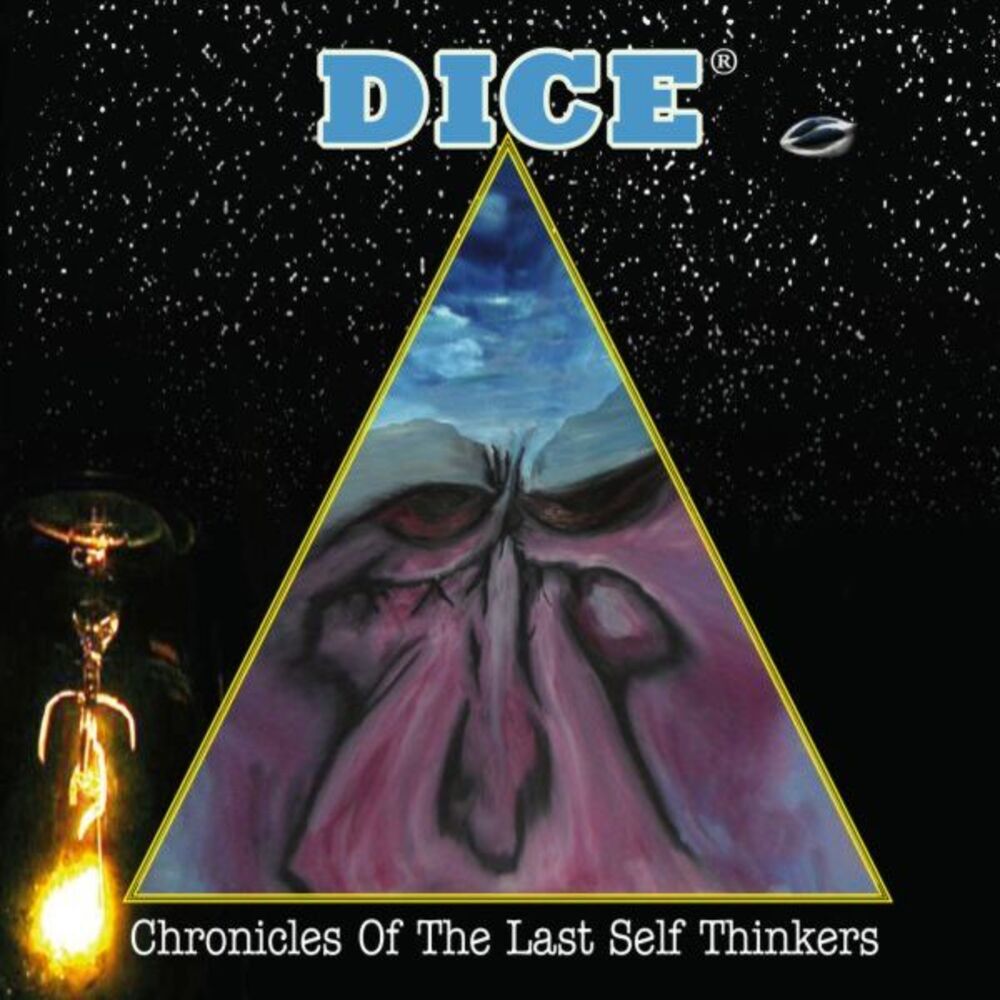
Dice - Chronicles of the Last Self Thinkers (2023)

Country: Germany
Style: Progressive Rock
Rating: 7/10
Release Date: 21 Jul 2023
Sites: Official Website | Prog Archives

Every January, I alternate albums from the previous year that I missed, which is quite a lot in 2023 because I lost a few months to running events and struggled to pick up the ball after them, and an array of new releases from January. Here's the first of the former, because it was a submission I'd let slip past me last July. Dice are a German band who were formed back in 1974 but got prolific in 1997, knocking out an album every year since then, only three of those being live, but I didn't find them until 2019's Yes-2-5-Roger-Roger. After finding them, I apparently promptly lost them again, missing three albums in between that one and this.

Everything I said about that one holds true here. They play smooth prog rock, led by the guitar of Peter Viertel, who I could easily listen to until the cows come home, but with accented vocals from Christian Nóvé adding lyrics here and there, always in English. Nóvé also plays bass and provides a lot of keyboard texture, as well as writing and producing all the music, so it's his band as much as it belongs to anyone but I always come back to that guitarwork, which sits somewhere between Dave Gilmour and Steve Rothery.

It's the Pink Floyd side of that pair that's most obvious, at least in instrumental sections. At their best, as they are for much of the opener, Who Knows the Truth, and all of the closer, Chronicle 57 Blues Play, they remind of Shine On You Crazy Diamond once it gets moving, that tasty guitar on a real journey with a space rock edge overlaid through keyboards. These are smooth tracks that we fall into like a river and just flow along with. They feel utterly effortless and should last forever, as Gilmour's legendary Comfortably Numb solo tended to do on tour with him standing on top of that wall.

And Dice are at their best when they're smooth, to my thinking. It doesn't have to be restricted to instrumental guitar sections, as Nóvé's voice is able to merge with that mood, as indeed it does in Who Knows the Truth, a song that flows whether it's vocal or instrumental. However, whenever a song breaks that smooth approach, like I am the Only One with its jagged rhythms and vocals that demand more attention, the effect is lost somewhat. The song simply doesn't flow as well in that approach, even when Viertel is out there in the spotlight.

I should underline that one reason why these songs get so immersive is that they tend to be long. Both Who Knows the Truth and I am the Only One exceed twelve minutes in length, because Dice don't ever feel the need to wrap songs up quickly. Well, almost never, at least, because Chronicle 57 Blues Play is a five minute instrumental to wrap up proceedings. However, the other four songs range from over nine and a half minutes to just shy of thirteen. Dice prefer their songs to breathe, wisely giving Viertel opportunity to solo frequently and Nóvé occasionally too, on keyboards.

If the bookends are the standout tracks for me, there's much to enjoy on the four in between. The Steve Rothery guitar is most evident on I am the Only One. Some of the keyboards on Just Like the Lemmings approaches new wave, which is an interesting touch, the early parts of The Key echoing that with a delightful vocalisation from Ramona Nóvé and a later narration utilising unusual post-production. There's some piercingly clear guitar to open up Just Like the Lemmings too, for a first minute until Nóvé's vocal takes over and we're into that poppy new wave style, the guitar absent for a while and the keyboards ready to take the spotlight when it's time for a solo.

And that just leaves Freedom for My Soul, which isn't because it's the most noteworthy but for the precise opposite reason. It's the least noteworthy of the bunch, but just because it has nothing to say that's unusual doesn't mean that it isn't a decent song on its own merits. It is and that may be why it ought to be a good point of entry for those who haven't heard Dice before. If you like it, as you ought to if you're intrigued by the concept of smooth prog, then you're really going to like the rest of this album and the rest of what Dice do.

All in all, this isn't particularly inventive prog but it's highly enjoyable prog, especially if you like a guitar solo in the Dave Gilmour style that just runs on and on. I always see the vocals as the weak link in the sound, reminding me of a less urgent Uli Jon Roth, but they're never a problem. They're merely less sophisticated than the instrumentation, but just as honest. If you can cope with them like I can, there's a large and ever-growing catalogue of albums to enjoy.

Monday, 18 December 2023

Tuatha de Danann - The Nameless Cry (2023)

Country: Brazil
Style: Folk Metal
Rating: 7/10
Release Date: 1 Dec 2023
Sites: Bandcamp | Facebook | Instagram | Metal Archives | Prog Archives | Official Website | YouTube

My favourite Celtic folk metal band from Brazil is back and that phrase seems less surprising each time that I write it. They're also back playing folk metal again after In Nomine Éireann in 2020, an album that dipped just as often into rock. This is their sixth studio album but I've only been aware of them since The Tribes of Witching Souls EP in 2019 and haven't caught up with their earlier work yet. I should, not because it sounds like this but because it probably doesn't, given that they're on Prog Archives listed as prog folk, as their previous name of Pendragon might suggest.

Maybe there's a remnant of that prog mindset here, especially in the keyboards of Edgard Britto, but it's far from dominant. This is folk metal, firmly Celtic with prominent flutes and whistles and mostly Celtic melodies. I say mostly because I heard Magnum-esque melodies in Untitled, and that shifts its sound over the Irish Sea to be a more English influenced song, as well as one with more of a commercial rock tinge. That song is heavied up but A Fragile Whisper to a Raging Roar after it, a song which often feels as English as it is Irish, also stays firmly rock in its verses, before the crunch kicks back in.

My favourite track here is far more Celtic, even though it pumps up the power metal aspect that's never too far away to the max. It's The Rabble's Cry, oddly for me the shortest full song here, and it stirs the blood nicely. The one English moment comes during a wonderful instrumental run during the midsection, because it's a spotlight-passing part that shifts from fiddle to guitar to Hammond organ, back to fiddle and then to vocals again. For that moment of Hammond organ, we're firmly in Uriah Heep territory, which surprised me but works well in this Celtic context.

It's the flutes of Bruno Maia, also the band's guitarist, that always nudge it back to Éire. Most of these songs start out with him on flute, not least The Nameless to open up the album, but also an impressive pair of tracks much later on, The Virgin's Tower and Clown. I should mention here that the former kicks off with a deep harsh vocal from bassist Giovani Gomes before giving way to the guest female vocals of Daísa Munhoz, a Brazilian power metal singer best known for a band called Vandroya, though I know her from her prior guest contributions to Tuatha de Danann releases.

That shift works really well as a transition, something that they do a few times on this album. The opener features another moment like that that's also brief but also wonderful. Bruna Maia is also the lead vocalist in Tuatha de Danann and he's singing clean on The Nameless when Gomes comes in with his harsh voice as a neat underline to him right before the song drops away from vocals to a dancing flute section. I listened to that transition a bunch of times and it's unusual but masterful. I'm less sold on the electronically manipulated vocal that wraps up that instrumental passage and returns at the end of the song, as well as in the brief interlude called Spark.

There is another guest here, but I'm only aware of two this time out, compared to a whole slew of them on In Nomine Éireann. He's Hugo Mariutti, also Brazilian and, while he seems to have begun in thrash metal, he moved quickly into heavy/power metal where he's stayed for thirty years. He's a guitarist and so presumably contributes to the guitars on A Fragile Whisper to a Raging Roar in some fashion, though it's the vocal melody and the proggy keyboards that stand out most on this one. The vocals feel softer than elsewhere, though, so maybe Mariutti stepped in as a singer.

This is another strong album from Tuatha de Danann. While I'm not as surprised as I was in 2019 to hear Celtic folk metal from a Brazilian band, I'm just as eager to hear more. They're not the most prolific band out there but even COVID hasn't pushed them back to gaps like the eleven year one between Trova di Danú in 2004 and Dawn of a New Sun in 2015. I still don't know how big the Celtic folk metal scene is in southern Brazil but it's presumably large enough to sustain them right now, so I look forward to album number seven in a few years time.

Friday, 15 December 2023

Gama Bomb - Bats (2023)

Country: Ireland
Style: Thrash Metal
Rating: 7/10
Release Date: 10 Nov 2023
Sites: Bandcamp | Facebook | Instagram | Metal Archives | Official Website | Twitter | Wikipedia | YouTube

Irish thrashers Gama Bomb have called this, their eighth album, their "weirdest" yet, and they're not wrong. There are many sounds here that we wouldn't expect on a thrash metal album, but I'd suggest that they all fit. Given what some of them are, just saying that surprises me, but it's quite the adventure and the sense of humour they maintain helps that mindset. My only problem came from so much of the influences here are very easily identifiable, meaning that this is somehow an innovative departure from the norm and an often derivative set of pastiches at the same time.

The forgettable sub-minute long intro leads into the opener, Egyptron, which is clearly one of the most innovative songs here, featuring as it does two highly unusual guests. Pioneering American rapper Egyptian Lover delivers a rap section against a saxophone backdrop in the Madness style, created by Gavin Kerins, neither of which is remotely expected on a thrash album. Neither are the vocal lines in the bridge that sound rather like Mike Patton of Faith No More. This is thrash metal and there's an excellent frenetic guitar solo from Domo Dixon to back that up, but it's hardly the thrash metal we're used to. Maybe we could call it the nuttiest thrash sound around.

Living Dead in Beverly Hills follows in much more traditional fashion, a frantic thrash track with an overt Anthrax sound, even if the vocals are split between lead singer Philly Byrne and bassist Joe McGuigan. It's almost as if the boys wanted to underline that, after such a departure to open the album, they weren't just going to leap off the rails over the rest of the album. This one's fast and impactful, so much so that it's done in just over two minutes, but its only nod to another genre is a guitar line borrowed from Grieg's In the Hall of the Mountain King.

That one's an obvious lift, because it's so well known a melody that you don't have to be a classical buff to recognise it. I have to wonder if the riff in Materialize is another one that I merely haven't recognised, because it's so insanely lively that it could be a cartoon theme tune, the sort of thing we might hear while Scooby and the Gang are running from zombies. Trollfest don't have anything this bouncy! There's Acid Reign here, I think, and the vocals shift up to the piercing levels of Bobby Ellsworth at its intensity peaks. I kept waiting for the electro-violence.

Most of the influences are more generic in nature, though, such as that obvious Anthrax sound on Living Dead in Beverly Hills. Oddly, these influences aren't all from the thrash genre. Judas Priest kind of count because they pioneered the genre; they show up occasionally in Rob Halford screams but also escalations and guitar solos and, most especially, on Dreamstealer, where the song plays like Judas Priest but with a David Lee Roth vibe to the vocals, of all things. And yes, every time I re-read that line, I wonder if I was insane when I took that note down but it's there.

Don't Get Your Hair Cut is sped up Tank with a decent side of Motörhead. It's a silly song, down to the stereotypical metal scream at the very end, but it's a lot of fun. There's more Tank on Bats in Your Hair too, but the vocals are more operatic, a cross between between a pair of different Robs, Halford and Gallagher. There's definitely some Raven here in the riffs of fast but not quite thrash sections. That Faith No More vibe is back at points on Secular Saw and the saxophone returns for Bats in Your Hair and sounds even more like Madness than Egyptron.

I have a love/hate thing going on with thrash bands who don't take things as seriously as the norm demands. I appreciate the depth the genre had in writing songs that warned about nuclear chaos and social issues, but it's also refreshing to bounce over to Anthrax sometimes to hear them sing about Judge Dredd or dip into hip hop or lounge music. It's OK to have fun with thrash metal and I haven't heard any thrash band clearly having this much fun without turning into parody, like, say, Lawnmower Deth or Metal Duck. I liked this a lot. It walks a very fine line but it walks it well. I like Gama Bomb being weird.

The Cosmic Gospel - Cosmic Songs for Reptiles in Love (2023)

Country: Italy
Style: Psychedelic Rock
Rating: 7/10
Release Date: 15 Dec 2023
Sites: Bandcamp | Facebook | Instagram | YouTube

I could swear blind that I received this album as a submission for review but I can't find any details of that anywhere: no download, no e-mail, no message, no nothing. So maybe I was dreaming, but I took a listen anyway on Bandcamp and found it an interesting album, especially immediately after the weird but wonderful new Gama Bomb album, which is different in almost every way. This is pop music that's far too interesting to be just pop music, with the Beatles's psychedelic years the first point of reference. It's also often psychedelic rock, occasionally progressive rock and sometimes a little garage rock too, though this latter is rarely forceful.

The Cosmic Gospel is primarily one man in Macerata, Italy who writes, records and mixes, as well as singing and playing most of the instruments on this debut album. He's Gabriel Medina and he even painted the cover art, I believe. The only other musician involved is Louie Cericola who contributed some keyboard work on Core Memory Unlocked from his Korg Sigma. The Bandcamp page suggests that these songs were either inspired or grew out of songs by other bands that Medina must have been involved with that were either never finished or not released, so its patchwork nature makes sense.

If there's a common thread, it's that most of these songs create a particular mood that is utterly subverted by their lyrics. Usually, that means perky moods and dark lyrics, but occasionally that's reversed. I often let albums wash over me without actively seeking out their lyric sheets, but this only works that way if we refuse to let odd words and phrases grab our attention because they're not remotely part of the mood we're in. I'd suggest that following the lyrics isn't the best way for a listener to go, because Medina delivers lyrics in an unstructured manner, almost conversationally, finding whatever melody works. Letting it wash over us is better, treating it as an instrument, but it's going to get jarring when you realise what he's singing.

Exhibit A, your honour, is the opening track, It's Forever Midnight. It's a perky opener, with garage rock guitar, synth handclaps and Medina's soft psychedelic voice. It's laid back but catchy, masking dark lyrics about our narrator breaking into his neighbour's house to save his baby from perverted Mr. Goose. It's a happy psychedelic pop song with some subdued garage rock emphasis until we're in on the story, at which point it only gets darker the more we think about it. Is this an actual baby or a term of endearment for a girlfriend? Does that make it better or worse? What precisely does perverted mean here? Maybe we don't want to know.

Exhibit B would be the song after it, The Richest Guy on the Planet is My Best Friend. It opens with sugar sweet synths taking the place of the guitars, which only show up on slightly more emphatic sections. It's less perky but it's still happy until the lyrics start to make us wonder. This one's open to more interpretation but it could easily be read as a cult suicide. Whatever it means, it doesn't mean anything sugar sweet unless there's something seriously wrong with our brain.

Exhibit C works the same way but the other way around. Core Memory Unlocked opens soft like a folky psychedelic pop song from the late sixties, flutes behind a strummed acoustic guitar. It's less Beatles here and more Vashti Bunyan, maybe as covered by Tyrannosaurus Rex. There's a sadness here that wasn't on the opening couple of songs, but its lyrics reflect simple melancholic longing rather than anything actively dark. So, as the music darkens, the lyrics lighten. That's not a usual approach, but I found it fascinating.

What else I found fascinating is how this often feels relatively simple, built on simple melodies in that Beatles-esque way. Their most powerful songs were often the most simple and Medina knows that. However, there are a number of places on this album where he dips into something far more complex. There's some of this on Hot Car Song, which is more emphatic from the outset, its John Kongos beat shifting into almost a Cramps vibe at points, but this mostly kicks in at the end of the blobfish song, Psychrolutes Marcidus Man, when it shifts into what sounds like a kazoo orchestra.

The Demon Whispers opens like avant-garde classical, but its ominous nature is overwhelmed by a folky acoustic guitar, the unusual returning halfway with the advent of a theremin-like melody. It gives way to Wrath and Ghosts, which starts out unusual and only gets more so as it builds. This is an almost entirely electronic track onto which voices are added, though they may be manipulated samples. It becomes an avant-garde choral piece for a while, like Henry Cow taking György Ligeti and shifting his polyphony into something prog.

It's been too long since I've been this surprised by an album in any way other than quality. Sure, it happens that I expect a lot from a band who fail to deliver or not much from one that utterly nails it this time out. Here, I had no expectations of quality because it's a debut album. What I expected was something psychedelic, with influences beyond the Beatles listed on Bandcamp being Damon Albarn, Beck and the Brian Jonestown Massacre. I wasn't expecting this experimentation and the thoroughly unusual contrast between music and lyrics. So, thank you if anyone actually did send a copy of this over to me. If not, I must have dreamed my way into an interesting find.

Thursday, 14 December 2023

Varathron - The Crimson Temple (2023)

Country: Greece
Style: Symphonic Black Metal
Rating: 8/10
Release Date: 1 Dec 2023
Sites: Bandcamp | Facebook | Instagram | Metal Archives | Official Website | Twitter | VK | YouTube

I could have sworn that I'd heard Varathron before, but as soon as Stefan Necroabyssious's vocals hit me on Hegemony of Chaos, the opening track proper, I realised that I haven't. They're a Greek band who helped to pioneer black metal in Greece, alongside Necromantia and Rotting Christ, in the early nineties. They were formed as far back as 1988 with their 1993 debut, His Majesty at the Swamp, credited to three musicians and a drum machine. They've bulked up over the years to be a five piece here, with Achilleas C sounding like more because of his keyboards, but this is only their seventh studio album. They're not exactly prolific.

Their particular brand of black metal is symphonic to my ears, though the album starts out with a vibrant intro with choirs, bagpipes and drums, as if Carl Orff was writing Viking metal. It suggests that this will be folk metal rather than black metal—and there are certainly folk elements spicing up the mix at points throughout—but Hegemony of Chaos kicks right into speedy black metal with a roar, initially sounding like the traditional wall of sound black metal style.

However, it does a lot more than that and, in doing so, points at where this album goes. One note is that, while it starts out fast and traditional, Stefan doesn't deliver in the typical shrieks. He has a notably theatrical voice that's rough more than it's harsh and projects more than it shouts, and doesn't really have an easy comparison. While it seemed out of place when I first heard it, I found that I adjusted almost immediately. It's a memorable voice, sinister rather than evil, and I like it a lot.

Another is that, while Hegemony of Chaos starts out fast and traditional, it doesn't stay that way. On this one, the verses are fast but the chorus slows down and adds orchestral swells to make the backdrop seem epic. There's a firm melody overlaid too that takes over, as the song slows down to highlight different aspects of the band's sound and the instrumental sections are slower again. It gets folky halfway through, with an ethnic lute of some description leading the midsection with a repeated rhythmic theme as its backdrop that continues until the end of the song.

So Hegemony of Chaos often slows down, Crypts in the Mist rarely speeds up and, the further I got into the album, the more I realised that there really isn't a lot of fast material here. Hegemony of Chaos, Immortalis Regnum Diaboli and Shrouds of the Miasmic Winds all have strong fast sections but there's also plenty on each of those songs that's much slower. I found myself thinking of how a lot of thrash bands have fallen into playing at two speeds, blisterers going fast and chuggers going mid-pace, with how often any particular band shifts between them an easy means of determining their audience.

In those terms, Varathron seem like a mid-pace black metal band nowadays, even if they ramp up occasionally to frenetic, that's where their elegance is and that's what makes them symphonic to me. This is a set of carefully composed tracks that use black metal components to tell stories and evoke moods. There's as much Iron Maiden on show here as there is Emperor, but the sonic toolkit is far more reminiscent of the latter, so that's where it falls. Stefan's voice is worth bringing up in this context too, because his theatrical approach would often work as well in other forms of metal as this particular one, which tends to be labelled extreme.

The guitars from Achilleas and Sotiris often follow suit, reminding as much of heavy metal bands as anything extreme. Check out how Crypts in the Mist ends and how Cimmerian Priesthood kicks off in its wake. This is heavy metal guitarwork, even if the tone is straight out of black metal. Outside of the few blistering sections, it's often only a fast beat from Haris that really keeps the extreme tag valid. If he slowed down and ditched his double bass work, then this might still remind of black metal but wouldn't play as extreme at all, more prog or even folk metal. To the Gods of Yore hints at doom metal.

And I have to come back to that folk metal aspect. It's not everywhere here, though it shows up on enough occasions to be notable. I don't know what instruments are being used, because I don't see any credits for them, but they're clearly ethnic and they add an extra flavour to this music when a song decides to let them in. Hegemony of Chaos is the first, but To the Gods of Yore goes there too and there's plenty more in Swamp King. I liked this aspect a lot and wish it had been utilised more often. It makes me wonder how Varathron arrived at this sound and how their next album will turn out, though it would be surprising if we see that any time soon.

Dune Pilot - Magnetic (2023)

Country: Germany
Style: Hard/Stoner Rock
Rating: 7/10
Release Date: 1 Dec 2023
Sites: Bandcamp | Facebook | Instagram | Official Website | YouTube

I don't know a heck of a lot about Dune Pilot. They're a four piece hard/stoner rock band who hail from Munich, though you wouldn't guess the latter from listening to them. Not only is stoner rock a quintessentially American genre to begin with, they play it in a very American way, unaccented vocals delivered in English with an American turn of phrase. What's more, they often combine the stoner rock sound with a hard rock sound that reminds of Clutch, any British forebears mostly lost in abstraction. Maybe Black Sabbath are a little noticeable in Let You Down, but otherwise they're filtered through the expected American bands.

Which ones manifest pretty quickly. Magnetic is perky stoner rock with less fuzz on the guitar than I expected. The riffs are strong but the hooks are strong too. The vocals are clean but with a slight rasp for edge. There's plenty of Clutch here but some Kyuss too. Visions lightens up initially for an overtly psychedelic feel with vocals deliberately subdued for effect. Both build and a minute in we find ourselves back in that Clutch meets Kyuss territory, with some Monster Magnet thrown in for good measure as it gets heavier, that missing fuzz added right back in. This one bulks up generally, even if it drops back into a jaunty midsection, but it gets heavy at the end and then heavier again.

As the album runs on, the Kyuss influence starts to morph into a Queens of a Stone Age influence, a nuance I know but a telling one. Lumi goes there, but So Mad really goes there, especially late in the song. It has a swagger to it as it builds and eventually overlays a Queens of the Stone Age style melody over a fuzzy guitar and a glorious drum sound. The grit in the voice is getting progressively grittier but the hooks take over and we think about a single release. Dune Pilot like to be versatile, so Heap of Shards is more laid back, even with a relatively harsh clean voice, while Pied Piper is perky and Highest Bid comes right back to Queens of the Stone Age and Clutch.

I liked this a lot and I liked it quickly. The title track opens things up and, while it doesn't include all the aspects of Dune Pilot's sound, serves as a strong introduction to what they do. It has the hooks we expect from a stoner rock band like Queens of the Stone Age who have broken into mainstream awareness and whose catchiest songs hit the charts. It also has the emphasis of a more traditional hard rock band like Clutch, the power they can bring to bear always ready to go in the background even in a quieter song or section.

An obvious example is Take Your Lies, almost a ballad for this band, with one of a number of tasty bass intros—there's another one on Let You Down—backed by just a hint of atmosphere, before a liquid guitar joins in and softer, echoey vocals. It's definitely down a couple of gears from the norm for Dune Pilot but we never forget that there's gas in the tank and the band have their feet ready to hit the pedals. Eventually, of course, they do and it's like they never calmed down at all.

It's hard to pick out favourite tracks, not because there aren't standouts but because they're very different. I like Visions a lot because there's so much dynamic play in it and I like that sort of thing, especially when it's done as well as Dune Pilot do it. I like Let You Down because, even though it's under five minutes and not even the longest track on offer, it has an epic feel to it that's far from the norm here but very effective. Ultimately, I'd go for So Mad because it just flows so well. It has nothing that other songs here don't, but it does those things so well that it feels effortless.

I thought about a highly recommended 8/10 rating early here but the first half does shine brighter than the second. I ended up going with a merely recommended 7/10, but it's more like a seven and a half and, if this is your genre, round that right up to eight immediately. It's good stuff. I just wish I knew who was in the band so I could assign credit.

Wednesday, 13 December 2023

Glass Hammer - Arise (2023)

Country: USA
Style: Progressive Rock
Rating: 7/10
Release Date: 27 Oct 2023
Sites: Bandcamp | Facebook | Instagram | Official Website | Prog Archives | Twitter | Wikipedia | YouTube

Glass Hammer have never sat around twiddling their thumbs in between albums. The longest gap between releases thus far has been three years and that was between albums two and three way back in 1995 and 1998. However, this matches their longest sustained period of annual releases, as the fourth in a row. I've reviewed all four and I've thoroughly enjoyed each of them. My favourite is surely the first of them, Dreaming City in 2020, but I could see other people choosing otherwise, Prog Archives raters putting Skallagrimm: Into the Breach top and this second. There's no correct choice.

Perhaps the consistency, both in schedule and quality, is because the line-up has remained rather stable of late, Hannah Pryor firmly establishing herself as lead vocalist on a third album running, Steve Babb performing on multiple instruments throughout and Reece Boyd gradually bulking up his contributions on guitars. He's played on all four, as has Fred Schendel, who's only on one track this time around. That just leaves Randall Williams, who I believe is new on drums.

This is a concept album, hardly a new approach for Glass Hammer who started out with one back in 1993. However, they've mostly restricted those to fantasy subjects, while this is science fiction, the story of an android who's sent out into the stars in a spaceship called the Daedalus to discover the most amazing sights that the galaxy has to offer. Babb has suggested that this is his "progressive rock spin on space rock" and that makes sense, because the biggest difference between this and its recent predecessors is in his keyboards, which are far from what they used to be.

He used to play far more traditionally with a Keith Emerson sort of mindset but this is very perky keyboard work, Babb almost treating his synths more like a prepared piano, programming chirps and bleeps as individual notes and then playing them in a way that we interpret rather than hear as music. On Mare Sirenum, he generates notes almost like stars sparkling in the firmament. It's a very impressionistic approach and it does a wonderful job at generating a particular mood of wild possibility.

There are other changes here too. Glass Hammer have been getting a little heavier of late and do so again here, but not throughout. It's an album of two halves, the first seven tracks serving as an initial journey out into deep space, racking up around half an hour between them, and the last two matching that timeframe on a journey back. However, that first half is also easily broken up into a couple of halves, the first light and airy, a journey full of hope but the second much heavier and full of darkness as the Daedalus returns.

It's worth considering that first half of the first half as very modern prog rock, which could easily be called neo-neo-prog if that wasn't so inherently clumsy a term. It's rooted in electronica and is so modern that it's fair to call it futuristic. While there's a bass on Arion (18 Delphini b) to move it forward and Babb's vocals are heavily manipulated, like a kid who's just found out what autotune is and wants to see how far the human voice can be distorted, it's fundamentally driven by Babb's keyboards. That starts to change in Lost, which is dense and fascinating before it opens wide with Pryor's voice. Then the hints become the norm in Rift at WASP-12 and Proxima Centauri B.

WASP-12 is psychedelic rock with the most metallic guitar thus far. There's Hawkwind in this sound for sure, but something more. I hear elements of doom metal but also nineties alt rock. Proxima Centauri B is heavier again, far more doom metal but with so much fuzz on Babb's bass that we're better off calling in stoner metal, even if Pryor's vocals are still clean. There's Sabbath in the riffs, but also in those vocals, which I expected a lot less. Halfway through, things smooth out, even with a fuzzladen bass, as if the Daedalus is leaving the darkness behind.

And so to the final two songs. Arise plays epic but it's not fundamentally unusual. It's just a longer song by far than those that came before, one that may well be my favurite, because it breathes so well. It's patient and has some neat ethnic tinges and Vangelis-like touches. While it runs a hefty twelve minutes, The Return of Daedalus is longer again by four, but it plays very differently. While it starts out epic with samples, it mostly turns into an instrumental jam. Now, it's a very tasty jam that moves through genres as diverse as stoner rock and jazz to and from prog, but it doesn't add to the concept behind the album. Arise does some of that, but nowhere near as much.

Glass Hammer continue to evolve, as perhaps prog rock bands always should, and I'm finding their growth fascinating. Not everything here works for me, the manipulated vocals on Arion a definite no and the concept not entirely clear, especially when it's apparently forgotten during that long final jam. However, most of it does and I thoroughly enjoyed the combination of spacier keyboard work and heavier bass and guitar. Hearkening back to Kraftwerk while also heavying up into more modern instrumental stoner rock at the same time is a strange approach but a very good one. I'm interested to see how the next album plays. And, right now, it seems likely that we can expect that in late 2024, which is getting closer every day.