Showing posts with label doom/death metal. Show all posts

Monday, 24 February 2025

Dawn of Solace - Affliction Vortex

Country: Finland
Style: Gothic Metal
Rating: 7/10
Release Date: 14 Feb 2025
Sites: Bandcamp | Facebook | Instagram | Metal Archives | Twitter

Tuomas Saukkonen seems to be alternating his bands lately. The previous Dawn of Solace album, Flames of Perdition, came out in 2022, then Before the Dawn released Stormbringers in 2023 and Wolfheart issued Draconian Darkness in 2024. Now he's back to Before the Dawn for their fourth album and the third I've reviewed here at Apocalypse Later. For anyone new to all of these, he's a Finnish multi-instrumentalist, Wolfheart play melodic death metal, Dawn of Solace play gothic metal and Before the Dawn are in between, playing both.

This album follows closely from its predecessor, many songs starting out in gothic rock territory but building into a metal crunch. The metal is usually relatively slow and doomy, with occasional shifts in tempo like the glorious urgency midway through Invitation. The vocals are mostly clean, courtesy of Mikko Heikkilä, best known for Kaunis Kuolematon, but Saukkonen occasionally adds a harsh voice, starting on Fortress. I like both voices—Heikkilä's an elegant tenor, Saukkonen's a rich growl—but they're also highly compatible. Into the Light and Perennial put them into close proximity, Dream combines them and both work a lot better than the alternation of verses in Fortress.

In fact, Into the Light is the point where this album grabbed me. I'm used to these Dawn of Solace albums taking a while to take firm root in my brain. That happened with both Waves and Flames of Perdition and it happened here too. First time through, it sounded good but ephemeral, with nothing sticking. Second time through, Into the Light stood up for attention. Third time through, it s all started to take hold and I was relishing riffs and melodies like they were old favourites. Why it takes me a few listens with Dawn of Solace, I don't know, because that usually happens with much more complex music than this, but it happens nonetheless.

Whatever the reason, Into the Light is the first gem. Murder opens up capably enough but it also ends rather unsatisfyingly, just wandering out of the door as if it doesn't think we're paying any attention to it. Fortress is decent enough too, but seems to missing something. Into the Night is perfectly formed, with an achingly slow beat in the verses that stays achingly slow even when an entirely different beat leaps into action alongside it. Somehow it's doomy and urgent all at once and that makes it fascinating. Add a strong melodic line and those two voices working very nicely together and it becomes quite the track.

It's followed by another gem in Rival, which is so effortlessly elegant that it seems to be carved out of mahogany. If there's some My Dying Bride to be found in Into the Light, there's plenty of Paradise Lost in Rival, especially in the guitarwork during the first minute. Then it drops away to create a sense of space for Heikkilä's delicious voice to explore the way we expect from someone like Soen. And then everything builds powerfully, all the more so on Invitation, into gothic metal crunch like we'd expect from Lacrimas Profundere but with those hints at doom/death that come especially from Saukkonen's vocals.

Put all that together and the result a heady mix that's right up my alley. Everything that follows is decent at the very least, the first two songs being the weakest for me, but the best of them sit at the heart of the album, especially Into the Light and Rival but with Invitation on their heels. It plays consistently from there, with Perennial perhaps playing up the doom/death even more and the closer, Mother Earth, following suit with a minute and a half of soothing electronica tacked onto the end to fade out the album. Nothing here lasts past five minutes, including Mother Earth, if we discount that outro.

And so this is another strong album from Dawn of Solace that took me a few listens to fully grasp. I'll figure out why one day. For now, I just let it play and feel very little, let it play again and feel a little more, let it play a third time and suddenly it's right up my alley and I wondering why it took me so long to realise it. What are the odds that album number five, probably due after the next from Before the Dawn and Wolfheart releases, works exactly the same way? Pretty good, I think.

Monday, 27 January 2025

Hamferð - Men Guðs hond er sterk (2024)

Country: Faroe Islands
Style: Melodic Doom/Death Metal
Rating: 8/10
Release Date: 22 Mar 2024
Sites: Bandcamp | Facebook | Instagram | Metal Archives | Official Website | Twitter | Wikipedia | YouTube

One place I always check at the end of a year is the Angry Metal Guy website, because they cover a lot more metal than I do and don't tend to be swayed by the trends that affect more mainstream reporting. Angry Metal Guy himself chose this as his favourite metal album of 2024, ahead of one album I hadn't heard of, Kanonenfieber's Die Urkatastrophe, and two that I've reviewed already, namely Fleshgod Apocalypse and Opeth. Clearly he likes Hamferð, because he also awarded their second and prior album, Támsins likam, his Album of the Year, in 2018. No, they're hardly prolific.

What he likes the most seems to be the way they merge two distinct sounds, whether he describes them as "dour and sinister, but simultaneously fragile" or "tragedy and hope". I also appreciate a sense of duality, which is most obvious to me in the vocal styles of Jón Aldará. He has two distinct ones. The rich harsh growl that he employs to open up Ábær and the album as a whole, is sourced from the doom/death textbook but with has relatively limited intonation. The soaring tenor that he uses to fill this music with a timeless ache is all nuance and far more typical for gothic metal.

The more I replayed the album, the more I heard that in the music behind him too. When he's in a death growl mode, the music is bludgeoning, often monotonous, and with a subtle echo, as if they play every instrument extra hard and so every individual sound resonates for longer. Sometimes, especially towards the end of songs, it slows even further to hint at funeral doom. However, when Aldará lifts into his clean voice, the music gains nuance too, creating soundscapes of mood. These songs are well worth listening to with a careful ear to see how it's all crafted, but only after a few times through letting it all just wash over you as slabs of emotion.

As you might imagine from all that, I do like this album, but I don't like it as much as Angry Metal Guy does. Ábær and Rikin took a while to grow on me. They got there eventually, Rikin first with a merger of near funeral doom monotony and death metal flurry, the clean vocal sections joined by some surprisingly lively guitarwork as nuance. However, on every listen through, and I'm up to six or seven, it's Marrusorg that grabs me first.

It's the longest song on the album, albeit hardly an epic at six minutes and change. However, this one has an aching grandeur to it that speaks to me, with a calmer folkier clean voice to open it up and a delicacy that doesn't negate size, as if this is a vast mansion of a song that's stood up to the centuries but is likely to collapse any day now. Sections of crushing funeral doom give way to light and tender parts and both feed into each other. That mansion was clearly loved in its day but it's forgotten now and the saddest part is that nobody will know when it's gone. It's the standout for me and I feel its ache deeply. I especially like the moments when the guitar quietly sets the stage for a ramp up in emphasis, like My Dying Bride used to do.

Once Hamferð have gone there, they're happy to revisit the territory on Glæman, with throbbing staccato guitar notes, incredibly sparse piano and that calm clean voice again, which we know will escalate at some point. I may not hear a lot of possibility in his harsh voice, beyond its texture, but his overall range here is stunning. That's most apparent here on Glæman, because it's the song he stays both clean and calm for longest. The chaotic rumble that begins Í hamferð is a firm reminder of what hasn't happened for the past five minutes and change.

Almost appropriately, Í hamferð, a heavier song in every way, is my second highlight, because it's a firm reminder of the power of that heavier approach. Aldará does his best harsh work on this one and the twin guitars of Theodor Kapnas and Eyðun í Geil Hvannastein bolster up almost into a wall of sound, though this always remains death rather than black. It's almost a storm surrounded by a buffer of utter calm, because Fendreygar starts out that way, but with an ominous beat from Remi Johannesen and a hint of fuzzy guitar that tells us that it's not going to stay there. Damn, this one builds. Highlight number three.

I wasn't planning to run through these tracks in order, but it ended up happening that way. What's left is Hvølja, the heaviest, most rumbly, most funeral doom the album gets, with the heaviest the clean Aldará voice gets, tortured into strange shapes but somehow still clean. There's also a title track to wrap up the album, but that's something completely different than anything thus far. It's an unusual piece, resonant guitarwork that's presumably played on an electric guitar but with the aim of mimicking a folky acoustic guitar. The only other music is the timeless wash of the ocean on the Faroese shore and the spoken voice of an old man telling a story. It's quite the achievement, as I find myself listening carefully every time, even though I don't understand a word he says.

Google Translate tells me that the title is "But God's hand is strong", while Hamferð is a peculiarly Faroese word to describe manifestations of dead or missing seamen. The remoteness of the Faroe Islands infuses this music to its core. It's bleak but rich, harsh but beautiful, crushing but folky. The result is the third album from Hamferð, just over a decade after their first. It's an easy 8/10 for me because it soaked into my soul, but, unlike Angry Metal Guy, it's not my Album of the Year.

Monday, 6 May 2024

My Dying Bride - A Mortal Binding (2024)

Country: UK
Style: Doom/Death Metal
Rating: 9/10
Release Date: 6 May 2024
Sites: Facebook | Instagram | Metal Archives | Official Website | Twitter | Wikipedia | YouTube

I liked My Dying Bride's previous album, 2020's The Ghost of Orion, rather a lot, though it's proved a little polarising with fans. Some see it as the best thing they've ever done, while others, well, do not with vehemence. I wonder what the reaction to this one will be, given that it's less a follow up and more a reaffirmation of everything that this band does. Sure, as with that prior album, it's all fundamentally doom metal, but it's done with serious emphasis this time, almost as if they didn't mean it before and they really, really mean it now.

Lead vocalist Aaron Stainthorpe moved a little back into the band's original doom/death territory on The Ghost of Orion, but he doubles down here, practically spitting out his lyrics at the start of opener, Her Dominion. He stays harsh for much of this song and he follows suit on a bunch of other tracks, most obviously The Apocalyptist. Of course, he doesn't stay there throughout, shifting to a clean melancholy voice for Thornwyck Hymn and The 2nd of Three Bells, but returning to harsh when a song needs it. There's a neat alternation between clean and harsh on Crushed Embers as he duets with himself.

Maybe it's just the crisp production by Mark Mynett, but it feels like the two guitarists, Andrew Craighan and Neil Blanchett, both mean it all the more this time too. The riffing here is cavernous from the glorious staccato riff early in Her Dominion onwards. The slower metal gets, the more important the riffs become. The riffs on this album are consistently instant, few of them remotely complex and some slow enough to be sets of power chords, but every one nailing what it needs to do. For something completely different, there's an elegant duet between acoustic and electric guitars to open up A Starving Heart too.

Back to the production again, the bass of Lena Abé is easily distinguishable within the mix and it's far more than just an underpinning for the heaviness of the guitars. Of course, it does that and it does it deliciously, but it also does a lot more, especially in moments where the guitars step back and Abé often carries on, often serving as the change between sections. The drum sound is strong too and returning drummer Dan Mullins, who played with My Dying Bride from 2007-2012, joining at the same time as Abé, who never left, has a varied approach that's sometimes patient but also sometimes prominent, as on Unthroned Creed where he could easily have held back far more but adds a jagged rhythm instead.

That leaves Shaun McGowan, who's responsible for the vast majority of the gothic feel nowadays, not through his keyboards but through his violin. Those keyboards are there right from the start, adding texture behind the opening of Her Dominion, but we have to pay attention to hear it over most of the album. The violin, on the other hand, dominates whenever it shows up, which is often. It's a perfect instrument to echo the melancholy of Stainthorpe's clean vocals, but it works just as well adding that aching feel behind his harsh voice too on The Apocalyptist, and of course serving as a soloing instrument.

Apparently there was tension within the band while they were recording this, which ought to be a shame. We always want people to get along, but maybe that friction helped bring the vibrancy to this album that wasn't there last time out. Is it anger and frustration that fuels the attitude that pervades this album? I have no idea, but whatever it is worked a charm. Everything here is stellar. Of course, it tends to happen this way but my first 9/10 for the year came as recently as 29th April and yet here's another one on 3rd May. I loved it on a first listen but it just gets better on repeats.

Her Dominion kicks it off hard with angry harsh vocals and a vicious punch of a riff. Opening single Thornwyck Hymn and The 2nd of Three Bells shift back to the clean approach they ran with for lots of albums. All three are excellent songs, but Unthroned Creed raises the bar with a solid chugging riff and a catchy vocal line, the combination reminding of Candlemass. On my first time through, The Apocalyptist after it was my favourite of these seven tracks by far, but, on each return visit, Unthroned Creed threatens to match it.

That said, The Apocalyptist is gorgeous. It's the longest track here and it's the standout, its riffs simple but thoroughly effective, it's vocals blistering. Stainthorpe gets serious attitude into his death growls here and no less feeling in the clean ones. There's also a delightful violin during the elegant midsection and the song grows and evolves effortlessly, even though it travels quite a lot of ground over its eleven and a half minutes. A Starving Heart is an achingly slow counter with a vocal that moves from pleading to angry to commanding. Crushed Embers takes the album home with style.

This is a generous album at almost fifty-five minutes, even if it's slightly shorter than The Ghost of Orion, and it's consistently strong throughout. I'm half a dozen listens in now and, every time, I'm just as engrossed by every song as on my first time through. I liked its predecessor enough to give it a highly recommended 8/10 here, but this is easily a step up. I wonder how the folk who see that one as their best album thus far—I don't, by the way—will see this one.

Monday, 11 December 2023

Tol Morwen - Rise of the Fury (2023)

Country: Italy
Style: Melodic Death Metal
Rating: 8/10
Release Date: 18 Nov 2023
Sites: Bandcamp | Facebook | Instagram | Metal Archives | YouTube

Here's another submission but one that surprised me. Tol Morwen are a five piece from Italy with no full length releases, even though they formed a decade ago in 2014. This is their second EP and everything that I see suggests that they play melodic death metal. So I had expectations and track one, Berserkgang, met them pretty well. It's a good song and it's played well too, with a technical edge. The production is strong and each instrument, including the voice, is strong too but nothing really departs from what the genre does. It's merely melodic death metal done very well. No surprises thus far.

Unchained continues in the same vein but then escalates into something more. If Berserkgang had anything else except melodic death, it was the occasional hint at an older form of heavy metal and that's here too. Phil's drums remain fast throughout but the rest of the song more and more into older forms. I heard a lot of doom/death in the guitar lines, the solos are old school heavy metal in the Randy Rhoads vein and there's a slow doomy wrap up. Suddenly there's a lot more here than a simple tag of melodic death metal suggests.

So Unchained surprised me, but so did how the album continued from there. Ragnar wraps up with more melodic death but there's a lot of old school heavy metal in there too, especially during the slower midsection. Before that, there's a heck of a lot to discover and I'd be fascinated to see how Tol Morwen can spin that versatility over a full length album. And yes, I'd be interested to see how it gets labelled, because I don't buy into the band continuing to be seen as just one genre.

I keep coming back to Unchained, but Fate of Gods is better still. It starts slow and atmospheric in the pouring rain, a prowling bass from Thorval introducing Metallica-esque power chords. This is a neat and elegant way to introduce a song, even if it's not one of the epics of the album at only five and a half minutes. It feels like prog metal, even before whispering vocals and a complex dynamic play lead into a roaring escalation. There's a lot here: interesting changes, plenty of dynamics and vocals from Dökk that grow and develop and play with mood. The solos are wonderful and so is the Iron Maiden riffage, presumably courtesy of rhythm guitarist Erik.

If you're expecting something different again from Terror of Rome by this point, then you won't be disappointed. There's a Viking metal sound on this one, though it doesn't skimp on the fast paced melodic death. There's more of that elegant guitarwork, with a further excellent solo from Bjorn and a tasty outro from guitar and bass. It almost makes it a little surprising that Ragnar wraps up in a purer vein, but it works as a bookend to Berserkgang and prompts us to just start the EP over again.

I'm calling this an EP because that's what it seems to be marketed as and there are only five tracks on offer. However, none of these songs is short, Terror of Rome the shortest at not much shy of five minutes, so there's more music to enjoy here than there has been on some full length albums that I've reviewed lately, even without a separate intro track. And hey, it's notably longer than Reign in Blood, so it's a substantial EP. I definitely want a full length, but I'm very happy with this one in the meantime. Thanks, folks!

Wednesday, 18 October 2023

On Thorns I Lay - On Thorns I Lay (2023)

Country: Greece
Style: Atmospheric Doom/Death Metal
Rating: 7/10
Release Date: 13 Oct 2023
Sites: Bandcamp | Facebook | Instagram | Metal Archives | Official Website | Twitter | Wikipedia | YouTube

On Thorns I Lay have been around for a long while, even if you haven't heard the name before, but they're not the same band they've been. They were founded in Athens back in 1992, with their first album released three years later, and they've experienced a slew of line-up changes, as tends to be the case. However, until their ninth album, Threnos in 2020, the band remained centered around a pair of founder members, lead vocalist Stefanos Kintzoglou, who also contributed bass until 2017, and guitarist Christos Dragamestianos.

That changed in 2021 when Kintzoglou left to reform the band that became On Thorns I Lay with a few former members. That's Phlebotomy, not to be mistaken with Phlebotomized, the Dutch death metal band. Maybe that's why this album is self-titled. Presumably Dragamestianos sees it as the fresh start the band needs, especially given that the rest of the line-up is very new. Vocalist Peter Miliadis, guitarist Nikolas Paraskevopoulos and bassist Kostas Mexis are each making their studio debuts for On Thorns I Lay here.

If you've followed On Thorns I Lay through those decades, you might be wondering what style they have adopted this week. They started out as brutal death metal, shifted to symphonic doom/death and then gothic metal, before eventually moving back to the doom/death style evident here. The new aspect is folk instrumentation, which I believe shows up here for the first time. There are lots of ethnic instruments on display here and the opener, Fallen from Grace, kicks off with ethnic voice and strings. However, it's still doom/death rather than folk metal, merely with new textures.

I'm a folk metal fan, so I'd be happy with more of the ethnic instrumentation, but it works well as a contrast, replacing the beauty and the beast vocal contrast from some earlier albums. This aspect isn't overused, but it is integral. One of my favourite sections in the album arrives late in Thorns of Fire when the heavy doom/death is accompanied by what I presume is some sort of zither. Many of the songs feature this contrast in some form, especially Crestfallen, both at the beginning and in the midsection, and Among the Wolves, both of which are favourites of mine.

The band's core sound nowadays is an elegant form of atmospheric doom metal, which is slow and crushingly heavy but full of melody, especially through the guitars. It's a rich and immersive sound that, at its best, feels apart from everything as if it's torn a hole in the space/time continuum and dragged us through to somewhere and somewhen entirely new. The death aspect comes mostly in a warm but harsh growled vocal from Miliadis, who I presume is versatile given that he also sings for a crossover thrash band, Double Square, and used to sing for a metalcore band, SlavEATgod.

The instrument that stood out the most for me was the guitar. I don't know how much of that is the work of Dragamestianos and how much his new compatriot, Paraskevopoulos, but the combination worked for me, whether they were soloing, providing melodic lines in a Paradise Lost style or even dropping into an acoustic or ethnic mode, using whatever other stringed instruments were sitting around. I've read that there were many of them, as many as fifteen different instruments, though I have no idea what or where.

The other aspect that deserves mention is that these aren't generally short songs but they're not epics either. Fallen from Grace opens up at just over eight minutes and Crestfallen exceeds it by a single second. The final three songs run seven minutes and varying degrees of change, with only a single track left to serve as the anomaly. That's Newborn Skies, which fails to reach five minutes, a strange and ironic fact given that it's the song with the most symphonic backdrop. We might think that that would be the epic but it isn't here and it's a fair length. The rest of the songs breathe nicely.

I'm new to On Thorns I Lay, as far as I'm aware, and I have to remind myself that this is a new start for them, but I'm interested in what they sounded like previously. The gothic tinges have been far more pivotal to their sound in the past, from what I read, and I've been a particular fan of beauty and the beast vocals since they were invented. Maybe I'll dip into their earlier work once I get back on track with reviews after the events of the past few months. In the meantime, I'm happy with the old school doom/death sound they have here, with heavier death growls and a teasing element of folk added for good measure. I like.

Tuesday, 17 October 2023

Kaunis Kuolematon - Mielenvalta (2023)

Country: Finland
Style: Melodic Doom/Death Metal
Rating: 7/10
Release Date: 13 Oct 2023
Sites: Bandcamp | Facebook | Instagram | Metal Archives | Official Website | YouTube

Here's another excellent new melodic doom/death metal album, but it's plenty different from the Wizards of Wiznan album that impressed me so much last week. Kaunis Kuolematon are Finns and they've been around for a decade and change, with this their fourth album. They play their doom/death with a heavy side of black metal, as is perhaps most evident as they start out, with Surussa uinuva. It's sweet and melodic, a sort of subdued epic, until a raucous black metal shriek bursts in and we're suddenly in something very different. It's definitely still melodic but it's heavy, fast and blistering too, more so than I'd expect from doom/death.

Now, this does slow down to find a more traditional doom/death speed, just as Elävältä haudattu does that the other way around, but these tracks enjoy shifting their intensity levels substantially, most playing out in what feel like movements, even though none are identified and only the closer unfolds at epic length, lasting almost nine minutes. Everything else ranges from just under five to just over six and a half, which is a consistent window and not a particularly epic one.

Elävältä haudattu is easily my favourite song here and it has a whole swathe of movements. It's a heavy doom song as it begins, with slow and patient drumming, but that grows into a section with a delicate melody unfolding in front of a building black metal wall of sound. The singer here is Olli Suvanto, the band's lead vocalist, who I presume delivers both the harsh vocals, halfway between a rich death growl and the wicked black metal shriek that ramped up Surussa Uinuva. Then it drops away for a long section with Mikko Heikkilä, the band's rhythm guitarist, at the mike, singing clean with a resonant voice. When it ramps up again, it's very heavy, but it finds another clean moment and ends with a cool harmonisation of voices.

It's a peach of a song and it does a lot. Elävältä haudattu translates to Buried Alive, so maybe this frequent change of movements represents actions in a story. I could see a battle as someone tries not to be buried alive, then to escape, only to fail and experience peace for a while in surrender, a feeling that doesn't last, leading to the heavy and frantic sections later in the song. I don't speak Finnish so maybe I'm projecting considerably here but the musical variation does imply a story and that seems to make sense.

Frankly, the contrasts are what make this special, not just in general but in specific moments. That initial black metal shriek in Surussa uinuva felt like a plane crashing into a hitherto flawless lake. There's a shift from melodic piano to harsh vehemence in Peilikuva that's especially delightful too. This band can shift entirely on a dime and they seem to enjoy the experience. However, it wouldn't be as effective if they couldn't sell both their core styles, the black metal infused doom/death and the peaceful slow and melodic diversions with clean vocals. They absolutely sell both and at points, like in Peilikuva, overlap the two with wonderful effect.

That's three songs and there are half a dozen more to come, starting with the title track, which is Mind Power in translation. However, there's not much more to say once we get past these. This one kicks off with what sounds like an ethnic horn but could be a voice, I suppose. It literally commands our attention and suggests a shift into folk metal that never comes, even with an excellent female voice in the midsection that utterly surprised me. The rumbling behind it and effective developing melody are exquisite atmosphere and then we slam back in hard, as we ought to expect by now.

The rest of the album continues in much the same vein, setting up new contrasts and creating new moments, but it doesn't add anything new. It also doesn't disappoint, though it rarely matches the early sparks of brilliance, and it doesn't get old. In other words, I may not like this as much as I did the Wizards of Wiznan album, but I've happily played it on repeat half a dozen times now and I still find new elements to enjoy even this many times through. It's immersive stuff and it's hard to pull myself away from it so I can focus on another album to review.

The best news is that Kaunis Kuolematon means Beautiful Immortal, which bodes well, and I'm not seeing a line-up change. This was created by the same five people as their self-titled debut EP back in 2012. That sort of thing always suggests a solid compatibility behind band members that allows them to grow their sound without growing apart. Now, I have three earlier albums to seek out and I look forward to the next one.

Friday, 13 October 2023

Wizards of Wiznan - No Light Has No Shadow (2023)

Country: Switzerland
Style: Melodic Doom/Death Metal
Rating: 8/10
Release Date: 29 Sep 2023
Sites: Bandcamp | Facebook | Instagram | Metal Archives

I wanted to review something doomladen this week but the first few albums I tried out belted right out of the gate or lost me with sub-standard vocals. Four or five in, I found this one, the debut of a doom/death band from the small Swiss town of Nendaz, and it firmly hit the sweet spot for me. It's funeral doom as it opens, taking its sweet time to move but doing so steadily and atmospherically, but it spends much of its time a little faster at the pace you might expect for doom/death, ramping at points, especially late in the album, but never really becoming fast.

Frankly, I was firmly on board by the time that the vocals arrive. There are two voices here, both of them harsh but one easily warmer than the other. I'm not sure which of them is which, but it looks like one belongs to guitarist Marc Dalton and the other to bassist Robin Délèze. If I'm not missing the mark, they're there in that long intro to Seeds of Light adding texture as musical instruments rather than vocals. They certainly do that even when they're singing because texture is a huge deal here, and it's why this album often brought an obscure pioneer to mind as an inspiration.

That's Winds of Sirius, who came from Bourg-en-Bresse on just the other side of the French border from Switzerland, so further away in time than distance, their sole release being back in 1999. It's an album I go back to relatively often, because nobody does texture like them, but it's always good to hear that approach in newer bands, most often ones playing melodic doom/death. They aren't a be all and end all influence though, because I hear Celtic Frost here too and My Dying Bride, along with broader dips into funeral doom and stoner rock, maybe even a hint of Cradle of Filth.

Seeds of Light is a strong opener, patient enough to last just shy of nine minutes, which isn't wildly unusual for this band. There's only one "short" song here, La sorcière du Vegenand, which wraps in under five minutes, the other four stretching from almost eight to over nine. This seems natural to them, because all these songs wander and evolve, dropping often into slow and aching melody and eventually bouncing back up to a firm vehemence. There's a wonderful tease at a fast section late in Absolute Void that's all the better for following a long melancholy midsection.

Absolute Void may well be my favourite song here, but Feed the Fire is close and nothing's far from it, because the quality and imagination are consistently high. Absolute Void starts with emphasis, slow but heavy and bludgeoning, enough so that it moves into textured sludge metal, before that drop into a gorgeous midsection. Even as it grows out of that, it maintains a hypnotic rhythm that suddenly clears, as if the fog has moved aside, and we're in that teasing thrash section and then a set of stoner rock riffs, before it wraps up. It has quite the growth and every moment is blissful.

It would have been hard to match that one, but the Wizards give it their best. Feed the Fire trawls in stoner rock from the outset and stays there for a while, but eventually deepens to doom, adding some more sludge later too. La sorcière du Vegenand ups the tempo, starting out faster than any other song here gets, that one brief moment in Absolute Void aside. It's hardly fast though, just a steady step up from everything else here, especially early on. Reign, the longest song on offer, has its energy too to close out, and it doesn't outstay its welcome in the slightest.

While it's not hard for me to pick a favourite track here, it's harder to pick a favourite aspect. None of the four musicians does anything but build a coherent band sound. Nobody's trying to steal the spotlight or show off what they can do. I like the steady but solid drumming of Ludovic Bornet and how the other instruments often join it in providing rhythm, even the guitars. I like Délèze's bass, which gets one solo moment to shine, and I like his and Dalton's vocals, which walk that fine line of being both harsh and melodic. So few harsh vocalists nail intonation. These guys have it down.

At the end of the day, though, which is when doom/death has most power, it's the guitars that I'd call out for highest praise, because they nail every tone they aim for. They work perfectly in heavy riffing, keeping the weight of this music around us like a cave, and they work even better when in a sort of chime emulation mode, echoing through that cave. So kudos to Dalton and Adrien Bornet, but really kudos to everyone involved here for creating such a glorious texture. I don't know where Wiznan is but I can buy into these guys being wizards and I look forward to whatever they'll conjure up next.

Thursday, 15 June 2023

Sporae Autem Yuggoth - ...However It Still Moves (2023)

Country: Chile
Style: Doom/Death Metal
Rating: 7/10
Release Date: 19 May 2023
Sites: Bandcamp | Facebook | Instagram | Metal Archives | YouTube

While Sporae Autem Yuggoth certainly play doom/death metal as advertised, that doesn't give an accurate impression of what they really do.

The doom at the heart of their sound is deep and slow, surely rooted in funeral doom and it's aided by the keyboards of Johanna Sánchez, which add a tantalising visual element to their sound, as if a song isn't just a song but a portal into a mediaeval castle, a torture dungeon or an ancient abbey. I know that most of what she does is texture, but that probably extends to sound effects, like an odd bell or scream or gust of wind. On rare moments when the band speeds up, which they do at some point in most songs, they sound fast but they're actually just catching up to the tempos that many doom/death bands use to begin with.

The death aspect is primarily in the vocals of Patricio Araya, who doesn't sound at all like his fellow Chilean namesake, Tom. Patricio's voice isn't so much a death growl, as a hoarse croak. It's an ache of a voice that adds more to the textures the keyboards are conjuring up, bringing age and history with it, as if he's been stuck in those castles, dungeons or abbeys for centuries. Finally he's got the chance to tell his stories, but he's been so long without a voice that he has to fight to get more out than the whisper at the heart of The Pendulum of Necropath, managing it across the album with a time-honoured rasp.

Sánchez is the new fish here, as everyone else has been in place since the band formed in 2019, and their only previous release was an EP back in 2020 called The Plague of the Aeons, which featured a slightly different line-up: no keyboards, but a second guitarist, Juan Drey, who left a year later. I'm intrigued as to what that sounds like, because the keyboards here often creep in through cracks an additional guitarist wouldn't leave so obviously in place. There are songs when Sánchez sees those keyboards as a sort of second guitar, as on the gloriously titled ten minute epic Colosus Larvae: The Crimson Coffin & The Scarlet Worm. There are points where she fills in like she's a mad organist in a different part of the building who delights in joining in, but surprisingly subtly.

I should add that this is a long album and the length may be its toughest challenge, as it reaches a breathe over an hour, ambitious for a debut album. That length works for me, because this isn't a typical set of songs, it's an immersion into a particular atmosphere and that lingers even after the music is done, so time ceases to have meaning. The fact that this feels ancient, gothic not in music genre so much as in literary genre, aids that because it feels like it's taken centuries to arrive with us. If a song could be dropped, maybe Disintegration would be a good candidate because it's faster and more traditionally built for the most part and so brings us out of that atmosphere a little.

On a more traditional album, it would be a highlight and it's a tasty and mature piece, built out of rollicking riffs rather than atmosphere. It also helps to underline how delicate Disguise the Odious Spirits is on its heels. This is the true epic of the album, running twelve and a half minutes, putting it a couple ahead of Apparition of Internal Odes, Colosus Larvae, Through Dominion to Interlude, a trio of songs that run around the ten minute mark. This is the one among them that truly takes its time to set the scene and ease slowly into a build. The others all tell stories, while the third has fun with the band's roots, hinting at the Funeral March in a less overt way than Candlemass.

And I do wonder which bands combined in their minds to distil this particular sound. It used to be a given that doom/death bands owed a serious debt to Paradise Lost and My Dying Bride, but that's not obvious here. I'm hearing a more continental flavour than a British one, finding inspiration in Celtic Frost, Winds of Sirius and, especially as the album builds, Candlemass. I'm sure there are an array of funeral doom bands in the mix too and likely classical composers too, thinking far beyond a Chopin nod to the way they write in such a visual fashion and play with space, especially during the elegant closing instrumental, The Night Ocean. I'll seek out some interviews to discover how they reached this sound.

I'll seek out some interviews to discover how they found this sound. I'll also play this a bit more in between reviewing other albums, because I think it's going to grow on me even more than it has.

Thursday, 20 April 2023

The Black Harvest - Mortuary Dogma (2023)

Country: Chile
Style: Doom/Death Metal
Rating: 8/10
Release Date: 29 Mar 2023
Sites: Bandcamp | Facebook | Metal Archives | YouTube

I've been listening to this album for a few days now as I wrap up some books for publication and it's soaked into my skin. It feels immersive to me, the beat steady rather than slow and the production excellent. The music reminds me of Winds of Sirius, who put out an amazing album back in 1999 and vanished, but with production that the French band could only dream of. Every component is easy to follow, so we can go to ground with the dirty bass and rhythm guitar and watch the clean lead a long way above us, soaring in beauty. The vocals move between the two.

The Black Harvest have been around for a long time, formed as far back as 2004, though it took ten years to get round to a demo. That may be because it was initially a much smaller project, with the guitarist today, who goes by D.b, playing every instrument and M.v providing vocals over the top. I see that line-up on both demos, but it fleshed out in 2016 to a full band. I'm not sure when current vocalist Jorge Quilape joined, but everyone else showed up at that point, so they've been solid for seven years now.

I haven't heard their debut album, a self-titled effort in 2017, but this feels like exactly the sort of thing that should show up after a six year wait because it's well worth waiting for. The opener is a strong way to start and it establishes a sound, just as any self-titled song ought to, but Torment of the Damned promptly takes it all up a notch. This is an epic, almost ten minutes in length, and it's one to really sink our teeth into, from the tasty opening riff into the echoing opening guitar solo. It feels exactly right to the degree that if I played you ten seconds from it at random, you'd be able to tell me where in the song I'm at. That's a breakdown in the midsection. That's the home stretch with everything doubling down on the groove. That's soon in, as the intro gives way to a build and the song starts to grow.

The more I hear this album, the more I love it, but that goes double for Torment of the Damned. It keeps throwing out fresh details that I didn't notice before, little touches in the background that don't do much individually but do something that deepens the song just a little and those touches add up to a heck of a lot once it's all said and done. Nothing else here matches its length but these don't tend to be short. Insurrection Path at the heart of the album is only four and a half minutes long, putting it a couple of minutes shy of anything else. Theater of Blood comes closest to being a second epic at eight and a half, which ought to count.

There are five musicians in the band and they all play a key part. Lino Contreras is excellent behind the drumkit, but what he does is emphasised by the bass of Manuel Vera Barria and especially the rhythm guitar of Moisés Alvarado, which is a wonderful contrast to the lead guitar of D.b. The lead is always clean and it soars and sustains, in the style of Paradise Lost's Gregor Mackintosh, echoing over the other instruments. Alvarado, however, plays a vicious rhythm that's built from edges and dirt and grittiness. When he's laying down a riff and D.b's soaring over him, as happens often, the contrast is magnificent. I'd almost call it the signature sound of the Black Harvest. I'm not sure if I prefer that stretch on Insurrection Path or The Succubi Delight.

And that leaves Quilape, who underlines how genre-fluid the band are. This is doom/death, with a doom pace and a death bite, but it often moves into gothic metal. Part of that is inherent in those Paradise Lost comparisons, but Quilape emphasises it. He alternates between a death growl, that feels warm and neatly rumbling, and a deep resonant clean voice. There's some Nick Holmes in his delivery but plenty of Andrew Eldritch too and something that reminded me of a powerful monk who renounced his faith to sing darker rituals. That's at the fore during the first half of Theater of Blood, before Quilape shifts back to his death growl halfway.

Perhaps most important of all, the combination of all the above may work on individual songs but continues to work throughout the album, with every song in contention for a highlight, so that the best song becomes the one that you're listening to at any particular moment. Each one of the five musicians also has multiple moments to take the spotlight without anyone appearing to show off. Contreras remains the solid backbone to the band but even he gets moments, like the very end of From Flesh to Ashes. It may be the simplest thing he's done on the album but it stands out.

And that means that this is another 8/10 for what's been a tasty week. Notably, all three of my 8s have come from the lesser known bands I'm reviewing first before a more established band. That seems telling.

Thursday, 2 February 2023

Entropia - Unhealable Scars (2023)

Country: Saudi Arabia
Style: Melodic Doom/Death Metal
Rating: 7/10
Release Date: 27 Jan 2023
Sites: Instagram | Metal Archives | Twitter | YouTube

I believe Unhealable Scars is only an EP, but it runs forty seconds longer than Reign in Blood, even with only five songs on offer, so I'm thinking of it like a short album. It's from a Saudi Arabian band called Entropia, who only formed last year but who have already got this far, with another single from last year that inexplicably didn't make the cut. The second single, Born Unknown, did, so why did they leave off Son of Dracula? Answers on the back of a postcard, as always.

They play a melodic form of doom/death metal that's very accessible but also very varied. It kicks off with Hopeless almost a grunge song with a doom filter applied to it, right down to the vocals, but then a harsh voice takes over, deep and resonant, and things settle down into more traditional territory for a while. It stays a highly unusual song, though, with the styles shifting and some perky drums from Hassan popping in at points, almost like I'd expect from commercial era Genesis.

I got used to this fresh take on doom/death reasonably quickly and started to really dig the ideas on show. Chaos in Silence starts out almost new wave, with dominant keyboards, but it eventually settles down. It continues to alternate between clean and harsh voices, but the clean one sounds less grunge and more folk on this one, even if both are supplied by the same man. Certainly, I see Abdullah AlGhamdi listed on vocals and nobody else. The riffs are heavier and the beat is quicker, reminding of points of Bucovina. I dug the guitars of Khaled C here even more.

And I dug them still more on Born Unknown, because they're elegaic as the song opens, the doom sourced from grief. They're very simple but very effective. And then we're back at full speed, fast doom with that harsh voice layered over everything. Born Unknown and No Eternity work well as a pair dealing with that cycle of grief, the sad acceptance of the solo piano that closes out the latter working well as a bookend to the guitar intro to the former. The journey between those two points is a tumultuous one, especially with No Eternity surely the doomiest piece here.

And that leaves the title track, which adds some prog into the guitar, which is yet another flavour to the mix. So this is grounded in doom, but the frequent harsh voice and pace make doom/death an appropriate definition. However, it's often faster and sometimes perkier than we expect doom to be, and it moves into alternative, folk and prog at points, not to forget regular heavy metal. It never seems to be downtuned, so guitar sections can sometimes remind us of Iron Maiden just as much as Paradise Lost. It's a tasty mix and an unusual one, which always perks up my ears.

This is only the second album I've reviewed from Saudi Arabia, after Creative Waste, but the two would seem to be wildly different in almost every way. Entropia are new, but Creative Waste have been around for a couple of decades. Entropia are based in the capital, Riyadh, at the heart of the country, while Creative Waste are a long way on the gulf coast. Entropia play an unusual mix of an array of genres, while Creative Waste are relatively straight forward old school grindcore. Clearly they're not too examples of a single scene but I'm eager to discover what else is going on in Saudi Arabia, just as I'm eager to hear more from Entropia.

This works well as a teaser, but I want to hear a full album. Maybe this does work as an EP far more than it does an album. Whatever it is, I salute its creativity, especially from such a young band.

Friday, 25 November 2022

Eternal Candle - Lava (2022)

Country: Iran
Style: Progressive Doom/Death Metal
Rating: 9/10
Release Date: 13 Nov 2022
Sites: Bandcamp | Facebook | Instagram | Metal Archives | Twitter | YouTube

One of the earliest albums I reviewed here at Apocalypse Later was The Carved Karma, the debut album from Iranian progressive doom/death metal band Eternal Candle. I'd stumbled across that sometime in 2018 and adored it, even though I hadn't considered Iran any sort of hotbed of metal activity. Four years on, I've reviewed other Iranian albums from a variety of genres, so it's not just Eternal Candle, but it took until last year for prog rock band Atravan to join them on an 8/10, thus making my Highly Recommended List for the year. Now, Eternal Candle are back with a follow-up to their debut, so I was hoping for it to make three for Iran.

While I'd never stopped listening to rock and metal, back in January 2019, I hadn't deep dived into what was going on across the world in a long time. With almost 1,200 highly varied albums behind me (and the reviews to match), I'm much more aware of what's happening nowadays. I still have to point out that Eternal Candle are still doing things that feel unusual. Sure, their sound is clearly a derivation of doom/death taken in progressive directions, bands like Anathema and Opeth listed on their Bandcamp page as tags. However, that doesn't explain everything.

It might explain their approach to contrast. Their songs tend to include light sections that are sung clean and are often delicate and beautiful, as well as heavy sections that shift to a harsh vocal and intense musicality. It's far from unusual for this band to migrate back and forth between those two extremes and they do it really well. However, they don't do it in all the ways that other bands with similar approaches take. Even their escalations seem different, such as the way that the soft part early in The Last Verdict ramps up during a line rather than between two of them.

For one, however heavy those heavy parts get, the lead guitar tends to float above them with real ache in its heart. I'm sure they took that from bands like Anathema and My Dying Bride, but what it means to Eternal Candle is that even the heaviest material here or the most majestic, such as a late section in The Crows, never loses a sense of melancholy. It's one of the main reasons why I feel an Eternal Candle album as much as listen to it.

For another, I found myself fascinated by Josef Habibi's drums this time out. I'm not a drummer so I can't tell you what he does differently, but he does something very differently, especially during verses. It's like he's discovered a new beat entirely separate to the upbeat and the downbeat, and he's invented a new way of performing fills. Whatever it is that he does, I love it. Somehow he finds a way to make the drums more obvious, even when we're focused on melodies or textures, without actually stealing the spotlight from whatever else is going on.

And, for a third, I wonder if he took that magic trick from Armin Afzali, whom I highlighted last time out and will happily highlight again here. His basswork stands out for me because it feels at once completely apart from anything else going on at any particular point in time and also somehow a pivotal part of everything that's happening. It's as if he's standing away to the edge of the stage, or on a completely different stage, doing his own thing, his bass almost a subtle lead instrument in a different song that's playing only in his head, but somehow it underpins everything and gives it life.

I listen to so many albums from which the bass could be removed entirely without us noticing much except a slightly thinner overall sound. However, If we removed Afzali's bass from this album, what would remain would be completely different. I have a feeling that it would be rather like a human body still going about its day but without any blood. It wouldn't just lose most of its colour, though it would do that; it would leap into the uncanny valley and make us wonder what's wrong with it.

Like The Carved Karma, this is a pretty generous album, its eight tracks racking up nearly an hour of music and, initially, I enjoyed this as a single fifty-four minutes of immersive doom/death. Over repeat listens, the individual songs asserted their own identities and they're still doing that, even though they all stand out in their own way. The Nun was my first favourite track because it was the first track on the album, but Vortex took over a listen in. Then The Last Verdict made its case and a variety of others. It's got to the point now where my favourite track is whichever one I'm listening to right now.

And that means that this isn't another 8/10 for me after all. It's a 9/10. It just keeps getting better. As do Eternal Candle.

Tuesday, 14 December 2021

Swallow the Sun - Moonflowers (2021)

Country: Finland
Style: Melodic Doom/Death Metal
Rating: 7/10
Release Date: 19 Nov 2021
Sites: Facebook | Instagram | Metal Archives | Official Website | Twitter | Wikipedia

I have no idea why I didn't review Swallow the Sun's previous album, When a Shadow is Forced in to the Light, but it slipped away from me. My only excuse is that it saw release in January 2019, which was the month I started Apocalypse Later Music. At least I'm here for this one, their eighth studio album, each one released this millennium as the band was founded in 2000. Guitarist Juha Raivio is the only remaining member dating that far back but vocalist Mikko Kotamäki and bassist Matti Honkonen joined only a year later and Swallow the Sun has never had anyone else in those roles.

I liked it from the outset, as the opening title track of sorts, Moonflowers Bloom is Misery, builds magnificently. Initially, it's soft and plodding melodic guitar that a melancholy voice joins with an aching refrain. "Will you die in misery?" it asks over and over, as a string section joins the guitar. A couple of minutes in, it repeats again with insane emphasis, heavying up massively, before dropping back to the initial mode. I don't know what time signature it uses, but it feels like a slow waltz, a hypnotic sort of dance. I found it difficult not to sway to this one, even sitting in my office chair.

If Moonflowers Bloom in Misery works primarily as a set of variations on a theme, Enemy is more of a traditional doom/death song and Woven into Sorrow follows suit at greater length, elevating itself with a glorious riff early in its second half. The genre lends itself to songs that breathe and Swallow the Sun benefit from that, all eight tracks here exceeding five and a half minutes. What I see they have no interest in is conjuring up anything epic, with the longest three songs only in the seven minute range.

My favourite song opens up the second half and that's All Hallows' Grieve. I dug the album prior to that, the opener haunting me and Enemy getting better with every listen, but All Hallow's Grieve has two things to elevate it and both elevate it substantially. The first is the presence of Oceans of Slumber vocalist Cammie Gilbert; she leads the song out and duets beautifully with Kotamäki on its chorus. I still haven't heard her primary band on anything but videos but she impressed me on the recent Ison album, Aurora, and she impresses me even more here. The other is that chorus, as it's heartbreakingly beautiful, drenched in loss and grief. I felt this one deep inside.

I didn't feel anything else as deeply, but I enjoyed other tracks like The Void and The Fight of Your Life too, keeping the second half strong. I can't quite connect with Keep Your Heart Safe from Me and I'm still coming to terms with This House Has No Home, which I think is a highlight, but is still strange, shifting from pizzicato strings into a full on black metal wall of sound without warning. It caught me out when that happened the first time and, even though I knew full well it was coming on repeat listens, it still kind of catches me out each time anyway.

I can't remember which Swallow the Sun album I listened to last. I'm certainly quite a few behind, at least a decade, but this reminds me how good they are and how much I ought to check out the others. After all, their debut and their most recent album before this are both maintaining 90%+ averages at Metal Archives. Contributors don't give those out like candy and neither do I. I don't think this is that good, but it's a solid and reliable album with a number of standout tracks, a few of which I'm sure will become earworms. Let's see whether it's the refrain of Moonflowers Bloom in Misery or the sweep of the chorus in All Hallows' Grieve that dominates.

Tuesday, 7 December 2021

Rivers of Sorrow - Existence Beyond Emptiness (2021)

Country: Turkey
Style: Doom/Death Metal
Rating: 6/10
Release Date: 19 Nov 2021
Sites: Bandcamp | Instagram | YouTube

It's been almost three years since I reviewed a doom/death album from Turkey, so it's about time I listened to another one. The one in 2019 was Of Past and Passion, the solid debut from Forgotten, a six piece band who hail from Ankara, that nation's capital if not remotely its largest city. Rivers of Sorrow is also based in Ankara, but it's a one man project created by... well, I have absolutely no idea because I'm not finding any other information about the band online at all.

It's capable stuff, though it takes a while to establish itself. It starts ambitiously, with a nine and a half minute opener, Night Queen, with piano bookends and quite a journey in between. Sadly, the intro is simple and derivative and the song itself ends up in a Golden Brown decorated rhythm, an unusual song to come down the years as the Stranglers' biggest hit but an even more unusual one to constantly come to mind during the second half of a Turkish doom/death song. The end is much more like it, the piano beautifully played with a real sense of melancholy.

The other catch for me is that the vocals are hardly sophisticated. They're there and they do what they need to do, but that's about all during Night Queen and the much shorter second track, Cold Flares of Sun, which does at least find some interesting warmth. It was only the keyboard work on that opener that kept me listening. And I'm happy that I did, because it gets a lot better, as of the third song, Dreams without Hope (Genetic Disease), which is a real gem.

This one starts out more urgently and more confidently, and with ethnic melodies floating around in the background. The vocals are much more interesting too, deeper and more guttural, as if this singer didn't mean it for two tracks but absolutely does now. I was onboard from the outset, but it only gets better. Just as we're getting used to how Rivers of Sorrow sound at a more urgent pace, that pace is ruthlessly cut down in its prime with an utterly glorious slowdown that kicks in just as we're hitting the two minute mark.

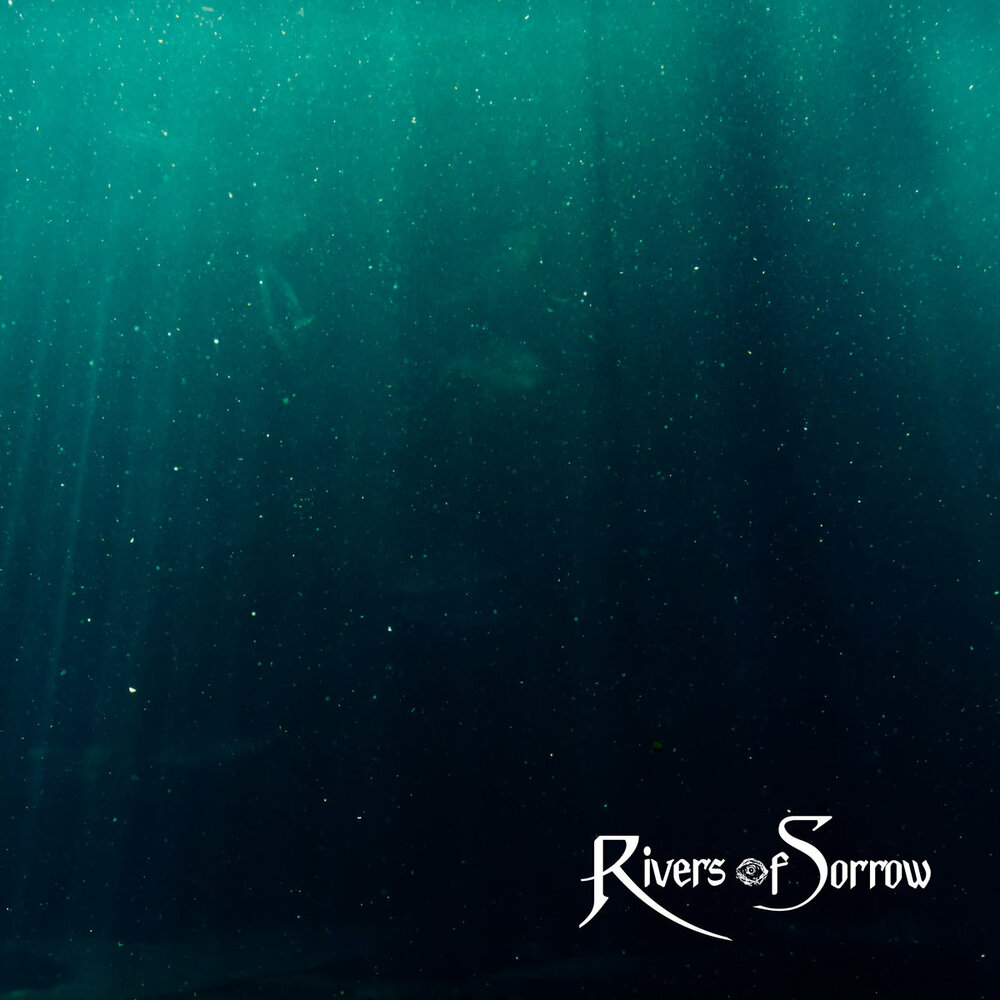
I adore this midsection, which seemed to evoke the cover art. If that's water, with light filtering in but only so far, then that's where this starts. Then the song dives deep into the abyss, all the light gone, but we see something anyway and that's a fantastic world, an set of otherworldly melodies laid over some cavernous guitar and primal drums. The vocals multilayer, in elegaic fashion, then get more urgent in response to... something. Everything about this song is great, but it keeps on getting more interesting as it goes and I had to listen a few times before continuing, revelling in it but also a little worried that the quality wouldn't continue.

Fortunately it does. Next up are the two singles that preceded the album, Her Gün Biraz Daha and Endless Suffer. I prefer the former, which is almost trancelike for a while, deep and rhythmic, with an achingly slow vibe, even when a soft speaking voice narrates for a while. If you don't connect to the vibe, you won't like the song, but I did and I did. The latter has a neatly ominous beginning, an effortlessly patient bass setting the scene. A quiet guitar takes over and teases us until it all kicks in at once, again around that two minute mark but escalating this time into something gothic and dark and enticing.

Neither of those singles can match Dreams without Hope, nor can anything else here, but they're good songs and they show that Rivers of Sorrow has real promise. This album may be inconsistent, especially with a nine and a half minute piano nocturne to wrap things up, but there's good stuff on offer and one absolute peach in Dreams without Hope. And I'm going back to listen to that one again right now, while sending the best of luck to whoever's behind the Rivers of Sorrow name. I'd be interested in checking out album number two.

Wednesday, 14 April 2021

Marianas Rest - Fata Morgana (2021)

Country: Finland
Style: Melodic Doom/Death Metal
Rating: 7/10
Release Date: 12 Mar 2021
Sites: Bandcamp | Facebook | Instagram | Metal Archives | Official Website | Twitter | YouTube

I like this album, the third from Finnish melodic doom/death metallers Marianas Rest, but I can't help but feel that I want to like it more than I do, and, after multiple listens, I'm trying to figure out why.

The band are certainly very comfortable in the genre, unsurprising given that they've been playing in it since 2013 and they're signed to Napalm Records. There are eight songs here, most of them patient and lengthy without ever becoming epics. With the exception of Horrokseen, which is a piano/cello interlude of sorts, there's only one piece here shorter than six minutes and only one other shorter than seven, but the longest, The Weight, only reaches nine and a half. That it's also the best is telling. Marianas Rest certainly know how to make a song breathe.

Initially, on opener Sacrificial with its long intro, they start out sounding like funeral doom. These are slow riffs and Jaakko Mäntymaa's voice doesn't show up for two minutes. Arguably, even though it's a clearly gothic doom/death release by that point, it doesn't really shift out of a funeral doom gear for two more, reminding even more of Paradise Lost when that happens. They do speed up at points, the shortest song, Pointless Tale, being the most obvious example, but there's a starkness to this that's a constant companion, even when at its most lushly gothic, with elegaic melodies and spoken word.

Oddly, given that I rather like this approach towards funeral doom/death, it's ironically Pointless Tale that, well, showed me the point. The music here is beautiful, if laden down with melancholy—it seems to have a lot fewer riffs than it actually does, as most of them are cunningly disguised as melodies—but Mäntymaa's voice is a little harsher than I expected, especially during his almost spoken section early in Pointless Tale and but also when he ramps up as the song runs on. There's a layer of keyboards behind him, that are enticing but utterly content to do their own thing and Mäntymaa doesn't seem too happy about it. The song feels like he's raging against a force he can't battle, like the sun coming up and that may be the key to the album.

My favourite song here is definitely The Weight. It's slow and soft and melancholy and, when it finds a crunch, it does so with a nice and achingly slow riff. Again the keyboards float around the music like a morning fog and the vocals battle it, fruitlessly in the context of the song, but with a strong effect on the overall sound of the album. I think I like The Weight the most because of the riffs. It doesn't really do anything else different to its peers here, but maybe that's enough for the intensity to build a little more effectively. It reminds a little of black metal at points, which this album mostly isn't.

There's majesty in the early build, somewhat like a processional, and Mäntymaa snarls effectively. It grows from there, with a palpable heaviness and a real sense of isolation, as if this music is echoing around the shell of an old cathedral, like the vibrato generated by a ghost choir. There's a strong timelessness to it that befits the longest song on the album. So it's a great song in a lot of ways, but maybe its riffs are what sell it. They're not disguised here, even though they're still melodic. They're out in the open and they're an anchor that I think much of the album does away with.

And so I like this a lot, but I want to like it more than I do. Every time The Weight comes around, it's an obvious 9/10 song for me but, as enjoyable as the rest is, those other songs don't do what The Weight does. Maybe it's the riffs and maybe it's something else but whatever it does they don't do and so I'm stuck with a 9/10 song on a 7/10 album that could have been 9/10. Maybe the next one will be. I want to hear it already. Fortunately, there are two previous albums, 2016's Horror Vacui and 2019's Ruins, that I can explore in the meantime.

Thursday, 11 March 2021

Omination - NGR (2021)

Country: Tunisia
Style: Funeral Doom/Death Metal
Rating: 9/10
Release Date: 5 Feb 2021
Sites: Bandcamp | Facebook | Instagram | Metal Archives

Regular readers will know well that I live to discover things that I haven't heard before. That's why I'd easily call Nepal Death's debut my favourite album of the month, even if I've rated three others above it. This is the first to even stand up as a contender and that's because this is a one man funeral doom/death metal album from Tunisia on the aptly named label Hypnotic Dirge Records.

That one man is Fedor Kovalevsky, who doesn't sound like he's from Tunisia, unlike his bandmates in progressive death metal outfit Vielikan, Zied Kochbati and Nessim Toumi, both of whom seem to have at least some sort of connection to Omination even if they don't play on this, the project's third full length release. Wherever he hails from originally, he's based in Tunis and that makes this a Tunisian extreme metal release, one that's long, fascinating and uncompromising.

And I say funeral doom/death metal for the sake of listing a genre. This may not be what you imagine from that description, though it's certainly as fair as anything else. This may sound really weird but I ended up thinking of NGR as the dark side of early Enigma. No, this isn't built out of samples and I'm not suggesting that it's Gregorian monks shifted into a minor key. However, the instrumentation here is as much church organ, bells and choral chanting as it is guitars, bass and drums. The whole thing is about setting a mood and that mood is cultists in black robes performing unholy rites in the ruins of an unsanctified church.

It's also experimental enough that it's hard to sit this truly alongside bands like Ahab, who are heavy and achingly slow but traditional enough in their song structures that you could play them at 45rpm instead of 33rpm and get a different experience. This often appears to be as much a sound collage as a piece of music. There are points where our ears catch riffs and melodies and rhythms and all the other things that we critics call out so often for attention, but mostly this sounds like a train colliding with a packed church in slow motion and in such a way that the result sounds appealing.

I'd love to hear someone better versed in experimental music than I explain why this works. I can see a particularly canny combination of subgenres, bringing in walls of sound from black metal, the growls from death metal and the slow pace and atmospheres of doom metal, but there are other things here. This is music I could imagine reading about in The Wire as much as Terrorizer and I'm convinced that a number of the instruments here are found objects in a Einstürzende Neubauten sense, bringing some proto-industrial textures into play.

It also feels as if it falls into a genre that could simply be called loud music. I don't know the technical wonders that the production is utilising but I've stood in a tiny venue with a band performing louder than was appropriate for the space and my ears rebelled at the sheer volume. I felt the same here and I have a volume control that I can tweak however I like. That discomfort factor is built into the music and it's fascinating to me. I don't want to leave, but my ears are constantly struggling to understand what's happening in such a challenging environment. This is what intensity sounds like and I say that before we get to the industrial black metal section sixteen minutes into The New Golgotha Repvbliq.

The vocals help a picture like that because they're varied. Kovalevsky sings with both clean and harsh voices but he also shouts, not in a hardcore style but like he's fighting to be heard in a hurricane, and he also chants in ritual fashion. I presume it's all him, because he's credited for everything, but he's a cast of characters rather than a single performer. Given that some of this feels ritualistic, I wonder if it was written with visuals in mind. If I put the words "dark opera" together, I'd expect something in a gothic metal vein, which this totally isn't, but they seem to fit here.

The stage would need to be huge though, because the grandeur here is Wagnerian in scale. This needs an organ the size of a building and entire walls of choirs. The characters have to be giants, fallen gods moving achingly slowly, especially during the hypnotic ritual chanting sections in songs like Unto the Ages of Ages and Death(s), Love and Life. The sets and costume must be black and white because colour has been bled out of this album. And it must have an ethnic angle, even if African flavours don't show up until Post-Apocalypticism almost an hour in, because wherever this unfolds, it isn't here and that's going to stand wherever you're reading this from.

Did I mention that this album is long? When Post-Apocalypticism ends, eight songs in, we've reached 57m, making this long already. But then it's time for the title track, because NGR presumably stands for The New Golgotha Repvbliq, and this wildly ambitious piece is over twenty minutes long. And, if that's not enough, my edition has a tenth song, titled Nothing, which adds another ten. An hour and a half of this ought to be unbearable but it's magnetic. I listened to this in entirety three times yesterday and a fourth time today as I translated my notes into an actual review.

To suggest that there's a lot here is a major understatement. It's not remotely going to be something that everyone's going to appreciate. This is very niche material, but if you're someone who likes how genres can be merged and subverted into something new and if you're someone who reads The Wire as often as your favourite metal magazine, this may be the best album you've heard in forever.

Friday, 26 February 2021

Dalit - Moksha (2021)

Country: Norway
Style: Doom/Death Metal
Rating: 7/10
Release Date: 15 Jan 2021
Sites: Bandcamp | Facebook | Instagram | Metal Archives | YouTube

Unusual circumstances have led me to re-start this review three times over three days so I've listened through Moksha countless times. It's an interesting album because it doesn't behave like most to my brain. For instance, it impressed me from the very beginning and it only deepens with further listens, but it remains a little elusive, refusing to knock me out. It's a good album and it keeps on telling me that it's going to be a great one if only I stay with it but, while it does get better, it never quite finds that magic X factor to shift it into the halls of greatness.

While it's broken into eight songs, it plays to me more like a single 41 minute duet between two very different voices. Eirik Hellem, who is also Dalit's bass player, provides a harsh vocal that's rich but not warm. It's an interesting voice, because Hellem stays in a relatively consistent tone throughout but is still able to intonate and remain engaging. We listen to him, even when we're unable to catch all his words. Guro Birkeli provides a clean female voice that does have that warmth and it's interesting too.

There's a spirituality in her voice, which is ancient enough to drift between Norse, Celtic and even, on The Best of All Possible Worlds, middle eastern mythologies. I believe that Dalit is a Christian band, a surprising fact to me given that the album title is the concept of enlightenment in Hinduism and the band's very name is Hindu, the Sanskrit word that I thought described those at the lowest end of the caste system who deemed "untouchables". Digging deeper, I realise that it's also a term used by those who have converted from Hinduism or Islam to Christianity.

Both voices feel a lot older than they are, as if they've been there and done that and understand what went down, perhaps for aeons. There's a timelessness to them both, as if we're not listening to people but gods whose time may be long gone but who are still around and looking down on we mortals with mixed emotions. Hellem is more urgent and demanding. Birkeli is calmer and more patient, especially on Anthem, where she draws out phrases magnificently. And, while Hellem's voice is always dark, hers isn't simply light to contrast. It's a more flexible voice that meets more needs. It's often soft but it's as often powerful.

The music backs up the vocals capably, the sections Hellem leads being crunchy doom/death with the guitars a wall—if not a haboob following in his wake—and those with Birkeli more delicate and with far more nuance. Beyond more soulful guitar, her sections often feature strings and echoey piano for a sound that isn't just melancholy, it's life. Put together, there's a lot of dynamic play, as each singer gives way to the other for a while, and the overall feel is My Dying Bride, but across eras.

I like this album a lot, even if it steadfastly refuses to become more than it is. Those 41 minutes keep on getting shorter every time I listen. It's getting to the point where I pop it on, let the moods take me and suddenly it's over again. Each song blurs more into the next, so I can't really pull out any as a favourite. Sons of Adam, Daughters of Eve, which opens up the album, is the whole thing in miniature but I think I'd call Anthem the best song here. The guitars are more ambitious and the pace is a little faster in Hellem's sections and Birkeli's are just as immersive. Hallways of Sadness is a highlight too, especially with additional keyboards from Jon Ivar Larsen. I like Fra Jord til støv a lot too, even if it ends the album and I'm still not ready for that.

Thursday, 10 December 2020

The Dead Sea - The Ceremony of Marrying a Mummy (2020)

Country: Jordan
Style: Melodic Doom/Death Metal
Rating: 7/10
Release Date: 15 Jul 2020
Sites: Bandcamp | Facebook | Metal Archives

Seeking out rock and metal from unexpected countries has yielded many rewards for me, but one key one last year was a one man melodic doom/death metal project from Jordan that goes by the name of the Dead Sea. That man is a busy musician named Azmo Lozmodial and I adored his debut as the Dead Sea, Hypernatremia. I've been eagerly awaiting a second album, but somehow failed to notice that he released one in July called The Ceremony of Marrying a Mummy.

It's another concept album, this time exploring the bizarre case of Carl Tanzler, a radiology technician in Key West who was obsessed by one of his patients, Elena Milagro de Hoyos. Believing her to be the true love shown to him in childhood visions by an ancestor, he pursued her as well as treated her, but, as far as we know, she never reciprocated his love. After she died of tuberculosis in 1933, whilst under his care, he stole her body from its mausoleum and lived with it for seven years, keeping it in his bed. He was caught in 1940 dancing with it in front of an open window.

While the case against him was dropped because of a statute of limitations, he was generally seen as a hopeless and eccentric romantic, but the details are creepy indeed. The corpse rotted, so he preserved it by attaching its bones together with piano wire, replacing its decomposing skin with silk cloth he'd soaked in wax and plaster of paris and filling its chest cavity with rags to maintain its form. Of course, he also used perfume, disinfectant and preserving agents to limit decomposition and mask the smell.

It's a wild story, ripe material indeed for a concept album, albeit a bit more straightforward in nature than the more vague concept that spawned Hypernatremia.

And, like Hypernatremia, this album is an immersive experience that I let wash over me for a couple of listens before being able to focus in on everything it does. The melancholy just drips off the opening track from its quiet outset and it continues to drip when the crunch kicks in. Lozmodial sings cleanly, narrates and then sings harshly. There are a lot of dynamics in play on a Dead Sea album, and this one also features guest female vocals, though not yet. For now, it's Lozmodial and the stylistic alternation works really well to represent the romantic vs. creepy angle, as well as to dramatise it.

This album didn't grab me as strongly as the prior one, but it's good stuff, even if the lyrics are often clumsy. To be fair, the rhyming couplets on A Ring for Decomposed Finger are cheesy but appropriate, given the context. "Your fingers look darker now / but to keep them safe I forever vow" is awkward in the extreme but it's the exactly sort of thing a German scientist in the Victorian era might write to an unrequited love he believed was sent to him by destiny.

A few other songs follow in the same vein, leaving us half melting hearts at how lost in love Tanzler is and half rolling eyes at how awful his poetry is on the subject. "Like a rose, you withered and passed away / Despite all the wishes, the dreams and the prays" is worthy of William McGonagall. There are a few ponderings on sanity here, but an abundance of musing on what might have been and how death can't stop that. While some of this is a theatrical take on concept, mostly it's just a consistent theme.

And much of the success here, beyond the general atmospheric texture, ties to the story. The more we learn about Tanzler, the more it all seems to work. For instance, Tanzler was an organist so the use of an organ on the opener, Dancing with Armless Carcass, which recounts the point at which Tanzler was caught, is especially creepy/romantic. I don't think it follows reality particularly strictly, as Tanzler is not known to have actually attempted to marry his beloved corpse, but it does fit his dreamy musing on a future unaffected by death.

Interestingly, it's all male vocals for the first half of the album, the first five tracks detailing Tanzler preparing the corpse for marriage and getting to the point of "With this ring I thee wed". And, that done, the second half kicks off with a female voice for the first time, the patient soprano of New York opera singer Julia Radosz echoing in space. The feel is very different here, with the presence of violin and serious amounts of echo on Orchestral Burial.

Most of my favourite tracks are on the second half too. I love the combination of organ, violin and a gothic vocal approach on My Withered Admirer and the aching slowness and crushing weight of it all. It's not quite funeral doom pace but it gets close, certainly as close as this album gets. I love the riffs on The Scent of Decayed Face and especially Saline Whispers too. This latter also features guest vocals from Greek singer Katherine Hofmann in duet with Lozmodial, albeit not many of them.

I liked this album a lot. I think it plays with its theme better than Hypernatremia, but doesn't end up as memorable musically. Still, it's recommended and I'll try to do a much better job of looking out for the next Dead Sea album.

Friday, 13 November 2020

Bleak Revelation - Collapse (2020)

Country: Bulgaria
Style: Melodic Doom/Death Metal
Rating: 7/10
Release Date: 22 Sep 2020
Sites: Bandcamp | Facebook | Metal Archives | YouTube

This second full length album from Sofia's Bleak Revelation is entitled Collapse to reflect the state of society across the globe. I guess that's kind of home territory for a doom/death metal band, but irony struck when I initially misread the band's name as Bleak Revolution. I live in the United States for my sins and it's feeling rather like America is about to rejoin the world but only just and maybe not very well.

There's a lot here to explore, because this is far from a single genre release and it has far from a single sound.

Drown, the shortest song on the album at under three and a half minutes, begins proceedings with an impressive elegance. This is gothic metal with a lush lead vocal, albeit with a harsh equivalent taking care of the chorus. It's clear that the band have been listening to a lot of Paradise Lost and the results are as heavy as they are poetic and, dare I say it, commercial. This is single material.

The Road to Perdition slows things down considerably, almost to funeral doom pace, and swaps those voices. We only hear the harsh voice for a couple of minutes and it feels harsher. On the opener, it felt like a death growl but perhaps that was just in context. Here, with a slower, bleaker backdrop, it feels harsher still, more of a black metal shriek. The elegance returns later, that Paradise Lost guitar sound aching through the heaviness, but it's a rougher elegance, as if the band intended it to seem a lot less polished, with feedback edges on the guitarwork. The mixing up of the tempo late in the song adds to that. I ended up with Celtic Frost vibes.

And that rougher intention goes double for The Misanthrope, an epic at almost twelve minutes. The clean vocal here is more like a roar of pain, which is echoed by the harsh voice when it joins. I'm only seeing bass player Anton Andonov credited on vocals, but it really seems like there are two singers on this album, even as their individual voices vary to meet the needs of a particular song, right down to narration on most tracks. Maybe they're both him and the layering was done in the studio, in which case he'll need a partner to mimic this live. Maybe someone else just didn't get their credit.

While the varied vocal approach struck me first, the shifting pace wasn't far behind it. That happens a lot here and the range of paces employed is notably wide. Range like that tends to come up more with singers, who have a top note they can reach and a bottom one; if the difference between them is more than a couple of octaves, it becomes notable. With bands, there are usually a couple of tempos they're comfortable with; thrash bands often shifting between fast pace and mid-pace. Here, Bleak Revelation have dozens of different tempos and they often exercise a lot of them in a single song. They certainly keep us on the hop.

While the influences stay relatively static at Paradise Lost and Celtic Frost, they mix up that combo in a lot of different ways (The Web of Your Betrayal sounds more like the former musically but the latter when the vocals take on a chanting approach), and there are other sounds here. Death of a Wanderer has a Viking metal undertone through a martial drumbeat from Georgi Bogdanov, especially early on. There's plenty of psychedelia in the guitarwork on Void, a fantastic instrumental that ventures with confidence into stoner doom territory. I'm not sure what else is in Scorned, which is gothic metal but the guitar hints at folk melodies in its quieter moments.

In short, there's a lot here. It's almost all dark, those perkier melodies behind the crunch of Scorned notwithstanding. It's wildly varied in tempo and it moves between genres with ease. And, whatever it happens to be doing at any particular moment, it remains heavy, sometimes crushingly so, because of the guitar tones and the emotional depth. There are two guitarists, Martin Bachvarov and Aleksandar Dimitrov, and I have no idea which is doing what, but they're a solid team.

I haven't heard Bleak Revelation's first album, which was Afflictive Seclusion in 2015, but the band do suggest on their Bandcamp page that it wasn't quite as dark and heavy as this. Given how particularly dark and heavy this is, that may not mean much. Clearly I should check it out though, because this is a dark cloud of an album. After all the upbeat and perky releases that I've reviewed this week, this did a solid job of reasserting grim reality.