Showing posts with label symphonic metal. Show all posts

Tuesday, 28 January 2025

Innocence Lost - Oblivion (2024)

Country: Brazil
Style: Progressive Metal
Rating: 7/10
Release Date: 22 Mar 2024
Sites: Bandcamp | Facebook | Instagram | Metal Archives | Official Website | Twitter | YouTube

I couldn't find a Best of 2024 list for South American metal, but what I did find tended to include a lot of mentions of a band from Rio de Janeiro called Innocence Lost, who play a mixture of power, prog and symphonic metal, so I thought I'd take a listen. They're hardly newcomers, dating back to 2007, but this is their debut album. I guess that means they've been working on material for a long time and probably playing live shows. They did release an EP in 2012, but that was it for recorded output until a string of singles in the 2020s. Three out of five of them made it onto this album.

What's immediately obvious, once Of Man's Fall, the movie trailer of an intro, is done, is that this is emphatically metal, in red ink with two underlines, without ever becoming extreme. The closest they get to extreme are the drums of Thiago Alves, because he has a lot of gears and he gives the impression that he could shift up another couple at any moment without any worries at all. When he's playing slow, which is often, it feels like he's playing in slow motion. However, even though he does find higher gears at points, he never goes full on extreme.

Nobody else comes close, but the mindset is always metal, with the bass prominent in the mix and often at the expense of the keyboards. That feels unusual for a few reasons. For one, I frequently have to point out in metal reviews how the bass is lost in the mix, but far fewer where it buries the keyboards. I can't remember the last time I pointed that out when the keyboard player happens to be a founder member. That's Aloysio Ventura, who provides keyboards and occasional vocals. The other founder member is Mari Torres, the lead vocalist. Everyone else, including the bassist, was brought on board more recently, around the time that they started putting out singles.

What they provide is interesting music, definitely progressive but rooted deeper in power metal. The symphonic element is there from the outset too, in the choral swells on Dark Forest, and it's never far away, but it always plays second fiddle, as it were, to the power and the prog. The female vocals are clean but very powerful. Torres has a strong set of lungs on her and, while there's a lot of nuance in what she does, she doesn't hold back much. When the Light Fades Away opens up like a ballad, so I wondered how she would sound with some restraints on. She sounds great, though her accent does show here—she sings in English throughout—but she doesn't keep the restraints on for long.

The thing is that everyone else follows suit. The guitar of Gui DeLucchi doesn't solo as often as we might expect but, when it does, it sears, not least in a prominent section on When the Light Fades Away. This sound feels like there's two guitarists, not in the sense that they're duelling but in the sense that there's so much bite. However, there's just DeLucci, which means that he's really giving it some. The same applies to Ventura's keyboards, so often a tease in the background but once in a while a tasty solo instrument, like during the second halves of City of Woe and Downfall.

And then there's the bass of Ricardo Haquim, so prominent that it would dominate this sound if it wasn't for Torres. In many ways, it serves double duty, both in the traditional role of the bass and as a substitute for a rhythm guitar. Check out the beginning of Downfall to hear it shift between those two modes. It's usually up front and powerful, but there's a completely different texture to it at the beginning of When the Light Fades Away, where it turns liquid and subtle and very tasty indeed. It's liquid during the intro to Fallen too, but not remotely subtle. Overall, it helps to bring a more modern touch to the sound.

It's hard to pick out favourite tracks on this album, though When the Light Fades Away has to be in and amongst them. Regular readers know that I rarely pick ballads as standout tracks and, in fact, I'm far more likely to call them the least worthy on any album, but this one has class and variety without any hint of cheese. Dark Forest is up there too, because it's a real statement of intent, in many ways the album in microcosm. Downfall is a strong contender too, because it has everything this album does best in there somewhere. Then there's The Trial, with a bunch of male narrative sections that come close to duetting with the female lead vocal. It's a very interesting song.

And it's a consistently strong album throughout. The intro did nothing for me at all and I'd like to have heard more extended solos, both on guitar and keyboards, with the bass down a little so we can hear more of both, but what's here is all good stuff. It's all heavy power metal that's happy to get right into our face, but with the added depth that comes from the prog angle and, to a lesser degree, the symphonic one. It's a very good debut. I'd love to hear what they come up with next.

Monday, 6 January 2025

Enchanted Steel - Might and Magic (2025)

Country: Poland
Style: Symphonic Power Metal
Rating: 6/10
Release Date: 2 Jan 2025
Sites: Bandcamp | Facebook | Instagram | Metal Archives | YouTube

I hadn't heard of Enchanted Steel before, but they're a one man band from Poland, that one man being Arion Galadriel, or Mikołaj Kowalik, as he's known when he does the same thing in one man symphonic black metal band Yog-Sothoth. This is symphonic too but power metal and it's obviously designed to bring colourful fantasy landscapes to mind, just like the cover art, and in just as bright a fashion. Everything's upbeat and comradely, even when the lyrics hint at darkness. This is a clean fantasy world when heroes will always vanquish their foes and the only time it rains is to show the fortitude of those heroes as they struggle through it regardless.

I don't know precisely what Kowalik plays here, other than everything, and I mention that because it feels fundamentally keyboard-driven, even when instruments could be something else. I wonder if he's playing a drumkit or programming a drum machine. I wonder if he's blistering through some sort of DragonForce-esque guitar solo or using a guitar filter on a synthesiser. The only thing that I didn't wonder was about his voice, which is fine in frantic sections but shows its limitations in more mellow parts. That's a real and honest voice, even if it isn't the typical lead singer's voice.

DragonForce are one side of the sound and a frequent one, but it's not the only one. The Flame of Warrior's Might is much slower and softer and more reminiscent of European power metal bands, as well as Manowar, who are apparent in some of the epic vocal structures and also the fact that I can't quite tell how serious Kowalik is. Everything here's played straight, at least until the bizarre bonus track, called No Cock Like Horse Cock, which is clearly not meant to be taken seriously in the slightest, not only because of its lyrics, which are roughly what you might expect from its title, but also because it's a pop punk song wrapping up a symphonic power metal album for no reason that I can fathom.

However, how seriously are we supposed to take Keeper of the Seven Beers, which is ironically over in under three minutes, given how Helloween can sprawl instrumentally, but then it owes more to Alestorm than the German pioneers. And what about Quest for the Battle of Battle, with its lyrics that are so redundant and generic that they veer deep into parody. The chorus, for instance, kicks off with "We're on a quest for the battle of battle, on a quest for the battle of fight", so ridiculous that it could win awards. Kowalik's command of the English language isn't problematic elsewhere, so either these are old lyrics he couldn't be bothered to rewrite or he has his tongue firmly placed within his cheek. Then again, it is another song fuelled by an barrelling Alestorm approach.

What's frustrating is that there's some serious talent in here, both in songwriting structure and in the guitar solos. The latter may not be particularly complex but they're damn fast and they sound highly impressive. It isn't trivial to sound like Herman Li at the best of times, but it's not trivial to shift over to André Olbrich of Blind Guardian on the next track and make it seem natural. Kowalik can clearly play, whether he's actually playing a guitar or mimicking one on a synth. Check out the beginning of The Greatest Warriors and see what you think on that front. My favourite solos show up on Keeper of the Seven Beers and We'll Fight.

I'd like to know more about Kowalik. I googled around and discovered that he's a nineteen year old student who clearly loves metal and wants to make it himself. Right now, he's doing that entirely on his own in an undisclosed part of Poland and throwing it up onto Bandcamp to see how folk will respond to it. I don't think this is entirely successful for a number of reasons, but there's talent on show that I hope finds a better outlet in a real band with other members who can do this on stage as well as in the studio.

It doesn't help that my favourite songs are probably Keeper of the Seven Beers and Quest for the Battle of Battle, even though my brain screams at me that they can't be taken seriously. However, they just rock. They blister along with emphasis and the hooks are powerful. I respond to them on every listen. Quest for the Elven Blade is another song that I find irresistible and, once again, it's Alestorm-influenced. Maybe that's the band he can mimic best. The worst song for me is one that doesn't come close to Alestorm, namely The Flame of Warrior's Might. It relies on vocals far more than the instruments and he just doesn't have the chops to make it work.

So this is a real mixed bag, fascinating but problematic, impressive but with serious caveats. For me, it asks a lot of questions and doesn't answer any of them.

Monday, 14 October 2024

Andy Gillion - Exilium (2024)

Country: UK
Style: Symphonic Melodic Death Metal
Rating: 8/10
Release Date: 11 Oct 2024
Sites: Facebook | Instagram | Metal Archives | Official Website | YouTube

Andy Gillion is a former lead guitarist for Finnish melodic death metal band Mors Principium Est, with whom he spent a decade, so it shouldn't surprise that this third solo album from him sounds rather like them. Given that he was also their principal songwriter during that time and handled orchestrations on top of his guitar duties, even playing bass on their 2020 album Seven, a record released three months after he was fired, it would be more surprising to find that it didn't sound like them. The more telling question is whether the next original Mors Principium Est album will sound like Mors Principium Est, with only vocalist Ville Viljanen remaining.

To be fair, after checking out Seven, I'd say that this sounds like that but more so. Sure, it remains melodic death metal with a symphonic edge to the songwriting, but it's more epic, more lively and wildly more energetic. Part of that is the furious pace set by Dave Haley, an Australian drummer known for a whole slew of bands, including Psycroptic, but a lot of that is in the guitars too and the urgency of the vocals. Prophecy, the opening track, barrels along nicely, but so does The Haunting and the second half of As the Kingdom Burns absolutely blisters.

I have to call out As the Kingdom Burns as the highlight of the album, partly because of how that second half blisters but also partly because guest vocalist Brittney Slayes of Unleash the Archers is a welcome addition. I don't dislike Gillion's vocals at all, whether he's singing harsh, as he does on most of the songs, or clean, as he does in duet on this track, but Slayes adds an extra power metal level to this music and it works very nicely, especially when she launches that glorious second half with an escalating scream. The album could have done with more of the pitches she hits here.

However, other than a single moment on A New Path where I could swear I heard her again, she's only on that one track and the album shifts firmly back to Gillion's harsh male vocals. Fortunately, he finds an agreeable balance between intelligibility and growl that's also raucous enough to kick the metalcore crowd into action. I like it, even if that moment of Slayes (if indeed that's who that was almost three and a half minutes in) reminds that it could have been more. There's enough of the epic here to suggest that any female vocalist like Slayes or a male vocalist who sings clean and soars in the range of a Bruce Dickinson would emphasise that element better than anyone singing harsh.

But enough of me reviewing what isn't here. Let's get back to what is. Gillion's vocals are good but his guitarwork is excellent. There's an especially strong solo in The Haunting and another on the closer, Acceptance, and there are furious barrages of melody all over the album, including A New Path, Avenging the Fallen and Call to Arms. Sometimes, like on Avenging the Fallen, they're given a repetitious approach that makes our conditioned ears think of them like riffs. It's fair to say that they are, but they're there to be melodies and they work well in that vein, providing the element that a higher pitched clean vocalist would bring to the band.

Matching the epic nature of the music is the symphonic nature of the music. There are no soaring sopranos here, but the songwriting is clearly done with that sort of structure firmly in mind. Most obvious on Avenging the Fallen, which starts out with a keyboard duelling a guitar, drops entirely into a keyboard swell midway and ends with a surprising prog rock-esque drop, the symphonic side is there throughout the album. Sure, we hear it most in the intros, especially when Gillion delivers them on piano like Acceptance, but that keyboard layer is rarely there just to deepen the sound; it tends to adding another layer that wouldn't be there otherwise. If we could listen to Call to Arms without the keyboards, it would be a very different song indeed.

At the end of the day, I like this album a lot. Whatever Mors Principium Est get up to in the future, it's clear that the songwriting approach that defined their sound over the last decade will be live and well in the hands of their principal songwriter, Andy Gillion. That songwriting may be the best aspect of this album, but his guitarwork, especially in conjunction with Dave Haley's drums, is very happy to fight it for that title. His vocals aren't in the same class, but they're still good and, when this reaches its most symphonic, like in the chorus on Call to Arms, they sound even better. Thanks for sending this one over, Andy, and all the best for the future.

Friday, 13 September 2024

Wintersun - Time II (2024)

Country: Finland
Style: Epic Symphonic Folk Metal
Rating: 8/10
Release Date: 30 Aug 2024
Sites: Bandcamp | Facebook | Instagram | Metal Archives | Twitter | Wikipedia | YouTube

This album is called Time II and time turns out, rather ironically, to be clearly the most important word to apply to it. That's partly to do with the music on it. The intro, Fields of Snow, is very much an intro but it's a substantial one, reaching the four minute mark, even though it's synth-driven Asian folk music. At the other end of the album, the metal on the closing song, Silver Leaves, ends ten minutes in, drifting into the same sort of folky music for a minute or so before becoming just ambience, chimes blowing gently in the wind and snow for another two minutes and change. It's a zenlike approach to wrapping up an album, letting us feel its theme without music getting in the way. We sit back and just exist for that time.

Some listeners will no doubt see all that as too much, Jari Mäenpää getting indulgent like this is his Tales from the Topographic Oceans, where time doesn't matter any more, just his artistry. He plays into the other reason that time is important here too, namely that he used unfathomable amounts of it to get this album to the point of release. This actually outdoes Chinese Democracy on that front, which is patently ridiculous, given that Time II serves as the second half of Time an insane distance from the first half. So, let's dive into that, even though I wasn't aware of any of it during that, well, time.

As far as I can tell, Wintersun recorded the bulk of Time in 2006 as a double album, having already written the songs for both halves, and the rest was in the can within twelve months. However, the release continued to be delayed, with some of Mäenpää's explanations making sense but others not so much. Eventually, the first half of the album saw release in 2012 as Time I, six years on, and mixing of the second half began shortly afterwards. However, after raising half a million euros in crowdfunding, it still took him a dozen more years to actually release the second half as Time II, a third and later album, The Forest Seasons, being released in between in 2017.

There are fans who are leaving 0% ratings for Time II, not on the basis of the music, however they choose to justify it, but because of how they felt Mäenpää treated them. I'm not going to do that and wouldn't even had I been along for that ride, but, even coming in fresh here, I have to ask one important question. However good or bad this album is, does it justify eighteen years of work and I have to say that it doesn't, even though I enjoyed it immensely. This is a really good album and I will happily seek out the first half to see how it plays alongside it. However, is it eighteen years in the making good? No, it isn't.

But back to the music. The first obvious note to make is that it's not a concept album, as far as I'm aware, but it clearly follows a classical Asian theme. The intro plays into the beautiful imagery on the cover, of a cherry tree in such a Japanese pose that I ought to call it sakura. It sounds just like a piece of classical folk music, played on traditional instruments like kotos, pipas and shamisens, but not so much that I would believe that's the case. It all sounds like synths to me, as pleasant as they are and as majestically as they build.

That Japanese theme continues thorughout the four songs proper, all of them highly substantial and three of them over ten minutes in length. All of them feature Japanese melodies at points in and amongst the metal, playing into their epic nature. Sometimes, those melodies even reach the vocals and the guitarwork, rather than being reserved for drops out of the intensity of the metal into calmer folk sections. The Way of the Fire drops twice for contrast, once during the midsection for some tasty guitarwork, and again later in the song, with those faux Japanese instruments set against a choral backdrop. The interlude between One with the Shadows and Storm features the guitar ably impersonating a pipa, or maybe a biwa if it's meant to be exclusively Japanese.

I liked The Way of the Fire immediately. Not unusually for Wintersun, it sets up quietly and folkily, then launches into high gear just like that. Frantic drums build a wall of sound with orchestration over the top, though the guitar struggling to emerge but not quite making it. Harsh vocals turn into clean vocals, with the latter used more across the album as a whole, and the chorus is tasty. I always see Wintersun listed as symphonic death metal and that's never rang true to me. This isn't death metal to me at all, more like epic metal. It sprawls majestically with that symphonic flavour.

The guitar solos on One with the Shadows are even more neoclassical than on its predecessor and that remains a common element throughout too. As much as I like those two songs, though, what leapt out to me was the craftsmanship on Storm. As I understand it, this is the only piece here that doesn't have an equivalent on Time I but it's my favourite piece. The ambience of storm samples in earlier songs is more overt still here, as if that storm is building. There's a very cool moment soon into the second half when everything drops away, as if we've entered the eye, and, of course, it all ends with storm samples and that elegant Japanese folk flavour, moving into Silver Leaves, which is the album's closer.

I enjoyed this a huge amount. I relish in the instrumental parts here, the calmer ones as much as the frantic ones, especially how the Asian, very possibly purely Japanese, flavour is woven closely into the metal. If I had to describe it, it's symphonic epic folk metal, which is unwieldy but fairer in my eyes than death metal ever was. I like that two songs get frantic, moving capably into extreme metal, but two remain more sedate, still metal but without that extreme prefix. I even like how it plays with time, down to that zenlike ending, though I can certainly see why many wouldn't.

And so this is an easy 8/10 for me. I've listened through a few times and it feels as strong as ever it was on the first time through. I'll happily seek out Time I to compare. I see that fans seem split on which half is the better, but only those enraged by Mäenpää's antics over the past eighteen years are avoiding the suggestion that they go well together. Maybe time—there it is again—will blend the two closer together, rather than seem, as they do today, to be anchored in different eras.

Thursday, 5 September 2024

Fleshgod Apocalypse - Opera (2024)

Country: Italy
Style: Symphonic Death Metal
Rating: 8/10
Release Date: 23 Aug 2024
Sites: Bandcamp | Facebook | Instagram | Metal Archives | Official Website | Twitter | Wikipedia | YouTube

This sixth album from Italian symphonic death metal mainstays Fleshgod Apocalypse is well titled. Sure, it opens with an aria, Ode to Art (De' Sepolcri) to showcase the soaring soprano of Veronica Bordacchini, who's worked with the band as a session and touring musician since 2011 but became a full time member in 2020, serving not only as their female vocalist but as their clean vocalist, as long term bassist and previous clean vocalist Paolo Rossi left in 2023. However, the best adjective to use to describe Fleshgod is "more" and that works just as well for opera. Each is grandiose and overdone and larger than life and that's kind of the point.

I've always appreciated how Fleshgod can throw so much at the wall and yet have it all stick. They seem chaotic in the extreme to anyone who's never heard them before, but a few listens allows us to realise what's going on. We almost need to train our ears to acknowledge what they're doing. On this album, either my ears are finally fully trained or it's a little bit more accessible than has been the case, especially on certain songs.

For instance, the first song proper is I Can Never Die, which is typically frantic stuff but it's easy to dissect after a couple of listens to see this as an unholy merger of alternative rock, symphonic pop and death metal, with plenty of orchestration. It moves from one of these to another consistently and eventually does it all at once. There's a late section when it whisks through hyperspeed death metal, hard rock guitar solo, soaring opera and symphonic pop in a highly memorable minute and then combining them all together. It's as accessible as I've heard Fleshgod (at least until Till Death Do Us Part arrives at the end of this album, but I'll get to that).

Other songs aren't quite as obvious. We can deconstruct Pendulum to a degree, but it's never as simple as we think we can make it. What's going on a mintue in, for instance? There are points in this song where the intensity drops completely away to leave clean female vocals over an alt rock instrumentation, but then the harsh male vocals offer an almost sarcastic commentary. And then there's piano, that gets truly wild towards the end of the song. Bloodclock opens up with harp and finds its way through intense technical death metal to musical theatre, delivered in a snarling rap, and then powers up with choirs and orchestration. These aren't as easy to work out.

What's telling is that I'm struggling to choose my favourite tracks, not because none of them stand out for special mention but because they all do. At War with My Soul opens heavy and choral like a Therion song, but speeds up the drums and builds male and female vocals and instrumentation in a common direction. That's unusual for Fleshgod but it works. Morphine Waltz is European power metal merged with avant-garde musical theatre, all driven by a possessed pianist and framed as a technical death metal song. The whispered "trust me" on Matricide 8.21 points the way to the alt rock approach that reaches the staccato riffing and the almost rapped vocals. Every song needs a special mention becaues it does something different.

And that holds even more true for Till Death Us Do Part, on the other side of Per Aspera ad Astra. It starts out slow and heavy, not as slow as doom metal but insanely slow for Fleshgod. Drummer Eugene Ryabchenko, who we can believe has eight limbs to maintain these tempos, must feel like he's playing this song in crazy slow motion. It's slow like a slow Black-era Metallica song, but then it drops into symphonic pop with vocal melodies more like Evanescence. They rinse and repeat a few times before escalating in emphasis but never truly in speed, even when it gets a little faster in the second half. I like it a lot but it's surely the least Fleshgod song I've heard Fleshgod do.

Usually it's easy to explain what a band sounds like by comparing them to others. On albums past, we could often compare Fleshgod to Septicflesh because both combine overtly classical music with extreme metal so tightly that they become one thing. However, we can't do that any more and I'd find it even harder than usual here. Sure, there's opera and death metal. Those are givens. What remains includes Emilie Autumn, Avatar, Evanescence, Disturbed, Carl Orff, Therion, Meshuggah... it's a list of names you probably didn't expect to see together, let alone mentioned in a review of what is still technical symphonic death metal, with drums that often reach black metal speeds.

I liked Fleshgod's previous album, 2019's Veleno, but I didn't like it as much as a lot of critics, who rank it among the best symphonic metal albums of all time. This one I like more. It's accessible for Fleshgod, but it's still wildly extreme when compared to pretty much everyone else on the planet. Nobody's going to dismiss this by suggesting that they've sold out, but it's easier to deconstruct than usual and it features a host of more recognisably modern aspects in its sound. And I'm liking it just as much on a seventh time through as I did on a first.

Tuesday, 3 September 2024

Simone Simons - Vermillion (2024)

Country: The Netherlands
Style: Symphonic Metal
Rating: 7/10
Release Date: 23 Aug 2024
Sites: Wikipedia

Vermillion is the first solo album from Simone Simons, best known as the lead singer of Epica and the former lead singer of After Forever, of course both symphonic metal bands. If it might initially seem to answer the question of what Epica might sound like without a harsh male co-vocalist, it's a little resistant to answer that because it's really not a Simons solo album; it's a collaboration of Simons and Arjen Lucassen, the mastermind behind Ayreon. She provides all the vocals and he all the instrumentation, except for guest appearances on both fronts, and both shape it.

The most interesting song is the first one, which quickly impressed me and just as quickly flustered me. It's called Aeterna and it feels heavier than Epica with Lucassen providing a real crunch. Part of that heaviness is the tone but much of it is the pace, because it's slow, symphonic doom, with a tasty middle eastern flavour laid over it. The instrumentation is higher in the mix than I'd expect for a solo album from a symphonic metal singer too. Then it adds a choral backdrop that reminds of Therion, some hints at industrial and then a real shift into electronica. It's fascinating stuff.

The album as a whole is varied, so Aeterna doesn't entirely set the stage for what's to come, but it does in one crucial respect. The instrumentation is often fundamentally simple, surprisingly so for something that dips into prog, but the songwriting is just as often not. In other words, there are a lot of complicated songs here that are played simply, which feels odd but helps to focus attention on Simons's clear soprano, whatever else is going on. Now, remember this when I talk about all the cool things Lucassen does behind her!

My favourite song after Aeterna is probably Cradle to the Grave, surprisingly because the guest on this one is Alissa White-Gluz of Arch Enemy. I've never been a particular fan of hers, as capable as she is, preferring her predecessor Angela Gossow and not much liking the Agonist, her metalcore band. However, she does a strong job here, lending her harsh voice to be a counter to Simons in an impressively patient manner. Had she duetted throughout, it wouldn't be as good a song, but she chimes in when and only when her particularly texture is warranted and it works gloriously.

I'm not going to even try to rank the remaining eight songs, but they cover a lot of ground.

Some start softly, like In Love We Rust, Fight or Flight and Dystopia, but they ramp up eventually and in very different style. In Love We Rust combines clean vocals and pulsing electronica, powers up, powers down, powers up again and ends up almost like a commercial gothic metal song. Fight or Flight features some delicious guitarwork from Lucassen that's oddly almost an aside and the elegant violin of guest Ben Mathot. As it finishes, Simons duets with herself in operatic Tristania fashion. Dystopia is soft and patient with occasional prog flurries to stir it up and a tasty guitar solo from Lucassen in the second half.

Others power up quickly. Weight of My World alternates between a heavy guitar/bass combo and light electronica. Most obvoiusly, The Core starts up heavy, with Mark Jansen, Simons's former co-vocalist in After Forever, on shouty growls, making it almost sound like elegant metalcore. That's almost appropriate given the song title, but that's not what it's about. Like White-Gluz on Cradle to the Grave, he's a texture behind her when needed, but he starts the song out and is much more prominent.

And then there are songs so different that they're either not metal at all or only touch on it when they feel like it. Vermillion Dreams, presumably the title track, starts out with avant-garde notes and unfolds as soaring vocals over pulsing electronica. I like the melodies in this one but it finds its metal escalation very late, making it as much new wave as symphonic metal. R.E.D. features some flamboyant synths and its punchy opening gives way to something more gothic, like heavy darkwave. And, talking about gothic, I was expecting the closer, Dark Night of the Soul, to be a gothic metal song, what with the presence of piano and cello, but it's really a chamber ballad because it's entirely piano and cello behind Simons's vocals.

All in all, this is an interesting album, one that suggests that Simons is trying to stretch her music into new directions that aren't likely to be viable in Epica. I often appreciate that sort of thing but don't always enjoy it. I did here. For what could be fairly classified experimental, it's an accessible album that's often commercial. While I'm still looking forward to the next Epica album, given that I gave 2021's Omega a highly recommended 8/10, I both appreciated and enjoyed this side journey.

Thursday, 2 May 2024

Leaves' Eyes - Myths of Fate (2024)

Country: Germany
Style: Symphonic Metal
Rating: 7/10
Release Date: 22 Mar 2024
Sites: Bandcamp | Facebook | Instagram | Metal Archives | Official Website | Twitter | Wikipedia | YouTube

It's becoming increasingly difficult to list a country for Leaves' Eyes, who return here with a ninth studio album to follow 2020's The Last Viking. They were formed by Norwegian vocalist Liv Kristine and the line-up of Germany's Atrocity, but there are no longer any Norwegians in the band and, of six members, only three hail from Germany. The lead vocals are handled this time, as last, by Elina Siirala, a Finn; Joris Nijenhuis is a Dutch drummer; and the two replacements for Thorsten Bauer are an Italian, Andre Nasso on bass, and a German, Luc Gebhardt on guitars.

Wherever they're from, they sound excellent on this album. The songs feel a little heavier than on its predecessor but that's not because of any change in songwriting, more because the back end is beefed up a little in the production. It all sounds like it has a little more oomph to it, but what we hear on top of that is the same heavy symphonic metal. Well, mostly, because I'm hearing a little change in the approach too, not least all the folky touches on The Last Viking being restricted to a single track, Einherjar.

For one, even though the production makes this feel a little heavier than last time out, there are fewer harsh vocals from Alexander Krull, now the sole remaining founding member, after Bauer's departure in 2021. There are some on the opener, Forged by Fire, but he focuses on keyboards for Realm of Dark Waves and Who Wants to Live Forever, which become the baseline for this album. I was almost shocked when he leads out Hammer of the Gods, on which he has a lot more to do with his vocals. The same happens with Sons of Triglav, easily his most dominant vocal performance on this album. He's still there, of course, decorating other songs like Fear the Serpent, just less often.

For another, there's less of a choral sound in play this time. Again it's there and indeed it's there on the opener, which features some of the most memorable choral vocals here. There's more still to come in Fear the Serpent, Einherjar and especially Sail with the Dead, but the latter two close out the album and so it's missing far more often than I expected. In Eternity, which boasts a highly prominent woah woah chorus isn't bolstered by other voices the way it could easily have been. It was clearly a deliberate decision to relegate choral vocals deep below Siirala's clean but powerful lead, as well as Krull's occasional harsh vocal.

Now, that doesn't mean that Leaves' Eyes are moving away from symphonic metal. This is clearly symphonic metal through and through. Siirala may not soar all the time but she soars plenty and I'm very happy about how she breaks down when she wants to set a mood and when she wants to show off a little. She's a wonderful lead singer for this band and it's hardly surprising that she's even more of a focus than she was last time. Goddess of the Night is a showcase for her, covering both nuance and power, but my favourite moment is the very first word in Fear the Serpent which she delivers with impeccable relish.

It's probably not coincidental that Goddess of the Night is also the most orchestrated track, with delicate violins to match Siirala's delicate sections and more powerful ones to match her powerful ones. While I'd call out Hammer of the Gods and Forged by Fire as my favourite songs, along with the Viking metal infused Sons of Triglav, Goddess of the Night can't be ignored as a real highlight of the album. It's the softest, subtlist and quietest song here, however much it builds, but it's also perhaps the one we can least ignore. We can fall into the grooves of many of these songs and let them carry us along, most obviously Sons of Triglav and In Eternity, but Goddess of the Night has real demands on our attention. We are commanded to listen.

All that said, it shouldn't surprise that I like this album rather a lot. It's more immediate than its predecessor and it's more consistent, in addition to having that extra boost from the production. However, it's also not taking any risks. Decreasing those harsh vocals and choral backdrops feels like a backward step. Symphonic metal is a genre that's particularly easy to identify because the bands who forged it are so similar that they can sound interchangeable. Leaves' Eyes have always been a little different, obviously compatible and similar but never the same, perhaps inevitably given their origins in a gothic singer and a grindcore band. However, these changes feel like they may be moving them closer to the norm and that may be a mistake.

Saturday, 16 March 2024

Vespertine - Desolate Soil (2024)

Country: Israel
Style: Symphonic Metal
Rating: 7/10
Release Date: 1 Mar 2024
Sites: Bandcamp | Facebook | Instagram | Metal Archives | Tiktok | Twitter | YouTube

Now that Sonata Arctica have finally returned to playing power metal, there's a lot of symphonic metal in their sound, but here's an actual symphonic metal band. I mention that because I found them listed as pure symphonic metal but it's pretty clear from the outset that we can add folk to that as well. The intro, Genesis, which builds dynamically from piano to flutes to orchestral swell and eventually pipes, grows into that and the instrumental first half of the opening song proper, To All the Wilds, plays likewise. And then it gets really interesting.

There are two people in Vespertine, as far as I can tell, and, while they work together effectively, they appear to bring two completely different approaches to the band. Dawn Kadmiel is all about that symphonic folk. She provides all the orchestration, which shapes how this sounds; she plays a tasty violin; and she delivers her vocals clean with an eye on the folk tradition. Her colleague Ran Hameiri, who plays guitar and bass, is therefore tasked with heavying it up to add the metal side of things. He does that, but he does it through a mostly harsh voice and metal here is dependent on the song. Often it's heavy or power metal. Sometimes it's full on melodic death.

As you might imagine, everything hinges on how well those two approaches play together, with a take on beauty and the beast that goes far beyond the traditional one of contrasting vocalists. It works really well for me, if you want a quick answer. However, there's also a much longer one that depends on how you look at this music. I listen to albums in entirety and more than once, so that I can see how they flow, how they grow on repeat listens and also where to focus in on something if it stands out or warrants special attention. For a while, this works differently for me in that way than if I focus in on individual tracks.

That's because the first two tracks proper play rather oddly and I got it into my head that the way they do that continued on throughout the album. It doesn't, which makes it even odder that they be the first two tracks.

Take To All the Wilds as an example. Within the grand flow of the album, it works very well indeed. I love the instrumental opening that combines the flutes and piano of the intro with metal guitars and a fast metal beat. When it shifts into a song after a couple of minutes, it stays symphonic folk, with Kadmiel the only vocalist, her voice giving way to violin and an elegant guitar solo, but close to four minutes in, Hameiri kind of takes over, his harsh vocal stealing the spotlight and his guitar heavying up, in preparation for the melodic death metal of the second half of Omens (The Trial of Doom).

Every moment in the song works as a transition from Genesis to Omens except the unusual funky section late on. However, if you listen to it in isolation, as you might on a radio broadcast, it feels disconcerting. Without any context from the tracks around it, it sounds like it doesn't know what it wants to be. Is it a instrumental piece or a vocal song? Is it rock or metal? Is it soothing folk or hard death? It's pretty much symphonic all the way through, so that's a fallback, but it can't establish a particular mood or style within its boundaries. I still like it, because all those moments are great, but it doesn't feel at all complete, needing those surrounding songs to give it context.

That lack of self-identity applies to Omens (The Trial of Doom) too, then Rain into the Hollow kicks off with an electronic pulse behind the soft piano that sounds good but fails to indicate where the song is going, so I started to see this as far better as one forty minute slab of music than as seven individual songs plus an intro. I started to think about the album as an exercise in where we could move the breaks between the songs to give them more coherence. Maybe To All the Wilds should be two separate songs or one suite with two or three movements, and Omens likewise. I can't see this sort of feeling as a good thing.

However, the more the album runs on, the more coherent the individual songs become and, as I'd pointed out, all the moments sound wonderful anyway, even early on. It means that this may play better to listeners who devour entire albums—and versatile ones at that—than those who tend to prefer individual songs. The more coherent songs come later, like Twilight State (The Vespertine) and Rain into the Hollow, so stick with it. The album's worth it.

Fortunately I fall into the former camp anyway so I ended up good with most of this. I'm good with the contrasting vocal styles in a late duet against escalating orchestration in Omens (The Trial of Doom) and a weirder balance early in Twilight State (The Vespertine). I'm even good with Hameiri suddenly shifting to clean vocals during Skeleton of a Tree, because it's more rock than it is metal, especially after the far heavier Rain into the Hollow, and into spoken word on Twilight State too. It's a versatile album and it takes some getting used to, but I like how it all ends up.

Thursday, 14 December 2023

Varathron - The Crimson Temple (2023)

Country: Greece
Style: Symphonic Black Metal
Rating: 8/10
Release Date: 1 Dec 2023
Sites: Bandcamp | Facebook | Instagram | Metal Archives | Official Website | Twitter | VK | YouTube

I could have sworn that I'd heard Varathron before, but as soon as Stefan Necroabyssious's vocals hit me on Hegemony of Chaos, the opening track proper, I realised that I haven't. They're a Greek band who helped to pioneer black metal in Greece, alongside Necromantia and Rotting Christ, in the early nineties. They were formed as far back as 1988 with their 1993 debut, His Majesty at the Swamp, credited to three musicians and a drum machine. They've bulked up over the years to be a five piece here, with Achilleas C sounding like more because of his keyboards, but this is only their seventh studio album. They're not exactly prolific.

Their particular brand of black metal is symphonic to my ears, though the album starts out with a vibrant intro with choirs, bagpipes and drums, as if Carl Orff was writing Viking metal. It suggests that this will be folk metal rather than black metal—and there are certainly folk elements spicing up the mix at points throughout—but Hegemony of Chaos kicks right into speedy black metal with a roar, initially sounding like the traditional wall of sound black metal style.

However, it does a lot more than that and, in doing so, points at where this album goes. One note is that, while it starts out fast and traditional, Stefan doesn't deliver in the typical shrieks. He has a notably theatrical voice that's rough more than it's harsh and projects more than it shouts, and doesn't really have an easy comparison. While it seemed out of place when I first heard it, I found that I adjusted almost immediately. It's a memorable voice, sinister rather than evil, and I like it a lot.

Another is that, while Hegemony of Chaos starts out fast and traditional, it doesn't stay that way. On this one, the verses are fast but the chorus slows down and adds orchestral swells to make the backdrop seem epic. There's a firm melody overlaid too that takes over, as the song slows down to highlight different aspects of the band's sound and the instrumental sections are slower again. It gets folky halfway through, with an ethnic lute of some description leading the midsection with a repeated rhythmic theme as its backdrop that continues until the end of the song.

So Hegemony of Chaos often slows down, Crypts in the Mist rarely speeds up and, the further I got into the album, the more I realised that there really isn't a lot of fast material here. Hegemony of Chaos, Immortalis Regnum Diaboli and Shrouds of the Miasmic Winds all have strong fast sections but there's also plenty on each of those songs that's much slower. I found myself thinking of how a lot of thrash bands have fallen into playing at two speeds, blisterers going fast and chuggers going mid-pace, with how often any particular band shifts between them an easy means of determining their audience.

In those terms, Varathron seem like a mid-pace black metal band nowadays, even if they ramp up occasionally to frenetic, that's where their elegance is and that's what makes them symphonic to me. This is a set of carefully composed tracks that use black metal components to tell stories and evoke moods. There's as much Iron Maiden on show here as there is Emperor, but the sonic toolkit is far more reminiscent of the latter, so that's where it falls. Stefan's voice is worth bringing up in this context too, because his theatrical approach would often work as well in other forms of metal as this particular one, which tends to be labelled extreme.

The guitars from Achilleas and Sotiris often follow suit, reminding as much of heavy metal bands as anything extreme. Check out how Crypts in the Mist ends and how Cimmerian Priesthood kicks off in its wake. This is heavy metal guitarwork, even if the tone is straight out of black metal. Outside of the few blistering sections, it's often only a fast beat from Haris that really keeps the extreme tag valid. If he slowed down and ditched his double bass work, then this might still remind of black metal but wouldn't play as extreme at all, more prog or even folk metal. To the Gods of Yore hints at doom metal.

And I have to come back to that folk metal aspect. It's not everywhere here, though it shows up on enough occasions to be notable. I don't know what instruments are being used, because I don't see any credits for them, but they're clearly ethnic and they add an extra flavour to this music when a song decides to let them in. Hegemony of Chaos is the first, but To the Gods of Yore goes there too and there's plenty more in Swamp King. I liked this aspect a lot and wish it had been utilised more often. It makes me wonder how Varathron arrived at this sound and how their next album will turn out, though it would be surprising if we see that any time soon.

Wednesday, 8 November 2023

Within Temptation - Bleed Out (2023)

Country: The Netherlands
Style: Alternative Metal
Rating: 6/10
Release Date: 20 Oct 2023
Sites: Facebook | Instagram | Metal Archives | Official Website | Pinterest | Twitter | Wikipedia | YouTube

I've been disappointed with Within Temptation of late, but much of that seems to be because I've been reviewing their EPs. I need to stop doing that and focus on their albums; in the meantime I'd better review in this in two different ways.

From my usual perspective, based on what I've previously heard, this is automatically problematic because I've heard half of it already. Bleed Out contains eleven tracks, seven of which have seen a previous single release, but they've also been included on a progression of EPs. Initially, Entertain You and The Purge were released as stand alone singles, but then they were included on the Shed My Skin EP, along with that song. That trend of including all the new songs up to that point on each new EP, along with one more, continued through the Don't Pray for Me EP, Wireless EP and Bleed Out EP. Thus, Entertain You and The Purge are showing up here for the sixth time. That's nuts. I'm officially done with Within Temptation EPs.

I haven't been as fond of all these new songs on the EPs either but even my least favourite of them sounds a little better here on a full length. Why, I don't know. The main problems I have with them still hold true but they feel somehow better in a relatively consistent full length environment. The vocals work for me throughout, Sharon del Adel getting poppier on most of these songs than even their previous album, Resist. However, there are points where she'll ramp up to something a little closer to the symphonic metal with gothic edges that they're mostly known for. What's important here is that I find that I don't favour one or the other, as they work well as a range.

However, while the light end of the band, epitomised by the vocals, is poppy, veering not only into modern American pop and Celtic lilting, on songs like Don't Pray for Me, but even a sort of floaty tentativeness on Cyanide Love that feels hauntingly Japanese because of its rhythms, the heavy side, that often felt industrial on Resist, continues to morph more into metalcore. I rarely found distinguishing marks between those three guitars, because they exist to combine into a tone, one that's inherently limited, often monotone and rhythmic, so doesn't interest me much. They could have been replaced by a simple keyboard line.

Certainly the keyboards of Martijn Spierenburg become the only instrumental source of melody, very welcome too as the forty-seven minutes run on. My favourite song is easily Worth Dying For, because it feels like an actual song, with dancing keyboards, a strong vocal performance and an honest to goodness guitar solo. There are precious few of the latter anywhere on this album, as it doesn't seem to be important to the band any more. That it also features some effective dynamic play is a bonus. Other potential highlights like Ritual, The Purge and Don't Pray for Me are all let down by the guitars.

Frankly, the only time that guitar tone worked for me is on Cyanide Love, as the contrast between the vocals and instruments reaches its most overt. Del Adel is so light here that she floats in the air in an almost kawaii manner, but the guitars churn in slow and heavy metalcore chords, so deep that they flirt with sludge metal. That one stands out here, because nothing else dares to be that light or that heavy. Putting the two approaches together is fascinating. Is this where the band will end up if they continue travelling down the road they're currently on?

Somehow I don't think so. I think they're more likely moving towards more songs like Shed My Skin and Entertain You, which feature guest vocalists. The former is upbeat and very commercial, with a chorus that reminds of a commercial era Paradise Lost track, but it heavies up during the second half. I kinda like it but I kinda don't at the same time. The latter is a loud pop song, something that I could hear Taylor Swift or Lady Gaga doing, merely with a different filter. While den Adel finds a strong vocal line, it's easily my least favourite song on the album. And that sums things up for me, which makes it hard to rate.

I'm totally on board with den Adel's vocals because she takes quite the journey across these tracks, always remaining interesting, whether she's fluttery or soaring. If I were just rating her, she's 8/10 for sure. The keyboards are massively important, maybe a 7/10, as this would be a wildly different album without them. The guitars are tedious and boring, so much so that I truly wish they weren't there, a 2/10 or maybe a 3/10 if I'm lenient because of that guitar solo. The songwriting is between those extremes and I'm going to go with a 6/10 because of that. That's compared to the 8/10 I gave Resist.

Now, let's see where the next album falls. It could be another 8/10 because they're interesting at this point in their journey, whether I happen to think it works or not. It could be something dismal though. I hope it's the former.

Monday, 16 October 2023

Erode of Sadness - Enlivened (2023)

Country: Russia
Style: Symphonic Gothic Metal
Rating: 7/10
Release Date: 13 Oct 2023
Sites: Metal Archives | VK

OK, there's a lot here, especially early on, so I had to start afresh to make sure I was working from the right page. Vampire Coven is a forty-nine second intro that obviously plants the album's feet in gothic territory. The first track proper, The Dark Times, backs that up but initially does so using an entirely orchestral approach. The band eventually join in to add metal crunch but the vocals we hear are truly operatic in a way I haven't heard since Nova Malà Strana back in the nineties. They come courtesy of Vladislava Solovyova who doesn't just deliver a clean soprano like so many other female vocalists in symphonic metal bands; she actually sings opera.

This opener is a clear highlight, Solovyova's operatic delivery being wonderfully contrasted by the clean but dark vocals of Sinner Apollo. The worst thing about the song is that it ends and relatively quickly, under three and a half minutes into something I hoped would be an epic. What's important is that Apollo is the actual vocalist in Erode of Sadness and Solovyova is merely a welcome guest, a side opportunity to her own band, a symphonic metal band called Rabies that I'm especially eager to seek out to see how she sounds there. It's an odd choice, to bring in a guest lead vocalist on the first proper track on a debut album, because it gives the wrong impression, but it's a great song.

There's another guest vocalist, also female, but she doesn't show up until Supernova Remnant, so there are three tracks for Apollo to enforce his presence as the actual lead singer.

He sounds excellent and underlines that the core sound of this band is gothic not symphonic, even though orchestration continues to play a major part in the sound, especially the violins which start out Blood and Grace and are pivotal in Lie to Me. The other important note to make is that Apollo shifts to a harsh voice at points, unless there's another member of the band who steps up at those points to add further contrast. Certainly there's a section in Lie to Me where both clean and harsh voices sing together, an easy enough effect to achieve in post-production but not so easily in a live environment.

That other guest is Evgenia Frantseva, the singer for doom/death metal band Odium Throne, who sings clean here with an almost hoarse emphasis, while Apollo varies between clean voice, harsh voice and an electronically manipulated effect. I love these variations from the band's core sound, though, of course, they're most obvious on the two songs with guests, however often the choir has opportunity to vary the tone. There are thirteen tracks on this album, along with a bonus track and two intros, so Apollo gets eleven plus one and guests get two. It may not help that, as excellent as he is, I'm still thinking of this band as best with both male and female vocals.

But I need to review the album I'm listening to not the album that I'm imagining given one track on it. Apollo's voice is deep and rich, very much in the Andrew Eldritch tradition but with melody more like Finnish gothic rock bands like HIM and 69 Eyes. These songs certainly bear that influence but a heavier one too, from bands a little further afield like Lacrimas Profundere. There's an occasional shift into much heavier territory too, like on Blood from the Cross, which increases the tempo and prompts plenty of grit in Apollo's voice even when he's not singing harsh. If Erode of Sadness often drop into gothic rock on some other songs, this is the most gothic metal they get.

Given that this is a debut album, I wonder where they'll move stylistically. It feels like the majority of songs are gothic rock with rich male vocals, orchestration and hints at harshness, so maybe that will be the whole of their next album. Maybe, though, it's where they started and they grew into a more metallic sound that verges on extreme metal in those harsh vocals and the urgency of Blood from the Cross. Maybe The Dark Times has always been an anomaly, with Solovyova invited not for a general expansion of sound but just because she was there and could add something to it.

Who knows? I certainly don't, but I'll be keeping an eye open for that second album to find out.

Tuesday, 10 October 2023

Eigenflame - Pathway to a New World (2023)

Country: Brazil
Style: Symphonic Power Metal
Rating: 7/10
Release Date: 27 Sep 2023
Sites: Facebook | Instagram | Metal Archives | YouTube

I wasn't sold on this album immediately, though Eigenflame certainly demonstrate serious musical chops on the opener, Created by Chaos (Ad Astra). It sounds good, symphonic power metal firmly in the European style, sung in English with high pitched vocals, choral backing, ambitious guitarwork and fast-paced drums, but it doesn't sound particularly new. My immediate takeaway, beyond clear talent, was to assume that the capital F in their logo is an homage to DragonForce, even if they're not using it otherwise. In fact, maybe the entire name is an homage as it sounds highly similar and they're an obvious influence.

I started to really pay attention with the next track, The Mighty Gaia, partly because it felt a little more inventive from the outset in a Gamma Ray style but mostly because they promptly drop into something wildly different a couple of minutes in. And I do mean drop. It's like they fade the song out to make way for flutes and tribal drums and suddenly we're in the middle of the rainforest. It's a major shift but vocalist Roberto Índio Santos is there too to deliver a folky melody that the choir pick up and suddenly we're back in the song at full tilt. There's another drop at the end, into some sort of organic texture and the second half feels elevated within these bookends.

While they never lose the Gamma Ray meets DragonForce comparison when playing in symphonic metal territory, they find their own identity in these folkier sections. Stardust kicks off with pipes and choirs, literally drumming up our attention. Way Back Home is even more pastoral, with flutes and tramping feet and a delightful acoustic guitar building to a soft folky vocal introduction. That also transitions beautifully into the song proper, showing some real imagination. Early on, it's the choirs that provide the imagination but the folkier side increasingly takes that on.

Frankly, this is at its best when one or both of those angles is being explored. I love the folky intros and midsections and wanted more of them. I love the choral punctuation too, especially as it's not only punctuation but often the means to change a song's direction. I wanted more of that too and I wouldn't mind more of the operatic style vocals that show up in softer sections of Stardust. What's unfortunate is that the album lets those angles drift after four tracks, so my favourite songs are a trio early on: The Mighty Gaia, Stardust and Way Back Home. Eclipse of the Fifth Sun has another folky midsection but without dropping out of the symphonic metal. That becomes the norm.

What saves the rest of the album is the fact that it's such uplifting material. Whatever mood you'd fostered as you pressed play on track one, I can guarantee that you'll be in a brighter one once you had let these songs wash over you. I wasn't in a bad mood but I could have been in a better one and I soon was, songs like Cosmic Symphony absolute delights, for their mood-improving effects, on top of whatever else they happen to do. The more I let the album run on repeat, the happier I felt.

i'd be remiss if I didn't call out the members, because they all shine from a technical standpoint. At the front of the sound is Santos's vocals and he seems effortless at a high pitch and also when he's sustaining notes. There are a few moments, one on Way Back Home, where he holds a belt without seeming to struggle for an impressive length of time. Behind him, I'd call out Jean Gardinalli, as he is fast and intricate behind the drumkit without ever seeming to move beyond slow motion. I swear he could do this at double the speed and that's a scary thought indeed. The other two credits I see are Fernandes Bonifácio on guitar, who is highly versatile, and Fabio Tapani on bass, who gets less opportunity to show off but shines whenever he does.

This is Eigenflame's debut album and it's accomplished stuff. I look forward to them developing an entirely Eigenflame sound though. It's certainly here at the beginning of their recorded output, a teaser of what could come in the future, but it's not fleshed out yet and I hope they feed it. If they do, then the cover ought to seem highly appropriate, with a Brazilian band opening a portal to the established European sound but bringing something new to the mix.

Thursday, 20 July 2023

Within Temptation - Wireless (2023)

Country: The Netherlands
Style: Symphonic Metal
Rating: 6/10
Release Date: 19 May 2023
Sites: Facebook | Instagram | Metal Archives | Official Website | Pinterest | Twitter | Wikipedia | YouTube

Talking of mixing pop and goth and metal and a whole bunch of other genres, the most successful example of that that I've reviewed here at Apocalypse Later is probably Within Temptation's 2019 album, Resist. It felt like a gamechanger to me at the time, taking their symphonic metal roots to new frontiers. Now, that was an age ago, pre-COVID, and I haven't heard its tentacles in much that I've reviewed since, but maybe I'm not paying enough attention. It could easily be said that there's some of that album in Arogya's sound and there's certainly plenty of it here too.

I wondered if I should actually review this, for reasons that I'll get to, but decided to because I like the opening title track a lot. It marries the light and heavy incredibly well, with a crunch that's not far off industrial strength bludgeoning the backdrop while Sharon den Adel delivers effortless pop melodies with a rock voice. She's a fascinating singer, because she can shift between tones or even styles just like that and she takes some interesting decisions about how to do that here. I've called out her Celtic lilt before and it's very much in evidence on this EP, but it's also kept in reserve for a moment where it's needed.

It's even more overt on Don't Pray for Me, the other new song here, with all sorts of Celtic lilts and harmonies, den Adel cutting off words for effect just like Dolores O'Riordan. There's also a neatly folky echo effect at points and there's a recurrent sample to keep the song trendy. It does quite a lot and the overall effect is solid. I wouldn't call this one as strong a song as Wireless, which is why this isn't called the Don't Pray for Me EP but it's a decent song nonetheless, with a good emphasis play. Again, den Adel is the best aspect of the song, taking it in all sorts of different directions but always coming back to the point.

So far so good, right? Well, there are downsides. If I'm readingly correctly, there are three guitars in the band nowadays, not just Robert Westerholt, who's a founder member, but also Ruud Jolie, who joined in 2001 and new fish Stefan Helleblad, who arrived in 2011 alongside the new drummer Mike Coolen. However, it's next to impossible to distinguish between them. They each merge into a single guitar sound that seems to be there primarily as texture. There are no solos and what might approach them is the work of keyboardist Martijn Spierenburg and whoever's providing a violin, a sound that may well more keyboards.

And I technically lied when I said that these were new songs. They weren't on Resist and I obviously can't speak to whether they'll be on the next album, whenever it arrives. However, I felt that Shed My Skin was a bit cheap because it combined one new track with two prior singles, bulking up with instrumental versions of all three, and this, while seeming to be more expansive, echoes that and doubles down. Both Wireless and Don't Pray for Me were released as standalone singles and what pads out the EP to five tracks are the three songs from the Shed My Skin EP. Again, all these show up in instrumental versions too.

That means that four of the five songs on offer here were standalone singles, three of them were on the Shed My Skin EP and the same three also showed up on The Aftermath EP in live versions. Nothing's actually new. I have to add that Within Temptation have released two other new songs since Resist, but they are nowhere to be seen here, so this doesn't even do a solid job of collation. I'm starting to get quite a sinking feeling that the next album is going to have nothing new on it, because every track will be previously available in multiple different releases, singles and EPs and whatever.

So I think I'm going to swear off looking at Within Temptation EPs. Let's just say that this one's an improvement on Shed My Skin because the best two tracks here are the ones that weren't on that and the worst, Entertain You, hasn't got any better since then. However, that means that each of the five songs is less than its predecessor and that's quite a downward spiral. It starts excellently with Wireless but ends poorly with Entertain You and that journey down is inexorable. I'm also not sure how to describe this because symphonic metal doesn't apply any more.

Friday, 23 June 2023

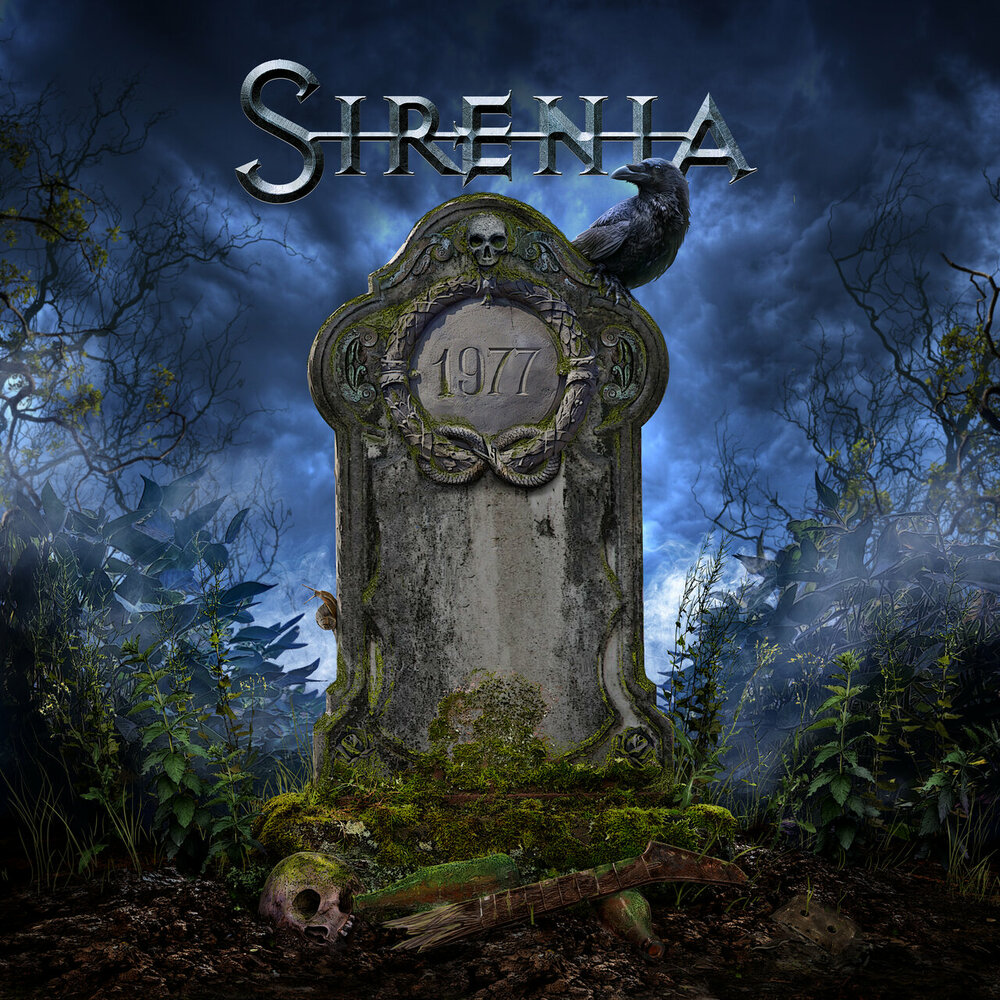
Sirenia - 1977 (2023)

Country: Norway
Style: Symphonic Metal
Rating: 7/10
Release Date: 26 May 2023
Sites: Bandcamp | Facebook | Instagram | Metal Archives | Official Website | Wikipedia | YouTube

Another band whose most recent album came out a couple of years ago, Sirenia's highlighted that their sound had changed considerably since their early years. This follows suit, a firm underline to their current musical approach. What that means for old school fans is that there isn't as much of a gothic aspect to their sound as there used to be, though it isn't gone entirely, and the vocals of founder Morten Veland are mostly gone, showing up on the odd song here and there to serve as a contrast and to pique our memories.

Mostly, this is symphonic metal to showcase the voice of Emmanuelle Zoldan, who sounds excellent but, as with the previous album, doesn't attempt to show off. The songwriting is pretty consistent, these songs generally kicking in with electronica that's characterful and highly versatile but often more in a pop vein than rock, let alone metal. Then the guitars add crunch with a wistful eye firmly on the gothic metal they used to play, as if they're nostalgic but not so much to truly go back there. The beat is up tempo and lively rather than fast, but it speeds up at points for emphasis. And then Zoldan's vocals arrive to take the song where she will.

It's the electronica and the beat that fundamentally drives this album, because Veland trawled in an eighties pop aesthetic to flavour the band's sound that's highlighted by his very unusual choice of cover to close the album. It's Twist in My Sobriety, Tanita Tikaram's biggest hit from 1988, which features a moodiness to her vocal but a perkiness to the beat. That translates well here into a pop metal song, with the moodiness in the gothic crunch and the perkiness still there in the beat. And, really, while this cover closes the album, it could have started it as a mission statement. Instead it wraps up proceedings as a nod to the degree to which everything could have gone.

It's easy to see where this could have gone horribly wrong. Pop metal is a dangerous territory, the two approaches very different and needing to contrast each other well to work in collaboration. It may be the electronic decoration that saves it, because Veland infuses it with enough invention to keep the songs from fading into pop mediocrity. Without it, they might seem enough of a likeness to lose us. With it, the songs are able to delineate themselves and shine on their own.

If you're worried by this pop metal approach, I'd suggest that you listen to Twist in My Sobriety, to see where Veland is coming from this time out, then check out some highlights to see if this works for you. I like the opener Deadlight mostly for its subtle touches, so Wintry Heart may be a better choice as a sample; it has a real bounce to it and a neatly catchy melody. Nomadic is a strong track right after it, kicking off with violin and Jew's harp but then launching into a tastefully aggressive riff. Timeless Desolation features the most elegant melodies, but A Thousand Scars has grandeur to it, with Zoldan getting operatic in its second half, and that returns on Delirium, which is clearly the heaviest song here.

And talking of heavy, while this is still symphonic metal, it's so driven by a pop mindset that it gets easy to forget. Nomadic has an edge but Fading to the Deepest Black is the first song that believes that it's truly metal. Michael Brush generates a much faster beat early on and the guitars go past their standard crunch mode, only to recede for the more elegant verses, even if the keyboards are a constant reminder that this is a darker song. Veland steps up to the mike on this one but keeps it clean for now. He returns and gets harsh for the only time on Delirium, with Zoldan adding serious weight to her voice during her operatic sections.

I like this, even though the proliferation of pop melodies and thinking ought to put me off. There's a song here, The Setting Darkness, that kicks off just like Abba and never really leaves that even as the crunch hits. I don't like it as much as Riddles, Ruins & Revelations, which got an 8/10 from me in 2021, but I do like it. It feels odd to be giving it a 7/10 right after doing the same on Joel Hoekstra's 13, because I like this a heck of a lot more, but that speaks only to how this one connects with me a lot more effectively, not to any difference in quality. I wonder how you'll compare them.

Monday, 8 May 2023

Lumnia - Humanity Despair (2023)

Country: Brazil
Style: Symphonic Metal
Rating: 7/10
Release Date: 3 Mar 2023
Sites: Facebook | Instagram | Metal Archives | Official Website | YouTube

I've been fascinated by what's coming out of South America lately and symphonic metal seems to be one of their genres of choice, with this debut album from Rio de Janeiro-based Lumnia another good example of how they're merging and shifting genres down there to create new hybrids.

Fundamentally, this is symphonic metal, but the metal behind it is a fascinating mix of old school, like the doom riffs on Breathing Space, and new school, like the more modern flavour evident on Embrace Darkness. There's a clear gothic metal influence too, right from the outset on Breathing Space, but it's in the general approach rather than any specific element, even if there's violin and piano here and there and the band employ the use of beauty and the beast vocal contrasts.

The lead vocalist here is Odete Salgado, who mostly sings clean soprano, though she does dip down to a much deeper voice on Madness Interude and, if my ears aren't misleading me, even tackles a harsh style very briefly. Someone provides what sounds to me like a male harsh voice, but nobody is credited in that backing singer role. As male as it sounds, there are points where I wondered if it could also be Salgado, who demonstrates quite the range here, from soaring soprano to whispered texture and many points in between, including a much more nasal witchy tone that she puts on at points for a very specific effect.

Now, I don't believe she is doing the harsh voice, and it's clear in the video for Queen of Night that it's not her, but the thought persists. I think it's because she has an occasional habit of mirroring the male vocal but behind, so that she shows from the sides like a halo of light around an eclipse. It's not every time, but it's there on more than one song and it provides a little touch of class that resonates with further listens. I was a little jarred on my first listen by elements I didn't expect, so it took a few songs for me to get what Lumnia were doing. Once on board, this is worthy and varied.

Breathing Space is a good opener because it sets the stage for what's to come. Hugo Carvalho and Marcel Gil generate a very tasty churning riff to open up and then Salgado soars in. As soon as she arrives though, the male voice shows up behind her, as a dark echo. She's left alone to sing solo on most of the album, but the backing vocal is prominent on Breathing Space and it's interesting for being almost negative space, like a black hole swallowing the fabric of reality. It isn't quite trying to be a portfolio song, a band sampler in five minutes, but it almost works that way.

Humanity Despair is a more focused song and it's a good one. There's a nice use of bells during one transition and Salgado's nasal approach shows up here. Broken Glass adds some pace and I do like this band a little faster than their typical tempo. It does slow down again, later on, of course, and churns gloriously while Salgado returns to her nasal witch voice. These are all good songs and they help flesh out what Breathing Space suggested might be coming. With Madness Interlude adding different vocal textures, it's clear that the band thought carefully about how to order the songs.

As the album runs on, those songs only get more interesting though and I started to take the high level sweep of the band as a given while focusing on little details. There's a violin on Bitter Earth, adding texture behind an acoustic guitar. Pedro Mello gets a spotlight moment as Queen of Night kicks off to showcase his bass. There are unusual rhythms on Embrace Darkness, so giving Matheus Moura plenty of attention. Many of these are at the beginning and/or end of songs, but some are midway, like the neat guitarwork in the midsection of Bitter Earth, extending into the second half.

My favourite song for both intro and outro has to be Violet. The former is elegant, with piano and acoustic guitar setting the scene and Salgado's clear voice joining them. The crunch arrives soon enough, after only thirty seconds or so, and we're into the song proper. The ending is even quicker, with Salgado reaching a crescendo above the general build of the song and the male harsh voice showing up for a moment of neat contrast, only for both to drop away entirely to a minimal piano that sounds like drops of water. It's very tasty. The song in between isn't bad either.

The song I'd have expected to be my least favourite is Constellations, because it's clearly a ballad, but I had no problems with it. It starts off like, with angels singing far above Salgado, and it keeps on like a ballad too, with the male backing voice going clean for a change, almost a folk grounding behind Salgado's vocalisations. The melodies are strong and it moves along pleasantly enough. It does heavy up a little, a couple of minutes in, but it drops back down out of that soon enough, with little interest in doing anything that's been done elsewhere.

I haven't heard a killer symphonic metal album from South America yet, but I'm increasingly sure that there's one out there that I haven't found yet. In the meantime, this is another worthy entry to the genre from Brazil.

Wednesday, 26 April 2023

Magnus Karlsson's Free Fall - Hunt the Flame (2023)

Country: Sweden
Style: Symphonic Power Metal
Rating: 7/10
Release Date: 14 Apr 2023
Sites: Facebook | Instagram | Metal Archives | Wikipedia

The ever-prolific Magnus Karlsson, of Primal Fear fame, among a whole slew of other projects that have benefitted from his talents, usually as a guitarist and sometimes as a keyboardist, is back for another Free Fall album. That's his solo project, where he performs everything himself, except the drums, and whichever lead vocalists show up to guest on tracks. Anders Köllerfors plays the drums here, as he did last time out, on We are the Night in 2020. Lead vocals change on a per song basis, with nobody doubling up. I believe everyone's new to a Free Fall album too, which isn't typical.

As always, the style is power metal with clean vocals and virtuouso guitarwork, drenched in layers of keyboards. It's all capable stuff and the worst songs here are decent, simply unable to carve out a special place in our attention above their peers. Of course, with this multi-vocalist approach, the best song here may depend on which singer meets your personal taste in power metal the closest. As Karlsson is a constant throughout, I'll suggest that his most adventurous guitarwork is on Hunt the Flame and The Lucid Dreamer.

Hunt the Flame is the opener and it may well be the best track here, with six minutes on the dot to flesh itself out, excellent solo sections and a versatile vocal from Anders Köllerfors, best known for Crowne nowadays, I think, even though he's sung for Art Nation longer. He has a a very clean voice, so it's incredibly easy to listen to, but he has technique and power, showing off a little towards the end but impressing more with more subtle sections earlier in the song. It's countered well by You Can't Hurt Me Anymore, which is more commercial, less frenetic and more elegant, guest vocalist Jakob Samuelsson veering into arena rock for his melodies.

All these guests do exactly what Karlsson wants from them, though they do blur together a little, mostly working to very consistent approaches. Most are Scandinavian, the initial pair Swedish, as is Jake E of Chyra and Dreamland and, I presume, Kristian Fyhr, of Ginevra (wth Karlsson) and Perpetual Edge. I'm seeing a pair of Norwegians, Michael Eriksen of Circus Maximus and Terje Harøy of Pyramaze, and one Finn, Antti Railio of Raskasta Joulua, who gets the closer, Summoning the Stars, onto which he can stamp his authority. It's another strong song, perhaps not quite up to the opener but coming close. It's also the longest song here, suggesting that Karlsson nails those songs that have time to breathe, but not so long that it could be called an epic.

Other singers hail from further afield, starting with James Durbin, formerly of Quiet Riot and now of his own band, Durbin, who's American. I appreciated Durbin's debut album, The Beast Awakens, a couple of years ago, and he fits in well here, on an elegant song called Thunder Calls. I see Girish Pradhan here too, of Firstborne fame and lately Girish and the Chronicles, who get a lot of airplay on Chris Franklin's Raised on Rock show. And that leaves a couple of South American singers, both of whom shine here.

The first is James Robledo, a Chilean singer who fronts Sinner's Blood, and his song stands out for its hints at middle eastern melodies early on and for his delivery. It's Far from Home, which seems fair, and there's some grit in his voice that elevates it in my mind above many of his peers here. He works in much the same style but that grit feels like he's giving more and we can feel the energy, especially when he escalates. It's a good song too and that never hurts.

Best of all, though, is Raphael Mendes from Brazil, who's guested on a bunch of European albums before releasing anything in an actual band setting, his band right now being Icon of Sin. I love his voice, but I have to acknowledge that it's hardly the most original here, given that he could easily be mistaken for a certain Bruce Dickinson. His song here is Following the Damned, which would be less of a standout if one of the other vocalists here fronted it. It's a bit more symphonic, perhaps, but not a huge departure from other songs. However, he makes it his own as soon as he opens his mouth and suddenly we're listening to Iron Maiden as a symphonic band, which is neat. Mendes's sustain is fantastic and I'd love to hear him take on Hallowed Be Thy Name.

If you know Magnus Karlsson in any of his various incarnations—and, if you've been following my reviews at Apocalypse Later for a while, you'll have seen him pop up on a solo album called Heart Healer; an Allen/Olzon album, Worlds Apart, and a Primal Fear album, Metal Commando—you'll know what to expect from him. This is more of the same, without any disappointment, but it plays better for me as an exploration of a bunch of vocalists, most of whom I hadn't heard before.

Tuesday, 21 February 2023

Delain - Dark Waters (2023)

Country: The Netherlands
Style: Symphonic Metal
Rating: 7/10
Release Date: 10 Feb 2023
Sites: Facebook | Instagram | Metal Archives | Official Website | Twitter | Wikipedia | YouTube

Symphonic metal is clearly thriving in 2023. It's not the end of February yet and I've already taken a listen to strong albums from Beyond the Black, Twilight Force and Xandria. Well, here's another one from Delain, though this is easily the poppiest and most commercial of the three. It's a fresh start for them after six previous albums, because bandleader Martijn Westerholt took a chainsaw to the line-up, ditching everyone else, including the longest serving guitarist and bassist the band has had, along with lead vocalist Charlotte Wessels, who had sung on everything released up until that point. He supposedly planned to make it a solo project with guests but instead it became just a new line-up.

Westerholt continues, of course, on keyboards and orchestrations. In to join him are two old hands and two new fish. The old hands are guitarist Ronald Landa, who played on their second album and wrote a couple of its songs with Wessels, and Sander Zoer, their longest serving drummer, who left in 2014. The new fish are Diana Leah on lead vocals and Ludovico Cioffi, who I believe will be their bassist going forward but who only provides some harsh backing vocals this time out, the bass on this album provided instead by a guest, Epica's Rob van der Loo.

Of those, Leah is the most obvious, because she's easily at the front of the mix and she delivers an overtly poppy lead vocal that's all about hooks. It's not quite so obvious that a listener unfamiliar with Delain might assume that this is her solo project, but it's not far away from that, because it's a serious effort for anyone else to steal our attention whenever she's singing. They're lowered in the mix to give her more prominence and raised again when she's done for a while, which actually helps us focus on them when the focus shifts back their way.

If we can juggle the elements, then Leah shifts between pop and rock while the music follows suit but from rock to metal. She's definitely lighter than every other aspect of the band's sound right now, even when it's at its lightest and, when it heavies up, it leaves her quite a distance behind. It ought to go without saying that the heaviest songs are the ones with harsh male vocals, but there aren't many of those, the most obvious being The Quest and the Curse, which also benefits from a heavy prowling riff, but even that song's a trade off because it lightens up when it shifts back over to Leah.

If this intensity clash sounds like a problem, I should underline that it isn't. Sure, it's odd to listen to a symphonic metal band where the lead singer doesn't contribute to the symphonic sound, but Leah has a strong voice and she delivers some excellent hooks that keep us engaged. It's left to a combination of orchestrations and choral vocals to keep this anchored in symphonic territory, the pair of approaches shining on The Cold and especially Invictus, which also benefits from two guest vocalists, both Finnish. Paolo Ribaldini is actually on three songs here but Mark Hietala only joins him once. He's a heavyweight presence, having given Tarot three decades and Nightwish two.

While I don't dislike anything here, my favourite songs all come on the second half, when the choir is busiest and Landa is most successful at introducing heavy riffs. The Cold is the closest Leah gets to symphonic and the choir is all over it. Moth to a Flame starts out with Leah poppy and a capella but it finds a tasty and notably urgent metal riff. Then there's Invictus, musically strong and with those guest male vocalists. The album wraps up with Underland, with more choir and another big riff from Landa. Sure he delivers on The Quest and the Curse and Tainted Hearts too, but it's that combination of choir and guitar that gets me every time.

I can only guess at why Westerholt took such drastic action in 2021, but this is a fresh band with an entirely fresh sound and that sound is good. It's almost deliberately aimed at multiple audiences, close enough to symphonic metal that die hard fans of the genre will dig it but with enough pop in Leah's vocals to trawl in a new fanbase. The longer I listen to Moth to a Flame the more I hear Pat Benatar and that's hardly where Wessels came from musically. It's almost as if Westerholt heard Lady Gaga singing for Metallica at the 2017 Grammys or maybe got into Babymetal and decided a pop/metal hybrid would work for Delain. And hey, maybe he's right.