Showing posts with label Romania. Show all posts

Monday, 9 October 2023

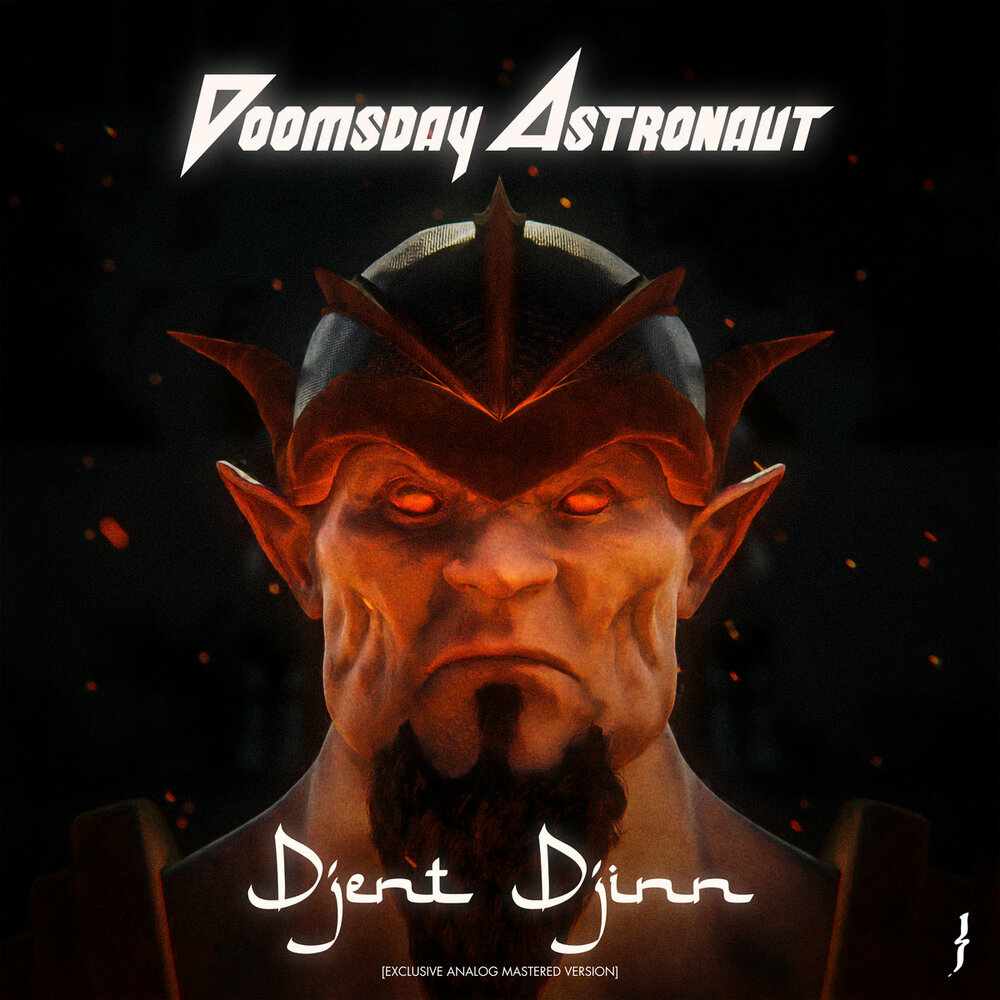
Doomsday Astronaut - Djent Djinn (2023)

Country: Romania
Style: Progressive Metal
Rating: 7/10
Release Date: 30 Aug 2023
Sites: Bandcamp | Facebook | Instagram | Metal Archives

I've reviewed a few albums featuring Waqas Ahmed, a Pakistani guitarist living in Sibiu, Romania, but the earliest of them is a 2020 album called Doomsday Astronaut. Well, that name is back, this time used as Ahmed's brand. I say brand rather than band, because he's the only musician here for the most part, Marius Stremtan providing additional guitar solos on a couple of tracks and Roxana Amarandi a violin solo on Awaken the Pharaoh. Everything else, whether the guitars for which he's rightly known or the bass, keyboards and drum programming, comes courtesy of Ahmed himself.

While my favourite release thus far from Ahmed has been the Alpha Q album from last year, which was a band effort, the Marius Stremtan here presumably being the Marius there, this slots in next to it, above that original Doomsday Astronaut album and its 2021 follow up, A Perpetual Winter. It plays well to me because it finds a consistent sound and then gets imaginative with it. The guitar is a gorgeous sounding force on this album, weaving stories even without the benefit of a voice, each of the five tracks plus intro being firmly instrumental.

One success is that each of those tracks finds its own voice, even though their sound is consistent to those around it. Ahmed's guitar plays in the same tone on Awaken the Pharaoh, for instance, as on Yojimbo Unleashed before it and Groove Monkey after it, but it tells a different story, whether due to the ethnic feel that it generates at points, bolstered by the keyboards and violin, or due to some imaginative sections like the slow one towards the end. Yojimbo Unleashed is simpler, that guitar almost finding a bagpipe's drone at points as it takes its time playing fewer notes to move onward, and Groove Monkey brings a real attitude with it, as the most overt "look at me" track here.

Another success is that, even though all of these tracks use the same ingredients but conjure up an entirely new dish, it's tough to pick a favourite among them. I like all three of those tracks but for a set of different reasons. Yojimbo Unleashed is the most straightforward of them, but it boasts the most elegant sweep over a consistent drive, as if that piper was standing on top of a steam train as it powered through the countryside, the notes holding in its wake. As it's about the samurai of the title, he'll need extra hands to wield that and play the pipes, but he seems very capable.

Awaken the Pharaoh takes us to somewhere exotic and introduces us to smaller stories as it shows us around. It's more of a suite than a single piece and it takes us on a real journey. The idea is that a pharaoh has been brought back to life after five thousand years and the culture shock of what he must be experiencing looking at the change to his kingdom is there in the technology and the clear update to old themes. In a way, it reminded me of Beethoven playing in the mall in modern day San Dimas in Bill & Ted's Excellent Adventure. It's old and new at the same time.

Groove Monkey has a sassy and funky outlook that reminds a lot of Steve Vai. It's a show off piece, but Ahmed has the chops to back up that attention seeking aspect. There are moments across the album when he clearly shreds but mostly he avoids simply hurling out as many notes as is humanly possible in favour of generating textures. Many of those textures are conjured up on guitar, but he uses keyboards to great success too without them ever taking over.

And while those three tracks lent themselves so easily to comparison, sounding consistent but also completely different, there are a couple of others bookending them. The same applies to them but not quite as much.

Born of Smokeless Fire is the longest track on offer at just over seven minutes and it sets the show into motion capably, working best as a summary of what's still to come. There's a slow section five minutes in that hints towards Yojimbo Unleashed and a change right after it that points the way to Awaken the Pharaoh, but, having set those ideas in motion, it's content to move on without doing much to explore them. That's what the later tracks are for and they do it substantially.

Premonition wraps up the album and varies the tone for the first time, a more introspective piece that works as an instrumental to let flow over us but also feels like it ought to work as a dance too. It's all about motion, as so much of Ahmed's music tends to be, but on a far more subtle scale than anything else here. For much of this one, he sounds a lot more like Gary Moore than Steve Vai, for instance, and it's a good way to wrap up an album.

By the way, I say "album" but this clocks in a little short, a minute and a half shy of Reign in Blood's length, which is my baseline for a short album, having famously appeared in full on each side of its cassette release. And that's the most obvious flaw here. Another track to nudge it over the half an hour mark would have avoided that, but, hey, if that's its biggest problem, it's a solid album.

Wednesday, 19 April 2023

E-an-na - Alveolar (2023)

Country: Romania
Style: Folk Metal
Rating: 7/10
Release Date: 10 Mar 2023
Sites: Bandcamp | Facebook | Instagram | Official Website | TikTok | YouTube

Yeah, I've reviewed one folk metal album already this week and I try to keep things mixed up but, while that's an entirely apt descriptor for Adavänt, it's only a starting point for E-an-na, who don't sound like anybody else in any genre of music. I had a blast with their debut album, Nesfârşite, in 2019 and was eager to jump onto this follow-up. I'm reviewing after Lordi entirely by accident, with the band actually from Transylvania and another Eurovision hopeful—they were a finalist in 2022 in the Romanian selection contest, Selecția Națională. They sound as much like Lordi as Adavänt, which is not much at all. They don't even sound like Bucovina, who are what you might be thinking of if I say Romanian folk metal band.

While they don't sound like any other folk metal band, it's clear that they sound like an amalgam of folk and metal. The folk music is everywhere, all sorts of ethnic sounds whirling around in a mix that's all them. It's primarily folk music from the Carpathian mountains, but that doesn't mean a single sound. The harmonising vocals towards the end of O, Romaniţa may come closest to what a non-Romanian like me might think traditional music in the Carpathians might sound like, but that is merely one string to their Romanian bow.

There's wild and wacky carnival jazz on the intro, Mioretic Metal, that could accompany a Looney Toons cartoon. Doi kicks off with flutes and hand drums and it finds a neat combination of jagged rhythms and accordion groove. Călăuză matches prowling bass with gypsy dance music. There's a humming duet to kick off O, Romaniţa and it soon trawls in middle eastern rhythms and melodies, on both violin and drums. The intertwining vocals of male vocalist Andrei Oltean and female vocalist Roxana Amarandi late in the song is fascinating. And that's just the first four songs. E-an-na have no interest of skimping on this diversity as the album runs on.

While there's more folk than metal, there's a lot of metal here. It's there on Mioretic Metal, as it ought to be. The end of Călăuză is furious. Ies is heavy from the outset, like the roof has fallen onto us and the band carry on playing while we collectively hold that weight above them. 'colo 'mbia is crunchy guitars and hardcore shouts, surprising given that all the vocals have been clean thus far. It's arguaby alternative metal, even though it drifts into an extended accordion solo later on. Parts of the second halves of Fântânile de la Capătul Lumii and Floare de Fier are utterly crushing, even if they're accompanied by acoustic guitars or flutes. Suit în Nor could often be called nu metal.

All this is par for the course for this band, I should add. When you think you know what's going on, they turn on a dime and that's emphatically what I like most about E-an-na. I didn't hear anything here that fascinated me as much as the double whammy of Pielea and Pânda on Nesfârşite, but I'd only be disappointed if they didn't include new things that I haven't heard before and they happily delivered there. Biba sounds like someone playing the wires inside a piano, accompanied by some ruthlessly mechanical vocal rhythms. The final forty seconds are absolutely glorious but the entire song is fascinating.

Oddly, my favourite songs are in between the extremes. Mioritic Metal and Cenuşiu are gleefully lively, leaping around like a hummingbird on acid. At points, it's electronica. At points, it's metal. At points, it's a whole slew of things. Ironically, Cenuşiu translates to Grey, which this song utterly isn't. Floare de Fier is another bouncy one and a heavy one too, with chunky guitar and earworms of melodies. I also dug a couple of songs that are almost routine for this band, as surprising as it got for me. Fagure Negru has a gorgeous post-punk groove to it and Dulce is smooth as well, as it ought to be with a title that translates to Sweet.

So this may not have the peaks of Nesfârşite, but it's another fascinating album from a fascinating band. There are precious few bands on the planet who can keep their listeners guessing this much without losing the plot and E-an-na know exactly what they're doing. Roll on the next album!

Monday, 16 January 2023

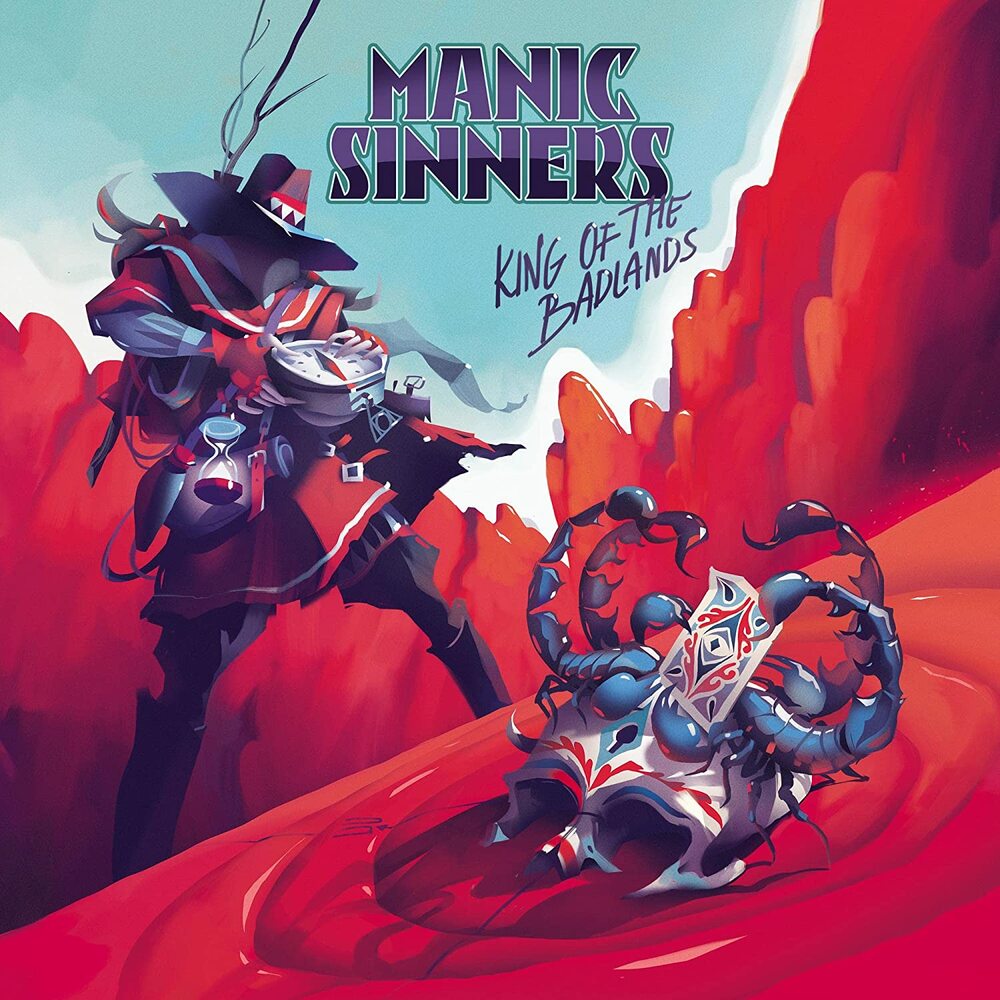
Manic Sinners - King of the Badlands (2022)

Country: Romania
Style: Hard Rock
Rating: 7/10
Release Date: 18 Feb 2022
Sites: Facebook | Instagram

Last January, I asked the genial Chris Franklin of the essential Raised on Rock radio show to pick an album that I'd missed from the previous year. He suggested the Fans of the Dark debut, which was a peach of an album, so I was eager to repeat that question this year. I'll be listening to a couple of albums that he's suggested, one rock and one metal, this month and here's the former. It's not an immense surprise to find that Manic Sinners are released through Frontiers, but they're putting a lot of good music out nowadays and you can hear plenty of it on Chris's show.

The band is based in Romania, though Toni Dijmarescu lives in Germany, and they're a trio with an immense amount of experience. Adrian Igrișan plays drums and keyboards here for the most part, though he's best known as the current lead singer and guitarist for heavy metal band Cargo, who have been rocking Timișoara since 1985. Dijmarescu is a session musician best known for multiple releases by Reșița Rocks and Călin Pop. That leaves Ovidiu Anton on lead vocals, who's newer but would have represented Romania in the Eurovision Song Contest in 2016, had their TV company's debs prompted them to withdraw.

Manic Sinners play a form of hard rock that's obviously rooted in the eighties but with a variety of influences from across the spectrum. The first one that leapt out at me was Whitesnake, because they're here in Anton's vocals and Dijmarescu's guitars, but Europe sprang to mind quickly too and there's often some Dio in Anton's phrasing. It's definitely a commercial sound and, while there are softer songs like Anastasia and Carousel, there are moments where they move closer to the heavy metal border. That's mostly through the guitars of Dijmarescu but surely the heaviest song here is Nobody Moves, in large part because Igrișan contributes a much heavier bass.

I liked the album on a first listen but it didn't knock me out, even though there are a string of good tracks to open things up. However, the more I listened, the better it got. Drifters Union and King of the Badlands aren't just good openers, they're excellent openers, and Under the Gun and Nobody Moves keep growing on me too, to the point where they're clear highlights. Most importantly, the album runs a generous fifty-five minutes but none of the dozen songs here let the side down. Not all are highlights but none are filler and that's impressive on a debut album this long.

Also impressive is how that statement holds true even on the softer songs. Anastasia is a ballad in the style of Europe; Carousel isn't but it's still softer and still more melodic than what's around it; and Crimson Queen is a brief but tasty guitar piece. Even A Million Miles, which starts with a woah and brings it back during the chorus, is solid, though it's almost the epitome of something that I'd expect Chris to like more than me. It's almost textbook melodic rock, the guitars keeping back but always being ready to nudge things forward with a riff, the beat politely urgent, the vocals soaked in soulful vocal fry. There isn't an original bone in its body, but it does what it does well.

And so, while I liked this from my first time through, I like it more with each listen and I'm a few in right now. There's nothing here to challenge the listener. There's little that's particularly original, though songs like Under the Gun and Nobody Moves add some more unusual elements that would never feel right on material that's content with being traditional. The former boasts a delightfully prowling intro and the latter, after another neat intro, includes some fascinating backing vocals in a folky choral style. Mostly, it's just melodic hard rock done right.

So, thanks, Chris once more for picking out another strong one for me. Now I'm looking forward to the other one all the more.

Friday, 16 December 2022

Bucovina - Suntem Aici (2022)

Country: Romania
Style: Heavy Folk Metal
Rating: 8/10
Release Date: 12 Dec 2022
Sites: Bandcamp | Facebook | Metal Archives | Wikipedia | YouTube

Hey, my favourite Romanian folk metal band has a new album out, so my holidays are happy ones. I'm talking about Bucovina, whose debut album, Ceasul aducerii-aminte, is way up there on my list of underheard gems. Sure, it couldn't boast the production values that this fifth album has, but it had heart and I absolutely adored its incorporation of eastern European folk melodies into heavy music. I tend to see the band listed as both folk and black metal, though that's never sat well with me. For the most part, I see them as a heavy metal band whose music is so infused with local folk melody that it's just inherent. The vocals were harsher on their previous album, Septentrion, but I don't miss that.

I think I like this more than Septentrion but not so much as their debut, even with a bonus track to take me back to it. This time, it's Napraznica goana, which appropriately translates to Impetuous Chase, and it's a glorious romp. Is that an accordion back there behind the guitars this time? And some strings too? It's the same old classic but with good production and many added textures. It's telling that, while it's my favourite song here, possibly in part because of its familiarity, it isn't so far ahead of everything else as Vinterdøden was last time out.

Tăriile văzduhului thrives on the same sort of effortless heavy folk riffs, as does the title track and Stahl kennt keinen Rost. In fact, the longer the album runs on toward that bonus track, the more I hear the style gradually morphing back towards it. When Bucovina are at their best, it seems like they're not even playing instruments; they're simply serving as conduits to channel the landscape into musical form. Cu mândrie port al meu nume feels particularly effortless here but to glorious effect.

And, if this album contains much that doesn't surprise me, feeling as it does like a visit back home, there are surprises to be found. The first arrives with Rătăcitorul, which starts out acoustic and at a few points drops into more acoustic. It's a natural approach for a band who play so well with folk music but, while it isn't noteworthy kicking off the title track, it feels different on Rătăcitorul, like it's not an acoustic guitar but some ethnic instrument I can't name that has a harpsichord tone to it. It works but it's notable, just as the notably NWOBHM approach taken on Valea regelui works but has to be called out.

The most obvious surprises can be found in Folc Hevi Blec, though, which starts out as an overt pub singalong, complete with many clinking glasses, before launching into the song proper, initially in expected, if unusually fast and punky fashion. However, some of the lyrics are delivered in English, which is a new approach for Bucovina, and, of all things, there's a reggae section in the middle. It was quite the shock to hear thatand I have no idea why it's there. That it somehow works anyway is a reflection the quality of this band and the range that they bring to the table, even within a close framework of heavy folk music.

My favourite song here isn't strictly a song, because it's an instrumental and I feel as if, yet again, I should underline that I thoroughly enjoy the vocals of the two guitarists in Bucovina, Florin Ţibu and Bogdan Luparu, to the degree that I feel that they're the central sound around which all this music is built. However, I adore Bucovina when they're on an extended instrumental break and, on this album, that's Cu mândrie port al meu nume, which feels like a manifesto even before I popped its title into Google Translate and got I Proudly Bear My Name in return. Once more, I have no idea if this is built on particular Balkan folk tunes, but it seems like it could well be, before it reaches a section of spotlights late on for Jorge Augusto Coan's bass and Bogdan Mihu's drums.

Now, let me listen to this as many times as I've listened to Ceasul aducerii-aminte. I can't say that I didn't like Septentrion but it didn't play this well to me or come as close to that debut. I didn't feel the need to keep on playing it, however solid it was. I do feel that need here. So it's another listen for me before I force myself to check out the last album for the week.

Friday, 22 July 2022

Alpha Q - Parallel Universe (2022)

Country: Romania
Style: Progressive Rock/Metal
Rating: 8/10
Release Date: 29 Jul 2022
Sites: Bandcamp | Facebook | Instagram | YouTube

I only know about Alpha Q because one of its two guitarists is Waqas Ahmed and I've reviewed two of his releases in the past, the Doomsday Astronaut album and A Perpetual Winter EP. In case he's new to you, he hails from Lahore in Pakistan but he lives in Sibiu, Romania, which surely has a very different musical scene. While those releases focused very specifically on him and his guitar, which means that they're almost entirely solo efforts, Waqas kindly sent me a copy of this too, which is a different setup entirely.

Alpha Q are a six-piece band and this is their debut album. While they clearly appreciate what this one guitarist brings to their sound, they just as clearly appreciate the slew of other influences the other five musicians bring to the table too. Clearly they're not all Pakistani shred guitarists living in Romania. While I don't know where they're all from, I'm guessing that they're not all Romanian either because this is quite the melting pot of a sound.

For a start, I spent quite a while wondering if they're a rock band or a metal band because they're frequently one or the other or both at the same time. Darkness opens up the album, for instance, with a solo female voice, which is appropriate because I'd call lead vocalist MeeRah a highlight of this entire band. When she roars, her voice isn't too far from Dorothy Martin's, whose new album I reviewed earlier in the week. However, MeeRah is more interested in dynamic play, so she roars when she wants to roar and croons when she wants to croon. She's great at both approaches and a slew of others, because she's equally at home with pop, rock and metal, even trying a rap over the funky beats of Make a Wish. I've been checking out her other projects and they're highly versatile.

What's special here is that the band is also versatile, which is why their sound is so hard to define. When MeeRah roars in Darkness, they ramp up from alternative rock to almost groove metal and, when she's done for a while, they shift into a sort of seventies guitar workout, like Mark Knopfler playing with Wishbone Ash. The song isn't as schizophrenic as that might suggest, but it does take quite the leap from one section to another. I enjoyed it a great deal, but think I connected with its successor on the album, Ballad of a Ticking Clock quicker, because its movements flow deceptively well and its groove is more immediate.

I'd call this one a prog metal song that's frequently prog rock. It feels bigger and more epic, but it actually runs a little shorter, maybe because it fades out just when I didn't want it to. I wanted it to keep on going for a lot longer. It's probably worth stating that five of the eight songs on offer last between five and a half and seven minutes and that's a good sweet spot for Alpha Q, because they always want to do at least a couple of things within each song and they need to transition between them and back again.

I like some of these shifts more than others, but I appreciate all of them because they're conjured up with plenty of thought about what those contrasts mean. I like how Unbreakable is both one of the heaviest songs here and one of the most commercial. I like how Angels and Demons drop from prog metal into a neatly peaceful section halfway with a vaguely ethnic acoustic guitar, then goes right back up the emphasis scale into a guitar solo. I like how Make a Wish shifts from jagged djent into a heavy groove, then goes all funky with an old school rap, the sort of thing that Blondie used to do when they played with genres. It's a story song too with MeeRah as a sort of genie.

Long story short, I like what Waqas Ahmed does on his own, just as I like what MeeRah does on her own and I'll probably like what all the other members here do on their own. I have homework to do when I can find some time. However, I have a feeling that I'll like what they all do together a little more than any of them solo. They click well, as diverse as they are, and they each bring something different to the Alpha Q table. There's folk here and shred and dance and groove and a whole lot more. I look forward to their next album.

Thursday, 9 June 2022

Bucium - Zimbrul Alb/White Wisent (2022)

Country: Romania
Style: Folk Rock/Metal
Rating: 8/10
Release Date: 1 Apr 2022
Sites: Bandcamp | Facebook | Instagram | Official Website | YouTube

Here's a submission from Bucharest, Romania that surprised me, as submissions so often do. It's a folk rock/metal album at heart, though that description may mislead a little because this isn't yet another collection of drinking songs and the band don't play unusual instruments beyond violins, though there are two of those. I would add "progressive" to the genre, especially once we get past the title track, which is atypical in its simplicity. It feels like a French chanson sung in Romanian by a Tom Waits fan until chunking up with some heavy guitar. It's unusual, sure, but it's also straightforward. It does one thing.

Fata din gradina de aur is where this album really grabbed me because that certainly doesn't just do one thing. It's an eight minute epic that does very little by the book and it's a gem. The vocalist is the same and the crunch not too far different but everything else changes. If it initially feels like it might have also started out as a vocal folk song and it moves into a dance a couple of minutes in, it evolves beyond both soon afterwards, with original riffs driving a section, before a neat drop to a midsection that starts Genesis but adds in Hawkwind and a hummed melody builds into a choral vocal swell. If it starts out as a folk song, it ends up as a football chant, and folk/prog is the glue.

If the goal was to gradually add complexity and depth as the album went, that goes by the wayside after Greuceanu, which is more epic than its predecessor, which translates to the poetic The Girl in the Golden Garden, and more progressive too. Greuceanu is a name, presumably referencing the folk hero who takes on a quest to recover the sun and the moon after they were stolen by an ogre. The twin violins of Alexa Nicolae and Mihai Balabaș take a broader role here, as lead instruments, and they help make for an emotional journey. Every time I listen to this one, I get caught up in it, a ten minute song feeling at once like merely three but also a lifetime. It's glorious stuff.

And there was no way to keep going along this path without following up with a side-long suite in a collection of parts, so Bucium wisely step back and deliver a set of shorter songs instead. The Song of the Sun, Cantecul Soarelui, introduces a guest, Ligia Hojda, who provides a delightful melodious vocal to duet with Andi Dumitrescu, Bucium's regular vocalist and guitarist. This feels less rooted in folk music and more in pop music, though it wraps up very much in both at once. More obviously a folk piece, Harap Alb, or White Moor, brings in Bogdan Luparu instead, Dumitrescu's equivalent in Bucovina, who has a very different voice to Hojda's but one that works well on such a lively song that's driven by violins as much as guitar again.

Vanator is even more lively, with Dumitrescu back at the mike, but again it's the violins that steal the day. Bucium have an unusual line-up in having a pair of violins alongside a traditional rock trio of guitar, bass and drums, but nothing else: no accordion and no hurdy gurdy, just the guest string quartet on the bookends. They have to give prominence to those violins for this to remotely work and they do so, never more effectively than in the midsection to Vanator, which is a frantic hunt by the title character.

The guitars seem to gain prominence in the final two tracks, Road of Serfdom and Nirwana, almost bringing Bucovina vibes to the fore. Bucium never attempt black metal, but there's a strong sense of urgency in both these songs that I'd enjoyed in Bucovina's excellent Ceasul aducerii-aminte album and the tones in play aren't too far away either. It's an interesting approach for an album to really pump our blood as it's ramping down and I'm not entirely convinced that it's a wise one, even with a drop to narration and slow keyboard fade, but it does seem to serve the purpose of having us roll from the last track right back to the first one for a repeat listen.

Thanks to Andi for sending me a copy of this one. I now have another favourite Romanian band and they have two prior albums to discover, Voievozii way back in 2008 and Miorița more recently, only five years ago.

Thursday, 2 June 2022

Katharos XIII - Chthonian Transmissions (2022)

Country: Romania
Style: Black/Doom Metal, Dark Jazz
Rating: 9/10
Release Date: 23 May 2022
Sites: Facebook | Metal Archives

Not everything I'll review this week is from a band I discovered through Apocalypse Later a couple of years ago, but here's another one. Katharos XIII are a black/doom metal band from Timișoara, Romania, but they're also categorised as dark jazz, a genre I'd never even heard of but I promptly fell in love with anyway. At least on that 2019 album, Palindrome, they were a combination of slow doomy riffs and soloing saxophone, bleak black metal shrieks and ethereal but commanding clean female vocals. No, you wouldn't expect these elements to sit together but, holy crap, they work.

Let me phrase it in traditionally clichéd polarising fashion. You're either going to hate this from its very outset or Katharos XIII will become an unforgettable changing experience, because you have never heard anything like this before and you can't let the moment go. As with Palindrome, this is a long album, its hour plus running time broken across only six tracks, and, as with Palindrome, I'm unable to let each of those tracks just shift into the next. I had to repeat listen to each one before I could move onto the next one, just to come to terms with what it had done.

Neurastenia is the first, an ambitious but uncompromising piece to kick things off, given that it's a fourteen minute epic. It's made up of the components I mentioned above, sans the shrieks, but it's also told in wavelike modulations, which are hypnotic electronica in the midsection. The emotional depth is stunning, Manuela Marchis-Blînda a will-o-the-wisp leading us we know not where. It's an haunting piece of music, an inspiration and a warning, a treat and an ending.

The Golden Season is almost shocking because it begins with recognisable riffs, though the layers of keyboards soon draped across the music render it denser and more obscured. Until, that is, the entire piece drops into a delicate pool of atmosphere and everything's peace and suspension with saxophone almost as whalesong, soothing and reaffirming. Which, of course, lasts until it doesn't, a black metal wall of sound looming out of nowhere and changing everything, the guitars sheets of sound, the keyboards all enshrouding, the bass a prowling beast, the clean vocals a lament, the result an emotional weight, a journey from drifting freedom to cosmic albatross of guilt that's an impactful ten minutes indeed.

Trying to gather my senses to be able to offer a coherent review, I should point out that this one is a lot more pulsing than its predecessor. It does most of the same things but it throbs as if it's alive and might just continue onwards after the musicians leave the studio. This is similar dark jazz but more organic, shifting away from the smoky cafés and shadowed streets of films noir inside a live body. It's sticky and palpable. It breathes. And it may not be entirely human, the title track some sort of supernatural mutation or alien infestation. This is music for elder gods, listening from the dark gaps beyond the stars, behind the celestial gates that bind them.

The hardest task I have is to suggest what this sounds like in comparisons. Well, it's Wolves in the Throne Room and Jarboe and Bill Evans and Coil and Celtic Frost and John Zorn and Vangelis and maybe György Ligeti. You know, that hackneyed old combo. Every track here is a work of dark art. I can't rank them. They're all astounding and they each do something different but each is done to a degree that's difficult to fathom. I think I spent the second half of the title track utterly stupefied, my mouth open and the world forgotten. I felt like the Highlander receiving the Quickening. And, once it ended, From the Light of Flesh spun up delicate and utterly beautiful and it destroyed me.

This is an unparalled emotional journey. It may well be my album of the year. Maybe I'll regain the power of speech in a week or so. Maybe I won't need that ever again.

Wednesday, 24 November 2021

Waqas Ahmed - A Perpetual Winter (2021)

Country: Romania
Style: Shred/Progressive Metal
Rating: 7/10
Release Date: 14 Nov 2021
Sites: Bandcamp | Facebook | Instagram | YouTube

I reviewed Waqas Ahmed's debut album, Doomsday Astronaut, last year and he kindly sent me his new EP for review with its release date that's exactly one year after its predecessor. As you might imagine, the negative side is that it's short, its six tracks amounting to only seventeen minutes of time; three of them are very brief indeed, interludes reaching a minute or so each. We could well see them each as an intro to the more substantial song that follows it, which interpretation might call this a three track 12" single. The positive side is that it does everything we might expect from Ahmed, but in a more varied mix, so it's a good step forward.

Oddly, for a guitar shredder, the first of those tracks, Warrior in Time, is entirely electronic, but I should note that Ahmed plays almost everything here, not just the guitar: he's responsible for all the guitars, bass and drums and some of the keyboards, with only Sarmad Ghafoor helping out on the latter. I like how balanced this all is, because Ahmed is not a guitarist who can do other things, he's a true multi-instrumentalist, and he gives each of those instruments all his attention as if he hasn't ever seen anything else.

Really, Warrior in Time is a pleasant and peaceful intro to serve as a contrast to Demon Slayer, the track proper that follows it, because that gets right down to business with shredding straight out of the gate. I couldn't help but wonder exactly how quickly this one matches the note count of the opener and it has to be in mere seconds. It's a blitzkrieg of a song, a solid Guitar Hero challenge, but it's enjoyable to simply listen to with some slower sections, electronic parts in the background for flavour and a very liquid guitar tone that varies depending on where the song has got to. It's a portfolio piece, sure, but it's a fun journey for us too.

No Laughing Matter is the next song proper, after a brief interlude called The Hunt. This one adds some different elements to Ahmed's shredding, opening with a doomy riff that's soon echoed by that liquid guitar, as if angels are harmonising with demons. It certainly feels diabolical at points but it also gets bluesy for a while which makes us think that Ahmed has wandered on down to the crossroads, not to sell his soul but to challenge the devil for a guitar made of gold. The only thing that makes this feel any different is that the core theme that Ahmed returns to throughout is an infuriatingly catchy one, to the point that it could be a TV theme tune.

The final track is the title track, following a piano interlude with orchestration called Aftermath, and, to my mind, A Perpetual Winter is the best of the bunch. It starts heavy but gets soulful, with some delightful slower sections that are exactly what I was looking for more of in my prior review. I like Ahmed as a shredder; Demon Slayer is a lot of fun. But I like him more when he's playing like this, soaring above both strings and crunch. I also like the extra ethnic flavour, even it's restricted to hand drums early on, and the way he plays with modern dissonant chords later in the piece.

So, this is good stuff. I liked Ahmed's debut album but I like this more. The only thing I don't like is that it's so short, but hey, I'll take what I can get. What this really boils down to is a three track EP or single with intros to each that sound great but are quickly forgotten in the grand scheme of the release. Now I'm looking forward to his second album all the more. Thanks, Waqas!

Tuesday, 17 August 2021

Gunshee - Friends Through Here (2021)

Country: Romania
Style: Progressive Rock
Rating: 7/10
Release Date: 15 Jul 2021
Sites: Bandcamp | Facebook | Instagram | YouTube

I don't know who's in Gunshee, an instrumental progressive rock band from Bucharest, the capital of Romania, but photos online suggest that they're a trio and it doesn't sound to me like any of them is new to the business. While this is clearly an intricate prog album played by musicians who are easily comfortable enough with their musical ability to experiment a great deal with what they can do with their instruments, especially whoever the particularly adventurous bass player is, this isn't pure prog by any means.

Even if the guitar tone is pretty clean, this isn't more than a stone's throw from a desert rock album, with more than a little psychedelia thrown into the mix. That's especially obvious in the echo effects in The Great Crippler I but it's there from the outset on Inward and Sayid. If you can imagine a stoner rock band trying not to be a stoner rock band, Gunshee may be pretty close to what you're conjuring up. Conversely, if you added copious amounts of fuzz and decreased the complexity of the songs quite severely, this wouldn't be light years away from an ambitious stoner rock band.

That isn't what makes this album rather odd though. Everything here is interesting at the very least, but the album as a whole is quite the patchwork quilt. Sayid follows Inward pretty consistently, but it all starts to change from there. Peaceful Indifference is an acoustic guitar piece that doesn't merely function as an interlude. The two parts of The Great Crippler are prog at its most intricate with quite the jazz influence. Then there's a live track that doesn't sound like a live track, until the audience get to make themselves heard after its done. And it wraps with what sounds like a brief live experiment that doesn't claim to be live. I'm still puzzled as to how this is all supposed to flow.

That's not to say that the songs aren't worthy. They're all fascinating, though that final piece is easily the most dispensable even if it would only shave a minute off the running time.

The best is surely The Great Crippler, though I couldn't elevate one part over the other even if I tossed a coin. I rather like Sayid too and Thomas highlights a real versatility to the band, starting out almost with a gothic vibe and reminding me of the Sisters of Mercy's song Ribbons. It soon underlines that it remains a prog piece though, moving more towards King Crimson in the midsection. It's an odd song that's led by its bass rather than its guitar and very effectively too, even with a wild guitar solo soon into its second half. The bass is notably prominent throughout this album, but it's totally in charge on this one.

And I can't dismiss Peaceful Indifference either, even if it primarily serves as an interlude between an opening pair of desert rock jams and the jazzy prog of The Great Crippler. It has one foot in folk music and the other in the ocean. The guitar here almost sounds like a ukelele and what we initially take as an acoustic interlude gradually becomes the whole piece.

I keep coming back to The Great Crippler though. I've listened to both parts a bunch of times to track what each of the instruments is doing and what I took away from it is how quintessential a prog piece this is. Each of these unknown musicians is doing their own technically impressive thing throughout, but somehow they still gel perfectly as a band as they do it. Whether you focus on the guitar, the bass or even the drums, you'll hear a fascinating piece of music with a different emphasis. And, as that's a little more overt on the first part, you can twist my arm and make me say that's the best thing here, but the second part isn't far behind it at all.

This is one for the adventurous prog fan, which I fully realise ought to be every prog fan but isn't. I'll still puzzle over why what appears to be a debut album was presented in this fashion, and I've docked a point for that, but I'm still eager to here more.

Friday, 27 November 2020

Waqas Ahmed - Doomsday Astronaut (2020)

Country: Romania
Style: Shred/Progressive Metal
Rating: 6/10
Release Date: 14 Nov 2020
Sites: Bandcamp | Facebook | Instagram

I don't review many shred albums, but here's one that does a bit more than just showcase how nimble the fingers of the lead guitarist happen to be. This is worth listening to from the usual standpoint of admiring virtuoso technique, but it seems like it also wants to be listened to just as music, and I feel that it does a little more than usual on that front. This elevates Waqas Ahmed past the norm, even if he's not up there with Tony MacAlpine and Vinnie Moore yet.

He's based in Sibiu, Romania, where he works as a guitar teacher, but he hails from Lahore, Pakistan, a combination that surprises me but hey, why not? Unless there's a burgeoning Pakistani community of musicians in Sibiu, I'm guessing that this album was recorded remotely, with the various musicians in different places, as the other names credited don't look remotely Romanian. To be fair, the backing is primarily there for Ahmed to solo over rather than jam with, but most songs seem to feature at least a little of both.

The style is progressive metal, played at a mid to fast pace, and everyone settles in for the flow. Many songs give the illusion of motion, as if the music is a river and they're just telling us in musical terms what the rapids are like. Given the titles, I doubt that was particularly intended, but it's there anyway, even on songs that bring in electronic decoration, like The Great Impostor or Supremacy. Both turn a little more abrasive, but they still sound like flows to me, even if they happen to be of molten iron or lava rather than water.

I'd have liked a little more slower material but Aniroc, at the heart of the album, and Blue Lemonade, towards the end, will have to do. The former is a slower and softer piece compared to the majority of the album and it highlights how smooth Ahmed's guitar tone can be, even if it powers up at points to roar rather than ooze. There's more dynamic play on this one too, with a quiet moment in the middle for solo piano and hints of strings, before Ahmed takes the helm again. As much as I enjoy the frantic opener, Arise Temujin, Aniroc is surely my favourite here and I wish there had been more tracks in this sort of vein.

Blue Lemonade is even softer but it takes a very different tack. I think it works really well for Ahmed, who gets to showcase another side of his playing, but I wasn't as thrilled with the rest of the "band", because the tinny electronic drums sound really cheap and the R&B stylings don't seem to fit. There's a demo after it to close out the album and, while the production is lesser quality than the album as a whole, the style of the backing fits Ahmed's guitar much better.

I feel odd calling out a different style of backing as a negative, as what else I'd have liked that I didn't find here pretty much at all is an ethnic flavour. After all, Ahmed is a Pakistani living in Romania; he's surely heard a lot of very different music, but there's a distinct lack of world music here. Outside the hand drums opening The Great Impostor, I can't place any.

And that's fine, because it clearly wasn't something Ahmed wanted to explore here, but this is still an instrumental metal album with guitar front and centre, so texture is an important factor. If he wants to be heard outside a niche world of guitar students, varying those textures is crucial and elements of world music would have made this a lot more accessible than it is. It's good stuff for sure but its hints at wanting to fill more than just one niche don't really pan out.

Thursday, 16 January 2020

Adrian Tăbăcaru - Lucifer: A Rock Opera (2020)


Country: Romania
Style: Progressive Rock
Rating: 6/10
Release Date: 15 Jan 2020
Sites (Adrian Tăbăcaru): Bandcamp | Facebook | Official Website | Twitter | YouTube
(Lucifer: A Rock Opera): Bandcamp | Facebook | Instagram | Official Website | YouTube

Here's something a little different. Adrian Tăbăcaru is a Romanian drummer who's composed and performed in a variety of genres, from jazz to electronic and including stints as an orchestral percussionist. However, this album is Tăbăcaru with his prog rock hat on, because it's a rock opera performed by a set of musicians and actors from Romania and the UK. He composed this piece of music but the story isn't his.

It originated as a poem by Mihai Eminescu, who has been called as important to Romanian literature as Shakespeare was to English. This project prompted me to read up on him and he's a fascinating author. I'd love to track down an English translation of Luceafărul, the long poem first published in 1883 that is the source for this rock opera, and especially a novel or novella by the name of Poor Dionis, which for 1872 looks seriously wild. So the poem is by Eminescu and the libretto is by Ioana Ieronim. Also somewhere in play is Anșoara Moraru, credited as "literary consultant". How often does prog rock need a literary consultant? Yeah, I was intrigued.

Luceafărul isn't the traditional western story of Lucifer, the fallen angel. It does deal with a similar celestial being called Lucifer or Hyperion, who is doing his job as the morning star when he's called by a lustful princess called Cătălina whom he naturally falls in love with. She wants him to glide down and be with her, in all the meanings of that term, and he's all for it, even agreeing to give up his immortality for her. However, he can't do that without permission from the Demiurge, who he promptly visits at the edge of the universe. Sadly, by the time the Demiurge dissuades him, the sly mortal Cătălin has stolen his Cătălina away.

Yeah, that makes Lucifer surprisingly sympathetic, which is odd, but it also makes for an emotional ride which is perfect for a rock opera like this. It plays a lot closer to classical than say, the Who's Tommy, but a lot closer to rock than anything by Verdi. Tăbăcaru's drums are rarely entirely absent, though they're as versatile as they need to be here. Check out the power of Exordium, the overture that kicks us off, or the wild keyboard runs found in Intermezzo, rock instrumentals that bookend some operatic sections.

We're introduced to the key characters in Lucifer and hear them set up the story in Longing for the Star. Lucifer is a strutty character who hints at being playful and Cătălina is as playful as it gets, the harlot. After this introduction, though, the styles shift. Beyond Infinity has a narrator move us forward and The Long Way Home demonstrates how dark this can get. It's a quiet piece but a dark one, with ritual elements to the lead vocals and the chanting ones behind her. There's lots for Tăbăcaru's drums to do here and there's an oddly slow organ too, creating a neatly unsettling tone.

Thus far, the project has been a little schizophrenic, with a pair of rock instrumentals and a pair of story songs performed by actors in an operatic style. While there are vocals on The Long Way Home, I couldn't catch their words, so this is a mood piece that sets us up for a short but raucous rock song that borders on metal. It's Asking the Void and there are extreme lead vocals here as the keyboards get dissonant and experimental, vocals akin to black metal shrieks but lower and mostly intelligible.

As if in reaction, Antithesis returns to the darkness of The Long Way Home but with more evil vocals, albeit whispery ones full of intent like they're delivered by a devil pretending to be an angel and not doing a great job of it. The music backing her is experimental, xylophones and dissonant strings. If that's the least engaging song because of its odd nature, then the most engaging is the next one up, A Valediction: Forbidding Mourning, in its way just as experimental, with dancing piano and urgent drums. The urgency only builds as this rock song suddenly becomes a metal song halfway through, fast metal at that with a whole new urgency.

There's a lot less Hyperion and Cătălina as I'd have expected from what the poem promises, but album does take us on an appropriately emotional journey with genres involved that I didn't expect. It's a highly varied piece, which is at once its best aspect and its biggest problem. I do appreciate a world in which Longing for the Star and A Valediction: Forbidding Mourning can appropriately exist on the same album, but I do wonder how much of an audience is going to appreciate that. It would seem that people who like one aren't too likely to like the other. I hope that's not the case.

What else I liked here is that a prog rock opera, with enticing snippets of brass and experimental xylophones, not to mention a cast of eight vocalists and the pivotal role being played by a drummer, can teach me about Romanian poetry. That's a world I very much want to live in. Thank you!

Thursday, 31 October 2019

Katharos XIII - Palindrome (2019)


Country: Romania
Style: Black/Doom Metal, Dark Jazz
Rating: 8/10
Release Date: 14 Oct 2019
Sites: Facebook | Metal Archives

I have no idea how to describe what Katharos XIII do, but I'm thankful that I'm struggling with that task now because it means that I've finally found them. I wasn't particularly looking for them but I'm always looking for the sort of music that I've never heard before and they're a great example. They really are an answer to questions you don't know you have.

I came upon them described as black/doom metal and it seems that they moved into that from depressive black metal, which really isn't light years away. However, if you imagine black/doom metal, you're not likely to imagine this. It's certainly not the bastard child of Mayhem and Candlemass and it's not remotely like other black/doom bands I've heard, like Barathrum.

I was sold on the album just listening to the bass of Hanos-Puskai Péter at the beginning of the opening song, Vidma, because it's dark and doomy but it has a warm and inviting tone. It's like telling us that things are going to be deadly but come on in anyway, because the water's warm. Then the ethereal voice of Manuela Marchis takes over, soft and melodic but always with power, like Tori Amos if her cover of Slayer's Raining Blood had been her biggest hit. Drummer Sabat refuses to play the expected rhythms, almost improvising over the other musicians. And then...

And then, three minutes in, it shifts from folky jazz into somewhere utterly unique. It's not just the eruption into black metal shrieks, presumably the work of the guitarist and keyboardist who goes only by F., over an achingly low and slow backdrop of exquisite doom, it's the fact that it's accompanied by a saxophone soloing over the whole thing. Yeah, you heard me. Except that the result is much better than you're currently imagining. It's courtesy of Alex Iovan who's the tenor saxophonist in Katharos XIII, adding an enticing and highly unusual element to their sound.

He's not the only one. A couple of minutes later, it all drops back into an ambient darkness, with jangling bells behind Marchis's haunting voice. I may be listening on Hallowe'en entirely by accident, but this sounds exactly like the house you don't want to trick or treat at, because there's no way you're going to leave. Her voice also splits into different tracks, that weave into something new, like a dark ambient take on Linda Perhacs where the abundant sky around us has fallen and everything's gone except whatever's grinning in the darkness in front of us.

Vidma is over far too quickly, even at eight minutes and change. It caught me so much by surprise that I hadn't quite grasped what was happening until it was done and I had to prepare myself for the next song. Instead, I went back to Vidma and listened to that a few times before moving onwards. That kept on happening too, as I had to fully devour To a Secret Voyage before I moved on to Caloian Voices and so on. By the time I got to Xavernah Glory, the last of the five tracks on offer which, between them, amount to almost an hour of running time, I'd been listening for most of a day.

And I'll be listening to this a lot more, including on headphones tonight in the wee hours with no distractions. There are a lot of parts that could slip easily into the background because they're so ambient, but that's deceptive because there's a lot going on even when it doesn't seem like it. The first couple of minutes of No Sun Swims Thundered fit that bill, but pay attention and they reveal their secrets. This song builds organically and incessantly to what I believe is a theremin solo. That's not a guitar effects pedal, right?

Katharos XIII are from Timișoara and this is their third studio album, with a demo and a split album with fellow Romanians Ordinul Negru to their name before it. Their Facebook page calls what they doom/black metal, but also dark jazz, a genre also known as doom jazz. How have I not heard of this before? It apparently grew out of a merger of film noir soundtracks and dark ambient music. I will be exploring. In the meantime, this is something the likes of which I've never heard before and I like that just because as much as because it's immersive and powerful stuff.

Just like the Ultima Radio album I reviewed earlier this week, this review may or may not help you understand whether it's for you or not. Just check out Caloian Voices on YouTube. If it leaves you dry, this isn't your music. If it wows you the way it wowed me, you'll have found another new favourite band.

Thursday, 25 July 2019

E-an-na - Nesfârşite (2019)

Country: Romania
Style: Folk Metal
Rating: 7/10
Release Date: 19 Jul 2019
Sites: Bandcamp | Facebook | Instagram | Official Website

Oh wow, there's a lot going on Nesfârşite, a Romanian folk metal album from the bizarrely named E-an-na, from Sibiu which used to be the capital of the principality of Transylvania. If that sparks history, then I should add that the band's name stems from Eanna, a Sumerian temple in Uruk, which was the home of Inanna, the Mesopotamian fertility goddess, who became Ishtar to a later bunch of worshippers. That it also sounds like the sort of chant you might find in a folk ballad is probably not a coincidence.

For a couple of tracks, it's pretty consistent in a wildly diverse way. Viu runs a mere three minutes, but travels a heck of a lot of ground. It begins with crunchy djent riffs but death growls give way to flutes, which give way in turn to an accordion and suddenly we're in a Romanian village fair. Then, just to underline that this is metal, we leap into high gear in the form of the sort of drinking song you might expect from Korpiklaani. Then, halfway, we find a folk melody that's joined by a plucky bass and now we're in gypsy punk territory, not far from a Gogol Bordello sound. Viu means Alive in Romanian and it's a highly appropriate title for such a vibrant song.

If you like the schizophrenic mindset of Mr. Bungle but your tastes tend to downtuned metal and eastern European folk music, then E-an-na are your band because they keep this up on Aer. It isn't quite as outrageous but it does come close and it's twice as long to allow for other elements, like synths that show up halfway through and an interlude for piano and humming. The core here is pretty close to repetitive nu metal, which I wouldn't normally thrill to, but the sheer imagination that peppers that core with a variety of wild textures is a delight. You simply never know what you're going to hear next.

From there, it becomes a very schizophrenic album, with a couple of wildly different approaches. It's akin to tuning into two radio stations at once, one of them featuring wild, engaging music that you've never heard before and the other being the same old mainstream stuff that you try to avoid. It makes for an odd but fascinating listen.

The first of those two stations is really out there, not just exploring the folk sounds of Romania. Some tracks are instrumental, such as Fiecare gest al nostru, with its prominent violin, and a guest slot for Robert Cotoros from a gloriously named band called Hteththemeth. Others are vocal. Pielea is an oddly frenetic jazz song that made me wonder if I'd woken up with my head on the counter of a European café for lunatics. I adored it as a jaunty vocal piece with energetic stylings from Roxana Amarandi and I adored it as an intricate instrumental. This could be my favourite song of 2019.

The best songs here to me are from this side of the band's sound. Pânda is a great example, a little less jazzy than Pielea but just as folky and with an inexorable patient drive forward that feels cinematic. I'm not the first to conjure up an Emir Kusturica comparison here and that doesn't surprise me. In this mode, E-an-na are irresistible. The opening of Mashiara features a delightful vocal from Roxana Amarandi that had me grinning like a madman. It follows Pielea perfectly for a double bill that isn't going to get matched any time soon.

That other station that keeps creeping in, sometimes a lot, sometimes only a little, is a nu metal station that plays djent and metalcore. Epitaf, slated for release as a single, comes to life whenever the bagpipes show up but it otherwise combines many of my least favourite aspects of modern metal, like Korn playing djent on St. Patrick's Day. It's really not my thing.

On occasion, this notable contrast works. iO.tă could be seen as a sort of duet between the styles and it works reasonably well for the most part. More often, it jars, especially when the metalcore takes over. Early in Frica, a monotonous guitar repeats while Ioana Popescu explores a piano keyboard and it's engaging, but then the contrast vanishes and it's just palm muting and shouts. As Frica runs on, it gets interesting then boring, then interesting then boring. It's like sitting outside a couple of studios with doors open, the fascinating band on the left constantly getting drowned out by the band on the right. And I couldn't move my chair towards the accordion.

There's a lot here and the musicianship is very strong, as it has to be to put something like this together. Even Epitaf, which lost me completely, is done well and I see that it's some people's favourite song here. Different strokes, I guess. However, I tend to adore bands that mix up styles, taking diverse sounds and bringing them together to create something new. E-an-na really ought to be one of my favourite bands and, frankly, they still could be, if only they'd close that studio door on the right.

Mirthless - Threads of Desire (2019)


Country: Romania
Style: Progressive Doom Metal
Rating: 7/10
Release Date: 14 Feb 2019
Sites: Bandcamp | Facebook | Metal Archives | YouTube

Goodbye Mexico and, indeed, the Americas, because I'm virtually hopping the pond and working inland to Romania today for a couple of interesting albums. First up is this slab of doom from Timișoara based Mirthless, who may or may not have changed immensely since they started out in 1998. The key player at that point seems to be a gentleman called Urmuz, but there's nobody of that name in the line up today. Maybe he changed his name to Sir Wagner. Maybe he just left. I don't know. Also, everywhere I see lists Mirthless Oblivion as if that used to be the name of the band before they stripped down to just a single word.

What's odd to me here is that Mirthless describe themselves as black/doom, a take that may be historical. The doom is completely obvious, but I'm hearing much more of a gothic feel to the band, the only black metal here being in the hoarse shriek that passes for Sir Wagner's vocals. The music is lush and feels reminiscent of velvet and mahogany and absinthe, as much as an elegaic sorrow. There's also a notable progressive edge. Come in late on Burning the Ground and roll over onto the title track and you can't miss prog. Put that all together and there's often a doom/death feel.

Things kick off with Ceaseless, which clearly isn't given that it only lasts six and half minutes. It begins with piano (and vinyl static), progresses in slow fashion through some glorious power chords and ends up with rain. It's exquisite doom, slow and aching, beautiful and dark. The tone stays in place throughout the album, though the tracks find different sounds. Burning the Ground, for instance, immediately jangles as if it wants to soar off onto a barely visible horizon but the drums ground it emphatically. It wraps up abruptly but very nicely.

Because of the gothic influence, Mirthless don't feel the need to remain at a snail's pace throughout. Songs like Drifted in Silence and the title track move along at a careful pace that's never fast but has a surprising energy to it. This is often uplifting doom, with that jangling guitar an oddity for the genre. There's a section in Drifted in Silence that features a narration behind the jangling guitars, all set against a wash of keyboards, and I felt like U2 might sound like this if they went goth and wrote a concept album on the romantic poets.

Maybe that's why the black metal vocals. Infamous Blood closes out the album with more playful guitarwork, an even upbeat chugging, but that bleak voice ensures that melancholy would be too cheerful a mindset. Sir Wagner couldn't sound more unlike Bono if he actively tried. Whenever there are vocals, we find ourselves deep in the forest or, given the cover art, out on the ocean. Either way, we're far from home and there's no guarantee that we'll return to anywhere that we recognise.

As one way trips go, this is an adventure. There's an inevitability here I'm used to from funeral doom bands such as Ahab, but it's shorn of its weight, except on Ceaseless which is pretty close to funeral doom. For the rest, we may be on some doomed quest across the waves and we may not make it out but, even if the captain is unceasingly grim, we're going to have a time of it if it kills us, damn it.

Tuesday, 29 January 2019

Bucovina - Septentrion (2018)

Country: Romania
Style: Heavy Folk Metal
Rating: 7/10
Release Date: 8 Dec 2018
Sites: Bandcamp | Facebook | Metal Archives

I've been a fan of Bucovina ever since I stumbled upon Ceasul aducerii-aminte, their 2006 debut album, a few years ago. I've lost track of how many times I've listened to that. I happily sing along to songs like Strașnic neamul meu, even though I don't know a single word of Romanian and have absolutely no idea what they're singing about. I often wake up with the intro instrumental that is Valea plângerii playing in my head. It's one of my go to albums from the last couple of decades.

Well, I'm notably out of date. While it did take them seven years to get around to recording a second album, they did get there and to a third and, last year, to this, their fourth full length effort. Clearly I have some catching up to do, but I can start in on that here.

I can't say I like this as much as their debut but then I don't like many albums as much as their debut. I do like it though and I'll be playing it a lot to see if it grows more on me. For right now, it may be telling that my favourite track is a rework of Vinterdøden, their interpretation of the Helheim song that originally showed up on that first album. Maybe I just know it so well by this point that it has an unfair head start because everything else is new.

The good news is that everything I adore about Bucovina is still here, on occasion in the sort of magic moments that I know and love from Ceasul aducerii-aminte. While the only new band member is Jorge Augusto Coan on bass, the balance clearly shifted at some point from clean vocals to harsh and, while they do fit well here, I'm not convinced that they constitute an improvement.

A good part of the joy is the Balkan melodies that are inherent to what they do. They don't simply overlay them with ethnic instruments the way that many folk metal bands do; they incorporate them instead into their riffs and their solos. That means that there's something Romanian under everything they do, whether they're playing fast or slow, loud or soft, death or folk. Does a track like Aşteaptă-mă dincolo (De moarte) kick off with a traditional folk melody? I have no idea, but I could believe it.

Another part of it is the way that I never know whether a song will have vocals until they show up because every single track they record is worthy of being an instrumental. It's just that some merely aren't. Shrug. They work with or without vocals. A third part is the layers; Noapţea nimanui ends with acoustic guitars over a sort of electric drone that's simply gorgeous. I find new joy with each listen because of layering.

The best part of it all, though, is the transitions, because this band is just so tight and effortless. There's a point late on in Din negru (In mai negru) where the escalation to the underlying riff we've become used to under the plodding death/doom turns into a transition and suddenly we're in a slow part with a solo that feels like we just burst out of a forest with some wild creature on our heels and found ourselves wading into a gorgeous hidden lake. This is the sort of thing that I get from Bucovina that I don't get from anybody else, wherever they happen to be from.

My biggest problem here may be that there don't seem to be quite as many of those transitions as there were on Ceasul aducerii-aminte and more of the Balkan melodies are flattened into the standard genre sound. However, there's still plenty here for me to enjoy, even as I ached for more clean vocals alongside the harsh like those on Aşteaptă-mă dincolo (De moarte) or Stele călăuză.

I dug the bombast at the beginning of Stele călăuză and the folk melodies later on. Whatever the song, the instrumental passages are memorable and they're already seeping into my brain, whether they're delicate acoustic pieces, melodic solos or crunchy bedrock. Even if it isn't going to reach the levels of Ceasul aducerii-aminte for me, it's certainly trying to do so and it's getting better with each listen. It's also a lot longer, with almost fifty minutes of music instead of just over half an hour.

For now, I'm blissfully happy that Bucovina are still around and still recording. Now I have two other albums to catch up on.