Showing posts with label Poland. Show all posts

Monday, 6 January 2025

Enchanted Steel - Might and Magic (2025)

Country: Poland
Style: Symphonic Power Metal
Rating: 6/10
Release Date: 2 Jan 2025
Sites: Bandcamp | Facebook | Instagram | Metal Archives | YouTube

I hadn't heard of Enchanted Steel before, but they're a one man band from Poland, that one man being Arion Galadriel, or Mikołaj Kowalik, as he's known when he does the same thing in one man symphonic black metal band Yog-Sothoth. This is symphonic too but power metal and it's obviously designed to bring colourful fantasy landscapes to mind, just like the cover art, and in just as bright a fashion. Everything's upbeat and comradely, even when the lyrics hint at darkness. This is a clean fantasy world when heroes will always vanquish their foes and the only time it rains is to show the fortitude of those heroes as they struggle through it regardless.

I don't know precisely what Kowalik plays here, other than everything, and I mention that because it feels fundamentally keyboard-driven, even when instruments could be something else. I wonder if he's playing a drumkit or programming a drum machine. I wonder if he's blistering through some sort of DragonForce-esque guitar solo or using a guitar filter on a synthesiser. The only thing that I didn't wonder was about his voice, which is fine in frantic sections but shows its limitations in more mellow parts. That's a real and honest voice, even if it isn't the typical lead singer's voice.

DragonForce are one side of the sound and a frequent one, but it's not the only one. The Flame of Warrior's Might is much slower and softer and more reminiscent of European power metal bands, as well as Manowar, who are apparent in some of the epic vocal structures and also the fact that I can't quite tell how serious Kowalik is. Everything here's played straight, at least until the bizarre bonus track, called No Cock Like Horse Cock, which is clearly not meant to be taken seriously in the slightest, not only because of its lyrics, which are roughly what you might expect from its title, but also because it's a pop punk song wrapping up a symphonic power metal album for no reason that I can fathom.

However, how seriously are we supposed to take Keeper of the Seven Beers, which is ironically over in under three minutes, given how Helloween can sprawl instrumentally, but then it owes more to Alestorm than the German pioneers. And what about Quest for the Battle of Battle, with its lyrics that are so redundant and generic that they veer deep into parody. The chorus, for instance, kicks off with "We're on a quest for the battle of battle, on a quest for the battle of fight", so ridiculous that it could win awards. Kowalik's command of the English language isn't problematic elsewhere, so either these are old lyrics he couldn't be bothered to rewrite or he has his tongue firmly placed within his cheek. Then again, it is another song fuelled by an barrelling Alestorm approach.

What's frustrating is that there's some serious talent in here, both in songwriting structure and in the guitar solos. The latter may not be particularly complex but they're damn fast and they sound highly impressive. It isn't trivial to sound like Herman Li at the best of times, but it's not trivial to shift over to André Olbrich of Blind Guardian on the next track and make it seem natural. Kowalik can clearly play, whether he's actually playing a guitar or mimicking one on a synth. Check out the beginning of The Greatest Warriors and see what you think on that front. My favourite solos show up on Keeper of the Seven Beers and We'll Fight.

I'd like to know more about Kowalik. I googled around and discovered that he's a nineteen year old student who clearly loves metal and wants to make it himself. Right now, he's doing that entirely on his own in an undisclosed part of Poland and throwing it up onto Bandcamp to see how folk will respond to it. I don't think this is entirely successful for a number of reasons, but there's talent on show that I hope finds a better outlet in a real band with other members who can do this on stage as well as in the studio.

It doesn't help that my favourite songs are probably Keeper of the Seven Beers and Quest for the Battle of Battle, even though my brain screams at me that they can't be taken seriously. However, they just rock. They blister along with emphasis and the hooks are powerful. I respond to them on every listen. Quest for the Elven Blade is another song that I find irresistible and, once again, it's Alestorm-influenced. Maybe that's the band he can mimic best. The worst song for me is one that doesn't come close to Alestorm, namely The Flame of Warrior's Might. It relies on vocals far more than the instruments and he just doesn't have the chops to make it work.

So this is a real mixed bag, fascinating but problematic, impressive but with serious caveats. For me, it asks a lot of questions and doesn't answer any of them.

Monday, 6 May 2024

Glass Island - Lost Media (2024)

Country: Poland
Style: Progressive Rock
Rating: 8/10
Release Date: 26 Apr 2024
Sites: Bandcamp | Facebook | Twitter | YouTube

If you asked me which country's prog rock I'm most keen to hear more of, I'd have to toss a coin to decide between Norway and Poland. Both are apparently full of excellent prog rock bands and it's always a joy to discover another one. Glass Island were founded in 2019 by Wojciech Pielużek, who occasionally collaborates with other musicians but wrote and performed everything on this album himself. It's the third Glass Island album, most arriving a year apart, with a prior EP from 2020. It does rather a lot within its fifty minutes, making it an album to enjoy on a first listen but dive into deeper on multiple further times through to appreciate it fully.

The sound is fascinating because it finds an elusive balance between imaginative and commercial. Almost Human opens with chimes and builds through infectious riffs, on both guitar and bass, but also drops into neat textures here and there. It's entirely instrumental and fundamentally driven by riffs for five minutes before Pielużek briefly solos on guitar and finally adds vocals. Suddenly it becomes a song and it's one with a catchy chorus. Just trust in me, I'm almost human. I'm seeing a lot of bands open albums with ten minute plus songs lately and they keep nailing them.

There are definitely different aspects to what Pielużek is doing here. The most commercial aspect is his smooth and friendly voice, which takes the fore on False Memories but gets oddly laid back on A Different Kind of Tomorrow and Credulous, almost like he's singing Britpop, and Four-Letter Words is almost perky. It's an easy voice to listen to, whatever he's doing with it, and he's fluent enugh in English that I rarely caught an accent, but I'd still suggest that he thinks of himself as a multi-instrumentalist before a lead singer, not because he's lacking in the latter department but because he particularly excels at the former.

As a guitarist, he has a knack for generating catchy riffs that would often work in a hard rock band, never mind a progressive one. There are a few of those in the first half of Almost Human, a strong one to wrap up A Different Kind of Tomorrow and others dotted around the album. These riffs are bedrock for the more experimental side of what Pielużek does. They make it all accessible, even if we start to wonder about complexity and time signatures and how straightforward this isn't. He's a good soloist too, but he doesn't spend a lot of time with guitar solos, soaring with one on Almost Human, blistering with one on Past the Truth and adding a few very different ones in Stay Under Cover.

Just as we just absorb those riffs and come back later to think about how complex they are, we see the songs in a similar way. As much as I enjoy the catchy melodies and riffs, not to forget the solos, it's the textures that really pull me in. It's those chimes on Almost Human, the weird keyboards in the middle of False Memories that sound like musical steam horns and the glitchy rhythms on Past the Truth that combine with the guitar to remind of Robert Plant's Big Log at points. The song has a completely different direction, ending up almost Pink Floyd, but that texture abides. More than anything, it's especially the entire second half of Stay Under Cover, which is joyous.

This track is a worthy bookend to Almost Human, not only because it's another ten minute gem but because the first five minutes of the album and the last five unfold instrumentally, as if they were always meant to lead us in and take us home. It's the most obviously progressive song here, with a whole slew of different sounds. It opens up slow and langurous, a liquid guitar flowing through the piece, but, after the tasty guitar solo midway, it drops into a texture section with minimal piano in a fascinating battle with the unusual rhythms behind it. Eventually that builds into a fasacinating synth outro and it left me wanting to immediately play that final track again and again.

I liked this album on a first listen, which always helps with prog rock, but liked it all the more on a few repeats, enough to move it up from a 7/10 to an 8/10. And I think that may be the norm for any listeners finding Pielużek and Glass Island through this album. The immediacy of it means that it's highly accessible, while the depth of it means that it's worth exploring too. Keep these Polish prog rock bands coming and do tell me what they're putting in the water over there, because Poland is punching seriously above its weight right now in the genre, as indeed is Norway.

Friday, 5 April 2024

Amarok - Hope (2024)

Country: Poland
Style: Progressive Rock
Rating: 8/10
Release Date: 5 Apr 2024
Sites: Bandcamp | Facebook | Instagram | Official Website | Prog Archives | Twitter | YouTube

It ought to be easy to say that Amarok are my favourite Polish prog rock band but, like Norway, it's fair to say that Poland are punching seriously above their weight in that genre right now, so I can only say that they're one of my favourites. However, I gave their sixth album, Hero, a rare 9/10 and my Album of the Month in September 2021 and this seventh album is a worthy successor two and a half years on. What's more, it's an album that surprised me, albeit not immediately. For a while, it continues much in the same vein as Hero, which isn't a bad thing at all.

Hope Is kicks off with ominous bass tones and then adds exploring keyboards. There are narrative vocals from Marta Wojtas and sung ones from her husband Michał that work well together, even if it took me a few listens to get fully on board. What didn't take me a few listens is Michał's searing guitar solo that's right out of the Dave Gilmour playbook. It's timeless stuff, the sort of thing that could have been recorded in the sixties and still sounds just as perfect now. I like the countdown at the end too; it doesn't seem like the band can meet the timeframe of Marta's numbers, but they do and it works wonderfully, wrapping up just like that.

If that solo reminds us of Gilmour, and I don't see how it can't, then Stay Human reminds us of Pink Floyd as a whole. You wouldn't mistake it for a Floyd song, but it has exactly the same sort of build that's apparently effortless but still gets under our skin so that we find ourselves grooving along with it even a couple of minutes into our first listen. That's the sort of songwriting magic that most of the musical world wishes they could buy in a bottle and, in the absence of such a quick solution, spends years trying to figure out. Amarok have that down just like Floyd do.

There's more Gilmour-style soloing to kick off Insomnia, with some hints of Mark Knopfler too, and it's so far so expected. However, Trail adds two different directions to the sound. The first is to kick off with a dance beat, upping the electronicics in the way that someone like Steven Wilson might, but never leaving prog. Then it heavies up early in the second half, firmly remaining prog instead of metal but introducing a serious punch that's almost a prog rock take on the rhythmic aspect of djent guitars that sounds much better to my ears. It reminds me that, even with a few songs that sound rather like we expect, Amarok can't be taken for granted. They always bring surprises.

And those escalate with Welcome and Queen, not least because they're not sung by either Marta or Michał Wojtas. Drummer Konrad Zieliński takes over for the former, feeling like he'd find a true calling in one of the huge British alt prog bands like Radiohead or Muse. The song follows suit, the sort of prog song that seems designed to reach out to every corner of a huge stadium without any deliberate pandering to commercialism. He may not be a natural singer but he sounds good. And so does Kornel Popławski, Amarok's bassist who takes them in a completely different direction on the latter.

This is nothing like the songs that went before it on this album, though it flavours what follows it. Part of me thinks it's the least successful track here, because it utterly refuses to play along with the rest of the album, but part of me also thinks it's the most successful for the same reason. It's not one to ignore, that's for sure. It has a dark prog drive underneath it, but it feels more like an eighties post-punk song that finds some unusual grooves and some even more unusual sounds. It has some neat guitar feedback, some glorious percussion and vocals that veer from whispers all the way into punk. In addition to those vocals, Popławski also contributes a tasty violin solo.

And so the album changes, the remaining songs, with Michał Wojtas back at the mike, dipping into the various different textures outlined thus far. Perfect Run seems more subdued but grows more than anything else here on repeat listens. Don't Surrender is more commercial, hearkening back to the arena mindset of Welcome but with cleaner and catchier melodies, even adding a moment or two that reminds of the Beatles.

The last two tracks do much the same but in an even more stripped down form. Simple Pleasures, which is appropriately named, strips that mindset down to its basics, featuring a delightful, very delicate guitar solo during its second half. It's the longest song on the album at seven and a half minutes and it's like a fine wine to savour. Dolina follows suit to wrap up the album, even stripping away the instrumentation to make it a solo Michał Wojtas piece, told entirely with a harmonium and Wojtas's voice, eschewing English for once and delivering its story in plaintive Polish.

Those two are both delicate songs and, while they end Hope appropriately, they also leave us very aware that the album is over. I certainly found myself sitting in silence letting what it did soak in, before starting it over again and running through that emotional cycle. I don't think I like it quite as much as I liked Hero, but it's a close call and, while I've listened to Hero enough for it to not be still in that growing phase, this one's still growing on me. So I'm going with an 8/10 for now, with a strong possibility that I'll up it to a 9/10 soon.

Friday, 21 July 2023

KinkPin - In My Lowest Hour (2023)

Country: Poland
Style: Hard Rock
Rating: 7/10
Release Date: 29 Apr 2023
Sites: Facebook | Instagram | Tiktok | YouTube

Talking of nu metal, as I was yesterday with Arogya, this submission came to me from Poland with a nu metal tag on it and that seems like an odd categorisation to me. It's metal enough to be metal, I guess, but it's also fundamentally rooted in hard rock, so I'd call it commercial rock/metal, albeit in a more modern vein. This doesn't sound like the seventies or even the eighties,like New Wave of Classic Rock bands. It's more nineties and noughties. There are only a few moments on the album that bring to mind what I think of as nu metal, like the wildly jagged section in the second half of Anthem. Ignore the term, I'd say. If it prevented you listening, dive on in.

I can't remember the last time I highlighted an intro, but I will here. Bands love intros and they're rarely worth anything because, after a first time through, we just skip over them on repeat listens because we want to get to the music. This one, called No Escape, works because it actually does the job of an intro. On a first listen, it grabs our attention and says listen to this; it might be special. On repeat listens, it level sets us, brings us back to focus after what we've heard so that we can listen afresh. And, crucially, it's short: only forty-six seconds of ticking, whispers, musical bells and a neat ominous build that climaxes with the whispers degrading us and an alarm waking us up. I'd expect to hear it somewhere like a Pink Floyd or Queensrÿche album rather than a submission.

But to the actual songs. I enjoyed them from the outset but I wasn't sold until a few tracks in with Down the Light, because it's the one that truly lets loose and shows us that KinkPin are willing to truly give it some. Until then, it felt like they were holding back a little. It's not about speed, as a later song called Riders is deliberately slow but has all the oomph it needs as it stalks us, with an excellent tempo change in the second half making it even more effective. Down the Light is where they show us that they can really get their teeth into a song.

The more I re-listen, the more I like the opener, The Night is Coming, and there's a lot of good to be said about Dream too, but KinkPin occupy an odd balance between the hey, look at us mindset of rock music and the don't look at us mindset of grunge, so there are a lot of moments where we're listening to the calm before the storm and waiting for the big push that never truly comes. It's an odd way of approaching songs, because they sound like they want to be anthems, especially when they're actually called Anthem and include a woah woah backing vocal, as if we're supposed to be on our feet and bouncing like it's pop punk, but they work best when we sit back and just listen.

Down the Light is where that stops and the bounce from pop punk breaks through and prompts us to turn up the volume. If there's anything held back here, it's early on to set us up for it escalating as it goes and it does escalate, after a strong bridge and another solid guitar solo into that simple but effective beat and an excellent ending. KinkPin know exactly how to bring this home. That they then choose to immediately slow down the pace for Riders, which launches in with a smoky guitar that hearkens back to the blues, is clearly deliberate and very effective indeed. After this pairing, I was totally on board with KinkPin.

KinkPin are from Poland, where they were formed in Warsaw in 2019. The lead vocals are from the band's bassist, Damian Pyza, who sings in completely understandable English but with an obvious accent that I think actually helps the grungy rasp in his voice. It makes him sound unique and that rarely turns out to a bad thing in rock music. It helps distinguish the band. Everyone else does the business here, but I'd call out Michał Włoczkowski for his guitar solos. They're the oldest aspect to this music in terms of influence and they ring very honest and true.

I believe this is their debut album and it's a solid place to start. I certainly prefer the urgent songs, like Down the Light and Bad Celebration, which channels some punk energy, but there are hidden depths in sleepers like The Night is Coming and clever touches everywhere. There's even a Danzig-esque chorus in Always Remember, which I was utterly not expecting, just to keep me on the hop. I keep going back to Riders too. The slowest song on any album always has to have something special to not get in the way and this one becomes a highlight.

So, thanks folks, for sending this album my way. Powodzenia to you and all the best.

Tuesday, 18 April 2023

Ghostlight - From Above (2023)

Country: Poland
Style: Progressive Rock
Rating: 8/10
Release Date: 16 Feb 2023
Sites: Facebook | Instagram

Everything I seem to review from Poland lately seems to be progressive rock and here's another to add to that list. It's a tasty album that's far more mature than its debut status might suggest, so I would love to know the background of the musicians involved. The sound is elegant and thoughtful to the degree that I started to think of this music as being in black and white or, more properly, in many shades of grey. I have little idea why, but maybe it comes from black and white film providing a very different sense of nuance to colour film.

For something so thoughtful, it feels clean and commercial, even with In the Ashes opening up the album at almost ten minutes in length. That's not likely to ever see daytime radio play, but it feels like it's built out of components taken from melodic rock: smooth keyboards, a clean guitar, even a pair of voices intertwining, even if they, as I suspect, both belong to Paweł Hinc. There's some post-punk here and even some AOR in the chord choices, but it's all filtered into a prog rock framework. That guitar often reminds of Steve Rothery and there's plenty of Steve Hogarth in the vocals and songwriting, but I kept hearing progressive Fleetwood Mac too. Think The Chain rather than Little Lies. However, Ghostlight have a sound all their own.

This is not a short album, so there's twenty minutes in the first three songs alone, enough to seem like a serious chunk of music. I found all three of these songs immersive, in the sense that I let the album just flow over me, never quite becoming background music but certainly partway to it. With repeat listens, I'm finding all sorts of depths in each of these songs that are well worth exploring, but initially they played in a similar style that lulled me into a false sense of security, with a guitar solo from Maciej Snowacki grabbing my attention here and there.

And that all changed with The Reason for My Pain, which is an absolute peach of a track. It's a fresh epic, one of four tracks here to reach eight minutes, but it does a heck of a lot in that time. It finds a neat groove early, with intimate vocals by Hinc and teasing piano by Mirosław Skorupski, but it's always ready to do something new. There's a cool moment a minute and a half in in when the core riff suddenly shifts into bold print. Then it finds a melodic groove that works gloriously as a grand sweep and we're off and running. Except then, almost at the three minute mark, it suddenly leaps into a theatrical staccato reminiscent of Sparks.

It's a song that wants to keep us paying attention and it's almost impossible not to deep dive into it even on a first listen. I paused the album after this song so I could replay this one a few times. It got better with every listen, with new details coming to the fore—the synth lines, the way a violin plays with the piano, a Spanish sounding guitar and, increasingly, what Rafał Nycz does on drums. The longer the song runs on, the more the drums steal my attention, especially once we reach six and a half minutes and they get vehement. It even has a good ending and it's that rare song that's all subtlety but which needs serious volume.

I liked this from the outset, but it was The Reason for My Pain that totally sold me on Ghostlight. The best news is that it's not alone. It's still my favourite track here, but others challenge it with solid claims to be listed as highlights. A.M.O.C. is close, with excellent use of Hinc's violin, but the stellar basswork under the opening of Colorblind elevates that one too. Eternal Rain, in between those two, has a tough job to enforce its presence but it's a solid track too.

Crucially, nothing here is eager to outstay its welcome, even though the album lasts an ambitious hour and fourteen minutes. Albums that long tend to get old quickly because the imagination runs out before the songs do, but that's not the case here. The best songs get better and the rest keep on improving with each further listen too. It's a pleasant album on a first time through but it's an impressive one on a second and it only gets more impressive with repeats. Ghostlight may not be Amarok or Collage yet, but they're up there with Fren already for me and this is a debut album.

Now, can someone explain why there's so much fantastic prog rock coming out of Poland lately?

Tuesday, 24 January 2023

Riverside - ID.Entity (2023)

Country: Poland
Style: Progressive Rock
Rating: 7/10
Release Date: 20 Jan 2023
Sites: Facebook | Instagram | Official Website | Prog Archives | Twitter | Wikipedia | YouTube

Poland is fast becoming one of my favourite countries for progressive rock. Sure, there are other genres being plumbed well by bands like Vader, Velesar and Monasterium, but it's the land of Fren and Amarok and Collage and they all play prog, albeit in very different styles. Riverside are Polish and they've been playing prog rock since 2001 with this being their eighth studio album. The prior four all went gold in Poland so they're building a buzz, and it's time I caught up on that.

The first note to make is that they aren't like any of those three other Polish prog rock bands, but they're closest to Amarok because they have a very fresh contemporary sound for a band with two decades behind them, even though there's often a lot of neoprog in their sound. I see them listed in various places as progressive metal, but there's precious little metal here, perhaps only hints in I'm Done with You, but even there it's hard rock in its heaviest moments.

The keyboards of Michał Łapaj are the first obvious element, followed by a crystal clear bass from Mariusz Duda to kick off the opener, Friend or Foe? Over time, his vocals will take over frequently, but it starts with keyboards, as if Riverside plan to play in an Alan Parsons Project ballpark or even Queen from The Works era of commercial prog pop. The vocals, when they do arrive, are clean and smooth and, with a subtle shift in keyboards, anchor this in new wave as much as prog.

But whatever I pull out of any individual song, it all comes back to prog, because this is never just simple new wave or hard rock or even reggae, once we get to Self-Aware. It's progressive reggae, hard rock or new wave, and that's why this album is so fascinating. Friend or Foe? is reminiscent of Steven Wilson once it's over and we can look back at its seven and a half minutes from outside. Landmine Blast goes in different directions, most obviously funk because of how bass-driven it is, but there's still a Steven Wilson flavour to it. These are good songs but they're not my favourites.

I prefer the songs that dive more into neoprog, even if Big Tech Brother features heavy keyboards and more presence from Maciej Meller's lead guitar to take it away from that. Post-Truth is a prowling beast, again built on that confident bass, even if it's content to end with delicate solo piano. I'm Done with You frames its neoprog as hard rock, with a swagger (and some fuzz) to the heavy guitar but with the delicate keyboards dancing around it. It seems as if it wants to be simple but it doesn't dare, so settles for some elements either way. I like it a lot. However, these aren't my favourites.

Self-Aware is the closer, that combines elements I never expected to hear together. Initially, it has little intention of playing in the same vein as anything else here. The neoprog is dialled down and the Steven Wilson elements ditto. If anything, it starts out like Thin Lizzy, built from power chords and recognisable changes. However, just as we're getting used to a Riverside song that just rocks, it segues seamlessly into reggae. It's the first genre shift within an individual song that feels like an attention grabber, but it works very well indeed. And yes, the song eventually raises the white flag and goes full on prog for its last few minutes.

And that leaves The Place Where I Belong as the epic of the piece to kick off the second side with a sense of real style. By epic, I mean thirteen minutes and change with a patient build. It's acoustic guitar chords behind a storytelling vocal when it starts and that vocal dominates, even with some gorgeous sounds emerging from the mix and long instrumental sections that never feel too long. It's surely the most patient this album gets and likely the most neoprog. It's definitely my pick for standout track because this band seems to get better the more space they have to breathe.

Oddly, that means that, while the album doesn't consistently get better track on track, the second half is where the material that connected with me the most can be found. That rarely happens and I'm eager to see how this band got to this sound, given that it certainly isn't what I expected going in.

Tuesday, 3 January 2023

Collage - Over and Out (2022)

Country: Poland
Style: Progressive Rock
Rating: 9/10
Release Date: 2 Dec 2022
Sites: Facebook | Official Website | Prog Archives

Welcome to January, when my first review of each day is of an album released in 2022 that I should have reviewed last year but didn't. I trawl the end of year lists and rankings for notable omissions from my coverage and fix them. First up is a Polish neo-prog album that weighted reviewer ratings at Prog Archives put at the very top of the heap for last year, at least counting only albums with a substantial number of ratings. Last year's equivalent was Shamblemaths 2, from Norway, which was an amazing album, so I wanted to see if they'd hit it out of the park again. And yes, they did.

I haven't heard of Collage before, at least this Collage, but they hail from Warsaw and this is their comeback album, after a long time away. Formed in 1985, they released four studio albums before splitting up in 2003, including a widely acknowledged standout release, 1995's Moonshine, which I now need to track down. They reformed in 2013 but it took them a decade to put out new material in the form of this album. As they're new to me, I haven't been waiting on tenterhooks, but I would expect that a lot of people have and this album ought to have met their expectations.

Based on this album, they play a British flavour of neo-prog that's heavy on Marillion, an observation that shouldn't shock too much, given that Steve Rothery is a guest guitarist on the closing track, Man in the Middle. However, they're far from clones and the sound they generate is an intriguing mixture of Fish era Marillion and Steve Hogarth era Marillion. Bartosz Kossowicz, the lead vocalist in Collage since 2018, sometimes reminds of one and sometimes the other but without ever mimicking either. The most fascinating vocals for me arrive on What About the Pain (A Family Album) because it sometimes plays like Peter Gabriel had replaced Fish instead of Hogarth.

Collage certainly have confidence, because this almost hour-long album begins with a twenty plus minute epic of a title track, which absolutely stands up to that billing. It moves through a number of phases: scene setting intro to keyboard dominated instrumental section, theatrical vocals from Kossowicz commanding a series of changes in emphasis, playful guitar solos from Michał Kirmuć, a series of fascinating interplays between instruments that extend and extend without once getting less than truly immersive, an eventual slowdown to shimmering piano and softer vocals, then shift back up in intensity to a searing finalé.

If Over and Out is a masterpiece of dynamic play that we ride as much as listen to, I honestly think I like the next song even better. It's What About the Pain, a skimpy song in comparison, wrapped up in under nine minutes, and it's more commercial, but it grows in gorgeous fashion, weaving drama through melodies all the way to a choir of children late in the song who prove to be the icing atop a delicious cake. It's only a blip in time since I discovered Galahad three decades late, and I find that I need to bring up the "where has this band been all my life" line again during another review of a neo-prog album. That's not a bad thing to reach during the first review of a new year!

Needless to say, nothing here lets the album done. One Empty Hand is a shorter and quieter piece that highlights how much Kossowicz has studied Fish and mastering his ability to shift from almost whisper to firm command on a dime. And back. It also shows just how capably the instrumentation underpins the vocals. A Moment, a Feeling is a carefully constructed thirteen minute epic, with an amazing breakdown early in the song that shifts the typically eighties keyboards briefly back to a rich seventies sound. This is the most progressive piece here, with some intricate drumming from founder member Wojciech Szadkowski, but Kirmuć gets plenty of opportunity on guitar.

And then there's Man in the Middle with Steve Rothery lending his talents to a band who have so obviously been paying attention to what he's done over the past forty years and change. It's piano to kick off, but it grows and grows well. Rothery makes his presence known about three minutes in and the piece shifts not into instrumental territory but Floydian territory too. It's a good section, a long one too compared to how often sections in other songs shift into further ones, and it provides an opportunity for a quiet coda to wrap up the song and the album.

Of course, there are bookends in the form of a heart monitor, which suggests at the beginning of Over and Out that Collage were precisely that but, almost an hour later, at the end of Man in the Middle, it perks back up and tells us that Collage are back and as healthy as ever.

Thursday, 15 December 2022

Fren - All the Pretty Days (2022)

Country: Poland
Style: Progressive Rock
Rating: 8/10
Release Date: 8 Oct 2022
Sites: Bandcamp | Facebook | Instagram | Official Website | Prog Archives | YouTube

If there's anything better than discovering an amazing new band at the point they release a killer first album, it's having your judgement validated by an equally killer second album. I can't say it's better than the first but it's certainly up there with it, distilling a whole decade of music into new forms that are recognisable without ever feeling derivative. This one may be a little more patient and possibly a little more mature, but it's clearly the same band delivering the goods, underlining why Fren are my favourite Krakówianin prog rock band.

Like Twin Peaks on the debut, Where Do You Want Ghosts to Reside, Hammill opens this one up tenderly. It builds, sure, but the majority of the piece is tender. It's presumably a tribute to Peter Hammill, the driving force behind Van der Graaf Generator and, even though Theme One was one of the most omnipresent pieces of music in my teenage years through its use in regular segments on the Friday Rock Show, I don't know them as well as I should. I know enough to have called them out as a influence on that debut album but I don't know enough to explain how pointed a tribute this might be.

Hammill is only a six minute song, which reminds me of how wildly varied the song lengths were on that debut. I mentioned in my review that they're as long as they need to be, whether that's three minutes or twelve. That holds here too, though there's twenty more minutes of music without any more tracks. Bajka is three, Hammill six and the rest extend on out to the epic closer, Turque, at an expansive 24:23. Two others make it past ten and yet not one of these songs feels too long. In fact, it always seems surprising when Turque wraps up because it never seems like it's been that long. I guess there's a pause and a shift ten minutes in so maybe it deceives us into thinking its two pieces instead of just one.

There's a lot here that echoes the first album, not in the sense that they're reworking songs but in the sense that they're taking similar approaches in a different way. As Hammill is a tender opener like Twin Peaks, Romantik begins with a waterfall of a piano, an echo back to my favourite track on the debut, Pleonasm, appropriately so because Romantik is my favourite track this time out. It's a hookladen piece, wih a delightful hook early on that moves into another heavier one. While parts of this feel like the reliable base for a jazz improvisation that doesn't happen, I never felt that the piece needed anything more than it has.

Surprisingly, given that I tend to like Fren songs that are long enough to seriously breathe, I'd say that Bajka is my next favourite and that's the three minute piece here, half the length of anything else. It's a gorgeous piece, starting out as tenderly as Hammill but shifting from introspective to demanding, with the sort of threat that Pink Floyd conjure up in their darker songs. It features a delightfully rich keyboard sound too midway that wavers like a theremin but in a deep and echoey fashion that fascinated me. The drop out of the heavy section is absolutely delicious too. It catches me out on every listen with its sheer beauty.

Fren have a habit of doing things like that. There's menace to the title track too, with the cymbals dancing while the bass prowls, and it moves into a middle eastern flavour later in the song. Torque is the epic here, though, even if the title track runs almost twelve minutes, and it closes out things with a grand sweep of the prog rock genre, as if deliberately cycling through every influence that the band has.

It kicks off with rhythmic keyboards in that Philip Glass vein I remember from the debut. It builds into a sort of Turkish gallop, then a section that feels vaguely like a spaghetti western theme and an interesting one with staccato notes contrasting with a drone. There's a longer section deep in the second half that's halfway between Pink Floyd and Marillion with some recognisable phrasing, then that adds menace and another gallop and more ethnicity appropriate to the Turkish title. It hammers that point home when the vocals show up. No, nobody sings here, but there is a section of vocalisations to wrap things up, as if someone's calling a rondo.

I haven't even mentioned the immersive Wiosna yet, which is hardly an inconsequential piece at a snip over ten minutes, but then this is a sixty-five minute album. There's a lot here and I'm finding things on my fourth time through that I didn't hear the time before. It definitely feels patient in a way that the debut didn't, a little more aware of space, but it's an excellent and highly consistent companion to an excellent debut. I am so looking forward to seeing what this band knock out over the next decade or two.

Tuesday, 8 November 2022

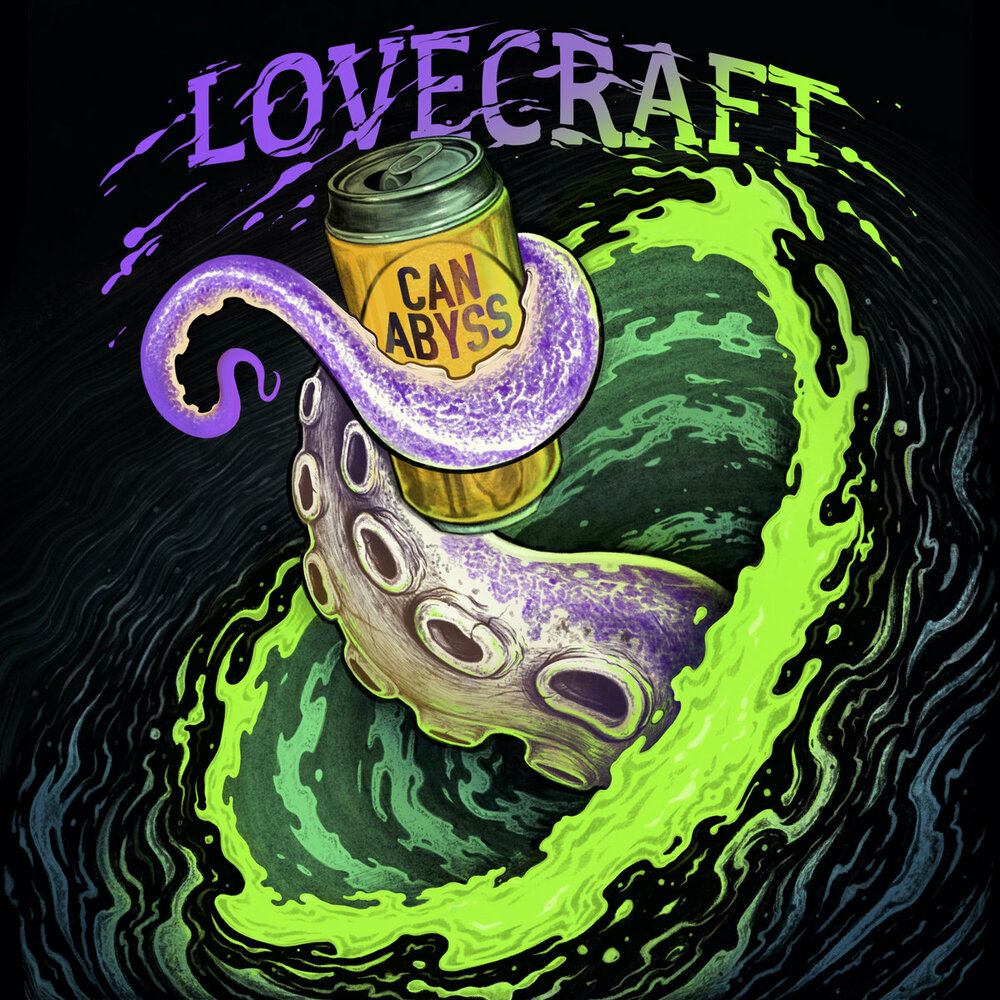
Lovecraft - Can Abyss (2022)

Country: Poland
Style: Psychedelic Rock
Rating: 7/10
Release Date: 1 Sep 2022
Sites: Bandcamp | Facebook | Instagram | YouTube

Here's something tasty and unexpected. Lovecraft are a psychedelic rock band from Poland, not a power trio but a five piece who keep their identities secret, or at least so unpublicised that I couldn't track down who's in the line-up. Their Bandcamp page suggests that their influences are "way too many to mention" and they're probably right, tantalisingly adding that "we're still expanding our infinite musical journey."

The first of those influences is obvious because Awakening (From the Sea) kicks in with smooth but dark a capella vocals highly reminiscent of Glenn Danzig, especially given that they're set against soft cymbals and an occasional power chord that hangs in the air. What's odd, though, is that this song is acutely subdued, ever threatening to just explode into action but without ever really doing that. Maybe on stage it'll feel more emphatic, but the instrumentation is kept far lower than the vocals and, given that it isn't on the next track, that has to be deliberate.

The other influence that has to be trawled out here is the Doors and for multiple reasons. For one, those velvet vocals are just as reminiscent of Jim Morrison too, especially given how they serve to command as much as sing. Gather round, flower children, and the vocalist will tell us all a story, an important and subversive one set against an ambient backdrop that grows and swirls, just like the maelstrom in the cover art. There's at least one more, because there are screams that come in at points late on and they don't fit Danzig or the Doors, but I couldn't tell you who.

I can certainly throw out Iron Maiden on Mooneater pt.I, because it's clearly a prog metal song in psychedelic rock clothing. The guitars are shifted up there with the vocals now and the intro, right out of Di'Anno-era Maiden, leads only into more Maiden. There's some doom in there too, but it's a perky doom laced with prog and it's delightful. The only catch to this one is that the lyrics seem a little shoehorned into some spots, like there were too many words for the space but they felt that they couldn't cut any out. That also isn't how "tyranny" is pronounced. But hey, I'll shut up and let that guitar solo wash over me again. It's a gem of a track, even with a few flaws.

There are another five songs after this and they tend to play out with those same ingredients, just in different amounts and with others added for garnish. Another Damn Idiot starts like the Doors meets Danzig again, only to add harsher vocals, squealing guitars and a bouncy call and response vocal section. The soft midsection is absolutely delightful, the noodling bass providing the perfect ambient backdrop for the guitar solo. The escalation out of it is delightful too. Horrors in the Attic is similar but not as noteworthy. Bar Cannabis evolves into more Iron Maiden guitarwork.

Grasshopper adds a punk bounce to proceedings, only to drop off a cliff into another ambient part, this time with narration. It's a huge shift and I'm still not sure that it works, but each side does for sure. I'd be happy to listen to a whole album of these ambient sections. They're agreeably chill and they offer a fantastic opportunity for both the bass and the lead guitar. Lovecraft seem to be fond of these sections too, to the degree that Deep Dark Slumber starts out in one and has fun teasing us about when it's going to ramp up. Eventually it does and turns into a sort of occult rock ritual.

I really dug this album. My biggest problem with it is trying to figure out which parts of it I like the best. I'm pretty sure I should highlight Mooneater pt.I and Another Damn Idiot as my favourites as opposite sides of that Doors meets Maiden mindset. The former is more urgent and more Maiden, but the latter is more versatile and more Doors. However, I can't leave the opener alone, with its subdued nature and subtle broodiness. Now I want a psychedelic rock album from Danzig! I believe this is Lovecraft's debut album, so maybe we'll see that under their name as they develop. As the Archpriest of Chaos in the First United Church of Cthulhu, I salute them!

Thursday, 20 October 2022

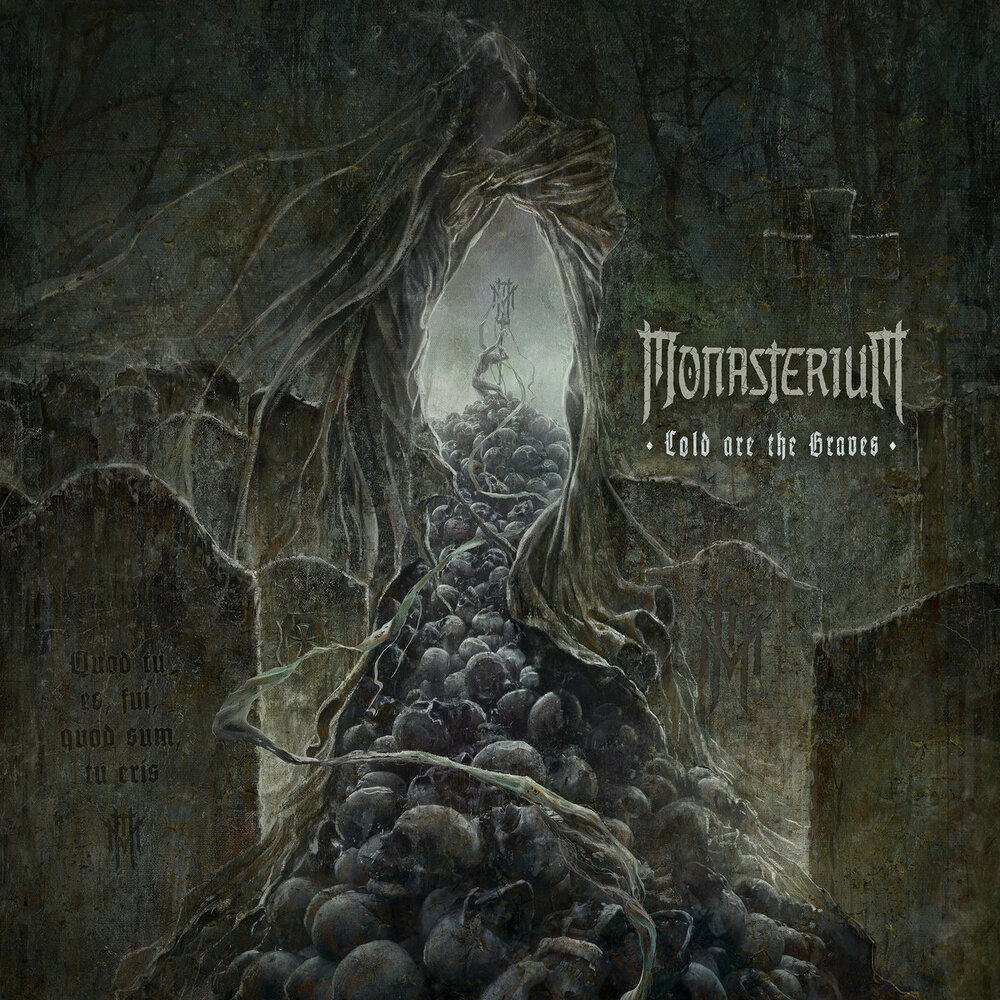
Monasterium - Cold are the Graves (2022)

Country: Poland
Style: Epic Doom Metal
Rating: 8/10
Release Date: 10 Jun 2022
Sites: Bandcamp | Facebook | Metal Archives | YouTube

Back in 2019, I reviewed Church of Bones, the second album from Polish epic doom metal band Monasterium, and the experience blew me away. I loved that album immediately and abidingly and it's right there on my 9/10 list for that year in company with only fifteen others. I completely failed to notice the release of their third album in June, so this review is a little later than it should be. Thanks to Rafał Borsuk from Nine Records for sending me a copy.

The bad news is that it took longer to grow on me than its predecessor, though perhaps I needed a little time to adjust. Most of the great albums I've been listening to lately are fast ones or at least perky ones. This is not remotely fast and it's only occasionally perky, even then in a dissimilar way to, say, Orianthi or Clutch. Then again, this is epic doom metal so fast is not in its repertoire. It has moments at a slightly faster tempo but, as enjoyable as those are, they mostly serve to underline the inevitable slowdowns that come next, which are exquisite. I grinned in admiration every time that happened on The Stigmatic.

The good news is that I adjusted. I started in on it last night after Orianthi and Blind Guardian but I've been listening it to it all day today. Coming to it first thing saw it improve, a couple more times through elevated it further in my estimation and, a few more listens later, it's almost become an old friend. I don't think that it's as good as its predecessor, but it comes pretty close, easily enough to make my Highly Recommended List for this year with an 8/10.

Once again, it's doom metal firmly in the Candlemass style, maybe not quite as obviously this time because they're finding their own sound, but it's simply impossible to miss that comparison. It's a given that, if Nightfall and Ancient Dreams are your idea of heaven, then Monasterium ought to be in your ears right now. Never mind reading this, just go out and buy their albums and thank me later.

The first element you'll love is the guitarwork. These riffs are immense and they sometimes come in hard, as on The Siege, or patiently, like with Necronomicon. Often they manage both, such as on Cimmeria or The Great Plague, because they absolutely nail power chords as crescendos and their production only emphasises those moments more. Sometimes Tomasz Gurgul and Maciej Berniak feel less like a guitarist and a drummer and more like human versions of the Clashing Rocks in the old Jason and the Argonauts movie. Gurgul solos well too, with my favourites on Necronomicon.

Before long, Michał Strzelecki's vocals will show up and you'll be whisked away into another world. He's Polish, of course, but he sings in English with a strong accent and a grandiose delivery that is one part Bela Lugosi, one part Ozzy Osbourne and a whole heck of a lot of parts Messiah Marcolin, operatic and theatrical. The result takes a little getting used to but I adore his diction and ability to effectively preach at us about ancient books of horror, mythological swords and the like.

He's a born performer who always conjures our attention, even on Remembered, whose acoustic intro keeps on going throughout the song. It feels like a tale that might be sung in an inn, but not as a song of cameraderie—as a sad plea for remembrance. If his accent and theatricality feel like they might not be your thing, do persevere because he will probably grow on you when you realise how cool it is to imagine a five hundred year old eastern European vampire fronting a doom band. Sure, that's partly the accent and little the theatricality, but much of it is the feel of age that he's able to convey. His vocals are as epochal as Gurgul's riffs.

Eventually, you'll remember that these magical vocals and immense riffs are part of actual songs. Given the epic nature of their sound, it's almost a shock to realise that nothing here is of a length we might associate with epics. The closer, Cold are the Graves, comes closest because the intro in a quintessentially old school Jimmy Page style, which later reprises under narration, extends it close to eight minutes. Most of the rest sit between five and six with that acoustic piece under four, and they use that time well but I stil wonder how they'd sound in ten minute epics.

I have a feeling that, even though some songs are elevated above others right now in my mind, I'm going to shuffle my rankings with each listen. Necronomicon caught me first, followed by the pair of openers, The Stigmatic and Cimmeria. The Siege wouldn't let me be, though it doesn't live up to its early urgency. Later, Cold are the Graves elevated itself and Seven Swords of Wayland too. That leaves The Great Plague, which has come from behind to enforce its presence on any favourite list, and the acoustic piece, which I have to say is my least favourite for now. Let's see if that changes a few more listens from now, because I'm not turning this off repeat any time soon.

Monday, 10 October 2022

Behemoth - Opvs Contra Natvram (2022)

Country: Poland
Style: Black Metal
Rating: 7/10
Release Date: 16 Sep 2022
Sites: Facebook | Instagram | Metal Archives | Official Website | Twitter | Wikipedia | YouTube

Legendary Polish extreme metallers Behemoth have been around for over thirty years now, which makes them kind of an institution. Given that everything Nergal has got up to in that time, from a series of trials for blasphemy for ripping up a Bible to his stint as a coach on The Voice of Poland, it becomes difficult not to see them that way. However, this is only their twelfth studio album, their release schedule hovering around every four years right now.

I remember enjoying them in the mid nineties and whenever they've crossed my path in the years since, but it's been a while since I've heard a full album from them, so Post-God Nirvana was rather unexpected. It's a neat, if long intro, rather like a Coil layer applied to Heilung, though it's heavier than either with a buzzsaw guitar eventually showing up to underline that. It's a slow and chanting piece to kick things off. And an angry one. There's a lot of anger on this album.

And then Malaria Vvlgata explodes out of the gates like a TGV from a tunnel, dominating all in its path. Behemoth may have shifted in style from pure black metal to become pioneers of the black/death metal hybrid style, but I'm out of date with where they've ended up on that spectrum. This album plays to me far closer to black than death. It doesn't feel at all like blackened death metal. Maybe we could call it deathened black metal, but that's just clumsy and I'd plump for black metal pure and simple. It's fast and it's furious but somehow the guitar solo still manages to add a level. This one has energy to spare.

The Deathless Sun adds a few symphonic and choral elements that continue to elevate the album. The choral side isn't front and centre but it shows up at points to add texture, whether at the start of Ov My Herculean Exile or later in Thy Becoming Eternal, where the voices are almost teasing in a back and forth with Nergal. There's a repeated keyboard swell in Off to War! that feels acutely like a summoning. These do background things but they all add to the whole.

However, Nergal still feels angry. It sounds like he's still combining a black shriek and death growl but adding a cry of frustration to the mix. It doesn't hurt that the lyrics echo this. "I am nothing." "I am no-one." This cry is especially obvious on the closer Versvs Christvs, which is, of all things, an almost whispered ballad for its first minute and change. When it heavies up, because of course it does, it doesn't get fast immediately and that transition ably highlights how angry Nergal is here.

And that anger works wonders. The more frantic a song is and the more Nergal emotes, the better it plays to me. The sheer energy of Malaria Vvlgata is difficult to match but the beginning of Neo-Spartacvs manages it. And, quite frankly, liking the fastest material isn't that surprising to me as a thrash fan at heart. However, I found myself connecting more with the consistency that arrives in the second half, from Disinheritance to Thy Becoming Eternal. On the first side, I'm listening to an impressive set of individual songs. On the second, I'm listening to an album.

And I think that's what Nergal and co. are aiming for. There's still death metal here but it's clearly not the priority that black metal is. However, this is far from a return to their early years. It's a lot more commercial and accessible than the early Behemoth ever were, even though they show how they can still absolutely rip on faster sections and songs like Malaria Vvlgata that don't stop for a breather. I like this more mature black metal Behemoth and look forward to their lucky thirteenth album in another four years.

Tuesday, 1 March 2022

Framauro - My World is Ending (2022)

Country: Poland
Style: Progressive Rock
Rating: 7/10
Release Date: 3 Jan 2022
Sites: Prog Archives

I'm not sure why there's a new Framauro album being released in 2022, their second after a debut way back in 1998, Etermedia. I'd guess it may have something to do with the band they renamed to in 1999, Millennium, as their website is no longer active, so maybe they've ceased to be. That's the Polish prog rock band Millennium, with sixteen studio albums to their name, not the British heavy metal band led by Mark Duffy of Toranaga fame. This features the keyboardist and bass player on their last album, The Sin, but not the others, so maybe it's a split or a side project.

The style here is neoprog and it's very accessible neoprog, doing interesting things in a clean way, with the most overt influences perhaps Twelfth Night and IQ, but mixed with a heavy dose of Pink Floyd, especially on the final track, What's Happened?, which is constantly engaging for seven and a half minutes and features some excellent melodious guitarwork from Marcin Kruczek. He takes care of the solos here, while band founderRichard Kramarski handles rhythm guitars and acoustic work, as well as keyboards and vocals. Kramarski's Millennium bandmate, Krzysztof Wyrwa, plays the bass, while Grzegorz Fieber of Loonypark handles the drums.

If I'm translating from the Polish properly, I think the lyrics were written by Zdislaw Zabierzewski, known as the Bat, so I don't know how applicable they are to the guys in the band. The reason that I mention that is that a couple of these songs speak very specifically to musical influences, and I'd love to know how many of the names cited cross over from Zabierzewski's tastes to Kramarski's, or indeed those of the other members of the band. I'd especially love to hear Kramarski's list as the owner of a record company, Lynx Music.

Records from My Shelf is the most obvious, the lyrics pretty much a list of the LPs in what I assume is Zabierzewski's collection. It isn't a particularly surprising list, detailing the history of prog from King Crimson to Dream Theater, but with a few less expected names from the world of pop, Duran Duran, Michael Jackson and Frankie Goes to Hollywood among them. It ends with a note that he's running out of time and I wonder if he meant in this song or in life. Certainly When Idols are Gone is a nostalgic look back at major names in music from the past, mostly the 27 club but again with a few surprising names like Robin Gibb and George Michael added to the mix. Two such looks back in one album suggest a reckoning.

They're good songs and they do a decent job of highlighting what Framauro do, but my favourites come between them, which means Living in the Shadow of Death and Hey You Fools! The former is solid anyway but elevated considerably by Kruczek's guitar solos. He's clearly a David Gilmour fan and he does him justice here. The latter finds a really neat groove, including an energetic beat by Fieber, with a pop/rock drive to the lyrics that reminds of the Alan Parsons Project but, given the names in Records from My Shelf and what else is on this album, clearly owes a little to Kate Bush as well.

She certainly comes to mind as I am Only a Moment begins, though it's mostly during an intro, the song proper moving in another direction. This is another highlight, the more so the longer it runs, with a nice vocal hook duetting with some more Kruczek soloing. The final one for me is the closer, that smooth Floydian epic to wrap things up. It's the longest song here, a seven and a half minute exercise in grabbing us subtly and taking us wherever the band wants. It's not an immediate piece but it keeps us like an ocean, bobbing along at its whim, especially with its orchestral sweeps.

I'm still dipping my feet into the world of Polish prog, so I hadn't heard Framauro or its alter ego, Millennium, before, let alone the other bands of the other musicians. I'm certainly interesting in digging into their back catalogues though. This is less innovative and maybe even less progressive than some of what I've been hearing lately, but it's smooth, solid and accomplished. And that's no bad thing. I may enjoy diving into more experimental work here and there, but it's just as good to come back to an old favourite, like Floyd's Wish You Were Here, that's not at all challenging in the 2020s but remains reliable and pristine. Framauro are certainly trying on that mould and it's not a bad fit.

Thursday, 20 January 2022

Velesar - Szczodre Gody (2021)

Country: Poland
Style: Folk Metal
Rating: 8/10
Release Date: 1 Oct 2021
Sites: Bandcamp | Facebook | Instagram | Metal Archives | Official Website | YouTube

Like the Riverwood album that I reviewed earlier in the week, this is a very welcome follow-up by a band whose debut I adored here at Apocalypse Later, in this instance an eight piece folk metal band from Cieszyn in Poland called Velesar. Dziwadła made it onto my highly recommended list in 2019 and the band were kind enough to mail me a physical CD, which was much appreciated. Unlike the Riverwood album, which was brand new in January, this one's from last October, so I'm playing catch-up. It came out right before my film festival and I had it slotted into my schedule, but ended up returning to reviews a week later. Apologies for the delay, folks!

There are a lot of reasons why I really dig Velesar. They play lively folk metal, for a start, which is a sort of Achilles' heel for me, and they do it very well indeed, but there's more to it than that. They clearly have a lot of fun playing this music, which is pretty crucial in folk metal, and I would love to experience what they do live. But they also nail a lot of balances. They're uplifting, especially with two violins and one flute in their line-up, but there's a darkness to what they do too, which lends a majority of these songs depth. Similarly, vocalist and band founder, Marcin Wieczorek has a harsh vocal style that adds plenty of texture to the band's sound but not so much to call this extreme.

And, best of all, they have a way of sharing the spotlight between so many members that they all have something to do and that something is exactly the right thing for the song. As with the prior album, I liked this from the outset, from a palate cleansing intro and the neat riff at the opening of Zmora, but it was the third song proper that truly sold me on the band once more and, as I had it replay for the third time, I realised how much of a showcase it is for every member of the band. It's Ognie Swaroga, which Google tells me translates to Swarog's Fires.

If Zmora was heavy and Swaćba was bouncy, Ognie Swaroga starts out a little thrashy then settles into a song of trade offs. It starts with guitar and drums soloing at once, then the flute flutters in to join the fray. Everything feels like movement, as if each section is a different set of musicians in a sort of face off against another set, before shifting again and finding a new face off. It's a dance of a song, not in the sense of Taniec diaboła from the debut (or indeed Szczodre Gody on this one) but in the sense of musicians approaching each other and whirling away again. It doesn't matter if its violins meeting drums or violins and flute surrounding the singer, or guitar duelling with violin, it's all a glorious dance.

And I think it's this approach that makes Velesar such an enticing band. They rarely drop down to a single instrument; even when Dawid Holona's lead guitar is soloing in the spotlight, there's one of the violins there with him, and they all hand over to another combination. Zmora grew on me with a second runthrough but Ognie Swaroga remains a highlight and Velesar don't let the album slide at any point after it. I think my favourite moments come late, when the violin leaps into a break in guitar early in Śpiew juraty (szanta bałtycka) and when the flute does the same thing on Modły. Then there's the closer, Radecznica, which has a wonderful first half and an even better second.

Another reason they're so enticing is that every song begins like it's going to be an instrumental and we lose ourselves in the music but, when Marcin Wieczorek arrives, as he always does, even if it's not for a while, he never gets in the way. I've enjoyed a few albums this past year that would have been improved by losing the vocals, but this isn't one. Not only because I don't understand Polish (even if I've just been translated into it for a Guy N. Smith book), I began to see Wieczorek's voice as just another instrument in the Velesar orchestra. Like everyone else, he does precisely what he needs to do, then steps back to hand over to his bandmates, always ready to step back in again at the right moment.

And, talking of those bandmates, I really need to highlight the violinists here. There are a pair of them, but the credits suggest that they never work as a pair. Either it's Iga Suchara, as it is on five of these songs, or it's Ewa Kozieł, on the other half dozen. They're both great but I don't know why they don't appear at once. It often feels like they do, but that must be illusion. The only song that features both of them is Szczodre Gody, but the violin there is Kozieł's while Suchara sings. I have to highlight Katarzyna Babilas on flute as well, even if she doesn't get as much opportunity as the violinists, and Dawid Holona, who delivers a host of excellent solos.

But I'm gushing again. It's going to take something truly special to knock the mighty Korpiklaani off their throne as my favourite folk metal band, not least because they've been doing what they do for either two or three decades, depending on how you count, and they have eleven albums to their name. Velesar only got together in 2018 and this is only their second album, so they have a long journey ahead of them, but they ought to have a glorious time as they do so, especially with COVID hopefully retreating and gigs opening back up. Now, I want to hear albums three, four and ten!

Thursday, 16 December 2021

Weedpecker - IV: The Stream of Forgotten Thoughts (2021)

Country: Poland
Style: Psychedelic Rock
Rating: 7/10
Release Date: 3 Dec 2021
Sites: Bandcamp | Facebook | Metal Archives

This album, which, as you might expect, is Weedpecker's fourth, was quite the surprise for me. The band name strongly suggests that this is going to be psychedelic rock of some sort—shock horror, it is—but also that it's probably stoner rock in the more modern American style and that's really not what this is. I hear a little stoner rock here and there, especially on the chugging opener, No Heartbeat Collective, but mostly the influences seem to be from a lot earlier than Kyuss. Even on that song, there's plenty of Hawkwind to be found and plenty of the Who too, in the power chords and the sweep.

It's the vocals of Wyro that feel most unusual to me. They're high in pitch but low in the mix. While they do get emphatic at points, they often float rather than soar. They remind me most of the late sixties hippie era, but British more than American, even though this band hail from Poland. Once we get past that opener, this became Syd Barrett-era Pink Floyd for me, an approach that frames the sound of much of the rest of the album. The question that I kept answering myself was where other influences got added to that base sound.

I didn't detect any on Fire Far Away or The Stream of Forgotten Thoughts, at least on a first listen, but there are definitely some on The Trip Treatment. The guitar here gets so liquid that it seems like a hybrid of that early Floyd sound with soul and funk and disco, very American sounds to be in something so British. Unusual Perceptions is very nice from the outset, almost saccharine sweet, swimming through a syrupy sugar solution, and it's not surprising at all to find it sounding like the Beatles. There's a lot of pop music in this sound, even if it manifests more as rock, and most of it is half a century old, even if presented in a new way.

There are more modern influences here, layered onto the older ones. Big Brain Monsters caught me out with that until I realised that there's King Gizzard and the Lizard Wizard in that one and I started to hear them all over the place, even on songs like Fire Far Away that had felt so Floydian until that realisation. King Gizzard are certainly there on Endless Extensions of Good Vibrations too, which is edgier and delivered with more emphasis, with late chugging that hearkens back to the opener. Everything comes around in the end.

What I found on a first listen that was underlined by a second is that I like how Weedpecker find a sound they like and milk it without it ever seeming like they're playing a song. There may be some sort of traditional structure buried deep under the layers of psychedelia and effects, down there with the vocals, but I couldn't tell on half these songs. I just know they sound good, a combination of instruments brought together in a melodious and palatable way that might coalesce into some recognisable form under the influence of the exactly right amount of mind expanding drugs.

In fact, much of the album could be described as a mellow jam. Occasionally, what we hear finds its way into something more recognisable as a song and then jam in a more traditional fashion. The pinnacle of this is easily the album closer, Symbiotic Nova, which builds gloriously and rocks out in memorable fashion during the second half. This one often reminded me of Silver Tightrope, a song by Armageddon, that short lived project that was the last for the Yardbirds's Keith Relf, but this is less focused.

I think how I'm going to think of this is less as a set of songs on an album and more as some sort of musical installation that floats around a room like a cloud, ever changing but never different, and we walk through it to experience what it has to tell us. Clearly I should check out earlier albums by Weedpecker, inevitably titled Weedpecker, II and III. I want to see if this approach has been in play all along.

Tuesday, 2 November 2021

Amarok - Hero (2021)

Country: Poland
Style: Progressive Rock
Rating: 9/10
Release Date: 15 Oct 2021
Sites: Bandcamp | Facebook | Instagram | Official Website | Prog Archives | Twitter | YouTube

I have to say that the first thing to cross my mind when looking at this album was that there's a music application on Linux called Amarok, but I don't have it installed right now. Of course, when prog rock bands call themself Amarok, that's not because they use the software either but likely because they liked Mike Oldfield's polarising album of that name. I say likely rather than assuming it as a surety as I'm not hearing almost any Oldfield in the music here. I'd state rather than suggest that the primary influence of Amarok is Pink Floyd.

And that means that Michał Wojtas is a major Floyd fan, because this is emphatically his band. In the early days, it was a duo comprised of him and guitarist Bartosz Jackowski, but it became a solo effort with guests helping out here and there. Only in 2021, with five albums behind him, has it expanded to become an actual band, with four musicians now credited as band members. Surely, however, Wojtas remains the driving force behind Amarok, even if it's a band rather than a project now, and he stamps that unmistakable Dave Gilmour sound onto the music.

This is calm and subdued prog, but it's commercial and engaging. The vocals are soft and melodic but they carry a weight to them that commands us to pay attention, especially with clever turns of phrase such as "I look to explain the unknown reality. The world we could foresee is gone." There's substance here and it's decorated not only by a simple but effective guitar but odd sound effects and evocative percussion taking the place of a traditional beat. That beat doesn't show up for a couple of minutes, when the teasing intro becomes a song proper.

Floyd were always great at creating songs that sound so simple and effortless that anyone could have created them, until we realise what's actually going on and how well crafted they have to be. Amarok are clearly aiming at the same elusive magic and they do an excellent job at it. It's Not the End starts effortlessly but grows substantially to leave us wanting to listen to the song again immediately rather than move onto Surreal and into the album. And Surreal does the same thing. And Hail! Hail! AI. And...

And really, I could end my review with that and you'll either have already bought Hero, knowing that you're going to adore it, or moved on because you know it isn't for you. However, there's a little more that I should mention. Whenever Wojtas brings his guitar into play, he channels not only Gilmour, as obvious a guitar influence as a general musical one, but some Mark Knopfler too. Gilmour is still first and foremost, as is especially obvious in the second half of The Orb, with the notes not played just as important as those that are. The ever patient Wojtas never really speeds up, but the Knopfler comes out for me any time he thinks about it, like on the title track.

The other Floyd note to make is that, just as they were sometimes a guitar band and sometimes more of an electronic one, Amarok follow suit. The Dark Parade is driven by the electronic side with a dark bass joining the fray and that's not wildly unusual here. Often we'll hear the grooves first with the guitar joining in to develop the sound. The Dark Parade actually reminds at points of the Doctor Who Theme, not in content but in the way that it moves in waves, albeit rising and falling much more slowly.

And the result of all this means that this is a very easy album to listen to. I'm sure I could leave this on for a week and never get bored, even though it would become background music that would grab my attention back here and there. However, it's also an immersive album to listen to, one that we can fall into and explore. Every aspect is fascinating, whether it's guitar rock or electronic new wave, a guitar solo in an instrumental break, a narrative section from Marta Wojtas or just a background flourish at a random point. I've already found myself listening specifically for guitar and for percussion and for effects. I could see that becoming a rabbit hole.

I honestly don't know how to rate this because I clearly haven't listened to it enough, even after three times through. I know that I really like it and I'll be listening to it more. I'm struggling to pick my favourite tracks because that's all of them or, more accurately, whichever one I'm listening to at any particular time. So this is easily a highly recommended 8/10 but I don't think that's enough. I think this is my first 9/10 after diving back into reviews post-ALIFFF. It will be hard to move onto my second review for the day because the world seems emptier once this stops playing.

Now, what's going on in Poland that can generate albums of the quality of this one, the Kruk earlier this year and the Fren in 2020? I've found gems, but what have I missed?

Friday, 2 July 2021

Sarmat - RS-28 (2021)

Country: Poland
Style: Black/Death Metal
Rating: 6/10
Release Date: 19 Mar 2021
Sites: Bandcamp | Facebook | Instagram | Metal Archives | YouTube

Many thanks to Sarmat's new lead vocalist Łukasz Kobusiński, formerly of Mortis Dei and Puki 'Mahlu, for sending over this album for review. It's a debut for Sarmat, but it's an accomplished one that does not remotely feel like a debut. Sarmat was formed in 2018 by a pair of guitarists, Daniel Szymanowicz and Krzysztof Kopczeński, both of whom have credits with other bands, Szymanowicz spending over a decade with Aggressor. I presume there are other musicians in the band beyond them and Kobusiński, though that may well be a drum machine, but, if there are, I have no idea who they might be.

Sarmat hail from Poland and I've liked a lot of what I've been hearing from that country of late, even if I'm not discerning a particular scene; the best bands I've heard so far are from all over the musical map: the folk metal of Velesar, the epic doom of Monasterium and the ever-reliable thrash/death of Vader, not to forget the prog of Fren and the hard rock of Kruk. Of those, Sarmat are closest to Vader because, while they're listed as black/death, they (especially the drums) play at a serious clip and I've heard lots of slower thrash bands lately. That black metal influence is a big one though so, if you can imagine a layer of black metal that over recent Vader, you won't be too far from Sarmat's sound.

Initially, it sounds good but also very consistent in approach. I think I was four songs into the album before I acknowledged that I'd moved to another track, the intro to Seeds of Uncertainty eventually shaking me out of that mindset. Repeat listens do allow each of these tracks to carve out its own identity from the rest but they're still very consistent in tone and tempo for quite a while, meaning that, if you like what you hear when the album kicks off, you're going to like the whole album, but, if you don't, it has no intention of converting you later on. You're either in or you're not.

The good news is that this particular tone and tempo is a decent one that gets immersive. The drums are usually very fast indeed, providing a black metal wall of sound backdrop. The guitars often play a lot slower but they're also part of that wall of sound and they speed up, adding a surprisingly bouncy feel sometimes, given the darkness inherent in the sound. The vocals are a warm death growl that's harsh but welcoming. All the playing is technical and intricate, sometimes reaching math territory on songs like Evilution. It's easy to just fall into this and let it take us places, forgetting that it's actually shifting from one track to another.

All that holds true for pretty much everything on this album, which means seven out of eight tracks, so it's very difficult to call out highlights from them. I would raise You Don't Live in My War as the exception because it takes a different approach vocally and the whole tone of the song shifts. This one feels a lot more atmospheric black than death and its both angrier and more patient. That's a tasty guitar solo late in the song that we'd usually expect to hear on a song with much slower drums. Those drums vanish entirely during the bookends too, which are an important part of this song, conjuring up a sparse but hellish landscape, with a demon serving as our guide. It's a really neat track and, if Sarmat go down the road that this suggests they should, they're going to be a damn good band.

However, it's that variety that makes this one my favourite track. While I enjoyed the album as a whole and it ought to play well to die hard black/death fans, I'd have appreciated more of that variety and, when it shows up in this track, it's obviously a better album because of it. If you're one of those die hards, please add a point to my rating because this is strong, uncompromising stuff played impeccably. If you're not, this probably isn't your best introduction to the genre and you should check out their fellow Poles Behemoth first, or other more accessible blackened death bands like God Dethroned or even Goatwhore. If you find that you dig the style, come on back to Sarmat too.

Friday, 7 May 2021

Kruk & Wojtek Cugowski - Be There (2021)

Country: Poland
Style: Hard Rock
Rating: 8/10
Release Date: 14 Apr 2021
Sites: Facebook | Official Website | YouTube

I'm usually massively impressed by at least one track by a band who are completely new to me on any edition of the Raised on Rock radio show, so when its DJ, Chris Franklin, raves to me about a particular band, suggesting that it's up there as a discovery with Shadow Weaver and Blind Golem, favourites of both of us, then I'm going to listen. And he raved to me about Kruk, a Polish hard rock band who sing in English on this album, so here it is on my virtual turntable. And yes, he's right, as usual.

Neither of us had heard of Kruk before, though they've been around for a while, albeit not as long as their sound suggests. Given that their sound is rooted in early seventies British hard rock, bands such as Deep Purple, Uriah Heep and Led Zeppelin, with some flavour from the early eighties too, it wouldn't have surprised me to discover that they've been rocking Poland for decades. However, they formed as recently in 2001, with half a dozen studio albums and one live album to their credit before this one, which arrives seven years after their prior studio release, 2014's Before.

All the music was written by guitarist Piotr Brzychcy and vocalist Wojtek Cugowski, who gets a credit along with Kruk on the cover. That's probably because I don't believe he's a member of Kruk, instead leading the Polish rock band Bracia and what looks like a family band, Cugowscy. However, even if he's here as a sort of guest, he's integral to this release, as both a songwriter and as a vocalist, high in the mix because this is a vocal album as much as it's a guitar album. He also wrote all the lyrics.

Rat Race is at once a decent opener and an unrepresentative one. It's short and to the point at three and a half minutes, which is atypical. Only the closer at nearly five comes close, as the others range up from six to almost eleven. This one feels like the inevitable early seventies single that had to be short to get airplay, kicking in with an upbeat Deep Purple riff and Uriah Heep keyboards. It's perky and it's accessible and it's apparently easy, something that doesn't test a band that likes to be tested. It's still a good song, one that would be popular at gigs, but it doesn't stretch them.

Hungry for Revenge is deeper. It's one of those six minute songs, which means that it gets to breathe, with an atmospheric intro of eighties keyboards and woah vocalising, a more patient build and a neat instrumental section in the middle of the song, with a decent solo for Brzychcy. Cugowski reminds of David Coverdale here, but how he might have sounded had he chosen to join Uriah Heep after leaving Deep Purple instead of forming Whitesnake. It's another good song, but one with more substance.

And, talking of substance, then Kruk throw us headlong into Prayer of the Unbeliever (Mother Mary), which is a magnificent piece of music. Cugowski still croons like Coverdale, but he's not with Heep any more. This is Coverdale singing for Led Zeppelin and, as the song evolves, Diamond Head. Anyone who dug the longer songs on the recent Greta van Fleet, like The Weight of Dreams, will adore this album, because that's the length where Kruk play and they do it more often than the boys from Michigan.

It's perhaps most obvious here, because this song grows impressively, the Zeppelin groove giving way to Brian Tatler-esque riffs and invention. The second half is mostly instrumental, beginning with what initially feels like a Mark Knopfler solo, even it moves into Robin Trower territory. There's a tasty solo from Michał Kuryś on the keyboards too before the vocals come back in to wrap things up. Crucially, all of it works. It's Kruk's take not just on Achilles Last Stand but The Coffin Train too. It's a glorious epic.

And, quite frankly, I could stop right there. If you're not convinced that you need to buy this already, it isn't likely that I could say anything else to get you to that point. However, there's a lot more here. I'd suggest that none of these songs repeat the same approach, though there are common factors. Kruk are more commercial on Made of Stone, though it kicks in with a visceral riff, and The Invisible Enemy, which often carries a Magnum vibe. To Those in Power is the other ten minute epic and it's a bouncier one than Prayer of the Unbeliever. Be There (If You Want To) is a tasty shift down to wrap things up.

I'd say that, like the Blind Golem, which also ventured heavily into Uriah Heep territory, the first half is the superior one but the second isn't far behind. There isn't a duff track here and there aren't any average ones either. Every song is worth your attention and some of them are truly glorious. I'd also say that Chris is absolutely right, as always, to rave about this one. Like the Shadow Weaver and Blind Golem releases, I'm going with an 8/10 but may well up that to a 9/10 later as I really need to go back and do for the former at least. If more songs stood out like Prayer of the Unbeliever, I'd have gone 9/10 right out of the gate but it is a step above everything else here, with only To Those in Power coming close to matching it.

And I'm now eager to dive into the back catalogue of Kruk. Their debut in 2006 was a covers album in collaboration with Grzegorz Kupczyk, and it featured, shock horror, a set of classics from Led Zeppelin, Uriah Heep, Black Sabbath and especially Deep Purple, who were featured five times. They decided to go original for their second album, Before He'll Kill You in 2009, and apparently never looked back. Not being up on the Polish hard rock scene of the last twenty years, that's exactly what I need to do. Thanks for the rabbit hole, Chris.

Monday, 5 April 2021

Aleph - Kairos (2021)

Country: Poland
Style: Psychedelic Rock
Rating: 7/10
Release Date: 8 Mar 2021
Sites: Bandcamp | Facebook | Instagram | YouTube

Before I get into what this album does, I should point out that I believe the name of the band is simply Aleph. I'm seeing it listed a lot as Aleph א, but א is just the character aleph, the first letter in various Semitic languages, especially Hebrew. The cover only lists Aleph, so I presume the א is just decorative redundancy. While we're talking language, the album title is a Greek word for time, because they had two of them. Chronos meant the time through which we travel sequentially at the rate of a second per second. Kairos defines the right time, from the perspective of opportunity or advantage, like when a favourable omen dictates or the stars are right. I hope 8th March, 2021 is kairos for Kairos.

It's certainly a fascinating album. I came to it as psychedelic rock, which it is, but it's as often prog and even sludge metal, all woven into a heady mix that's as unusual as it is impressive. While there are an abundance of moments that conjure up comparisons, the overall feel of the album is like nothing I've heard before, which state of affairs always makes me happy. Sometimes it reminds of Ummagumma-era Pink Floyd, but it's always heavier, even at its most pastoral. There are moments when its strands drift into Hawkwind territory but it never stays there. There's sixties hippie psych experimentation in swathes but it's phrased more like a seventies hard rock album and sometimes a nineties alternative one, as a wild song like A Swarm of Dead Insects underlines.

This song is the most fascinating of all the fascinating songs here and there are seven to choose from, including the sub-minute long Intro. This one is sludgy and alternative, with staccato moments where things start and stop for effect. It has the most overtly harsh voice here, one that's partway between hardcore shout and death growl but more restrained than either. There are plenty of points where it sounds somewhat like Primus covering Pantera, which is a bizarre concept I find myself on board with. Maciej Janus's bass is very obvious, bringing Animals as Leaders to mind as well. A jazzy performance from drummer Kuba Grzywacz often finds unusual rhythms that conjure up ideas of ritual. I also love how it ends, like this swarm of dead insects devoured the Twilight Zone theme tune.

If that's the most fascinating track, the others aren't too far behind. Invert is a wonderful piece that's so vivid that what I'm imagining is probably way off the mark, but it feels to me like a race backwards in time until we find ourselves in a babbling brook as a flight of pterodactyls soar over us chattering. Quite what hunters we find ourselves running from, I have no idea. I couldn't quite see that much, but it is a very visual sort of song.

Doubt in between them is a sort of interlude before things get weird again. It's quieter and softer but organic and enticing with patterns sucking us in. That happens all the more on Whale, Pt II, the closer, which is magnificently mathematical, as if math rock was always supposed to sound like this. Patterns are everywhere here, woven together ever closer during an entirely instrumental piece that whispers past ten minutes. It's space rock and math rock in tandem and it makes me wonder just how much I've heard in the way of vocals up until now. Resistance certainly isn't instrumental, however much it feels initially like a space rock take on Tom Waits's In Shades.

This isn't an instrumental allbum but it somehow feels like it, once Whale, Pt. II wraps up. Those weird rhythms seem to mess with the passage of time, as in chronos rather than kairos, becoming bizarrely Lovecraftian. Is this what non-Euclidean means? We just had to translate it into musical terms? Where am I? I certainly feel like I've travelled to somewhere weird and wonderful and the journey was just as notable. This is refreshingly different and there's at least one previous album to explore too, even if it doesn't seem to include a Whale, Pt. I.