Showing posts with label Spain. Show all posts

Thursday, 30 January 2025

Sotomonte - Decadence & Renaissance (2025)

Country: Spain
Style: Psychedelic Rock
Rating: 9/10
Release Date: 21 Oct 2024
Sites: Bandcamp | Facebook | Instagram | YouTube

When I found Sotomonte, I was actually looking for Spanish language music, because I've found a few gems in end of year lists. However, while Sotomonte are indeed Spanish, hailing from Bilbao, the largest city in Basque country, they sing in English and their overt influences seem English or American. This is their second album of psychedelic rock and a Spanish language website I should read more from (in translation) lists it as the Best National Record of 2024. That website is called La Habitación 235. This list tells me that Spain might produce as much psych as Portugal, but I've only reviewed one of the top twenty bands before, Moura and then not for this album.

I liked this on a first listen, though the opener didn't particularly grab me, feeling over-repetitive. Ironically, it's titled The Nothing. It grew on a second listen, as did the whole album, and I can see myself spending a lot of time with this one, not just here in the office but elsewhere too. This may well play incredibly well on headphones in a dark room, where I can truly lose myself in it. Much of it seems to swirl to me, as if it's written in circles like a musical rotoscope. Gambit, the second song and the one that absolutely captured me, does that often, especially during the heavy jam within its second half. Much of What a Game to Play feels precisely that way too.

One of the joys of Gambit and, to a lesser degree, The Nothing, is that I can't place the pieces that Sotomonte used to construct it. There are moments that feel familiar and the result is obviously a folky psychedelia with heaviness added at points in a way that American proto-metal bands did in the early seventies, but only when the song needs it. It was The Beauty of Tomorrow where I heard clearer influences, as it unfolds like Ian Anderson of Jethro Tull singing for the Grateful Dead. That combination of English and American influences may be why it's so elusive.

The fourth song may be called Blind Faith, but it doesn't feel like them. I heard some Bob Dylan in the vocals and chaotic west coast psych behind them. I love how chaotic these songs seem to get, because they aren't. The musicians, all six of them, are doing very deliberate things to interact in very deliberate ways. It's not chaos, but it can feel that way because it's so busy and what they're doing is unusual. It's harder to subconsciously deconstruct these songs and much easier to just let them wash over us.

If Blind Faith feels American, Montecristo/The Riddle feels English. It's almost John Lennon doing a guest slot on a Tyrannosaurus Rex song. Marc Bolan is all over this album, but ironically the song that most fits his early psychedelic style doesn't sound remotely like him singing. There are four musicians credited for vocals, all of which also play at least one other instrument, so I don't know who sings lead, but the names are all Spanish so I have no idea where at least one of them picked up a tinge of Liverpudlian accent. Maybe they listen to a lot of the Beatles.

I had no intention of running through these songs in order, but it's worked out like that. My Cross to Bear showcases some glorious seventies organ and the heavier aspect that manifests here and there coalesces into a Mountain vibe. Little Vilma gets all jiggy with it, literally, incorporating an obvious folk dance section that doesn't sound like it's played on a regular acoustic guitar, more of a mandolin. I can't resist the musical circles of What a Game to Play, almost mathematical in the Philip Glass fashion but drenched in folky psychedelia and with Wishbone Ash transitions. An outro, The Everything, as a bookend to The Nothing that kicked the album off, is over too quickly.

I liked this on a first listen but I liked it more on a second and loved it by the third. I have a feeling it's only going to get better and better with each further listen. That makes it accessible but deep and I'm still trying to figure out some of what they're doing after five or six listens. It's already an old friend and I'm pretty sure it's going to remain one for a long time. I only gave out a handful of 9/10s in 2024, albeit partly because I lost a good chunk of the year, but this deserves another one. It's going to be hard to move onto another album but, if I ever manage it, there's one preceding it, which is From Prayer to the Battlefield, released in 2021.

Wednesday, 3 January 2024

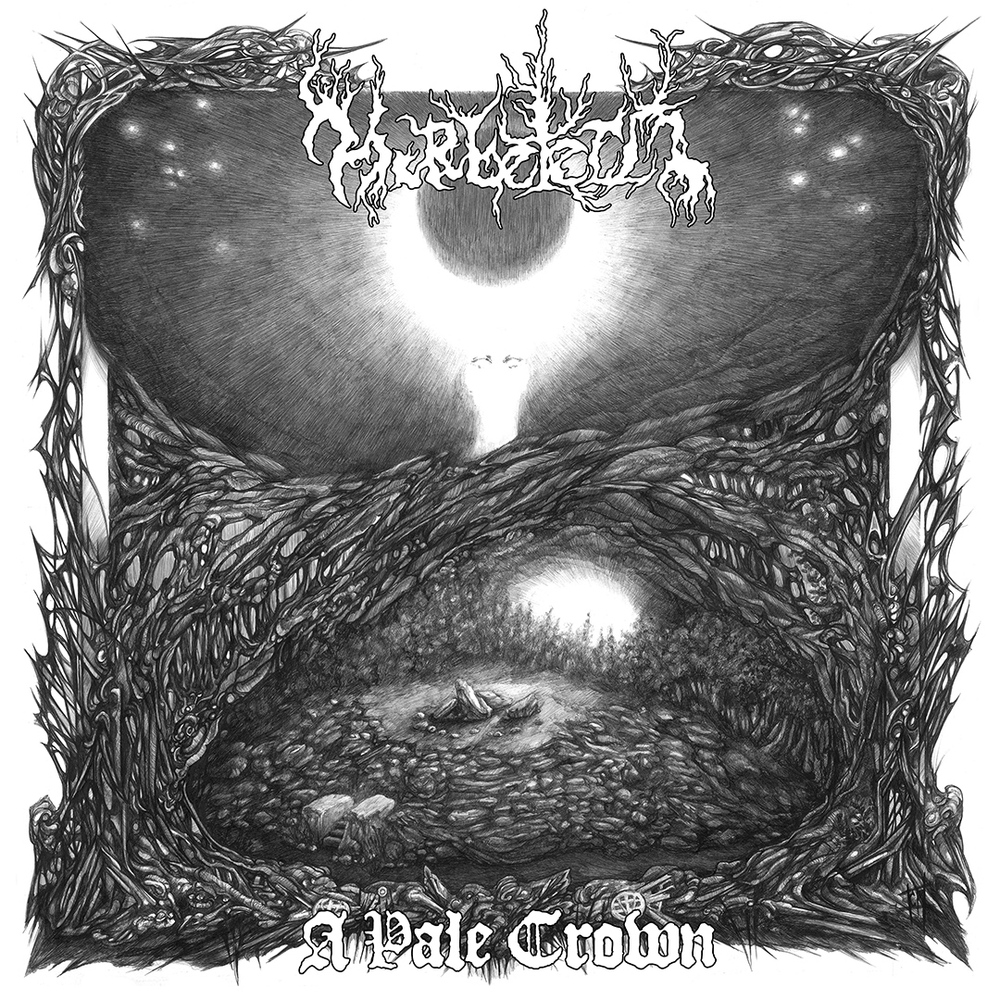
Narbeleth - A Pale Crown (2024)

Country: Cuba/Spain
Style: Black Metal
Rating: 6/10
Release Date: 5 Jan 2024
Sites: Bandcamp | Facebook | Instagram | Metal Archives

From what I can see, Narbeleth were a Cuban band but moved to Spain in 2020 when their founder Dakkar relocated from Havana to Pontevedra in Galicia, home of one of my happiest discoveries at Apocalypse Later, Blue Merrow. Of course, they sound very different, because Narbeleth play fast black metal. Never mind all the versatility the genre has found lately, this doesn't depart far from its traditional sound, with the sole exception of production. Ignoring the purists' penchant for the muddiest production possible, this is clear and rich and sounds all the better for it.

It also sounds very Scandinavian, which shouldn't surprise given that the closing track, The King of the Shadowthrone, is a Satyricon cover. The only touch that feels at all Cuban, or indeed Spanish, is a surprising drop midway through On the Sight of Dusk into an acoustic guitar duet. Given that all instruments here except the drums are played by Dakkar, I assume he's duetting with himself and doing a very good job of it. It's a brief section but a welcome one. However, I have to wonder why it exists, given that there's no attempt anywhere else on the album to vary the band's core sound.

Maybe that's because black metal fans tend to come in three categories nowadays. There are the purists, already mentioned, who don't want anything that doesn't sound like the Bathory debut or has any pretension towards commerciality. Then there are the open minded, who love to mix black metal with every other genre they can find, from ambient to jazz to, well, bluegrass. Some of those experiments have become my favourite albums of recent years, so I guess I'm largely in that camp. This ought to appeal to the third group, who are fine with bands selling many albums and using the money to pay for good production on their next release, as long as they sound damn good. They're not concerned with originality, just capability.

And, while I have no idea how well Narbeleth's previous five albums have sold, this fits perfectly in that third bucket. It's unmistakably and unashamedly black metal, unwilling to depart far from an established formula, but done very well indeed. The guitars are clear but generate that textbook wall of sound. The bass is neatly audible but mostly supports the slabs of sonic texture the guitars lay down. Occasionally there's a run that elevates a song but we have to listen carefully for them. The drums, courtesy of Vindok are frenetic when they need to be and also slow down well. Many of my favourite sections here feature the slower drums.

Put all that together and you have another black metal band in the northern European style, just a very capable one. They don't try to do much that's different but they do what they do very well. I would find it hard to call out a favourite track because they're all relatively similar and what might work best for me, like, say, Witness and Provider, may not for you, for exactly the same reason. It's down to how the riffs generate mood and that's a personal thing. If you like one track, then you'll like all of them. I might like that one most, because of what the guitars do, but I like them all.

And, as I'm finding with black metal, that often has less to do with the guitars or drums and more to do with the vocals. Dakkar delivers those in a relatively deep pitch for black metal, more growl than shriek or perhaps shriek converted into growl. Either way, he's clearly still black rather than death because of how he sustains his syllables. Nobody is going to listen to any element of this and call it anything but black metal, pure and simple. No words are needed in front of that.

Fortunately or unfortunately, depending on your perspective, that means that there's not a lot to say about it otherwise. If you're into this sort of thing, then you'll dig this and it stands up well to a repeat listen or three. If you're that third category of black metal fans, then add a point or two to my rating to reflect how you'll receive it. I prefer more originality to my black metal but you'll be fine without. Of course, if you're not into this sort of thing, then nothing here will convert you and nothing here will come close. You already don't like it. You don't need to try it to see.

This is Narbeleth's sixth album but the second since Dakkar moved to Spain. I'm guessing that his shift in continents hasn't affected his style in the slightest but that odd but welcome drop into an acoustic vein in On the Sight of Dusk makes me wonder if he's open to something new. We should be able to find out on the next Narbeleth album.

Wednesday, 22 November 2023

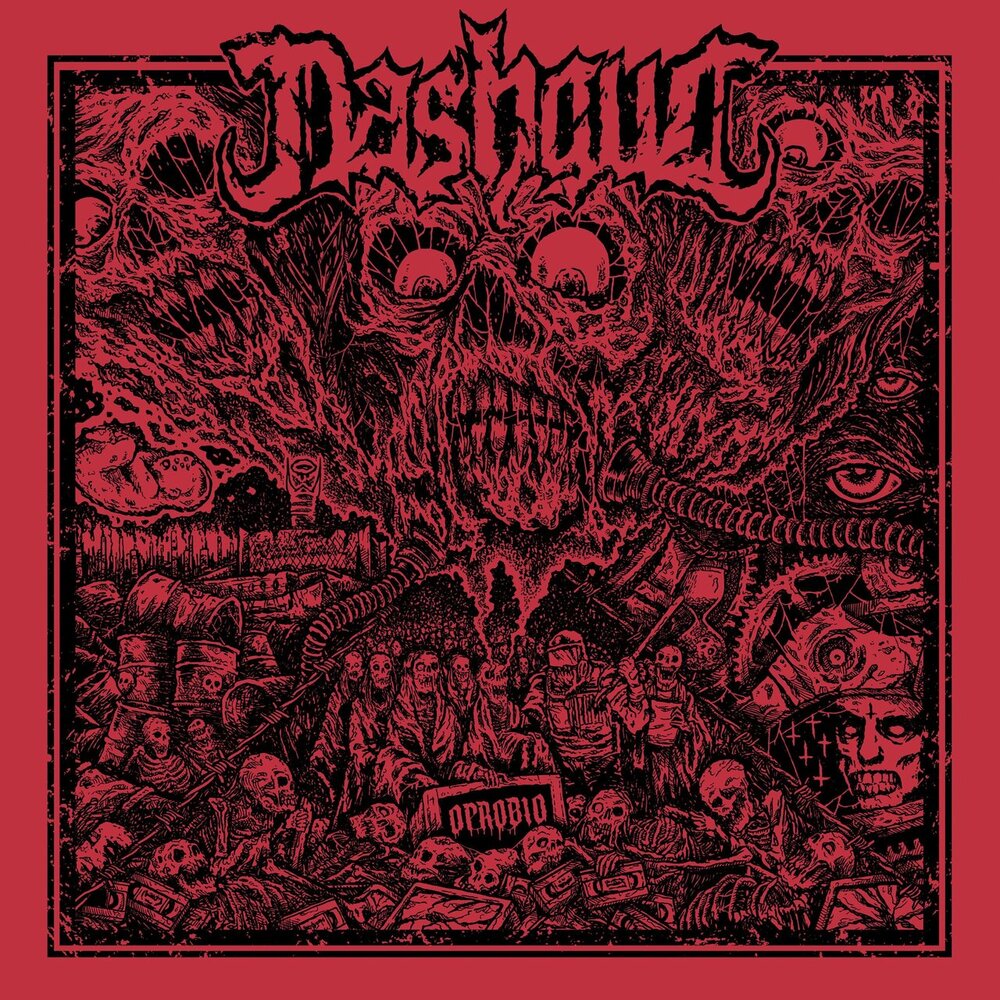
Nashgul - Oprobrio (2023)

Country: Spain
Style: Death Metal/Grindcore
Rating: 7/10
Release Date: 29 Sep 2023
Sites: Bandcamp | Facebook | Instagram | Metal Archives

For a band who mix death metal with grindcore—and shift from one to the other and back in most of these songs—I have to say that Nashgul chug gloriously. That's why some of these tracks actually became earworms for me; when was the last time that happened with a grindcore band? There's a repeated slowdown in Protocolo Deus that has stayed with me, the simple but highly effective riff in Sewers Across gets me every time and there's a real bounce to songs like Rexa Vesania that tell me that they're really punk standards that we haven't heard before that have been given energy and pace beyond our expectations.

Initially, this was all about that mix for me. I've heard a lot of bands who claim to mix death metal with grindcore but few actually do. For the most part, they're either death metal bands who speed up enough to be called grindcore or grindcore bands who slow down every once in a while to churn. Nashgul are that rare example of a band who honestly merge the two because precious few of the sixteen tracks here are just one or the other. They listened to both sides of Scum and weren't quite sure which they preferred more.

Most of them feature frantic sections of grindcore, with vocals so distorted that we can't identify what language is being used—Nashgul are Spanish, hailing from A Coruña in the far northwest of Galicia, but most of these song titles are in English, with what looks like a couple in Spanish, a pair in Galician and two more in Latin—but most of them also feature solid death metal riffing with a voice that's closer to a death growl. Crucially, they shift back and forth constantly between these two sides of their sound with the two vocal styles not necessarily divvied up how we might expect. And then there's that edge of much more traditional punk that occasionally takes over.

Opener Quien puede matar a un niño, for instance, is primarily grindcore, with that deep vocal as unintelligible as words as the faster early Napalm Death tracks, sounding more like gargling with bleach than an attempt to deliver lyrics. The Fake, which is almost entirely spent at frantic speed, reminds of The Kill, with the accompanying pitch shift in the vocals. However, there are drops into growly death metal and into a bouncy old school punk with regular shouted vocals, albeit without any associated drop in energy. Even when they play slow, which they do surprisingly often for what many would hear as grindcore, Nashgul are full of energy, always ready to shift up a gear or three.

Flay Off works the other way round, starting out as an overtly death metal song that occasionally speeds up and adopts those grindcore touches. There's also what I presume is a sample to kick off and it gives the song a different flavour, as if this was political punk. Surely the most unusual intro is on Los que deben seguir muertos, which starts out with prowling electronica, hardly something I expect from either death metal or grindcore. It's almost John Carpenter-esque and it doesn't last long, but it flavours that song just as that sample flavours Flay Off.

And, just to continue flouting our expectations, there are songs that rely so much on the chug that they trawl in genres we simply don't expect. Sewers Across may play mostly in death metal but it's almost doom at points. Buried, But Still Alive, plays in doom too, but with punk feedback overlaid for a while and drumming from Iván that's often much faster than any other aspect of the song. It counts as the joint-longest song here at 3:14 and that's because it's all instrumental churn, Alex a notable absence on this one. While Nashgul do ramp up to grindcore speed often across the album, he's always its most extreme aspect; when he isn't there, the result feels far less extreme.

Oprobrio was a submission for review, so thanks to the band for sending this one over. It's been an odd couple of weeks here at Apocalypse Later, mostly because I've been concentrating on getting a bunch of books ready for publication, so I've had this playing on and off for far longer than tends to be the case. What's telling is that it hasn't got old at all and grindcore has a habit of doing that quickly. I adore the infusion of energy that the genre brings, but it's rarely memorable because it tends to rely so much on that effect. This works as an energy shot of grindcore, but it also works as slab of music to sit down and enjoy.

Nashgul are hardly a prolific band. They've been around since 2001 and they've been featured on a lot of split singles over the years, but this is only their third album, after El día después al fin de la humanidad in 2009 and Cárcava in 2016. A seven year album release schedule isn't ambitious but it works when the quality and versatility are this high. I may not want to wait another seven years to hear their next album, but I'll do it. This is good stuff.

Thursday, 9 November 2023

Angelus Apatrida - Aftermath (2023)

Country: Spain
Style: Thrash Metal
Rating: 7/10
Release Date: 20 Oct 2023
Sites: Facebook | Instagram | Metal Archives | Official Website | Tiktok | Twitter | YouTube

I haven't bumped into Angelus Apatrida's music before, but they arrived with the millennium and put out a steady stream of albums, this being their eighth, two years after their self-titled album in 2021. They hail from Albacete in southern Spain and play thrash metal with quite a variety.

This album starts out relatively traditional, Scavenger playing firmly in speedy Bay Area style, but Cold features a chorus that wouldn't have felt out of place on the Within Temptation album that I reviewed yesterday. That's not unusual for this album, where verses sound like thrash verses but a lot of the choruses are big hookladen efforts that reach far beyond the genre. This one works in a commercial gothic metal style before launching right back into the traditional thrash.

Cold also shifts into crossover during its second half, reminding more of Anthrax than Death Angel, an approach which continues on Snob, the first of four tracks to feature a guest. On this one, that's Jamey Jasta from Hatebreed, who inevitably brings his hardcore background to the song, though the band remain technical behind him. If you're counting, that's three styles so far, each of which is built on technical thrash but doesn't stay there: Bay Area technical thrash, New York crossover and commercial gothic metal. Keep counting.

Those guests are a fascinating mix, so I should highlight them. Three are vocalists, but in different styles indeed. From Jasta's hardcore on Snob, they shift wildly to Spanish rapper Sho-Hai on What Kills Us All and Todd La Torre of prog metal legends Queensrÿche for Vultures and Butterflies. The fourth is a guitarist, Pablo García, best known for a heavy/power metal band called WarCry. That's quite a range and, for those wondering why one of these guys is a rapper, what Sho-Hai does here is fascinating. He almost sounds South American and there's a real Sepultura vibe to that track as it shifts into his territory during the second half. It has no pop element to it and his rapping style is fast, dangerous and a good fit. I don't say that too often.

Fire Eyes is a nice fast thrash song, so I don't know if García just plays along or whether that's him providing an elegant intro. There are more of those on To Whom It May Concern and Gernika, two songs without guests, so maybe not. It's not thrash at all during the midsection, instead a sort of heavy/prog metal song, with a very tasty guitar solo. It often reminds of Iron Maiden, as it did at points during the intro. Again, it has a big hookladen chorus, which only underlines just how much Maiden is on this song. Of course there's a heavy metal bias to Vultures and Butterflies, but it's a slightly more progressive one, as befits the guest.

So, how many genres are we up to now? I'm used to thrash albums lately delineating themselves in pace. There are bands playing old school proto-extreme metal with a thrash base, bands playing a relatively straightforward fast thrash and there are bands who have slowed down a lot and spend much of their time chugging at mid tempo. I have a personal bias towards the faster bands but I'm very nostalgic for that proto-extreme era and find a lot of those bands fascinating. It's chuggers I find less interesting, because the approach gets old for me.

Angelus Apatrida refuse to be thrown into any one of those buckets. They're closer to the middle one than the other two, and I'm happy for that as they blister nicely on songs like Scavenger, Fire Eyes and the instrumental parts of Rats. However, there are plenty of songs here that work at an overtly chuggier pace, Rats moving there during the verses, and others are happy to drop out of thrash entirely to become elegant heavy or prog metal, most obviously To Whom It May Concern, when it's not blistering as it does briefly.

That makes this a highly varied album and the variety really works in its favour. Instead of losing a listener like me by stubbornly sticking at mid tempo, they mix it up from track to track and often in individual songs. I'm good with the chuggy ones because it's not going to be long before there's a speedy part and I love those. I'm happiest there, but a drop into something else for a while keeps everything interesting, especially when they launch into another big hook of a chorus, then blister out of it with heads down and fingers flying.

In short, I like this a lot and, while I appreciate the faster songs the most, it's not as clear cut as I'd usually expect. I like the variety they bring to the table and that ought to translate really well into a live environment. They tour a lot, I believe, though I'm not sure they've made it over to this side of the pond, certainly not while I've been paying attention. I hope they do because I'd love to check them out live. In the meantime, I have seven previous albums to locate to see how they built to this style.

Monday, 12 June 2023

Avalanch - El dilema de los dioses (2023)

Country: Spain
Style: Melodic Power/Progressive Metal
Rating: 7/10
Release Date: 21 Apr 2023
Sites: Facebook | Instagram | Metal Archives | Official Website | Twitter | Wikipedia | YouTube

I had two things in mind when coming into this, which counts as the tenth Avalanch studio album. I miscounted when reviewing their prior effort, El secreto, because some of the thirteen I'd seen at that point are actually re-recordings of previous albums. One is that that album was a real gem, a rare 9/10 from me that was also the Spanish Album of the Year at the Headbangers Latino America site. It was my first by them but certainly not the last and I've eagerly awaited this follow-up. The other is that Avalanch seem to have a constantly shifting line-up, centred around guitarist Alberto Rionda, and there have been quite a few changes since the previous album.

In fact, there have been enough changes that they could well affect the sound of the band, so they would seem to be worth detailing here. Last time out Jorge Salán was a second guitarist, but he's no longer in the band, his only contribution here being a guitar solo on Ceniza, and there's no new second guitarist. Another departure is Israel Ramos on lead vocals, though he still sings Confianza ciega here. However, there's a replacement in José Pardial, who clearly saw Sentido and a ballad, Más allá de las tinieblas, as showcase opportunities to demonstrate his range. Also gone is bassist Dirk Schlächter, with Nando Campos replacing him.

And here's where I change "could well affect the sound of the band" to "absolutely does so", as the three changes all make a difference. Pardial has a lower and softer voice than Ramos, so the songs have a different feel in his hands. He mostly sings clean and pure, as you might expect for a power metal band with progressive leanings, but he turns on the vocal fry for emphasis as needed, most examples being on the quieter, more vocally oriented songs, like the showcase pieces I mentioned above. He has an impressive range and he sounds great, but also notably different to Ramos, with that comparison obvious in the latter's song, Confianza Ciega, directly following Sentida here. It's unsurprisingly the closest thing to El secreto here.

I'm sure the guitar sound has been driven by Rionda ever since Avalanch was formed, so what this album does on that front isn't wildly different from El secreto. However, without a second guitar, it feels a little thinner and less substantial. I'd also suggest that, once we get past the opener, which has a deep back end, the bass is a little lower in the mix and that serves to emphasise that change in guitars. Again, Rionda sounds great and I don't see fans walking away from the band because of this shift, but a direct comparison of the two albums leaves this one firmly behind its predecessor.

El secreto was a 9/10 and a Spanish Album of the Year. This is a 7/10 that occasionally reaches up to an 8/10. That means that it's good stuff and it's recommended, sometimes highly so, but I doubt it will pick up any awards as we move into 2024. It's telling that Confianza Ciega and Ceniza, a pair of kinda sorta throwbacks to the previous incarnation of Avalanch, are my highlights here, and I think I'd give the edge to the latter, perhaps meaning that the depth of guitar sound is more important to me than the change in vocalist.

Other strong selections would include Cuatro elementos, with elegant melodies over a far heavier backdrop and some stellar guitarwork from Rionda, and Tumbas y Reyes, because of its sheer drive and its hints at something much heavier than I've heard from Avalanch. The underpinning riffs are excellent and help build a darker tone, but it's Pardial's vocal that sells it to me. He relies more on his lower register, but soars out of it with style, but he also delivers a brief moment of harsh voice for contrast. It's only a single phrase, so this is hardly Avalanch moving into extreme metal, but it's thoroughly effective and it resonates. The title track after it feels even softer in comparison, even with a decent crunch to it.

And so I'm happy Avalanch are back and only four years after El secreto, given that album arrived after an eight year gap. I'm not entirely sold on the changes but the two new members have been in place for mere months, so I'm looking forward to them settling in over the next couple of years and being more sure of their new sound on the next album. This is good stuff, but the edges hint at something better to come.

Wednesday, 22 February 2023

Red Beard - Die Trying (2023)

Country: Canary Islands
Style: Southern Rock
Rating: 7/10
Release Date: 3 Feb 2023
Sites: Facebook | Instagram | Official Website | YouTube

Coming in blind, there's no way anyone wouldn't guess that Red Beard aren't a band from deep in the American south. There are covers here of Lynyrd Skynyrd and the Marshall Tucker Band—and maybe more, but I didn't recognise anything else—and it's quintessential southern rock with loads of soul, country and some funk too. The album cover art doesn't hurt either, being quintessentially seventies deepsouth. Dig a little online and you'll quickly discover that this was recorded at FAME Recording Studios in Muscle Shoals, Alabama, "where it all began".

So, here's where I point out that Red Beard is a person before he's a band, though there are four anonymous musicians backing him up. He looks the part too but it's only if you watch the videos, a question mark will suddenly appear. That's because Red Beard is really Jaime Jiménez, who hails from the unlikely location for southern rock of Gran Canaria in the Canary Islands, which are Spanish but located off the west coast of Africa, where Morocco ends and disputed Western Sahara begins. They're autonomous and have their own flag, so I guess I'm identifying them that way.

I don't know why I didn't find him sooner, but this is the sixth Red Beard album and it's good stuff. I'm not familiar with the earlier releases, so I can't say if his sound has changed at all, but this has a sense of celebration hanging over much of it which may flavour that. There's certainly biography in the songs and the journey leads to that celebration, from Never Sounded So Good telling us that he heard his first Skynyrd song at thirteen and "it's like a lightning bolt shot down and hit me and I knew what I was gonna do from that point on" to Die Trying, which is all about the making of this album, travelling over to Muscle Shoals in what's clearly a musical pilgrimage.

These are the most real songs here, because they're so personal, and they feel a lot more natural than the opener, You Can't Stop Me, with a stop/start approach and some overtly funky beats and guitarwork. I wasn't convinced by that one but the album grows, through Never Sounded So Good, a cover of Skynyrd's Down South Jukin' and Die Trying to country songs like My Kind, which I could hear Willie Nelson covering, and the Marshall Tucker cover, Can't You See, with an imaginative Spanish take on a particularly iconic opening that returns for the other bookend.

Covering a song from Skynyrd's debut album is a ballsy step for a singer, because Ronnie van Zant delivered a genre-defining performance on it. This is a good cover but, if you listen to the original, Ronnie didn't so much sing it as allow it to leap out of his mouth without him even trying. He slurs eight words into one like he's singing through a Jack Daniels bottle. But damn, he sounds good. It seems fair to say that Red Beard sings it with more technical skill but he loses every comparison to make otherwise.

There are huge southern rock riffs here and blues guitar and plenty of soul, but what stood out for me was the organ. I have no idea who to praise here, except to point at that dude in the Die Trying video, but he's fantastic. This is secular music but there are songs here where I could see an entire Southern Baptist Church leaping to their feet and giving thanks to Jesus. He's there from moment one but there are so many great keyboard moments here, from tinkling ivories in Never Sounded So Good to the sumptuous organ intros to Die Trying and My Kind and the piano showboating that kicks off Getting Loco.

The other note I'd make here is that the closing pair of songs are easily the strongest rockers that the album has to offer, with the band finding a slightly heavier groove and jamming. There's more guitar here, both riffs and solos, with the solo in Getting Loco the most obvious on the album. There's a lot more from the backing vocalists on these too, especially the one on I Got What You Need that gets close to being a co-lead at points. These songs are Red Beard and his band getting emphatic and I kind of want an album of that now, even if my favourites here came earlier.

I'd call out Never Sounded So Good as my pick for standout song, partly because it's the closest to a Skynyrd song we haven't heard before, so much so that the backing vocals end up segueing into Sweet Home Alabama for a brief moment at the end. Mostly, though, it's because it's so joyous, a jaunty country feel with a real swing to it. The title track deserves to be, because of what it means to Red Beard, and it sounds great, but I'd probably go with My Kind next, even though it's a slower country song. Add the riot of Getting Loco to that mix and that's quite the variety on show. I need to jump backwards now and find those earlier Red Beard albums.

Wednesday, 11 January 2023

Sons of Cult - Back to the Beginning (2023)

Country: Spain
Style: Hard Rock/Heavy Metal
Rating: 6/10
Release Date: 5 Jan 2023
Sites: Facebook | Instagram | Metal Archives | YouTube

The New Wave of Classic Rock has made such headway over the past few years that it's come close to completely overshadowing the New Wave of Traditional Heavy Metal. Here's an example of the latter, a band who's looking back to the heavy metal of the seventies and eighties as the template they should follow. They're from the Balearic Islands of Spain and, if it wasn't for the slight accent of singer Jaume Vilanova, who otherwise sings in perfectly capable English, I'd have assumed that this was a British album from 1984 or 1985, a little late for the NWOBHM era but not yet ready for the extremes that followed.

And it's a solid album, consistent and reliable, if a little subdued. My immediate impression was a nostalgic one. I liked it—and it's inherently likable stuff—but it reminded me of so many bands in the eighties that didn't make it because they didn't have that extra something that would launch them to the big leagues. I enjoyed a lot of those bands on record, not that they tended to have the best production, and enjoyed some of them even more live. Listening to that style in 2023 is a little awkward because it often feels like they're playing in slow motion, but without ever feeling doomy.

It's surely slow and steady stuff. The guitars of Vicente Payá and Dan Garcia are clean and have an impressive tone. Vicky Offidani's bass is easy to pick out in the mix and it's reliable, especially on a more hard rock focused song like Fake. Jordi Segura delivers a solid beat too, regardless of tempo: he's slow on Fake but ramps up when Evil Trail opens with plenty of bite, slowing down in verses but speeding back up after they're done. Most of all, Vilanova's voice is almost deliberately trying not to do anything fancy. The voice of 1985 was Bruce Dickinson's but Vilanova is very deliberate to avoid that horns ablaze operatic siren style.

So how much you like this will depend on how much you're OK with that slow and steady approach. I'm certainly more fond of Sons of Cult when they speed up a little, as on Evil Trail, but I also found that they're so consistent that I kind of fell into this album as it ran on. I'm aware that's a little like comfort food for me, because this is the sort of thing I heard first and most often when I found the rock and metal genres in 1984. It's my musical safe place, when I've been exploring so many sounds that I need to centre myself, and this album feels very comfortable in that context.

None of that should suggest that this is average. It's a good album, albeit not a great one and it's clear that the band are holding themselves back more than they should. However, Evil Trail set the bar a little higher and other songs join in. The Farewell Song opens with a solid Black Sabbath riff, not to mention a little Ozzy in Vilanova's voice all of a sudden. The Power of Music boasts a whole slew of good riffs and Desert Song closes out the album with many nods to UFO; I'd call that intro the best part of this album. None of these are going to set the world on fire but they sound good and they're almost old friends on a first listen.

And that's the most telling thing for me. It doesn't grow on a second listen at all, though the best songs become a little more defined, but it doesn't fade anyway. It just underlines itself as the sort of decent album we either didn't hear back in the mid eighties and are happy to finally track down now or the sort we absolutely heard back then but forgot about and are happy to rediscover. We'll dust off the vinyl and slap it onto the deck and suddenly feel forty years younger. It's a time portal of an album and then we bounce back to the present and move on.

I'd like to see how Sons of Cult develop, because this is unsurprisingly a debut album. I'd like more pace, not ramping up to speed metal because that's not who they are, but to maintain the sort of emphasis that's there outside the verses of Evil Trail and on The Power of Music already. I'd like a bit more of the bite that's there in the guitar and the drums in the up tempo parts of Evil Trail or on songs like I Wanna Go Out. And I'd like Vilanova to push for more emphasis too. He has a decent voice, but it often feels a little reluctant as if he's following the band rather than leading it.

So, best of luck to them with this debut album and I'd love to hear the next one, after a few years of solid gigging.

Tuesday, 3 January 2023

Absolom - La era del caos (2023)

Country: Spain
Style: Heavy/Power Metal
Rating: 7/10
Release Date: 2 Jan 2023
Sites: Facebook | Instagram | Metal Archives | Official Website | Twitter | YouTube

We're absolutely living in a chaotic age, but Spanish metal band Absolom introduce some elegant control on this, their debut album. They've been around for a while, having formed as long ago as 2001, but they've split up twice since then and only released a demo until this latest reformation, which knocked out two singles last year and now, after a couple of further personnel adjustments, followed it up with a full length album.

It's emphatic from the very beginning with an urgent opening trio of songs. Band founder Maolo sets things in motion with some reliable drumming to kick off Ascensión, which demonstrates the sheer energy of this band. Relatos de la Humanidad is even better, with a strong guitar solo from Juan Manuel Urbano, who only joined last year when Absolom gave it a third try. He's responsible for much of the elegance in the band's sound but he's ready to get his head down and blister along with the band when it's needed, which it is on the title track. This one starts out as thrash with an angry, almost punk delivery from new fish vocalist Julio Pérez, but it shifts to more subtle ground in the second half, Antonio Ortiz stepping into the spotlight with his bass.

And I realise I've just highlighted all four members of the band, which is never a bad thing and it's a positive sign for them going forward. Let's see if they've found the line-up that'll take them into the future. If there's a change needed, I'd say it's to add a second guitarist, something they've had in the past, because there are points where the density of the sound becomes a little thinner than it probably ought to be. That's in evidence on No Quedarás en el Olvido, a more subtle piece with a fantastic intro on guitar and bass. It ramps up a couple of minutes in but never feels quite as full as it should. A second guitar would do wonders there. Then again, this is as sparse as the album gets. Absolom feel fuller on more up tempo songs and that's what most of this album is.

While there are clear thrash elements on the title track, I'd say that the band play heavy metal as a base and shift into power metal when they feel the need. The purest heavy metal song may well be Oxígeno Infectado, which would feel like something British in the post-NWOBHM eighties if it wasn't so obviously sung in Spanish. A Slash-esque guitar leads into a gallop that's reminiscent of Iron Maiden and only a few backing vocals midway betray it as more modern, given their harsher texture. Again the guitar solo is highlight, though Pérez is a strong focus too, soaring up there in the stars with some capable sustain.

After that, the album remains consistently strong through Incansable, Nuevo Camino and Sueños en la Realidad, all heavy metal songs with varying degrees of power metal for flavour. They're all up tempo without touching thrash and they're all well worth the effort. Suddenly, No Quedarás en el Olvido, meaning You Will Not Be Forgotten, seems a little out of place. I enjoyed it a great deal but it seems to be a step sideways from the tone of the rest of the album.

Well, there's another exception here too and it's a wilder one. Four tracks in, there's a melody and a beat that I recognised immediately and, sure enough, Rasputín is absolutely the Boney M classic from the disco era that Turisas turned into metal in 2007. This isn't as bouncy or as frantic as either version, but it is in Spanish and there's more excellent basswork from Ortiz during the second half. It's a decent version but, like No Quedarás en el Olvido, it feels a little out of place here and might have been better on the B-side of a single, if those even exist any more in the streaming era.

And so this is a solid and enjoyable start to my coverage of 2023 albums, setting off on a good foot. It's a solid and enjoyable start to Absolom's career too, if a little late in arriving. I'm eager to see where they'll go from here and hope it'll to be a lot of live shows and a second album in a couple of years time.

Tuesday, 1 November 2022

Exxasens - Le-Voyage (2022)

Country: Spain
Style: Post-Rock
Rating: 7/10
Release Date: 9 Sep 2022
Sites: Bandcamp | Facebook | Instagram | Official Website | Twitter | YouTube

I'm still learning about post-rock and what Exxasens do doesn't meet the strictest definition I've found for that genre, given that they employ not only synthesisers but other non-traditional rock instruments like trumpets. However, the end result sounds exactly like I'm starting to expect from the genre, this set of eight pieces of music not so much instrumental songs as evocative journeys. Their Bandcamp page states that the goal of this particular album "is to make the listener travel to hitherto unexplored places within the EXXASENS universe" and I certainly felt like my passport had been stamped at a lot of places by the time it ended.

Le-Voyage opens ambitiously with a three part title track that accounts for about half of the total running time of the album. The individual titles suggest a cosmic journey—Departure, One Step to the Moon and Back to Space—and it's not too hard to imagine Departure in terms of a launch. The initial passages are rhythmic, as if a ground crew is going about its business. Then it gets dense as the ship launches in a burst of frantic activity. And then it gets quiet, because we're up there now. Sure, the drums tell us that there's a lot still going on but we can also see out of the window and it looks beautiful and calm.

Departure amounts to a nine minute journey all on its own, but there are five more in One Step to the Moon, with a patient beat perhaps echoing the climb down the ladder from the module and a growing sense of imagination perhaps representing discovery, and a further four in Back to Space, which is where it gets really interesting. This third part kicks off with bubbling liquid and a strange background drone. What have Exxasens found on the Moon? I guess that depends on how we feel about what else goes on within this title track and the beauty of instrumental music is that what I hear may not be what you hear and neither of us may match what the band hear. Welcome to the joys of post-rock!

The rest of the album isn't as deep and exploratory, because each piece has to do its thing in a far briefer amount of time, Alpha the most at five and a half minutes and Orbiting Mars shortest at a skimpy two and a half. When you're in the conjuring up environments business, more time is more space for imagination and two and a half minutes is just a glimpse. As such, they work the way that Tangerine Dream pieces work at glimpse length, which is to say that Le Parc is a fun album but it's not as immersive as Phaedra or Stratosfear, let alone Ricochet or Rubycon.

And that's not to say that they aren't successful. I particularly liked Black Hole, with its gloriously building darkness. Was that a cello during the initial build? It certainly sounded like one, even if it turns out to be the guitar of guest Magnus Lervik, who provides a searing solo that's the heart of the track, emphasised wonderfully by the rest of the band. That's certainly a trumpet in L'Etoiles, courtesy of another guest, Jordi Sacristan, and it lends it an utterly different tone, an exquisitely personal moment in a soundscape that's otherwise highly impressionistic.

He's there on Departure too, unless I was dreaming, which I might have been given how elegantly this one slows down after that point and how easy it is to get lost in the opener. When I went back to check, I kept intending to only listen to part one, only to become absorbed by it and realise that I was halfway through part two already or the liquid that kicks off part three told me clearly what point I'd got to. I enjoyed the second half, but the first half is where what Exxasens do can be best experienced. So this is half an 8/10 and half a 7/10 and I now have six prior albums to track down...

Wednesday, 15 June 2022

Manu Reno - NocturnA (2022)

Country: Spain
Style: Alternative
Rating: 6/10
Release Date: 22 Feb 2022
Sites: Bandcamp | Facebook | Instagram | Official Website | YouTube

I don't review everything that's submitted to me for that purpose, because not everything makes the cut and a few otherwise worthy albums just get lost in the cracks during times I'm focused on my film festival or convention and end up not writing reviews for a while. I have to say here that I wasn't sure if I should review this one, but I decided to because it kept growing on me and I firmly believe that it deserves some publicity.

Manu Reno is the name of the multi-talented musician behind this one man project and I honestly hadn't noticed that he hails from Barcelona before I ate paella tonight. Damn, I miss the insanely fresh cuisine in that city and it's been a couple of decades since I've been there, singing along with a different Manu on the jukebox in some bar. I hear more of Barcelona in that Manu's sound, that Manu being Manu Chao, than in Manu Reno's, but I'm not sure where to place it at all because his voice makes it so inherently unique.

I believe he's primarily a bass player and the bass does lead the way on many of these songs, with the first a good case in point. Eternally kicks off the album in thoroughly playful mood and it's the bass that sets that mood. He also plays every other instrument too, all of them capably, and sings for good measure, which is where the question marks come in. It took me aback immediately but I developed a taste for it under certain circumstances and it fit more and more as I repeat listened through this album.

It reminded me initially of Uli Jon Roth, a great comparison because he's a fantastic musician, just one who people tend to tune into because of his guitarwork rather than his voice. Manu Reno is an accomplished guitarist, even if he favours the bass, and a quite a few songs here reminded me of a Wishbone Ash guitar intro. That delightful intricacy is right there on When I'm Gone and The Land of the Free and Time, among others, but it's just one aspect of his sound. Hiding from the Sun is an acutely Sex Pistols-esque punk song, for example. The instrumentals, Lumina Noctem and the title track, are notably progressive. There's a recognisable Black Sabbath riff in There on the Moon, so it's clear that Reno does not restrict himself to a single genre.

What I found was that his voice fits some but not all of the genres he drifts into. Once I got used to his delivery, which is in heavily accented English that's resistant to the usual directions that voices take, I found that it worked well on up tempo rockers like Eternally, where it becomes just another instrument in the mix. It works well on the punkier material too, like Hiding from the Sun and the bonus track, Rusty Souls' Trilogy, because it's anarchic and under a different sort of control. Yet, a softer ballad like Breakable feels just the wrong sort of material for him.

I don't want to concentrate on Reno's voice because there's so much else to what he does, as both the instrumentals ably highlight, Lumina Noctem being especially evocative, but it's hard to see it as anything but the focus. Put simply, if you don't dig his voice, you're going to hate this album, no doubt. On the other hand, if it gets a grip on you, even if it's to figure out what he's actually doing with it, you may well end up loving this. It seems fair to throw out Shane McGowan of the Pogues or Eugene Hütz of Gogol Bordello as two comparisons and both those highly talented gentlemen also have instantly recognisable but highly unorthodox voices that don't work for every style.

I actually played a couple of these songs to my son to see what he might think. His initial call was a combination of the deliberate delivery of Billy Idol and the mumbling of Dave Mustaine, which is a weird take for me but I guess I can see it. Reno certainly delivers with relish. His other suggestion was that the voice reminded him of a punk singer who comes on right before the headliners at an otherwise metal gig, having sunk a few beers before getting on stage. I definitely hear that.

Given that I like some of these songs a lot more than others, because of how those vocals fit these many styles, I think I have to go with a 6/10. If you hate that voice, you should shed a few points off that score to the degree that you shouldn't even bother. However, if you find it fascinating, add an extra point on, because it'll draw you in to the point where you'll eventually notice the other cool things he's doing instrumentally and the album will grow on you. So thanks, Manu, for sending me this one for review. I didn't like everything on it but I liked some of it a lot and I always appreciate different approaches. All the best!

And, before I go, I should mention that this is far from Manu's first album. I'm seeing seven on his Bandcamp page and you can pick up the whole lot for only twenty-five euros right now. I'm really intrigued to see what else is in his musical toolbox, even though very few of the songs seem to be sung in Spanish. Given how Manu's accent manifests in English, I really wonder what he sounds like in what I presume is his native language.

Friday, 4 March 2022

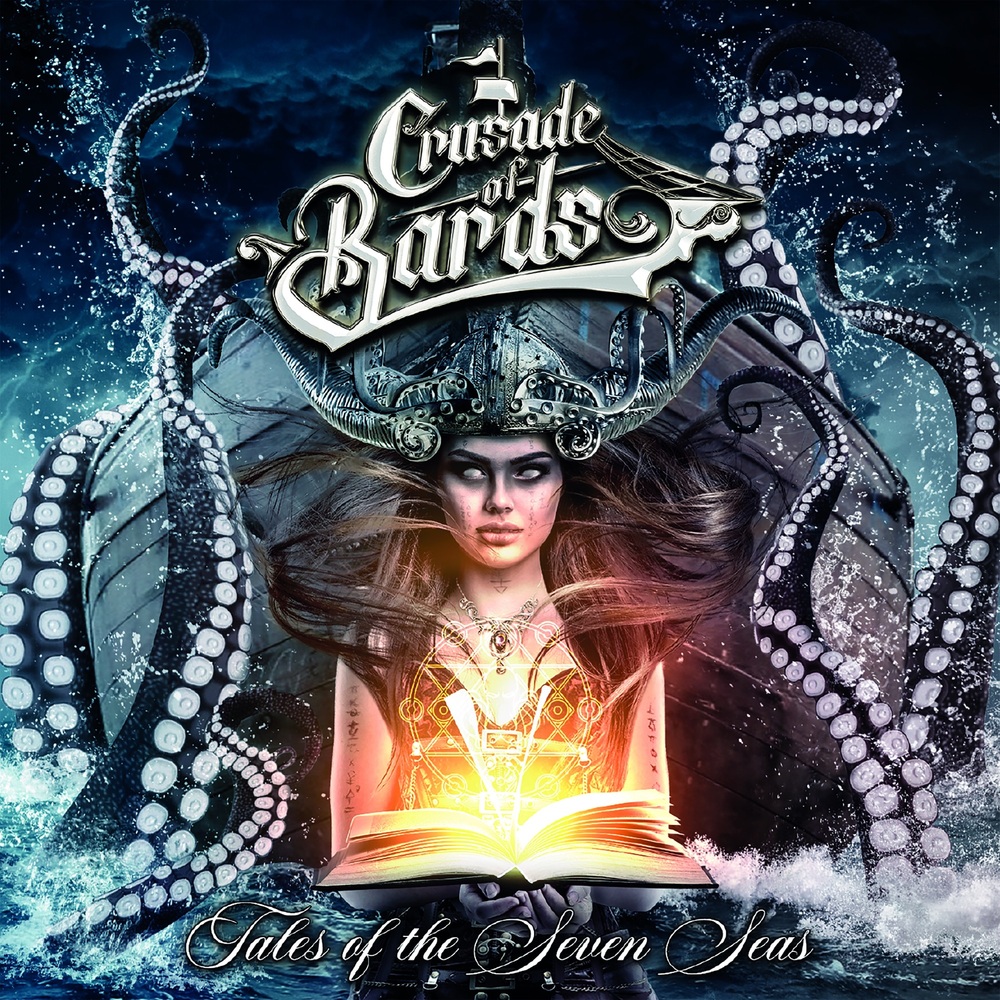
Crusade of Bards - Tales of the Seven Seas (2022)

Country: Spain
Style: Symphonic Metal
Rating: 7/10
Release Date: 18 Feb 2022
Sites: Facebook | Instagram | Metal Archives | Twitter | YouTube

I have to admit that this album stood out from the morass of February releases because of its art, but I'm always up for symphonic metal from Spain anyway and a little research demonstrated that two of the six members of Crusade of Bards also play for Sechem, an excellent folk metal band, so it ended up being a gimme for me. I should add those six members also include two lead vocalists, Captain Eleanor Tenebre and Eduardo Guilló, neither of whom play an instrument, spending their time weaving their melodies together in a very classy fashion.

I liked this from the outset, because of the strange and unusual intro, called Anuri. I've listened to a lot of intros lately and I can't remember the last one that had a valid reason to exist. This one is exactly what an intro ought to be though. It carries a firm sense of expectation, as if we're all at a live gig and the band is about to enter the stage. It builds magnificently as well, hinting at what's to come over the next hour. When it gives way to The Northwest Passage, I saw the band chase out and the lights come up and an ocean of horns ablaze.

I haven't heard Crusade of Bards before, though this is their second album, after their 2019 debut, Tales of Bards & Beasts. They're overtly symphonic metal, layering those two voices over a speedy power metal base with occasional side trips into folk metal. It's mostly up tempo stuff, uplifting as well because of those multiple vocals and how they echo. Importantly, when it calms down, like it does midway through The Northwest Passage, the energy doesn't dissipate at all, instead hanging in the air during an interesting instrumental section. Of course, it speeds up again later.

What's unusual about that first song proper is Tenebre's voice, because it's very high indeed as a contrast to the deep male voice of Guilló. I don't want to suggest that it's jarring, because it isn't; it's beautifully, professionally done and she does exactly what she wants to do with it. However, it is much higher than I expected at the very outset and it gets higher still later on, sometimes to a shocking degree. I did get used to it pretty quickly and applaud such a unique delivery, but I had to wonder, on songs like The White Witch, how she would have sounded an octave lower.

There's a lot of music here, this album almost reaching an hour in length, twenty minutes longer than the debut, but it never felt long to me. The songs certainly aren't long, none of the fourteen on offer over six minutes, with an intro, outro and sub-thirty second interlude in the middle. It's a versatility within their sound that keeps it all fresh, I think, along with that continually uplifting aspect. Every time a song finishes, we want another to start, and that holds true when the album ends.

Dunkirk Privateers brings in the folk element, starting out as a sea shanty with a prominent early accordion, though it's never as prominent in the mix as a folk metal band would position it. Lies & Ashes returns to the shanty mindset but the notably folky nature of Samudr Ka Mandir is folk not folk metal, if we can remember the difference. Leap of Faith brings in what sound like a fiddle and a tin whistle. And waves. And seagulls. They're definitely mining their theme well, though I wasn't able to follow a narrative flow that might constitute a concept album. Maybe it is. I can't say.

I was too busy enjoying the vocals as music to pay much attention to the lyrics they were delivering entirely, I believe, in English. I should mention here that it isn't just a constant duet between high and low voices. Guilló had hinted early in the album that he wasn't going to stay entirely clean on everything and Vento Aureo is where he goes deliberately harsh, albeit not throughout. There's a strong beauty and the beast contrast on Naupaktos and it's even more varied on Hasard, which is notable for being a much softer song, with smooth male and female vocals, that heavies up later into a harsher, more impactful piece.

I like this a lot. Describing what Crusade of Bards do may not be too challenging but they bring an agreeably different approach to their chosen genre that sets them apart from their counterparts who have less uniqueness to offer. Much of it is due to Tenebre, who is easily distinguishable from all the many other able female symphonic metal vocalists. However, the more I let this album play on repeat, the more I value Guilló's part in the vocals.

And I don't want to make it all about them. The music behind them is more routine than they are but there are so many moments where the band spin interesting instrumental sections, often out of nowhere. This starts early with The Northwest Passage, if we treat Anuri separately—if not, it's right there in that magical intro—and continues throughout. Sometimes they're longer sections, a few of which get into neo-classical without ever becoming pure shred. Often, though, they're the briefest sections, like one in Naupaktos that makes me grin every time I hear it. These are easy to just skip over in our minds until the next vocal section, but I don't wanna. They speak to me.

Monday, 3 January 2022

Blue Merrow - Blue Merrow (2022)

Country: Spain
Style: Psychedelic Hard/Blues Rock
Rating: 9/10
Release Date: 1 Jan 2022
Sites: Instagram | YouTube

With an 2021 oversight album behind me today, let's launch into 2022 with something utterly wild, appropriately enough given that a merrow is a type of mermaid (or merman) in Celtic mythology. Just as such creatures swim free in the vast oceans, though bizarrely have to wear a special hat, a cochaillín draíochta, to ensure they can stay in the water, rather like a selkie skin in Scotland, this band swim free through the ocean of seventies rock genres. I wonder if the musicians each wear a little magic cap of their own on stage to stay with the mythology.

If it wasn't for the punchy 21st century production that's agreeably simple but very effective, this would sound like one of those hidden seventies gems that get turned up every once in a while in a backwoods town thrift store that doesn't look like it's opened for the past thirty years. If you're a crate digger, you'll know the sort of album. It would have a nondescript cover that prompts you to pick it up anyway for no reason you can place. You've never heard of the band or anyone in it but it might be worth the fifty cents they're asking to give it a listen. Then you slap it on your deck and it simply blows you away.

I certainly couldn't stop listening to it, even though part of that has to do with trying to figure out what the band is actually trying to do. I know next to nothing about them. They're Galician, from a province called Pontevedra. This is their debut album, even if it feels like they've all been playing music, and music together, for decades. Their Instagram says they play psychedelic hard rock and I can go along with that, but it doesn't remotely address everything that they do.

There are five musicians in the band though I had to translate a news article from the Spanish to find out who they are. The lead vocalist is Damián Garrido, who also plays percussion because I'd expected from the opener to find that he didn't only have a single role in the line-up. The insanely talented guitarist is Ángel Olañeta and I'm sure we're all going to hear a lot about him soon. The keyboardist and organist is Ángel Vejo, who's prominent on this album. That leaves Diego Hernán Ruiz on bass and Alberto Cid on drums.

Initially they sound prog rock. Uncle Tom opens up the album with an extended keyboard note that suggests something deep and purple, but it builds with melodies more reminiscent of Uriah Heep. It's all in that seventies heavy organ style and, when the drums and then the vocals join in, we find that it's all firmly prog, albeit very lively prog with accented vocals that are loose in a psychedelic fashion, prominent keyboards and a delightful guitar.

And then, two and a half minutes into the song, it suddenly turns into a rocking blues number. It's suddenly all about Rory Gallagher and Albert King and Alvin Lee. What's telling is that, whenever the vocalist chimes in with a few lines, he ends with a gleeful laugh and hands over to the band to just have some fun for a while, which they promptly do with abandon. It's quite the jam and it's an entirely joyous one, as if everyone involved has nothing they'd rather be doing with ther lives.

Blue Merrow is the epic of the album, at just over ten minutes, and it's a prog rock number again as it starts out, with water effects and vocalising from Garrido, playing a siren. Instruments show up and it's prog story time, children, but halfway it all gets down and funky, like Carlos Santana is suddenly jamming with Sly Stone. There's a solid heavy riff to get the second half into motion and I'm hearing Focus in where the song goes and plenty of Pink Floyd too—early seventies Floyd that is, pre-Alan Parsons tape manipulations.

Much of what follows mixes up those sounds. Three Ways to Say Goodbye plays like that early Pink Floyd style, psychedelia and originality blended into a fine rock song, but with some truly searing guitarwork from Olañeta. He sears the sky early in The Utopist and I could just see him playing in a sort of trance, with his eyes closed and his face contorted into the sort of unwieldy shapes that Gary Moore found when he wasn't merely playing an instrument but acting as a conduit through which magical sounds flow into our world. It's not just the guitar, with organ tones as gorgeously warm as those that Vejo conjures up here, but it's so often the guitar.

Images wraps up the album in a completely different fashion, given that it's a ballad that entirely strips away both guitar and organ, so that Garrido can shine over a singer/songwriter style piano. The band provide neat vocal harmonies rather than searing jams and solos, leaving this one a bit out of place on this album, but it's also a good song and it helps to highlight just how versatile this band is. Where have they been to conjure up sounds like these? Were they all born in 1955 and fell into a portal in time in 1971 that dumped them out in Galicia half a century later?

Whatever the answers to those questions happen to be, this is an absolute gem of a debut album and I can't believe, given that I only give out a few 9/10s every year, that I'm kicking off 2022 with one on my very first day of reviews.

Wednesday, 1 December 2021

Frozen Shield - Ínia (2021)

Country: Spain
Style: Folk/Viking Metal
Rating: 7/10
Release Date: 5 Nov 2021
Sites: Bandcamp | Facebook | Instagram | Metal Archives | Twitter | YouTube

I listened to this album because it's folk/Viking metal from Barcelona and, if that isn't right up my alley, I don't know what is. However, it's also something else, which is a sort of metal opera that's so theatrical that I actually stopped listening to the album at one point and shifted to YouTube to watch the official music video instead. The longer it runs, the more like a metal opera it becomes and, while I did enjoy that approach, it's not what I liked most about the album.

It's cinematic from the outset, with a symphonic overture to kick us off, appropriately entitled A New Tale is to Begin. If I knew the Lord of the Rings soundtrack better, I might wonder if this piece was lifted from it. It has that Howard Shore sweep to it, but it focuses in really well on the quieter and folkier sections. There's an interlude halfway too, Facing the Gates of Stone, and a glorious enclosure at the end called One Last Page, and, between them, they add up to eleven minutes of immersive instrumental time. Of course, the album runs a generous hour and seven minutes so don't worry, there's lots here to explore, whatever the overarching story.

And I have no clue what that is and I don't have lyrics to hand. All I know is that the first song, The Greatest Journey, is lively Viking metal, while the album gradually shifts more towards folk metal as it goes, though that's floating in the background even at this point. This one is a real highlight. It's bouncy stuff with a harsh voice leading and cheery clean voices in support like a drunken choir. It's up tempo and perky and feels exactly like a bunch of warriors sloshing their steins together, a bevy of buxom wenches on their laps, as they celebrate a forthcoming victory wherever they'll be raiding or conquering tomorrow. A narration midway underlines the cinematic aspect and there's a frantic and joyous folk metal jig soon after it.

So far so good, even if I had to wonder at this point if Frozen Shield have been encapsulating that Viking mindset a little too much, given that they've been around since 2010 but this is their debut album. They put out an EP in 2014 and a single in 2018, none of whose songs appear here, but they suddenly got serious. This is a quality release entirely on the basis of the music alone, but there's a second disc with instrumental versions of everything, three official music videos and another to serve as a lyric video. I have no idea why it took them so long to do this, but I'm happy that they've got round to it now.

If it starts really well, it does lose steam a little as it goes, but not much. There are good songs in the middle of the album, including the frantic title track, which finds an epic singalong vibe by its end, and the delightful Warrior Woman, which is full of nuance, not only through an excellent use of harp to lull us into a false sense of security before the song erupts into motion in a heartbeat. None of these songs let the side down, but none of them are up to The Greatest Journey, the song that defines what this band can do.

And then we get to The Lair of the Mad Magician, which is as batshit insane as the title suggests, a prancing Disney-esque intro transforming into a dark operatic aria. This is the point where I had to shift from audio to video and, while it's a terrible music video, it's as crazy as it needs to be and this song is either going to be your favourite song here or your least favourite.

And, after it's done, the band really dive into the metal opera approach, with a set of songs that I appreciated a lot for their contrasts and instrumental chops. In a Timeless Dream is led by violins, flutes, acoustic guitars and a female voice that I presume belongs to a guest. Whoever it is does a stellar job and this is easily my favourite song here behind The Greatest Journey, even though the two are completely different in almost every way. Canvas of Snow isn't quite as good but it does a lot of the same things in a lot of the same ways, without remaining acoustic throughout.

And that observation is going to stay with me the longest from this album. This band may not have a lot of product to their name thus far, but they're clearly excellent musicians and ambitious ones too, given just how much they throw onto Ínia. Now, let's not wait a decade for another album!

Friday, 19 November 2021

Evil Hunter - Lockdown (2021)

Country: Spain
Style: Heavy/Power Metal
Rating: 7/10
Release Date: 8 Oct 2021
Sites: Facebook | Instagram | Metal Archives | Official Website | YouTube

Here's another submission, this time of a band from Spain who are an odd mix of smooth and very much not smooth. The former is in the music, because they play a traditional form of heavy/power metal that's right out of the eighties and it's slick, tight and capably produced. The latter is in the lead vocals of Damián Chicano who has a powerful and abrasive voice that's probably bigger than he is and knows it. I initially thought Lizzy Borden and Marc Storace of Krokus, but the longer this ran, the more I realised it was Axl Rose trying to emulate Udo Dirkschneider. How I missed that on the opening of the opener, Guardian Angel, first time through, I have no idea.

There's certainly a lot of Accept here and not a heck of a lot of Guns n' Roses otherwise. Perhaps I could call out Get Up as the most obvious homage to the Accept style of riffing, but they're a clear influence from the beginning all the way to the end. In fact, I spent a long while trying to identify why the chorus of the closer, Blown with the Wind, sounded so familiar, until I realised that it was Winter Dreams, the closer to Accept's classic album Balls to the Wall.

The other obvious influence is Iron Maiden, though that's mostly in the guitarwork. This is a twin guitar band and José Rubio and Víctor Durán are clearly fans of the Murray/Smith approach. It's a given late in You'll Never Walk Alone but it shows up often. In fact, the other recognisable section, the intro to Burning in Flames, isn't light years away from the intro to Transylvania. Of course, as I point out that there are only two recognisable sections, I keep thinking others are familiar too, so I should highlight that none of these songs are ripoffs. Evil Hunter's sound is just distilled from so much eighties metal that it can't help but sound familiar.

There are other influences that I caught. There's a riff halfway through Burning in Flames that's right out of Tank. Some of the Maiden-esque guitarwork shifts a little forward to sound more like the many bands in European power metal who owe Maiden a debt. And, just to throw us, there's a Celtic bit on Blown with the Wind that does much the same job as those classical sections in many eighties Accept songs like Metal Heart and Bound to Fail.

I liked this from the outset, though Chicano's voice did take a little while to get used to, but it also grew on me a lot. I found myself taking fewer notes than I needed as I just sat back and enjoyed the damn thing, only realising it was done when that chorus from Blown with the Wind showed up again. I can't count how many times I listened through this album with the goal of taking more notes and failing miserably because I got caught up in enjoying it once again.

My favourite song is a gimme, for a change. It's Fear Them All, which kicks off the second side and it wins out because it does absolutely everything that Evil Hunter do well and in abundance: it has what may be the best riff, the best transition and surely the best hook. This is the song you'll find yourself singing along with even on a first listen. Sure, I can't swear that this one doesn't seem a little familiar too but I can't place anything.

And, perhaps most crucially, Chicano's voice is about as restrained on this one as it gets. I do like when he lets loose, because he has some serious power; he provides an excellent extended scream on You'll Never Walk Alone and promptly outdoes that at the end of Get Up. However, he's really fond of dancing on the border of control and just out of control for effect and that's the bit that's going to turn some people off. He gets a little raucous late in Fear Them All, but it builds well and that works.

At the end of the day, there isn't a lot that's original here, but Evil Hunter nail this eighties sound and take me back to the glory days of Accept and Tokyo Blade and Lizzy Borden. It's energetic and up tempo and accessible, but with a dangerous edge to it, courtesy of Chicano's vocals. Frankly, if you grew up listening to eighties metal in the UK, this will be right up your alley. And there isn't a duff track anywhere to be found. If you like one of these tracks, you're going to like all of them. If it featured more originality, like the Celtic sections on Blown with the Wind, this would be an 8/10.

Thursday, 18 November 2021

Santonegro - Roots (2021)

Country: Spain
Style: Stoner Rock
Rating: 7/10
Release Date: 3 Sep 2021
Sites: Bandcamp | Facebook | Instagram | Official Website | Twitter | YouTube

Here's yet another interesting album from Spain and, beyond its obvious Black Sabbath influence, which is pretty much a given for anything touching stoner rock, everything else here seems to be inspired by the nineties to me, even though their previous album, Flesh & Bones, states that they play "Stoner Rock con influencias de los 80's". And it is clearly stoner rock instead of stoner metal, even though it's often heavy stuff. 7 Animal is a lean and mean three minute number that grinds with attitude and anger and almost a Swans vibe.

Mostly, the band feel like they're a big cat preparing to pounce. They have a dangerous sound and a versatile one too, one that draws its influences from grunge and punk as much as it does metal, even alt country and southern rock on Those Memories, which is hard not to call southern grunge. It's an enticing combination.

Much of that comes from the vocals of Javier Marco, which surprised me when they showed up in Them, the first track proper. I don't have enough depth in nineties American alternative rock to properly call out all his influences, but I'm hearing an agreeably weird mix of Chris Cornell, Glenn Danzig and Eddie Vedder. As you might imagine from that, he sings in a clean voice but it varies a lot depending on the song and its need for impact. He never gets harsh but there's a hoarseness to his voice that gets emphatic when he shifts to more of a shout.

As much as I like Marco's voice and, as surprising as it was for me, I like his voice over this music, I really love that music. A lot of it's in the guitar of Juan José Jover, whether he's building a riff or leaping into psychedelia for another memorable solo. A lot of it's in the very active back end, as I have to point out that Leandro Del Río's bass isn't remotely content with providing a bedrock for the band to build on; he's a lead participant from moment one, as prominent on Into the Valley as Jover's guitar, both of them enforcing their presence as the album begins. At least I assume that the bass there is Del Río's, as there's a guest bassist on that one too, Alberto Puga, who I believe is a former member of the band. Whoever's responsible for it, it sounds great.

I should add that Into the Valley is one of two instrumentals here, both of which are magnificent and annoying only in their shortness. It's a glorious intro to the album but it's over a minute and a half later. I wanted it to evolve and grow, whether it stayed instrumental or acquired a vocal track. I'd echo that on Whispers too, the other instrumental, which is all about power and dominance in a Danzig fashion. I could see this one featuring in a horror movie and again, I wanted it to last far longer than the two minutes it has.

And I wanted the album to last far longer than it does too. There are only eight tracks here, which include those two short instrumentals, with a combined running time that's a whisker under half an hour. That might work for Slayer, because half an hour of Reign in Blood leaves us bludgeoned and reeling. Half an hour of this, however, feels more like a really good start and I wanted two or three more tracks to really leave me satisfied. As I replayed again, I realised that I was thinking of the album like a good meal without the dessert. I wasn't full yet.

I think it's fair to say that the band set themselves up for that one criticism. They do a lot here in that half an hour, carving a very Santonegro sound out of a wild set of influences, not just in their choice of genres to mix in but in their tones. 7 Animal is angry and aggressive. Go Away is bouncy and commercial but still edgy. I Feel Like a Scarecrow floats effortlessly, even though it's as heavy as pretty much anything here except 7 Animal. All of that deserves praise, but I can't help but feel that there are more strings to Santonegro's bow that they just aren't showing us yet.

But hey, it's a show business maxim to leave the punters wanting more. I want more.

Monday, 25 October 2021

Mescaleros - No Fear No Limits (2021)

Country: Spain
Style: Hard Rock
Rating: 7/10
Release Date: 24 Sep 2021
Sites: Bandcamp | Facebook | Instagram

Not to be mistaken for Joe Strummer's old backing band after he left the Clash, this is a current hard rock band from Barcelona, the home of some of the most interesting architecture and most delicious seafood on the planet. I say current because they are, but it's obvious from their sound that these are definitely not a bunch of young kids starting out. This band feels experienced and more so than might be suggested by their three prior albums going back to a debut in 2011. They feel like a band who was around in the eighties and still loves that high energy hard rock sound with just an edge of well, a bit of everything, really.

Dreams kicks off the album like a NWOBHM era song from a band who had played in the hard rock era of the seventies but were heavying up a bit for the new decade. It's both rough and tight, because it's no nonsense, working class rock music. There's a lot of the Scorpions here to my mind and I don't mean their heyday in the eighties but their earlier underrated stuff, when Uli Jon Roth was still in the band. The Feeling starts out like a Paul Di'anno era Iron Maiden song and often comes back to that, but it's also a dirty rock 'n' roll number, combining Maiden energy and Scorpions guitar with some Motörhead earthiness.

But Away feels smoother and slicker, as if it's aiming for airplay, even though Amadeo Digon's vocals are, shall we say, hardly smooth like a Steve Perry. They're as obvious on this as any song here, except perhaps the stylised intro to So Many Clouds, and they're halfway between Uli Jon Roth and Michael Monroe, which means that they're an acquired taste. I rather like them but I'd bet money that most detractors of the band would focus on them over any other aspect. It's hard not to dig Alfonso Digon's versatile guitar, whatever it happens to be doing; the drums of Sergio Gavin are effortlessly reliable and Manu Reno's basswork is fantastic and often a real highlight.

Talking of the bass, it really comes out to play on Night is Where I Belong. For almost three minutes, it plays in that early Scorpions sound with an absolute vengeance, but then the bass leaps to the fore to go absolutely wild as a lead-in to the guitar solo, half Primus and half reggae. It's really striking and yet it doesn't remotely spoil the song; it just adds an extra fascinating component to it. The Dark Side of My Soul kicks off with some delicious basswork too, much slower but just as effective. This is driving slow blues rock with a slight shift four minutes in to a proggier take on the same.

I absolutely love the middle part of this album. It starts well, but Night is Where I Belong ups its game and The Dark Side of My Soul underlines that. Then there's Invincible, which may be my favourite song with what must be my favourite midsection. There's some Manowar swagger added to the sound the band have already established and that means more power, which is welcome. But it's the midsection that really sells me on this one, starting halfway through. It's an utter delight, sassy and teasing and exploratory. It's not just the guitar, which is fantastic, but everything around it, including some great interplay with the drums.

There are another five songs to come at this point, but there's not much new to find in them until the final two. Light My Way adds a rockabilly urgency to proceedings and Sueños wraps up the album on a very different note. Not only is it sung in Spanish, the only song here that can boast that, but it's done with a far softer touch, not entirely an acoustic version of the opener, Dreams, but for a while exactly that. Amadeo Digon certainly seems more comfortable singing in Spanish, so I wonder how a Spanish language version of this album would differ from this one, but I'm not as sold on the softer approach for a band who thrive on energy. It's a good song and it feels more Spanish than it should given vocals alone, but it also feels lighter than the album that preceded it.

And, as a child of the eighties who found rock music in 1984, I really like this. Had Tommy Vance played these guys on the Friday Rock Show, I'd have been down at Groové Records the following day to ask Sid for their album. Like so many of the bands from that era, I have a gut feeling that the Mescaleros kick serious ass on stage. This is the sort of outfit who will hang out in the audience to listen to the earliest bands on an indoor festival bill, quietly walk on stage, steal the day and, after loading their gear into their van out back, return for another couple of pints at the bar to see how everyone else is doing.

Friday, 3 April 2020

Moura - Eira (2020)


Country: Spain
Style: Progressive Rock
Rating: 8/10
Release Date: 1 Apr 2020
Sites: Bandcamp | Facebook | Instagram | YouTube

Wow, this is something special! It opens like a ritual, with the flickering flames of the fire, an ominous bass drum standing back and chanting voices waiting for the moment to get specific. A couple of minutes in, it becomes a proper song but an unusual one, not least because the lead vocals from Diego Veiga carry an interesting effect on them. We could have crossed the veil at that two minute mark from the ritual to conjure something up to, well, what they're trying to conjure up waiting patiently for its day.

Eira is like a psychedelic King Crimson, mixing psych and prog into a heady hallucinogenic mix. We're at once at a distance from it, listening to what's being played, and right in the middle of it because it echoes all around us, helped by swirling keyboards. It's very rhythmic but in unusual patterns, an abiding prog aspect to something that's a little more psych. It's also wild and free, again appropriate for what comes after the ritual but also not far at points from an immersive Hawkwind space rock jam.

In many ways, this swirling instrumentation continues on throughout the four tracks on offer. The bass runs like nobody's watching it. The guitars dance with the Hammond organ. The lead vocals command from behind an ethereal veil and we gradually realise that the effect may be choral, like a set of female voices mirroring the lead but just either side of it like an aura. But there is another focus here and that's Galician folk music.

Moura hail from the very northwest corner of Spain, in A Coruña, which is on the opposite side of the Golfo Ártabro from Pölisong in Ferrol. With Mileth just down the coast in Vigo, it's clear that the Galician rock scene is both in great shape and notably interesting. Mileth play pagan folk metal with a heavier approach, but both they and Moura sing in Galician, I presume, even if Google Translate struggles to tell me quite a lot. They also brought the folk group A Irmandade Ártabra on board, quite possibly throughout but with a real emphasis on the final track, Ronda das Mafarricas.

In Galician, Moura apparently means "it dies" and Google doesn't have a clue what Eira means. In Portuguese, it's "threshing floor" but then Moura means "Moorish", which I'm presuming isn't applicable here. Where Google trips up the most is in figuring out the instrumentation. Moura play commonplace rock instruments, adding harmonica, Hammond and twelve string guitar. A Irmandade Ártabra add all sorts of folk instruments, from tin whistle to accordion. I would love to know what some of the others are. Belém Tajes is credited for vocals and aturuxos, which Google tells me is "lucky people" in Galician and "turtles" in Portuguese. Miguel Vázquez plays three different instruments, each of which is apparently a tambourine. Pablo Reboiras plays the zanfona, which Google tells me is a zucchini but is really a hurdy-gurdy.

O Curioso Caso de Mademoiselle X is the longest song here but I don't think it justifies its fourteen minutes. Sure, it's the most patient song on offer and it gets agreeably epic late on when the Hammond organ echoes the dynamic guitar riff, but I'd say that this one's too long. It's a good patient trip on a couple of listens, perhaps the most progressive song on the album, but the other tracks only get deeper and this one doesn't as much for me.

If my favourite track isn't Eira, then it's Ronda das Mafarricas, which is a glorious folk rock romp. Written by Portuguese folk musician Zeca Afonso, it starts out with commanding vocals and Hammond swells, rocks out for a while in hallucinogenic fashion with folk instruments dancing beneath the grandeur of it all. Eventually it discovers pure folk territory, with the density of the sound transitioned from drones and echoes and guitars to an accumulation of instruments. We're getting ready to raise whatever it is we're raising.

While this runs under forty minutes, it'll occupy your entire day. It isn't like anything I've heard before, though King Crimson jamming with Hawkwind on the Cropredy stage isn't a bad image to start out. Now, if you'll excuse me, I need to listen to this yet again.

Monday, 2 March 2020

Proscrito - Llagas y Estigmas (2020)


Country: Spain
Style: Doom/Death Metal
Rating: 7/10
Release Date: 27 Jan 2020
Sites: Bandcamp | Facebook | Instagram | Metal Archives | Official Website

Here's something really heavy to kick off the new month. Proscrito may come from Sabadell, just inland from Barcelona and the best seafood I've ever had the privilege to eat, but they clearly aren't looking on the bright side of life. This is heavy from the first note and it doesn't let up for forty hard hitting minutes. The band sound like they want to chow down on some long pig rather than a paella made with fish hauled out of the Med an hour earlier.

Proscrito is Spanish for "Outlaw" and the title of this, their second album, translates to Sores and Stigmas, which is rather appropriate because this is as true to the name of the doom/death genre as anything I've heard. Perhaps because of the early influence of Paradise Lost, there's a gothic flavour to the genre and it's often as beautiful as it is achingly slow and heavy. I'm not hearing any gothic metal here and it's all as ugly as sin, inviting us to join the band not on a mountain to ponder on our own mortality but within some festering pit.

Fortunately it's a descent into the mire sonically rather than through poor production. The mix is good, so while this does remind of proto-black metal on occasion like early Bathory, I can still hear everything I need to. It's the tone of the instruments that anchors us to the depths. Everything here is downtuned and the drums have a fantastic echo to them that I'm surprised I haven't heard before. This is brutal death metal slowed down to the speeds appropriate for doom rather than doom metal with added death.

When the guitars speed up, if only a little, on Tronos de Oprobio, the drums are so heavy that they weigh them back down like an elephant on the back of a motorcycle. That they play along for a while on Exequias doesn't diminish the effect. The vocals keep us grounded too, as if they're emerging from the earth and aiming to drag us under with them. I can't even tell if we have a single vocalist or two, whether he's expounding forth in Spanish or English or, for the most part, whether there are even words involved.

And that makes for a pretty cool sound in my book. It's not subtle material in the slightest but it does exactly what it wants to do and it does it with patience and confidence in itself. I don't believe Proscrito have any notion of sounding like this band or that, at least any that I've heard. I believe they're just trying to churn out music that's as heavy and uncompromising as they can and they do a fine job of achieving that, especially by the time we get to the closer, Pantalgia.

Every time extreme metalheads get together, online or in person, discussion inevitably ends up on "What's the heaviest thing you've ever heard?" I tend to throw out funeral doom, while others plumb the depths of brutal death and grindcore. Proscrito are the first doom/death band I've heard that warrant a mention in those conversations, especially with Pantalgia. How dark are the chords that kick it off? How much does it benefit from feedback and subvocal screaming? It's eleven minutes of pure heaviness. I doubt I'll hear anything heavier this month, maybe this year.

And with that said, let me take a moment to muster up the energy to stand up because forty minutes of Proscrito has rooted me to my chair. It's redundant to point out that this isn't for everyone but if you want your doom/death as heavy as doom gets and as deep as death plumbs, I'm happy to have introduced you to your new favourite band.

Tuesday, 14 January 2020

Avalanch - El secreto (2020)


Country: Spain
Style: Melodic Power/Progressive Metal
Rating: 9/10
Release Date: 29 Mar 2019
Sites: Facebook | Instagram | Official Website | Metal Archives | Twitter | Wikipedia | YouTube

I've been collating various end of year lists to see how they gel with mine and to see what I missed. One particularly interesting one I found was a top sixty Spanish metal albums (meaning from Spain rather than Spanish language) apparently across all subgenres from the Headbangers Latino America website. I've reviewed four of those, from Azrael (#32), Mind Driller (#28), Salduie (#15) and Eternal Storm (#2), so I knew I should take a listen to number #1, which is this album, El Secreto (The Secret in the English language version) by Avalanch, who hail from northern Spain. Hey, any album that can beat out Eternal Storm must be a fantastic album indeed!

They're new to me but they've been around for a very long time. They appear to have started out as Speed Demons as far back as 1988. The changed their name to Avalancha a year later but switched again to Avalanch when they put out their debut album, La llama eterna (which is The Eternal Flame, not The Eternal Llama) in 1997. They've been busy ever since, El Secreto being their thirteenth studio album. The line-up is mostly new, though, as nobody pre-dates 2016 except lead guitarist Alberto Rionda, who was a founding member.

If I tell you that that line-up includes musicians who have played for Rage, Gamma Ray, Yngwie J. Malmsteen, Axel Rudi Pell, Tony MacAlpine, Tarja, Mägo de Oz and Jeff Scott Soto, then you've probably figured out that they play a sort of virtuosic power metal with progressive edges. I should add that most of those credits were racked up by drummer Mike Terrana, who has played for all but two of those and at least as many more, though guitarist Jorge Salán played with Mägo de Oz and Jeff Scott Soto and bassist Dirk Schlächter also played for Gamma Ray. Terrana is clearly a busy man.

It's strong from moment one, El oráculo opening with a serious bombast and technical aplomb, staccato drumming segueing into riffs. It's very patient, knowing how much power it carries, especially with a keyboard swell behind it, and it delays upping the tempo until it's good and ready. When it does, it's a delight and above all the stellar musicianship, the voice of Israel Ramos soars. He sounds excellent on the English language version but he's a little more natural and unrestrained in his native Spanish.

If El oráculo is an intricate and powerful and seemingly effortless opener, Demiurgus continues that trend. It's crunchy and powerful but delicate when it wants to be and it's endowed with serious class. We start to understand why Avalanch are topping an end of year poll, though I'm sadly not seeing El Secreto on any of the others I'm looking at, in either language, and it has to be said that, when Korn and Slipknot both make four of those lists, it's not difficult to see that many compilers don't have much musical depth and spring for the popular crap. Eternal Storm did make one list, at least, but critics do seem to set their horizons wider the heavier the music gets.

Just to mix things up completely, El Caduceo is a ballad for a while but it combines an elegant power metal style with the layered harmonies and sheer playfulness of Queen. It has a fantastic intro and, when it heavies up a minute in with riffs that sound like Dream Theater covering Led Zeppelin, it's as tasty. I have to praise the backing vocals here, as if to keep up the trend of each song showcasing one of the musicians briefly: El oráculo had a great run on the drums, Demiurgus passed the baton to the guitarists and Katarsis hands it on to the keyboard player.

I have to say that this is a grower of an album. The first time I listened through, I was impressed but none of the songs stood out. I was catching a section here or there instead: the instrumental midsection from Luna nueva, the exquisite intro to Alma vieja, the end of El peregrino. The second time through highlighted that the reason is because they're all so consistently strong. It's one of those albums where every damn song is a highlight and those are precious albums indeed.

By the fourth or fifth time through, this had become a favourite and I knew that I had to go back to Eternal Storm to see how that 9/10 from me squares up against the 9/10 this one was going to get too. The Dream Theater album last year went for shorter, catchier songs without losing the intricacies of prog metal. I mostly wasn't impressed but I now realise that this is what I want from that sort of approach. Now where's the opening slot for Avalanch on the next Iron Maiden tour?

There's clearly a lot of great music coming out of Spain. In addition to the bands I did review last year from the Headbangers Latino America list, none of whose inclusion I can argue with, I'd highly recommend Sechem (technically released at the very end of 2018) and Mileth, as well as rock bands Pölisong and Moon Cresta, all of whom got a 7/10 from me in 2019. Like Eternal Storm though, this is clearly above them and I can only be happy that I have twelve prior Avalanch albums to catch up on, even if none of them featured this exact line-up. Life is good.