Showing posts with label Ireland. Show all posts

Friday, 6 September 2024

God is an Astronaut - Embers (2024)

Country: Ireland
Style: Post-Rock
Rating: 7/10
Release Date: 6 Sep 2024
Sites: Bandcamp | Facebook | Instagram | Official Website | Tumblr | Twitter | Wikipedia | YouTube

This is the third God is an Astronaut album I've reviewed over the past four years and I don't have much of an idea of what they're supposed to sound like. Maybe that's the point. They've said that each album is who they are at any particular point in time and that seems fair. Ghost Tapes #10 is an angry and pessimistic album, textured but grey, as if the band had no idea what was what after COVID-19. A year later, Somnia took a very different attitude, reimagining older material in calm manner, driven by keyboards rather than guitars. This one does both but more besides.

Apparition starts out softly and trawls in Indian sounds, as if it's going to be krautrock with sitars, but ends up in sections far heavier than I expected. They never quite reach doom metal but they're a lot closer than I ever expected an Irish post-rock band to get, especially after Somnia. There are other heavy sections on this album, most obviously the title track, which has a couple of sections with frantic drumming that are reminiscent of black metal underneath floating melodies. It's an avid stalker at points.

However, there's also much that's soft, starting with Falling Leaves. Moments of the sitar sound echo on from the opener, but they're more fleeting. Everything's all less urgent, much more laid back. It's telling us that it has no idea what's going on in the world that might make Apparition so angry, but it's good over here doing its thing. Here, have a beer. Or maybe a gin and tonic. There's a sense of elegance to it, after all. Realms is slow but dense, with layers of sound shifting over each other, somewhat like a Vangelis piece played at half speed on a church organ.

I should add that there's a prominent guest on Realms, prominent enough to warrant a featuring credit, but not on church organ. She's Jo Quail and she's a cellist, but we have to pay attention to realise that on Realms. It's far more overt on Prism, which opens like a horror movie theme, quiet and sinister. This one could easily have been on Coil's Unreleased Themes for Hellraiser. Quail's an excellent addition to the roster for this album, because it shifts primarily between keyboard parts and guitar parts, which works but gets a little familiar. Adding her cello is a whole new texture.

I like Realms a lot, enough to count it as one of my highlights, but it's very different from the rest of them. Hearts of Roots feels warm and welcoming to me, mostly because of Niels Kinsella's bass, which gradually became a real focus for me over repeat listens, but also because of the keyboards, here in piano mode. The title track, at ten minutes easily the longest piece here, contrasts dreamy noodling with an urgent overlay. It seriously grows in stature, its second half glorious and intense.

Then there's Oscillation, featuring another lovely bass line with patient drums under a shrieking guitar that's right out of an industrial complex. Is that an anglegrinder? After a couple of minutes, that fades out and it's even more peaceful than it would have been without that introduction. The bassline only gets better when it gets more complex. This one ought to have got at least a little bit annoying after a few listens, given that anglegrinder sound, but it doesn't and it gets better each time through.

Those are my four highlights, but there are nine pieces of music here and I haven't mentioned two of them. Odyssey comes early and isn't the journey that its name might suggest, but it does play a lot with contrasts. One moment, it's all silky smooth with soothing vocalisations—of course there are no words here—, the next the guitars leap back into the fray with their fists up and ready. The Indian sound returns at points too and it's odd how often that shows up without ever particularly flavouring the album. That leaves Hourglass to close out, which is a pest of a piece, relatively less than what came before until it's kept at us enough to pay attention to what it's actually doing.

And so this is a much more versatile album than its two predecessors, unwilling to commit to only one mood. Sometimes it's angry, sometimes calm, sometimes both at the same time. At its best, it's an immersive treat; at its worst, it's still very listenable. It's easy to get lost in it and that's no bad thing. It's probably my favourite of the three that I've reviewed, but not by so much as to land a higher rating, I think.

Friday, 15 December 2023

Gama Bomb - Bats (2023)

Country: Ireland
Style: Thrash Metal
Rating: 7/10
Release Date: 10 Nov 2023
Sites: Bandcamp | Facebook | Instagram | Metal Archives | Official Website | Twitter | Wikipedia | YouTube

Irish thrashers Gama Bomb have called this, their eighth album, their "weirdest" yet, and they're not wrong. There are many sounds here that we wouldn't expect on a thrash metal album, but I'd suggest that they all fit. Given what some of them are, just saying that surprises me, but it's quite the adventure and the sense of humour they maintain helps that mindset. My only problem came from so much of the influences here are very easily identifiable, meaning that this is somehow an innovative departure from the norm and an often derivative set of pastiches at the same time.

The forgettable sub-minute long intro leads into the opener, Egyptron, which is clearly one of the most innovative songs here, featuring as it does two highly unusual guests. Pioneering American rapper Egyptian Lover delivers a rap section against a saxophone backdrop in the Madness style, created by Gavin Kerins, neither of which is remotely expected on a thrash album. Neither are the vocal lines in the bridge that sound rather like Mike Patton of Faith No More. This is thrash metal and there's an excellent frenetic guitar solo from Domo Dixon to back that up, but it's hardly the thrash metal we're used to. Maybe we could call it the nuttiest thrash sound around.

Living Dead in Beverly Hills follows in much more traditional fashion, a frantic thrash track with an overt Anthrax sound, even if the vocals are split between lead singer Philly Byrne and bassist Joe McGuigan. It's almost as if the boys wanted to underline that, after such a departure to open the album, they weren't just going to leap off the rails over the rest of the album. This one's fast and impactful, so much so that it's done in just over two minutes, but its only nod to another genre is a guitar line borrowed from Grieg's In the Hall of the Mountain King.

That one's an obvious lift, because it's so well known a melody that you don't have to be a classical buff to recognise it. I have to wonder if the riff in Materialize is another one that I merely haven't recognised, because it's so insanely lively that it could be a cartoon theme tune, the sort of thing we might hear while Scooby and the Gang are running from zombies. Trollfest don't have anything this bouncy! There's Acid Reign here, I think, and the vocals shift up to the piercing levels of Bobby Ellsworth at its intensity peaks. I kept waiting for the electro-violence.

Most of the influences are more generic in nature, though, such as that obvious Anthrax sound on Living Dead in Beverly Hills. Oddly, these influences aren't all from the thrash genre. Judas Priest kind of count because they pioneered the genre; they show up occasionally in Rob Halford screams but also escalations and guitar solos and, most especially, on Dreamstealer, where the song plays like Judas Priest but with a David Lee Roth vibe to the vocals, of all things. And yes, every time I re-read that line, I wonder if I was insane when I took that note down but it's there.

Don't Get Your Hair Cut is sped up Tank with a decent side of Motörhead. It's a silly song, down to the stereotypical metal scream at the very end, but it's a lot of fun. There's more Tank on Bats in Your Hair too, but the vocals are more operatic, a cross between between a pair of different Robs, Halford and Gallagher. There's definitely some Raven here in the riffs of fast but not quite thrash sections. That Faith No More vibe is back at points on Secular Saw and the saxophone returns for Bats in Your Hair and sounds even more like Madness than Egyptron.

I have a love/hate thing going on with thrash bands who don't take things as seriously as the norm demands. I appreciate the depth the genre had in writing songs that warned about nuclear chaos and social issues, but it's also refreshing to bounce over to Anthrax sometimes to hear them sing about Judge Dredd or dip into hip hop or lounge music. It's OK to have fun with thrash metal and I haven't heard any thrash band clearly having this much fun without turning into parody, like, say, Lawnmower Deth or Metal Duck. I liked this a lot. It walks a very fine line but it walks it well. I like Gama Bomb being weird.

Monday, 24 April 2023

Cruachan - The Living and the Dead (2023)

Country: Ireland
Style: Folk/Black Metal
Rating: 7/10
Release Date: 24 Mar 2023
Sites: Bandcamp | Facebook | Instagram | Metal Archives | Official Website | YouTube

It's been a decent year for folk metal and here's a new one from one of the pioneers of the genre, Cruachan, from Dublin. They've been around since 1993 and this is their ninth studio album, which arrives five years after its predecessor, Nine Years of Blood. It's as if they've never been away on a sparkling opening instrumental, The Living, which feels like a celebration of life, everything we're expecting from folk metal. It has driving riffs and lively fiddle and just makes us bounce, as does a later instrumental, The Festival. These may well be my favourite pieces of music here.

Before you ask, yes, the other bookend at the tail of the album, is called The Dead, with a suitably opposite approach. Not only does it start and end with slow and sombre passages, but it's a vocal track, that midsection erupting into an extreme outpouring of emotion. Technically, its lyrics rail against the intruding Christian church in favour of an earlier pagan alternative, an abiding topic for Cruachan that surprisingly doesn't occupy the entire rest of the album, but it's easy for us to interpret it as anger and grief.

Lyrically, it mostly focuses on pagan subjects, but the epic that kicks off the vocal songs, The Queen, relates a historical character, Grace O'Malley, known as the Pirate Queen of Ireland, focusing especially on her interactions with Queen Elizabeth I on the mainland. This one lasts not far off seven minutes and there's a lot going on within it, beyond its long lyric sheet. To me, it highlights just how much the band is clearly enjoying being back in the studio and it introduces the first in a string of guest musicians to, well, grace the album.

This one boasts Geoffroy Dell'Aria of the French medieval/folk band Les Bâtards du Nord, playing bagpipes and a variety of whistles. He guests on seven of the twelve tracks on offer in some form or other. Also, Kim Dylla, an American singer likely best known for her work for the Canadian black metal band A Winter Lost, shows up on backing vocals on four tracks, starting with this one. She's good here, even finding an Irish lilt behind Keith Fay's lead vocal on The Crow. Jon Campling lends some backing vocals to a couple of songs too.

The most obvious guests are lead vocalists, because there are two here who get a song each. The impressive vocals on The Ghost are credited to Vreth, but that turns out to be Mathias Lillmåns, a veteran Finnish singer of ...and Oceans and Finntroll fame, singing more in the vein of the former but with a hint of the latter. In a completely different style, Nella, an Irish singer best known for a video game series, World of Warcraft's Legion, sings The Changeling. Both of them elevate their respective songs and bring a different angle to this album. The third big name guest is Stu Dixon, who delivers a solid guitar solo on The Witch. As Rage, he's been the lead guitarist in Venom since 2007.

All this talk of extreme metal bands suggests that this would be heavier than it is, but it's merely folk metal doused in plenty of Celtic flavour and delivered with a strong crunch. There's not a lot of black metal on show, but what there is shows up in the faster edge and more vicious bite than, say, the recent Adavänt album, which betrays a strong Cruachan influence. This is more Celtic, of course, especially through copious use of Audrey Trainor's violin, Fay's bodhrán and Irish bouzouki and a couple of guests playing tin whistles. I should probably mention here that The Witch mostly reminds me of Deep Purple, so it's not all extreme.

There is plenty of extremity in the vocals, but Fay, who has always been more comfortable with his harsh delivery than a clean one, has found a strong balance between the two. He feels natural in either mode nowadays and it feels like he splits his time between each approach about evenly. In another fashion, there's a tasty extreme side in some sections of songs that wouldn't be at all out of place in a thrash band's repertoire. The midsections of both The Ghost and The Crow have that heads down approach and ought to generate quite the response from the pit at gigs.

It's good to see Cruachan back. They've only broken up once, for a year in the late nineties, but the five years between albums seems long, even if it isn't unprecedeted, five years elapsing between their fifth and sixth albums too. I hope we won't have to wait as long for the next one. For now, we have this decent return to keep us occupied.

Thursday, 23 February 2023

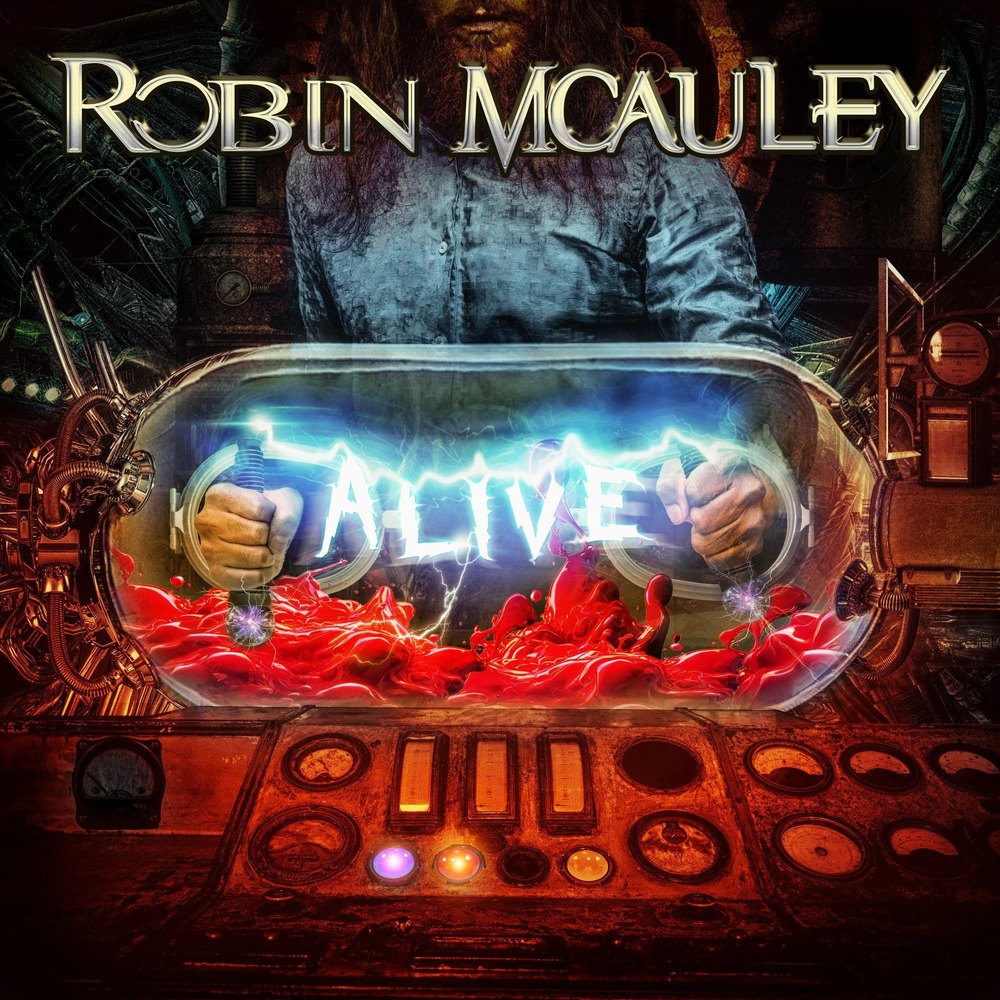
Robin McAuley - Alive (2023)

Country: Ireland
Style: Melodic Hard Rock
Rating: 8/10
Release Date: 17 Feb 2023
Sites: Facebook | Instagram | Official Website | Twitter | Wikipedia

No, this isn't a live album from Robin McAuley. It's his new studio album, his third as a solo artist, only two years after his second, Standing on the Edge, even though it took him twenty-two years to get round to that one. Then again, singing for Michael Schenker in a variety of incarnations is a fair excuse. He's also recently knocked out two Black Swan albums, so he's definitely keeping busy and he sounds as good as ever, his voice a lot more lived in than it was back in the seventies but as melodic and as powerful.

Even though this kicks off on keyboards to remind of that previous album, the opening title track is up there with the heaviest songs that time out, like Running Out of Time. The style isn't greatly changed but that was a melodic rock album, whereas this is a melodic hard rock album. It does the same sort of things but with more of a kick to it. It still drops down to calm melodic sections but it's also happy to shift up towards what Schenker might do, if without quite as fierce guitarwork.

Case in point, Dead as a Bone, which has to be my favourite song here. I liked Alive on a first listen but it didn't knock me out. It grew on a second time through and I'd happily call it a highlight too, but Dead as a Bone didn't need that. It grew on me as it was playing the first time. It started out damn good and it ended even better. I actually played again it immediately to make sure I wasn't dreaming, then I started the album over and Alive came, well, alive for me and I started to realise how good this album is.

It's not all that good but, just like last time out, there's nothing duff to let the album down. Some of these songs are merely better than others. Dead as a Bone includes a searing solo from Andrea Seveso and he throws a few of those out there this time, with more on Can't Go On, Feel Like Hell and The Endless Mile, not to forget Fading Away. Damn it, there are strong solos everywhere this time out. If I'm reading correctly, Seveso is responsible for all the guitarwork on this one, because there are no guests. Sure, Howard Leese only guested on one track last time but this is very much a guitar album as much as it's a vocal album and that one wasn't.

There are certainly a lot more powerful riffs on this album than its predecessor. My favourite is on Stronger Than Before, because that kicks off almost like Accept but with a layer of elegance over it and, of course, a much smoother vocal from McAuley than anyone who's sung for Accept across the years. Even on softer songs, by which I mean songs comparable to the hardest on Standing on the Edge, the guitar continues to make itself obvious, even if the busiest man at Frontiers, if not in rock music period, Alessandro del Vecchio, turns up his bass to keep that heavy feel underneath it.

Talking of vocals, McAuley turns up the emphasis on Bless Me Father and, to a lesser degree, on Can't Go On, but adds some sort of effect to start out Feel Like Hell rather like Klaus Meine of the Scorpions. Even with those heavy riffs on Stronger Than Before and biting guitar at points on The Endless Mile, I wouldn't say this ever reaches heavy metal but it certainly flirt with its, especially on the former track. I like this heavy, more emphatic Robin McAuley, but then I'd like a Robin McAuley album if he sang the phone book over the crumpling of paper. It always comes down to the songs with him.

And that's where I'm thinking that this doesn't quite reach the heights of the previous album but it's not far behind. Dead as a Bone and Fading Away are up there with anything on that one, with a heavier approach and an added emphasis but riffs and hooks just as strong. On the flipside, I'm pretty sure that, if I went back to Standing on the Edge and listened through, I'd be yearning for a punch like McAuley and his band find on Alive. I guess I should split the difference and give this an 8/10 too. I know it's still growing on me, after three times through. It's the sort of album I could be happy leaving on repeat for a couple of days. That's worth something.

Thursday, 24 November 2022

God is an Astronaut - Somnia (2022)

Country: Ireland
Style: Post-Rock
Rating: 7/10
Release Date: 4 Nov 2022
Sites: Bandcamp | Facebook | Instagram | Official Website | Tumblr | Twitter | Wikipedia | YouTube

I'm not sure if I've picked a really bad time to discover God is an Astronaut or a really good one. It certainly seems to be an unusual time. My first experience of them was Ghost Tapes #10 last year, which may be an anomalous release, abrasive and angry and driven by guitars not keyboards. My introduction was a suggestion that they were reminiscent of Tangerine Dream, which wasn't much in evidence on that album. It's much more evident on this, their eleventh album, but it's equally as anomalous, merely in the opposite direction, because it's a soft and dreamy album driven entirely by keyboards.

What I didn't realise going in is that it's not a new album in every sense. Sure, nobody's heard the pieces of music here in this form before, but none of them are new compositions. While I may not have heard any of them before—until I searched them all out on YouTube—fans have heard all of them before, because all eleven tracks are new versions of existing ones sourced from six of their previous ten albums.

The earliest is 2006's A Moment of Stillness, where you can hear the original versions of Empyrean Glow and Crystal Canyon, which are combined here into a single track. The most recent is Epitaph, from 2018, where the original version of Komorebi can be found. The majority come from between those two, especially a three album run from Age of the Fifth Sun in 2010 through Origins in 2013 to Helios/Erebus in 2015, these three supplying seven of the eleven tracks.

I don't know why the band chose to look at these particular pieces of music afresh, but it feels like a deliberate counter to Ghost Tapes #10. Maybe that was born out of the frustrations of COVID-19 and this one is born out of a comparative calm that we've moved into or maybe a perceived need to retreat into dreams. What confuses me is that this isn't a compilation, even though quite a few of these pieces seem pretty close to their originals, especially during the first half. The Bandcamp page for the album calls them "ambient re-works/remasters", so they're fresh takes.

The biggest difference is that they're all softer, in tone and in impact, so that they don't tell us the story they told us before; they float above it and have us look down at it. Where there was obvious instrumentation, like the drums on Reverse World or the guitars late in Autumn Song, that's gone or at least suppressed further into the mix. Ramped up in counter is a backdrop of synths, which is easy to imagine as mist or clouds or something overt but intangible. Pieces like Paradise Remains and Finem Solis feel notably softer, though it's telling that the former feels darker and the latter lighter. Applying the same filter, in a sense, doesn't always have the same results.

The heaviest pieces are the last couple, Lateral Noise and Weightless, which are more overt, even though they're both incredibly ambient and even more devoid of structure than their peers. What struck me immediately with all these songs, beyond the dreamy sound, was that a slow pace and deliberate avoidance of structure makes these pieces feel longer than they are. We get lost in them, as if they're a sort of refuge where time has no meaning. I was shocked to realise, maybe twelve minutes into Finem Solis that it's only a five and a half minute track. They're not boring, just immersive.

The other feeling that I couldn't lose was that they all continue on after we stop being able to hear them, as if they just drift away past our hearing like a song played on a car radio that passes us on the road, just incredibly slowly so that we get a four minute glimpse. More than once, I wondered what it was sounding like further down the road where I could no longer hear it. Perhaps it's more akin to a long Tangerine Dream composition in which we become so lost that we can't initially deal with the fact that it's over and our brain continues to absorb it, even in silence.

What this all means that I'm still as in the dark about God is an Astronaut as I was. I've now heard and reviewed two albums, neither of which would appear to be typical. Maybe in 2023, they'll issue something entirely new that plays in their usual ballpark. Maybe not. Maybe I just need to take a few days and explore their back catalogue so I can see where they came from and how far they've travelled. In the meantime, I guess I need to rate this and I'll go with a 7/10 because it's all new to me and I liked it a lot. Fans may shift that wildly up or down depending on whether they see this as an essential new take on old material or a pointless near-compilation.

Tuesday, 18 May 2021

Robin McAuley - Standing on the Edge (2021)

Country: Ireland
Style: Melodic Rock
Rating: 8/10
Release Date: 7 May 2021
Sites: Facebook | Official Website | Twitter | Wikipedia

Robin McAuley may always be remembered for becoming the new M in MSG, when it shifted from the Michael Schenker Group to the McAuley Schenker Group for three albums as the eighties turned into the nineties. He contributed to both the Michael Schenker albums I've reviewed, Revelation and Immortal, so there's likely to remain a connection there. However, I first heard his voice before that, singing for Far Corporation and then, catching up on even earlier work, for Grand Prix. He's hardly the most prolific vocalist out there, but he's been doing good work for four decades now.

Oddly, this is only his second solo album, following 1999's Business as Usual, though his 2020 album as Black Swan was really a solo album with a band's name. Like this one, that was released on Frontiers, which is a great home for him, given that he's a born melodic rock vocalist, even if he's best known for his hard rock and heavy metal and this does venture into hard rock, especially on the title track, which closes out the album in a flurry of guitars and energy. Certainly it starts out in melodic rock territory with the excellent Thy Will Be Done and it stays there for most of the album.

There are no duff tracks here but some certainly stand out. Late December was the first of those for me, the sort of song that would surely have been all over American radio had it only been released in the mid eighties. It's really accessible but it doesn't have to go soft to achieve that, just like the best songs from Jimmy Barnes. Like a Ghost fits that description too and brings the same comparison. I'd not seen the two as similar until this point, perhaps because they usually play in different genres.

Say Goodbye has a similar effect too but with a little harder riff. Everything on this album lives or dies on its melodies but there are still decent riffs behind them, like those in Do You Remember or Chosen Few, which kicks in so reminiscent of AC/DC that I actually wondered if the first vocalisation was Brian Johnson. I should add that Say Goodbye has a really nice ending too, but on bass rather than guitar. It isn't anything fancy, just a subtle little touch that's icing on an already tasty cake.

What surprised me here is that I usually go for the harder edged songs and, while I liked Chosen Few and especially Running Out of Time, which hearkens back to those days in MSG, it's actually the softer ones that got me on this album. Run Away, in particular, is a peach of a soft rock song with a gem of a chorus. I'd suggest that it's almost guaranteed to be staking out space in my head for the next week, but there a few others that seem to want to battle it for that honour, Wanna Take a Ride for a start.

Surprisingly, the musicians behind McAuley don't seem to be particularly well known, though Howard Leese is the guitarist in Bad Company nowadays. The only other name I recognised is Alessandro del Vecchio, because I think he plays on every album released on Frontiers. Guitarist Andrea Seveso looks like a Frontiers regular too but as a studio engineer rather than a musician. Nicholas Papapicco does fine on drums but seems to be earning his first credit here.

But, however reliable all these folk are, it's the voice that will sell this album and McAuley definitely seems to be having fun, even if the songs don't allow him to belt the way he does on the title track. I'd expect that the point was always to showcase what he can do with his voice, on soft songs and harder ones, and I think it does a grand job on that front. This was always going to be good because it's Robin McAuley but it's better than I expected and it definitely goes on my highly recommended list.

Tuesday, 16 February 2021

God is an Astronaut - Ghost Tapes #10 (2021)

Country: Ireland
Style: Post-Rock
Rating: 7/10
Release Date: 12 Feb 2021
Sites: Bandcamp | Facebook | Instagram | Tumblr | Twitter | Wikipedia | YouTube

I came to God is an Astronaut, a name taken from a quote in Nightbreed, from a suggestion that their particular brand of Irish post-rock is reminiscent of Tangerine Dream. Well, maybe on earlier albums, as this is their ninth, but not here, because this is driven by guitars not keyboards and it often has an abrasive texture to it. I haven't heard the band before, but I did check out some of what they've done in the past on YouTube and this is angrier stuff. Given that they've said that each of their albums is a "photograph or snapshot of who we are in that moment of time", maybe 2020 was a tough year. It was for the rest of us.

Texture seems to be the goal here, rather than soundscape. I don't see much when I listen to this, just a predominant colour of grey. Maybe there are colours way over there somewhere in the dim distance but they're certainly not particularly close. I don't see places or people or even much of anything that might give an indication of what's happening, just swirling. Maybe I'm in a thick bank of clouds and I can't see the world at all except in momentary glimpses.

This certainly fits with some of the song titles. Adrift feels exactly that, especially in the midsection. I don't know where we are but we're not supposed to be here and we'd like to find our way back, if that's OK with everyone. There can be peace here but it doesn't last and that's telling. The guitars are chaos, but the bass has a dark deliberation to it, as if chaos was the goal all along. Other titles here speak to being lost as well, like In Flux, Fade and even Burial, if we assume we aren't dead.

There's certainly some peace in Burial before that angry guitar kicks in and spoils our escape. I do feel that these swirling guitars represent the absence of something rather than a presence of one. They're not telling us what's going on; they're hiding what's going on from us. If anything, the drums serve as a guide, their tempo our sense of urgency and their complexity a reflection of how much we ought to pay attention.

Somehow, like life, we have to pay attention and we're rewarded for that. As chaotic as this feels, it's a rich sound and one that never got boring for me. It's also a very current sound, as if this is all of us at this moment in time rather than just the band. We're struggling, but we're still going and we'll see it through, whatever "it" is for each of us, whether COVID-19, politics, debt or whatever. Gradually, over repeat listens, I came to think of the bass as us, a vibrant life force that's carrying on whatever else is happening. It perseveres and we will too. This is chaotic but it's not pessimistic in the end. We emerge from that in Luminous Waves.

I'm still learning about what post rock is, but each time I think I have a grasp on it, the next post-rock album tells me that I haven't got it yet. I'd come to the thinking that post-rock has musicians playing traditional rock instruments in a way that takes us to new places in the way that Tangerine Dream and others did entirely with synthesisers and electronic gadgetry. God is an Astronaut mostly do that but I hear synths and some of the more peaceful moments benefit from piano. Doesn't that disqualify this from post-rock?

Who sets the rules? Well, maybe God is an Astronaut do. They've been doing this for two decades now, nearly, and they've remained prominent throughout. Who better to listen to on this?

Wednesday, 9 December 2020

Gama Bomb - Sea Savage (2020)

Country: Ireland
Style: Thrash Metal
Rating: 7/10
Release Date: 4 Dec 2020
Sites: Bandcamp | Facebook | Instagram | Metal Archives | Official Website | Twitter | Wikipedia | YouTube

I like Gama Bomb. They play fast and energetic thrash, with a strong speed metal influence and more than a nod to crossover. They're lean and mean, ten of the twelve tracks on offer here wrapping up in under four minutes and half of those under three. They keep new material coming without overdoing it; this is their seventh studio album in fifteen years, which is a decent output. They also ensured this one happened even after long time drummer Paul Caffrey left earlier in the year; the drums here are handled by Vader's James Stewart on a session basis.

I kind of like and kind of don't like how wacky they are. It's great to see a sense of humour in an often overly serious genre. There aren't a heck of a lot of laughs to be found in the current Evildead album, as just one example, but Gama Bomb aren't raging at society, more at just how seriously we might be taking it. As such, they often feel like a thrash version of Alestorm, entirely separate to the ocean-themed title track, and I sometimes find myself wishing that they would take their art more seriously, while enjoying the fact that they don't. First world problems, huh?

At their best, they blister. This album wraps up with Gone Haywire, a two and a half minute blitzkrieg heavily reminiscent of Overkill. It's not up there with Electric Rattlesnake, but it does much the same job in much the same way and it's highly enjoyable. That's one to get a tired pit back into motion! I'm a big fan of this sort of intricacy at this sort of pace and this sort of energy level. Monsterizer got my head really going and I'm listening at work. It may have a weaker chorus but it has better riffs and the guitars just zip along on this one.

At their worst, they still blister but in a vastly sillier fashion. She's Not My Mother, Todd channels the crossover vibe of Nuclear Assault rather nicely, with punky vocals and slower mosh parts, but I found myself getting caught up in the silly lyrics so much that I couldn't pay as much attention to the solid musicianship on offer. And that's fine, but that happens too often here for my tastes. Sure, the band's response to me will be, "What are you going to do about it, Poindexter?" and my answer would be to just play the whole album again, so I know I'm on shaky ground.

I'm also a victim of my own preferences here. I prefer my thrash fast and angry with clean vocals that are mostly intelligible and that's exactly what Gama Bomb provide. Because I'm English, I can figure out most of the words Philly Byrne sings, and I wonder if I'd like them just a little bit more than I do if they suddenly decided to sing in Gaelic, which I don't speak. I'd still enjoy all their speedy riffs and technical changes, which are good at the worst of times and fantastic at the best, but I wouldn't be as distracted when Byrne comes out with a line like, "What shall we do with the drunken sailor?"

As it is, whenever I listen to Gama Bomb, I tend to think less about which my favourite songs are and more about my favourite intros. For all that the songs tend to be short ones, Byrne doesn't leap in at moment one. Even twenty seconds is enough for an intro to really make its impact felt and the thirty used for the title track are magnificent. I think my favourite intro may be Miami Supercops, because it stretches almost to the minute mark and features a number of neat changes. Electric Pentacle's is a gloriously vicious intro, and even a mere five seconds of bass heavy intro on Lords of the Hellfire Club sounds fantastic.

Of course, Gama Bomb are more than one of the best purveyors of quality intros in thrash metal. The twin guitars of Domo Dixon and John Roche may not weave on the level of a Wishbone Ash or an Iron Maiden, but they churn along amazingly well. Roche may be the new fish in the band, with only eight years tenure thus far, but he's a fantastic rhythm guitarist and he's an ultra-reliable force when Dixon launches into a solo. And when the two combine on rhythm, they're unstoppable.

And I need to stop listening to those guitars and eat or I'll be here all week wasting away and Gama Bomb will write a song about it.

Wednesday, 11 March 2020

The Grief - Ascent (2020)


Country: Ireland
Style: Gothic Doom Metal
Rating: 7/10
Release Date: 28 Feb 2020
Sites: Bandcamp | Facebook | Instagram | Metal Archives | YouTube

Given that this is a ache-infused combo of the legendary Peaceville three of Paradise Lost, My Dying Bride and Anathema, I was always going to like this, but it took me a couple of listens through to really get on the right side of it. It tones down the death side of those doom/death bands in favour of a stronger doom side with gothic flavouring. The death aspect is most obvious in some of the backing vocals, especially on In Defiance, as singer Stephen Quinn stays clean throughout.

There are only four tracks here because this is an EP, but a second EP will follow in the summer. Also, those four tracks amount to twenty-five minutes of music so the EP is almost as long as Reign in Blood. The band were a four piece in the studio, with guitarist John Murphy doubling up on drums, but a permanent drummer has been hired so they'll be a quintet ongoing.

This isn't the most immediate material, but it's good stuff. The tone is in evidence from moment one but, for all that there's melody everywhere, these aren't catchy songs. We can flow with them and soar and swoop along with the voice of Quinn and the guitars of Murphy and Quinn's brother Paul, but this wasn't ever intended to be earworm material and all that melody is there to aid the construction of the songs rather than to hurl hooks at us.

A New Dawn knows precisely how to kick things off and, now that I've become friends with these songs, I can appreciate how quintessential the first two minutes of this song are. That's a jagged guitar tone from the outset but a nice interplay between the two guitarists and a good melody. The drums join in simply but very effectively twenty seconds in and immediately set a slow and aching pace. The vocals are right behind the drums and they're dripping with melancholy. By the time we hit a minute and a half, Quinn hurls out a pleading "Remember me", it's time for a quick breakdown with distant bells and we're off and running.

In Defiance is slower but less dense musically, to give Quinn's voice more focus. It highlights that, of those three pioneering bands, it's surely My Dying Bride who were the most influential on these Irish lads. Its minimal sections are delightful but it ramps back up just as well four minutes into the song.

Call of the Void kicks off with Kieran O'Leary's rich bass, before the rest of the band crash in to join the wake. I'd say party, but this isn't at all happy and there's a sense of loss that underpins everything. Then again, the Irish really know how to hold a wake and this isn't that cheerful either. It grows well and I particularly like the churning section a minute or two from the end.

That leaves Departed, at five minutes the shortest song on the album and the least convincing to my mind. With such a My Dying Bride influence, it should hardly come as a surprise that the Grief want to dabble in prog or alt rock at some point and they certainly do here. Even as it heavies up, I heard as much Steve Hogarth-era Marillion here as I did any of those doom/death bands and that's no bad thing. It shows that the Grief are painting with a broader palette than just Peaceville circa 1993 and that bodes well for that second EP I'll be waiting eagerly for. It's just that this song didn't resonate as much as the early ones for me.

This is the Grief's first release, but there's a history behind them that's longer than the name. The band seem to have grown out of Corr Mhóna, a doom band who sang in Gaelic and featured both the Quinn brothers and the band's original drummer, Robert Farrow. In fact, I shouldn't use the past tense as they're still a going concern, even though their album was released back in 2014. Both guitarists also play in a Katatonia tribute band named Katatonik.

As I've mentioned before, I grew up with those early Peaceville bands and I applaud anyone taking them as a starting point for their own musical journey into the future. I'd like to see where it takes the Grief.