Showing posts with label Japan. Show all posts

Wednesday, 3 January 2024

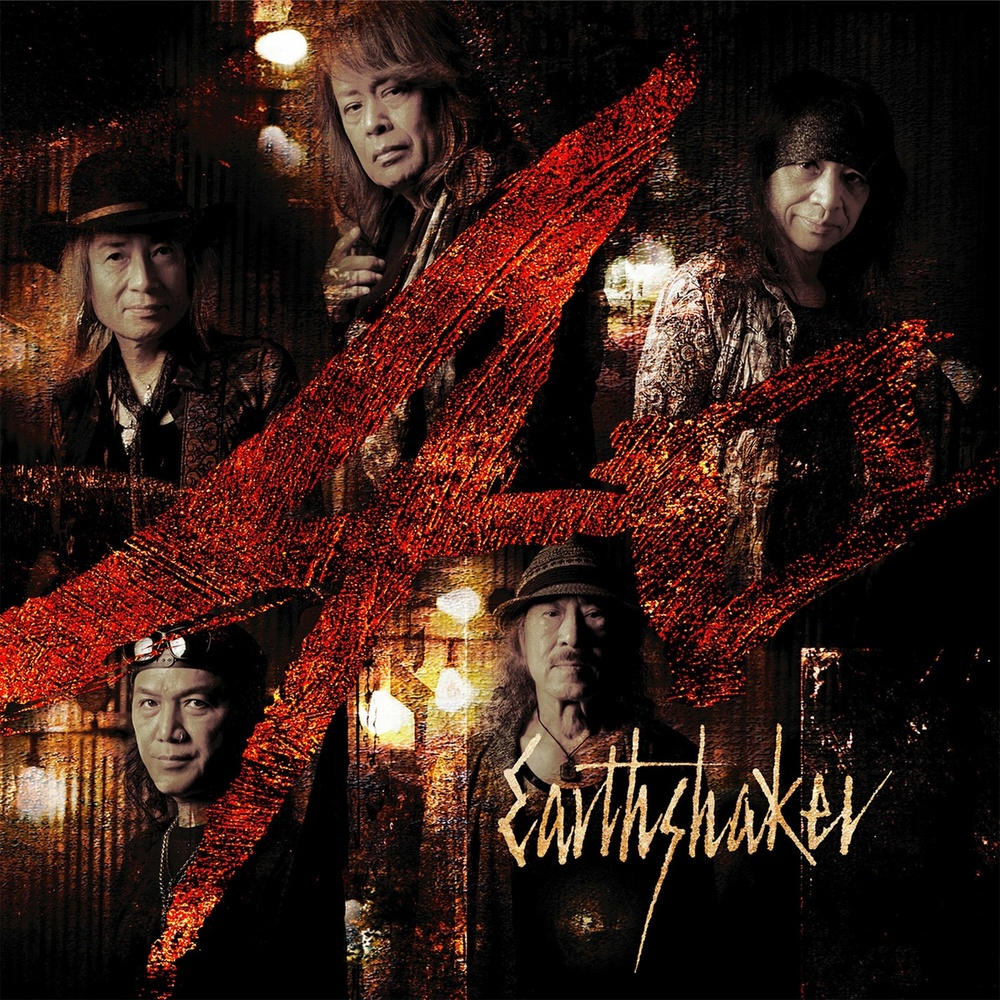
Earthshaker - 40 (2023)

Country: Japan
Style: Hard Rock
Rating: 7/10
Release Date: 6 Sep 2023
Sites: Metal Archives | Official Website | Twitter | Wikipedia | YouTube

Here's a name I was very happy to see put out new material in 2023 but I got caught up in events so I never listened to it then. Well, that's partly what January catch-up is for! Now, if the name has no meaning for you, let me explain that back in the eighties, Japanese metal was becoming known to the west. The biggest band in Japan at the time were Loudness and we heard their albums in the UK, but the one we heard most was Vow Wow, previously and subsequently Bow Wow, who briefly relocated to the UK and hired Neil Murray of Whitesnake fame as their bassist. A little behind but still third on the list were Earthshaker, who were released on the ever-reliable Music for Nations.

I liked Earthshaker a lot and I remember Radio Magic getting stuck in my head for a long while. It seems that they stuck it out until 1994, Japan perhaps remaining more accepting of a traditional rock and metal sound in the face of grunge than the US and UK, but split anyway. I didn't notice at the time but probably assumed that they'd already gone. What I see now is that they reformed in 2000 and have stayed together ever since. This is their twenty-fourth album and the twelfth since their reformation, so matching the tally from their original run. As its title suggests, it also shows up forty years after their self-titled debut in 1983.

And it's good stuff. It seems that they've moved a little more towards a hard rock sound than pure heavy metal, but this is hard and heavy to me, with feet firmly in both camps. Certainly, the guitar of Shara Ishihara is still front and center, with blistering solos on a whole bunch of tracks, starting with the opener, 儚き夢よ, or A Fleeting Dream, but with the peach oddly being the final minute of 点と線, or Points and Lines, which is otherwise a ballad, so a lot softer than the norm.

I should add that Earthshaker always did like their ballads, but I always enjoyed them for feeling substantial, never soporific in the way that so many ballads by so many other bands were. I'd love to know what the lyrics say to build this one up to such a finalé, but it's sung in Japanese, as indeed most of the album is, even if five of the ten titles are listed in English. I don't know close to enough Japanese to be able to catch more than a word here and there.

Ballads aside, the most obvious rock song here is It's Showtime, because there's a serious Jon Lord style drive to the organ and a perky beat. Marcy Nishida doesn't remotely sound like Ian Gillan but it's not tough to see Deep Purple covering this. It's a great song already because of those aspects, but there's an impressive flow to the vocals, a wonderful bass solo and a neat shift to keyboards as it ends. This is such a natural approach for Earthshaker that I'm surprised that there aren't more Purple-influenced songs here.

My other highlight is 永遠に消えぬ約束, or An Everlasting Promise, because it's a rocker that finds an interesting groove from the outset and builds wonderfully. I also like Our Glory Days and 傷跡, or Scar, more and more with each listen, because they feel so uplifting, even given the title of the latter. In fact, the former is so uplifting that it suggests that, however many glory days this band has had in its past, its members feel like their true glory days are right now as they recorded this song. That's a good feeling.

That was quite the realisation, but I'd already noted down how the guitar solos play that way too. They're not merely joyous from the standpoint of being technically accomplished, which they are, they're also joyous because they feel actively uplifting. I certainly felt better about my day after listening to Ishihara's guitar, especially when he's soloing on songs like Points and Lines or Scar.

I can't call out more songs as particular highlights, which suggests that this isn't quite as strong as the Loudness album I reviewed almost a year ago, but it's highly consistent and feels comfortable quickly. That, along with how uplifting it often feels, helps it to become an old friend in relatively few listens. I may have given Loudness's Sunburst album a slightly higher rating a year ago, but I'm more likely to be coming back to this one to visit.

Thursday, 12 October 2023

Murasaki - Timeless (2023)

Country: Japan
Style: Hard Rock
Rating: 7/10
Release Date: 16 Aug 2023
Sites: Facebook | Metal Archives | Official Website

Timeless is a highly appropriate name for this album, because it sounds good in 2023 but hearkens very clearly back to the early seventies, the primary inspirations obviously being British hard rock bands with the heavy organ sound, most obviously Deep Purple. In fact, their very name translates as "purple" and it was adopted by the band's founder George Higa to become George Murasaki. It should be mentioned that Purple and Murasaki are contemporaries, because this band was formed in 1970, pioneering rock music in Japan in the process. The reason they're not better known today outside their home nation is that they didn't release an album until 1976 and they only managed two before splitting up in 1978.

Well, four members of the band that released those two albums got back together in 2007, with a pair of new colleagues, JJ on lead vocals and Chris on bass, and this is their third album since then, following 2010's Purplessence and 2016's Quasar. Both have history with the Murasaki family, JJ the lead singer of George Murasaki & Mariner at the tail end of the seventies, and Chris also the bass player in another Japanese rock band, 8-Ball, which is led by two of Murasaki's sons, Leon and Ray, who both played for Murasaki during a brief earlier return in 2000.

I believe they've kept on with their old sound but added a slightly more metallic edge, as we might expect from a band that boasts two guitarists. And yes, I do mean "slightly" there, because there's a massive range from Younger Days to Don't Look Back! and only some of it would feel at home on a metal album. This is primarily hard rock and, wherever it goes musically, it never drifts far from that core Deep Purple inspired sound, which is led by Murasaki himself on keyboards with a swathe of glorious riffs and runs.

Younger Days features a tasty guitar solo, but it's primarily a piano-driven ballad laden down with plenty of orchestration. It's easily my least favourite song here, though I rather like Tears of Joy, a shorter song that does much the same thing but without the orchestration. I prefer the heavy end and that shouldn't surprise anyone, but Don't Look Back! is a strong song for other reasons too. It starts out symphonic, almost like an ELO song, then launches into prog metal with a strong guitar against a wonderfully prowling bass backdrop. It has a real doomy weight to it, sitting somewhere between Black Sabbath and Witchfynde, which isn't what I expected to say a few songs earlier.

I believe the prog aspect is relatively new too, though I've only dipped into their seventies albums. It was always there, I guess, but not as a focus. Now it often is, starting with Free Your Soul and Let It Be, which picks up from a weaker The Fire is Burnin' with a wonderful organ intro and some neat prog exploration. It's also a playful song, following a straight song and a belter, as Raise Your Voice opens up with power, barrelling along in the midsection like Space Truckin'. The Fire is Burnin' does little for me, but the bookends around it are both highlights of the album.

While Deep Purple are very much the obvious comparison, they're not the only one. There's some Uriah Heep dotted throughout but that influence really comes out to play on the second of a pair of bonus tracks. They're Starship Rock 'n' Rollers and Double Dealing Woman, both re-recordings with the current line-up of earlier material. It's Double Dealing Woman that's clearly inspired by Heep as much as Purple, and it features guest appearances by Kyoji Yamamoto of Bow Wow and a Japanese guitar hero who goes by Char.

Perhaps it's the British influences from the seventies that prompt them to sing in English, but that has always been their approach from the very beginning. Then again, their current singer doesn't appear to be Japanese even though he technically is, having been born in Japan. JJ stands for John Joseph and his surname is Patterson, perhaps explaining why there's no accent in his singing, even though his predecessor in the seventies, Masao Shiroma, certainly had one, as fluent as he seems to have been in English.

I liked this album a lot and found it hard to move on to another one. Perhaps most notably, it never feels long, even though the the two bonus tracks bump up the running time almost to an hour. This skips along effortlessly and feels a lot shorter than it is, possibly because it's broken up well with a pair of ballads and a more metallic song. Their regular sound therefore breaks down into a shorter set of chunks and it's all very accessible.

Tuesday, 13 June 2023

Babymetal - The Other One (2023)

Country: Japan
Style: Kawaii Metal
Rating: 8/10
Release Date: 24 Mar 2023
Sites: Facebook | Instagram | Official Website | Twitter | Wikipedia | YouTube

It almost seems surprising to say that this is a surprising album from Babymetal, because it's not a fresh expansion of their sound, as their previous album, 2019's Metal Galaxy, surely was, but more of a contraction and a re-focus on what they do best. For those not in the know, they play what they call "kawaii metal", which means the bizarre placement of cute JPop vocals and electronica over a crunchy and sometimes almost extreme metal backdrop. However, Metal Galaxy, a concept album that brought in sonic flavours and guest appearances from each of the countries in which the band has toured, stretched that template in all sorts of wild directions.

In comparison, this felt almost like an assault on a first listen. It's very loud, some of the knobs on the mixing desk surely turned up to eleven, and it's often very fast too. The only world music that I caught was on Metalizm, which has some Indian flavours, and there are no guest appearances that I could identify. It's Babymetal reinforcing that they play metal rather than global pop and finding their way back to basics. Oddly, the album both benefits and suffers from this approach. I wasn't at all sure on that first listen but it's grown on me with every subsequent time through.

Importantly, I think there are a few reasons for this. One is that there are only ten songs on offer instead of sixteen and they're all of a consistent sort of length. Only two songs sit outside a range between 3:23 and 4:18 and they all do much the same thing, with variations to keep it interesting. Those exceptions, by the way, are Time Wave, which extends to 4:50 because of a longer electronic intro, not hitting top gear until a minute of driving pop music in; and the opener, Metal Kingdom, a minute longer than Time Wave, partly because of a longer intro but mostly because it has an epic flavour to it.

Another is that almost everything feels like metal, with occasional dips into electronica. Last time out, I noted that "rarely do the songs seem to start out as metal" and that's just not the case here. Even when the electronic angle takes the fore, as it does on Time Wave and Light and Darkness, it isn't long before the metal takes back over. Only The Legend, which closes out with a more mellow outlook, down to the use of a saxophone, avoids that and it's still heavier than half of what was on Metal Galaxy.

Perhaps, most tantalisingly, Su-Metal, who sings lead, seems to be shifting away from the cuteness overdose of JPop to a more rock-based delivery. There's still a pop edge there, but there's also an overt use of power that's more typical of rock music. She belts here, even if it's a sweet belt. She's willing to soar and sustain, even in verses and especially in choruses. Most importantly, she does it all on Divine Attack -Shingeki-, which is the first Babymetal song on which she wrote all the lyrics. I would call her delivery entirely hers and she chose to go for power.

It's clearly one of the highlights, as is Metalizm, but the more I listen to this, the more it clicks into focus for me and the more individual tracks stand out to approach that pair at the top of the heap. Maya has a seriously driving riff and Mirror Mirror even grinds at points. Monochrome is quite the earworm and The Legend holds up at the end of the album, even though it's easily the softest song on offer. Talking of softer, I have to admit a fondness for the first minute of Time Wave that's clear pop music but catchy and powerful.

And so this is a surprising album, not because it doesn't sound like Babymetal but because it feels a lot closer to what Babymetal are than anything in a long while, consistently and emphatically. It also surprises because it does that while making the cute JPop side of the band fit a lot closer than anything on their previous album. There are points where I could see three kawaii girls dancing in synchronicity even without visuals, but Su-Metal's voice is much more natural and overt, without a lot of the digital manipulation done to it in the past. Autotune is not a big problem here, the intro to Believing notwithstanding.

I wonder how this is going to be received. From being underwhelmed on a first listen, I now think it may well be their best album yet.

Friday, 12 May 2023

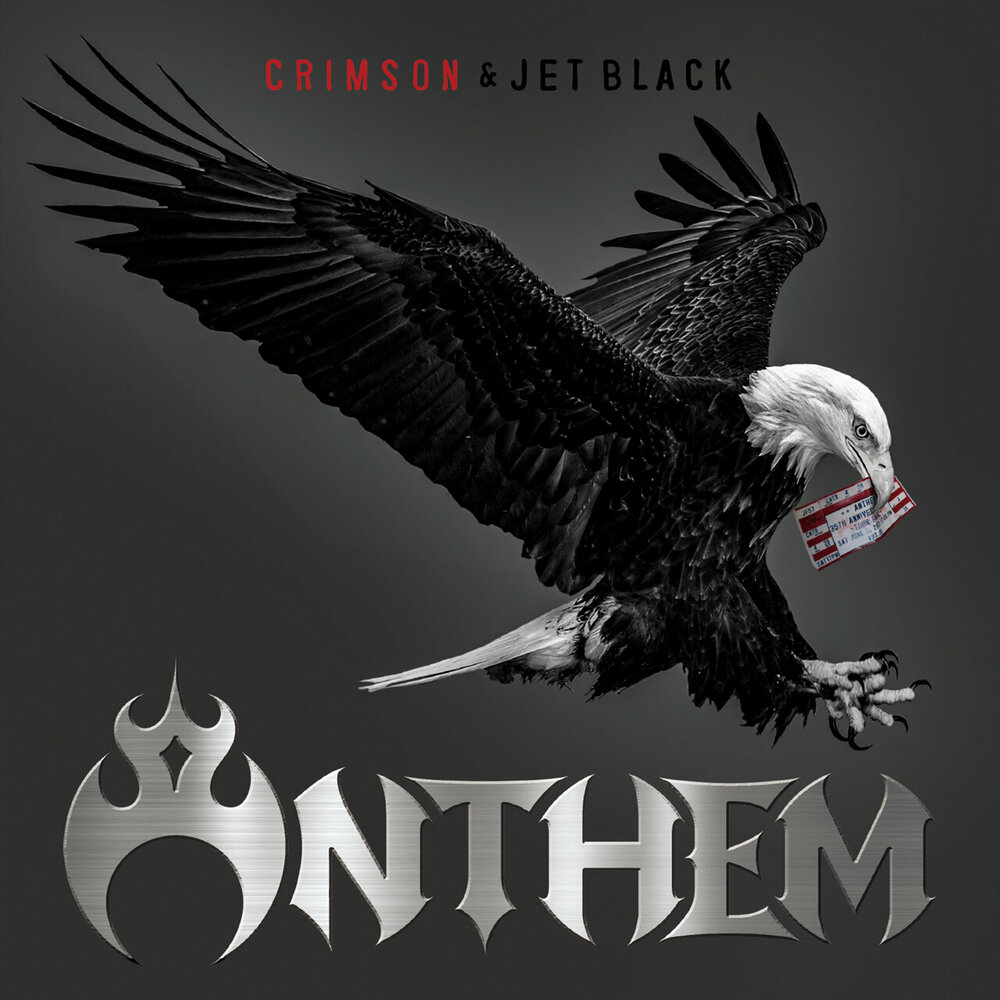
Anthem - Crimson & Jet Black (2023)

Country: Japan
Style: Heavy Metal
Rating: 8/10
Release Date: 21 Apr 2023
Sites: Facebook | Instagram | Metal Archives | Official Website | Twitter | YouTube

Here's another band I haven't heard in far too long. I remember Anthem from the mid-eighties as one of a slew of Japanese bands that suddenly became known to the west. Vow Wow may have hit biggest, because they moved over to England and changed their name from Bow Wow to fit better in an English speaking country, but Loudness did well and Earthshaker got noticed too. That was a good time for Japanese bands in the west and I picked up a few early Anthem albums from English record shops, four out of the first six, and they were all solid.

However, that only took me to 1990's No Smoke without Fire. They knocked out another one before splitting up in 1992, but they reformed in 2000 and, if I'm counting properly, this is their eleventh original studio album since. I say "original" deliberately, because their first album back was a sort of best of with Graham Bonnet stepping in as vocalist for one album only, Heavy Metal Anthem. A couple of decades later, Explosive!!: Studio Jam is exactly that, a COVID-era set of covers, with the support of Bonnet again along with current vocalist Yukio Morikawa.

This is a good one that showcases quite a range for a band who haven't changed their style much over the years, shimmying a little more into power metal from a heavy metal base. For a change, the representative songs aren't just the first few, but some of them are important to get a grasp on what Anthem do.

Snake Eyes is a stormer of an opener, very reminiscent of the sort of up tempo belters that Accept so often used to kick off albums. I like it a lot. Wheels of Fire isn't as heavy but it still rips and it's a much more accurate guide to what's coming. It's hard to define a Japanese flavour to heavy metal, especially when Yukio Morikawa sings in English, but it's there if we pay attention, especially in his vocal delivery on songs like this one. Roaring Vortex slows the pace a few songs in to give us a real churner of a track that ought to generate a serious pit. Its title is highly appropriate.

If you're getting an idea of what they do already, let me throw another few tracks at you to make that seem rather premature. Blood Brothers ups the tempo again after Roaring Vortex, but it's a lot sassier, almost like it's a glam metal song on speed rather than power metal done fast. I could hear a lot of bands covering this, but the ones who might do it justice are likely to sound different indeed. Similarly, Mystic Echoes sounds like a hard rock song translated into a metal style, a track that screams classic Rainbow. It got to the point where I started to imagine I was watching Ritchie Blackmore and listening to Ronnie James Dio or indeed, as it runs on, Graham Bonnet.

Oh, and then there's Void Ark, which is an instrumental showcase, especially for Akio Shimizu, who has a lot of fun demonstrating his chops on guitar. Oddly, he isn't the band member who played for Loudness—that's bass player Naoto Shibata, in between stints for Anthem—because I heard a lot of Akira Takasaki in the first couple of minutes. However, he shifts wildly into a sensitive emotional mode reminiscent of Gary Moore, which screams for our attention, and then shifts again into even more of a spotlight moment, with Shimizu's fingers shredding the fretboard.

All these things are Anthem and Anthem do all those things well. The best song here for me has to be Snake Eyes, which is a perfect way to start, but the most fun song is probably Master of Disaster and I had a lot of fun with Howling Days and Burning Down the Wall too. These are definitely more traditional metal songs but they're good ones nonetheless with top notch riffing and a thoroughly reliable rhythm section in Shibata, the only founder member left in the band, and drummer Isamu Tamaru, who's top notch throughout without ever showing off, yet another reminder of Accept.

What's perhaps most notable is that this doesn't feel like another album in a long string. Anthem are hardly reticent about stepping into the studio. This comes four yers after Nucleus, but that's a sign of COVID messing up everyone's schedules more than anything else. They haven't gone more than three years without an album since their reformation in 2000 otherwise. Maybe it's stronger than the last few, which I haven't heard, because they've had longer to put it together, but maybe they're just this good all the time. It's not groundbreaking, but it's damn solid throughout.

Wednesday, 29 March 2023

Galneryus - Between Dread and Valor (2023)

Country: Japan
Style: Neo-Classical Metal
Rating: 7/10
Release Date: 14 Feb 2023
Sites: Facebook | Metal Archives | Official Website | Twitter | Wikipedia | YouTube

I don't know why Galneryus aren't better known in the west. Maybe they just haven't played live a lot outside of their native Japan, but this is music ought to would play well in Europe. That most of the songs are sung in a combination of Japanese and English shouldn't matter at all. What should is that this is furious power metal with such a focus on the frenetic guitarwork of Syu, the one and only remaining founding member, that it could easily be classified instead as neo-classical metal. Syu shreds but he does it within a very power metal framework. Only the relatively brief bookends are instrumental but I'd happily listen to an instrumental version of this album.

The vocalist here is Masatoshi Ono, who's been with Galneryus since 2010 but also maintains a solo career, which has led him to perform the theme tunes to a number of anime series. He's clearly an immensely capable singer and the bonus track at the end of this album is a cover version of one of his own songs, but he has a constant challenge to make his vocals stand out above the guitars. He does good work from the opener proper, Run to the Edge, a nine minute epic, but he doesn't truly make himself obvious until Let Us Shine, ironically given that it's that song that also features the most outrageous guitar solo. Bravehearts allows him to break through too, but only , the bonus track on which he covers himself, is truly a vocal piece.

Everyone else in the band acquits themselves well, Lea's drums perhaps the most obvious behind the guitars, but it all comes back to Syu. The album starts out with a guitar solo, literally fading in to a guitar workout that could well have been running for an hour beforehand. This is the intro, a short piece called Demolish the Wickedness! that's entirely instrumental. The other instrumental piece is the outro, A Piece of Souls, which is surprising because it's a keyboard piece, to give some time in the spotlight for Yuhki, who does good work throughout but, like Ono, is rarely the focus in earlier songs. He does get a few decent solos of his own, the one on Time Will Tell particularly tasty, with Taka's bass taking up the baton before Syu takes over once again.

Run to the Edge is not instrumental, but it often seems like it is, because the guitar takes over so well and so frequently that we almost forget that Ono is there to dish out lyrics. There are enough of them to make it seem like being in this band makes sense to him, but not so many that we would ever believe that this is music led by vocals. Even when he's in full flight on a song like Bravehearts where he soars like a pirate ship in full sail, we're still often listening to whatever Syu is conjuring up behind him, which usually tends to be frantic and dynamic. Only that bonus song is his, because it literally is.

I was sold on Syu's talent on the opening intro but he gets better as the album runs on until he's a constant backdrop and we start to take his contributions as the reality we live in and start to focus on the other things happening around him: Ono's vocals and the drops to quiet piano or keyboard atmosphere. He's so relentless on Let Us Shine, though, that he steals our attention back again, a solo that transforms into a videogame, like he's an ever-growing snake shimmying every which way to avoid touching anything and impossibly making it through the five hundredth level intact while we watch. It's a blistering solo and we have to remember to breathe throughout.

I'm not sure if I've heard Galneryus before, but they've been around since 2001, starting in Osaka but later moving to Tokyo. This is their sixteenth album, with no gap between exceeding two years, even during COVID. Had I been paying attention, I could have reviewed Into the Purgatory in 2019 and Union Gives Strength in 2021. Hopefully reviewing Between Dread and Valor in 2023 will keep them on my radar and maybe add them to yours too.

Friday, 24 February 2023

Lovebites - Judgement Day (2023)

Country: Japan
Style: Heavy/Power Metal
Rating: 8/10
Release Date: 22 Feb 2022
Sites: Facebook | Instagram | Official Website | Twitter | Wikipedia | YouTube

Lovebites have been busy since I reviewed their third album, Electric Pentagram in 2020, knocking out a couple of live albums, a couple of full length videos, a compilation album, a split EP and one of their own, but they're back with a fourth studio album that starts off where the prior one left off, even though they've finally had their first line-up change. Bassist and bandleader Miho chose to leave in 2021 and her replacement is Fami, who is given a solo showcase moment at the opening of Stand and Deliver (Shoot 'em Down) to demonstrate why she's here.

The sound hasn't changed, though these songs are a little shorter than last time out, not by much but enough to suggest an even tighter approach. This is frantic power metal from the outset, not that we didn't expect it, reminding of Dragonforce and Yngwie Malmsteen, merely with less show off moments. Midori does go there, but never loses the mindset that everything is fundamentally built on melody. Just listen to the slow theme that sits behind the title track while everyone in the band is shredding at once. It does a fantastic job of allowing us to keep a grasp of the entire song while simultaneously getting lost in the technical instrumental wizardry.

I'm constantly amazed that this never feels like speed metal. Frankly, Lovebites often play faster than some speed metal bands and there are moments when they get their heads down to simply barrel along at speed, like on Dissonance, but they're always heavy/power metal. In fact, I caught a few earlier influences that they sped up to become something else. The oldest school song here is Stand and Deliver (Shoot 'em Down), which appears to be built on a Deep Purple sound, even if none of their various guitarists ever shredded like this. Similarly, My Orion almost has a Magnum vibe to it, merely played at about eight times the speed, right down to the old school keyboards.

Unsurprisingly, given the combination of older school hard rock and heavy metal and sheer speed that's always delivered as power metal, there's plenty of Helloween here too. Their influence has an effect on almost everything and I've read that drummer Haruna shifted her focus from rock to metal after hearing Helloween' Master of the Rings. I'd say that they're most obvious here on The Spirit Lives On and Victim of Time, the latter kicking off the second side and restoring the default sound after a temporary shift into old school with Stand and Deliver (Shoot 'em Down).

While I'd pick the title track as the album's highlight all day long and the unrelenting Dissonance right behind it, it's probably fair to say that Victim of Time is a particularly crucial song. Lovebites don't know how to slow down, which I'm hardly going to complain about, but their continued crazy pace means that the songwriting has to step up to keep us focused on music over speed. I recall a breather moment twenty minutes into the previous album that reminded me just how insane the pace had been. This doesn't let up either and I'd say that it falls to Victim of Time, in a typical slot for a filler track, to reinforce how strong the songwriting is. It succeeds.

And, while I enjoyed Electric Pentagram a great deal, I have to say that I enjoyed this a lot more. It grabs me with its unceasing pace and vibrant energy but it keeps me with its melodies and hooks. I could rank the songs on Judgement Day into tiers without much difficulty, but everything remains strong and that's particularly impressive. Here's where Helloween return to mind again because I remember them elevating their game with the first Keeper of the Seven Keys album, shifting from a damn good speed metal band to the pioneers of a new sound. Whenever I listened to them, I felt rejuvenated, more energetic and more alive than I'd been before I hit play, and that's the feeling I get listening to Lovebites.

The biggest problem I have here is stopping, because Judgement Day becomes a sort of rush and I have to restore reality, reminding myself that I have other things to do today, other albums slated for review, food to eat and sleep to release myself to. It would be too easy to just keep on listening to this for far too long.

Thursday, 9 February 2023

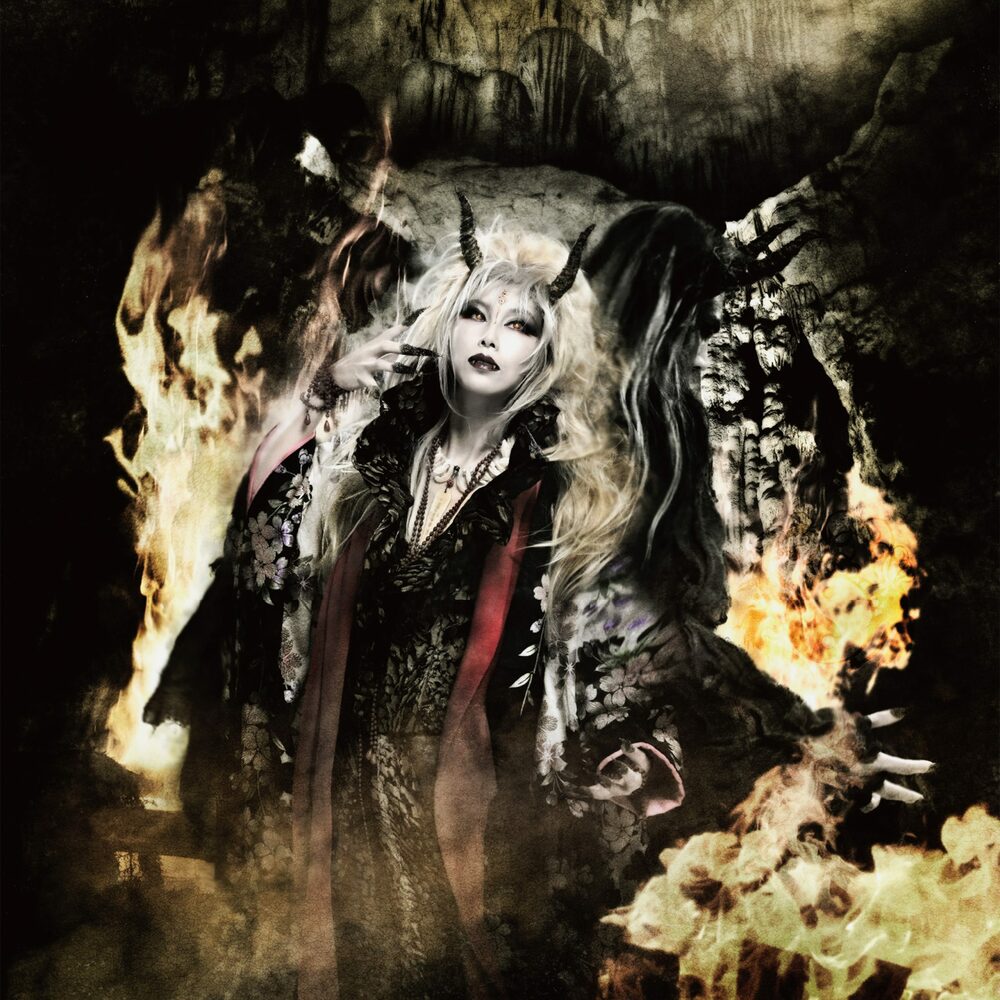
陰陽座 - 龍凰童子 (2023)

Country: Japan
Style: Heavy Metal
Rating: 7/10
Release Date: 18 Jan 2023
Sites: Facebook | Metal Archives | Official Website | Twitter | YouTube

I remember being surprised in 2019 by a Japanese band called 人間椅子, or Ningen-isu, meaning Human Chair, not because of their music but because they've been making it since 1987 and I had no idea until their 21st album. Well, here's another Japanese band who are completely new to me, even though they've also been around for a long time and they've knocked out a lot of successful albums in their home country. They're 陰陽座, or Onmyo-za, which apparently means "gathering of yin and yang", and this is their sixteenth album since they were formed in 1999, with 龍凰童子 or Ryou Doji meaning Legacy of the Dragon King.

Like Ningen-isu, who were a primary influence on them, all their releases are entirely in Japanese and they have a visual aesthetic drawn from Japanese history. In Onmyo-za's case, the entire band follows the same look, which is sourced from the Heian Period, about a thousand years ago. While they came to me listed as folk metal, I see that more as a visual thing than a musical one, with the sound only occasionally dipping into traditional folk instrumentation, like what I presume is a koto at the beginning of Ibaragidouji.

It's well within the bounds of possibility that the lead vocals of Kuroneko have a grounding in folk music too, but I'm not well versed enough to recognise anything here, unlike some of those early Babymetal songs like Megitsune, where I recognised Sakura, Sakura from matsuri and the "Sore!" chant from many a taiko performance. These melodies could be rooted in folk but it doesn't seem like they were actually borrowed from specific songs. Even if I'm horribly wrong there, and I could well be, they're the most obvious folk element here, that brief glimpse of koto aside.

The music behind Kuroneko, and sometimes her husband, the band's leader, Matatabi, is far from folk-influenced and rooted very clearly in old school heavy metal. Ryuusou is an urgent song to get the album moving, with strong riffing that's even more reminiscent of Accept when the bass kicks in. Houou no Hitsugi is unmistakably Iron Maiden when it begins, though that pulls back a little as the vocals show up, as so many of these songs do.

Not all the influences are that heavy, because Karura reminds more of a hard rock band who puts out radio friendly singles but rocks out more on their albums. I got Journey vibes from this one, a feeling that only grew when the piano made itself as notable as the guitars. However, there are a few nods towards more contemporary metal, Ibaragidouji sounding more like Pantera than any of the earlies eighties bands that tend to come to mind. It's often the bass that brings the sound into a more current feel, though the heavier chug on Kakugo doesn't weigh the song down as it ought to. It's another AOR infused song, merely with a riff that's more like Black Label Society.

Having no background in Onmyo-Za's music to go on, I'm reliant here on a very welcome review by a Dutch critic called Kevin Pasman who writes at Kevy Metal. He knows their music well and he says that this is "the most traditional-sounding Onmyo-za album released in quite a while". Matatabi's usually more prominent than he is here, where he takes a back seat vocally on many of the songs, to focus on his bass instead. I presume songs like Ooinaru Kappo and Akashita are more like their usual approach, where he steps up to alternate verses with Kuroneko. I'm eager to find out.

Pasman also calls out how long this album is as another anomaly. It's definitely a sprawling album, making it past the seventy minute mark, and there isn't as much variety as that length might hint at, but I never got bored with it, even though the last few songs started to blur together, finding a way to delineate themselves only by the addition of birdsong. OK, Tokimeki closes out in more of a bubbly J-pop vibe than anything else here, but that's not a plus either.

Maybe part of that is that this feels like a solid album that I must have missed in the late eighties, when I was enjoying Japanese bands like Vow Wow (usually Bow Wow), Loudness and Earthshaker, who were sorely underrated. Vibrant up tempo tracks like Gekkaninpouchou that mix heavy guitars, a strong bass underpinning and subtle keyboards would have been up there with many of the tracks on Vow Wow's Cyclone album at the time. It also stops on a dime too and does so with magnificent effect.

One marker that it's a long album is that we're almost forty minutes in when the epic shows up, a soft and folky ballad for four minutes before it ramps up into mid-tempo guitars and some hungry drums. It's Shiramine, which appears to mean Whitebait, and it's an eleven minute track with five more songs queued up in its wake. Somehow it doesn't feel overlong but it didn't seem like it was worth two others.

Onmyo-za seem to knock out their albums pretty consistently, with three years being the longest gap between them until now, because this one's been five years coming. I presume we have COVID to blame for that, along with so much else, but it's been well received, as their highest charting in their history thus far. It's not just Europe apparently; Onmyo-za only spent a week in the Japanese chart in mid-January, but that was at number six, even if it only sold a single copy for every twenty by Back Number, who debuted at the top spot. I guess that's a target for the next one.

Tuesday, 22 November 2022

Evraak - Evraak I (2022)

Country: Japan
Style: Progressive Rock
Rating: 7/10
Release Date: 4 Nov 2022
Sites: Facebook | Official Website | YouTube

Here's something interesting that was submitted to me from Japan. Evraak are a prog rock band, for the sake of placing them into a single bucket, but they're progressive from a sixties mindset of taking a bunch of musicians with completely different backgrounds and throwing them together in a melting pot of sonic ingredients. The resulting sound is variable but fascinating, as indeed it was when the Beatles went to India, Robert Plant met Alison Krauss or Frank Zappa sent out a batch of invites to one of his in-house salons.

There are six musicians here and that line-up has been consistent since their founding as recently as 2018. According to their biography, guitarist Hayawo Kanno and bassist Koji Kawashima are of a prog rock mindset, so I presume they're the starting point for this sound, though their influences are a mixture of English and Italian prog bands. Drummer Takeshi Yoshida is a Bill Bruford fan, so it's not surprising to hear a lot of King Crimson here, albeit without a lot of Yes. Miki Hasegawa is a keyboardist with a musical theatre background and Tengoku Imagawa is a jazz saxophonist. That makes for a fascinating mix, with vocalist Marina Seo skewing the band in a number of directions, according to her mood. She can be soft and traditional, but she can be overt and experimental.

What's most surprising is how heavy this starts out. The first thing we hear as Saethi begins is the sound of tortured guitar feedback and a lound and very deliberate beat. If we're not expecting it, and I wasn't from a prog rock album, it can shock us. It feels loud, even if we turn down the volume, especially as the second half kicks in vicious and angry, reminding us a lot more of Swans than King Crimson. Sure, Marina Seo delivers clean and clear vocals, Imagawa joins in with a smooth sax and it calms down a lot in the midsection, but it's an anomalous opener for a good chunk of its running time. But hey, it certainly has us pay attention!

While the band claim that Sacrifice is their signature piece, it's Stigma that stood out the most for me and that's where the album finds its feet. All these songs are long—the shortest takes up seven minutes—but this is the longest at almost thirteen. It's fascinating from the beginning, a deceptively simple groove giving way to a jagged King Crimson-esque workout. It's simultaneously jazzy and carefully constructed, a combination which always perks my ears up, and it covers a heck of a lot of ground. Parts of it are pure prog, technical and complex, while other parts are smooth and accessible. It grabbed me late in the first half when it juggled elegant middle-eastern themes with an ebullient squealing sax. It's quite the journey, especially during its second half, which keeps on getting better.

While that's the longest song here, I enjoyed the shortest two as well. Asylum Piece starts out as a strange ambient song with noodling piano but then a lively riff launches at us on what I presume are keyboards but which feel like bagpipes or accordion. This piece feels like world music hurled at jazzy prog rock, especially early and late, with a soft but confident vocal from Seo in between.

The other is Cure, which runs a minute longer at eight and a breath and seems the most obviously King Crimson influenced piece, from the opening riff which reminded me of 21st Century Schizoid ManSacrifice has some more of that. Seo was almost post-punk one song earlier on Into the New World but she's more traditional here in another song that expands musically whenever she gets involved. Again, the second half is my time, when it goes urgently exploring through the dark, to discover Seo in experimental mode.

Half of the six tracks here were previously made available on an EP, Cure among them, but Stigma is one of the new trio which debut here. That tells me that they were good two years ago when the band was new but they're putting out excellent new material too. Now, when can we expect Evraak II?

Friday, 11 November 2022

Sigh - Shiki (2022)

Country: Japan
Style: Avant-Garde Black Metal
Rating: 7/10
Release Date: 26 Aug 2022
Sites: Bandcamp | Facebook | Instagram | Metal Archives | Official Website | Twitter | Wikipedia | YouTube

There's so much going on in this album that I'm still not sure that I've truly come to terms with it. I know that I like it, but I didn't get a real grasp on it until at least a couple of times through. That's partly because Sigh have been around for a long time and have diversified their sound over a long career that I'm not overly familiar with. They were founded in Tokyo in 1989 as a black metal band in the Norwegian style. However, they soon added symphonic elements then shifted towards more of a more progressive, avant-garde style.

To highlight how long they've been shifting, they've named their albums acrostically for the band name since the beginning, so each cycle of four begin S, I, G and then H. This album marks the start of their fourth cycle, though the first G was technically an EP so this is a twelfth full length studio album. That G was Ghastly Funeral Theatre in 1997, the beginning of their experimentation, and I see that the most recent H, Heir to Despair in 2018, added traditional Japanese folk elements.

By this point, it's easy to see their black metal roots because lead vocalist Mirai Kawashima sings in a harsh demonic style, often spitting out lyrics with venom, and because there are fast sections where the drums ramp up to a serious tempo and the guitars follow suit, even if the result isn't an entirely traditional black metal wall of sound. These black metal sections show up in the majority of the eight songs proper on offer, but what's important to note is that they're far from alone.

They don't begin the album either. Kuroi Kage kicks off with a slow tortured guitar as if Sigh had a newfound passion for sludge metal. That song livens up during the midsection and there's a black metal part five minutes in, but it doesn't last too long. There's a much more gentle section after it featuring some soft alto saxophone from female vocalist Dr. Mikannibal, who otherwise provides equally demonic vocals that don't betray her gender. What's more, the guitar solos tend to be the sort of guitar solos we expect from traditional heavy metal albums, not that black metal has been ever known for guitar solos anyway.

So there are four clearly separate styles, three of which pervade the album: fast black metal, old school guitar solos and softer saxophone sections. Many songs include all three of these, plus the fourth, which is electronic experimentation that feels even older school than the guitar. There's a section in Satsui - Geshi no Ato that sounds like someone's changing the dial on a radio to float on through a slew of stations without ever stopping long at any of them. I did that on a demo back in the early nineties that I recorded in my bedroom, when my "band" was a couple of rulers, a desk and a Russian thrash album played at 78rpm instead of 33.

Oh, and just in case you thought that was it, there are all sorts of other tones and textures here to keep us on the hop. Shikabane starts out feeling like a punk song, before it goes experimental. Its percussion is absolutely fascinating, especially as its paired with electronic weirdness like ambient space rock. The second half of Satsui - Geshi no Ato couples a hip hop backing track with what feels like synth-driven harpsichord. There's a Metallica-esque groove on Fuyu Ga Kuru, but with a much more demonic voice than James Hetfield would ever deploy. More unusual drum rhythms prompt Kawashima to bring out his flute for a pastoral section.

I have little idea what to call out as favourites because I need to listen through more times. I felt a little confused early on, but Shoujahitsumetsu grounded me for a while. It's much more ferocious than Kuroi Kage, at least when it wants to be and oddly calming when it doesn't. Its primary shift away from black metal is the traditional guitar solo from Nozomu Wakai, which is excellent. Then I got lost again, but engaged with the more progressive sections in songs as the album ran on. Once I'd got to Fuyu Ga Karu, I was hooked.

However, the constant shifting between styles made it hard to get any individual song stuck in my brain. I stopped thinking about any of the songs individually and started thinking about this as an epic single piece, forty-six minutes long. It didn't seem to break down into a set of nine discernable movements, because each of those movements had movements and those movements reoccurred like themes, so where I ended up was that a strange concept where there are four versions of Sigh playing in different styles but they keep shifting in and out of the spotlight, resulting in us having impressions of each as well as impressions of the combination that coalesce within our brains at a later point in time.

For now, I guess I'd call out Fuyu Ga Kuru as my favourite track. There's the Metallica groove; that demonic lead vocal—even if it isn't spat out in a near rap the way it is on Satsui - Gesho no Ato; the pastoral flute part set against swirling keyboards; a black metal section that keeps dropping down to more traditional heavy metal riffs; more unusual rhythms to fascinate me; and eventually some of Dr. Mikannibal's alto sax to wrap things up. That might sound like an unholy mess but it works in that bizarre mixture.

After that, maybe I'd go for Shoujahitsumetsu but more likely the far more progressive Mayonaka no Kaii, which feels like a setpiece at the end of the album. It's the meat in a sandwich between a brief intro, Kuroi Kagami, and a less brief outro, Touji no Asa, but the three play well together. It's another fascinating mixture, not only including many of the elements that I've mentioned, along with a few more. There's a lot of Black Sabbath here, in the form of mellow but heavy psychedelic riffing, sometimes accompanied by flute. The vocals are demonic, of course, and the guitar solo as clean as those vocals aren't.

This is definitely for rock/metal fans with very open minds, but I think it's a gem. I'm very tempted to up my rating from a 7/10 to an 8/10 and probably well after a couple more listens. It simply isn't immediate stuff. We have to get to know this material to fully appreciate everything that's going on within it.

Friday, 23 September 2022

Dir en Grey - Phalaris (2022)

Country: Japan
Style: Progressive Metal
Rating: 7/10
Release Date: 15 Jul 2022
Sites: Facebook | Instagram | Official Website | Twitter | Wikipedia | YouTube

Dir en Grey are one of those infuriating or joyous bands, depending on your perspective who are impossible to categorise, which should make it no surprise if I tell you that they come from Japan, Osaka in particular. Just wrap your ears around Schadenfreude, the opener on this, their eleventh studio album and first since 2018's The Insulated World. It starts out quirky and alternative; turns gothic, even operatic with a male lead vocal that suddenly sounds female; crunches from rock into metal; and then goes full on extreme with death growls over a downtuned backdrop that's happy to match. After that, it only gets more complex, with technical progressive metal.

So yeah, they're a symphonic gothic metal band. They're a progressive death metal band. They're an experimental alternative rock band. And they're not uncommonly all of those things at once. It shouldn't shock if I highlight that the band's favourite albums include records by Radiohead, Nine Inch Nails, David Sylvian, Pantera and, well, the Beatles. All of those bands can be found here and a whole lot more, across a multitude of genres, but they're all subsumed into a unique Dir en Grey sound. The most obvious is probably Pantera.

Schadenfreude, the pleasure generated by seeing someone else's troubles, is an ambitious track to open up here, which I'm sure is the point. It's a breathe shy of ten minutes long and it rides the intensity levels like a rollercoaster. There are points where it's almost music box quiet, but points where it's metalcore intense. The band leader is Kaoru, who plays lead guitar, but the wildcard of the band, who matches every instrumental shift, is vocalist Kyo, who reminds of a Japanese Mike Patton. He doesn't just sing in multiple styles, he vocalises in even more. To my mind, it's the best thing on this album, whether as a song or as any particular part of one.

In a way, if you like the sheer variety in this one song, you may like this album too because it does a similar job across fifty-plus minutes. However, it's not really that simple, because Schadenfreude's long enough to do those things but also short enough for our brain to acknowledge it as an entity of its own. The album is the former but not the latter, so we inevitably break it down into a bunch of eleven individual songs and most of those are not long enough to do what Schadenfreude does, so have to succeed or not with smaller sonic palettes.

The other song that is long enough to sit alongside Schadenfreude is its bookend at the other end of the album, カムイ, which translates to Kamuy, a divine being in Ainu mythology that exists in a state of spiritual energy. It's a strange track, not as fast or urgent as Schadenfreude but with a lot of fascinating texture. There's a tango in there and a whole lot of subtle operatics from Kyo that I found delightful. It's not quite as varied as the opener but it's just as grand and it highlights that the current Dir en Grey really need room for their songs to breathe.

By the way, that's not unusual subject matter for this band, who have generated controversy with their videos. The album title this time out references a torture device, the Brazen Bull, an ancient Greek statue built from bronze in which victims were burned alive, their screams manipulated into sounding like the bellowing of a bull. It was commissioned by Phalaris, a Sicilian tyrant, hence the album's title.

The video this time out is for The Perfume of Sins, which is a mostly up tempo death metal number that gets more complex with its orchestration overlays. It's not my favourite piece here by a long shot, but the video does feature the Brazen Bull and a whole slew of other torture devices amidst other dark imagery. It feels deviant for the sake of being deviant though, carefully tailored to its iconography, and that lessens the impact. It's not raw enough or visceral enough. It's deviant chic and that feels odd for Dir en Grey, given how wild Kyo can get.

I'm fonder of songs like Utsutsu, Bouga o Kurau, because it's far happier to be its own thing. There are all sorts of elements to this one that I recognise, but I haven't heard them in this combination before and the jagged beat ensures that it remains a fascinating collection of fragments that has a groove all of its own. Ochita Koto no Aru Sora also walks the line wonderfully between frantically out of control metalcore and tight death metal riffing.

And, excluding the epic bookends which are easily my favourite tracks here, this is what I like best about Dir en Grey, a feeling that everything's going totally off the rails but somehow never quite does, because it's all planned and very carefully and skilfully executed. It's a pretty decent album for their twenty-fifth anniversary. I didn't like everything, but I appreciated what I didn't.

Friday, 28 January 2022

Loudness - Sunburst (2021)

Country: Japan
Style: Heavy Metal
Rating: 8/10
Release Date: 29 Dec 2021
Sites: Facebook | Instagram | Metal Archives | Official Website | Twitter | Wikipedia | YouTube

I started out my traditional January look back at the albums I'd missed in the previous year with a double album of heavy metal with a demon samurai on the cover and an eight letter S word for its title that was released by a long established band. As unlikely it might seem, I'm wrapping up my 2021 catch up with a double album of heavy metal with a demon samurai on the cover and an eight letter S word for its title that was released by a long established band. The first one was Senjutsu by Iron Maiden, who were formed in 1975 with their debut album released in 1980. This is Sunburst by Loudness, formed in 1981 with their debut album released that same year.

Amazingly, this is also their 31st studio album, if I'm counting correctly, and three quarters of the band are founding members, though two of them have left and returned over the years, just like key members of Iron Maiden. They've all been in place since 2001, though, except for the new fish drummer, Masayuki Suzuki, who joined in 2009, after the death of Munetaka Higuchi, the original drummer. Guitarist Akira Takasaki has been the single constant all the way through, meaning that he's now been with the band for over forty years and he's still doing good work.

I have to say that, while putting out a double album of new music at this point in their career does suggest that they're simply bursting with ideas, this one took quite a while to grab me. The intro is there but there's not much more to say about it or about OEOEO, the opening track proper. It isn't a bad song and there are good hooks and riffs and changes in it, but it's hardly the most engaging track on this album to kick it off. It's when we get to tracks entirely in Japanese that they begin to remind us why they're such a legend of Japanese metal.

What's interesting is that these are varied songs. 大和魂, which translates to Yamato Soul, is the epitome of Loudness's traditional heavy metal approach, with solid riffs over which a lively guitar dives in to liven things up. It also features a strong lead vocal from Minoru Niihara. 仮想現実, or Virtual Reality, is a slower, grungier song, but a neatly heavy one nonetheless. It's almost an '80s vocal over '90s instrumentation, but there's no clash between the styles and the vocals do update at points. It's a really interesting pairing.

And then things get seriously good. Crazy World is a peach of a Loudness song, the first standout on this album. It gets right down to business and stays there throughout. Stand or Fall has a real character to it, even it borrows rather obviously from Paint It Black for its intro and refrain. As if they wanted to look backwards and forwards at the same time, the vocals shift almost to harsh by the end, linking the '60s with the '00s. The Sanzu River is slower and softer, though it heavies up in a Black Sabbath way towards the end. And disc one wraps with 日本の心, or Japanese Heart, yet another impressive no nonsense heavy metal onslaught, like Crazy World, albeit not as catchy.

Frankly, it could have stopped there and it would have been a good album, forty minutes of heavy and solid metal, let down only by a lacklustre opening. But there's a second disc still to come, with another three quarters of an hour and it kicks off wonderfully with a set of more hard rock based songs that look back to the band's early years. 輝ける80’s, or Shining '80s, is just as eighties as it might seem from that name; 天国の扉, or Door of Heaven, has a Van Halen vibe to it; and there is more than a little Gary Moore in the excellent ballad All Will Be Fine with You.

What's telling is that the songs here are varied too, but the styles feel more consistent, even if it all heavies up again halfway through the second side with the superb Fire in the Sky. At this point, we're thirteen songs in and it seems like the album just keeps on getting better. Hunger for More certainly has one of the snappiest riffs anywhere here and The Nakigari adds a bit of psychedelic doom into proceedings for what might be the most interesting song on the album. I wouldn't call it the most immediate by a long shot, but it's arguably the best of the sixteen songs on offer, if we pay attention and let it grow.

It's great to see that the legends of Japanese metal that I discovered in the mid eighties are still around. Bow Wow (Vow Wow when I discovered them) have been around the longest, but they are apparently not putting out new material; their most recent album was in 2005. I missed the album that Earthshaker put out in 2018, but I should check that out. And here are Loudness, the newest of the three, but the busiest, it would seem. And it's even better to see a band on their 31st studio album do such a great job across what's almost an hour and a half of music. Even with that shaky start, this is easily an 8/10.

Wednesday, 26 January 2022

Boris - W (2022)

Country: Japan
Style: Dream Pop/Shoegaze/Experimental
Rating: 7/10
Release Date: 21 Jan 2022
Sites: Bandcamp | Facebook | Instagram | Metal Archives | Official Website | Tumblr | Twitter | Wikipedia

You never know what you're going to get when you pick up a new Boris album, which is an ongoing joy with them. My last visit was their 2020 album NO, mostly punk in nature but with some stoner metal thrown in for good measure. This... well, this isn't, but it's hard to describe what it really is, because that depends on what aspects you focus on. If you focus on the instrumental aspect, as is likely on Drowning by Numbers, then it's experimental rock or experimental music with no genre mentioned. If you focus on the vocals, which are entirely provided by Wata this time out, then it's dream pop or shoegaze, because she remains soft and sweet throughout, whatever the band are doing behind her.

It's easier to explain what it isn't, because it's not remotely like NO except for the anomalous final track on that album, which I wondered about at the time because of its name. Who ends an album with an Interlude? Well, apparently Boris do and I can't help but wonder now if it was so named to point the way towards W. This isn't drone either, which is what I tend to think of when Boris's name comes up. There are points where feedback becomes a defining aspect, like on The Fallen, which is sort of industrial sludge, but this is a rare guitar piece, as much of the backdrop is electronic.

In fact, the closest comparison I can conjure up is Rickie Lee Jones's album Ghostyhead, especially on Drowning by Numbers, which isn't close what I might have expected to cite coming in. This one's decorated with sharper edges though, even when they're not as heavy as on The Fallen. And these edges are what define it the most. Because Wata's voice is so soft here, if the edges are primarily soft, then the effect is primarily dream pop, like on Beyond Good and Evil, but, the heavier these edges get, the more she fades into the background and that effect is lost.

I like this album, but it's an odd one, even for Boris's insanely varied back catalogue. Everything is contrast, with the levels adjusted song by song to achieve different effects. The vocals are sweet, but the backdrop is dissonant, whether it's sludge, industrial, electronic or even, on Old Projector, a sort of Coil-esque ambient take on surf, though it drifts into sludge later. Pieces of instrumental music like this one help make the album fascinating. It's never boring, even when you think that it kinda sorta should be.

It seems to me that it's an album to listen to and, if you have that sort of taste, appreciate, rather than one to dance to or journey with or rock out to. Even though it seems to be rock music, of some description, the effect feels more like what I get from a lot of contemporary classical. It's not that there aren't grooves here, because there are, but I found myself deconstructing them to find out what makes them tick, rather than sitting back and enjoying them. This is far more of an exercise in composition and construction than one in performance. Whether you dig it or not may depend on what you think about that last sentence.

And now I'm going to go and listen to Ghostyhead, because I haven't thought about that album in years. Thanks, Boris!

Thursday, 25 February 2021

Evil - Possessed by Evil (2021)

Country: Japan
Style: Heavy/Speed Metal
Rating: 7/10
Release Date: 9 Feb 2021
Sites: Facebook | Metal Archives | Official Website | Twitter | YouTube

Wow, that's a lo fi sound to kick off this album, with background hiss and rough, frantic drums which seem to be determined to keep up with a band that doesn't want to hold back. Then again, the band is called Evil, as simple a metal name as can be. Metal Archives lists nine other metal bands called Evil. I think the only other one formed within the last twenty years, which has actually released anything, is from Tunisia, where that name is probably quite the statement all on its own.

Then again, a 2021 band calling themselves Evil and releasing an album called Possessed by Evil (after a debut called Rites of Evil) is making a statement too. They're saying they're emphatically old school and we shouldn't expect anything modern. Certainly all the names I can conjure up date way back. The drums remind me of the earliest days of Sodom, the music is often pure NWOBHM; much of The Cycle of Pain and Raizin could almost sit on either of the Paul Di'Anno albums by Iron Maiden. At breakneck pace, like on Yaksa, named for their drummer, they're a combination of early Bathory and Possessed with speed metal solos.

In other words, this dates back either to NWOBHM days or the proto-extreme metal that grew out of it. And it isn't just the music that sounds like that, the production does too. While the sound is meaty and energetic, I could believe that Evil just showed up one day to the studio, hooked up all their gear, played these twelve songs off the cuff in 36 minutes and 45 seconds and, job done, went home again. I could even believe that the engineer just pressed record, waited for them to be done, ejected the tape and sent it to the plant to press. Oh, and no overdubs.

In a way, that kind of makes this kin to the most recent Sodom album, Genesis XIX, except they took a little time to rehearse and I'm sure those songs weren't all recorded on the first take. Here I'm not so sure. I'd say that I'm surprised to find that Evil are a four piece instead of a trio like Sodom, Raven or Venom, but then Sodom are four people nowadays too. They merely sound like a quintessential power trio setup who grew up listening to Motörhead and the bands they inspired.

I like this, but I'm an old school proto-extreme metal fan. I remember when albums started having the sort of track listing this one has: out of a dozen songs, Hell is in three of the titles and Evil four. Hell's Evil Bells, of course, has both. This isn't trying to be clever. It's trying to fit into a scene that arguably ended before these musicians were even born and doing a decent job of it. The only aspect here that's of later heritage is the vocals of Asura, who's also one of the two guitarists. He's a bit more extreme, I think, than even Bathory was doing back then, but his style fits the band well.

This is the sort of album that you don't need to hear first. If what I've said piques your interest, you'll be in seventh heaven with this. If it made you shrug and move on, then this isn't for you at all. This is for people who still spin those early Venom, Celtic Frost and Bathory records; who wish that Di'Anno still sang for Maiden and Possessed hadn't split up in 1987; or who got all nostalgic hearing that last Sodom album. Sure, some songs are certainly better than others, and I'd suggest the first half is a lot better than the second, but it won't matter. If you're on board, you'll love it anyway. If not, you won't.

Monday, 11 January 2021

Boris - NO (2020)

Country: Japan
Style: Stoner Metal/Punk
Rating: 6/10
Release Date: 3 Jul 2020
Sites: Bandcamp | Facebook | Instagram | Metal Archives | Official Website | Tumblr | Twitter | Wikipedia

Boris have been around for a long while and they've released a lot of music across a much wider set of genres than most bands even listen to, but this one garnered more praise in 2020 than anything they have released since Pink in 2005. While much of their work is experimental, including collaborations with Merzbow and Sunn O))), this is much more accessible, though still notably varied. The final track feels like it's on a completely different album to everything else but this is a band who veer between dream pop and drone metal, via pretty much everything in between.

My favourite track may be the first one, Genesis, which is a slow and heavy sludge metal instrumental, as controlled as most of the rest of the album isn't. It could easily have been intensely boring but it's full of feedback that's ridden like a bucking bronco and refuses to let my attention wander. Anti-Gone starts out that way but soon ramps up into a punk onslaught and is over in three minutes. I've seen a lot of descriptions of this album as hardcore and I'm not seeing it, because the vocals aren't shouts. A punk sound doesn't have to mean hardcore.

In fact, with all three members of the band now contributing their voices as well as their instruments, the vocals encompass a number of styles, as is very obvious on Non Blood Lore. Mostly the vocals are clean on this one with a neat echo that I presume is a second simultaneous voice, but there are angry vocals too and some wilder stuff during a slower but impatient section. I like this one too, because of how the guitars threaten to be wall of sound but the bass can still almost solo over them. Everything here works, from the energy to the tone, via the solos.

So far, so good but I don't like everything here. My least favourite song is Zerkalo, which slows down a vast amount from the Misfits-esque blitzkrieg of Temple of Hatred to find sludge metal territory with the drums stubbornly slow and the vocals as raw as anything else here. I'm not very fond of HxCxHxC Parforation Line, which eventually feels like the band are performing on a runway as a convoy of jets land behind them.

It really is an odd combination of songs, but then this is a Boris album and we shouldn't expect them to care about consistency, especially on an album written relatively quickly and recorded in isolation during lockdown for COVID-19. One minute there's a frantic cover of nineties Japanese band Gudon's Fundamental Error, which is a blast, especially when it drops into punk pop melodies but without any pandering to commerciality at all. The next there's Interlude, a strange title for the final song on any album but appropriate here given that it's a shoegazy post-rock song with clean and whispery female vocals.

It's almost a love letter to American punk, ripping its way through the various genres, some extreme but others conventional. For every Temple of Hatred, easily the loosest song here and one that wraps a while before its two minutes are up, there's a Kiki no Ue, a fascinating piece that starts drum heavy but eventually lets the bass take over and define it. I like a lot of this, but I don't like all of it and, as energetic and fun as it gets, it just feels like a good and varied album, and one that's more accessible than the double album they released with Merzbow in December.

However, it doesn't feel like best of year list material, even though it made five of those I'm tracking thus far, including two top tens and a top five, which was a third place in Treble Zine's list right after the Oranssi Pazuzu album that blew me away. I'd just call it a generally enjoyable release that's more appropriate as an entry point to Boris's discography than pretty much anything they've released in a decade and a half. If you want to find out what all the fuss is about, this is as good a choice as any.

Tuesday, 25 August 2020

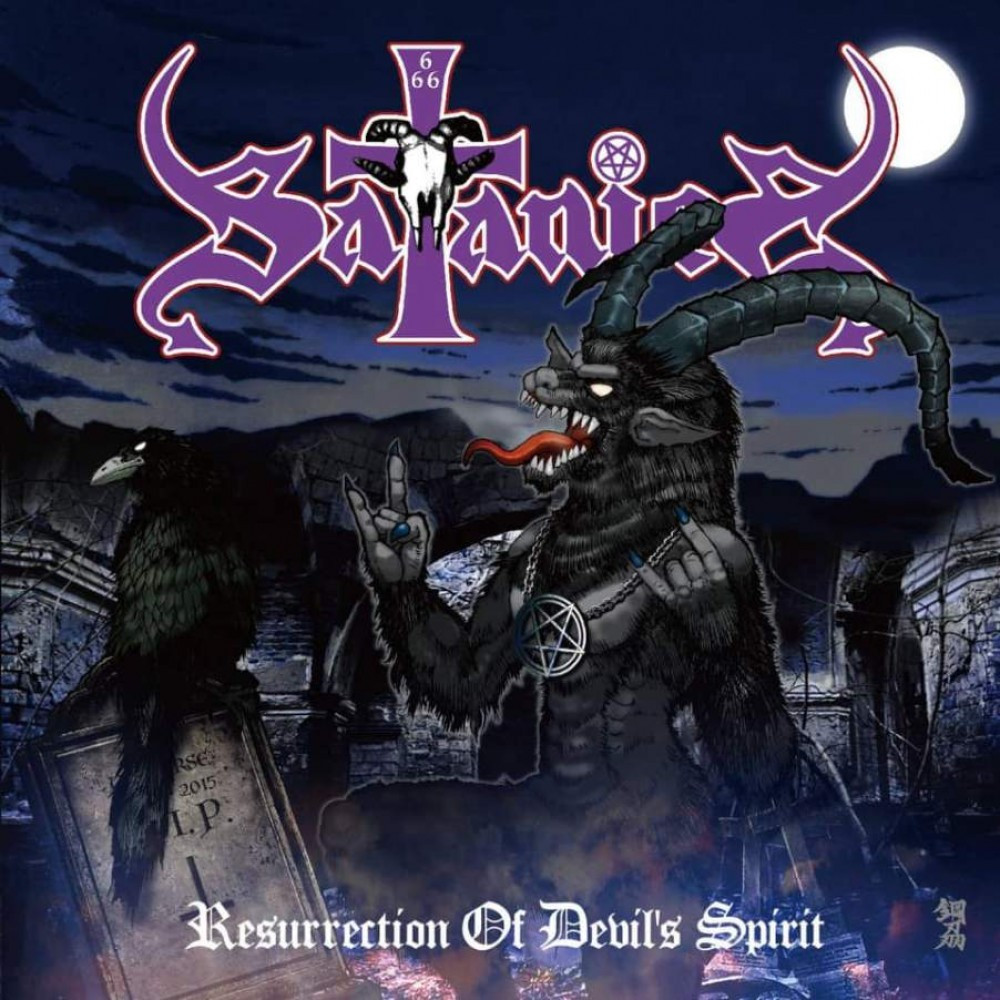
Satanica - Resurrection of Devil's Spirit (2020)

Country: Japan
Style: Heavy/Power Metal
Rating: 7/10
Release Date: 24 Jul 2020
Sites: Facebook | Metal Archives | YouTube

With their corpse paint, Satanica could be mistaken for a black metal band, but their poses suggest that they took their look directly from Kiss. Black Widow certainly feels like a Kiss song in pretty much every way and it isn't too difficult to find their influence elsewhere either. The first Satanica album, after all, was called Knights in Satanic Service, as a nod to the old PMRC explanation of KISS as an acronym. Nice.

Mostly, they're a little heavier than Kiss, with a riff-driven sound right out of the Judas Priest playbook, often as filtered through the NWOBHM era and power metal from a little later. The most Priest influenced song here is the instrumental, Kamikaze, which is a decent workout for the twin guitars of Ozzie Alastor and Shee Lipps. The influence is there throughout, though, from beginning to end, starting with the opening track, Resurrection.

The NWOBHM feel is most obvious in Dark Star, which could have been a song from the Midlands in 1981; it almost sounds familiar. Deal with the Devil starts out heavy in ways I'd associate more with later Metallica or Pantera, but ends up back in NWOBHM territory. Thunderstorm sounds like a Tokyo Blade song and, while Satanica hail from Japan, Tokyo Blade, their eastern name and image notwithstanding, don't. They're British through and through.

There's some Accept in Thunderstorm too, but those Teutonic riffs show up a lot here. Liar is the most obviously Accept-influenced song, with its strong and relentless pace and its effortless power. I half expected it to become Princess of the Dawn. Like a Fire nails that quintessential Accept drive as well, especially with guitars soloing all over it.

Satanica aren't a new band but they don't date back to the heyday of bands like Bow Wow and Loudness. They were formed in 2002 and put out that debut a couple of years later. This is only their fourth album, coming a full decade after its predecessor, so we might expect a more modern sound than this. It certainly sounds like a 2020 album because of the production, which is heavy at the back end, but the band are looking backwards throughout.

And the result sounds pretty good to me. It's a decent mix: memorable NWOBHM song structures that are full of reliable Teutonic riffs, Priestly solos and Kiss melodies. The voice of Ritti Danger somehow fits all those components, not even attempting the high notes we might expect at points but managing to do a good job regardless, even if he's keeping the beat throughout because he's also the band's drummer.

This is a long way the most original album I've heard in 2020 but it's clear that Satanica aren't particularly interested in original. They just do what they do as well as they can, influences worn on their sleeves. It's telling that, while I can pick my favourites here pretty easily, such as Dark Star, Kamikaze and Liar, there's nothing beneath a second tier of enjoyable songs. I'd be happy to hear any one of these on a metal radio show.

Let's hope the satanic name, look and album titles don't distract potential listeners from checking them out, because this will be right up the alley of old and new school NWOBHM fans everywhere.

Tuesday, 7 April 2020

Outrage - Run Riot (2020)


Country: Japan
Style: Speed Metal
Rating: 7/10
Release Date: 7 Mar 2020
Sites: Facebook | Metal Archives | Official Website | Twitter | Wikipedia

Outrage are not the first Japanese band who have been around forever without me ever noticing but, unlike 人間椅子 (Ningen-Isu), their name is written in my alphabet and it looks like they've written and performed in English since their founding in 1982, perhaps because their early days were spent playing NWOBHM covers in Japanese clubs. This is their fourteenth studio album and I see that, beyond never splitting up, they haven't even changed their line-up since 1986 beyond singer Naoki Hashimoto leaving in 1999. The rest continued on without him as a trio at that point and he's been back since 2007.

Like many major names in the west, they've evolved the NWOBHM sound into an energetic heavy/speed metal hybrid. Unlike some such, they've kept close to those roots, to the degree that they released a single in 2019 to celebrate the movement's 40th anniversary with side A a cover of Axe Crazy by Jaguar and the flipside their take on Baphomet by Angel Witch.

The truest NWOBHM songs here are the slowest on offer, like The Way We Are. The album obviously benefits from 21st century recording equipment so it's inherently heavier and clearer than in the old days, with the bass pumped up, but this one could be thrown through a time portal to England in 1980 without it seeming out of place. Tommy Vance would have played that on The Friday Rock Show, though he couldn't follow up with Silver Screen Hero on the BBC because of the swearing.

A song like Machete III sounds like the point where NWOBHM started to speed up and would sound fantastic performed by Venom, if they could ever find a producer able to replicate their live sound in the studio. The buzzsaw tone on the guitar is a proto-speed metal staple, reminding of bands like Hallows Eve or Exciter, but there's a punky atmosphere around it too that's just as much a part of NWOBHM as the rock.

When Outrage really speed up it's mostly obvious in the drums, but the bass jumps up in the mix and goes wild as well. Cyclops is a glorious speed metal song, but the most thrash Outrage reach is Supernatural Outlaw of the Cosmic Void, an absolutely glorious song title, as well as Hot Rod Immunity and the album's opener, Edge of a Blade, which is a statement of intent as much as a song. Are You Ready is rather like Diamond Head on speed, which is what all the cool cats in San Fran were doing back in 1983. Oddly, it isn't as close to Kill 'Em All era Metallica as I'd have expected.

Not everything is on that direct NWOBHM to thrash spectrum. Blood and Scars is one of the real highlights here and, while it's heavy metal with a strong element of speed, it has a strong Bow Wow/Vow Wow flavour, deeper than just Hashimoto's accent. There's a lot of Ozzy in Science Spirit Hits, and solo effect-laden Ozzy rather than Black Sabbath Ozzy. This is clearly the most alternative the band get here, as rooted in the 21st century as most of this is rooted in the 20th. Tommy couldn't play that one either.

And this all leaves me in even more catchup than usual, because Outrage are clearly a quality band with thirteen studio albums behind them that I should check out. That's both the joy and the catch when discovering bands who have been around so long that I have no excuse for not knowing about them by now.

Wednesday, 5 February 2020

Lovebites - Electric Pentagram (2020)


Country: Japan
Style: Heavy/Power Metal
Rating: 7/10
Release Date: 29 Jan 2020
Sites: Facebook | Instagram | Official Website | Twitter | Wikipedia | YouTube

Lovebites certainly know how to give themselves a little edge in the crowded world of heavy metal. They're an all-female band from Japan who deliberately wear white, as a contrast to the traditional black of the genre, and they're including a wolf on the cover of every release to highlight their status as a lone wolf in a male dominated industry. At the end of the day, though, an edge can help get attention but the music has to back it up, and I'm finding here that, in their instance, it very much does.

On the basis of this, their third album, we can remove the slash from "heavy/power metal band" as this is power metal ramped up to thrash speeds but without ever becoming thrash because the style is very different. I believe that Rage was a key influence on Lovebites, but they've outstripped the pace of of the Germans. Given the intricacy of the music and the fact that every one of the dozen songs on offer runs between five and seven minutes, it's an easy shift to Dragonforce as the most obvious comparison, albeit with fewer show off moments.

It's crazy wicked fast out of the gate with a sonic onslaught called Thunder Vengeance and it doesn't really slow down until the atmospheric introduction to Today is the Day. That's over twenty minutes before we even get a chance to catch our breath and that's not a long intro. The first song to slow down to a different tempo is A Frozen Serenade well over half an hour in. It has a bluesy intro that escalates into a song that's heavy but much slower than the norm here right down to a flamenco like guitar section in the middle. Of course, it eventually ramps up a lot, but it still stands apart.

This is amazingly European for a Japanese band, though the influences there are more varied than we might expect. Sure, there's plenty of Rage and early Blind Guardian on every track, but this goes far beyond that. That's a very prominent Steve Harris bass on Golden Destination. There's plenty of Yngwie J. Malmsteen on a whole bunch of tracks, most obviously Swan Song, and lots of Randy Rhoads on much of the rest. I'd be interested in hearing who Midori and Miyako, the two guitarists here, have been most influenced by.

And those are Girlschool shouts on Raise Some Hell. That reminds that a lot of these songs would feel more recognisable if they weren't so relentlessly fast. Girlschool on speed would seem a fair description of Raise Some Hell, just as quite a few other songs could be seen as the Michael Schenker Group on speed or early Ozzy on speed. There's plenty of NWOBHM on The Unbroken, though it's not obviously one band, so maybe generic NWOBHM on speed.

All told, there are lots of bands on speed here, but what I'm not hearing that much at all are speed metal bands who don't need speeding up to match this sort of frantic tempo. Maybe there's a little Razor or Exciter here and there, like in Set the World on Fire, but there's never much. This is too European and too fundamentally power metal.

The other obvious thing to mention here is that this is a long album and I'd be surprised if some people don't bring that up as a problem. With the sole exception of A Frozen Serenade, this album stays in high gear for its entire seventy minute running time and that's a long time indeed to maintain such a pace. Personally, I enjoyed how incessant this was, because it takes on the benefits of the best thrash albums as a way to clean out our systems. Others may enjoy it for a while but throw their hands up, exhausted before the end of the album, which ends with a soft piano section as if to say that it's OK for us to breathe now.

This is the third album for Lovebites, who have boasted the same line-up all the way since bassist Miho and drummer Haruna founded the band in 2016. I'm impressed with the work ethic that knocks out three albums in four years and doesn't skimp on the live work. I haven't yet heard the first two, Awakening from Abyss and Clockwork Immortality, but I'm highly intrigued. I'm reading that the first is a classic and the second softens up a little but, if that holds up, they upped their game here because this isn't soft at all. It's a blistering album and it bodes well for the lone wolf of Japanese metal.

Wednesday, 6 November 2019

Babymetal - Metal Galaxy (2019)

Country: Japan
Style: Kawaii Metal
Rating: 6/10
Release Date: 8 Oct 2019
Sites: Facebook | Instagram | Official Website | Twitter | Wikipedia | YouTube

It's rare that when a band conjures its genre out of thin air, it's actually more accurate that anything else we can come up with. Case in point: Japan's imaginative export du jour, Babymetal, who call themselves "kawaii metal". I honestly can't come up with anything better, especially on this, their third album, because it's all over the musical map.

At heart, as you probably know by now, it's heavy metal meets Jpop, a weird combination but at times a very good one. However, this album aims to mimic their journey bringing kawaii metal to all corners of the earth by bringing local music into their own, so it's often a sort of folk metal, as indeed a favourite song like their debut single, Megitsune, kind of was. When this is successful, it's fascinating. When it isn't, on the other hand, it's pretty awful and that's why I have to give it only a 6/10 rating.

It's hard to come up with any defining logic around which songs succeed and which don't, except that the worst heavily feature autotune and the best are the most international in flavour. I wouldn't have expected Pa Pa Ya!! to be one of my favourites, given that it features Thai rapper F. Hero, but it's a wonderful song. Once again, it's unlikely genres merging in a way that works but I can't explain why.

Shanti Shanti Shanti is easily my choice for the best song on the album. It delves into Indian music enough that it sounds like it began as a Bollywood song, but it leaps into both metal crunch and pop cuteness, mixing all three elements well. The middle features traditional Japanese melodies over Indian drums. I'd absolutely watch the Bollywood movie this came from.

Oh! Majinai does the same with what sounds like half Russian and half Celtic music. The guest vocalist is Joakim Brodén, the voice of Swedish power metal band Sabaton and he drives much of the song. It could be more than it is but it's still a lot of fun, much of it in the vocal shenanigans.

These two remind that, for all the power the musicians generate behind them, Babymetal are a vocal band. Many of the songs here are pop songs with added crunch. Da Da Dance is a rave with guitars, like a kawaii Rob Zombie. Rarely do the songs seem to start out as metal but add pop vocals. Elevator Girl is certainly one and it works a little better for it. At points, the guitars seem to make the singers go faster.

What surprises the most is how varied those vocals get, even if we focus on the Japanese girls rather than the guests. BxMxC is really interesting with its chiptune voice effects and other vocal acrobatics. Sadly, it utilises a lot of autotune, which makes the whole thing sound artificial and false. It became really hard to not skip songs like Brand New Day and ↑↓←→BBAB when listening through again. The former features Tim Henson and Scott LePage of American math rockers Polyphia and serves mostly as a reason not to look at what they sound like normally.

How the whole album doesn't end up as an unholy mess, I have no idea. To me, some of it does. Brand New Day, for example, is an overproduced mess that I just can't stand. Future Metal is nothing but an intro with autotune. Fasten your neckbrace, it tells us, before taking us into a rave with Da Da Dance. Sometimes it works, like In the Name Of, which is choral until the Brazilian steel drums take over in time for the ethnic death growls. I have zero idea where this ends up. Which parallel universe am I in?

Night Night Burn! is the epitome of this. It starts out as electronica meets neo-classical metal and stays that way until it doesn't. Cuban rhythms play behind staccato nu metal riffage before leaping onto centre stage. Was that the James Bond theme in there? It's all over the musical map but, again, it's immersive and enticing and fascinating.

I either really liked or really disliked the first dozen songs but was never bored for a second. The biggest problem the album has isn't that it fails to be all things for all people but because it forgets what it is. After those dozen songs, there are four more but they're instantly forgettable because a key element, that wild and insane imagination, is missing from them all.

I won't diss them because I went back later and listened only to those four songs, finding that they're decent enough on their own merits. The girls go extra cute on Shine and Arkadia is a solid melodic death metal song of the sort that Abba might have made had they formed a quarter of a century later in Gothenburg. It's just that they should have been issued as a separate EP rather than buried under a dozen wild and varied musical explorations.

What's especially interesting is that my son, who saw them live a couple of weeks ago, roughly agreed with my takes but didn't match entirely. There are songs that I didn't like at all that pushed the right buttons for him. And I think that's the key here. You're not likely to enjoy everything here but it has enough tracks that deleting the half you don't still leaves half an hour of stuff that you dig and which you absolutely won't hear anywhere else.

Monday, 23 September 2019

Coffins - Beyond the Circular Demise (2019)


Country: Japan
Style: Doom/Death Metal
Rating: 7/10
Release Date: 20 Sep 2019
Sites: Bandcamp | Facebook | Instagram | Metal Archives | Official Website | Twitter | YouTube

Regular readers will know I've been a fan of doom/death since its beginnings but I'm as out of date with it as I am with other genres. This year has been a fantastic process of discovery for me. Coffins, who hail from Tokyo, Japan have been around since 1996 but they didn't record a studio album until 2005 and this is only their fifth, coming six years after their last, titled The Fleshland. It's only when we see how many singles they've split with other bands that we realise that they've kept themselves busy.

They aren't like any doom/death I know but they certainly fit in the genre. They play faster than most doom/death bands, for a start, though there are a number of slower moments, but what's really different is their tone. They're fond of playing very dense music and it's emphatically bass heavy, the usual main instruments of voice and guitar almost bent double by wearing the bass around their shoulders like an albatross. It's an interesting sound, which I could describe as slow grindcore.

Forgotten Cemetery may explain it. It's the third track, as we're beginning to get used to this sound, and it kicks off fast and low like an old school death metal song. I moshed to this sort of thing back in the early nineties! But, half a minute in, it completely stops and restarts as an achingly slow plodder of a doom song with a brief guitar solo and dark death growls which are presumably providing lyrics in Japanese. And a minute on again, it ramps up the speed enticingly.

In other words, Coffins are a doom/death band in the sense that they play in a death metal style that sometimes turns into doom. It's done very well too in its lo-fi way, as it sounds just like this was recorded live in one take in a venue that only holds about fifty people but which has an insane sound system that's overkill for the size. I wanted to leap into the pit when they sped up on songs like Forgotten Cemetery and Impuritious Minds.

It's been a while since I've listened to this sort of old school lo-fi death so I'm racking my brain to remember comparisons. I can say that this doesn't play anywhere near the Gothenburg melodic death sound, but it's just as far from what the brutal death Florida sound became. It's more like the earliest death, such as the Scream Bloody Gore album by Death and Seven Churches-era Possessed but slowed down for more than the sections that are aimed to get a pit moving, rather like early Doom. They're certainly the Peaceville act I heard here, because there's nothing from expected names like Paradise Lost, Anathema or My Dying Bride.

Once I got used to what this was (and wasn't), I dug it. It's old school in nature but in a completely different way to the other bands with overtly old school influences. It's interesting to me that a band in 2019 would take the most dominant metal sound of today and rewind it until it's underground and obscure again. I have to have respect for that and the result is energising stuff. It's metal enough for anyone who cares but it's punk enough as well to be something John Peel might have played back in the day.

I nearly went with a 6/10 to reflect that, while this is enjoyable, not everything finds a way to stand out. A few of these songs, especially late on, served mostly to cement the band's sound in my head rather than to add something new. It starts out strong with Terminate by Own Prophecy and it ends very nicely with Gateways to Dystopia but not everything in between is up to the same standard. I plan to listen to this album more to see if it grows on me though.