Monday, 12 June 2023

Avalanch - El dilema de los dioses (2023)

Country: Spain
Style: Melodic Power/Progressive Metal
Rating: 7/10
Release Date: 21 Apr 2023
Sites: Facebook | Instagram | Metal Archives | Official Website | Twitter | Wikipedia | YouTube

I had two things in mind when coming into this, which counts as the tenth Avalanch studio album. I miscounted when reviewing their prior effort, El secreto, because some of the thirteen I'd seen at that point are actually re-recordings of previous albums. One is that that album was a real gem, a rare 9/10 from me that was also the Spanish Album of the Year at the Headbangers Latino America site. It was my first by them but certainly not the last and I've eagerly awaited this follow-up. The other is that Avalanch seem to have a constantly shifting line-up, centred around guitarist Alberto Rionda, and there have been quite a few changes since the previous album.

In fact, there have been enough changes that they could well affect the sound of the band, so they would seem to be worth detailing here. Last time out Jorge Salán was a second guitarist, but he's no longer in the band, his only contribution here being a guitar solo on Ceniza, and there's no new second guitarist. Another departure is Israel Ramos on lead vocals, though he still sings Confianza ciega here. However, there's a replacement in José Pardial, who clearly saw Sentido and a ballad, Más allá de las tinieblas, as showcase opportunities to demonstrate his range. Also gone is bassist Dirk Schlächter, with Nando Campos replacing him.

And here's where I change "could well affect the sound of the band" to "absolutely does so", as the three changes all make a difference. Pardial has a lower and softer voice than Ramos, so the songs have a different feel in his hands. He mostly sings clean and pure, as you might expect for a power metal band with progressive leanings, but he turns on the vocal fry for emphasis as needed, most examples being on the quieter, more vocally oriented songs, like the showcase pieces I mentioned above. He has an impressive range and he sounds great, but also notably different to Ramos, with that comparison obvious in the latter's song, Confianza Ciega, directly following Sentida here. It's unsurprisingly the closest thing to El secreto here.

I'm sure the guitar sound has been driven by Rionda ever since Avalanch was formed, so what this album does on that front isn't wildly different from El secreto. However, without a second guitar, it feels a little thinner and less substantial. I'd also suggest that, once we get past the opener, which has a deep back end, the bass is a little lower in the mix and that serves to emphasise that change in guitars. Again, Rionda sounds great and I don't see fans walking away from the band because of this shift, but a direct comparison of the two albums leaves this one firmly behind its predecessor.

El secreto was a 9/10 and a Spanish Album of the Year. This is a 7/10 that occasionally reaches up to an 8/10. That means that it's good stuff and it's recommended, sometimes highly so, but I doubt it will pick up any awards as we move into 2024. It's telling that Confianza Ciega and Ceniza, a pair of kinda sorta throwbacks to the previous incarnation of Avalanch, are my highlights here, and I think I'd give the edge to the latter, perhaps meaning that the depth of guitar sound is more important to me than the change in vocalist.

Other strong selections would include Cuatro elementos, with elegant melodies over a far heavier backdrop and some stellar guitarwork from Rionda, and Tumbas y Reyes, because of its sheer drive and its hints at something much heavier than I've heard from Avalanch. The underpinning riffs are excellent and help build a darker tone, but it's Pardial's vocal that sells it to me. He relies more on his lower register, but soars out of it with style, but he also delivers a brief moment of harsh voice for contrast. It's only a single phrase, so this is hardly Avalanch moving into extreme metal, but it's thoroughly effective and it resonates. The title track after it feels even softer in comparison, even with a decent crunch to it.

And so I'm happy Avalanch are back and only four years after El secreto, given that album arrived after an eight year gap. I'm not entirely sold on the changes but the two new members have been in place for mere months, so I'm looking forward to them settling in over the next couple of years and being more sure of their new sound on the next album. This is good stuff, but the edges hint at something better to come.

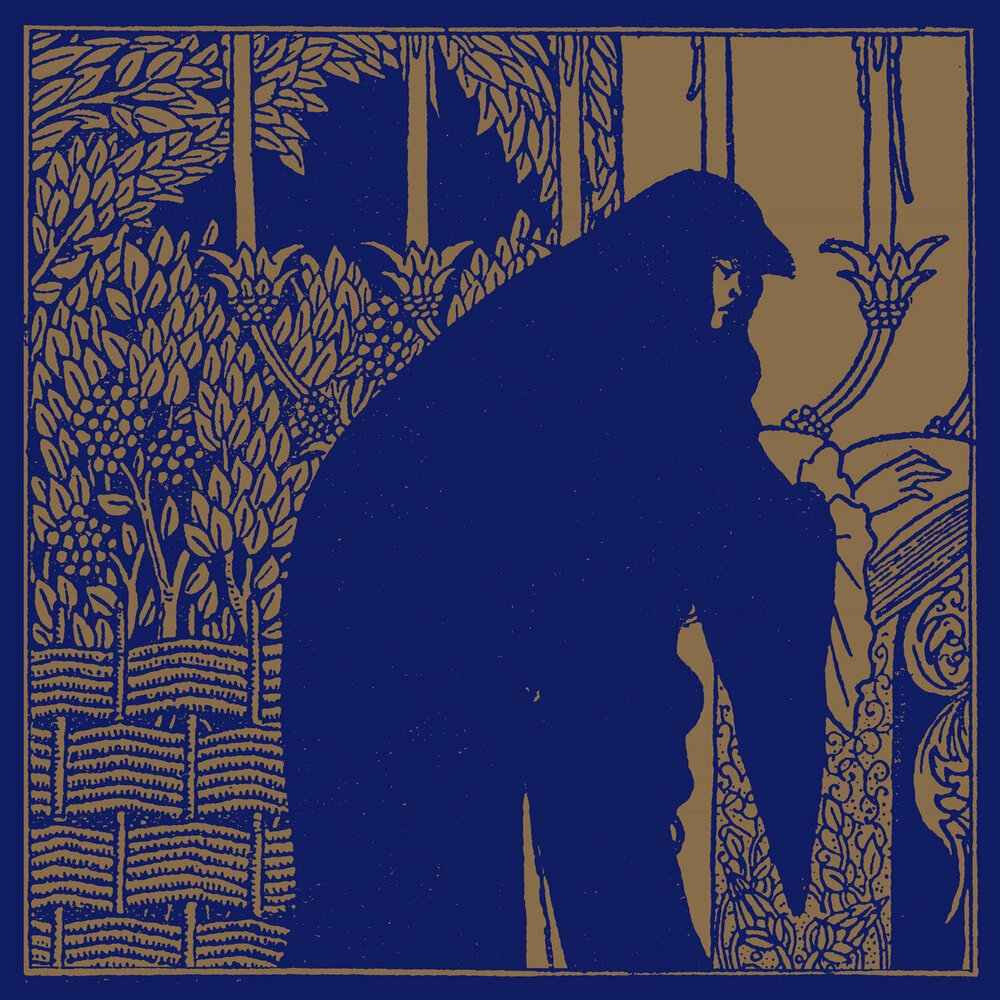
Blood Ceremony - The Old Ways Remain (2023)

Country: Canada
Style: Occult Rock
Rating: 8/10
Release Date: 5 May 2023
Sites: Facebook | Instagram | Metal Archives | Twitter | Wikipedia

I dug into Blood Ceremony a little bit a few years back when I realised that occult rock was not only alive but very well indeed. They were formed in Toronto as far back as 2006 and they released their self-titled debut only two years later, but this is only their fifth album and their first in seven years after 2016's Lord of Misrule. The core of the band is the two remaining founder members, guitarist Sean Kennedy, who's also the songwriter, and lead vocalist Alia O'Brien, who started out as flautist but quickly moved into microphone duties and organ as well.

This fits with what I've heard from them before, albeit a tad lighter, and it's clearly good stuff, but it's also better than it initially seems, something I only gradually realised in a few ways. Part of it's that a majority of the songs build massively from their subdued openings to blistering conclusions, beginning with the opening couple of tracks, The Hellfire Club and Ipsissimus. The former is a little seductive and a little teasing as it builds but it holds back a little too, until it truly comes alive with a ripping guitar solo from Kennedy. The latter was always catchier, the sibilant title rolling well off O'Brien's tongue during the chorus, but again it comes alive with Kennedy's guitar solo, which this time is reminiscent of Blue Öyster Cult.

Part of it is that the album as a whole builds too. I don't dislike these early songs at all, but I found myself paying more and more attention as it ran on. It starts to get away from me too, in the sense that I forget to take notes and become lost in the music. Powers of Darkness is a tasty song as I'm listening to it, very much a vocal piece with some catchy themes, but I didn't realise how tasty until I wandered off to grab some lunch and realised that it was still playing in my head from memory, a mere couple of times through. It's an earworm of a track and a real highlight here.

So are the next couple of songs, as we roll into the stronger second half. There's a far folkier Black Sabbath in The Bonfires of Belloc Coombe, probably the best song from the standpoint of building as it goes. Widdershins is the heaviest song on the album, more akin to the weight of prior albums, and it remains heavy even when O'Brien's playful flute joins in during the finalé. Surprisingly, this heaviest song is followed by surely the lightest in Hecate, which is folky in comparison, revelling in its happiness in a sixties psychedelic pop style.

This album covers a heck of a lot of ground, from the delightful saxophone solo in Eugenie to more traditional fiddle work on Mossy Wood. The more I listen, the more the flute stands out, though it frequently takes a back seat when compared to this year's Jethro Tull album, RökFlöte. Lolly Williams finds a lively vibe that's all about making us move, whether we get up and dance or just bounce within our office chairs. Song of the Morrow, on the other hand, is progressive and epic, almost Led Zeppelin-esque in its structure, if not any particular component. There's even a dash of psychedelic Beatles in there too.

Given that I've already mentioned Jethro Tull, I should mention how similar they aren't, because a rock band with a clear folk influence that features a lead singer who also plays the flute suggests a close comparison and it's just not there. Sure, they were apparently Alia O'Brien's initial favourite band and their most obvious influence is in her flute, but that's about it. The folk here is different in origin, much more reminiscent of Pentangle or Fairport Convention when it isn't Black Sabbath or the various other pioneering occult rock bands. Check out Mossy Wood for that folk side, with a delightful fiddle and a catchy na na na vocal conclusion. It's Pentangle but heavier with a darkness hovering over it.

And so, while I liked this immediately, I like it a lot more after a few repeat listens and some time away from it to discover how much it had stuck in my brain. It's been a while since I dug into Blood Ceremony's previous albums but this feels a little lighter and a little more varied, especially with the psychedelic pop influence in Powers of Darkness and Hecate and the classic rock angle in some of Kennedy's solos and Song of the Morrow. The more I think about it, the more I like it. I think I've started off June with an 8/10.

Friday, 19 May 2023

Jethro Tull - RökFlöte (2023)

Country: UK
Style: Folk/Progressive Rock
Rating: 7/10
Release Date: 21 Apr 2023
Sites: Facebook | Instagram | Prog Archives | Twitter | Wikipedia | YouTube

Excepting the select few who study historical agriculture, the first response most people are going to have to the words "Jethro Tull" is likely to be "a rock band with a flute". Given that, it may be an excellent time to remind that this rock band with a flute have gone through a number of styles in a career that's now closer to sixty years than fifty. They started out playing jazz and blues, moved to rock, turned progressive, shifted back to folk, went commercial, heavied up and eventually turned back to folk but with more of a world perspective. All with a flute, sure, but also with the guitar of Martin Barre, who was a mainstay from their formation in 1967 to their split in 2012.

I mention that, because the newly reformed Jethro Tull, which featured an entirely new line-up in addition to main man Ian Anderson, does feature a guitarist but we often forget that, listening to the music. Last time out, on The Zealot Gene, released only one year ago, that was Florian Opahle, while here it's Joe Parrish, but both of them, as capable as they are, stay firmly in the background. As such, it's easy to think of this band less as Jethro Tull and more as Ian Anderson's current band. With that in mind, I'm happy to hear this album, especially so close on its predecessor's heels. The last time that Tull released two albums in consecutive years was 1979 and 1980.

RökFlöte is a nonsense word, of course, but it's there for a few reasons. For one, they remain rock with a flute, but there's also a pair of heavy metal umlauts to remind us of that Grammy they won instead of Metallica and there's a strong focus on Norse mythology, so this isn't so much RökFlöte, it's really RagnarökFlöte, which doesn't look as cool. The more I relisten, the more I hear Parrish's guitar, providing heavy but subdued backing to the songs, but Anderson's flute soars over them as if we're listening to a bird on the wing and everyone else in the band is the blurry landscape we're not seeing in the distance because of our narrow focus.

It's there solo as the female narration in a Norse tongue ends on the opening Voluspo. It's there in Ginnungagap, so much that it feels like the piece is going to be entirely a flute instrumental, with a little assistance from the guitar. When Anderson starts singing a minute a change in, it seems to be a little out of place. The same happens on Cornucopia, because it feels like a solo flute piece for a minute and a half until suddenly there are vocals. And the same applies on Guardian's Watch, an even more obvious instrumental, because it's a dance piece right out of folk music, but one that is channelled into vocal song sooner, only forty seconds or so in.

In short, it's there on a majority of these songs, as if it's keen to enforce that Jethro Tull are not a rock band with a flute,they're a rock band with a lead flute and that's a crucial distinction. Now, it sounds like I'm being negative here and I don't man to be. I'm not putting these songs down. I'm a number of repeat listens into this album and I'm still having a blast with it. It's just to point out the order of Anderson's focuses nowadays. It's flute first and foremost. Then it's on what used to be his primary role, as lead vocalist. Then it's on songwriting. A little further down the line, it's everyone else. And that's fine, as long as you know what you're getting.

However, it may be telling that my favourite songs here are the most playful ones, that hearken in aim back to the folk rock era of the band. On these, the flute is a Pied Piper of an instrument with a wink and a cheeky grin, eager for us to follow it who knows where. I'd probably pick The Feathered Consort as my favourite here, with Cornucopia behind it then Guardian's Watch and Trickster (And the Mistletoe). But some of the songs have touches that are playful, like Ithavoll, the outro with a fresh instance of our female narrator in Norse. Anderson duets with himself, one voice coming out of the left speaker and another the right. The song itself isn't up to the others I've mentioned but it's still alive.

And so I'm happy to hear this album, even so close to its predecessor, which is at once a better and worse album, depending on what you want to focus on. Ian Anderson was always one of the pivotal characters in rock music and he's continued to be unique for well over a half a century now. It's fair to say that this new Jethro Tull is pretty much entirely him, with no insult intended for the various other talented musicians involved, but he has the talent and the charm to swing it.

Dave Lombardo - Rites of Percussion (2023)

Country: USA
Style: Progressive Rock/Metal
Rating: 8/10
Release Date: 5 May 2023
Sites: Bandcamp | Facebook | Instagram | Metal Archives | Official Website | Twitter | YouTube

The name of Dave Lombardo needs no introduction because he's arguably the best drummer that extreme metal of any description has ever seen. It isn't just his work for Slayer, which is enough all on its own; he's built a career that's seen him play in a variety of different styles for diverse bands as different as Philm, the Misfits and Suicidal Tendencies, not to forget his work with Mike Patton, less in Dead Cross and more in Fantômas and Mr. Bungle. One of the few things we have to thank a global pandemic for is confining him to a home studio so that he could write and record a first solo album after forty years of influencing everyone.

As an aside, of course, if anyone's seen that recording of him playing Battery with Metallica at the Download Festival in 2004 after Lars Ulrich had an anxiety attack and went to hospital instead, you know the future we deserved but never had. James Hetfield's cry of sheer joy when Lombardo hits the double bass and absolutely nails it in the way that Lars never did is one of my favourite seconds of recording on YouTube, right up there with Terry Lin's unbelieving reaction to Dimash.

But back to Dave Lombardo. He brings a little of each of those styles to this album but in ways that make them sound completely different. This is a progressive, experimental drummer's album with no vocals at all and very possibly no instruments either beyond his drumkit and a versatile array of percussion instruments, many of which sound Latin. There are some sort of synths in there too, but it's possible that they may be triggered by the sort of digital pads that Neil Peart uses in his solos.

That Latin sound comes from Lombardo looking back at his musical heritage. He was born in Cuba, though his family moved to California when he was young so he grew up there, but I've read that it was Mike Patton who introduced him to Tito Puente's 1958 album Top Percussion. I'm a fan of those old percussion albums and I checked it out; it's easy to hear some of what Puente and others, like Mongo Santamaria—yes, that's who that line in Blazing Saddles references—did then, especially on its instrumental second side, in what Lombardo builds here.

However, he brings a lot newer influences to play too. This feels modern from the very outset, with sections in Initiatory Madness dark in outlook and incorporating industrial textures. That happens all the more on Separation from the Sacred, which often reminds of Coil. Also, there's a Halloween flavour to that track and Inner Sanctum after it, as if this could be used as the ambient backdrop to a haunted house or on the soundtrack to a horror flick. It's wild to hear something that reminds of both Tito Puente and Coil, but they're both there. Also, like Coil, many pieces are short and feel as if they were improvised fragments that could be developed into more substantial pieces later.

I'd love to know what the instrument line-up is here, how much the background atmosphere relies on keyboard layers and whether there are guitars on Inner Sanctum or Maunder in Liminality. The vast majority of the sounds are percussive though, even if we don't recognise what instrument he happens to playing at the time. I recognise a bunch of them—maracas, gongs, congas, wood blocks, cymbals, djembes, etc.—but there's a lot more going on than just those. Looking up details, I see a variety of others: timbales, as Puente used, but also batás, ibos, darbukas, octobans and cajóns.

The result is a rhythmically dense sound that often becomes strikingly visual, if not always in ways that conjure up horror imagery. On Despojo, for instance, it felt like I was hacking my way through a jungle with twin machetes, not because something was chasing me but because it just felt right, as an ebullient expenditure of energy. Blood Let feels like I'm in a samurai film but I can't see the swords because they're hiding elsewhere in an ocean of wheat above me. The ritual nature of the music, as suggested by the title, manifests most obviously on Omiero, which could be a ceremony.

However, the majority of the textures play with horror imagery. Despojo later shifts into a horror vibe and Interfearium after it never pretends to be anything else, what I presume is a slow piano under atmospheric swirls and a diabolically playful beat that's part Tom Waits, part John Zorn and part György Ligeti. Wherever we are in the album, especially early on either side, we're never far from something that reminds of the horror genre. Even there, though, it's telling that some of it's threatening, as if whatever's happening is being done to us, and some of it isn't, as if we're merely watching from the safety of a cinema seat.

All of it is evocative, with Lombardo playing with texture throughout. That puts this apart from the sort of percussion albums I tend to listen to, which are centred on rhythm, whether they're created with taiko drums, middle eastern percussion or a gamelan orchestra. Even that Tito Puente album is fundamentally about rhythm, in yet another different way. However, this takes rhythms as just a starting point to build some sort of atmosphere around, to impart a mood and tell a story.

Clearly, this isn't going to be for everyone and it helps to not come into it expecting Slayer or Philm or Fantômas. This is something different, obviously experimental in nature but fascinating in how versatile and, quite frankly, how inquisitive it is. There's a lot here to take in but, if you can bring a certain openness to it, it's massively rewarding.

Thursday, 18 May 2023

Jason Bieler and the Baron von Bielski Orchestra - Postcards from the Asylum (2023)

Country: USA
Style: Hard Rock
Rating: 8/10
Release Date: 14 Apr 2023
Sites: Bandcamp | Facebook | Instagram | Official Website | Twitter | YouTube

If there's anyone working in the rock/metal genre who has a better understanding of melody than Jason Bieler, I have absolutely no idea who it might be. This is a double album of new material with fifteen songs on offer and they're so loaded with melodies and harmonies that we start to believe that everything is a hook. Sure, the choruses are hooks but the verses are also hooks and the riffs and often the beats too. He's so apparently effortless at this that it can be hard to believe that it's new material and we didn't just grow up with all these songs as cultural atmosphere.

Bombay is a particularly strong opener, a lively and bouncy alt rock piece with all those hooks and plenty of harmonies too. The bookends are as steampunk as the cover art suggests yet again and they set a scene that I was surprised not to see visited more during the album. However, the style in between that reminds us how much Bieler enjoys the Beatles is consistently explored across the other songs. The question often comes down to how much he wants to rock out at a point in time, as he does on Heathens or Sic Riff, and how much he doesn't, as on Mexico, which is layered hooks and strings, even though he adds a tasty guitar solo.

Well, I say he adds a tasty guitar solo but I'm not sure who does what here, beyond expecting that Bieler does most of it. There are guests, most obviously Andee Blacksugar and Edu Cominato, who are currently touring with KMFDM and Geoff Tate respectively. Both of them appear on a slew of tracks, the latter for drums and the former for "extra guitars, noises and solos". There are a whole lot of others, but I'm thinking the vast majority are Bieler under various wild and wonderful noms de plume, such as Wormsby Troutlick and Stralinksi Waka-waka. Quite a few of these names have a connection to food, like Baklava Jones and Stilton Shoebaggies, so I'm guessing Bieler was hungry when he conjured them up.

The actual other people lean towards multi-instrumentalists who perform with a broad variety of artists but only appear on one track, usually Beneath the Waves. That includes two bassists, Chris McLernon, formerly of Bieler's primary band, Saigon Kick, and Todd Kerns, currently working with Slash; as well as Ryo Okumoto of Spock's Beard on piano and keyboards. Elsewhere, there's Marco Minneman, a German drummer who's played with everyone from Nena to Necrophagist, and Ricky Sanders, also ex-Saigon Kick, who was on the previous Baron von Bielski Orchestra release, Songs for the Apocalypse.

It doesn't surprise me that Bieler should attract such a versatile set of musical partners, but they aren't here to do anything particularly flash. They're here to collaborate with him in ways that are reliant on having an open musical mind. That works gloriously on the first of the two records, with everyone making wonderful contributions across the board that always fit with Bieler's melodies. Bombay is only the first of a number of highlights, because Heathens bounces with edges, Birds of Prey is beautiful and elegant, Flying Monkeys is full of fascinating rhythms and Sic Riff grinds.

That's not to say that the second disc doesn't work because it does, just not quite so effortlessly as the first. Deep Blue is probably my favourite track there, with its prog pop rhythms and langurous drive, but I'd put that behind all five of the earlier highlights that I mentioned above. Other songs stand out in other ways too, often lighter ones. There are keyboard touches that elevate 9981 Dark and electronica is even more fundamental to Bear Sedatives, with its delightful vocalisations that serve as both rhythm and backing vocals. Human Head closes out in an uncharactistically folk vein, the most unique song here and my second highlight behind Deep Blue.

That uneven balance between discs doesn't help the album, but nothing really lets it down. Quite frankly, the worst songs here would seem good on someone else's album because everything that Bieler does is worth hearing. It goes without saying that everything here is instantly recognisable as his work because his style is not easily mimicked and nobody else does it quite like him. I think I would award the first disc a 9/10 but the second only a 7/10, so this averages out to a second highly recommended 8/10 album in a row for Bieler. Just buy everything he's ever done and absorb it.

The Damned - Darkadelic (2023)

Country: UK
Style: Gothic Rock
Rating: 8/10
Release Date: 28 Apr 2023
Sites: Facebook | Instagram | Official Website | Twitter | Wikipedia | YouTube

The Damned are one of those iconic bands who have been around forever and may well have done everything. Their early days, starting in 1976, including releasing the first British punk single, New Rose, and the first British punk album, Damned Damned Damned. A decade later, they moved into goth and, eventually, into a more psychedelic take on both punk and goth. They're an idiosyncratic band, partly because of that unique blend of styles and partly because it all sits behind the iconic smooth voice of Dave Vanian, the band's mainstay since their inception.

Vanian has kept the band alive ever since, through they've never been particularly prolific. This is their twelfth studio album in a career that's now closing in on half a century, their first since Evil Spirits in 2018. It's a varied affair, as you might expect, veering from punk to goth and back again, with psychedelic sections here and there and a surprising dip into what sounds to me like fifties pop.

I've read that they aimed for the seventies here a lot, but You're Gonna Realise and Beware of the Clown both sound older to me, like they're fifties songs shifted into a goth punk style, almost as if these are covers of songs that didn't exist until now. Western Promise is the most fifties, because it's a ballad at heart, with Vanian's croon at the fore and a smoky use of brass late on. In between the fifties sound I'm hearing here and the seventies sound they aimed at, there are songs such as Follow Me that have a sixties garage rock drive to them, in addition to the seventies punk that saw that as an influence.

Perhaps surprisingly, I tend to dig the more extreme songs here. I've been struggling for a couple of weeks with illness, my energy levels sapped, so I've been listening to this album for much longer than I'd normally allocate a new release and it's become something of an old friend. It's telling to say in that context that I haven't tired of any of these songs, though some are clearly better than others. While I didn't have the energy to write it up sooner, it wouldn't have been difficult to turn it off and I simply didn't want to. It's a strong album that doesn't get old.

But it's the songs at the extremes that have stayed with me most. Western Promise is the softest piece here, so probably the least likely to engage me but it's a firm favourite. At the other end of the spectrum, The Invisible Man and Motorcycle Man stand out as rockers. The former is a strong opener, a punky goth rock song that ramps up halfway and gets even more interesting. While the back end's going rockabilly, the front end's getting mystical. Motorcycle Man changes too, from a truly emphatic opening with a riff so punk that it's almost metal—no, it's not the Saxon song—to eventually become a laid back sort of beach song.

They're far from all that's going on here though. Bad Weather Girl ratchets down the tempo after the opener and adds a spooky keyboard backing. It's dark carnival music with an old school guitar solo right out of psychedelic rock. Walk the Dead is very seventies, trawling in a prog atmosphere remiscent of Pink Floyd and occasionally Genesis. Apparently Captain Sensible, on his third stint in the band, learned that fans were having Damned songs played at funerals, so decided to write one specifically for that purpose. Overall, it's as pure goth as this album gets.

Roderick closes out the album in fascinating style, as unusual as Leader of the Gang isn't a couple of songs before it. The latter is all about the meteoric rise and fall of the un-late and un-lamented Gary Glitter and feels as seventies as it should. The former, though, opens up as spoken word with accompaniment. It's a dramatic horror performance that becomes a song, Vanian's voice backed by a solo piano, only to transform into a ritual chant in Latin. Then it builds substantially to strings, with ebow guitar from producer Thomas Mitchener and more trumpet from Chris Coull, as enticing here as on Western Promise. And, with all that said, it's often rather like an unconventional James Bond theme. There's a lot here.

Now I have energy back again, it's going to feel odd moving on from this new old friend to listen to something else, but I'm a few weeks behind on my reviews and need to at least attempt to catch up a little and get back on track. I've always liked the Damned but I've never really dug properly into their work, merely enjoyed it when I've noticed it. Clearly, I should be paying more attention. The joyous jam in the second half of Girl I'll Stop at Nothing is worth the cost of the album all on its own, and that doesn't scratch the surface of what it has to offer.

Wednesday, 17 May 2023

Tygers of Pan Tang - Bloodlines (2023)

Country: UK
Style: Heavy Metal
Rating: 8/10
Release Date: 5 May 2023
Sites: Facebook | Instagram | Metal Archives | Official Website | Tiktok | Twitter | Wikipedia | YouTube

The Tygers of Pan Tang have been around for a long time and they've long been one of those bands who show up on lists of criminally underrated metal bands, but they're on top of their game lately and it's surely time for them to reap some more mainstream success. Their previous album, Ritual, was their twelfth and it got a rare 9/10 from me; it only missed earning my Album of the Month for November 2019 because I'd reviewed the latest Opeth a week earlier. It featured a relatively new line-up, with only guitarist Robb Weir surviving from the old days and they're still not quite stable, it seems, with two further changes since Ritual.

First up was Francesco Marras, who replaced two-time guitarist Gavin Gray in 2020, and the guitars certainly sound tasty as the album begins. Edge of the World kicks off with a swirling of keyboards and a vague middle eastern flavour, before the riffs kick in and Italian vocalist Jacopo Meille joins the fray. This isn't remotely as fast and heavy as its equivalent from Ritual, Worlds Apart, but it's a peach of a song and it does rather a lot in only five minutes, even slotting in a Latin guitar early in the second half before some searing guitar solos. Marras is going to fit in fine.

Edge of the World sounds good on a first listen but it warrants a few times through to appreciate it properly and that's not uncommon on this album. It's a little less immediate than Ritual, with the exception of tracks like Fire on the Horizon that blisters out of the gate like classic Diamond Head and carries us effortlessly along with it. It's a fast song, which ought to fit new bassist Huw Holding down to a tee, given that he's also a member of Holosade right now. It's a tailor-made song for me and an instant favourite, but it's hardly the deepest song here. It does what it does and moves on.

There are plenty of deeper songs on offer. In My Blood follows Edge of the World's lead as another elegant grower. The hook reminds me of REO Speedwagon's Riding the Storm Out but the song as a whole doesn't. The same could be said for Taste of Love, which starts out like a ballad but grows substantially until we forget how it began, even though it only runs four minutes and change. The band get sassy on Light of Hope but never stop being heavy and there's another guitar solo that's worth praising, even if it's not as ambitious as some here. I like the ones on Kiss the Sky too.

Perhaps the most interesting song for me is Back for Good, because it feels rather like Sean Harris of early Diamond Head and Mick Tucker of Tank teamed up to record a glam metal song, halfway in between Great White and Skid Row. That's an odd combination of names to throw at one song, but that's how interesting the Tygers are getting. Meille doesn't always sound like Harris, but he has a tremendous range that doesn't seem like one. Everything he does here is consistent but there are points where he shifts into blues rock, hard rock, arena rock, melodic rock, you name it, without an interruption in that consistency.

Diamond Head do keep popping up as a comparison, but that's hardly a bad thing, especially when it comes to riffs. There's a lot of Mick Tucker here but there's also a lot of Brian Tatler and there is no better riffer on the planet than him. If the Tucker influence is most overt on Back for Good and Kiss the Sky and the Tatler influence is most overt on Fire on the Horizon, the rest of the album is often somewhere between the two, at one point channelled through an intermediary, because the album ends with Making All the Rules, which has Metallica guitar touches and we know where they were influenced. It's great to see that feed back in turn.

In short, I don't think this is quite up to Ritual but it's another excellent album from the Tygers. It's easily a highly recommended 8/10 but it's more of a grower so it's within the bounds of possibility I might up that later. It's a perfect example of an album that never feels short but never outstays its welcome, only just shy of three quarters of an hour, with ten solid tracks. Not all are highlights, but none let the side down and every one of them is well worth listening to in isolation. They're also all clearly Tygers songs but none sound like each other. It's almost a textbook for what a heavy metal album by an older name ought to sound like in 2023.

I've been a fan of the Tygers since I discovered rock and metal in 1984 but I'm finding that I'm more of a fan than ever with each successive new release. And can I think of a gig I'd rather see right now than a Tygers and Diamond Head double header? No, I can't.

Smokey Mirror - Smokey Mirror (2023)

Country: USA
Style: Heavy Psychedelic Blues Rock
Rating: 9/10
Release Date: 5 May 2023
Sites: Bandcamp | Facebook | Instagram

Boy, have I been waiting for this album. The last gig I went to before COVID closed everything down was a psychedelic blues rock band from Dallas, Texas called Smokey Mirror and it's no hyperbole to suggest that they were the most devastating live band I've ever seen. What made that even more special was that they were technically there in support of local stoner metal band Loserfur and the venue, which was about the size of my front room, wasn't full and largely included members of the other three bands on the bill. My brief gig review on Facebook stated that "they gave it everything like they were playing in front of 20,000 people who had paid $200 to get in, rather than 35 people for $8 cover".

They were a trio then, with only an EP out, but they've bulked up to a four piece—Cam Martin has replaced Josh Miller on drums and Caleb Hollowed has stepped in on a second guitar—and signed with Rise Above Records. That's important because this band generated a sound that was hard to believe was generated by only three people and there are now four of them. Along with the boost in production values that comes with an important label, this ought to seriously blister and it very much does that, aided I believe by engineer Paul Middleton, formerly of seventies heavy rock band Blackhorse, also a trio, who did his thing at a studio that uses only vintage analogue equipment.

The result is that this feels authentically seventies, the sort of ultimate crate digger find, surely an album lost in obscurity because nobody could believe how intense it was in 1975. Imagine the most furious psychedelic rock from that decade, drench it in acid and stretch it out for forty minutes and change and you might have an idea what Smokey Mirror sound like. I thought of them on stage as a cross between Aeroblus and Black Sabbath, with some of Motörhead's ruthless heaviness and an intricacy from the Allman Brothers. That translated well to the studio, though there's not as much of the Motörhead as I remember.

They tellingly start with a crescendo, pause a moment and then launch into full gear with Invisible Hand, a song from their debut EP. There are three songs here that are previously released but all benefit from being re-recorded here, not just because of the production but because they're even tighter as a band now than they were, which is hard to imagine. The others are Magick Circle, also from that EP, and A Thousand Days in the Desert, which saw release as a single. All three are on a compilation CD I picked up from the band in 2019 which combined the EP, the single and a further song as a bonus.

Invisible Hand is a killer opener, an ambitious statement of intent, and Pathless Forest matches its intensity but with more obvious melodic lines. Both these songs blister, but Magick Circle blisters a lot harder, which is saying something. It ran to six minutes on the EP but it's eight here, even with a faster pace. The first four minutes there are done in three here, with a neat slower section before some feedback worship wrapped around a bass solo, and, eventually, of all things, a drum solo. It's a ballsy move to include a drum solo on a debut album, but it works because Magick Circle is easily defined as a showcase. The only thing more ballsy would be to kick off the album with it.

From there, it's new material for a while and wildly varied new material at that. I believe they put out Alpha-State Dissociative Trance as a single, which is fantastic because it's particularly wild and full of jazz fusion. It's a jagged and vicious sub-three minute blitzkrieg to cleanse our palates after an eight minute epic with a drum solo and, just in case we needed to cleanse our palates after that level of intensity, Fried Vanilla Spider Trapeze is old school roots rock, only a minute long but music that wouldn't be out of place on a Hot Tuna album. Nice harmonica too.

My favourite song here has to be Sacrificial Altar, another epic workout with a crescendo to start it into motion. I didn't know what Smokey Mirror meant when I saw them live, but then I read Ernest Hogan's books, especially Smoking Mirror Blues, and now I get it. It's a reference to the Aztec god Tezcatlipoca, their trickster deity, and, while Los Tricksters were a fictional band in Hogan's novel, it's not a wild stretch to imagine that they sound like Smokey Mirror playing Sacrificial Altar. It's a gem of a track, short at seven and a half minutes, and more perfectly formed than anything before it.

And, while that's enough for an 8/10 album already, we're not done yet. What's to Say underline a Black Sabbath influence, just in case we hadn't noticed it during much of the album thus far, but it does it at Sabbath's speed here, slow and doomladen, before the bass goes hyperactive and both guitars start to shred psychedelia. It's another strong song on an album full of strong songs and it has to be said that I wanted that to carry on forever. However, this avoids overstaying its welcome by wrapping up with a brief Latin solo guitar exploration called Recurring Nightmare.

And, because I can, I can then just start the album again. And again. And again. I've been eagerly awaiting this album for four years and it showed up better than even I expected it to be. Now I just need to stop listening to it on repeat because I have other albums to review.