Monday, 23 August 2021

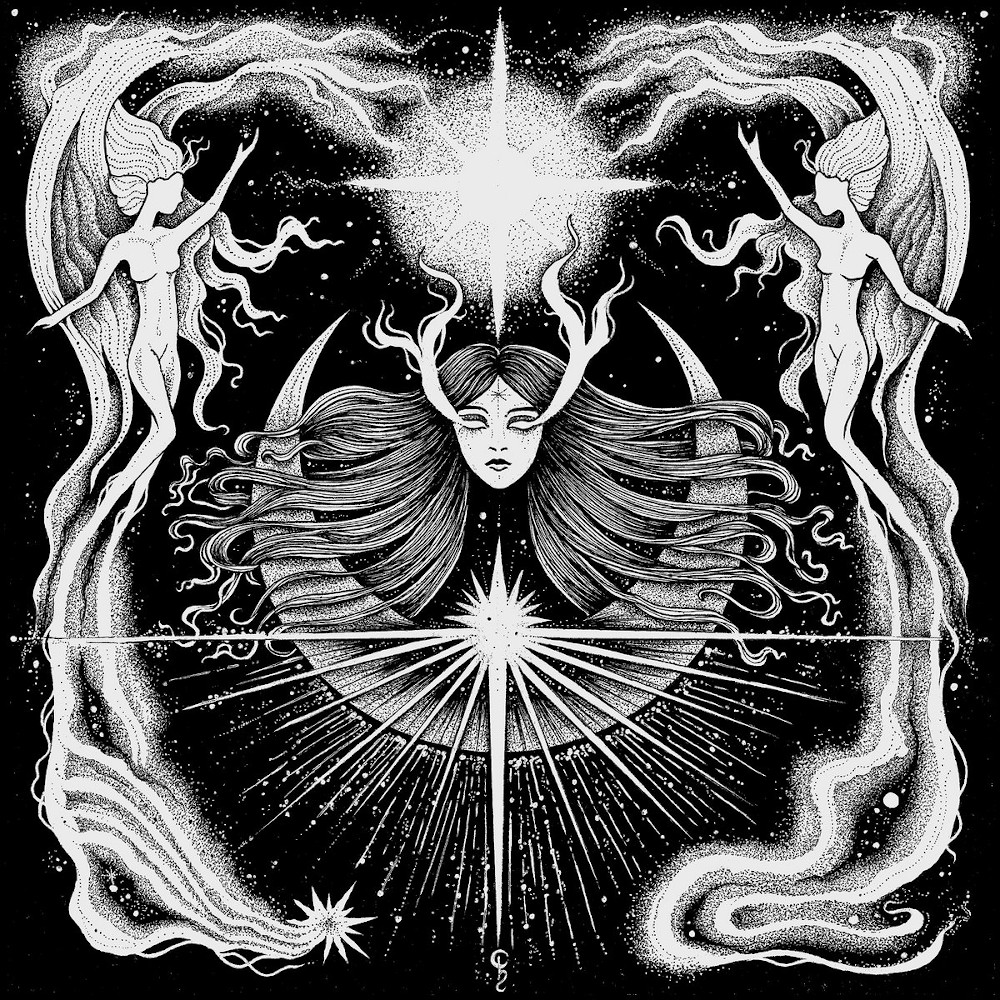
Mythopoeic Mind - Hatchling (2021)

Country: Norway
Style: Progressive Rock
Rating: 8/10
Release Date: 20 Aug 2021
Sites: Bandcamp | Facebook | Prog Archives

The debut album from Mythopoeic Mind was my introduction to prog rock from Norway, hardly an expected source for a thriving scene in that genre but apparently a thriving one that's endlessly inventive. I liked it, but it proved more of a gateway drug than an instant high because it was the reason why I paid so much attention when I noticed bands like Motorpsycho and Wobbler and, this January, Shamblemaths. This is a step up from that debut and it was released only a week before last year's Leprous, underlining once more just how much the genre has found fertile soil way up north.

It took me a while to get used to this one, because the opener, Fear Fiesta, came across like an odd mix of Yes and Neil Diamond. Sure, the former is mostly because of the vocals of Veronika Hørven Jensen and the latter is because of a refrain that can't help but remind of Copacobana but it's an odd combination to hit us with right out of the bat, especially because the band's leader is Steinar Børve, the saxophonist in Panzerpappa, and he kicks off the album focusing very much on his own instrument. It's a good track, but it never quite sat right with me.

Winter of '73 absolutely did and it's a journey of a song that's my favourite piece here. It's spacey space rock from the outset, full of strange electronic blips and blurps, but Trond Gjellum's drums find a gloriously rolling rhythm and Jensen's voice joins in wonderfully without ever providing one sung word. A couple of minutes in, it completes its groove, with a pair of lead instruments, as the guitar of Anders Krabberød and the bass of Ola Mile Bruland appear to veer off in very different directions that turn out to be utterly compatible. When Børve joins in a couple of minutes later, it ought to be too much for the ears to handle but it's somehow still easy to follow. Every time that I listen to it, it feels deeper and deeper, as if I'm gradually being sucked into it.

I should add that, like the debut, there aren't many songs here and they're lengthy without being epic. Even given its all-encompassing nature, Winter of '73 is actually the shortest song on offer at a breath under seven minutes, but only Hatchling outlasts the eight and a half of both Cottage of Lost Play and Fog Vision, clocking in at eleven and a half. These aren't side-long tracks broken into multiple sections; they're just ideas extrapolated out and given breathing room. They feel a little less grown this time out and a little more planned, but it wouldn't surprise me to see some sort of acknowledgement of improvisation in a few of the songs, especially late in Cottage of Lost Play.

I still haven't heard anything from Børve's main band, Panzerpappa—I missed their 2019 release, Summarisk Suite—but I believe that they play in a very different prog style, entirely instrumental and jazz focused but with a strong Canterbury influence. This was a move away from that for their saxophonist, Mythopoeic Mind usually desribed as symphonic prog, with frequent, if not constant, use of vocals. There is some Canterbury here though, in the experimental backdrop to Fog Vision and, to a lesser degree, Cottage of Lost Play.

Mostly, I find it hard to categorise this album because its songs are very different. Winter of '73 is an immersive journey into parts unknown. Fog Vision is an exercise in contrast, pitting a dissonant experimental electronic backdrop against the smooth sax, xylophone and vocals that are laid on top of it. Cottage of Lost Play feels like an old solo Jon Anderson track, because there's no Yes and no Vangelis to be found, but the Anderson feel runs much deeper than the vocal. And Hatchling is a folky title track to wrap up proceedings in a folky manner. It's clearly folk music from the outset, much of it almost but not quite English, and it occasionally turns into a full on folk dance. I have no problems imagining this performed on the Cropredy stage.

That variety makes it hard to think of this as a complete album, but the tracks are all worthy, even the opener that I struggle with. In fact, Fear Fiesta may be the song that stays with me longest, as it's a grabbing sort of song. However, I'd lean strongly towards Winter of '73 as the best track here and Hatchling as my favourite. It's an infectiously pastoral piece that beckons us in and refuses to let us leave. The silence when it finally ends is almost unbearable, as if we've been wrenched away from the world. The song feels like being captivated by the Fae.

I liked this a lot on a first listen, opening awkwardness aside—which I fully realise may be just me—and I liked it all the more with each repeat. The variety in the songs helps the album spring out in multiple directions and grow. I have a feeling I may be returning to it soon.

Tuesday, 17 August 2021

Gunshee - Friends Through Here (2021)

Country: Romania
Style: Progressive Rock
Rating: 7/10
Release Date: 15 Jul 2021
Sites: Bandcamp | Facebook | Instagram | YouTube

I don't know who's in Gunshee, an instrumental progressive rock band from Bucharest, the capital of Romania, but photos online suggest that they're a trio and it doesn't sound to me like any of them is new to the business. While this is clearly an intricate prog album played by musicians who are easily comfortable enough with their musical ability to experiment a great deal with what they can do with their instruments, especially whoever the particularly adventurous bass player is, this isn't pure prog by any means.

Even if the guitar tone is pretty clean, this isn't more than a stone's throw from a desert rock album, with more than a little psychedelia thrown into the mix. That's especially obvious in the echo effects in The Great Crippler I but it's there from the outset on Inward and Sayid. If you can imagine a stoner rock band trying not to be a stoner rock band, Gunshee may be pretty close to what you're conjuring up. Conversely, if you added copious amounts of fuzz and decreased the complexity of the songs quite severely, this wouldn't be light years away from an ambitious stoner rock band.

That isn't what makes this album rather odd though. Everything here is interesting at the very least, but the album as a whole is quite the patchwork quilt. Sayid follows Inward pretty consistently, but it all starts to change from there. Peaceful Indifference is an acoustic guitar piece that doesn't merely function as an interlude. The two parts of The Great Crippler are prog at its most intricate with quite the jazz influence. Then there's a live track that doesn't sound like a live track, until the audience get to make themselves heard after its done. And it wraps with what sounds like a brief live experiment that doesn't claim to be live. I'm still puzzled as to how this is all supposed to flow.

That's not to say that the songs aren't worthy. They're all fascinating, though that final piece is easily the most dispensable even if it would only shave a minute off the running time.

The best is surely The Great Crippler, though I couldn't elevate one part over the other even if I tossed a coin. I rather like Sayid too and Thomas highlights a real versatility to the band, starting out almost with a gothic vibe and reminding me of the Sisters of Mercy's song Ribbons. It soon underlines that it remains a prog piece though, moving more towards King Crimson in the midsection. It's an odd song that's led by its bass rather than its guitar and very effectively too, even with a wild guitar solo soon into its second half. The bass is notably prominent throughout this album, but it's totally in charge on this one.

And I can't dismiss Peaceful Indifference either, even if it primarily serves as an interlude between an opening pair of desert rock jams and the jazzy prog of The Great Crippler. It has one foot in folk music and the other in the ocean. The guitar here almost sounds like a ukelele and what we initially take as an acoustic interlude gradually becomes the whole piece.

I keep coming back to The Great Crippler though. I've listened to both parts a bunch of times to track what each of the instruments is doing and what I took away from it is how quintessential a prog piece this is. Each of these unknown musicians is doing their own technically impressive thing throughout, but somehow they still gel perfectly as a band as they do it. Whether you focus on the guitar, the bass or even the drums, you'll hear a fascinating piece of music with a different emphasis. And, as that's a little more overt on the first part, you can twist my arm and make me say that's the best thing here, but the second part isn't far behind it at all.

This is one for the adventurous prog fan, which I fully realise ought to be every prog fan but isn't. I'll still puzzle over why what appears to be a debut album was presented in this fashion, and I've docked a point for that, but I'm still eager to here more.

Monday, 16 August 2021

Blackberry Smoke - You Hear Georgia (2021)

Country: USA
Style: Southern Rock
Rating: 7/10
Release Date: 28 May 2021
Sites: Facebook | Instagram | Official Website | Twitter | Wikipedia | YouTube

My local classic rock station had a southern rock weekend recently and I'm pretty confident that they didn't play a single track by Blackberry Smoke, probably because they didn't form until the year 2000. However, I'm also pretty confident that had they included, say, the title track from this seventh studio album of theirs, without identifying it, most listeners would have just assumed that it was a deep cut from Lynyrd Skynyrd that they hadn't heard before.

Sometimes, the only way we can tell that this is contemporary music is the fact that it's well produced with a fat deep end. You Hear Georgia is an old school number, with an old school riff and a simple old school message, and it's done really well. However, the following song, Hey Delilah, is also all of those things and it's even more patient and deceptively loose. It was written by Charlie Starr, which must be as southern rock a name as I've heard in years for a southern rock lead vocalist and guitarist. Yet, it's so timeless that I could swear it was an old song that's been covered by everyone, with or without the honky tonk piano.

While everything here counts as southern rock in one of its many forms, not everything fits the bill we tend to think of, that Skynyrd/Allman Brothers/Molly Hatchet multi-guitar workout. Ain't the Same is, ironically given the title, not quite the same as the opening three songs. This one's more mainstream, as smooth as an Eagles song, just with a van Zant style lead vocal. With a different voice, it would feel even more like a country rock song. And that's exactly what Lonesome for a Livin' is, one of the voices on it belonging to Jamey Johnson, solo country music artist. It's odd to hear this song on an album by a band because it feels acutely like a solo country singer song with the capable session players hidden backstage behind a curtain.

The other song with a guest appearance is All Rise Again, featuring Warren Haynes from Gov't Mule and the Allman Brothers Band, but that one takes the opposite approach, hardening up rather than softening up and adding what's almost a garage rock aesthetic to it. That these two songs with guests sit right at the heart of the album, ending the first side and starting the second, without feeling too jarring underlines just how versatile this band is. Even so, if you heard these next to each other on a radio show, you might believe the two songs to be by two different bands.

If my favourite song here isn't Hey Delilah, and I think it might be, then it's Old Enough to Know, which is a stripped down song so old school that it feels way older than a Skynyrd song from 1977. This could have been a Willie Nelson song from 1957 and I'm half convinced I've heard versions by Hot Tuna, Kris Kristofferson and Rod Stewart over the decades. It's probably as far from rock as this album gets, as a sort of chill outlaw country number, but it's a gem of a song and I adore it.

Another favourite is the closer, Old Scarecrow, which returns the band to the old school southern rock vibe. It's another song that could easily have been included within that radio station's southern rock weekend without anyone noticing that it was brand new. "I ain't ever gonna change my ways," it runs, and we can believe it. But, when it sounds like this, even without extended chicken scratch guitar workouts, it doesn't have to. It's timeless music and this is an excellent new addition to a genre that never has to rise again because it never slumped.

Belle Morte - Crime of Passion (2021)

Country: Belarus
Style: Symphonic Gothic Metal
Rating: 7/10
Release Date: 25 Jun 2021
Sites: Bandcamp | Facebook | Metal Archives | Official Website | Twitter | VK | YouTube

It seems that Belle Morte isn't only the name of a symphonic gothic metal band from Minsk, it's also the stage name of its lead singer, who writes the lyrics and music too. Now, she certainly isn't the only musician here, because My Little Demon is a duet with a male voice, but I can't find anything to detail who else is here.

Metal Archives only lists Belle herself, but she's not alone in the band photo. Looking at the Belle Morte website, I find pictures of two people, five people and six people, along with a note that she's collaborated with the Norwegian melodic death metal band Addendum, which is a one man project. So, I have no idea who's on this, but I'm guessing that it's the lady known as Belle Morte and a gentleman called Priest who is also Addendum.

[Note: Belle kindly let me know that this started as a two piece studio project but is now a six piece band. As suggested, she's the vocalist and songwriter and the rest of the band is as follows: Ilya Rogovoy and Ilya Petrashkevich on guitars, Sergey Butovsky on bass and backing vocals (that's him on My Little Demon), Rostislav Golubnichiy on drums and Maria Shumanskaya on keyboards. Butovsky is also the producer. Thanks, Belle!]

From that rich cello and flute in the introductory piece, we know that this is going to be dramatic. Yes, it has a very similar sweeping refrain to Adele's theme for Skyfall, but it rolls neatly into the opening song proper, Who are You, which is at once heavy and delicate, that neat balancing act that's up there with my primary reasons for listening to gothic metal. It's a good opener and If Only You Knew isn't a bad follow up, a little more modern and a little more industrial, but To Get Her is easily the standout here and Belle clearly knows that because there's an acoustic version of it included at the end of the album.

Circumstances have led to me listening to this over and over for a couple of weeks, as I get other work done that's prevented me knocking album reviews out, and, every single time I enjoy this album just a little more, but To Get Her always stands out from everything else. Mostly it's the vocal line, but it's a peach of a track from an instrumental standpoint too. It's notable to me that it's just as effective in a bonus acoustic form, something that rarely happens. The piano and violin stand out nicely in this take and a male counterpart behind Belle's voice works too.

I should add that other songs do get close, especially in the middle of the album. I love how the music escalates at the beginning of Beauty and the Beast and that whole song has a wonderful flow to it. My Broken Things is an elegant dance of a track. It felt strange sitting still in a chair, because it felt like I was being whirled around a dancefloor at a gothic ball, a memorable experience given a few shifts in tempo. Beauty Meant to Kill plays out like a mediaeval folk song. Also, the closer, My Legacy, may well be the catchiest number here, just to take us home right.

I liked this on a first listen, but it didn't really pop for me until a second time through. Over two more weeks, it's improved a little more without becoming an undying favourite. However, I can't underline enough how rare it is for me to be able to listen to an album, any album, this much without it tiring on me at some point. This works as an album to dive into and actively explore, but it also works in passive mode, as background. That's another reason it took me so long to write this one up, because it turned into an old friend and it's always hard to stay objective at that point. Let's just say it's one of the good ones, whoever's playing on it.

Friday, 16 July 2021

Styx - Crash of the Crown (2021)

Country: USA
Style: Progressive Rock
Rating: 7/10
Release Date: 18 Jun 2021
Sites: Facebook | Instagram | Official Website | Twitter | Wikipedia | YouTube

"We will not give in," sing however many vocalists Styx have harmonising on the opener, The Fight of Our Lives, and this album feels like they mean it. I knew Styx were still going, because I saw them live at a corporate event I was working back in 2005, right after they released Big Bang Theory, which was a covers album. However, I hadn't noticed any further studio output from them since until now. A dozen years on, they did release a concept album called The Mission and I'm not convinced that this, which is their seventeenth studio release, isn't another one.

Certainly it feels like one, even if I couldn't follow anything more than a vague theme. I found myself focusing far more on the melodies than the words they carry, and the general pomp behind the music. The fact that a song like Hold Back the Darkness is bookended by sound effects, like it's a visual piece, and that it's followed by Winston Churchill's recognisable voice in samples on Save Us from Ourselves, helps that epic feel. The former has a Pink Floyd feel to it too, which doesn't stop us thinking concept.

I've read that their chief influence was the Beatles this time out, the approach being to conjure up an album like Abbey Road where every song was complete in itself and didn't repeat anything, but which felt as a whole like a single entity. The Beatles weren't my initial thought, though they certainly leap to mind quickly on songs like Our Wonderful Lives, not only because of the vocal melodies but through a neat use of brass. Mostly the styles here are more rock than pop and they're often reminiscent of an early Queen album, but I think that they nailed their Abbey Road idea. The more I listen to it, the more I hear the Beatles, especially in the melodies and especially because Styx have more than one lead vocalist too.

This isn't as varied as something like Sheer Heart Attack (then again, what is?) but a neatly consistent variety lends it an almost ironic coherence. Oddly, for an album that's riddled through with old school prog, albeit commercial prog, everything is notably short. The album only runs a mere whisker over 43 minutes but it contains fifteen songs, the longest reaching exactly four minutes; the shortest doesn't even reach half a minute.

That longest song is Common Ground and it does some serious building, but it's the title track that I'd call the most epic here. It's also the most Queen of all these songs, albeit with an overt Styx keyboard solo. Let's not forget that Styx have been around for a very long time indeed. By the time they got to The Grand Illusion in 1977, their first multi-platinum album, they had already put out six others, three by the end of 1973, by which point Queen only had one. It's easy to see how the two bands fed ideas to each other back then, before either was truly famous.

As you might expect from everything I've said thus far, this feels less like a new Styx album and more like an old one that we merely haven't heard before. It's primarily the crisp production that's holding me back from wondering if I really did listen to this back in the mid eighties when I was catching up on a couple of decades of music that I'd suddenly stumbled onto. However, there some modern sounds in here too. Long Live the King kicks off with an almost Tool-like riff and Coming Out the Other Side may begin with a sitar, like it's the Summer of Love, but it moves quickly into a more modern beat.

I should probably emphasise here that I like how this sounds like an old album that's just new to me. It feels vibrant and lively, as if it was made by a young Styx, even though guitarist Tommy Shaw joined as long ago as 1975 and both bassist Chuck Panozzo and guitarist James Young both have three years on him with the band. Drummer Todd Sucherman and keyboard player Ricky Phillips didn't show up until the nineties but have still been in Styx since the prior millennium. Ricky Phillips, the full time bassist (Panozzo is a part timer nowadays and only played here on Our Wonderful Lives and Lost at Sea) joined in 2003, leaving Will Evankovich, guitarist and soundscape creator as a very new fish, brought on in 2021.

At the end of the day, if you like Styx, you ought to like this, and if you like really old Styx, you may well like it even more.

Sorcières - Empoisonné (2021)

Country: France
Style: Black/Folk Metal
Rating: 7/10
Release Date: 21 Jun 2021
Sites: Bandcamp | Facebook | Instagram | Metal Archives | YouTube

It took me a few songs to get into this album, which is the debut full length from the French black/folk metallers Sorcières after a 2019 EP, but I got there eventually and it continues to grow on me. I've had it on repeat for a few days now to try to figure out what my problems with it were.

One is that they launch into action with Anciennes lueurs as if they're a full on black metal band but it isn't true. They're billed as black/folk metal and the folk metal aspect gets more important as it runs on, starting close to the end of this opener. Oddly, it became a folk metal album for me but eventually came back to being more of a black metal album. That makes it more and more interesting over time.

A side point here is that Anciennes lueurs slows down considerably over its running time until there's almost as much doom as black and it feels jarring. Once we get used to it, it sounds great but it took a while and the doom constantly shapes everything, becoming the most important factor to me in the Sorcières sound.

Certainly it's there on the second song too, L'auberge des corps perdus, and it's even more awkward a presence there because this is a folk metal song that plays with black rather than a black metal song that plays with folk. Folk metal, whatever country it's from and whatever cultural heritage it trawls in, is at heart a lively genre, rooted in dances and drinking songs. Adding a doomy sense of darkness to it deepens the sound but it also has the side effect of depressing that lively feel.

During my first few listens, I thought those two songs played out too mechanically, all the cool things that are going on in them outweighed by a lack of energy that suggested that the band were playing rather than performing, but gradually I realised that isn't fair at all. It's that odd layer of doom that's tamping down the energy and the life shows back up whenever the doom is turned down, like on the title track which feels far more alive. The drums get there first and the rest of the band join in, right down to a violin that's much more lively than it was one the previous track.

Les yeux verts keeps that up, getting downright sassy at points, even if they never truly cut loose and fly free. What could have been a gypsy punk sort of feel, playful and wild, becomes more classical, the composition fascinating but carefully orchestrated. And it's all because of that doom layer that never quite goes away, which is why this sometimes seems better to listen to as impressive music than to get up and dance with stein a-sloshin' as a spiritual force that moves my bones. Les yeux verts is still one of my favourite songs here, but I'm listening to it rather than moving to it.

Technically, Sorcières have everything they need and they feel bigger than the five piece they seem to be. I could have sworn there were two guitars here but there's apparently just one, that of Thibaut Marlard. The bass and drums show up courtesy of David Hubert and Antoine Ricci. Marie Derancourt provides the violin, as often plucked, I believe, as bowed, which is unusual and fascinating. And Pierre Alain Devaux adds a harsh voice to the mix, which isn't as bleak as you might expect for a band with at least one foot in black metal. It's often rather warm, more of a death growl to my thinking but with a black edge.

I've reviewed black/folk metal at Apocalypse Later before, but this feels different. It's nothing at all like Saor, because this doesn't go for atmosphere; like Burden of Ymir, because it blends the genres a lot more than highlighting each separately; or like Vengeful Spectre, who are far more extreme with both their black and folk elements. Again, it's that extra doom layer which ends up shaping it; even if it's a smaller part of the Sorcières sound, it turns out to be the pivotal one, whether the song is more black, such as Ordalie, or more folk, like Dans ces eaux.

So, after three days of listening to this album, I've got used to its intriguing mix and I like it a lot, but I took a while to come around to it. What's perhaps most important is that I wanted to understand this. Usually, if I don't get an album after a couple of listens, I know that it's not for me. This one always felt like it was my sort of album and it is, but I had to work with it. Now I need to figure out how unique the plucking approach Derancourt has to her violin really is. It really works here but I can't think of other examples where violinists do that in metal, at least to this degree.

Thursday, 15 July 2021

Within Temptation - Shed My Skin (2021)

Country: The Netherlands
Style: Symphonic Metal
Rating: 5/10
Release Date: 25 Jun 2021
Sites: Facebook | Instagram | Metal Archives | Official Website | Pinterest | Twitter | Wikipedia | YouTube

I was surprised by how much I liked Within Temptation's most recent album, Resist. I know the band as a symphonic gothic metal outfit, but there wasn't much of that on offer in 2019 with songs owing a lot more to modern western pop music, merely with a heavier, more bombastic industrial beat behind it. I would say that this EP continues that musical shift but the songs aren't as interesting as highlights on that album like Endless War or Holy Ground. There's less dynamic play on offer, Sharon den Adel is less adventurous and the songs just feel more sedate. The best thing about it is the cover art.

Shed My Skin is the best of the three songs here, the other two being the band's previous two singles, The Purge and Entertain You. Shed My Skin is lively and driven by its vocals and a Paradise Lost-esque shift in its chorus. As the cover suggests, this song is a collaboration with the German metalcore band Annisokay, but it's not that metalcore in its sound. The industrial beat from Resist is still here but the drums are cleaner, almost serving as the lead instrument. The others are a little buried, except for a resonant metalcore section early in the second half that's actually pretty cool.

I'm far less fond of the other two songs, though Entertain You has its moments. It has a more stripped down and bass heavy sound when it starts, but it drops into a pop song in the diva style. Googling the song to find out that the male voice belongs to Daniel Gibson, I stumbled on an astute comment about den Adel needing to pull a Gwen Stefani and go full on pop diva. I can see that option and this is a song that sits firmly in between that and the symphonic metal that the band used to play.

What I like about Entertain You is even more applicable to Shed My Skin and what I don't like about it is even more applicable to The Purge. With the exception of the admirably clean drums and the poppy vocals, which feature that Irish lilt I noted on Resist a couple of years ago, it feels like everything else is blended into just a tone. It doesn't matter what any of the other instruments are doing and they're doing nothing more than a set of sustained notes on the keyboards would provide.

These three songs are pretty short, running only about a dozen minutes, so the band padded out the running time to EP length by adding instrumental versions of the songs. That's an odd move because, without the vocals, there's not a lot here. I find myself listening to a lot of instrumental albums lately with a set of drawn out twelve minute jams, but the twelve minutes here feel drawn out to double that because there's very little to hold our interest.

I'd give Shed My Skin a 6/10 on its own because it's enjoyable enough, even if it isn't up to the standard of Resist. However, the other tracks aren't up to the standard and the instrumentals drag it all down, so I'll have to drop to a 5/10 for the EP as a whole. That's quite the drop from a highly recommended 8 for Resist only two years ago. Hopefully the next album will be more interesting.

Ison - Aurora (2021)

Country: Sweden
Style: Post-Rock
Rating: 8/10
Release Date: 25 Jun 2021
Sites: Bandcamp | Facebook | Instagram | YouTube

Continuing my exploration of post-rock, here's a whole bunch more people I haven't come across until now. Well mostly. Ison used to be a duo, combining the multi-instrumental talents of Daniel Änghede and the vocal talents of Heike Langhans on three prior albums. Änghede used to be in Crippled Black Phoenix, but wasn't last year when I chose their new album Ellengæst as my November 2020 Album of the Month. Langhans still sings for Draconian and was on their 2020 album, Under a Godless Veil, but she's no longer part of Ison, thus turning it into a solo project with guest vocalists. There are eight of them, each of them a female vocalist who's entirely new to me, even the one who's based right here in Tempe, Arizona.

What fascinates me is how so many of these musicians work in metal subgenres, given that this isn't a metal album. Crippled Black Phoenix are inveterate genre hoppers whose sound includes metal, while Draconian play gothic doom. Cammie Gilbert, from Texas, fronts prog metal band Oceans of Slumber. Gogo Melone, from Greece, sings for Aeonian Sorrow, who play a brand of funeral doom. Carline van Roos is the Belgian vocalist for French atmospheric doom band Lethian Dreams. Each of these three bands had releases out last year that I didn't know to check out. I won't make that mistake again.

This album is going to serve as a real rabbit hole for me, because all these singers are fascinating and prompt me to check out their other work, not just those above who usually sing metal. Lisa Cuthbert, who's Irish but based in Berlin, has been a backing vocalist for the Sisters of Mercy and has supported Marillion on tour. Sylvaine, who's Norwegian, has supported Alcest in South America. Tara VanFlower performs with Lycia, a darkwave outfit right here in Arizona. Vila is Finnish and has a bunch of albums out solo. That leaves circle&wind, which is the stage name of German artist Viola Petsch. I have a heck of a lot of material to explore.

But let's start with this. Vila is up first on a song called Jupiter and it sets the stage wonderfully. It's a chill piece from the outset, gentle synths and ambience suggesting that not only isn't this metal, it's a long way from rock too. However, it builds over its nine and a half minutes, a guitar showing up after a couple of them and a real escalation kicking in around halfway. Vila may be from Finland but she has a Celtic sound here, not singing so much as soaring majestically above the instrumentation. She does sing words but I'm not sure how often, because it really doesn't matter. We're not listening to a story, she's lending another instrument to those Änghede plays and that trend holds throughout the album.

Waves follows Jupiter a little too closely, right down to the five minute escalation and the nine minute build. Cammie Gilbert has a serious voice that's about three times bigger than she is, but she keeps it notably restrained during the first half, gradually building it during the second. Everything here feels like it ties to intensity play, but it's all done on both a grand scale and with incredible patience. This is not an album that's willing to indulge immediate need but it delivers inexorably in its own time, like it provides us with the connection to the universe that the sample in Retrograde promises to each of us.

The shortest piece here is just under seven minutes and the longest almost reaches twelve. The latter is Meridian, with an excellent vocal from Sylvaine, and it may be the most patient of them all. It's not flash at any point but it's delightful throughout. It's one of my favourites, that's for sure, though it's pipped by Celestial, which adds back intensity play, along with a subtly more overt delivery from Gogo Malone. In a similar way, circle&wind pierces through the music a little more with her soaring parts.

All these singers are lending their vocal instruments, even those far enough above the music that we can catch lyrics. I've listened through in entirety a few times now and I haven't once been able to focus on any of the words; the most obvious come from what I presume is are a variety of samples from an entirely science fictional self improvement guide but they're bland in their generic message. It's easy to tell Cammie Gilbert from Sylvaine and both from Vila, for instance, if we pay attention, but all their approaches are similar and, over the generous seventy minutes this album runs, they merge into one voice providing variations on an ethereal theme.

And that's where I keep ending up, a consistent album created by one man who sets the tone and lets eight intriguingly talented women interpret it without too much divergence. It's elegant and epochal and timeless and beautiful and it improves the quality of the day. Can that be a bad thing?