Tuesday, 16 November 2021

Omie Wise - Wind and Blue (2021)

Country: Portugal
Style: Progressive Rock
Rating: 8/10
Release Date: 1 Oct 2021
Sites: Bandcamp | Facebook | Instagram

I've been listening to this album a lot over the past week and it's become a real gem in my mind, a mostly calm and peaceful work that ought to sit wonderfully in the background but somehow isn't ever content to do so and keeps me listening actively. It's a prog rock album from Omie Wise, from Braga in Portugal, their second after 2019's To Know Thyself.

It's enjoyable but deceptively light from moment one. It's folky, it's pastoral and it's free. And if a description like that makes you think of English folk prog, then you're not entirely wrong but the opening song, Arroyo, ends up middle Eastern. It's difficult to place the band's influences because they're as much countries and genres as bands and they're woven together. There's definitely lots of English folk here, which is probably most evident at the beginning of Crown Flash, an odd track because it's not heavy in the slightest but often feels reminiscent of a Black Sabbath interlude.

However, Omie Wise's looks around the globe go much further than the English countryside. The middle eastern sound is probably most obvious on The Boy and the Wind, through the use of vocal wavers but made even more obvious by the djembe. And there's some real energy in this one, so if folky, pastoral and free makes you think quiet and inoffensive, this will cure you of that idea, if an escalation in Arroyo didn't already. This one escalates much earlier and keeps on going for longer. I should mention that the first three songs are all reasonably long because they're patient.

The Celtic influence is most overt on Shoals, a neat instrumental interlude performed mostly by a synthesiser that sounds like flutes. It has a soft, lilting melody that's very Celtic but there's more here that I don't recognise from my travels through world music. I'd already wondered early on if the stringed instrument in Crown Flash that sounds like a harpsichord is the braguesa, an acoustic guitar with ten steel strings that's from Omie Wise's home town. Here I wonder what else they're trawling into their sound.

And sometimes, especially as the album runs on, the sounds move away from prog rock. If we keep the folk sound as a common component of prog, then it's Sow the Wind that starts the departures as it's really an alternative rock track as much as anything else, a genre that's hinted at earlier in The Boy and the Wind. The characteristic way the chorus is delivered is very familiar to me, but I'm unable to place it. I'm thinking more experimental music, maybe Captain Beefheart. Pyre is the smoothest piece here, with a lot of loungein the music and exotica in the vocals and a soft saxophone. And the album wraps up in singer/songwriter style with Aurora, meaning that the second half is all over the map musically but without ever losing coherency and consistency. That's a neat trick to pull off.

I liked this album on a first listen. It's a very hard album not to like, I think, because it's so smooth and so easy on the ears even when it's doing some surprisingly deep and complex things. However, I didn't expect that it would grow on me the way that it has. I thought it would be a pleasant listen that would pass me by, as I moved on to the next album to review and the next.

However, this isn't planning on leaving me alone any time soon. It's seeping into my soul, even though it's hard to call out any track for special mention or any musician above his peers. Everyone and everything does exactly what's needed at every point. Now I need to listen to that earlier album!

Wednesday, 10 November 2021

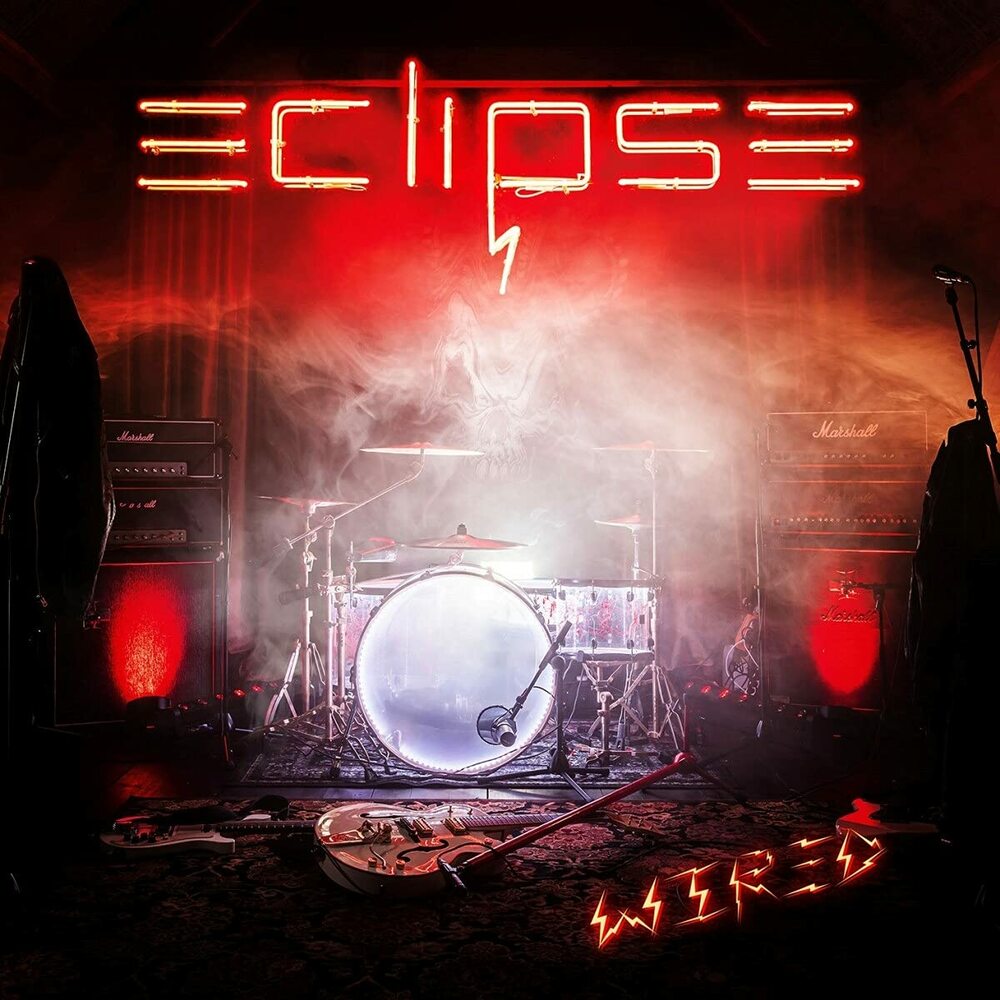
Eclipse - Wired (2021)

Country: Sweden
Style: Melodic/Hard Rock
Rating: 7/10
Release Date: 8 Oct 2021
Sites: Facebook | Instagram | Metal Archives | Official Website | Twitter

Two things leapt quickly to mind during the early tracks of this album, which is Eclipse's eighth in a couple of decades. Firstly, this is energetic stuff for melodic rock. I'd call it hard rock that isn't far off heavy metal much of the time and gets there on a few occasions. There's energy oozing out of its very pores and in quantities that far exceed most of the undeniably metal albums I've listened to lately. And secondly, holy crap, these are astoundingly clichéd lyrics!

It kicks off with Roses on Your Grave and the familiar refrain of "only the good die young". Then it moves into Dying Breed and the old "born to lose but always live to win" chestnut. Saturday Night (Hallelujah) highlights that "nobody's getting out of this world alive" and "we'll sleep when we're dead". And the next song is called Run for Cover... is there an original word anywhere to be found on this album? I caught myself almost unwilling to continue because I was cringing too much.

I have to point out that Eclipse are Swedes but they sing in English and I have little idea what their fluency levels are. Lead singer Erik Mårtensson certainly seems to be totally fluent and he did on the W.E.T. album that was my Album of the Month in February. The E in that supergroup's name is for Eclipse, with the W being Robert Såll from Work of Art and the T Jeff Scott Soto of Talisman. I also have to point out that I absolutely continued because this is such dynamic stuff that I couldn't bear to stop, however clichéd the lyrics became. Yes, the line before "run for cover" in the chorus of that song is "you'd better run" and the one after is "run, run for your life". How did you guess?

The energy levels simply can't stay this vibrant throughout or we'd be worn out. Carved in Stone is an acoustic ballad to slow things down substantially. It's just as clichéd, starting with "If the stars refuse to shine", but it's a soft ballad that doesn't piss me off, even with overblown choral backing vocals, and that's quite the achievement nowadays. It pumps up somewhat for its finale too and it cuts off wonderfully at the end. Poison Inside My Heart plays with soft guitar too, without being a ballad.

And so we go. The first five songs tell me that this is a tight band just aching to play and their vim and vigour is contagious. Sure, it's a 2/10 lyrically, if not an absolute bottom of the barrel 1/10, but it's infectious musically and it's impossible not to move. I think I have a broken toe so it's not good for me to tap with abandon and dance in my office chair but I couldn't stop. Eclipse should rename to the Pied Pipers because it really doesn't matter what they do, we follow them anyway. Deep in the Twilight, they even wrap up with Beethoven's Ode to Joy and it somehow seems like the most natural thing in the world.

Mostly this is exactly what you can expect from checking out any random song on YouTube, but it's not without its surprises. The soft guitar on Poison inside My Heart is folk rather than rock, with a Celtic flavour that showed up earlier on Run for Cover. That flavour returns on Things We Love, an indicator that, while Mårtensson doesn't sound remotely like Phil Lynott, whoever writes songs in this band has been listening to a lot of Thin Lizzy and maybe some more poppy contemporary Irish acts. There's also some LA hair metal here, especially on Bite the Bullet, the heaviest song on offer, even though it plays with surf rock in the middle.

Oddly, the other influence I kept hearing was Bryan Adams because, while this is certainly heavier and far more guitar-focused, the hooks in songs like Twilight and Things We Love are reminiscent of Adams's more energetic early songs like Cuts Like a Knife, Run to You or even Summer of '69. It may explain why this sounds so fundamentally commercial, given that it's often heavier and more driving than anything we're likely to hear on mainstream American radio.

So yeah, this definitely continues in the vein it started off in, with enough energy to keep you up all night, hooks so powerful you can't stop humming them and melodies that will haunt you. But it rots the brain if you listen to the words. It's not as good as the W.E.T. album from earlier this year, but I might well have gone for an 8/10 if it wasn't for those lyrics. I have to drop a point and ought to drop a couple. I don't think I could live with myself dropping it to a 6/10 though, so 7/10 it is.

Adliga - Vobrazy (2021)

Country: Belarus
Style: Post-Doom Metal
Rating: 8/10
Release Date: 5 Nov 2021
Sites: Bandcamp | Facebook | Instagram | Twitter | VK | YouTube

I've only reviewed a couple of albums from Belarus before, Belle Morte a mere couple of months ago, but here's another one, thanks to guitarist Ignat Pomazkov who kindly sent me a copy. It's an interesting album, one that, quite frankly, I wasn't ready for. I knew that I was into this on the first listen, but it's a post-metal album with a particular focus on doom, which is a combo that I'm sure I've never heard before. Metal Archives lists Adliga as one of only 85 groups who play doom/post-metal around the globe and they're the first one that I've listened to.

What I expect from doom is a slow pace and a heavy sound. I've heard all sorts of guitar tones and vocal styles within that basic framework, but doom has to be slow and heavy. This album is both in its way, but deceptively so. It never really speeds up, but it doesn't always feel slow. And it's heavy while often seeming to be not particularly heavy. I've had this on repeat for the whole day and it's told me that it's accessible music, even if it isn't remotely mainstream; and that it's not the doom metal that I know and not really the post-metal I know either.

I found myself going through an odd loop. The second song, Naščadkam, begins crushingly heavy, with a harsh male voice and an enticing female shout over slow beats and deep guitar. Of course, this is heavy stuff! How else could we hear this? But if this is heavy stuff, why didn't I feel that way on the opener, Apošni raz? So I went back to that and it's suddenly heavy too, especially late on and if not remotely as heavy as Naščadkam, but only because I'm thinking of it from that perspective. It feels odd.

What I ended up realising is that this cycles through three different genres and these three don't always mix. Sometimes it's doom metal and only doom metal, like that first minute of Naščadkam which verges on death/doom and the sections of that song that revisit that approach. It's brutally heavy stuff, with a recognisable clean doom metal guitar. Katja Sidelova's shouts are extreme but never seem to have come from hardcore. She endows them with real emotion and we can't escape the power. I usually hate shouted vocals but I simply adore these, especially in a conversation with the harsh male vocal of Uladzimir Burylau.

Sometimes it's post-metal and only post-metal, as perhaps best depicted in Paparać Kvietka. Sure, it's still slow and dark but I wouldn't call this doom in the slightest. It's experimental, with a vocal that begins with spoken word and gradually escalates as the song runs on, and with instrumental backing to match. My thoughts here were of bands like the Swans and others that I think of with a label like alternative slapped on them, albeit not the sort of alternative that gets played on radio stations across America.

And, sometimes it's both post-metal and doom metal at the same time, but not too often. What I think caught me out is that I tried to imagine what the two genres would sound like combined and this rarely does that. Instead, the band weave back and forth between post- and doom without us really acknowledging when that happens. That makes the album feel something like a magic trick but a really enjoyable one.

It also makes it hard to choose a favourite song because so much of the album plays not as a set of individual tracks but as a single piece of music, something new and enticing that we haven't heard before. I'm impressed by the band's sound and how heavy it gets while staying so clean. Maybe I'd plump for Naščadkam and Žyvy, because they effortlessly combine all three of those approaches.

The band here are always interesting and I'd happily listen to this in entirely instrumental form. It never falls into the background because, even though there are points where the guitars are just playing riffs, there's always development going on, whichever song I'm on building and becoming and evolving. And that goes for whichever instrument you want to focus your ears onto.

However, I have to call out the vocals as a real highlight. Sidelova's voice is versatile, shifting from a clean and melodic style to those emphatic shouts, without ever losing power. Burylau's voice is a supporting one, not used remotely as much, but he has a warm growl that fits alongside whatever Sidelova is doing at the time. I found myself eventually pressing stop after my ninth or tenth time through the album just so I could wander over to YouTube and see Žyvy being performed.

Now, what else is going on musically in Belarus?

Tuesday, 9 November 2021

Enslaved - Caravans to the Outer Worlds (2021)

Country: Norway
Style: Progressive Black/Viking Metal
Rating: 7/10
Release Date: 1 Oct 2021
Sites: Bandcamp | Facebook | Instagram | Metal Archives | Official Website | Twitter | YouTube

Enslaved have been busy of late. It's only been a year since their fifteenth studio album, Utgard, a strong album that made my highly recommended list for 2020, but they've knocked out four, count 'em, four live albums since then, albeit in limited editions (300 copies each and 1,000 more in a box set), and now there's a new EP to boot. And, while 'm still listing it as a progressive black/Viking metal release, as I did Utgard, that's really not the case, because they've moved a long way from those roots. Really, they play progressive metal nowadays.

It's a short EP, running just over eighteen minutes, and two of the four tracks on offer are shorn of vocals, a pair of Intermezzos to break up the vocal tracks, but without a closing vocal number to be the final bookend. Each track is interesting, but the opening title track is the highlight without an argument from anyone listening, I don't think. There's a lot going on in this song, which is an epic even at only six and a half minutes long. It feels like a ten minute plus piece, not because it drags but because so much happens in it and all of it is comfortable and patient and unrushed.

It begins and ends with swirling mist, out of which emerges the prowling bass of Grutle Kjellson, a harbinger of doom countered by the keyboards that grow around it. The guitars are a frantic and penetrating force, almost experimental, but the groove the song finds is more akin to Hawkwind than anyone else, incessant and driving. The vocals are initially harsh, raspy and determined, but a second clean voice takes over for the chorus and we have a conversation. This journey evolves; I imagined that these Vikings started out on a ship in rushing water, but ended up traversing space on their journey to the Outer Worlds. Whatever it's telling us, it's magnetic.

The other song proper is Ruun II: The Epitaph, presumably a sequel to the title track of their ninth album, the award-winning Ruun, from 2006. It's a little shorter but just as patient and deceptive in how much it achieves. It's a quieter piece too, one that starts out progressive but ventures firmly into gothic territory as it grows. It's hypnotic in its repetitive opening, but there are hints behind the droning keyboards and ritual hand drums that only grow when the vocals show up. Again, the Hawkwind influence shows up, with pulsing determination, but there's Bauhaus here too.

The instrumental tracks are less interesting but they're still worthy. They both find agreeably odd vibes, but neither feels like a complete entity, but I'm not yet sure whether they ought to be part of a much bigger, more ambitious piece or whether they should be split up further into a bundle of short interludes, especially the first of them, Intermezzo I: Lonnlig. Gudlig., which could easily be broken up into two pieces or expanded into something more substantial. I'm not convinced that it accompanies either the title track before it or Ruun II after it, so it becomes a question that won't ever find its answer.

And so this is very much an assortment of Enslaved music to dip into rather than the coherent four track EP it may be trying to be. Everything's worthy and some of it is excellent but everything also works best in isolation from everything else. Maybe it's a teaser for a forthcoming album, when it might make more sense. In the meantime, it's more enjoyable stuff from an endlessly fascinating band still growing and evolving thirty years into their existence.

Between the Planets - Parallel World (2021)

Country: Czechia
Style: Post-Rock/Metal
Rating: 7/10
Release Date: 18 Sep 2021
Sites: Bandcamp | Facebook | Instagram

Here's another submission from Czechia and it's an easy one to fall into because it's an immersive listen. Between the Planets is a solo project for multi-instrumentalist Martin Spacosh Perina, with a few studio guests here and there and an expanded line-up when playing live. This is Perina's third album under the name and, even though it features guest vocals on three tracks, I keep thinking of it as an instrumental album. Part of that is that only one of those three features lyrics; the others use the voice of Bara Liskova entirely as an instrument.

The majority of it is Perina doing interesting things with his guitar against a variety of backdrops also conjured up by Perina. None of the instruments in play sound unusual to me, though I should emphasise that keyboards are definitely one of them, sometimes the most prominent one, so this isn't a post-rock album in the strictest sense. The Twin Paradox is a fantastic soundscape, one that conjures up comparisons to seventies Krautrock, but I don't think there are any instruments on it except synths, so this is definitely not a band emulating that sound with guitar, bass and drums.

The most obvious way that Krautrock doesn't fit the whole album is that one of the guitar sounds that Perina is fond of is a modern djenty palm muting sound. I've never been much of a djent fan, but that's mostly because I think it's a limited style that works as a form of rhythm but not as the default sound for riffs. It works here, because Perina acknowledges its limitations and uses it as a rhythmic element for the drums to improvise around and a soloing guitar to soar over.

I bring this up specifically because Perina's influences include a lot of djent bands, including the genre's progenitor, Meshuggah. However, while I can hear bands like Meshuggah, Tesseract and Animals as Leaders in Perina's broader palette, this album doesn't really sound like any of them, making any comparison to them a little misleading. It's more post-rock than it is post-metal, I think.

For instance, the djent sound comes into play on the first track, Metamorphosis, but it's not there all the time and there's a lot more going on even when it shows up. It's used on Time Dilation as a sort of punctuation to the flow of musical language. By the time we get to the title track and hear the violoncello of Karel Zdarsky, we've almost forgotten that there was djent here. It's just one of a number of ingredients in this musical stew and it's noticeable in some bites but not in others.

I like the title track a lot, partly because it's so introspective but still enticing and partly because of the sounds that it conjures up. That violoncello is one, plaintive and haunting, but there's what sounds like a muted electronic xylophone too and some interesting drum beats as well. I'd call The Twin Paradox my favourite piece of music here, but it's very short at only a couple of minutes and this is a lot more substantial and has more of a growth arc.

The song with lyrics is Hungry Eyes, at the very heart of the album, and it stands out because we'd got used to instrumental exploration and words just weren't part of that picture. The guest singer here is Martin Schuster from the prog metal band Mindwork, who are also in Prague and who also sent me their new release for review, an EP called Cortex back in January. He's versatile here, in a couple of different clean voices and a harsh one, each matched by Perina's music. He also provides a guitar solo and his bandmate Filip Kittnar contributed to the drums throughout and is also one member of Perina's live version of Between the Planets.

The most obvious other guest is Sam Vallen of the Australian alt prog band Caligula's Horse, who lends his considerable guitar talents to Sleepwalking and Waves of Consciousness, shining on the latter with a searing solo. There's a distant voice behind the music on this one that I presume is a sample, but it's deep enough that I can't understand it; it just adds to the progressive nature of the material. The one downside to the album is the use of static early in this song and also on the closer, Distortion of Reality. I presume this is there to add texture, but I wasn't fond of it at all. Fortunately, it's a rare and minor intrusion.

It's good to hear more music from Prague, especially music that connects to music I've reviewed at Apocalypse Later before but sounds very different. Thanks, Martin!

Monday, 8 November 2021

Joe Bonamassa - Time Clocks (2021)

Country: USA
Style: Blues Rock
Rating: 6/10
Release Date: 29 Oct 2021
Sites: Facebook | Instagram | Official Website | Twitter | Wikipedia | YouTube

Joe Bonamassa is rightly known as one of modern America's pre-eminent blues guitarists, even if he's obviously more influenced by the British blues wave of the sixties. On his prior album, Royal Tea, he explored that side specifically, recording at Abbey Road and with British guests on board like Bernie Marsden. This one, his fifteenth, is less British but he's never going to lose the British sound entirely, even if this album starts out with hand held drums and didgeridoo.

In fact, there's a lot here to digest, so much so that there are many points where we forget this is a blues album. Not for long, mind you, but there's a very telling line in Notches to point out: "I've been all the way around the world, there and back a time of two; that road leads me home, brings me back to the blues." This does a lot of wandering around the world, but it always comes back to the blues, rather like a base of operations for Bonamassa's dabblings in prog rock or world music.

Notches certainly seems like an international song, with a British bassist, South African drummer and percussionist and a line of Australian backing singers. Of course, Bonamassa is American and so is Charlie Starr of Blackberry Smoke who co-wrote it, bringing some southern rock in with him. It's rooted in the blues, of course, but it's more southern rock than blues rock and the midsection gets neatly experimental, Bonamassa's blues guitar floating through its landscape.

Similarly, Time Clocks is rooted in the blues but we often forget that. It's soft rock, it's arena rock and it's even country, especially in Bonamassa's guitar, which is often notable for how prominent it isn't. This is a good song that's hard not to like and hard not to sing along with, but it's often an oddly commercial Pink Floyd type of song, which isn't what I expected here. What I expected was a song like The Heart That Never Waits, the unadventurous blues song that sits between these two more interesting numbers.

And so it goes. There are routine blues songs here and there are more interesting diversions from the genre, always built on the blues but happy to move quite a decent way from it. Frankly, when it plays it safe, it's enjoyable but forgettable. Mind's Eye has us close our eyes and rock in our seats, because Bonamassa does this so effortlessly well, but I was forgetting it even as it played, with an earlier song like Questions and Answers stuck in my head instead.

Yet, even there, while it's agreeably odd, it's odd in an oddly mainstream way. It feels as if it's a dangerous song rendered safe so it doesn't bite us, strongly reminiscent of Tom Waits but with Mark Ribot's jagged guitar and Waits's unmistakeable roar replaced by smoothed out edges and smoother vocals. It grabs the ear but I'm aching to hear the non-existent original. The same goes for The Loyal Kind, with its Celtic whistle and folky melodies. It's a nice enough song, but it ought to be led by a strong female voice that transports us to the forest rather than soothe us like some citrus lozenge. It does find some balls, but only at points.

And I feel out of place for thinking this. Somehow, I think most of the people buying this are going to be happiest with the songs I like least, the effortless soulful funky blues of Hanging on a Loser, Curtain Call and The Heart That Never Waits. They're going to skip the songs that grabbed me the most, like Notches, Question and Answers and even the title track. Where they and I will meet is in a shared appreciation of Bonamassa's talents. Where we'll diverge once more is in what we think about how he uses them.

Frankly, I'd like him to shut up and play his guitar, as Frank Zappa put it, because his guitar is much more interesting to me than his vocals. And I'd like him to take more of the experimental turns he took here but to take the training wheels off when he does so, because he doesn't need them. It's as if he's feeling his middle age and thinks he's playing to the Jimmy Buffett audience. Sure, you'd started out because you heard Clapton, Joe, and he's as safe as they get nowadays, but you heard him do Crossroads in the sixties and he blistered. Don't you want to blister too?

Tripulante - Lickan Antay (2021)

Country: Chile
Style: Heavy/Power Metal
Rating: 8/10
Release Date: 21 Oct 2021
Sites: Facebook | Instagram | Metal Archives | YouTube

I thoroughly enjoyed Tripulante's debut album, Mensajero del tiempo, a couple of years ago, but, as good as it was, it felt like a band coming together. They were a new band, that debut appearing only a year into a musical partnership of vocalist Aymarita Colque and multi-instrumentalist Julio Cesar Moya. I felt that the latter dominated, not through any discrepancy in talent but simply in the opportunities that the songwriting gave him, but that's emphatically not the case here, with the two finding the balance I hoped they would on this, their second album.

It starts out well with Sotar Conti, which is a vibrant and up tempo opener with hidden depths, but I have to say that the album didn't grab me by the balls until Ckuri, which wraps the first half and sets us up for the second, which just keeps getting better and better. The early tracks are all good ones and none of them let the album down but, however many times I listen through Lickan Antay, I leave it convinced that the second half exceeds the first.

The better balance between vocals and music is one obvious change, but it's not the only one. For a start, I believe Mensajero del tiempo is sung in Chilean Spanish, but this isn't, though I'm unsure as to which language or languages it is sung in. Google isn't much of a help here, but I'm assuming that Colque sings in at least Kunsa and Quechua, because Heutur translates to Rise in the former and Amawta is a skilful or wise leader in the latter.

As for the album title, the Lickan Antay are an indigenous people of the Atacama desert, who are found in northern Chile and Argentina and into Bolivia, while this album appears to be an attempt to pass on knowledge from various Atacaman cultures, presumably including theirs. That may be a difficult task when it's done in languages I can't identify, but I applaud this approach and hope to learn more about what's actualy going on. The only other word I can identify is Chakana, which is the Incan stepped cross.

All this leads to another more surprising change, which is that there seems to my uneducated ears to be less of an ethnic flavour here. It's obviously there on the interlude called Alikhantu, with its heavy use of Andean flutes weaving in and out of each speaker. Also, at least one song appears to be, if not an actual cover, an interpretation of an older Chilean song, and that's Lalcktur Cuijai, an easy one to find on YouTube by O. E. Galleguillos Colque, a surname which makes me wonder if the neat melodies on this one were written by a relative of Aymarita Colque.

I presume at least most of the rest is original, because the overt influences here are metal bands like Iron Maiden and Helloween, not only in the heavy/power metal genre sound but in the way the guitars develop and the songs build. There's even an epic to wrap up the album in Gentiles, a sustained gem even at eleven minutes and change. The first half of it is great but then it steps up even further as the keyboards swirl six minutes in, out of which emerges an excellent riff to start the escalation of the second half.

It's definitely one of my favourite tracks here, but there are others. Ckuri isn't the first song here to highlight just how well Colque can sustain notes, but it's impossible to miss how she doesn't just hold notes for extended periods but does interesting things with where those notes go. Each time I listen through the album, Ckuri stands out more and more, as does Heutur after it, making them a rock solid heart to Lickan Antay.

Oddly, because Tripulante only need help when performing live because there's just no way Moya can play everything there that he does in the studio, these are also the two songs featuring guest vocalists. Ckuri has a second powerful female voice in Cinthia Santibáñez from Chilean prog metal band Crisalida, who I now must check out, and Heutur features Yen Squivel as the male voice that counters Colque's.

I really dig Colque's vocals throughout this album. As I mentioned last time out, her pitch is lower than we might expect for a female metal singer but she still has quite the range. There are points where I think she's stretching too far upward and then she soars beyond it to highlight how it isn't a problem for her at all. I'm intrigued as to who influenced her the most, because I hear a heck of a lot of Bruce Dickinson in her voice, which makes obvious sense, but he's not alone and I can't see who else is in there.

So to rating this. I gave Mensajero del tiempo a 7/10 and this is clearly a step up on that excellent album, but some of it is two steps up. I'm seeing it easily as a highly recommended 8/10 and now I have to echo what I said at the end of my review of the debut but even louder: "I really can't wait for the next album! Let's see how they can grow!"

Friday, 5 November 2021

Massacre - Resurgence (2021)

Country: USA
Style: Death Metal
Rating: 6/10
Release Date: 22 Oct 2021
Sites: Bandcamp | Facebook | Instagram | Metal Archives | Official Website | Wikipedia

I'd love to read a biography of Massacre because they're an important band who managed to lose their place in the spotlight quickly and very effectively. They formed in Florida as far back as 1984 and soon became one of the founding fathers of the Florida death metal style. Yet, their habit of splitting up on days ending in Y kicked in early, so a strong debut album, From Beyond, didn't show up until 1991, after they'd already split up once, and they promptly split up again.

Settle down, kids, because it gets worse. Reforming again, they issued an album so hated that it's struggling with an average rating of only 8% at Metal Archives. And that's with one 40% spiking it upwards! I checked it out on YouTube and it sounded interesting for about thirty seconds before it descended into dreck, as if death metal pioneers had suddenly turned into an amateur high school Pantera clone. They didn't even wait for it to be out to split up that time, they split while recording it, Kam Lee even claiming it's not him on vocals, but they kept on reforming and splitting up again like clockwork, even changing name twice, to Massacre X and then Gods of Death.

And now they're back again, with only their fourth album in thirty-seven years and arguably their third "comeback" album, given titles like Promise, Back from Beyond and now Resurgence. At this point, I'm very wary about diving in but I'm too eager to find out what they sound like nowadays. I liked their debut a lot back in the day and they've fed members to a who's who of extreme bands, from Death, Obituary and Six Feet Under to Kreator, Nasty Savage and Whiplash. So what's Lee up to with his gazillionth line-up of Massacre?

The good news is this that certainly isn't another Promise, I promise. It's actually a pretty decent album, once we get past a Halloween music intro and an oddly sedate opener in Eldritch Prophecy. Ruins of R'lyeh is where it brought back memories of From Beyond. The tone is similar and it's nice and heavy, not buried in downtuned bass but with texture. Lee's vocals are deep and gruff but not overdone, working well as an extra instrument in a mix that allows us to follow each instrument if we choose.

Well, mostly. If I'm reading correctly, there are three guitarists in Massacre nowadays, with Scott Fairfax on lead, long time Kam Lee collaborator Rogga Johansson backing him up and keyboardist Jonny Pettersson doing double duty on a third guitar. I remember when Adrian Smith returned to Iron Maiden but they didn't ditch Janick Gers; now having three guitars felt like a solid expansion to their existing dual guitar sound. This doesn't feel as dense but it still feels agreeably meaty.

The bad news is that, while the band do make a serious attempt to vary the death metal formula and keep the album interesting, that was always an uphill struggle, especially when the attempts they make are within the genre. There's nothing brought in from outside to infuse the genre with originality. Modern production aside, this could have been released back in the genre's heyday. In 1991, this would have been seen as a good indication of what death metal could do but in 2021, it's a day late and a dollar short. The genre has quite simply moved on.

And that sounds more than a little brutal, if that's not an inappropriate pun. Did this album blow me away? No, it didn't. Did it impress me as something new and innovative in a tired genre? That would be a no as well. But did I cringe and laugh at the same time and turn it off after a minute? I didn't. I enjoyed this album throughout, even if mostly as a nostalgic trip into what the genre was and why I appreciated it when it showed up. And hey, was there anything remotely new on the last Cannibal Corpse album? No, there wasn't. This doesn't hit as hard, for sure, but I'd argue that it's more interesting and more worthy of your attention if you want that kick of nostalgia.

So, welcome back, Massacre. Promise turned out to be a bad promise and you weren't able to stay Back from Beyond for long, but this could be a Resurgence. But you'll need to stay together more than half an hour this time and a fifth album in a year or two should contain something new that doesn't betray your genre of choice but does add to it. Best of luck.