Monday, 17 May 2021

Motorpsycho - Kingdom of Oblivion (2021)

Country: Norway
Style: Psychedelic Rock
Rating: 9/10
Release Date: 16 Apr 2021
Sites: Facebook | Official Website | Prog Archives | Wikipedia

It's hard to describe Motorpsycho in one word, at least without plumping for "prolific". This is another seventy minute album from them, which means a double album on vinyl even if it's only one CD. Their previous album, The All is One, was a quarter of an hour longer and spread over two CDs. I reviewed it last year and The Crucible the year before because they're releasing machines. This is the eleventh in under a decade, four of those were doubles, and their twenty-sixth over all, if I'm counting correctly. And yet the quality never seems to decrease!

This is different in a few ways from those prior two albums though. There are no twenty minute songs this time out, let alone forty five minute ones split up into five parts. The longest song this time out is The Transmutation of Cosmoctopus Lurker at a mere eleven, with as many two or three minute songs as seven, eight or nine minute ones. There's no dominant title track, Kingdom of Oblivion just one of a dozen. And there's no saxophone this time out, which renders this a little less jazzy and a little more psychedelic, while still remaining progressive rock.

I'd suggest it's a little heavier than those previous albums too, though Motorpsycho explore so many places in their music that it's hard to quantify that, especially as it doesn't stay as heavy as it begins. The Waning, Pt. 1 & 2 is built from chugging Black Sabbath riffs, Hawkwind fuzz and vocals straight out of the psychedelic era of the sixties. Kingdom of Oblivion shifts the vocals into a Peter Gabriel-era Genesis vein, if not as playfully wild, but it keeps that Hawkwind vibe going. Yes, this certainly starts heavy.

And yet, Lady May and After the Fair get exquisitely folky on us while The Watcher is more obviously prog, still a little Hawkwind but a lot Pink Floyd, bringing to mind that fertile period after Syd Barrett left but before The Dark Side of the Moon launched them to superstardom. I got serious Set the Controls vibes from it, which is never a bad thing in my book. The Hunt is especially playful and driven by flutes and drones, reminding of King Crimson but also of a teasing hypnotism. Cormorant starts out avant-garde but turns into Peter Green-era Fleetwood Mac.

All these are enticing, well crafted songs (or, in the case of After the Fair, interludes), as are the many in between that I haven't mentioned. What really grabbed my attention, though, was Dreamkiller. It has delicate bookends that feel warm and comforting, whatever the strange noises in the background might be, but, in between, it hurls us into a maelstrom of activity, swirling melodies floating around a simple but epochal set of riffs and a thunderous beat. It's only five minutes long but it feels epic, like it represents an entire life-changing journey, birth to death or some such.

And I tend to feel that way about Motorpsycho albums generally. There's so much in them that, by the time I've worked through each of them, I feel like I've listened to a hundred albums. There's at least a couple of Hawkwind albums in here, a Genesis album, a King Crimson album, a few folk albums, half a dozen obscure psychedelic rock albums and whatever else someone might have slipped on while I was too engrossed to notice, maybe a composition by György Ligeti. Just to go from The Waning, Pt. 1 & 2 to Cormorant is a heck of a journey but there are far too many delights along the way for me to give a rating lower than 9/10.

Torture Squad - Unknown Abyss (2021)

Country: Brazil
Style: Death/Thrash Metal
Rating: 6/10
Release Date: 6 Mar 2021
Sites: Facebook | Instagram | Metal Archives | Official Website | Twitter | YouTube

This is apparently an EP, thus qualifying it for review at Apocalypse Later, but you can't accuse Torture Squad of generosity on this one. There are only three tracks on offer and, while the last of them runs nine and half minutes, the first is really an odd sort of intro. But hey, I'll be following up with the new one from Motorpsycho, which is a double album because they don't know how not to be generous, so it evens out in the wash.

Torture Squad are a death/thrash metal band from São Paulo who have been around since 1990, with eight albums to their credit. They haven't been busy of late though. Vitor Rodrigues, who sang on six of them, left in 2012 and their output has mostly shifted since then to singles and EPs, live albums and compilations, but only two further studio albums. So I thought I check this out and see what they're up to. What I found is that I'm really not sure.

When they get down to business, they still rip. Area 51 is the straight forward song here, a six minute heads down thrash number that's downtuned a little to appease the death hounds and decorated by a fierce harsh vocal from new singer Mayara Puertas, who goes by Undead and also handles mike duties for a goregrind outfit by the name of Regurgimentação Necrovaginal Sangrenta, which I was able to translate without having any real knowledge of Portuguese. Hi mum, I met this girl. It's OK, she has a job. She sings for Bloody Death Vagina Regurgitation...

Actually, she's pretty good here, though she only gets to sing on Area 51, though that's probably her growling at us demonically in the intro and telling us not to cross her path at the end of it, because it turns out that Torture in Progress is a nine minute instrumental jam. Yes, that means that each of the three pieces of music here are completely different. Maybe that's the point.

While Area 51 is the only one that fits the sort of material I was expecting, mostly fast and technical with plenty of time changes and a churning slow part, I rather liked Torture in Progress too (the title track only really serves to make this EP look a little less skimpy than it is). Torture in Progress works well as a showcase for the musicians, albeit ironically because Puertas doesn't do anything on it.

It begins as what a potential spotlight for Castor and his bass, but Amílcar Christófaro gradually takes over by playing a drum solo over the top. I'm not entirely sure it works but it's certainly different and the two find a way to play together rather than against each other by a couple of minutes in. A guitar shows up a little later, Rene Simionato experimenting with feedback before going more traditional at the four and half minute mark. And it certainly gets more and more traditional, eventually becoming a sort of Deep Purple jam, merely with faster guitars and a more obvious bass.

I'm really not sure what Torture Squad are aiming to achieve here. In the sub-twenty minute running time, they do three completely different things, one of which works well and another of which evolves into something interesting, but the third is a waste of three minutes. If this is a statement of musical intent, I'm eager to hear the next Torture Squad album but I have absolutely no idea what it's going to sound like.

Friday, 14 May 2021

Inkubus Sukkubus - The Way of the Witch (2021)

Country: UK
Style: Gothic Rock
Rating: 7/10
Release Date: 30 Apr 2021
Sites: Facebook | Official Website | Twitter | Wikipedia | YouTube

I remember Inkubus Sukkubus well, in part because they sounded great when I saw them live in 2003 in a pub in York and in part because they introduced me to the drum machine. I don't mean that I hadn't heard of drum machines before, but I recall sitting there after a few pints in, wondering about when they would start their set, given that time was moving on and there was no drumkit on the stage. Of course, it didn't hold them back at all, because they eventually showed up, simply plugged in and got straight down to business without hesitation. Talk about portability!

I'm listing them as gothic rock, because that's kind of where they fit musically, but there are a couple of key notes to make here. One is that the themes have always been pagan in nature, the songs going back to their first album in 1990 being about witches and faeries and whatnot, with only an occasional nod to more traditional gothic fare like vampires. The other is that they've stayed completely true to their roots over a thirty year career, remaining independent and in charge of their own destiny, with no pandering to fashion or outside influences. I respect that.

What I like about them most is how easily they find their grooves. Because of that drum machine, the band is a trio, with Tony McKormack on guitar and a variety of other stringed instruments, as well as keyboards, and Roland Link on bass behind the striking frontwoman Candia McKormack. Yet they can launch into a song and be firmly in its groove just as quickly as they plugged in and played at that York gig. There's usually an intro of some sort from Tony, whether it's on guitar or keyboards, and after an initial repetition or two, it builds and suddenly the band kick in and we find ourselves caught up in the groove before a single word is sung.

And the Sea Shall Consume You is a perfect example of this. He sets up a four note riff, echoes it with a single note varied and repeats those eight notes four times, at which point he starts adding layers as if he's an entire string section. The beat kicks in before thirty seconds and we're already hypnotised. I remember this sort of thing from the Sisters of Mercy but Inkubus Sukkubus don't need eight minutes of build. This entire song is built on four notes and it still had me dancing in my chair on a first listen.

As that might suggest, everything here is rhythmic, ironically for a band without a drummer. Much of what Tony does is to build rhythms with his guitar, his keyboards, even his backing vocals, I won't fault him as a musician but you won't find him showing off with solos much here. He's always most obvious as the creator of the textures that the songs are set against, whether that's as a writer or performer. And those textures are inherently rooted in rhythm.

What surprised me here was how varied those textures were. It's been a while since I've listened to an Inkubus Sukkubus album, but I remember consistent, mostly upbeat tempos and, while those are here in abundance, there's also a lot of variety.

The Girl in the Grey Rags is a patient intro to play as a neat bookend to the title track, which turns out to be a patient way to close out the album. It's a longer song for Inkubus Sukkubus at over six minutes, but it builds very well. It's certainly a highlight but my favourites show up in between these bookends. Beneath the Moon and the Trees is a delicate and hypnotic piece with darker overtones. The Morning Star follows suit but with a more commanding vocal from Candia, a guitar motif borrowed from early Leonard Cohen and an even more atmospheric use of bells in the background than on other songs. It's fair to say that Tony really likes his bells. Most stark of all, Where Have You Gone, My Daughter? is an enticingly beautiful folk song set over a simple beat and a drone.

It feels good to tap back into what Inkubus Sukkubus are getting up to nowadays. It looks like they've been busy while I've been away, quietly knocking out album after album, waiting for me to tune back in. This is their twenty-third album since Beltaine in 1990, which is an enviable production rate for any band. That this is just as good as I remember them being on Belladonna & Aconite or Vampyre Erotica back in the prior millennium renders it an even greater achievement. Now, I think I have catching up to do.

Stranger Vision - Poetica (2021)

Country: Italy
Style: Power Metal
Rating: 7/10
Release Date: 26 Mar 2021
Sites: Bandcamp | Facebook | Instagram | Metal Archives | Official Website | YouTube

Last year, Italian power metal band Stranger Vision were releasing a set of singles, every one of which was a cover version. This year, they've released an album of original material and it's a generous one, running just over an hour when we include the bonus track. There's a prelude, interlude and postlude too, so the fifteen tracks translate to eleven songs proper and they're generally lively and melodic and vibrant, with a confident vocal from Ivan Adami and some energetic guitar solos from Riccardo Toni.

Now, those cover versions deserve mention here because, along with the pop songs by Tears for Fears and David Bowie, there are a couple of telling ones: Moonshield, originally recorded by In Flames, and especially Bright Eyes, not by Art Garfunkel but by Blind Guardian. Stranger Vision have clearly spent a lot of time listening to the latter and this album plays very much in the Blind Guardian vein, just not quite so hoarse or quite so Viking, maybe a little less epic but a little more perky. Imagine the power metal and melodic hooks of Blind Guardian but with an elegant Italian veneer laid over it all and you will have something close to Stranger Vision.

Gates of Tomorrow, the opening track proper, certainly fits that description perfectly. Human Change isn't far off either, with a catchy chorus sung cleaner than Hansi Kürsch would do it but with the same sort of effect. Toni's guitar solo is particularly perky and it plays with neo-classical shredding. All his contributions here stand out from the rest of the music just as much as Adami's vocals. Sure, each of the musicians behind him clearly knows exactly what they're doing but they're less prone to showing off, content to set the tone and underpin a couple of lead instruments in guitar and vocal.

After my first time through, I felt like I'd listened to a guitar album. However, the more I play through it again, the more I come back to the vocal hooks. The guitarwork in Never Give Up is fantastic, but I'm focusing more on that great singalong chorus. I remember that great video of the audience taking on the chorus of Blind Guardian's Valhalla and just keeping it going for far longer than we expect. There are quite a lot of songs here where I can imagine an audience doing the same thing to Adami.

Given that, it seems a little strange that there are so many guest appearances here, most of them by vocalists. Sure, Guido Benedetti of Trick or Treat shows up on guitar on Rage, but he's accompanying his bandmate Alessandro Conti. All the guests are singing pretty close to their own genres, so this was hardly a stretch for any of them, but only Alessia Scolletti of Temperance seems to be a duet partner, perhaps because she's the only female guest. The choral backing vocals on Rage stand out, while Zak Stevens, from Savatage and Circle II Circle, has a harsher voice. However, none of them, nor Fabio D of Arthemis, are light years away from Adami.

I should mention here that everything is sung in English, however many of these vocalists are Italian, but without much accent. Adami has one that shows up in the quieter sections. I first noticed it on the song Wish, which is eleven tracks in, because it's a ballad, but it's there in the spoken word bit at the end of Memories of You and in slower parts of Over and Over. It isn't there when he's soaring free on heavier parts, as he is for much of this album. Listen to something like Rage or Never Give Up, my two highlights (with quite a few challenging them), and you wouldn't know he wasn't English. Listen to Wish and you know without a shadow of a doubt that he's Italian.

I like this a lot. I don't think it does anything particularly new, but it does what it does very well and it seems difficult not to be a little happier having listened to this album. It's not just perky, it's uplifting and that's never a bad thing in smooth power metal.

Thursday, 13 May 2021

Chevelle - Niratias (2021)

Country: USA
Style: Alternative Rock
Rating: 7/10
Release Date: 5 Mar 2021
Sites: Facebook | Instagram | Official Website | Twitter | Wikipedia | YouTube

I remember Chevelle from my years flying out to the US around the turn of the millennium. They were all over the local trendy rock radio station here in Phoenix and they sounded decent to me, a lot more alternative rock than nu metal, songs like Send the Pain Below and The Red the sort of song that was refreshing when it came on at the bowling alley in place of crappy pop music. However, they were still a little annoying, Pete Loeffler's voice overwrought to please the emo kids and veering into hardcore shouts for no good reason. I was in two minds about tackling a new Chevelle album in 2021.

However, I thoroughly enjoyed this. Sure, Loeffler still cries as much as sings for emotional effect, but otherwise this science fiction concept album is far more enjoyable than I expected it to be. I may have liked those old singles as background material in the car or wherever, but they were a little bland for me to seek out otherwise and this album is certainly not bland.

For a start, it's structured with imagination. It opens with an instrumental, Verruckt, to set the tone, and it's a decent one too. After a couple of vocal songs, the latter of which has a Tool vibe to it, albeit one softened to be safer and more commercial, there's an even more interesting instrumental, Sleep the Deep, that's clearly meant to be an interlude. It's kind of like a clockwork xylophone backed by a cinematic buzzing to get us thinking in visual terms, as if this album is the soundtrack to a fifty minute music video. There's nice play between speakers too. After another couple of songs, there's a briefer interlude and there's another one to come after another song, Peach becoming rather prominent for being surrounded by interludes.

While that Tool vibe waxes and wanes, it never really goes away. This is Chevelle's ninth studio album and I haven't heard anything from them since the second, which had all those radio friendly hits. Just reading through their Wikipedia page, I find that they've often been compared to Tool, with a caveat that Tool are wildly experimental and socially outspoken while Chevelle never venture far away from radio friendly. To my ears, while that holds true, this is at least one deliberate step away from safety and it's one that should be applauded.

While Mars Simula is a pretty safe Tool-esque song, that can't be said to the same degree for Pistol Star (Gravity Heals) or indeed Peach. The former is more intense, with a serious build that eventually reaches that shouty vocal for effect as it crests its crescendo. The latter has intensity too but also has a lot of dynamic play to make it more unusual and interesting. They may not be thirteen minute avant garde Tool epics but, if they ever got trendy radio play, they'd seem out of place. The same goes for Endlessly, which plays in more of a Cranberries style, merely translated into the alternative Chevelle style.

I was certainly interested enough in the music to lose track of the story behind the album. Niratias is an awkward acronym in the TANSTAAFL vein for "Nothing Is Real And This Is A Simulation". I should do a search for the lyrics and see how they build a story. For now, I'm enjoying this as music, enough to be very hopeful that the band take another few of those steps away from the mainstream, because they have the promise to become a really interesting band.

If it was the Boris Vallejo cover that convinced me to take a listen, I won't need that next time. I'll be in anyway, just to see if Chevelle have become willing to ditch their commercial viability and write and record something just for them. After this, I'd very much like to hear that.

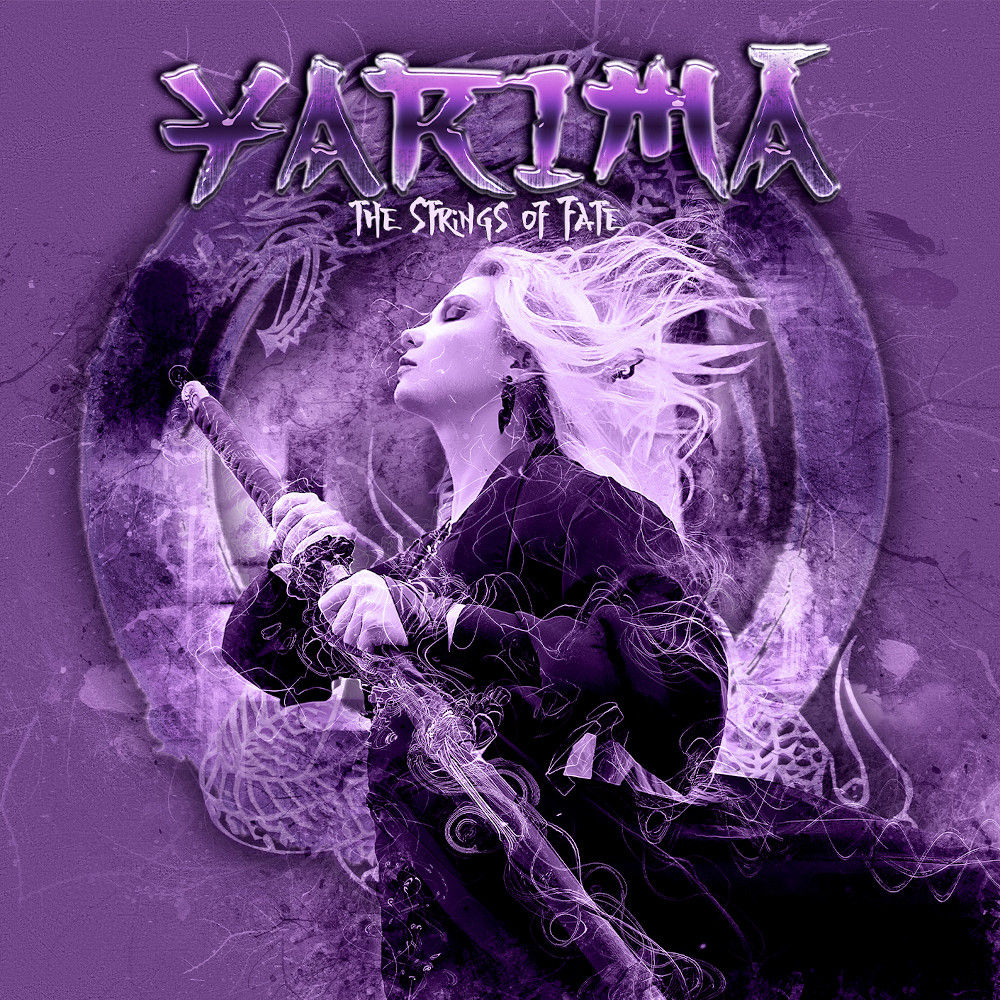
Yarimā - The Strings of Fate (2021)

Country: ?
Style: Symphonic Folk Metal
Rating: 7/10
Release Date: 30 Apr 2021
Sites: Facebook | Instagram | Metal Archives | Official Website

Mystery isn't new in the rock/metal world. Crimson Glory were a fantastic band and I hope that they'd have reached the level of success that they did without the mask gimmickry that hid their faces on the first album and half of them on the second. Who knows. And who knows anything about Yarimā? This is a submission, so I have the press kit and that doesn't help at all. What I know is that Yarimā Kuro is "a Dima Faewarian of the Soomēna Forest, situated in the Eyvarla Kingdom, in the far east of the planet Faewar." Well, OK then.

What I think this means is that this album isn't merely music, it's a musical element that fits within a much wider multimedia creation. I wandered the web for a while and found that the LovAnaverse is a fictional place for Love Anarchy characters to live and "create fantastical entertainment". Therefore, Yarimā Kuro is a fictional persona rather than a person and this music sits within the framework of a fictional universe that she calls home and the fictional storylines that surround it and her.

Who the real person behind Yarimā Kuro is, I have no idea. I presume hers is the voice that dominates the album, but does she provide all the music too, as Metal Archives suggests or is that the work of a fellow Faewarian, Gaius Black? Are they both the same person? Your guess is as good as mine and, at this point, I'll step back from this surrounding concept, because while it's certainly interesting, it's no requirement for you to explore or enjoy this album.

Musically, this is symphonic metal but it rarely wants the spotlight. It's there primarily to support the vocals and any moments where it feels like it wants to go neo-classical are suppressed. It's there to be a background in a similar way to how the musicians in Babymetal are there to provide a backdrop for the young ladies who are the focus of the band to do their thing against. There is variety here and the best songs, like Only the Brave and Forever Bound, benefit from that, but mostly it's just a backdrop, a texture to support or counter.

The vocals are folkier in nature and really are the focal point here, even though Yarimā Kuro is never particularly interested in playing along with this symphonic metal approach. The fictional Faewarians owe their heritage to elemental fairies and that really fits the vocal approach, because, even though the music is loud and dark and crunchy, she's fundamentally light and airy and melodic. I didn't catch anywhere near as much Asian influence in the vocals as I expected from the press kit, but it's there in a thematic sense. She often sings like a waterfall sings, which makes this peaceful and pastoral, like a voice you might listen to while contemplating life in a Japanese garden.

The ethnic flavour is more obvious in the music, but even then only on some songs. Forever Bound has a koto to kick things off, but it's there in other songs too and the atmospheres conjured up in synths have a vague Asian flavour to them. It has to be underlined, though, that this never once ceases to be a western take on eastern flavours and melody structures, and every song is sung in English. I'd never call this Japanese folk metal, but it's a palatable sort of eastern infused metal exotica, as translated into an alien universe. As a puzzle piece in a worldbuilding effort, this is admirable.

It's also very likeable as music but whatever substance it might have is hidden behind the concept we can never quite leave behind. It's well performed and well sung and the more imaginative songs have merit. Only the Brave is probably my favourite song here, with some neat dynamics to brighten it up a little. The title track is a standout too, as is the closer, Forever Bound, which surprises us with a second voice that was absent for the first nine songs but arrives in time for the last. It's a harsh male voice, a much more natural fit for the backing music, leading to a notable beauty and the beast scenario.

I like this album, whoever really sang it and whoever really played it. Will these songs "heal the world in ethereal melody", the way the magical Dimarai songstress Yarimā Kuro does on the planet Faewar? That's doubtful, but it's a neat idea to tie a musical project like this album to. Best of luck to her!

Wednesday, 12 May 2021

Cirkus - Page 12 (On the Right) (2021)

Country: UK
Style: Progressive Rock
Rating: 8/10
Release Date: 30 Apr 2021
Sites: Bandcamp | Facebook | Prog Archives | Twitter

Cirkus have been making music for a long time but they're hardly prolific. Actually, let's replace Cirkus with their keyboardist Derek Miller, because it's he who has been keeping their name alive across the decades. Their debut album, One, came out in 1974 and has been acclaimed as one of the best albums you've never heard, not least because only a thousand copies were pressed. They split up in the early eighties, but Miller came back with Two: The Global Cut in 1994 and III: Pantomyme in 1998, the latter of which brought back some of the older members.

Miller seems to be getting prolific at last, releasing IV: The Blue Star in 2017, V: Trapeze in 2020 and, a year later, Page 12 on the Right, which oddly isn't prefixed by VI but is still a new studio album. Unlike the Axewitch album, which is rooted in the band's original era of the eighties, this is an odd mixture of the old and the new, merging the more commercial King Crimson sound of the seventies with an up to date Steven Wilson sort of contemporary sound. It's inventive, it's vibrant and I like it a lot.

I'll run through the tracks in order, because they're highly variable in approach and that ought to be a good way to highlight just how much there is here.

The opening title track is an instrumental that moves from birds and flutes to a driving rock beat with a strong overlay of keyboards and guitars. It has quite a build to it. Angel brings in vocals and a jazzier style, complete with saxophone, that reminds of Steely Dan. Good News Week is more contemporary, introducing samples, effects, loops and a rumbling bass from Brian Morton. Oddly, it also adds a punk attitude too during the verses that's neatly countered by laid back pop electronica in between them. The result is lively and playful, two adjectives that very much apply to this album as a whole.

Alive features acoustic guitar over more of those birds until it ramps up. It ends with vocal harmonies. I'm not seeing any of these songs, most of which are short, in the three to five minute range, broken down into movements, but many of them build that way.

Back & Fourth is quite the trip, literally. Billy Pilgrim has come unstuck in time, we're told, and what he gets up to is explored in another playful song, featuring neat moments of brass and pipe organ, steam effects and an unusual beat that reminds very much of clockwork. I would not call Cirkus a steampunk band in the slightest but this song is as truly a steampunk song as anything I've heard from the genre.

I'm with You and One More Day are almost easy listening prog. They're deceptively soft, smooth and surface, but there are depths here if you choose to dive. And, while those two don't explicitly invite us to dive, The Lure of Santa Monica absolutely does. It's a quirky and teasing piece, led by vocalist Dave Ramshaw, who invites us to enter a whole new world. This new world turns out to be hypnotic and very contemporary in the Steven Wilson style. This is the album's epic, running well over nine minutes and it doesn't stop being inventive for a second. The titular lure seems to be a rabbit hole like the one we know well from Alice in Wonderland. I never realised Santa Monica had these sort of secrets.

That leaves So It Goes, which has a troubadour flavour to it, and Forever Tonight, which is a heartfelt and folky piece, a personal and touching way to wrap up the album.

All in all, it's a wonderful album, an easy 8/10 for me. There's so much great progressive rock coming out of the UK right now that I could almost call it a renaissance. This one doesn't trawl the usual prog influences: you're not going to find much Yes here or Genesis either, however quirky this gets There's some King Crimson for sure and some Moody Blues and a little Alan Parsons, but countered by a style so contemporary that I'm sure I'll miss the appropriate reference points. Steven Wilson is the obvious one and if you ever thought you wanted to hear him mixed with the Moody Blues, this is emphatically your album.

Axewitch - Out of the Ashes into the Fire (2021)

Country: Sweden
Style: Heavy Metal
Rating: 7/10
Release Date: 30 Apr 2021
Sites: Facebook | Metal Archives | Official Website

For a change, here's one of those bands who have emerged after a long break with new material that I don't remember from back in the day. Then again, before the advent of the internet and before the reach of a European magazine like Metal Hammer expanded to the UK, it was tough for bands outside "traditional countries" to get in front of listeners, even if they sang in English. Tommy Vance did play Axewitch on the Friday Rock Show but a few months before I discovered it (and rock music). So I guess I have to find out about them in 2021!

Long story short, it looks like members of a couple of bands, Haze and Black Stone, got together in the late seventies to form a new band, Hazy. After a few years, that grew into Axewitch, a better name for the new decade and, based on the sound here, they fit the style of the NWOBHM era well, rooted in a very seventies hard rock sound but with a little more punk aggressiveness. Their debut album was The Lord of Flies in 1983 and they released another couple over the next two years, before splitting up in 1987. Excepting a brief blip in 1991, they stayed gone until a 25th anniversary reunion show sparked a reunion in 2017. This is their first album since and only bass player Björn Hernborg wasn't part of the original Axewitch, having joined in 2012.

They haven't updated their sound to add anything contemporary, which means that they sound exactly like the sort of band who would have recorded a Friday Rock Show session in the mid eighties. They're good at what they do but what they do isn't particularly original, so they're rather doomed to the sort of career they've had: a few reliable albums with dubious covers on an indie label; enough quality for a fanbase to build but not enough originality to get truly noticed; and then a long period split up that only returns them to the studio in their fortieth anniversary year.

There are ten new songs here, plus a couple of reworked tracks from their 1982 demo that didn't make it onto any of those older albums. They're Nightmare and Axewitch and, together with the other track on that demo that isn't revisited here, a cover of Judas Priest's Beyond the Realms of Death, it's clear who their primary influence were. Vocalist Anders Wallentoft doesn't even try for Rob Halford's high notes, but the wailing guitars on Axewitch and the general structure of both those songs is obviously taken straight from the Judas Priest textbook. Axewitch sounds like the Priest. Nightmare sounds like Priest covering Blue Öyster Cult and those two bands are still at the core of Axewitch's sound.

The Pusher opens up the album with Priest front and centre, but a slightly newer Priest, more British Steel than Sad Wings of Destiny, being less progressive and less ambitious but still built out of Priest riffs and melodies. A lot of this album comes from that particular commercial Priest era, before their later dabbling in guitar synths or speed metal. It's a great way to kick off Axewitch's first album in 36 years. I don't remember you, but welcome back!

In Pitch Black Darkness shifts back to Blue Öyster Cult, a little longer and a little more progressive but with Hernborg's bass setting the tone as much as the guitars of Magnus Jarl and Mikael Johansson. It doesn't just aim to rock, like The Pusher; it also aims to set a mood, a heavy and prowling one that has resonance. It returns for Dues to Pay, Boogie of Death and Going Down and more.

To my ears, Wallentoft's voice fits this approach better, as he doesn't have the range of a Rob Halford, or the sheer power of an Udo Dirkschneider either, on a song like Let Sleeping Dogs Lie which updates that commercial Priest sound to mid-eighties Accept, but he does have the breadth of an Eric Bloom, able to move easily from the light to the dark or the heavy, whichever contrast he's looking for. I'd bet that he could go softer to an AOR sound or harder towards power metal without any hardship at all.

I enjoyed this from the outset, but I thought that some of that was flavoured by nostalgia. I found the genre in 1984 and devoured everything I could find for much of that decade, so anything that takes me back to that magic time tends to sound better to me than it might actually be. However, after a point, I realised that I was enjoying this album on its own merits, nostalgia be damned. I'm not sure exactly where that point was, but it's in somewhere in the middle of the album. It's as if Axewitch introduced us with a Priest style song and a BÖC style song so we knew where they came from and then began to blend those styles with increasing success.

I liked the early songs, but I love Boogie of Death, Going Down and The Healer. They have those Priest riffs and BÖC moods, with little hints at Accept power and even Cinderella glam, while staying within a traditional heavy metal framework. They all move with calculated style, finding grooves and nailing them down. There's a patience in here, even when they're scooting along nicely. This was always going to be at least a 7/10 but I'm seriously thinking about upping that to an 8/10 now. Maybe after another listen.