Saturday, 17 April 2021

Godspeed You! Black Emperor - G_d's Pee AT STATE'S END! (2021)

Country: Canada
Style: Post-Rock
Rating: 7/10
Release Date: 2 Apr 2021
Sites: Bandcamp | Official Website | Wikipedia

Canadian post-rock band Godspeed You! Black Emperor were a key name in the indie scene when I was hanging out at EMusic around the turn of the millennium, even before they split up in 2003. However, they were always unlike everyone else, even in a genre where the point is often for everyone to be as individual as possible. Certainly, this seemed obvious with this band even before we listened to them, given their name and the title of their debut album, F♯ A♯ ∞, which is a lot easier to quote now than it was in 1997.

This seventh album is just as non-comformist, from the title with its unconventional stylings to a four track line-up that merges pieces together into suites with astoundingly clumsy titles. The opener, for instance, is A Military Alphabet (five eyes all blind) (4521.0kHz 6730.0kHz 4109.09kHz) / Job's Lament / First of the Last Glaciers / where we break how we shine (Rockets for Mary). Is that really four tracks? Sure, why not. It's broken up that way on some streaming services, but perhaps because they can get away with charging more for each part separately than all together.

The band wouldn't be OK with that, given that they released this album alongside another list of the sort of political demands they tried on their previous album, Luciferian Towers. This time out, they're asking for the prisons to be emptied, power to be transferred from the police to the neighbourhoods they terrorise, the forever wars to be ended and the rich to be taxed until they're impoverished.

Now, the likelihood of all that happening because of fifty-two minutes of Canadian experimental rock is about as close to zero as can be comfortably imagined, but it's a nice thought and it underlines how music is not merely music to this band. Ahead of the album's release, they livestreamed it in entirety alongside a 16mm projection show, an aspect of their experience that's usually reserved for concerts. They aren't on anything as conventional as social media, so the links section above is pretty minimal, and I don't think they've updated their website since they reformed in 2012.

Much of what they do is minimal and often extended and downbeat. They don't have a particularly fun view of the world and that translates into their music. This album is often like that, but it's sometimes surprisingly upbeat. The second part of the first track, the Job's Lament, bit is quirkily playful. I'm not sure I've heard anything from them that's as perky as Government Came, from about four and a half minutes into its initial eleven. It's loose and jazzy and later parts of the full piece approach a jig feel. Perhaps that's the cliffs' gaze at empty waters' rise part of this conglomeration of a track, whose full title is this: "Government Came" (9980.0kHz 3617.1kHz 4521.0 kHz) / Cliffs Gaze / cliffs' gaze at empty waters' rise / Ashes to Sea or Nearer to Thee.

Experimental music often grabs me in part but rarely in full and this fits that description well. There's a long intro to the opening track that I really don't need to hear again, but there are some wonderful pieces of innovation in and amongst the, shall we say, not so accessible parts. Most of it is wildly more accessible to a mainstream public than its stylised title and avant-garde beginning might suggest.

I particularly liked both of the shorter pieces, Fire at Static Valley and Our Side Has to Win (For D.H.), each of which runs about six minutes. These remind me a lot of what Tangerine Dream were doing in the mid to late seventies, but far more organic, especially the latter because of the violins of Sophie Trudeau and what sounds like a cello to me but is probably the upright bass of Thierry Amar. As an old school Tangerine Dream fan, Fire at Static Valley is my favourite here by far.

It's a good world that has a band like Godspeed You! Black Emperor in it, even if there's a lot that we collectively still need to fix that this album sadly won't. Sometimes reality sucks and music is what we use to fill the holes.

Friday, 16 April 2021

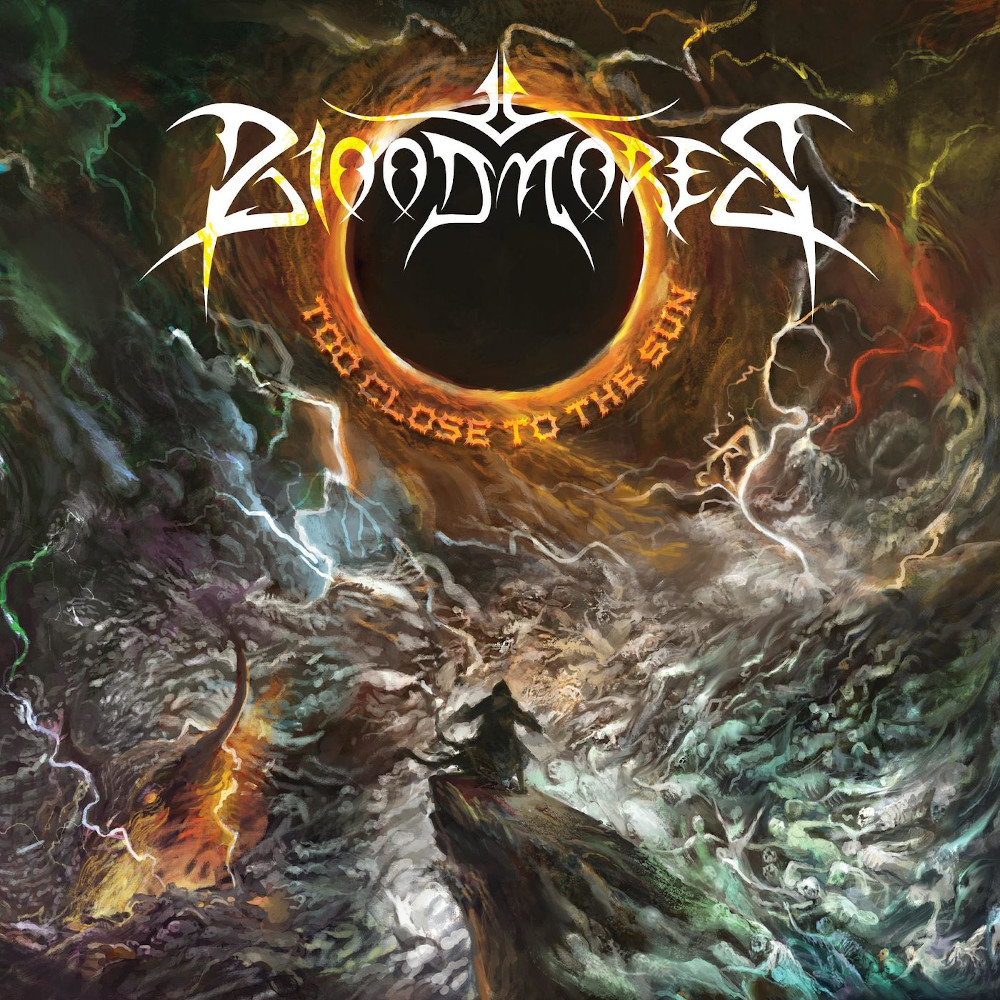
Bloodmores - Too Close to the Sun (2021)

Country: UK
Style: Death/Thrash Metal
Rating: 7/10
Release Date: 26 Mar 2021
Sites: Bandcamp | Facebook | Metal Archives

So Alex Cunliffe got in touch with me in February and said, hey, you liked the first Bloodmores album a couple of years ago, so how about an advance copy of the second, Too Close to the Sun? Well, I leapt at the chance, of course, and appreciated the coincidence that it was going to be released on my fiftieth birthday. Happy birthday to me, right? Well, then I got caught up in all sorts of things so I'm only now getting round to this. Apologies for the delay in this review coming, Alex!

I had a blast with The Seeds of Seasons and it sits on my highly recommended list for 2019 with an 8/10. It was energetic British thrash metal with an infusion of death metal, especially throuugh Cunliffe's vocals, and some tinges of progressive metal too, most overtly on the fourteen minute title track that closed the whole thing out. While I preferred the thrash to the death, I really enjoyed the balance between the raw energy of a band new to the studio and the maturity of songwriting that usually comes with a heck of a lot of experience.

Given the advent of COVID, I doubt they've built on that experience as much as they'd have liked in the gap between albums, because of lockdowns and venue closures. Perhaps understandably, therefore, I would call this very much a continuation, with the same things to praise as last time but without much new to add to that list. They're still fast and energetic, arguably at their best when they're blistering along at a rate of knots, with the tightness and power of a Toranaga, but they can also slow down and mix it up with panache. It's still thrash more than it's death but Cunliffe's vocal is still rough, maybe a little deeper into death growl territory but not much.

There are a few little changes like that to figure out, if my brain isn't deceiving me. I think he's a little higher in the mix too, again only subtly but enough that the vocals remain prominent even on a track like Entombed in the Fires of Armageddon's Womb, where it's gone for half the piece so that the band can shift into the instrumental mode that I adore so much. There are few bands out there who can riff and chug the way Bloodmores can and yet continue to maintain melody as they do so. Frankly, I'm not even in need of solos from this band, though I wouldn't turn any down. They're just worthy icing on an already delicious cake.

Perhaps this is a little less progressive than last time, with a running time that's ten minutes shorter and no song making it past six and a half minutes, but I don't see either as a problem. As great as the first album was, it was a little long and the title track followed suit. I don't have that complaint here, but I'll add that my favourite song has to be the most progressive one, White Noise, so I'm clearly not advocating for the complete removal of the prog metal side of the Bloodmores sound and they didn't do that. It's not a big change and White Noise suggests that I may be dreaming.

Really, I'm poring over this with a microscope to find what's changed, because it's mostly the same ol' same ol' for Bloodmores. They know what they do well and they do a lot of it here. This band is so tight that I could sit back, close my eyes and listen to the instrumental interplay for hours. In fact, I have. I'd prefer a different vocal style from Cunliffe, but he does the thrashy death growl well enough, so that isn't a complaint. Others may find it a highlight.

The downsides are relatively minor, though I think they're enough to mean a 7/10 this time out rather than another 8/10. One is that there's nothing as catchy as Save Your Prayers, which was the standout on the prior album. The title track is partway there and Husk is too, but neither of those is in the same class as Save Your Prayers, leaving this consistent but without an obvious song to scream to the rafters about. Another is that there's no real flow to the album so, as enjoyable as it is, it just ends. It doesn't end with an end, if that makes sense, and I wanted to hear the next song and the one after that, which never came. Instead, I just started over, which was almost as good.

So, thanks, Alex, for the advance copy that I'm reviewing almost a month after everyone else. This is a solid follow up from the chugging riff machine that is Bloodmores, if not anything more than that. I'm still keen to see this band live, because I have a feeling they're just going to dominate whatever stage they end up performing on. What I think they need to do now is match the riffs with hooks and they'll be unstoppable.

Thursday, 15 April 2021

Blaze Bayley - War within Me (2021)

Country: UK
Style: Heavy Metal
Rating: 7/10
Release Date: 9 Apr 2021
Sites: Bandcamp | Facebook | Instagram | Metal Archives | Official Website | Twitter | Wikipedia | YouTube

It seems odd to think of Blaze Bayley as a solo artist, but he's effectively been that since the previous millennium. I still think of him as the vocalist of Wolfsbane and Bruce Dickinson's replacement in Iron Maiden. The latter stint only lasted for five years and it ended over two decades ago, while I think of the former as a nineties thing, even though technically Wolfsbane reformed in 2007 with Bayley back on lead vocals. This is a solo album, though it's really Bayley effectively fronting Absolva, a band from Manchester who have five albums out with their own name on, plus another three under Bayley's, the Infinite Entanglement trilogy.

This is the first original album other than that trilogy that Bayley's put out as a solo artist in almost a decade, the previous album before them being 2012's The King of Metal. I haven't heard any of these solo albums, so I was interested to see what he sounds like nowadays. What I found is that he doesn't particularly sound like Wolfsbane at all but there's definitely some Iron Maiden here, not only in the musical approach of some songs but the lyrical approach too, most obviously when looking at the war (303 is about the 303 Squadron of the RAF, which was a Polish unit), but also in a look at the history of science, with songs about Alan Turing, Nikola Tesla and Stephen Hawking.

However, Maiden weren't the obvious influence for me, even if the title track comes out of the gates like a Maiden blitzkrieg. As the album ran on, I found that the Maiden influence could really be seen as a Wishbone Ash influence, they being the true source of the famous twin guitar Maiden sound. It's here in a lot of intros, but when it continues into songs, the sound more like Wishbone Ash than their most famous devotees. Warrior is a completely new song, not a cover of the one on Argus, but it still has a Wishbone Ash mindset to it.

The other obvious influence I heard is Saxon, which surprised me, but it's very clear in songs like Pull Yourself Up and 18 Flights, while The Unstoppable Stephen Hawking moves well from Wishbone Ash to Saxon as it runs on. Bayley's voice is more reminiscent of Biff Byford than Bruce Dickinson; he sounds more working class than the Air Raid Siren and his tone and intonation hint at the Saxon frontman. And hey, it's hard to not see 18 Flights as a sort of spiritual sequel to And the Bands Play On, detailing not a festival set but an entire South America tour, including a gig in Chile that was stopped because of an earthquake and a likely tsunami. It's dedicated to the people of Coquimbo.

I like this sound and not only as a form of alternate history, as if it had been Saxon rather than Maiden who had brought that Wishbone Ash twin guitar sound to the NWOBHM era. I was a little wary that a Blaze Bayley album might seem derivative of his former bands, as Paul Di'Anno's albums often tend to be, but I didn't get that feeling at all. He's doing his own thing, whether it be blistering metal in War within Me; hard and heavy chronicles like 18 Flights or a ballad like Every Storm Ends that rocks itself up in the middle. There's some prog in here too, perhaps most notably in Pull Yourself Up.

I do need to find a lyric sheet because, while Bayley is up front and clear in some songs, like 18 Flights, he's a little lower in the mix than I expected him to be on some others, especially when guitarist Chris Appleton is in full flight, like on the title track. That was a real surprise to me as, while War within Me is a fast and furious number, the band seems to be more energetic than its singer. That's not the case across the album and it's not due to any lacklustre performance by Bayley—it's just how the song was written—but that seems odd on something that presents itself as a solo album.

Now, I already knew coming in that Blaze Bayley was a talented singer. This doesn't dissuade me of a notion like that and he still sounds good but, had I known nothing about him, I might well have left in search more of Absolva than what he might have done elsewhere. They impressed me here and I have to wonder what they sound like without Bayley and with Appleton stepping up to the mike instead.

The Limit - Caveman Logic (2021)

Country: USA/Portugal
Style: Hard Rock
Rating: 7/10
Release Date: 9 Apr 2021
Sites: Bandcamp | Facebook

Here's a new band full of musicians who aren't at all new and I have no idea how to categorise them. I labelled this hard rock as a very vague catchall, and that's one obvious ingredient, but you do need to know a lot more than that. There's a lot of punk in here, some psych, some blues, some garage, some psychobilly, some post-punk. If Lemmy was looking over my shoulder, he'd just call it rock 'n' roll. What it isn't is a metal album, even with sixty per cent of the band known for their work in a couple of metal bands. And, before I rabbit on any longer, I should really introduce those musicians.

Handling vocal duties is Bobby Liebling, who's fronted American doom metal pioneers Pentagram for half a century, since they were founded in 1971. Also from the world of doom metal are two members of a Portuguese band called Dawnrider. That's Hugo Conim on guitar, which he's played in Dawnrider since that band was founded in 2004, and Joao Pedro on drums, his responsibility there since 2014. The other guitarist is Sonny Vincent, a prolific solo artist who was in an early New York City punk band by the name of the Testors; he also spent nine years on the road with Moe Tucker and Sterling Morrison of the Velvet Underground. That leaves Jimmy Recca on bass, best known for being an early member of the Stooges.

There's a lot to note here. For one this has serious garage rock sensibilities. It's lo-fi, but it's also well produced. They didn't just show up, plug in and press record, but the album maintains that live in the studio feel, even though the sound engineer clearly worked hard to get everything just right and the producer knew exactly how to tweak things. It's one of the most immediate and urgent recordings I've heard in a long time and that's aided by a deliberate lack of frills. Nobody's messing around ao clever things in the studio. They're just playing the hell out of their instruments.

For another, the sound is punk but the mindset feels more hard rock. This follows the rules instead of breaking them, at least for the most part. It's clean and riff driven, with guitar solos everywhere. If a song isn't specifically doing something else, Vincent is slipping in a quick solo because he can. He's all over Kitty Gone like a rash. And this makes for a fascinating mixture of two related but very different styles, both of which require this to be played loud.

The most obvious influence may be the Stooges, even though Liebling doesn't always sound like Iggy. That's certainly there at points and he finds the right snarl when he needs to, but he's not channeling any single voice. He sings his own way and only hints at another voice when the song suggests it. He's Glenn Danzig on Over Rover, which is a bizarre take on the Misfits with a doomy riff that reminded me of Atomic Rooster. There's even a spoken word section over a creeping bass and weird guitar noises.

This play with genres is fascinating. There's some Adam and the Ants in Over Rover too and it's overt at the beginning of Fleeting Thoughts, one of the snarling songs for Liebling, which he delivers with a real relish. Human vs. Nature is quintessential garage rock but it has lots of psychobilly in there too, like the band overdosed on the Tommy Gunn Theme. Enough's Enough is straight up Cream, a bluesy performance from Vincent and a dense heavy blues rock sound. Death of My Soul takes the Doors into doom rock.

I liked this a lot, even though some of these songs are predictably short, down to Life's Last Night at a mere minute and a half, even though it features my favourite line: "Lots of rope and not much hope." Six others fail to reach three minutes and only one makes it past four. There's just not much intention for anything to do more than the core of what it's supposed to do. Nobody's indulgent, even in a solo-rich song like Kitty Gone, and nobody wants to spin out choruses ad infinitum, like the Eagles and the thoughts they had about limits. I think there's only one intro here that goes beyond a foreshadowing riff and that's six seconds long.

I have no idea what audience this will reach in 2021, but it deserves to find one. It seems very much to me that they should support Alice Cooper on his next tour. It might seem odd to suggest the godfather of theatrical rock should sign up a band who I can't believe have a stage show, but they fit nicely in his recent dabblings with garage rock. The Limit could easily cover Go Man Go without it seeming out of place amidst their own songs. Of course, I have no idea at all if they're planning to tour or even record again. I hope so.

Wednesday, 14 April 2021

Evanescence - The Bitter Truth (2021)

Country: USA
Style: Alternative Rock
Rating: 7/10
Release Date: 26 Mar 2021
Sites: Facebook | Instagram | Official Website | Twitter | Wikipedia | YouTube

I like Evanescence, even though it's not the fashionable thing to do among metal cognoscenti. What's important to note here is that I've never seen them as a metal band, even if they added some metallic crunch to their gothic tinged alternative rock sound, and that what pissed me off in their massive hit, Bring Me to Life, was the rap line they added to the chorus. Sure, it helped them crack the big time and I'm happy for that, but the demo version doesn't have that and it's better for that. Both these points have meaning here and I'll explain why.

While I've always been a little bitter that the trendy rap bit meant that Evanescence got the success that Lacuna Coil deserved, I'm not letting that thought define me for eighteen years. The reason that I mention it is because, once they broke the mainstream, they ditched that angle and it's nowhere to be found on this album. So anyone who doesn't want to hear that doesn't have to worry about it. This can safely stand or fall on its own merits, outside of any flirtations with trendiness.

Well, mostly. It became obvious pretty quickly that the best songs here are the more overt pop songs. Every time I hear Evanescence, they reinforce to me that they really don't need to the metal aspects, because it really isn't what they do. They're a damn good pop band who are still somehow pretending to be a metal band because, I don't know, it lends them street cred or something. Amy Lee has a voice that could sing metal, but that doesn't mean that they're a metal band. Don't look at them that way and they'll likely improve in your eyes.

It was Yeah Right that underlined that for me here. There are some interestingly powerful drums on Broken Pieces Shine, the first song proper after the decent intro, Artifact/The Turn, and some neatly resonant bass on The Game is Over, but these songs are heavy without ever being heavy metal. After those two, Yeah Right shone out for me with its teasing pop sensibilities. And other songs underlined it further. Wasted on You sounds to me like Emilie Autumn singing Creep by Radiohead and whatever crunch is there really doesn't matter. My brain was stripping it away and listening to the pop cover as it played.

And, as the album runs on, I found myself doing that often. Whenever a song brought in a quirky pop element, my brain automatically applied the de-crunch filter to hear what it would sound like deep in its essence. The clockwork that kicks off Better without You echoes Emilie Autumn's quirky steampop and the song should have carried on in that vein. Except the crunch shows up to hide it because that's what it's apparently supposed to do. There's a neat Kate Bush style backing vocal on Use My Voice, in different sections to the more routine woah woah one, and that should have helped shape the song, but it's mostly drowned out.

Now, there are points where the crunch works and points where the album doesn't even when it's not obvious. Far from Heaven is a musical theatre style ballad that only serves to highlight how much Amy Lee is far more comparable to someone like Lady Gaga than someone like Floor Jansen. And, after it, is Part of Me, with some decent doomy riffs that are perfect for Lee to soar over. So I wouldn't want to throw out any absolutes here, especially given that I enjoyed this album. I'm going with a 7/10 but it's worth mentioning that, as slick as this is and as obviously commercial, I still much prefer the Marianas Rest album I reviewed before this that also got a 7/10 from me. And I guess that's the bitter truth.

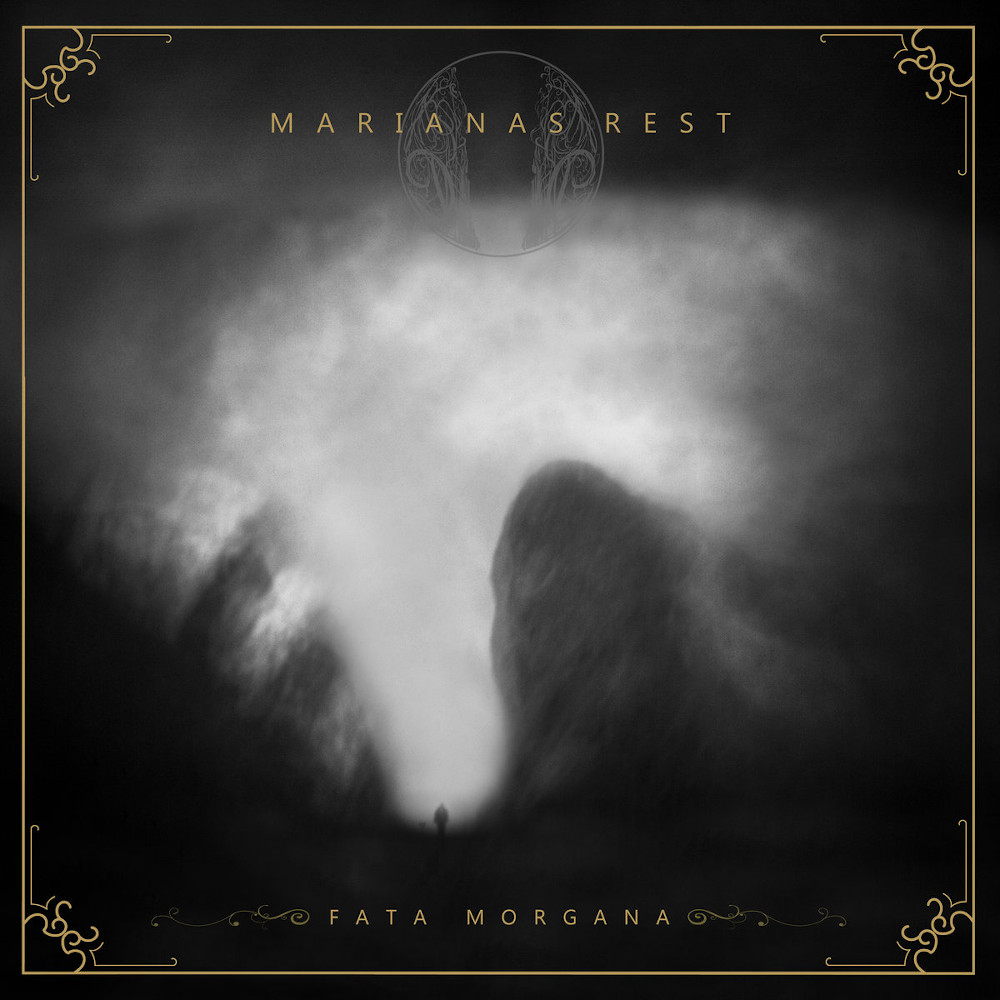
Marianas Rest - Fata Morgana (2021)

Country: Finland
Style: Melodic Doom/Death Metal
Rating: 7/10
Release Date: 12 Mar 2021
Sites: Bandcamp | Facebook | Instagram | Metal Archives | Official Website | Twitter | YouTube

I like this album, the third from Finnish melodic doom/death metallers Marianas Rest, but I can't help but feel that I want to like it more than I do, and, after multiple listens, I'm trying to figure out why.

The band are certainly very comfortable in the genre, unsurprising given that they've been playing in it since 2013 and they're signed to Napalm Records. There are eight songs here, most of them patient and lengthy without ever becoming epics. With the exception of Horrokseen, which is a piano/cello interlude of sorts, there's only one piece here shorter than six minutes and only one other shorter than seven, but the longest, The Weight, only reaches nine and a half. That it's also the best is telling. Marianas Rest certainly know how to make a song breathe.

Initially, on opener Sacrificial with its long intro, they start out sounding like funeral doom. These are slow riffs and Jaakko Mäntymaa's voice doesn't show up for two minutes. Arguably, even though it's a clearly gothic doom/death release by that point, it doesn't really shift out of a funeral doom gear for two more, reminding even more of Paradise Lost when that happens. They do speed up at points, the shortest song, Pointless Tale, being the most obvious example, but there's a starkness to this that's a constant companion, even when at its most lushly gothic, with elegaic melodies and spoken word.

Oddly, given that I rather like this approach towards funeral doom/death, it's ironically Pointless Tale that, well, showed me the point. The music here is beautiful, if laden down with melancholy—it seems to have a lot fewer riffs than it actually does, as most of them are cunningly disguised as melodies—but Mäntymaa's voice is a little harsher than I expected, especially during his almost spoken section early in Pointless Tale and but also when he ramps up as the song runs on. There's a layer of keyboards behind him, that are enticing but utterly content to do their own thing and Mäntymaa doesn't seem too happy about it. The song feels like he's raging against a force he can't battle, like the sun coming up and that may be the key to the album.

My favourite song here is definitely The Weight. It's slow and soft and melancholy and, when it finds a crunch, it does so with a nice and achingly slow riff. Again the keyboards float around the music like a morning fog and the vocals battle it, fruitlessly in the context of the song, but with a strong effect on the overall sound of the album. I think I like The Weight the most because of the riffs. It doesn't really do anything else different to its peers here, but maybe that's enough for the intensity to build a little more effectively. It reminds a little of black metal at points, which this album mostly isn't.

There's majesty in the early build, somewhat like a processional, and Mäntymaa snarls effectively. It grows from there, with a palpable heaviness and a real sense of isolation, as if this music is echoing around the shell of an old cathedral, like the vibrato generated by a ghost choir. There's a strong timelessness to it that befits the longest song on the album. So it's a great song in a lot of ways, but maybe its riffs are what sell it. They're not disguised here, even though they're still melodic. They're out in the open and they're an anchor that I think much of the album does away with.

And so I like this a lot, but I want to like it more than I do. Every time The Weight comes around, it's an obvious 9/10 song for me but, as enjoyable as the rest is, those other songs don't do what The Weight does. Maybe it's the riffs and maybe it's something else but whatever it does they don't do and so I'm stuck with a 9/10 song on a 7/10 album that could have been 9/10. Maybe the next one will be. I want to hear it already. Fortunately, there are two previous albums, 2016's Horror Vacui and 2019's Ruins, that I can explore in the meantime.

Tuesday, 6 April 2021

Ken Hensley - My Book of Answers (2021)

Country: UK
Style: Rock
Rating: 7/10
Release Date: 5 Mar 2021
Sites: Facebook | Official Website | Twitter | Wikipedia | YouTube

While it's not without its flaws, this is an interesting album and not merely because it's the final one to be released during the lifetime of Ken Hensley, who died last year at the age of 75. I think I find it fascinating because I know Hensley best as a keyboard player, most obviously for Uriah Heep back in the seventies but also for Blackfoot in the eighties and a string of others in the decades since, up to the fantastic Blind Golem album earlier this year that was my Album of the Month for January. Yet, I would say that this album focuses more on his other talents, moving as it goes from a guitar album to a vocal album.

It starts with Lost (My Guardian), an unusual mix of sixties melodies and seventies guitar, that's at its best during the weeping Hensley guitar solo in the middle. The Cold Sacrifice starts out with guitar, a riff leading into a solo, and we wonder for a while if it's going to be an instrumental. For three out of the first four, The Silent Scream starts with guitar too, though not as obviously; we know that voice is going to come in pretty quickly. In between those, Right Here, Right Now kicks off as a keyboard piece, parping away like a Europe stormer, but it calms down, the music stepping aside so that we can listen to Hensley sing.

And that's what this becomes. As the album runs on, the keyboards make themselves scarce and the guitar follows suit, albeit without ever leaving. There are a quite a few points in later songs where I'd focused so much on Hensley's voice and the words that he's singing that I kind of forgot there was any music playing behind him. This starts with Cover Girl, still in the first half, as it's voice over piano and backing that sounds as carefully absent as a house band deliberately not trying to upstage the star in front of them. There is a solo here and it's a nice one but it's almost a token in between verses so the singer can grab a swig of water.

Light the Fire (in My Heart) continues this, as if Hensley is shifting into a Dan McCafferty ballad mode, and Stand (Chase the Beast Away) is the epitome of this. It's a great song, one that I'm sure vocalists will be queuing up to sing it themselves, from Bette Midler to Tom Waits. It has a real majesty to it, a patient motion, but the primary instrument is Kensley's voice and the secondary is the backing vocals swelling behind him. There are people playing things here, but they could frankly all go away and this would stand out as a stark but effective a capella piece.

It's almost a surprise when The Darkest Hour kicks off with more weeping guitar. I say weeping, as it's used far more as emotion here than it is an instrument to be explored on its own merits. The emotion here is usually melancholy. There's a deep sadness that infuses the album, perhaps because Hensley was feeling his own mortality. This is a posthumous release, after all, and it's difficult to listen to it in any other way than as a eulogy from his own hand. It's as if he knew and stripped these songs bare to leave a simple honesty, sung from the heart, that resonates to us.

I liked this album, even though it isn't what I wanted from the man who wrote organ-driven songs like July Morning, Easy Livin' and Stealin'. It's what he wanted to make at this late point in his life and it's poignant and emotional. Thank you for all the music, Ken, whether it's Heep or Blackfoot or the more obscure albums you made way back when, with bands like Toe Fat and Weed. There's a vast catalogue to explore beyond the obvious. This is a fair coda to it.

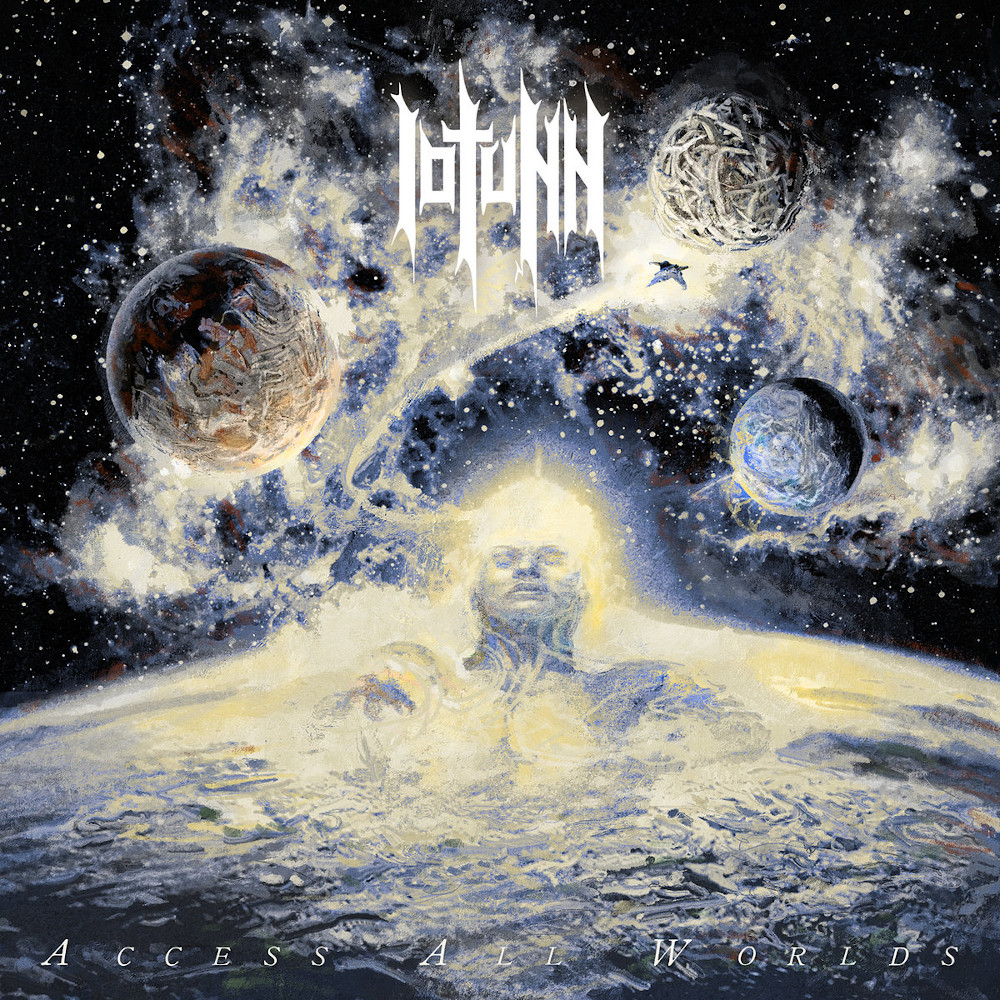
Iotunn - Access All Worlds (2021)

Country: Denmark
Style: Progressive Melodic Death Metal
Rating: 8/10
Release Date: 26 Feb 2021
Sites: Bandcamp | Facebook | Instagram | Metal Archives | YouTube

You might be forgiven for thinking, after a minute of the opening track, that Iotunn are a progressive rock band. The song is Voyage of the Garganey I and it sounds like they've been listening to a heck of a lot of Pink Floyd. Well, for that minute. You might also be forgiven for thinking, after another minute, that that was just an intro and they're really a melodic death metal band. Well, for that minute and a little more besides, until Jón Aldará's vocals switch completely, from death growl to clean and soaring and it's clear that they're all of these things at once and that means progressive metal above all.

Perhaps the key clue was in how clean they are when playing melodeath. They're clearly not trying for an evil death metal sound in any fashion and the result is never brutal. The production is crisp and the guitars aren't downtuned at all. There's death here, to be sure, but, if it was ever what drove Iotunn, they evolved past it. It's fair to suggest that this is a heavy album that doesn't actually feel heavy, as I was constantly drawn to the prog rock side of their sound and its constant melody often distracts from the heavinss.

Aldará has a warm death growl, so it's not too surprising to realise that his clean voice is rich too and it's effortless. He does a lot to impress with that clean voice here but he never seems to be trying too hard. He never has to stretch for notes that are sustained or comparatively high. I'd call out his voice as one of the highlights here, but another thing that's deceptive is how everyone else is a highlight as well. I listened through almost this entire album before I realised that the lack of standout moments on guitar was because the guitars, courtesy of brothers Jesper and Jens Nicolai Gräs stand out all the way through. Pick a random track and skip to a random place and their guitars will be doing something interesting.

And, once we've got past the introductory sections of Voyage of the Garganey I to get a grip on what this band actually do, their consistency takes over. Like the guitars, the songs don't tend to stand out from each other, not because they're not good enough to but because they're not bad enough too. It's quality throughout and only The Tower of Cosmic Nihility really emerged for me as a standout, even if I couldn't explain why. Going back and back, I think it's actually the riffing late on in the track that's so engaging for me, but that's not its only highlight.

These are dense songs with a lot going on in them and it's not easy to grasp what any of them do on a grand scale on a first listen. That applies for Laihem's Golden Pits, which is under five minutes long but it applies all the more as the song lengths expand. This is a generous album at over an hour and three of its seven songs exceed ten minutes: the title track, Waves Below at the heart of the album and Safe Across the Endless Night, which closes it out with almost fourteen minutes of epic composition. While I enjoyed the experience first time through, I enjoyed it a lot more on a second and each further listen has added to my understanding of what they're doing and how well they're doing it.

This is certainly a grower of an album, one to play and replay in order to fully appreciate it, but I'd say that a better way to appreciate it is to walk away for a little while, then come back and play just one of the songs. I did that with The Tower of Cosmic Nihility, being my favourite song from the outset, and it felt all the more vicious in its intro, more emphatic in its drumming and more complex in the way that it builds. It's a gem of a track. The reason this album is so good is that it's not alone. Try that with any of the other songs, especially Access All Worlds, The Weaver System and Safe Across the Endless Night and you'll get very similar results.

I have to go with an 8/10 for this, but it's still growing on me. I have to move on to other albums, but I'll be coming back to this one. They're Queensrÿche as an extreme metal band, with sides of Ultravox and My Dying Bride, and this may well end up with a 9/10.