Thursday, 12 October 2023

Night in Gales - The Black Stream (2023)

Country: Germany
Style: Melodic Death Metal
Rating: 7/10
Release Date: 29 Sep 2023
Sites: Facebook | Instagram | Metal Archives | Official Website | Twitter | YouTube

I'm not going to be flippant and post a skimpy one paragraph review saying that this eighth album from German melodic death metallers Night in Gales is melodic and deathly, but that is kind of what it boils down to. Throw it on and it's unmistakably melodic death metal. After it ends, eleven songs and three quarters of an hour later, there really isn't much more to say. It's kind of a melodic death equivalent to *insert random Cannibal Corpse album here* in the brutal version of the genre. This is textbook stuff, but it's nothing more than textbook stuff.

So, don't expect anything new to be found here at all, the only variance to the band's core sound a surprisingly long intro to The Black Stream, but, boy, is this elegant stuff. It's a pristine example of a sound that's hard hitting and heavy but also quintessentially melodic, down to its very essence. I couldn't escape the melody for a single second, the guitars running up and down melodies, always moving, but it never gets soft except for that peaceful single intro.

The very opening of the album, as Tears of Blood kicks off, is the precise opposite, a harsh, abrasive noise that reminds of a Merzbow album, but it's gone in ten seconds and, once it gets past that, it continues to be elegant melodic metal throughout with the harsh edge of fast drums and growled death metal vocals to perpetuate the contrast. So, from one perspective, this is a genre perfected with every moment doing exactly what it needs to do. If any of these songs popped up on the radio, I'd enjoy and think to myself that it was exactly why I like melodic death metal.

However, from another, it boasts very little imagination. Once through one song and into another, enjoying everything but forgetting it almost immediately, I thought that this would drift into the background. I was surprised to find that it didn't, but it's the same songs that stand out each time through.

Transition to Doom has a little more perkiness to it and the second half finds a neat groove. Much of the joy is in the guitarwork from Frank and Jens Basten and their stellar delivery continues into Final Place and Laughter of Madness, which may be my favourite song here. The best guitarwork is later though, in the solos on Return to Chaos, which absolutely shine. The other reason that I love Laughter of Madness is that it's also elevated by the vocals of Christian Müller, which hits the spot majestically, aided I think by echoing backing vocals. He's solid but relatively generic otherwise.

Then there's everything else.

The problem is that I'm starting to stretch to say anything, whether positive or negative. I brought up Cannibal Corpse as a comparison, because I enjoy them too but find it very difficult to tell each of the songs on their albums apart. They cease to be collections of songs and become long slabs of a particular genre instead. If we enjoy the genre, whether it's the brutal death of Cannibal Corpse or the melodic death of Night in Gales, we're going to enjoy their albums. We'll sit back or dive in and love the immersion. If we want something different, we're never going to find it with either of these bands and we'd probably be better off skipping past them and looking elsewhere.

So, if you love pure melodic death, add a point to the rating. If you want originality, then drop one instead.

Murasaki - Timeless (2023)

Country: Japan
Style: Hard Rock
Rating: 7/10
Release Date: 16 Aug 2023
Sites: Facebook | Metal Archives | Official Website

Timeless is a highly appropriate name for this album, because it sounds good in 2023 but hearkens very clearly back to the early seventies, the primary inspirations obviously being British hard rock bands with the heavy organ sound, most obviously Deep Purple. In fact, their very name translates as "purple" and it was adopted by the band's founder George Higa to become George Murasaki. It should be mentioned that Purple and Murasaki are contemporaries, because this band was formed in 1970, pioneering rock music in Japan in the process. The reason they're not better known today outside their home nation is that they didn't release an album until 1976 and they only managed two before splitting up in 1978.

Well, four members of the band that released those two albums got back together in 2007, with a pair of new colleagues, JJ on lead vocals and Chris on bass, and this is their third album since then, following 2010's Purplessence and 2016's Quasar. Both have history with the Murasaki family, JJ the lead singer of George Murasaki & Mariner at the tail end of the seventies, and Chris also the bass player in another Japanese rock band, 8-Ball, which is led by two of Murasaki's sons, Leon and Ray, who both played for Murasaki during a brief earlier return in 2000.

I believe they've kept on with their old sound but added a slightly more metallic edge, as we might expect from a band that boasts two guitarists. And yes, I do mean "slightly" there, because there's a massive range from Younger Days to Don't Look Back! and only some of it would feel at home on a metal album. This is primarily hard rock and, wherever it goes musically, it never drifts far from that core Deep Purple inspired sound, which is led by Murasaki himself on keyboards with a swathe of glorious riffs and runs.

Younger Days features a tasty guitar solo, but it's primarily a piano-driven ballad laden down with plenty of orchestration. It's easily my least favourite song here, though I rather like Tears of Joy, a shorter song that does much the same thing but without the orchestration. I prefer the heavy end and that shouldn't surprise anyone, but Don't Look Back! is a strong song for other reasons too. It starts out symphonic, almost like an ELO song, then launches into prog metal with a strong guitar against a wonderfully prowling bass backdrop. It has a real doomy weight to it, sitting somewhere between Black Sabbath and Witchfynde, which isn't what I expected to say a few songs earlier.

I believe the prog aspect is relatively new too, though I've only dipped into their seventies albums. It was always there, I guess, but not as a focus. Now it often is, starting with Free Your Soul and Let It Be, which picks up from a weaker The Fire is Burnin' with a wonderful organ intro and some neat prog exploration. It's also a playful song, following a straight song and a belter, as Raise Your Voice opens up with power, barrelling along in the midsection like Space Truckin'. The Fire is Burnin' does little for me, but the bookends around it are both highlights of the album.

While Deep Purple are very much the obvious comparison, they're not the only one. There's some Uriah Heep dotted throughout but that influence really comes out to play on the second of a pair of bonus tracks. They're Starship Rock 'n' Rollers and Double Dealing Woman, both re-recordings with the current line-up of earlier material. It's Double Dealing Woman that's clearly inspired by Heep as much as Purple, and it features guest appearances by Kyoji Yamamoto of Bow Wow and a Japanese guitar hero who goes by Char.

Perhaps it's the British influences from the seventies that prompt them to sing in English, but that has always been their approach from the very beginning. Then again, their current singer doesn't appear to be Japanese even though he technically is, having been born in Japan. JJ stands for John Joseph and his surname is Patterson, perhaps explaining why there's no accent in his singing, even though his predecessor in the seventies, Masao Shiroma, certainly had one, as fluent as he seems to have been in English.

I liked this album a lot and found it hard to move on to another one. Perhaps most notably, it never feels long, even though the the two bonus tracks bump up the running time almost to an hour. This skips along effortlessly and feels a lot shorter than it is, possibly because it's broken up well with a pair of ballads and a more metallic song. Their regular sound therefore breaks down into a shorter set of chunks and it's all very accessible.

Wednesday, 11 October 2023

Prong - State of Emergency (2023)

Country: USA
Style: Groove/Thrash Metal
Rating: 7/10
Release Date: 6 Oct 2023
Sites: Facebook | Instagram | Metal Archives | Official Website | Twitter | Wikipedia | YouTube

Well, here's an interesting release. I found Prong early, when they played a raw form of crossover, that was often straightforward punk as it was thrash metal, but they had changed considerably by the time I could introduce my son to their music. He's a fan, but not of everything they've done, as there's such a variety there. I don't believe I've heard their previous album, Zero Days, from 2017, but it seems to have trawled in elements from across their career. This does likewise, though it has a real vicious streak as it kicks off that sadly fades away relatively quickly.

The vicious track is The Descent and it initially reminds heavily of Slayer in old school thrash mode, but finds more of a groove metal vibe as it grows. Moving from Slayer into Pantera ought to make a lot of fans happy but they're not done with just those influences. There's some of that old school hardcore here too and the following title track gets bouncy with industrial flavour that only builds with the song. Main man Tommy Victor, who still handles both vocals and guitars, almost becomes an MC on this one.

He does more of that as the album runs on, generally becoming less thrash and more groove with the industrial texture never far away. That holds mostly true, though Back (NYC) ten tracks in is an aggressive hardcore song that goes against the flow in a welcome fashion. Oh, and there's also a song called Disconnected that might just be there to mess with us, given that feels like a post-punk pop song by someone else that's given much heavier treatment here, as if it used to be a Depeche Mode song and Prong wanted to kick it into high gear.

As far as I can tell, Disconnected isn't a cover, but there is one of those here to wrap up the album and it's just as unexpected, because it's Rush's Working Man. It's a really good cover, feeling close to the original but run through a notably heavy filter for a sort of Sabbath does Rush approach. It's especially strong in its instrumental midsection, which, for all the aggression of The Descent and Back (NYC), is the most joyous part of this album for me.

The other element here that I should call out is what feels almost like a party atmosphere, albeit here and there rather than continual. One minute, they're partying on a song like Non-Existence, like Victor wants to jam with Anthrax on a metal take on a pop punk song; the next they're acutely serious, playing up a politically aware angle that's purer hardcore on a song like Who Told Me. The style shifts but crucially so does the attitude. On the livelier songs, they're chill and enjoying life. On the serious ones, they're back to being pissed at whatever the song is about. It can seem a bit odd that they can be so comfortable being both at once.

It feels to me like the more serious songs are going to be more popular with Prong's punk fans and likely their industrial fans too, as they're all about drive and message, though they're still pretty accessible to a thrash audience. However, those thrash fans may well prefer the livelier songs that play more with riffs and melodies. Let's see if those different fanbases receive it differently or if, by this point, Prong fans are just on board with all these musical elements because they've stayed with the band as they've travelled through all of them.

Certainly, as a thrash fan, I'm less impressed with songs like Obeisance, which work as bludgeoning rhythm, and more enthused with the blistering speed shown in the first half of The Descent or the musicality in the middle of Working Man. Then again, sometimes songs do shift focus, Compliant a prime example, and that can affect our reception greatly. Initially, it's very much shouty hardcore, a hard message over jagged punctuating rhythms that I'm not particularly fond of, but it gradually turns into a metal song with real flow that I can't fail to see as an album highlight every time.

And so this is a mixed bag for me. It's all done well, but I wanted more of how it started and how it ended up without as much of what came in between. It doesn't get old though, as fresh on a third time through as a first, so it's definitely strong material. If you can enjoy the shifts in genre, this is going to be a welcome new album from Prong, especially as it's their first in six years. Now, I need to find out how my son will receive it.

Compassionizer - A Tribute to George Harrison (2023)

Country: Russia
Style: Progressive Rock
Rating: 7/10
Release Date: 9 Oct 2023
Sites: Bandcamp | Facebook | Prog Archives

I've reviewed a few Compassionizer albums, partly because Ivan Rozmainsky continues to send me copies and partly because I'm thoroughly enjoying their brand of chamber prog, a genre that was completely new to me when I first heard An Ambassador in Bonds. Here's another one, but it's the most unusual of them thus far, because, as the title suggests, it's not of original material, at least not entirely. All five of these songs were written by George Harrison, two of them for the Beatles and three for solo records. They range from 1965 to as late as 1987 and they all featured vocals but Compassionizer reimagine them here instrumentally.

They're an interesting set too, most of which are new to me. The only track I can play in my head is Here Comes the Sun, from the 1969 Beatles album Abbey Road, though of course it's very different here. The opener is an earlier Beatles song, If I Needed Someone, which I'm sure I've heard but I'm unable to recall. That's from their Rubber Soul album and is an important track because it's one of the songs that introduced the sitar to pop/rock music. That's right here in this version too, albeit I presume in synthesised form. The three solo tracks I've probably never heard.

I'm not a particular fan of tribute albums, because most of the tracks on them, indeed most cover versions period, are so close to their originals that there seems to be little point to them. I tend to look for reimagination in cover versions, where songs can be given an entirely new life by bands or artists working in completely different styles, such as the wonderful Rubáiyát double album that was released for Elektra's fortieth anniversary, where many contributors were so successful that I prefer their versions to the originals.

Of course, the versions of these songs are all wildly different from the originals, because as varied as the Beatles got, they aren't known for their chamber prog. Now, had I listened completely blind instead of doing some basic research first, I'd still have recognised Here Comes the Sun, but that's quickly diverted into entirely new musical territory and it's all the better for that.

I did check out the other songs before listening to these versions, but one listen was not enough to connect the original with the reinvention in my mind, so they played as effectively new music, as if I was listening to a new Compassionizer release rather than a tribute. They even flow into each other, so that individual songs play more like movements in a suite. I have a feeling that, for those of you who know these songs backwards, that might still hold true, because, even though this is a tribute album, this material was treated as a starting point rather than a be all end all and so the music starts out as George Harrison songs but gradually becomes Compassionizer tracks.

What surprised me the most from checking out the originals is that, even though George Harrison is known as a guitarist, these songs are often known just as much for their vocals, indeed lyrics, as for their guitarwork. As Compassionizer play them entirely instrumentally, that means that what most people know from these songs simply aren't here, but they're still able to create fascinating music from that bedrock. In particular, The Light That Has Lighted the World, from the 1973 album Living in the Material World, is well loved for its lyrics. Instead, Compassionizer focus more on its use of slide guitar and improvise that into something new.

The track before that is Isn't It a Pity, originally on Harrison's 1970 album, All Things Must Pass. It has a hypnotic drive to it, so that we almost don't pay attention to Harrison singing, and that's the element that Compassionizer run with here, even though the song runs a few minutes shorter. The track after it is Just for Today, from Cloud Nine, and it used to be a quiet and simple song, driven by piano but with some excellent slide guitar. That's the album that gave us Got My Mind Set on You, but this is a better piece to reinvent and Compassionizer build on its piano nicely.

I see that they're calling this a short album, but it's a really short album, even shorter than their previous release, As Smoke is Driven Away, which they labelled an EP. However, before you start to wonder about value for money, I should point out that it's available on Bandcamp for a price that's whatever you want it to be, all the way down to free, so it's excellent value for money, even at only twenty-three minutes. Free means that you have no excuse not to check it out, but I recommend a deeper dive into what Rozmainsky and his colleagues have been doing under the Compassionizer name, because they're probably unlike anything you've ever heard before and that's a good thing. Even if you grew up on George Harrison.

Tuesday, 10 October 2023

Trevor Rabin - Rio (2023)

Country: South Africa
Style: Rock
Rating: 8/10
Release Date: 6 Oct 2023
Sites: Facebook | Official Website | Wikipedia

I don't know where Eigenflame are from, beyond the country of Brazil. Maybe they're from Rio but what's clear is that Trevor Rabin isn't. He's from South Africa, though he moved to London and Los Angeles to further his career, which of course he did because he's the same Trevor Rabin who spent a dozen years in Yes and plenty more as the composer of scores for movies of the calibre of Con Air, Armageddon and National Treasure, to name just three blockbusters. His solo albums mostly sit in the previous millennium, but he released the instrumental Jacaranda in 2012 after a twenty-three year gap and this sixth solo album arrives eleven further years on.

I don't know why it's called Rio, but it's bright and bombastic like a Rio carnival from moment one with Big Mistakes featuring layers of vocals, a surprisingly edgy guitar solo and a la la la section to wrap things up. It's definitely commercial but it also has bite, like a very pretty venomous snake. It works wonderfully as an opener, but Push adds intricate prog chops right off the bat and escalates substantially. It's a gem of a piece, a variety of instruments dancing off in what seem like different directions but still sounding fantastic together. It's a masterpiece of arrangement choreography.

For all its instrumental flamboyance, Push is a song with a voice delivering lyrics and Oklahoma is keen to underline that, the instrumentation still a little intricate but mostly serving to build those vocals until the guitar solo can take flight. It's much more subdued than Push but it's still a big and brash number that screams for volume. We fly along with it until we realise just how much is going on beneath it and start to truly pay attention. I don't know how long Rabin has been chipping away at this album, but it feels like it's been gifted with a serious amount of time and attention.

Most of that work was done by Rabin, not just because he's the songwriter but because he plays an impressive majority of the instruments. All the work on guitar and bass is him, and the keyboards. He sings lead vocals throughout and adds backing vocals on all but one track, many of these songs are collaborations between his voices. He provides drums and percussion for four tracks, with Lou Molino stepping in for four more and Vinnie Colaiuta for one more. He adds mandolin on three of these songs and banjo and dobro on two. That just leaves Charlie Bisharat's violin on Push and the backing vocals of Dante Marchi and Liz Constantine on a couple of tracks.

A lot of these tracks evolve like that, because Rabin is working from a very broad canvas here. The core sound is pop/rock with a heavy side of prog, but he moves in a number of musical directions on this one and often against our expectations. Paradise, for instance, starts out as a country stomp but evolves into a vocal harmony, with both those backing vocalists on board. Goodbye is a good ol' hoedown of a country rock song. Tumbleweed starts out almost like the Beach Boys, entirely vocal (albeit with effects) for well over a minute. These Tears goes for a grand Pink Floyd sweep. There's lots of Paul Simon on Egoli, a song that wouldn't be out of place on his Graceland album. And Toxic wraps things up as a jagged blues number that turns into something else again.

You might expect that all this admirable genre-hopping might make the album a little incoherent, but very little of it jars. Mostly it feels like Rabin's exploring a lot of musical territory but trawling it into a consistent core sound, every departure adding a little something before he brings it back in to the core. Only perhaps Goodbye and Egoli really stay somewhere else and I'd call the latter a highlight, along with Push and Paradise, three very different songs to lump together.

And the overall result is strong. This is perky and persistent and it gets under your skin. Every time we think it might settle into something soft and AOR, it does something unexpected and suddenly we're intricate prog territory again and we wonder why we ever thought it might settle. It has no interest in doing that. This is Rabin having fun on his own terms and turning out something that's surprisingly commercial for an album as versatile as it is. I have clear favourites, if not clear least favourites, but I think this is a safe 8/10. Three listens in, it's just as strong as it started out and as colourful as its cover art.

Eigenflame - Pathway to a New World (2023)

Country: Brazil
Style: Symphonic Power Metal
Rating: 7/10
Release Date: 27 Sep 2023
Sites: Facebook | Instagram | Metal Archives | YouTube

I wasn't sold on this album immediately, though Eigenflame certainly demonstrate serious musical chops on the opener, Created by Chaos (Ad Astra). It sounds good, symphonic power metal firmly in the European style, sung in English with high pitched vocals, choral backing, ambitious guitarwork and fast-paced drums, but it doesn't sound particularly new. My immediate takeaway, beyond clear talent, was to assume that the capital F in their logo is an homage to DragonForce, even if they're not using it otherwise. In fact, maybe the entire name is an homage as it sounds highly similar and they're an obvious influence.

I started to really pay attention with the next track, The Mighty Gaia, partly because it felt a little more inventive from the outset in a Gamma Ray style but mostly because they promptly drop into something wildly different a couple of minutes in. And I do mean drop. It's like they fade the song out to make way for flutes and tribal drums and suddenly we're in the middle of the rainforest. It's a major shift but vocalist Roberto Índio Santos is there too to deliver a folky melody that the choir pick up and suddenly we're back in the song at full tilt. There's another drop at the end, into some sort of organic texture and the second half feels elevated within these bookends.

While they never lose the Gamma Ray meets DragonForce comparison when playing in symphonic metal territory, they find their own identity in these folkier sections. Stardust kicks off with pipes and choirs, literally drumming up our attention. Way Back Home is even more pastoral, with flutes and tramping feet and a delightful acoustic guitar building to a soft folky vocal introduction. That also transitions beautifully into the song proper, showing some real imagination. Early on, it's the choirs that provide the imagination but the folkier side increasingly takes that on.

Frankly, this is at its best when one or both of those angles is being explored. I love the folky intros and midsections and wanted more of them. I love the choral punctuation too, especially as it's not only punctuation but often the means to change a song's direction. I wanted more of that too and I wouldn't mind more of the operatic style vocals that show up in softer sections of Stardust. What's unfortunate is that the album lets those angles drift after four tracks, so my favourite songs are a trio early on: The Mighty Gaia, Stardust and Way Back Home. Eclipse of the Fifth Sun has another folky midsection but without dropping out of the symphonic metal. That becomes the norm.

What saves the rest of the album is the fact that it's such uplifting material. Whatever mood you'd fostered as you pressed play on track one, I can guarantee that you'll be in a brighter one once you had let these songs wash over you. I wasn't in a bad mood but I could have been in a better one and I soon was, songs like Cosmic Symphony absolute delights, for their mood-improving effects, on top of whatever else they happen to do. The more I let the album run on repeat, the happier I felt.

i'd be remiss if I didn't call out the members, because they all shine from a technical standpoint. At the front of the sound is Santos's vocals and he seems effortless at a high pitch and also when he's sustaining notes. There are a few moments, one on Way Back Home, where he holds a belt without seeming to struggle for an impressive length of time. Behind him, I'd call out Jean Gardinalli, as he is fast and intricate behind the drumkit without ever seeming to move beyond slow motion. I swear he could do this at double the speed and that's a scary thought indeed. The other two credits I see are Fernandes Bonifácio on guitar, who is highly versatile, and Fabio Tapani on bass, who gets less opportunity to show off but shines whenever he does.

This is Eigenflame's debut album and it's accomplished stuff. I look forward to them developing an entirely Eigenflame sound though. It's certainly here at the beginning of their recorded output, a teaser of what could come in the future, but it's not fleshed out yet and I hope they feed it. If they do, then the cover ought to seem highly appropriate, with a Brazilian band opening a portal to the established European sound but bringing something new to the mix.

Monday, 9 October 2023

Black Stone Cherry - Screamin' at the Sky (2023)

Country: USA
Style: Hard Rock
Rating: 6/10
Release Date: 29 Sep 2023
Sites: Facebook | Instagram | Official Website | Twitter | Wikipedia | YouTube

This is a frustrating album for a reviewer, because it's hard to say anything substantial about it. It's difficult not to like Black Stone Cherry, especially when they come storming out of the gate with an energetic title track and maintaining that level of intensity for much of the album. Out of Pocket is a tease of a song because it falsely suggests that they'll soften up for a track; it softens just a little for verses and then ramps right back up to that same intensity level again. Everyone in the band is giving it their all, including new bassist Steve Jewell Jr., who became the first line-up change in the band's twenty year history when he replaced Jon Lawhon in 2021. Every song sounds good.

However, that does not necessarily translate into this being a great album or even a good one, just not a bad one. I might have enjoyed every track on this album while it was playing and just as much on a fourth time through as a first, but I also promptly forgot them all after they were over. This is the commercial release equivalent of walking into a club, enjoying the band on stage for however long they're on stage, then walking out and realising, as we sit down for food somewhere else that we never caught their name and we don't really mind because the magic was in the moment and is never going to translate to buying an album.

This will make Black Stone Cherry fans happy, because it's another dozen slabs of intensity to join a string of seven previous albums worth of them. They're not varying their formula or adding newer elements to their sound; they're just adding more songs to their discography. And that's fine. AC/DC and Status Quo have been doing that for years, to name just two bands, and nobody's stopped being an AC/DC or Quo fan because they continue to play to their fanbase. This may not be the best album they've ever released but it delivers the goods.

The catch is that it delivers the goods and wanders off again. Last time out, with 2020's The Human Condition, the first couple of tracks stood out as highlights. I'd be wary of calling out anything here as a highlight, because it's much of a sameness, like the rest of that album. What it comes down to is whether we connect as individuals to a particular riff or a particular hook. Maybe I could suggest that When the Pain Comes stands out a little for me, but it might not for you because it isn't doing anything special. Maybe you'll connect instead to the shouted chorus in Who are You Today? or the groove on Here's to the Hopeless or something in any one of the others on offer here.

And that's about it. This is very much an album for the faithful, I think. Chris Robertson's voice is a special one, as it always has been, adding oodles of soul to an already southern rock drenched hard rock delivery. The guitarwork of Ben Wells and Robertson again is a highlight too, but it's also kept on its toes this time by a very prominent rhythm section. Jewell provides a very audible bass that I think might take over on those extra-deep sound systems that carry through neighbourhoods from pickup trucks and John Fred Young seems to be hitting his drums even harder than usual.

I'm going to go with a 6/10 for this one because it simply refuses to stick for me. It's clearly capable stuff and, oh look, a blue fish. This is energetic background music for me that I can enjoy but easily walk away from to do something else too. If you're a confirmed Black Stone Cherry fan, then add a couple of points to that rating because you'll love it. If you haven't heard them before but any one of these tracks finds its way to your ears on YouTube and sticks in your head, then add one point as they might become your new favourite band. Anyone else, then just move on past. This one won't do anything for you.

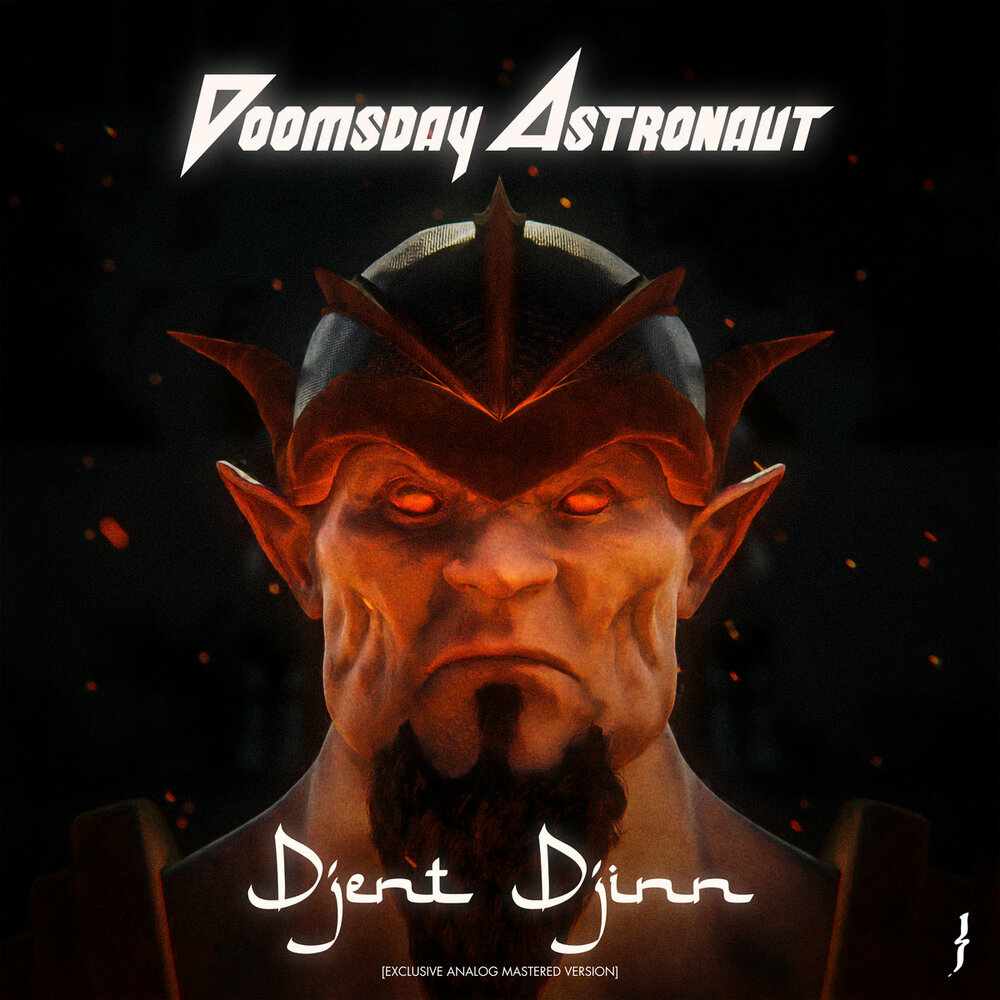
Doomsday Astronaut - Djent Djinn (2023)

Country: Romania
Style: Progressive Metal
Rating: 7/10
Release Date: 30 Aug 2023
Sites: Bandcamp | Facebook | Instagram | Metal Archives

I've reviewed a few albums featuring Waqas Ahmed, a Pakistani guitarist living in Sibiu, Romania, but the earliest of them is a 2020 album called Doomsday Astronaut. Well, that name is back, this time used as Ahmed's brand. I say brand rather than band, because he's the only musician here for the most part, Marius Stremtan providing additional guitar solos on a couple of tracks and Roxana Amarandi a violin solo on Awaken the Pharaoh. Everything else, whether the guitars for which he's rightly known or the bass, keyboards and drum programming, comes courtesy of Ahmed himself.

While my favourite release thus far from Ahmed has been the Alpha Q album from last year, which was a band effort, the Marius Stremtan here presumably being the Marius there, this slots in next to it, above that original Doomsday Astronaut album and its 2021 follow up, A Perpetual Winter. It plays well to me because it finds a consistent sound and then gets imaginative with it. The guitar is a gorgeous sounding force on this album, weaving stories even without the benefit of a voice, each of the five tracks plus intro being firmly instrumental.

One success is that each of those tracks finds its own voice, even though their sound is consistent to those around it. Ahmed's guitar plays in the same tone on Awaken the Pharaoh, for instance, as on Yojimbo Unleashed before it and Groove Monkey after it, but it tells a different story, whether due to the ethnic feel that it generates at points, bolstered by the keyboards and violin, or due to some imaginative sections like the slow one towards the end. Yojimbo Unleashed is simpler, that guitar almost finding a bagpipe's drone at points as it takes its time playing fewer notes to move onward, and Groove Monkey brings a real attitude with it, as the most overt "look at me" track here.

Another success is that, even though all of these tracks use the same ingredients but conjure up an entirely new dish, it's tough to pick a favourite among them. I like all three of those tracks but for a set of different reasons. Yojimbo Unleashed is the most straightforward of them, but it boasts the most elegant sweep over a consistent drive, as if that piper was standing on top of a steam train as it powered through the countryside, the notes holding in its wake. As it's about the samurai of the title, he'll need extra hands to wield that and play the pipes, but he seems very capable.

Awaken the Pharaoh takes us to somewhere exotic and introduces us to smaller stories as it shows us around. It's more of a suite than a single piece and it takes us on a real journey. The idea is that a pharaoh has been brought back to life after five thousand years and the culture shock of what he must be experiencing looking at the change to his kingdom is there in the technology and the clear update to old themes. In a way, it reminded me of Beethoven playing in the mall in modern day San Dimas in Bill & Ted's Excellent Adventure. It's old and new at the same time.

Groove Monkey has a sassy and funky outlook that reminds a lot of Steve Vai. It's a show off piece, but Ahmed has the chops to back up that attention seeking aspect. There are moments across the album when he clearly shreds but mostly he avoids simply hurling out as many notes as is humanly possible in favour of generating textures. Many of those textures are conjured up on guitar, but he uses keyboards to great success too without them ever taking over.

And while those three tracks lent themselves so easily to comparison, sounding consistent but also completely different, there are a couple of others bookending them. The same applies to them but not quite as much.

Born of Smokeless Fire is the longest track on offer at just over seven minutes and it sets the show into motion capably, working best as a summary of what's still to come. There's a slow section five minutes in that hints towards Yojimbo Unleashed and a change right after it that points the way to Awaken the Pharaoh, but, having set those ideas in motion, it's content to move on without doing much to explore them. That's what the later tracks are for and they do it substantially.

Premonition wraps up the album and varies the tone for the first time, a more introspective piece that works as an instrumental to let flow over us but also feels like it ought to work as a dance too. It's all about motion, as so much of Ahmed's music tends to be, but on a far more subtle scale than anything else here. For much of this one, he sounds a lot more like Gary Moore than Steve Vai, for instance, and it's a good way to wrap up an album.

By the way, I say "album" but this clocks in a little short, a minute and a half shy of Reign in Blood's length, which is my baseline for a short album, having famously appeared in full on each side of its cassette release. And that's the most obvious flaw here. Another track to nudge it over the half an hour mark would have avoided that, but, hey, if that's its biggest problem, it's a solid album.