Showing posts with label Iran. Show all posts

Monday, 19 June 2023

Anoushbard - Abandoned Treasure (2023)

Country: Iran
Style: Progressive Metal
Rating: 7/10
Release Date: 1 Apr 2023
Sites: Bandcamp | Facebook | Instagram | Official Website | Twitter | YouTube

I don't post many reviews at the 5/10 level or below. That's because I have no interest in being yet another hatchet job critic who just slates everything he doesn't like. There's much too much good music coming out now to spend time focusing on the bad, unless it's a disappointing release by an important name that warrants a warning. One rare 5/10 review that I did post was of Anoushbard's debut album, Mithra, but my rating wasn't reflective of songwriting, musicianship or uniqueness, rather of issues with line-up and production, most obviously that they didn't have a drummer and what I presumed was a drum machine didn't work in the slightest and sounded awful.

That left me in the odd position of recommending the band but not their album. The band seemed to be full of good ideas; had an intricate touch on the guitar, surely in part because both members were guitarists; and found a good balance between quiet sections and heavy ones. Once my review was done, I was happy to put that drum sound behind me but I wanted to hear more from the band. Well, fast forward three years and Sherwin Baradaran and Siavash Motallebi are back with a more traditional line-up. They've added Arman Tirmahi on bass and Nima Seylani on oud, an instrument I'm not used to seeing in metal. There still isn't a drummer proper but there's a guest playing real drums and a real producer capturing them with a good quality sound.

And so this is much closer to Anoushbard sounding like they should, which means that this is worth a lot more than 5/10. The question was always going to be how much. Well, this is easily a 7/10 and I thought seriously about a highly recommended 8/10. The guitars still sound great, with some tidy riffing and some elegant solos. The album begins with an elegant electric guitar over an acoustic guitar, which is an excellent touch. The bass is mostly there as a rumble and a depth to the guitars, but the drums are massively improved, so much so that they're exactly what they need to be, with dips into ethnic sounds too.

In true prog form, it all kicks off with a three part track, The Righteous Ardaviraf, which suggests a story about a journey to the next world because The Book of Arda Viraf was a Zoroastrian text from a millennium ago. Musically, it's an interesting piece, with Preparation the calm intro, a folky and proggy track with a clean vocal. There are no drums until a couple of minutes in and then they're a return to the unusual sound I compared to beating a wall with rushes sound on the debut, the one good aspect to the drumming on that album.

Journey ups the ante, making its quiet sections heavier, introducing the drums in traditional metal form and adding a lot of emphasis. It immediately reminds of Orphaned Land but Queensrÿche too and that means tasty songwriting even before the crunch hits fifty seconds in. Suddenly we're in a metal song but it's not content with staying there, mixing it up until the guitar solo at the end. It's wrapped up by Return, which stays with the Orphaned Land vibe, elegant guitars over tribal drums and a host of tight breaks. There's even a choral moment to wrap it up.

While there's metal in The Righteous Ardaviraf, it's far more prog rock than metal. That shifts with the next couple of songs, which are heavy metal with a serious side of up tempo doom. Destructive Spirit (Angra Mainyu) is more extreme, adding a harsh lead vocal in the form of a confident growl that speaks from a position of confident power. It's inherently commanding, especially in lines like "Your soul is mine!", but the guitars back it up. A clean backing vocal shows up eventually and it's a nice contrast. There's more of the same on Tower of Silence (Dakhma), which shines because of an exploratory guitar solo over solid crunchy riffs. There's some fast double bass drumming here but the guitars don't even attempt to keep up and that makes for an interesting effect too.

There are other tracks here, but the one that I'll call out as a highlight, up there with Journey, the second part of The Righteous Ardaviraf, is the title track. It opens with an unusual atmosphere, the oud of Nima Seylani soft and intricate but playing within an ambience that sounds like a sanctuary for birds, somewhat reminiscent of Staff Benda Bilili recording in the Kampala zoo. Once it finds a pace, there are soft, clean vocals and a brief but evocative electric guitar solo. As on Mithra, these musicians clearly enjoy setting up contrasts and the tender Persian oud music stands its ground in the face of crunchy modern metal.

I'm so happy that Anoushbard have managed to flesh out a line-up. Mithra underlined the promise they have as a band but they simply didn't have the infrastructure to be able to deliver that album in the form it deserved to have taken. This follow-up has that infrastructure: other musicians and a strong production. This is what Anoushbard should sound like and they sound very good to me, one more progressive metal band from the vibrant middle east, but this one hailing from a nation that not only doesn't support rock and metal but often actively suppresses it. I salute the dedication it must have taken to make this band and this album happen. That it's damn good is a bonus.

Friday, 25 November 2022

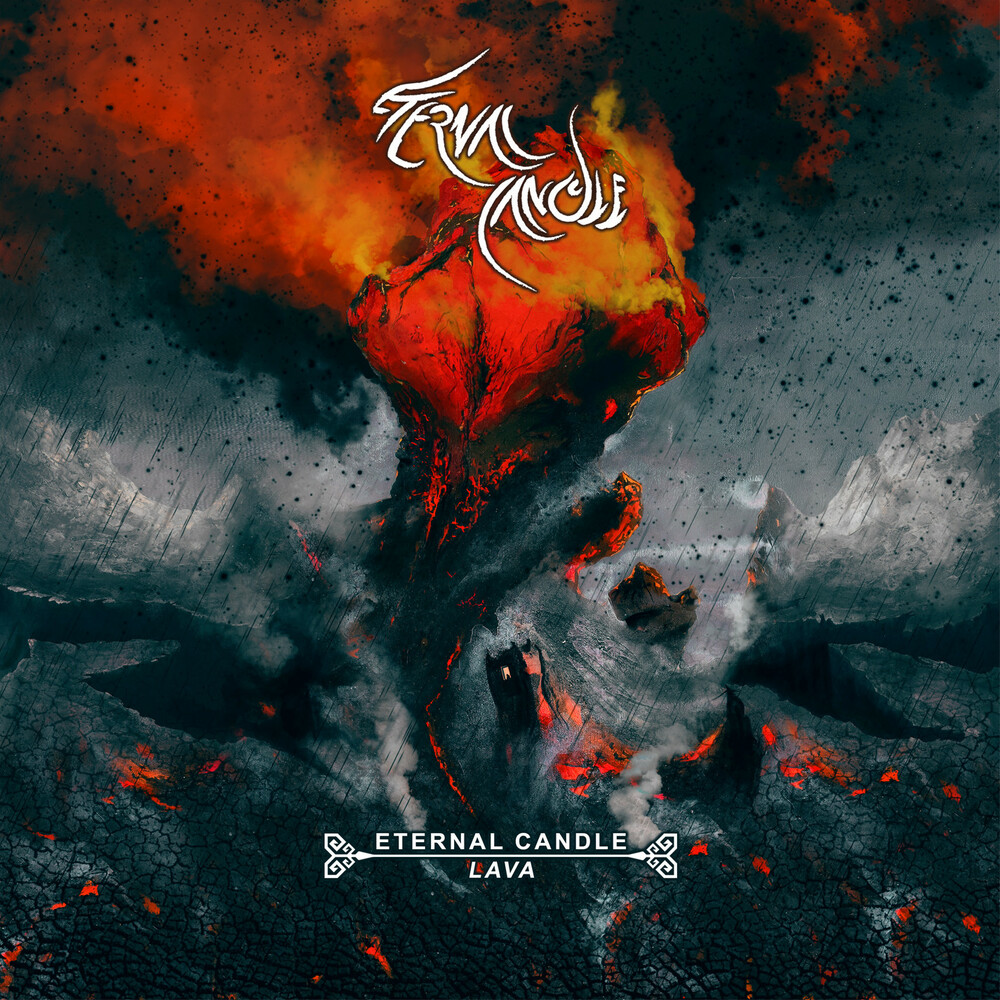
Eternal Candle - Lava (2022)

Country: Iran
Style: Progressive Doom/Death Metal
Rating: 9/10
Release Date: 13 Nov 2022
Sites: Bandcamp | Facebook | Instagram | Metal Archives | Twitter | YouTube

One of the earliest albums I reviewed here at Apocalypse Later was The Carved Karma, the debut album from Iranian progressive doom/death metal band Eternal Candle. I'd stumbled across that sometime in 2018 and adored it, even though I hadn't considered Iran any sort of hotbed of metal activity. Four years on, I've reviewed other Iranian albums from a variety of genres, so it's not just Eternal Candle, but it took until last year for prog rock band Atravan to join them on an 8/10, thus making my Highly Recommended List for the year. Now, Eternal Candle are back with a follow-up to their debut, so I was hoping for it to make three for Iran.

While I'd never stopped listening to rock and metal, back in January 2019, I hadn't deep dived into what was going on across the world in a long time. With almost 1,200 highly varied albums behind me (and the reviews to match), I'm much more aware of what's happening nowadays. I still have to point out that Eternal Candle are still doing things that feel unusual. Sure, their sound is clearly a derivation of doom/death taken in progressive directions, bands like Anathema and Opeth listed on their Bandcamp page as tags. However, that doesn't explain everything.

It might explain their approach to contrast. Their songs tend to include light sections that are sung clean and are often delicate and beautiful, as well as heavy sections that shift to a harsh vocal and intense musicality. It's far from unusual for this band to migrate back and forth between those two extremes and they do it really well. However, they don't do it in all the ways that other bands with similar approaches take. Even their escalations seem different, such as the way that the soft part early in The Last Verdict ramps up during a line rather than between two of them.

For one, however heavy those heavy parts get, the lead guitar tends to float above them with real ache in its heart. I'm sure they took that from bands like Anathema and My Dying Bride, but what it means to Eternal Candle is that even the heaviest material here or the most majestic, such as a late section in The Crows, never loses a sense of melancholy. It's one of the main reasons why I feel an Eternal Candle album as much as listen to it.

For another, I found myself fascinated by Josef Habibi's drums this time out. I'm not a drummer so I can't tell you what he does differently, but he does something very differently, especially during verses. It's like he's discovered a new beat entirely separate to the upbeat and the downbeat, and he's invented a new way of performing fills. Whatever it is that he does, I love it. Somehow he finds a way to make the drums more obvious, even when we're focused on melodies or textures, without actually stealing the spotlight from whatever else is going on.

And, for a third, I wonder if he took that magic trick from Armin Afzali, whom I highlighted last time out and will happily highlight again here. His basswork stands out for me because it feels at once completely apart from anything else going on at any particular point in time and also somehow a pivotal part of everything that's happening. It's as if he's standing away to the edge of the stage, or on a completely different stage, doing his own thing, his bass almost a subtle lead instrument in a different song that's playing only in his head, but somehow it underpins everything and gives it life.

I listen to so many albums from which the bass could be removed entirely without us noticing much except a slightly thinner overall sound. However, If we removed Afzali's bass from this album, what would remain would be completely different. I have a feeling that it would be rather like a human body still going about its day but without any blood. It wouldn't just lose most of its colour, though it would do that; it would leap into the uncanny valley and make us wonder what's wrong with it.

Like The Carved Karma, this is a pretty generous album, its eight tracks racking up nearly an hour of music and, initially, I enjoyed this as a single fifty-four minutes of immersive doom/death. Over repeat listens, the individual songs asserted their own identities and they're still doing that, even though they all stand out in their own way. The Nun was my first favourite track because it was the first track on the album, but Vortex took over a listen in. Then The Last Verdict made its case and a variety of others. It's got to the point now where my favourite track is whichever one I'm listening to right now.

And that means that this isn't another 8/10 for me after all. It's a 9/10. It just keeps getting better. As do Eternal Candle.

Tuesday, 2 February 2021

Atravan - The Grey Line (2021)

Country: Iran
Style: Progressive Rock
Rating: 8/10
Release Date: 20 Jan 2021
Sites: Bandcamp | Facebook | Instagram | YouTube

Here's a really interesting album that I've been listening to a lot. Atravan are a five piece outfit from Tehran who play a commercial form of prog rock. They're so good instrumentally that I was surprised a couple of minutes into the second track and first song proper, The Perfect Stranger, when the vocals of Masoud Alishahi kick in as if they were always meant to be there. I see that he was the most recent piece in the Atravan puzzle, so they may have been instrumental for a few years before he joined.

While all the musicians contribute to a fleshed out sound, initially my thoughts were of bands with a heavy focus on keyboards, especially those with a penchant for effect overlays, like Pink Floyd and the Alan Parsons Project, as well as some Vangelis. If that suggests a seventies influence, that updates to the eighties and beyond with The Perfect Stranger. There's some Marillion here in the guitars and the flow and some Queensrÿche too. What's especially interesting to me is that these influences continue to build rather than be replaced, but Atravan always sound like themselves most.

A few others crop up here and there, like the Lenny Kravitz vibe that shows up late in My Wrecked House and the surprising Leonard Cohen feel that opens the title track. Alishali is able to find a similar sort of emotional resonance and even some of his spirituality, though he visits a lot of places stylistically that Cohen never went, especially in heavier sections. This song in particular gets much heavier, even if I'd never quite call it metal, even with traditional metal elements like double bass drumming from Shahin Fadaei.

Oddly, given the general commercial sound, especially of the keyboards, but also the guitars and the vocals, the songs aren't structured in commercial fashion. These are far from three minute singles, an average song running five and a half and The Grey Line notably longer. Many sections feel like this is music for musicians, making Atravan the sort of band that the mainstream rarely hears about except when other bands rave about them. Yeah, we're happy with what we do, they'll say, and thanks for the platinum discs, but you should check out Atravan.

They'll especially be talking about songs such as Vertigo and Dancing on a Wire, which are exquisitely crafted, with their electronic openings, layered vocals and glorious builds. The more I listen to these songs, and it's becoming notably difficult to move onto another album, the more I hear post-punk in the early parts of the songs, with hints at Joy Division, Shriekback and the Cocteau Twins, before they shift into more obviously prog. Certainly the band have diverse tastes, given the artists they cover on their YouTube channel: Anathema, Rush, Avenged Sevenfold, even Johnny Cash.

Everyone in this band deserves a shoutout. They were formed in October 2010 with Shayan Dianati on searing guitar, Mohammadreza Delavari on an audible and notable bass, especially late in Dancing on a Wire and throughout The Grey Line, and Marjan Modarres on keyboards. Fadaei joined on drums in 2012 and Alishahi fleshed out the line-up in 2013. [Note: Shayan Dianati kindly let me know that Arwin Iranpour took over from Delavari in 2016 and plays the bass on this album. Thanks, Shayan!] Iran isn't a country we tend to think of as a hotspot for prog but a lot of what I've reviewed from there is progressive, whether its the doom/death metal of Eternal Candle, the funeral doom of Roaring Empyrean or the post-rock of Sparkle.

There are a lot of bands with albums either just out or about to be released that I'm looking forward to. It's great to see one like this that wasn't already on my radar shine so brightly.

Tuesday, 11 February 2020

Anoushbard - Mithra (2020)


Country: Iran
Style: Progressive Metal
Rating: 5/10
Release Date: 7 Jan 2020
Sites: Facebook | Instagram | Metal Archives | Official Website | Twitter | YouTube

I've heard a lot of interesting metal coming out of the unlikely country of Iran of late and here's another such album. It isn't the usual one man band as there are two this time out, but they're both guitarists which seems odd to me, even if one also sings. I enjoyed their work, but I didn't like the drums much, which I presume are programmed with a drum machine. They mostly seem glitchy to me, especially in scattershot mode.

What Anoushbard do best is to alternate between heavy and light sections. I wouldn't call it complex dynamic work because there don't always seem to be reasons for doing it, but I enjoyed both sides of that coin throughout.

The opener, for instance, Gates of Ctesiphon, starts out heavy like a death metal Iron Maiden (even if I can't place where I know that riff from) but, after a couple of minutes, it drops into an instrumental break that's middle eastern and neatly intricate. This alternation continues throughout the song until the odd ending, which I don't understand. It sounds like some sort of fireside interview, which makes little sense. I'm sure there's a good reason for it but I have no idea what that is.

Life Lady (Green Temple) alternates even more. Opening like a ritual with a refrain that sounds really metal ("I flayed his demons") but isn't really (I think it's actually "Life Lady's demons"), it goes all death metal, but then drops into a quiet section with clean vocals and intricate acoustic guitar (or is that some sort of Persian lute?). I have to say that the drumming at this point is glorious, sounding like someone's beating a wall with rushes.

And so we go. The heavier sections feel a little flat, because I don't think there's a bass in there at all and the drums are weird, but they're capable enough. The quieter ones are even better. I really dig the rhythmic approach to these sections. Many of them feature almost hypnotic repetition, as this band apparently never met a riff they liked that they weren't happy to use a dozen times for effect.

That sounds really negative, as if it sounds like I'm playing this on vinyl and it keeps skipping, but I'm thinking positively because I enjoyed it. To me, it's like a musician creating a sound and then looping it while he adds more layers to create a more complex piece of music. I don't believe that's what Anoushbard are doing but it feels like it often.

The Ward ditches the extreme metal sound for a NWOBHM style clean vocal, not early Maiden but a more generic approach that reminded me of Elixir. There's a lot more of that hypnotic repetition, though there's less alternation with only one quieter section which has some interesting effects layered over it. The alternation comes back on Inevitable Death which, as the title suggests, takes us back to an extreme sound. Again, it feels too clean, as if there's no bass at all, even if the vocals are death growls and the drums get extra fast.

I have no problem with the vocals here, though my favourite track may be the instrumental Haoma. The scattershot drums are annoying but the music behind them, whether it's acoustic and ethnic or electric and driving, has a lot to be said for it. I hope that Siavash Motalebi and Sherwin Baradaran, who are the musicians behind Anoushbard, get the opportunity to record this and the other material with an actual drummer at some point. Ironically, given that this is the shortest song on the album, I really didn't want it to end.

It did and it gave way to The Man Who Rides Through the Fire, which is more NWOBHM but much heavier and with some interesting backing vocals. Again, this would be a much better song with a real drummer and that's the problem with this album in a nutshell. Rather than enjoying the talented musicians, their intricate guitarwork and the interesting ideas they conjure up, I find myself hating the drum machine more and that makes this sadly feel more like a concept demo than a final work. There has to be a great drummer somewhere in Tehran. I hope Anoushbard find him.

Note: I'm rating this 5/10, which is low enough that I wouldn't usually post but those drums cost it at least a point, maybe another. The band's name is borrowed from a political prison in the Sasanian empire a millennium and a half ago, a place where people disappeared forever. I don't want this band to disappear so, while I'm not recommending this sound, I'm recommending the band behind it. I just want to hear them as they ought to be heard.

Wednesday, 7 August 2019

Crypto Chaos - Sediments of Wrath (2019)


Country: Iran
Style: Thrash Metal
Rating: 7/10
Release Date: 29 Jul 2019
Sites: Bandcamp | Facebook | Metal Archives

I've been having internet trouble this evening while trying to get work done so I decided to throw on some thrash to cheer me up. It really ought to be a recognised cure for what ails you! Now, I have a stack of interesting thrash to work through but Crypto Chaos hail from Tabriz in northern Iran, which is one of those unlikely metal countries that keeps on turning out interesting material nowadays, so I threw on their debut, Sediments of Wrath.

Initially, it's pretty basic thrash but it's done well, Moshpit Underground being as enjoyable as its title is clichéd. Then again, I can't see moshpits being a particularly government supported activity in Tabriz, so what might seem like a clichéd title to us might be grim reality there. As to sound, I immediately caught an early Testament feel but with a more evil set of pipes on vocalist Damo, more German in style, like Schmier from Destruction mixed with Tom Angelripper from Sodom.

It's a mid tempo song and so is Thousand Natural Shocks but, just as we're convincing ourselves that the band aren't planning to create anything fancy, they add in some eastern strings and my ears perked right up. That's a wild sound right there and I wanted more of it, but it didn't manifest elsewhere. The song is still much more complex and adventurous than the opener, though.

And then Carnivore ups the tempo and I was totally sold. It makes the first two tracks seem like they were played in slow motion and it's just what the doctor ordered today. I'd have preferred more up tempo thrash but Carnivore is not the only such song on offer. Rebellion of Authority also ratchets up the speed and writing a song about a rebellion against authority in Iran is a sort of rebellion against authority in itself, in a neat but sad meta touch.

Just to keep that thought alive, Revolt ramps up the tempo as well and also wraps up gloriously. As you might expect from its title, Bullet is another fast one for three in a row. However, not all those songs stay fast and the other songs don't always get there. It's a mixed album with regard to speed and, as it ran on, I started to hear not just thrash influences but power influences too, like Accept. There are sections in Bullet and in White Cave that feel very Accept in sound, albeit sans the classical additions. As I listened through the album again, I heard more of that sort of thing.

While I'm seeing conflicting information, I gather there are three people in the band, but that's two guitarists, Trigger and Brontide, and a vocalist in Damo who also handles bass duties. I'm assuming that they're using a session drummer. They're all capable and that bass is refreshingly prominent in the mix on occasion. Whoever's handling the drums does a solid job too.

At the end of the day, this is good stuff and I enjoyed it a great deal. It did exactly what I needed from an album tonight and if I wanted more speed and more of those eastern strings from Thousand Natural Shocks, that doesn't mean I didn't like what I got. This is more good stuff from Iran.

Monday, 10 June 2019

Roaring Empyrean - Cosmic (2019)


Country: Iran
Style: Funeral Doom Metal
Rating: 6/10
Release Date: 8 Jun 2019
Sites: Bandcamp | Instagram

There were a few reasons why I added music reviews to Apocalypse Later this year, on top of the book reviews I've been writing since 2014 and the film reviews I've been writing since 2007, but one was discovery. Everything at Apocalypse Later revolves around discovery and I wanted to see what was out there in the musical landscape of 2019 that I didn't know about. After all, modern music sucks, right? Nah, I wasn't buying that. What was I missing?

One discovery was Roaring Empyrean, a one man project from Iran that merged funeral doom with new age music, a counter-intuitive recipe that I couldn't imagine working but which somehow did. Well, Amir Asadi aka Doomed Shinobi, the one man who creates this intriguing music, found my review of Monuments and sent me a copy of his new EP, Cosmic. I've been looking forward to that point where a band I've reviewed releases new product so I can explore their growth. This EP marks the first repeat 'band' here at Apocalypse Later.

Monuments aimed to create soundscapes to evoke majestic creations, whether they were created by man or nature. This EP continues in that vein, each of the two instrumental tracks combining the slow and plodding beat of funeral doom with the swirling atmospheric joy of new age, a heady mixture of which I'm getting rather fond. It's often background music, easy to listen to and easy to be distracted from, but never for long as there are odd elements to draw us right back in again. Everything here is built from contrasts, even how we interact with it.

While the general approach is similar to Monuments, I'm also hearing a wild and abrasive edge on both tracks that goes beyond the clashing that we got on Mountains of Torment last time out. It's there in the metallic dissonance found in the second half of Pillars and it's especially there on Gates, from its very beginning, a gritty, almost industrial vibe underneath the new age electronica, like a Nine Inch Nails layer on music more overtly influenced by Tangerine Dream.

Of course, that makes it all the more eye-opening to suddenly catch a melody that's notably reminiscent of Abba's Lay All Your Love on Me, merely slowed down to the tempo of funeral doom. I'm enjoying the Mysterious Semblance at the Strand of Nightmares vibe and focusing on that dark and jagged underlay when suddenly there's an Abba melody. The world of music is a glorious thing.

These two tracks are long, as you might imagine for instrumental tracks that serve as soundscapes. Pillars runs almost ten minutes and Gates almost nine, which is a decent amount for an EP. They develop and they end without ever outlasting their welcome, even on a fourth or fifth time through.

While I liked this, I think I liked Monuments more. If there's a flaw, it's a really odd one. The cover art is of a galaxy and the EP's title is Cosmic, so I presume this is aimed at taking us on a journey into space. I have to say that I didn't get that from the music at all. The darker edges took me to darker, more hellish places, which isn't a bad thing at all, but perhaps isn't what Asadi intended.

I enjoyed this and am eager to hear what he might conjure up next. In the meantime, this EP is available at Bandcamp for the paltry sum of one dollar (or more, if you're so inclined), so I highly recommend that you pop over there and pick up your copy.

Wednesday, 8 May 2019

Sparkle - Life (Black Point in World) (2019)


Country: Iran
Style: Post Rock
Rating: 6/10
Release Date: 16 Feb 2019
Sites: Bandcamp | Facebook | Instagram | Metal Archives | Twitter | YouTube

The benefits of being a one man band are that you can just get on with it, whatever it might happen to be. Parvis Shabrang from Esfahan, Iran really gets on with it. Under his performing name of Sparkle, he knocked out six full length albums last year and has already matched that feat in 2019 by the beginning of May. This one came out in February and he's released four more since! That's one album a month with two in April!

The obvious question, given this sort of pace, is whether he's any good or not and I have to say that I enjoyed Life (Black Point in World), though it sometimes has to fight to stay in the foreground. The opening track, Imagine the End, for example, is almost nine minutes of early Tangerine Dream-esque ambient keyboards. It's hard not to like it, but it doesn't have the depth of tracks in a similar style on Tangerine Dream albums like Phaedra.

Shabrang describes what he does in a few different ways: funeral doom metal, ambient post rock and atmospheric space. A few years ago, I'd have struggled to grasp that but I'm finding that some unlikely genres actually connect in surprising ways.

Imagine the End was certainly recorded wearing Sparkle's 'atmospheric space' hat, while Radiant of Void moves into post rock, with some traditional rock instruments, such as guitars and drums, conjuring up a soundscape that's a lot more overt than its predecessor on the album. I'm not sure what it aims to depict but it builds well and it's very likeable.

Never Breathe combines the two approaches rather well, the atmospheric side suggesting that we're floating, in space or underwater, perhaps like the intriguing character on the cover, but the post rock side, mostly provided by a set of periodic power chords, adds a sense of danger, which is frankly appropriate given what the very same intriguing character on the cover is doing (or is having done to it).

If there's funeral doom here, it's on Mind on the Way Back, which unfolds with a lot of church organ and adds guitar halfway through that's heavier than anything on those post rock tracks by far. It's not funeral doom as I think of it but it does play in the same ballpark for a while. If you want the heaviness of powerful funeral doom but old school Tangerine Dream bores you silly, then this album really isn't for you. I can't say whether one or more of Sparkle's many other albums won't do the job, but this one won't.

Frankly, it ought to appeal most to those old school Tangerine Dream fans. Phaedra is one of my favourite albums of all time and I dig pretty much all they did in the mid seventies, after they moved past more overt Krautrock albums to find their own sound: think Rubycon, Ricochet and Stratosfear, up to their soundtrack for Sorcerer. Sparkle is a little less playful and far more ambient in approach, which generally means that it's harder to picture what he's visualising in sound.

The closing song, Sparkle from Inside, actually looks a little further back to those Krautrock albums of Tangerine Dream and others. It's experimental in outlook, though not wildly so, channelling Krautrock into post rock and coming up with something rather interesting, if not for everyone.

And, frankly, Shabrang knows that he's out there on a particular edge. Those who like his work are going to buy a lot of it and he's prolific enough to feed that market. Those who don't like his work aren't going to last through one album like this, never mind a dozen of them. I'm in the former category. This isn't the most essential album in this style I've heard but Shabrang is good at what he does and I'm intrigued enough to listen to some more to see if this is a greater or lesser example of what he does.

Wednesday, 24 April 2019

Badraam - Ancient Temple (2019)


Country: Iran
Style: Progressive Metal
Rating: 7/10
Release Date: 23 Apr 2019
Sites: Facebook | Instagram | Twitter | YouTube

Ancient Temple stood out to me because I'd read that it was Iranian thrash metal but, well, it isn't. I do see the confusion, because it's a lot more riff-based than most of the instrumental progressive metal out there and some of it definitely plays in the thrash sandbox. The band cite Megadeth as an influence, along with Dream Theater and guitarists like Yngwie Malmsteen and Joe Satriani, and there's definitely some Megadeth here.

I say band, but this may or may not be another one man project, the leader and guitarist being Mohammad Ghasemi, who's based in Tehran. He's the only name listed on their Facebook page, but there are certainly five musicians on stage in the live videos I'm seeing on YouTube, though the keyboards are not credited there either. They play well together, so maybe they're a band rather than just Ghasemi and some session musicians.

I'm hearing three styles here and the primary one is surely the guitar led workout approach, with Ghasemi playing up a storm and the band following in his wake but refusing to let him turn this into a shred album. Even when he remains the highlight throughout the whole song, which is most of the time, he's not just soloing. I believe that he's aiming for his guitar to take on the role of the absent vocalist as well as that of the lead guitarist and I rather like that. There's a lot more Satch here than Yngwie.

The second is that thrash influence, which is most obvious on the bass heavy tracks such as Heavy Assault and the title track but is more overt towards the end of Sand Storm or at the beginning of Chaos in East. However, the band rarely reach that heads down blitzkrieg sort of speed, so this is no thrash album, even if Ghasemi was clearly influenced by thrash guitarists such as Marty Friedman and Alex Skolnick.

In fact, this could conceivably be considered as a collection of extended solo sections taken from thrash songs Badraam may have recorded elsewhere but aren't here for us to listen to in full. That's not strictly accurate, because these songs have beginnings and ends, even if they're brief, but it isn't too far off being believable. There are sections, for example, in The Day of Redemption, that sound rather like a classic Metallica bridge.

Finally, there's plenty of local flavour. I wouldn't say that this ventures into folk metal, especially with no ethnic instruments that I could detect beyond hand drums of some description on Mirage, but most of the songs have an overt Middle Eastern flavour somewhere, while some, such as Mirage, have little except for that Middle Eastern flavour, which is not a bad thing. It really is a positive in my eyes, because it broadens the spectrum of metal.

Combining these three approaches makes for an interesting album. I've heard Middle Eastern influenced songs from guitar virtuosos like Joe Satriani or Tony MacAlpine before, but these feel more authentic, for obvious reasons. Even on something ostensibly western, like Tornado, the closest to a shred song here because of its first half, there's still something else there.

I liked this, not only because of its memorable title track, but because of Ghasemi's versatility. I liked that this wasn't just a shred album, even if he does shred at points. I liked that it really felt like a regular album without vocals than an instrumental album because of the way his guitar was doing double duty. This is surely the primary reason why it doesn't fade at all into the background like many instrumental progressive metal albums.

Tuesday, 2 April 2019

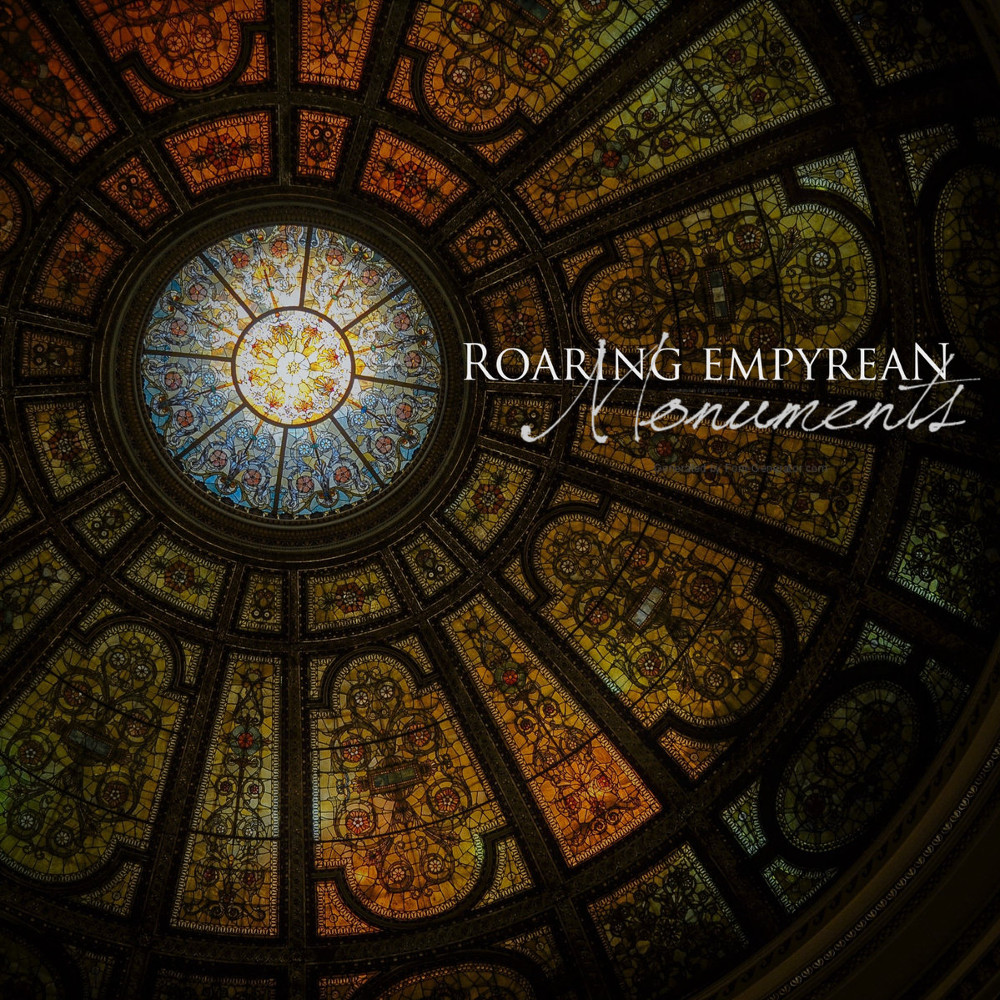
Roaring Empyrean - Monuments (2019)


Country: Iran
Style: Funeral Doom Metal
Rating: 6/10
Release Date: 1 Apr 2019
Sites: Bandcamp | Instagram

In keeping with this site's mission of discovery, here's something completely different. There's not a lot about Roaring Empyrean online, but some googling around suggests that it's the project of one man in Tehran, Iran called Amir Asadi.

He released an album called To Earth's Heart under this banner back in 2013 and a pair of EPs last year. What's odd is that Roaring Empyrean appears to be an exploration of contrasts, epitomised by two rather different musical styles: funeral doom metal and new age.

And yeah, that's a really odd combination! Funeral doom tends to be slow and crushing, a contemplation of mortality. New age, on the other hand, tends to be uplifting through nature, a celebration of existence. I was intrigued to find how Asadi merged the two and whether it could remotely work. Sure, Ahab and Enya each have four letter names but what middle ground could they find?

Having listened through Monuments a few times, I think it does work, as odd as it seems. As you can imagine, these are soundscapes so the hour that this album runs is taken up by four long tracks, a six minute intro and a brief interlude.

That intro, Into the Valley, sets the scene pretty well. It opens with what sounds like a cello, a dark and rich sound that's joined by traditional doom soon enough. It builds itself up as it tears itself down, which isn't a bad way to look at this album.

The first track proper is Cathedral of Thousand Hallways and the same thing happens on a much more epic scale. Rarely have I heard a song named so well! Even without the title, this would have transported me into a vast cathedral, so vast that it's easy to get lost, even though there's music all around to guide me back, albeit music echoing in the vastness. Was that a harpsichord? A carillon? Certainly that's a massive church organ. All these sounds collide within what is clearly the first monument.

The only catch to Cathedral of Thousand Hallways is that it fades out, after eleven minutes, rather than finding a better way to end. I certainly preferred it to Mountains of Torment, which got away from me. It's an intriguing piece, though, with plodding bass and crashing guitar. I presume the point here is that the title doesn't necessarily have to refer to manmade monuments but to ones that nature crafted into place too and it would be odd to see mountains of torment that didn't have, well, torment. There's plenty of that here, but an awe too at the sheer majesty of creation.

Dance of the Bleeding Earth is memorable though, very organic and mindful of the patterns of large complex systems in nature, especially during the later parts. It floats a lot in its early stages, as if close to the ground, but swells in the later ones, as if it's found a way to fly. I didn't grasp the bleeding but I presume Asadi had a vision of some sort in mind.

As the title might suggest, The Soaring Essence goes a lot more for swelling than floating. It's certainly the most uplifting piece, even though it never speeds up its drums. It's the strings that do it, even though there's a neat Beethoven-esque piano underneath it all as if to remind us that there's still ground below. What seems odd is that the strings get more and more curious as the track runs on.

I'm happy I found this album, because it does something different. Depending on the perspective you bring with you, it's either the most cheerful funeral doom or the darkest new age music that you've ever heard. Now I know what it sounds like, I can grasp it and The Soaring Essence, all sixteen minutes of it, suddenly feels like a statement. After all, the point where fundamentally different genres meet is the point where new ones are born.

Thursday, 31 January 2019

Eternal Candle - The Carved Karma (2018)


Country: Iran
Style: Progressive Doom/Death Metal
Rating: 8/10
Release Date: 27 Apr 2018
Sites: Bandcamp | Facebook | Metal Archives

I kicked off Apocalypse Later Music Reviews with my favourite album from last December and I've reviewed an album from each of 2018 and 2019 every weekday since. It seems appropriate that I wrap up 2018 on the last day of January with another personal favourite from last year that doesn't seem to have found a lot of coverage.

The band are Eternal Candle and they play doom/death out of Tehran, Iran, hardly a particularly well known metal capital. They have a progressive edge too, not too surprising given that two key members also play for the prog metal band Heterochrome, who released their debut album in 2017.

This is Eternal Candle's debut album, following a string of singles, one of them a Novembers Doom cover and only one of which is represented here, 2017's A Dismal Inhabitant. Everything else is new but there's plenty of it. This is a lengthy album, almost hitting the hour mark, but it never gets old.

The Ripped Soul is a great way to start the album, after a neat atmospheric intro called In the Absence of Us (there's another one later on called The Void which is even better). The Ripped Soul kicks off with almost tribal drumming, which leads into an intriguing mixture of harsh growls, clean vocals and spoken word sections. I liked the interplay immediately but it gets even better as the album runs on.

Throughout the album, the harsh vocals mostly sit over the denser musical sections, while the clean voice floats over softer backing, suggesting a sort of conversation between different characters. I don't know if there's an overriding story here but this approach suggests that there could well be, even though there are no suggestions that this is a concept album.

Sick Romance plays consistently with The Ripped Soul, merely adding some whispers and more overt melodies, but then Eternal Candle up their game even further with a couple of achingly heavy tracks. A Path to Infinity starts softly with quiet echoing guitar but gets heavier as it runs on. The heaviness is right there at the beginning of A Dismal Inhabitant, though, which is gloriously crushing from the outset.

These two tracks play out like a journey that starts simply with a quiet decision full of hope for success, but soon becomes dangerous, and, as A Dismal Inhabitant kicks in, clearly deadly. Even the contemplative moment four minutes in is endowed with danger courtesy of a darkly playful bass from Armin Afzali.

After I don't know how many times through, I think Afzali is the unsung hero of this album. He's not the most obvious participant, as the vocals lead it, courtesy of Babak Torkzadeh and Mahdi Sorrow. Josef Habibi is a fantastic drummer, not only keeping the beat but muscling in to take the lead at a number of points. The guitars come courtesy of Sorrow and Amir Taghavi and they're a joy, not only in heavier sections or the melancholy ones but in the quiet ones too. However, the more I listen, the more I catch little things that Afzali is doing that elevate a number of tracks.

If A Dismal Inhabitant was the darkest moment in the journey unfolding here, The Void marks the point where that starts to turn. Hear My Cry has a confidence in the guitar line that soars over the threats and My Turn, almost inevitably given its title, returns hope to the equation, even as the lyrics and the title of the next song, Prayer of the Hopeless, suggest otherwise. Maybe it's a fresh start. Eternal Candle sing in English but My Turn is the song in which I caught most words.

Without the lyrics, though, I have to feel this album and it's a notably emotional creation. I found it an easy one to lose myself inside. While not every track is as interesting as the last, there's something in each of them to explore. Prayer of the Hopeless may be the least interesting for four minutes, for instance, but then some of the best melodies and guitarwork of the album show up to elevate its end.

I've found myself coming back to this album a lot and I keep finding new things in it. It's not the greatest album of 2018, but I'd argue that it's one of the most underrated.