Showing posts with label NDH. Show all posts

Monday, 8 January 2024

L'Âme Immortelle - Ungelebte Leben (2024)

Country: Austria
Style: Darkwave/NDH
Rating: 7/10
Release Date: 5 Jan 2024
Sites: Facebook | Instagram | Wikipedia | YouTube

Here's another band new to me who may not be to you, given that they've been around since 1996 and this is their fifteenth studio album. L'Âme Immortelle, which translates to Immortal Soul, are an electro-rock band from Vienna whose sound has apparently changed over time and back again. Initially, it seems, they played darkwave, but gradually got heavier and moved into NDH, a genre I still know far too little about, even though I do know Rammstein and have now heard Oomph! and an array of others. However, later on in their career, they apparently started moving back again.

All I know is what I hear on this album, which feels less like what I know as darkwave and more like NDH lite. All the elements I expect from NDH are here, except the crunch doesn't have the impact that I'm used to. They have all the setup that Rammstein have, and some of it has edges, but every time Rammstein would kick in hard with a huge back end, L'Âme Immortelle don't. Part of that has to do with them fundamentally being only two people, Thomas Rainer and Sonja Kraushofer, both of them vocalists with the latter the lead singer and the former also playing keyboards, which I'm presuming are the only backdrop to the voices. The beats are presumably programmed on a drum machine.

Its absence of that crunch means that this often reminds me more of eighties new wave, especially as Kraushofer sings with a pop voice. Rainer provides some darkness when he opens his mouth on the opener, Was Wäre, Wenn, because he has a harsh edge to it. However, he shifts to new wave as well on War of Silence, which is lighter again. It might be NDH without the oomph, if you'll excuse that pun, but it's also darkwave without the dark. It wouldn't have surprised me to discover that I heard this track a few decades ago and simply forgot. The heavier songs here are the ones where Rainer sings more, such as the title track, which he kicks off and which plays out as a duet.

The only song where both Kraushofer and Rainer sound dark is Nie genug, even though it picks up quite a jaunty pop beat. He's certainly darker than she is on this one but she plays along more and the result is irresistible. The fact that it also features plenty of dynamic play too is just a bonus. It probably helps as well that it's bookended by two of the poppier songs in Push and Nur für euch. I should add that I like both of them, even though it's mostly the heavier songs that stood out to me on a first listen and even more so on repeats, with one notable exception in the closer that I'll talk about next.

Kraushofer moves into more of a musical theatre style for Regret, initially a ballad but one that's built a lot further than ballads tend to go. There's musical theatre throughout the album, but it's most overt in the final track, Widerhall, which means Echo and is as creepily atmospheric as what we heard from Till Lindemann in the piano version of Mein Herz Brennt and for many of the same reasons. She simply commands our attention, even though the musical backdrop unfolding behind her is notably subdued except for one brief section two thirds of the way in. It's easily my favourite piece here, all the way to its delightfully underplayed finalé.

If that suggests that there's a heck of a range here, then I'm doing my job right. Initially, I wanted to figure out if this was rock or pop, which seemed like it would depend on which mode the band is going here, heavier NDH or lighter darkwave. What I found was that there are songs that have to be called pop, whether War of Silence, which is old school new wave, or Own Ways, which feels like something off a David Lynch album. However, there are songs that are clearly rock and they're not just the heavier ones. And, of course, there's the musical theatre aspect, which isn't usually what I tend to appreciate but which is right up my alley here. This is dark and expressive musical theatre.

That genre-spanning depth kept me listening to this for a few days to try to figure out its secrets. I know I like it but I think I have to be German or Austrian to grok how appropriate this combination of genres feels and I'm not. However, I'm finding it fascinating so I'll continue to dive into NDH and electro-rock when I can.

Friday, 31 March 2023

Tanzwut - Silberne Hochzeit (2023)

Country: Germany
Style: NDH/Folk Metal
Rating: 7/10
Release Date:24 Feb 2023
Sites: Facebook | Instagram | Official Website | Twitter | Wikipedia

I liked Tanzwut's previous album, Die Tanzwut kehrt zurück, released two years ago, and I like this one too, which continues their gradual shift from medieval metal through NDH to industrial, even though this isn't really a new album. It's a celebration of an album, a sort of greatest hits package to commemorate a quarter of a century as a touring band, but each track is a re-recorded version from the studio. They've recorded a dozen albums but everything here is sourced from three very specific releases that came out before they'd found their way into a particular sound.

Now, to be fair, I wouldn't say that they've cemented their sound yet, each succeeding album a bit further down a musical path, but this deliberately takes tracks from their second, third and fourth albums and retells them in a style similar to what they play today. Labyrinth der Sinne is easily the most represented, with seven out of twelve tracks coming from that second album from 2000. That leaves three from their third, 2003's Ihr wolltet Spass, and a three song set from Schattenreiter in 2006. It's fascinating to see how varied these remain, even played with a consistent approach.

The first four set most of the tone for the album. Labyrinth, the kinda sorta title track to Labyrinth der Sinne, opens up and is immediately a highlight, bouncy and in your face throughout, bagpipes leading the melodic line over a driving NDH beat. It's worth reminding that five of seven members of Tanzwut play bagpipes and two are dedicated to pipes and shawms, so they're never far away. In most of this material, they hold back to serve as emphasis when the song needs it but then soar on top of everything else when it gets going.

Ihr wolltet Spass and Meer, both from the third album, add new elements. The latter is softer with a drop down from the typical opening to a warmer sound. Even when it ramps up in the bridge, the usual edges are still smoothed off. The former is a gem, dropping into Gogol Bordello-esque punky folk music. I'm sure I've heard some early Tanzwut but it's been so long that I can't remember the albums. This is the point at which I regretted that and wanted to dive back into those early albums to remind myself what they sounded like.

The fourth of the opening quartet is Was soll der Teufel im Paradies, another from Labyrinth der Sinne and the first of four tracks in a row to hail from that album. This one adds orchestration as a layer, mostly behind the sound but occasionally with strings taking the foreground. It ends with a tasty duet between pipes and strings, which is a fascinating touch and one exclusive to this track. Each of these four has its own unique touch, while staying true to the overarching sound. Most of what follows works with those approaches afresh, just in different proportions. That doesn't mean that there aren't other touches worth mentioning though.

Lügner is a stalker of a song, slow and heavy but with serious emphasis, so we're unable to ignore it. In its quieter sections, the pipes take a strong lead and the electronics trawl in some distortion for effect. In its more urgent sections, it plays up the NDH aspect to the band. There's Rammstein in all of these songs but none of them consistently sound like Rammstein with bagpipes. This one is closer than most, even though it sounds like a regular bagpipe band at points too, sans all metal elements. The one that plays my local renaissance festival has released albums that pair the pipes and drums with electronica and they're not unlike this.

The most unexpected touch comes on Im tiefen Gras. It starts with a guitar line that wouldn't be at all out of place in alt country and quickly develops into a psychobilly bounce. This is one of a trio of songs from Schattenreiter and it's the other track that makes me want to follow up by visiting the original. It suddenly seems odd that these two aren't from the most represented album, but that may not mean much. Then again, if there's a third, it's the urgent punk of Nein nein, another one from Ihr wolltet Spass, that closes out the album.

I'm not sure how essential this will be for Tanzwut fans who remember the originals. I'd have to go back to hear them again to comment and I want to do that free of motive. I'm not a die hard fan of the band, but I like what they do and I like this, even if it isn't essential. It's an odd marker for this live anniversary and I wonder why they didn't put out an equivalent recorded live. Maybe that will be next.

Wednesday, 21 September 2022

Rammstein - Zeit (2022)

Country: Germany
Style: Industrial Metal
Rating: 7/10
Release Date: 29 Apr 2022
Sites: Facebook | Instagram | Official Website | Twitter | Wikipedia | YouTube

I've been a fan of Rammstein ever since I first saw the video for Sonne a couple of decades ago, but I wasn't particularly enthused by their most recent album in 2019. They took a ten year break after its predecessor and it felt like an unsure return to action for me, with songs that tried new things and a surprising structure that left me wondering where they were planning to go in the future. In reality, of course, they went where we all went, which was lockdown during COVID, and that might explain why they've knocked out another one only three years later.

It's a better album to my thinking, on every front. There are still departures from the typical NDH sound but they're both more successful and more appropriate in the order they're presented. It's perhaps notable that they mostly constitute the beginning of the album, with Armee des Tristen a new wave song done NDH and Zeit and Schwarz mirror images of each other. Zeit is subdued, even when the heavy chords show up halfway or when it seriously swells late on, while Schwarz is just as slow but is immediately emphatic and remains so even when it slows down for a softer section.

It's Giftig where we get the Rammstein we know and love most. Nobody does crunch like this band and it's right there on Giftig and OK and onwards. Nobody does the prowl the way they do on Zick Zack either, that's at once ominous and playful. And they do these things almost instinctively, as if it's as natural to them as breathing. Whenever it comes time for them to turn up the power, it's an as one response, as if being this tight doesn't even take any effort. Then again, they still have the same line-up they had when they formed in 1994 and that's a rarity indeed nowadays. They have to know each other backwards.

In fact, the guitars are so effortless that they're almost not worthy of mention. We have to take it for granted that Richard Kruspe and Paul Landers are going to do their thing on guitar seamlessly and the rhythm section of Oliver Riedel and Christoph Schneider, on bass and drums respectively, is right there with them. As usual, we tend to focus on Till Lindemann's ever-confident vocals and a variety of musical decoration from Christian Lorenz. Take Giftig for example. Kruspe may be lead on paper and Landers rhythm, but they're really twin rhythm with Lorenz providing the melodies on his keyboards.

And Lorenz does a lot here. The more often the guitars take a back step, the more he comes to the forefront. He provides the majority of the intros and most of the melodies on top of the ambience that might be needed too. I find this fascinating because Lindemann is the iconic face of the band, especially given their penchant for memorable videos, and the guitar crunch is what springs most speedily to mind when people talk about Rammstein. Yet Lorenz is kept so busy on this album that it's arguably his above everyone else's.

Talking of videos, I've seen a couple of them this time out, for Zick Zack, with its almost fetishistic look at plastic surgery, and Dicke Titten, which isn't entirely as rude as it might seem from its title but only just. Yes, it's about Lindemann wanting women with big breasts, whatever other qualities they may or may not have. Only Rammstein can get away with that nowadays, beyond parodies like Steel Panther, where it's almost compulsory. I'm finding nowadays that the videos distract me too much from the music. I like Zick Zack on this album far more than in the video, for instance, even if it's the same song.

As always, it's the crunchier songs that work best for me here. I do like the title track, surprisingly so given where it goes, but it's Giftig and OK and, to a lesser degree, Angst that I'd call out as the standouts. I'd add Lugen to that, because it's another driving song that nails its groove, but it has a weird descent into the world of autotune during its second half that turns me away. Of the more unusual songs, I'd call out Dicke Titten, with its prominent use of a Bavarian oompah band while it kicks off. With these strong songs and the fact that the lesser material isn't at all filler, I'd have to give this a 7/10. It's far from Rammstein's best but it's a solid step up from its predecessor.

Oh, and the cover photo was taken by Bryan Adams. Yes, that one.

Wednesday, 1 June 2022

Crematory - Inglorious Darkness (2022)

Country: Germany
Style: Gothic Industrial Metal
Rating: 7/10
Release Date: 27 May 2022
Sites: Bandcamp | Facebook | Metal Archives | Official Website | Twitter | Wikipedia | YouTube

I reviewed Crematory's fifteenth album, Unbroken, in 2020 and found myself only half convinced by their particular brand of gothic industrial. I liked the songs with their NDH hooks and grand gothic sweeps. What I wasn't so fond of was the death growl of Gerhard Stass and, as that album ran on, I found that I preferred the clean voice of Connie Andreszka, officially a backing vocal but which did take over at points. It didn't bode well to find that Andreszka left the band last year, as did bassist Jason Matthias. He was quickly replaced by Patrick Schmid but it doesn't look like Andreszka was. His role is just gone.

Stass is my biggest problem with this sixteenth album too but he didn't annoy me as much. I ought to go back to Unbroken because it feels like he's toned down his growl a little bit. Having plenty of grit on the more driving songs like Break Down the Walls works well enough, even if his accent is a little obvious when he's singing in English. He feels more natural when singing in German, which is a language that always benefits from a little grit. I do miss the dual vocal styles, Felix Orschel not being particularly obvious in a guest role.

Musically, the songs do much of what they did last time out. Sure, there's an overt evolution in the band's sound over their three decades, but it's not so fast paced as to be particularly noticeable in the couple of years between albums. This is still gothic industrial, with the latter aspect shifting to NDH more and more as time goes by. Rest in Peace has perhaps the most incessant drive of any of the songs here, though it hints back to the death metal origins of the band at points too, but it's a common approach here, evident on almost everything. It's very obvious in Das Ende too.

The gothic is aspect harder to define, as it shows up mostly in the sweep nowadays, some melodies and some keyboards. Even there, Crematory sound more like a goth rock band who heavied up in a NDH fashion rather than a band who started heavy and shifted into gothic metal, which is exactly what they did. They're on Napalm Records now but they're approaching gothic metal from a very different point to many other Napalm acts I fell in love with a couple of decades ago, like Tristania or Sirenia. Even thinking about that, I wonder what a female vocal would do to the band's sound. I can't see it working at all. This is gothic in tone, not in elegance.

Even with Andreszka gone and nobody taking his place, I think this is a step up on Unbroken. It's a shorter album but not so much to be a problem; that last one was highly generous and this is more reasonable at forty-eight minutes. It doesn't outlast its intentions and the eleven songs vary their approaches enough for it to remain fresh throughout. In fact, I wonder if it gets better as it goes. I liked early songs like Break Down the Walls and Rest in Peace, but it seems to pick up with Tränen der Zeit halfway through, a bouncy number with a reliable riff, strong keyboard melodies and a more understated vocal from Stass.

From that point on, everything feels like it's a little more emphatic, a little more focused, a little tighter in intention. I don't think a song like Until We Meet Again is really any better than a Break Down the Walls, but it seems to settle into its groove easier and more naturally. Zur Hölle, with its staccato riff and capable backing vocal, is even quicker to the mark. Again, it's no better or worse than any song from the first half but it thinks it is and sometimes that matters. Maybe Forsaken is a better song, because it's one of my highlights, especially because of Katrin Jüllich's keyboards, a touch that's almost Abba-esque.

All I know is that, each time I listen through, I kind of like the album early on but find myself liking it more and more as it moves forward. Tränen der Zeit perks it up and, by Forsaken, I'm totally on board. However, when I eagerly replay again after Das Ende, well, der Anfang is back to the kinda sorta again and I run through the cycle once more. So this is a 7/10, one up on the previous album, but I'm still interested in figuring out the direction Crematory is taking and whether it's going to impress me more or less.

Thursday, 8 July 2021

Tanzwut - Die Tanzwut kehrt zurück (2021)

Country: Germany
Style: NDH/Folk Metal
Rating: 7/10
Release Date: 28 May 2021
Sites: Facebook | Instagram | Official Website | Twitter | Wikipedia

The more I explore the joyous genre of folk metal, the more I learn how some countries take it in very different directions. Case in point: the Germans, who mix it with entirely home grown genres such as the medieval folk of Corvus Corax, the medieval metal of In Extremo and the NDH of Rammstein and Oomph!, which often leads it into industrial territory too. Tanzwut grew out of Corvus Corax, initially being a sort of side project from members of that band, but they're a heavier band most of the time.

They're certainly a heavier band on the title track which opens up the album, as they probably should be, given that Tanzwut means "dance rage" and so this one is The Dance Rage Returns. It's varied, the quiet moments featuring what sounds like a harpsichord, but mostly it's an up tempo romp that can't fail to get your toes tapping, at the very least, with the back end driving it forward, bagpipes lighting the way and Teufel's vocals ringleading the whole thing. There are seven members in Tanzwut at the moment and five of them contribute pipes at points. Two only play pipes and shawm.

Feine Menschen does an even more overt job of shifting between quiet moments and emphatic ones. This one goes electronic, pleasant keyboards noodling behind Teufel's rough but clean voice, but then it launches into high gear, everyone joins back in and we're back to heavy again. I like how they shift in intensity, but that's not their only mode.

I don't speak German, but Bis zum Meer, which Google Translate tells me means To the Sea, feels like a timeless singalong classic. It doesn't play with intensity much, but it feels right and I'm sure this is one that will seriously invoke audience participation when gigs open back up. Pack doubles down on what this brand of folk metal does, courtesy of fellow Germans Saltatio Mortis, who have their own brand of medieval metal. It starts out like it's going to be a western film soundtrack, though the bagpipes soon put paid to that idea and our toes get hyperactive once more.

That's four songs out of four that change up the sound at least a little and the fifth is different again. It's Die Geister die wir riefen, or The Spirits We Called, which is unusual in many respects. It's not rock at all, let alone metal. It's a folk song that delves into gypsy punk and cabaret, strongly featuring an accordion. It's another lively toe tapper but it's a complete departure, even though Teufel's voice has all the grounding the song needs to be identifable as Tanzwut. That's a heck of a range.

And, with that said, I don't need to run through everything else on the album. There are crunchy NDH numbers and quieter folky pieces. There are songs entirely driven by bagpipes and others that play in a more keyboard-driven vein. There's a lot here and, if anything here piques your interest, you should check it out. You'll find yourself diving into a rabbit hole that also contains their eleven albums, going back to 1999, and a whole slew of other bands too.

What I will highlight is Virus, which is the album's closer a dozen tracks in, because Tanzwut surely left the best for last. In some ways, it's the album in microcosm, because it crushes at the outset but then gets sassy, with some winking talk singing from Teufel. It's choral and it's orchestral. It gets retro with sections I'm used to in steampunk, where the song sounds like it's being played through a Victrola. It's heavy and tame and quirky and pretty much everything else. It's a grand way to wrap things up.

Tuesday, 16 March 2021

Eisbrecher - Liebe Macht Monster (2021)

Country: Germany
Style: NDH
Rating: 7/10
Release Date: 12 Mar 2021
Sites: Facebook | Instagram | Official Website | Twitter | Wikipedia | YouTube

It's been a while since I've reviewed any NDH here at Apocalypse Later but Eisbrecher are back with an eighth studio album and it's quintessential stuff for the genre. There's not a heck of a lot of variety in here, though the songs do start to delineate themselves on a second listen, but it hits every checkbox that an NDH fan will be looking for and it does that within every one of the fourteen songs that stack up to comprise this generous almost hour long album. There's even one song with a guest appearance from Dero Goi of Oomph! and Die Kreatur to tie to the wider NDH scene.

The vocals of Alexx Wesselsky are clean, deep and in your face. The guitarwork of Noel Pix and Jürgen Plangger follows suit, adding an industrial rhythm through their riffing, while the rhythm section is tasked with underlining all that, Achim Färber's beats often sounding as much like a rivet machine as a drumkit. Absolutely everything is told with emphasis but it's also melodic and with a strong EBM angle through the keyboards and programming of Maximilian Schauer.

It's the latter that provides the greatest variety here because that angle waxes and wanes through the album. Schauer is all over songs like Nein Danke, which is as obvious an NDH single as I've heard in a long time, and Systemsprenger, but steps back a little on the opening single, FAKK, which sounds just like what you think it does—"Fakk, ich fakk dein ding"—but also introduced me to some imaginative German words. If I'm understanding the translation properly, because everything here is naturally in German, even on High Society, their word for a Twitter troll is "hobbyhitler", which is just perfect.

I guess different people will have different opinions about how that balance should work in any NDH song, but I think my own taste has the title track as the perfect balance. Not only can we follow either the dancing electronic side or the crunching metal side throughout the song, but the two combine in ways that go beyond both happening at the same time. Oddly, it's a little slower than the average for this album and I'm usually all about the speed. Then again, Systemsprenger follows it at a slower and less emphatic pace, so everything's relative.

The slowest song here is the one that stands out the most from its peers for being different and that's Himmel, which turns the guitars down massively and so makes this sound a lot more poppy, even with such a powerful beat. I get the feeling that the second half of the album is a little lighter than the first, but not so much that it's obvious and not to the album's detriment. I think, after the title track, I'd call out late songs like Leiserdrehen and Es lebe der Tod as highlights along with early ones like Nein Danke and FAKK.

All in all, this is a strong release from a band who are a little behind their typical schedule. Eisbrecher formed in 2003, released their first album the following year and added another every two years after that. The only exception was 2015's Schock, which took three, and this one, which didn't show up until four years after 2017's Sturmfahrt. I don't believe I've heard any of those, but I'd be more than happy to check them out on the basis of this one. Liebe Macht Monster is long and it's consistent, but it never gets old.

Friday, 22 May 2020

Die Kreatur - Panoptikum (2020)

Country: Germany
Style: NDH
Rating: 6/10
Release Date: 22 May 2020
Sites: Facebook | Instagram | Official Website

While I've enjoyed Rammstein since the late nineties, I wasn't aware of the wider world of NDH until very recently. Last year, I discovered Oomph!, who technically created that genre back in 1994 with their second album, Sperm, so I was only a quarter of a century late to the party. Die Kreatur are new, so I'm in at the beginning this time, but the two key players, Dero Goi and Chris Harms, have been around the scene for a very long time.

Dero Goi is also the lead vocalist and drummer for Oomph! and, as with every other member of that band, he's been there since their founding in 1989. His musical partner here is Chris Harms, the lead vocalist and cellist in gothic metal band Lord of the Lost, a band that he founded in 2007 and has fronted every since. Both these bands are currently signed to Napalm Records, so it can't be too surprising to find this side project there too.

Now, I'm only one album into Oomph!'s back catalogue and I don't believe I'd heard any Lord of the Lost until I went wandering around YouTube today, so I can't remotely be sure here, but it seems to me that this album starts out a lot like Oomph! and gradually moves towards a Lord of the Lost sound. Maybe, when I come back to this review in ten years with better knowledge, I might have to Gibbs slap my younger self, but that's what I'm hearing now.

Early tracks, for instance, are often punchy and crushing, clearly NDM songs but with gothic piano and dark electronica, all driven by fast drum machine beats and eerie keyboard work. The best is surely Die Kreatur, appropriately for a song named for its band. I love the quiet parts as much as the heavy ones and there's a lot of variety within them that I like. Unzertrennlich is another stormer that erupts out of darkwave keyboards and beats, but it's a notch down on the crunchy metal guitar. Zwei 100% does much the same, which makes three out of the first five.

However, as the album runs on, the songs become a little less in your face, while retaining a similar mindset. Some, such as Mensch/Maschine, are highly regimented with slower, fixed tempos and fewer quirky moments. Others, like Was Mir am Wichtigsten Ist, which maybe tellingly translates to What is Most Important to Me, has quirky rhythms but still features much less in the way of crunchy metal. Untergang and Benutz Mich kind of fit here too, as they're mostly songs playing in this middle ground but which also amp up at points to pump metal.

In and amongst are songs that do something different and these grow towards the end of the album. Some lean more towards straight darkwave, eschewing a heavy approach for a keyboard-driven pop mentality with a strong beat. The first is early, Durch die Nacht, but Gott Verdammt and Goldener Reiter come at the end to wrap up the album. The other odd pair are Schlafes Braut and Glück Auf!, which are almost folk ditties played darkwave. The former is a deliciously dark waltz with glorious bass notes and deep vocals, while the latter is more laid back and friendly.

However it's structured, it's a generous album, running almost an hour and, with a pair of bonus pop-oriented remixes, over an hour. I'm not quite sure if this mixture of sounds works as a coherent long term project, but it does sound good and the highlights are excellent. For now, I'm thinking that Die Kreatur are at once a combination of its leaders' main bands and a hesitant departure from them. Let's see if a second album takes a wilder leap.

Wednesday, 27 November 2019

Die Krupps - Vision 2020 Vision (2019)


Country: Germany
Style: Industrial Metal
Rating: 7/10
Release Date: 15 Nov 2019
Sites: Bandcamp | Facebook | Instagram | Metal Archives | Official Website | Tumblr | Twitter | Wikipedia | YouTube

I'm pretty sure I heard Die Krupps back in the day when they didn't sound at all like they do now, but I can't remember quite what. Going back to listen to their early music, I find that they've always been changing. Their first album, Stahlwerksynfonie, is avant garde industrial noise like Einstürzende Neubauten. Volle Kraft Voraus! sounds like post punk chiptune, while Entering the Arena is electronic pop music with alternative flavours.

It was in the early nineties when they began to merge synths with metal and they've continued to grow ever since. 1995's III: Odyssey of the Mind is an album that sounds like what I think of as industrial. By Paradise Now, they were as clearly industrial Metallica as it gets. Only here do they suddenly sound more like NDH. I'd say that this is a better Rammstein album than the one Rammstein put out back in May.

Just check out the title track that opens the album. It has all the driving guitars and dark electronic melodies that we expect from Rammstein, with an impressive hook for the chorus. The odd title is because it's a pun. It's a look at what's coming in 2020 with a pessimism drawn from looking backwards with 20/20 vision. That pessimism continues throughout, with revolution and apocalypse a common factor in the lyrics. Welcome to the Blackout, indeed.

What surprised me most was how simple everything seemed. The guitar tone is the same throughout, as is the primary keyboard tone, and there's only one vocalist, Jürgen Engler, who never varies his delivery much, so it's not an outrageous assumption that the songs are all similar. Sure, there's flavour infused through different riffs, different hooks and different samples, but the overall impression is similar.

Over time, with repeat listens, that impression starts to fall apart. There are different grooves here. Extinction Time works a Sisters of Mercy vibe. F.U., which stands for exactly what you think it does, is the most overtly political song, snarling at an unnamed but very clear Donald Trump with the backing of White Zombie-esque electronica. Welcome to the Blackout kicks off with cheeky electronic interplay before crushing riffs join in, and there's other synth work to throw melodies over everything. Destination Doomsday is faster stuff, almost groove metal.

Perhaps most memorable is Trigger Warning, which has a particularly playful riff, making for what's almost a Yello song but done as industrial metal. I liked that a lot, just as I enjoyed the contrast between the catchy riff and the abrasive siren over the top of the intro and chorus. This isn't an album that fades into background ambience, but Trigger Warning continued to grab me on every relisten.

Most uncharacteristic is The Carpet Crawlers, which is very much electronic pop with milder vocals over oddly hypnotising keyboard runs. It's the only track that doesn't have the guitar crunch and emphatic drive that makes this a metal album. It's more like David Bowie in a post-disco world showing the way forward. It's a good song that gets under the skin, but it's like a Die Krupps song from a couple of decades ago that doesn't fit any more.

As I mentioned, this is a better Rammstein album than the most recent album from Rammstein and it stands up to repeat listens, but it's not as catchy or as inventive as the best of Rammstein, say their Mutter album. The question, of course, is whether Die Krupps will sound like this on their next album or if they've moved on again to something new.

Monday, 20 May 2019

Rammstein - Rammstein (2019)

Country: Germany
Style: Industrial Metal
Rating: 6/10
Release Date: 17 May 2019
Sites: Facebook | Instagram | Official Website | Twitter | Wikipedia | YouTube

I made the mistake of first listening to this album with the volume turned down a little. It wasn't quiet, merely not as loud as usual, and it taught me that Rammstein's power is more closely tied to volume than most bands. I know, of course, that they're an in your face kind of band, but the degree to which their power dissipated with just a little volume loss shocked me. Anyway, I fixed that for a second time through and immediately this seventh Rammstein album sounds like it should, even a decade after its predecessor, 2009's Liebe ist für alle da.

What it isn't is a reset, as might be suggested by the fact that this is a self-titled album, something Rammstein have never done before. Well, really it's an album without a title and, according to the fans, the match on the minimalist cover represents simplicity (and fire). The songs are no simpler than previous Rammstein songs, just as they're no more representative of a Rammstein sound than anything earlier. This doesn't replace Mutter as the best starting place to learn about the band.

As tends to be the case with Rammstein, the best tracks are the ones that are most in your face. Deutschland kicks the album off as it means to go on, with an incessant beat, strong vocals and interesting layers to bolster the focal points. This one has a slow electronic chords, a frantic guitar and an effectively varied approach to backing vocals. It's no Rammstein classic but it's a good song and a better way to start an album.

Other tracks stand out well too, especially early on. Radio features a great riff and some fun electronic noodling. Zeig Dich adds a Therion-esque choral section which works really well in this style. Ausländer features a callback in its chorus from a cute voice that sounds like it could have come from an anime. It's a lighter, more commercial Rammstein song but it's not that far away from the norm so it really doesn't matter.

The tracks that do diverge from what we might expect are a little less easy to take. Diamant is a ballad and I'm really not sold on it fitting into the Rammstein sound. Maybe it would work better if I spoke German, but I doubt it. Puppe starts oddly quiet too but it gets really raucous and I can't say that I'm fond of the overdone rough vocals once it gets going, which sound like vocalist Till Lindemann is either trying to go hardcore or just aiming to infuse his narrative style of singing with far more emotion. Either way, I don't think it works.

While the first half of the album is generally much better than the second, there's good stuff to be found towards the end. Weit Weg may just be the one classic on the album. It's in your face stuff but a well constructed backing endows it with a great deal of depth. While I found myself wanting to skip many of the later songs on a second time through, I kept replaying this one. Tattoo is another good belter in the traditional Rammstein style too.

But we leave with Hallomann, another departure that is, at least, successful in ways that Diamant and Puppe aren't. It's an odd way to end, though, and I wonder if the album would feel more coherent as a whole if it had wrapped up with Tattoo, Hallomann perhaps shifted to a separate release. It's certainly not a bad track, but it's not what we expect. That's fine, except when it's what stays in our mind when the silence hits at the end of the album.

I feel that Rammstein are experimenting a little here. They're successful in varying the backdrops for their core sound, because each of these layers is utterly different from the rest and, together, they make this album seem to be fresh and worthy. They're less successful on songs where they ditch the core sound entirely and try something new. That's where the album loses its coherence. What that means is that this is a mixed bag and I'm interested to see how it stands in a couple of years time.

Thursday, 28 March 2019

Mind Driller - Involution (2019)


Country: Spain
Style: Industrial Metal
Rating: 7/10
Release Date: 22 Mar 2019
Sites: Facebook | Instagram | Official Website | Twitter | YouTube

As I traipse virtually around Europe, enjoying the wild diversity that's on offer in the worlds of rock and metal in 2019, I realise that I haven't had as many stops in Spain as I perhaps should have, so let's remedy that today with a couple of very different bands.

First up are Mind Driller, from Alicante, who play industrial metal with an overt NDH flavour, not least because some of the vocals are sung in German. I'm a big fan of the versatility of the English language but there are some things that can only be done in German and NDH is one. This album underlines that because the rest of the album is sung in English, as well as in different styles, and it definitely pulls that abrasive NDH punch.

Now, that's not necessarily a bad thing. Just listen to a song like The Last Drop to see how that style can blend and battle with other styles, weaving in and out of them in a fascinating way. Half of it is hard punching NDH, sung in German, but the other half veers into groove, gothic, nu, even prog. It's a heady mix but I have to say that I really dig it. It's like a stage duel between Rammstein and a wild variety of competitors, each darting in when they see an opportunity.

These different styles often come from the fact that Mind Driller have three dedicated vocalists in a band that only numbers six. That's an odd band line up. I believe that Dani N.Q. is responsible for the harsh vocals, including those in German, while V handles the clean male vocals. Certainly Estefania Aledo produces the female vocals, which are also clean but often powerful as she isn't there just to provide a sweet contrast to harsh.

With Pharaoh on bass and Reimon on drums, that leaves Javix to control a lot of the band's sound, not just through his guitar work but all the electronic components too, because he handles the programming, which is deceptive as to its importance. Songs like Zero impressed me with how much electronica there was but how little there seemed to be. In other words, he's able to do a lot without it seeming like he's taking over everything.

This is Mind Driller's third album and it feels accomplished, aided by some very crisp production. However, I have a feeling that this band's element is the stage, not least because they have a very distinctive image. To be part of the album's concepts about duality, as emphasised by the utopia/dystopia album cover and the intriguing video for Rotten, they've adopted a sort of post-apocalyptic new wave look with make-up that cuts each of them in twain.

Industrial is often seen in love it or hate it terms, but I sometimes think that's less to do with its pounding approach to music and more to do with a lack of variety in each band's sound. If you like one song, you're going to like the rest. If you don't, you're gone and you won't be back. Here, I was impressed by just how much Mind Driller manage to put into their industrial core sound. Kianda may be the best example of that, not merely contrasting hard and soft or English and German but also pop, rap and alternative with that industrial punch.

Listen to this once and you'll hear a lot. Listen to it again and more will emerge. Did I really blink and miss the carnival barker in Ritual the first time through or did it just not stand out for notice until I'd listened to everything else first? It really doesn't matter, but it helps to highlight just how much there is worthy of note here.

Wednesday, 20 February 2019

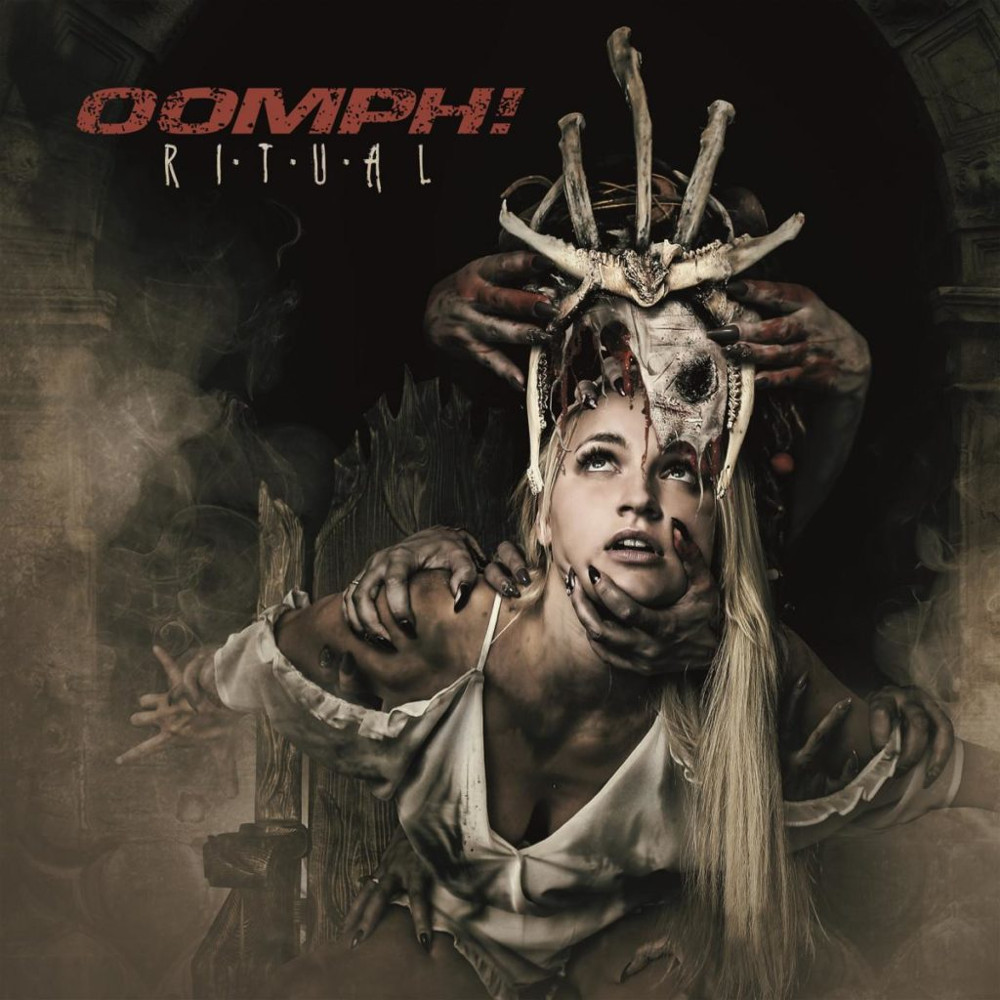
Oomph! - Ritual (2019)


Country: Germany
Style: Industrial Metal
Rating: 7/10
Release Date: 18 Jan 2019
Sites: Bandcamp | Facebook | Instagram | Official Website | Twitter | Wikipedia | YouTube

Rammstein are certainly more famous and more successful, but their fellow countrymen known as Oomph! established the Neue Deutsche Härte style back in 1994 with their second album, Sperm, a year before Rammstein released their debut, Herzeleid. What's more, Oomph! are still recording together and this, perhaps their lucky thirteenth studio album, is out on Napalm Records.

I'm sure they're getting fed up of Rammstein comparisons, but it's hard not to go there and not just because they play the same sort of driving militaristic dance metal with crunch. Like Rammstein, they sing primarily in German, the English album title not being extended to the tracks on it. Like Rammstein, they have never changed their line-up, with the core trio of Dero Goi, Andreas Crap and Robert Flux remaining in place since 1989, though they do add extra personnel when playing live.

Like many, I'm relatively new to Oomph! and I found this a solid effort. I found it little less immediate than what I'm used to from NDH music, which frankly has been pretty much restricted to the first half dozen Rammstein albums. I wasn't sold on a first listen and felt that it ran long, though my copy has a couple of bonus tracks and a remix. I appreciated it much more on a second listen.

That lack of immediacy may tie to the fact that, while tracks do try to distinguish themselves from each other in little ways, from the airplane noises on opener and second single Tausend Mann und ein Befehl, the cow at the beginning of Lass' die Beute frei or the sharpening knives on Seine Seele, all the songs tend to end up in similar places. It takes effort on the part of the listener to find their different grooves.

Only if we persevere can we really start to find the different tones. The album kicks off with a powerful militaristic song in Tausend Mann und ein Befehl (or A Thousand Men and One Order) but ends with a softer lament in Seine Seele (or His Soul). In between it sometimes leans towards a radio-friendly commercial edge, on Europa or the first single Kein Liebesleid (No Love Song), but sometimes to a harder and more brutal sound, like on Das Schweigen der Lämmer, which has a lead vocal in the Nick Holmes style, clean but with a steady and sustained rasp.

Oddly, one of the catchiest songs on the album is the least likely to be heard on the radio because it's entitled TRRR - FCKN - HTLR and, as it's the closest to the English language you'll find on this album, it's about precisely what you think it is. And there's a big difference between the band and Rammstein; I believe that Oomph! have managed to avoid a whole slew of controversies, political and otherwise. Writing a song as blatant as this can't hurt that track record.

There are a lot of NDH bands out there nowadays and Oomph! are about to tour with a couple of them, Nervenbeisser and Heldmaschine. I can't see Ritual becoming a favourite like Rammstein's Mutter but it's a good album and it may finally prompt me to look backwards into Oomph!'s considerable back catalogue and sideways to some of the other NDH bands. Hopefully it will do same for you.