Thursday, 4 June 2020

Oz - Forced Commandments (2020)


Country: Sweden
Style: Heavy Metal
Rating: 8/10
Release Date: 22 May 2020
Sites: Facebook | Metal Archives | Official Website | YouTube

Here's another metal band from back in the day that I've completely missed out on. They're Oz, who were founded in Nakkila, Finland way back in 1977 and put out some albums during the NWOBHM era, including a poorly received debut in Heavy Metal Heroes but a well received follow up called Fire in the Brain. By that time they'd moved to Sweden, where they remain, and I don't remember seeing their name in the eighties at all but they must surely have been covered in Metal Hammer at least. After five albums, they split up in 1991 and stayed gone until 2010.

This is the third album from the reformed Oz and it sounds great to me, the sound taken from the eighties but eighties but delivered through fresh songs that benefit from the 21st century production. Pekka Mark, who goes by Mark Ruffneck, is the only musician left from the old days, everyone else's time in the band dating back only as far as 2015 or 2016.

It's upbeat stuff, led by Ruffneck's drums, with vibrant twin guitars and a clean operatic vocal. It's old school stuff, rooted in European power metal of the early sort spawned from the NWOBHM. And it's patient stuff, because I could imagine this a lot faster than it is without fundamentally changing it into another genre. The only time they really ramp up is on Liar, which ends the album with a sheer burst of energy. It kicks off with guitar histrionics and then gets faster than anything else on the album. It's never speed metal but there are points where it thinks about it.

What's more, it's consistent stuff. There are eight songs proper here and I would be hard pressed to pick either the best or the worst of them. I'd put their sound somewhere in between the sheer chugging power of Accept and the incessant melodies of Gamma Ray, with Judas Priest style twin guitars and a commerical grounding like Divlje Jagoda that applies to every one of these songs without any exceptions.

My highlights tend to be within songs. Switchblade Alley starts out with an agreeably prowling bass intro from Peppi Peltola. The twin guitar workouts on The Ritual shine, courtesy of Juzzy Kangas and Johnny Gross, as do those at the start of Liar, among others. Those guitars nod at classical in Accept style on Spiders, which gets neatly theatrical late on.

And there's Long and Lonely Road. This is a power ballad and regular readers will know what I tend to think about those. I tend to mention them either as the lowest points of albums or as ones that surprisingly don't annoy me. I'd go a lot further here and state that I actively enjoyed this one as much as anything around it. That's a rarity for me and it speaks volumes about this band and their admirable consistency.

In short, this is classy stuff and that continues into the bonus tracks. I'm not seeing why these three are marked as such at all, as they don't seem to be B-sides, covers or re-recordings or any of the other usual reasons for tracks to get labelled as bonus (though Kingdom of War is a live recording). The album runs a fair 38 minutes without them so, if they're just more new songs, then why not just call this a 55 minute album?

And they're certainly not also rans. In fact, I'd suggest that Diving into the Darkness, the longest song on offer and emphatically the most epic, is also the best. Lead vocalist Vince Koivula is excellent throughout, but he's outstanding here and everyone else in the band matches him. The riffing and transitions are joyous and the last minute and a half is exquisite. With the sheer power that emanates from Kingdom of War, I'd almost hint at the bonus tracks being a step up from the rest of what's already a quality album. And they're why this goes up from a 7/10 to an 8/10.

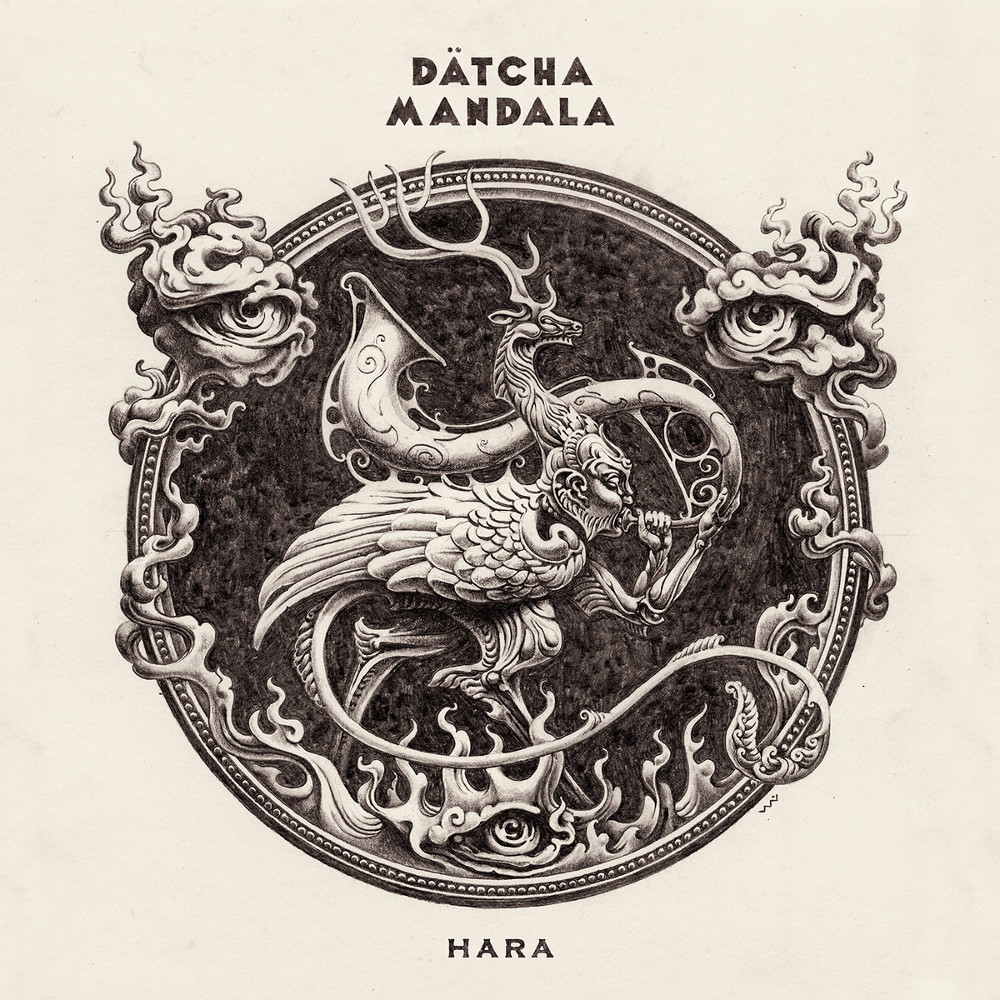
Dätcha Mandala - Hara (2020)


Country: France
Style: Hard Rock
Rating: 7/10
Release Date: 5 Jun 2020
Sites: Bandcamp | Facebook | Instagram | Official Website | Twitter

I first saw French band Dätcha Mandala described as stoner/desert rock, but that's not strictly true, even with the fuzz on Jérémy Saigne's lead guitar that makes the stoner side of that believable. It's not remotely based in a jam mindset, so I'm not buying desert rock at all. The band describe their sound simply as heavy blues and that feels fair to me, even before Missing Blues shows up to be completely overt, though other tags on their Bandcamp page ring true too, such as hard rock and psychedelic rock.

I'd add a few labels of my own too, as there's plenty of southern rock to be found in songs like Mother God, even before the slide guitar shows up, and a majority of the album plays in mildly psychedelic pop territory. The result is that, even though Stick It Out kicks off the album like a punchy stoner rock anthem, the next few songs continue to add influences until we realise just what the band's scope is.

Mother God brings in the blues, right down to a harmonica, but adds T. Rex pop sensibilities too. With that southern rock sound that extends to slide guitar, they sound like the Black Crowes covering seventies glam rock. Who You Are is heavy blues in the way that Status Quo used to be heavy blues in their heyday but the high pitched Nicolas Sauvey adds a Budgie feel as well. Missing Blues is pure blues, drenched in harmonica, kick drum and distorted vocals.

The band's sound palette is wrapped up with Morning Song, which sounds more like the Beatles with a side of Queen. Imagine if, after Freddy died, Brian and the boys had brought in Paul McCartney to take his place. Once this sound is in place, that aspect never really vanishes from the album. Sick Machine may have strong nods to electronica and even disco but it's the Beatles at heart with dashes of Queen everywhere. Moha is looser, with Indian instrumentation like hand drums and what sounds like a sitar but probably isn't.

Even Tit's, which returns to overt blues, stays in psychedelic pop territory and it takes really heavying back up to shift more to the Budgie vibe, like On the Road. That's done with emphasis on Pavot, which closes the album out with urgent and tortured punk attitude, and on Eht Bup, which is easily my favourite song here. It has a driving riff that's as close to stoner rock as anything since the opener, but the vocals remain ever light and playful, whether they soar like Burke Shelley or harmonise right out of the Beatles textbook. It's like the album in microcosm.

Dätcha Mandala are a trio, so they have fewer musicians than the Beatles or Queen had voices but, like Budgie, they're able to generate serious power as and when they need it and always seem like there are more people than there are making their music. Sauvey is a fine lead singer who shines particularly brightly in the second half of Tit's, but he also provides harmonica, bass and acoustic guitar. Saigne handles the electric guitar while JB Mallet sits behind the drumkit, not just keeping everything lively but shifting tempo on a dime when needed.

This is the band's second album, following 2017's Rokh, which I'll now seek out eagerly. While Eht Bup is easily my favourite song here, with Tit's and Who You Are not too far behind, pretty much all the rest aren't far off the pace, making this a highly consistent and enjoyable album. I'm intrigued by what its predecessor sounded like.

Wednesday, 3 June 2020

Alestorm - Curse of the Crystal Coconut (2020)


Country: UK
Style: Folk/Power Metal
Rating: 6/10
Release Date: 30 Apr 2020
Sites: Bandcamp | Facebook | Instagram | Metal Archives | Official Website | Twitter | Wikipedia

Following hot on the heels of the teaser that was The Treasure Chest EP, the new Alestorm album is as fun as it ought to be and frankly has to be for the band to remain fresh and not the novelty act they so often threaten to be. I have to admit that Treasure Chest Party Quest has soaked into my skin and a bunch of songs here may well end up do the same thing. The album is riddled through with silliness but Christopher Bowes and his crew continue to play a straight game with a wink and it's still working for the most part.

Fannybaws is a silly song about a legendary pirate who's done everything and everybody, including your mum. Chomp Chomp is a silly shanty, fast and heavy and about a giant alligator, because of course it is. Zombies Ate My Pirate Ship is a silly song about, well, you know precisely what it's about because the title gives it away, just as Pirate Metal Drinking Crew does. All these tracks are decent but they're also mostly what anyone who's ever heard even part of an Alestorm album will have expected from this one.

To be fair, Alestorm occasionally mix things up even within the confines of their own tried and tested formula. Sure, they still play power metal with a heavy side of folk, not least through the violin of Ally Storch of Subway to Sally, who guests throughout. Sure, it's all still driven by shanty melodies and a glorious sense for hooks, if that's remotely appropriate terminology for a pirate metal band. Sure, Bowes still delivers his sneering piratical vocals and his own particular brand of dark humour.

Tortuga is the most obviously different song here and I'm surprised to find that it's grown on me like a fungus since I first heard it last month on The Treasure Chest EP. It has an overt pop sensibility to it, sometimes sounding like a boy band gone folk metal with a guest rap section, and that's not the Alestorm I thought I'd be drawn to, but it's done very well and it's a welcome diversion from the norm.

The other songs that do something different are Zombies Ate My Pirate Ship and Wooden Leg Part 2 (The Woodening). The former veers into symphonic metal waters, down to a guest female vocal that works really well. The latter has a chiptune section that's just as pop in its way as Tortuga. It's also epic in nature, running over eight minutes, even if the story it tells isn't deep enough to warrant that.

If Wooden Leg Part 2 is problematic in a few ways, not least a cheap stretch of a chorus, it's not the worst song here because it is at least fun and, by the end, endearingly ridiculous. That accolade surely has to go to Shit Boat (No Fans), which is a wasted minute and change of pointless profanity. Now, Alestorm can be both profane and funny, as in Fucked by an Anchor, possibly their catchiest track ever, but this loses the funny so just sounds awkward.

If you're already an Alestorm fan, this is going to be another fun release for you but, if you aren't, this is less likely to convert you than earlier albums. Check out Black Sails at Midnight first or Captain Morgan's Revenge.

Manifesto - The Pills for Blindness (2020)


Country: Russia
Style: Progressive Rock
Rating: 7/10
Release Date: 26 Apr 2020
Sites: Facebook | Instagram | VK | YouTube

Manifesto are a prog rock band from Moscow and they do exactly what all the best prog rock bands do: keep me on my toes. This album, which runs half an hour even though it only features two tracks was constantly unexpected and I appreciated that considerably. I like hearing things that I have never heard before and this falls into that

The first of those is The Last Grand Manifesto, a telling title for a group called Manifesto, and it tells us quickly and clearly that they're huge Pink Floyd fans. This is so akin to classic Floyd that I wondered at one point if I'd actually popped on a Roger Waters solo concert instead, where he changed things up on Shine On You Crazy Diamond and then segued into some alternate universe combination of Time, Money and Welcome to the Machine.

But then those sound effects grow. What initially appears to be a set of the sampled embellishments that Alan Parsons pioneered on Dark Side of the Moon just keeps on going for the last half of the song. And given that the song's fourteen minutes long and this starts around the four minute mark, that's a heck of a lot of samples and a lot of non-music to sit on a music album. It becomes a journey and it captivated me like a radio drama.

Where it took me, I'm still not entirely sure, but through a few centuries of history is a good place to start. There's war here and peace, the advent of technology, cultural shifts, you name it. It's wildly ambitious and it's more reminiscent of the sound collage work of artists like Corporal Blossom than any actual band, whether prog or not. Pink Floyd have never been quite this experimental, even on something as unusual as Several Species of Small Furry Animals Gathered Together in a Cave And Grooving with a Pict.

The title track, split into two parts, has the unenviable task of following that opener and it does so by changing completely. Part 1 is wavery strings against piano until a voice shows up to take over from a cello. We're still in Floyd territory, with that voice moving from calm and soft and enticing to angry and vicious and reactionary. The production here is particularly fascinating because what's so obviously traditional, a song with voice and guitar and drums, is deliberately rendered a lot less traditional.

Sometimes it feels like we're listening to a vinyl album someone transferred to cassette and then left in a box in a hot shed for a couple of decades so that the tape's a little warped but still plays. Sometimes it feels like the band are performing underwater. And then things clean up and the band punch through the overlay with an urgent funk metal beat that might have come out of King Crimson. Manifesto never totally lose the Floyd influence here, but they add so much to it that they're something else entirely.

Part 1 only lasts seven minutes but it seems longer. Part 2 runs ten but it feels shorter, more timeless. There's more David Gilmour guitar and swathes of phrasing that's clearly taken from Floyd, but it all plays out more like a jazzy instrumental Steely Dan, even with Hammond organ swells in a funky first half and serious builds halfway through. The dynamics are glorious on this one and we shouldn't be surprised when we seem to finish up at a dinner party. What can they get me? More of that guitar, please. Thank you!

Sadly I have no idea which musicians to praise. The band have a group rather than a page on Facebook, so About doesn't tell me much. Instagram really has no interest in telling anyone anything and I'm still figuring VK out. So all I can say is that Manifesto hail from Moscow and I do mean the one in Russia not Idaho. I don't know how many people there are in the band or how long it has been making music or what else they might have done. However, I would be very happy to find out the answers to any or all of those questions. This is ambitious and original work and I want to hear more.

Tuesday, 2 June 2020

House of Lords - New World, New Eyes (2020)


Country: USA
Style: Hard Rock
Rating: 7/10
Release Date: 8 May 2020
Sites: Facebook | Official Website | Twitter | Wikipedia | YouTube

I remember House of Lords from their debut, which made quite an impact back in 1988. It was a major effort, the band built around Angel's Gregg Giuffria and musicians of the calibre of Quiet Riot's Chuck Wright and Fifth Angel's Ken Mary. Jeff Scott Soto sang backing vocals throughout and the songs were written or co-written by names like Stan Bush and Rick Nielsen. It was a big deal but, given how the musical landscape changed soon afterwards, it's not surprising to find that House of Lords called it quits in 1993.

However, they reformed in 2000 and they're still going, with vocalist James Christian the main man nowadays. Giuffria left in 2004 and the other three founding members followed in 2005, but current lead guitarist Jimi Bell and drummer B. J. Zampa have been with House of Lords longer than each of them, making this kind of their band now. Bassist Chris Tristram is the new fish, having joined in 2016. This makes a dozen studio albums for House of Lords and two thirds of those have come since Christian took the reins.

I liked this one on a first listen, even with the inevitable power ballad in Perfectly (Just You and I). However, it got better, albeit oddly in phases. The title track was the most immediate song, a straight ahead melodic hard rock number with hints of glam rock and southern rock. Christian has a very clean voice and, given trends, it wouldn't shock me if he decided to record a solo country album at some point instead of a straight AOR album.

The Both of Us also stood out immediately and, again, it's a catchy straight melodic hard rock song. A second time through and other similar songs leapt up to join it, like Chemical Rush and One More. They're a little more subtle but not by much. The refrains on Chemical Rush and We're All That We Got are acutely infectious and some of the lively guitarwork follows suit.

On a third listen, the less straightforward songs made their presence really known. Change (What's It Gonna Take) starts out like Boston with a long and imaginative keyboard intro, then turns into a mature Bon Jovi and bizarrely ends up in Owner of a Lonely Heart era Yes with overlays everywhere we might look. The Summit starts out like a perkier Led Zeppelin, complete with some requisite middle eastern bits.

However, none of those are the primary influence here, which seems to me to be Aerosmith. That influence shows up on One More but really gets overt on The Chase, which features a horn section and a slide guitar and sounds like Aerosmith rocking up a Robert Palmer pop hit. By this point, at four or five times through, The Chase leaps out as perhaps the best song here, but then I let it replay once more and get caught up in other songs all over again.

While this was a 6/10 on my first listen with some highlights that elevated it, it's become an album I'm tempted to give an 8/10. It grows that much. On consideration, I think I'll stay with a 7/10 because some of this is generic and some of it is overly derivative. I'd have been more sold on the Yes and Led Zep bits if they were integrated better into the album as a whole rather than their own individual songs. Also, while the power ballad is pretty good for its type, I'm not a big fan. I'm a much bigger fan of the rest of this.

Satan's Empire - Hail the Empire (2020)


Country: UK
Style: Hard Rock/Heavy Metal
Rating: 8/10
Release Date: 20 Mar 2020
Sites: Facebook | Metal Archives | Twitter | YouTube

I've been reviewing a lot of albums lately by bands who were active back in the era of NWOBHM, the New Wave of British Heavy Metal, that was such a key step in the transformation of the hard rock of the seventies into the heavy metal subgenres of the eighties and on. It's a special era for me and I have absolutely loved hearing new material from bands like Weapon UK, Angel Witch and the Tygers of Pan Tang. I'm especially buzzed to see new albums from the bands who never really got going back then, like Badge and Satan's Empire.

Badge were known only for a single, Silver Woman, released in 1981. Satan's Empire didn't even get that far, only managing to get one track released on the pivotal first album on Neat Records. It was a compilation entitled Lead Weight and it introduced the world to Venom, Blitzkrieg, Raven, Bitches Sin, Fist, White Spirit and others. Satan's Empire wrapped up that album with its longest song, Soldiers of War.

And then they vanished for almost forty years, even though they'd moved from Dundee to London to make it big. They finally got round to a debut album in 2018, which I haven't heard yet but, only two years on, they're back with a second and I have to say that I'm mightily impressed. As that 37 year delay might suggest, this is patient music. It's heavy but it's not fast and these songs are carefully constructed. Just check out Empire Rising, a six minute song with plenty of musical decisions that remind me of Diamond Head.

There are ten songs on offer here and not one of them wraps up in under four minutes. Six run over five with the longest the closer, New World, at almost nine and, while Diamond Head are clearly a major influence, they're far from the only one. The most obvious is Saxon, who are overt in the opening track, Warriors and continue to be important throughout. Vocalist Derek Lyon, who'd stepped down last year because of ill health but is apparently recovered and back in the band, doesn't sound exactly like Biff Byford but he's never that far away as a comparison.

There's also a lot of Judas Priest here, most obviously in Secrets, which is a song deliberately built in the late seventies Priest style, right down to the echo on the vocals that returns on other songs. Perhaps the best song on the album is Hail the Empire, which starts out acoustic and grows like Biff (and oddly at points, Neil Young) singing for Wishbone Ash. Inevitably, with that title, it also ventures into Manowar territory, but it returns to Wishbone Ash for the solos. There's an overt nod to Radar Love in Storm on the Airwaves and All Hallows Eve is the band's attempt at a Mercyful Fate song, even if they wrote it themselves.

Oddly, the only one of those bands that I know recorded for Neat Records was Wishbone Ash and that was much later on. Neat bands had a certain vibe and I kept waiting for it to show up here. Eventually it did on Black eight songs in. It's nastier and more evil, reminding in some ways of bands like Warfare though more metal and less punk. Magpie's drums get quicker and Lyon's voice gets wilder. It's a lot of fun.

One thing I couldn't get out of my head was just how NWOBHM this sounds and I know that sounds obvious but let me explain. NWOBHM was a movement rather than a genre, a label applied to those bands steadfastly making heavy metal albums in the face of punk. When I've reviewed new albums from NWOBHM bands, I've been labelling them "heavy metal" because that's what they are.

This is too, but it's also the closest I've heard to sounding like it could have been written in 1981, even more so than the Badge album which actually partly was. There's no acknowledgement here of how Metallica took the NWOBHM era and used it as a launchpad for whole new subgenres of metal. A song like Shadowmaker is an obvious candidate for Metallica to cover but there's not a hint of Metallica in it. It's Wishbone Ash and Diamond Head again.

I like this a lot and I'll try not to bemoan the fact that we've lost out on decades worth of Satan's Empire albums. At least not too much. I'll stick to being happy that at least they're getting round to that discography now.

Monday, 1 June 2020

Sinister - Deformation of the Holy Realm (2020)


Country: The Netherlands
Style: Death Metal
Rating: 7/10
Release Date: 29 May 2020
Sites: Facebook | Instagram | Metal Archives | Official Website | Wikipedia | YouTube

While Dutch death metal band Sinister were founded as far back as 1988, they didn't issue their highly regarded debut until 1992, as I was drifting away from what I felt was becoming a stale genre, mostly because of the limiting factor of the vocals. Nowadays, I'm finding a fresh appreciation for the old school form of death metal, the one that doesn't need any prefixes, and I'm happy to say that Sinister are a fantastic example of that.

I've managed to miss out entirely on a long career. This is their fourteenth album and I'm interested in working backwards to see where their sound came from. It's death at its fastest and thrashiest, driven by strong rhythms and intricate guitars. The riffs are frantic and incessant, but they're built on melody without this ever turning into melodic death. The tone is a dirty and demonic one, which I really like, that being only one reason why I'm hearing a Possessed influence.

Where Sinister depart from that Possessed sound is in the vocal style of Aad Kloosterwaard, his deep growl a guttural demonic outburst. I really like how it contributes to the dark texture, but it's a style that doesn't allow him a lot of variety in delivery. It's a limiting factor even across this album, let alone over multiples. He's a founding member, the only one currently in the band, but he shifted over from drums to vocals after they briefly split up and reformed in 2005, making this their eighth album with his voice.

Fortunately, his roar isn't the only vocal sound here and the best songs are able to find variety. The monks who chant us into Oasis of Peace (Blood from the Chalice) show up buried in the mix on Apostles of the Weak and Unbounded Sacrilege. There are some backing vocals under Kloosterwaard's for emphasis, like on Unique Death Experience, but I'm surprised they don't show up as a counter more often, because that's an effective approach on Apostles of the Weak, surely the best song here. There's also what sounds like narration on a few tracks. Variety is the spice of death.

I enjoyed Kloosterwaard's demonic delivery, but I enjoyed the backing music a lot more. Even though the tempo is almost entirely fast, it still varies a great deal and I'm massively impressed by Toep Duin's drumming. There are a pair of guitars here and Michael Grall and Walter Tjwa are imaginative about how they can both combine and play off each other. I enjoyed their soloing a lot on this album too. That leaves Ghislain van der Stel on a reliable bass and praise for the brief instrumentals that play in symphonic territory and still fit on the album, like this is a demonic opera.

I liked this album, just as much on a third listen as a first, and I want to hear more from Sinister. I did a little reading up and see that their albums have had varied reception, a bunch of them being rated very highly, not only the early ones, but a bunch being rated a lot lower. I wonder how much this ties to the line up at the time, given that there's a lot of turnover in the band.

Of the five current members, only two played on the prior album, Syncretism in 2017, and it can't be promising when a band who have been around for over three decades are unable to boast more than two members who have lasted more than a decade. If I'm counting properly, at least thirty musicians have been part of Sinister. That seems like a lot, but I should emphasise the flipside that they can turn out an album this solid with mostly new members.

DeVicious - Phase Three (2020)


Country: Germany
Style: Hard Rock
Rating: 8/10
Release Date: 8 May 2020
Sites: Facebook | Instagram | Metal Archives | Official Website | YouTube

I seem to be have been reviewing a lot of melodic rock lately and plenty of albums from Germany, so it seems like an easy choice to kick off June with a melodic rock album from Germany. This is the third album from the Karlsruhe band known as DeVicious and it's as catchy as all get out, located musically somewhere in between the radio-friendly hooks of FM and the riff-laden power of Firewind. It helps that these songs are delivered in English without too much accent.

I haven't heard either of the first two DeVicious albums, but I've seen the name banded around on Facebook and I've heard odd songs here and there, like on the ever-reliable Chris Franklin's Raised on Rock radio show. It's pretty hard to think of a more likely band to feature on his show, because this is the most hook-laden set of songs that I've heard in a long time. Everything is driven by melody, whether it's a verse or a chorus, a riff or the lively bass that opens Calling My Name. Even the drums feel catchy.

In fact, for quite a while, the name of the game seems to be to one-up the previous song on that front. Firefly is obvious single material. Mysterious is even more obvious single material. Pouring Rain may not match those two, but, by the time we get to Walk Through Fire, I frankly gave up wondering if anything could be more obvious single material. I was singing along to this one on my first listen, even though I didn't know the words yet.

The approach is pretty straightforward. DeVicious are a five piece band with a dedicated lead singer in Antonio Calanna, the third such in three albums, and the usual instruments behind him. Radivoj Petrovic is the only guitarist nowadays but Denis Kunz gets a lot to do on keyboards. I'd call what they do hard rock rather than heavy metal, but it has a metallic edge. It's kind of like power metal if you toned down both the power and the metal but not so far with either as to reach AOR softness.

There are eleven songs on offer, plus a brief keyboard interlude, with the first ten following a reasonably like mindset. While the most overt singles are stacked early, the album doesn't get weaker after they're done, at least until the ballad that closes it out. It's easily my least favourite song on this album and I'm happy that it wasn't placed earlier on the album where it would have broken up the flow.

Some of the later songs could be described as the sort that keep on growing on you until they're playing in your head the moment that you wake up in the morning. Every time I listen through, Higher feels a little less worthy than the early standouts but it just won't leave me alone. It may be because it's missing that je ne sais quoi to elevate it over the others, but it's so damn good at what it does that it ends up elevating itself anyway.

Some of them are deeper musically. Clearly these musicians are capable but I don't think they're particularly pushing themselves, because this album is a lot more interested in riffs and hooks than solos. They're just not showing off. However, there are little moments here and there where they mix it up a bit more, like You Can't Stop Now and especially Calling My Name, which may well be my favourite of these songs, with a kind of Dr. Feelgood-esque tease to it.

If this was 1984, DeVicious would be everywhere, with four or five of these songs big hits in multiple countries. Even in 2020, they really ought to be all over the radio because it could work to a pop, rock or metal audience.