Friday, 11 November 2022

Glass Hammer - At the Gate (2022)

Country: USA
Style: Progressive Rock
Rating: 7/10
Release Date: 7 Oct 2022
Sites: Facebook | Official Website | Prog Archives | Twitter | Wikipedia | YouTube

Glass Hammer certainly aren't keeping us waiting for new material nowadays, this one being their third in three years and their twentieth over all. I gave Dreaming City a highly recommended 8/10 in 2020 but only a 7/10 for Skallagrim - Into the Breach a year later. I'm going with the same on this one because it's clearly a good album, especially after a couple of listens to sink in, but nothing on it stands out particularly in memory. Sure, I don't expect to be humming any Glass Hammer hooks in the shower because they just leap into my head, but this is very much an album to befriend over time.

It's a little softer, I think, than Skallagrim, but that had ratcheted up the heaviness from the album before it. Savage has heavier riffing and there's a neat grungy riff early in All Alone before it goes for the Sabbath sound, even down to Ozzy-esque vocal phrasing, though Hannah Pryor doesn't aim to sound like him otherwise, which would be weird. She's back again as lead vocalist, which in Glass Hammer means that she sings most of these songs, but with Fred Schendel and Steve Babb taking over every once in a while. I like Pryor's voice but it generally plays out as softer and folkier, which takes an edge off even the heavier songs.

She also often takes a lighter approach, starting with the opener, The Years Roll By, which is... well, it's very pleasant and if that sounds to you like a backhanded compliment, I guess you could take it that way. I liked the song and feel that it's inherently likeable, but it feels rather like a cool breeze on a hot day—it's nice and it's refreshing but there's no bite to it. Much later, because once again, this album nudges its way past an hour, she takes on a more pop-oriented style for In the Shadows. Again, that one's acutely likeable but you'll need to engage with it because it's too polite to begin that conversation.

Oddly, I found that I liked Savage not only because every instrument, from guitar to keyboards and not excluding Pryor's voice, gains edges, but because there's a neat if short drop into what sounds like a koto. I wanted a lot more of that sort of thing on this album, perhaps all the more given that I'm listening right after the latest Sigh album, but the band keep on rolling to maintain the groove that they've built on pretty much every song. Where they mix things up, which they do at points, it tends to be by shifting the groove between songs. North of North, as an example, plays out rather like Tangerine Dream, deploying their memorable pulsing synth approach with overlaid melodies. It stays instrumental, except for a vocalisation or three deeper in the mix.

It took me a couple of listens to get used to this album, but each song popped eventually and found its own identity. The catch is that they popped so well that, while all the best details stood out well for me to appreciate, so did the worst, though that seems like an overly harsh word to use. It's just that little decisions here and there bugged me, which isn't a good thing because I'm not remotely able to call myself a musician—the only thing I can play is the fool—and I should be trusting in the decisionmaking of talented and experienced musicians like those in Glass Hammer at every single time.

For instance, I didn't get why the bass was so high in the mix. I don't mean that the sound is made heavier by boosting the bottom end, just that this is the most audible bass I've heard in forever, a decision I don't get. The guitars and the drums are lower and the vocals below them. Maybe that's in part because Pryor has a strong voice but lowering it in the mix makes it feel more delicate and folky. That means that songs like All for Love, where she does a particularly good job, subdue her effect somewhat.

I love the opening keyboard riff to Snowblind Girl, but it transfers to guitar almost immediately in place of developing it more on the keyboard first. I liked In the Shadows but I don't get why it has a pop vocal instead of a folky rock vocal. I liked It's Love too, the epic of the album at thirteen and a half minutes, but it doesn't play out like an epic. It feels like other songs here, just longer with no special emotional resonance. It also begins with a single repeated piano note that gets annoying over repeat listens, even though it builds well from there, each additional layer elevating it more.

I should emphasise that these are minor things but there are a lot of them and they made my list of notes look far more negative than it ought to have been. This is another good album from Glass Hammer, even if it's not up to the standards of Dreaming City. Factor in that they're giving us over an hour of music every year nowadays and that seems even more impressive. Somehow, though, I would throw out North of North, the instrumental, as my favourite track here, even if I'm enjoying Hannah Pryor as lead vocalist. That's just another reason why this one feels just a little awkward.

Sigh - Shiki (2022)

Country: Japan
Style: Avant-Garde Black Metal
Rating: 7/10
Release Date: 26 Aug 2022
Sites: Bandcamp | Facebook | Instagram | Metal Archives | Official Website | Twitter | Wikipedia | YouTube

There's so much going on in this album that I'm still not sure that I've truly come to terms with it. I know that I like it, but I didn't get a real grasp on it until at least a couple of times through. That's partly because Sigh have been around for a long time and have diversified their sound over a long career that I'm not overly familiar with. They were founded in Tokyo in 1989 as a black metal band in the Norwegian style. However, they soon added symphonic elements then shifted towards more of a more progressive, avant-garde style.

To highlight how long they've been shifting, they've named their albums acrostically for the band name since the beginning, so each cycle of four begin S, I, G and then H. This album marks the start of their fourth cycle, though the first G was technically an EP so this is a twelfth full length studio album. That G was Ghastly Funeral Theatre in 1997, the beginning of their experimentation, and I see that the most recent H, Heir to Despair in 2018, added traditional Japanese folk elements.

By this point, it's easy to see their black metal roots because lead vocalist Mirai Kawashima sings in a harsh demonic style, often spitting out lyrics with venom, and because there are fast sections where the drums ramp up to a serious tempo and the guitars follow suit, even if the result isn't an entirely traditional black metal wall of sound. These black metal sections show up in the majority of the eight songs proper on offer, but what's important to note is that they're far from alone.

They don't begin the album either. Kuroi Kage kicks off with a slow tortured guitar as if Sigh had a newfound passion for sludge metal. That song livens up during the midsection and there's a black metal part five minutes in, but it doesn't last too long. There's a much more gentle section after it featuring some soft alto saxophone from female vocalist Dr. Mikannibal, who otherwise provides equally demonic vocals that don't betray her gender. What's more, the guitar solos tend to be the sort of guitar solos we expect from traditional heavy metal albums, not that black metal has been ever known for guitar solos anyway.

So there are four clearly separate styles, three of which pervade the album: fast black metal, old school guitar solos and softer saxophone sections. Many songs include all three of these, plus the fourth, which is electronic experimentation that feels even older school than the guitar. There's a section in Satsui - Geshi no Ato that sounds like someone's changing the dial on a radio to float on through a slew of stations without ever stopping long at any of them. I did that on a demo back in the early nineties that I recorded in my bedroom, when my "band" was a couple of rulers, a desk and a Russian thrash album played at 78rpm instead of 33.

Oh, and just in case you thought that was it, there are all sorts of other tones and textures here to keep us on the hop. Shikabane starts out feeling like a punk song, before it goes experimental. Its percussion is absolutely fascinating, especially as its paired with electronic weirdness like ambient space rock. The second half of Satsui - Geshi no Ato couples a hip hop backing track with what feels like synth-driven harpsichord. There's a Metallica-esque groove on Fuyu Ga Kuru, but with a much more demonic voice than James Hetfield would ever deploy. More unusual drum rhythms prompt Kawashima to bring out his flute for a pastoral section.

I have little idea what to call out as favourites because I need to listen through more times. I felt a little confused early on, but Shoujahitsumetsu grounded me for a while. It's much more ferocious than Kuroi Kage, at least when it wants to be and oddly calming when it doesn't. Its primary shift away from black metal is the traditional guitar solo from Nozomu Wakai, which is excellent. Then I got lost again, but engaged with the more progressive sections in songs as the album ran on. Once I'd got to Fuyu Ga Karu, I was hooked.

However, the constant shifting between styles made it hard to get any individual song stuck in my brain. I stopped thinking about any of the songs individually and started thinking about this as an epic single piece, forty-six minutes long. It didn't seem to break down into a set of nine discernable movements, because each of those movements had movements and those movements reoccurred like themes, so where I ended up was that a strange concept where there are four versions of Sigh playing in different styles but they keep shifting in and out of the spotlight, resulting in us having impressions of each as well as impressions of the combination that coalesce within our brains at a later point in time.

For now, I guess I'd call out Fuyu Ga Kuru as my favourite track. There's the Metallica groove; that demonic lead vocal—even if it isn't spat out in a near rap the way it is on Satsui - Gesho no Ato; the pastoral flute part set against swirling keyboards; a black metal section that keeps dropping down to more traditional heavy metal riffs; more unusual rhythms to fascinate me; and eventually some of Dr. Mikannibal's alto sax to wrap things up. That might sound like an unholy mess but it works in that bizarre mixture.

After that, maybe I'd go for Shoujahitsumetsu but more likely the far more progressive Mayonaka no Kaii, which feels like a setpiece at the end of the album. It's the meat in a sandwich between a brief intro, Kuroi Kagami, and a less brief outro, Touji no Asa, but the three play well together. It's another fascinating mixture, not only including many of the elements that I've mentioned, along with a few more. There's a lot of Black Sabbath here, in the form of mellow but heavy psychedelic riffing, sometimes accompanied by flute. The vocals are demonic, of course, and the guitar solo as clean as those vocals aren't.

This is definitely for rock/metal fans with very open minds, but I think it's a gem. I'm very tempted to up my rating from a 7/10 to an 8/10 and probably well after a couple more listens. It simply isn't immediate stuff. We have to get to know this material to fully appreciate everything that's going on within it.

Thursday, 10 November 2022

Therion - Leviathan II (2022)

Country: Sweden
Style: Symphonic Metal
Rating: 7/10
Release Date: 28 Oct 2022
Sites: Facebook | Instagram | Metal Archives | Official Website | Twitter | Wikipedia | YouTube

I liked Leviathan, the seventeenth studio album by Therion, the Swedish pioneers of choral metal, symphonic metal, operatic metal, whatever else you want to call it, but I also struggled with it. It's easily recognisable as the Therion I knew and I loved from their heyday in the late nineties but the band's sound had shiifted and not always in directions I was happy about. The choral sections were as solid as I remembered and the folk elements were welcome, but the guitars were relegated to a supporting slot and I didn't find a strong riff until the eighth track.

Leviathan II, unsurprisingly, is more of the same, and for those completely on board with the band nowadays can expect a third batch of this sort of material when they wrap up the trilogy in 2023. It has to be said that I enjoyed this album too, but I'm still not convinced by it. I certainly wasn't on a first listen, the standout moments being just that—moments—like the Hammond organ that's so briefly present late in Litany of the Fallen, the violin in Alchemy of the Soul or the plucked intro to Lunar Coloured Fields. Later on, there's accordion in Midnight Star and flute in Cavern Cold as Ice. However, none of the songs leapt out at me.

They fared much better on a second listen, especially the songs that featured more prominent use of guitar. The opener, Aeon of Maat, ends too quickly but there's an excellent guitar solo that our expectations initially interpret as more of Lori Lewis's soprano soaring above Thomas Vikström's tenor. Lucifuge Rofocale and Midnight Star both start with honest to goodness riffs and, even better, the guitars don't just vanish when the vocals show up, as they inevitably do. There's definitely a little more guitar on this album than its predecessor, even if the riffs still feel anomalous in the modern Therion sound that lives or dies on its vocals.

To be fair, both Lewis and Vikström shine on this album, demonstrating their talents both solo and in duet, and there's plenty of choral work behind them to keep things varied and epic. I'd highlight Midnight Star not just for its guitars but for its vocals. Lewis is given the spotlight early so she can showcase her serious range (especially when we hear her in pop voice on the following Cavern Cold as Ice), but that spotlight shifts to Vikström later on. Both are excellent.

Other songs, more dedicated to the new Therion sound improved on a second listen too. Litany of the Fallen still felt clumsily theatrical at points early on, as if what they were doing trumped what it sounded like. However, it built gloriously and, by when it reached a closing demonic conjuration, I was completely on board. Lunar Coloured Fields grew until I was swaying in my chair to its sinuous movements. Even when I couldn't grasp a whole piece, as with much of the second half, I dug parts of the songs, like the middle eastern elements to Marijin Min Nar.

The question, of course, is how much these songs will grow. A third listen didn't add much and the cherrypicking I've been doing since to try to get a grip on individual tracks has only elevated those I'd already fallen for, especially Lucifuge Rofocale and Midnight Star. And so, I think I need to stick with a 7/10 for this second part in the trilogy. I liked it more than the first, but not by much, and it still feels a little distant to me. Maybe my expectations are leading me astray, because I want the operatic and choral work that's so quintessentially Therion—they're a rare metal band who simply can't be mistaken for anyone else—but I want the guitars too that they're moving away from. But I have a feeling that I'm still being generous.

Andaja - Pavidalai (2022)

Country: Lithuania
Style: Folk Rock/Pagan Metal
Rating: 7/10
Release Date: 25 Aug 2022
Sites: Bandcamp | Facebook | Metal Archives

I'm not sure what I expected from this album, which came to me labelled as folk rock, but it isn't at all what I heard and I wonder if what I read is simply out of date. Andaja hail from Lithuania and it seems that they used to play pagan metal in the noughties, active from 2009 to 2009 with an album to their name in 2006, Iš atminties. When they got back together in 2013, they shifted to Baltic folk rock, as evidenced by a second album, Atvaras, in 2017. And that's where the notes end, but this is a lot closer to pagan metal than folk rock to my way of thinking. Maybe they've shifted back to their original style.

It's obviously metal as much as it is rock, because of how it sounds, some songs dropping down to a calmer vibe but many powering ahead with emphasis. I found it just as obviously pagan, perhaps a little because Daiva Pelėdaitė reminds me of Candia Ridley of Inkubus Sukkubus, merely with a far heavier, crunchier backdrop behind her and a real drumkit, a backdrop more reminiscent of bands like Romania's Bucovina, especially on the heavier songs. The melodies are certainly similar and it doesn't surprise that they're both rooted in the folk music of eastern Europe, but I caught a more ritual element to Andaja, especially on tracks like Pieno upės.

I like that crunchy backdrop, especially given how much ground it explores, but Pelėdaitė is easily the highlight of the album for me. Their Bandcamp page says that "a brave female vocal flutters like a flag" and I get all that except for one word. There's a stubbornness to her voice that seems very much like victory in the face of adversity, so the flag and bravery aspects work really well. It's a strong voice that both commands and perseveres, and I easily imagined her leading her troops into battle on songs like Medžiojma and winning the day, as underlined by the galloping beats late on. What I don't hear is the fluttering, because this there's no fragility or hesitation in this voice, even on quieter songs. There's power even in her speaking voice, which opens Giesmė iš vandens.

That Bandcamp page also suggests that there are very few female vocalists in Lithuanian metal, a state of affairs I can't speak to. However, if that's true, I hope that others will listen to her clarion call and join the fray, because she's blazing a powerful trail here and I'm eager to see what voices make themselves heard in response. There are two other musicians in the band proper, Ričardas Matyženok on bass and Mantas Galinis on drums. Pelėdaitė also contributes piano and keyboards, which leaves the guitarwork to a guest, Karolis Lapėnis, of Lithuanian death metal band Gilzeh.

My favourite songs come early, after the album's warmed up. Perkūno sutuoktinė is pagan folk but Šilko siūlai heavies proceedings up with style. Then it's Medžiojma and Pieno upės, which are both highlights for me, the former more of a stormer and the latter more versatile but equally strong. After those, and the fantastic opening to Dangaus kalvis, all whispers and chimes and one note on the bass repeated with increasing emphasis, the album slid away from me a little, grabbing me on every listen with Giesmė iš vandens and its prowling bass and commanding vocal.

It ends strong too, with interesting sounds echoing through Slogi, which also builds magnificently, and another dominant performance from Pelėdaitė on Velnio vestuvės, where she teases us early before reasserting total control. The instruments behind her tease too and the song interrupts a strong build to tease us all the more. While Pelėdaitė owns this one, not so much singing lyrics as hurling out commands to us, Matyženok's bass is notable early and Lapėnis's riffs are excellent. It may well be the third highlight for me, above Giesmė iš vandens.

Now, I need to figure out where Andaja are going, because it doesn't seem to be where the notes I'm reading state or indeed where the cover art suggests. That's a post-rock cover if ever I've seen one, promising ethereal soundscapes built from electronics, precisely none of which happen to be in the music. This is folk metal to me, likely the pagan metal Andija started out playing, though I'm trusting my instincts there rather than any understanding of Lithuanian lyrics. And they certainly feel like they mean it. Even if they're relying on a guest guitarist right now, this feels like a band I expect to knock out albums every couple of years because they have a mission.

Wednesday, 9 November 2022

Corky Laing - Finnish Sessions (2022)

Country: Canada
Style: Blues Rock
Rating: 7/10
Release Date: 14 Oct 2022
Sites: Facebook | Instagram | Official Website | Wikipedia | YouTube

Older rock fans will recognise Corky Laing as the drummer with Mountain, a heavy blues rock band who helped to influence the rise of heavy metal in the seventies. They were an American band, but Laing was Canadian and, as the title suggests, almost everyone involved in this album is Finnish. It seems that, since COVID-19, Laing has spent half his time in Finland and working with musicians of that nationality isn't anything new for him. In fact Harri Väyrynen, the multi-instrumentalist who plays guitar on this album, along with bass on one song and drums on another, is also the engineer at Laing's Finnish studio.

Oddly, Väyrynen isn't primarily known for heavy blues, being most famous for his work in Accu, who Discogs tell me are an "electronic disco funk rock band", and he underlines how varied this line-up truly is. Conny Bloom had a stint in Hanoi Rocks, one of Finland's most famous exports, even if he's also a Swede best known for funk metal band Electric Boys. Talking of Hanoi Rocks, the harmonica on Totally Wrong is played by Michael Monroe. Bassist John Vihervä is a bluesman, best known for his work with the Ben Granfelt Band, and Maria Hänninen is a natural born blues singer who takes the mike for two songs here, including the first single, Whatcha Doin'?

It's a good single, a sassy number enhanced by the trumpet of Antero Priha and some tick-tocking backing vocals, but I prefer Backbone, the other song featuring Hänninen on lead vocals. This is a lot closer to what she does with Mount Mary and, while they may not be as famous as other bands who lent their talents to this project (yet), anyone who's heard their 2021 debut album should be salivating at the idea of Maria singing in front of people like Laing and Bloom. Now, let's see who guests on their much anticipated follow-up, given that Michael Monroe contributed harmonica to the first one and this collection of musicians clearly work well together.

And talking of Monroe, it's the song on this album that features his harmonica that I'd call out as the other highlight. That's Totally Wrong and it's the most urgent track here, a killer heavy blues number that blisters out of the gate with Monroe's harmonica leading the way like the whistle on a steam train. Laing had varied his vocal approach a song earlier with The Ball, narrating most of that one rather than singing it, and he practically chants this one, shouting out the lyrics as if the band had turned it up to eleven in the studio and he didn't think he'd be heard over them.

Like Backbone, Totally Wrong is immediate because it nails its groove from the outset but it only gets better with repeat listens because we start to hear everything else that's going on in them. I adore the second half of Totally Wrong, when the guitars take a back seat so we can hear just how damn good Laing is behind the kit. The same goes for Backbone in a different way, because it's the guitar and lead vocal that grab us from the outset but we gradually realise just how much Laing is doing on drums in the background, especially during the second half.

While I'm concentrating on those two tracks, because I keep on replaying both of them and finding new reasons to adore them, the rest of the album is pretty solid too. It starts out traditionally but well with Everyone's Dream, gets more contemporary with The Ball, which stands out because of a very atypical vocal from Laing, and calms down for a trio of ballads in the middle of the album. It's Laing's voice that becomes most notable on these, because he has a rough, lived in voice that has an emotional resonance on these ballads. He's good on Even More but better yet on Pledge, with a folky edge that's only added to by Hänninen's violin on My World.

It's perhaps telling that those ballads don't lower my rating because three of them at once seems like a lot, especially given that I tend to dread ballads on urgent blues rock albums anyway. These certainly aren't my favourites and I'm not going to be replaying them anywhere near as often as I have already replayed Totally Wrong and Backbone—and I'm not done with those yet—but they do the job well and somehow don't drag the pace of the album down. In fact, maybe they help a little to emphasise Backbone before we ever get to it, given that that's what comes after the ballads.

It's also telling that I want more from this. These nine songs don't amount to much more than half an hour but it feels like everyone was having an absolute blast in the studio making them. I would very much like to hear Finnish Sessions II next year and, even more so, a live recording from a tiny Finnish club where Laing can show off a little more and the core band, plus whoever else happens to show up to guest, can jam on new songs and old standards and the audience can have stories to tell to the friends who missed the experience.

Thanks, Maria, for sending me a copy of this one for review!

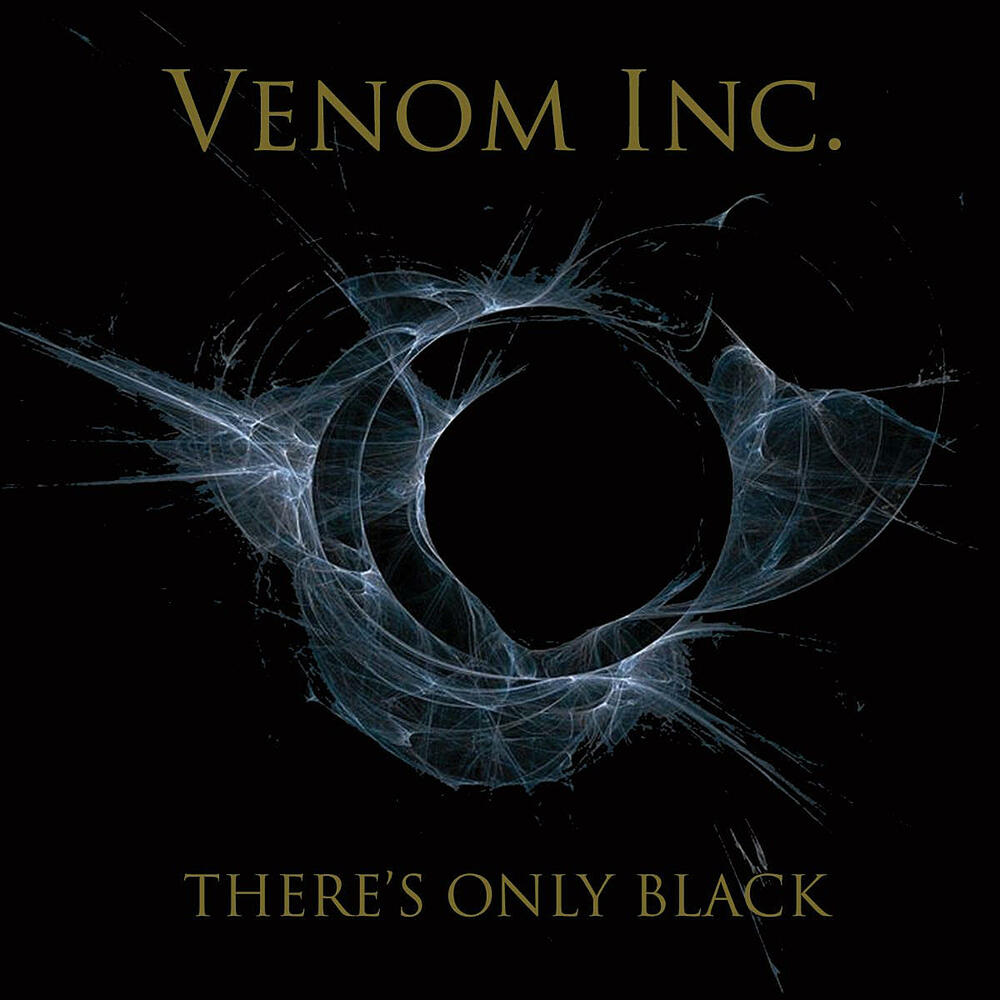
Venom Inc. - There's Only Black (2022)

Country: UK
Style: Heavy/Speed Metal
Rating: 7/10
Release Date: 23 Sep 2022
Sites: Facebook | Instagram | Metal Archives | Official Website | Twitter

This second Venom Inc. album prompts a brief history lesson; if you already know this, then skip on to the next paragraph. The pivotal line-up of extreme metal pioneers Venom was Cronos, Abaddon and Mantas, the line-up that recorded Welcome to Hell and Black Metal, among others. However, while Cronos leads the current incarnation of Venom, he actually left in 1988, leaving control with Abaddon who brought Mantas back into the fold in 1989, along with Tony Dolan of Atomkraft. That line-up recorded Prime Evil and others and, after Cronos returned and took control, they formed a new band, Venom, Inc., to continue the Prime Evil era. Abaddon has since left again and the drums here are played by Jeramie Kling, as War Machine. Dolan is Demolition Man. Mantas is, well, still Mantas.

What that means is that there are now two incarnations of Venom: one led by Cronos and this one by Mantas. Abaddon is off doing his own thing, with an EP released earlier this year. I've seen the Venom incarnation live—holy crap, was that sixteen years ago?— and they blistered then, though the (lack of) production hinders their studio releases, like 2018's Storm the Gates. This album has much better production—just listen to that crisp drum sound at the beginning of The Dance—and, though it's less extreme and more traditional heavy metal, there are plenty of moments to whisk you back to old school Venom.

Certainly early songs like Infinite and Come to Me do everything that old school Venom did. They storm out of the gate and barrel along at a rate of knots. Mantas's riffs include a lot of rhythmic chugging, while Dolan's voice is effectively in our faces, even if it can't match Cronos for iconically demonic. Every aspect is controlled well, aided by that crisp production, so that this seems like it's just easy for them and they could play all night. They're not the fastest songs in the world, but they do blister and I can imagine how they'd feel live with a serious sound system.

The title track slows the tempo a little, which serves to remind us as much of Motörhead as Venom, as if we hadn't noticed how much the latter had taken from the former anyway. It also reminds us that Venom were never the fastest or most extreme band out there, even in their most influential days, and were influential for other reasons, like punk/metal attitude and lyrical content. In 2022, they have to rely on that all the more and it's the attitude that sells the more emphatic songs like Don't Feed Me Your Lies or Burn Liar Burn.

I come to Venom Inc. from an unusual place. I adore the Black Metal album and I love the tracks on this album that feel closest to that sound, songs like Man as God and Nine. However, I encountered Venom first through At War with Satan and I still have a real fondness for that twenty minute title track, an attempt by the band to highlight how they could truly play, even if they preferred to dish out a succession of three minute blitzkriegs. There's a lot going on in that piece and I hear a lot of it on this album, even if it's mostly in intros and breakdowns. Burn Liar Burn and The Dance spring quickly to mind. In fact, Burn Liar Burn's intro extends to half the song and it's fascinating before it launches into a full on speed metal assault.

Inevitably, I find that I have to compare this to the most recent Venom album and it comes off as a step up. There was good material on Storm the Gates but there was a lot of filler too and the awful production made everything sound terrible. This easily wins out on production but it wins out from the standpoints of songwriting and consistency too. It's not Black Metal or even At War with Satan but it's a good, reliable album with some standout tracks to elevate it further. And it sounds damn good. Now I understand why a number of fans have been telling me that Venom Inc. are the better band right now. The ball's in your court, Cronos. Let's have a killer new Venom album!

Tuesday, 8 November 2022

Darkthrone - Astral Fortress (2022)

Country: Norway
Style: Black/Doom Metal
Rating: 6/10
Release Date: 28 Oct 2022
Sites: Facebook | Instagram | Metal Archives | Wikipedia

I have to admit that I looked at Astral Fortress with a little trepidation, given how underwhelmed I was with Darkthrone's 2019 album, Old Star. It wasn't bad; it just wasn't anywhere near as good as it could have been. Well, it seems like I missed last year's album Eternal Hails..., which everyone is happily proclaiming a solid return to form, along with a deeper exploration of the doom metal I'd noted on Old Star. As the early reviews for this one seem positive too, I was certainly intrigued but a little worried, given that this a milestone as their twentieth album.

What I found was that the doom angle is certainly working out, at least when Fenriz and Nocturno Culto really want to throw their focus in that direction. The best songs here are the doomiest with The Sea Beneath the Seas of the Sea most notable among them. What surprised me was what the resulting combination of doomy guitar and black metal vocals ended up taking me, which is all the way back to Hellhammer's Apocalyptic Raids EP in 1984, which underlines how that was even more influential than I thought it might be at the time.

This is certainly more controlled than Hellhammer were back then, the musicianship is more solid and the vocals far more focused. However, it's just as bleak and uncompromising, the Candlemass style chugging riffs given an edgier guitar tone reminiscent of Hellhammer and the early years of the band they evolved into, Celtic Frost. Most obviously, the vocals remain black, even if they don't delve into the shriek bag and so remain goblin harsh. Add to that the liquid psychedelic bookends and a solid build that gets under the skin and it's a memorable ten minutes indeed.

The thing is that, while Darkthrone are successfully dipping their toes into the doom pool without ever leaving their black metal heyday sound entirely behind, they don't seem convinced that it's a confirme way forward for them. Caravan of Broken Ghosts is at its best when it ramps up in tempo and Kevorkian Times follows suit. Hellhammer were never as innovative as they became under the name of Celtic Frost and some of these songs drag in the way that some of Hellhammer's did, only without any of the benefit of being outrageously different for 1984.

They do try to be outrageously different at points, such as Kolbotn, West of the Vast Forests, but I have to wonder what the goal of that brief and dissonant instrumental was. It feels like it ought to work as an intro but not to the song that follows, which is Eon 2, a more traditional piece that may well be intended to be a sequel to Eon, the closer from the album at the other end of their career, 1991's Soulside Journey. However, they're very different, as Eon 2 is much slower than Eon, and it's a vocal track without keyboards.

And so this is another mixed bag. I was impressed by The Sea Beneath the Seas of the Sea and I'm pretty fond of Stalagmite Necklace too, the other overtly doom metal song on offer, because of its strong riff. However, some other songs take a while to get moving and some of them drag. Eon 2 is a decent way to wrap up but it's not the emphatic close that it perhaps intends to be, highlighting a twenty album career with a nod back to the beginning.

It's definitely a better album than Old Star but I think I'm going to stay with a 6/10. What I need to do is listen to Eternal Hails... to see what so many people were raving about.

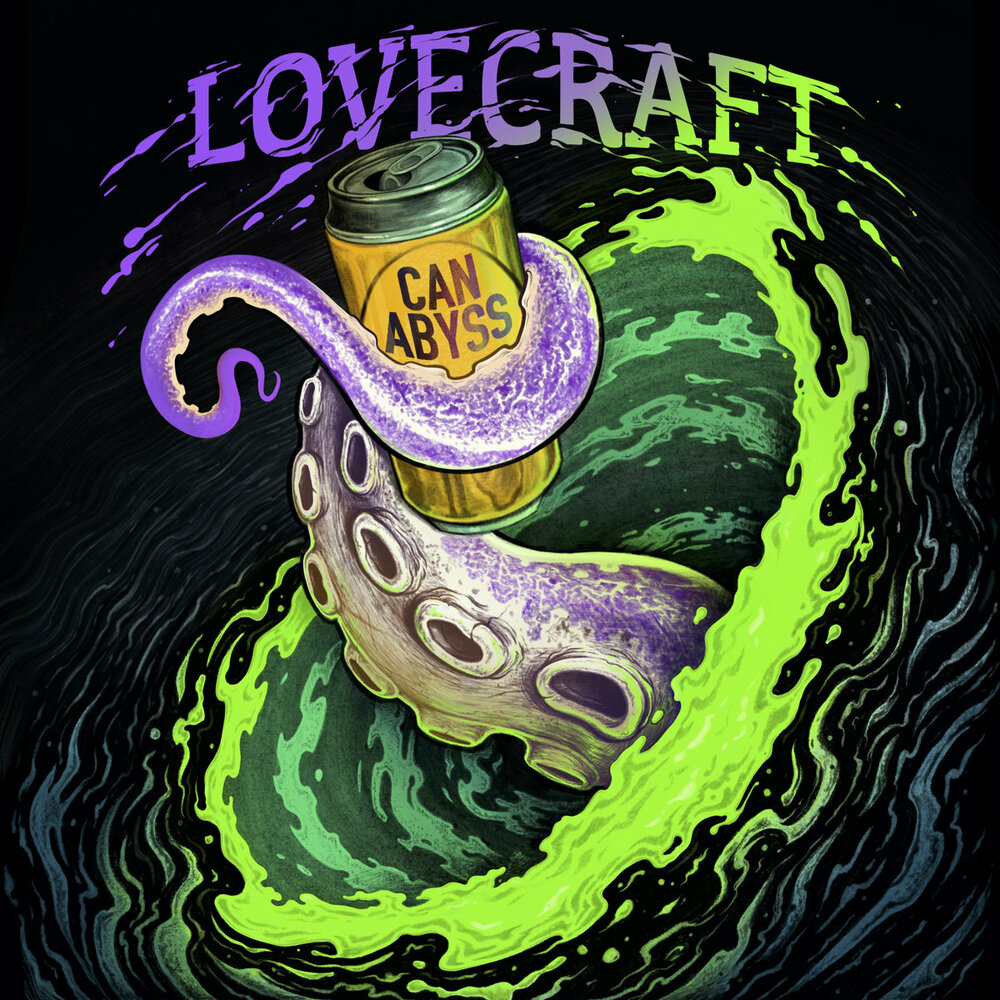
Lovecraft - Can Abyss (2022)

Country: Poland
Style: Psychedelic Rock
Rating: 7/10
Release Date: 1 Sep 2022
Sites: Bandcamp | Facebook | Instagram | YouTube

Here's something tasty and unexpected. Lovecraft are a psychedelic rock band from Poland, not a power trio but a five piece who keep their identities secret, or at least so unpublicised that I couldn't track down who's in the line-up. Their Bandcamp page suggests that their influences are "way too many to mention" and they're probably right, tantalisingly adding that "we're still expanding our infinite musical journey."

The first of those influences is obvious because Awakening (From the Sea) kicks in with smooth but dark a capella vocals highly reminiscent of Glenn Danzig, especially given that they're set against soft cymbals and an occasional power chord that hangs in the air. What's odd, though, is that this song is acutely subdued, ever threatening to just explode into action but without ever really doing that. Maybe on stage it'll feel more emphatic, but the instrumentation is kept far lower than the vocals and, given that it isn't on the next track, that has to be deliberate.

The other influence that has to be trawled out here is the Doors and for multiple reasons. For one, those velvet vocals are just as reminiscent of Jim Morrison too, especially given how they serve to command as much as sing. Gather round, flower children, and the vocalist will tell us all a story, an important and subversive one set against an ambient backdrop that grows and swirls, just like the maelstrom in the cover art. There's at least one more, because there are screams that come in at points late on and they don't fit Danzig or the Doors, but I couldn't tell you who.

I can certainly throw out Iron Maiden on Mooneater pt.I, because it's clearly a prog metal song in psychedelic rock clothing. The guitars are shifted up there with the vocals now and the intro, right out of Di'Anno-era Maiden, leads only into more Maiden. There's some doom in there too, but it's a perky doom laced with prog and it's delightful. The only catch to this one is that the lyrics seem a little shoehorned into some spots, like there were too many words for the space but they felt that they couldn't cut any out. That also isn't how "tyranny" is pronounced. But hey, I'll shut up and let that guitar solo wash over me again. It's a gem of a track, even with a few flaws.

There are another five songs after this and they tend to play out with those same ingredients, just in different amounts and with others added for garnish. Another Damn Idiot starts like the Doors meets Danzig again, only to add harsher vocals, squealing guitars and a bouncy call and response vocal section. The soft midsection is absolutely delightful, the noodling bass providing the perfect ambient backdrop for the guitar solo. The escalation out of it is delightful too. Horrors in the Attic is similar but not as noteworthy. Bar Cannabis evolves into more Iron Maiden guitarwork.

Grasshopper adds a punk bounce to proceedings, only to drop off a cliff into another ambient part, this time with narration. It's a huge shift and I'm still not sure that it works, but each side does for sure. I'd be happy to listen to a whole album of these ambient sections. They're agreeably chill and they offer a fantastic opportunity for both the bass and the lead guitar. Lovecraft seem to be fond of these sections too, to the degree that Deep Dark Slumber starts out in one and has fun teasing us about when it's going to ramp up. Eventually it does and turns into a sort of occult rock ritual.

I really dug this album. My biggest problem with it is trying to figure out which parts of it I like the best. I'm pretty sure I should highlight Mooneater pt.I and Another Damn Idiot as my favourites as opposite sides of that Doors meets Maiden mindset. The former is more urgent and more Maiden, but the latter is more versatile and more Doors. However, I can't leave the opener alone, with its subdued nature and subtle broodiness. Now I want a psychedelic rock album from Danzig! I believe this is Lovecraft's debut album, so maybe we'll see that under their name as they develop. As the Archpriest of Chaos in the First United Church of Cthulhu, I salute them!