Wednesday, 22 April 2020

Badge - Supernova (2020)


Country: UK
Style: Hard Rock/Heavy Metal
Rating: 7/10
Release Date: 1 Apr 2020
Sites: Facebook | Metal Archives

Wow, here's a blast from the past! I remember Badge from a single that they put out back in 1981 called Silver Woman. It was a decent NWOBHM song that's shown up on a number of bootlegs of the era, often alongside other bands who only put out a notable single and then vanished. Well, apparently they have been back for a while, even if vocalist Graham Waudby is the sole member who dates back to that single. They finally issued their debut album in 2012, no less than 32 years into their career and two tracks from Stormrider show up here as bookends, though both songs were written back to the eighties.

The first is Blizzard, which hints at being an homage to Ozzy Osbourne even though I don't think it is, and it sets the stage well, because it's decent if not spectacular NWOBHM style hard and heavy stuff. The other is Finding My Way and it's even better, a smooth song that isn't afraid to get mellow even as it rocks. Listening to the two is like we're standing in 1980 with Finding My Way looking backwards to the seventies and Blizzard looking ahead towards what's on the horizon.

In between are nine other songs, all presumably new or at least new-ish and all just as decent if not spectacular NWOBHM style hard and heavy stuff. If it wasn't for a 21st century mix, any one of these eleven tracks could have been the flipside to Silver Woman almost four decades ago. The sound really isn't that different, which means to 2020 ears that it's refreshing but far from original. That's perhaps the best and worst thing about this album.

Thinking from the perspective that it's the best, this is a real journey of nostalgia. Frankly, we forget the modern mixing technology pretty quickly, a deep sound that couldn't have happened on early eighties equipment, and this becomes an old NWOBHM era album that we've just never heard before. I'm not unhappy about that at all and there's a big scene out there that still loves that old sound who will lap this up like, well, Cream, from which band Badge got their name.

Unlike a few recent albums from name NWOBHM bands who seem to have forgotten what made them great back in the day, there isn't a bad song here. Every one of them does its job and does it well and there's almost fifty minutes here to enjoy. The old songs (and they are old: Blizzard was originally recorded on the band's 1980 demo and Finding My Way dates back at least as far as the demo they recorded in 1988) feel pretty consistent with the new material.

Thinking, however, from the perspective that it's the worst, there's nothing here that you haven't heard before, even if it wasn't on an album by Badge. Outside of nostalgia, this is still decent stuff but it isn't going to feel particularly relevant to an audience that doesn't even know what NWOBHM was. To those who only know it because Metallica cover it a lot, this is going to seem tame and uninspired.

In other words, your response to this and your likelihood to buy it is going to revolve around what you think when you hear that a band who were founded in 1980 have just released only their second full length album and it sounds like they recorded it four decades ago. That's it. Nothing else I can say is going to change your mind.

I could try, of course. I could say that the guitars on See Me Gone are neat and Supernova gets a bit proggy with keyboards and narration. I could point out that Valkyrie is built on a Status Quo-esque riff and Rock Chicks is as dated as its title suggests but is just as catchy. Really, though, the track you should check out it you haven't made up your mind already is Cry in the Night. Maybe it's on YouTube.

Cry in the Night is the entire album in miniature, from its uninspired title on down. It's built on top of a good riff and simple but effective drumming. It has a decent guitar solo in the middle. It has rough but effective vocals singing straightforward lyrics. And it's done by the four minute mark so we can move on to the next song, happy but not blown away.

I would certainly go to see this band live if they played anywhere near me. I liked every song here, even if I didn't really love any of them, and they seem like they'd put on a reliable show as solid support for a more stellar band from the era like, say, Diamond Head or the Tygers of Pan Tang, both of whom put out fantastic material last year. But hey, I'm also old. Drop a point off this rating if you aren't old too.

Tuesday, 21 April 2020

Me and That Man - New Man, New Songs, Same Shit, Vol. I (2020)


Country: Poland
Style: Folk Rock
Rating: 7/10
Release Date: 27 Mar 2020
Sites: Facebook | Instagram | Official Website | YouTube

Here's something of a curiosity but there are plenty of reasons why it's an appropriate one to review here. For one, this is the second album by a side project of Adam Darski, best known as Nergal, the main man in Polish extreme metal band Behemoth. It's released on Napalm Records. Guests include members of Mastodon, Emperor, Trivium, Slipknot, Volbeat and two different Shinings, the Norwegian and the Swedish. And, assuming that a restrictions lift, they are booked for a whole slew of European rock and metal festivals, including Wacken Open Air.

Given all that, it would seem to be a gimme to review here, except that it's not metal or even rock. It's actually dark roots music: a blend of country, blues, gospel and folk, with melancholy gothic flavours infused throughout. The overall tone is alt country, even when the songs aren't murder ballads, but that's a versatile genre and the sound ends up running from Nick Cave to the Mavericks. It's fascinating to hear these musicians taken on this style.

Listening to the second track, Coming Home, I could have sworn blind that I was hearing Nick Cave himself but the singer is actually Sivert Høyem, who's best known as the frontman for an Norwegian alt rock band called Madrugada. He's an aural mirror of Cave and the lyrics he sings fit too, such as, "She came on like a cyclone kiss; she brought both suffering and bliss." This is a real highlight here, but it's not the only one.

For instance, it's followed by Burning Churches and By the River, two wildly different takes on Americana but two very memorable pieces. The former has a singalong gospel chorus that would become a standard if only gospel singers would sing about burning churches. The latter is an spiritual explosion for Ihsahn, who gets emotionally intense with his voice and then his guitar, as the song evolves into a guitar solo.

These songs are notable for who performs on them in more than one way. It's weird in good ways to hear trendy metal singers like Matt Heafy of Trivium approach a dark country lament, with lines like "Soon you will be mine or you'll be dead" but it's even more fascinating to explore the sheer variety in styles that Nergal trawled in here.

For instance, the lead on Burning Churches is by Mat McNerney, who usually sings post-punk with Grave Pleasures; the delightfully menacing delivery on Man of the Cross is from Jérôme Reuter, a former oi singer who tends to play in the neofolk genre with his band Rome; and the final track, which at heart is a suicide note in confessional form, is delivered by Kvarforth, a black/doom metal performer known for the Swedish band called Shining. Ironically, the opener, Run with the Devil, is sung by Jørgen Munkeby of the Norwegian band of the same name, a hard rock outfit. He even adds saxophone for good measure.

I like this variety and it propagates throughout the album. Surrender is an agreeably lively gospel stomp. Męstwo, as its title suggests, is in Polish, which is another level of weird for an American roots song. Deep Down South is female led, both through the banjo of Sasha Boole and by the vocals that she and Johanna Sadonis provide. Boole also wrote a couple of late songs, as the album finally moves towards rock. How Come? is still alt country but Rob Caggiano and Brent Hinds, guitarists for Volbeat and Mastodon respectively, strut their stuff in solos. And, even though the final track begins with the rich cello of Weronika Kulpa, it ramps up into black metal intensity.

I have no idea how this will play to the rock and metal audience that Nergal seems to be pitching it to, but I liked it. Then again, it's the second such album, after 2017's Songs of Love and Death, so it sounds like he's already found an audience. As a fan of rock, metal and roots music, I'm now totally on board for whatever Me and That Man does in the future.

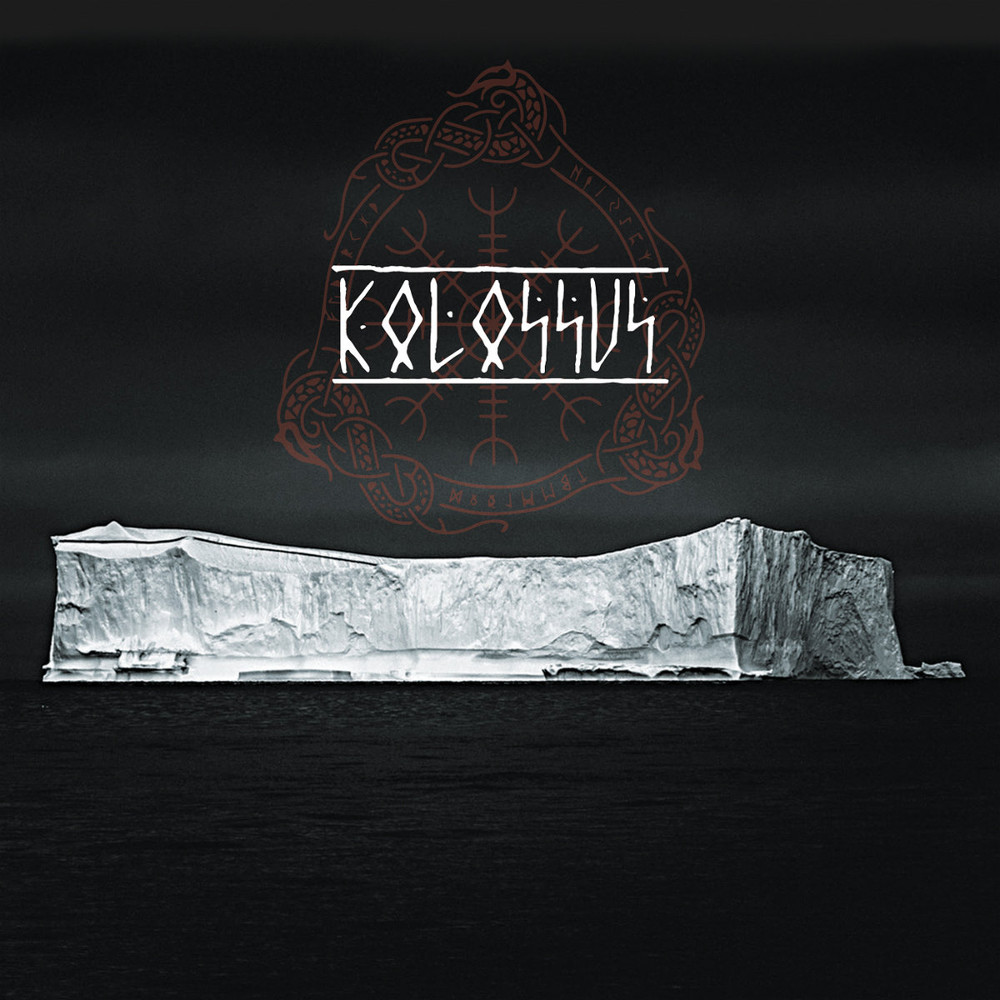
Kolossus - The Line of the Border (2020)


Country: Italy
Style: Black Metal
Rating: 7/10
Release Date: 19 Mar 2020
Sites: Facebook | Metal Archives | YouTube

The kind folks at Satanath Records in Russia sent me a virtual stack of new releases, which I'll happily dip into over the next few weeks. I've already reviewed one, a Cuban black metal album from Skjult, and it ended up on my Highly Recommended List with an 8/10. Let's see if that was a fluke or if there's a whole lot of other quality underground extreme metal on their schedule.

This one from Italy is pretty good though it's no Skjult. Kolossus is a one man band from Genoa, that one man going by Helliminator, and his particular brand of black metal is supposed to come with a Viking metal flavour but I'm getting a gothic sound out of it. When he's at full tilt, which is the vast majority of the time, the sound is rather like the Sisters of Mercy at about quadruple speed.

And that's an interesting sound. The drums are fast but surprisingly varied. The guitars are an abrasive sonic wall. The bass comes out to play in slower sections but it's just part of that same sonic wall in the faster ones. The vocals are deep in the mix, so deep that they're not far off just being part of the same increasingly layered wall. What's left to keep a sense of melody is another guitar over the top throwing notes out surprisingly slowly, as if the player isn't even part of the same recording session (though he follows the time), which is even more odd for a one man band.

I like that sound but I need more on an album that runs three quarters of an hour. The quieter or slower sections are important to keep a variety and add a contrast to the release. They work very well in this regard, because they aren't the usual quieter or slower sections on black metal records. This one features a lot of ambience in the form of whispers, hints at choral backdrop and what might be spoken word poetry, sometimes accompanied by vinyl pops.

The more I listen to this, the more I feel the density of that sound and the more I find myself moving into it. This is far from a one listen album. The uninitiated are going to find this impenetrable, but black metal aficionados who listen a few times will feel it dragging them inexorably into its sound, almost like a quicksand bog. As long as we don't struggle, we can enjoy the majesty of it. If we struggle, though, we'll become yet another victim, like the girl who keeps whispering at us in French, I think, not Italian.

Maybe my quicksand metaphor is a bad one. Sometimes, especially on Journey, it feels more like a tornado, where it throws us up instead of dragging us down and, as we're whirled around in a maelstrom of noise, we keep catching glimpses of interesting things that have been snatched up along with us. It feels like pieces of the song come into focus before being whirled away once more to be replaced by others. In this context, the guitar solo is somewhat ghostly.

I liked this and, looking at my favourites, I see that I prefer my Kolossus at length. Fog and Sin are two of the three songs on offer that exceed seven minutes and they're two of my three top picks here. Journey, on the hand, is a mere five and a half, plenty more than the three interludes that run for a minute and change but much shorter than the longer songs.

Helliminator founded Kolossus in 2014 and this is his debut release at full length, following a split with Manon, another one man black metal band from Genoa, a couple of years ago. Of the two Kolussus tracks proper on that, one shows up here too, so I presume Norge is the oldest song on offer. It's also the most tortured, with Helliminator's vocals more present and more overt. I guess he's moving more into black metal soundscapes, though without actually slowing down and turning into atmospheric black metal.

If that's the direction he's taking, I'm really interested in hearing what's coming next. Hopefully the reuse of Norge doesn't mean that Helliminator is an extra-slow songwriter and Satanath can put out another album sometime in the next couple of years.

Monday, 20 April 2020

Metal Church - From the Vault (2020)


Country: USA
Style: Heavy/Power Metal
Rating: 7/10
Release Date: 10 Apr 2020
Sites: Facebook | Instagram | Metal Archives | Official Website | Twitter |Wikipedia

Metal Church's 2018 album Damned if You Do was my first music review here at Apocalypse Later because it was my favourite album of the prior month. I've been waiting for a new album and, for a moment, thought this was it. It sort of is, because there's plenty of new material here, but it's categorised as a compilation for good reason too. In its way, it's a full length equivalent to the recent Candlemass EP but with a bit more versatility.

So let's break it down. The first four tracks are new recordings, but one is of an old song, Conductor, originally released on the Hanging in the Balance album from 1993. The next five are songs that didn't make it onto the Damned if You Do album, for one reason or another. Then there are three covers, not expected ones either. Finally, for the regular edition, there are two tracks recorded live in Japan. Other editions might include a pair of remixes from the XI album and a couple of songs that only made the deluxe edition of that one.

My first impressions of the opening four songs weren't of the music at all, because there's so much sibilance that I had to tweak my equaliser to render it all listenable. I went back to re-listen and enjoyed myself, because the songs are strong, especially the first and last. On the face of it, Dead on the Vine is the runaway highlight of these new songs but Above the Madness is seriously growing on me. The redux of Conductor is worthy too, spat out like it's an Overkill song. For No Reason is decent too, if not of the same standard as the others.

And that leads us nicely in to the Damned if You Do session rejects, because they're all decent, if not of the same standard of the others that made the album. Again, the first one, Mind Thief, appears to be the best, though the instrumentals are interesting. Insta Mental finds a nice groove, while 432hz is so wild a departure from the typical Metal Church track that I wonder if it was the groundwork for a song or just an intro that got rather out of hand. While all five are worth listening to, it's clear that the songs proper were left off Damned if You Do because other songs were more worthy and it's fair to say that the quality bar was set very high on that on album.

The most interesting songs here for me turned out to be the covers. I would have never guessed that Nazareth were an influence on Metal Church, but Mike Howe has a fantastic heavy take on the rasp of Dan McCafferty on their cover of Please Don't Judas Me, from Nazareth's 1975 album Hair of the Dog. Older still are the 1970 Sugarloaf single, Green Eyed Lady, which feels a natural choice for Steve Unger's bass, and Black Betty, which dates back at least as far as Lead Belly in 1939. This is more a take on the famous Ram Jam version from 1977, albeit notably de-glammed.

The live songs seem out of place, though they're of serious quality. They're older and more patient songs: Agent Green, originally on the 1991 album The Human Factor, and a nine minute epic, Anthem to the Estranged, from Blessing in Disguise in 1989. The crowd noise is mostly kept to the bookends, with a little during quiet moments, so these feel more like studio recordings than we might expect. My lesson here is to go back to Blessing in Disguise, which I wasn't as fond of back in 1989, after the killer prior album, The Dark. It might play differently to me nowadays.

All in all, this is an interesting set of songs. The overall feel isn't too cohesive, which kind of makes sense, but the songs themselves are worth the price of admission. My highlights are two new tracks, two covers and a live number, so they're fairly distributed. It's not up to the standards set last time out on Damned if You Do but I found it more interesting. It's certainly not your usual compilation.

Young Lust - Alright (2020)


Country: Mexico
Style: Hard Rock
Rating: 6/10
Release Date: 10 Apr 2020
Sites: Facebook | Instagram | Twitter

Given that they released Alright as a single a couple of years ago, it's odd to see Young Lust have it lead off such a short album in 2020. I presume the last two years carry some history for the band but I have no idea what that might be. Whatever the reasons, this album features only seven tracks and so runs three minutes shorter than Reign in Blood, my go to yardstick for short albums.

Alright forgives some of that by being such a lively single. It, like Young Lust generally, is hard rock with a hint of sleaze, and it strongly reminds of early Girlschool, just with different accents on the vocals. The band are from Monterrey in Mexico, a couple of hours from the Texas border, although they sing in English. Perhaps not coincidentally, they would also be an all female band, if not for the presence of Peter Reyes on lead guitar.

He's good and his and Mayra Benavides's guitars are a good reason why songs like Alright and Tennessee are so bouncy. The jaunty beats of Alo Gzz are an important factor too and it's telling that the less jaunty she gets, the less interesting the song becomes. Prayer in Vain really drags, for instance, but the very moment her cymbals and Caro Lara's bass start in on Tennessee, we find ourselves already perked right back up again.

The focal point for this band, though, is Mavi Azul, whose name hints at an influence from the Runaways too, which makes sense given the way the chorus on Alright sounds, though this is generally rooted in early eighties NWOBHM far more than seventies glam rock. They also feel more like a band, whatever gender its members are, than a product manufactured with sex appeal. Azul's vocals are more nasal than those of Kim McAuliffe, or Cherie Currie for that matter, but they sound good anyway, especially on those more up tempo songs.

And that's the big lesson here. When Young Lust try to be a commercial hard rock band livening up a small club after the previous band let the audience down, they're more than up to the task. I'd certainly be down the front for adrenaline shots like Alright and Tennessee and I'd hang around for some of the other lively songs too, like Until I Find My Revenge and Let Me See You too. Rebel Heart really gets going halfway through and blisters like nothing else here. An album full of songs like these would be a lot of fun.

However, when Young Lust ditch the party vibe and try to be serious, like on Prayer in Vain, the mood vanishes completely. They just aren't that sort of band and I hope they're not seeing this song as the heart of the album. As a line at the beginning of Rebel Heart goes, "Sometimes you have to go crazy to remember who you really are." That's good advice for this band, because a song like Prayer in Vain turns them into that previous band on the club bill who let the audience down and needed Young Lust to liven things back up.

And here's where I'd talk about the second half of the album, but there just isn't one. I hope the band are treating this as a generous mini-album and a full length studio effort will come later. After all, with the exception of the one down track, the worst thing about this is the fact that it wraps up so quickly. In a way, that's a compliment as much a criticism. I hope I get to hear more from this band soon.

Friday, 17 April 2020

Glass Hammer - Dreaming City (2020)


Country: USA
Style: Progressive Rock
Rating: 8/10
Release Date: 17 Apr 2020
Sites: Facebook | Official Website | Prog Archives | Twitter | Wikipedia | YouTube

I've seen a lot of prog bands lately come out with their best work in years and Glass Hammer are no exception. Where they become an exception is in how they've grown up to this point. The golden years of most of these bands was a long time ago, probably when they started out, and they lapsed in quality over time before rediscovering what they did so well and doing it better. I may only have heard the first couple of Glass Hammer albums, from the first half of the nineties, but I don't remember being impressed at all. It seems that they found themselves in the new millennium and keep on getting better, which means that I have a lot of catching up to do.

I'd love to hear how they came to this sound because it feels to me like an acculumation of the history of prog poured out in the form of new songs. It isn't difficult to find influences because they're everywhere here, but they have a habit of morphing into different ones, so that songs aren't just like this band or that; they're what would happen if these three bands decided to jam in the studio on new material, bringing their own styles with them.

For instance, The Dreaming City, which kicks off the album, maintains almost a Hawkwind vibe with a heavy bass and an effect layered onto the vocals. It feels a bit more modern though, with verses that attempt a rap but are more like spoken word poetry. The overt seventies organ in the second half isn't Hawkwind at all but Emerson, Lake & Palmer.

Cold Star retains the ELP feel but adds Deep Purple riffs; some Jethro Tull in the use of flute and pastoral mindset; and the vocal playfulness of Yes. There's even some Led Zeppelin swagger towards the close. This Lonely World sounds like solo Peter Gabriel and there's Gabriel era Genesis in songs like The Watchman on the Walls, which merges acoustic Genesis with electric Rush.

The Lurker Beneath brings in another key influence, namely Tangerine Dream, in what's only the first of a number of instrumentals to create a pulsing soundscape mostly or entirely with synthesisers. At the Threshold of Dreams is another, but it adds samples and so trawls in some Pink Floyd. Talking of Pink Floyd samples, there's a great deal of Alan Parsons here too. Pagarna may be the first song to feel highly reminiscent of the Alan Parsons Project but it's certainly not the last.

In other words, you'll hear a lot of different bands here but what the band does so well is to merge their sounds into something that's both new and far more consistent than the last few paragraphs might suggest. That may well be the greatest success of this album, because it doesn't feel like we tuned in to a classic prog radio station in an alternate universe or threw on a comp of unheard songs from seventies prog bands we otherwise know. It feels like an actual album, written and performed consistently, wherever the style play happens to go.

The core of Glass Hammer is in Fred Schendel and Steve Babb, who founded the band back in 1992 and haven't left it during the nearly three decades since. Both of them sing and play keyboards, but Schendel also provides guitars to the mix and Babb the bass. Aaron Raulston has provided drums since 2013 but everyone else involved comes in as a session musician and there tend to be a lot of those, eight of them on this album alone.

That's perhaps highlighted best by October Ballad, eight songs in, which has a female lead vocal from Susie Bogdanowicz, a regular collaborator. Prior to this song, the vocal was always male, even if we completely failed to notice that it was provided by three different people. A fourth shows up on The Key and we still can't really tell the difference. Maybe one of the reasons that I heard so much Alan Parsons Project here is because those different singers are all archetypal commercial prog rock vocalists, just like the six on Eye in the Sky. A female lead shakes that up completely.

I'd be hard pressed to choose my favourite piece, because of the variety on offer, but I loved the Tangerine Dream style pieces, like At the Threshold of Dreams and The Tower, as well as the longer ones like The Dreaming City, Cold Star and The Watchman on the Walls. The more commercial songs left me a little drier but they're still good. The oddest song here is surely The Key, which adds a little sleaze into its riffs. It's really not an Aerosmith song any more than it's a Boston song, but it's like those bands transformed into an Alan Parsons Project song.

My last note is that this is a generous slab of music. By the time we get to The Watchman on the Walls, we've already heard fifty minutes of it, but this one adds eleven and a half more, almost as a substantial reprise, summing up all the different influences in play thus far and adding that 2112-era Rush for good measure. If you're into all these influences, this may well be your favourite album of the year, whether you care about the loose Lovecraftian concept in play or not.

Khemmis - Doomed Heavy Metal (2020)


Country: USA
Style: Doom Metal
Rating: 7/10
Release Date: 17 Apr 2020
Sites: Bandcamp | Facebook | Instagram | Official Website | Twitter | YouTube

I haven't heard Khemmis before, but this mini album was recommended to me so I was happy to give it a shot. I have to thank Chris for the recommendation, because I liked this a lot, even though it opens with a cover that, frankly, doesn't need to be covered. It's Dio's Rainbow in the Dark and I was wary of how a doom metal band from Denver were going to sound on something as iconic as that. Fortunately, they treat it with all due respect and it sounds very good indeed, surprisingly so.

And, while Khemmis are certainly a doom metal band from Denver, the flavour of doom they play has as strong a side of heavy metal to it as the title of this release suggests. There's almost as much Iron Maiden in these songs as there is Black Sabbath, though I'd guess that their strongest influences are American rather than British. Whatever, this is relatively up tempo doom, at points even perky doom, located at whatever the other end of the spectrum is from funeral doom.

The doomiest this gets is a cover of a gospel standard, A Conversation with Death, written by a Free Will Baptist preacher and Appalachian folk musician called Lloyd Chandler back in 1916, though most of us will know it primarily from the a capella Ralph Stanley version from the O Brother, Where Art Thou? soundtrack under the name of O, Death. Again, this is such an iconic piece of music that a radical departure like this is a risky one, but Khemmis pull it off well. It's a real highlight.

I should emphasise that those are the only two covers out of the six tracks on offer. In between them is an original and then there are three live songs after them, one each from the band's three studio albums and it suggests the band has undergone quite the evolution over that time. The new song is Empty Throne, a patient song with a clean and confident vocal over solid riffing. If this points where they're going, they're on a good road.

The live set goes backward in time, beginning with Bloodletting, originally on the 2018 album Desolation. It's my favourite of the live trio, not being wildly dissimilar to Empty Throne but with a proggier edge and a real gallop five minutes in that ought to have got the pit really churning. Three Gates, from 2016's Hunted, is more death/doom just from the music, not least a bass that prowls around under the guitars, but certainly in the way that it adds a harsh voice to duet with the clean one. It ditches the death for quite a while too.

My least favourite song is the last one, The Bereaved, but I enjoyed that as well. It's from the band's debut album, Absolution, in 2015, and it's a more epic track with a proggy instrumental section leading in from Three Gates. I assume it was on this one originally. The Bereaved reminded me of a doomier Budgie and that's hardly a bad thing. I just think that this song outstayed its welcome before the nine minute mark that it reaches.

I presume that this EP is aimed at keeping fans happy in between full album releases. It ought to do that but it's not just a fan release like, say, the Candlemass EP a month ago. It's a much better comparison to the Smoulder EP from March in that it continues things on from full length releases while it also serves as an impressive introduction to the band for anyone not already in the know. This is my introduction and I couldn't be happier.

Thursday, 16 April 2020

Ossian - Csak a jót (2020)


Country: Hungary
Style: Hard Rock
Rating: 7/10
Release Date: 17 Apr 2020
Sites: Facebook | Metal Archives | Official Website

One of the greatest joys I've had out of these music reviews is discovering a bunch of bands who have been around for decades, given that I'd never even heard of them before. Perhaps unsurprisingly, they've tended to be bands who only sing in their native language and whose success has been confined to an area in or around their native country, though that's not a given as there's a Lucifer's Friend or a Dice for every Ningen-Isu or Metalium.

Ossian are another of these, given that they're entirely new to me but they were formed in Hungary as far back as 1986 after vocalist Endre Paksi left a band called Pokolgép and put a new one of his own together. This is the 25th studio album for Ossian and, as Pokolgép have gone on to release fourteen of their own, there's clearly quite the scene in Budapest and it's been there for a long while.

While the opening title track is reasonably heavy and heavy moments continue throughout the album, this is more hard rock than heavy metal. The songs are all built out of traditional elements: steady and reliable beats, simple but effective riffs and plenty of vocal hooks. Ossian's speciality seems to be a surprising amount of singalong choruses. They ought to get a lot of response and involvement from the audience in the larger venues they play.

Some might accuse them of being unimaginative because there's clearly a sort of template in play here. The dozen tracks here all progress in similar ways and last for about the same amount of time. Almost all of them run for three minutes with a couple of verses, a few choruses and maybe a couple of guitar solos. I can't deny that there's a sameness to the structure of these songs and that, with a consistent quality too, makes it tough to call any of them out as highlights. If you like one of these songs, you'll like them all.

However, I wasn't ever bored listening to this album, even a few times in a row. Those hooks are all impressive ones that make me want to sing along but for my complete lack of knowledge of the Hungarian language. Ossian vary the formula here and there and throw in little touches like the acoustic guitar outro to Akiröl álmodtál that keep things varied enough.

And I'd also call out some highlights. Köszöntés is a peach of a song, with a top notch riff and an excellent chorus. This is the most obvious single of many, appropriate enough too as it translates to Greeting. That arrives nine tracks in and I like the tenth too, at the point where most albums would be tailing off. That one's Ami nyomot hagy, or Which Leaves a Mark. Perhaps the most telling to me point is the fact that I even enjoy the ballads; Követem vakon (I Follow Blindly) keeps on growing on me.

So, maybe it's an album with a dozen similar tracks that blur together even after a few listens. Maybe it's an album with a dozen worthy tracks, each of which could be viably released as a single. In reality, it's kinda both and that's not necessarily a bad thing. I just wish I'd heard any of those prior 24 albums to be able to put this one into perspective, but for now I'll just say that I enjoyed it a lot.