Wednesday, 3 January 2024

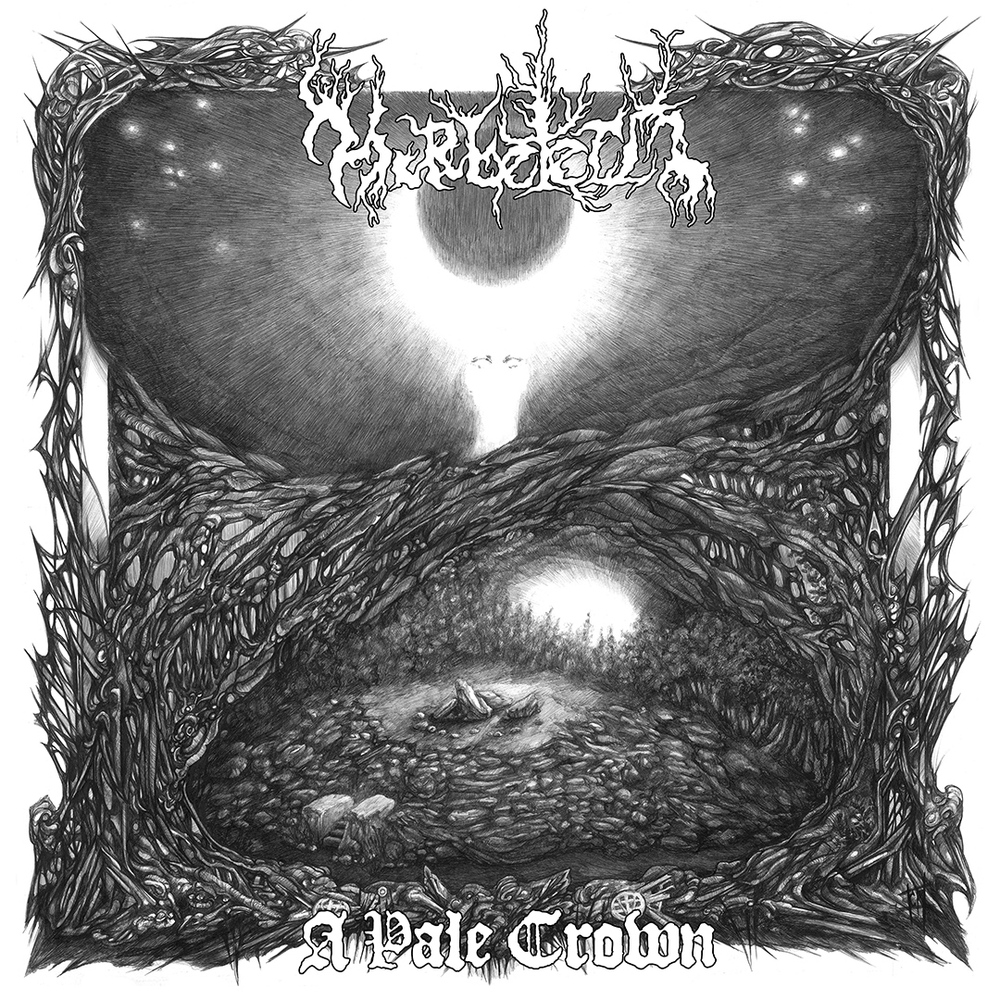
Narbeleth - A Pale Crown (2024)

Country: Cuba/Spain
Style: Black Metal
Rating: 6/10
Release Date: 5 Jan 2024
Sites: Bandcamp | Facebook | Instagram | Metal Archives

From what I can see, Narbeleth were a Cuban band but moved to Spain in 2020 when their founder Dakkar relocated from Havana to Pontevedra in Galicia, home of one of my happiest discoveries at Apocalypse Later, Blue Merrow. Of course, they sound very different, because Narbeleth play fast black metal. Never mind all the versatility the genre has found lately, this doesn't depart far from its traditional sound, with the sole exception of production. Ignoring the purists' penchant for the muddiest production possible, this is clear and rich and sounds all the better for it.

It also sounds very Scandinavian, which shouldn't surprise given that the closing track, The King of the Shadowthrone, is a Satyricon cover. The only touch that feels at all Cuban, or indeed Spanish, is a surprising drop midway through On the Sight of Dusk into an acoustic guitar duet. Given that all instruments here except the drums are played by Dakkar, I assume he's duetting with himself and doing a very good job of it. It's a brief section but a welcome one. However, I have to wonder why it exists, given that there's no attempt anywhere else on the album to vary the band's core sound.

Maybe that's because black metal fans tend to come in three categories nowadays. There are the purists, already mentioned, who don't want anything that doesn't sound like the Bathory debut or has any pretension towards commerciality. Then there are the open minded, who love to mix black metal with every other genre they can find, from ambient to jazz to, well, bluegrass. Some of those experiments have become my favourite albums of recent years, so I guess I'm largely in that camp. This ought to appeal to the third group, who are fine with bands selling many albums and using the money to pay for good production on their next release, as long as they sound damn good. They're not concerned with originality, just capability.

And, while I have no idea how well Narbeleth's previous five albums have sold, this fits perfectly in that third bucket. It's unmistakably and unashamedly black metal, unwilling to depart far from an established formula, but done very well indeed. The guitars are clear but generate that textbook wall of sound. The bass is neatly audible but mostly supports the slabs of sonic texture the guitars lay down. Occasionally there's a run that elevates a song but we have to listen carefully for them. The drums, courtesy of Vindok are frenetic when they need to be and also slow down well. Many of my favourite sections here feature the slower drums.

Put all that together and you have another black metal band in the northern European style, just a very capable one. They don't try to do much that's different but they do what they do very well. I would find it hard to call out a favourite track because they're all relatively similar and what might work best for me, like, say, Witness and Provider, may not for you, for exactly the same reason. It's down to how the riffs generate mood and that's a personal thing. If you like one track, then you'll like all of them. I might like that one most, because of what the guitars do, but I like them all.

And, as I'm finding with black metal, that often has less to do with the guitars or drums and more to do with the vocals. Dakkar delivers those in a relatively deep pitch for black metal, more growl than shriek or perhaps shriek converted into growl. Either way, he's clearly still black rather than death because of how he sustains his syllables. Nobody is going to listen to any element of this and call it anything but black metal, pure and simple. No words are needed in front of that.

Fortunately or unfortunately, depending on your perspective, that means that there's not a lot to say about it otherwise. If you're into this sort of thing, then you'll dig this and it stands up well to a repeat listen or three. If you're that third category of black metal fans, then add a point or two to my rating to reflect how you'll receive it. I prefer more originality to my black metal but you'll be fine without. Of course, if you're not into this sort of thing, then nothing here will convert you and nothing here will come close. You already don't like it. You don't need to try it to see.

This is Narbeleth's sixth album but the second since Dakkar moved to Spain. I'm guessing that his shift in continents hasn't affected his style in the slightest but that odd but welcome drop into an acoustic vein in On the Sight of Dusk makes me wonder if he's open to something new. We should be able to find out on the next Narbeleth album.

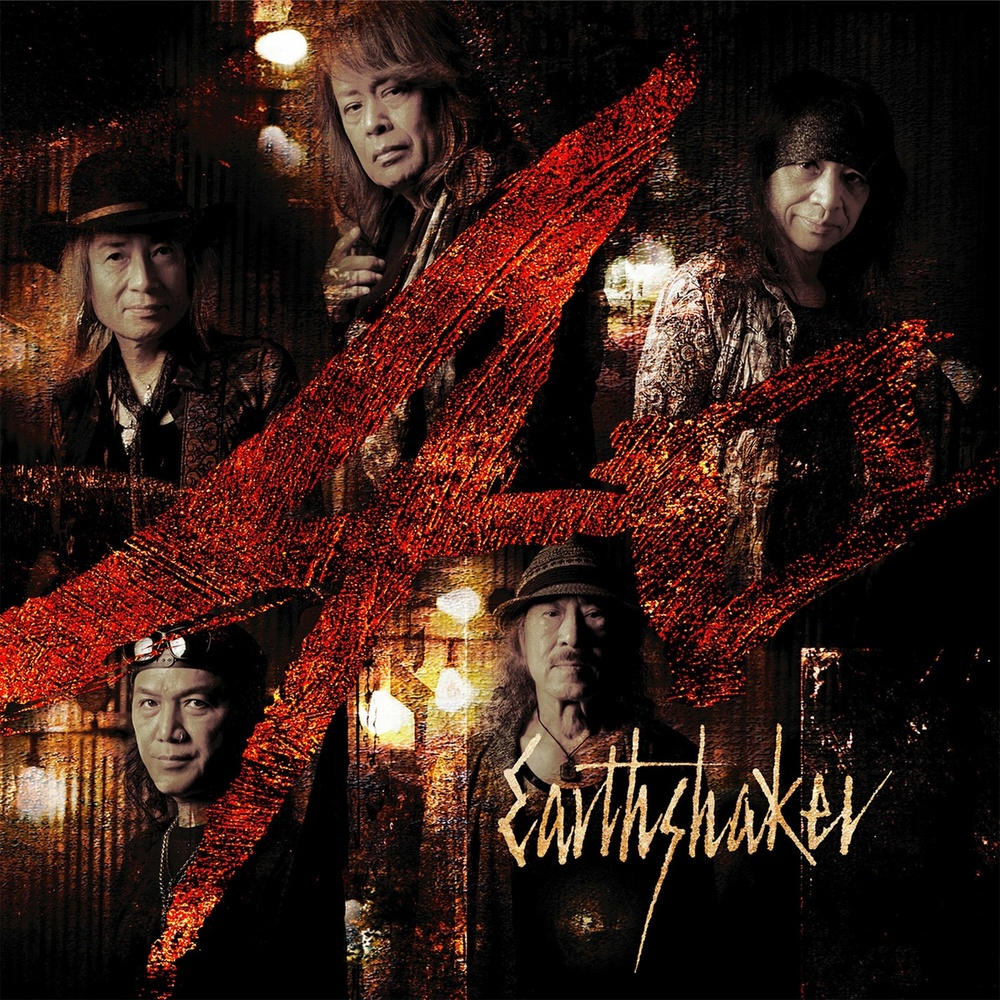
Earthshaker - 40 (2023)

Country: Japan
Style: Hard Rock
Rating: 7/10
Release Date: 6 Sep 2023
Sites: Metal Archives | Official Website | Twitter | Wikipedia | YouTube

Here's a name I was very happy to see put out new material in 2023 but I got caught up in events so I never listened to it then. Well, that's partly what January catch-up is for! Now, if the name has no meaning for you, let me explain that back in the eighties, Japanese metal was becoming known to the west. The biggest band in Japan at the time were Loudness and we heard their albums in the UK, but the one we heard most was Vow Wow, previously and subsequently Bow Wow, who briefly relocated to the UK and hired Neil Murray of Whitesnake fame as their bassist. A little behind but still third on the list were Earthshaker, who were released on the ever-reliable Music for Nations.

I liked Earthshaker a lot and I remember Radio Magic getting stuck in my head for a long while. It seems that they stuck it out until 1994, Japan perhaps remaining more accepting of a traditional rock and metal sound in the face of grunge than the US and UK, but split anyway. I didn't notice at the time but probably assumed that they'd already gone. What I see now is that they reformed in 2000 and have stayed together ever since. This is their twenty-fourth album and the twelfth since their reformation, so matching the tally from their original run. As its title suggests, it also shows up forty years after their self-titled debut in 1983.

And it's good stuff. It seems that they've moved a little more towards a hard rock sound than pure heavy metal, but this is hard and heavy to me, with feet firmly in both camps. Certainly, the guitar of Shara Ishihara is still front and center, with blistering solos on a whole bunch of tracks, starting with the opener, 儚き夢よ, or A Fleeting Dream, but with the peach oddly being the final minute of 点と線, or Points and Lines, which is otherwise a ballad, so a lot softer than the norm.

I should add that Earthshaker always did like their ballads, but I always enjoyed them for feeling substantial, never soporific in the way that so many ballads by so many other bands were. I'd love to know what the lyrics say to build this one up to such a finalé, but it's sung in Japanese, as indeed most of the album is, even if five of the ten titles are listed in English. I don't know close to enough Japanese to be able to catch more than a word here and there.

Ballads aside, the most obvious rock song here is It's Showtime, because there's a serious Jon Lord style drive to the organ and a perky beat. Marcy Nishida doesn't remotely sound like Ian Gillan but it's not tough to see Deep Purple covering this. It's a great song already because of those aspects, but there's an impressive flow to the vocals, a wonderful bass solo and a neat shift to keyboards as it ends. This is such a natural approach for Earthshaker that I'm surprised that there aren't more Purple-influenced songs here.

My other highlight is 永遠に消えぬ約束, or An Everlasting Promise, because it's a rocker that finds an interesting groove from the outset and builds wonderfully. I also like Our Glory Days and 傷跡, or Scar, more and more with each listen, because they feel so uplifting, even given the title of the latter. In fact, the former is so uplifting that it suggests that, however many glory days this band has had in its past, its members feel like their true glory days are right now as they recorded this song. That's a good feeling.

That was quite the realisation, but I'd already noted down how the guitar solos play that way too. They're not merely joyous from the standpoint of being technically accomplished, which they are, they're also joyous because they feel actively uplifting. I certainly felt better about my day after listening to Ishihara's guitar, especially when he's soloing on songs like Points and Lines or Scar.

I can't call out more songs as particular highlights, which suggests that this isn't quite as strong as the Loudness album I reviewed almost a year ago, but it's highly consistent and feels comfortable quickly. That, along with how uplifting it often feels, helps it to become an old friend in relatively few listens. I may have given Loudness's Sunburst album a slightly higher rating a year ago, but I'm more likely to be coming back to this one to visit.

Tuesday, 2 January 2024

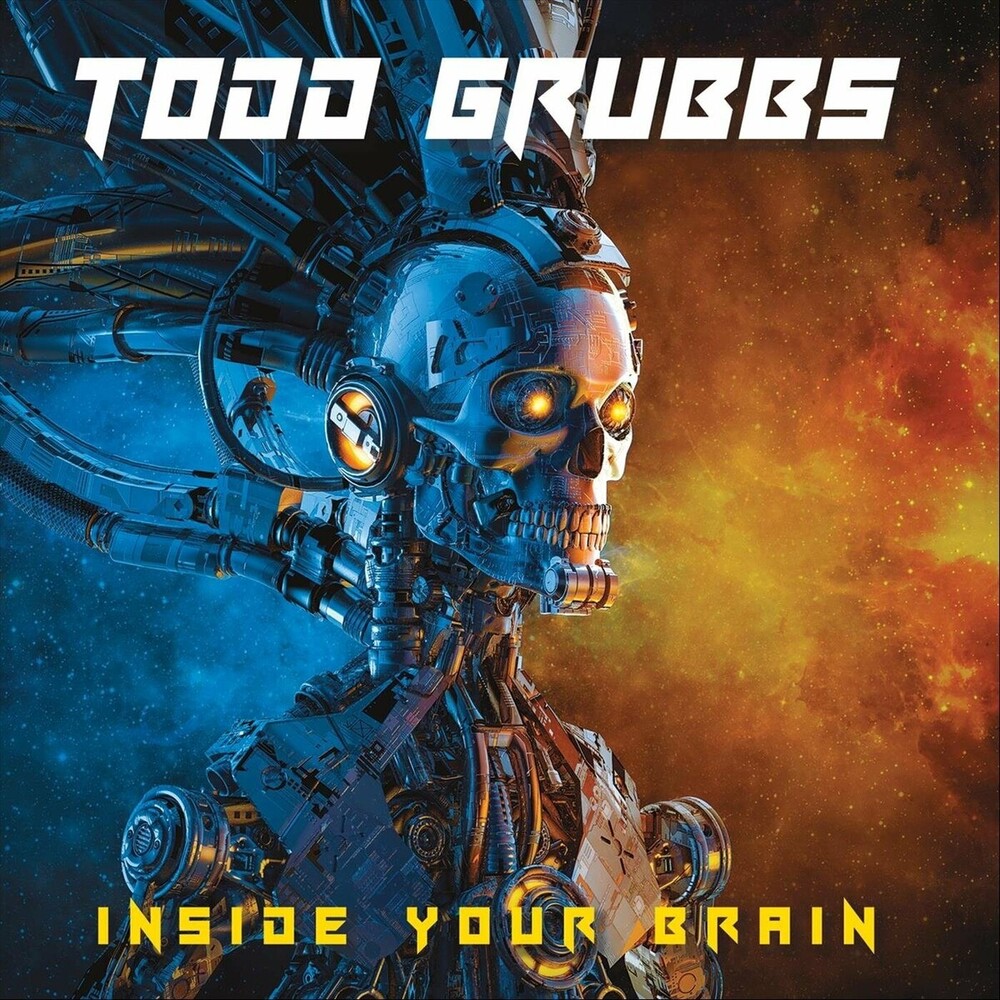
Todd Grubbs - Inside Your Brain (2024)

Country: USA
Style: Heavy Metal
Rating: 7/10
Release Date: 1 Jan 2024
Sites: Facebook | Metal Archives | Official Website | Twitter | YouTube

There haven't been a lot of releases thus far in 2024 and what I'm seeing is all American, so here's an American album to kick off the year. Todd Grubbs has been around for a long while, it seems, as his first appearance was on a demo for Atomic Opera way back in 1985. However, they didn't put out an album until 2021 and his other band, Siren, are much more recent, formed in 2016 and with two albums out, in 2020 and 2022. Mostly, it seems he's been working as a guitar teacher and putting a bunch of solo albums out, even if they're not listed on Metal Archives. His website says three vocal albums and seven instrumental ones.

I don't know if that includes this new one and I don't know what genre the others played in. This is old school heavy metal with a strong side of classic American power metal. I liked Grubbs's guitar from the outset but took a while to get used to his vocals, because they're a little more vehement than the music behind them. There's an elegance to the guitar work even at its heaviest but there isn't a lot of subtlety to the vocals. I wasn't sold on them on the opener, Spider in the Sky, because the snarl in his voice is so emphatic that it seems like he's almost taking the piss, overdoing it for a particular effect. Given that he's just as clearly serious, it felt odd.

However, as the album ran on, I found myself more and more on board with his vocals too. He's far more serious sounding on Got My Jet and sustains well on My Own Demise. By the time I reached Hell Awaits the Hypocrite, I was hearing a lot of David Wayne in his sound, not the same degree of resonance but with much of the same effect, and that flavoured how I took the album as a whole. I still like his guitar a lot more than I do his voice, but the latter didn't spoil the music any more and it often contributed to its effect too.

And Metal Church isn't a bad starting place to see this. These songs are heavy but clean, with a big bass presence from Rich Gray. That may or may not be the same Rich Gray who's the current bassist for Annihilator but, given that it looks like Fabio Alessandrini on drums also played for Annihilator, I think it may well be. Alessandrini currently plays for Bonfire, where he's already helped to rework three of their classic albums, but there's a lot more Annihilator here, even if Grubbs doesn't want to speed up to thrash speeds. This is still the sort of heavy/power metal that thrash fans dig, due to it being inherently uncompromising, even with hooks.

Hell Awaits the Hypocrite is the first highlight for me, very Metal Church in its emphasis, a patient and powerful grower, but it isn't the only one. Kill the Day is a good follow-up right after it to end the first side, but there's a set of three songs late on the album that I'd add too: One More for the Sky, Can't Go Home and Under the Ice, three very different songs. Can't Go Home is a blues song in a much heavier form, powered up like the pioneers of the early seventies did but not in an overtly influenced manner. It's not the Sabbath song we'd perhaps expect it to be, for instance.

One More for the Sky shines because of Grubbs's guitar but also because of his vocals, because he soars well with both. He relishes every syllable of his lyrics and stretches a lot of them. His sustain is easily my favourite aspect to his vocals and when it works with the music behind him, it feels all the stronger. When it doesn't, as on, say, Raise Your Head, as a Quiet Riot-esque anthemic stomp, it's a detriment. The only time he really takes a very different approach is halfway through Under the Ice when he shifts to a much softer melodic voice. I had to wonder how other songs might have played were he to use this more often as a contrast. It works well on this one.

So this is an album I didn't initially think I'd like, because of those vocals, but ended up enjoying a great deal, mostly because of the guitars but also often because of the vocals. Both are courtesy of Todd Grubbs, so he became an interesting way to kick off 2024.

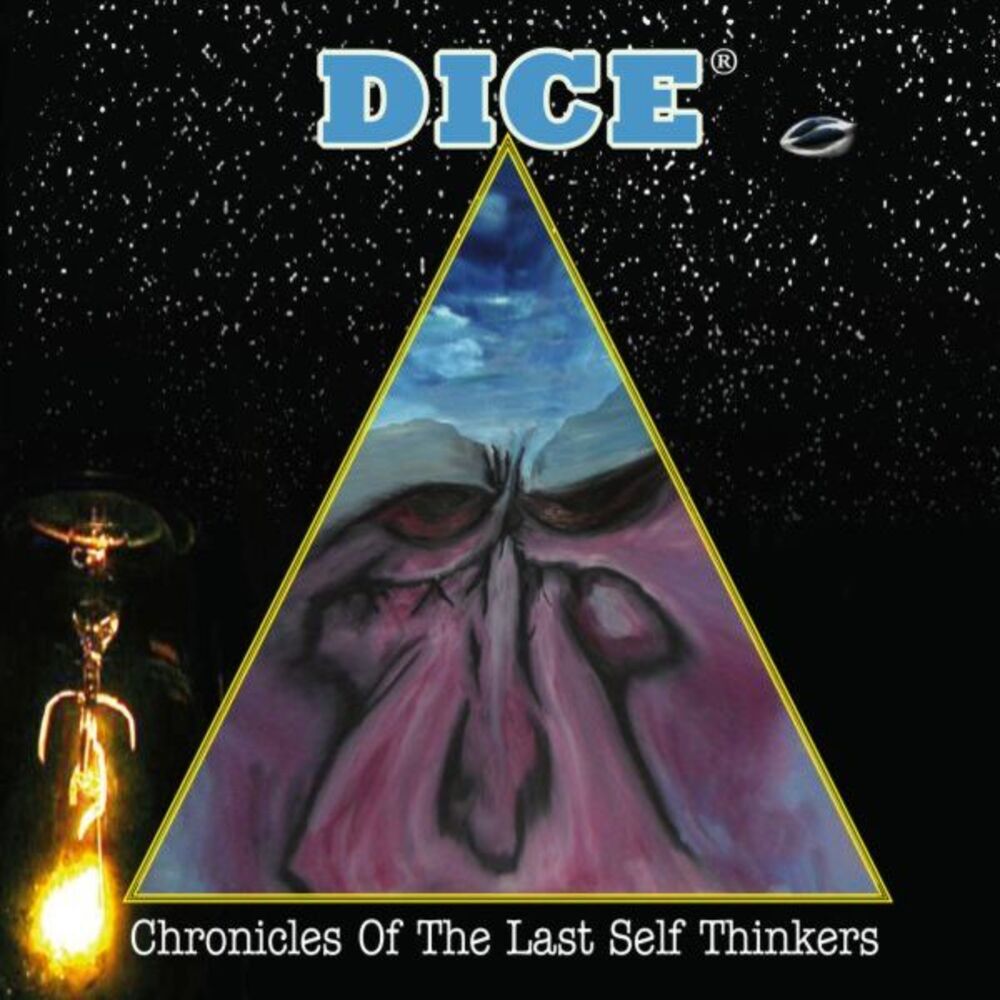
Dice - Chronicles of the Last Self Thinkers (2023)

Country: Germany
Style: Progressive Rock
Rating: 7/10
Release Date: 21 Jul 2023
Sites: Official Website | Prog Archives

Every January, I alternate albums from the previous year that I missed, which is quite a lot in 2023 because I lost a few months to running events and struggled to pick up the ball after them, and an array of new releases from January. Here's the first of the former, because it was a submission I'd let slip past me last July. Dice are a German band who were formed back in 1974 but got prolific in 1997, knocking out an album every year since then, only three of those being live, but I didn't find them until 2019's Yes-2-5-Roger-Roger. After finding them, I apparently promptly lost them again, missing three albums in between that one and this.

Everything I said about that one holds true here. They play smooth prog rock, led by the guitar of Peter Viertel, who I could easily listen to until the cows come home, but with accented vocals from Christian Nóvé adding lyrics here and there, always in English. Nóvé also plays bass and provides a lot of keyboard texture, as well as writing and producing all the music, so it's his band as much as it belongs to anyone but I always come back to that guitarwork, which sits somewhere between Dave Gilmour and Steve Rothery.

It's the Pink Floyd side of that pair that's most obvious, at least in instrumental sections. At their best, as they are for much of the opener, Who Knows the Truth, and all of the closer, Chronicle 57 Blues Play, they remind of Shine On You Crazy Diamond once it gets moving, that tasty guitar on a real journey with a space rock edge overlaid through keyboards. These are smooth tracks that we fall into like a river and just flow along with. They feel utterly effortless and should last forever, as Gilmour's legendary Comfortably Numb solo tended to do on tour with him standing on top of that wall.

And Dice are at their best when they're smooth, to my thinking. It doesn't have to be restricted to instrumental guitar sections, as Nóvé's voice is able to merge with that mood, as indeed it does in Who Knows the Truth, a song that flows whether it's vocal or instrumental. However, whenever a song breaks that smooth approach, like I am the Only One with its jagged rhythms and vocals that demand more attention, the effect is lost somewhat. The song simply doesn't flow as well in that approach, even when Viertel is out there in the spotlight.

I should underline that one reason why these songs get so immersive is that they tend to be long. Both Who Knows the Truth and I am the Only One exceed twelve minutes in length, because Dice don't ever feel the need to wrap songs up quickly. Well, almost never, at least, because Chronicle 57 Blues Play is a five minute instrumental to wrap up proceedings. However, the other four songs range from over nine and a half minutes to just shy of thirteen. Dice prefer their songs to breathe, wisely giving Viertel opportunity to solo frequently and Nóvé occasionally too, on keyboards.

If the bookends are the standout tracks for me, there's much to enjoy on the four in between. The Steve Rothery guitar is most evident on I am the Only One. Some of the keyboards on Just Like the Lemmings approaches new wave, which is an interesting touch, the early parts of The Key echoing that with a delightful vocalisation from Ramona Nóvé and a later narration utilising unusual post-production. There's some piercingly clear guitar to open up Just Like the Lemmings too, for a first minute until Nóvé's vocal takes over and we're into that poppy new wave style, the guitar absent for a while and the keyboards ready to take the spotlight when it's time for a solo.

And that just leaves Freedom for My Soul, which isn't because it's the most noteworthy but for the precise opposite reason. It's the least noteworthy of the bunch, but just because it has nothing to say that's unusual doesn't mean that it isn't a decent song on its own merits. It is and that may be why it ought to be a good point of entry for those who haven't heard Dice before. If you like it, as you ought to if you're intrigued by the concept of smooth prog, then you're really going to like the rest of this album and the rest of what Dice do.

All in all, this isn't particularly inventive prog but it's highly enjoyable prog, especially if you like a guitar solo in the Dave Gilmour style that just runs on and on. I always see the vocals as the weak link in the sound, reminding me of a less urgent Uli Jon Roth, but they're never a problem. They're merely less sophisticated than the instrumentation, but just as honest. If you can cope with them like I can, there's a large and ever-growing catalogue of albums to enjoy.

Monday, 18 December 2023

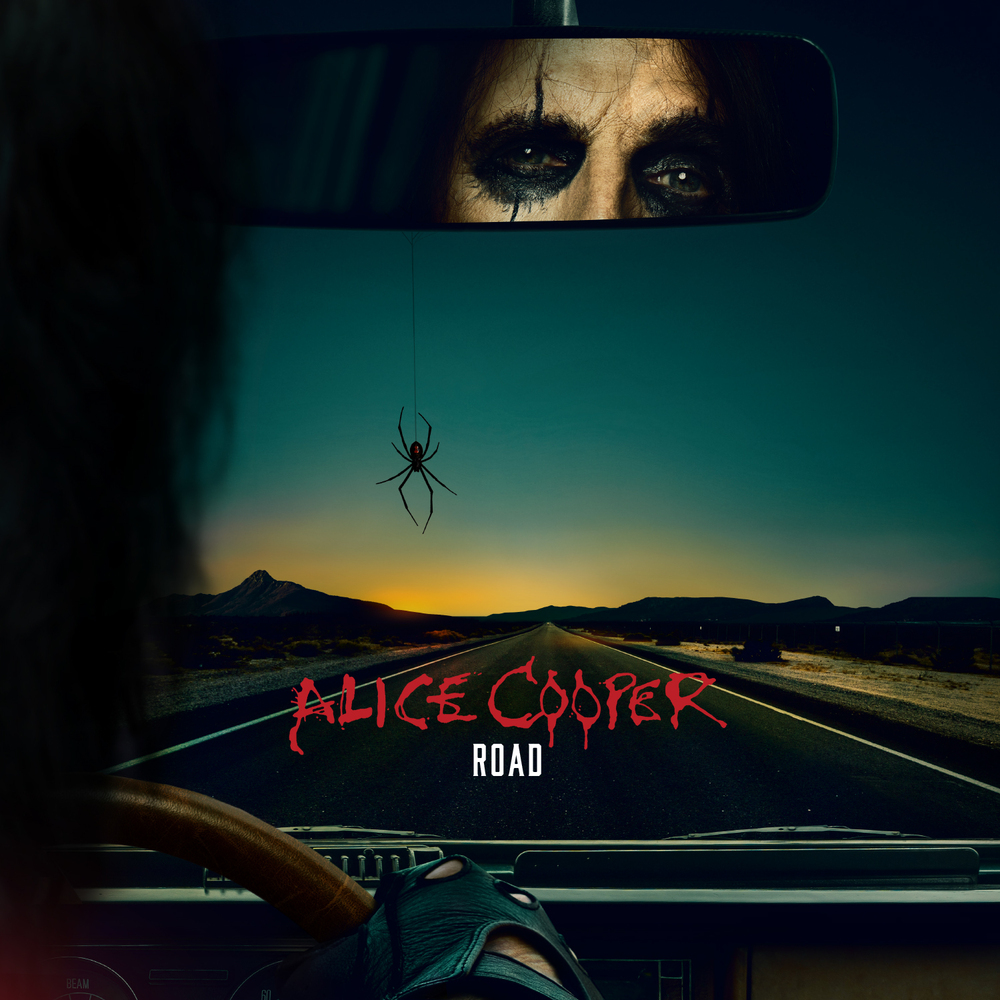
Alice Cooper - Road (2023)

Country: USA
Style: Hard Rock
Rating: 8/10
Release Date: 25 Aug 2023
Sites: Facebook | Instagram | Metal Archives | Official Website | Twitter | Wikipedia | YouTube

You don't need to live here in Phoenix to know that Alice Cooper has been around forever. The first Alice Cooper album, back when that meant a band rather than its leader, was released a couple of years before I was born and I have ten grandkids now. Road is his twenty-second studio album as a solo artist and there were seven more before that as a band. I can't say that he's maintained the same standard throughout and there are definitely some duds in there, but he's on a prolific kick at the moment and his latest couple of albums are some of the best of his solo career.

Right now after a couple of listens, I'd suggest that this isn't quite as good as Detroit Stories, but I would say that it comes very close and that was his best album in decades. Part of that is because, unlike the last few recordings I've reviewed, the studio band here is his touring band, along with a few guests dotted here and there, and they apparently recorded it live in the studio without any overdubs. While that statement is usually worth taking with a pinch of salt, I can believe it on this album because it feels raw and urgent with tiny little imperfections that underline how good it all sounds.

What helps that all the more is that the songs are good ones, immediately and consistently. Sure, some of the lyrics and rhymes are routine, but the hooks never follow suit and the strong songs a lot of albums kick off with just keep on coming until we realise that they're not going to quit. Even an otherwise throwaway song like Go Away feels like worthy single material. There are thirteen of them too, only one of which is a cover, a raucous version of the Who's Magic Bus wrapping it all up, almost all of them co-written with long term producer Bob Ezrin, who knows good hooks when he sees them.

It's not a concept album but it does follow a consistent theme, which is life on the road. I'm Alice is all about Alice, of course, and it's neatly playful and exquisitely theatrical. Just in case you're new here, he's the master of madness and the sultan of surprise. Living up the latter, he even delivers a narrative section in an oddly English accent as if he's suddenly turned into Tim Curry. Now that's a gimmick that would sell on stage! The anthemic Welcome to the Show is also about Alice too and a sassy All Over the World is about his life on the road, at which point we can't fail to see the theme.

I don't doubt that every song here comes from reality, but some are delivered far more tongue in cheek than others. Go Away is about a stalker groupie. Big Boots is about a waitress who wants to be a stalker groupie, I guess, with double entendre lines like "What a pair!" referring to her boots and nothing else, honest, m'lud. There's a narrative section on Rules of the Road that's huge fun, short enough and perky enough that I don't think it's going to get old on further listens the way a lot of similar narrative sections quickly do. There's a clever 27 Club nod in this one too.

If there's another common factor, it's that there are a lot of guitars on this album. There are three guitarists in Alice's band nowadays—Ryan Roxie, Tommy Henriksen and Nita Strauss—plus guests on occasional songs, like Alice alumnus Kane Roberts on Dead Don't Dance and Tom Morello from Rage Against the Machine on The Big Goodbye. The guitar sound is deep rather than diverse, so it feels beefy for the most part, instead of intricate as three guitarists do different things all at the same time. It gets beefier still on Dead Don't Dance, with Roberts, and, for some reason, The Big Goodbye, which doesn't feature a guitar guest, with the bass amped up too.

I've talked about hooks already, but the riffs are consistently strong too, even if none of them are iconic in stature. One is familiar, because Road Rats Forever is effectively (We are) The Road Crew built on the riff to On the Road Again. There's a heavy slide guitar on Go Away, a firm garage rock groove on Big Boots and a George Harrison-esque psychedelia on 100 More Miles There's even an overtly Stevie Ray Vaughn style delivery on Magic Bus. Alice has suggested that all his albums are guitar albums, but some are definitely more guitar-centric than others and this one, because of the number of guitarists and the live in the studio recording approach, is one of them for sure.

And, talking of live in the studio, when was the last time you heard a drum solo on a studio album? Glen Sobel delivers one to wrap up Magic Bus and thus the album, eventually accompanied by the cheers of what's probably everyone who was in the building at the time. After all, they were all in fine voice after singing backing vocals on that song.

I may well listen to this some more, but it was always a strong 7/10 from me and gradually shifted up to an 8/10. Alice is on top form right now and he's surrounding himself with all the right people to make some of the best albums of his career, however long he's been doing this.

Tuatha de Danann - The Nameless Cry (2023)

Country: Brazil
Style: Folk Metal
Rating: 7/10
Release Date: 1 Dec 2023
Sites: Bandcamp | Facebook | Instagram | Metal Archives | Prog Archives | Official Website | YouTube

My favourite Celtic folk metal band from Brazil is back and that phrase seems less surprising each time that I write it. They're also back playing folk metal again after In Nomine Éireann in 2020, an album that dipped just as often into rock. This is their sixth studio album but I've only been aware of them since The Tribes of Witching Souls EP in 2019 and haven't caught up with their earlier work yet. I should, not because it sounds like this but because it probably doesn't, given that they're on Prog Archives listed as prog folk, as their previous name of Pendragon might suggest.

Maybe there's a remnant of that prog mindset here, especially in the keyboards of Edgard Britto, but it's far from dominant. This is folk metal, firmly Celtic with prominent flutes and whistles and mostly Celtic melodies. I say mostly because I heard Magnum-esque melodies in Untitled, and that shifts its sound over the Irish Sea to be a more English influenced song, as well as one with more of a commercial rock tinge. That song is heavied up but A Fragile Whisper to a Raging Roar after it, a song which often feels as English as it is Irish, also stays firmly rock in its verses, before the crunch kicks back in.

My favourite track here is far more Celtic, even though it pumps up the power metal aspect that's never too far away to the max. It's The Rabble's Cry, oddly for me the shortest full song here, and it stirs the blood nicely. The one English moment comes during a wonderful instrumental run during the midsection, because it's a spotlight-passing part that shifts from fiddle to guitar to Hammond organ, back to fiddle and then to vocals again. For that moment of Hammond organ, we're firmly in Uriah Heep territory, which surprised me but works well in this Celtic context.

It's the flutes of Bruno Maia, also the band's guitarist, that always nudge it back to Éire. Most of these songs start out with him on flute, not least The Nameless to open up the album, but also an impressive pair of tracks much later on, The Virgin's Tower and Clown. I should mention here that the former kicks off with a deep harsh vocal from bassist Giovani Gomes before giving way to the guest female vocals of Daísa Munhoz, a Brazilian power metal singer best known for a band called Vandroya, though I know her from her prior guest contributions to Tuatha de Danann releases.

That shift works really well as a transition, something that they do a few times on this album. The opener features another moment like that that's also brief but also wonderful. Bruna Maia is also the lead vocalist in Tuatha de Danann and he's singing clean on The Nameless when Gomes comes in with his harsh voice as a neat underline to him right before the song drops away from vocals to a dancing flute section. I listened to that transition a bunch of times and it's unusual but masterful. I'm less sold on the electronically manipulated vocal that wraps up that instrumental passage and returns at the end of the song, as well as in the brief interlude called Spark.

There is another guest here, but I'm only aware of two this time out, compared to a whole slew of them on In Nomine Éireann. He's Hugo Mariutti, also Brazilian and, while he seems to have begun in thrash metal, he moved quickly into heavy/power metal where he's stayed for thirty years. He's a guitarist and so presumably contributes to the guitars on A Fragile Whisper to a Raging Roar in some fashion, though it's the vocal melody and the proggy keyboards that stand out most on this one. The vocals feel softer than elsewhere, though, so maybe Mariutti stepped in as a singer.

This is another strong album from Tuatha de Danann. While I'm not as surprised as I was in 2019 to hear Celtic folk metal from a Brazilian band, I'm just as eager to hear more. They're not the most prolific band out there but even COVID hasn't pushed them back to gaps like the eleven year one between Trova di Danú in 2004 and Dawn of a New Sun in 2015. I still don't know how big the Celtic folk metal scene is in southern Brazil but it's presumably large enough to sustain them right now, so I look forward to album number seven in a few years time.

Friday, 15 December 2023

Gama Bomb - Bats (2023)

Country: Ireland
Style: Thrash Metal
Rating: 7/10
Release Date: 10 Nov 2023
Sites: Bandcamp | Facebook | Instagram | Metal Archives | Official Website | Twitter | Wikipedia | YouTube

Irish thrashers Gama Bomb have called this, their eighth album, their "weirdest" yet, and they're not wrong. There are many sounds here that we wouldn't expect on a thrash metal album, but I'd suggest that they all fit. Given what some of them are, just saying that surprises me, but it's quite the adventure and the sense of humour they maintain helps that mindset. My only problem came from so much of the influences here are very easily identifiable, meaning that this is somehow an innovative departure from the norm and an often derivative set of pastiches at the same time.

The forgettable sub-minute long intro leads into the opener, Egyptron, which is clearly one of the most innovative songs here, featuring as it does two highly unusual guests. Pioneering American rapper Egyptian Lover delivers a rap section against a saxophone backdrop in the Madness style, created by Gavin Kerins, neither of which is remotely expected on a thrash album. Neither are the vocal lines in the bridge that sound rather like Mike Patton of Faith No More. This is thrash metal and there's an excellent frenetic guitar solo from Domo Dixon to back that up, but it's hardly the thrash metal we're used to. Maybe we could call it the nuttiest thrash sound around.

Living Dead in Beverly Hills follows in much more traditional fashion, a frantic thrash track with an overt Anthrax sound, even if the vocals are split between lead singer Philly Byrne and bassist Joe McGuigan. It's almost as if the boys wanted to underline that, after such a departure to open the album, they weren't just going to leap off the rails over the rest of the album. This one's fast and impactful, so much so that it's done in just over two minutes, but its only nod to another genre is a guitar line borrowed from Grieg's In the Hall of the Mountain King.

That one's an obvious lift, because it's so well known a melody that you don't have to be a classical buff to recognise it. I have to wonder if the riff in Materialize is another one that I merely haven't recognised, because it's so insanely lively that it could be a cartoon theme tune, the sort of thing we might hear while Scooby and the Gang are running from zombies. Trollfest don't have anything this bouncy! There's Acid Reign here, I think, and the vocals shift up to the piercing levels of Bobby Ellsworth at its intensity peaks. I kept waiting for the electro-violence.

Most of the influences are more generic in nature, though, such as that obvious Anthrax sound on Living Dead in Beverly Hills. Oddly, these influences aren't all from the thrash genre. Judas Priest kind of count because they pioneered the genre; they show up occasionally in Rob Halford screams but also escalations and guitar solos and, most especially, on Dreamstealer, where the song plays like Judas Priest but with a David Lee Roth vibe to the vocals, of all things. And yes, every time I re-read that line, I wonder if I was insane when I took that note down but it's there.

Don't Get Your Hair Cut is sped up Tank with a decent side of Motörhead. It's a silly song, down to the stereotypical metal scream at the very end, but it's a lot of fun. There's more Tank on Bats in Your Hair too, but the vocals are more operatic, a cross between between a pair of different Robs, Halford and Gallagher. There's definitely some Raven here in the riffs of fast but not quite thrash sections. That Faith No More vibe is back at points on Secular Saw and the saxophone returns for Bats in Your Hair and sounds even more like Madness than Egyptron.

I have a love/hate thing going on with thrash bands who don't take things as seriously as the norm demands. I appreciate the depth the genre had in writing songs that warned about nuclear chaos and social issues, but it's also refreshing to bounce over to Anthrax sometimes to hear them sing about Judge Dredd or dip into hip hop or lounge music. It's OK to have fun with thrash metal and I haven't heard any thrash band clearly having this much fun without turning into parody, like, say, Lawnmower Deth or Metal Duck. I liked this a lot. It walks a very fine line but it walks it well. I like Gama Bomb being weird.

The Cosmic Gospel - Cosmic Songs for Reptiles in Love (2023)

Country: Italy
Style: Psychedelic Rock
Rating: 7/10
Release Date: 15 Dec 2023
Sites: Bandcamp | Facebook | Instagram | YouTube

I could swear blind that I received this album as a submission for review but I can't find any details of that anywhere: no download, no e-mail, no message, no nothing. So maybe I was dreaming, but I took a listen anyway on Bandcamp and found it an interesting album, especially immediately after the weird but wonderful new Gama Bomb album, which is different in almost every way. This is pop music that's far too interesting to be just pop music, with the Beatles's psychedelic years the first point of reference. It's also often psychedelic rock, occasionally progressive rock and sometimes a little garage rock too, though this latter is rarely forceful.

The Cosmic Gospel is primarily one man in Macerata, Italy who writes, records and mixes, as well as singing and playing most of the instruments on this debut album. He's Gabriel Medina and he even painted the cover art, I believe. The only other musician involved is Louie Cericola who contributed some keyboard work on Core Memory Unlocked from his Korg Sigma. The Bandcamp page suggests that these songs were either inspired or grew out of songs by other bands that Medina must have been involved with that were either never finished or not released, so its patchwork nature makes sense.

If there's a common thread, it's that most of these songs create a particular mood that is utterly subverted by their lyrics. Usually, that means perky moods and dark lyrics, but occasionally that's reversed. I often let albums wash over me without actively seeking out their lyric sheets, but this only works that way if we refuse to let odd words and phrases grab our attention because they're not remotely part of the mood we're in. I'd suggest that following the lyrics isn't the best way for a listener to go, because Medina delivers lyrics in an unstructured manner, almost conversationally, finding whatever melody works. Letting it wash over us is better, treating it as an instrument, but it's going to get jarring when you realise what he's singing.

Exhibit A, your honour, is the opening track, It's Forever Midnight. It's a perky opener, with garage rock guitar, synth handclaps and Medina's soft psychedelic voice. It's laid back but catchy, masking dark lyrics about our narrator breaking into his neighbour's house to save his baby from perverted Mr. Goose. It's a happy psychedelic pop song with some subdued garage rock emphasis until we're in on the story, at which point it only gets darker the more we think about it. Is this an actual baby or a term of endearment for a girlfriend? Does that make it better or worse? What precisely does perverted mean here? Maybe we don't want to know.

Exhibit B would be the song after it, The Richest Guy on the Planet is My Best Friend. It opens with sugar sweet synths taking the place of the guitars, which only show up on slightly more emphatic sections. It's less perky but it's still happy until the lyrics start to make us wonder. This one's open to more interpretation but it could easily be read as a cult suicide. Whatever it means, it doesn't mean anything sugar sweet unless there's something seriously wrong with our brain.

Exhibit C works the same way but the other way around. Core Memory Unlocked opens soft like a folky psychedelic pop song from the late sixties, flutes behind a strummed acoustic guitar. It's less Beatles here and more Vashti Bunyan, maybe as covered by Tyrannosaurus Rex. There's a sadness here that wasn't on the opening couple of songs, but its lyrics reflect simple melancholic longing rather than anything actively dark. So, as the music darkens, the lyrics lighten. That's not a usual approach, but I found it fascinating.

What else I found fascinating is how this often feels relatively simple, built on simple melodies in that Beatles-esque way. Their most powerful songs were often the most simple and Medina knows that. However, there are a number of places on this album where he dips into something far more complex. There's some of this on Hot Car Song, which is more emphatic from the outset, its John Kongos beat shifting into almost a Cramps vibe at points, but this mostly kicks in at the end of the blobfish song, Psychrolutes Marcidus Man, when it shifts into what sounds like a kazoo orchestra.

The Demon Whispers opens like avant-garde classical, but its ominous nature is overwhelmed by a folky acoustic guitar, the unusual returning halfway with the advent of a theremin-like melody. It gives way to Wrath and Ghosts, which starts out unusual and only gets more so as it builds. This is an almost entirely electronic track onto which voices are added, though they may be manipulated samples. It becomes an avant-garde choral piece for a while, like Henry Cow taking György Ligeti and shifting his polyphony into something prog.

It's been too long since I've been this surprised by an album in any way other than quality. Sure, it happens that I expect a lot from a band who fail to deliver or not much from one that utterly nails it this time out. Here, I had no expectations of quality because it's a debut album. What I expected was something psychedelic, with influences beyond the Beatles listed on Bandcamp being Damon Albarn, Beck and the Brian Jonestown Massacre. I wasn't expecting this experimentation and the thoroughly unusual contrast between music and lyrics. So, thank you if anyone actually did send a copy of this over to me. If not, I must have dreamed my way into an interesting find.