Thursday, 15 June 2023

Winger - Seven (2023)

Country: USA
Style: Hard Rock
Rating: 7/10
Release Date: 5 May 2023
Sites: Facebook | Instagram | Official Website | Twitter | Wikipedia | YouTube

Like most people, I remember Winger from their heyday in the charts in the late eighties. I hadn't realised that they'd split up in 1994, though I'd kind of assumed it, and I hadn't realised that they'd got back together not once but twice, briefly in the early noughties and more sustainably in 2006. While they've stayed together ever since, with very few line-up changes—John Roth joined as a co-lead guitarist in 2001 but otherwise it's just been rhythm guitarist Paul Taylor hopping in and out of the band as he deems fit—they haven't been particularly prolific. This is their first album in nine years and Better Days Comin' in 2014 was their first in five.

The good news is that this is a surprisingly clean and fresh sounding release and it feels great from the outset, with three highlights in four amidst a pretty solid opening five. The highlights are the more energetic pieces, which holds true throughout the album. Proud Desperado kicks off with an impressively clean production, lively but patient riffs from Roth and Reb Beach and huge patient choruses with a soaring vocal from Kip Winger himself. Tears of Blood does much the same but it's even better, building on an almost AC/DC riff with a vocal that grows through a Rainbow style bridge to a big chorus.

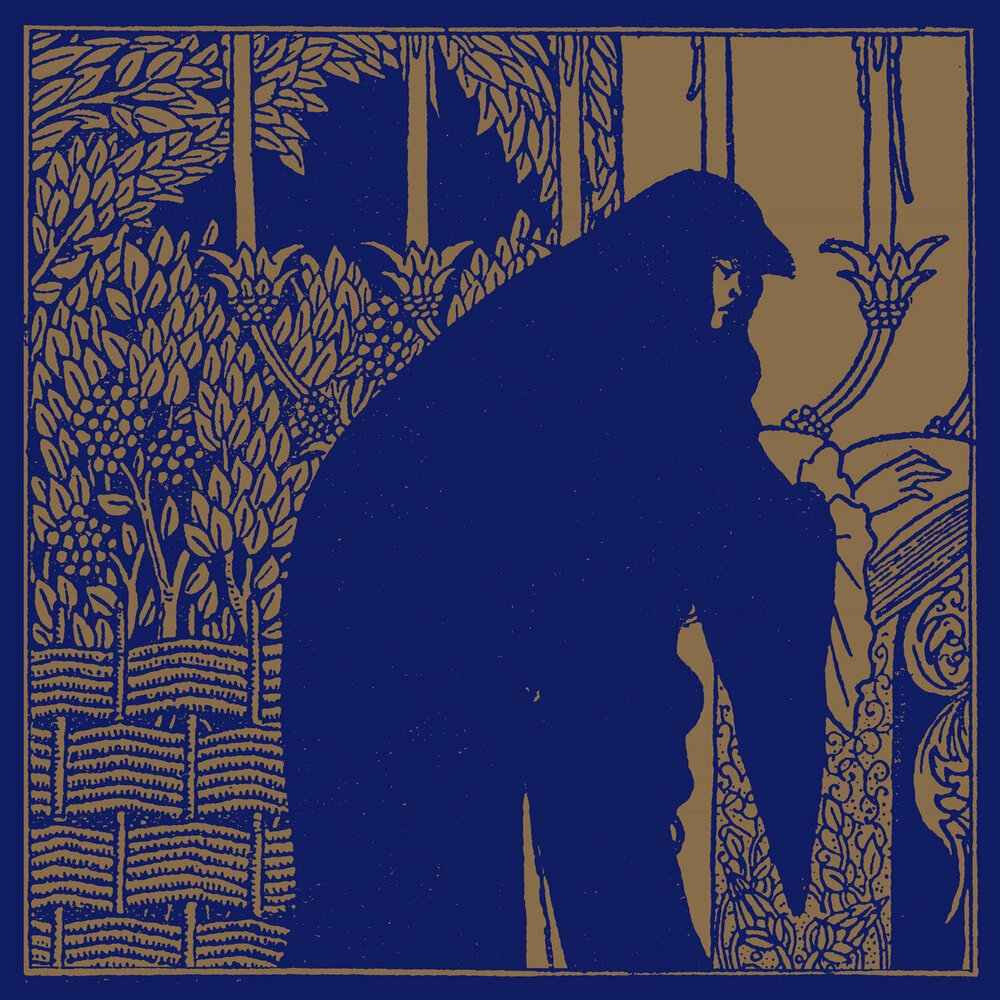
These are both excellent early tracks, but Resurrect Me is even better still, an elegant glam metal tinged hard rock anthem. This felt like the best song on the album on a first listen and, given that the lyrics are all about the phoenix that decorates the cover, it's surely the featured song, if not a true title track given that Seven merely counts this as their seventh studio album. Voodoo Fire is a strong track to follow it, a bit looser and sassier and with a tasty a capella closing, and the one I've skipped over, Heaven's Falling, is strong too, a bit softer and thinner but a good song nonetheless.

So far so good but, while the rest of the album can't really match that opening, it doesn't do a bad job of trying, especially given that it features some admirable variety within its mainstream hard rock framework. The best track after these is Stick the Knife in and Twist, much later on, which has a slight Megadeth vibe to its riffs, so plays a little heavier, but is otherwise the same high energy Winger as on Tears of Blood and Proud Desperado. One Light to Burn finds a deeper groove that I found reminiscent of Vow Wow and Do or Die adds some symphonic metal swells while staying in a steady glam/hard rock vibe.

The rest are a little softer in demeanour but still play well, just without quite so much emphasis. It feels odd to say, given that I'm generally not as enthused about the softer songs as those with high energy, but the softest song is probably my other highlight, but it's a real grower. It's Broken Glass and it's the first half of a tasty pairing with It's Okay at the heart of the album. It starts out with a set of keyboard swells and piano notes that we're conditioned to see as signs of impending power balladry and I guess it counts as one of those, but it's deeper than that, building a real groove. I'd be lying if I said that I wasn't a fan on a first listen but it gets better every time through.

And, quite frankly, so does everything else. Winger went away when grunge came along, like much of my youth, but they weren't so glam metal that they would feel like a modern throwback to that old sound. They were based in New York rather than Los Angeles and they had a more elegant hard rock sound that combined the blues rock of Whitesnake, the arena rock of a plethora of American mainstays and some of that LA glam metal vibe as a bonus. It actually translates very well to 2023, with some modern touches to make it feel contemporary.

In short, I thought it would be good but it's better than I expected. Much of this is an 8/10 album, a rating I'm still tempted to throw at it. However, it shifts softer as it goes with Stick the Knife in and Twist a rare exception on the second half. It's fair to say that I like this more whenever the band up their energy levels and that approach is very biased towards the first third of the album. I don't dislike where the second side ends up and It All Comes Around is an elegant closer, but these songs don't connect with me the way the earlier ones do, so think I'm staying at a 7/10.

Sporae Autem Yuggoth - ...However It Still Moves (2023)

Country: Chile
Style: Doom/Death Metal
Rating: 7/10
Release Date: 19 May 2023
Sites: Bandcamp | Facebook | Instagram | Metal Archives | YouTube

While Sporae Autem Yuggoth certainly play doom/death metal as advertised, that doesn't give an accurate impression of what they really do.

The doom at the heart of their sound is deep and slow, surely rooted in funeral doom and it's aided by the keyboards of Johanna Sánchez, which add a tantalising visual element to their sound, as if a song isn't just a song but a portal into a mediaeval castle, a torture dungeon or an ancient abbey. I know that most of what she does is texture, but that probably extends to sound effects, like an odd bell or scream or gust of wind. On rare moments when the band speeds up, which they do at some point in most songs, they sound fast but they're actually just catching up to the tempos that many doom/death bands use to begin with.

The death aspect is primarily in the vocals of Patricio Araya, who doesn't sound at all like his fellow Chilean namesake, Tom. Patricio's voice isn't so much a death growl, as a hoarse croak. It's an ache of a voice that adds more to the textures the keyboards are conjuring up, bringing age and history with it, as if he's been stuck in those castles, dungeons or abbeys for centuries. Finally he's got the chance to tell his stories, but he's been so long without a voice that he has to fight to get more out than the whisper at the heart of The Pendulum of Necropath, managing it across the album with a time-honoured rasp.

Sánchez is the new fish here, as everyone else has been in place since the band formed in 2019, and their only previous release was an EP back in 2020 called The Plague of the Aeons, which featured a slightly different line-up: no keyboards, but a second guitarist, Juan Drey, who left a year later. I'm intrigued as to what that sounds like, because the keyboards here often creep in through cracks an additional guitarist wouldn't leave so obviously in place. There are songs when Sánchez sees those keyboards as a sort of second guitar, as on the gloriously titled ten minute epic Colosus Larvae: The Crimson Coffin & The Scarlet Worm. There are points where she fills in like she's a mad organist in a different part of the building who delights in joining in, but surprisingly subtly.

I should add that this is a long album and the length may be its toughest challenge, as it reaches a breathe over an hour, ambitious for a debut album. That length works for me, because this isn't a typical set of songs, it's an immersion into a particular atmosphere and that lingers even after the music is done, so time ceases to have meaning. The fact that this feels ancient, gothic not in music genre so much as in literary genre, aids that because it feels like it's taken centuries to arrive with us. If a song could be dropped, maybe Disintegration would be a good candidate because it's faster and more traditionally built for the most part and so brings us out of that atmosphere a little.

On a more traditional album, it would be a highlight and it's a tasty and mature piece, built out of rollicking riffs rather than atmosphere. It also helps to underline how delicate Disguise the Odious Spirits is on its heels. This is the true epic of the album, running twelve and a half minutes, putting it a couple ahead of Apparition of Internal Odes, Colosus Larvae, Through Dominion to Interlude, a trio of songs that run around the ten minute mark. This is the one among them that truly takes its time to set the scene and ease slowly into a build. The others all tell stories, while the third has fun with the band's roots, hinting at the Funeral March in a less overt way than Candlemass.

And I do wonder which bands combined in their minds to distil this particular sound. It used to be a given that doom/death bands owed a serious debt to Paradise Lost and My Dying Bride, but that's not obvious here. I'm hearing a more continental flavour than a British one, finding inspiration in Celtic Frost, Winds of Sirius and, especially as the album builds, Candlemass. I'm sure there are an array of funeral doom bands in the mix too and likely classical composers too, thinking far beyond a Chopin nod to the way they write in such a visual fashion and play with space, especially during the elegant closing instrumental, The Night Ocean. I'll seek out some interviews to discover how they reached this sound.

I'll seek out some interviews to discover how they found this sound. I'll also play this a bit more in between reviewing other albums, because I think it's going to grow on me even more than it has.

Wednesday, 14 June 2023

Yes - Mirror to the Sky (2023)

Country: UK
Style: Progressive Rock
Rating: 7/10
Release Date: 19 May 2023
Sites: Facebook | Instagram | Official Website | Prog Archives | Twitter | Wikipedia | YouTube

It's only been two years since The Quest, but Yes had already started work on this, album number twenty-three, before it had even been released, citing a strong creative zone. However, they went for a different approach and, to my thinking, it worked well. There are fewer songs, but they have the time to breathe, even though they don't bloat up to anywhere close to the levels of legendary indulgence they sometimes reached in the seventies. The longest song on The Quest ran a breath over eight minutes, but there are four longer than that here and three of them are highlights.

The result is that everything feels less rushed, even the songs that don't boast epic lengths. As an example, the opener, Cut from the Stars, is merely five and a half minutes, but it feels as natural at that length as All Connected and Luminosity do at nine and the title track does at fourteen. It simply does what it does, which is to be lively and playful within the framework of a song. Everyone shines but I particularly enjoyed Billy Sherwood's highly active bass. All Connected isn't dissimilar but it stretches out the fun. This is playful Yes.

By comparison, Luminosity is more of an exploratory piece. It's as if the two openers put the band onto the walkway in Roger Dean's cover art to gaze into the reflection of stars in such an expanse of water and then improvise music on the theme, but this third piece has them dive in and discover that the water is a portal so they're way out there. For a while, they're content to simply watch the marvels around them with wide open eyes but, by the halfway mark, they've become comfortable enough to join in and jam with the majesty of creation. Eventually, they have to sit back again and let it all wash over them. It's a real journey of a song.

Talking of the long songs, the longest is the title track and I'm not as convinced by it. Of everything on offer here, this is the one that falls into being background music at points, especially during the instrumental second half when it gets all orchestral and resembles a film soundtrack. It starts out well, with a southwestern feel, as if someone inverted the cover art and the ocean turned into the desert. It's outlaws waiting for a train music. There are southwestern touches in Unknown Place as well, combining a Native American sound with a dominant bass.

Oddly, Circles of Time, the sub-five minute piece that wraps up the first disc, feels more like a title track than the actual title track, because it's fundamentally calm and reflective. What elevates it is Jon Davison's voice echoing into Billy Sherwood's like pebbles skipping over a calm pond. I'm not as fond of the short pieces here, but they're still fascinating, especially the album's true closer, an odd throwback to seventies vocal music called Magic Potion. I caught glimpses of Copacabana and wondered how something like that could be translated into a dynamic prog framework. The other surprising short piece is Living Out Their Dream, which oddly sounds like Yes covering Hawkwind.

For me, it's All Connected and Luminosity, the early nine minute songs, and a second disc number called Unknown Place, which runs eight and is easily the most immersive song here. The opening is wonderful, from yet another iconic guitar flourish from Steve Howe, whose work is once again the highlight of the album, not in a grand sweep but in a thousand little touches, to Sherwood's power bass and some simple but emphatic beats from new fish, Jay Schellen. Last time out, the drummer was Alan White, as it had been since 1972, but he passed in 2022 after half a century with the band and was replaced by Schellen, who has been their live drummer since 2016.

Unknown Place isn't just its intro though. It finds one of those deceptively simple vibes that's full of quintessential Yes detail, but also moves into some of the best peaceful moments on the album. There are many of those, so this one isn't alone, but it has a few and they're exactly right. At other points, of course, it focuses our attention on little details that continue to elevate the song on the fifth or sixth listen because we suddenly catch something else that one of these musicians is doing for the first time, usually Howe but also Geoff Downes on a variety of keyed instruments and with Sherwood and Schellen contributing their fair share of wonderful touches too.

This is a much stronger album than The Quest for me, even though it arrives so closely on its heels. Other critics rated The Quest much higher than I did, but one fantastic opening song apart, I didn't connect with it much at all. I connect with this one much more, especially on the majority of longer songs that give a band of serious musicians the opportunity to let their songwriting breathe. I may only give it a single point more but I'm tempted to add another one. This is much more like it.

Savage Grace - Sign of the Cross (2023)

Country: USA
Style: Heavy/Speed Metal
Rating: 7/10
Release Date: 5 May 2023
Sites: Bandcamp | Metal Archives | Official Website | Wikipedia

I remember Savage Grace peripherally from their heyday in the eighties. They formed in 1981 with the name of Marquis de Sade, perhaps appropriately given the cover art they would come up with over the years, but quickly renamed to Savage Grace, which is a quintessential heavy metal name. They put out two albums and an EP in only three years but then fell away, eventually ceasing to be in 1992, at the same time as so many other heavy metal bands in the face of grunge. Well, they're back, with guitarist and former lead vocalist Christian Logue hiring a variety of foreign musicians to give him one more shot.

That's probably an unfortunate turn of phrase, because his activities in between attempts to keep Savage Grace a viable entity, apparently include "practicing medicine without a license" under the name of Dr. Richard Santee. Quite why a fake doctor needs an arsenal of military-style weaponry is an open question, but hopefully this album means that he's back on the straight and narrow, with a go forward plan to dedicate himself to music. It also may explain why this Los Angeles band has a Puerto Rican singer and a Brazilian rhythm section nowadays.

If memory serves, they never sounded like a Los Angeles band, even when they were based there in the eighties before moving to New York. There is some of that glam rock sound here in Stealin' My Heart Away and especially in the closer, Helsinki Nights. The former reminded me of a band such as Tokyo Blade who played power/speed metal when I found them but shifted with the climate to find their way into other genres, including glam rock. The latter feels like a cover of a Mötley Crüe song performed faux live by Krokus, but it's actually an original. It's raucous rock 'n' roll and it's a heck of a lot of fun. I'd call it a highlight even if doesn't sound much like the primary approach here.

For a power/speed metal band, that primary approach is old school heavy metal with an occasional burst of speed. The most common influence seems to be Judas Priest, with three songs here taken right out of the Priest playbook. Automoton (sic) is the first, a little slower than the opener, but it builds its energy wonderfully and wraps up at speed. A few songs later, Slave of Desire returns to a Priest sound, lead vocalist Gabriel Colón doing a fantastic Rob Halford impression. A final take from the Priest textbook is Star-Crossed Lovers, the three songs dotted across the album to keep it fresh.

The other obvious influence is Iron Maiden, though Colón only tries a Bruce Dickinson impression on the title track. Maiden are all over the album in moments, as indeed are Priest, but these are a quartet of songs so rooted in their single influences that, like Helsinki Nights, it wouldn't actually surprise much if they turned out to be covers of songs that we've never heard before. What's very telling is that these pastiches are arguably the best songs here, along with the opener, Barbarians at the Gate, which storms into action like it's still 1985 and Savage Grace are leaping at the chance to delve into this newfangled speed metal thing.

The other songs are all decent, nothing letting the side down, but they're missing something that would elevate them to the same level as those I've already mentioned. They're the sort of songs I heard on a lot of Friday Rock Show sessions around the time that Savage Grace were at their peak that underlined how much potential a young band had and why someone really ought to sign them to a record deal. These would make it onto their debut album, probably hindered by poor production to remain an underrated cult favourite, but they'd be forgotten if a killer second or third album showed up because the band had held together long enough to make it.

And so that leaves Savage Grace as a cross between those two scenarios. Half of this feels like the songs that sound good but would be soon forgotten as a band builds, but the other half seems like the sort of material they turned out after they made it to their third album, which, of course, this is. Sure, it's been thirty-seven years since their second, but it's still a third album. Now they're on that milestone, back together as a coherent band and putting out decent material, let's see if the next couple will grow them into something more than a welcome return.

Tuesday, 13 June 2023

Babymetal - The Other One (2023)

Country: Japan
Style: Kawaii Metal
Rating: 8/10
Release Date: 24 Mar 2023
Sites: Facebook | Instagram | Official Website | Twitter | Wikipedia | YouTube

It almost seems surprising to say that this is a surprising album from Babymetal, because it's not a fresh expansion of their sound, as their previous album, 2019's Metal Galaxy, surely was, but more of a contraction and a re-focus on what they do best. For those not in the know, they play what they call "kawaii metal", which means the bizarre placement of cute JPop vocals and electronica over a crunchy and sometimes almost extreme metal backdrop. However, Metal Galaxy, a concept album that brought in sonic flavours and guest appearances from each of the countries in which the band has toured, stretched that template in all sorts of wild directions.

In comparison, this felt almost like an assault on a first listen. It's very loud, some of the knobs on the mixing desk surely turned up to eleven, and it's often very fast too. The only world music that I caught was on Metalizm, which has some Indian flavours, and there are no guest appearances that I could identify. It's Babymetal reinforcing that they play metal rather than global pop and finding their way back to basics. Oddly, the album both benefits and suffers from this approach. I wasn't at all sure on that first listen but it's grown on me with every subsequent time through.

Importantly, I think there are a few reasons for this. One is that there are only ten songs on offer instead of sixteen and they're all of a consistent sort of length. Only two songs sit outside a range between 3:23 and 4:18 and they all do much the same thing, with variations to keep it interesting. Those exceptions, by the way, are Time Wave, which extends to 4:50 because of a longer electronic intro, not hitting top gear until a minute of driving pop music in; and the opener, Metal Kingdom, a minute longer than Time Wave, partly because of a longer intro but mostly because it has an epic flavour to it.

Another is that almost everything feels like metal, with occasional dips into electronica. Last time out, I noted that "rarely do the songs seem to start out as metal" and that's just not the case here. Even when the electronic angle takes the fore, as it does on Time Wave and Light and Darkness, it isn't long before the metal takes back over. Only The Legend, which closes out with a more mellow outlook, down to the use of a saxophone, avoids that and it's still heavier than half of what was on Metal Galaxy.

Perhaps, most tantalisingly, Su-Metal, who sings lead, seems to be shifting away from the cuteness overdose of JPop to a more rock-based delivery. There's still a pop edge there, but there's also an overt use of power that's more typical of rock music. She belts here, even if it's a sweet belt. She's willing to soar and sustain, even in verses and especially in choruses. Most importantly, she does it all on Divine Attack -Shingeki-, which is the first Babymetal song on which she wrote all the lyrics. I would call her delivery entirely hers and she chose to go for power.

It's clearly one of the highlights, as is Metalizm, but the more I listen to this, the more it clicks into focus for me and the more individual tracks stand out to approach that pair at the top of the heap. Maya has a seriously driving riff and Mirror Mirror even grinds at points. Monochrome is quite the earworm and The Legend holds up at the end of the album, even though it's easily the softest song on offer. Talking of softer, I have to admit a fondness for the first minute of Time Wave that's clear pop music but catchy and powerful.

And so this is a surprising album, not because it doesn't sound like Babymetal but because it feels a lot closer to what Babymetal are than anything in a long while, consistently and emphatically. It also surprises because it does that while making the cute JPop side of the band fit a lot closer than anything on their previous album. There are points where I could see three kawaii girls dancing in synchronicity even without visuals, but Su-Metal's voice is much more natural and overt, without a lot of the digital manipulation done to it in the past. Autotune is not a big problem here, the intro to Believing notwithstanding.

I wonder how this is going to be received. From being underwhelmed on a first listen, I now think it may well be their best album yet.

Dirty Deep - Trompe l'œil (2023)

Country: France
Style: Blues Rock
Rating: 7/10
Release Date: 7 Apr 2023
Sites: Bandcamp | Facebook | Instagram | Twitter | YouTube

It would be easy to call Dirty Deep a blues rock band, as indeed I did above, but this fifth album by them is a magnificently versatile affair and, while it's all built on the blues, it also ventures into a lot of other realms. The other common threads are a simplicity of approach, which sometimes has them sound like a garage rock band recording in one blissful take, and a rough attitude, which has the effect of lending them an edge of punk and outlaw country.

Given that, I'm not sure if Broken Bones is a good opener or not. It's a good song, but it's a teaser of some of what's to come rather than a stormer to grab us in. It stubbornly refuses to speed up to the tempo it could easily be played at, but it sets a tasty tone and there's an emotional harmonica pleading with us to stay the course. It begins beautifully, a solo voice over chords so quiet we have to stretch to hear them but which build until the song explodes into action.

There are up tempo songs here, most obviously Shoot First, which absolutely blisters along, as if a band happy to shuffle along in third gear suddenly find top gear and, liking the sensation, floor it. It's garage rock with a serious punk attitude, though it never quite loses the blues, especially with another tasty harmonica solo from guitarist and lead vocalist Victor Sbrovazzo. It's a song to take your breath away and it stands out all the more at the heart of the album, a seventh out of fifteen tracks, because of the two around it.

Before it is From Tears, an acoustic ballad that's sweet and open and embracing. This is Dirty Deep playing the blues with a folky country vibe. It's a beautiful song and a subtle one, moving as much through swells of what I presume are keyboards doing the job of strings as anything else. There is a drummer in the band, Geoffroy Sourp, but he doesn't do anything on this one, unless he also has a responsibility behind the keyboards. What rhythm the song has comes from its guitar.

After it is Donoma, easily the tastiest piece on the album but another subtle one. It takes over a minute to conjure up an atmosphere with what sounds like a cello, then effortlessly turns into the sort of progressive roots song that we might not expect on an album so buried in the simplicity of garage rock and especially after the blitzkrieg that is Shoot First. However, it's here and it shines a bright light with plenty of gospel in it. These are three thoroughly different songs but each is well worth your attention because they're all highlights.

While I'm all about the middle of this album, the half before it is a notch above the one after, but I wouldn't divide them quite like that. The first has Juke Joint Preaching, a laid back number in the style of the Black Crowes with all sorts of little touches that sell it more than the big sweep. It has Don't Be Cruel, which follows suit but also finds a mellow vibe midway with a saxophone. It has the wonderful instrumental harmonica interlude called Hipbreak III, a tease of a shift into a stalker of a song in What Really Matters with Sbrovazzo roaring out his lyrics.

So the first side is strong, but the second has Your Name with an almost reggae beat, a light touch compared to so many songs that have a semblance of darkness to them. It has Hold On Me, a truly back to basics garage rock stomp to stir the blood. It sounds like Sourp only has one drum on this one but he's especially happy to beat the crap out of it just for us. It also has Waiting for a Train, a brief country song that even finds room for a yodel, and a slow, extra laid back closer in Medicine Man, driven by a sparing slide guitar, which combines impeccably with a sparing harmonica. However, it also has a song called Never Too Late that's just there, a routine blues rocker with alternative touches.

The result is an excellent and sublimely surprising album. I haven't heard Dirty Deep before, but I have every intention of hearing them again. It's been a while since they released an album, though they did get through the COVID years with an album of raw unplugged sessions and a mini-album of odd covers, each featuring a different guest. It's been five years since Tillandsia in 2018, but the first four arrived in only seven. Here's to hoping they're back on a regular sort of schedule with an admirable versatility ready to roll into future material.

Monday, 12 June 2023

Avalanch - El dilema de los dioses (2023)

Country: Spain
Style: Melodic Power/Progressive Metal
Rating: 7/10
Release Date: 21 Apr 2023
Sites: Facebook | Instagram | Metal Archives | Official Website | Twitter | Wikipedia | YouTube

I had two things in mind when coming into this, which counts as the tenth Avalanch studio album. I miscounted when reviewing their prior effort, El secreto, because some of the thirteen I'd seen at that point are actually re-recordings of previous albums. One is that that album was a real gem, a rare 9/10 from me that was also the Spanish Album of the Year at the Headbangers Latino America site. It was my first by them but certainly not the last and I've eagerly awaited this follow-up. The other is that Avalanch seem to have a constantly shifting line-up, centred around guitarist Alberto Rionda, and there have been quite a few changes since the previous album.

In fact, there have been enough changes that they could well affect the sound of the band, so they would seem to be worth detailing here. Last time out Jorge Salán was a second guitarist, but he's no longer in the band, his only contribution here being a guitar solo on Ceniza, and there's no new second guitarist. Another departure is Israel Ramos on lead vocals, though he still sings Confianza ciega here. However, there's a replacement in José Pardial, who clearly saw Sentido and a ballad, Más allá de las tinieblas, as showcase opportunities to demonstrate his range. Also gone is bassist Dirk Schlächter, with Nando Campos replacing him.

And here's where I change "could well affect the sound of the band" to "absolutely does so", as the three changes all make a difference. Pardial has a lower and softer voice than Ramos, so the songs have a different feel in his hands. He mostly sings clean and pure, as you might expect for a power metal band with progressive leanings, but he turns on the vocal fry for emphasis as needed, most examples being on the quieter, more vocally oriented songs, like the showcase pieces I mentioned above. He has an impressive range and he sounds great, but also notably different to Ramos, with that comparison obvious in the latter's song, Confianza Ciega, directly following Sentida here. It's unsurprisingly the closest thing to El secreto here.

I'm sure the guitar sound has been driven by Rionda ever since Avalanch was formed, so what this album does on that front isn't wildly different from El secreto. However, without a second guitar, it feels a little thinner and less substantial. I'd also suggest that, once we get past the opener, which has a deep back end, the bass is a little lower in the mix and that serves to emphasise that change in guitars. Again, Rionda sounds great and I don't see fans walking away from the band because of this shift, but a direct comparison of the two albums leaves this one firmly behind its predecessor.

El secreto was a 9/10 and a Spanish Album of the Year. This is a 7/10 that occasionally reaches up to an 8/10. That means that it's good stuff and it's recommended, sometimes highly so, but I doubt it will pick up any awards as we move into 2024. It's telling that Confianza Ciega and Ceniza, a pair of kinda sorta throwbacks to the previous incarnation of Avalanch, are my highlights here, and I think I'd give the edge to the latter, perhaps meaning that the depth of guitar sound is more important to me than the change in vocalist.

Other strong selections would include Cuatro elementos, with elegant melodies over a far heavier backdrop and some stellar guitarwork from Rionda, and Tumbas y Reyes, because of its sheer drive and its hints at something much heavier than I've heard from Avalanch. The underpinning riffs are excellent and help build a darker tone, but it's Pardial's vocal that sells it to me. He relies more on his lower register, but soars out of it with style, but he also delivers a brief moment of harsh voice for contrast. It's only a single phrase, so this is hardly Avalanch moving into extreme metal, but it's thoroughly effective and it resonates. The title track after it feels even softer in comparison, even with a decent crunch to it.

And so I'm happy Avalanch are back and only four years after El secreto, given that album arrived after an eight year gap. I'm not entirely sold on the changes but the two new members have been in place for mere months, so I'm looking forward to them settling in over the next couple of years and being more sure of their new sound on the next album. This is good stuff, but the edges hint at something better to come.

Blood Ceremony - The Old Ways Remain (2023)

Country: Canada
Style: Occult Rock
Rating: 8/10
Release Date: 5 May 2023
Sites: Facebook | Instagram | Metal Archives | Twitter | Wikipedia

I dug into Blood Ceremony a little bit a few years back when I realised that occult rock was not only alive but very well indeed. They were formed in Toronto as far back as 2006 and they released their self-titled debut only two years later, but this is only their fifth album and their first in seven years after 2016's Lord of Misrule. The core of the band is the two remaining founder members, guitarist Sean Kennedy, who's also the songwriter, and lead vocalist Alia O'Brien, who started out as flautist but quickly moved into microphone duties and organ as well.

This fits with what I've heard from them before, albeit a tad lighter, and it's clearly good stuff, but it's also better than it initially seems, something I only gradually realised in a few ways. Part of it's that a majority of the songs build massively from their subdued openings to blistering conclusions, beginning with the opening couple of tracks, The Hellfire Club and Ipsissimus. The former is a little seductive and a little teasing as it builds but it holds back a little too, until it truly comes alive with a ripping guitar solo from Kennedy. The latter was always catchier, the sibilant title rolling well off O'Brien's tongue during the chorus, but again it comes alive with Kennedy's guitar solo, which this time is reminiscent of Blue Öyster Cult.

Part of it is that the album as a whole builds too. I don't dislike these early songs at all, but I found myself paying more and more attention as it ran on. It starts to get away from me too, in the sense that I forget to take notes and become lost in the music. Powers of Darkness is a tasty song as I'm listening to it, very much a vocal piece with some catchy themes, but I didn't realise how tasty until I wandered off to grab some lunch and realised that it was still playing in my head from memory, a mere couple of times through. It's an earworm of a track and a real highlight here.

So are the next couple of songs, as we roll into the stronger second half. There's a far folkier Black Sabbath in The Bonfires of Belloc Coombe, probably the best song from the standpoint of building as it goes. Widdershins is the heaviest song on the album, more akin to the weight of prior albums, and it remains heavy even when O'Brien's playful flute joins in during the finalé. Surprisingly, this heaviest song is followed by surely the lightest in Hecate, which is folky in comparison, revelling in its happiness in a sixties psychedelic pop style.

This album covers a heck of a lot of ground, from the delightful saxophone solo in Eugenie to more traditional fiddle work on Mossy Wood. The more I listen, the more the flute stands out, though it frequently takes a back seat when compared to this year's Jethro Tull album, RökFlöte. Lolly Williams finds a lively vibe that's all about making us move, whether we get up and dance or just bounce within our office chairs. Song of the Morrow, on the other hand, is progressive and epic, almost Led Zeppelin-esque in its structure, if not any particular component. There's even a dash of psychedelic Beatles in there too.

Given that I've already mentioned Jethro Tull, I should mention how similar they aren't, because a rock band with a clear folk influence that features a lead singer who also plays the flute suggests a close comparison and it's just not there. Sure, they were apparently Alia O'Brien's initial favourite band and their most obvious influence is in her flute, but that's about it. The folk here is different in origin, much more reminiscent of Pentangle or Fairport Convention when it isn't Black Sabbath or the various other pioneering occult rock bands. Check out Mossy Wood for that folk side, with a delightful fiddle and a catchy na na na vocal conclusion. It's Pentangle but heavier with a darkness hovering over it.

And so, while I liked this immediately, I like it a lot more after a few repeat listens and some time away from it to discover how much it had stuck in my brain. It's been a while since I dug into Blood Ceremony's previous albums but this feels a little lighter and a little more varied, especially with the psychedelic pop influence in Powers of Darkness and Hecate and the classic rock angle in some of Kennedy's solos and Song of the Morrow. The more I think about it, the more I like it. I think I've started off June with an 8/10.