Thursday, 6 October 2022

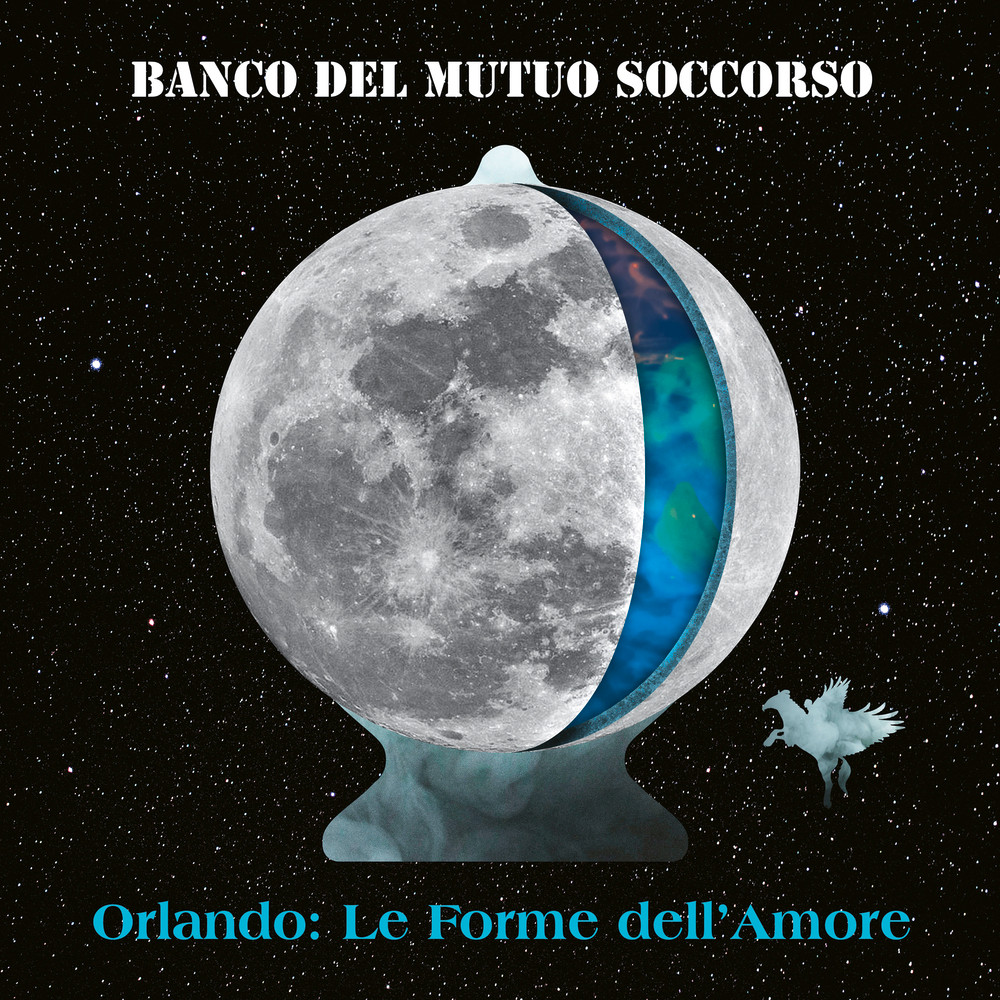
Banco del Mutuo Soccorso - Orlando: Le Forme dell'Amore (2022)

Country: Italy
Style: Progressive Rock
Rating: 8/10
Release Date: 16 Sep 2022
Sites: Facebook | Instagram | Official Website | Prog Archives | Twitter | Wikipedia | YouTube

In keeping with the historical music played by Heilung, here's a new prog rock concept album from Italy that's based on a romance of chivalry written in 1516 by Ludovico Ariosto. Sure, that's notably new if we compare it to a hymn to a Sumerian goddess uncovered in a Syrian archaelogical dig but it's not that new, not really. I live in Arizona nowadays. We've only been a state for a century and change. It's hard for anyone here, who isn't Native American, to imagine the year 1516.

But never mind that, this is a new album from Banco del Mutuo Soccorso, a clumsy name for one of the giants of RPI or "rock progressivo Italiano". I adored their 2019 album, Transiberiana, a return to the studio for them for the first time in a quarter of a century. Three years on and they're back again, with another absolute gem. The line-up is the same as last time out, and that means one of the founding members, Vittorio Nocenzi on keyboards, along with a line-up that's mostly younger than the band, only drummer Fabio Moresco, another child of the fifties, predating the seventies. Banco themselves were founded in 1969.

And, with that said, where do I start? This is a sprawling album, running seventy-six minutes. You'd thought the last one was long at fifty-three? This one is too long, which brings it down a little, but it's bursting with imagination for the majority of its running time and kept me utterly on the hop. It's great to hear a prog rock band actually being progressive in the way that prog rock bands used to be way back in the heyday instead of just complex and virtuosic. In fact, it's so progressive that I haven't quite grasped the album as a single entity yet. It's a lot to take in.

Instead, I'm busy grasping some of the individual tracks. La Pianura Rossa is the first highlight for me, a bouncy and playful gem which unfolds in unnamed movements, shifting mood on a dime and doing all sorts of things in between the jazzy opening and the introspective piano at the end. The way multiple voices combine to become quite the party is wonderful and the presence of the brass section that punctuate things is even more fun. With a tango-esque rhythm, it felt like I should be dancing to it rather than just moving in my chair, but that would be hard even if I could dance.

While there's so much going on within the album for me to see it as a single work after a couple of listens, the individual songs often flow nicely into each other. That soft piano that finishes out La Pianura Rossa continues into Serve Orlando Adesso, which works as a fantastic interlude between its predecessor and the next bouncy gem, Non Mi Spaventa Più L'Amore, but also as a ballad in its own right. The vocals are fine, but it's the guitar sections that impressed me, one calm, the other searing. And that searing guitar continues into Non Mi Spaventa Più L'Amore, another prog tango with neat contributions from accordion and frantic piano.

Many of these early songs are delights. Le Anime Deserte del Mondo starts out like a fresh ballad but it builds and builds until it fades out into a gloriously old school keyboard solo from Nocenzi. I particularly liked L'Isola Felice too, even if it includes a brief autotuned section to match a pulsing electronic backing. Beyond the guitars and layers of keyboards, there's glockenspiel here too and even what may like a lap steel to kick us off, alongside waves and whispering. Norway may well be taking over as the new prog rock nation but Italy clearly won't let the title go that easily, even if a sleepy England seems content to watch them duke it out right now.

I preferred the first half to the second, but there are gems to be found there too. In fact, I doubt a few more listens will allow anything to depose La Maldicenza as my favourite piece here. It's a prowling gem that is not willing to be ignored. It's a storm of a track in a completely different way to how that would be normally meant. It doesn't drive incessantly onwards and destroy us, but it does rattle everything in its path. And, talking of rattling, I have no idea what the rattle is late in the first half but of the song but it's a wild sound amidst a whole bundle of wild sounds. What a piece! Oh, and I should add that the storm passes and the second half is a beautiful evocation of petrichor.

Italian prog tends to be less about a tie to folk music and more about a tie to classical music, even opera—hey, check out Nova Malà Strana if that perks up your ears—and there's a lot of classical in Nocenzi's keyboards and some less acrobatic opera in Tony D'Alessio's vocals. Some of these songs, starting with La Pianura Rossa, feel like they should have a visual element to them that I don't get when listening to an album. I don't think they could stage this entire thing as a rock opera, but the first half and some of the second would work with that sort of visual accompaniment.

The epic of the album is Moon Suite, hence why the planet Earth on the last cover has become the Moon on this one. I like it, but it's far from my favourite song here, playing to me like an attempt to write an Italian Yes song. It's more adventurous than Yes are nowadays and I adore some of the old school keyboard work Nocenzi throws into it, but I think I prefer the previous track that serves as a sort of intro to it. That's Non Credere Alla Luna and it features both a wailing saxophone and a Mark Knopfler-esque guitar. It may be my favourite song here after La Maldicenza.

The caveat to everything I've said is that I should underline that I need to listen to this more. It's a busy album and a long one and, as enjoyable as it is, I haven't scratched the surface after a couple of listens. This is easily an 8/10 but I may well up that to a 9/10 after listening to it more. Whatever I do, it's highly recommended, as is its predecessor, Transiberiana. This band are on top form right now and you should check them out.

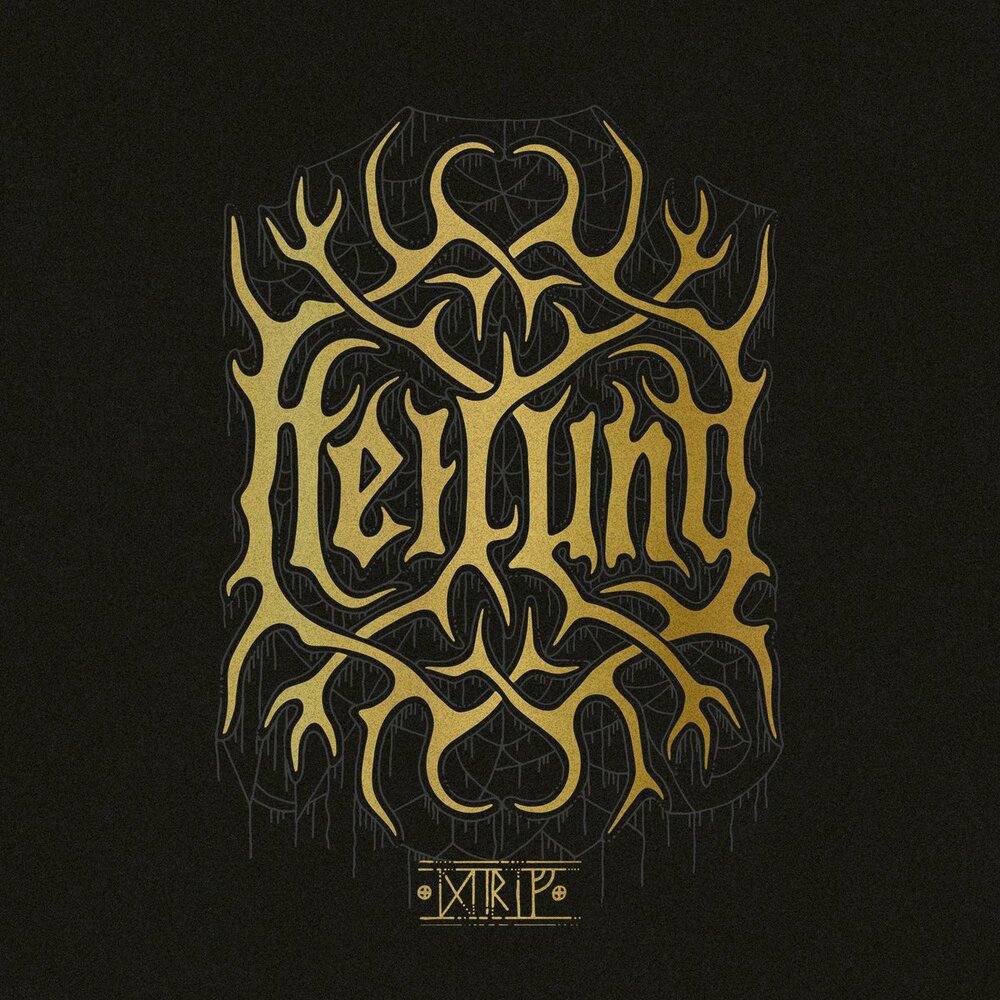
Heilung - Drif (2022)

Country: Germany/Denmark/Norway
Style: Experimental Folk
Rating: 8/10
Release Date: 19 Aug 2022
Sites: Bandcamp | Facebook | Official Website | Wikipedia

If you haven't heard Heilung before, you should because a) they're a treat for the ears and b) you probably haven't heard anything like them before. They're variously described as a folk group, an experimental metal band and a ritual collective. They call themselves "amplified history", adding "from early medieval Northern Europe", but they've expanded far beyond that boundary, as one piece here ably highlights. It's called Nikkal and it's the oldest annoted music known to man, over three thousand years old and composed as a hymn to a Sumerian goddess. Nikkal was the wife of the moon god.

Really, they're just Heilung, because their sound is rarely comparable to anyone else. At the heart of what they do are the versatile voices of a couple of vocalists, a German tattoo artist called Kai Uwe Faust and a Norwegian prog rock singer named Maria Franz. Behind them on an orchestra of unusual instrumentation is Danish producer Christopher Juul and, between them, they conjure up a wild array of fascinating sounds. There are guests here too, a bunch of them, but I have no data to suggest what they do, so I'll just acknowledge that and move on.

Drif is their third studio album and its title means "gathering", a term that could be aptly applied to both the variety in the pieces of music on offer and to the cultures from which they're sourced. I believe most are sung in Proto-Norse, language so old that part of it cannot be translated, merely pronounced. Or maybe that's just a problem the internet has in attempting to render Heilung into English, so we can see that the opening song here, for instance, Asja, is a healing song, just as the band's name means healing.

My least favourite piece is in German, which is the eight minute epic right at the heart of Drif. I'll describe Keltentrauer as being performed because it's neither sung nor spoken, at least how you're probably imagining that meaning in a review. There's nothing wrong with it and it's highly evocative, but it also happens to be a poem delivered in German against accompanying music and sound effects of battle. It plays as a memorable experience the first time through but, unless we speak German, it turns into an overblown intro to a Manowar epic ongoing. I soon found myself skipping it. There's still a full fifty minutes of joy here without it.

I doubt many of us understand any of the other lyrics either but, unlike Keltentrauer where words are key to telling a story, it just doesn't matter on everything else. The music speaks volumes and we can tap into the mood and sentiment of each piece without problems, whether it's ethereal or aggressive. The ritual nature of some of them, with its inevitably repetitive chants may turn off a few listeners but anyone who feels music as much as they listen to it will fall into this album and be consumed by it, emerging a different person at the end.

It starts out gloriously with a piece called Asja. Faust delivers ritual throat singing with Rs heavily rolled and a beautifully resonant vibrato. Juul adds a slow beat to match the delivery of words. At first, the backing vocals are harsh and demonic but then Franz joins in with her high and ethereal melodic voice. This is a haka of a song, but one that grows as enticing as it is threatening. Anoana is just as tight and deliberate and it gives a serious effect. Franz has a very different approach on this one, shifting down octaves and moving down in the mix too. Faust is different as well, lighter and much more playful, in a back and forth conversational chant with himself.

These are resonant piees of music. Tenet is too but it gets strange. It starts out like a vocabulary lesson for kids, in palindromic form, then adds deep horns and mad growls and finally shifts into a humming motion to start the song proper. Urbani begins with what sound like crowing cockerels, before turning into a sort of military march or a piece recorded in an African village on a portable tape recorded by a roaming ethnomusicographer.

I found the first half magnetic from the outset but the second half took me a while. Nesso is quite the puzzle, because it features fascinating sounds that we can't ignore. Is that Faust or someone walking on gravel? Is that Franz or a musical bowl used like a bell? Maybe they're all conjurings of Juul using one of his esoteric instruments. Buslas Bann is a hypnotic chant with a deep male vocal that feels more repetitive than earlier ritual pieces and Franz doesn't show up.

And then we get to Nikkal, which I adore. The voices blend wonderfully and I just wish it was longer but it is what it is. We can't complain to the unknown composer, who's been dead for millennia. It's used here as a kind of intro to the closing epic, Marduk, during which Faust recites the fifty names of the Babylonian god of that name, in a ritual whisper against the backdrop of chimes and bowls. All I know here is that it isn't done in the order in the Necronomicon and it features more of those amazing rolling Rs. The side benefits of having a German vocalist!

Everything here is fascinating. Only Keltentrauer feels out of place and then perhaps only if you aren't fluent in German.

Wednesday, 5 October 2022

Andy McCoy - Jukebox Junkie (2022)

Country: Finland
Style: Glam Rock
Rating: 7/10
Release Date: 5 Aug 2022
Sites: Facebook | Instagram | Official Website | Wikipedia | YouTube

"This is the most colourful album I have ever done," says Andy McCoy, of this covers album, which I believe is his sixth solo effort, if we count a 1996 collaboration with Pete Malmi and the soundtrack to the half-fictional biopic about him, The Real McCoy, in 1999. The beauty of this one is that it's no runthrough of expected choices. I grew up listening to Hanoi Rocks so I know what they sound like and it would be trivial to conjure up a list of glam or rock 'n' roll classics that would be likely to be on the record but we'd be wrong ninety-nine times out of a hundred, as this is a deep dive indeed. In fact, I looked at the track listing and could still only place two songs.

One is China Girl, made famous by David Bowie who co-wrote it, but first released by Iggy Pop, the other co-writer, and it's that version that McCoy's covering here. The other one is Solo in Soho, the title track from Phil Lynott's 1980 solo album, which McCoy sasses up with female vocalisation and saxophone. They're both good versions, but they're not the best here. I'd be hard pressed to state which are, because this is a lively album through which McCoy brings new life to old favourites that he felt should have been hits or, at least, bigger ones than they happened to be. It's his deep joy of music that shines brightest here and it's there throughout.

The opener, I'm Gonna Roll, may be the closest to the Hanoi Rocks sound, but, like the majority of these songs, it was new to me. It was originally recorded by Rock 'n' Roll Band in 1975, but notably recorded by the Leningrad Cowboys in 1992, both bands Finnish like McCoy. It's a rollicking rock 'n' roll song and it's somehow surprising that Hanoi Rocks never covered it back in the day. Much less expected is 54-46 That's My Number, originally recorded by reggae band the Maytals in 1968. It's a song that McCoy keeps in its genre, though the vocals are more raucous.

Just to keep us on the hop, he shifts into pop music with Squeeze's debut single Take Me I'm Yours, from 1978, and then into a modern singer/songwrter style ballad, Miss Tennessee by Katie Noel, easily the most recent of these songs, originally released in 2020 with a featuring credit for Autumn Brooke. While McCoy is on half a dozen of these songs as a vocalist, in addition to slinging his guitar throughout, this isn't one of them. Jamie Hembree and Niki Westerback provide the male and female voices and I'd say they find the sweet spot between the smooth approach we expect from country and the raw one a rock album from Andy McCoy would warrant.

And so it goes, with that diversity in sound a key feature, though everything still plays consistently with the raw and emotional feel that Andy McCoy does so well. His guitar gets a workout on every track and everything seems like something that he'd have a blast playing live in a small club, with a variety of guests joining in for an even more fun time. Most are vocalists, with Sofia Zida maybe most notable for her performances, especially on Back to the Wall, which adds a Stevie Nicks vibe to a song by the Divinyls and a relatively faithful look back at Wanda Jackson.

That's one of the pop songs on offer, as is Hot Night in Texas, a heavier take on Moon Martin's Hot Nite in Dallas. There are rock songs here, of course, that we might know from original versions by people like Ron Wood (I Can Feel the Fire), the Climax Blues Band (I Couldn't Get It Right). There's a punk song, the UK Subs's Countdown, easily the heaviest thing on offer here. And there are even country songs by Juice Newton and the legendary Wanda Jackson, whose number Funnel of Love is the oldest by far, as a 1960 song. Then again, Lemmy loved her music as straight ahead rock 'n' roll and I'm not going to argue with him on that front.

I love covers albums where I don't know the originals, especially when they're deep cuts as joyous as these or those on Monster Magnet's A Better Dystopia last year. I love really unlikely ones too, such as Danzig Sings Elvis and the Die Krupps take on pop in Songs from the Dark Side of Heaven. It's the expected material that leaves me blah because my brain knows how those songs go and doing justice to them in a different fashion means something special, like Johnny Cash covering Hurt or Tori Amos taking on Raining Blood.

This is my sort of covers album, at once a glorious discovery of tracks I didn't know anything about, interpreted by someone who truly cares about them, and a new album of what appears to be new material by an artist I enjoy, because I don't have any of those reference points to stain it. And so, Andy, I hear that you narrowed this playlist down from a set of sixty or so. What else was on there and are you going to record any of them? Inquiring minds want to know.

Dub War - Westgate under Fire (2022)

Country: UK
Style: Ragga Metal
Rating: 7/10
Release Date: 5 Aug 2022
Sites: Bandcamp | Official Website | Wikipedia

Here's a surprise in a number of ways! I remember Dub War from their early days on Earache, at a time when that label was far better known for championing the nascent grindcore movement, but the band went away a long time ago, with three quarters of the band moving forward as Skindred. Since they ceased to be, the musical landscape has changed massively and, in many respects, has finally caught up with what they were doing a few decades ago. But they're back, surprisingly so, and with a new album that's their first of new music in twenty-six years.

The core line-up is three quarters of the original one, but oddly not the same three quarters who formed Skindred. Here are versatile lead singer Benji Webbe who sounds like he's at least a dozen different voices here, guitarist Jeff Rose and bassist Richie Glover. Missing this time around is the drummer, Martin Ford, who usually went by Ginge, and he's replaced primarily by Mikee Gregory, who plays on seven of the thirteen tracks, but also a half dozen others on the remaining six. And it would be hard work indeed to conjure up a different set of drummers!

Roy Mayorga is diverse all on his own, given that he's known for Stone Sour, Hellyeah and Ministry, but there's Jamie Miller of Bad Religion and Mike Bordin from Faith No More. And, if that wasn't diverse enough for you, there's also Tanner Wayne from In Flames, Spike Smith from Birmingham death metal band Memoriam and Dave Chavarri of Ill Niño and Soulfly. They each bring something different to the table and it's fascinating to hear how different and yet how consistent the tracks are with such wildly diverse talents bringing the beat.

This is diversity is perhaps epitomised by the sole vocal guest, who takes over the second song for its second half. He's the late Ranking Roger, of British ska legends, the Beat, and he reimagines a famous cover song, War ina Babylon, originally by Max Romeo and the Upsetters, who were Lee 'Scratch' Perry's backing band. Here, the song is heavied up, of course, with a rock beat on overtly reggae vocals, especially during that second half.

If that sounds like a song about troubled times, you'd be right and that's what the album initially plans to be. The opening song, Blackkk Man, is a political one written in the wake of George Floyd's murder by Minneapolis police officers. It's told in the rap metal style of Rage Against the Machine with Benji Webbe more than up to spitting acerbic bars at us. It's also surprisingly catchy, which is one more reason why it was released as the first single (excluding the couple which saw release in 2016 as the original build-up to this release).

What's more, the title of the album and the cover art speak to the Chartist Movement, a working class protest movement in the mid-nineteenth century, and especially to the Newport Rising, the armed uprising of ten thousand Chartists who marched on Dub War's home town of Newport and demanded the release of some of their compatriots. The cover art is part of a mural created by a commissioned artist, Kenneth Budd, that was visible for thirty-five years under John Frost Square until it was demolished by the council in 2013, against public sentiment.

And, quite frankly, if the rest of the album was made up of protest songs and righteous anger, the return of Dub War would be more widely heralded. However, after the opening couple of tracks, it shifts into a more celebratory tone. Vibes in the Place mixes the rap metal vocals with the reggae vocals and adds an urgent metal take on dancefloor energy infusers with a DJ using repetition for emphasis. And, as we progress, this becomes unmistakably a celebratory party instead of an angry riot. This approach doesn't make the album any worse, but it removes some if its urgency.

To highlight that, my favourite song here, if it isn't Blackkk Man, is Mary Shelley, which was known as Making a Monster when it was released as a single in 2016. It's a sort of Halloween reggae song that starts out with Benji Webbe sounding like Ozzy and settles into a bizarre cross between Faith No More, the Misfits and whichever reggae outfit would be most appropriate to mention. I have a distinct lack of expertise there to bring to bear. I just know that I like it a lot and it's the Halloween dub reggae metal party song that you didn't know you needed.

And, at the other end of the extreme, my least favourite song here is Stay Together, a cover that's hard to justify, because it's of Al Green's Let's Stay Together and it feels acutely out of place on an album whose best angle is the sheer range of its musical direction. Yes, I'm pointing out that Westgate under Fire is at its best when it's mixing genres like cocktails and yet this one is beyond the pale. I think that's mostly because it doesn't try to mix anything at all. It's a cover that is happy to just be a cover, a little heavier than the original, sure, but otherwise rather like it, and so it sounds pedestrian amongst its peers.

The bottom line is that it's great to see Dub War putting out new music and it's a pretty welcome return, doing what they do best in a modern musical environment where they don't seem quite so out of time as they used to. Let's hope that it finds listeners who never knew them and are open to hearing them now. Maybe it's a little longer than it needed to be, but it's no less welcome for that.

Tuesday, 4 October 2022

Gogol Bordello - Solidaritine (2022)

Country: USA
Style: Gypsy Punk
Rating: 7/10
Release Date: 16 Sep 2022
Sites: Bandcamp | Facebook | Instagram | Official Website | Twitter | Wikipedia | YouTube

Here's something a little different: a highly international gypsy punk band from Manhattan. They have been a favourite of mine for a long time, with a number of songs on 2007's Super Taranta! on my internal playlist that I sing along to when I walk. Technically, they count as an American band, a product of the wild diversity that is New York City, but their sound is rooted in the Romani culture of eastern Europe and tends to be described as gypsy punk, because of its sheer energy and use of instruments like violin and accordion.

This is their ninth studio album and it's an important one because of its timing. The band's leader is Eugene Hütz, he of the wild lead vocals, acoustic guitar and occasional percussion, and he hails from Ukraine, which wasn't at war when the prior Gogol Bordello album, Seekers and Finders, was released in 2017. However, a couple of other key members—violinist Sergey Ryabtsev, who's been part of Gogol Bordello longer than anyone else except Hütz, and guitarist Boris Pelekh—are both Russian. They're therefore a perfect example of how the two countries can get along fine and put something new and vibrant into their shared culture. Reality isn't following suit.

And so it should surprise to find that this comments on the war. The cover art is white on black but for the blue and yellow of the Ukrainian flag, colours you'll also see as the backdrop if you visit the Gogol Bordello site on Bandcamp. There's also a reworking of Forces of Victory here, a song from Super Taranta! with guest performers, that was released as a single before this album came out. I should note that the singers helping out Hütz are Oleksandra Zaritska from Kazka, an electro-folk band, and Serhiy Zhadan, who isn't a singer at all but a writer, who collaborates with the ska band Zhadan i Sobaky. Both of course are Ukrainian and the lyrics are translated into that language.

I don't believe Solidaritine is a real word in any language. Here it's what Hütz calls an "imaginary substance that unlocks our empathy and our full human potential, which is supposed to unite us in overcoming our common problems." To me, it sounds like Gogol Bordello and it's a great way for a wartime album to kick off, even if I much prefer the next song, Focus Coin, about something as odd as cryptocurrency.

It does something that I adore Gogol Bordello for doing, which is to meld different genres into an impressive new sound. It's got all the energy that their usual gypsy punk has and it's impossible to listen without moving with the rhythm and tapping it out with your toes. It's a mix of ska and punk with an up tempo beat, some teasing ZZ Top guitar in the second half and and even soulful backing vocals reminiscent of Joss Stone. It would be my favourite song here if Fire on Ice Floe didn't show up much later on.

Focus Coin is more immediate, the sort of song that has you partying even on a first listen, but Fire on Ice Floe kept on getting under my skin with every time through until it was impossible to ignore how much it had got to me. It's subtle as it begins, quiet but for Hütz's vocal and wonderful work from new fishes Korey Kingston on drums and Gill Alexandre on bass, both new to the band in the past couple of years. The verses are chill in a way that only this band can be chill but the hook is an absolute peach and it just keeps building as other instruments join the fray. I picture it like a quiet dancefloor that ends up joyously packed.

After those two classics, there's a bit of a gap. My Imaginary Son really nails its grooves, both the hardcore sections and the ones with plucked strings, while I'm Coming Out is agreeably odd, with quirky lyrics referencing Zombie Lifestyle magazine, which I ought to check out, just in case is isn't a product of his imagination. Oleksandra Zariska returns on Take Only What You Can Carry, while H.R. from Bad Brains steps in to help out on The Era of the End of Eras, adding his characterful and personal touch to the song. Blueprint is a Fugazi cover, one that they play live often and righly so, because it has such a Gogol Bordello drive to it, all the way to the brass that dominates the end.

The beauty of what Gogol Bordello do is that their sound is such a vibrant patchwork of styles that my choices for standouts may well not be yours and that's fine. Their potent energy infuses every song but the particular recipes that each song uses for flavour are highly personal and will speak to different people in different ways, depending on what you and I and anyone else bring with us. I'm not going to catch them in Tempe at the end of the month, but seeing them live is certainly on my bucket list and I'll get there at some point. In the meantime, this.

Witchery - Nightside (2022)

Country: Sweden
Style: Blackened Thrash/Speed Metal
Rating: 7/10
Release Date: 22 Jul 2022
Sites: Facebook | Instagram | Metal Archives | Wikipedia

If you haven't heard Witchery before, I highly recommend checking out their cover of Restless and Wild that opened up their Witchburner EP in 1999. Beyond the cleverly meta opening that one ups the Accept original, it says almost everything that you'll need to know about this bunch of Swedes, who are on their eighth studio album. They're one of those bands who are always reliable, both in consistent quality and in lack of variance from their previous work. This isn't particularly different from earlier Witchery albums, though it's often slower than I remember them being, but it's solid nonetheless.

I do like my Witchery fast, so my favourite songs are the ones that ratchet up the tempo the most. Witching Hour starts out proceedings at a promising pace, if not at lightspeed, and it sounds good to me, Angus Norder's vocals an evil snarl of a growl. He's new to me, because he joined in 2016 in time for their sixth album, In His Infernal Majesty's Service, and I haven't heard either that or its swift follow-up, I am Legion in 2017. He's their fourth vocalist and he's deeper in tone than the one I remember, Tony Kampner aka Toxine, but just as effective.

There are a few fast songs here. Popecrusher and Churchburner are as uncompromising titles as I would describe their sound, that word a quintessential one to use to describe Witchery. Under the Altar starts and ends blistering, but varies its tempo throughout for impressive effect. A Forest of Burning Coffins is the punkiest track the band have to offer this time out, which unfolds with that Accept on speed mindset and it surely has to be my favourite song here. For the more traditional Accept sound, check out the solo in the second half of Crucifix and Candle.

I should add that A Forest of Burning Coffins includes a full stop on a dime that's absolutely pristine too, an effective way to highlight how tight this band remains, even with only two founder members left and a new bassist in Victor Brandt, who replaced Sharlee d'Angelo, another founder member, earlier this year. Those originals, by the way, are the guitarists, Patrik Jensen and Richard Rimfält, who goes more subtly by Richard Corpse.

Don't Burn the Witch and Storm of the Unborn are mid-tempo, as is Left Hand March, whose name highlights why some of these tracks are slower. They feel like marches, because they may be slower than the highlights but they're as heavy and as in your face, a militaristic rhythm maintaining the impact, even with a hint of what sound like keyboards midway. That's not a typical sound for them.

Neither are the monks chanting behind Er steht in Flammen, but this one serves as an interlude, a plain chant texture sitting behind what sound like preparations for burning a witch to death, told in both German and English. This band do stick to their theme pretty consistently. It's a rare song that isn't about witches, fire or the oppressions of the Christian church and many of them could be argued to be about all three. Even as an interlude, it's longer than Under the Altar, which is ninety seconds of instrumental fun.

And really there's not a heck of a lot more to say. You're either going to like Witchery or you won't. If you do, they're never going to let you down, because every album is going to feature an array of uncompromising—I can't leave that word alone when talking about Witchery—slabs of the kind of metal that scared your siblings when you were growing up. If you don't, then this won't convince you otherwise. It is what it is, just like the cover art is overly simple but still does everything that it's tasked to do.

Monday, 3 October 2022

Ozzy Osbourne - Patient Number 9 (2022)

Country: UK
Style: Heavy Metal
Rating: 7/10
Release Date: 9 Sep 2022
Sites: Facebook | Instagram | Metal Archives | Twitter | Wikipedia | YouTube

Regular readers will know that I rarely give a bad review, preferring not to review something than to waste my time slating it. However, sometimes a prominent enough artist releases something I need warn people against and, a couple of years ago, that was the legendary Ozzy Osbourne, who had put out not just another sub-par album, Ordinary Man, in a series of sub-par albums dating back all the way to the nineties, but one that was often rather awful. As he's hardly prolific nowadays, I had precious little expectation left that he might put out another classic one day and hoped in my last line that he'd release an album that doesn't fundamentally disappoint.

Well, here I am only two years later and this is that album. No, it's not Blizzard of Ozz and it's not Bark at the Moon but it's doesn't fundamentally disappoint and it's actually pretty damn good. It took you long enough to get back to form, Oz! If this is what happens when a crisis hits and you see going home as a priority because the States has got too crazy even for you, then thank you, COVID. Now, Ozzy has included at least couple of strong songs on every album he's released, even the sub-par ones, but consistency has long eluded him until now. This is the most consistent album he's put out since the last millennium.

Like Ordinary Man, he ignores his current touring band in favour of a different set of musicians, in this case a collection of them worthy of "featuring" credits on most of the tracks. Zakk Wylde is on a bunch of them, nine of thirteen, though multi-instrumentalist Andrew Watt is on even more, No Escape from Now being the sole exception. However, the guests are notables indeed: Ozzy's Black Sabbath bandmate Tony Iommi on two, Jeff Beck on two and Mike McCready, Josh Homme and, of all people, Eric Clapton, on one each. Bass players include Robert Trujillo, Duff McKagan and Chris Chaney of Jane's Addiction; while Chad Smith and the late Taylor Hawkins divvy up the drumming duties. Those aren't minor names.

The good news is that they don't trip each other up trying to show off. The side benefit is that the guests don't make this album, they just elevate it. It's a good album because the songwriting is of a higher quality than usual, the consistency is there for the first time in forever and even Ozzy is a little less over-produced than has tended to be the case of late. Having Jeff Beck show up to slap a solo on a couple of songs is just a bonus.

Actually, the best song from a guitar standpoint is surely the first of Iommi's pair, No Escape from Now, which is joyous from the outset but really gets moving at the four minute mark and leaves us grinning. Wylde gets quite a few moments to shine, with Mr. Darkness particularly strong because of what he has to bring to the table. And, while he's been a disappointment to the human race lately, Clapton has a lot of fun on One of Those Days, along with Duff McKagan and James Poyser of the Roots joining in for good measure. It's very much an Ozzy song but Clapton's touch is definitely recognisable.

And I have to get out of the mindset of expecting to follow a paragraph like that one with a note to bemoan how that's all the good stuff, because it isn't here. Sure, some of these songs are clearly better than others, but none of them let the side down and I enjoyed every one of them, from the opening title track of a single, which wanders into Alice Cooper territory, to the skimpy harmonica-led outro, Darkside Blues, which lives up to that name and could have been longer without losing its welcome. I didn't even feel that the token power ballad, God Only Knows, got in the way.

Welcome back, Ozzy. Not only did you knock out a strong album after I thought you'd ever do that again, you did it with over an hour of music. Now, if this is the model that's going to do the trick, I hope you bring a smörgåsbord of talent into the studio in a couple more years to get a moment on a track or three with the Prince of Darkness and we get another treat out of it.

Fans of the Dark - Suburbia (2022)

Country: Sweden
Style: Melodic/Hard Rock
Rating: 7/10
Release Date: 16 Sep 2022
Sites: Facebook | Instagram

Fans of the Dark were recommended to me in January by Chris Franklin, as his choice of what I had missed most obviously from last year's releases, and he didn't let me down. I thoroughly enjoyed their self-titled debut and gave it a highly recommended 8/10. This isn't quite as good, but it's still an excellent album. It's perhaps more consistent but it's missing the standout track that sticks in your brain, which was The Ghost of Canterville last time out; that was also the epic of the album, a fact that helped it to stand out. That said, I've been listening to album number two for a couple of days straight now and it's only getting better.

This time the most catchy track and the most epic are split up across two different songs. Catchiest is surely The Goblin King, with a memorable chorus. It's a simple one—"I am the Goblin King, I can do anything"—but it's delivered with panache by Alex Falk, who owns every lyric that he delivers. It has a perky beat too, but it's only a skimpy four minute piece so there isn't a lot of time to spend developin the song either lyrically or instrumentally. It's a great track but it's there and it's gone and we're on to the next one.

There are two epics, but the one that succeeds most is The Pirates of Maine, which is fantastic but just without that killer hook to put it on the same level as The Ghost of Canterville. It has a patient riff and Falk's voice is as identifiable as ever. It's fair to say that he remains the focal point of the band, which shouldn't surprise anyone who heard the first album, that warm and inviting texture to his voice managing to remain soft and yet command our attention. The catchiest section to The Pirates of Maine comes soon into its second half, but it's told through "woah woah" vocalisations by backing singers rather than the expected lyrics delivered by Falk.

And, once more, I have to reference the band's name because that vocalisation section is right out of Iron Maiden, as indeed is a whole lot of the music. Fans of the Dark immediately sounded to me like the name of an Iron Maiden tribute band, as a nod to their Fear of the Dark album, and that's not technically true, because they release original material, but it is clearly Maiden-inspired, even if they're a little softer in sound. Many of these riffs and the melodies, not to forget plenty of their changes, remind of Maiden and there are even overt nods, like the solo in Sick! Sick! Sick!, which is also the song where you'll hear lyrics like "Sick! Sick! Sick! The number of the people here." Yeah, I think it's safe to say that they're all Maiden fans.

However, there's a double meaning to the name, which is that their lyrics focus on darker subjects like the tribute to the pivotal horror movie Night of the Living Dead on the opener, which is called, well, Night of the Living Dead. They are indeed coming to get you, Barbara, and that sample opens the song. This album also sports Fright Night and explores what The Goblin King gets up to. It ends with the other eight minute epic, Restless Soul, which sounds less horrific but covers the same sort of ground. These would be seem to be children who grew up on a similar diet of eighties rock music and horror movies to me.

And while I'm English and it would seem fair to guess that they are too, it might shock to discover that they hail from Sweden. Drummer and band leader Freddie Allen went to school in Stockholm with Alex Falk and, while I have no idea if they were involved in music while they were there, it's a given that, given the latter's presence, the idea of having him lead a rock band didn't take long to stick in young Freddie's head. The band behind them has changed subtly since last year, as Rickard Gramfors has replaced Robert Majd on bass, but the guitar is still the province of Oscar Bromvall.

And, after Falk and the melodic songwriting, it's his guitar that shines brightest here. It's not easy to ignore Falk's memorable voice but I tried to do that on my tenth or eleventh time through in an attempt to could focus on the music behind him. I love what Bromvall does, which is to play along with the melodic rock mindset of the songs but still turn out riffs like this is a good old fashioned hard rock band and also hint at getting heavier. Add a couple more guitarists alongside him while keeping the melodies foremost and they might sound even more like Maiden. Their famous duels on guitar and their air raid siren vocals are all that's missing here to cement that comparison.

So, this is a solid and reliable follow up. I think it's more consistent than the first album, but it falls just a little a bit shy of its achievements, even with some great changes during the midsection of the closer, Restless Soul, to leave us wanting more. I absolutely want more, though, and right now that just means playing the album yet again. Hopefully, though, they'll keep up to their promising album per year release schedule and become a highlight of next year too.