Thursday, 16 June 2022

Post Generation - Control-Z (2022)

Country: Italy
Style: Progressive Rock
Rating: 7/10
Release Date: 27 May 2022
Sites: Bandcamp | Facebook | Instagram | Official Website

Control-Z or CTRL-Z is, of course, the undo button, and it's not something that Post Generation are in need of after making this music, because it's exquisite. However, it fits the concept at the heart of this concept album, which is a dystopian office that has the power to undo what it deems to be a bad feeling or bad emotion within any of its citizens, resulting in a "mass of zombified citizens". To be fair, I listened through this a few times without noticing that it was a concept album at all, with so much music to distract us from the lyrics. It's another level to appreciate, but it's not required.

Post Generation play progressive rock with a strong side of pop music, listing Porcupine Tree as an important influence, though vocalist and guitarist Matteo Bevilacqua came from heavier roots, as the bass player for Diaries of a Hero. While Bevilacqua is British and Diaries of a Hero are based in London, Post Generation are listed as being from Turin in Italy, Bevilacqua shifting across to vocals and guitar, Antonio Marincola stepping up on bass and multi-instrumentalist Carlo Peluso playing keyboards and whatever else is needed. There are two session drummers and a female vocalist on this, their second album, as well.

Initially, I found this pleasant, with fascinating details, like the shift from angry sampled voice to a delightful interplay of vocalising in the album's standout track, You're Next in Line, a section which shifts into a set of solos. It was moments like that one that made me pay deeper attention to all of the various aspects of this intricate music. What's the Worry, for instance, was initially just speech—not a sample, but a sort of carefully phrased delivery of poetry—until it switches over to singing at the halfway mark, but there's some subtle but excellent musicianship going on underneath the voice. And focusing on that ironically meant that I initially missed the concept, which is completely obvious in a song like this one, which can only exist to serve one.

In short, there's a lot going on here and that's underlined by so many of these songs sounding not at all like each other. The greatest musical shift on offer may be from frantic electric guitar-driven The Cat and the Chicken to atmospheric, jagged keyboards in White Lights and Darkest Patterns, a shift from almost hard rock to electronica. However, it's far from the only shift on this album that seems wild on paper but works well within the context of the album, which is primarily rock, but is often pop, albeit always progressive, fascinating and imaginative. This Cannot Work ramps up to a powerful finalé, then drops into the folky acoustic Raising the Bar. Nathalie kicks off with bubbling electronica but finds its way into a violin solo.

If I have a problem here, and I don't really but you might, it's that I find that I can't focus on songs for the most part, because of all these delicious moments. Once again, You're Next in Line must be the highlight, because, even though it has so many delicious moments, from the initial tinkling of piano to those later showcase shifts, it builds like a song to a neat hook of a chorus. Most songs on this album don't do that, not because they fail at the attempt but because they're not interested in that and are content to be a bigger moment in the concept album.

That means that after You're Next in Line, the next best song is Control-Z, but I don't mean track 8 but the entire fifty-seven minute album. It could be described as a collage of fascinating moments arranged in a particular order to tell a dystopian story, linked primarily by the soft voice of Matteo Bevilacqua, who occasionally passes the mike to Michaela Senetta. That's not a bad thing in itself, but it may not be what you're looking for. If you like your prog to set a single texture and run with it or if you like your prog to be commercial and hook-laden, then this is not for you. This is for fans who want many textures, not just within an album but within a song, and for those textures to stay interesting for almost an hour. Which means I need to listen to this yet again.

Wednesday, 15 June 2022

Destruction - Diabolical (2022)

Country: Germany
Style: Thrash Metal
Rating: 7/10
Release Date: 8 Apr 2022
Sites: Facebook | Instagram | Metal Archives | Official Website | Twitter | Wikipedia | YouTube

While the Kreator album I reviewed last week came out in June, this Destruction album is actually a few months old, having been released in April while I was travelling in the UK. I was always going to catch up with it, because Destruction are my favourite of the Teutonic Big Three, and it's almost appropriate that I did it this way round because anyone who didn't like the slower material on the Kreator album will absolutely not have that problem here. This is a Destruction album and it does what Destruction albums do. The catch is that, while Diabolical is the thrash album that Hate über alles mostly wasn't and it's more consistent to boot, I'm not going to rate it any higher.

The reason for that is that, while it starts off really well, with a neatly building intro and a stellar title track, it doesn't seem interested in varying the formula much at any point. Sure, there are a few tracks, like Tormented Soul or Whorefication, that slow down to a mid tempo that's still faster than the Kreator tracks that went all traditional metal, and they work well. However, that's about it and I wonder if the folk who didn't like Kreator trying new stuff on their album will be happy to discover that Destruction don't on this one or not.

To be fair, I'm enjoying this one more with each repeat listen. My first impressions were mostly to acknowledge that this was a Destruction album and it sounded exactly like any Destruction album should and that was enough for me. However, it faded as it ran on, perhaps because the best songs show up early, not just that excellent title track but also the quintessential Hope Dies Last, which is textbook Teutonic thrash, and the one between them, No Faith in Humanity. With repeat listens, the guitarwork stands out even more, because it's clear in the mix and the solos are excellent.

What's weird is that Mike Sifringer is not responsible for any of that guitarwork. While most folk think of Schmier as the focal point in Destruction, he wasn't the only founder member to stay with the band for a long time and he wasn't the one who never took a break. Remember that Schmier was fired in 1989 and remained gone for a full decade, albeit not a particularly memorable one for them. Mike Sifringer was also a founder member and he never left until 2021, apparently without a statement. That timing is really odd, given that this year marks Destruction's 40th anniversary, but maybe it was important to him in a different way.

Now, Sifringer did shift from lead to rhythm guitar a few years ago, when Damir Eskić joined, but he'd done that a couple of times in the past too, whenever they bulked up from a trio to a quartet. His replacement here is Martin Furia, who's an Argentinian based in Belgium, so I presume that's him providing the crunchy riffs behind Eskić's solos. They make a very good pairing indeed and it's odd to think of how tight they are, given that it's such a new partnership. I'd call out the fantastic midsection of Hope Dies Last on that front, as well as the entirety of Servant of the Beast, but the quality runs far beyond just those peaks. Thank you, Mike, though, for four decades of music that you've given us.

The question I have is whether such a major change to their line-up is going to spur a new era and, if so, whether that's going to be a good thing or a bad one, given that Schmier is likely to make all the key decisions going forward on his own. Their previous album was solid but unremarkable and this one is just as consistent but better, albeit not so much to warrant an 8/10 instead of a 7. These songs feel a little closer to quintessential Destruction, taking the old NWOBHM style and giving it a serious dose of speed and a little more punk attitude. The bonus cover on Born to Perish was of a Tygers of Pan Tang song and this one's of a GBH classic, City Baby Attacked by Rats.

I'm going to be interested to see what my thrasher son thinks of this. I prefer Destruction and he's more of a Kreator fan, but I have a feeling he's going to like this more than Hate über alles. I have little doubt that I'm going to come back to this one more than Kreator's new one, but I think more than Born to Perish too. Let's see if I end up bumping it up to an 8/10. The only reason I'm not right now is because not everything is up to the standards of the highlights. I think that'll keep it at an 8/10 but maybe they'll continue to grow on me. Only time will tell.

Manu Reno - NocturnA (2022)

Country: Spain
Style: Alternative
Rating: 6/10
Release Date: 22 Feb 2022
Sites: Bandcamp | Facebook | Instagram | Official Website | YouTube

I don't review everything that's submitted to me for that purpose, because not everything makes the cut and a few otherwise worthy albums just get lost in the cracks during times I'm focused on my film festival or convention and end up not writing reviews for a while. I have to say here that I wasn't sure if I should review this one, but I decided to because it kept growing on me and I firmly believe that it deserves some publicity.

Manu Reno is the name of the multi-talented musician behind this one man project and I honestly hadn't noticed that he hails from Barcelona before I ate paella tonight. Damn, I miss the insanely fresh cuisine in that city and it's been a couple of decades since I've been there, singing along with a different Manu on the jukebox in some bar. I hear more of Barcelona in that Manu's sound, that Manu being Manu Chao, than in Manu Reno's, but I'm not sure where to place it at all because his voice makes it so inherently unique.

I believe he's primarily a bass player and the bass does lead the way on many of these songs, with the first a good case in point. Eternally kicks off the album in thoroughly playful mood and it's the bass that sets that mood. He also plays every other instrument too, all of them capably, and sings for good measure, which is where the question marks come in. It took me aback immediately but I developed a taste for it under certain circumstances and it fit more and more as I repeat listened through this album.

It reminded me initially of Uli Jon Roth, a great comparison because he's a fantastic musician, just one who people tend to tune into because of his guitarwork rather than his voice. Manu Reno is an accomplished guitarist, even if he favours the bass, and a quite a few songs here reminded me of a Wishbone Ash guitar intro. That delightful intricacy is right there on When I'm Gone and The Land of the Free and Time, among others, but it's just one aspect of his sound. Hiding from the Sun is an acutely Sex Pistols-esque punk song, for example. The instrumentals, Lumina Noctem and the title track, are notably progressive. There's a recognisable Black Sabbath riff in There on the Moon, so it's clear that Reno does not restrict himself to a single genre.

What I found was that his voice fits some but not all of the genres he drifts into. Once I got used to his delivery, which is in heavily accented English that's resistant to the usual directions that voices take, I found that it worked well on up tempo rockers like Eternally, where it becomes just another instrument in the mix. It works well on the punkier material too, like Hiding from the Sun and the bonus track, Rusty Souls' Trilogy, because it's anarchic and under a different sort of control. Yet, a softer ballad like Breakable feels just the wrong sort of material for him.

I don't want to concentrate on Reno's voice because there's so much else to what he does, as both the instrumentals ably highlight, Lumina Noctem being especially evocative, but it's hard to see it as anything but the focus. Put simply, if you don't dig his voice, you're going to hate this album, no doubt. On the other hand, if it gets a grip on you, even if it's to figure out what he's actually doing with it, you may well end up loving this. It seems fair to throw out Shane McGowan of the Pogues or Eugene Hütz of Gogol Bordello as two comparisons and both those highly talented gentlemen also have instantly recognisable but highly unorthodox voices that don't work for every style.

I actually played a couple of these songs to my son to see what he might think. His initial call was a combination of the deliberate delivery of Billy Idol and the mumbling of Dave Mustaine, which is a weird take for me but I guess I can see it. Reno certainly delivers with relish. His other suggestion was that the voice reminded him of a punk singer who comes on right before the headliners at an otherwise metal gig, having sunk a few beers before getting on stage. I definitely hear that.

Given that I like some of these songs a lot more than others, because of how those vocals fit these many styles, I think I have to go with a 6/10. If you hate that voice, you should shed a few points off that score to the degree that you shouldn't even bother. However, if you find it fascinating, add an extra point on, because it'll draw you in to the point where you'll eventually notice the other cool things he's doing instrumentally and the album will grow on you. So thanks, Manu, for sending me this one for review. I didn't like everything on it but I liked some of it a lot and I always appreciate different approaches. All the best!

And, before I go, I should mention that this is far from Manu's first album. I'm seeing seven on his Bandcamp page and you can pick up the whole lot for only twenty-five euros right now. I'm really intrigued to see what else is in his musical toolbox, even though very few of the songs seem to be sung in Spanish. Given how Manu's accent manifests in English, I really wonder what he sounds like in what I presume is his native language.

Tuesday, 14 June 2022

Graham Bonnet Band - Day Out in Nowhere (2022)

Country: UK
Style: Hard Rock
Rating: 7/10
Release Date: 13 May 2022
Sites: Facebook | Instagram | Twitter | Wikipedia

Having discovered Graham Bonnet at the same time as most rock fans, through Rainbow's Down to Earth album, which I actually heard before their predecessors with Ronnie James Dio, I have to confess surprise to discover that he had a number five hit in 1968 with the Marbles. Given that it's now fifty-four years later and he's putting out his third Graham Bonnet Band album at the age of seventy-four but sounding as strong as ever, the excellent opener about waking up and seeing an older version of yourself in the mirror kind of makes sense. Maybe It's Just a Frickin' Song is about getting old too, instead of the more obvious subject of writer's block.

Imposter is a strong opener with Bonnet's voice as strong as ever, though I have to say he doesn't vary his trademark emphasis almost at all here. He's either on and delivering at full volume or he wandered off somewhere so guitarist Conrado Pesinato can strut his stuff for a little while, with a fast shred technique. There's not a lot of nuance here until we get to the rather out of place Suzy that wraps up the album with a dose of orchestral musical theatre. I'm not a particular fan of that style anyway but this does nothing to convert me.

I appreciate the more traditional rock material more, even though some of it took a while to reach me and some of it is frankly just there, capable but hardly spectacular. After Imposter, Brave New World and The Sky is Alive stand out as highlights. The former is a little more subtle than Imposter and features a very nice guitar solo, while the latter trawls in the Rainbow textures through both keyboards and guitar that I was hoping might show up somewhere. I have zero clue what it's about but the former is about a gentleman having horizons broadened by a rubber fetishist girlfriend.

It has to be said that the lyrics here captured me, even though they're hardly poetry. There isn't a theme, though there are a couple of songs about getting old and a few more about bizarre things happening. At least I think that's what The Sky is Alive is about because, if it's preaching about an awareness of environmental catastrophe, it's pretty obscure. Certainly the title track is about an incident in Russia where Bonnet apparently drove through the Twilight Zone. Quite a few focus on sexuality, but in completely different ways, David's Mom (or Brave New World) and Uncle John not alike in any other way than sexual urge.

Musically, it's relatively unsurprising. Uncle John thinks about power metal early but chooses not to actually go there. Pesinato occasionally displays a willingness to go full on Malmsteen shred but he never really does. This isn't early Alcatrazz. While the occasional solo feels like it's there just to insert a solo, he does a good job and so does everyone else involved, even if that may just be Beth-Ami Heavenstone on bass because the drums are played by a succession of guests and I don't think keyboardest Alessandro Bertoni is actually in the band.

If you've followed Bonnet's career, there's a bit of everything he's done here, that one song with a Rainbow feel accompanied by heavier songs that remind a bit of Alcatrazz and lighter, commercial ones that approach Forcefield. There's a neat drop into piano late in the title track that works as a tie to the lyrics and as a musical device. The heaviest the album gets is Jester, featuring the guitar of Jeff Loomis of Sanctuary, Nevermore and Arch Enemy—though he's also in Alcatrazz nowadays—and Kyle Hughes of Bumblefoot.

And so, while some of these songs wouldn't be missed if they just vanished off future versions, this is another solid and reliable effort from the ever-consistent Graham Bonnet and his current band.

Reaper - Viridian Inferno (2022)

Country: Australia
Style: Black/Speed Metal
Rating: 6/10
Release Date: 22 Apr 2022
Sites: Bandcamp | Facebook | Instagram | Metal Archives

Melbourne-based Reaper tend to be listed as black/speed metal and there's truth to that, but the sound they conjure up goes back to the proto-extreme era. I'm not hearing black metal bands here but I am hearing all the pioneers here. The album begins with an early Bathory groove in Shadow of the Crucifix and stays there for a while, adding a Venom sense of urgency in faster sections and telegraphing of when those will show up, like on the intro to Drop of the Blade. This isn't as fast as you'd expect from a band labelled speed metal but it is always urgent, even in slower sections. By the end of the album, they've also trawled in Celtic Frost, especially on Internal Torment, which is the closer.

The other influences I heard are out of punk rather than metal. Taste the Blood speeds up a little more than the opening couple of tracks before it, but it feels very much like the songwriters were listening to bands like Discharge and GBH as well as those proto-extreme metal bands. As the song gets bouncy in its second half, the metal side reenforces itself, but it never loses the punk attitude and rawness, which, of course, Bathory took and ran with. Given all this, I frankly expected to catch a lot of Motörhead but that influence kept itself hidden, most obvious in the bass on like Nothing Left to Waste, and that surprised me. Lemmy's here more than Motörhead.

Given the band's choice to go with this sort of sound, I also expected them to be older musicians, a group of like minded fans who remember these particular good old days and got together to make new music that could have come out back then, but that doesn't seem to be the case. They clearly aren't teenagers but they're also clearly at least a generation younger than I am, so they weren't around listening to those pioneering albums when they came out. I wonder where the impetus for this sound came from, because I'm sure there are stories there.

Initially the most obvious component in this sound is the utterly raw and raucous voice of Shannon Styles, who bears as much comparison to people like Blaine from the Accüsed and George Anthony of Battalion of Saints as to Quorthon of Bathory. However, as the album runs on and especially on repeat listens, it's the bass of Rebecca Tovey that becomes most notable. Partly because that bass is so high in the mix and partly because the guitar is downtuned close enough to it, it tends to take over songs. Sure, that's guitar feedback kicking off Nothing Left to Waste but the bass takes over so much that we almost forget that the guitar's there. It's Tovey who drives this band.

I liked the dirtiness of the sound from the outset, but it took a little longer for the songs to take a hold of me and, after a few listens, they started to drift away again. That left me in an odd place of liking the album more than the tracks on it, if that makes sense. I don't feel much need to play any of these songs over others, even the best of them, like The Reaper or Taste the Blood, but I do feel like I could pull the album out now and again to immerse myself in its sound. There's a griminess to it that really takes me back.

It reminds me of underground gigs in the late eighties in tiny, sweaty venues in Bradford or Leeds featuring bands who weren't particularly notable but blistered for half an hour nonetheless, then wandered off to the bar. I almost wandered off to flick through the stack of albums someone must have been selling at the back, by an array of bands I've never heard of but had "pay no more than" on the cover and inserts in them exploring the evils of eating meat or experimenting on animals. I bought a bunch of them, even if I stopped for a burger on the way home. This could have been one.

Monday, 13 June 2022

Wo Fat - The Singularity (2022)

Country: USA
Style: Psychedelic Doom Metal
Rating: 8/10
Release Date: 6 May 2022
Sites: Bandcamp | Facebook | Instagram | Official Website | Twitter

I've seen Wo Fat's name bandied about often as I've dived into stoner rock and associated genres, as they're one of the more highly regarded American bands at the heavier end of the desert rock to sludge metal spectrum. They don't go all the way to sludge, mixing their stoner rock with doom metal, though I have a feeling that this album is a little less heavier than usual. I don't know that for sure, because I haven't had a chance to dive into their back catalogue yet, which encompasses another six albums going back to 2006; their most recent until now was 2016's Midnight Cometh.

I should point out here that they're a four piece now, Kent Stump still in place on vocals and guitar with Michael Walter on drums, but Patrick Smith replaced Zack Busby on bass this year and Matt Watkins, an early member of the band, has returned to add a second guitar to their sonic assault. That makes for a deep sound.

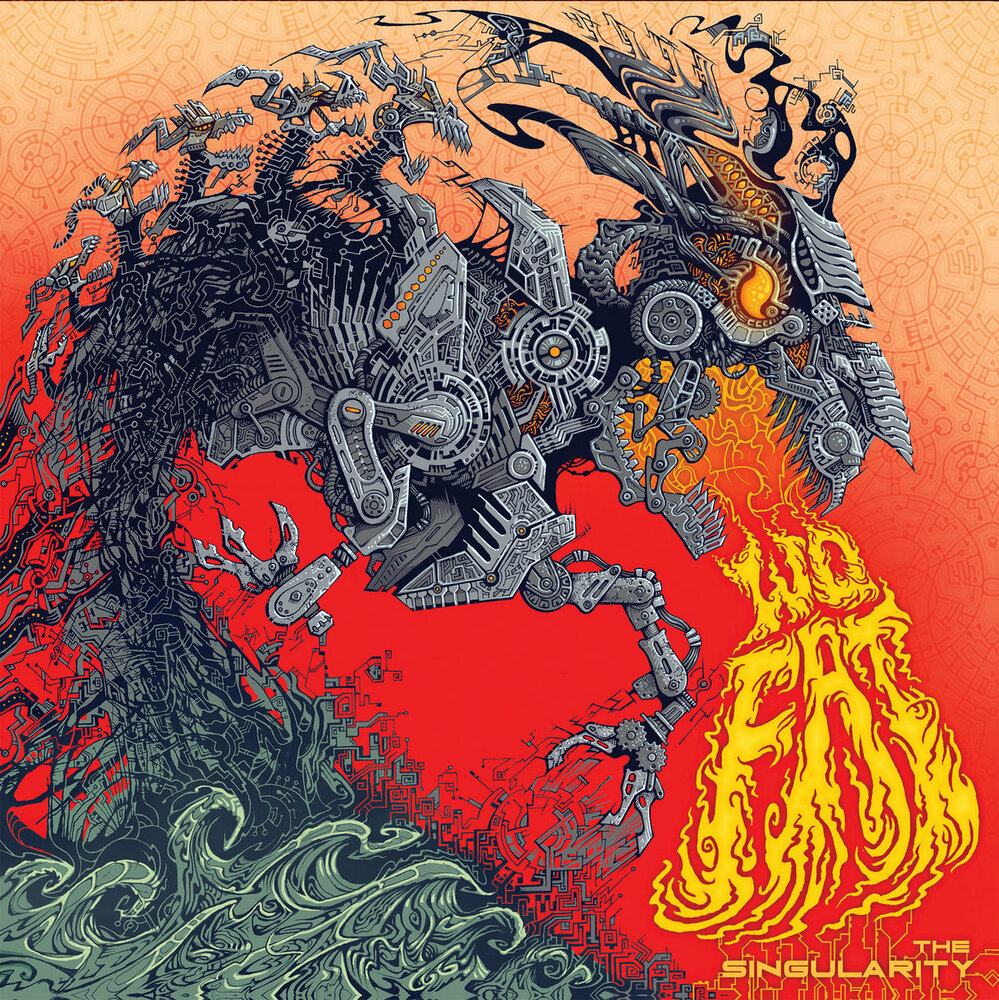
This one is a behemoth of an album, appropriately given the cover art, clocking in at over seventy-five minutes. However, the songs are long, as you can imagine when I point out that there are just seven of them on offer. The bookends are the epics, Orphans of the Singe kicking things off a blink shy of fourteen minutes and The Oracle wrapping them up at sixteen and a half. The shortest song here is The Unraveling, which is only a little under eight minutes, so shortest doesn't mean short. I found that I generally liked the longer songs but not for the reason I expected.

They're moods rather than journeys, which makes this a little different from the usual stoner rock I review. These songs don't transport me anywhere to experience the wonders of the universe. I'm not seeing them in the way I often do, because they're not triggering other senses. What they are doing is pulling me into a particular musical vibe and keeping me there for the duration. Perhaps that's the point of stoner rock, given that the genre is named for and so closely allied to chemical stimulation, but I've never explored it that way because music is my drug and I take it neat.

And I really enjoyed this as music, especially during the instrumental sections where the band just jam for extended periods. I got lost in them, as if I'd put headphones on, closed my eyes and set off for parts unknown, only opening them an hour and change later and not having a clue where I was. In other words, these songs are soundtracks to journeys or perhaps companions on those journeys, but not the journeys themselves. Not once did I forget that I was listening to music, but not once did that music forget I was listening either. It's a symbiotic thing.

I would bring Hawkwind in as a comparison here, because that's exactly what they do for me too, in much the same style. This isn't live, but it reminded me in many respects of Space Ritual. The bass isn't as driving and the cosmic sounds aren't generally here, but the vocals are as agreeably rough and the riffs are just as hypnotically effective and even more neverending. And, most importantly, those jams are much longer without ever losing any of their magnetic edges, especially in the long songs. I really dig the eight minute The Snows of Banquo IV every time I listen through this album, but the longer songs extend that feeling progressively further, to their benefit. The shorter ones are more up tempo and vibrant but less exploratory.

So, much later than expected, I've encountered Wo Fat and thoroughly enjoyed the experience. I'd suggest that they're not quite what I thought they would be but perhaps in a positive way. They're rooted in stoner rock but they're definitely heavier than the norm. However, their inevitable Black Sabbath starting point, most obviously on The Unraveling, its edges rounded off and softened with Hawkwind reverb, except ironically on the same track when it gets sassy into a stoner take on Killing in the Name. It's still heavy, but with the psychedelic vibe always more important than the heaviness. I would call it velvety doom metal over heavier stoner rock, even though it's both and I love that feel. This is a peach of an album that's somehow seventy-six minutes short.

Dame Tu Alma - Lead (2022)

Country: Switzerland
Style: Dark/Horror Rock
Rating: 7/10
Release Date: 26 Apr 2022
Sites: Facebook | Instagram | Official Website | YouTube

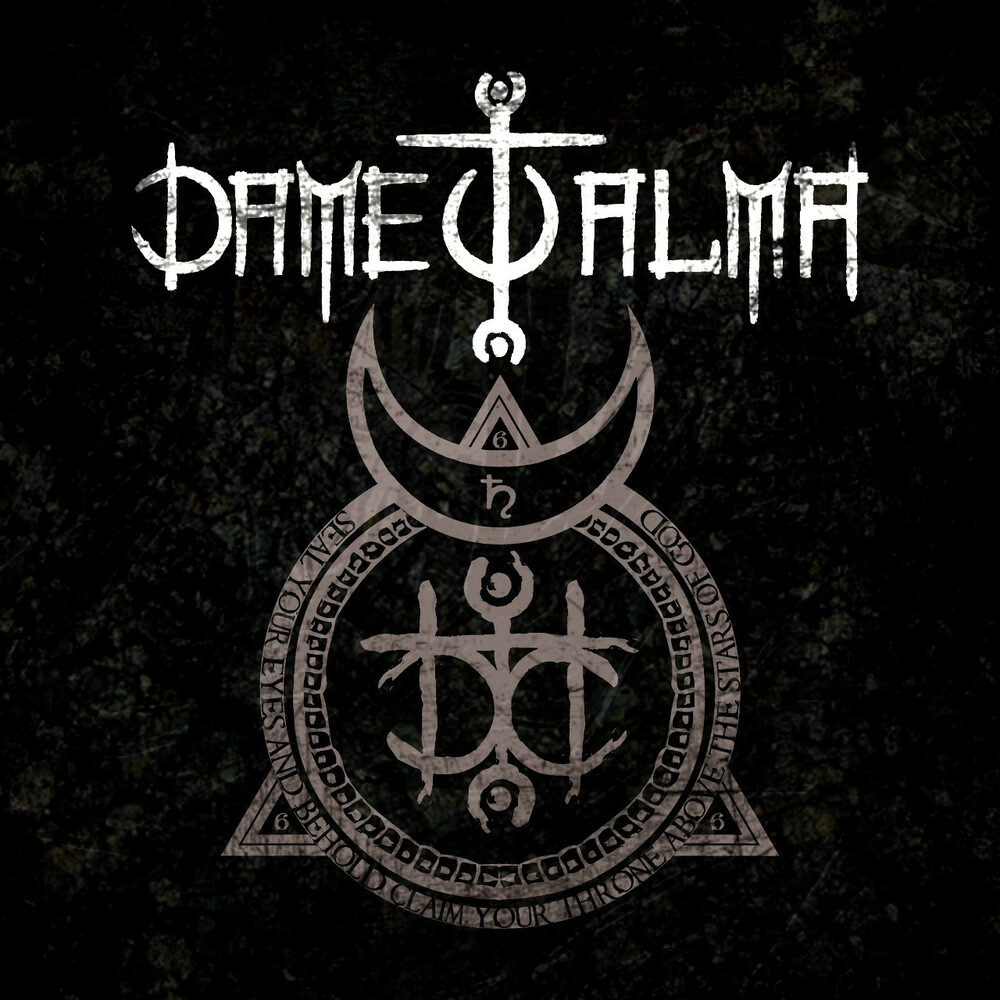
Dame Tu Alma may be Spanish for "give me your soul", but the band of that name are as Swiss as the clockwork effects on the intro to the debut album and its opener proper, ironically named The End (well, its intro was called The Beginning of, so that's fair). Their sound isn't particularly Swiss though, with what they trawl into it not remotely as European as we might expect, plenty but not all of it being American alternate rock.

The first influences I felt are actually heavier, but they're misleading. There's a lot of the groove-oriented mainstream Metallica in the tone and riffing, as well as some of the intros, like on In the Sense of Brightness. There's also an NDH drive that we tend to know from Rammstein in the early songs, though it could equally have been sourced from Rob Zombie. It's mostly in the urgency but also some of the dance oriented nuances or orchestrations behind it, Sick Horrors the most overt example. That combination sounds like it ought to be in your face, but it's not, mostly because of the vocal delivery.

It's clear early on that this is never going to thrash out like earlier Metallica or go industrial like Rammstein, as often as little triggers in the sound convince us that it's preparing to do just that, but the vocals settle this as alternative rock and the longer the album runs on, the more it feels naturally alternative, however chunky the riffs or urgent the drive. Every time I hit replay, I hear that heaviness in the openers that gradually fades into a more alternative vibe, one that resists heavying up into nu metal rather than thrash or industrial.

The band's website calls out Depeche Mode and Marilyn Manson as influences here, and it's easy to hear both of them, though the former are more obvious in the music and the latter more in the approach. Whoever's singing here, and I can't see a line-up to detail that, has a smooth and clean voice with plenty of theatricality in it and the band have that theatrical feel too. It isn't surprising to discover that they all wear facepaint on stage. I'm sure that there are other American alt rock bands that could be cited here, but it's not my area of expertise. It all feels post-grunge though, a few lingering moments going back to the grunge era. It's a very modern sound, with even a djenty chord surfacing at points on Breaking Loose and vocals that get shouty and almost raucous.

I should add that this isn't musical theatre to the degree that the inherent lack of visuals when we listen to the album is problematic, because it can be listened to on its own merits, but it seems an utter given that that visual element exists. This singer can surely see in his head the music videos for every one of these tracks, even if the band has only made three thus far, for Skeleton Key, Black Fire and All Mine. Oddly, given that The Knife is almost an intro to the latter, it doesn't appear on that video, because it's arguably as theatrical as it gets here.

Dame Tu Alma call what they do dark rock or horror rock and it's easy to see why, especially when you factor in the sound effects used throughout the album. However, the songs don't feel like they were built around movie samples and they aren't named for or obviously inspired by such movies, like the Misfits back catalogue. It's just a general vibe that drives everything. Tom Waits has said that all he tries to do is write "adventure songs and Halloween music" and the latter kind of fits in this case. Dame Tu Alma seem like people who live like it's Hallowe'en every day, seeing the world from both sides of the veil. Unlike many horror/shock rock musicians, it doesn't feel like this is the suit they're putting on when they go to work. I like that.

I like their music too, which is still coalescing in my brain. It's consistent enough to find a feel over multiple listens, but there's a lot of admirable variety in it without ever seeming to be consciously seeking that. It's organic variety, songs growing the way they do because that's their nature. The pairing of The Knife with Skeleton Key may be my favourite right now, just as the two minute closer Obsidian Heart is my least favourite, an experiment that doesn't work for me but might for you.

However, that'll probably change tomorrow. After all, I like the experimentation and Skeleton Key may shun that more than any song here. I ought to gravitate towards Peyote Mirage, with its crows and its jingling, like it's playing under the Twilight Zone theme, and it may become my favourite. It cheers my soul that these two songs sit next to each other on an album because it means that this band has a range broad enough that that seems natural to them.

Friday, 10 June 2022

Kreator - Hate über alles (2022)

Country: Germany
Style: Thrash Metal
Rating: 7/10
Release Date: 10 Jun 2022
Sites: Bandcamp | Facebook | Instagram | Metal Archives | Official Website | Twitter | VK | YouTube

I'm always up for a new Kreator album. I've been a fan of theirs since their early days and enjoyed them enough to go see them live twice in two months back on their 1989 Extreme Aggression tour. Perhaps more pertinent to today, I dug their last couple of albums too, especially 2012's Phantom Antichrist but 2017's Gods of Violence too, which signalled the way that this album would take five years down the road.

They're not the most prolific thrash band on the planet but they tend to deliver, with a few almost inevitably awkward nineties albums notwithstanding, though, in Kreator's case, these tended to be far more interesting than plenty of other bands of their day. They innovated and experimented and, while not all those experiments worked out as they'd hoped, they never lost the way forward. This is their fifteenth album, even though they've never split up and their debut was back in 1985, and it's often very recognisable.

That word "often" may cause a raised eyebrow and that's warranted because Kreator are playing with their sound again, starting with the instrumental intro, which is an oddly late homage to the Italian film director Sergio Corbucci, who's been dead for thirty-two years. Why they felt the need to notice this year, I have no idea, but it's a pleasant minute that leans far more towards his many spaghetti westerns than his action comedies.

Things really get down to business with the first couple of songs proper, the title track and Killer of Jesus. They're both excellent up tempo thrashers, as you might expect from Kreator, even if there isn't anything particularly groundbreaking in either of them. The sound is clean and the band get down to business quickly. They just don't have anything new to say that they haven't already said a bunch of times before. I still got a kick out of them though, especially the guitar duel in the second half of Hate über alles.

And then things gradually shift down tempo. Crush the Tyrants stays strong anyway, even though I prefer my thrash on the fast side. Strongest of the Strong continues the decent mid-tempo and is elevated by some almost doom/death guitarwork over the top of the crunch and the fury. Perhaps this approach is summed up by Become Immortal, which looks backward with an air of nostalgia. I couldn't miss the refrain of "Remember where you came from". If that's what Mille Petrozza aims to do here, he's going all the way back to the early days when they had other names: Metal Militia and Tyrant and Tormentor. Certainly the influences here aren't proto-thrash bands but traditional heavy metal bands like Saxon and especially Accept, right down to the "woah" section.

And so it goes. There's thrash metal here but it's surprisingly sparing, to the degree that it shows up when we least expect it. Conquer and Destroy plays with epic metal, from the guitar intro to an unusual late vocal section and a general anthemic feel. The real epic here is Dying Planet at close to seven minutes, but it's too long and the narrative segment doesn't work for me.

What does work for me is Midnight Sun, which begins with a tasty buzzsaw speed metal guitar but develops in surprising ways. It stays speed metal for a while, just with an oddly slow beat, but the bridge is delivered by a female voice in an almost gothic fashion, one that's placed in an odd level of the mix for effect. I'm not convinced by all the ideas on this album, but this one is tantalising, a very interesting contribution by Sofia Portanet, apparently a modern German new wave singer. I need to check her own work out.

I hadn't planned on running through this album track by track, but it develops in that sort of vein, with the final couple of tracks being relatively forgettable. It feels like a manifesto, a very public choice to take the thrash metal that Kreator are rightly known for and then gradually move away from it, back into traditional metal and then forward into more unusual territory. Had the album ended after Demonic Future, that might have worked a little better than it does with a relatively unnecessary pair of closers. I'm not entirely sold but I'm not such a thrash purist that it pisses me off. Some of these experiments work well, but not all of them and I wonder where they'll go next.