Thursday, 16 December 2021

Rhapsody of Fire - Glory for Salvation (2021)

Country: Italy
Style: Symphonic Power Metal
Rating: 6/10
Release Date: 26 Nov 2021
Sites: Facebook | Instagram | Metal Archives | Official Website | Twitter | Wikipedia | YouTube

I mentioned in my review of The Eighth Mountain, Rhapsody of Fire's twelfth album, back in 2019, that, beyond any need to distinguish the band from other offshoots of Rhapsody, I've always had trouble distinguishing any of them from some of the other similar bands with male lead vocalists that explore the symphonic metal genre in very similar ways. I liked that album and I like this one too, but I struggled even more with it than its predecessor because of how generic it is.

Don't get me wrong, these are decent songs performed by a very capable band, and listening to it is no hardship. It's enjoyable stuff. However, I quickly found myself seeing the album like this and I haven't changed this view even after a few listens.

Firstly, there are three songs that are roughly what I expected from the album. They do their jobs well enough, but they do them in the same way and I haven't distinguished them yet. Then there's a brief interlude called Eternal Snow, its Celtic flute over soft drone grabbing our attention. After a little while, the drone builds and the narration begins, as if we're in a concept album (I think we are, as this is the second chapter of The Nephilim's Empire Saga, after The Eighth Mountain). Two more songs follow that are more of what we expect.

Then there's Abyss of Pain II, a real epic at almost eleven minutes and close to twice anything else here. It has a long intro and becomes heavier than any of the earlier songs. There are cool chords and a neat choral section when it gets going. The vocals do ache to be more emotional than ever before, but it moves along very well. It's not going to be ignored, though I'm not convinced that it can truly sustain its length.

That's because, every time I listen through the album, the next thing I notice is the choral section early in I'll Be Your Hero—presented in its Single Edit form—at which point I realise that I missed the two other songs in between Abyss of Pain II and I'll Be Your Hero entirely. It's not that they're worthless; it's that I didn't register the gaps between them, so I assumed that they were parts of Abyss of Pain II which therefore played to me like one twenty minute song.

Then there's another song that I like called Chains of Destiny. It barrels along and I wanted to join in with the vocals, even though I didn't know the words. I can't help but feel that it's not good that it's only the third song I acknowledged by name, if we ignore the interlude that is Eternal Snow at this point, in eleven tracks. However, it's good that it keeps standing out, especially right after I'll Be Your Hero stands out too.

And then, because this is a generous release at six minutes over an hour, there are two songs that are actually the same song and both of them are the same song as Magic Signs, one of the two I'd assumed were sections in Abyss of Pain II. They're merely sung in different languages, Un'ode per l'eroe in Italian and La Esencia de un Rey in Spanish.

If I'd seen the album that way on a first listen because I was too busy multitasking and let it drift a little, only to see it a different way on a second, that's one thing. However, I've listened four times now and I'm still seeing it the same way. Sure, there are bits here and there that I dug a lot, such as the choral bits that pop up here and there, the opening to The Kingdom of Ice and quite a lot of what's going on in the first half of Abyss of Pain II, but it means that my brain isn't acknowledging much of the album and that's not good.

At least it tells me the highlights, because, however many times I drift away, I'll Be Your Hero has a habit of grabbing my attention back and Chains of Destiny maintains it. That says something all on its own, as much as the fact that I can't remember what songs like Maid of the Secret Sand and Infinitae Gloriae sound like after listening to the album four times.

I think I need to listen to some more symphonic metal with male vocalists, because I don't usually have this problem with the genre, especially when the lead singers are female. Are the men that close in sound? Surely not. Is it just the various flavours of Rhapsody? I don't think so. So is just me or do others have this problem? Answers on the back of a postcard to the usual address.

Weedpecker - IV: The Stream of Forgotten Thoughts (2021)

Country: Poland
Style: Psychedelic Rock
Rating: 7/10
Release Date: 3 Dec 2021
Sites: Bandcamp | Facebook | Metal Archives

This album, which, as you might expect, is Weedpecker's fourth, was quite the surprise for me. The band name strongly suggests that this is going to be psychedelic rock of some sort—shock horror, it is—but also that it's probably stoner rock in the more modern American style and that's really not what this is. I hear a little stoner rock here and there, especially on the chugging opener, No Heartbeat Collective, but mostly the influences seem to be from a lot earlier than Kyuss. Even on that song, there's plenty of Hawkwind to be found and plenty of the Who too, in the power chords and the sweep.

It's the vocals of Wyro that feel most unusual to me. They're high in pitch but low in the mix. While they do get emphatic at points, they often float rather than soar. They remind me most of the late sixties hippie era, but British more than American, even though this band hail from Poland. Once we get past that opener, this became Syd Barrett-era Pink Floyd for me, an approach that frames the sound of much of the rest of the album. The question that I kept answering myself was where other influences got added to that base sound.

I didn't detect any on Fire Far Away or The Stream of Forgotten Thoughts, at least on a first listen, but there are definitely some on The Trip Treatment. The guitar here gets so liquid that it seems like a hybrid of that early Floyd sound with soul and funk and disco, very American sounds to be in something so British. Unusual Perceptions is very nice from the outset, almost saccharine sweet, swimming through a syrupy sugar solution, and it's not surprising at all to find it sounding like the Beatles. There's a lot of pop music in this sound, even if it manifests more as rock, and most of it is half a century old, even if presented in a new way.

There are more modern influences here, layered onto the older ones. Big Brain Monsters caught me out with that until I realised that there's King Gizzard and the Lizard Wizard in that one and I started to hear them all over the place, even on songs like Fire Far Away that had felt so Floydian until that realisation. King Gizzard are certainly there on Endless Extensions of Good Vibrations too, which is edgier and delivered with more emphasis, with late chugging that hearkens back to the opener. Everything comes around in the end.

What I found on a first listen that was underlined by a second is that I like how Weedpecker find a sound they like and milk it without it ever seeming like they're playing a song. There may be some sort of traditional structure buried deep under the layers of psychedelia and effects, down there with the vocals, but I couldn't tell on half these songs. I just know they sound good, a combination of instruments brought together in a melodious and palatable way that might coalesce into some recognisable form under the influence of the exactly right amount of mind expanding drugs.

In fact, much of the album could be described as a mellow jam. Occasionally, what we hear finds its way into something more recognisable as a song and then jam in a more traditional fashion. The pinnacle of this is easily the album closer, Symbiotic Nova, which builds gloriously and rocks out in memorable fashion during the second half. This one often reminded me of Silver Tightrope, a song by Armageddon, that short lived project that was the last for the Yardbirds's Keith Relf, but this is less focused.

I think how I'm going to think of this is less as a set of songs on an album and more as some sort of musical installation that floats around a room like a cloud, ever changing but never different, and we walk through it to experience what it has to tell us. Clearly I should check out earlier albums by Weedpecker, inevitably titled Weedpecker, II and III. I want to see if this approach has been in play all along.

Wednesday, 15 December 2021

Black Veil Brides - The Phantom Tomorrow (2021)

Country: USA
Style: Hard Rock
Rating: 7/10
Release Date: 29 Oct 2021
Sites: Facebook | Instagram | Official Website | Twitter | Wikipedia | YouTube

I don't think I've ever heard Black Veil Brides before, though I've certainly heard of them, which is rarely a good thing when it comes to modern American rock music that's mainstream successful. I had vague fears of emo or nu metal or some such, so I was pleasantly surprised to find that this is really just straightforward hard rock music clean vocals and hook-driven sensibilities that hint at goth perhaps more often than not. There's the occasional electronic gimmickry to underpin some of the changes, in the way that Paradise Lost did in their new wave years. It's not that ambitious or challenging but it's very likeable, even at a first listen.

Given that they're pretty far from my expectations, I looked them up. They're from Cincinatti and they're pretty recent, having been founded initially in 2006 and again in the current form in 2009. The line-up has been pretty stable since that second beginning, only one change happening since 2010, that being when Lonny Eagleton replaced Ashley Purdy on bass in 2019. This is a sixth studio album and their third in concept form, after Wretched and Divine: The Story of the Wild Ones and Vale. And it's pretty decent.

I didn't particularly follow that concept but some of the songs stood out as highlights on my first time through and more joined it on a second. Blackbird is surprisingly deep musically, the strong hook grabbing us right off the bat but the solos and guitar interplay keeping us, especially as they just don't quit, continuing even during vocal sections when we don't expect it. Torch is strong too, more overtly grand and gothic and almost metal in outlook. Those are the two that caught me on a first listen and kept me each further time through.

The first one to grab me on a second listen was Shadows Rise. I was already on board, because of its quirky intro that's utterly delightful, but the song gets quirky too and it's easily the one that grew on me the most, lying in wait for me to come by again to grab me with confidence. The other is Crimson Skies, easily the most metal song on offer, with an opening thirty seconds that ought to spark a real pit when the band play live. I wasn't expecting that from the nine songs preceding it but it was a welcome shift up in the gears.

Others gradually trawled me in but were much less emphatic about it, as if they wanted me to like them but couldn't be bothered to grab me and hoped I'd just come around on my own. Most of the songs that did this came deep into the second half, songs like Fields of Bone and Fall Eternal. They do their jobs and they do them pretty well. Maybe they'll get me in the end. Certainly, they have a greater chance right now than earlier songs that sounded fine but drifted by me anyway.

And, with acknowledgement to the neatly constructed instrumental pieces that serve as an intro and a later interlude, very capable with their orchestrations, something that doesn't tend to shift across into the songs proper, I'll wrap this up by saying that I've clearly been a fool to look past the Black Veil Brides. On the basis of this album, they're a solid hard rock outfit who somehow seem to have found a trendy spot at a couple of the more sensational rock media outlets, such as Kerrang! and Loudwire. That seems odd to me hearing them here for the first time. They sound good and it would seem that the music ought to speak for itself, idiotic award nominations like Hottest Male 2012 and Tweeter of the Year 2015 notwithstanding.

Obnubilo - Nascentes Morimur (2021)

Country: Chile/Australia
Style: Avant-Garde Black Metal
Rating: 7/10
Release Date: 5 Nov 2021
Sites: Bandcamp | Facebook | Metal Archives

It's been noticeable for a while that the metal subgenre that's being stretched most beyond what boundaries we used to believe it has is black metal. Sure, there are bands still playing the sort of raw black metal with deliberately crappy production values that we heard on the Bathory debut in 1984, but there are also bands merging the style with others as seemingly far flung as bluegrass, ambient and jazz. I don't envy the musicologists who have to track this evolution, but I can enjoy a lot of it, especially given that black metal also seems to house more dedicated musicians than any other metal subgenre. Half the black metal out there are made by one man bands and those men tend to be involved with half a dozen projects at once, with another dozen behind them.

Obnubilo is an international collaboration between musicians from Chile and Australia and this is its first release, featuring a suitably bleak title for the genre: Nascentes Morimur is the Latin for "When we are born, we are dying". All the instruments are played by Niklas K, who also wrote the music, while the vocals, both clean and harsh, are contributed by AP and Ben T. Sheehan, with the latter also responsible for the lyrics, whatever they are.

Niklas K is one Chilean part of this equation and it doesn't surprise that this is one of eight active projects for him, though he's credited under many names on the others: Ulf Kveldulfsson, NK, Kve, Niklas and Niklas Kveldulfsson for a start, with product on the shelves as Forestfather, Er Murazor, Æra, Deveneror and Swarm of Hatred. Also Chilean is AP, or Sulphur, S, Gorrge or Alfredo Pérez on releases by five other bands: Siaskel, Concatenatus, Lacrymae Rerum, Sol Sistere and The Ancient Doom. He's mostly a vocalist, though he drums for Concatenatus. Ben Sheehan is also a drummer, for Slaughter Thou in Australia, and a guitarist for Abstract the Light. He goes by multiple names too, but not so many: just Ben Sheehan and Baraath, and he only has five active projects. Whew!

So, what does this sound like? It comes described as avant-garde black metal and that seems fair, but it could be called progressive metal even more often. This opens up with strange rhythms and a bizarre urgency, as if the band was leading a psychotic waltz. Most of the vocals are clean but a harsh voice takes over at points for extra emphasis. It's jazzy, unusual and delightfully offbeat, a song that confuses on first listen but grows substantially with repeat runthroughs. And that's just track one.

With Reflections leaps more into black metal territory, with rapid blastbeats, shrieky vocals and a distant harsh call that resonates throughout. However, it has an oddly perky feel to it, with a neat melodic line and a delightfully hyperactive bass that combine to make us smile rather than escape to the forest to curse the bleakness of existence. Obnubilation continues in this vein and it's clear from later songs that aim for a similar approach that this is the core sound of the band. It spreads outwards from here, as they challenge the boundaries they set themselves, just like adventurous black metal bands are apparently supposed to do nowadays.

Unusually, my favourite songs come late in the album. Just as the first track challenged me on its first listen, the whole album followed suit and I wondered if I'd get into it at all. Repeat listens did help and this grew on me, but it never truly connects until deep into the second half.

Lost Horizons is the song that does it for me every time through. It's the longest one on offer, at a blink under seven minutes, and it does acquire an epic feel as it goes. Initially, it's nothing special, just a jagged feel that doesn't seem to have anywhere to go but that groove grows and grows and I found myself in an odd place where I was hearing all sorts of different bands at once. There's Joy Division here and Voivod and King Crimson and often at the same time, as the song hints at The Court of the Crimson King and Nothingface and Transmission, songs I've never previously thought of in a single breath. I can't fully explain it but it got well under my skin and I love it.

It's followed by These Solemn Words, which is even better in ways that are easier to explain. It may be the most prog metal song here, starting mild but interesting and growing as it goes. It also has a groove to it that continues to build, but it's not as overt as on Lost Horizons. This one grows with dynamics as much as simple progression. Icy Barren Steps wraps things up with panache, for three out of three memorable songs at the end of the album, this one featuring some intricate changes that I adored.

It's rare for me to find the strongest material late but this is hardly a traditional album. Even with these songs, it's the feel as much as anything that makes them work for me, something that's not easy to pin down and is always inherently subjective. The reasons why I dig these particular songs so much may well be the exact reasons why you don't. I know that a lot of people don't like Voivod because of their feel and, if you're one of those, you probably won't like this either. I can't call out songwriting, because it's obscured. It's hard to recommend it on a traditional line. It's not riffs or hooks or melodies or structure.

Everything comes down to feel so, if this review has piqued your interest, I'd recommend checking it out on YouTube, especially these later songs, and find out if it does the job for you. It may well. It may well not. It's certainly not going to be for everyone. It's not entirely for me, but I can tell it won't leave me alone and I like that.

Tuesday, 14 December 2021

Swallow the Sun - Moonflowers (2021)

Country: Finland
Style: Melodic Doom/Death Metal
Rating: 7/10
Release Date: 19 Nov 2021
Sites: Facebook | Instagram | Metal Archives | Official Website | Twitter | Wikipedia

I have no idea why I didn't review Swallow the Sun's previous album, When a Shadow is Forced in to the Light, but it slipped away from me. My only excuse is that it saw release in January 2019, which was the month I started Apocalypse Later Music. At least I'm here for this one, their eighth studio album, each one released this millennium as the band was founded in 2000. Guitarist Juha Raivio is the only remaining member dating that far back but vocalist Mikko Kotamäki and bassist Matti Honkonen joined only a year later and Swallow the Sun has never had anyone else in those roles.

I liked it from the outset, as the opening title track of sorts, Moonflowers Bloom is Misery, builds magnificently. Initially, it's soft and plodding melodic guitar that a melancholy voice joins with an aching refrain. "Will you die in misery?" it asks over and over, as a string section joins the guitar. A couple of minutes in, it repeats again with insane emphasis, heavying up massively, before dropping back to the initial mode. I don't know what time signature it uses, but it feels like a slow waltz, a hypnotic sort of dance. I found it difficult not to sway to this one, even sitting in my office chair.

If Moonflowers Bloom in Misery works primarily as a set of variations on a theme, Enemy is more of a traditional doom/death song and Woven into Sorrow follows suit at greater length, elevating itself with a glorious riff early in its second half. The genre lends itself to songs that breathe and Swallow the Sun benefit from that, all eight tracks here exceeding five and a half minutes. What I see they have no interest in is conjuring up anything epic, with the longest three songs only in the seven minute range.

My favourite song opens up the second half and that's All Hallows' Grieve. I dug the album prior to that, the opener haunting me and Enemy getting better with every listen, but All Hallow's Grieve has two things to elevate it and both elevate it substantially. The first is the presence of Oceans of Slumber vocalist Cammie Gilbert; she leads the song out and duets beautifully with Kotamäki on its chorus. I still haven't heard her primary band on anything but videos but she impressed me on the recent Ison album, Aurora, and she impresses me even more here. The other is that chorus, as it's heartbreakingly beautiful, drenched in loss and grief. I felt this one deep inside.

I didn't feel anything else as deeply, but I enjoyed other tracks like The Void and The Fight of Your Life too, keeping the second half strong. I can't quite connect with Keep Your Heart Safe from Me and I'm still coming to terms with This House Has No Home, which I think is a highlight, but is still strange, shifting from pizzicato strings into a full on black metal wall of sound without warning. It caught me out when that happened the first time and, even though I knew full well it was coming on repeat listens, it still kind of catches me out each time anyway.

I can't remember which Swallow the Sun album I listened to last. I'm certainly quite a few behind, at least a decade, but this reminds me how good they are and how much I ought to check out the others. After all, their debut and their most recent album before this are both maintaining 90%+ averages at Metal Archives. Contributors don't give those out like candy and neither do I. I don't think this is that good, but it's a solid and reliable album with a number of standout tracks, a few of which I'm sure will become earworms. Let's see whether it's the refrain of Moonflowers Bloom in Misery or the sweep of the chorus in All Hallows' Grieve that dominates.

Deception Store - Pindaric Flights (2021)

Country: Italy
Style: Progressive Rock
Rating: 7/10
Release Date: 26 Nov 2021
Sites: Facebook | Instagram | Official Website | YouTube

Dreams are important to Marco Pentozzi, the main man behind Deception Store and their debut release, Pindaric Flights. The band name itself, drawn from the final metaphor in One More Time, is about opportunities that you gain by paying dreams but receive only disillusion. The album title is about dreams too, Pindaric flights being flights of fancy, open eyed dreams that drift from one thing to another, echoing the writing style of Pindar, a fanciful ancient Greek lyrical poet.

The band are Italian but the key influences are British, their style being that very accessible form of progressive rock pioneered by Pink Floyd. It's built on simple but highly effective grooves that mix a guitar, that knows well that notes not played are often as important as those that are used, with delicate piano and tasteful electronica and it's all performed with effortless elegance. When the voals show up, they're softly delivered but with a knowingness that beckons us into a story.

The Floyd influence is obvious from the opener, Lifetime, which is latter day Floyd, the style that dominated for them after David Gilmour took over from Roger Waters as the driving force in the band. That sound continues through a few more songs and never quite goes away, suggesting that they're clearly the most important influence to Pentozzi, who wrote the music and the lyrics that he sings as lead vocalist, as well as to Stefano Nicli who contributes the guitars. Even Teo Ederle's bass fits that, especially late on One More Time.

However, Floyd are not the only influence. Rock Star (Meteorite) wanders into Hawkwind territory, especially once it reaches its chorus, there's a moment in New Bad Day that simply screams early Marillion—it could even be Fish on backing vocals—and the title track begins with acoustic guitar very reminiscent of Dust in the Wind, even if the song grows into something else entirely. There's some singer/songwriter stuff here too, A New World reminding as much of Leonard Cohen as Pink Floyd or Marillion and Free adding a laid back Tom Waits at the piano vibe, sans vocals. Timeline, on the other hand, has an alternative feel that kicks in with the opening riff and never quite loses it.

It's certainly an album to explore, but the strongest material seems to me to be found early on or right in the middle. It starts well with Lifeline, firmly defines its boundaries, then expands beyond them to Rock Star (Meteorite), New Bad Day and Pindaric Flight. The first half is very strong. But, while it's not unusual for a title track to be the standout, the album's obvious highlight, it doesn't help when it's a pinnacle from which the rest of the album descends. The second half isn't bad, but it isn't a patch on the first and it's where songs just drift away from me.

Pindaric Flight doesn't do that because it stays fascinating all the way. It grows impeccably, with a few different sections expanding it. The first three minutes build off that acoustic guitar, flowing vocals alongside it and a gorgeous echoey guitar in counter. Then it shifts tone to a much heavier, if not faster, approach that lends the song some real urgency. But A couple of minutes later, that all falls away so our attention forces back to the vocals again, with more gorgeous distant guitar, before it shifts us into the groove that we think will take us home but doesn't. It's wonderful.

I don't want to put down the second half too much, especially as the closer, E Immagino Se, which is the only song to be sung in the band's native Italian, is decent, with a solid contribution from a guest vocalist, Roberta Staccuneddu, who also elevated I Do It My Way early on. It's merely a 6/10 half following a 9/10 track that ends a 8/10 half. The result is still a 7/10 album but I'm more likely to skip half of it in the order it's presented than if the sides had been shuffled somewhat.

Monday, 13 December 2021

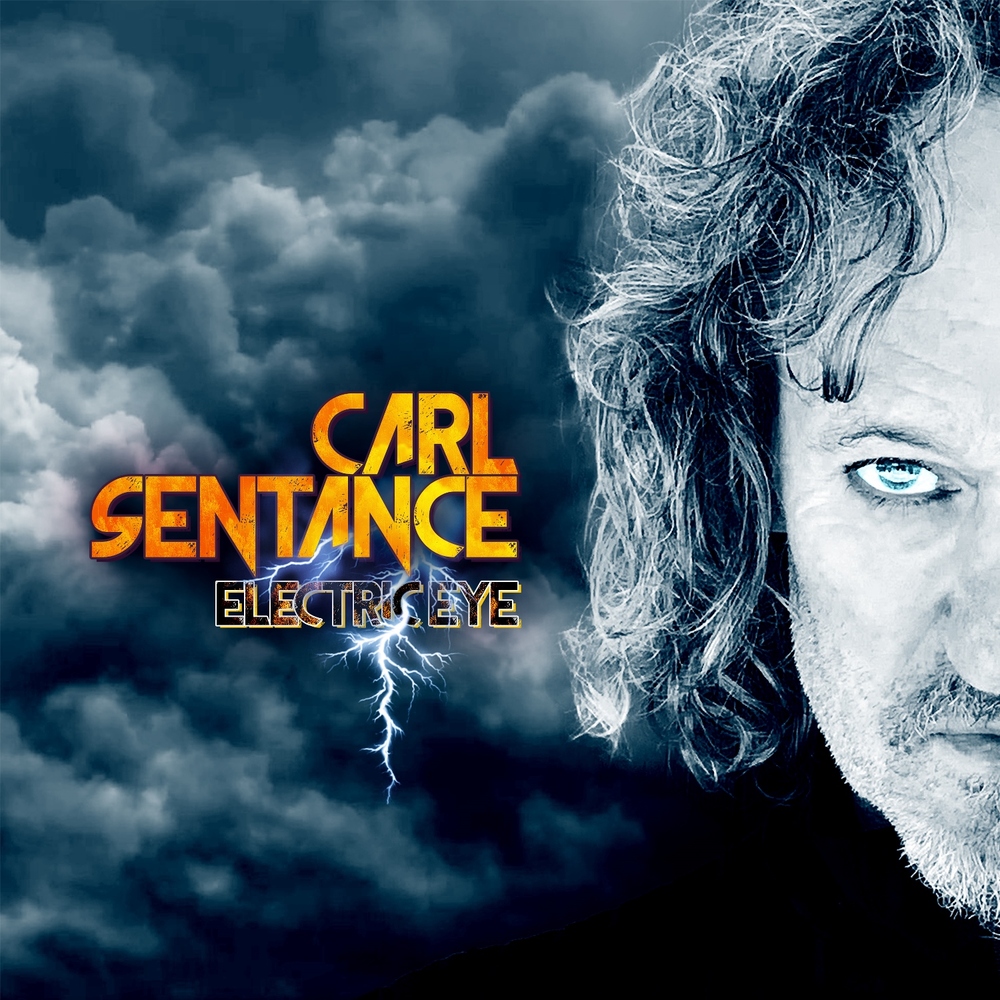
Carl Sentance - Electric Eye (2021)

Country: UK
Style: Hard Rock
Rating: 7/10
Release Date: 19 Nov 2021
Sites: Facebook | Instagram | Metal Archives | Official Website | Wikipedia | YouTube

Carl Sentance has quite the varied career in music and this solo album, only his second after 2009's Mind Doctor, is a good distillation of all of it. He first found fame as singer for Persian Risk back in the NWOBHM era and he reformed them in 2012. Originally, that was Phil Campbell's band, and it strikes me that, with very different vocals, Overload could easily be a Motörhead song. While he's still singing for Persian Risk, he also took the lead vocal slot in Nazareth in 2015, though, and a lot of these songs, including the openers, are really hard rockers wrapped in the clothes of metal.

If the most obvious Nazareth style song is arguably Nervous Breakdown, which softens things up a bit and adds a little psychedelic shimmy, the openers really aren't heavy as they initially seem, an effective deception that's built off sharp guitars and downtuned bass. Sentance stood in on a tour for Tokyo Blade and, sped up a little, I could see Judas being one of theirs. Alright is even catchier but it stubbornly refuses to speed up and never loses any power because of that decision. The title track sounds to me like a stripped down version of Fastway, circa their Trick or Treat era.

If the sound is hard rock but played heavy and with a metal attitude, the band that Sentance built to play it is well qualified indeed. If I'm reading things right, he provides the guitarwork himself, a role I don't remember him for but which he does well with here. On bass is Wayne Banks, who's in Sentance's current Persian Risk line-up; he's also played for Blaze Bayley, Finnish rock band Brazen Abbot and, well, Robin Gibb of the Bee Gees. On drums is Bob Richards, who's played for both Asia and AC/DC (filling in for Phil Rudd on a couple of videos during his trial). And that leaves Don Airey on keyboards, an old boss of Carl's, who's played with everyone.

That's a capable line-up and they do well here, the downsides being with songwriting rather than performance. Young Beggars feels like a watered down Queensrÿche, hitting all the moments but without any of the oomph. That's especially odd given that that oomph was there from the very beginning of this album, so toning it down had to have been a deliberate choice and, as an obvious enough failure, I'm surprised they didn't drop it from the album.

Fortunately, there are few downsides, even where descriptions might suggest one. Whatever I say about If This is Heaven sounds like a negative, for instance, as it feels like an unusually perky song put out as a single by a much heavier band just to try and break the mainstream. However, this band do it very well indeed and, while such songs are usually the worst on their respective albums, this one could be considered a highlight by some. It's not one of mine but I enjoyed it nonetheless.

The final tracks all feel like other genres rocked up, but with varied results. California Queen is, of all things, a pop punk song that feels rather out of place. I think it's supposed to show a lighter side to the band, and it's not a bad song, but it seems at odds with the earlier, more vicious approach because this is a song for a party band and they've been all about the music up until this point. In between those two is Battlecry, which works better, even though it has an early U2 vibe, probably because it's heavied up instead of watered down and that helps the song immensely.

So this is a mixed bag. Kudos to Carl Sentance for putting such a solid line-up together and for not confining it to a single style. Some of the ideas work better than the others, but it's decent stuff and it often becomes much more than that. For me, it's the early songs because my favourite four are the first four, when they're playing hard rock with a metal edge. It's tight and it's vicious and it rocks. And, entirely separate to new Persian Risk and Nazareth material, let's see another solo album sooner than another dozen years.

Fading Aeon - The Voices Within (2021)

Country: Germany
Style: Epic Melodic Death Metal
Rating: 8/10
Release Date: 10 Dec 2021
Sites: Bandcamp | Facebook | Instagram | Metal Archives | Official Website | YouTube

Almost three years ago, at the very beginning of 2019, Germany's Fading Aeon introduced me to a new combination of metal subgenres—epic melodic death metal—and I thoroughly enjoyed their debut album, A Warrior's Tale. Now they're back with the follow-up, which continues very much in the same vein: five long songs that combine the riffage of heavy metal and the melodies of power metal with a harsh voice and the crunch of death metal. There's nothing new added this time out, but everything is a little more: the songs are longer still and the riffs are more urgent, but there is also even more of the delicate instrumental work in between the heavier sections.

As with the debut, the first two songs are the shorter ones but, for this band, that means a seven minute song and an eight minute song. They ramp up from there, with the other three all passing the ten minute mark and two heading towards fourteen. None of these feel too long though, even if it's not always easy to grasp the full sweep of any of them in one go. We just dive into them and let their flow take us where they will. These are rivers of songs, sometimes calm and intricate and sometimes whitewater rapids, but they always carry us and we end up happy wherever we end up.

The most immediate song is the first one, Beginning of the End, which means that it's the first of them to become an old friend. One time through and this is just good stuff; a second and we start to identify favourite riffs and favourite sections; a third and we're feeling some of it in our bones. In very different hands, Beginning of the End could be an Iron Maiden song, because of how it's all structured, with solid riffs, memorable melodies and galloping sections where both the voice and instruments gallop together.

The tone is completely different, of course, and the vocals are a light year away from the Air Raid Siren, but this track makes me wonder how Fading Aeon would sound cover something off Piece of Mind. If Maiden are fair to highlight as an influence but completely meaningless as a comparison, I'll go back to the band I compared them to on their debut, because I hear it here as well and that is the French band Winds of Sirius, who were much slower than this but much closer in tone, with a similar vocal style.

Christian Stauch has a warm deep rasp that doesn't allow him much flexibility to intonate but he's very good at stretching his notes for effect. He's a texture here more than he is a delivery method for lyrics, even if his diction is often completely intelligible, and that texture owns the deep end so that David Gareis's far higher guitar can have fun playing counter to it. In many ways, it provides a drone for a higher voice to soar over, just like throat singers, who admittedly do both themselves. Here he's the drone and Gareis's guitar is the higher voice.

Tempting Voices coalesces next before then the longer songs, but my favourite soon became track three, Defying the Path Foregone, which is the shorter of the thirteen minute songs. It kicks off in almost alternative rock fashion, with chords that could start a Red Hot Chili Peppers number, but it unexpectedly adds strings—and was that a flute?—before chunking up and firmly staking out in metal territory. It's the stripped down section early on, where they actually sound like a trio for a change, that grabbed me first, but I enjoyed the build too. It gets faster and heavier with a lot of the melodic line handled by whatever the extra layer is behind the band, and the last third is joyous.

Mostly, I'm just as surprised as last time to realise that Fading Aeon are a trio. Stauch takes care of vocals and bass, David Gareis all the guitarwork and Patrick Gareis the drums. However, there's often another layer in addition to these traditional instruments, including right at the beginning of Beginning of the End, which is the beginning of the album. Sometimes it sounds like it's all the work of keyboards, but sometimes it takes more of a choral form, a merging of voices. Someone's doing something extra and it's obvious when they stop doing it, such as the first minute of ...Dust to Dust, the closer, which opens slow and stark and bluesy.

I like this a lot and I like it more each time I listen through it. It starts out an easy 6/10 but with an expectation that it'll grow on further listens. It becomes a 7/10 the second time through and then keeps getting better, as the songs become old friends. I'm very tempted to go with an 8/10 at this point, especially as I gave the debut a 7/10 and think this is better. Another time through ought to firm up that decision. Now, who else is making epic melodic death metal because I want more and I don't want to wait another three years...