Thursday, 6 May 2021

Cactus - Tightrope (2021)

Country: USA
Style: Blues Rock
Rating: 8/10
Release Date: 2 Apr 2021
Sites: Facebook | Official Website | Twitter | Wikipedia

After 800 plus rock and metal reviews in two and a half years, I've noticed quite a few trends and one of those is definitely bands coming out of the blue with new product long after I thought they'd gone for good. Cactus are definitely one of those, given that they split up in frickin' 1972 before I'd learned how to do pretty much anything, on account of being one year old. Formed in 1970 by Carmine Appice and Tim Bogert of Vanilla Fudge, they built quite the reputation over four quick albums and vanished into the ether, those two then teaming up with Jeff Beck for another well received album and then a whole bunch of other non-Cactus stuff.

Now, there was a new Cactus band in 1976 that vocalist Rusty Day set up after moving to Florida, but it didn't record anything and Day was murdered in 1982. There was also a New Cactus Band, who put out an album in 1973, Son of Cactus, but it wasn't the son of Cactus at all because there were no members from Cactus in it. Weird. However, Cactus did finally reform, in 2006 after a thirty-four year gap, with Appice, Bogert and guitarist Jim McCarty. They released an official album, Cactus V, that year. This is the second album since then, though the line-up has depleted until Appice is the only original left.

Nowadays, the guitarist is Paul Warren, who has quite the resume, initially as a session player at the Hitsville studio, where his very first recording, Papa Was a Rollin' Stone by the Temptations, reached number one and won a Grammy. Surely, that's why it's the one cover here, but it's wildly different in this version. He was a member of Rare Earth and was a mainstay behind Richard Marx and Rod Stewart. He's also played for artists as varied as the Ventures, Ray Manzarek and Tina Turner. He sounds fantastic here and, while everyone in the band is clearly capable, it was easily his guitar that stood out for me first. His solos in All Shook Up and especially Poison in Paradise refused to allow me to pay any attention to anything else, but clearly he can play anything.

The vocalist is Jimmy Kunes, as he's been since the 2006 reunion, meaning that he's spent more time in this band than anyone except Appice, a heck of a lot longer than the year he spent in Savoy Brown. He's good, because his voice fits wherever this band goes. While they're fundamentally playing blues rock, it drifts into funk and soul on songs like Elevation and Papa Was a Rolling Stone and psychedelia on Suite 1 & 2 and Wear It Out, and his take on Joe Cocker's raspy genre-hopping serves him well with this mix.

And that leaves the rhythm section of Appice on drums and Jimmy Caputo on bass. The former is a lot more obvious, as you might expect from someone with his experience, which is both varied and rather extensive. Much of it is rock, from Vanilla Fudge through Cactus to King Kobra and Blue Murder, but he has played with Jan Akkerman, Stanley Clarke and Sly Stone, among many others. He's utterly reliable throughout, but he gets some great moments to shine. The highlight may be late in Third Time Gone, but there are some really neat transitions in the Beatles-esque Suite 1 & 2 and some great interaction between drum and bass in Preaching Woman Man Blues. The drums drive Headed for a Fall.

It's been a long time since I've listened to early Cactus and, not having realised they got back together and released new material, I haven't heard Cactus V or 2016's Black Dawn. Clearly I should track them down, because there's a lot going on in this album it's all accomplished. Initially, it simply sounds old school, good old school but old school, and we wonder if they're going to bring the sound up to date at some point. The more the album runs on, the more varied it gets and the more the songs stand out in no uncertain terms from each other. Eventually, we realise that it isn't only a good old school album, it's a good album period, and it's often a great one.

And I'd love to see these guys live, even if Appice is, holy crap, 74 years old now. This band sounds fresh and in good vigour. I have a feeling that they'd blow most young bands off the stage.

Black Juju - Purple Flower, Garden Black (2021)

Country: Greece
Style: Doom/Stoner Metal
Rating: 7/10
Release Date: 12 Mar 2021
Sites: Facebook | Metal Archives

Sometimes it seems that the boundary between doom metal and stoner metal is so narrow that it can be difficult to put a band on one side or the other. Black Juju, who hail from Larissa, the capital of the region of Greece known as Thessaly, veer back and forth over that boundary so much that I guess that I have to call them both. Jaguar Paw opens up the album in classic Candlemass style but Hiawatha has a laid back vibe that feels more stoner metal and, when vocals kick in properly on V.F.T., they're on the stoner metal side too, even if they sometimes veer back towards classic Ozzy.

And yes, this is a vocal album. While Jaguar Paw is an entirely instrumental opener and the vocals on Hiawatha are restricted to the song's title repeated through Native American chanting, even though this is a five minute song, more traditional vocals do kick in eventually and I believe that singer Panos Dimitriou doesn't play an instrument as well. He sings in English, with a deliberately unpolished rasp that reminded me of Zodiac Mindwarp, sans all his Cult-like choruses. It gives this a rough edge but is still clearly understandable and without much of an accent either.

V.F.T. reminds me of Zodiac Mindwarp in other ways too, namely that the music is down and dirty and has tinges of punk and industrial, without ever moving into either genre. Starting a song by gargling in front of the microphone, as someone does on Soulstealer, is absolutely the sort of thing he'd have done too, as is the closing boast of a line proclaiming that, "I'm the coolest one in east and west, oh yeah." Thinking of this album as a doom metal take on Zodiac Mindwarp and the Love Reaction felt a little weird but I just can't unhear it.

Now, I doubt that these boys from Thessaly have even heard of the High Priest of Love, but they have been around for quite a while. If I'm understanding correctly, they were formed in 2000 as In Vain and became Black Juju in 2011. Also, three of the band were also in heavy metal band Denial Price, which was formed way back in 1986 and was briefly known as Shadow Axis. However, that longevity has little translation into relesaes. Denial Price only managed an EP and a few demos, In Vain never passed the demo stage and this is only the second Black Juju album, after Letters from My Brother Cain in 2012, even if there was an EP in between them. Clearly these folk aren't prolific.

Fortunately, they sound good. This may not be kept us waiting for nine years good, but I like it. It has plenty of lively attitude for a genre that's traditionally introspective and depressed, and it's clearly not afraid to play with tempos. Sometimes they get really slow, elongating their notes with powerful effect, but they just can't resist perking back up again afterwards. In this, they reminded me more of American doom bands like Pentagram and Trouble than anything European. Vagios Alexopoulos has a surprising sprightly touch and it rubs off on everyone else.

It's fair to say that my expectations were totally off here. Most obviously, I expected something much slower and doomier, and didn't get it. It's not even particularly introspective, though there's some of that on (A Song for) Sorrow, which is calmer, more intricate and much more melancholy than anything else here. However, I also expected something with more of a psychedelic edge, given the band's logo, cover art and album title. Again they surprised me. There's only a little of that to be found here, most obviously in the wailing guitar early in Acid King. This is also the most Ozzy that Dimitriou gets, but it has to be said that I caught some Dio in there too. He's clearly not a one era Sabbath fan.

However much this wasn't what I was expecting, I enjoyed it a great deal. I found the American doom influences fascinating, though Hiawatha may be seen as a little problematic there nowadays. This is a homage in many ways to the more upbeat American doom style and it's a good one. I haven't listened to Pentagram in forever and this prompted me to take a nostalgic side trip. Oddly, the European nods are found in the bookends, opener Jaguar Paw and closer Gloomy Sunday reminding much more of the Swedish style and early Candlemass.

Greece rarely disappoints me nowadays and Purple Flower, Garden Black is another winner. Check out Black Hearted River to see if this is up your alley or not. It's definitely up mine and that's my standout track, I think, with Gloomy Sunday and Soulstealer up there too.

Wednesday, 5 May 2021

Paul Stanley's Soul Station - Now and Then (2021)

Country: USA
Style: Soul/R&B
Rating: 7/10
Release Date: 19 Mar 2021
Sites: Facebook | Instagram | Official Website | Twitter | Wikipedia

I always aim for my two reviews in a day to be a rock album and a metal album, to help underline just how diverse the genres are. I can't think of anything more unlike Chilean atmospheric doom that fits in my scope to follow Rise to the Sky. Well, it kinda sorta fits my scope. It's really not a rock album but it's the current project of one Paul Stanley, who's been a rock icon for half a century. And, while this is something of a departure from the current Kiss sound, it's really not that far from some of the places they've been musically. There's a reason why sources list their Dynasty album as both rock and disco.

There's also a reason why Discogs credits Stanley initially as an arranger, an orchestrator and a writer, only adding producer and lead vocalist way down the list, behind Ray Yslas on percussion and Ely Rise on keyboards. And no, I'm not putting down his singing, I'm highlighting that he did things here that he probably hasn't ever done on a Kiss album. Looking down the list of musical contributors, which include a string quartet, a trumpet and three saxophones, but only one guitarist, Rafael Moreira, there's just one name I recognise from the rock world and that's Eric Singer, who's been the drummer with Kiss for most of this millennium. I should point out that, had I listened to this entirely blind, I wouldn't have recognised either Singer or Stanley.

And, with all of that build-up, here I should point out that Stanley put this band together to give him a way to pay musical homage to some of the influences of his youth, initially in a live setting and only at this point in the studio. And I don't mean Kiss influences, such as the Yardbirds, the Beatles and Alice Cooper. I mean Paul Stanley influences, which means Motown. The covers here, and I believe there are nine here out of fourteen songs, are of Motown bands. When I played this to the better half, she knew the opening song immediately and sang along with it, even if she couldn't remember who originally recorded it. Now, being English, I only knew one of these songs, which I'd see as deep soul cuts, even if they might not be.

For instance, that opener is Could It Be I'm Falling in Love, originally by the Spinners, who I would see as the Detroit Spinners because we already had a folk group called the Spinners (who I've seen live). I didn't just not know it, I couldn't have told you that it was a cover but I Do and I, Oh I are originals. I'm very thankful to Discogs and Google to help me identify which are which. Oh, and I fully realise, by the way, that that's just as much a compliment to a band writing new music in an old style as a deliberate acknowledgement that I'm totally out of my depth in this genre.

Ooo Baby Baby, as quintessential a Motown song title as was ever written, was originally recorded by Smokey Robinson and the Miracles. O-o-h Child, which isn't too far behind, was by the Five Stairsteps, who I haven't even heard of. I don't think I've heard of the Delfonics either, but La La Means I Love You was one of theirs. I've heard of the Stylistics, even if I've never heard them, and You Are Everything is theirs. I have, at least, heard the Temptations and the Four Tops, whose repertoires contributed Just My Imagination and Baby I Need Your Loving.

I'll add another compliment. Stanley seems more at home in this style than he does in the rock music he's been making for almost half a century. He sings a little higher and with easily a hundred times as much subtlety. Part of his charm as the singer in Kiss is that he's raw and primal, precisely neither of which attributes manifests here. That one song I knew is Al Green's Let's Stay Together and, while I'd never have guessed it coming in, Stanley does a damn good job with it. He may not be quite as smooth as Green, but he's not that far away, and he's able to add some neat earthiness that wasn't previously there. This may sound like heresy but, as iconic as he is in Kiss, he's a better singer in Soul Station.

This really is accomplished stuff, even if it sounds like a joke. Stanley has explained in interviews that a lot of this style made it into Kiss songs that I know. Shout It Out Loud, for instance, he built like a Four Tops song with the same sort of call and response structure. He calls the Unmasked song What Makes the World Go Round "basically a Spinners song, but done in a different way."

Perhaps the easiest way to highlight how good this is would be to suggest that I might actually come back to this again, which I really didn't expect going in. No, this isn't my genre of choice, though I do like old school rhythm and blues a lot more than new school R&B, but I downright enjoyed songs like La La Means I Love You, The Tracks of My Tears and Lorelei, the latter of which is an original. Give it a shot. He means it and it's infectious.

Rise to the Sky - Let Me Drown with You (2021)

Country: Chile
Style: Atmospheric Doom Metal
Rating: 7/10
Release Date: 12 Mar 2021
Sites: Bandcamp | Facebook | Instagram | Metal Archives | Official Website | VK | YouTube

Circumstances have led to me listening to the first third or the first half of this album on half a dozen occasions now. It's becoming an old friend and a very comfortable one. This is atmospheric doom with plenty of emphasis on both of those words. Doom is seen as slow and depressing, and rightly so, but in the right hands, it can become exquisite and, whenever that happens, it tends to become uplifting for me. This definitely becomes exquisite at a lot of points and sometimes outright sublime.

Rise to the Sky is a one man band, Sergio G. from Santiago, Chile, playing every instrument, and he's a little quicker with them than a lot of doom metallers would be, without ever getting quick enough to leave the genre. Maybe that helps it feel a little perkier, but that's not a good adjective to use here. I would go with majestic, because these are patient slabs of doom where everything feels particularly huge. This is epic doom to play insanely loud in the ruins of ancient cathedrals. I get the impression of Sergio being about ten feet tall and all his instruments scaled to match.

The rhythm section here is what makes it sound majestic, though I'm aware that the rhythm section is the same guy that's singing and playing lead. With his rhythm section hat on, he's creating those vast power chords and cavernous beats and making us think this is all way bigger than it is. Occasionally, he calms down, like halfway through Dream the Pain is Gone or during the waterfall-fuelled beginning to Let Me Drown with You but we still don't lose that illusion of size. It just feels more natural, like we're being shown not the wonders built by generations of craftsmen but by millennia of incessant wind and water.

Either way he goes, that's the backdrop he provides to his other selves, wearing lead hats. There are eight songs proper here, plus an interlude at the heart of the album to separate the sides, and much of it is taken up by what plays to me like duets. His guitar goes high, soaring with the angels, while his voice goes low, growling like an elemental, and the contrast between the two is powerful and almost omnipresent here.

I'm not sure what meaning we should take from that but I often imagined these two as representing players on a grand stage. Maybe the guitar is the gods and the voice the last Titan or the human race. Maybe the guitar is our mortal world and the voice is the land of the dead. Maybe the guitar is simply the force of good and the voice the corresponding force of evil. However I thought of it, it was always played out patiently over aeons with neither side ever able to do anything but communicate. The two worlds can't mix except in musical form here courtesy of Sergio G.

The most obvious flaw is that everything I've said thus far holds true however we look at this album. It holds true if I'm talking about an individual track, like See Me Fall Down or Turn Us into Stone. It holds true if I'm talking about the two sides, separated by only Passion. And it holds true if I'm talking about the album as a fifty four minute piece of music. It's reasonably fair to say that each of these eight songs is doing much of the same thing in much of the same way. Sure, there's a female spoken voice during the title track, Liebestod kicks off with some neat violin and whatever's Sergio is doing late in Turn Us into Stone is quite the eye opener, but there's not really that much variety to be found here. It's not what the album is about.

And that's likely to be your decision point. If atmospheric doom is your thing and you can just immerse yourself in it all day long, then this is a peach of an album that ought to be high on your must buy list. It's the third Rise to the Sky album since 2019, with another one due in September, and, while I haven't heard those, it seems reasonably safe to think they ought to be must buys too.

On the other hand, if you like atmospheric doom but it doesn't make your heart sing, you'll probably want more from this one than it wants to give you. It does what it does, very well but pretty much the same way throughout. But hey, like anything I review that piques your interest, check it out wherever you like to check things out and see what you think about it.

Tuesday, 4 May 2021

Gojira - Fortitude (2021)

Country: France
Style: Post-Metal
Rating: 8/10
Release Date: 30 Apr 2021
Sites: Facebook | Instagram | Metal Archives | Official Website | Twitter | YouTube

Look up French band Gojira at Metal Archives and you'll see that they play progressive/groove/death metal. Now, each of those genres conjures up a particular sound in my brain and this album isn't close to any of them. To me, their seventh studio album sounds more like post-rock with a strong influence from what I often see listed as "modern metal", which mostly translates to the rhythm guitar being a truly rhythm instrument, more like the drums than the lead guitar, and the vocals having something of a hardcore shout in them.

Born for One Thing defines all this as it opens up the album. It feels as much post-rock as post-metal, mixing influences as diverse as Metallica and Radiohead. The songwriting is deep, best experienced once and then explored on further listens. Joe Duplantier's vocals are fascinating, as they come from a host of different styles, from pop chants to death growls. The bass is an audible, prowling creature. There are overtones here too, somewhat like the high melody in Tuvan throat singing but done with guitars. It's a really interesting sound.

And it only gets more interesting as the album runs on. Amazonia is particularly fascinating. Much of it is played in a monotone, as if the strings on the guitars were all tuned to the same note, but melody creeps in through what sounds like world music. It's bookended by Jew's harp but there's often a sort of group chant going on that veers into full drone at points. This is ritual music, sometimes hypnotic, but that's only one approach that Gojira take here.

Hold On starts like a mediaeval folk song in choral polyphony, perhaps translated into dance music and then into whatever Gojira play. The vocals are usually my least favourite aspect in any genre touching on groove metal, but Duplantier's here are as constantly inventive as anything else that the band is doing, this song featuring perhaps the wildest departure from the expected. Well, it's either that or the title track, which finds an Enigma vibe with bass, an antiqued voice and the sort of instruments I remember from music class in school: tambourine and woodblocks. I was almost surprised to not hear a recorder. It's an intro, really, to The Chant, which continues, well, the chant, with rock instruments.

As if we wondered if we'd drifted a long way away from metal, Sphinx brings us right back in with what is easily the heaviest song on the album, above raucous early tracks like Another World. It has overtly harsh vocals, though they're still easily intelligible and they don't remain harsh throughout. It's also the most obviously riff driven track on the album. My favourite riff may be on Amazonia, but it's only one riff. This one moves constantly from one simple but effective riff to another.

In short, there's a lot here. I can't say I was knocked out by my first listen, though I did like the album immediately. However, with each further run through it, I find myself more and more impressed and I have to go with an 8/10. I tend to dread the words "modern metal" because the shifts taken by albums with that label tend to be ones I don't particularly like, finding them unimaginative and limiting. This, on the other hand, is certainly modern metal but it's thoroughly imaginative and free of limits.

The diversity is joyous, Amazonia being very different from The Chant and both being very different from Into the Storm, but all three being obvious highlights. And the same goes for Hold On. And The Trails. And... This really is a fantastic example of what the modern metal genre can be and so rarely is, unafraid to trawl in its sounds from gothic metal, post-punk, electronica, mediaeval chant, krautrock, whatever seems appropriate at the time. That's a sign of adventurous songwriting and, when paired with the talent these musicians obviously have, it makes for a great album.

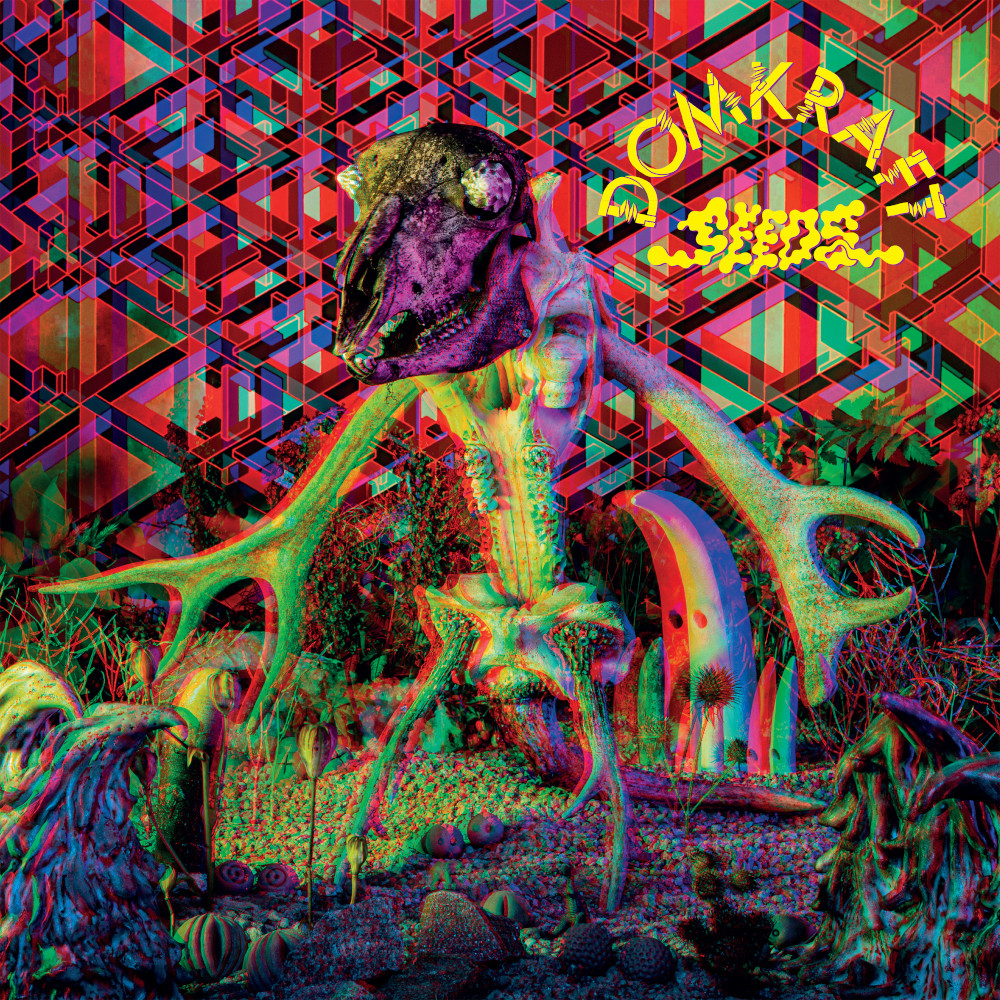
Domkraft - Seeds (2021)

Country: Sweden
Style: Heavy Psychedelic Rock
Rating: 8/10
Release Date: 30 Apr 2021
Sites: Bandcamp | Facebook | Instagram | Metal Archives

I don't review a heck of a lot of sludge metal, but here's a second album in two days where that genre has come up. While I'd absolutely call Discarded Self blackened sludge metal, I see Domkraft as heavy psychedelic rock. Everything here is rooted in psychedelic rock. It just happens to be really heavy. And I do mean heavy. Where most bands plumbing the late sixties and early seventies for inspiration head right for the standards, Led Zeppelin and Black Sabbath, and certainly there's a lot of Sabbath here in the Domkraft sound, I'd suggest that they've been listening more to Vanilla Fudge and Blue Cheer and their ilk.

This felt very west coast American to me. There's acid here and I don't think that was Sabbath's drug of choice in Birmingham and the music isn't coming from the same attitude. It's certainly as trippy as it is heavy, but that trippiness feels like experimentation rather than escape. It's mind expansion not avoidance of reality. In fact, the British influence I'm hearing most isn't actually Sabbath at all, weird given how emphatically heavy this is, but Hawkwind. This isn't space rock at all and I don't believe that there's even a keyboardist in Domkraft, but it does explore some of the same territory and I can easily see the fanbases overlapping.

The vocals certainly fit Hawkwind because they're clean but they're not polished, melodic and musical but raw and heartfelt. They're provided by Martin Wegeland, who also handles the very audible bass, because Domkraft are a trio, as some unwritten rule seems to suggest heavy psychedelic bands ought to be. Did Cream create that rule? It certainly seems to be followed a lot, perhaps because the sound of such bands is often unadorned by orchestration or electronica but frequently instrumental. This is not an instrumental band, but there are long stretches where we never hear a voice.

The biggest problem the album has, I think, is that the opening title track is absolutely fantastic. It's a nine minute piece too, so we're fully acclimatised to Domkraft when it ends, like a sort of encore that didn't make it onto the released version of Space Ritual. I adore this song, but the rest of the album is not another half an hour of the same stuff and Perpetuator, the almost nine minute song that follows it is emphatically not doing the same thing.

Perpetuator is worthy of mention because it's definitely playing with sludge. To me, it feels a little out of place, because this music wants to soar, to be free, and the more overt sludge elements anchor it to the ground. Perpetuator feels held back, even with what may well be an escape into the cosmos at the end. Seeds feels free by comparison, its organic heaviness not stopping its movement but shaping it in fascinating ways Sure, the atmosphere is thick and syrupy but we're moving through that in leisurely and inexorable motion, sometimes langurous. Jumping back to Seeds after Perpetuator feels like the chains have broken and the waters with them too, because we're being born.

Fortunately, Into Orbit returns to the style of Seeds and we mostly stay there for the rest of the album. I like Wegeland's work, in both his roles, and I'm impressed by just how much Anders Dahlgren is a powerhouse behind the drumkit. They conjure up a heck of a background for Martin Widholm's guitar to paint over and it never ceases to amaze me just how dense a trio can sound. Widholm, though, feels like he's three different people. There are points where he backs off a little, content to provide a riff to underpin the vocals, and the band still sound a lot fuller than some six or seven piece bands I've heard. But then he opens up and rides the waves of feedback like an accomplished surfer and suddenly it feels like there are ten musicians on stage each serving to build sonic layers, but those ten musicians are usually Martin Widholm.

Domkraft hail from Stockholm, Sweden and this is their third studio album, after The End of Electricity in 2016 and Flood two years later. I haven't heard those, but I'm eager to explore them. The line-up has remained consistent throughout, though I don't know when they were founded. Maybe they're bigger on the sludge in earlier releases. If they're moving away from that into purer psychedelic rock realms, then Perpetuator would likely be the oldest song here and the Indian-infused Krank Blekhet the most recent, even though it's really an intro for the closing track, Audiodome, which is another nine minute journey and an even more diverse one.

It has perhaps the most overt Sabbath riff, but it's still all enfolding like the best of Hawkwind and as immersive as some of those heavy psychedelic acid trips that so many bands took out of San Francisco as the sixties became the seventies and heavy metal was being born. This does seem primal like that. Maybe that isn't sludge at all, but primordial ooze and, once the band have crept out of it, the sky is the only limit. I like this a lot.

Monday, 3 May 2021

Gilby Clarke - The Gospel Truth (2021)

Country: USA
Style: Hard Rock
Rating: 7/10
Release Date: 23 Apr 2021
Sites: Facebook | Instagram | Official Website | Twitter | YouTube

The title of this album from former Guns n' Roses guitarist, Gilby Clarke, feels appropriate, because it often feels like he's preaching to us, even if it isn't in any religious way. It's there in the upbeat nature of the sound and it's there in the Hammond organ on Wayfarer and the perky brass on the title track. The cover art suggests country music too, which adds another tie to gospel, even if it doesn't ever get close to that genre. It's all in the presentation, I guess.

The problem, I think, is that we're never quite sure what is being preached, because the album moves all over the place. Just rock 'n' roll? If so, that's cool, but at least half the songs feel safe, not the take I'd want from a guitarist on his fifth solo album almost thirty years after the first. It says tired and not particularly driven any more. I'd write the album off on that line, except that there are other songs in which Clarke shows some real attitude and edge, exactly what I want hear from a guitarist on his fifth solo album almost thirty years after the first. It says hungry and driven. Is Clarke both?

It sounds good from the outset, but safe up to Tightwad, which is at least catchy and features a couple of name guests: Nikki Sixx (Mötley Crüe) on bass and Stephen Perkins (Jane's Addiction) on drums. All these early songs are built out of good riffs so they're perfectly enjoyable, but they need some more oomph to them, as did the album after three songs like these. Fortunately, that's exactly what Clarke delivers on Rock n' Roll is Getting Louder, which is punkier and edgier, led by a really vibrant bass from Muddy Stardust and a sassier riff from Clarke, even if it's one he borrowed from Elton John's Saturday Night's Alright for Fighting.

The best song here, by far to my way of thinking, is Violation, which is a glorious way to see how close a lot of rock music actually is. It's a song that finds its groove immediately and reminds just as quickly of the Rolling Stones. This is blues rock that's been hardened and toughened by decades on the road but is still ready for dancing. There's even a honky tonk piano in there at points. However, the vocals have not just some Mick Jagger sass but some Iggy Pop sneer. This is the Stones covered by the Stooges and then they hit the chorus and it's suddenly Hawkwind covering the Stooges covering the Stones and it's all seven shades of wonderful.

Even after a couple of times through, I was considering a 6/10 for this album, but Violation is well into the 9/10 range and some of these riffs are really infectious. The one on The Ending is simple but very effective. There's a fantastic pick up late in Dangerous Sin to give it edge enough to live up to its title. There's attitude in Rusted n Busted that echoes Rock n' Roll is Getting Louder. It's suddenly like the album does want to kick our ass, even if it can't be bothered for half the songs. So I'm sneaking my rating back up to a 7/10. After all, none of this is bad and some of it's good, with Violation unmistakably great. I just wish I could get my head around why it's so inconsistent.

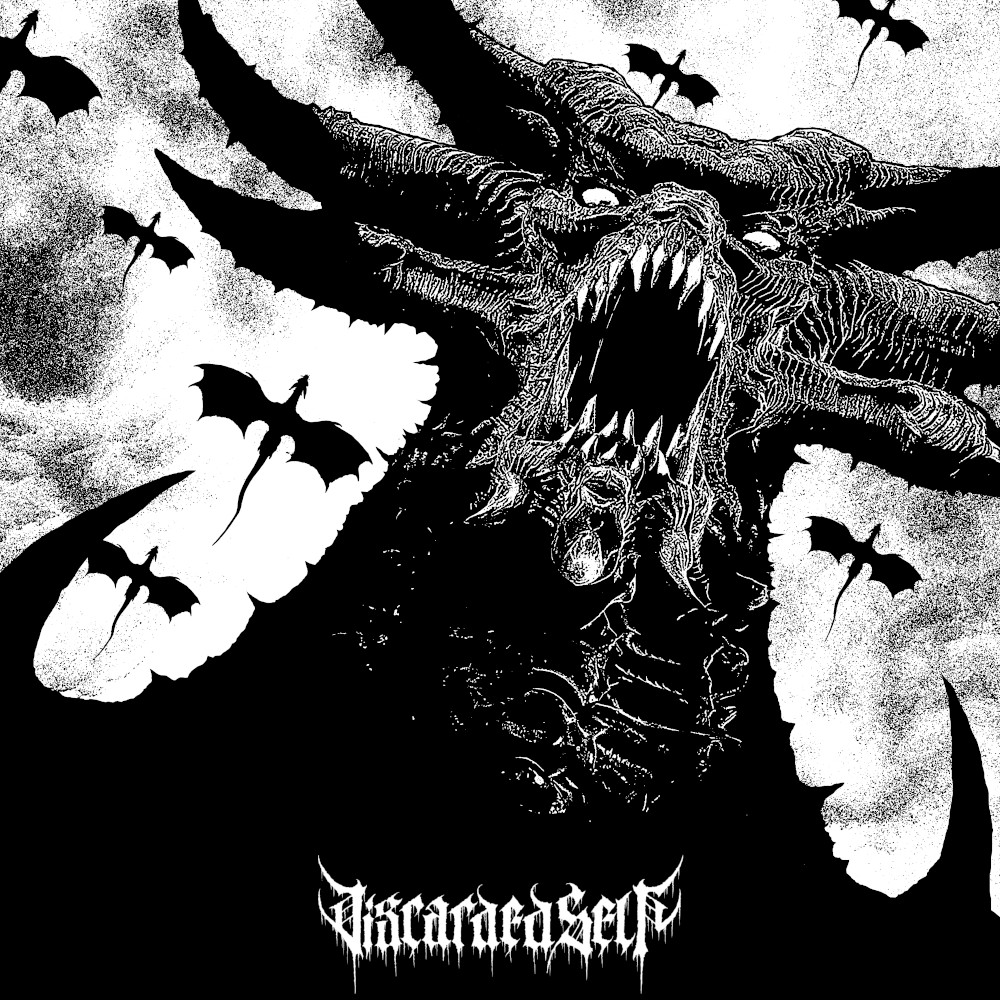
Discarded Self - Discarded Self (2021)

Country: Canada
Style: Blackened Sludge Metal
Rating: 7/10
Release Date: 30 Apr 2021
Sites: Bandcamp | Facebook | Metal Archives | YouTube

Thanks to Piers from Sarcophagus Recordings for sending this album over for review. Discarded Self is a solo project for Jarret Beach, who plays bass for the Canadian melodic death metal outfit Ashes of Yggdrasil, whose debut EP I reviewed back in 2019. He plays everything here except the drums, with a quartet of guests, mostly from his other bands, taking turns behind the kit. I say bands, because he's also the vocalist and guitarist for Destroy My Brains, who play doom/sludge metal, and he remains in that vein here for Discarded Self.

This is mostly sludge, occasionally moving into cleaner doom, but with black metal harshness overlaid in abandon, especially with the vocals. Blackened sludge seems like a fair description of much of this, especially the openers, I Smell Pipes and Orbitoclast, and I have to say that I like them a lot more than much of the sludge I've been hearing lately with more shouty hardcore vocals, even if Beach's voice is often so dominant that it threatens to overwhelm the music.

Push the Knife makes the guitar a little less visceral and adds melodies that hint at doom/death, but the vocals remain thoroughly black and so dominant that it's only really blackened doom in the more instrumental sections. Dance Upon the Dead does something similar, clean doom rising up through a cloudbank only to be quickly submerged again.

And, when we get to Cultist of the Pentagram and some neat faster old school churn, the black metal is pushed so far into focus that it can't really be called blackened anything any more, just black metal, even if it doesn't exist for its blastbeats and it slows down a couple of minutes in to remind us that it started out as sludge, even adding a strange duet between Beach's lead vocal and a recurring spoken word sample.

I think that's my favourite track here, though I dig the riffs in Abused (e)Motionless and Orbitoclast a lot too. Oddly, the latter is a short track here, at six and a half minutes, because Beach leans towards epics and is very generous with the running time. Only Cultist of the Pentagram is shorter here and a couple of songs, albeit one that's missing from my copy of the album, stretch past ten minutes. Push the Knife is the one I have and it's surprisingly vocal for a song of that length. I'd have expected more instrumental sections but Beach's voice is never too far away.

If On the Unlevel was restored, this album would last over an hour, which certainly means good value for money but also a heck of a lot of blackened sludge in one go. I never got bored at all, even after a few times through, but it's fair to say that blackened sludge is a genre that brings its own mood along with it and I tend to prefer mine in more bite sized chunks. From that standpoint, I think this is a "your mileage may vary" album. If this is absolutely your genre, it's good stuff. If it's not, then it's still good stuff but it may feel a little overwhelming.