Thursday, 11 March 2021

Omination - NGR (2021)

Country: Tunisia
Style: Funeral Doom/Death Metal
Rating: 9/10
Release Date: 5 Feb 2021
Sites: Bandcamp | Facebook | Instagram | Metal Archives

Regular readers will know well that I live to discover things that I haven't heard before. That's why I'd easily call Nepal Death's debut my favourite album of the month, even if I've rated three others above it. This is the first to even stand up as a contender and that's because this is a one man funeral doom/death metal album from Tunisia on the aptly named label Hypnotic Dirge Records.

That one man is Fedor Kovalevsky, who doesn't sound like he's from Tunisia, unlike his bandmates in progressive death metal outfit Vielikan, Zied Kochbati and Nessim Toumi, both of whom seem to have at least some sort of connection to Omination even if they don't play on this, the project's third full length release. Wherever he hails from originally, he's based in Tunis and that makes this a Tunisian extreme metal release, one that's long, fascinating and uncompromising.

And I say funeral doom/death metal for the sake of listing a genre. This may not be what you imagine from that description, though it's certainly as fair as anything else. This may sound really weird but I ended up thinking of NGR as the dark side of early Enigma. No, this isn't built out of samples and I'm not suggesting that it's Gregorian monks shifted into a minor key. However, the instrumentation here is as much church organ, bells and choral chanting as it is guitars, bass and drums. The whole thing is about setting a mood and that mood is cultists in black robes performing unholy rites in the ruins of an unsanctified church.

It's also experimental enough that it's hard to sit this truly alongside bands like Ahab, who are heavy and achingly slow but traditional enough in their song structures that you could play them at 45rpm instead of 33rpm and get a different experience. This often appears to be as much a sound collage as a piece of music. There are points where our ears catch riffs and melodies and rhythms and all the other things that we critics call out so often for attention, but mostly this sounds like a train colliding with a packed church in slow motion and in such a way that the result sounds appealing.

I'd love to hear someone better versed in experimental music than I explain why this works. I can see a particularly canny combination of subgenres, bringing in walls of sound from black metal, the growls from death metal and the slow pace and atmospheres of doom metal, but there are other things here. This is music I could imagine reading about in The Wire as much as Terrorizer and I'm convinced that a number of the instruments here are found objects in a Einstürzende Neubauten sense, bringing some proto-industrial textures into play.

It also feels as if it falls into a genre that could simply be called loud music. I don't know the technical wonders that the production is utilising but I've stood in a tiny venue with a band performing louder than was appropriate for the space and my ears rebelled at the sheer volume. I felt the same here and I have a volume control that I can tweak however I like. That discomfort factor is built into the music and it's fascinating to me. I don't want to leave, but my ears are constantly struggling to understand what's happening in such a challenging environment. This is what intensity sounds like and I say that before we get to the industrial black metal section sixteen minutes into The New Golgotha Repvbliq.

The vocals help a picture like that because they're varied. Kovalevsky sings with both clean and harsh voices but he also shouts, not in a hardcore style but like he's fighting to be heard in a hurricane, and he also chants in ritual fashion. I presume it's all him, because he's credited for everything, but he's a cast of characters rather than a single performer. Given that some of this feels ritualistic, I wonder if it was written with visuals in mind. If I put the words "dark opera" together, I'd expect something in a gothic metal vein, which this totally isn't, but they seem to fit here.

The stage would need to be huge though, because the grandeur here is Wagnerian in scale. This needs an organ the size of a building and entire walls of choirs. The characters have to be giants, fallen gods moving achingly slowly, especially during the hypnotic ritual chanting sections in songs like Unto the Ages of Ages and Death(s), Love and Life. The sets and costume must be black and white because colour has been bled out of this album. And it must have an ethnic angle, even if African flavours don't show up until Post-Apocalypticism almost an hour in, because wherever this unfolds, it isn't here and that's going to stand wherever you're reading this from.

Did I mention that this album is long? When Post-Apocalypticism ends, eight songs in, we've reached 57m, making this long already. But then it's time for the title track, because NGR presumably stands for The New Golgotha Repvbliq, and this wildly ambitious piece is over twenty minutes long. And, if that's not enough, my edition has a tenth song, titled Nothing, which adds another ten. An hour and a half of this ought to be unbearable but it's magnetic. I listened to this in entirety three times yesterday and a fourth time today as I translated my notes into an actual review.

To suggest that there's a lot here is a major understatement. It's not remotely going to be something that everyone's going to appreciate. This is very niche material, but if you're someone who likes how genres can be merged and subverted into something new and if you're someone who reads The Wire as often as your favourite metal magazine, this may be the best album you've heard in forever.

Wednesday, 10 March 2021

Kings of Leon - When You See Yourself (2021)

Country: USA
Style: Rock
Rating: 6/10
Release Date: 5 Mar 2021
Sites: Facebook | Instagram | Official Website | Twitter | Wikipedia | YouTube

Kings of Leon have been gradually drifting away from their original garage rock sound to alternative rock for years and on this eighth studio album, arriving five years after its predecessor, they're easily at the safest sound they've reached yet. However, even though these songs are so laid back that all the urgency of an early single like Red Morning Light is forgotten, they do tend to find the grooves they seem to be looking for, even if they're softer ones without any sharp edges. When Caleb Followill asks us to "come a little closer, closer now to the edge" on Time in Disguise, the irony is biting.

The question that constantly comes back to mind here is whether those grooves are engaging enough to draw us in to explore what's going on in a particular song or so underplayed that we drift away for a while. And while even having to ask that question surely says a lot all on its own, there are plenty of both of those categories here.

The earliest songs, as subtle as they often are, did grab my attention. I dug the opener, When You See Yourself, are You Far Away, because it starts so softly and inoffensively but gradually adds layers until it's quite a complex thing. It's rather like pop-era Peter Gabriel singing for a new wave outfit who are mysteriously without much budget for electronics and it's a great way to kick off an album. I liked it a bit more than the opening pair of singles, The Bandit and 100,000 People, and a lot more than most of the songs here.

The Bandit is probably the most overt song anywhere to be found here, with the possible exception of Echoing, and it also hearkens back to indie music from the eighties and maybe nineties too. Taking a different approach, 100,000 People reminded me of a stripped down Bruce Springsteen, perhaps doing a cover of one of his wife Patti Scialfa's singer-songwriter songs. It's my favourite song here, after the opener which is a step above. These are good songs.

But then the next few didn't do much for me at all and I kept forgetting that they were even playing. I won't say that they're boring, because when I paid attention on a second listen I was rewarded, but I'd suggest that they easily become ambient noise, like songs on whatever inoffensive radio station is on in the background at the dentist's while you're concentrating on not feeling pain during a root canal. That especially begins with A Wave and continues through Golden Restless Age and on throughout.

And here's where you have a decision to make. If you stop doing everything else and concentrate on a song, it sounds good but we can't help but feel that it's bad for us anyway. It may be the safest album to put on in the background at a party that I've ever heard. It's feels like it's been designed to be the definition of inoffensive and it succeeds so well that our brains revolt at the concept. So do you want in? Do ya?

For instance, there's an organic pulse to Supermarket that feels like someone took the entire output of Joy Division, filtered it through algorithms to become one definitive song, shifted it into a happy key and applied an entire bottle of the digital equivalent of fabric softener to make it soft and fluffy. It's really hard to not like it, but you have to concentrate to even notice it and it leaves us with mixed feelings. Are we supposed to be happy or depressed? Is this really the soundtrack of our lives? Is this muzak conjured up a mad hacker who slipped something into it that's subversive and our subconcious knows it but hasn't convinced us yet? Is it an impeccably crafted musical drug?

I wonder what I'll feel if I come back to this album in a couple of weeks. I'm wondering if I'll remember that it exists. Wasn't I dreaming? But with that Joy Division trick repeated on other songs with Bruce Springsteen and Lou Reed and other iconic musicians, maybe it's all I'll remember because two listens was enough for it to take over my brain like a parasite and own my thoughts.

Bloodkill - Throne of Control (2021)

Country: India
Style: Heavy/Thrash Metal
Rating: 7/10
Release Date: 19 Jan 2021
Sites: Bandcamp | Facebook | Instagram | Metal Archives | YouTube

I've been hearing good things about Bloodkill, a new thrash band from Mumbai, India, who formed in 2016 and are on their debut album, so I was eager to check Throne of Control out. What I found is that they're a tight and reliable new band who chug really well, the pairing of Shubham Khare on lead and Vishwas Shetty on rhythm the powerhouse behind them. There's a fantastic midsection to For I am the Messiah where the latter chugs magnificently so the former can run free and there really isn't much at all to the title track except solid chugging and neat pauses.

They're not a particularly fast thrash band, falling more often into an Iron Maiden-esque heavy metal sound on songs like Unite and Conquer or a bouncy mid-pace thrash feel to songs like Blindead Circus which really ought to get the pit moving. They do speed up, but never for long enough for us to get a real workout. I have a feeling their pits are going to seriously and constantly churn but never go wild the way pits can. The band I kept coming back to the most for comparison is Death Angel, but the last Warbringer album sprang to mind as well.

If the guitars were my favourite aspect by far, almost every track coming close to the extended section of For I am the Messiah that absolutely dominates that song, my least favourite must be the vocals of Anirudh Gollapudi, who has a deliberately rough voice. He sings clean but it's very hoarse. There are a lot of points where this works, infusing songs like False Face or Unite and Conquer with a Tom Araya-esque attitude, but there are a lot of points where it seems to be too much, like late in 3B or early in Horrorscope, at which point he seems to be trying too hard to be over the top. I wonder how much of that is due to the production and whether it'll show as much on stage.

This isn't a particularly long album, but it doesn't outstay its welcome. There are seven songs proper, plus a minute long introduction, and they're all of a regular sort of length. With the exception of the shortest song, Blindead Circus, which only just nudges past three minutes, everything sits in the four to six minute range, long enough to build well and allow for instrumental workouts, but not so much that anything can even think about being epic and that limits Bloodkill's ability to mix it up.

This is a decent album, if mostly for the mid-paced thrash fans out there who lapped up Warbringer's release from last year, especially given the rough vocals. I liked a couple of these songs a lot, For I am the Messiah chief amongst them, and none of them let the side down. However, I'm not wowed in the way that some people seem to be at the moment, perhaps because I do like my thrash to blister rather than chug and there are precious few moments where Bloodkill do that. But that's fine. It just means that it may speak to you more than it does to me. It's good stuff.

Tuesday, 9 March 2021

Nightfall - At Night We Prey (2021)

Country: Greece
Style: Melodic Black/Death/Doom Metal
Rating: 7/10
Release Date: 5 Mar 2021
Sites: Facebook | Instagram | Metal Archives | Twitter | Wikipedia

Here's another band who have been around for some time but are nonetheless new to me. Singer and bassist Efthimis Karadimas formed Nightfall in Athens, Greece way back in 1991 and the band put out nine albums before this one, apparently evolving as they did so through quite the variety of genres. Metal Archives says they started out as melodic black/death/doom metal, morphed into gothic metal or rock and then moved back to their roots. Wikipedia says that, along with Moonspell, which I know, and Inciuvatu, which I don't, they introduced a "Mediterranean way to black metal".

Whatever we call this, it's emphatic. After a dark piano intro with keyboards building behind it like a trailer to a horror film, the opening track proper tells us in no uncertain terms that the band mean to hit us hard. Perhaps it's because they've been gone for a while. They kinda sorta split up from 2005 to 2009 and again from 2013 until now, so some people are surprised to see them back. Maybe they want to underline that not only are they back but they're back with a vengeance.

This opening track is Killing Moon and everything in it is done with emphasis. Fotis Bernardo, a new fish on drums, especially means to really thump them hard and the production does a fantastic job of aiding him in that. The tempo ratchets up nicely too, so that we could often almost see this as thrash metal rather than the melodic death metal it's closer to. It really doesn't hang around, especially in a frantic midsection, but the tone is always a little deeper and Karadimas's voice growls and bellows.

I have to say that I like the faster sections more than the slower ones, but the band do both well and I can't complain about how heavy it all feels. Witches opens up like Seasons of the Abyss era Slayer and that's heavy indeed. However, when they speed up, like on Killing Moon and Darkness Forever, I found more of a Kreator vibe than anything off Reign in Blood.

Nightfall are more varied at slower tempos, adding in black metal on Witches, gothic metal on Giants of Anger and death metal on, well, pretty much everything else. There are other sounds here that may not come from any of them. Temenos has a vibe that's halfway between a heavy Blue Öyster Cult song and something by one of those black metal bands who abandoned the genre for something a lot more commercial like, say, Satyricon. Meteor Gods starts out with choral vocals that sound ethnic. Martyrs of the Cult of the Dead has a bombastic flavour from outside extreme metal, though it's extremed up.

In short, there's a lot here and I'm digging the way that Nightfall merge genres. The most interesting music I've heard over the last few years has been from artists or bands who ditch all traditional marks of boundaries and create whatever they want, whatever box or boxes it might end up in. Nightfall are clearly masters of that. These songs move back and forth between pretty much every flavour of metal without any of it seeming inappropriate. The title track can drop into a quiet melodic line or spoken word because it feels like it and suddenly we're remembering that there's progressive metal too. It's like they want to check off all the boxes and that's not a bad thing.

Now, it seems like I have nine Nightfall albums to catch up on. I've been finding some wonderful stuff coming out of Greece, but it's new. I like that there's still wonderful stuff from Greece that's old too, beyond what I already knew about.

Kreek - Kreek (2021)

Country: UK
Style: Hard Rock
Rating: 7/10
Release Date: 12 Feb 2021
Sites: Facebook | Instagram | Twitter

Formed in 2019 by lead vocalist Antony Ellis, who had left Bigfoot that year, and signed to Frontiers, Kreek come highly recommended by my go to melodic rock maven, Chris Franklin of Raised on Rock, and I've learned to pay attention to his recommendations. Then again, with an opening track like At the Bottom of Hell, I didn't need much prompting.

This is a long song for a rock album like this, running over six and a half minutes when precious little else makes it past five, but it's a manifesto of everything what the band want us to know they can do. There's an intro, a build and an unusual vocal part to grab our interest. There's a confident lead vocal from Ellis, which is clearly designed to start out memorable but so far within his capabilities that we will learn what he can do as he goes on. There's a strong melodic line that's underpinned by musicians who are somehow patient and urgent at once. The drums especially don't quite do what we expect and the bass goes particularly wild late in the song. The guitar solo is good. The chorus is good. The feel is good. And we end with the sure knowledge that, if we didn't like this one, we might as well go home.

I liked this one. And that means that I like this album.

Kreek are emphatically a hard rock band, though there are plenty of moments that remind me of Iron Maiden. It's there in the way Ellis's vocals build. It's there in odd melodies throughout. It's especially there in some of the more frantic intros like the one to Missiles, which reminds of Back in the Village. But it isn't there in the intensity that a metal band goes to, though I'm sure Kreek will be heavier on stage than they are here on record, because that's not what they're aiming to do. They fit very well in what I'm hearing from the New Wave of Classic Rock.

Million Dollar Man, the opening single, brings an American flavour into a British style; there's some Sammy Hagar swagger in this one and there's some Aerosmith to be found elsewhere in the album as well. Mostly, though, this is British through and through. Stand Together in particular feels like it's encapsulating decades of British rock 'n' roll because this song runs the gamut, reminding at points of Budgie, Saxon and Wolfsbane, even the Beatles. Everyone will want this one to be faster but we'll eventually realise that it works at this slow, grinding pace because it's a statement.

In fact, many of these songs, especially late in the album, remain stubbornly slower than we're likely to want them to be, including the refreshing anti-ballad, You're on Your Own, that closes the album, but it may be that they stick in our heads better for that. They make us feel like Kreek have confidence in what they're doing a little more. And, of course, I'm sure they'll be speeding them up on stage for a wildly different effect.

The biggest problem this album has is that it peaks early, nothing able to match that killer opener, At the Bottom of Hell. The strongest point this album has is that, even if the other nine songs are lesser to that one, they're each only a single notch down and they remain consistent in quality throughout. Sure, this isn't the killer album that the opener promises, but nonetheless it's reliable and solid and a strong debut for a band that ought to go far. You can pull any song off this and you're in good hands.

Monday, 8 March 2021

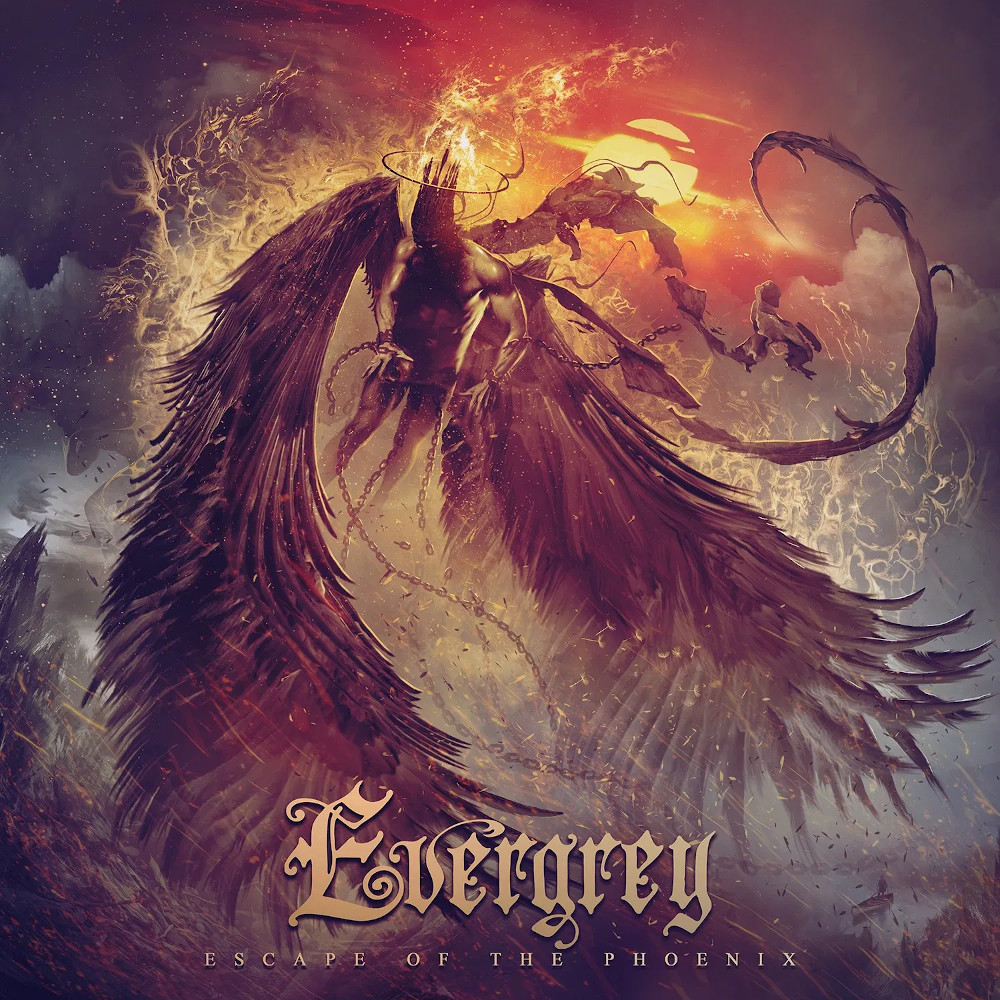
Evergrey - Escape of the Phoenix (2021)

Country: Sweden
Style: Progressive Metal
Rating: 8/10
Release Date: 26 Feb 2021
Sites: Facebook | Instagram | Metal Archives | Official Website | Twitter | Wikipedia | YouTube

I don't think I've ever heard Evergrey before. They hail from Gothenburg, Sweden but play what they call progressive power metal rather than the expected melodic death metal. They formed back in 1995 and have kept busy ever since, this being their twelfth studio album. The biggest gap between albums is only three years and it's been just two since The Atlantic, which slipped by me in 2019. Their line-up has been stable since 2014 and is centred on Tom S. Englund, who sings and plays guitar.

Having now heard Escape of the Phoenix, I'd suggest that there's a lot more progressive metal in their sound than power metal. There's power here, but it's mostly overwhelmed by the progressive sound, a few exceptions notwithstanding. Many of these songs have an alternative rock feel too, but framed in a heavier context and with progressive flavour. I could imagine a regular alternative rock band taking many of these songs, simplifying them, removing the metal crunch but keeping the modern bass and releasing them as commercial covers.

What's more, the best songs here, like the piano-driven In the Absence of Sun, are clearly progressive metal and have very little power metal in them at all, perhaps just a little of that genre's grandeur. It falls to songs like Forever Outsider, which opens the album, the title track and Leaden Saints to bring that driving power metal sound into play. Much of that comes from drummer Jonas Ekdahl, who rolls on wonderfully. When he ups the tempo, everyone else has to follow suit and even the solos begin to feel a little more power metal.

To underline how this is primarily prog metal, James LaBrie from Dream Theater shows up to guest on one of these songs, The Beholder, and his contribution is not wildly different in style from Englund's on the earlier four. These are prog metal vocals, always with an eye on melody but not being as catchy as a softer melodic rock take on these songs would be. Neither screams nor soars, but both are clearly accomplished and both deliver some neat runs and holds.

I like this sound. Evergrey are clearly very comfortable with it and this album does run very smoothly indeed for almost an hour. It feels like they could have just carried on for a further hour or two in the same vein without the quality dipping at all. The only catch to that comfortable consistency is that it takes a while for songs to stand out from the others, even though this is really good material. I found that listening through the album as a whole was an enjoyable experience but that playing individual pieces in isolation was a better way to appreciate just how good they are.

To pick just one example, Stories sounded good every time I listened through the album, but it didn't sound like it was any better than Where August Mourn before it or A Dandelion Cipher after it. It was just good stuff. Taking a break, getting some lunch and coming back to play just that song showed me that it's better than just good. It's an excellent song that would have stood out on any radio show but merely doesn't here because all the songs around it are just as excellent. Successfully applying that logic to pretty much anything else on this album underlines how this is very worthy of an 8/10.

Raven Sad - The Leaf and the Wing (2021)

Country: Italy
Style: Progressive Rock
Rating: 7/10
Release Date: 3 Feb 2021
Sites: Bandcamp | Facebook | Instagram | Official Website | Prog Archives | YouTube

It's hard not to like Raven Sad. This is another generous album, at almost sixty-eight minutes, but it's one that really knows how to breathe. They're an Italian progressive rock band formed in 2005, even if they don't often sound like they're an Italian progressive rock band. Apparently, they used to have an abundant space rock influence that led people to thinking they were Germans but Samuele Santanna, whose solo project this originally was, has changed line-up frequently and Gabriele Marconcini, their new vocalist, is clearly Italian.

I'm hearing more of an Anglo-American sound here, a cross between Marillion and Queensrÿche, with the Marillion most obvious in the instrumental sections and the Queensrÿche in the way Marconcini delivers his vocals. He doesn't soar the way Geoff Tate used to but he's often very similar in his lower register. But that's just a starting point. There's a folkiness throughout that's easily found through a deceptive lightness and the ability of these songs to breathe. There's a funky organ in City Lights and Desert Dark and it veers into jazz fusion midway through. There's also some seventies rock in Ride the Tempest that is shorn of its prog, reminding how widely Black Sabbath influenced music. There's very little of them here but it can be found.

The band is new, but Santanna has been recording as Raven Sad name since 2008 and this is his fourth album. Only keyboardist Fabrizio Trinci has appeared on any of those, I believe, so I doubt they're too representative of what this band sounds like today, especially given what I'm reading about krautrock and jazz influences on them. It's also been a full decade since the prior release, Layers of Stratosphere in 2011. I'm still interested in looking out for them, because this is deep music, but I don't expect too much similarity.

And that makes me wonder about what the next album will be like. This band is easily strong enough that I hope this isn't it for the line-up. If it is, I'm happy that they left us with so much music. The Leaf and the Wing may only include eight songs, one of which is a two minute intro, but they're not short ones. The Sadness of the Raven opens up proceedings at almost ten minutes and it never once seems long. City Lights and Desert Dark is a few breaths longer still and the same applies. Then it's Colorbox at thirteen minutes even, the longest song here, which feels looser and a little more Italian, even with Marconcini singing in English and some very Steve Rothery guitarwork from Santanna.

I think my favourite songs are that early pair of ten minute songs and the a pair of darker pieces that follow Colorbox. I enjoyed this throughout, but the early sections of Approaching the Chaos spoke to me. It's a little darker, but not by much, and a little sassier too. It isn't content to sit back and flow; it wants to actively engage and play with us. An inquisitive bass, perky drums and teasing keyboards are a great way to kick the song off and it only grows from there. Ride the Tempest continues the slightly darker approach and adds a little weight to it. This is never heavy music, let alone metal, but this one does think about it often.

Like the Moonspell album from Friday, this is a grower, a second listen highlighting depths that I had missed the first time through and a third listen doing the same. However, it's a lot more immediate. I had to work a little with the Moonspell, which I did because of their name. I didn't know Raven Sad at all before hearing this, so wouldn't have had that incentive to persevere. Fortunately, I didn't need it. I'll be pulling both these albums out again to explore further and I won't rule out upping the ratings on both of them.

Friday, 5 March 2021

Moonspell - Hermitage (2021)

Country: Portugal
Style: Progressive/Gothic Rock/Metal
Rating: 7/10
Release Date: 26 Feb 2021
Sites: Bandcamp | Facebook | Instagram | Metal Archives | Official Website | Twitter | Wikipedia | YouTube

Portugal's premier gothic metal band return with a new album, their twelfth, which returns them to a predominantly English language approach after their concept album, 1755, about the earthquake that year in Lisbon, which was entirely in Portuguese. As has increasingly become the case, this is a gothic metal album that isn't what we would usually think of when someone mentions gothic metal. There is no beauty and the beast vocal interaction and no female vocalist at all. In fact, there's not a heck of a lot of metal either.

While Moonspell reached this stage of their careers in a gradual shift away from the black metal they started out playing, this feels like it started instead as goth rock, moved into progressive rock and, at points, heavied up a little. The Greater Good, which opens the album, plays with that contrast, mostly staying in a rock vein but happy to get more crunchy and emphatic at points. However, a song like All or Nothing feels like it's still in that prog phase, the gothic tone mostly in the pleading of the vocals but overshadowed by some neat guitar solos. It doesn't even think about becoming metal, even when it could.

I quite like this sound, even if I was hoping for something heavier, but these songs aren't particularly immediate. I liked what I was hearing, even on a first time through, but it took a few listens to really start to appreciate what Moonspell are doing here and, even then, little of it wowed me. I just became increasingly comfortable with it until the point where some of the songs turned into old friends. The longer I listened to this album, the more I appreciated it, but it took time.

Entitlement was the first song to seep under my skin. It's a slower, proggier piece, but an atmospheric one too, that atmosphere being dark and obviously rooted in goth, if notably underplayed goth if we compare to what the early eighties would have done to it. It chooses to beckon us in rather than bash us over the head and drags us there, which helps to underline that it may be one part Bauhaus but it's one part Bauhaus to four or five of Pink Floyd, the name that I kept coming back to. That influence is a stronger one as the album runs on, especially in the solos of Ricardo Amorim, who has been paying a lot of attention to Dave Gilmour, though the band are never derivative.

What surprised me, given the album's title and song titles such as Common Prayers, Solitarian or The Hermit Saints, is the lack of a religious feel. Clearly this is themed, if not a concept album, and we're constantly hearing references in the lyrics. I was following the music a lot more than the words, but it ends up being impossible not to hear words like "saints", "pray" and "hermit" repeating everywhere. However, excepting some choral backing vocals, the first hints I found were in Apophthegmata, eight songs in, and even there, it's only at points, through a well placed church organ, and not integral.

By the way, that song title doesn't refer to the name of a demon, it presumably refers to the Sayings of the Desert Fathers, or the Apophthegmata Patrum, a set of stories that describe spiritual practices of 5th century Christian hermits in the deserts of Egypt. It doen't explore them specifically, but there is a common thread running through this album about leaving the world of things behind and going elsewhere to think and pray and regain some sense of who we are.

And talking of identity, it's interesting to see that Moonspell apparently still think of themselves as a gothic metal band. Their Bandcamp page still uses tags like black metal, dark metal, gothic metal and progressive metal. There's no black metal here at all and, while the other three still hold truth, this is much more of a rock album. Sure songs like Common Prayers, The Hermit Saints and the title track are willing to add some metal crunch and vocals that are more overt but, over time, that gradually seems like a holdover from the older Moonspell, who are inexorably moving away from it. I'm interested in seeing where Moonspell go from here.