Thursday, 7 January 2021

Gridiron - The Other Side of Suffering (2021)

Country: USA
Style: Groove/Thrash Metal
Rating: 6/10
Release Date: 1 Jan 2021
Sites: Facebook | Instagram | Metal Archives | YouTube

After being dragged down by Hum, I wanted something fast and heavy to wake me up and kick my ass, so I ran through a bunch of thrash metal albums and EPs, most of which left me dry. The one to break through my ennui was this one, by Texan band Gridiron, even though it's not quite the sort of thing I was looking for.

Metal Archives call what they do thrash/groove metal, which isn't unfair, but Gridiron themselves call it metalcore. What won me over was the sheer ferocity when they're seriously shifting, because they carry some serious power and energy. Become is strong out of the gate, for instance, and then gets truly ferocious. Where's my socially distanced mosh pit?

Now, I'm an old school thrash fan—that's always been my go to genre—but I prefer it without groove on the side and with its vocals some degree of clean. The most overt metalcore elements here can be found in Zack Knight's vocal delivery, a mostly monotone shout that's easily my least favourite aspect to this album, but it sometimes gets closer to a death growl, especially when he's roaring, and he also sings clean, so there is some variety here.

He's also one of two guitarists in Gridiron and, without attempting to shift any credit away from the rhythm section which is admirably reliable, it's the guitars that dominate this band and the longer I listened, the more they stood out. I may not like Knight as a singer, but I'm a big fan of him and Josh Cross as guitarists. While I prefer the faster, more energetic sections in any song here, there are slow parts that I really like too, because of the way they merge a crushing heaviness with a strong sense of melody. In fact, while the fast sections got me on board, it could be fair to say the slower ones made me all the more interested.

Lazarus moves back and forth between faster and slower sections and it all works magnificently. Eyes Wide Shut and Afterlife shine because of the guitars and Blame It on the Fire is all about the guitars, with some uncharacteristic keyboards floating over them that at times hint at being a choir. This one is an instrumental, the only one on the album if we ignore the minute long intro, and I'd call it a fine example of what the rest of it could have been, if it didn't seem like a different genre. It's symphonic power metal, really, on a groove/thrash album, an approach telegraphed in A Sight to Behold.

Things shift back to normal with Wretched Earth and stay there. I kept on hating Knight's vocals but loving his guitars. I don't know how he and Cross divvy up their work, so I have no idea who deserves praise for what, but they both clearly deserve plenty of it. Eventually, I freed myself from their thrall long enough to also appreciate Rhannon Knight's drumming. I should have been caught up by it on A Sight to Behold, but I was certainly there by the last song, Of Blood & Bone, which is just as intricate. The bassist stuck in between these forces of nature is Mike Elsner.

I'd also love to know where Gridiron's influences are. They're clearly Pantera fans and I caught various American thrash bands too, but there are older sounds here as well and I'm not just talking about the inevitable Black Sabbath. I don't buy into them only listening to the obvious bands for their genres, Exhorder and Sepultura. I'm not up enough on the metalcore side to suggest comparisons, but Jesse Zaraska from Misery Signals guests here. It all sounds to me like they're pretty well read musically; in moments where I expected X, I often got Y and I appreciated that, especially on Eyes Wide Shut.

You may not be entirely my cup of tea and you weren't quite what I was looking for today, but thanks for improving my day, Gridiron. Oh, and I'd go 7/10 if it wasn't for the vocals. If you're into that style, add that lost point back on.

Hum - Inlet (2020)

Country: USA
Style: Shoegaze
Rating: 5/10
Release Date: 23 Jun 2020
Sites: Bandcamp | Facebook | Instagram | Twitter | Wikipedia

Crosschecking end of year lists fascinates me. The album that shows up on most lists that I've trawled in thus far is Ulcerate's superb Stare into Death and Be Still. It made three top tens and one top five, as well as getting a highly recommended 8/10 from me, but nobody yet has listed it as their Album of the Year. Of the fifteen lists I'm looking at, nothing tops more than one. Two 2019 albums topped a pair of lists—Blood Incantation and Wilderun—and, in 2018, Yob topped four. So far, I've only reviewed four #1s from 2020, so I have catchup to do. Let's start with Hum's Inlet, which made four lists and was Andrew Sacher's Album of the Year at Invisible Oranges.

Hum are an alternative rock band from Champaign, IL whose four shoegaze albums in the nineties had a lot of other bands paying attention, not least the Deftones, whose 2020 album Ohms made five lists. However, they've done very little since, splitting up in 2000, reuniting for a one-off festival, reuniting fully in 2011 and playing a few odd gigs here and there. So when they dropped a fifth album with zero warning in June, it took everyone aback.

And it took me a while to figure this out, so I do wonder how much of the praise is just gratitude that an important band to many simply released new material for the first time in twenty-two years. Sure, I have almost no grounding in shoegaze, though I'm enjoying one of its successors, blackgaze, through bands like Alcest. I think my initial problem was in reconciling the heavy backdrop, which is more of a texture than a musical accompaniment, with the relentlessly slow drums and the clean but apparently only mildly interested vocals. It feels like it wants to crush but just can't be bothered.

I still can't get into the opener, Waves, but In the Den found me more receptive and the nine minutes of Desert Rambler got me on board. The former features a subtle and almost trancelike riff, a livelier voice that appears to have something to say and keyboards swirling around everything. It's like Gary Numan, covered by a band who don't want a hit single. For a quintessentially nineties band, it seemed very eighties to me, rooted in the New Romantic era but with all the fashion and other accoutrements ripped away and played in a garage at half speed.

All that stands for Desert Rambler but doubled because it's slower and the heaviness sometimes takes a break so that the guitar that's been chiming in over the wall of sound can get a word in edgeways. It feels like a weird hybrid of David Bowie, Joy Division and the Swans, but with that Gary Numan vibe a constant in the voice of Matt Talbott. Hum are clearly one of those bands who will go down in history as more influential to other musicians than regular people on the street. I think you need to be in the right mindspace to enjoy their music too but, once you find it, they can really trawl you in.

They seem to be very good at what they do, but what they do seems to not be for me. There are points where this caught my attention but I found myself drifting away from it often, to the degree that the song I thought I was listening to was over ten minutes earlier and I was two further into the album. Is it bad for losing me? Not necessarily, but if Hum see their job as conjuring up a soundscape the way a post-rock band does, then it's pretty important to make that soundscape evocative enough to drag us in and immersive enough to keep us. This apparently does that for some people, but not me.

Wednesday, 6 January 2021

Furtherial - Liberation Path (2021)

Country: Turkey
Style: Melodic Death Metal
Rating: 8/10
Release Date: 1 Jan 2021
Sites: Bandcamp | Facebook | Instagram | Twitter | YouTube

I've been enjoying the diversity of Turkish music here at Apocalypse Later, with bands like Forgotten, Uluru and Metalium alike only in nationality and quality, given that they play doom/death metal, a hybrid of psychedelic/space rock and thrash metal respectively. Here's another style played with some real panache, melodic death metal, courtesy of Istanbul's Furtherial, though there are other elements here too, most overtly progressive metal but also some thrash and power metal. Liberation is their third studio album, though they also put out a two part EP in 2017 and 2018 that could easily count as another.

Including a few years as Extinction, they've been around since 2007 and they've only had a single line-up change in that entire time, Önder Işkın replacing Ozan Murat Özfen on bass in 2014. They're just as tight as that history suggests, which is essential because songs with as much staccato riffing as Dusk Above and Back to the Ocean kind of require it. Had they been less tight, this wouldn't remotely have worked. That it does speaks volumes.

I liked the opener, Tailor of Dreams, which boasts a neat intro, but it was Dusk Above that sold me on the band. Lethean follows it and may be even better. These songs are technical and complex, but they have a bounce to them that's infectious. Başer Çelebi's voice even ventures into power metal for the chorus. Estranged is bouncier still and its insanely simple three note rising riff reminded me a lot of Toranaga. They slayed live and I'd love to see if Furtherial do too.

I'm not quite as sold on the slower, deeper section, because it feels like Furtherial always want to keep the pedal down unless they're getting soft and introspective. Going for a doomy vibe doesn't work as well, but it's capably performed and Çelebi's vocal tone stays as rich as the guitars, just a tad deeper. He covers a lot more ground on the next song, Clashing Stories, including a section where he shifts to a clean voice. He does that particularly well midway through The Old Man too, so it's fair to say that he certainly doesn't feel married to one particular style and that's always promising.

Surely the best thing about this album is that the standard never drops across eight tracks and forty minutes of music, even if my favourite tracks tend to be early ones. The eight and a half minute song, Truth in Existence, doesn't feel longer than anything else, even if the average song here merely runs four or five. There are parts that elevate each song, many of them softer, intricate guitar passages. To prove the exception to every rule, I love the build to a crescendo late in Back to the Ocean, as well as the final thrashy blitz to the finish, which is over too soon.

I should point out that Çelebi isn't just the vocalist in this band, he also contributes a rhythm guitar to back up Bora İnce's lead. They complement each other well, so it rarely seems like one is taking care of the riffs while the other solos. Işkın's bass is perfectly placed in the excellent mix, making it easy to follow, which I always appreciate. Versatile drummer Berkay Yıldırım fills out the line-up but is really the backbone to this band. It was obvious that he was reliable, just listening to a couple of songs, but finishing up the album and especially playing it through again highlights just how much he does.

It's not even a week into the new year, but I think I've found my first 8/10 for 2021 and I think it's fair to say, given the rise of prog rock over the last year, that I wasn't expecting it to be a Turkish melodic death metal album. But hey, discovery is what Apocalypse Later is all about. My highly recommended list for 2021 is now one album long. Let's see how much and how soon it grows!

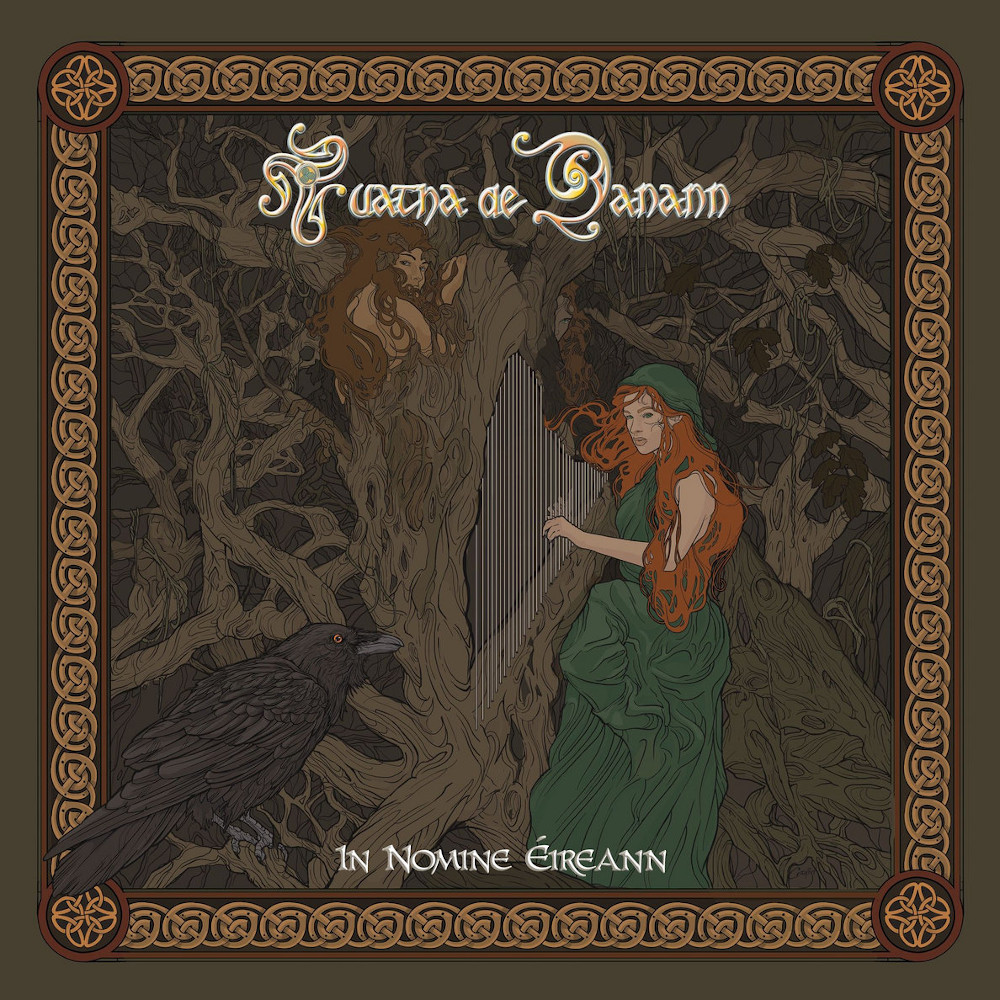
Tuatha de Danann - In Nomine Éireann (2020)

Country: Brazil
Style: Folk Rock/Metal
Rating: 7/10
Release Date: 25 Nov 2020
Sites: Bandcamp | Facebook | Instagram | Metal Archives | Official Website | YouTube

While most of the 2020 albums I'll be reviewing in January show up often or prominently enough for me to see that I've been missing out, this is one that I'm reviewing because I've only just noticed that it was released, either last November or December, depending on where you look. I reviewed an EP by Tuatha de Danann last March after being intrigued by the very idea of a Celtic folk metal band hailing from as far from the Emerald Isle as Varginha in the southern Brazilian state of Minas Gerais. I left it as a confirmed fan of the band and, of course, I want to check out their new album, their fifth.

It's as blatant a tribute to Ireland as they could conjure up. While they're generally and fairly called a Celtic folk metal band, that's not all they are. They dug deeper into Irish music on that EP, The Tribes of Witching Souls, than a single genre can do justice to and that's even more obvious here. It's folk or folk rock just as often as it is metal, though there are points where it's all the above, like their sublime take on The Wind That Shakes the Barley.

I know the song, so I know it's not a Tuatha de Danann original—it'll be 160 years old this year—and it made me wonder if any of this material is original, because it all sounds like it could well come out of the great Irish songbook. I know that I've heard Molly Maguires before, in a version by the Dubliners and Newry Highwayman too, by a variety of artists. It seems that one of Tuatha de Danann's key influences is Solas, a traditional Irish folk group based in Philadelphia. This version of The Wind That Shakes the Barley is done to their arrangement and John Doyle, from that band, is supposedly here somewhere.

However, Nick Gwerk's Jigs ought to be easily findable in searches and I'm finding nothing except the opener to this album, so maybe some of this is original music. It opens things up in lively traditional style, with the fiddle of Kane O'Rourke and the uilleann pipes of Alex Navar leading some jigs. If they get us dancing, then we're warmed up enough for Molly Maguires, done in Celtic punk fashion, with a guest vocal from Keith Fay of Irish folk metallers Cruachan. Guns and Pikes is the first song to feature a metal crunch behind it, perhaps appropriately given that it's a rebel song, though it takes a minute to show up.

As you may guess, the only consistency here is that everything is obviously Irish, with only one piece of music sounding otherwise to me, that being the closer, King, which seems a little more like English folk music to me, like a Fairport Convention story song. Irish music doesn't come in only one flavour though, so this is a wildly varied set of songs.

There are instrumentals you might hear down the pub. Some are dances like Nick Gwerk's Jigs and The Dream One Dreamt, a dance number driven by fiddle and mandolin. This one's a rocker too but not to the degree we might expect from a folk metal band. It's progressive too, easily being my favourite of these songs, excepting only The Wind That Shakes the Barley. Some are more plaintive folk melodies without additional emphasis, like Moytura and The Master Reels. I could imagine The Calling in a pub too, but it's a vocal song with clean male and female voices singing alongside each other.

There are heavier songs too, but they're thin enough on the ground to make this seem like a folk rock album rather than folk metal. That crunch that kicks in behind Guns and Pikes shows up on The Wind That Shakes the Barley too, not a usual approach to this song but a worthy one. It's sung by a female voice, that of Daísa Munhoz who sings for São Paulo power metal band Vandroya, and it's glorious. It alone makes me want to check out her band. The Devil Drink Cider is likely the heaviest piece of music here though, being a folk metal drinking song. Once more, the crunch doesn't start with the song but joins in once it's moving.

So, as a folk metal album, this is surprisingly lacking in actual folk metal, so be warned. As an homage to Irish music, it's heartfelt and effective. As music, pure and simple, it's a delight and recommended. My goal at Apocalypse Later Music has always been to cover the entire rock/metal spectrum. I merely wasn't expecting to cover quite this much on just one forty-five minute album. It's a folk album, a folk rock album and, on occasions, a folk metal album. If you like Celtic folk, that's all you need to know.

Tuesday, 5 January 2021

Anna Pest - Dark Arms Reach Skyward with Bone White Fingers (2021)

Country: Canada
Style: Progressive Death Metal
Rating: 7/10
Release Date: 1 Jan 2021
Sites: Bandcamp | Facebook | Instagram | Metal Archives

Here's something wild and wonderful. Anna Pest is one woman whose name is not Anna Pest but April Hutchins and she hails from Montreal. She plays all the instruments here and provides the vocals too, with the exception of a few guest appearances. Jason Evans of British death metallers Ingested, sings on one song; Duncan Bentley of the similar South African band Vulvodynia sings on another; and the mysterious d.are sings on a third. A couple of others also provide spoken word.

Initially, I thought it was completely out of control but I didn't want to stop listening. Gradually, the songs started to coalesce into something fascinating and I can't help but wonder about the influences that Hutchins brought to bear. Certainly, they're not all what we might expect because this is appears to be a concept album, based for the most part on the anime Neon Genesis Evangelion. And if that has you picturing kawaii pop music, you couldn't be more wrong. This is... well, I'm really not sure what to call it.

There's certainly death metal on the opener, Nadira, though the bass is low in the mix and the drums are high. There's a dissonance that suggests a lot of industrial too, though you're not going to hear this on a dancefloor any time soon. The rhythms are not all straightforward, so I'd throw progressive metal in there too, a mid-period Voivod feel coming out of slower sections. The vocals are interesting too, because I caught three different voices but it seems that they all belong to Hutchins.

I should also mention that Nadira runs four and a half minutes, a standard sort of length for the Anna Pest album that came out five years ago. That was entitled Forlorn and its eight similarly one worded songs ran pretty consistently from four to six minutes. Not so this time around! This second album is only a little longer overall but it boasts fifteen tracks, seven of which are under two minutes and one that wraps in only forty-one seconds, lengths that suggest grindcore and deliver it too. After Nadira, only Of the Black Moon and the Red Earth exceeds four minutes and that runs over eleven.

I wish I had a clue how the concept plays out, because Thundering Angel won't leave me alone. It's an overt industrial death metal song that seems to fall apart completely about half a minute in but still makes it through another fifty seconds, even with a dramatic shift in tempo from near grindcore to almost funeral doom. It makes no sense at all, but it seems to bring its title to life magnificently. It's one of those songs that might be garbage but also might be genius. I loved it.

Skyward follows it with another dramatic shift, moving from the routine industrial death metal to a sweet pop melody. Twice. This time it only threatens to fall apart completely but never does. This is a dangerous form of extreme metal, in the sense that it feels like it was performed in a junkyard amidst piles of metal so tall that the machine gun drums will surely prompt the whole thing to collapse. It's appropriate because, even though the style here seems futuristic, because I can easily believe that the drummer is a killer robot who's beating the shit out of lesser killer robots instead of drums, it's just as out there on the edge as Hellhammer or Bathory were forty years ago.

In lesser hands, this could have been a truly awful album. The core sound that combines death growls, a schizophrenic bass and that insane killer robot drum machine would outstay its welcome in no time flat if the songwriting wasn't versatile enough to keep things interesting. And I think it does. There's a consistency here at the heart of it all, but also a mad genius flicking a radio dial to see what else can be added into the mix. What are those first two seconds of Pathetic Consummation?

At points, this almost becomes a traditional brutal death metal album but, every time it does, there's something new to wake us up from that dream. It might be a military call to arms or a catchy alt rock bridge or a bit of electronic manipulation, maybe even the band who booked the studio space before Hutchins being fed through a woodchipper as she records her next song. Whatever you can say about this, and surely a lot of people will absolutely hate it, not one of you can call it boring.

I should talk about that long song. It's surely the most calculated piece of music here, emphatically a prog metal epic. There are fast sections, slow sections and slower sections, getting downright doomy on occasion. There are clean vocals as well as harsh ones, and there's a gloriously prowling bass that's often a replacement for guitars that are so downtuned they sometimes vanish entirely, only to show back up with emphasis. Yet this song never feels long, even after so many short numbers before it; it lasts a couple minutes longer than the previous five songs put together and arguably does a lot more.

This certainly isn't going to be for everyone, but it's a fantastic reminder that extreme metal can play just as progressively as folk, rock or regular heavy metal.

Twister - Cursed & Corrected (2020)

Country: UK
Style: Alternative/Hard Rock
Rating: 7/10
Release Date: 13 Nov 2020
Sites: Facebook | Instagram | Official Website | YouTube

The New Wave of Classic Rock continues on unabated and the admins of the Facebook group with that name have posted their top thirty for the year. I've reviewed the top three and six of the top ten but I seem to have missed most of the rest. Those Damn Crows topped that chart with Massive Wagons and Collateral behind them, making Twister the top band I haven't listened to yet, so it's time to catch up with them and their debut album that's been five years in the making.

Twister have an interesting sound for a NWoCR band, because it's difficult to figure out their primary influences. To me, they sound like an alternative rock band like Third Eye Blind moving into hard rock territory without necessarily having the expected bedrock to build the traditional sound from. Sure, I caught some Thin Lizzy here and there and they play well alongside the other NWoCR bands, but they don't sound like any of them to me.

Young & Affected isn't light years away from Massive Wagons when it gets to a punky hard rock punch of a chorus, but the song has to get there and I'm taken aback by the verses because, while the drums and vocals do what's expected, the guitars don't. There's no driving riff and the chiming harmonies in there behind the vocal reminds me not of Zeppelin or Sabbath but West African kora music and, given everything else, I don't buy into that being a deliberate influence, even if it keeps showing up, like on Trees and Wild & Lonely. Does that come from Third Eye Blind's autoharp or Blind Melon's melodious guitar?

To my ears, which are admittedly not well versed in alternative rock, it sounds just like they're merely putting the building blocks of rock music together in ways that I don't quite expect. That often works really well. As I get used to this album, and it is taking its time to sink in, however enjoyable it plays on a first listen, it's always the guitars keeping me on the hop.

Stevie Stoker's vocals aren't unusual; he's a solid front man and his voice does exactly what this band needs, but he doesn't show off at any point and it isn't the the style of voice that's going to win a TV talent show. He's here to be part of a band, not to steal the limelight from them. Jack Corbett is just as reliable on drums and he mixes up his rhythms in interesting ways. I'm mostly hearing Ryan Lee's bass when the band ramp up to a chorus and he does the job too.

There are two guitars here, one played by Stoker and the other by Jake Grimes. I don't know how they divvy up lead and rhythm or who's soloing where, but they always catch the ear, as much for me as the hook-laden choruses. Every time I think I've figured out what they're doing and why, they change it to something else. There's a bit of pop punk here, some mainstream band like U2 over there and always a wildcard thrown in to keep it interesting. If that sounds like I'm getting frustrated, I'm not. It's just a grower of an album, so a couple of listens through thus far aren't doing it justice.

It certainly isn't as immediate for me as some of the other albums on that top thirty list. Bands such as Those Damn Crows, Blackwater Conspiracy and even Ryders Creed grabbed me immediately, even if the latter also grew considerably on repeat listens. This sounds good from the outset but it sounds a little disposable too. The more I listened, the more that feeling faded away, leaving just good music. A couple of times through, this is a solid 7/10 and I think it may gain another point with a few more.

Monday, 4 January 2021

Mark Haze - Authentic (2021)

Country: South Africa
Style: Rock
Rating: 7/10
Release Date: 1 Jan 2021
Sites: Facebook | Instagram | Official Website | Twitter | YouTube

From right here in Phoenix, let's travel somewhere far away for my second album today. Mark Haze is a singer in Cape Town, South Africa who seems to be well known over there, enough to be a regular on daytime television. Part of that is because he's been around for a while: his band, 12th Avenue put out four albums, got extensive radio airplay and supported Seether on their Homecoming Tour. Part of it is that he was the runner up on Idols, the South African edition of Pop Idol, in 2011. This looks like at least his fifth album since then, though some of those are covers albums.

I believe this one is all originals and it sounds good to me. It's very fresh and upbeat, mixing in funk, pop, blues and other styles into a rock framework. It's easy to see how he did well on Idols singing not only songs by Aerosmith, Queen and Journey but others by Bruno Mars, Lady Gaga and Marvin Gaye. The shortest song, Can't Forgive You, runs just shy of three minutes, while the longest is under five, a clear decision to make them all viable for radio play.

That's Walk on the Water, which is a strong opener. It's a rocker, albeit one that seems written for the female voice, and it steams along nicely with catchy verses and an even catchier chorus. Monkey isn't a lot shorter and it's even catchier, working with a funky Lenny Kravitz sort of vibe. Anjee & Me ups that bar once more, sounding like a Rick Springfield ditty but with a chorus borrowed from the Backstreet Boys, right down to an infectious "do do do do do" refrain. This is such a bouncy song that it's rather hard not bouncing along with it.

What gets me is that I just referenced the Backstreet Boys in that last paragraph with positive intent. Anjee & Me includes what they do well without bringing in any of the things that make me cringe and there are plenty of those. I'm less sure about Starchild, a far more overt pop song that dips much too deeply into modern day R&B for my tastes, even if I quite dig the drums when they get going and the rock guitar too. Haze has a habit of crafting catchy pop songs then rocking them up with a guitar.

I tend to prefer the soft rock songs like the brass-infused Hearts on Fire and the prowling Faking Heaven to the poppier numbers like Starchild and ILYSB (I Love You So Bad), but Haze is just as good at both. Frankly, it may be the songs that do both at once, like Can't Forgive You and Monster, not to forget Monkey, that are the real highlights on this album. I can imagine quite a few of these songs showing up in episodes of TV shows but Monster may be the most overt candidate for that with its dynamics, groove and lyrics.

Whether I like all these songs or not, what impresses me is how seamlessly Haze can shift in intensity. Losing My Mind is a real rocker, fighting with Walk on the Water to be the most intense song (which on this album translates to the heaviest Bryan Adams gets), but it rolls into Star, with its electronica and almost new wave groove. And yet it feels totally natural. Perhaps the linking factor between the catchy pop ditties and the tougher rockers is that all of them feel like they could be sung on a talent show. It doesn't matter if a song is soft or hard, it's accessible to a wide television audience.

Spirit Adrift - Enlightened in Eternity (2020)

Country: USA
Style: Heavy/Doom Metal
Rating: 7/10
Release Date: 16 Oct 2020
Sites: Bandcamp | Facebook | Instagram | Metal Archives

As with the past couple of years, I'll spend January alternating a new 2021 release with an album from 2020 that I should have got round to but didn't. I'll kick that off with the fourth Spirit Adrift, which is showing up on a bunch of best of year lists, just as their previous effort, Divided by Darkness, did last time around. I reviewed that in January 2020 as a catch up, so I should clearly pay attention in 2021 to catch the next album when it comes out.

The band, which is primarily Phoenix's own Nate Garrett on everything except drums, the territory of Marcus Bryant, used to play doom metal but had moved almost entirely to a more traditional heavy metal style by the last album. Initially, this follows suit, with clean vocals, fast and lively guitars and a reliable beat on the opener, Ride into the Light. It's imaginative as well, being both progressive and commercial, accessible and deep, recognisably Spirit Adrift but wearing its influences on its sleeve.

The second song, however, Astral Levitation, highlights that doom heritage. It's still too upbeat to be truly called doom but it definitely plays more in a Black Sabbath style, especially with strong Heaven and Hell era riffs, than the Iron Maiden or Judas Priest styles I'm more used to from Spirit Adrift. The vibe was so overt that it was surprising to not hear Ronnie James Dio's voice kick in. Now, the solos in the middle of the song are definitely Maiden rather than Sabbath, but the push to doom strengthens as the album runs on, meaning that the further you get through it, the doomier it gets.

Cosmic Conquest isn't doomy, the exquisitely catchy initial riff rising not falling and the drums perky enough to work for a Billy Idol song, but the vocals obviously come from the Ozzy school. Screaming from Beyond kicks off like an AC/DC song but moves back to Sabbath and ends in neat doomy fashion. Harmony of the Spheres barrels out of the gate like it has somewhere else to be and urgently at that, like high energy power metal, but it settles into a doomier groove, the music almost Blizzard of Ozz-era Ozzy with an ever-eager lead guitarist. Battle High is old school American doom, but with perkier guitarwork.

The doomiest this gets, though, is the final track, an epic at almost eleven minutes called Reunited in the Void. It opens at half the speed of anything thus far, the first twenty-five seconds being a building guitar note, and it really milks that. There's a real aching in this, a stubbornness driven by keyboards and riffs, but, with heroic effort, it draws itself up out of the morass and takes it home in style. It's an excellent example of just how far Spirit Adrift have moved stylistically, because it's hard to reconcile a song like this with a song like Ride into the Light. They seem like the product of different bands.

I like this album, but I don't like it as much as the last one. Much of what it does right is what Divided by Darkness did right. Everything is instantly enjoyable, for one, and the guitarwork is glorious, from the riffs to the solos via all sorts of little touches here and there. Individually, the songs are all good and I enjoy the variety with them, like the way Harmony of the Spheres slows down and Stronger Than Your Pain speeds up at points. However, while I like the songs individually, they don't sit particularly well together in the form of this album, especially because the vocal style changes so much.

Rather than showcase a variety of styles as a declaration of how versatile this band has got, it feels as if Garrett is having second thoughts about the direction he's taken Spirit Adrift. Divided by Darkness sounded united in approach, while Enlighted in Eternity doesn't sound that enlightened.

Now, there are options here. Garrett could return to doom and the band would sound great, as indeed they do on Reunited in the Void. He could ditch the doom entirely and the band would also sound great, as they do on Ride into the Light. Or he could combine the two like he does on Astral Levitation and arguably sound even better. But choose one of those options, not all three.