Friday, 4 December 2020

Evildead - United States of Anarchy (2020)

Country: USA
Style: Thrash Metal
Rating: 7/10
Release Date: 30 Oct 2020
Sites: Facebook | Instagram | Metal Archives | Twitter | Wikipedia

OK, there are some interesting ties here, not all of which I was aware of until now. Let's unravel from a point in June 1985 when Skeptics Apocalypse came out, one of my favourite albums of all time. It's the debut of an LA speed metal band called Agent Steel, who were led by a singer called John Cyriis. Think of Judas Priest playing even faster than they did on Painkiller! The guitarist on that album, and its follow up, was Juan Garcia, who formed thrash outfit Evildead on leaving Agent Steel. They released a pair of strong albums around the turn of the eighties into the nineties and then vanished.

But hey, both these bands are suddenly back with new product and I couldn't be happier. Well, I could, because the Agent Steel single that I've heard doesn't sound anywhere near as effective as this album does. Hopefully their own album, due next year, will. [Update: it's called No Other Godz Before Me and it wasn't.

Anyway, the oddest tie is felt on a few songs here, especially Without a Cause, with its Megadeth riffs and its crossover Billy Milano style vocals. This one especially conjured up an alternate reality S.O.D. on the left coast which is now stuck in my brain! Garcia never played for Megadeth, but I am stunned to discover that Cyriis apparently did, albeit very briefly in 1983. In fact, he formed Agent Steel after Dave Mustaine fired him from Megadeth. You learn something every day!

I like this album a lot partly because it's done really well and partly because it's full of unashamedly old school fast and heavy thrash. So much of what I hear nowadays is mid-paced thrash, whether it's a technical band or not. This rarely slows down that far and, when it does, it's not for long. Word of God is about as slow as this one gets, the lounge intro to No Difference, complete with fingersnaps, aside, and it's still faster than most of the songs on a few thrash albums I've reviewed this year.

One reason for that may be because everyone involved is old school. The most recent addition to the band is Karlos Medina, who joined on bass in 1990. The only reason this isn't exactly the same line-up that recorded The Underworld in 1991 is because guitarist Albert Gonzalez had left the year before. He did come back for both reformations. In fact, everyone here was with the band at some point before it split up in 1995 and everyone here came back in 2016, whether they did in 2008 or not.

Another reason is that these folk seem angry. The lyrics are political, though not party political. They clearly despise Donald Trump, because it's hardly rocket science to figure out who lyrics like these are about on Napoleon Complex: "You're an American Mussolini, can't accept a free society [...] So I guess we'll all just pretend to make America great again." However, he isn't the only target. The Descending is more equal opportunity vitriol: "Every four years, rise of evil: propaganda, deceit betrayal." They don't mention Joe Biden by name either, but I'm pretty sure I know "the corporate whore and the bad hombre."

Just in case we think this is entirely about politics ("Left wingers, right wingers, all up in ya trying to keep their hidden agenda"), there are songs here about organised religion, unchecked capitalism, the rape of the environment, American imperialism, you name it. If you look at the cover, both S's in the album title are dollar signs, like Ludichrist used to do with their name. I think there's near universal agreement that 2020 has sucked royally, but if all the negativity, insanity and polarisation triggers a return of old school fast angry thrash bands, then it's not all bad in my book.

I wonder if the consistent vitriol that Phil Flores hurls out for nine tracks is why Evildead decided to end on what looks like a bizarre cover. Sure, there are a lot of those out there right now (Death Angel doing Under Pressure, Sepultura doing Tainted Love, even Violence doing California Über Alles). Not one of those comes close to Evildead's cover of the B-52's Planet Claire, which chugs along with style (and sounds oddly like the Spy Hunter theme for a while). When we all have the COVID vaccine and we can go to gigs again, I look forward to joining the pit for this one when Evildead head east on I-10 to inevitably play the Phoenix area.

The downside on this album is production, because this is a little muddy and, if I turn it up to where I want it, there's a little distortion that shouldn't be here, but damn, I've missed those chugging intros and Juan Garcia/Albert Gonzales guitar blitzkriegs. I don't remember Phil Flores sounding this angry but he may well have done and I'll happily pull out those old albums to find out. However he sounded back then, though, he sounds exactly right for 2020. This is a great mix of technical proficiency, angry attitude and raw speed, just how I like it.

I hadn't realised how much I'd missed those other guys. Sure, I've enjoyed Testament and Death Angel and whoever else stuck around, but there were so many other west coast Californian thrash bands who didn't and there seems to be a real trend going on. Heathen are back and blistering. Evildead are back and angry. Violence are back. Agent Steel are back. Forbidden aren't, but maybe I should start putting together a wants list. And let's see another generation picking up from these guys, a New Wave of Bay Area Thrash. That's all I want for Christmas, Santa. I've been a good boy. Honest.

Robby Krieger - The Ritual Begins at Sundown (2020)

Country: USA
Style: Progressive Rock
Rating: 7/10
Release Date: 14 Aug 2020
Sites: Facebook | Instagram | Official Website | Twitter | Wikipedia | YouTube

In case you don't know the name, Robby Krieger is most famous for being the guitarist in the Doors, but I should emphasise right off the bat that this doesn't remotely sound like the Doors, even on the song that's a Doors cover, which is Yes, the River Knows, the original being on Waiting for the Sun. It seems fair to point out that the Doors' incredible six album output (ignoring the two post-Morrison albums) came in a five year burst. As crucial as they are to rock history, they really weren't around for long. Jim Morrison died when I was only three months old and I turn fifty next year.

Instead, this sounds rather like Frank Zappa and for very good reason. It's psychedelic and progressive but it's also instrumental and it trawls in a lot of jazz. The other cover here is a Zappa cover, Chunga's Revenge, originally on the 1970 album of the same name. This album is produced by Arthur Barrow, a bassist for Zappa in the late seventies and early eighties, before he joined up with Krieger, with whom he's frequently collaborated since. It features many other Zappa alumni, including Tommy Mars, Chad Wackerman,Jock Ellis and multi-instrumentalist Sal Marquez.

Now, many dislike Zappa for his scatalogical and often puerile lyrics, but many adore him for being as inventive a musician as perhaps ever been associated with popular music. If you only know songs with sexually deviant lyrics like Bobby Brown (Goes Down) or novelty songs like Valley Girl, check out Shut Up 'n Play Yer Guitar or Hot Rats, two entirely instrumental albums that will give you a very different glimpse into his output. You'll find that this Robby Krieger album, his seventh solo studio album and his first in the ten years since Singularity, sits very nicely in that sort of company.

What's perhaps most telling is that The Drift, the song before Chunga's Revenge here, feels even more like Zappa than the cover of the Zappa song does. This take on Chunga's Revenge does, at least, sound a more like Zappa than Yes, the River Knows sounds like the Doors. Tommy Mars plays Ray Manzarek's piano part on that song faithfully, while Krieger initially emulate's Morrison's part before shifting to his own and he never did play a guitar solo the same way twice. Given that everything else takes a jazz fusion approach to prog/psych, the only song that Krieger has played on before (and which he wrote) seems oddly out of place.

That very carefully constructed reinterpretation aside, this album feels wild and free. It's not just the jazz, because not all jazz sounds wild and free, but the energy that flows between the musicians. It's as if, restricted from touring, they particularly enjoyed bouncing off each other in the studio. I've been a lot more productive as a writer this year, because COVID took away all my events; Krieger has done a lot more in the studio and apparently has a couple more albums "in the can ready to go".

That energy is most obvious on the pieces of music that come after the plaintive Yes, the River Knows: The Hitch and Dr. Noir. Titles aside, which conjure up black and white movies for me, the music is just as vibrant and colourful as the cover art on the album. It's so vibrant that it bounces and, by the time we get to Bianca's Dream, I was bouncing too. There are two saxophonists on this album, plus trumpet and trombone players and a flautist, but Krieger is the only guitarist, so the solos he swaps aren't with the rock instruments we might expect from a member of the Doors.

The biggest problem I had here was to try to figure out highlights. For all that it's an enjoyable piece of music, I'd call out Yes, the River Knows as the low point any without hesitation. In isolation, it's an impressive revamp; on this album, it's just an interlude. The other nine tracks, however, are harder to pick apart. They play very consistently indeed, so much so that it's easier to pick favourite sections of each and least favourite sections too. That's a great riff on opener What Was That?, but there are slow transitions that don't do anything for me. And so on across the album.

And, at the end of the day, the weirdest realisation is that I think I dug the saxophone solos, by Vince Denham and Chuck Manning, a bit more than I did the guitar ones from Robby Krieger, whose name is on the cover. Don't get me wrong, I enjoyed his contributions too and it's because of him that the folk we hear got together in the first place, but it highlights how much of a band performance this is. Any Doors fans looking for a guitar album by their hero really aren't going to find it here. Those who are open to something different might just love this.

Thursday, 3 December 2020

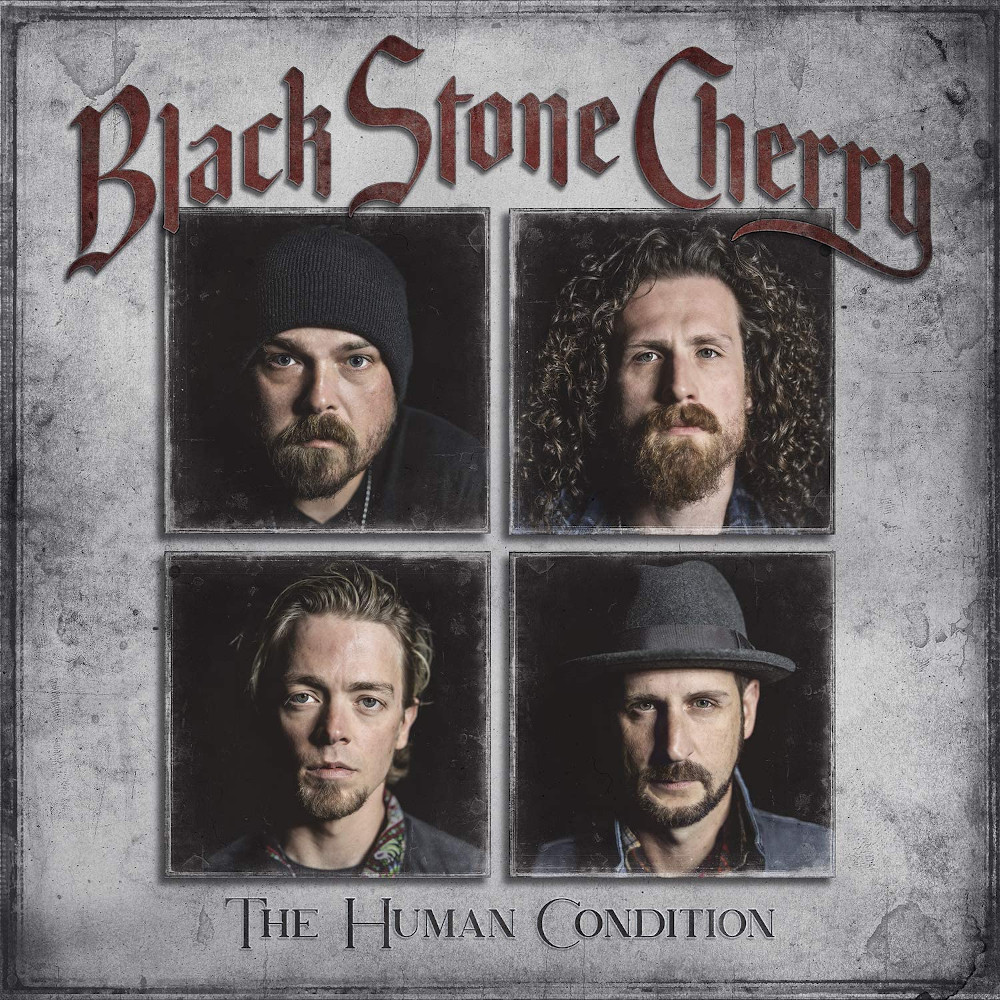
Black Stone Cherry - The Human Condition (2020)

Country: USA
Style: Hard Rock
Rating: 7/10
Release Date: 30 Oct 2020
Sites: Facebook | Instagram | Official Website | Twitter | Wikipedia | YouTube

Album seven for Black Stone Cherry starts out really well with some stormers. Ringin' in My Head is a deceptively simple southern rock-inspired belter and it's a catchy one indeed. It was repeatin' in my head after only one listen and that means that it's a real earworm. Lead single Again is pretty stellar too but it's not quite as catchy and it's a little more alternative in nature. They're still a killer pair of openers though.

From there, the album kind of just keeps on going. These aren't long songs, so there are eleven more of them to come and only two of the thirteen make it past four minutes. In Love with the Pain doesn't quite make it to three. The good news is that none of them are bad. The bad news is that none of them are quite up to the standard of the openers. They each sound good as they play but they courteously move on to make way for the next and they don't leave anything of themselves behind as a reminder of what they were. They seem catchy but they're not earworms like Ringin' in My Head is. That one was still playing in my skull after track thirteen ended.

That means that they play best as album tracks rather than songs with lives beyond that format. And I like the collection of them that is The Human Condition. There's a lot of consistency over these songs, that patented Black Stone Cherry mix of hard rock, southern rock, and grungy alternative rock. Chris Robertson has the perfect voice for that mix, because he's not quite any of them individually but he's naturally all of them at once. If this band didn't exist, he could take a Chris Cornell type gig in an alt rock band without any trouble, but he's better with the harder edge that works so well here.

What's weird is that we eventually get to a cover version, which comes out of the blue with four songs left, and it isn't remotely what we expect. We could imagine something out any of those three worlds, a Deep Purple song, a Lynyrd Skynyrd song, a Soundgarden song. What we get is an ELO song, albeit a rare ELO song without strings, namely Don't Bring Me Down, and it's surprising enough that it has a purpose here, even if that purpose is just to surprise us. Black Stone Cherry do it well.

Unfortunately, that puts us in the mindset that we're in the double digit bonus tracks and so it's hard during the intro of another song not to see it as a cover of Metallica's Ride the Lightning. It's not, as it's an original song called The Devil in Your Eyes, but we've been surprised once. Why not again?

I've listened through the rest of the album a few times, avoiding the two strong openers that I'm sold on already, just to see if it'll eventually grab me and it hasn't yet. Everything still sounds good and it prompted a few notes, but none of it stayed with me, however much it felt like I enjoyed it. The Chain is starting to get there, with both a catchy chorus and a catchy riff. It's the heart of the album and I'm wondering if things would play any differently if I swapped it with Ringin' in My Head.

The softer songs are good, like If My Heart Had Wings, and the harder songs are even better. While all of them are driven by the timbre of and melodies in Robertson's vocals, the band are very tight while somehow seeming to be loose. That's a neat trick to master and they have it down. That works best on the songs where the riffs are urgent, like Live This Way. Black Stone Cherry do urgent really well and, judging by the "Yeah!" after that one finishes, they both know it and enjoy it.

Maybe I just need to leave The Human Condition be for a while and see if it starts to creep back out of my memory. If it doesn't, it's still a worthy album. If it does, it's a better one.

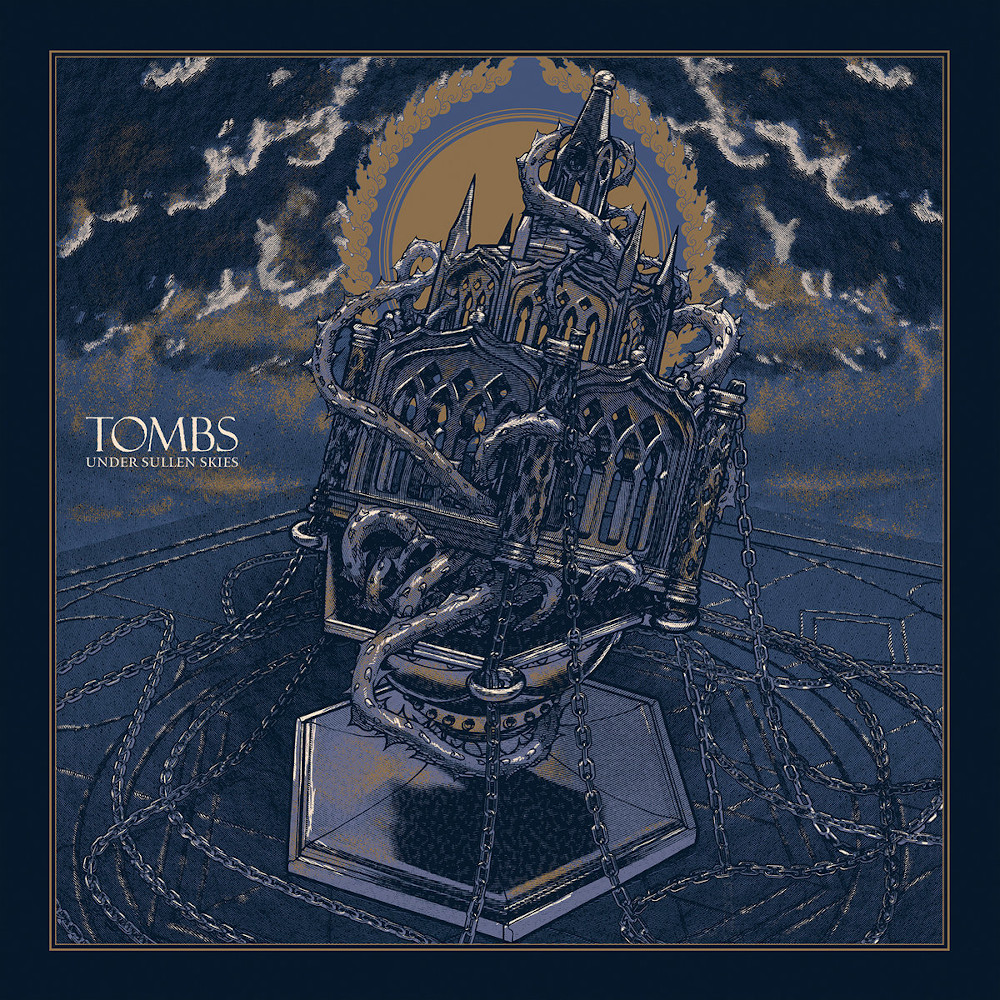
Tombs - Under Sullen Skies (2020)

Country: USA
Style: Post-Black Metal
Rating: 7/10
Release Date: 20 Nov 2020
Sites: Bandcamp | Facebook | Instagram | Metal Archives | Official Website | Twitter

I was planning to kick off today with with a review of the new Six Feet Under, their seventeenth studio album, but then I pressed play and couldn't even make it through one song. Chris Barnes, formerly of Cannibal Corpse, now sounds so weak that I can't help but wonder if three decades and more of death growls have literally destroyed his voice. It sounds like he needs medical assistance. I hope he gets it.

So here's the new Tombs instead. They've been playing post-black metal out of Brooklyn, NY since 2007 and this is their fifth studio album, though the majority of the band has changed since their previous album, The Grand Annihilation, in 2017. Only Mike Hill on lead vocals, guitar and keyboards predates that and he was a founding member. I don't know if he just hired everyone from New Jersey's Kalopsia except the guitarist or they're lending a hand until he can put a new line-up together. Either way, this new Tombs works very well.

At least, it did once I got into it. I don't know if it was the aftertaste from that Six Feet Under album, but it took a little while for this to really grab me. It was the third track, Barren, that did it, with wild soloing and a thoughtful midsection. As that one ended and the keyboard intro to The Hunger began, I decided to start the album over again but didn't manage to actually do until quite a few songs had gone by. They just kept grabbing me.

The Hunger grabbed me, partly with distorted vocals that sound bizarrely like Lemmy and partly with sheer heaviness. Then Secrets of the Black Sun showed up, highlighting just how far from black metal the band have come. This is death/doom and it's as slow as molasses with a haunting female voice that floats up and away from its plodding drums. That grabbed me as well. Eventually, I managed to break the cycle by starting the album again before whichever next song started. And this second time, I was on board from the outset. Frickin' Six Feet Under.

Tombs are getting really interesting. Bone Furnace barrels along like black metal and Mike Hill has a shrieky harsh voice but there's a warmth to the tone that goes against the black metal mindset. Black metal bands wouldn't generally go for production clear enough to catch all sorts of cool basswork at the beginning of Void Constellation. Those vocals find a death growl here as effortless as the shrieks on the opener and, however much double bass there is, this is death/doom that enjoys going slow as much as the black metal of the opener enjoyed going fast.

I presume that the folks from Kalopsia brought the death, but what about the doom? How about some of the more experimental material like Sombre Ruin? There's almost an industrial vibe to that, plus a layer of howling wolves, even though it plays as doom too. I wonder how much Celtic Frost factor into this. I'd bet money everyone involved has been listening to plenty of them, because I can hear it over varied material here: in the black-infused blitzkrieg of Descensum, the blackened death of Lex Talionis and the mid paced grind of Plague Years. Above all, it's in Mordum, which could be a tribute song. It's there in Sombre Ruin too, if not as overtly.

All that said, however much influence is here, this new Tombs are certainly not a Celtic Frost clone and I'm just appreciative of the variety they threw into this album. It's a generous one, running exactly an hour, but I never got bored, even though some of these songs feel longer than they are. Plague Years and Angel of Darkness are whiskers under seven minutes and Secrets of the Black Sun is a whisker over that. Maybe they'll start to tire after a few more listens.

As it stands, after a couple of times through, I'm rather thankful that the Six Feet Under sucked.

Wednesday, 2 December 2020

Jefferson Starship - Mother of the Sun (2020)

Country: USA
Style: Hard Rock
Rating: 6/10
Release Date: 21 Aug 2020
Sites: Facebook | Instagram | Official Website | Twitter | Wikipedia | YouTube

I'm an old school fan of the Jeffersons, so much that, in the mid-eighties, I not only went backwards from Freedom at Point Zero to Jefferson Airplane and the Great Society but sideways to Hot Tuna, whose debut album is one of my top ten of all time, and various other solo efforts and side projects. I even went backwards from Hot Tuna to find Rev. Gary Davis, my favourite blues artist of all time. So I'm well versed in what they do and where it all came from.

And that's why I'm not remotely surprised to find that this new Jefferson Starship album, advertised as their first in twelve years, features only a single member of the Freedom at Point Zero line-up back in 1979. That's David Freiberg, still perhaps best known for Quicksilver Messenger Service, even if he wrote Jane. To be fair, Paul Kantner and Marty Balin are sadly no longer with us and neither is Papa John Creach. Actually, while Pete Sears isn't a member of the band at present, he does contribute bass to three songs, so there is a little continuity.

So what have the other folk here, with wildly varying histories with the band, got to contribute? Well, initially quite a lot, it seems.

The opener, It's About Time, features Cathy Richardson on vocals and she sounds pretty good to me, if very much in the expected Grace Slick vein. She's been with the Starship since 2008, give or take a year, and she fits this material well, possibly because she co-wrote five of these seven songs, including this one, which also has a credit for Slick. It's an energetic opener and she adds to its energy, while giving a more laid back feel to What are We Waiting For? until it evolves into another energetic song. I like her.

I presume that's Freiberg singing on Setting Sun and, while the song itself is decent, even if it sounds like it could have been recorded thirty years ago, I found myself focused more on the urgent guitar of Jude Gold than Freiberg's rough vocals. I also found myself drifting away a little until Runaway Again grabbed my attention. This is a much calmer song but Gold's delicate guitar is as magnetic as his urgent guitar on the previous song. And hey, Richardson shines in another style, that of soft rock ballad. I definitely like her. And Gold, who gets a neat liquid-sounding solo as the song ends.

What I don't like is that this seems to be advertised as an album, when it's really an EP with a couple of bonus tracks. There are only five original songs here, the fifth of them being a Freiberg-sung ballad called Don't Be Sad Anymore, credited to bass player Chris Smith and, posthumously, Marty Balin. It's easily the least of the five, but it would seem to have more reason to be here than a live rendition of Jorma Kaukonen's iconic Embryonic Journey, performed by Gold, and an extended version of What are We Waiting For? These feel very much like padding.

So this isn't really the first Jefferson Starship album in twelve years. It's perhaps half of one with two songs that should have shown up elsewhere, perhaps as a 12" single and a B-side. Given how much the original material, at least the Richardson sung original material, impressed, that's disappointing. It's not like they couldn't have taken a bit more time, after twelve years, and written the rest of an album that they could release with a lot more credibility than this.

As an album, this deserves a 5/10 for being cheap. As an EP, I'll give it a 6/10 for still being cheap but a little more appropriately. An album like the three original songs with Richardson singing would get a 7/10. I hope we get to see one and before another twelve years pass.

Thou & ERR - May Our Chambers Be Full (2020)

Country: USA
Style: Sludge Metal
Rating: 6/10
Release Date: 30 Oct 2020
Sites:
Thou - Bandcamp | Instagram | Metal Archives | Official Website | Twitter | Wikipedia
ERR - Bandcamp | Facebook | Instagram | Official Website | Twitter | Wikipedia

Even though they've only released five albums under their own name since their founding in 2005, the Baton Rouge sludge metal outfit known as Thou are actually rather prolific. They just release a lot of other stuff: split releases, EPs and, increasingly, collaborations. Thus far, all their collaborations have been with fellow American sludge metal band, the Body, but this one is quite the departure.

ERR isn't another sludge metal band, but an alternative singer/songwriter by the name of Emma Ruth Rundle, apparently best known for her folky post-rock output, not only solo but also with Marriages, the Nocturnes and Red Sparowes. She's also released darkwave and ambient guitar projects, so clearly she's versatile. That's promising when faced with a collaborative project with Thou.

Apparently, they're fans of each other and, when working together was suggested, they leapt at it. The result is certainly interesting, Rundle's clean and haunting voice providing a welcome contrast to the sheer weight of what Thou play. They are a very heavy band indeed, mixing the downtuned heaviness of sludge with the bleakness of black metal, the latter present mostly in the particularly harsh vocals of Bryan Funck. At least I think it's him, as he's credited on vocals alone while KC Stafford plays guitar too. Frankly, whoever it is, I like Thou's music a lot more than I like those vocals, which seem intrusive here.

A song like Ancestral Recall is sublime with Rundle lilting at the sky while Thou drag her back down to the earth, if not into it. It loses that dynamic entirely when Funck joins in. The same holds true on the majority of other tracks, though to a lesser degree on Magickal Cost, as the wilder rhythms keep that interesting even with a harsh voice, just not as interesting as with only Rundle. This album runs 36m and, even by the halfway point, I was convinced that this would be a much better album were Rundle the only voice heard.

Much of that is because I found Funck so annoying, but some of it is because Thou continually mix up the textures they set Rundle's voice against. That dynamic works on the heavy, dense sound of Out of Existence, but also on the sparser Magickal Cost and Into Being. Thou downtune so far that even the guitars sound like basses, except maybe during the solos on Into Being, and what sounds like an array of basses make a slow song like that one achingly heavy. Rundle is a perfect counter to whatever Thou do, orders of magnitude lighter than them but never without weight of her own. Funck fits one style only and that's limiting.

The albums wraps with a nine minute song called The Valley, which is a tearful dirge when it's entirely instrumental, its tentative guitar merging with what sounds like a violin and a distant choral effect. This is so sparse a song that Tyler Coburn's drumkit often feels like a single handheld drum, beating the toll of a life lost. This is Thou meeting Rundle on her own post-rock ground but still making it all dark. To my mind, this is easily the album's highlight, the most evocative piece of music here by far. I wasn't even disappointed when Funck briefly joins in seven minutes in like he's a wraith creeping out of a grave.

And with The Valley, and the album with it, done, I just had to start over to see how everything felt in the wake of that epic closer. I found that it played a little better, that vibe well and truly established. The album actually got lighter on a second listen, as if there was a ray of sunlight threatening to add colour to Thou's now traditional black and white woodcut cover art, even if it doesn't manage to come good on its threat. Every song improves on a second listen and Funck doesn't seem quite so intrusive, though he never becomes welcome.

I really wish I could hear this without that harsh voice, though. I was actually tempted to drop this to a 6/10 but I think that would be unfair. There's too much good stuff here for that to sit right with me. However, my 7/10 might well have been higher had I been able to wave a magic wand and make Rundle the sole voice. Certainly, the lesson of this collaboration is that she works fantastically well with Thou and I hope they work together again, in only slightly different circumstances.

Tuesday, 1 December 2020

Armored Saint - Punching the Sky (2020)

Country: USA
Style: Heavy Metal
Rating: 8/10
Release Date: 23 Oct 2020
Sites: Facebook | Instagram | Metal Archives | Official Website | Twitter | Wikipedia

John Bush may be remembered primarily as the "other" singer from Anthrax, but I think of him as the lead vocalist of Armored Saint. And, while Joey Vera may see Fates Warning as the bigger gig, I think of him as the bassist of Armored Saint. I've dug this band since March of the Saint in 1984 and I kept up with them into the nineties longer than many other bands. Sadly, they called it a day in 1992, after Bush left for Anthrax, and, until recently, I hadn't realised that they'd got back together in 1999, with this being their fourth studio album since then. It's good to hear new music from them.

However well Bush fit Anthrax's style, and that'll be a neverending debate, he fits this style perfectly. And, as much as I love Anthrax, I prefer him alongside Vera's bass and Phil Sandoval's guitar and it's a joy to hear them barrelling along together on this album. Standing on the Shoulders of Giants kicks things off well, with Vera prominent in the mix without this being bottom heavy, but it's End of the Attention Span that shows that this band is seriously back in business.

There are no poor tracks here, but there are a trio that stand out from the crowd as highlights. End of the Attention Span is the first and it's a highlight from its first notes. The riff is strong, but it's what Sandoval does over it and the held vocal bridge and the Maiden-esque way in which it gallops along and everything the drums both do and don't do and... this song is one of those rarest of gems where every component part is excellent on its own but even better when put together like this.

I mentioned Iron Maiden there and that name comes up a lot when listening to Armored Saint. John Bush has been singing for the Saint since the year that Bruce Dickinson joined Maiden, but it's clear that he's a key influence. However, he doesn't always approach this material in the same fashion that Bruce would and the same goes for everyone else in the band. They've certainly listened to Maiden a lot and there are certainly moments where Vera resembles Steve Harris or Sandoval taps into a Dave Murray sound, but you're never going to mistake one band for the other.

I've always thought of this band as one that others sound like rather than the other way around. This is their sound. For instance, is the early machine gun riff on Do Wrong to None done in the style of Pantera or did Pantera just borrow rather a lot from Armored Saint? I'm going with the latter.

While the album runs on well, it's a while before we hit the next overt highlight and that's Missile to Gun. Again, it makes its presence known immediately with some strong and melodic power chords, for the drums to escalate out of and into the riff that drives this song. Again, the drums gallop onward as if there's no tomorrow and again the chorus is catchy as all get out. It's not that complex a song but I will happily take simpler songs when they sound like this. It's lean and mean and highly effective.

Unfair grabs our attention, with its stripped down opening; it's not a ballad, though it appears to be one for a while. Like everything here, it's a good song, but it's the album closer, Never You Fret, that's the third real standout. It starts out atmospherically, rather like a Hu track, but quickly ratchets up to high gear with some more elegant decoration from Phil Sandoval above the riff. Bush clearly relishes this song too and throws in a lot of emphasis, while Sandoval gets bluesy in the middle. This one isn't remotely as fastas either End of the Attention Span or Missile to Gun, but it stands in their company well and it wraps up this album in style.

This is a really good album and I think it does enough to warrant an 8/10. The songs are good at least and some are truly excellent. The strong production enables us to follow every instrument with ease, meaning that we can see how every musician here contributes not just to the overall effect but with a panache each their own. I noted down a particularly great bass fill in Bubble, but every band member has his equivalent. The ones I haven't mentioned are Gonzo Sandoval on drums, one of four members to have been with Armored Saint since 1982, and rhythm guitarist Jeff Duncan, who's the new fish in a similar way to Dave Gilmour being the new fish in Pink Floyd, having only joined thirty-one years ago.

Now, if you'll excuse me, I have at least two Armored Saint albums to catch up on and possibly three.

Albert Bouchard - Re Imaginos (2020)

Country: USA
Style: Hard Rock
Rating: 7/10
Release Date: 6 Nov 2020
Sites: Facebook | Official Website | Wikipedia

OK, there's some history needed here. Strap yourselves in!

In case you don't know the name, Albert Bouchard was a founding member of Blue Öyster Cult back in 1967. He was also their drummer until 1981 and he's on their first eight albums, including the classics Agents of Fortune and Fire of Unknown Origin. You've heard his stuff, even if it's his cowbell on (Don't Fear) The Reaper. BÖC's producer and lyricist was a man named Sandy Pearlman, who had written a set of poems and scripts in the sixties by the name of The Soft Doctrines of Imaginos. Many early songs in BÖC's portfolio were drawn from this material, down to the band's very name.

In 1972, after the debut BÖC album, Bouchard began to adapt Pearlman's writings into a substantial rock opera by the name of Imaginos. This would be a solo project unfolding over a trilogy of double albums, an ambitious effort to be sure, but, while he'd completed the first of these by 1977, it didn't happen. And it continued to not happen. While BÖC demoed four of its songs while making Spectres, none made the album.

After being kicked out of the band, Bouchard knuckled down and recorded it in 1982 with a new set of musicians. He sang lead and played guitar throughout; guests included Aldo Nova and Robby Krieger, plus a few members of BÖC. And Columbia Records hated it. They wanted a different lead singer for a start and try-outs, fresh recordings and overdubs kept up until 1984, when they rejected it outright.

It seemed dead and buried until Pearlman persuaded them to try it again, but reworked as a new Blue Öyster Cult album, given that that band had split up after poor sales of Club Ninja. They went for this idea and the remixed, reworked, re-recorded album was released in 1988 in a notably different form to what Bouchard had envisaged. It omitted a bunch of songs and changed the order of tracks, which is a strange idea for a concept album, ending up a lot shorter. Albert Bouchard wasn't involved at all and had to take the band and label to court to even get paid for his work.

And, while Imaginos is a decent album, with a couple of well-remembered numbers in Astronomy and Del Rio's Song, that's how it was left, as a a bad taste in a lot of mouths. Fast forward thirty-four years and Bouchard has finally put together his version of Imaginos, even though it's not precisely what he had put together in 1982. His preferred song order is restored, even adding a song from the first BÖC album, Workshop of the Telescopes, in a different form.

And, quite frankly, this is much the superior work. It's been a while since I'd heard Imaginos, so I went back to it after listening to this, then returned to this for a second listen. There's simply no question about which is the better album.

Some songs are similar, playing better here mostly because of superior modern production. There's so much more gravitas on In the Presence of Another World from its very beginning because of that. That doesn't hold true throughout though, because some songs are changed considerably, most obviously The Siege and Investiture of Baron von Frankenstein's Castle at Weisseria, which has a wildly different set of instrumentation; this version is acoustic, except for the searing solo in the middle, and heavily featuring what I presume are violin, hand drums and woodblocks. The trumpet on the title track and Black Telescope from Albert's brother Joe Bouchard is sublime.

The songs cut from Imaginos turn out to be good ones and they vary this release and free it. The most overt feeling I had here was one of freedom, because this album isn't merely a set of songs; it breathes like a complete entity. Songs like Girl That Love Made Blind and especially the Neil Young-esque Gil Blanco County breeze along and underline that feeling by making the whole experience less dark and constructed and more loose and liquid. What seems odd is that, even though all these songs breathe more, they're mostly shorter. Astronomy is now 6:36 rather than 6:54, while the song Blue Oyster Cult drops from 7:18 to 5:44.

I've always liked Imaginos, even though I've never quite figured out its convoluted narrative. It's very clear that I'm not likely to go back to it again, though I may well return to Re Imaginos. It still makes very little sense to me as a story, though it does feel a lot more like there actually is a story here that is unfolding if only I paid enough attention to grasp it. The songs that I remembered, like Astronomy and Del Rio Song, sound better here, and the ones I'd let slip away, such as In the Presence of Another World, Les Invisibles and I am the One You Warned Me Of, sound just as essential.

And, I'm sorry, Columbia Records, but what the heck did you find problematic with Albert Bouchard's voice? The vocals here seem much better to me, not to say much more consistent, than the mix of Eric Bloom, Joey Cerisano, Jon Rogers and whoever else might have wandered by mistake into the studio back in the late eighties. What else did you shelve that I'm going to prefer to what you released?