Friday, 10 December 2021

Cynic - Ascension Codes (2021)

Country: USA
Style: Progressive Metal
Rating: 7/10
Release Date: 26 Nov 2021
Sites: Bandcamp | Facebook | Instagram | Metal Archives | Official Website | Twitter | Wikipedia | YouTube

It's almost a shock to realise that Cynic are only on their fourth album, given that they're one of the true pioneers of progressive metal. They formed in Florida back in 1987 and their 1993 debut, Focus, is seen as a pivotal release in the genre. However, they broke up a year later and remained gone until 2006, so losing all the momentum they had built. A second album wasn't released until 2008, with a third in 2014 and this fourth in 2021. Prolific they aren't.

The main man in the band now is Paul Masvidal on guitar and lead vocals (and I choose that order deliberately). He's the only founder member left, as original drummer Sean Reinert left the band in 2015 and died in 2020, while Sean Malone, three term bassist, also died in 2020. In the face of all that bad news, the good news is that the new fish, Dave Mackay on keyboards and synth bass and Matt Lynch on drums, feel like they've been there for years. They're certainly more than up to the sheer complexity that playing in Cynic requires.

This is an unusual album in that only half of the eighteen tracks are actual songs. Each of them is accompanied by a very short, ambient and often instrumental interlude with a cryptic name that presumably represents a star. This all feels science fictional and it wouldn't surprise me if there's a concept in play here that might show up if only I read the lyrics. Having only listened, any theme isn't obvious except in this structure. Also, while these interludes all run well under a minute, one of the longer pieces also fits alongside them and that's the five and a half minute DNA Activation Template, which, until the four minute mark, feels like it could have been lifted verbatim out of a movie.

The reason I haven't sought out the lyrics is that they just don't seem to be important here. This is prog rock with a metal edge that feels like it's all about the music. We're here to embark on some sort of adventure, with the interplay of guitars and keyboards the transport mechanism. Sure, the songs proper often feature vocals but Masvidal's voice is just a musical texture laid over whatever soundscape the guitars and keyboards have conjured up, just like Mackay's bass synths, which are often delightful if without any real bite. They're not always there to serve a traditional bass role.

I struggled to hear any of these songs in isolation. This is a fifty minute slab of music that happens to be broken up into parts with different track names. I enjoyed Architects of Consciousness and Diamond Light Body, for instance, but I couldn't really discern when either began and when they ended. They were just there and they sounded good, just like Mythical Serpents stands out in quality but not from its surroundings. I do wonder how they'll tackle this on stage: will they just introduce a new song called Ascension Codes or attempt to break it up into more palatable fragments?

Because of this, it's hard to judge how good this actually is. It certainly sounds good but it's oddly elusive. I left it with a tone firmly in my mind, but little else. In some ways, listening to this album may be like I imagine abduction by aliens might be. I can see someone explaining a feeling to the camera without any capability of describing the experience: "There was beauty and light and complexity and it all washed over me in pleasurable waves but I can't picture any particular thing that was there at all. Maybe it was light blue. Maybe it was green. But it was soothing and it was everything. It was like being born."

And, given that I'm stuck with that, I'm failing in my job as a critic. If this album isn't an automatic purchase for you and you're intrigued by what I'm saying, I'd suggest finding Mythical Serpents on YouTube because your response to that will be your response to the album as a whole. For me, I'm going to listen through again because this is simultaneously relaxing and challenging to me and I kind of like that feeling, but I'm still lost as to how good it actually is. I think I'll play safe with 7/10 because it's clearly good but ought to be more tangible.

Travis Moreno - Umbral (2021)

Country: Chile
Style: Psychedelic Rock
Rating: 7/10
Release Date: 26 Nov 2021
Sites: Bandcamp | Facebook | Instagram

I have no idea who Travis Moreno is but, even though they're named for him, he is not part of this psychedelic rock band from Chile. Google mostly gives me results for this band which I'm guessing isn't named for the high school student here in Arizona who's good at basketball or, I assume, the sales consultant who works for Buerkle Motor Co Inc in Hugo, Minnesota. I guess it'll have to stay a mystery, but that's somehow appropriate for a band who have so little interest in defining what they do within a single genre. Sure, this is psychedelic rock but that's certainly not all it is.

The opener, Astrovela, is a pulsing, driving effort that brings the Ozric Tentacles to mind. It makes us think that the album will stay psychedelic above all and move into space rock in a very organic way. Of course, it doesn't because it has little interest in repeating itself. Tornasol Fuego kicks off so smooth jazz that it's almost lounge, though it's never entirely traditional. These musicians are always aware that there's a different note or chord to use instead of the obvious one and it keeps us very much on the hop. It's like Peter Gabriel-era Genesis interpreting Tony Bennett and it ends up truly wild, evolving from maybe my least favourite song to maybe my favourite section (except maybe the second half of La Piel de las Sombras).

By the time we get to Selva, it all becomes a blissful sort of organised chaos. It's jazz and prog and fusion. It leans heavily into the experimental, at once insanely tight and completely loose, and we start to think of "progressive" in a krautrock sense of "near impenetrable weirdness that we can't help but like without understanding why because we don't have a degree in musicology". It's this Travis Moreno that I appreciate the most, which is good because it's the most frequent mode that the band play in.

The opening couple of minutes of Selva are outrageous and fascinating, often sounding like a pair of songs playing at once rather than just one. The rest of the song isn't far behind and others are quick to follow in this vein. Fantasma often plays in exactly the same ball park and Copia Feliz does much of the same thing but with even more frantic urgency. When Travis Moreno decide to turn up their complexity levels, they're impossible to ignore. The opening of Tornasol Fuego excepted, this is never going to be background music, whether you dig it or not.

Arguably the most progressive track here, and perhaps not uncoincidentally the best (though I've not given a shout out yet to the delightfully intricate Somnolencia), is the album closer, La Piel de las Sombras, a neatly evocative title that translates to The Skin of the Shadows. While it's clear to me that the band are seeing a very wide range of Latin music indeed as their bedrock, meaning a lot more than merely the various eras of Carlos Santana, this quite obviously delves the furthest into unusual instrumentation.

It has lots of room for that being a breath under nine minutes in length, but bass player Cristóbal Ulloa shifts onto sequencers, flute, ocarina, maracas, acoustic guitar and claves, along with some instruments I had to look up, like huiro and Peruvian cajón; drummer Jorge Rubio adds timpani, djembe and bottles to his repertoire; and guest musician Claudio Sánchez joins in on electric and acoustic guitars and cuica. The latter is a Brazilian friction drum; a huiro may be a guiro, a hollow gourd played with tines over notches; and cajón is a box drum often played with hands. As you can imagine, there are a lot of interesting rhythms on this song, even getting punky late on!

Travis Moreno call what they do "a harmonic/lyrical exploration", which sounds like a pretentious way to say vocal music but it's not unfair. They "pursue multiple escapes" from the "basis of rock", using "a strong connection and roots with the Latin American poetic universe." That sounds very pretentious too, but it really does describe what they do well. This is rock music that often isn't. It ought to work best for those listeners who miss the days of truly progressive rock, which polarised opinions and rewarded those with open minds and the willingness to listen to unusual music many times to figure out what it's doing.

And it's been a while since I heard something that challenging but ultimately rewarding, maybe a year because Neptunian Maximalism is the last band that rang that bell for me.

Thursday, 9 December 2021

Gus G - Quantum Leap (2021)

Country: Greece
Style: Hard Rock/Heavy Metal
Rating: 7/10
Release Date: 8 Oct 2021
Sites: Facebook | Instagram | Metal Archives | Official Website | Twitter | Wikipedia | YouTube

This is at once the easiest and one of the trickiest reviews that I've written thus far at Apocalypse Later. On one hand, if you like what Gus G does with Firewind or whoever else, then you're going to like this. It's that simple. On the other hand, it's hard to quite get a grip on what he does here, because it isn't always what we might expect.

For a start, it's an instrumental album, so presumably a lot more like his debut solo effort, Guitar Master from 2001, than his other albums under his own name, which feature a succession of guest vocalists and other musicians. However, there is a band here, even if nobody's specifically listed in that way: a drummer, a bassist and a keyboardist, who play across the entire album, which lends it a consistent feel. The only actual guest in the sense we tend to understand is fellow guitar wizard Vinnie Moore on the final track, Force Majeure.

For another, even though the feel is consistent and I wouldn't hesitate to call it heavy metal from a grand standpoint, it drops clearly into hard rock territory rather often. Sure, there's a whole lot of shredding going on and it fits well alongside the eighties instrumental shred albums that were everywhere at one point in time, but it often feels older, like Gus peeled solos off old masters and laid them over new backing that obviously benefits from 21st century production values.

Sure, a song like Fierce reminds most obviously of Slayer, even though it's never quite that heavy, but Not Forgotten brings both Def Leppard and Gary Moore to mind. The latter shows up as often as the expected Uli Jon Roth to my ears, Enigma of Life a neat take on both. One of my favourites here is Chronosthesia, which mixes modern djenty palm muting with seventies styles of rock music like prog and jazz fusion. It's a fascinating mix. Judgement Day may feel most recent in stylistic terms.

Averaging everything out, I'd say that there's more eighties than anything else. Night Driver may be the most overtly eighties piece here, because it's smooth and backed with music that could be lifted from an electronic rock movie soundtrack. However, there's Iron Maiden on a few tracks like Force Majeure and Quantum Leap. It's there right out of the gate on the former, but recognisable on the latter, with sections clearly inspired by Flight of Icarus and Flash of the Blade.

And, for a third, for all the soloing that Gus G contributes, these feel more like songs than they do flights of instrumental fancy. The riffs are strong and serve as great bedrock, but there are quite a few sections where they're what the songs are all about. I never felt at any point like the vocals were missing, as if this was meant to be a vocal album and the vocalist just didn't show up, so Gus G went ahead and released the instrumental version. But, every time I listen through again, I find that thought rattling around my brain again.

And that leaves me thinking that while this isn't a lesser album because of its lack of voice, it's not outside the realms of possibility that it could be elevated with them. That's an odd thought for an instrumental album, but it abides. Everything here sounds great, but it may not sound complete. But hey, if you like what Gus G does with Firewind or whoever else, then you're going to like this. It remains that simple.

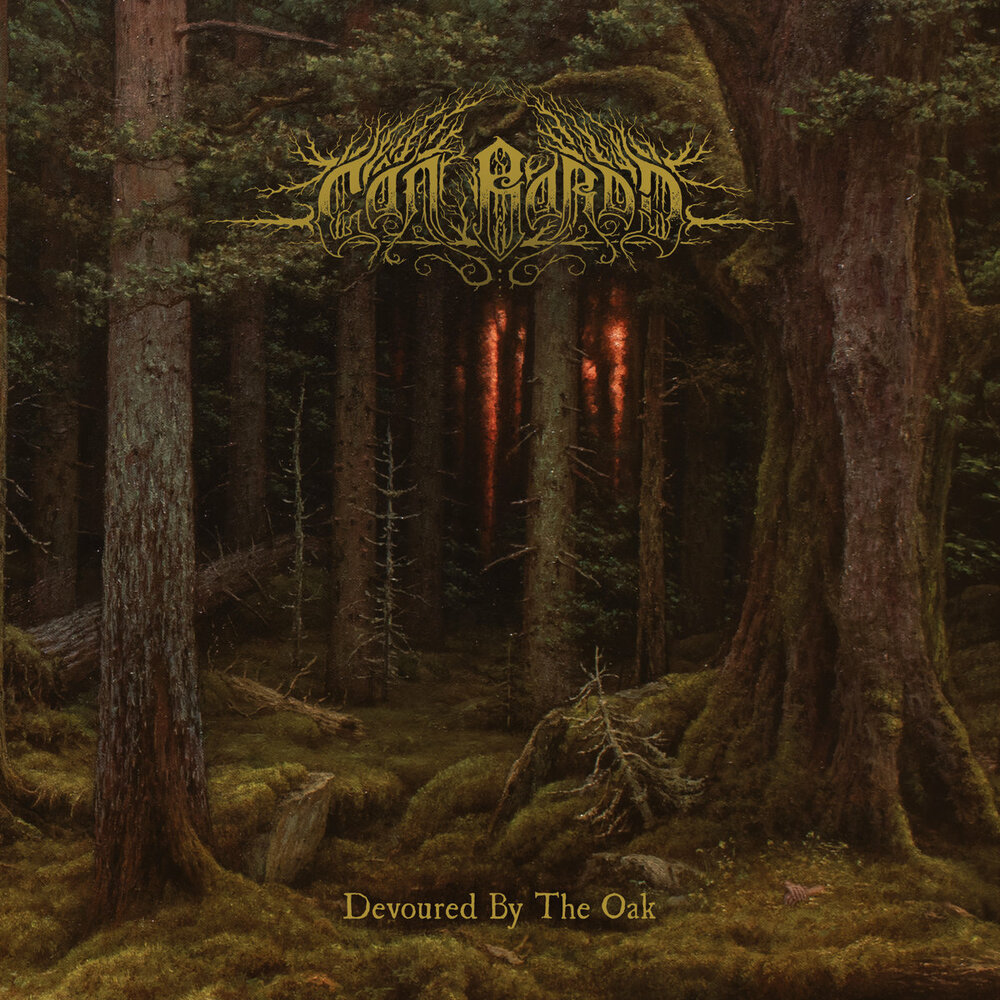
Cân Bardd - Devoured by the Oak (2021)

Country: Switzerland
Style: Folk/Black Metal
Rating: 8/10
Release Date: 12 Nov 2021
Sites: Bandcamp | Facebook | Instagram | Metal Archives

I like Cân Bardd a lot, because there are precious few folk metal bands around who can weave the folk part of that into the metal part so inherently. Sure, they're folk/black metal but the principle is the same. This isn't metal with folk elements added into it. It's as much folk music as it is metal, however fast and heavy it gets. This is their third album and I'm listening because the Vietnamese black metal band Elcrost listed Cân Bardd's The Last Rain in their 2019 end of year lists. I wasn't going to miss out on their new one.

I see their folk/black metal listed with both epic and atmospheric adjectives and both are obvious on the beautiful intro, Echoes of the Moon, which weaves calming instruments over birdsong and rain. I'm not sure just how many instruments there are in play and, given that everything but the drums is performed by one man, Malo Civelli, I'm guessing that most of them are really synths. It slowed my heartrate down, that's for sure, especially when he's playing a piano in such a way that it sounds like a harp.

He sped it back up again later, of course, with the aid of Dylan Watson on drums and a few guests here and there, but he takes his time. Une Couronne de Branches starts out peacefully enough, a small choir embellished by piano, harp and flute. It's almost two minutes in when Civelli sets us up for a gear change with an ominous telegraphing growl and there's another minute before it truly shifts up. Tellingly, even when it does, the blastbeats and harsh vocals don't negate the soothing feel of the song until maybe five minutes in, which is only halfway for this one.

This one has another pastoral section before the choir finds full voice late in the song. It rolls right into the title track and its progression isn't entirely different, with a couple of peaks, the second of which features the choir rampant, but this is a two part piece, each of which runs closer to nine minutes than eight. The second part starts to change this approach with its much more vehement opening and its more lively pace throughout.

The other two epics are Crépuscule and Autumn Shore, but they take a rather different approach. The former plays up Civelli's harsh voice without much backing intensity except some drums, then that all fades away into a melodious pastoral setting. It does find full black metal intensity but in a succession of much more frequent bursts rather than a couple of patient peaks. The choirs do wait to build late in the song again though, as they do in Autumn Shore, which blisters right out of the gate with a gem of a sustained opening onslaught.

Autumn Shore is the heaviest song on the album, the most black metal, but it still feels inherently folk music and that's what I appreciate most about this band. Parts of the song—in this case, most parts of the song—are very loud and very fast, the traditional black metal wall of sound, but they serve as emphasis. The heart of this music is the second half, which often removes that emphasis.

It's fair to say that, if you played three songs from this album—Echoes of the Moss, Autumn Shore and Blomsterkransen—to someone who hadn't heard Cân Bardd before, they'd believe them to be not only by different artists but from different genres. Yet their sounds weave together wonderfully on this album. Thank you, Elcrost, for letting me know about this project.

Wednesday, 8 December 2021

Caravan - It's None of Your Business (2021)

Country: UK
Style: Rock
Rating: 6/10
Release Date: 8 Oct 2021
Sites: Facebook | Official Website | Twitter | Wikipedia | YouTube

The British band Caravan have one of those names that's been around for so long that we almost inherently expect that they must have split up years ago. Well, they've split up three times to my counting since their founding in 1968, but they're still going and their most recent inactive period was in the mid nineties. However, I remember them as a jazz-infused prog rock outfit, mostly from their albums of the early seventies, from If I Could Do It All Over Again, I'd Do It All Over You to Cunning Stunts, and that's not what they are today.

While there are three members who date back to those years, it appears that the sound changed considerably when original bassist Richard Sinclair left in 1992. The dominant force since then has been Pye Hastings, who has been the band's vocalist and guitarist since day one, and that means that Caravan has shifted away from jazz and prog to the pop rock that they play today. Given that I don't believe I've heard anything they've done in the last few decades, that was a bit of a surprise for me. Depending on when you last heard them, it may be for you too.

The difference is as strong as between Genesis albums like Foxtrot and Invisible Touch. Going from Supper's Ready to Land of Confusion is quite the journey and so is going from For Richard to Down from London, the opener here, which is a perky and accessible pop rock song, even with the initial lead instrument a violin. It's quirky stuff, not whimsical the way the band used to be, but quirky in a humorous sense, the lyrics a cautionary tale of a "DFL" visiting the country and literally shooting himself in the foot, so giving the locals a story to talk about for years.

According to their PR, the lyrics to every song here were inspired by the COVID pandemic and how it and the associated restrictions that it's prompted have affected society. It's not overtly political and that theme is not always obvious at all, but it's obvious in some songs, especially the touching Spare a Thought, which remembers those we've left behind, in part because some people denied the very existence of a problem. It opens gently with flute and violin and we know immediately it's going to be emotional. There is You is even more so.

While much of the album is enjoyable, much of it is also light and not likely to stay with us unless a melody gets under our skin, like that of If I Was to Fly, and it turns into an earworm. And that's not a bad thing. If COVID taught us anything, it's that we need to enjoy what's around us and that has extra meaning for music. It doesn't have to be clever, intricate and technically impressive. It only has to be enjoyable and this is enjoyable, even if we tend to expect clever, intricate and technically impressive from Caravan. For that, we need to travel back through the years.

It's not all vanilla pop music though. Wishing You Were Here has some darkness to it, even though it remains accessible. There's some continental sass to Ready or Not that makes the song notably sway. There's some depth to instrumental sections on longer songs like It's None of Your Business and I'll Reach Out for You. Geoffrey Richardson provides some neat flute in the latter but I loved it more on Spare a Thought; it starts the song out well but is even better later on.

So,to go back to that Genesis parallel, as long as you're expecting Invisible Touch, this is a decent album. If you're expecting Foxtrot, then it's not what you think it is, except perhaps on the three minute closing instrumental, Luna's Tuna, with some stellar violin from Richardson. That's it.

Laufgast - Roots for Spears (2021)

Country: Israel
Style: Progressive Black Metal
Rating: 6/10
Release Date: 16 Oct 2021
Sites: Bandcamp | Facebook | Metal Archives | YouTube

Here's something really interesting. From what I can tell, Laufgast is another one man project, of an Israeli gentleman named Asaf Levy, who plays every instrument on this progressive black metal album. However, there are no fewer than five guest vocalists, exactly none of whom appear to be Israeli or indeed vocalists, at least not primarily. Chris Bone does sing with Forged in Black, who I reviewed in 2019, and a few other British bands, but he doesn't sing lead; he's primarily known as their guitarist. Similarly, I'd call Norwegians Kristian Brynjulfsen and Kine-Lise Madsen Skjeldal respectively the bass player in the thrash band Psykopath and the keyboardist in the symphonic black metal outfit Cretura.

And, to be fair, even though this is definitely prog and, eventually black metal, it wanders all over the musical map and those vocalists aren't all singing. Some of them are merely lending voices in conversational or dramatic speaking fashion, as they do from the very start of the album, though they mostly do so in what I presume is Norwegian, so I haven't any idea what they're saying. That lends this album an unusual feel from the outset, and that only increases as we move through an array of genres, initially prog rock, then black metal and eventually world music, with some neat backing vocals.

This opening track is called Mortality in Solace and it runs for only a breath under eleven minutes, so there's plenty of opportunity for musical shifts. There are so many of these that it's difficult to track and many of my favourites are difficult to fit into a single bucket. That world music section, for instance, which unfolds in the minute from 4:14, unfolds against a backdrop of tribal drumming but moves from deep male Norse chanting that just reaches a low drone to a characterful female wail that sounds a lot like Eastern European choral music. And it's bookended by black metal.

There are only three songs on offer, the title track lasting fifteen minutes and the album over half an hour. I can only assume that there's a complex story being woven through these pieces of music and the voices serve as characters or at least provide background to what's going on. Without the lyric sheet, though, I'm lost. It's music to me, without story, and that makes it fascinating but also elusive. I don't know why the musical shifts are happening, but I can hear that, when they do, they shift the tone of the piece considerably, making it hard to picture a song like Mortality in Solace at a high level. I enjoyed this very much in the moment but find myself remembering sections rather than songs.

What's interesting to me is that most of those memorable sections are slow ones, like that world music section in Mortality in Solace. It returns five minutes into Roots for Spears, underlining how this feels like a single half hour piece of music rather than three different songs, but there are a few others too. There's a mildly similar section in Earthbed that stages a more restrained wail in the background behind a speaking female voice and a lively metal beat, while a guitar explores wherever the characters happen to be.

Often with complex music like this that unfolds in many changes over a few long pieces of music, I find myself subconsciously translating the audio into visuals and that helps ground it all for me. I may not see what the composers or musicians saw, but I do see something and what I see helps to shape my understanding of the music. I rarely saw anything here and, when I did, it was in one of those quieter sections. Those world music bits were inside a cave to me, not entirely covered like the cover art but only mostly so with some light shining in from outside. There's also a mediaeval section a few minutes later in the title track that adds flutes, even if it grows into a very pleasant electric guitar solo. I was outdoors for that section hanging out with peasants with trees around.

This is hardly commercial music. It's black metal, for a start, but it's far from only black metal and any story being told is almost deliberately obscured by the choice of language. So this becomes a pure musical experience and it's a hard one to interpret. Ambitious listeners will definitely find it worthy of exploration, because it's well performed and always ready to surprise, but it's not likely to reach much of an audience beyond that. Which is fine. I just hope it finds enough listeners that Asaf Levy can return to this project for a second album, one that I can visualise better.

Tuesday, 7 December 2021

L.A. Guns - Checkered Past (2021)

Country: USA
Style: Hard Rock
Rating: 6/10
Release Date: 12 Nov 2021
Sites: Facebook | Instagram | Official Website | Twitter | Wikipedia

I liked L.A. Guns back in the late eighties, even if I liked other bands that the key members were in more. After what seems like decades of legal wrangling, the old name is back with Tracii Guns and Phil Lewis again, so they're the focus. I preferred Lewis in his earlier band Girl and Guns in a later one, Contraband, but the first couple of L.A. Guns albums were excellent and they'd probably be a lot better known today had grunge not arrived and wiped the charts clean of hair metal.

As with other successful throwbacks to that era, this is a gritty hard rock album that reeks of beer and bikes and tattoos but not mascara and hairspray. In fact, when Better Than You kicks off with a neatly vicious metal riff, I realised that I'd listened to five songs without even thinking of metal. It really does fit much better into the hard rock bucket, even on the up tempo opener, Cannonball. It slows down to bluesy rock on Bad Luck Charm, gets sassy on Living Right Now, soft and alternative on Get Along.

The highlight from the first side is If Its Over Now, which has an Alice Cooper sort of swagger to it and that's not entirely absent from Better Than You, but it feels more like an Ozzy solo number. I certainly expected his recognisable voice to show up after the guitar but no, it's Phil Lewis with an odd hint of autotune that vanishes almost immediately but reoccurs at points. If that's for effect, it didn't work for me. The guitars did and maybe they save the song, but the end result is off.

And while the rest of the album isn't off, it didn't really engage me. I'm not sure if I'd call a lot of these songs filler or just overdone. I listen to a lot of music that's clearly a throwback to an earlier era in rock music and that's fine, but a band either needs to do something interesting with an old style or to take on an old style that's not frequently mined and do it well. This is neither. It's good enough for the die hard fans; Lewis and Guns still have it, even with the latter about to qualify for his old age pension next month. They sound fine and the songs aren't bad. They just don't have an extra something to make them must listens as we wrap up 2021.

While the band attempts the Alice Cooper swagger again on the closer, Physical Itch, it can't fully engage and it isn't remotely up to If Its Over Now, even with a tasty solo from Guns late on. I'd say that the only other song that grabbed me here was Let You Down, which is definitely something a little different. Initially I felt that it didn't fit the band's style, with its ominous intro and odd and slow build, but they got me on board with it. It plays rather like a Great White cover of a new wave deep cut by a band we've never heard before. I hadn't realised I would want that until now but it turns out that I really do. It also has the best solo on the album and the best underpinning to it.

So this is a 6/10 for me, with a couple of 8/10 tracks. If you're a die hard fan of the Guns, then add a point to at least the former and probably the latter too.

Rivers of Sorrow - Existence Beyond Emptiness (2021)

Country: Turkey
Style: Doom/Death Metal
Rating: 6/10
Release Date: 19 Nov 2021
Sites: Bandcamp | Instagram | YouTube

It's been almost three years since I reviewed a doom/death album from Turkey, so it's about time I listened to another one. The one in 2019 was Of Past and Passion, the solid debut from Forgotten, a six piece band who hail from Ankara, that nation's capital if not remotely its largest city. Rivers of Sorrow is also based in Ankara, but it's a one man project created by... well, I have absolutely no idea because I'm not finding any other information about the band online at all.

It's capable stuff, though it takes a while to establish itself. It starts ambitiously, with a nine and a half minute opener, Night Queen, with piano bookends and quite a journey in between. Sadly, the intro is simple and derivative and the song itself ends up in a Golden Brown decorated rhythm, an unusual song to come down the years as the Stranglers' biggest hit but an even more unusual one to constantly come to mind during the second half of a Turkish doom/death song. The end is much more like it, the piano beautifully played with a real sense of melancholy.

The other catch for me is that the vocals are hardly sophisticated. They're there and they do what they need to do, but that's about all during Night Queen and the much shorter second track, Cold Flares of Sun, which does at least find some interesting warmth. It was only the keyboard work on that opener that kept me listening. And I'm happy that I did, because it gets a lot better, as of the third song, Dreams without Hope (Genetic Disease), which is a real gem.

This one starts out more urgently and more confidently, and with ethnic melodies floating around in the background. The vocals are much more interesting too, deeper and more guttural, as if this singer didn't mean it for two tracks but absolutely does now. I was onboard from the outset, but it only gets better. Just as we're getting used to how Rivers of Sorrow sound at a more urgent pace, that pace is ruthlessly cut down in its prime with an utterly glorious slowdown that kicks in just as we're hitting the two minute mark.

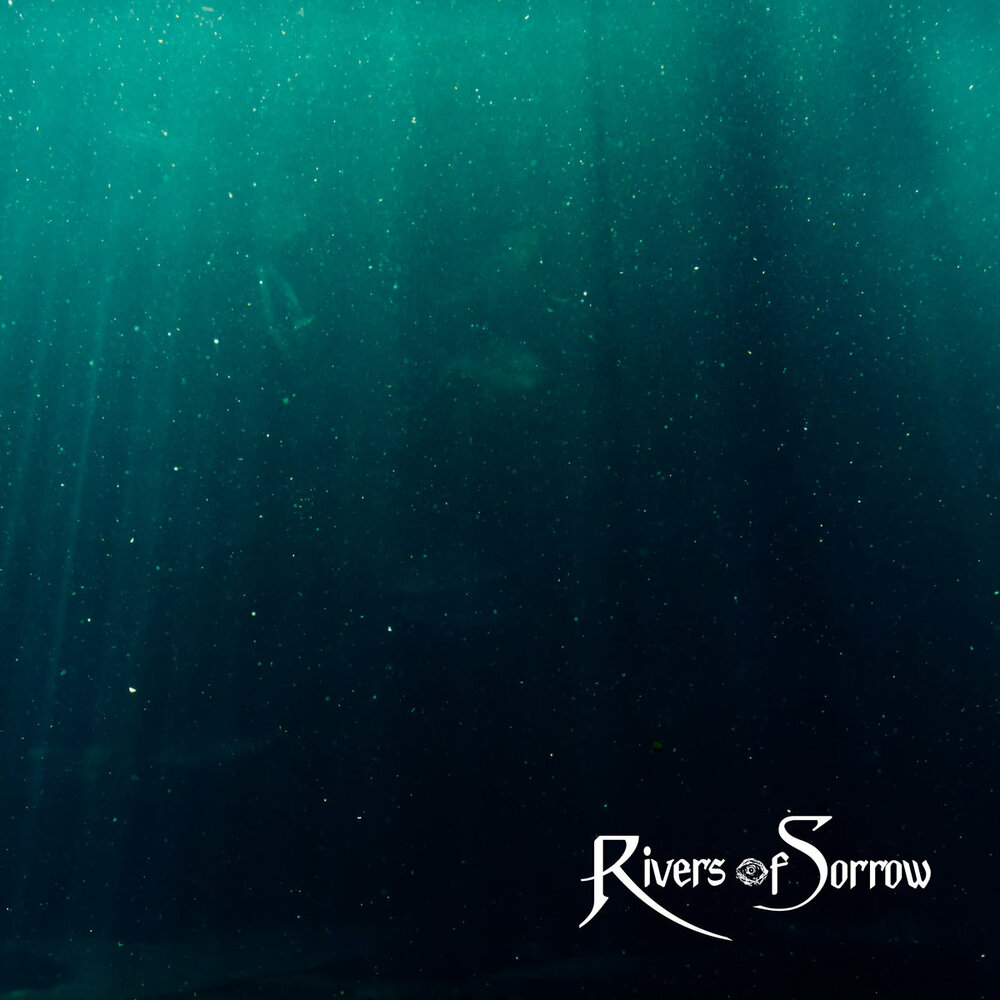
I adore this midsection, which seemed to evoke the cover art. If that's water, with light filtering in but only so far, then that's where this starts. Then the song dives deep into the abyss, all the light gone, but we see something anyway and that's a fantastic world, an set of otherworldly melodies laid over some cavernous guitar and primal drums. The vocals multilayer, in elegaic fashion, then get more urgent in response to... something. Everything about this song is great, but it keeps on getting more interesting as it goes and I had to listen a few times before continuing, revelling in it but also a little worried that the quality wouldn't continue.

Fortunately it does. Next up are the two singles that preceded the album, Her Gün Biraz Daha and Endless Suffer. I prefer the former, which is almost trancelike for a while, deep and rhythmic, with an achingly slow vibe, even when a soft speaking voice narrates for a while. If you don't connect to the vibe, you won't like the song, but I did and I did. The latter has a neatly ominous beginning, an effortlessly patient bass setting the scene. A quiet guitar takes over and teases us until it all kicks in at once, again around that two minute mark but escalating this time into something gothic and dark and enticing.

Neither of those singles can match Dreams without Hope, nor can anything else here, but they're good songs and they show that Rivers of Sorrow has real promise. This album may be inconsistent, especially with a nine and a half minute piano nocturne to wrap things up, but there's good stuff on offer and one absolute peach in Dreams without Hope. And I'm going back to listen to that one again right now, while sending the best of luck to whoever's behind the Rivers of Sorrow name. I'd be interested in checking out album number two.