Thursday, 14 December 2023

Varathron - The Crimson Temple (2023)

Country: Greece
Style: Symphonic Black Metal
Rating: 8/10
Release Date: 1 Dec 2023
Sites: Bandcamp | Facebook | Instagram | Metal Archives | Official Website | Twitter | VK | YouTube

I could have sworn that I'd heard Varathron before, but as soon as Stefan Necroabyssious's vocals hit me on Hegemony of Chaos, the opening track proper, I realised that I haven't. They're a Greek band who helped to pioneer black metal in Greece, alongside Necromantia and Rotting Christ, in the early nineties. They were formed as far back as 1988 with their 1993 debut, His Majesty at the Swamp, credited to three musicians and a drum machine. They've bulked up over the years to be a five piece here, with Achilleas C sounding like more because of his keyboards, but this is only their seventh studio album. They're not exactly prolific.

Their particular brand of black metal is symphonic to my ears, though the album starts out with a vibrant intro with choirs, bagpipes and drums, as if Carl Orff was writing Viking metal. It suggests that this will be folk metal rather than black metal—and there are certainly folk elements spicing up the mix at points throughout—but Hegemony of Chaos kicks right into speedy black metal with a roar, initially sounding like the traditional wall of sound black metal style.

However, it does a lot more than that and, in doing so, points at where this album goes. One note is that, while it starts out fast and traditional, Stefan doesn't deliver in the typical shrieks. He has a notably theatrical voice that's rough more than it's harsh and projects more than it shouts, and doesn't really have an easy comparison. While it seemed out of place when I first heard it, I found that I adjusted almost immediately. It's a memorable voice, sinister rather than evil, and I like it a lot.

Another is that, while Hegemony of Chaos starts out fast and traditional, it doesn't stay that way. On this one, the verses are fast but the chorus slows down and adds orchestral swells to make the backdrop seem epic. There's a firm melody overlaid too that takes over, as the song slows down to highlight different aspects of the band's sound and the instrumental sections are slower again. It gets folky halfway through, with an ethnic lute of some description leading the midsection with a repeated rhythmic theme as its backdrop that continues until the end of the song.

So Hegemony of Chaos often slows down, Crypts in the Mist rarely speeds up and, the further I got into the album, the more I realised that there really isn't a lot of fast material here. Hegemony of Chaos, Immortalis Regnum Diaboli and Shrouds of the Miasmic Winds all have strong fast sections but there's also plenty on each of those songs that's much slower. I found myself thinking of how a lot of thrash bands have fallen into playing at two speeds, blisterers going fast and chuggers going mid-pace, with how often any particular band shifts between them an easy means of determining their audience.

In those terms, Varathron seem like a mid-pace black metal band nowadays, even if they ramp up occasionally to frenetic, that's where their elegance is and that's what makes them symphonic to me. This is a set of carefully composed tracks that use black metal components to tell stories and evoke moods. There's as much Iron Maiden on show here as there is Emperor, but the sonic toolkit is far more reminiscent of the latter, so that's where it falls. Stefan's voice is worth bringing up in this context too, because his theatrical approach would often work as well in other forms of metal as this particular one, which tends to be labelled extreme.

The guitars from Achilleas and Sotiris often follow suit, reminding as much of heavy metal bands as anything extreme. Check out how Crypts in the Mist ends and how Cimmerian Priesthood kicks off in its wake. This is heavy metal guitarwork, even if the tone is straight out of black metal. Outside of the few blistering sections, it's often only a fast beat from Haris that really keeps the extreme tag valid. If he slowed down and ditched his double bass work, then this might still remind of black metal but wouldn't play as extreme at all, more prog or even folk metal. To the Gods of Yore hints at doom metal.

And I have to come back to that folk metal aspect. It's not everywhere here, though it shows up on enough occasions to be notable. I don't know what instruments are being used, because I don't see any credits for them, but they're clearly ethnic and they add an extra flavour to this music when a song decides to let them in. Hegemony of Chaos is the first, but To the Gods of Yore goes there too and there's plenty more in Swamp King. I liked this aspect a lot and wish it had been utilised more often. It makes me wonder how Varathron arrived at this sound and how their next album will turn out, though it would be surprising if we see that any time soon.

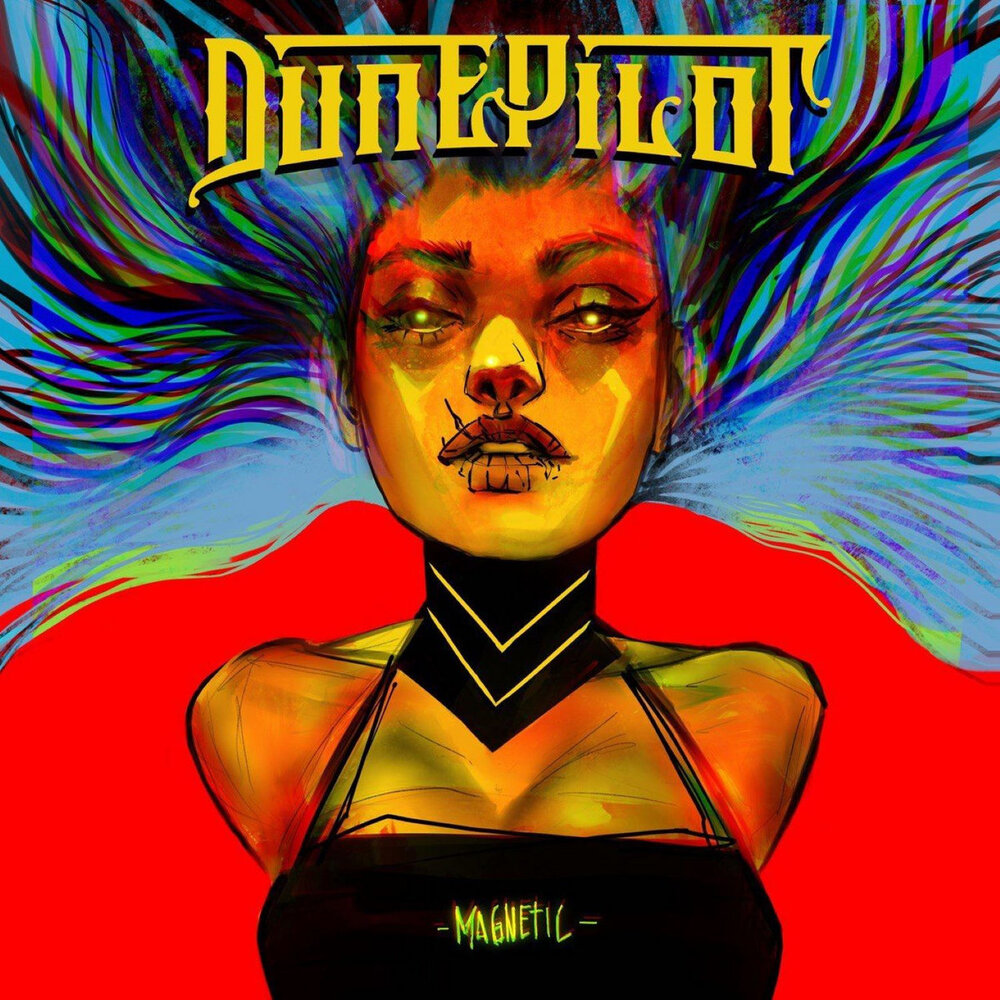
Dune Pilot - Magnetic (2023)

Country: Germany
Style: Hard/Stoner Rock
Rating: 7/10
Release Date: 1 Dec 2023
Sites: Bandcamp | Facebook | Instagram | Official Website | YouTube

I don't know a heck of a lot about Dune Pilot. They're a four piece hard/stoner rock band who hail from Munich, though you wouldn't guess the latter from listening to them. Not only is stoner rock a quintessentially American genre to begin with, they play it in a very American way, unaccented vocals delivered in English with an American turn of phrase. What's more, they often combine the stoner rock sound with a hard rock sound that reminds of Clutch, any British forebears mostly lost in abstraction. Maybe Black Sabbath are a little noticeable in Let You Down, but otherwise they're filtered through the expected American bands.

Which ones manifest pretty quickly. Magnetic is perky stoner rock with less fuzz on the guitar than I expected. The riffs are strong but the hooks are strong too. The vocals are clean but with a slight rasp for edge. There's plenty of Clutch here but some Kyuss too. Visions lightens up initially for an overtly psychedelic feel with vocals deliberately subdued for effect. Both build and a minute in we find ourselves back in that Clutch meets Kyuss territory, with some Monster Magnet thrown in for good measure as it gets heavier, that missing fuzz added right back in. This one bulks up generally, even if it drops back into a jaunty midsection, but it gets heavy at the end and then heavier again.

As the album runs on, the Kyuss influence starts to morph into a Queens of a Stone Age influence, a nuance I know but a telling one. Lumi goes there, but So Mad really goes there, especially late in the song. It has a swagger to it as it builds and eventually overlays a Queens of the Stone Age style melody over a fuzzy guitar and a glorious drum sound. The grit in the voice is getting progressively grittier but the hooks take over and we think about a single release. Dune Pilot like to be versatile, so Heap of Shards is more laid back, even with a relatively harsh clean voice, while Pied Piper is perky and Highest Bid comes right back to Queens of the Stone Age and Clutch.

I liked this a lot and I liked it quickly. The title track opens things up and, while it doesn't include all the aspects of Dune Pilot's sound, serves as a strong introduction to what they do. It has the hooks we expect from a stoner rock band like Queens of the Stone Age who have broken into mainstream awareness and whose catchiest songs hit the charts. It also has the emphasis of a more traditional hard rock band like Clutch, the power they can bring to bear always ready to go in the background even in a quieter song or section.

An obvious example is Take Your Lies, almost a ballad for this band, with one of a number of tasty bass intros—there's another one on Let You Down—backed by just a hint of atmosphere, before a liquid guitar joins in and softer, echoey vocals. It's definitely down a couple of gears from the norm for Dune Pilot but we never forget that there's gas in the tank and the band have their feet ready to hit the pedals. Eventually, of course, they do and it's like they never calmed down at all.

It's hard to pick out favourite tracks, not because there aren't standouts but because they're very different. I like Visions a lot because there's so much dynamic play in it and I like that sort of thing, especially when it's done as well as Dune Pilot do it. I like Let You Down because, even though it's under five minutes and not even the longest track on offer, it has an epic feel to it that's far from the norm here but very effective. Ultimately, I'd go for So Mad because it just flows so well. It has nothing that other songs here don't, but it does those things so well that it feels effortless.

I thought about a highly recommended 8/10 rating early here but the first half does shine brighter than the second. I ended up going with a merely recommended 7/10, but it's more like a seven and a half and, if this is your genre, round that right up to eight immediately. It's good stuff. I just wish I knew who was in the band so I could assign credit.

Wednesday, 13 December 2023

Glass Hammer - Arise (2023)

Country: USA
Style: Progressive Rock
Rating: 7/10
Release Date: 27 Oct 2023
Sites: Bandcamp | Facebook | Instagram | Official Website | Prog Archives | Twitter | Wikipedia | YouTube

Glass Hammer have never sat around twiddling their thumbs in between albums. The longest gap between releases thus far has been three years and that was between albums two and three way back in 1995 and 1998. However, this matches their longest sustained period of annual releases, as the fourth in a row. I've reviewed all four and I've thoroughly enjoyed each of them. My favourite is surely the first of them, Dreaming City in 2020, but I could see other people choosing otherwise, Prog Archives raters putting Skallagrimm: Into the Breach top and this second. There's no correct choice.

Perhaps the consistency, both in schedule and quality, is because the line-up has remained rather stable of late, Hannah Pryor firmly establishing herself as lead vocalist on a third album running, Steve Babb performing on multiple instruments throughout and Reece Boyd gradually bulking up his contributions on guitars. He's played on all four, as has Fred Schendel, who's only on one track this time around. That just leaves Randall Williams, who I believe is new on drums.

This is a concept album, hardly a new approach for Glass Hammer who started out with one back in 1993. However, they've mostly restricted those to fantasy subjects, while this is science fiction, the story of an android who's sent out into the stars in a spaceship called the Daedalus to discover the most amazing sights that the galaxy has to offer. Babb has suggested that this is his "progressive rock spin on space rock" and that makes sense, because the biggest difference between this and its recent predecessors is in his keyboards, which are far from what they used to be.

He used to play far more traditionally with a Keith Emerson sort of mindset but this is very perky keyboard work, Babb almost treating his synths more like a prepared piano, programming chirps and bleeps as individual notes and then playing them in a way that we interpret rather than hear as music. On Mare Sirenum, he generates notes almost like stars sparkling in the firmament. It's a very impressionistic approach and it does a wonderful job at generating a particular mood of wild possibility.

There are other changes here too. Glass Hammer have been getting a little heavier of late and do so again here, but not throughout. It's an album of two halves, the first seven tracks serving as an initial journey out into deep space, racking up around half an hour between them, and the last two matching that timeframe on a journey back. However, that first half is also easily broken up into a couple of halves, the first light and airy, a journey full of hope but the second much heavier and full of darkness as the Daedalus returns.

It's worth considering that first half of the first half as very modern prog rock, which could easily be called neo-neo-prog if that wasn't so inherently clumsy a term. It's rooted in electronica and is so modern that it's fair to call it futuristic. While there's a bass on Arion (18 Delphini b) to move it forward and Babb's vocals are heavily manipulated, like a kid who's just found out what autotune is and wants to see how far the human voice can be distorted, it's fundamentally driven by Babb's keyboards. That starts to change in Lost, which is dense and fascinating before it opens wide with Pryor's voice. Then the hints become the norm in Rift at WASP-12 and Proxima Centauri B.

WASP-12 is psychedelic rock with the most metallic guitar thus far. There's Hawkwind in this sound for sure, but something more. I hear elements of doom metal but also nineties alt rock. Proxima Centauri B is heavier again, far more doom metal but with so much fuzz on Babb's bass that we're better off calling in stoner metal, even if Pryor's vocals are still clean. There's Sabbath in the riffs, but also in those vocals, which I expected a lot less. Halfway through, things smooth out, even with a fuzzladen bass, as if the Daedalus is leaving the darkness behind.

And so to the final two songs. Arise plays epic but it's not fundamentally unusual. It's just a longer song by far than those that came before, one that may well be my favurite, because it breathes so well. It's patient and has some neat ethnic tinges and Vangelis-like touches. While it runs a hefty twelve minutes, The Return of Daedalus is longer again by four, but it plays very differently. While it starts out epic with samples, it mostly turns into an instrumental jam. Now, it's a very tasty jam that moves through genres as diverse as stoner rock and jazz to and from prog, but it doesn't add to the concept behind the album. Arise does some of that, but nowhere near as much.

Glass Hammer continue to evolve, as perhaps prog rock bands always should, and I'm finding their growth fascinating. Not everything here works for me, the manipulated vocals on Arion a definite no and the concept not entirely clear, especially when it's apparently forgotten during that long final jam. However, most of it does and I thoroughly enjoyed the combination of spacier keyboard work and heavier bass and guitar. Hearkening back to Kraftwerk while also heavying up into more modern instrumental stoner rock at the same time is a strange approach but a very good one. I'm interested to see how the next album plays. And, right now, it seems likely that we can expect that in late 2024, which is getting closer every day.

Skiltron - Bruadarach (2023)

Country: Argentina
Style: Folk/Power Metal
Rating: 7/10
Release Date: 1 Dec 2023
Sites: Bandcamp | Facebook | Instagram | Metal Archives | Official Website | Twitter | YouTube

I've been fascinated with how South America has fallen in love with Celtic music ever since hearing Tuatha de Danann. They're from Varginha in the southern Brazilian state of Minas Gerais, and this band are from Buenos Aires in Argentina, but Varginha is closer to there than it is to half the rest of Brazil. Well, I say Buenos Aires because that's where they started, as Century in 1997, shifting to Skiltron in 2004, but only two of the five current members are Argentinean. New vocalist Paolo Ribaldini is Italian and based in Finland nowadays, where drummer Joonas Nislin already was, playing for folk/melodic metal band Frosttide since its founding in 2009. That leaves Pereg Ar Bagol, a French piper who contributes tin whistle in addition to bagpipes.

This is Skiltron's sixth album, but also their first since 2016, which helps explain why I haven't heard them before. I like what I hear and it really does combine the two genres I listed above. It starts as folk metal, the intro kicking in with rhythmic acoustic guitar and growing into full on bagpipes, and much of it stays there, with songs about Rob Roy and Scottish independence, those pipes a pivotal part of the band's sound, even if Bagol used to be considered a session musician before joining the band as a full fledged member. However, Ribaldini sings power metal almost exclusively across the entire album and the instrumentation behind him sometimes follows suit.

Case in point: the first track proper, As We Fight. It opens with bagpipes, so it's no stretch to see it as folk metal. However, when Ribaldini opens his mouth and Bagol closes his, it's power metal and we start to wonder where they cross the boundary between the genres. In many ways, they don't, because it's never as simple as being folk metal when the bagpipes are playing and power metal when there are words to be delivered. There are plenty of moments when both are happening at the same time and we hear both genres simultaneously.

What's more, there are tracks that play far more overtly as one or the other. Where the Heart Is feels like power metal, even when the bagpipes start playing. It feels like the song was built from the ground up to be power metal and they're a folk decoration. On the other hand, the very next song, Proud to Defend, feels like folk metal from its very first drum beat, which arrives before the bagpipes show up, and it continues to feel like folk metal even when Ribaldini starts singing. He's anthemic on this one but in a timeless manner. The song and its lyric feel aged, as if it doesn't only predate this album but all of us and a few generations before us. It's just showing up again here in a new form.

What I found fascinating was how versatile the power metal is. The folk metal is always very much in the Celtic tradition, whether we look at it lyrically or instrumentally. However, the power metal varies depending on the song. Initially, it starts out in the European vein, perhaps unsurprisingly given that all the Celtic nations and regions are part of Europe. However, there are songs where it seems far more American and sometimes even dipping more into a commercial arena rock or glam metal vein, as on I Am What I Am, which is rather like a folk metal band covering Twisted Sister.

Most unusually, I heard the American sound in the verses of A Treasure Beyond Imagination, but a European one in the choruses. In the midsection, when it shifts into instrumental mode, it's purest folk metal, suggesting that we get up and dance a jig. It's a fascinating melding of genres and, for that reason, it's probably a good place to start for anyone who hasn't heard Skiltron before but is interested in finding out what they do. They do a lot and they sometimes do it all in the same song. What's important is that it works. Not one of these songs seems lesser for staying in one genre or for expanding into two or three.

If I had to call out favourites, though, I'd go with Proud to Defend, Rob Roy and Haste Ye Back. This suggests that I'm more on board with the folk metal than the power metal. The middle of those three is a pacy piece that, just as its title suggests, tells a historical story, a quintessential folk tale based, however loosely, on a real person. Its bookends both play out emphatically as Celtic folk metal, Haste Ye Back in particular featuring some wonderful pipes that shape the riff and set the whole song into motion. It's a ceilidh of a song.

And so the mystery deepens. Why has Celtic folk music made such a strong impact in South America? Answers on the back of a postcard to the usual address. In the meantime, I'm happy that it has.

Tuesday, 12 December 2023

Green Lung - This Heathen Land (2023)

Country: UK
Style: Occult Rock
Rating: 7/10
Release Date: 3 Nov 2023
Sites: Bandcamp | Facebook | Instagram | Metal Archives | Official Website | Twitter | Wikipedia | YouTube

I came into this with high expectations. I liked Green Lung's debut album in 2019, Woodland Rites, and I loved their follow-up a couple of years later, Black Harvest. Well, it's two years on again and here's another one, as if to schedule. I like the cover, which is a neat taken on Penguin paperbacks. The green colour rather than the traditional orange is surely because of Green Lung's name, but I know they published with green covers too, albeit mostly for crime, if memory serves. I also liked the ethnohistorical prologue, as if the band's culture is being explored by the BBC half a century ago, with a combination of fascination and quiet establishment judgement.

It took a while for this album to meet my expectations though. The Forest Church is a solid opener but it's a little overt and with a riff/melody combination that annoyingly reminds of the Inspector Gadget theme tune, even if there's a great instrumental section in the second half. Maxine (Witch Queen) features a glorious organ line behind the riffs, but then turns into a pop song. It's overt as well and highlights how the band is pushing a gimmick, which takes a little of the magic away from me.

In other words, for a while, this is just as blatantly occult rock as their most obvious comparison, Cathedral, were blatantly doom metal. Now, the band as a whole, especially vocalist Tom Templar, play it straight, refusing to acknowledge that this is cheesy but also knowing that we can hear the nod and a wink. There was a lot of this on the debut album but not so much on the follow-up. I was hoping that they'd left it behind.

Fortunately, before long, they do. The Forest Church and Mountain Throne are solid openers, the latter being decent stoner rock bearing its Black Sabbath influence proudly. Maxine (Witch Queen) is pop music but it's a fun pop, always elevated by John Wright's organ. But then they get serious, with One for Sorrow taking things up a level and Song of the Stones adding a quality folk counter. Suddenly we're in the album we should have been in all along and the best news is that we remain there until it wraps with the epic Oceans of Time.

My favourite songs are the first two of those and it's not remotely surprising to see a comment on the album's Bandcamp page about how well these played on a small stage. One for Sorrow is a big song, dipping overtly into the Cathedral songbook to give us doom metal that's tempered for the verses. It's the first song here that feels like it means it, which infuses it with power, and a delicate keyboard line over crunching riffs late on is absolutely delightful. Song of the Stones is absolutely not a big song. It's a very personal song and it's an able folk counterpart to One for Sorrow.

I mentioned in my review of Woodland Rites that it felt like the most overtly folk song, which was May Queen, could have been recorded in a clearing in the middle of a wood, instead of within the walls of a studio. That very much applies to Song of the Stones too, which builds from a slow ritual hand drum beat and soft guitar into a real chant. It simply commands that we listen and it has to be magnetic played on stage in a small venue. If we close our eyes, we ought to feel the leaves.

The final three songs can't match that pair but they do play very well indeed. The Ancient Ways is a doom metal song that retains a folk rock feel. It feels honest and heartfelt and plays so maturely that it's a real grower. There's lots more Cathedral in Hunters in the Sky. Was that a death grunt to kick us off? I think it was. I love the drums behind the riffs during the midsection and there's an impressive organ solo too. And Oceans of Time is the epic I mentioned, going for that feel from the very outset, built with keyboard melody over a soft drone. It's the longest track here and it does a lot with its almost seven minutes.

And so this isn't the killer third album that I was hoping it would be, but it gets there midway, with a couple of absolute gems. The tracks after them feel mature and worthy, but those before them don't. I enjoyed them anyway, don't get me wrong, Maxine (Witch Queen) being highly infectious, but they don't feel like they belong on the same album. They're a level behind what follows them, if not a couple, and would surely have felt even more out of place had they been dotted amongst those other tracks. Every time I listen through this, it truly begins for me with One for Sorrow.

I guess that leaves Green Lung at a crossroads. They can go the cheesy route that Cathedral took, playing serious with over the top material, and become a gimmick band. They have the chops that would make that work, as these first three songs suggest. Or they can treat their occult mindset seriously and merge folk music with metal power like the rest of the album. Those songs right at the heart of the album underline how well they do this and the rest back up their ability. The key point is that, while either way would be valid, choosing both ways feels like a real cheat. Let's see where they go in another couple of years with album number four.

Mourning Sun - Bahía desolación (2023)

Country: Chile
Style: Atmospheric Doom Metal
Rating: 8/10
Release Date: 8 Dec 2023
Sites: Bandcamp | Facebook | Instagram | Metal Archives | Official Website | YouTube

Here's something really interesting. It came to me labelled as atmospheric doom metal, though I see that they've used avant-garde doom metal themselves. That's not unfair as the opening title track kicks off, but much of this moves a long way away from metal, if not necessarily from doom, a miasma of bleakness pervading the album whatever style it's adopting. Bahía desolación means Desolation Bay and it definitely feels like the people of this remote outpost want a horror movie to happen to them and are depressed that it hasn't yet.

Mourning Sun hail from Santiago in Chile and this is their second album after Último exhalario in 2016. The band clearly belongs to its vocalist, Ana Carolina, who has a singular vision of what she wants it to sound like. She's the only consistent point between that debut album and this one, and even though it was released as recently as 8th December, nobody else playing on it is apparently still in the band today. I see a different line-up documented, as of 2023 with Ana Carolina the only continuing name. Then again, there's a lot here that I don't believe is played by the people that I see listed.

That's because there are two angles to this sound that aren't coming from the regular line-up of rock instruments, the typical two guitars, bass and drums. There's orchestration here right from the outset on the title track and there are sections in songs that feel avant-garde classical, never foreground but often interesting in the background, whether it's piano or strings or horns. Given that the other angle is electronica, it's very possible that all that orchestration is generated from synths, but someone's playing them and I have no idea who.

In fact, whole swathes of this album play to me like electronica. Distant Pulse is only the first one, its first three minutes free of metal and most regular instrumentation. Ana Carolina's voice floats over electronica, clouds of synths providing the backdrop and a piano providing melody. The piano prowls in Deep Downward, No Escape too, which waits a long while to provide some metal crunch, unfolding for the longest time as a dark take on synthwave that isn't the traditional darkwave.

As the album reaches the end of its first half with Ecstatic Magellanism, I felt that the overall tone had shifted into post punk. The crunch shows up a couple of minutes in, as it tends to do on many of these songs, but Ana Carolina continues to sing an ethereal post punk that owes more to vocalists like Siouxsie Sioux and Lisa Gerrard than anyone in metal. She finds some power at the tail end of this one, stretching herself in a direction that she'd steadfastly ignored for four songs otherwise.

She's more vehement in Ad Misericordiam too, pleading from the outset, but she begins Substral Allure as if she's a singer/songwriter and delivers uncharacteristically standard rock vocals late in Inner Crux, as if she's suddenly turned into a diva performing in a talent show. And, of course, the next phrase shifts her right back to ethereal vocalisation. For someone who clearly has power, she consistently avoids using it, preferring that light and airy but somehow still substantial approach.

I'm talking a lot here about Ana Carolina because this is clearly her vision and she shapes it with a fascinating vocal performance to which everything else reacts. However, she's not alone here and the backing musicians, as patient as they must be given that they're only called for when needed rather than all the time, are required to make this work.

Hermaunt Folatre delivers a heavy bass in Distant Pulse that's all the more obvious because of the lack of guitars above it. Those guitars, played here by Rodrigo Morris and Ramón Pasternak, get a few moments to shine, like when they leap out of a keyboard haze early in Ad Misericordiam with jagged chords, or when they deliver melodies in Deep Downward, No Escape in the vein of British doom/death. That leaves Vincent Zbinden Carter on drums, who is as notable for not hitting beats as hitting them. It's fascinating to listen to Ad Misericordiam from his perspective, because there are so many things he could have done that he doesn't and they bolster what he actually does.

It's fair to say that this isn't remotely what I expected going in and it took a while for me to adjust to what Mourning Sun are doing. Halfway through Distant Pulse, I was pondering on how this could be seen as metal, let alone doom metal. There's a long electronic midsection to Ad Misericordiam where the entire band could have popped down the road for a pint without missing their moment. The same goes for most of Inner Crux. I wasn't expecting avant-garde classical textures either and moments of Vangelis and Dead Can Dance.

It haunts me though and I want to see how Ana Carolina built this sound. It's clearly time for me to seek out the debut. For now, I want to listen to this one much more. It's a fascinating, exquisitely original grower of an album.

Monday, 11 December 2023

Rival Sons - Lightbringer (2023)

Country: USA
Style: Hard Rock
Rating: 9/10
Release Date: 20 Oct 2023
Sites: Facebook | Instagram | Official Website | Twitter | Wikipedia | YouTube

Damn, Rival Sons are on a tear this year. I gave Darkfighter a 9/10 in June and I simply can't not do the same here only six months later. Oddly, Lightbringer starts out with Darkfighter, even though the Darkfighter album did not feature a song called Lightbringer, and it's the most epic piece of music they've ever recorded, running to a breath under nine minutes. It has a couple of minutes of intro before a textbook Rival Sons ramp up in intensity. Nobody does change of intensity like this band, whether they're going up or down, and this is another peach.

There's a lot in this song. It sounds great on a first listen but it also sounds like a lot. It takes time to get used to what it's doing and, while they're still clearly a hard rock band working from exactly the influences you might expect, this has to be labelled prog rock because of what it does. There's as much in here that they've taken from Yes as from Led Zeppelin, just in the way that it twists and turns, but the moments come from all over. This bit's right out of Focus, that one's surely Santana and that one over there is probably someone I haven't heard yet.

It's also acutely visual but in a different way to usual. Sometimes a song is so evocative that I see a sort of film when listening to it, because I can picture the forest or the meadow or the trip through space. I didn't get that here. What I got instead was a sort of fractal animation, the sort of thing a Winamp visualisation might have generated back in the day. I saw lines and circles and fireworks to reflect where the music was going, as if the way it flows is as much a work of art as the music itself. But hey, that's just me.

By comparison, Mercy is a straightforward song and it kicks off like quintessential Zeppelin. That's a pristine Jimmy Page riff from Scott Holiday that leads back into itself, like The Ocean, even if it's burdened by a layer of fuzz on it. Mike Miley's drumming echo John Bonham and there even swells here that Zep did. The most obvious difference is that Jay Buchanan's vocals are far more Ronnie van Zandt than Robert Plant and the instrumentation during the chorus joins him. Redemption is a country-infused Lynyrd Skynyrd type of song too, often a ballad but not always.

That's three great songs out of three and the three still to come are just as good. In fact, I believe, after a bunch of times through this album over a few days, I think I'd call out Mosaic as my personal favourite and that's the closer. This is a real grower of a track, starting out like a singer/songwriter track, something that maybe James Taylor might have written but given a serious build so that it's the Joe Cocker cover that we're hearing. Except, of course, Buchanan's voice is as crystal clear as Cocker's was rough, and he has a lot of fun playing with his dynamic range. He has a truly glorious escalation late in the song, a showcase moment that would make TV talent show judges orgasm.

Mosaic is almost an antidote to Darkfighter, the opener taking us on a dozen journeys all at once but the closer sticking to its core principles, showcasing Buchanan's voice but reserving moments for Holiday's guitar too. It's a song, pure and simple, rather than a complex piece of music. That's an approach that Zep took, of course, mixing up their albums between groove oriented songs and complex layered epics and whatever else sprang to mind at any point in time, and that's the same approach that Rival Sons have been taking.

I've skipped two tracks and should cover them too, because they're both gems. Sweet Life is funky and full of life, with another textbook ramp up in intensity and some tasty seventies organ. I could put it halfway between Mercy and Mosaic in style. And that leaves Before the Fire, which is folkier and subtler, a good lead into Mosaic, with some tasty guitarwork to set it up, whether acoustic or slide. It finds its groove soon enough, of course, which is a delicious lazy drive that gradually shifts up in intensity.

And yeah, that's six gems out of six. This is a peach of an album, even better than Darkfighter from earlier in the year and I don't regret giving that a 9/10. This is another one and that makes three out of three for the Rival Sons albums I've reviewed. I just talked up how consistent Ronnie Atkins has been with his solo releases, with a 9/10 and two 8/10s. Rival Sons promptly trump him with the perfect trio of 9/10s. Remember that I don't give out 10/10s because I firmly believe that the best of the best have to do more than sound amazing now; they have to stand up to posterity from the standpoint of five or ten years down the road. These have every chance of doing that.

Tol Morwen - Rise of the Fury (2023)

Country: Italy
Style: Melodic Death Metal
Rating: 8/10
Release Date: 18 Nov 2023
Sites: Bandcamp | Facebook | Instagram | Metal Archives | YouTube

Here's another submission but one that surprised me. Tol Morwen are a five piece from Italy with no full length releases, even though they formed a decade ago in 2014. This is their second EP and everything that I see suggests that they play melodic death metal. So I had expectations and track one, Berserkgang, met them pretty well. It's a good song and it's played well too, with a technical edge. The production is strong and each instrument, including the voice, is strong too but nothing really departs from what the genre does. It's merely melodic death metal done very well. No surprises thus far.

Unchained continues in the same vein but then escalates into something more. If Berserkgang had anything else except melodic death, it was the occasional hint at an older form of heavy metal and that's here too. Phil's drums remain fast throughout but the rest of the song more and more into older forms. I heard a lot of doom/death in the guitar lines, the solos are old school heavy metal in the Randy Rhoads vein and there's a slow doomy wrap up. Suddenly there's a lot more here than a simple tag of melodic death metal suggests.

So Unchained surprised me, but so did how the album continued from there. Ragnar wraps up with more melodic death but there's a lot of old school heavy metal in there too, especially during the slower midsection. Before that, there's a heck of a lot to discover and I'd be fascinated to see how Tol Morwen can spin that versatility over a full length album. And yes, I'd be interested to see how it gets labelled, because I don't buy into the band continuing to be seen as just one genre.

I keep coming back to Unchained, but Fate of Gods is better still. It starts slow and atmospheric in the pouring rain, a prowling bass from Thorval introducing Metallica-esque power chords. This is a neat and elegant way to introduce a song, even if it's not one of the epics of the album at only five and a half minutes. It feels like prog metal, even before whispering vocals and a complex dynamic play lead into a roaring escalation. There's a lot here: interesting changes, plenty of dynamics and vocals from Dökk that grow and develop and play with mood. The solos are wonderful and so is the Iron Maiden riffage, presumably courtesy of rhythm guitarist Erik.

If you're expecting something different again from Terror of Rome by this point, then you won't be disappointed. There's a Viking metal sound on this one, though it doesn't skimp on the fast paced melodic death. There's more of that elegant guitarwork, with a further excellent solo from Bjorn and a tasty outro from guitar and bass. It almost makes it a little surprising that Ragnar wraps up in a purer vein, but it works as a bookend to Berserkgang and prompts us to just start the EP over again.

I'm calling this an EP because that's what it seems to be marketed as and there are only five tracks on offer. However, none of these songs is short, Terror of Rome the shortest at not much shy of five minutes, so there's more music to enjoy here than there has been on some full length albums that I've reviewed lately, even without a separate intro track. And hey, it's notably longer than Reign in Blood, so it's a substantial EP. I definitely want a full length, but I'm very happy with this one in the meantime. Thanks, folks!