Thursday, 12 January 2023

Finite Fidelity - Violeta (2023)

Country: USA
Style: Alternative
Rating: 7/10
Release Date: 7 Jan 2023
Sites: Facebook | Instagram | Official Website | Twitter | YouTube

Like Messa, it's difficult to slap a genre on what Finite Fidelity do, though they're clearly playing in alternative rock as a base. They hail from Austin, Texas and I believe that this is their debut album, but they feel like they're veterans. Sure, the band was started at Austin School of Music and two of the four band members work in a music store, but t seems like they've been playing together this way forever and they've only now got round to putting down what they do on an album.

There's plenty of alternative rock on the opener, Yellow Sky, but it's far from alone. There's some older school rock 'n' roll in that one too, along with pop and rock, some progressive breaks and a surprising shift shift higher in the register of vocalist Scott Blanco. There's a little Spanish guitar too, but it's played on what sounds like a surf guitar instead. It's interesting and imaginative and if I was forced into citing just one band as an obvious comparison, I'd spring for Cake. While this is happy in shimmying into all sorts of wild directions, they're probably the most obvious influence throughout.

Hollow is funkier. There are moments that remind of the Red Hot Chili Peppers but there are Lenny Kravitz moments too and Beatles moments and others, while the song as a whole doesn't sound like any of them. There's punk towards the end and even a sort of college rock take on rockabilly, which is an unlikely combination that makes it another fascinating song. It's surely one of my favourites here, though this isn't the sort of album with clear standouts. These songs are coherent together but they explore such an array of approaches that which shine the most will likely always be due to personal connection over critical gimmes.

Merchant brings in some Tool and some world music elements, though it's far from as intricate as Tool. There's certainly a progressive element to what the band does, especially if you listen afresh with that firmly in mind, but it never serves as the focus, so it's not prog rock, it's just alternative rock that happens to be more progressive than usual.

Ghost is post-punk: a little Buzzcocks, a little Blondie and plenty more Cake. There's a psychedelic rock vibe on Mirage, which is a fascinating addition to the sound, especially as the versatility that is the most obvious constant suddenly reminds of King Gizzard and the Lizard Wizard. Las Armas en Flor reminds of the Clash, including some of the ethnic flavour they moved into later into their careers. There's more Red Hot Chili Peppers on Unabridged, but more Cake as well. They're never too far away.

And that's a lot of different flavours on one album, with more on the various other tracks that I'm not going to mention individually, but it never feels schizophrenic, like a band like Mr. Bungle can. Finite Fidelity always feels like musicians who really enjoy playing music each threw a solid stack of influences into a bucket, shook it up and collectively jammed on whatever they pulled out of that bucket in the morning. I like that idea. It means that this is commercially viable music but without commercial viability ever seeming like it was the point. I'm sure that these four musicians, with a day job each, wouldn't turn down success but it feels like they're here to play first and foremost.

They're almost a human equivalent to the material they play, in that, like these songs, they are all similarly capable and coherent when put together but they constantly shift the direction that the larger picture takes. Scott Blanco and Ryan Monahan are the founding members, the former as a vocalist and guitarist combo and the latter the drummer. Tim Moen joined soon after on bass and the new fish is Ian C.G. on a second guitar. They're a good band who play good and notably original songs, but I think it's their combination of relaxed confidence and infectious enthusiasm that gets through to me the most. I hope it's just the first of many albums to come.

Messa - Close (2022)

Country: Italy
Style: Doom Metal/Progressive Rock
Rating: 9/10
Release Date: 11 Mar 2022
Sites: Bandcamp | Facebook | Instagram | Metal Archives | YouTube

Hank Shteamer summed up 2022 with a Best Metal Albums list at Spin and he cheated a little with two albums tying for the number one spot. However, Faetooth didn't make it onto anybody else's list, as far as I can tell, while Messa did, such as those at Brooklyn Vegan and Treble Zine. I'm new to Messa, but they're an Italian band usually defined as doom metal but with aspects of ambient and drone. There's definitely doom here, but it varies in ways that are unusual, and it often spins off into other directions entirely, sometimes at the drop of a hat.

Case in point: the opener, Suspended. It opens with a slow but rich wavering organ, like something Susannah and the Magical Orchestra might use to accompany a minimalist vocal cover. It powers up twice, with Sara demonstrating a serious versatility in her vocals over a backdrop that shifts in its intensity to match her. She can soar and she can croon. She can force her voice on us unwilling and she can soothe us with a teasing invite. It's good stuff, a lot looser than I expect from doom, but it impresses. And then suddenly, five and a half minutes in, this gets so loose that it's jazz.

No wonder Spin suggest that the album is reminiscent of Stevie Nicks, Danzig and Steeleye Span, a trio you wouldn't generally expect to see mentioned in the same sentence. There's an element not covered there too, which is world music. Many of these songs, starting with Orphalese, kick off in a world music vein, with ethnic instrumentation—Spin call out a use of oud and duduk, but that only scratches the surface—that's used in ethnic ways, not in translation to western rock music. It often seems eastern, but it's never quite that predictable.

And there lies much of the joy of this album. Like Mr. Bungle but in a less schizophrenic way, this is never predictable. Whatever a particular song is doing, we can't rest assured that it's going to be doing that three minutes later and we have no expectation that the next song will follow suit. The sheer versatility in play makes me hesitate to even slap doom metal onto this as a label. Sure, it's common to many of these songs and it may mark the roots of the band, but it's misleading, just as any genre would be. Progressive rock works just as well. The common factor here is music, pure and simple.

It's jawdropping to realise that a piece of music like Orphalese, heavy on world music components and without much in the way of drumming, especially during the first half, is sandwiched between a pair of heavier songs in Dark Horse and Rubedo. Dark Horse is a masterful exploration of tempo changes, shifting up and down without ever leaving doom, which is not remotely as simple as that might sound. Simply speed up doom and it's not doom any more. The mood has to be maintained and transformed through that tempo shift and thats why you don't hear much fast doom.

Rubedo may be the highlight of the album, though it's not clear cut with Dark Horse here and the pair of long songs halfway through, Pilgrim and 0=2. It definitely plays in doom too, but as a chance to contrast what almost feels like a deconstruction of a singer/songwriter folk piece, with heavier sounds that are clearly doom. Then there's a serious ramp up in speed halfway that takes us firmly away from doom and back in again. A thirsty guitar sears over a flurry of furious beats and it's all very unexpected and very impressive indeed.

I found myself separating the sound into vocals and instrumentation. There's such a strong focus on dynamic play that the electric guitars blend with bass and drums to form one half of the sound. Alberto does provide some great solos but, even there he's over on one side of a visualised stage with the other rock instruments, Marco on bass and Rocco on drums. Sara is on the other, almost in a standoff, teasing collaboration one moment and then dominating the next with an incredible breath control. With her are the acoustic and ethnic instruments, because they do much the same thing in their individual ways.

This album is like a tug of war between the two sides, an electric rock band rooted in doom but not averse to be versatile and an acoustic world music outfit who like tradition but aren't that averse to fusion. These songs pull one way and the other, a consensus sometimes being found but usually a more complex interplay. Quite where the punk blitzkrieg Leffotrack fits, I have no idea; it's almost a third competitor entering a two side dynamic and it's out of place. However, the jazz competitor joins the battle with abandon, especially late on 0=2 when a manic saxophone joins the wild guitar and steadily galloping beat.

In short, there's a lot to take in here and it's impossible to lump into one bucket but, if you have a taste for multiple genres and you don't restrict yourself simply to the rock spectrum, then this is a potential treat for you. If there's an obvious flaw, it's the album is long, running five minutes past the hour mark, and some of these songs are most notable for being between others, not remotely filler but not able to justify their presence quite so easily as others. That's nothing major though. I haven't yet skipped a song, however many times I listen through. This is majestic stuff.

Wednesday, 11 January 2023

Sons of Cult - Back to the Beginning (2023)

Country: Spain
Style: Hard Rock/Heavy Metal
Rating: 6/10
Release Date: 5 Jan 2023
Sites: Facebook | Instagram | Metal Archives | YouTube

The New Wave of Classic Rock has made such headway over the past few years that it's come close to completely overshadowing the New Wave of Traditional Heavy Metal. Here's an example of the latter, a band who's looking back to the heavy metal of the seventies and eighties as the template they should follow. They're from the Balearic Islands of Spain and, if it wasn't for the slight accent of singer Jaume Vilanova, who otherwise sings in perfectly capable English, I'd have assumed that this was a British album from 1984 or 1985, a little late for the NWOBHM era but not yet ready for the extremes that followed.

And it's a solid album, consistent and reliable, if a little subdued. My immediate impression was a nostalgic one. I liked it—and it's inherently likable stuff—but it reminded me of so many bands in the eighties that didn't make it because they didn't have that extra something that would launch them to the big leagues. I enjoyed a lot of those bands on record, not that they tended to have the best production, and enjoyed some of them even more live. Listening to that style in 2023 is a little awkward because it often feels like they're playing in slow motion, but without ever feeling doomy.

It's surely slow and steady stuff. The guitars of Vicente Payá and Dan Garcia are clean and have an impressive tone. Vicky Offidani's bass is easy to pick out in the mix and it's reliable, especially on a more hard rock focused song like Fake. Jordi Segura delivers a solid beat too, regardless of tempo: he's slow on Fake but ramps up when Evil Trail opens with plenty of bite, slowing down in verses but speeding back up after they're done. Most of all, Vilanova's voice is almost deliberately trying not to do anything fancy. The voice of 1985 was Bruce Dickinson's but Vilanova is very deliberate to avoid that horns ablaze operatic siren style.

So how much you like this will depend on how much you're OK with that slow and steady approach. I'm certainly more fond of Sons of Cult when they speed up a little, as on Evil Trail, but I also found that they're so consistent that I kind of fell into this album as it ran on. I'm aware that's a little like comfort food for me, because this is the sort of thing I heard first and most often when I found the rock and metal genres in 1984. It's my musical safe place, when I've been exploring so many sounds that I need to centre myself, and this album feels very comfortable in that context.

None of that should suggest that this is average. It's a good album, albeit not a great one and it's clear that the band are holding themselves back more than they should. However, Evil Trail set the bar a little higher and other songs join in. The Farewell Song opens with a solid Black Sabbath riff, not to mention a little Ozzy in Vilanova's voice all of a sudden. The Power of Music boasts a whole slew of good riffs and Desert Song closes out the album with many nods to UFO; I'd call that intro the best part of this album. None of these are going to set the world on fire but they sound good and they're almost old friends on a first listen.

And that's the most telling thing for me. It doesn't grow on a second listen at all, though the best songs become a little more defined, but it doesn't fade anyway. It just underlines itself as the sort of decent album we either didn't hear back in the mid eighties and are happy to finally track down now or the sort we absolutely heard back then but forgot about and are happy to rediscover. We'll dust off the vinyl and slap it onto the deck and suddenly feel forty years younger. It's a time portal of an album and then we bounce back to the present and move on.

I'd like to see how Sons of Cult develop, because this is unsurprisingly a debut album. I'd like more pace, not ramping up to speed metal because that's not who they are, but to maintain the sort of emphasis that's there outside the verses of Evil Trail and on The Power of Music already. I'd like a bit more of the bite that's there in the guitar and the drums in the up tempo parts of Evil Trail or on songs like I Wanna Go Out. And I'd like Vilanova to push for more emphasis too. He has a decent voice, but it often feels a little reluctant as if he's following the band rather than leading it.

So, best of luck to them with this debut album and I'd love to hear the next one, after a few years of solid gigging.

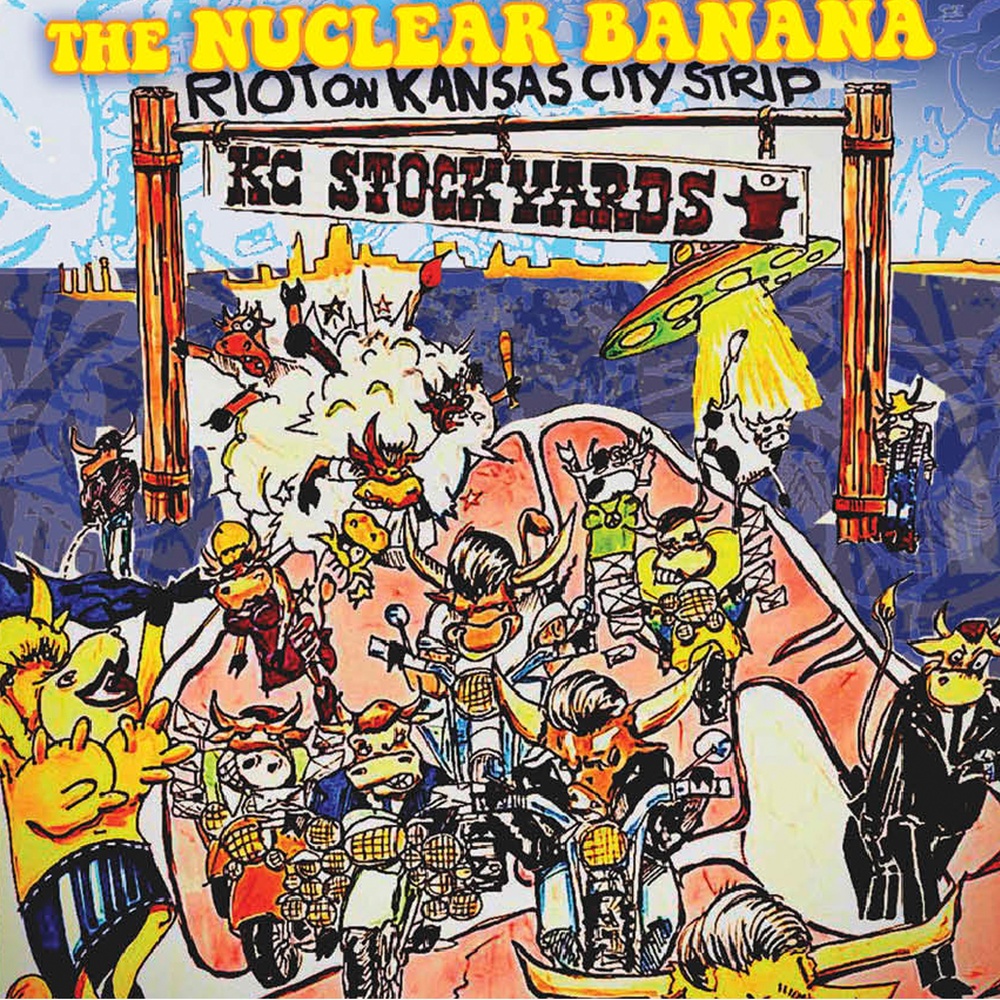
The Nuclear Banana - Riot on Kansas City Strip (2022)

Country: USA
Style: Garage Rock
Rating: 7/10
Release Date: 1 Mar 2022
Sites: Official Website | YouTube

Here's an unusual submission, given that vocalist and guitarist Joey Skidmore kindly sent me the album on banana yellow vinyl, which is a first. Thank you, sir! Then again, Joey does tend to do the sort of things that nobody else does, which is how I discovered his work in the first place, albeit in a film with a connection to music. That was Legend of the Shoe Man, with an appearance from Jim Dandy of Black Oak Arkansas fame, about whom Joey directed a documentary feature, Jim Dandy to the Rescue. He's not in Joey's cult horror musical comedy, Kiki Meets the Vampires, but a bunch of other musicians are, most obviously the French punk band Les Fossoyeurs, for whom the Kiki of the title sings lead and plays saxophone.

In keeping with his apparent hobby of collecting interesting people, here's a new album featuring a varied selection of musical legends who I presume are part of the music scene in Kansas City, Missouri. It's a garage rock album in the sense of the sixties originals rather than the much later revival bands of the new millennium like the White Stripes and the Strokes. Think back to Love, the Sonics or the Electric Prunes, maybe even the MC5 but not quite so intense.

The biggest name is surely Tony E. Valentino of the Standells, one of those pioneering proto-punk bands whose influence is hard to calculate. Valentino plays guitar on all the eight tracks here and he sings one, one of a pair of Standells covers, Sometimes Good Guys Don't Wear White. His voice blew me away, because I could have sworn I was listening to a young girl singing rather than an old man of eighty. It's beautifully pure and crystal clear, especially over what is an anomalous acoustic backing.

The other songs are all electric, including the other Standells cover, Medication, which is solid but not as notable. The best song here, to my mind, is a further cover, of Barry McGuire's famous folk rock song, Eve of Destruction, because Skidmore really gets his teeth into the vocals, intonating in style, and the band behind him is clearly having a lot of fun.

Behind Valentino and Skidmore, who both play guitar, are a couple more guitarists: Elan Portnoy of the Fuzztones and Eric Ambel of the original Blackhearts band, as well as the Del-Lords and the Dukes, Steve Earle's band. Jeremy Chatzky on bass has toured with Bruce Springsteen and Ronnie Spector's bands and played with some of my favourite singer/songwriters, such as Laura Cantrell, Steve Earle and Patty Scialfa. On drums is Manga, about whom I know nothing [edit: Joey kindly let me know that he's the drummer with Les Fossoyeurs], but the Hammond organ is played by Mark Stein of Vanilla Fudge fame. That's heck of a lot of talent to gather within what really ought to have been a garage to jam through some covers and some original tunes.

Talking of originals, I'd call out two of those as highlights too, namely the bookends of the album. You're Worth the Risk opens up with an almost AC/DC intro but Stein's Hammond kicks in to take us in a different direction, which is underlined by Skidmore's lived in vocals. He's not as good here as he is on Eve of Destruction and he doesn't sing on the closer, because it's an instrumental, called I Wanna Know, and it's a glorious guitar jam, Skidmore and Valentino joined by Chatzky, Manga and the research lawyer turned jazz organist Ken Lovern, who's gloriously old school.

The other originals are Scooter Girl, a solid garage rock number with a heavier bass than it would have had back in the day but which would play well as a double A-side single with You're Worth the Risk, and Harry's Ghost, which is the quirkiest song here. Skidmore delivers a sort of spoken word lyric in a whiskey-drenched cowboy sort of voice, which is an interesting texture indeed. It grows a lot, ending up with some imaginative Hammond organ from Lovern and conch shells from one man band Bill "Jazzbo" Hargrave. He was in Legend of the Shoe Man and Kiki Meets the Vampires.

And that leaves the remaining cover, which is of the debut Rolling Stones single, Tell Me, originally released in 1964. It's a decent cover if not a highlight, Skidmore channelling that cowboy vibe with a side of Lou Reed but harmonised well by most of the band. Many of these musicians have played Skidmore's annual music festival in Kansas City, with their regular bands, which I really need to get to one of these years. Last year's was headlined by the Seeds, but the Nuclear Banana were there on the bill, as was Valentino separately. Vanilla Fudge played there in 2019.

Thanks, Joey. I had a lot of fun with this album, which I've been listening to all night.

Tuesday, 10 January 2023

Concrete Age - Bardo Thodol (2023)

Country: Russia
Style: Folk Metal
Rating: 8/10
Release Date: 6 Jan 2023
Sites: Bandcamp | Facebook | Instagram | Metal Archives | Official Website | Twitter | VK

This is the eighth album by Concrete Age, founded in the very southwest of Russia, in Mineralnye Vody just north of the Georgian Border, in between the Black and Caspian Seas, but resident since 2014 in London, England. I found it listed as melodic death metal and Metal Archives have thrash and power metal tags as well. There's not much power metal on this album, though True Believer wraps up in that vein, but there's plenty of thrash metal on the faster songs like Hex, Lullaby for a Deadman and Ridges of Suffering, downtuned into an overtly death metal pitch and accompanied by harsher vocals than are the thrash norm.

All of that said, though, I'd call this folk metal as much as any of those and I see on the band's own website that they describe themselves as "ethnic death/thrash metal". That rings quickly true, as does the mission statement, that "our project is based on different ancient cultures from all over the world. During our live performance, we use ethnic instruments and mix them with metal." I'm not seeing what those instruments are on this album, but I'd love to know.

Hex opens up the album with ethnic chanting and that vibe doesn't entirely leave when the intro ends, even if it does for a while. There are folk melodies underpinning everything, which become a little more obvious when the band drop away from the crunch for effect and we're treated to clear ethnic sections. Many of these sections feel middle eastern but even more feel Eastern European and it isn't too much of a shock to discover that this is a truly international band. Ilia Morozov, the only founder member remaining, is Russian, but Boris Zahariev is Bulgarian, while Giovanni Ruiu and Davide Marina, who may or may not still be in the band, are both Italian.

Early on, the focus is on that downtuned thrash sound, with ethnic intros and drops away into that side of the band's sound for effect, but the second half of Purity is pure folk metal, unfolding like a heavy and frantic jig, the sort of thing that Gogol Bordello might jam on amphetamines. It's wild and jaunty and it's thoroughly engaging. It's hard not to move to it, even if sometimes we feel like snakes being charmed. By True Believer, that folk metal vibe becomes inherent, almost impossible to separate from the thrash/death sound. That this is the song that ends up as power metal is wild and one reason why it's my pick for best song, even if it isn't a clearcut choice.

And, as much as this old thrash hound dug the faster, thrashier sections in songs like True Believer, and Morozov does spit out the vocals with a neatly harsh growl, I found the bouncy folk sections so irresistible that they became the focus for me. Is that a call to prayer halfway through? It ought to fit the title. Is that a jig or a Cossack dance in the second half of Threads of Fate, when it gets even more lively than usual? Certainy, Trite Puti is as folk metal as it gets, a two minute interlude that's right up there with the songs proper on this album. Thunderland approaches the Hu in emphasis.

And so it goes, moving more and more into folk metal as it runs on, with the title track another of a bunch of highlights. It's folk metal from the outset, courtesy of a middle eastern riff, as crunchy as it is, and it never really loses the folk metal, even when it gets its head down and enters furious mode for a while. That riff gets, well, riffed on during the midsection, and we're right back in that Gogol Bordello territory, maybe a little further south but still Balkan. It's riotous and a whole heck of a lot of fun, which was something I didn't expect.

I wonder how they came to this sound and how recently. Given that it's most overt in the guitars, I wonder if it's been there all along with Morozov, who's one of the guitarists in addition to singing lead, or whether it arrived with Zahariev on the other guitar. It's there in their mission statement on their website, but hasn't been reflected in third party informational sites, suggesting that it's a newer approach for them.

Clearly I should check out their earlier albums, which have come thick and fast. Their debut, Time to Awake, came out in 2012 and they've never gone more than a couple of years between albums until now with COVID the likely reason. It's been three since Spirituality in 2020. I do like finding new favourite bands right at the beginning of a new year.

Tangerine Dream - Raum (2022)

Country: Germany
Style: Electronic Rock
Rating: 7/10
Release Date: 25 Feb 2022
Sites: Bandcamp | Facebook | Instagram | Official Website | Prog Archives | Wikipedia | YouTube

Thorsten Quaeschning joined Tangerine Dream as long ago as 2005, he's put in as many years with them as the founder members of most groups I review at Apocalypse Later. However, he's a rather late arrival in this one, even if he's the driving musical force behind them now, inheriting that role from Edgar Froese, who formed the band in 1967 and remained with them until his death in 2015. I found Tangerine Dream in the mid eighties, probably through the Friday Rock Show, and absorbed their first couple of decades of work, with 1974's Phaedra still one of my favourite albums. I finally caught them live in 1990 and wish I'd have seen them more often than just that once.

It's fair to say that they're one of the most influential bands of all time, having a hand in virtually every subgenre of the electronic era, from rock to pop, classical to dance, from stadiums to clubs. I haven't heard anything new from them in years, though I knew they were active and continuing to build an already immense back catalogue. I've probably heard forty albums by them and I haven't scratched the surface. So I thought I should check out Raum, which was well received last year, and I found it fascinating, not least because it's built in part on recordings from Froese's archives.

It's definitely more contemporary than the Tangerine Dream I know, but not by much, even with a thoroughly modern beat kicking in early in the opener, Continuum. It appears that Froese made a conscious effort to revisit some of the band's older sounds in his later years, reversing the modern direction that his son, Jerome Froese, had helped to push while with the band during the nineties and noughties. This feels like it's both, a look back to various eras of the band's history but also to the future. It's not a nostalgia release, but it is an affirmation that this new Tangerine Dream can continue to make worthy music without forgetting its roots in the old Tangerine Dream.

It starts off more modern, clearly 21st century electronica even as it looks back. What's notable is that Continuum feels very happy and much of the album follows suit. Coming to this from the dark ambient Blut aus Nord soundscapes I reviewed yesterday, anything might seem happy but there's a strong upbeat nature to this album, whatever era it's identifying with. Portico certainly carries on from Continuum so closely that I kept missing that the track had changed. I'm used to epic long pieces of music from Tangerine Dream and this opening pair only rack up fourteen minutes. There are two compositions here longer than that on their own.

The first is In 256 Zeichen, which is older school, clearly looking back to the seventies, but with the electronic experimentations of the band's earliest years transformed into more of a world music framework. Ther'es a section that reminds of an Indonesian gamelan orchestra, even though it's flavoured with glitch eletronica. There's plenty of that in What You Should Know About Endings, a more ambient piece peppered with glitch. There are fascinating sounds here that are turned into rhythmic effects too, reminding of all things of Pink Floyd's Several Species of Small Furry Animals Gathered Together in a Cave and Grooving with a Pict.

For those who remember the eighties, when Tangerine Dream moved into a far more commercial sound and started to churn out memorable soundtracks to films, You're Always on Time hearkens back to those days. This is smooth Tangerine Dream, and Along the Canal continues in that smooth vein, softening the sound at one point with what appears to be a flute to float over some organic electronic rhythms. Both get more modern at times but feel like they were born from the eighties era of the band.

And the album wraps up with a more in depth piece in the fifteen minute title track. Sections here remind of that heyday in the seventies, after they'd moved beyond the experimental krautrock of their earliest few albums and moved into improvisational album long compositions, like Ricochet and Rubycon. I heard some Phaedra and Stratosfear here too, in the keyboard clouds and rhythms.

Unsurprisingly, given that this is my favourite era of the band, this is my favourite piece, but it's all good stuff, underlining how vibrant Tangerine Dream seem fifty-five years on from their founding and seven from the death of their central figure and final remaining early member. As unlikely as it might seem, Paul Frick, who joined as a guest in 2018, before elevating to a full-time member in 2020, never even met Edgar Froese. Hoshiko Yamane did because she joined in 2011, but Thorsten Queschning, the bandleader nowadays, only dates back six years before that, joining soon before the band's fortieth anniversary. That's surreal. Nonetheless, the future looks bright.

Monday, 9 January 2023

Black Sky Giant - Primigenian (2023)

Country: Argentina
Style: Psychedelic Rock
Rating: 7/10
Release Date: 1 Jan 2023
Sites: Bandcamp | Facebook | Instagram

When I saw that there was a new Black Sky Giant album out, I assumed that it was the follow-up to what I thought was their debut, Planet Terror, which I enjoyed back in 2021. Well, it turns out that these unknown Argentineans have been busy. Not only was there at least an album before Planet Terror, as Orbiter came out in 2020 and was remastered in 2021, but two more sprang up after it, in 2021's Falling Mothership and last year's End of Days Pilgrimage. I need to pay more attention! So this is at least a fifth for Black Sky Giant and it's just as good as Planet Terror.

For those who didn't take that trip with me almost two years ago, this is a band or project who are based in Argentina but play thoroughly accessible psychedelic rock that's warm and encompassing without the fuzzy distortion of stoner rock. The other genre I see mentioned a lot is space rock and that needs a caveat. Black Sky Giant don't sound at all like Hawkwind, but they do seem to elevate off our planet. Both At the Gates and Stardust feature wonderful bass runs that I picture as us on the surface of a planet exploring what's there, while the guitars are vibrant lights in the sky, way up above us to marvel at.

At the Gates is my favourite piece of music here—song seems like the wrong term to use with each song being entirely instrumental—but it's not by much, because everything is up to a pretty solid standard, starting with the opening title track. It only runs three and a half minutes, which isn't a long time to establish a new setting to transport us into. It manages it, not least in its last handful of seconds, which add a population to whatever strange planet we've found ourselves on. They feel like the beginning of At the Gates before that track starts proper, and so flavour our take on it.

And it's a wonderful piece. Everything about Black Sky Giant seems to involve motion for me, with other elements added depending on the track. This is excellent from the start, as we explore this strange new world, but it elevates halfway through when it drops back just a little to highlight the bass and so split this into two levels. It's not just us exploring any more, it's whoever was there on this planet before us watching us and attempting to communicate. The result is joyous.

Stardust is a continuation, but it's a little less emphatic. The Great Hall adds that emphasis back, but never in a dangerous way. Black Sky Giant take us on journeys, and they're rich and evocative journeys, but they never feel dangerous to me. Nothing out there in the great beyond is eager to eat me or threaten me or imprison me. I wouldn't call this happy music per se but it always leaves me in a better mood than I brought with me. I'm not quite sure what I've learned and experienced but it was clearly a net positive.

That holds even into The Foundational Found Tapes, the eight and a half minute epic that wraps up the album. While the guitars dance like fireflies, there's a low tone behind them that really ought to feel ominous, but somehow it doesn't. Maybe there's something out there in the darkness that moves in the shadows but I never felt that it was anything to worry about, especially with the click and shimmy of film equipment, as if we're hearing this track through a slides-driven presentation. Given the title, I wonder if it was built out of parts of songs, a Frankenstein's monster of a piece. It works a little less coherently than everything else, but it still works.

Now, I need to get hold of those albums that I've missed. Quite frankly, whoever's behind Black Sky Giant ought to be happy with a couple of albums of the quality of Planet Terror and Primigenian in only a couple of years. That that's only half their output just elevates them even higher. If you like your stoner rock low on fuzz and high on warmth and imagination, this is the psychedelic rock that you ought to track down. It rarely blows my mind, but it carries me effortlessly and it's as reliable as it gets.

Blut aus Nord - Lovecraftian Echoes (2022)

Country: France
Style: Atmospheric Black Metal/Dark Ambient
Rating: 8/10
Release Date: 20 May 2022
Sites: Bandcamp | Facebook | Instagram | Metal Archives | Wikipedia | YouTube

I don't believe I've heard Blut aus Nord before, but I'm fascinated now, because this is unlike what I expected to hear from something labeled atmospheric black metal. Stereogum ranked this as the Best Metal Album of 2022, while Pop Matters and Invisible Oranges included the same band's new album for 2022, Disharmonium: Undreamable Abysses, in their end of year lists too. I checked that out and it's quite the sonic experience, but decided to review this one because of that number one status and because it's not the typical album in almost any regard.

For a start, it's not their new album because it's a compilation, but not of tracks previously issued on a variety of back catalogue items, as you might expect. The six tracks on offer are all relatively new, the oldest dating back to April 2021 and the newest from February 2022, so it's definitely last year's scope, and they were previously released to a subscriber-only forum called Order of Outer Sounds, so haven't been widely heard. Not that an album this unusual is going to be widely heard anyway, but you get the point. So, disclaimers aside, it's a new album in almost every sense, even if it isn't "the new Blut aus Nord" album, which is worth me diving into it.

This is definitely sourced in black metal, that recognisable wall of sound pivotal to the black metal experience, and it's dripping with atmosphere, but this is a long way from the typical atmospheric black metal bands out there, like Saor or Wolves in the Throne Room. It's dark and haunting and I find it easy to imagine as ambient but not of our dimension. To play into the Lovecraftian themes I see riddled throughout their work, this is the music of the spheres when they're occupied by elder gods. It's vast but it's claustrophobic and it pulls at our sanity. It's dangerously beautiful stuff, an enticing nightmare conjured out of sound.

As you might imagine, it's highly unorthodox and worthy of comparison to dark ambient designers of sound like Coil, Lustmord and Current 93 just as to anything in the black metal genre, even if we shimmy way over to the edge to avant-garde outfits like Oranssi Pazuzu or Neptunian Maximalism. As these are clearly soundscapes more than they are songs, with any vocals submerged so deeply that they might be something else entirely, it wouldn't be unfair to throw out comparisons to such powerelectronics legends as Merzbow either. It's clearly music to read about in both Kerrang! and Wire and that's always the most interesting music.

Nyarlathotep opens things up in uncompromising fashion and it's a complex and fascinating track that washes over us like a waterfall of tentacles with razorblade suckers, but Hypnos, which keeps on in the same vein, adds another level. Suddenly, we've become the waterfall and the six minute descent is not simply through air. There are undefinable creatures sharing this space with us and they're shrugging o our presence because we aren't worthy of their notice. This is a majestic piece of music and an evocative one, but it's also one I'm wary of visualising because I think it would give me motion sickness, especially late on when things get more frantic and jazzy.

These six tracks progress in such a consistent fashion, one flowing into the next, so it's difficult to see this in any way other than a single thirty-five minute composition, Maybe there's more in the way of guttural churning in The Tomb or The Abyss Between the Stars, but I lost track. I threw this on headphones because my speakers simply weren't doing it justice and let the album flood over me. After a couple of times through and a revisit to a couple of tracks to try to discern what they'd provide in isolation, I actually took a break to come to terms with the enormity of this music.

It's absolutely not going to be for everyone. This would sound awful on FM radio. It requires a slice of dedicated time, a good pair of headphones and an open mind. Switching the lights off ought to help too. If you have all of that ready, give this a go and see if it'll blow your mind too.

And, if it does, like me, you can dive into what else the band has been up to over the years, as they aren't remotely new. Blut aus Nord was formed back in 1994 in Normandy, France, initially as a one man project for Vindsval, still their vocalist and guitarist. W. D. Feld joined on drums and a variety of electronic contributions, not just keyboards, a year later and Ghöst added bass in 2003. Unless I miscounted, this comes after their fourteenth studio album as a kinda sorta fifteenth, and I see an array of EPs in there too. The've been busy and, based on these two 2022 albums, I'm eager to see where this easy listening for elder gods sound came from.