Friday, 6 January 2023

Iggy Pop - Every Loser (2023)

Country: USA
Style: Punk/Rock
Rating: 7/10
Release Date: 6 Jan 2023
Sites: Facebook | Instagram | Official Website | Twitter | Wikipedia | YouTube

Iggy Pop is one of music's great survivors and he's been having a blast lately experimenting with a whole slew of styles, to mixed success. I wasn't particularly fond of his 2019 album Free, because it only contained six songs proper, the rest of a short running time filled with spoken word poetry of little repeat play value. This one's hardly generous at thirty-seven minutes, but nine of the eleven tracks are songs and even where they're built with the spoken word, they're worth repeating. Only the second interlude is inherently skippable.

What's more, it marks a firm return to the punk and rock that Pop is known for, with a set of stellar guest musicians, led by multi-instrumentalists Andrew Watt and Josh Klinghoffer. There are clear comparisons to be made with Ozzy Osbourne's latest album, Patient Number 9, another return to form, because it also benefitted from Watt's production and instrumental talents, along with a string of guests, many of whom are the same musicians, like Chad Smith of the Red Hot Chili Peppers and Duff McKagan of Guns n' Roses. Smith played on every track on Ozzy's album and seven of the eleven here, while McKagan played on two and three respectively.

Both of them are on the glorious opener, Frenzy, which is an in your face punk song in the Stooges vein. I remember when he used to do this sort of thing and clearly so does he, because he's having an obvious blast with filters off, middle finger extended and that recognisable sneer in full effect. So much for moving away from the trappings of rock music. Welcome back, Iggy. He doesn't stay in this mode throughout, but he's there for Modern Day Rip Off too and other songs have righteous anger in them too, especially the more downplayed closer, The Regency, and the pop punk blast of Neo-Punk, which offers a great contrast between trendier verses, with Blink-182's Travis Barker on drums, and a more hardcore Bad Brains-esque chorus.

When Pop drops back down into pop mode, he's still interesting, especially on Strung Out Johnny, a far more controlled post-punk song. This is Pop doing pop but keeping it interesting in a way that many wouldn't. All the Way Down is a solid rock song, with some searing solos from Stone Gossard of Pearl Jam, and it feels like an epic at only four and a half minutes. Remember that there are no fewer than eleven tracks taking up only thirty-seven minutes. Some of these are very short. Only The Regency is longer and I found myself disappointed with that one, even with Chris Chaney and Dave Navarro of Jane's Addiction on board, along with the late Taylor Hawkins. It feels long rather than epic.

The less interesting material once again is the spoken word pieces, but they are at least far more interesting on this album than the last one. The best of them is probably The News for Andy, which is done and dusted in under a minute, but New Atlantis is good too. Pop always had a strong sense of intonation and that's particularly notable on this one, even if he sounds like Johnny Cash on the chorus. It's there on Modern Day Rip Off too, which benefits massively from textbook rhyming and intonation. Morning Show is a mood piece with his voice deep and rich and it's not hard to wait out on the way to more overt songs.

And so, once again, this is a mixed bag, but it's a much better mixed bag than Free. It's longer and more substantial. It's agreeably varied and rarely loses its power, even when shifting between. It's also outstanding at points, Modern Day Rip Off and Frenzy the standouts with Strung Out Johnny and All the Way Down on their heels. Iggy's at his uncompromising best on these tracks and he's a solid iconic presence through everything, even down to the forgettable My Animus Interlude, only a minute long but still inherently skippable. And he's having fun, right down to his rolling Rs at the end of Modern Day Rip Off and his pixie-like laugh after Neo-Punk. Life is good for Iggy, it seems, and it's good for us too when he's in this sort of mood.

Chaos Magic - Emerge (2022)

Country: Chile
Style: Melodic Metal
Rating: 7/10
Release Date: 17 Jun 2022
Sites: Facebook | Metal Archives

Here's another Best of 2022, according to Folk N Rock, where it won as Best Melodic Metal Album of 2022, featuring "a magic mix of both symphonic and modern melodic power metal elements". I can't say that I'm as sold on this one as I was on Vanaheim, but it's an excellent album and it's still growing on me with each listen.

Chaos Magic appear to have started out as one of those numerous Frontiers projects. They signed a highly capable Chilean vocalist called Caterina Nix, who had demonstrated her classical and pop training in a local band called Aghonya, who put out an album in 2008 and supported bands such as Edguy, After Forever and Within Temptation. They built the Chaos Magic project around her and a name guitarist, Timo Tolkki, formerly of Stratovarius, both of whom got "featuring" credits above the project name on the cover. Tolkki was gone for album two, so only Nix's name was credited on the cover. This third album is credited simply to Chaos Magic. I guess they're finally an actual band.

And they're a good one, most of whom were on the previous Chaos Magic album, Furyborn in 2019, and all of whom are from Chile. The guitars are surely the most obvious, courtesy of Mario Torres and Nasson, because they're what vary the tone of the songs. Sometimes they go for a traditional European power metal approach, but sometimes they go with a more modern staccato approach, which isn't as effective but doesn't entirely seem out of place. Nix herself mostly sings in the pop style, but occasionally leaps into an operatic register, like halfway through the title track. I wanted more of that but it's neither frequent nor sustained.

Emerge is a decent enough opener and I enjoyed it, but it didn't knock my socks off. Even on a fifth time through, I'm digging individual moments throughout it—the intro, some emphatic horns, the soprano escalation midway—but never quite seeing it as a song. I found Beneath Your Skin after it a more approachable song, with just as many praisable moments but also a more consistent feel. I realise that it opens up with those modern guitars that tend to bore me, but they're tempered by an orchestral swell and Nix is playful on this one as she works through the first verse into a strong chorus.

As the album ran on and as I listened through a second time and a third, songs started to stand out for notice. The first were Garden of Winter and Hearts Gone Dark, late in the first half. The former has a chorus with a killer hook and it incorporates some fantastic sounds late on, including Spanish guitar. Elena Siirala of Leaves' Eyes and Angel Nation lends her voice to this one too, elevating it in elegant fashion early on but then Nix adds power to Siirala's delicacy and it's a tasty combination. The latter builds elegantly too, with plenty of keyboards from Franco Lama, to another exquisitely catchy chorus.

The next to elevate itself was Days of Lions and When If Not Today, both of which boast killer hooks, suggesting that it's the hooks that stand out and bring the songs with them. However, the latter is all the better for an excellent guitar solo and a temporary drop in intensity late on, so there's a lot more going on than just hooks.

And then it was In the Depth of Night, because of how it transitions from a soft, poppy beginning, as if it's going to be a ballad, into that modern guitar for an effective contrast. Maybe it's my own bias against that particular jagged style that treats the lead guitar as a mere rhythmic tool that has me think a little less of this album than the reviewers at Folk N Rock, but it's not omnipresent. The album as a whole feels like a European power metal album with the expected focus on melody and solid guitar solos, but with a symphonic edge, and I'm on board with all that. So I don't know. I like it. It's clearly an excellent album. I just don't love it.

So, this is a 7/10 for me. If you're a particular fan of that modern guitar sound, feel free to add one more point. It'll be a little more special for you.

Thursday, 5 January 2023

Ὁπλίτης - Ψευδομένη (2023)

Country: China
Style: Progressive Black Metal
Rating: 8/10
Release Date: 1 Jan 2023
Sites: Bandcamp | YouTube

It's about time I reviewed something that isn't just not in English, it's not even in the Latin script. However, even though Ὁπλίτης is a Chinese project, it's actually in the Greek alphabet because Liu Zhenyang, the imagination behind this one man band, is a fan of Greek mythology and that seems to be what this is about, not that lyrics are remotely discernible (and not all these are vocal songs anyway). Then again, his previous release was an album, credited to a concurrent project, Vitriolic Sage, called Feuerschlucker, which is German for Fire Eater. Maybe he's a multilinguist.

He certainly seems to like playing with language, because four songs here boast very close names to four other songs, transforming their meaning in a different direction. Ψευδόμαντις seems to be a transliteration of Pseudomantis, while the almost identically titled Ψευδομάρτυς, right after it, means False Witness. The same goes for the other pairs, each of which sit next to each other on the album, except for the bookends. Suddenly I don't trust Google Translate to handle the nuances I assume are needed for a proper translation.

Few of these songs feature vocals in a traditional sense, meaning that some deliver lyrics like we might expect but some are just vocalisations for effect. It also means that when lyrics do show up, they're delivered in thoroughly different ways. For instance, they're notably traditional on False Witness, a low-pitched and bleak barrage of words to match the low-pitched and bleak barrage of the music behind them. However, they're so buried on Ὁ τῶν δακρύων ψεῦδος (The Tears are a Lie, as against Ὁ τῶν δακρύων ἄγγελος, The Angel of Tears) that they're almost a whisper. The ending shifts into what I presume is a sampled voice.

Either way, what that means is that the music dominates the vocals, and it seems notably keen on dominating everything. It's surprisingly clear given that it seems to be maxing out the wavelength across the board. Every aspect is in your face, whether fast or, well, less fast. I've reviewed albums lately that feel like they need to be turned up, even if your volume knob won't go any further. This one counters that trend, because it feels like we need to turn it down to be able to comprehend it, even if it's not actually that loud. That's because the mixer apparently moved every slider all the way up to eleven and we can't be sure we're actually hearing it all. The peaks are really high.

And that goes for other aspects here. I felt that The Tears are a Lie was a sonic bludgeoning, with vicious intent. This track is akin to being repeatedly beaten around the head in an artistic fashion. My ears may be bleeding but the blood is pooling into the shape of the headdress on the lady in the cover art. However, the next song, The Angel of Tears, enhances that still further, with a fierce escalation in intensity that's almost too much to bear. By the way, the album's Bandcamp page is of the opinion that the cover depicts Ὄλλυμι, which is ancient Greek for "to destroy" or "to lose", but she's really an unidentified sorceress in a painting by Georges Merle called L’Envoûteuse.

And then we get to Μάρτυς (March, as against Μάντις, meaning Mantis). This entire album is fast and I mean really fast. However fast you're imagining, it's faster. But March is faster still. This is a song that may be faster than anything I've ever heard, so fast that I don't think my brain took it all in. It would be fascinating to see if Liu ever plays live under the Ὁπλίτης banner. My guess is that this took some programming to edge over whatever the previous limit was and the album title has an important meaning, Ψευδομένη translating to Fake. That doesn't mean this isn't real music, only that I can't imagine Liu playing it all himself.

As music, it seems like a milestone, a point at which Liu made black metal scary again. The genre's moved a long way in its time, often in directions that nobody expected. Never mind Zeal & Ardor's deliberately bizarre merging with bluegrass, who would have imagined, listening to Bathory back in 1984 that one day the genre he was creating would embrace ambient and dark jazz and add sax to the instrument list? I think it's more likely that they just thought that bands would take it and make it more and more intense. This is a logical step beyond wherever it had got previously.

And I rather enjoyed it. It's clearly black metal above everything else, but there are firm hints of industrial in the bludgeoning beats and nods towards crushing intensity in genres outside metal, bands like Swans and Einstürzende Neubauten, even some Merzbow on Μάρτυς. Yet it wraps up in almost acoustic Jandek territory on Δηλητήρ, which featured some truly frantic basswork earlier on. This isn't just a bludgeoning, it's also the sorceress kissing our wounds better once we recover our senses.

It's very possible that this will be one of the most divisive albums of the year. I can see people not ready for this sort of assault giving it 0/10 and telling their friends that it's the worst album they have ever heard. I can also see die hard black metal fans gleefully going with a 10/10, then telling their friends that it's the most intense experience they've ever had. While acknowledging both as valid opinions, I think I'm going with an 8/10 because this is next level stuff for me. I'm reeling but I'm going to listen to it again tomorrow and see if it stands up. It's too much to repeat again now.

Robin Trower - No More Worlds to Conquer (2022)

Country: UK
Style: Blues Rock
Rating: 7/10
Release Date: 29 Apr 2022
Sites: Bandcamp | Facebook | Instagram | Official Website | Twitter | Wikipedia | YouTube

There tend to be more best of year metal lists than rock lists, so I dug around to find the latter and accidentally noticed that, while I was wandering around the UK on a research trip last April, Robin Trower released a new album, and so that immediately became my number one priority to review. For those who don't know this legend of British rock music, he's been around for a long time and it would be highly recommended that you check out his back catalogue, starting with the 1974 album Bridge of Sighs, which was his second solo release after leaving Procul Harum.

He's a massively influential British blues rock guitarist, enough that people like Robert Fripp have studied under him, and he's kept on putting out new solo albums for the past half century. In fact, the first, Twice Removed from Yesterday, will be celebrating its fiftieth anniversary in March. This appears to be his twenty-sixth studio album and it highlights how he hasn't lost a bit of his power over all that time. His guitar remains delicious, even if it doesn't soar as often as it used to, and it shines from the very first song, Ball of Fire, a solid but relatively routine rocker to kick things off.

The album lit up for me when it slowed down for the title track. It's not Bridge of Sighs, but it plays in the same ballpark and it's a good song with some great guitarwork from Trower. Deadly Kiss is slower still, but with a funk edge, before Trower starts bending strings as only he can. It's clear at this point that these is going to be a collection of loose tracks that mostly exist as frameworks for Trower's guitar, hardly a surprising approach and not a particularly flattering one for musicians of this calibre but an understandable one nonetheless. By the time we get to Birdsong four in, it's as if it only exists for guitar and the vocals are just an added bonus.

A few songs late in the album feel like songs as well as showcases for Trower's guitar. Cloud Across the Sun is a solid blues number, if nothing particularly surprising. It kicks off like it's something off a Stevie Ray Vaughan album, but if Trower ever thought about showing off the way Stevie did, he's quick to restrain himself, even though this is one of the more up tempo songs on the album. He has a different, mellower mood in mind and, while there are levels of intensity here, they're all on the scale from mellow to mellower.

Case in point, Fire to Ashes is softer but a little more overt as a song, Richard Watts getting his teeth a bit more into this one. I like the balance in his voice between smooth and grit and he has a nice subtle sustain that works wonderfully on this sort of slow song. Sure, Trower takes over as it runs on, but both are notable here. The Razor's Edge adds some, well, edge before the drop down to the smoothest material wraps up with the smoothest, I Will Always Be Your Shelter wrapping up the album as the most overt ballad. It's the first song that feels like it's there for Watts as much as Trower.

And what all this means is that it's hard to decide on a favourite song because they're all much of a muchness, the truest song coming out on top, namely that closing ballad. It makes far more sense to talk about a favourite solo, because that's what this album is all about, Trower's glorious guitar, and that's still not an easy choice because everything here is good on that front. Maybe I might go for The Razor's Edge, maybe the title track, maybe that closer again. Who knows. It's the one that I have playing right now, whichever that happens to be.

Trower plays both guitar and bass on this album, as he's been doing for a while, but the latter isn't remotely as notable as the former. As a guitarist, he elevates every song here. As a bassist, he just adds the necessary support. Regular collaborator Chris Taggart provides the drums while Richard Watts brings his smooth and soulful voice to the mix for the first time. When there's organ, like on Fire to Ashes, that's provided by Paddy Milner.

And that's it. If you've never heard Trower before, this is as good an introduction as any to one of the pivotal guitarists of the rock era. It's far from his best album, though, and these are far from the best songs. It's all beautiful guitar music linked together by a capable vocalist to keep it fresh. Like I said, check out Bridge of Sighs, especially if you're a guitarist yourself, and weep at what he could do with his instrument. Then listen to this and realise that he can still do it all half a century on. Finally, pick up everything in between.

Wednesday, 4 January 2023

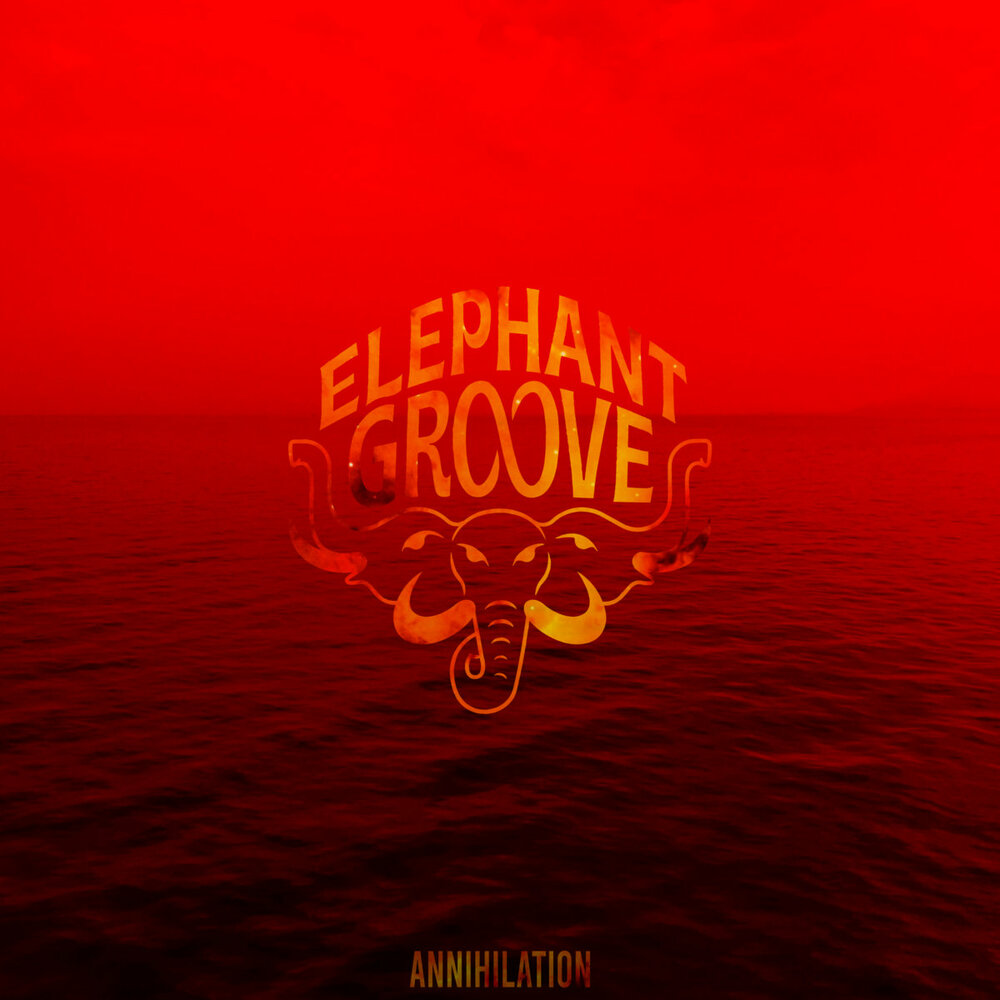
Elephant Groove - Annihilation (2023)

Country: Italy
Style: Stoner Rock
Rating: 7/10
Release Date: 1 Jan 2023
Sites: Bandcamp | Facebook | Instagram | YouTube

Here's a second debut album showing up early in 2023 that's well worth your attention. Elephant Groove are a power trio from Milan who play a versatile form of stoner rock, alternating between Black Sabbath at their most Planet Caravan mellow and a variety of alternative rock styles. Their most natural musical home seems to be the former, because they start out that way on Sargassum and keep coming back to it, not only to wrap that opener up with a second bookend but all through One More Ride and for much of Walls. Bear in mind that there are only five songs here.

It's a delicious sound too, guitarist Davide D'Alfonso conjuring rivers of notes out of the air like he's manipulating liquid glass. It sounds even better when drums and bass join him in a minimalist way, because it grounds us while he's still floating around in the sky above us. Andrea Lucchese is their drummer and the bassist is Jody Purita. Frankly, I could let that default Elephant Groove sound flow through me for days, especially through a pair of headphones in the dark, but I'm fascinated by where else they go.

Sargassum grows into a couple of places. Early on, it's reminiscent of Tool, not only because of the Maynard James Keenan style vocals, also by D'Alfonso, but because of the unusual rhythms from Lucchese, which are emphasised by Purita's bass mirroring the drums so closely. Later it turns into an epic finalé of wailing guitar right out of the late sixties San Francisco heavy psychedelia scene. It's a different style from the go to sound for this band, but Davide once again seems to be sculpting music rather than playing it.

Kingdom takes a very different approach. The clean rhythmic opening reminds of Joy Division and the bass doesn't dissuade us of that feeling, even if it's a little funkier than Peter Hook would play for them. This one's instrumental for half its running time, before it turns into an alternative vibe that somehow sounds both American and Australian. This one's definitely a child of the nineties, if a little less reminiscent of the obvious bands and more the genre flouting influences that carved out the road that they followed into an unexpected mainstream.

Annihilation wraps up the album with another take. There's some funk going on in this one too but it's kept in the background, behind raw and heavy guitarwork that gets sludgy at points, with firm nods towards the Swans and the Melvins. There's another mellow section in the middle though. It doesn't seem to matter where Elephant Groove go musically; they'll always find their way back to that mellow vibe, as if they're floating through space peacefully and suddenly receive music from out of the blue that they jam with until the signal goes away and they're back to being mellow.

This approach leads me to think that the album is a little short at under thirty-five minutes. It's an enjoyable ride, even if you fuel up the bus and take the trip again and again, but I found a need to know what sound they'd tune into next to incorporate into tracks six and seven? I can float along in the Planet Caravan vibe for a while until that next sound comes along. What do you mean it's over and we're rolling right back into Sargassum? Then again, this approach also means that I could see an Elephant Groove album doing the Polygondwanaland thing and rolling the final track back into the opener so the album becomes an infinite loop.

Talking of Sargassum, it's the early highlight here but I think I like One More Ride more. D'Alfonso's vocals dive into the background on One More Ride, his guitar bubbling all around, until it starts to feel like Ian Anderson joining in on Planet Caravan from the next door studio. I get lost so much in this one, I keep coming out of it halfway through Walls and have to go back to listen to how one ends and the next begins. I could see my favourites not being yours though. There's a lot more here than is typically the case on an overtly stoner rock album.

Vanaheim - Een Verloren Verhaal (2022)

Country: The Netherlands
Style: Epic Folk Metal
Rating: 8/10
Release Date: 4 Feb 2022
Sites: Bandcamp | Facebook | Instagram | Metal Archives | Official Website | VK | YouTube

There are a bunch of albums listed as the best of the year, in various genres, at Folk N Rock and I'm likely to review a couple more of them this month, but I ought to start with their Folk Metal Album of the Year. For 2021, that went rather predictably to Jylhä, because Korpiklaani happened to have an album out, but, for 2022, it went to a debut album by a Dutch band I'd never heard of, Vanaheim by name, and, even though I'm a huge Korpi fan and Jylhä was a good album, this is a far worthier choice as an Album of the Year.

Vanaheim play epic folk metal out of Tilburg and they've been doing it since 2015. They've put out a couple of EPs over the years but this is their debut at the full length and it's a peach. They're on the heavy side for the genre, with rough vocals from Zino van Leerdam that are melodic and well intonated but wouldn't be out of place on a melodic death metal album. The guitars are powerful and the drums fast but these six songs are just as unmistakably folk as they are metal, so much so that the four that also appear in "folkestral" versions do exactly the same job without the benefit of being plugged in, except for the keyboards.

Let's just say that I'd love to see this band live in a rock club and I'd love to see them perform at a renaissance festival. Now imagine the heaviest group that you've seen at the latter kicking off an album with a song that's a tasty combination of Viking metal, power metal, symphonic metal and melodeath. No, it wouldn't usually work, would it? It does here. This opener is Uit Steen Geslagan, or Knocked Out of Stone, and it runs for ten minutes as a magnificent introduction to what Vanaheim do. Not only is it really good, but it sets up the template that the band seem to like working from.

It's a bombastic epic sound that might be fast or might be slow but always heavy and in your face. It's easy to imagine the band leaning forward on stage, as if there's a storm raging between them and us and they have to turn up even further so we can hear them through the wind. It's a vibrant sound that we could take into battle, the vocals harsh and emphatic and the beat incessant. But there are respites. Every once in a while, they decide to let us all breathe, so drop into a quiet and folky section for a while before ramping right back up to speed through a seamless transition.

These folk sections vary immensely too. Uit Steen Geslagen has three of them and they're wildly different. The first is fiddle and hand drums, before a flute joins the fray. The second is a waterfall piano tinkling against a roaring fire. The third, almost at the end, is accordion and Jew's harp and a genial party of backing voices. They're all engaging and fun, they each bring something new to a song and they all keep an overarching melody moving along.

All the full on songs are long, but the next couple are a little shorter than this one, over and done in seven minutes and change. They're Onbevangen and Reuzenspraak and they're both strong too. I like the dropdown in the former, this time with whistles, but there's one in Reuzenspraak that's sheer joy. I think that's a harp or maybe some sort of lute, accompanied by handheld drums and a wave of keyboards that somehow doesn't feel anachronistic because this is epic metal and it's the way to add emotional swells. That's the symphonic side of Vanaheim, because van Leerdam is the only vocalist and no sopranos wander in from the wings.

The album wraps with the truest epic, Gevallen in de Nacht, the other two tracks being interludes. Well, maybe Verloren is a ballad, the sort that needs no translation to renaissance festival stage. The vocals are rough but heartfelt, both from the lead singer and the group who back him up. It's got a killer ending too, one that leaves our palate well cleansed before Gevallen in de Nacht kicks in with a dramatic intro. Once again, it's a strong song, because nothing lets this album down. It's excellent when it's quiet and introspective and we sit craving steaks on stakes. It's excellent when it's in your face and we want to get a pit going. It's just excellent, period.

If Vanaheim are this good on their debut, not to mention how powerful, versatile and mature they are doing what they do, how good are they going to be in a couple of albums time? This could well be the truest folk metal album I've heard in a long time and I'm going to be playing it a lot.

Tuesday, 3 January 2023

Absolom - La era del caos (2023)

Country: Spain
Style: Heavy/Power Metal
Rating: 7/10
Release Date: 2 Jan 2023
Sites: Facebook | Instagram | Metal Archives | Official Website | Twitter | YouTube

We're absolutely living in a chaotic age, but Spanish metal band Absolom introduce some elegant control on this, their debut album. They've been around for a while, having formed as long ago as 2001, but they've split up twice since then and only released a demo until this latest reformation, which knocked out two singles last year and now, after a couple of further personnel adjustments, followed it up with a full length album.

It's emphatic from the very beginning with an urgent opening trio of songs. Band founder Maolo sets things in motion with some reliable drumming to kick off Ascensión, which demonstrates the sheer energy of this band. Relatos de la Humanidad is even better, with a strong guitar solo from Juan Manuel Urbano, who only joined last year when Absolom gave it a third try. He's responsible for much of the elegance in the band's sound but he's ready to get his head down and blister along with the band when it's needed, which it is on the title track. This one starts out as thrash with an angry, almost punk delivery from new fish vocalist Julio Pérez, but it shifts to more subtle ground in the second half, Antonio Ortiz stepping into the spotlight with his bass.

And I realise I've just highlighted all four members of the band, which is never a bad thing and it's a positive sign for them going forward. Let's see if they've found the line-up that'll take them into the future. If there's a change needed, I'd say it's to add a second guitarist, something they've had in the past, because there are points where the density of the sound becomes a little thinner than it probably ought to be. That's in evidence on No Quedarás en el Olvido, a more subtle piece with a fantastic intro on guitar and bass. It ramps up a couple of minutes in but never feels quite as full as it should. A second guitar would do wonders there. Then again, this is as sparse as the album gets. Absolom feel fuller on more up tempo songs and that's what most of this album is.

While there are clear thrash elements on the title track, I'd say that the band play heavy metal as a base and shift into power metal when they feel the need. The purest heavy metal song may well be Oxígeno Infectado, which would feel like something British in the post-NWOBHM eighties if it wasn't so obviously sung in Spanish. A Slash-esque guitar leads into a gallop that's reminiscent of Iron Maiden and only a few backing vocals midway betray it as more modern, given their harsher texture. Again the guitar solo is highlight, though Pérez is a strong focus too, soaring up there in the stars with some capable sustain.

After that, the album remains consistently strong through Incansable, Nuevo Camino and Sueños en la Realidad, all heavy metal songs with varying degrees of power metal for flavour. They're all up tempo without touching thrash and they're all well worth the effort. Suddenly, No Quedarás en el Olvido, meaning You Will Not Be Forgotten, seems a little out of place. I enjoyed it a great deal but it seems to be a step sideways from the tone of the rest of the album.

Well, there's another exception here too and it's a wilder one. Four tracks in, there's a melody and a beat that I recognised immediately and, sure enough, Rasputín is absolutely the Boney M classic from the disco era that Turisas turned into metal in 2007. This isn't as bouncy or as frantic as either version, but it is in Spanish and there's more excellent basswork from Ortiz during the second half. It's a decent version but, like No Quedarás en el Olvido, it feels a little out of place here and might have been better on the B-side of a single, if those even exist any more in the streaming era.

And so this is a solid and enjoyable start to my coverage of 2023 albums, setting off on a good foot. It's a solid and enjoyable start to Absolom's career too, if a little late in arriving. I'm eager to see where they'll go from here and hope it'll to be a lot of live shows and a second album in a couple of years time.

Collage - Over and Out (2022)

Country: Poland
Style: Progressive Rock
Rating: 9/10
Release Date: 2 Dec 2022
Sites: Facebook | Official Website | Prog Archives

Welcome to January, when my first review of each day is of an album released in 2022 that I should have reviewed last year but didn't. I trawl the end of year lists and rankings for notable omissions from my coverage and fix them. First up is a Polish neo-prog album that weighted reviewer ratings at Prog Archives put at the very top of the heap for last year, at least counting only albums with a substantial number of ratings. Last year's equivalent was Shamblemaths 2, from Norway, which was an amazing album, so I wanted to see if they'd hit it out of the park again. And yes, they did.

I haven't heard of Collage before, at least this Collage, but they hail from Warsaw and this is their comeback album, after a long time away. Formed in 1985, they released four studio albums before splitting up in 2003, including a widely acknowledged standout release, 1995's Moonshine, which I now need to track down. They reformed in 2013 but it took them a decade to put out new material in the form of this album. As they're new to me, I haven't been waiting on tenterhooks, but I would expect that a lot of people have and this album ought to have met their expectations.

Based on this album, they play a British flavour of neo-prog that's heavy on Marillion, an observation that shouldn't shock too much, given that Steve Rothery is a guest guitarist on the closing track, Man in the Middle. However, they're far from clones and the sound they generate is an intriguing mixture of Fish era Marillion and Steve Hogarth era Marillion. Bartosz Kossowicz, the lead vocalist in Collage since 2018, sometimes reminds of one and sometimes the other but without ever mimicking either. The most fascinating vocals for me arrive on What About the Pain (A Family Album) because it sometimes plays like Peter Gabriel had replaced Fish instead of Hogarth.

Collage certainly have confidence, because this almost hour-long album begins with a twenty plus minute epic of a title track, which absolutely stands up to that billing. It moves through a number of phases: scene setting intro to keyboard dominated instrumental section, theatrical vocals from Kossowicz commanding a series of changes in emphasis, playful guitar solos from Michał Kirmuć, a series of fascinating interplays between instruments that extend and extend without once getting less than truly immersive, an eventual slowdown to shimmering piano and softer vocals, then shift back up in intensity to a searing finalé.

If Over and Out is a masterpiece of dynamic play that we ride as much as listen to, I honestly think I like the next song even better. It's What About the Pain, a skimpy song in comparison, wrapped up in under nine minutes, and it's more commercial, but it grows in gorgeous fashion, weaving drama through melodies all the way to a choir of children late in the song who prove to be the icing atop a delicious cake. It's only a blip in time since I discovered Galahad three decades late, and I find that I need to bring up the "where has this band been all my life" line again during another review of a neo-prog album. That's not a bad thing to reach during the first review of a new year!

Needless to say, nothing here lets the album done. One Empty Hand is a shorter and quieter piece that highlights how much Kossowicz has studied Fish and mastering his ability to shift from almost whisper to firm command on a dime. And back. It also shows just how capably the instrumentation underpins the vocals. A Moment, a Feeling is a carefully constructed thirteen minute epic, with an amazing breakdown early in the song that shifts the typically eighties keyboards briefly back to a rich seventies sound. This is the most progressive piece here, with some intricate drumming from founder member Wojciech Szadkowski, but Kirmuć gets plenty of opportunity on guitar.

And then there's Man in the Middle with Steve Rothery lending his talents to a band who have so obviously been paying attention to what he's done over the past forty years and change. It's piano to kick off, but it grows and grows well. Rothery makes his presence known about three minutes in and the piece shifts not into instrumental territory but Floydian territory too. It's a good section, a long one too compared to how often sections in other songs shift into further ones, and it provides an opportunity for a quiet coda to wrap up the song and the album.

Of course, there are bookends in the form of a heart monitor, which suggests at the beginning of Over and Out that Collage were precisely that but, almost an hour later, at the end of Man in the Middle, it perks back up and tells us that Collage are back and as healthy as ever.