Monday, 6 April 2020

Candlemass - The Pendulum (2020)


Country: Sweden
Style: Epic Doom Metal
Rating: 6/10
Release Date: 27 Mar 2020
Sites: Bandcamp | Facebook | Instagram | Official Website | Twitter | YouTube

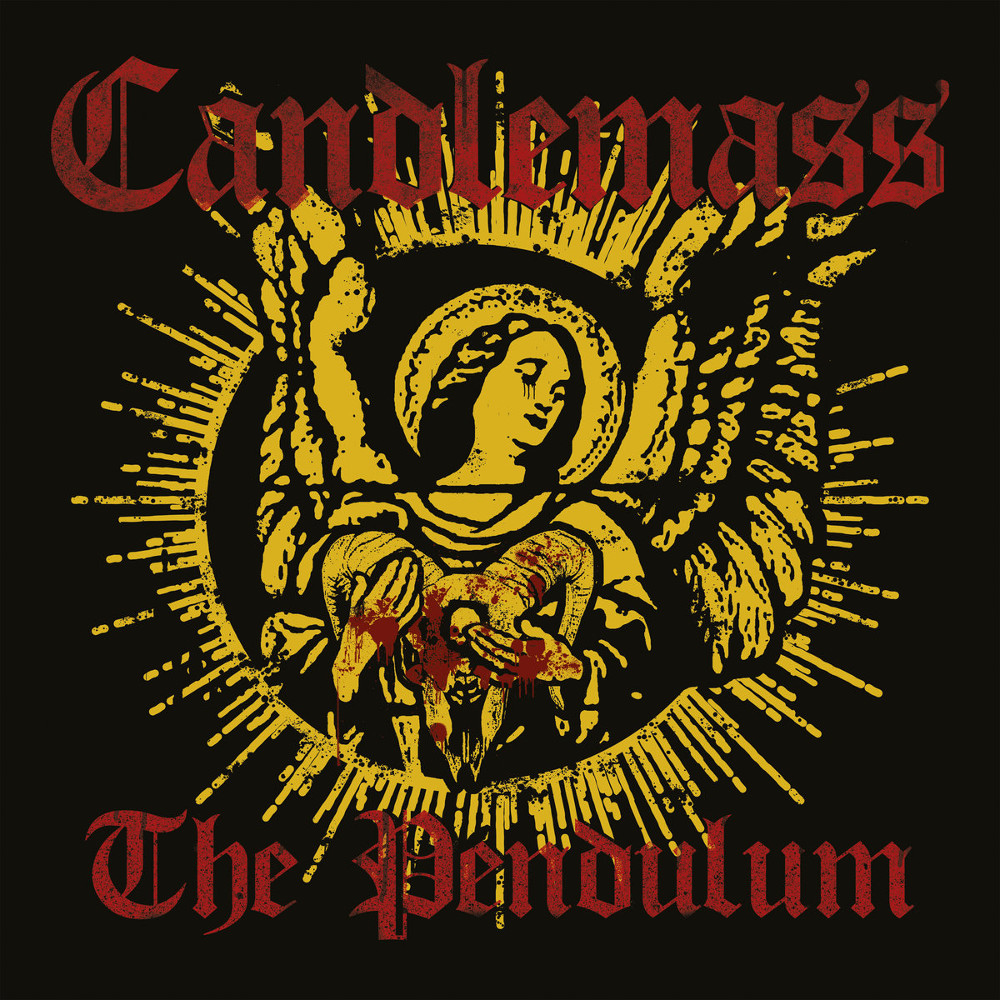
"The pendulum's for fools!" sings Johan Längqvist on the title track, but I would beg to differ. This is very much for the discerning epic doom fan and its full songs seem more immediate than the full album this line-up put out last year, even though the majority of its tracks are unreleased demos from The Door to Doom. We don't know when we'll see the next full album, so this will bridge the gap for us. It gives the fans something extra and some of it might even capture a new listener or three.

There are six tracks on offer, of which only three are real songs, with the others being sub-two minute instrumentals, clearly musical ideas that didn't end up getting used on the album. They're varying degrees of rough, Sub Zero standing up well, as a neat melodic passage from a song that never happened, but Aftershock being nothing more than an unpolished Leif Edling bass track that never found a home. The Cold Room adds synth atmosphere and works quite well as an outro.

Of the full tracks, The Pendulum is clearly the best. It's fantastic stuff, a chugging doom monster that wouldn't just have been at home along the songs picked for The Door to Doom but a real highlight among them. A nice delicate intro sets us up but then a devastating riff kicks in and we're in motion at pace, at least for doom. It's one of those tracks that just can't be played loud enough and they're putting me at risk of blowing out these speakers.

Snakes of Goliath is more of a grower. The first half is solid, if missing a little something, but the second half perks up and it crawls home achingly slowly, bookended nicely. New (and still original) vocalist Johan Längqvist is really carving out his own territory halfway between Messiah Marcolin and Ronnie James Dio and that shows all the more in the slower sections.

Similarly, Porcelain Skull seemed initially to be the weakest of the three tracks proper, albeit with a crushingly heavy riff to keep us happy, but it found its groove eventually too. Maybe this and Snakes of Goliath would have been a little more polished on the album proper. They're good songs anyway.

Frankly, this is worth picking up for The Pendulum alone, but the rest will mostly be of interest to those confirmed fans who dug what Candlemass did a year ago with The Door to Doom.

Iiah - Terra (2020)


Country: Australia
Style: Post-Rock
Rating: 6/10
Release Date: 4 Apr 2020
Sites: Bandcamp | Facebook | Instagram | YouTube

I've been enjoying my ongoing journey through post-rock, the genre aiming to build soundscapes using traditional rock instruments, and Iiah are, for the most part, the most minimal such band I've encountered thus far. The opener, From Nothing, is aptly named, because it's almost entirely ambient, so much so that the reaction of many listeners will be to reach for the volume knob. Spoiler: it won't help.

Eclipse comes to life a little more but continues minimally in a way that we might be forgiven for assuming is done, for a while at least, entirely with keyboards. Some tentative drums and a guitar do show up a minute or so in as if the musicians had been waiting patiently in the wings for their moment. A further minute and a slow building crescendo takes us out of early Tangerine Dream territory. Those of you who turned the volume up will be regretting it at this point, that's for sure.

Clearly Iiah are interested in contrasts. The tones work consistently but it has to be said that their contrasts range from sound so acutely minimal that it's almost lowercase to sound so emphatic that it fills the room. The point of transition is like kneeling down to listen to a blade of grass, only for the space shuttle to take off from six feet away. That's a major difference.

Creating soundscapes is one thing. The challenge with post-rock is always to figure out what those soundscapes represent and, I'm sure, there's rarely an entirely correct answer. This album is called Terra and that's good old home hanging in the sky on the cover, making us wonder where we're standing that has what seems to be water in abundance. Have we terraformed the Moon? We're obviously in a lonely place because there's been a lot of space in the music thus far, but that missing human component shows up a couple of minutes into the third track, Aphelion, in the form of vocals that quickly turn into more texture.

I enjoyed those tracks and I enjoyed Sleep still more, being atmospheric and slow, less like Tangerine Dream and more like Cocteau Twins or Shriekback at their most quietly evocative. However, this is a very generous album, with a running time of over an hour, across only eight tracks, and it starts to lag around the halfway mark. 20.9%, a reference that I fail to grasp, does kick off beautifully, with a fantastic invitation on the bass to set the mood so everything else can suddenly crash the party, but it runs long.

On a first listen, the whole album was peacefully engaging, but on a second I drifted away for the majority of 20.9% and the next track, Luminescence, perking back only with the tinkling piano that kicks off Displacement. Given that 20.9% and Luminescence account for eighteen minutes between them, that constitutes quite the chunk of time. Displacement is better but it's Lambda, the final track, that really grabbed me.

With Sleep wrapping up the first half and Lambda the second, obviously Iiah like to build up each side to the best material. Lambda is the best piece of music on this album, by far, and it's also the longest, running just shy of thirteen minutes. It starts out rhythmically, with both drums and one finger piano, but builds and builds, guitars wailing very patiently and a sense of play in the dynamics throughout. It's wonderful stuff.

As with a lot of post-rock, this is great background music. As with the best post-rock, it's often also engaging and challenging and worthy of taking the foreground. It's mostly Lambda and Sleep but not entirely, because even the minimal openers grabbed me. It just needed more cropping. I'd have given the 37m Terra that you'd get by cutting out three consecutive tracks a 7/10. As it is, I think I have to go with a 6/10.

Friday, 3 April 2020

Bonfire - Fistful of Fire (2020)


Country: Germany
Style: Hard Rock/Heavy Metal
Rating: 8/10
Release Date: 3 Apr 2020
Sites: Facebook | Instagram | Metal Archives | Official Website | Twitter | Wikipedia | YouTube

I remember Bonfire from the late eighties, especially their excellent second album, Fire Works, from 1987. What I hadn't realised then or somehow until now was that the band had been around for a decade and a half by that point under a different name, issuing three albums as Cacumen. Counting them, this is the 22nd Bonfire album. They've never really gone away since 1972, even though Hans Ziller, the only founder member left in the band, took a seven year break in the nineties, a couple of which were spent in a sort of Bonfire called Ex.

The current band is a relatively fresh line-up, the longest serving members other than Ziller being Ronnie Parkes and Frank Pané, who joined in 2014. I have to say that Bonfire have been a busy bunch of late, because this counts as the sixth studio album for those two and even the fourth for Alexx Stahl, the latest singer, who didn't join until 2016. That's amazingly prolific for a band who have been around in some form or other since I was a year old.

If you haven't heard Bonfire, they fit firmly in the hard & heavy category, moving effortlessly back and forth between hard rock and heavy metal. Often that's from track to track, following up a solid heavy metal song like Fire and Ice with an equally solid hard rock song such as Warrior. Sometimes, it happens within a single song, like Rock 'n' Roll Survivors which kicks off with power like a slightly lighter Accept and mostly stays there, including during the clichéd and surprisingly not too annoying chorus, but moves more towards hair metal during the verses.

This is classy stuff from the outset, an instrumental intro called The Joker seguing so naturally into opening track Gotta Get Away that we should see it as part of the same song. It's a strong starter, the first of a few obvious singles. And then The Devil Made Me Do It kicks off with orchestration like Bonfire want to play in symphonic metal territory. They don't, because this is another hard rock song but they do hint at some form of power metal a lot on this album. Stahl shifts effortlessly from a warm melodic rock vocal to a power metal scream.

Perhaps to highlight how good Bonfire are at both styles, my favourite songs here are a mix of heavier and lighter ones. It's also telling that I have no least favourites, except maybe the acoustic version of the power ballad When an Old Man Cries that's tacked onto the end of the album. It's not bad but I much prefer the electric version because the emotion works better there.

Ride the Blade is the first peach for me, a hard rock song elevated both by its catchy chorus and its guitarwork, not only the shreddy solo but the way that it incorporates some eastern sounds into proceedings. Fire and Ice may have softer hair metal verses but the core riff is a killer and it builds on that wonderfully as a power metal song. Gloryland is even heavier and really gallops, even during the slower verses, and it never loses sight of hooks. A Fistful of Fire is really classy hard rock, patient and with a sublime tone.

The album looks more generous than it is, flaunting fourteen tracks, because three of them are instrumental intros or interludes. Fire Etude features the most overt shredding anywhere on the album, while The Surge is more based in rhythm than guitar. All are worthy inclusions, though, and even if we ditch the bonus acoustic track, there's still three quarters of an hour of strong melodic rock and powerful metal that deserves to be seen as more than just a new album from an old band. Most of the band is pretty new and this feels as if they're all young and still hungry.

Moura - Eira (2020)


Country: Spain
Style: Progressive Rock
Rating: 8/10
Release Date: 1 Apr 2020
Sites: Bandcamp | Facebook | Instagram | YouTube

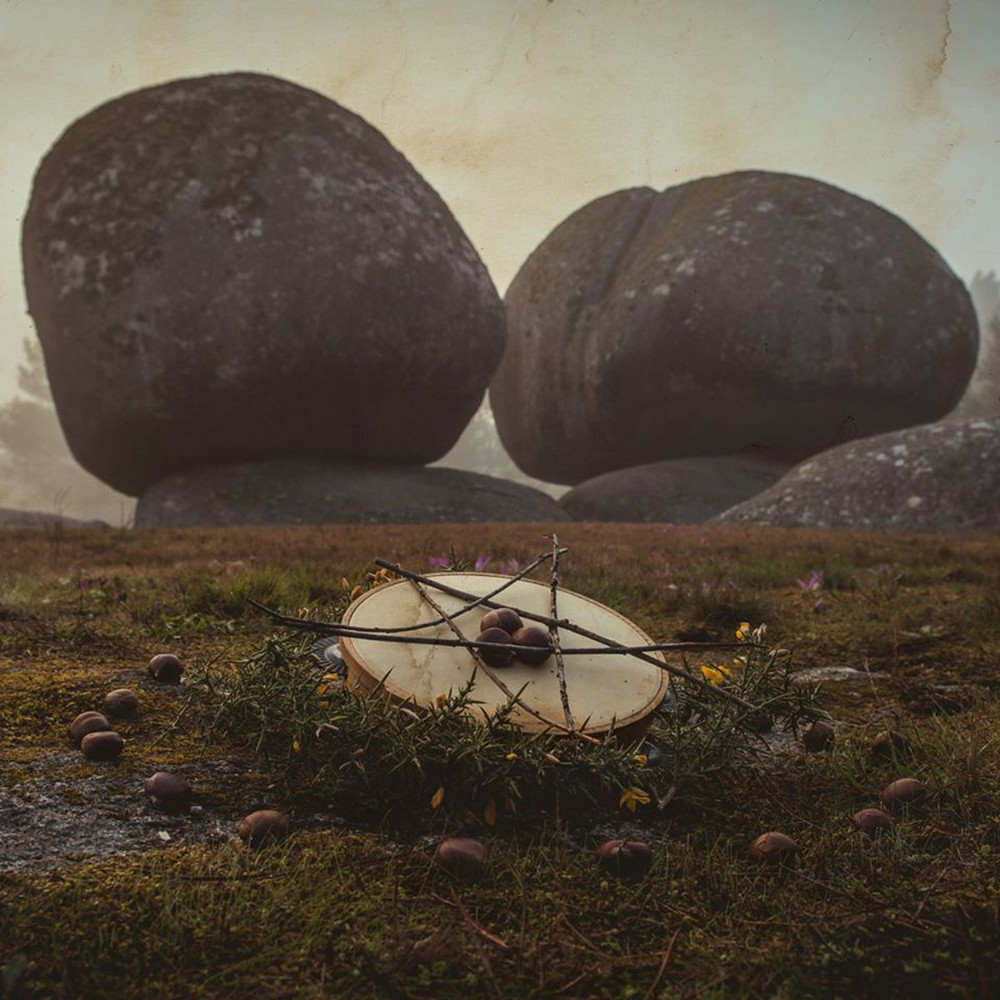
Wow, this is something special! It opens like a ritual, with the flickering flames of the fire, an ominous bass drum standing back and chanting voices waiting for the moment to get specific. A couple of minutes in, it becomes a proper song but an unusual one, not least because the lead vocals from Diego Veiga carry an interesting effect on them. We could have crossed the veil at that two minute mark from the ritual to conjure something up to, well, what they're trying to conjure up waiting patiently for its day.

Eira is like a psychedelic King Crimson, mixing psych and prog into a heady hallucinogenic mix. We're at once at a distance from it, listening to what's being played, and right in the middle of it because it echoes all around us, helped by swirling keyboards. It's very rhythmic but in unusual patterns, an abiding prog aspect to something that's a little more psych. It's also wild and free, again appropriate for what comes after the ritual but also not far at points from an immersive Hawkwind space rock jam.

In many ways, this swirling instrumentation continues on throughout the four tracks on offer. The bass runs like nobody's watching it. The guitars dance with the Hammond organ. The lead vocals command from behind an ethereal veil and we gradually realise that the effect may be choral, like a set of female voices mirroring the lead but just either side of it like an aura. But there is another focus here and that's Galician folk music.

Moura hail from the very northwest corner of Spain, in A Coruña, which is on the opposite side of the Golfo Ártabro from Pölisong in Ferrol. With Mileth just down the coast in Vigo, it's clear that the Galician rock scene is both in great shape and notably interesting. Mileth play pagan folk metal with a heavier approach, but both they and Moura sing in Galician, I presume, even if Google Translate struggles to tell me quite a lot. They also brought the folk group A Irmandade Ártabra on board, quite possibly throughout but with a real emphasis on the final track, Ronda das Mafarricas.

In Galician, Moura apparently means "it dies" and Google doesn't have a clue what Eira means. In Portuguese, it's "threshing floor" but then Moura means "Moorish", which I'm presuming isn't applicable here. Where Google trips up the most is in figuring out the instrumentation. Moura play commonplace rock instruments, adding harmonica, Hammond and twelve string guitar. A Irmandade Ártabra add all sorts of folk instruments, from tin whistle to accordion. I would love to know what some of the others are. Belém Tajes is credited for vocals and aturuxos, which Google tells me is "lucky people" in Galician and "turtles" in Portuguese. Miguel Vázquez plays three different instruments, each of which is apparently a tambourine. Pablo Reboiras plays the zanfona, which Google tells me is a zucchini but is really a hurdy-gurdy.

O Curioso Caso de Mademoiselle X is the longest song here but I don't think it justifies its fourteen minutes. Sure, it's the most patient song on offer and it gets agreeably epic late on when the Hammond organ echoes the dynamic guitar riff, but I'd say that this one's too long. It's a good patient trip on a couple of listens, perhaps the most progressive song on the album, but the other tracks only get deeper and this one doesn't as much for me.

If my favourite track isn't Eira, then it's Ronda das Mafarricas, which is a glorious folk rock romp. Written by Portuguese folk musician Zeca Afonso, it starts out with commanding vocals and Hammond swells, rocks out for a while in hallucinogenic fashion with folk instruments dancing beneath the grandeur of it all. Eventually it discovers pure folk territory, with the density of the sound transitioned from drones and echoes and guitars to an accumulation of instruments. We're getting ready to raise whatever it is we're raising.

While this runs under forty minutes, it'll occupy your entire day. It isn't like anything I've heard before, though King Crimson jamming with Hawkwind on the Cropredy stage isn't a bad image to start out. Now, if you'll excuse me, I need to listen to this yet again.

Thursday, 2 April 2020

Testament - Titans of Creation (2020)


Country: USA
Style: Thrash Metal
Rating: 7/10
Release Date: 3 Apr 2020
Sites: Bandcamp | Facebook | Instagram | Metal Archives | Official Website | Twitter | YouTube

Join any Facebook group with a focus on thrash metal and you'll quickly see that half the posts are about the Big Four and which other bands ought to be in there. Of course, it's fundamentally ridiculous because the Big Four were the most successful bands who brought the genre into the mainstream, rather than the first, the best, the most abiding or some other arbitrary category. I bring this up because, among the endless suggestions, the top two seem to always be Exodus, who were the first, and Testament.

Now, I've loved Testament from moment one. They were actually the first band I saw live, supporting Anthrax back in 1987. The Legacy was a mainstay on my record deck and it's still my favourite Testament album. However, I have to wonder why Testament are the one band who seem to have been elevated by fans out of the second wave to a stature alongside the originators, over just as worthy choices like Overkill, Death Angel and Flotsam and Jetsam.

I have to say, as a Testament fan, that it can't be the songs because one of the reasons why The Legacy is still my favourite album is because every one of the songs on it has as many hooks as it does riffs. I've enjoyed many of their albums since, including this one, but I just don't find myself singing along with anything on them. Overkill easily have the edge there. Even here, with a dozen tracks and a whole lot of aspects to praise, I'm listening, not joining in, even on clear candidates like The Healers or Code of Hammurabi.

That said, the latter is the closest I've heard Testament come to The Legacy in decades. It's engaging from its bass intro to its echoing outro and what comes in between is continually memorable. Eye for eye for eye!

It's more believable to say that it's the music, because Testament have been tight since day one and they keep getting tighter as what has clearly become THE technical thrash band. There are points all over this album that grabbed me, whether they be riffs, solos, changes, fills, whatever. The first minute of False Prophet is intricate, accurate and apparently effortless, enough to be a goal for thousands of musicians around the world to attempt to emulate. Here, it's just another minute of sixty.

Children of the Next Level starts the album out strong, the first of a trio of tracks over six minutes. It's fast, it's intricate and it shows just how good the mix is because it's easy to track any band member, often including Steve Di Giorgio on bass. WWIII is faster and features a more overt solo. A song called Dream Deceiver isn't quite the Judas Priest homage that we might expect but it's strong nonetheless. And so we go.

I think the main reason why Testament are the top name from the second wave for many is because of the line-up, which is many a thrash fan's dream. Alex Skolnick, who dates back to Legacy in 1983, has been back in the band since 2005 and his solos are at least a step above most of what you hear nowadays. I'm guessing that a lot of the unusual guitarwork is him too, because he has a varied taste. There's even psychedelic wailing here on songs like City of Angels and a lot more besides. Some of it may be Eric Peterson, who founded the band and has never left it, because he's apparently graduated from just rhythm to occasional lead.

Chuck Billy is an iconic frontman who's been with Testament as long as it's had that name, and he clearly has some fun here, building lines in Ishtar's Gate from whispers to shouts. Steve Di Giorgio may be the other guy in this list but he's been with Testament a decade and a half now and he's ably kept up with everyone else. He gets quite a lot to do here and it's great to hear the bassist's contribution any time, but especially when it's as good as his work on Titans of Creation.

And that leaves the Atomic Clock himself, Gene Hoglan, who began his second stint with the band in 2011. He's surely the most reliable drummer in thrash not named Dave Lombardo and, frankly, he seems to get closer with every disc he puts out. His work here is simply outstanding, to the degree that he kept on doing things that made me backtrack to check out what he just did and why it really isn't as easy as he makes it seem.

This is a good album, a really good album. Sure, it's not as catchy as some of Overkill's from last year and it's not as blistering as the 2019 Flotsam and Jetsam but it's good on a first listen and better with each further time through, not only to try to figure out how damn good Skolnick and Hoglan are and how well they work together on material like this. It still needs hooks though.

Diarchy - Splitfire (2020)


Country: India
Style: Stoner Rock
Rating: 7/10
Release Date: 27 Mar 2020
Sites: Bandcamp | Facebook | Instagram | Official Website | Twitter | YouTube

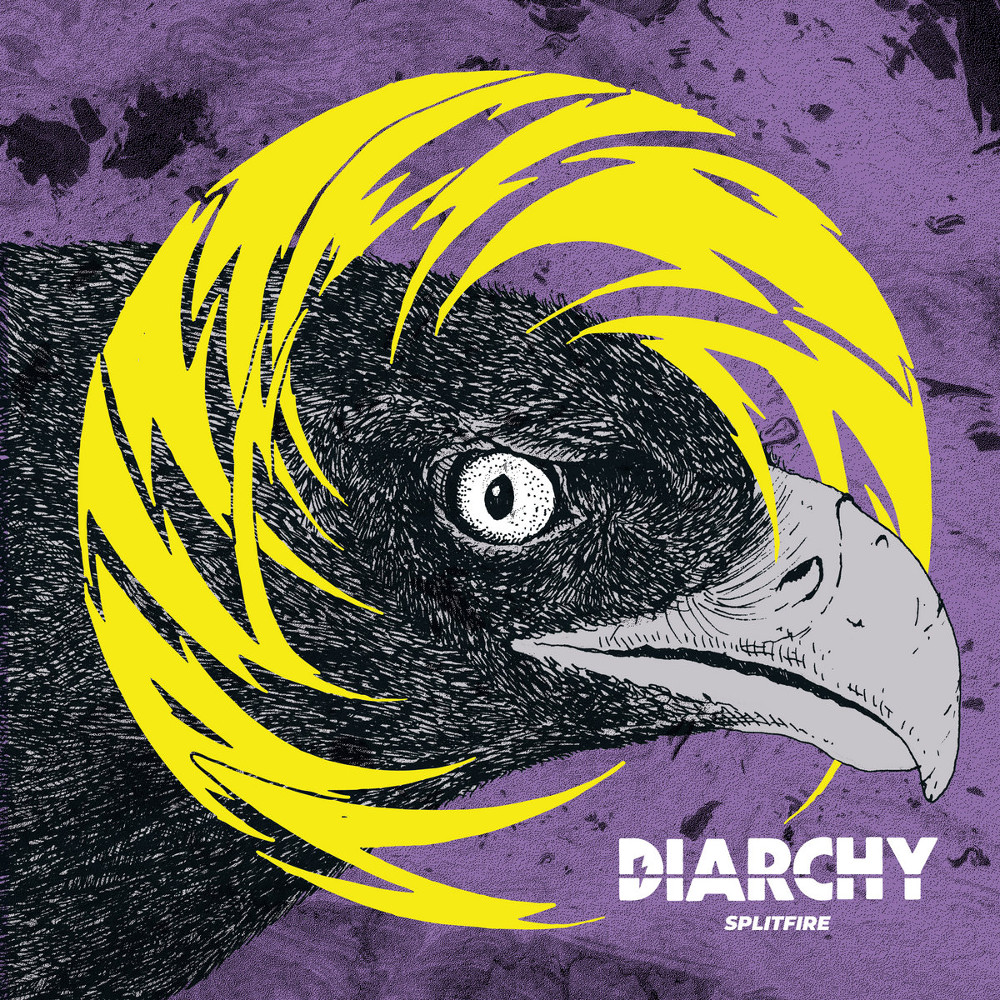
For a stoner rock band from India, I heard a lot of Budgie in opening number Kamal Hossen. However, Diarchy, as the name perhaps ought to suggest, are a power duo rather than a trio, with Prakash on vocals and guitars and Gaurrav on drums. They generate rather a lot of energy for a duo (though there are additional guests here) and, once again I find myself really wanting to see a band live who I have very little chance of ever seeing live.

Then again, for a stoner rock band from India, there's actually quite a lot here to explore and it makes me wonder about their influences. Their About page on Facebook just lists the expected stoner rock bands, like Kyuss and Clutch. Sure, there's some expected stoner rock here, albeit mostly on the most straightforward and least interesting songs (though that sounds a lot more dismissive than it should), but Splitfire grabbed me most when Diarchy really mix it up.

Tirunelveli, for instance, kicks off as old school psychedelic rock with an inherent Indian sound that wasn't that unusual in San Francisco in the late sixties, and it only really heavies up as it's wrapping up. I might believe that Diarchy have absorbed that through later bands except that Home shows up a few tracks later and that's an intricate sitar-flavoured guitar workout that's clearly Diarchy's Embryonic Journey. Oh yeah, they're listening to older stuff too!

In fact, the album only gets more interesting as it comes towards its close. Kraanti is a highlight for me and, for a stoner rock song, it sure sounds a lot like an early Genesis instrumental for three of its four minutes. Then, just like Tirunelveli, it heavies up at the finish. As we come to terms with that, Diarchy wrap up with Best Way Out is Always Through, a folk chant sung almost a capella, with the majority of the accompaniment being finger snaps. It's a song I'd expect to find on a Jolie Holland album.

In between are the more expected songs, which are all less worthy of comment beyond highlighting that Prakash finds an agreeable amount of worthy riffs on this album. The best may be on the title track, which is the longest on the album by far at almost six and a half minutes, but even the songs that I like least include impressive riffs and grooves. This band would be a lot of fun on stage just jamming guitar against drums for an hour, with any vocals that show up being a bonus.

I really dug this. It's fair to say that Kamal Hossen isn't too far from the sound I expected from an Indian stoner rock band and that made me happy, the nods to Budgie icing on the cake. It, along with Splitfire and much of Gone Too Late, was exactly what I was looking for when I pressed play. However, Diarchy pleasantly surprised me by giving me a lot more than that and I left the album enthralled.

The downside is that not everything is elevated, so otherwise decent tracks like Badger and Sunny Side Up, which are relatively routine stoner rock with a little punk attitude in the vocals, start to feel like filler. On another album, they wouldn't seem like negatives but, a few listens into Splitfire, I found myself skipping over them from Home to Kraanti. That's not good.

I left this wanting more, so I now need to find Diarchy's debut, Here Lost We Lie, released in 2017. If only Diarchy had been one of those bands with a few decades behind them, so I could spend the next couple of days exploring their back catalogue. In time.

Wednesday, 1 April 2020

Pearl Jam - Gigaton (2020)


Country: USA
Style: Alternative Rock
Rating: 7/10
Release Date: 27 Mar 2020
Sites: Facebook | Instagram | Official Website | Tumblr | Twitter | Wikipedia | YouTube

Pearl Jam were one of many insanely successful alternative rock bands whose appeal I never understood. I liked the odd single and I really appreciated a cover of Masters of War that Eddie Vedder and Mike McCready contributed to Bob Dylan's 30th Anniversary Concert. What I never felt was the urge to dig deeper. This eleventh album is being talked about as being more experimental in nature, so I thought I'd give it a shot.

I don't know that I'd call it experimental, as much of it sounds rather like I'd expect Pearl Jam to sound, but there are some unexpected moments and the album generally is both perkier than I'm used to and much more patient. I'm hearing a more crafted sound too, maybe not to prog degrees but with layers of instrumentation added in to texture the songs. It's still recognisably a Pearl Jam album but one flavoured by very different alternative rock outfits like, say, Radiohead or even OMD.

The end result of all that means that I enjoyed Gigaton more than I expected and that's no bad thing. My favourite track may be Quick Escape, which would surely have sounded wildly different in the early nineties, even written and performed by the same people. It isn't the first or the last song to carry a heavy David Bowie influence but it turns into a very effective jam, in which the band members seem to all be soloing at once but somehow progressing the song consistently at the same time.

The most overt departure from normal is surely Dance of the Clairvoyants, as a sort of new wave Bowie song. I see that the band members switched up their instruments completely for this number, with Jeff Ament playing guitar and keyboards rather than the usual bass, McCready handling percussion not lead guitar and Stone Gossard shifting from guitar to bass. It ably highlights a deliberate choice to expand their musical horizons and I admire that.

They certainly vary the tone of these dozen songs considerably. There's less grunge here than outright punk, or post-punk, a song like Take the Long Way carrying an urgency that I wouldn't have expected from a band with this much financial success already behind them. Never Destination is post-punk too, a sort of cross between Elton John and Iggy Pop. Everything on offer here has a post-something feel to it. It's post-pop, post-punk, post-grunge. It's an agreeable step for a band like Pearl Jam at this point in time.

At the other end of the tonal spectrum, songs like Alright and Buckle Up are fundamentally laid back. The former sounds like Vedder recorded it a capella but the band layered in instrumentation afterwards and did so with keyboards and a nice mbira, an African thumb piano, before adding guitars and drums to the mix. The latter is so wide open that it ought to be played and listened to outdoors. The backing is very African in nature, though Vedder's voice is still quintessentially American and alternative.

The acoustic Comes Then Goes has a strong roots influence too, but with more of an American feel, channelling country, blues and folk rather than African music. This one's indoors music not outdoors, though best performed in front of a cozy social environment. It's minimal, just voice and guitar, even with that guitar getting vehement at points. Retrograde starts minimal but layers in so much that we have to start it again to figure out everything that it's doing.

And that seems to be a good way to look at this album. It impressed me more than any other Pearl Jam album I've attempted, just from a first listen, and it left me with easily more incentive to go back and explore it deeper. It's not the change in style that was Bruce Springsteen's Nebraska, but it does a lot of the same things and occasionally in the same ways. I just hope Pearl Jam don't see this as a one-album project and continue down this road in the future.

"I want this dream to last forever," Vedder sings on River Cross, amidst the pump organ and unusual rhythms. So do I.

Scarab - Martyrs of the Storm (2020)


Country: Egypt
Style: Death Metal
Rating: 7/10
Release Date: 6 Mar 2020
Sites: Facebook | Official Website | Twitter | YouTube

For a band who are clearly elevated by their musicianship, especially by an impressive drummer and a pair of excellent guitarists, it was the vocals of Sammy Sayed that grabbed me first. It wasn't because of his choice to go in the deep growl direction, as he's decent but frankly little varied across a ten track album. It was the way he delivers that growl that's notable. Right at the outset, with the opening title track, it's almost an echo of a chant, ably setting the scene as an underground temple mid-ritual, given that the band sing about ancient Egyptian culture and spirituality.

If that didn't conjure up a comparison with Nile, I'll raise it anyway, but I should add that Scarab are actually from Egypt, so it's their own culture that they're exploring. Like Nile, the sound is dense and deep. Guitars are kept low in the mix, so that we hear the bludgeoning drums first with vocals and other instruments adding textures.

I usually prefer my death metal old school or melodic over brutal, but this album is immersive. Part of that is our need to pay attention to catch what the guitars are doing behind the drums and the bass, but a lot of it is just how interesting they are once we focus in on them. When they emerge to play, the guitars are impressive. One is vicious, slicing through the air like an evil weapon. The other is intricate, with a penchant for neo-classical that veers into sheer shred on Kingdom of Chaos. I believe the vicious guitar is that of Tarek Amr and the shred comes courtesy of Al-Sharif Marzeban.

Mostly, they stay at least partially buried in the mix because everything is ritualistic here. Bloodmoon Shadows, for instance, thrives on that chanting mentality from earlier and the guitars match those vocals with textures so that we start to wonder about what ritual we're becoming part of. Are we to conjure something up or lay someone to rest? The song titles suggest both.

Sayed has to have one of the rhythmic voices I've heard in death metal. That mindset continues, even getting bouncy on Circles of Verminejya. His work on this song is as catchy as melodic songs with killer hooks, but the hooks in evidence here are all in the rhythms. It's often said that an unintelligible death growl is another musical instrument, but it's usually said with guitar or bass in mind. Sayed is more a like a flesh and blood drumkit.

While this is hypnotic and immersive as death metal, I'm surprised that the band didn't add more ethnic flavour. It's clearly there on Coffin Texts, as the guitar trills and wavers like we might expect from an Egyptian vocalist but without any attempt to sound like folk metal. There's a little early on in Upon the Pagan Lands too. Maybe I'll notice it more on earlier tracks on repeat listens. Certainly, wherever it's there, it's there in the guitar.

The cover art for Martyrs of the Storm is an excellent guide to what can be found within. This is dark music but warm. It has an immediate impact, but a more abiding presence as we look deeper to see the details. It's ritual but not in any immediately recognisable way. It's epochal, fought on a plane far above our own. It's intricate. It's lush. It's order imposed upon chaos. And it always has something new to discover.