Wednesday, 12 June 2019

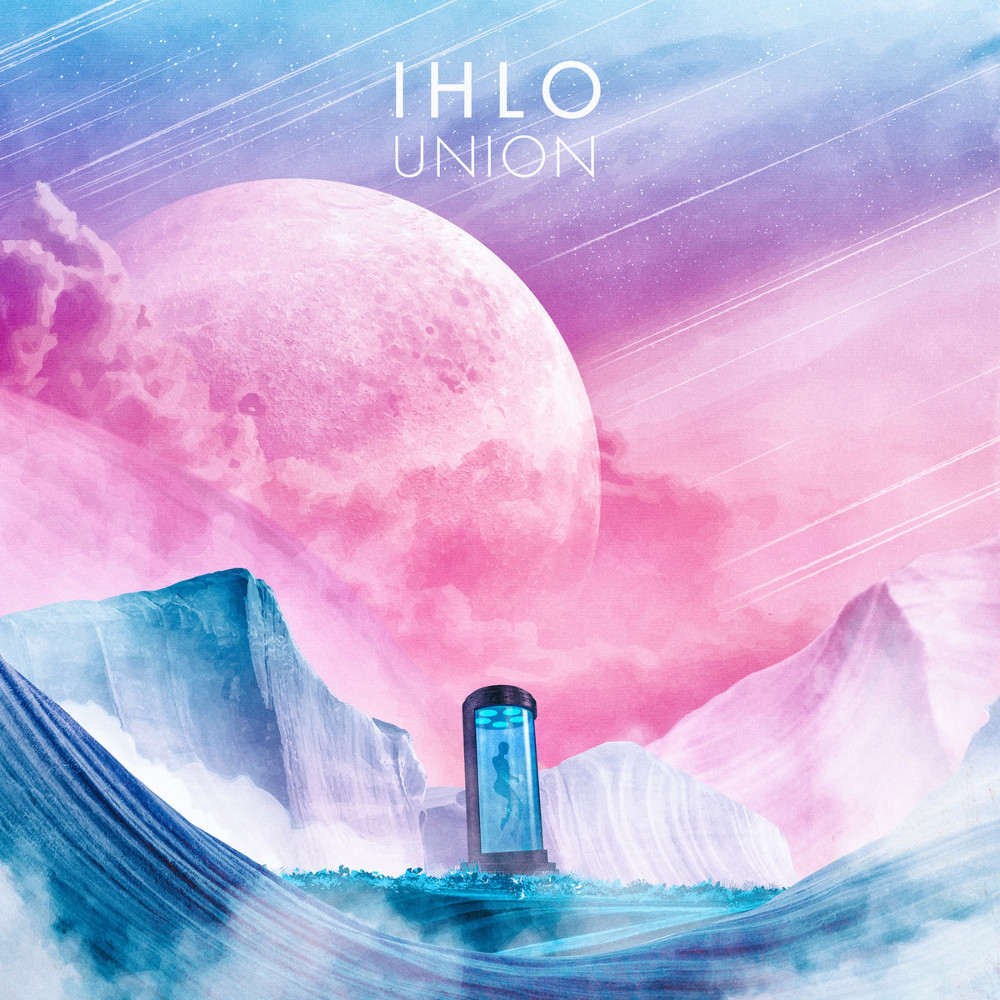
Ihlo - Union (2019)


Country: UK
Style: Progressive Metal
Rating: 8/10
Release Date: 31 May 2019
Sites: Bandcamp | Facebook

Debut albums recently came up in conversation because there have been bands who truly nailed it on their first attempt. That conversation started with Van Halen, who became so influential that it's hard to realise how original that first album really was. My choice for best debut of all time would have to be Marillion's Script for a Jester's Tear, because there's so much there, it's all spot on and it ran utterly against the trends of the time.

No, Union, another debut prog album, isn't going to make second on that list but it is excellent stuff. Ihlo (no, I have no idea how that's pronounced) were founded in London in 2016 and, if I'm reading correctly, they won't be debuting live for another couple of weeks, almost an entire month after the release of their album. That seems odd to me, but it helps to highlight just how new these guys are.

The point is that they don't sound new at all, though their influences are clearly newer than the old school. They aren't trying to channel Marillion, IQ and Twelfth Night, let alone Genesis, Yes and King Crimson; they're more influenced by Leprous, Tool and fellow Brits Tesseract. The approach is for keyboards to not merely set the tone but to also take the lead and deliver melodies, while the guitars take a percussive role, combining with the drums to provide an even more powerful beat. Vocals are clean and alternative.

What this means is that everything is texture and the title track sets that goal in motion immediately. It's mostly up tempo, in your face stuff but it also takes time for a quiet section with soft vocals over minimalist piano enhanced by pulsing keyboards. Each of the textures are enjoyable but they also contrast very nicely.

Reanimate emphasises that percussive take on proceedings by providing highly repetitive, albeit slightly complex rhythms with drums and guitars while the keyboards float and the vocals explore. They're just as alternative here but there are early sections that are more nu metal. Maybe that's why this is my least favourite track on the album, even though it was their first single. I like the second half a lot better than the first. It gets more emotional and interesting.

From there, we get different takes on these approaches, but in better form. I honestly think that the album's sweep is to start decent and then keep on getting better until it wraps up with fifteen spectacular minutes of build and exploration that constitutes Coalescence. Each song has better cohesion than the last, a better sense of growth and a more patient outlook on life. The middle parts of Starseeker are a fantastic time for us to sit back and reflect on what we've heard and where it's going to go.

Starseeker is really good but Hollow is better. It's a lot more restrained than anything before it, but it knows exactly when to stop that and launch into something more overt. It's beautiful, immersive stuff and Andy Robison dominates on two fronts: his keyboards and his vocals, which move from calm to soaring. Triumph, the shortest song on offer at just under five minutes, is a good companion piece but it doesn't add anything.

Parhelion builds gloriously. It starts well but finds a real groove and has a blast exploring it; then, after a brief interlude, it shows how much more it can do. It ends beautifully too, leading the way into the epic that will finish off the album. Parhelion tells us that we're almost home again but a fifteen minute track separates us from that, because nobody wants to leave at this point. Coalescence builds even more gloriously than Parhelion with truly awesome escalations, a catchy midsection ten minutes in and a strong finale.

May hit me hard with great albums but June hasn't followed suit until now. I've only listened to this twice thus far but plan to stay with it. For now it's an easy 8/10 because four of the seven tracks are absolutely top notch, sit back and relish in the experience material. What's odd to me is they don't count the title track and the single in their number. Maybe I'll grok them later but, for now, they're hardly poor additions to an otherwise fantastic debut.

Délétère - Theovorator: Babelis Testamentum (2019)


Country: Canada
Style: Black Metal
Rating: 7/10
Release Date: 18 May 2019
Sites: Bandcamp | Facebook | Metal Archives

Today's major review is the debut album from Ihlo, which is a soaring prog rock/metal opus that's very easy to listen to. I wanted a real contrast for my other review, something raucous and raw but still interesting and a brief search led me to this second EP from Canadian black metal band Délétère.

Apparently two bands started recording in Québec in 2012 under this name, but this is the first formed and the one who kept going (the other changed their name to Neurasthene). They have a couple of albums out and this is a continuation of an apparent self-induced requirement for them to only record in Latin. Their first album was in French but they clearly didn't want to do that ongoing, perhaps because it wouldn't help them stand out in Québec.

Délétère, which translates as either 'noxious' or 'vilified', depending on the context, play black metal with an interesting sound. Unlike many black metal albums, the production is clean and the most dominant aspect is the melodic line of the guitars that may be accompanied at points by keyboards too. It's never fast, even when the drums speed up. Those drums often fade into the mix, as do the vocals which vary a lot here, not merely including the usual shrieks but also some guttural chanting.

At eight and a half minutes, Theovoratis Aduentum is the longest track here but it opens the EP well. It's most memorable for its middle section, whose guttural chanting isn't delivered only by the band's vocalist, Thorleïf, but perhaps whichever coven decided to crash the recording session to summon a demon as the band played. Before and after that, it's surprisingly peaceful for such abrasive music, because it finds a hypnotic rhythm and rolls with it.

This track grows on repeat listens. The busiest band member is clearly the drummer, who I presume is Kaedes (though Thorleïf gets a credit for drums too). It's the guitarists who sell the song for me. They're Anhidar and G. and they're smooth when the band play fast but jagged when they slow down and the keyboards let them have the fore.

Babel Insanifusor (which may or may not mean anything at all but does sound pretty cool) doesn't include anything special at all but does maintain that hypnotic rhythm for the five minutes it lasts. It's as easy to be caught up in these songs as it is on such a wildly different album as the Ihlo debut I'm reviewing next.

That leaves Milities Pestilentiae III - Babylonia Magnissima (and I really hope that they can remember these titles when introducing the songs live), which stays fast but almost feels bouncy. It's certainly higher in pitch, with backing vocals reaching for the sky at points, but it's grounded and consistent.

Oddly, it feels more epic than the opening track, even though it's a couple of minutes shorter, but that's probably because Theovaratis Aduentum feels like two songs bookending a demon raising. Milities Pestilentiae III feels like one song, even if it's the third part of an ongoing a series (Milites Pestilentiae II: De Violatione Ciuitatis Febilis Dei was on their previous EP and the original opened up their demo, Sacrificium Necrothytum).

I liked this but it's not the raw black metal I expected. It's melodic and rhythmic, but with appropriately rough edges. Thorleïf certainly has plenty of those, as do the guitars when the keyboards don't hide them. And yeah, I think it makes for a good contrast with Ihlo.

Tuesday, 11 June 2019

Стожар - Холодом Битв В Объятья Зимы (2019)


Country: Russia
Style: Pagan Folk Metal
Rating: 7/10
Release Date: 6 Jun 2019
Sites: Bandcamp | Facebook | Metal Archives | Twitter | VK

From Bangladesh, let's wander up to Russia to check out a pagan folk metal band. Oh yeah, it's a great time to be alive! The internet is a wonderful place.

Стожар hail from Yaroslavl, four hours north of Moscow, and they've been a band since 2005, with three albums out before this one. The name translates to Stozhar, but I don't know what that means (Stozhary is the Russian name for the Pleiades, so maybe the band is named for a star cluster); the album title translates to Chill Battles in the Embrace of Winter. Now, Yaroslavl isn't Arkhangelsk, a thousand further kilometers north, but I'll trust that it still gets a bit cold during the winters for Стожар and this album would be a great way to warm up because they play pretty damn fast for a folk metal band.

The main man in the band goes by Yarosvet and he plays guitar and provides the male vocals. The rhythm section, Pavel Ivanov on bass and Sergey Glebov on drums, have been with him since 2009, which means that the new fish is a female vocalist, Evgenia Vitlugina, who joined in 2013. While Yarosvet has a raspy voice, if not raspy enough to make it to a death growl, Vitlugina has a sweet one that's also confidently powerful. They alternate lead duties on songs, rather than sing together.

They both shine on the first song, Ярость (or Rage). The backing is mostly fast and energetic and Yarosvet's voice fits that approach well. When the band slows down a little and Vitlugina gets the mike, it becomes much more interesting, not least because she's backed by swelling keyboards and what sounds like a flute but may be more keyboards. Whichever, it gets as much time in the spotlight as the guitar and that makes for two songs in one.

That continues on the title track, but the partners swap, so that Vitlugina sings over blitzkrieg backing. It's a delightful mix and I'd love to see it played live because I want to see how the audience react to it. That flute is playful creature and it clearly wants us to dance, while the rest of the band just as clearly want us to start a pit and burn off energy that way. I love the idea of an audience doing both or switching back and forth with the sections of the song.

Стожар describe what they do as 'Slavonic pagan metal' which is as good a description as any, I guess, with songs such as Славянская Сила (or Slavic Power) on the album. I have little idea what they're singing about but the song titles revolve around dancing, battles and winter. The former two are lively activities and the sheer energy that this band radiate fits them. In the rare occasions that the energy boils away, we're left with quiet piano and the sound of the wind, so the latter is covered too.

There's plenty of emotion alongside the energy. My favourite song may well be Ночи Хоровод (or Nights Round Dance), with Vitlugina's voice soaring in the sky above blistering backing that I can only assume mimics whatever the dance is. It slows down at points with some enticing keyboard work to back her, but soon speeds back up again, with Yarosvet eventually joining in the fray. The keyboards are dominant often onthis album and they make this song less like a dance and more like a tornado of death.

It runs long, seven and a half minutes, like a few other songs here. Стожар don't like to cut things off too soon and I'm thankful for that. None of the three long songs feel drawn out at all. Bizarrely, Голос Мечей (or Voice of Swords), yet another lively dance of a song, feels just as substantial when it's almost two minutes shorter. These are immersive songs and time passes differently when we're enthralled by them.

I like this a lot and haven't heard much like it, the most prominent Slavic music in my background being Romania's Bucovina, who play a very different style of Slavic folk metal. I'd love to know who else plays music like this because I feel invigorated just listening to it, so I think I'm going to be signing up for VK, the Russian Facebook, on which there seems to be a busy group called Slavonic Folk Metal. So far in June, they've posted about Ярл, Velesar, Motanka, Калевала, Orion, Sakramant and Стожар. Discovery is joy.

By the way, beware official websites. I've found two listed thus far: one doesn't exist at all and the other has turned into a porn site.

Oboyob - Abirbhab (2019)


Country: Bangladesh
Style: Psychedelic Rock
Rating: 7/10
Release Date: 31 May 2019
Sites: Bandcamp | Facebook | YouTube

A psychedelic rock album from Bangladesh? Yeah, I'm in for finding out what that sounds like! And it sounds pretty good. Oboyob were founded as Chaotic Symphony in 2009 and renamed a year later to the more appropriate Oboyob, a word which apparently means "indistinct form or figure". I like it. With its bonus track, Abirbhab runs just shy of an hour and, even though it's often laid back, it never gets boring. In fact, each listen is more involving.

Ambitiously, it begins with the longest song on offer, Upolobdhi, which at almost ten minutes is certainly an exercise in patient build. Initially, it reminds of Cream's Tales of Brave Ulysses because of how the melodies run, but the overall sound is closer to a relaxed Pink Floyd. The middle section allows for extended soloing over a simple but effective beat. Opening with a ten minute song is a gamble but this one paid off.

While the majority of the album continues to be patient, merely at shorter lengths, the band don't stay there throughout and patient doesn't have to mean quiet or soft. The finale of Ditiyo Shotta is particularly frantic and that opens up with a pondering bass and playful drums, before the guitars join in to make the whole thing playful. The band know how to experiment, but they're comfortable enough doing so that they often make it feel very, deceptively, simple.

What they do best, I think, though, is to trawl the history of rock music for ideas to roll into their original sound. Every time I feel that I know where they got a particular feel, they change it into another one. Ditiyo Shotta, for example, has a Clash-esque punky sound for a while but it moves away from that, into prog territory and even adds a fantastic double bass run to wrap it all up. It builds gloriously, one of the aspects of this album I enjoyed the most.

Oboyob cite many influences, not just the expected prog and psych bands of the seventies or earlier, but more recent alternative names like the Verve, Chris Rea and Porcupine Tree too and it's this mix that helps them find an original sound. 1980 seems to be a real dividing line in influence, with a lot of bands taking their sounds from either side. Oboyob refuse to choose sides because they like both. This is a band who take influence from both Pink Floyd and Radiohead, but shift back and forth between those eras when each particular song requires it.

There's a lot more to their sound though. I heard a lot of Marillion here too, though alternative Marillion rather than overt prog Marillion. It's in certain transitions but it's especially in the vocals with the singer (and I don't know which of the two it is) on Oronne... Kolponay... reminiscent of Steve Hogarth. The bonus track, Shada-Kalo, has an old school U2 flavour with a little of the Pixies' Wave of Mutilation, the UK Surf version. These are clearly alternative in nature.

However, the album also gets heavy at points. Otopor Bastobota begins as a deceptively simple song but it adds in real urgency through a vicious guitar tone underneath the soloing. It's not metal but it and the song to follow, Shadhinota, are as close to metal as the album gets. Shadhinota starts out funky and then adds in a riff that reminds of Symphony of Destruction. For a rock band, they're a pretty good metal band too.

In short, there's a lot that's reminiscent here, sounds that run the gamut from Cream to Megadeth, but it's so mixed together that none of the tracks feel derivative. At the end of the day, Oboyob sound like Oboyob and that's an important thing for a debut album.

What I didn't hear was anything overtly local in flavour. I'm not sure what the band's Bangladeshi influences sound like but when I caught world sounds within songs, they aren't particularly eastern. The first half of Nogor o Nagorik, for instance, feels like Jethro Tull channelling Caribbean music, something I never thought I'd write.

This isn't a problem, I should add, but I'm going to continue to wonder what Bangladeshi psychedelic rock sounds like because this feels like psychedelic rock that merely happens to be performed by a band from Dhaka. What matters is that it's very good psychedelic rock. I'll be exploring this album for a while.

Monday, 10 June 2019

Arakain - Jekyll & Hyde (2019)


Country: Czechia
Style: Heavy Metal
Rating: 7/10
Release Date: 16 May 2019
Sites: Facebook | Metal Archives | Official Website

I've never heard of Arakain before, but they're hardly new. They formed in Prague in 1982 and, unlike most bands from that era, kept going throughout the intervening years with a reasonably consistent line-up. Guitarist Jirka Urban is the only remaining founding member, but two of his colleagues have been there since 1986. Original vocalist Aleš Brichta left after a couple of decades but Honza Toužimský is coming up on a decade and a half himself. The least consistent role is drummer but new fish Lukáš "Doxa" Doksanský joined back in 2006, so he's already on album six.

This is their nineteenth studio album and it's a strong one even over fifty minutes in length. What's most interesting to me is how they manage to make the album sound so consistent, given that there are many obvious influences in play. Sure, the dozen songs fit in a consistent range from three and a half minutes to exactly five. Sure, Toužimský's vocals certainly ground it too but he doesn't dominate the mix to the detriment of his bandmates. But they throw their net widely, wider than the British hard rock classics of the seventies.

I should emphasise here that Arakain tend to move frequently between heavy metal and power metal elements, but there's a lot more here. Most blatant is the intro to Kiss's Detroit Rock City that appears late in Znal bych rád, a surprising nod for reasons to which I'm not privy. To co chceš mít is more like Savatage and Síť is reminiscent of Pantera, except for its commercial chorus. Kompromis and Sny dávají křídla shift into Metal Church territory, though the latter veers oddly into hair metal at points and even ends on a sort of acoustic note.

Jen vaše ruce is the most overtly different song on offer, partly because it kicks off with a different vocalist, presumably Lucie Bílá, but because it's much more of a hard rock song than a metal one, the only one on the album. The title track wraps up the album in clear metal fashion with a doomladen Black Sabbath feel. That's a heck of a lot of different sounds shoehorned into a heavy/power metal box but there's not a one that feels out of place, not even Jen vaše ruce.

Arakain sing in Czech, which I don't speak. Google Translate gives me a set of generic song titles, like Not Yet, I'd Love To and Just Your Hands. I'm intrigued as to what that's all about. Síť apparently means Network, Hřích means Sin and Signály, amazingly enough, means Signals. There's little in these names to help me figure out what they're singing about. The only hint I have to mindset is a slight look to the dark side, with songs like Sixth Sense and the title track. Who knows?

I liked this album, even without knowing what they're singing, but I didn't like it the way I might expect to like a nineteenth album, especially in this odd year of 2019 when everyone and their dog are appearing out of the ether with a vengeance. I liked it enough to wonder what their earlier albums are like. I see that they may have started out a little closer to thrash and that fits.

The biggest problem the album has is that, even though the band are on the case throughout and the music kept me alert a few times through, but it's difficult to identify one killer track to highlight. Perhaps that's why the album feels so consistent: it's good stuff but it's consistently good stuff that avoids great as much as it avoids poor. If you twisted my arm, I'd say that Šestý smysl or Sixth Sense is the highlight, but I may well call out a different track tomorrow.

Roaring Empyrean - Cosmic (2019)


Country: Iran
Style: Funeral Doom Metal
Rating: 6/10
Release Date: 8 Jun 2019
Sites: Bandcamp | Instagram

There were a few reasons why I added music reviews to Apocalypse Later this year, on top of the book reviews I've been writing since 2014 and the film reviews I've been writing since 2007, but one was discovery. Everything at Apocalypse Later revolves around discovery and I wanted to see what was out there in the musical landscape of 2019 that I didn't know about. After all, modern music sucks, right? Nah, I wasn't buying that. What was I missing?

One discovery was Roaring Empyrean, a one man project from Iran that merged funeral doom with new age music, a counter-intuitive recipe that I couldn't imagine working but which somehow did. Well, Amir Asadi aka Doomed Shinobi, the one man who creates this intriguing music, found my review of Monuments and sent me a copy of his new EP, Cosmic. I've been looking forward to that point where a band I've reviewed releases new product so I can explore their growth. This EP marks the first repeat 'band' here at Apocalypse Later.

Monuments aimed to create soundscapes to evoke majestic creations, whether they were created by man or nature. This EP continues in that vein, each of the two instrumental tracks combining the slow and plodding beat of funeral doom with the swirling atmospheric joy of new age, a heady mixture of which I'm getting rather fond. It's often background music, easy to listen to and easy to be distracted from, but never for long as there are odd elements to draw us right back in again. Everything here is built from contrasts, even how we interact with it.

While the general approach is similar to Monuments, I'm also hearing a wild and abrasive edge on both tracks that goes beyond the clashing that we got on Mountains of Torment last time out. It's there in the metallic dissonance found in the second half of Pillars and it's especially there on Gates, from its very beginning, a gritty, almost industrial vibe underneath the new age electronica, like a Nine Inch Nails layer on music more overtly influenced by Tangerine Dream.

Of course, that makes it all the more eye-opening to suddenly catch a melody that's notably reminiscent of Abba's Lay All Your Love on Me, merely slowed down to the tempo of funeral doom. I'm enjoying the Mysterious Semblance at the Strand of Nightmares vibe and focusing on that dark and jagged underlay when suddenly there's an Abba melody. The world of music is a glorious thing.

These two tracks are long, as you might imagine for instrumental tracks that serve as soundscapes. Pillars runs almost ten minutes and Gates almost nine, which is a decent amount for an EP. They develop and they end without ever outlasting their welcome, even on a fourth or fifth time through.

While I liked this, I think I liked Monuments more. If there's a flaw, it's a really odd one. The cover art is of a galaxy and the EP's title is Cosmic, so I presume this is aimed at taking us on a journey into space. I have to say that I didn't get that from the music at all. The darker edges took me to darker, more hellish places, which isn't a bad thing at all, but perhaps isn't what Asadi intended.

I enjoyed this and am eager to hear what he might conjure up next. In the meantime, this EP is available at Bandcamp for the paltry sum of one dollar (or more, if you're so inclined), so I highly recommend that you pop over there and pick up your copy.

Friday, 7 June 2019

Gong - The Universe Also Collapses (2019)


Country: UK
Style: Progressive Rock
Rating: 7/10
Release Date: 10 May 2019
Sites: Facebook | Official Website | Wikipedia

Here's another name from across the decades and one with a notable history that's still being forged, even after all its most prominent members are no longer with us. Gong were formed in a Paris commune in 1967 by Daevid Allen and Gilli Smyth, who passed away in 2015 and 2016 respectively. After they left the band in 1975 (albeit not for long), Pierre Moerlen continued on as a jazz fusion band, but he died in 2005.

The line-up has changed more times than can be comfortably imagined and now features nobody who was involved at any point during the first four decades of the band's history. That's weird, but it doesn't mean that the musicians are new fish. The old hand nowadays is Fabio Golfetti, their Brazilian lead guitarist, who joined Gong in 2007 but also continues to lead his own prog rock band, Violeta de Outono, which he formed in 1985. Gong was one of his key influences from childhood so leading the band now must be a real blast.

Now, I've listened to a lot of seventies prog rock and I've enjoyed much of what I've heard, but I've never managed to get into Gong, whose influential Radio Gnome Invisible trilogy of albums still seem impenetrable to me. This album, ironically, seems far more accessible to me than legendary releases like Camembert Electrique which influenced the current members.

There are four tracks here, of wildly different lengths, but they betray a commonality in each being constructed from intricate little riffs that flow into each other like tesselations. This is an album for pattern spotters or listeners with OCD because those patterns vary just a little and are often the ground over which the saxophone of Ian East soars like an alien bird.

Forever Reoccurring is a twenty minute opener, because that doesn't seem at all odd when you're Gong. It starts softly, pulsing slowly into action with echoey vocals from Kavus Torabi. This is Gong in space rock mode, patiently building with a little escalation here and a new layer there, along with a looped vocal that runs behind a good chunk of the track.

There's a lot here, maybe appropriately given that the lyrics seem to have us singing together while the universe collapses. If this were 1970, there would be a host of different names for the different movements, some led by vocals and some led by different instruments. Like the universe, though, it plays well together and seems somehow timeless. Those twenty minutes last a lifetime but are over before we know it.

Oddly, Gong follow a twenty minute track with a two minute one, which is a decent piece for its length, but we blink and we're into My Sawtooth Wake, an even more ambitious take on the ideas in the first track but compressed into a mere thirteen minutes. It's two thirds in when it comes most alive with a driving riff and an explosive solo from East's saxophone. It's good throughout but, after that wild midsection, it fades somewhat.

The final track is The Elemental, which runs a short seven minutes and has the wrong mindset to wrap up this album. It's not a bad track, but it's the safest on the album and it was never going to stand out after the couple of earlier long tracks, as playful and experimental as they were. It does end well though, with a minute or so that sums up what's gone before but with a telling repeated lyric, "Remember there is only now."

Gong, it seems, are a going concern: inventive, fearless and somehow fresh, perhaps revitalised by an entirely new generation of musicians inspired by the Gong that came before them. Surely this was the goal of Daevid Allen's e-mail to the band asking them to continue on after his death. They've done him proud.

The Rods - Brotherhood of Metal (2019)


Country: USA
Style: Heavy Metal
Rating: 6/10
Release Date: 7 Jun 2019
Sites: Facebook | Metal Archives | Official Website | Wikipedia | YouTube

The Rods may seem like yet another older band to resurface in 2019, but I'm seeing that they've back for a while and this is their third studio album since they reformed in 2010. Their heyday, of course, was from 1980 to 1987. Like L7, they reformed with their classic line-up intact: guitarist David Feinstein, bassist Garry Bordonaro and drummer Carl Canedy on drums. Canedy and Feinstein are founding members, while Bordonaro only missed their debut album in 1980.

It's good to see that these guys are as good as they ever were, but both the best and worst things about this album are that they're very much like they used to be. The good side of that is that they were and are rather talented, a straight ahead heavy metal group with solid musicianship and notably good solos. The bad side is that what was fashionable in 1981 often seems acutely clichéd in 2019.

This album kicks off with a great example of both in its title track. Brotherhood of Metal is a solid slab of old school heavy metal. It has a long piano-driven intro, then kicks in hard and, well, runs through a whole slew of clichés. This is very much for the "armies of denim and leather" and, while it's nowhere near as embarrassing as what Manowar get up to nowadays, it slides a few slots down the same scale. I was OK with it on first listen, thinking that its biggest flaw was that it was a little too long, but a second time through elevates the cheese factor.

And that keeps on coming. The cheese is there in abundance on Everybody's Rockin', which could have been written in 1984. It's there on Louder Than Loud, because of course it is, but it is kind of the point on that track. It's there on Tyrant King too. And Party All Night. And Tonight We Ride. And... yeah, it's there on pretty much all the songs on this album. This is a great choice to play heavy metal cliché bingo to and you can pick any song with similar results.

The good news is that, however clichéd it gets, it's played very sincerely and very well. The riffs are strong, the solos are worthy and the vocals do exactly what they need to do. The influences are worn on the band's sleeves too, with Judas Priest being the most obvious. Everybody's Rockin' could be a Priest song, merely with different vocals. Smoke on the Horizon could be too, even though it adds the heavy organ sound we expect from Jon Lord (and it adds it in gloriously). Add in the Manowar/Virgin Steele mindset of the opening track and you're pretty much set for the rest of the album.

Brotherhood of Metal runs to eleven tracks (hey, this one goes to eleven) and they're all consistent in both quality and cheesiness. The other song that I'll highlight is Party All Night, because Feinstein stops playing on the verses to give Bordonaro's bass the lead. He does a fantastic job but that's not the point I want to make.

I'd been impressed from the very outset about how easily I could hear the bass on this album. In fact it felt almost offputting that there was a bass in the mix, because producers tend not to be capable of acknowledging that the bands they work for even include a bass player. The Rods, of course, feature Carl Canedy in their line-up and he's a producer of note when not performing, so I have no doubt that he's the reason behind the laudibly audible bass.

I found metal in 1984, just a little late to be a big fan of the Rods. I'm sure that, had I been born in the US instead of the UK, I'd have picked up their older albums quicker, but I heard them and liked them. I like this as well and recommend it, but it's going to seem outrageously cheesy to anyone who weren't metalheads in the early eighties. The real question is whether you care or not.