Friday, 10 May 2019

Possessed - Revelations of Oblivion (2019)


Country: USA
Style: Death Metal
Rating: 7/10
Release Date: 10 May 2019
Sites: Facebook | Instagram | Metal Archives | Official Website | Wikipedia | YouTube

It's testament to the importance of Possessed that, since they split up in 1987, nobody else on the planet put together another band called Possessed, one of the most obvious names in the whole of metal. I found rock/metal in 1984 so I was there when Seven Churches came out and it was one of my very favourites from my first time through it. I liked Beyond the Gates too and The Eyes of Horror too, if not quite as much. I've always appreciated when bands cite them as an influence because, given that Possessed split up in 1987, you knew they meant it.

Seven Churches was something special. It was lumped in with thrash at that point but it was never quite what other bands were doing. It wasn't really the most anything—the most raw, the most brutal, the most intricate—there were always other albums outdoing it on all these fronts. But nothing else combined heaviness, speed and melody quite like Seven Churches, especially as it felt like the band were constantly about to fall apart, even if they never actually did. The whole thing felt acutely real and dangerous, with the drums of Mike Sus struggling to keep up and the rest of the band ever inching forward faster.

While Possessed changed even from 1986 to 1987, I was sad when they ceased to be and very happy when Jeff Becerra brought his band back from the dead in 2007 to perform a legendary set at Wacken with Sadistic Intent backing him, but I've been waiting for this inevitable album ever sense and it has finally arrived, holy crap, thirty-frickin'-three years since the last one.

I have to sadly point out that Becerra only performs with his voice, being paralysed below the waist in 1989, so Robert Cardenas handles bass duties nowadays. Emilio Marquez was there in 2007 when Possessed were reborn as he was the drummer for Sadistic Intent, but the remaining members joined in at later points in time, with guitarist Claudeous Creamer the last on board in 2016.

However long these folk have actually been together, it feels like longer, because this new Possessed are very tight indeed. I enjoyed the Shadowcult EP that came out last month, which featured two tracks from this album, and I find that everything else here holds up to its standards. This is a good and worthy new album.

Much of its success, of course, rests on the voice of Jeff Becerra. He's a little more controlled nowadays, but his voice is still an intelligible raw growl, nowhere near as extreme as the harsh vocals most bands use nowadays but still deep and warm and evil. He's still a singer rather than a texture to add to the music behind him, which feels refreshing. He also still sings about the sort of Satanic topics that veered off into black metal as the sort of death metal that Possessed pioneered found its own style.

His backing band have more control too. Larry Lalonde was always a notable guitarist but Creamer and Daniel Gonzalez increase the tempo he worked at and don't feel like they're even stretching, perhaps because Marquez keeps up throughout with some fantastic drumming. Their solos are a lot of fun as well; just check out the interweaving solos in Damned for a start and then follow up with Abandoned. Cardenas maintains the deep tone throughout and gets a great bass run on Demon.

They collectively keep up the blitzkrieg for almost an hour, which is much longer than the previous two albums, neither of which broke forty minutes. Then again, that's probably appropriate because times have changed and it's just an album, unlike Seven Churches which felt like a headlong rush into oblivion, an immersive experience as much as a collection of songs. I miss the mid eighties when bands like Possessed were challenging extremes while society at large looked on in abject horror.

The highlights are mostly the singles: No More Room in Hell, Abandoned and Shadowcult, but Damned is another and so are Omen and Ritual. Welcome back, Possessed! I've missed you. It's fantastic to hear an authentic old school death/thrash album and the fact that it's pretty damn good is a real bonus.

Vroudenspil - Panoptikum (2019)


Country: Germany
Style: Folk Rock
Rating: 7/10
Release Date: 26 Apr 2019
Sites: Facebook | Official Website | Twitter | Wikipedia (DE) | YouTube

Here's something a little different. Vroudenspil are a German folk band who have been around since 2005. Note that I say "folk" rather than "folk metal" because there's no metal here. The band call what they do "buccaneer folk", a sort of blend of folk and ska, dressed up in pirate garb, that reminds a lot of gypsy punk. Apparently they used to have a more mediaeval feel too, but that's less obvious on this, their sixth album.

This is bouncy and engaging stuff and it's opened doors for Vroudenspil to perform at all sorts of niche festivals. They started out at renaissance festivals and expanded into pirate festivals, goth events, rock festivals, pagan events, you name it. They played three sets at Wacken in 2015, which is telling. Frankly, they're so engaging that it's hard to imagine anyone not liking this. They could support Manu Chao one night, the Mighty Mighty Bosstones the next and then the Dread Crew of Oddwood on a third.

Their particular combination of sounds gives them a consistent feel but the sheer variety of them gives them a lot of flexibility within that sound. A song like Schein und Sein, for instance, begins with smooth jazz, like it's introducing a Mike Hammer episode but then the beat kicks in and we're in acoustic Alestorm territory. By the time the saxophone gets a solo, we're bouncing up and down to a Madness song.

Many of the songs have a more consistent feel, often with a ska base, even if they sound far more like Gogol Bordello than Reel Big Fish, but get wild with certain instruments. Kaleidoskop brings in sea shanties with a "Yo Ho" chant. Tanzbär does something cool with what sounds like handheld percussion. Rausch der Sinne features some old school gypsy guitar from the Django Reinhardt school. Feuerteufel features an insane accordion solo that's reminiscent of Kerry King, merely on the accordion, but it also has a delightfully playful bass that's prominent throughout.

Even on something like Menschenbild, a relatively traditional folk song for a couple of minutes, Vroudenspil feel like they're not only musicians but performing artists, if that makes sense. The middle section is as visual as it is auditory, because I could just see these pirates on a Night Boat to Cairo and that's before the more conversational final act with laughter and all sorts of other things. On occasion I can see these songs as much as I'm listening to them.

The Madness references are surely deliberate, because Vroudenspil have that ska base and Madness constitute a good chunk of the great ska songbook. I'm fascinated by how some of the other references are surely not deliberate. I can't imagine that the flute solo in Aufgewacht was meant to sound like the theme tune to The Last of the Summer Wine, for instance, or the playful bit at the end of Selbsträcher was trying to emulate Jump in the Line. But hey, you never know!

Talking of playful, I think this album gets cheekier and more playful as it runs on. Just check out Kleine Fabel, two tracks from the end. The very beat is cheeky and the sax even more so, but the song gives every instrument its own moment in the spotlight. It's a joy to behold. And then Vanitas starts and its intro prompts the whole playful meter to move up another notch.

While Vroudenspil are a stretch in a whole new direction for the rock/metal spectrum, so they may well not be your thing, you should totally give them a try. I'd suggest that the only reason that they're not as famous as Gogol Bordello is that the latter live in New York and sing in English. The only song that won't have you dancing in your chair is Seelenfrieden, an anomaly of a song to wrap up the album. Everything else is guaranteed to put a grin on your face.

Thursday, 9 May 2019

Monasterium - Church of Bones (2019)


Country: Poland
Style: Epic Doom Metal
Rating: 9/10
Release Date: 6 May 2019
Sites: Bandcamp | Facebook | Metal Archives | YouTube

I came into this album not knowing anything about Monasterium except that they play epic doom metal in Poland. I left it knowing a lot more, because this is really good stuff and they clearly enjoy what they do, describing themselves on Facebook as 'humble knights of doom on their second crusade'. Their first was a 2016 self-titled album which I'll immediately seek out [edit: it sounds good but not as good as this].

The one downside to this band is that they're clearly huge fans of Messiah Marcolin era Candlemass, so much so that this almost sounds like a tribute album. That's it. If you see that lack of originality as a problem, this is perhaps not the doom metal album for you and best of luck finding something that truly stands apart from what's gone before. If you really don't care and, frankly, perk up at the idea of something comparable to Nightfall and Ancient Dreams, then this is emphatically for you.

So, if you're still here, let me tell you how great this is. Of course, you already know what it sounds like because you've played those two Candlemass albums to death. It sounds like that. The vocalist attempting the tough feat of surviving a comparison to Messiah Marcolin is Michał Strzelecki who, get this, used to play guitar in a power metal band called Sorcerer. That seems really weird to me because it's really rare for a musician to transition to vocals with such emphasis but hey, I ain't knockin' it.

Strzelecki isn't Marcolin, though, of course, nobody else is either. He is, however, very good indeed. He sings entirely in English and does well, even if he can't quite hide his Polish accent. Frankly, it adds a little exotic texture. To highlight how good he is, he shares the mike on The Last Templar with Leo Stivala, who's sung for the Maltese doom band Forsaken for almost three decades, and, as good as Stivala is, he's clearly not as good.

If Monasterium were nothing but a great singer, I wouldn't be raving like I am here. Fortunately, the rest of the band are all strong. Filip Malinowski drives a lot of this on a highly resonant bass. Tomasz Gurgul is a walking riff machine on guitar. Maciej Berniak, manning the "drums of doom" keeps it all very much under control and even adds a little perkiness at points. The three of them all used to play in a prog metal band called Sadman Institute, who put out an album in 2015 that now intrigues me. It sounds like they live and breathe doom but apparently they didn't used to.

And, to put the icing on the cake, Monasterium aren't just a bunch of solid musicians. They have actual songs to play here and that's surprisingly often a missing component for otherwise highly talented bands. I don't know which band members to praise for the songwriting, but it's as strong as anything else here. I knew I was going to like this just from the title track, which opens the album, but it just gets better from there.

La Danse Macabre varies as to why it's better. It starts out very much as a guitar song with Gurgul churning out a glorious riff and Berniak setting an agreeable pace, but his work in the midsection brings a huge grin before Strzelecki lays claim to the song with a dramatic section and a couple of moments of sheer power. Liber Loagaeth betrays a surprising influence, in early Manowar, but still with a very doom vocal. It's too polished to have fit on something as raw as Hail to England, but it would have been worthy.

And then they get heavy! Ferrier of the Underworld and Embrace the Void are both crushing doom tracks led by more glorious riffs and some soaring vocals from Strzelecki. The former is as Nightfall era Candlemass as it gets and I have to praise Malinowski and Berniak for keeping the song as heavy as they do while Gurgul is soloing. The latter starts tantalisingly quiet and likes to stay there for the verses, but it builds with some serious power, Berniak and Malinowski once again crushing it behind the vocals.

Every song thus far has been great and we're coming up on my favourites. The Order of the Dragon and Sleeping with the Dead are both songs that do little more than previous songs did but somehow grew more on me. The latter is long too and I think Monasterium do well with longer songs. Of course, the longest is the last one, The Last Templar, with that guest vocal, and it builds like an epic should. There's a little of that old school Manowar here again but it's a killer doom track to wrap up a killer doom album.

I don't give out high ratings easily because I feel that classics can only be truly quantified in hindsight, but this is easily as worthy as anything I've heard this year. Thus far I've only given two 9/10s and this makes it three, with the added note that I expect to be going back to this far more often than Aephenamer and maybe more than Uluru.

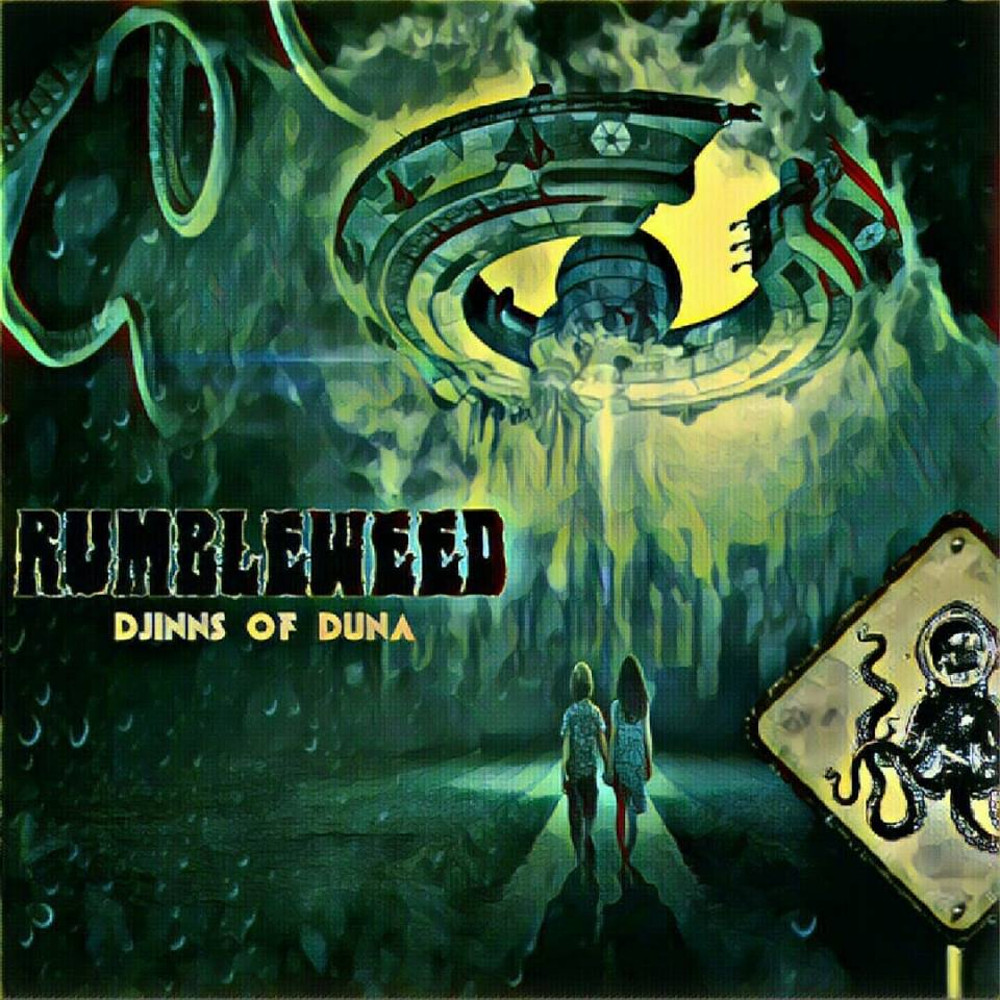
Rumbleweed - Djinns of Duna (2019)


Country: Spain
Style: Stoner Rock
Rating: 6/10
Release Date: 6 May 2019
Sites: Facebook | Twitter

While heavy metal in the US seems to have become intrinsically tied to pot culture, I grew up in a very different scene in the UK and the whole stoner mindset just seemed dumb to me. Well, it may be, but I missed out because I have to say that stoner rock/metal is fascinating to me in 2019, long after it was supposed to die out as obsolete. It's an odd genre to persevere but it really found a foothold in the nineties and is enjoying a growth spurt as a variety of bands in a variety of countries take it in new directions.

Rumbleweed (which Google emphatically wants me to change to Tumbleweed) are a new stoner rock band from Santander in Spain, home to what little English money I have left, who were founded as recently as 2018. This is their debut EP, though at a mere two minutes shorter than Reign in Blood, it's not far from being a full album. It also highlights a real versatility in the band, even over as few as six tracks.

My favourite tracks are the first two. The Acme of Stupidity is psychedelic in outlook with the requisite fuzzy guitar getting bouncier as the song runs on and a beat that makes this almost sound like downtuned funk. By the end, it's got raucous enough to blitz out with punk attitude. L Devourer starts slowly too and builds well with some memorable riffs and good use of a pair of vocalists.

The middle two tracks have an odd habit of disappearing into the background. I say odd because I'm surprised at how the title track does that. It kicks off with a fantastic riff and always sounds magnificent whenever I tune back into it but, however many times I listen through, I somehow get distracted while it's on. That's easier to explain with Suffocation, which is easily the loosest and least overt track on the EP. It's easy to get lost in that song but I don't want to get lost in Djinns of Duna. I think it's the loose verses that do it, before the riff captures us once more. I'd say it goes home well too, but the cover may cast doubts on that. Where's home?

The last two tracks, however, never fade into anywhere. Catch the Bunny is another bouncy track, a relatively conventional alternative rock song but a successful one that's impossible to ignore. Finally, Tailored Suit, bouncy once more, finds still more success with the band's dual vocal approach. I should call out Rubi and Gad, the two singers, who combine magnificently. The achingly slow section three minutes in is a real bonus, as is the fast section a minute later that wraps up the song. I dug this one a lot and any release that begins and ends with its best tracks ought to do well.

I don't know enough about stoner rock to know where Rumbleweed found their sound or took their influences. I'm learning but I have a long way to go. I just know that I like this stuff: the fuzzy guitars, the interesting drums, the clean but otherwise highly varied vocals. I've always lumped this sort of thing in with 'alternative' and written it off and I regret that. This is a great example of something I'd have missed out on a couple of decades ago that I don't need to miss out on any more.

Wednesday, 8 May 2019

Oxymorya - Save Your Mind (2019)


Country: France
Style: Symphonic Metal
Rating: 7/10
Release Date: 7 May 2019
Sites: Bandcamp | Facebook | Metal Archives | YouTube

Oxymorya hail from Dannemarie, which is so far east in France that it isn't far off either Germany or Switzerland. Perhaps that's why their influences are obviously primarily European, not just other symphonic metal bands like Epica, Nightwish and Delain, but bands with more extreme elements like Mors Principium Est and Sirenia. All these are cited on their Facebook page and aren't remotely surprising.

Initially, Oxymorya sound just like your personal favourite symphonic metal band, but it doesn't take long for other elements to show up to deepen what they do. The harsh vocals of Soizic Desbois (I presume that's what 'chant saturé' translates to), combined with the clean vocals of Aurélia Mouth, hint at the versatile sound we know from Tristania and Sirenia, while the intricate drum patterns of Cédric Mouth are only the most overt progressive element. Were Aurélia not present, Oxymorya could be easily classified as prog metal.

They start strongly on Welcome to Earth, with these two different singers adding their own textures to the song not verse by verse but line by line. They're so connected throughout the album that on one track, In the Long Run... We are All Dead, they share the very song title in the chorus, each tackling half of it in their own individual and wildly different style.

The guitars are surprisingly low in the mix, especially given the presence of two guitarists and a bassist, but the drums are not, so that we tend to find ourselves listening to symphonic, prog and melodic death metal all at the same time. There's certainly a lot of melodeath in The Cave, but there is also a lot of beautiful symphonic vocal work from Aurélia and a glorious bass run midway from Vincent Rigoni.

What I should mention is that Cedric Mouth isn't only the prominent drummer ('batterie' in French!), he's also responsible for the orchestration, which is handled very differently to anything I've heard from the bands mentioned above. He's not trying to add a virtual orchestra, at least I don't believe he is; he's adding odd little textures here and there from a whole variety of instruments. The Cave alone features brass and a heck of a lot of piano, while other songs benefit from other hints and accents.

It's also worth mentioning that his role here appears to vary depending on what his contribution is. As a drummer, he's the heart of the prog metal drive of the album: crisp, technical and deliberate. However, when wearing his orchestrator hat, he's much more like a pixie, very playful and wildly unpredictable. I'd even suggest that songs like This is the End would sound completely different if we merely removed his layer of orchestration.

I find this fascinating because the band, who only formed last year and for whom this is their debut release, clearly have a sound of their own, which is admirable in the world of symphonic metal, where many bands are almost indistinguishable from each other. I wouldn't mistake Oxymorya for any of them, even if Aurélia is traditional enough in her contribution.

The point is that she's singing in her style while her counterpart sings in her completely different style (except when she doesn't, on the fantastic The Great Apocalypse), Cedric plays prog and, frankly everyone in the band plays whatever they want, given their own influences. How this all doesn't fall horribly apart on every track, I have no idea, but somehow it all gels wonderfully into something very specifically Oxymorya.

Case in point: Divina Machina. Each time I hear it, it seems to belong to a different genre. Initially, it's a melodic death song, even if Cedric adds electronic fringes around it, on which Aurélia feels like a guest vocalist; all the vocals that count are Soizic. But then I hear it again as symphonic metal because Aurélia gets the verses and Soizic brings texture. And then I focus on the groove metal vibe. Or the jazzy guitar. Or...

Behind the Door does the same thing, because Cedric goes all vaudevillian with his orchestrations. It's another melodic death song, except it isn't. And the whole struggle begins again.

At the end of the day, of course, it doesn't matter what genre these songs are. They're simply good and that's all that matters.

Sparkle - Life (Black Point in World) (2019)


Country: Iran
Style: Post Rock
Rating: 6/10
Release Date: 16 Feb 2019
Sites: Bandcamp | Facebook | Instagram | Metal Archives | Twitter | YouTube

The benefits of being a one man band are that you can just get on with it, whatever it might happen to be. Parvis Shabrang from Esfahan, Iran really gets on with it. Under his performing name of Sparkle, he knocked out six full length albums last year and has already matched that feat in 2019 by the beginning of May. This one came out in February and he's released four more since! That's one album a month with two in April!

The obvious question, given this sort of pace, is whether he's any good or not and I have to say that I enjoyed Life (Black Point in World), though it sometimes has to fight to stay in the foreground. The opening track, Imagine the End, for example, is almost nine minutes of early Tangerine Dream-esque ambient keyboards. It's hard not to like it, but it doesn't have the depth of tracks in a similar style on Tangerine Dream albums like Phaedra.

Shabrang describes what he does in a few different ways: funeral doom metal, ambient post rock and atmospheric space. A few years ago, I'd have struggled to grasp that but I'm finding that some unlikely genres actually connect in surprising ways.

Imagine the End was certainly recorded wearing Sparkle's 'atmospheric space' hat, while Radiant of Void moves into post rock, with some traditional rock instruments, such as guitars and drums, conjuring up a soundscape that's a lot more overt than its predecessor on the album. I'm not sure what it aims to depict but it builds well and it's very likeable.

Never Breathe combines the two approaches rather well, the atmospheric side suggesting that we're floating, in space or underwater, perhaps like the intriguing character on the cover, but the post rock side, mostly provided by a set of periodic power chords, adds a sense of danger, which is frankly appropriate given what the very same intriguing character on the cover is doing (or is having done to it).

If there's funeral doom here, it's on Mind on the Way Back, which unfolds with a lot of church organ and adds guitar halfway through that's heavier than anything on those post rock tracks by far. It's not funeral doom as I think of it but it does play in the same ballpark for a while. If you want the heaviness of powerful funeral doom but old school Tangerine Dream bores you silly, then this album really isn't for you. I can't say whether one or more of Sparkle's many other albums won't do the job, but this one won't.

Frankly, it ought to appeal most to those old school Tangerine Dream fans. Phaedra is one of my favourite albums of all time and I dig pretty much all they did in the mid seventies, after they moved past more overt Krautrock albums to find their own sound: think Rubycon, Ricochet and Stratosfear, up to their soundtrack for Sorcerer. Sparkle is a little less playful and far more ambient in approach, which generally means that it's harder to picture what he's visualising in sound.

The closing song, Sparkle from Inside, actually looks a little further back to those Krautrock albums of Tangerine Dream and others. It's experimental in outlook, though not wildly so, channelling Krautrock into post rock and coming up with something rather interesting, if not for everyone.

And, frankly, Shabrang knows that he's out there on a particular edge. Those who like his work are going to buy a lot of it and he's prolific enough to feed that market. Those who don't like his work aren't going to last through one album like this, never mind a dozen of them. I'm in the former category. This isn't the most essential album in this style I've heard but Shabrang is good at what he does and I'm intrigued enough to listen to some more to see if this is a greater or lesser example of what he does.

Tuesday, 7 May 2019

Datura4 - Blessed is the Boogie (2019)


Country: Australia
Style: Psychedelic Rock
Rating: 7/10
Release Date: 5 Apr 2019
Sites: Facebook | Instagram | Official Website | Twitter

There's a great quote from The Australian that explains what Datura4 really sound like: "These songs evoke a time in music history when rock was getting really loud". I like that, because it's clearly rock music that's about to become something else and Datura4 don't want that to happen. They're happy with their high volume and psychedelic wail and tantalising hints at what might arrive in the fresh new decade of the 1970s but they're also happy to watch other bands actually carve that retro-future.

Oddly, they start out heavy with Black Dog Running, which for a while is as doomladen as anything on this album, with the sole late exception of Cat on a Roof, which has some wild old school Hammond organ to thank for its heaviness. It warms up and the middle section alternates between Black Sabbath and maybe Vanilla Fudge, heavy blues/psych that couldn't ever be called metal.

After that's the title track, which is like an entire classic rock station distilled down into one song. I heard Radar Love, Roadhouse Blues, Spirit in the Sky and a host of others, not to mention the overt nods to John Lee Hooker, but each only for brief moments because it somehow finds its vibe in and amongst those recognisable sounds. Frankly, I kind of dug the fact that it sounded so reminiscent of other songs without actually ripping any of them off.

There's actually a lot of seventies influence here for a band who sound like they don't want to leave the late sixties. Run with Lucy has a glam vibe to it, like a Marc Bolan song. The band's cover of Jessie Hill's 1960 hit Ooh Poo Pah Doo sounds more like an early seventies Deep Purple cover. The City of Lights is highly reminiscent of classic era Blue Öyster Cult. Not for Me begins with a quiet guitar that's the closest the band get to Led Zeppelin.

Their Facebook page suggests that, in addition to western bands like Nazz, Status Quo and Humble Pie, they also cite influences from Australian bands. It's been a long while since I've seen the the Masters Apprentices cited in anything, but I'm a big fan of A Toast to Panama Red. I hadn't heard of the Ted Mulry Gang, but I should clearly check them out.

Not everything here is essential. I quite liked Evil People, Pt. 2 on first listen, but it got old by the second time through. It would be too clichéd and arbitrary to suggest that Not for Me is, well, not for me, but it isn't my favourite song on here by a long shot. The honky tonk piano sounds very out of place, even if the neat guitarwork reminds of Lynyrd Skynyrd.

Frankly, these two songs together point towards the album tailing off early, but Cat on a Roof brings it back and The City of Lights wraps it up really nicely. None of these songs are bad and it wouldn't surprise me if the ones I liked least might be the favourites for someone else. There's enough here for everyone to find their own good and bad.

This is apparently the third album for Datura4 and I enjoyed it. I can see them on the stage at an Aussie pub in the middle of nowhere connecting with the patrons, whether they're drunk or not, as long as they're playing loud. Somehow it would be criminal to play Datura4 quietly.

Enter 6 - Black Dolphin (2019)


Country: Australia
Style: Thrash Metal
Rating: 5/10
Release Date: 15 Mar 2019
Sites: Facebook | Metal Archives

Wow, this is some really down and dirty stuff!

Enter 6 play thrash metal out of Sydney, Australia with a real fondness for groove metal. What they don't do is suck. What they do is struggle to escape from the muddy production of this album. Given that it's their second studio album and it took them no less than nineteen years to get round to it, I'm rather shocked that they couldn't find a better producer in that time.

What leaps out first are the drums of founder member Andrija Skocic, which would sound really impressive if they didn't sound like he was banging on a set of thirty year old suitcases in the cupboard next door. The saving grace is that the fury of Skocic's drums combines well with the bass-heavy drive of the songs and fellow co-founder Alex Vexler's amazingly rough vocals to create an evil vibe I kinda dug. It reminded me of some of the demos I used to buy on cassette in the eighties that were recorded in the bass player's grandparent's basement.

I started seeing this as a guilty pleasure by the time I was halfway through and, given that only one of the ten tracks exceeds four minutes and four are under three, that's not too far in. It really ought to be awful. Never mind the awful production and Vexler's raw and primitive voice, just look at the frickin' cover!

It's an exercise in what absolutely not to do on an album cover. The band's logo is futuristic shiny chrome but we're looking at a man's hand that we just know didn't just scrape five lines in blood on a crappy wall. Ah, but there's a crossbar for no apparent reason except that it makes six lines. Enter 6, geddit? Ugh. And yet the album is called Black Dolphin. Why? It's got entirely nothing to do anything. I have no idea. Why the hell not?

But, however awful it ought to be (and it's easy to find flaws), I have to say that I kind of enjoyed this. The band sound like they're really into it and they don't hold back at all. Ironically, if I could hear what they were doing, I might actually enjoy it less. As it is, they hurl themselves into track after track without any real surety that they're going to make it out alive on the other side and that makes for an energy that invigorated me.

I particularly like how they end these songs because it doesn't ever feel like they plan to. They just wrap up tracks because someone bought a round or the kettle boiled or a demon manifested in the middle of their rehearsal space. Yet every ending somehow works. Every song ends with the same attitude that endowed it with energy and power and brutality, even if it would have been twice as long in another band's hands.

Case in point: my favourite track here is probably All for Nothing, which starts at a hundred miles an hour, speeds up in the middle, does a groove metal stop/start thing for a while, goes so wild with its vocals that I'm not sure if it's supposed to be blackened thrash or some sort of tea party for baboons, gets lost for a moment and then kicks back in just in time to end with an unexpected flourish. I'm not even sure that it's good but it's absolutely delightful, punk as all get out and utterly no nonsense.

And really, that's what this album is. It's no nonsense, balls to the wall, who gives a shit, energy releasing mayhem. It may sound like they murdered the producer during the opening song and left him twitching on the mixing desk while they recorded the album, but it's really honest stuff, warts and all, and I appreciated that. It's the most Australian thing about the whole thing. I've heard a lot better material over the last couple of weeks but I doubt that I enjoyed half of it more than this.