Thursday, 4 April 2019

Exumer - Hostile Defiance (2019)


Country: Germany
Style: Thrash Metal
Rating: 8/10
Release Date: 5 Apr 2019
Sites: Bandcamp | Facebook | Instagram | Metal Archives | Official Website | Twitter | YouTube

See what happens when I don't pay attention! I remember the Teutonic thrash band Exumer well from a couple of albums in the second half of the eighties. Possessed by Fire seemed to be everywhere in the UK in 1986 and 1987, as the British fans took a whole slew of German thrash bands to heart. Tommy Vance played Fallen Saint and Destructive Solution on The Friday Rock Show and the world was a happy place.

Well, Exumer split up in 1991, perhaps because of personnel issues (founder Mem von Stein had already left in 1986) and perhaps because of the fact that music was changing and thrash metal was hardly the force that it had been. I knew that, but what I'd missed is that Exumer got back together in 2009 and there are two studio albums out already before this new one. I have homework to do!

This new material isn't too far removed from the old material I remember. It feels a little more clinical; certainly the drums of Matthias Kassner are in a different league to those of eighties drummer Syke Bornetto and the modern production helps him too. The vocals of von Stein are more controlled, still an amalgam of Tom Araya and old school Mille Petrozza but a little less wild than it used to be.

Even if it's more clinical, that doesn't mean there's no emotion here, as I felt a hunger, as if the band are eager to remind us all what thrash of the late eighties sounded like and to persuade us that it's what we all want to be listening to at the turn of the teens into the twenties. Frankly, I'm on board and, while this is hardly a groundbreaking manifesto, it's certainly a solid album for Exumer and a welcome one for German thrash, which is strong right now, with old bands like Kreator back on form and new ones like Dust Bolt doing good work too.

The good side is obvious. There isn't a bad track here and there are ten of them before we add in a couple of bonus cover versions, of the Scorpions's He's a Woman, She's a Man and Entombed's Supposed to Rot.

The bad side is also obvious, namely that all these songs unfold in similar fashion. On a first listen, you might be forgiven for wondering if they just recorded the same song ten times. They do start to distinguish themselves on a second listen, though, and I have a feeling that I'll be listening to this album quite a lot.

So far, it's hard to pick a favourite (or indeed a least favourite). Descent is standing out for me, not least because of how it uses the twin guitars of founder member Ray Mensh and Marc Bräutigam: one takes on a memorably simple riff and the other solos all over it. It's good stuff. Elsewhere, Vertical Violence and Carnage Rider are excellent, albeit straighforward, neckbreakers and Dust Eater, Raptor and Trapper have strong vocal lines, as does the title track.

What this does best is to take the German thrash style from the mid to late eighties and transport it into the modern age without it feeling wrong. It's pure, unadulterated by the experimentation that the thrash bands who didn't quit had to stumble through until times changed and there was once again an audience for what they did best. It's more old school thrash than, say, Gods of Violence, which is a great album but one that shows how Kreator had quite the musical journey since Exumer were around the first time.

However, this doesn't sound like it was recorded in 1986 and spirited through time to us today. The production is fantastic, far better than that Kreator album from a couple of years ago. It sounds more like it was the band rather than the album that jumped through time and I couldn't be happier.

Krigere Wolf - Eternal Holocaust (2019)


Country: Italy
Style: Black/Death Metal
Rating: 7/10
Release Date: 1 Apr 2019
Sites: Facebook | Metal Archives

At a mere nine seconds shorter than Reign in Blood, here's an EP that ought to feel like it could be a short album, but it blisters along so fast and so incessantly that, like Reign in Blood, it's over in the blink of an eye, like a long single.

Krigere Wolf are an Italian band with two studio members: Rick Costantino on drums, bass and vocals; and Salvo Leonardi on guitars and vocals. Salvatore Martino Testa steps behind the drumkit for live gigs. None of these folk have much intention to slow down and, once the two minute intro is over, they're rarely inclined to leave hyperspeed.

The backing is all black metal, with blistering drums setting the pace and a playful guitar painting in the texture by echoing the drums at a slower pace, when not launching into solos. The vocals, however, are generally taken from the death metal playbook, which is why they regard themselves as black/death and not just black. This EP ends with a Dissection cover from Storm of the Light's Bane and it's a little more black than the original.

When Krigere Wolf slow down, it's to highlight their name through ambient sounds. "Krigere" is Danish for "warriors" and the eternal holocaust of the title is presumably talking about war generally rather than concentration camps. The ambient sections, such as that intro, Primordial, and the end of the title track, sound like they're recorded on a fantasy battlefield, with horses whinnying. I didn't hear a wolf, but it would have fit.

The production here is excellent, though I know that's looked down on in the more purist black metal circles, who would probably hate the solos here too as degenerate rock masturbation. I for one am happy for them. The drums are lower in the mix than guitars, so this approach creates an agreeable wall of sound, an enticing pit for the vocals to emerge from and flavour the songs all the more.

It's been a while since I've heard something this relatively straightforward in black metal. So many bands now are experimenting to add new elements into their sound, even if they're not adding the post- prefix to their genre. It's not a concern for Krigere Wolf apparently, as they're content to just blister along with precious little added to their core black/death style. Maybe there was a gong late in Mystic Genocide to prompt the band to pull back their war horses and wander tentatively through another ambient warzone. That's about it.

While it's nothing new, I liked this. It knows precisely what it wants to be and it executes that with technique and style. Each of the four originals at the heart of this EP have their own edges but play together very well. I'd be hard tasked to pick a favourite. Maybe Blasphemous Chaos Magnifience. Maybe Mystic Genocide. Vision of Death feels a little muddier than its peers with the vocals a little more lost but the guitar sound makes up for it. And the title track is no slouch either.

That leaves Night's Blood, the Dissection cover. It's certainly heavier but, to be fair, that's mostly because it benefits from strong production and the sort of modern equipment that the Swedes could have only dreamed about back in 1995. What's telling is that it's not that far away from the original, if we allow for the different vocal approach, but it plays very well alongside the band's originals. Way to wear your influences on your sleeve.

Krigere Wolf have been around since 2009 and they have three studio albums to their credit. On the basis of this EP, I'd be interested in seeking them out.

Wednesday, 3 April 2019

Orpheus Omega - Wear Your Sins (2019)


Country: Australia
Style: Melodic Death Metal
Rating: 6/10
Release Date: 29 Mar 2019
Sites: Bandcamp | Facebook | Instagram | Metal Archives | Official Website | Twitter | YouTube

Back in 1993 when Sid at Groové Records in Halifax gave me a promo CD of the first Dark Tranquillity album, neither of us had a clue that it was, in many ways, the future. I really dug Skydancer at the time and I still do. Sid, on the other hand, loved the music and hated but vocals. Fast forward a quarter of a century (holy crap, has it been that long?) and melodic death metal has taken over from the Iron Maiden-esque twin guitar approach as the de facto standard for all new metal bands to play. We never saw that coming in 1993!

The problem now is that, with half the new albums being melodic death, what must all the up and coming bands do to distinguish themselves from everyone else? That question wasn't far from my mind as I listened to Wear Your Sins, the fourth studio album from Australian band Orpheus Omega, who were founded in Melbourne back in 2007.

After all, it's easy to find a unique sound when you're singing hard rock: Jimmy Barnes is as far from Angry Anderson as he is from Bon Scott. Chris Themelco, however, sounds like most other melodic death metal vocalists, as capable as he is. It's hard to sound different when you're trying to sound the same, however well you do it.

Fortunately, the band don't entirely follow suit. While his vocals are in the traditional harsh style and his guitarwork is just as traditional, the band as a whole do mix it up. There's a second voice that's clean and pleasant, if not particularly versatile, and it gets a lot of time in the spotlight too. I presume that's the voice of his fellow guitarist, João Goncalves. The other key factor is the keyboards of Keswick Gallagher which lighten the sound and do a lot to shift it in different directions.

Put together, Orpheus Omega have a melodic death base but venture often into power metal and even alternative rock. In Time starts with a choral refrain that would be appropriate for a symphonic metal band, before kicking in hard and heavy with a vicious vocal from Themelco and fast drums from his brother Matt. Insinerate, on the other hand, starts out rather like Creed, if only Creed had balls. Wash It All Away adds a hey hey hey chant on what could be groove metal, if anyone could ever properly define what that is.

I presume this very contemporary take on melodic death is why Orpheus Omega have landed a number of prominent support slots on the road, supporting Amon Amarth, Children of Bodom and, most appropriately, Dark Tranquillity, among a host of others. It's odd to hear these primarily American styles on an album that's sourced in the Gothenburg sound, but hey, why not? It worked well for Arka'n yesterday and they're from Togo, so ought to be even further from such radio-friendly American sounds.

What's awkward is that the best songs here, like In Time and Suffer, are the heaviest and most traditional ones, the ones that could have been recorded by a number of other bands. They're not entirely generic, the choral parts of In Time and the keyboards backing Suffer lending them some originality, but they aren't as divergent from the core sound as the lesser songs.

And that puts Orpheus Omega in a Catch-22 situation. The more they find their own sound, the less powerful they become. The better they play, the less they stand out. I wish I knew how they could break out of that, but I don't. I'll just mention that this is a great band but only a decent album. I'll happily check in for the next one to see how they're progressing.

Manowar - The Final Battle I (2019)


Country: USA
Style: Heavy Metal
Rating: 5/10
Release Date: 29 Mar 2019
Sites: Facebook | Metal Archives | Official Website | Twitter | YouTube

Back in the day, I was a huge Manowar fan. I never quite got to the point of wandering around in a furry leather loincloth, but Hail to England is still one of my favourite albums of all time and their Manchester gig in 1989, with Sabbat and Toranaga in support, was one of the most memorable I've ever had the privilege of attending. I can still remember my stomach almost imploding when Joey de Maio first touched a string on his bass.

The catch is that they defined their schtick so closely that it's been very difficult for them to progress beyond it. I was with them for seven albums, but I don't feel like I missed anything at all by not picking up anything of late. And 'of late' means three studio albums over twenty-three years, so they may have noticed the core problem too, concentrating instead on touring and reimagining old albums with new production values.

And that problem really doesn't take long to manifest here. I can't say that I didn't enjoy this. I did, but mostly from the standpoint of nostalgia. I'm not buying into the traditionally overblown hype that they're hurling in the direction of this skimpy EP, which runs under twenty minutes. Joey de Maio, a fantastic bass player and professional finger in the face of society, claims that, listen carefully, "The sheer power of these four songs is mind-blowing! We simply couldn't release more songs at one time; it’s just too much!"

No. It isn't. According to the band's website, it's "guaranteed to blow your speakers and your heads off with a whirlwind of crushing sonic destruction, orchestral majesty and epic, pulverising insanity." It fails to do that too. Does that mean I get my money back?

It is interesting though, not least because Joey de Maio steps up to sing a lead vocal on the final track, You Shall Die Before I Die. He has a suitable voice for the character he plays in the band. He sounds somewhat like Conan the Barbarian drinking, if not gargling, the blood of his enemies and trying to sing while he does so. Given the lyrics, that's entirely appropriate. I really like his bass on this track as well.

I quite liked the song before it too, which does precisely what you might expect if I tell you that it's called Sword of the Highlands. It's a grandiose epic, albeit a mere six minute one, that builds emphatically into an anthem for Scottish heritage. Regular vocalist Eric Adams does a fine job here, bolstered as he is by what sounds like an artificial choir and some bagpipes for good measure. It's designed to be intensely emotional and it does pretty well but, after it's done, we wonder why we bought into it.

Before that is the real opening track, as March of the Heroes into Valhalla is just a two minute intro. It's called Blood and Steel and it's surely the most Manowar song I've heard. I remember Blood of the Kings, the last track on Kings of Metal, which featured every prior album title and a whole bunch of previous song titles in its lyrics. That worked in 1988 but they've kept on writing songs with a vocabulary of fifty or so nouns, so all of them end up as distillations of the others. This is no exception.

Here's how it starts: "My right hand is thunder. Your blood's upon my sword. My left hand is lightning. The gods of war are stoned. A blood vow was sworn so all shall come to know on Hell's wind I shall appear. Your death will not be slow." Isn't that every single Manowar song? Sure, it rolls along nicely with solid guitars and solid drums. This is a very capable band, even with a new guitarist to replace Karl Logan after he was arrested for possession of kiddie porn. E. V. Martel is the new guitarist and he's easily up to the task.

But, when Eric Adams calls out, "My brothers of metal, will you ride with me today?" I feel sad to shrug and think back to when I'd have screamed back at him with twin devil horns high in the air.

Tuesday, 2 April 2019

Arka'n - Zã Keli (2019)


Country: Togo
Style: Folk Metal
Rating: 7/10
Release Date: 15 Feb 2019
Sites: Bandcamp | Facebook | Official Website

I've mentioned before how I'm loving the way that folk metal is sweeping the globe. It isn't all northern Europe any more, it's everywhere. Case in point: Arka'n from Togo. That's Togo in frickin' Africa, folks, which means that it combines sounds that I've never heard combined before and that rarely fails to make my day. Zã Keli did exactly that.

Now, I'm a fan of African music generally, from Toumani Diabaté's fantastic kora to the soukous of Staff Benda Bilili, but I know very little about the music of Togo, which seems to have been overshadowed internationally by the Ivory Coast two countries to the left and Nigeria two to the right. Well, it clearly has substance, because Arka'n have been making their presence known in Lomé since 2010 and they're very capable indeed.

Like any folk metal, I couldn't wait to hear the blend of traditional sounds and what, to the bands in question, would be world music. There's plenty of Togolese music here, not only in the intros to songs where it's particularly notable, but also behind the rock instrumentation and in the backing vocals, which tend to contrast rather than accompany. Many songs here feature a rock or metal lead but traditional backing vocals.

Given that Togo was transitioned from a German colony to a French one after World War I and the official language is French, the source influences here seem to be primarily American and most of the lead vocals are in English. It might not be surprising then to find that the styles Arka'n explore are rap and nu metal, with some hardcore elements too. Usually that wouldn't endear them to me but for a singular approach that they take.

Put simply, they don't play metal songs and add traditional instruments, as most folk metal bands seem to do. Instead, they play traditional music that they power up into metal and overlay those American styles. Just check out a song like Awala, one of the obvious highlights here, which almost seems like two very different songs, one layered on top of the other in a way that both works and somehow emphasises both layers.

This isn't an unusual approach for Arka'n and it's probably sourced from the fact that, as the band's website ably highlights, rock music is not promoted at all and many musicians coming into the band weren't particularly aware of what it was. Therefore they play what they know and add in other sounds when it seems to make sense to create something new. Viviti, for instance, is an enticingly bouncy local song that just happens to include a punchy electric guitar.

Another thing Arka'n do a lot is to pause that metal layer, with its crunchy guitars, double bass drums and nu metal or hardcore vocals, so that we get a fresh glimpse of the traditional layer behind it. This is highly engaging and reminds of the stylistic hopskotch of, say, System of a Down or Mr. Bungle, who switch styles out on the turn of a dime.

Of course, those bands, to the best of my knowledge, never incorporated this sort of music. Arka'n will be dancing traditionally one moment, then rapping over heavy guitars the next. This versatility also applies to each instrument in play, not just the vocals. The drums especially shift, maybe because the band include a drummer and a percussionist. The guitar plays quiet African melodies then leaps into crunch mode for a powerful riff. And then back. And forth. The band seem to refuse to stay in one place on the musical map for long and I'm all for that.

A little less often, the changeovers get neatly mixed up, such as on Return of the Ancient Sword. A traditional vocal over metal backing shifts into a hardcore shout over traditional backing, before launching into a rap over a metal riff. It's a weird thing to hear three completely different styles of vocal work on the very same song but it's fascinating to listen to.

If almost all the western flavour here is American, from alternative to rap to nu metal, that only lasts until the final song, Welcome, which has an odd Australian flavour to it. I'd love to know what's in the record collection of Rock Ahavi, the guitarist and lead vocalist for Arka'n. And I wonder how much influence he's having on the musical direction not just of Arka'n but other bands in Lomé and elsewhere in Togo. Dedication in unexpected places often builds scenes.

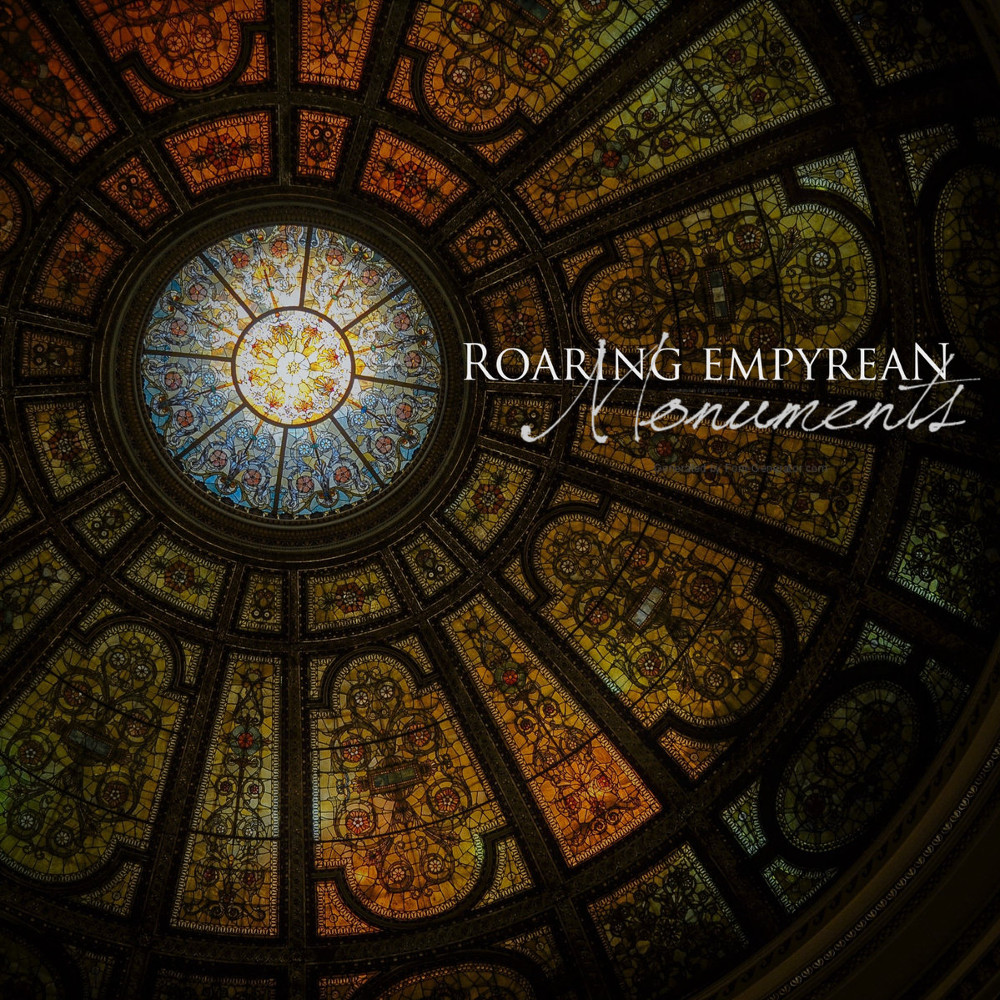
Roaring Empyrean - Monuments (2019)


Country: Iran
Style: Funeral Doom Metal
Rating: 6/10
Release Date: 1 Apr 2019
Sites: Bandcamp | Instagram

In keeping with this site's mission of discovery, here's something completely different. There's not a lot about Roaring Empyrean online, but some googling around suggests that it's the project of one man in Tehran, Iran called Amir Asadi.

He released an album called To Earth's Heart under this banner back in 2013 and a pair of EPs last year. What's odd is that Roaring Empyrean appears to be an exploration of contrasts, epitomised by two rather different musical styles: funeral doom metal and new age.

And yeah, that's a really odd combination! Funeral doom tends to be slow and crushing, a contemplation of mortality. New age, on the other hand, tends to be uplifting through nature, a celebration of existence. I was intrigued to find how Asadi merged the two and whether it could remotely work. Sure, Ahab and Enya each have four letter names but what middle ground could they find?

Having listened through Monuments a few times, I think it does work, as odd as it seems. As you can imagine, these are soundscapes so the hour that this album runs is taken up by four long tracks, a six minute intro and a brief interlude.

That intro, Into the Valley, sets the scene pretty well. It opens with what sounds like a cello, a dark and rich sound that's joined by traditional doom soon enough. It builds itself up as it tears itself down, which isn't a bad way to look at this album.

The first track proper is Cathedral of Thousand Hallways and the same thing happens on a much more epic scale. Rarely have I heard a song named so well! Even without the title, this would have transported me into a vast cathedral, so vast that it's easy to get lost, even though there's music all around to guide me back, albeit music echoing in the vastness. Was that a harpsichord? A carillon? Certainly that's a massive church organ. All these sounds collide within what is clearly the first monument.

The only catch to Cathedral of Thousand Hallways is that it fades out, after eleven minutes, rather than finding a better way to end. I certainly preferred it to Mountains of Torment, which got away from me. It's an intriguing piece, though, with plodding bass and crashing guitar. I presume the point here is that the title doesn't necessarily have to refer to manmade monuments but to ones that nature crafted into place too and it would be odd to see mountains of torment that didn't have, well, torment. There's plenty of that here, but an awe too at the sheer majesty of creation.

Dance of the Bleeding Earth is memorable though, very organic and mindful of the patterns of large complex systems in nature, especially during the later parts. It floats a lot in its early stages, as if close to the ground, but swells in the later ones, as if it's found a way to fly. I didn't grasp the bleeding but I presume Asadi had a vision of some sort in mind.

As the title might suggest, The Soaring Essence goes a lot more for swelling than floating. It's certainly the most uplifting piece, even though it never speeds up its drums. It's the strings that do it, even though there's a neat Beethoven-esque piano underneath it all as if to remind us that there's still ground below. What seems odd is that the strings get more and more curious as the track runs on.

I'm happy I found this album, because it does something different. Depending on the perspective you bring with you, it's either the most cheerful funeral doom or the darkest new age music that you've ever heard. Now I know what it sounds like, I can grasp it and The Soaring Essence, all sixteen minutes of it, suddenly feels like a statement. After all, the point where fundamentally different genres meet is the point where new ones are born.

Monday, 1 April 2019

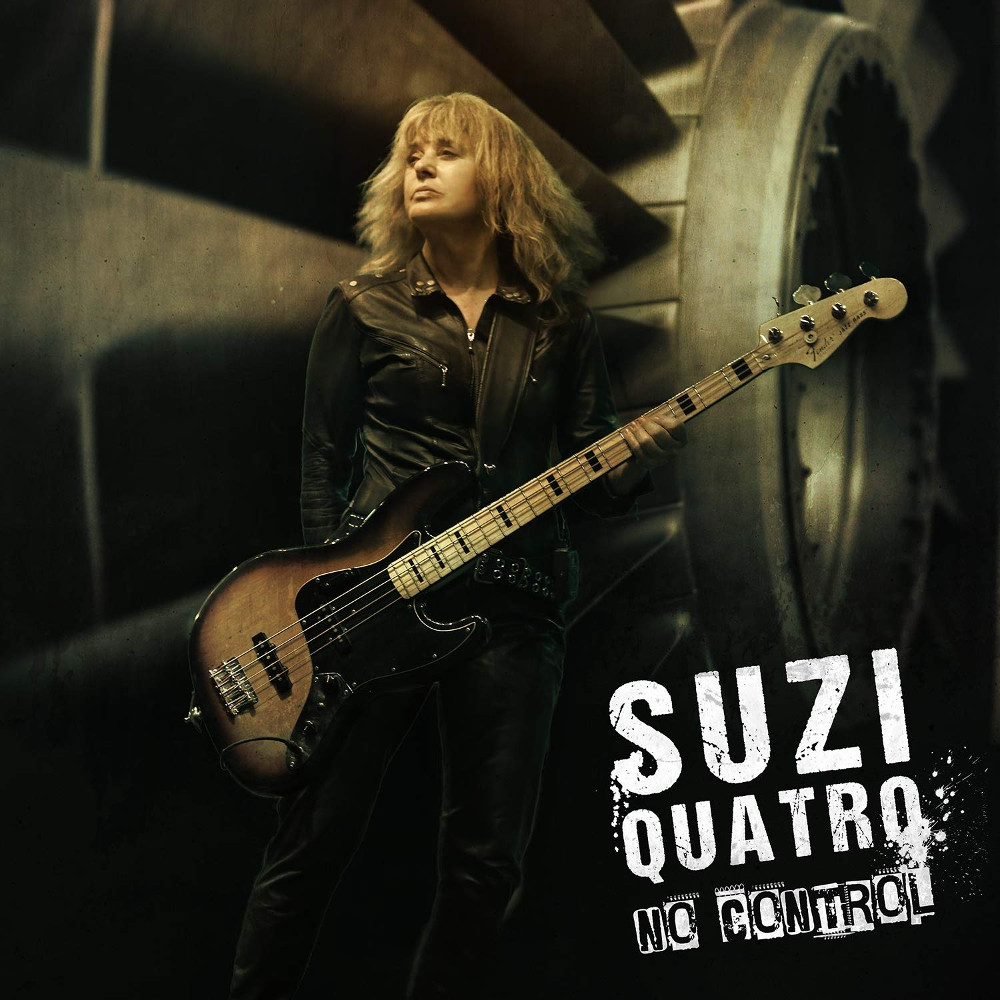
Suzi Quatro - No Control (2019)


Country: USA
Style: Hard Rock
Rating: 7/10
Release Date: 29 Mar 2019
Sites: Facebook | Official Website | Twitter | Wikipedia

I had to admit that I was surprised to see a new album from Suzi Quatro. No, it isn't an age thing; there are older and less capable musicians recording. It's just that I haven't seen her name in forever and presumed that she had retired years ago. Well, apparently not. In addition to this album, featuring her son on guitar in place of her ex-husband, she released an album with Andy Scott and Don Powell in 2017 and another in 2011. She's hardly prolific, with only fifteen studio albums since 1973, but many artists have released less.

I wasn't surprised to find that this is a good album, because she's been good since before society was ready for her to be, as a bass player and vocalist clad in leather. I was surprised to find that it's rooted in the blues and is rather varied. Songs like Going Home, Don't Do Me Wrong and Going Down Blues are out and out blues song and there's blues in pretty much everything else on offer here too, to varying degrees.

Don't panic, Quatro fans from the seventies. There's still material here that will remind you of the old days, even if it's not quite as cheesy or as poppy or as clapalong. Suzi's voice is lower too but it's matured nicely over four and a half decades. Holy crap, she was rocking Can the Can when I was two and she still sounds damn fine.

Macho Man, the single, has a real swagger in its rhythm and its vocals. It's longer and with more substance than a seventies single, as is I Can Teach You to Fly, a simple but effective horn-driven piece that could easily have been a hit back in the day, if only it didn't run four and a half minutes. There's a neat Marc Bolan tease throughout and I adore the cheeky outro on the organ.

Everything works on I Can Teach You to Fly and it's surely the catchiest song anywhere on the album, but I have to suggest that Love Isn't Fair challenges it. It's the other song with prominent unaccompanied horn sections but the vocal approach reminds of Boney M. That's hardly a name I expected to cite at Apocalypse Later, even if they are my guiltiest pleasure of all time. It's a unashamed Caribbean song in a similar way to how Blondie's The Tide is High was a Caribbean song. Are those steel drums in the background? I believe so.

I have to admit at this point that I don't believe I've ever heard an album by Suzi Quatro, at least not one that wasn't a compilation. I know a bunch of her singles but not what she did a little further out of the spotlight, so I don't know what musical territory she explored on her studio albums.

One obvious aspect that I hadn't heard before is her work on the bass guitar, the one she wore so prominently on top of her leather jumpsuit in all those old videos. It was never the point of the stamp your feet singles, but she's always been a musician as much as a vocalist and that's most obvious here on the track appropriately named Bass Line. It's a softer song with a slow kick to it and her playful bass underpins the whole thing.

"Walking down that bass line won't lead you astray," she sings. It certainly doesn't lead her astray on this album. It feels like she's having fun, which is fantastic to hear. And hey, maybe some talk show or other will notice this release, be as surprised to see it as I was and give her some much deserved airtime. Maybe then America will notice one of its daughters again, for more than playing the Fonz's girlfriend's sister on Happy Days.

Djiin - The Freak (2019)


Country: France
Style: Psychedelic Rock
Rating: 7/10
Release Date: 14 Mar 2019
Sites: Bandcamp | Facebook | YouTube

I've reviewed a few psychedelic rock albums at Apocalypse Later, including an album of the month, but this may be the deepest and trippiest I've found thus far. Djiin are French, from Rennes, and they feature a lead vocalist who also plays the electro harp, in addition to the usual musicians on bass, drums and guitar.

They're the sort of band who have no compunctions about kicking off what I believe is their debut studio album with a nine minute trip. It's the second track that's really going to determine whether people stay or leave, though. It's called Like a Hoot, it's a mere six and a half minutes long and it's a deceptively freeform jam that starts softly and slowly escalates throughout.

That lead vocalist is Chloé Panhaleux and she's a free spirit indeed, a wild flower who climbed out of the frickin' ground and figured out how to walk and talk and sing and roar. I'll never suggest that it's easy to sing a song but Panhaleux doesn't restrict herself to singing. She gives this track more than most vocalists give a career. She moans and hoots and soars and whispers and chirps and floats and creates a whole universe to inhabit.

Like a Hoot is followed by Child, the third of four opening songs that were previously on their live album, Live at Fog, and this plays out in a similar fashion. It adds some echoes to Panhaleux's voice and strips bare enough for the rest of the band to show just how unwilling each of them are to stick to anything. They're all over the map and this should sound truly awful, except it doesn't. Somehow they hold it together and haul us in with them.

It has to be said that when each band member goes off in their own direction, seeking their own spirit quest or whatever they're doing, it does allow us to follow whichever one we want. Early on, we dance along with Johann Godefroy, whose bass is a living creature here. Later, it's the guitar of Tom Penaguin that takes our attention, wailing so much that we wonder if there are two of him. At points, it's Allan Guyomard's drums that don't accompany the others so much as they play lead in their own mind.

Freaks is up next and it's as close to a title track as we get here, I guess. It's also the most familiar and the most traditional, if that's a word that's remotely applicable on something as deceptively freeform as this. There is at least some overt structure for the vocals to dance around. Panhaleux's vocal line sounds familiar, though I can't place from where. I'm thinking a Grace Slick song with her at her most abrasive. There's certainly acid aplenty on this track, which betrays a punk influence as well as a psych one.

Frankly, this could easily be described as punk psych. This may be a studio album but it feels so vibrant that it could believably have been recorded in one take, effectively live in the studio. The band constantly veer towards calamity, as if they're challenging each other, but they never fall apart at all; they just give the impression that they should. That must be such a hard approach to master. That this band have only been around since 2015 is wild.

If much of it can fairly be described as punk psych, it's not fair to limit the band to that description. Just check out Little Boy, the first song here to not be previously released live and easily the shortest, almost half the length of anything else. It's a bluesy improvisation that shifts well into a jazz vibe. Penaguin's solo in Crossing the River is right out of the blues playbook.

So where does that leave us in a vague attempt to describe the indescribable band that are Djiin? Acid punk psych jazz blues? That would miss out all the progressive angles, like on Heart Machine, and the space rock sounds that pop up every now and again and we're really losing focus. How about I just suggest that this is kind of like Janis Joplin getting incredible high and hallucinating that she's Iggy Pop?

Does that truly bizarre elevator pitch sound good? Then this is a very early Christmas present for you. You're welcome!